Dead-Letter Danes

Denmark strikes me as a charming little country. It’s only half the size of South Carolina. The central town of Billund (pop. 7,300) is the birthplace of LEGO. The Little Mermaid – the famous waterfront bronze statue – honors the fairy tales of Danish author Hans Christian Andersen. And the Viking warriors of Denmark’s past seem like cartoon characters compared to today’s warmongers. Now let’s add another reason to admire the Danes. By the end of 2025 their postal service will no longer deliver the mail.

Imagine walking out to your mailbox, dropping down the little door, and finding… nothing.  Do you really have to imagine it?  I can’t remember the last time my mailbox contained anything worth putting my hands on.  It’s a daily pity-party pile in there: postcard ads, clothing catalogs, and random solicitations addressed to “Resident”.  Christmas, birthday, and occasional thank-you cards are about the only personal touch we’re giving USPS anymore, and I speak as a baby boomer.  The younger generations click keys instead of lick stamps.

Denmark discovered the obvious.  Since Y2K their personal mail volume has dropped 90%.  It’s pretty much the same as removing eleven eggs from the box of twelve.  You used to deliver a dozen but now you deliver just one.  Denmark’s Postal Service has been around for over 400 years so understandably a few of its citizens – seniors in particular – are upset about the quit.  But are they really happy to pay 29 Danish krone (about $4.20) to mail a letter somewhere within their tiny country?  That cost would have me turning to email as well.

Let’s put a “stop” to this

Denmark is already beginning to remove its 1,500 public mailboxes, which got me to thinking.  What will the U.S. do with all of our own mailboxes when our time comes?  We have tons of the free-standing blue ones, where you pull open the door and drop in a letter.  By my (questionable) math, since Denmark is half the size of South Carolina, and South Carolina is only 1% of the U.S. geography, we could have over 300,000 of these dead-weights just taking up space.

And what about the mailbox in front of your house?  Remove it from its stand and then what? Oversized breadbox for the kitchen?  Storage for a stack of small tombstones?  Garage for Mini Cooper?  The odd shape of traditional mailboxes just makes you want to melt them down for scrap.

It’s time for the U.S. to get on board with mighty Denmark and stop delivering the mail.  UPS, FedEx, Amazon and a host of others now command package delivery.  Any bill worth paying can be settled online.  And for every twenty “circulars” my wife likes to leaf through, maybe one catches her eye with something she’d want to buy.

I can’t reconcile the fact that a letter to my niece way out in Hawaii or one to my neighbor right next door costs the same to mail: $0.73 for the first-class stamp.  Maybe it’s why USPS reported a loss of ten billion dollars in 2024 alone.  With that much red, the cost could be 29 krone (or $4.20, remember?) and it still wouldn’t make a profit.  If you ask me, removing that particular debt from the federal budget sounds as sweet as… well… a cinnamon Danish.


LEGO Notre-Dame de Paris – Update #8

(Read about the start of this “church service” in Highest Chair)

Christian hymns sometimes refer to “tearing down the walls”.  We were doing anything but tearing down at Notre-Dame de Paris today.  Bags 12, 13, and 14… of 34 bags of pieces, had us beginning to surround the nave (the main space) with walls of stone, glass, and columns galore.  The vertical construction progressed so quickly I swear I heard a parishioner cry, “Let us out!  Let us out!”

Check out all those columns in the first photo.  It’s like an army of soldiers took up residence in the cathedral, bracing themselves like Atlas for the weight of what is soon to be built above them.  It’s a wonder the congregation can move about in the sanctuary without banging into a soldier here or there.

One, two, three, four, five, six, seven

Today’s math lesson: multiples of seven.  We built seven of this or fourteen of that, or in the case of those soldier columns, twenty-eight.  And you know those Lazy Susan spinners the cake decorators use for frosting and such?  I could’ve used one today since I built a little on the north wall, then switched to the south wall, then back to the north, and so on.

Cathedral doors forthcoming

It’s a good thing I’m showing you the sanctuary looking down from above (feeling divine?)  As you can see from the west end here – where the bell towers will soon rise – we’re already pretty well buttoned up.  Settle in, all ye faithful; get comfortable.  Those walls will continue to rise up around you.

Running build time: 6 hrs. 50 min.

Total leftover pieces: 26

Some content sourced from the BBC.com article, “Denmark postal service to stop delivering letters”, and Wikipedia, “the free encyclopedia”.

Happy Holiday

If you subscribe to Disneyland’s claim of “the happiest place on earth”, you’re really talking about the several happiest places on earth.  Besides the original parks in California and Florida you now have more exotic locales like Tokyo, Shanghai, and Paris – a total of twelve Disney theme parks across the globe.  Now throw in Hawaii’s Aulani (Disney) Resort & Spa for a baker’s dozen.  But do a search on “the happiest place on earth” and nothing remotely close to the lands of Disney comes up.  Instead, you get the land of the Finns.

Maybe you haven’t heard of the World Happiness Report? I have. I first blogged about it five years ago in my post, Happy Days Aren’t Here Again.  Back then I wasn’t lamenting the fact the UN established a rather desperate-sounding holiday (“International Day of Happiness” – March 20th).  Rather, I was un-happy the United States ranked #14 in the holiday’s companion report.  Thirteen countries, including #1 Norway, were happier places on earth.  To make matters worse, the U.S. had been slipping in the happiness rankings since the first report in 2013.  This year?  The Americans dropped again, to #16.

The Northern Lights make me happy

An objective report on happiness sounds a little ridiculous but when one country (Finland) ranks “happiest” five years running, you sit up and wonder what you’re missing with Laplander life. Consider the variables in the happiness report calculation:

  1. Healthy life expectancy
  2. GDP (goods and services) per capita
  3. Social support in times of trouble
  4. Low corruption
  5. High social trust
  6. Generosity to the community
  7. Freedom to make key life decisions
Cold = contentment?

Maybe you assume Finland’s proximity to Ukraine (and Russia) puts it in a nonpareil position to earn high marks for say, “social support” and “generosity to the community”.  But this year’s rankings were determined before Russia’s invasion.  Finland was already socially supportive and generous (and apparently “happy”).  So, does Finland come to mind when you consider the list above?  It doesn’t for me, but I will say this. The Finns enjoy day-to-day living. On a Baltic Sea cruise a few years ago we spent several hours in the capitol city of Helsinki, where we had the chance to observe the locals.  What were they doing? Sunning themselves in the parks on an unusually warm day. Shopping in open-air markets.  Children walking home from school unattended.  Peace and quiet wherever you looked.  Happiness.

Eight of the ten “happiest” are on this map

Let’s visit some of the other happier-than-America countries.  There must be something good in Baltic Sea water because Norway, Sweden, and Denmark also make the top ten.  Iceland skates in at #3, which almost makes for a clean (and happy) sweep of the Nordic countries.  Switzerland (#4) and New Zealand (#10) are also “happiest”, and I can think of several reasons to spend time in both places.

As the song goes, “don’t worry, be happy”, but I confess I’m a little concerned about happiness here in America.  We need to step up our feel-good game from more than just Disney theme parks.  Maybe post those seven criteria on our refrigerators as regular reminders. Or, spend more time in saunas like the Finns do.  Otherwise, it may be time to pick up and move further north.  After all, happiness beckons.

Some content sourced from the CNN Travel article, “The World’s Happiest Countries for 2022, and Wikipedia, “the free encyclopedia”.

——————–

Lego Grand Piano – Update #16

(Read about how this project got started in Let’s Make Music!)

Every piano keyboard demands a cover to keep it clean. Bag #16 – of 21 bags of pieces – was entirely dedicated to the protection of the keys.  As the photos show, the keyboard cover hinges gracefully up and down, blending seamlessly with the rest of the black piano frame.

A word about leftover pieces (another 3 this week).  I need to be more thankful they’re “leftover” and not “missing”.  I swear I was shorted an important piece this time around (and maybe I really did swear).  But as usual, there it was in plain view in my pile of pieces.  I’m grateful to the human or the machine making sure every last piece was included in my Lego Grand Piano box.

Running Build Time: 12.0 hours.  Musical accompaniment: Tchaikovsky’s 1812 Overture. Leftover pieces: 3

Conductor’s Note: Peter (or Pyotr, if you prefer) Tchaikovsky’s 1812 Overture was an interesting choice for this week’s build, because I completed the keyboard cover before 8:30am.  If you know the Overture, you know it’s fortíssimo, like an alarm clock firing on all cylinders.  It’s a blast better meant for an Independence Day fireworks celebration (and some orchestras add a real cannon for the finale). The Overture is also brisk; a mere sixteen minutes from start to finish.  I wasn’t that quick with the keyboard cover build, but I did wrap it up in less than a half-hour.

Dream Puffs

Last year, Starbucks surpassed Subway as America’s #2 restaurant, measured by gross sales (McDonald’s is still top dog).  I don’t consider Starbucks a place to “dine”, so second-place is impressive.  Then again, Starbucks’ bakery case has matured since its initial offerings.  There are temptations-a-plenty now, en route to the barista.  The traditional breakfast items share space with yogurt parfaits, fruit-and-cheese boxes, “fold-over” sandwiches, and entree-size salads.  But it’s the smaller offerings I want to talk about today.  Look closely through the glass – you’ll see sous vide egg bites and Bantam’s bite-sized bagels.  Those little guys could be the future of fast food.

egg bites

I haven’t tried the mini bagels, but Starbucks wins me over with its egg bites.  The first time I gave them a whirl, my wife and I were in the middle of Lent, trying to find alternatives to the foods we gave up.  Egg bites to the rescue.  The sous vide prep means cooked in water, with nothing but a bit of spinach, red pepper, and cheese mixed in for flavor.  Simply elegant (elegantly simple?), and the light, fluffy texture makes them as delicious as they are convenient.

Three Little Griddles

Æbleskiver

Now let’s talk about real breakfast foods.  Last weekend, my wife and I went to a nearby restaurant called Three Little Griddles.  Much to my delight, Griddles had Æbleskiver on the menu.  If you’re Danish, you already know what I’m talking about.  Æbleskiver is heaven-sent breakfast: puffy little balls of pancake with a sweet surprise in the middle, finished off with a delicate dusting of powdered sugar and a side of raspberry jam.  Æbleskiver is Danish for “apple slices”, but you’re more likely to bite into a strawberry or a fruit-compote filling instead.  Three Little Griddles also offers Æbleskiver with an egg/bacon filling, coated with a maple-syrup glaze and powdered sugar.  A complete breakfast!

NOT Æbleskiver

If you haven’t heard of Æbleskiver and the first thing you thought of was “doughnut hole”, shame on you.  Doughnut holes don’t even qualify as poor man’s Æbleskiver.  Doughnut holes are a clever product designed to get you to buy more when it appears you’re buying less (think “fun-size” candy bars).  I have two issues with doughnut holes.  One, they’re not actually the “hole” of a solid doughnut, but prepared and baked separately instead.  Two, they’re not shaped like a doughnut hole should be (picture it – something more like the hub of a wheel).  They should be called doughnut balls.  But enough of this talk; I’m wasting words.  Let’s keep the focus on Æbleskiver.

My first taste of Æbleskiver came when I was little, in the Central California village of Solvang.  Solvang is like, well, a kid’s “Little Denmark” – a town small enough to walk around, with an overabundance of shops selling toys, candy, and ice cream.  Several windmills spin slowly above Solvang’s high-pitched shingle rooftops.  A church sits prominently on the edge of town.  A small park serves as the town square, complete with a bandstand-sized gazebo.  All that’s missing is some water-filled canals and cobble-stoned streets.  But meanwhile, there’s plenty of Æbleskiver.  Some restaurants even bake them out on the sidewalk, rotating those little dream puffs to perfection in their unique iron skillets.

If you credit the Danes with the invention of ball-shaped food, the rest of the world takes a distant second with its imitations.  China makes a spherical egg-based fruit-filled waffle called Gai Daan Jai.  Japan makes a variety of savory ball-sized snacks called Takoyaki. (Savory? Yuck.)  And America makes doughnut holes called Munchkins.

As if Æbleskiver isn’t cool enough as a food, it’s also a cool word with a unique spelling (note the “letter” Æ).  Perhaps Starbucks will start carrying it, along with the egg bites.  I’d buy both and a coffee for a complete breakfast.

Finally, if Æbleskiver has you wondering what other delights Denmark has to offer, consider ÆblekageÆblekage is “apple charlotte” – stewed sweetened apples layered with butter-roasted bread crumbs and crushed makroner (an almond-flavored meringue), topped with whipped cream and red currant jelly.  Oh my; sounds like dream stuff.

Æblekage

Some content sourced from Wikipedia, “the free encyclopedia”.

North Pole Vault

One of these days I’m going to visit Norway. The allure of Arctic glaciers, fjords, and waterfalls beckons me to snowshoe north of the Baltic Sea. My wife and I toured Denmark and Sweden a few years back, but if I were to choose only one of the Scandinavian countries it would be Norway. I must have a little Viking blood in me. In fact, my AncestryDNA results say I have about 14%.

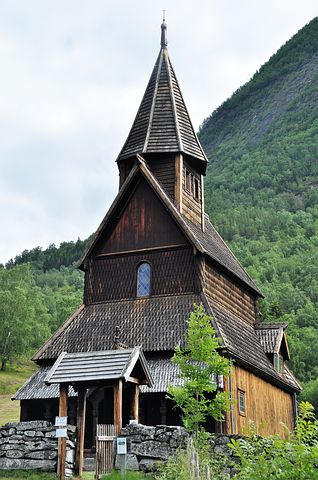
Besides its spectacular natural environs, Norway is known for hearty wooden structures that dot the land. Stave churches – quaint, timber-framed buildings from medieval times – can still be found in many of the villages.  One of the most famous is likely the most recognizable structure in Norway – the Urnes church in Songnefjorden (above photo), built back in 1130 and still standing today.

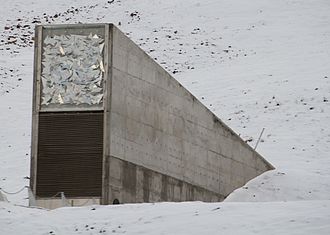
Here’s an even bolder proposition for my Norway expedition.  After I make the pilgrimage to the Urnes church, I could hop a plane four hours to the north, to the island of Spitsbergen in the remote archipelago of Svalbard.  I’m still in Norway but I’m a whole lot closer to the North Pole.  And it is here, 430 feet above sea level, I would find what may become the future most recognizable structure in Norway: the Svalbard Global Seed Vault.

The Svalbard Seed Vault is exactly what it sounds like – a place to store seeds.  Why would a country spend more than $9 million to build a seed vault?  Because bad things happen in this world, putting our food supply at risk. After reading about Svalbard I learned there’s an entire network of seed vaults around the globe (including one right here in Colorado).  These vaults contain food crop seed samples in the event the world “runs out” someday.  But even the vaults themselves have no guarantees.  The national seed bank of the Philippines was destroyed by fire, and the seed banks in Afghanistan and Iraq were lost to the ravages of war.  That’s where Svalbard comes to the rescue.

Svalbard is the “seed vault for the seed vaults”.  Think of it as a library.  If one of the world’s vaults needs a replenishment of seeds (or some global crisis destroys the vault entirely), they “borrow” packets from Svalbard.  Once more seeds are generated, a portion of them are returned to Svalbard to restore the library.  Almost 900,000 food crop varietals are represented in Svalbard – by half a billion seeds.  The facility is the size of a football field and all those seeds don’t even make it to the fifty-yard line.  Plenty of room left for more.

Svalbard is likely the most secure seed vault on the planet because it’s buried four hundred feet inside a sandstone mountain, encased in the Arctic’s permafrost.  Svalbard recently made the news when the vault flooded from snow melt and early season rain (that’s not supposed to happen – global warming anyone?)  But the water didn’t make it any further than the vault’s entrance tunnel before it froze again.  Sounds like all those seeds will be cold, dry, and undisturbed for a long time – just as the vault intends them to be.

Here’s another reason to like Norway.  Government-constructed projects exceeding a certain cost must include artwork.  Svalbard was expensive enough, so the seed vault entrance is decorated with stainless steel, mirrors, and prisms, reflecting the polar light of the summer months.  In the winter, the entrance is illuminated with greens and turquoises and whites through fiber-optic cables.  With this installation we get to appreciate the “importance and qualities of Arctic light”.  Pretty cool.

Sadly, if my Norway sojourn ever included the Svalbard Seed Vault, I wouldn’t get past the entrance.  There’s no receptionist (nor any other staff members 0n-site).  Instead the facility is monitored from a remote location around the clock.  You have to pass through five levels of security to get to the seeds themselves.  Tourists like me have no shot.

I won’t be getting to the Arctic anytime soon after all.  As for Norway, I’ll have to be content with a visit to a Stave church or two.  But I’m grateful for the Svalbard vault all the same.  On that note, I think I’ll head over to Home Depot and buy a few seed packets for my summer garden.

Some content sourced from Wikipedia, “the free encyclopedia”.



Happy Days Aren’t Here Again

Last week included a holiday and you probably didn’t know it. On March 20th the world celebrated “International Day of Happiness” for the fifth consecutive year. The United Nations adopted a resolution in 2012 to establish the holiday, seeking “a more holistic approach to development” and recognizing “the pursuit of happiness is a fundamental human goal”.  Ladies and gentlemen, the UN is trying to bring more joy to the world.


I’ll admit, the first time I read about a holiday for happy I had to wonder what really goes on behind closed doors.  Maybe the UN reps spend their days on Facebook liking/loving posts like the rest of us.  Maybe they’re happy and they know it and clapping their hands.  Maybe they ask each other “aren’t you glad you use Dial and don’t you wish everyone did?” Then 0ne day someone decided a celebration of all that happiness was in order.

On the other hand, maybe the UN’s daily agenda is so depressing someone insisted 1 out of every 365 days should be set aside just to feel better. A don’t-worry-be-happy moment.


To go together with March 20th, the UN also publishes the “World Happiness Report” (WHR), an annual measure of happy in each of 155 countries.  The recipe: the combined measures of income, healthy life expectancy, having someone to count on in times of trouble, generosity, freedom and trust (trust defined as absence of corruption in business and government).  The WHR then crunches the numbers and tells you how close you are to the happiest place on earth.

Again I had to ask myself – is the UN for real?  I mean, I’m usually as merry as the day is long, and I assumed the same was true of my fellow Americans.  “Not so fast”, says the WHR.

The 2017 top ten: 1) Norway, 2) Denmark, 3) Iceland, 4) Switzerland, 5) Finland, 6) Netherlands, 7) Canada, 8) New Zealand, 9) Australia, 10) Sweden.

Look at that list again.  See any patterns?  Five of the ten are the Nordic countries.  Another two are in close proximity.  Another two are side-by-side way down in the Southern Hemisphere.  And finally you have Canada (which feels like a party-crasher).  But the ingredients don’t lie – everything’s coming up roses in all ten.   The Nords, the Swiss, the Dutch, the Canucks, the Kiwis, and the Aussies are walking on sunshine.

If the happiness formula is to believed, Norway has it all figured out.  Consider the following excerpt from the WHR Executive Summary (p. 1): Norway moves to the top of the ranking despite weaker oil prices.  It is sometimes said that Norway achieves and maintains its high happiness not because of its oil wealth, but in spite of it.  By choosing to produce its oil slowly, and investing the proceeds for the future rather than spending them in the present, Norway has insulated itself from the boom and bust cycle of many other resource-rich economies.  To do this successfully requires high levels of mutual trust, shared purpose, generosity, and good governance, all factors that help to keep Norway and other top countries where they are in the happiness rankings.

And how about the Americans?  We come in at #14.  That’s happy-happy-joy-joy compared to most others, but consider this: we’ve never hit the top ten and we’ve been dropping since the first year the WHR was published.  The U.S. gets high marks for income and life expectancy but falls short in the other four categories.  To add an exclamation point: this year’s WHR includes a chapter by Jeffrey D. Sachs titled “Restoring American Happiness”.  As Sachs puts it:

The predominant political discourse in the United States is aimed at raising economic growth, with the goal of restoring the American Dream and the happiness that is supposed to accompany it. But the data show conclusively that this is the wrong approach. The United States can and should raise happiness by addressing America’s multi-faceted social crisis— rising inequality, corruption, isolation, and distrust—rather than focusing exclusively or even mainly on economic growth, especially since the concrete proposals along these lines would exacerbate rather than ameliorate the deepening social crisis. (WHR, p. 179)

Take note, Washington D.C.

The World Happiness Report is a 5MB, 188 pg. report available here, if you want all the details on where everything’s coming up roses (or not so much).  For me, the message was clear enough from the top ten.  If Americans want to live happily ever after, we need to study our neighbors to the north (as do our counterparts in Europe) or delve deeper into life “down under”.  Extreme temperatures be damned, all of these people are as happy as clams (at high water) and whistling while they work.

Cheer up, Yanks; it’s not the end of the world (as perhaps it is in #155 Central African Republic).  At least the U.S. claims a spot in the top ten percent of the WHR.  That’s happy landings on my runway.