The Ghost of Saint Francis

“Saint Francis” (Digital Art by Randy Wollenmann)

I’ve long been a fan of the Google Calendar app, even after switching my mobile from Android to Apple. Google Calendar allows the option to add “Christian Holidays” so I promptly checked the box. We’re talking Christmas and Easter of course, but how about the Feast Day of Saint Francis (last Sunday), Saint David (3/1), and Saint Patrick (3/17)? Saint Patrick sure, but why also Francis and David? There are hundreds of saints yet Google chose just three. My curiosity was piqued.

So begins my beyond-the-grave story, perfect with Halloween on the horizon. Google’s choice of saint days got me wondering if there’s a spectral connection between me (David) and Francis. So I dove into the details. Now all I can say is, be careful what you wonder about.

Basilica of St. Francis, Assisi, Italy

The quick history of Francis. He’s the patron saint of animals. He was an Italian living in the 1200s from the central hill town of Assisi. Francis grew up wealthy but abandoned his riches to serve the Church and the poor. But it’s the animals that make him so popular among today’s saints. He (supposedly) communicated with wolves. He often preached to flocks of birds. He built the very first Christmas crèche, including live animals alongside the manger.

Now then, my Francis ghost story. Let’s cover this spookiness from present to past. I’ve discovered a pattern of events that has me convinced Saint Francis is trying to reach out. As a matter of fact, he’s been in touch every ten years back to when I was a baby. If you agree you can see why I’m expecting another “call” in 2023.

  • 2013: I’ve told you Francis is the patron saint of animals but guess what? He’s also the patron saint of avoiding fires. In June 2013, my family and I evacuated our Colorado house for a week (horses and dogs in tow) to escape one of the worst fires in our state’s history. When we returned, our house was not only intact but had no smoke damage. Meanwhile, over 500 properties within a five-mile radius were completely destroyed.

  • (Also in) 2013: Cardinal Jorge Mario Bergoglio of Argentina was elected Pope. He promptly changed his name to Francis. There have been 266 Popes in history, but Cardinal Bergoglio is the very first to select the name “Francis”.

  • 2003: The Front Range of the Colorado Rockies experienced one of the worst blizzards in our state’s history. In a matter of hours a single storm dropped over thirty inches of snow, with drifts of five feet or more. My family and I were snow-locked in our house for over a week. 100,000 residents lost power while 4,000 travelers were stuck at the international airport in Denver. Saint Francis is also the patron saint of the environment. Was he making his presence felt with unprecedented weather?

    Assisi’s sister city

  • 1993: My family and I moved from San Francisco to Colorado. San Francisco (named for Francis) is the sister city of his birth town of Assisi. But here’s where I really paused. Francis is also the patron saint of… Colorado. And how many other U.S. states chose Francis as their patron saint? Zero.

  • 1983: I’m in my junior year in college, studying abroad in Italy. The patron saint of Italy is… Francis, of course. I also traveled to Assisi while I was there, including a visit to the church where Francis is buried. This is the only time I’ve ever been to Italy.

  • 1973: Acclaimed biographer Ira Peck writes, The Life and Words of St. Francis of Assisi. It’s a short read, with easy language intended for middle-schoolers. Where was I in 1973? Starting my first year of middle school.

  • 1963: On March 21st, the Alcatraz Federal Penitentiary closed for good after thirty years. Alcatraz is the famous island prison in the San Francisco Bay. What does Alcatraz have to do with my ghost?  Back in 1202, a young Francis was thrown in prison for a year, captured while serving a military effort. His spiritual conversion from wealthy patron to humble priest, it is said, took place during this time in prison.

Our Saint Francis statue

And there you have it. Every ten years – starting the year after I was born – Saint Francis seems to have reached out to me. Oh, one more thing.  My wife and I have a statue of Saint Francis in our garden. “Of course you do”, says Francis.  He’s been standing quietly there for years, facing the house, just keeping his eye on us.

Francis will reach out to me again in 2023, I’m sure of it now. He’ll find another way to make his presence felt. When I read up on him I noted he’s also the patron saint against dying alone and the patron saint of needleworkers. Against dying alone? Am I destined to perish alongside several others in 2023? That’s not very nice of you, Francis.  I’d better take up knitting.

Some content sourced from Wikipedia, “the free encyclopedia”.
Loony Binge

I know very little about Oscar Wilde, except he was a 19th-century Irish playwright famous for “The Picture of Dorian Gray”. Wilde lived to be just 46, producing his best works in the last ten years of his life. He was often quoted, lacing words of wisdom with pretty good wit. Here’s one of Wilde’s best: “Everything in moderation, including moderation”.

Poisonous snakes?

Perhaps you caught this story from last week’s headlines: “Man Dies from Eating More Than A Bag of Licorice a Day”.  (I mean, who wouldn’t catch a story like that, right?)  It seems a Massachusetts construction worker with a daily candy habit switched from red to black licorice, and a few weeks later he went into cardiac arrest.

After futile attempts to revive our candy man, medics discovered he was experiencing ventricular fibrillation, meaning the lower chambers of his heart stopped pumping blood.  So he died.  From licorice.  You’ve heard of death by chocolate, but seriously, death by candy?

The New England Journal of Medicine says black licorice contains glycyrrhizic acid, which in ample amounts tanks the body’s potassium levels.  Low potassium levels contribute to heart arrhythmia (and heart arrhythmia is never a good thing).  Can’t say I’ve heard of glycyrrhizic acid until now (bet you haven’t either) but it doesn’t matter.  All I took from this story was: black licorice = death.  That’s disturbing because I love black licorice.

Check out my previous post connoisseur for a “taste” of my licorice obsession.

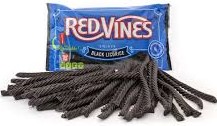
Whips, twists, nibs, wheels, shoelaces – licorice comes in all shapes and sizes.

Not gonna lie; the moment I read this not-so-dandy candy story I pulled open my desk drawer (left side, second one down) and grabbed the bag of black licorice sitting innocently in front.  Then I reviewed the ingredients very slowly and very carefully.  “Corn syrup, sugar, modified potato starch, caramel color, carnauba wax…” (and several other ingredients I really shouldn’t be eating).  But nowhere did I find “licorice root extract”, the bearer of that nasty acid.  Whew.

Let’s be honest – the real message here isn’t “don’t eat black licorice”.  Rather, it’s Oscar Wilde and his “everything in moderation”.  Our poor construction worker, according to family members, consumed “one to two large bags of black licorice every day for three weeks”.  If it wasn’t the glycyrrhizic acid, something else in the candy would’ve done him in.  Or maybe the gallons of water he drank to wash it all down.

Yep, that’s a real thing too (water intoxication).  Drink too much and you can succumb to an “imbalance of electrolytes” and die.  Then again, 99% of us avoid stupid dares or sustained exercise where you lose track of how much water you take in.  But then there’s the other 1%.  Stay away from those people.

Nine of ten of you don’t like black licorice (easy guess) so you’re not breathing a sigh of relief alongside me.  But you may not be innocent of other binge-worthy foods.  Take your pick: popcorn, potato chips, nuts, trail mix, or peanut butter (especially those little PB-filled pretzel-bite thingies – oooooo).  “You can’t eat just one”, am I right?  You probably can’t even put the container down.  And don’t get me started on Chinese food, where I seem to get hungrier the more I eat of it.

The good news is, you’re not heading for potassium deficiencies or cardiac arrest with these binge foods, but it’s fair to say they contribute to the downward spiral of unhealthy eating.  One day you wake up and find yourself sprawled atop a mountain of junk food asking, “how did I get here?”

Since we’re talking about killer (or diet-killing) foods, let me throw another one out there: coconuts.  Yes, you think coconut oil, milk, and extract are all the healthy rage these days, and you’d be… right.  But I’m talking about tropical islands and swaying palm trees.  There lies (er, hangs) the reason coconuts are called “the killer fruit”.

Urban legend perhaps, but they say falling coconuts kill several people every year.  At least ten cases have been documented since the early 2000s.  In Queensland, Australia they remove coconut palms from their beaches for this reason.  Don’t say I didn’t warn you.  Coconuts kill.

Then there’s death by chocolate.  (Chocolate kills too, you ask?)  Okay, so maybe I’m referring to a sinful dessert instead, minimally described as “chocolate with chocolate on top of chocolate”.  The American pub “Bennigan’s” offers the undisputed king of Death by Chocolate: a chocolate crumb-crusted chocolate cake, paired with two scoops of (chocolate) ice cream, topped with two Twix bars and covered with chocolate sauce, accompanied by a side dish of heated chocolate topping.  Woof.  Maybe chocolate kills after all.

How about a smile, Oscar?

Here’s one more ingredient in my desk drawer licorice: anise oil.  Anise gives you the same flavor as licorice root extract but without the occasionally fatal side effects.  Maybe it’s a cheaper or easier-to-come-by substitute?  Unfortunately, anise oil can cause pulmonary edema (also never a good thing).  Maybe I need to reevaluate my licorice habit after all.

I’ll leave you with another Oscar Wilde quote: “Life is too important to be taken seriously”.  With all due respect to our Massachusetts licorice-aholic, I couldn’t agree more.  So I will continue to eat black licorice, and I will continue to enjoy black licorice.  In moderation, of course.

Some content sourced from the 10/13/2014 ShortList article, “20 Pieces of Wisdom From Oscar Wilde, the 9/25/2020 Ars Technica article, “Rare case of black licorice poisoning kills man in Massachusetts”, and Wikipedia, “the free encyclopedia”.

Brand Spankin’

Years before Haagen-Dazs, Klondike, and Dove Bars competed for your freezer space, you had a revolutionary creation known as the Eskimo Pie.  Foil-covered, with a thin coat of chocolate magically adhered to a small bar of ice cream, the Eskimo Pie was the first of its kind: a two-desserts-in-one sensation brought to market almost a hundred years ago.  The version I remember (from the 1960s) was a hockey puck – a little larger, a little flatter – with mint ice cream in the middle.  Today, the (Dreyer’s) Eskimo Pie looks no different than any other ice cream bar.  Someday soon it won’t even be called an “Eskimo Pie”.

You know what I’m talking about, of course.  Eskimo Pie lands on the list of brand names considered negative racial stereotypes.  Before you know it, Eskimo Pie will be rebranded into something more socially acceptable.  News to me, “Eskimo” is considered derogatory by the Inuit and Yupik people of Alaska.  An “Inuit Pie” doesn’t sound quite as tasty but maybe Dreyer’s should adopt the name anyway.  At least they could retain the cute little fur-lined character they already have on the box.

America: land of stereotypes

I get it; I really do.  As much as the Caucasian and the male in me make it virtually impossible to stand in another’s shoes, I still empathize.  Brands get spanked because their names, images, or associations are knowingly insensitive – even harmful – to groups of people.  That needs to change, even if it means renaming a product that’s been around a century or more.

My mother may have been a woman ahead of her time.  When I consider the brands I was raised with, I remember Minute Rice (not Uncle Ben’s), Log Cabin Syrup (not Aunt Jemima or Mrs. Butterworth’s), and Challenge Butter (not Land O’Lakes, whose logo centered around the image of a Native American woman).  Nothing controversial about my childhood brands (thanks Mom!)  The only character who might’ve caused a stir was the leprechaun on the Lucky Charms box, but I don’t think the Irish made a fuss about him (yet).

While you’re wondering about the new names for Aunt Jemima and Uncle Ben (the latter announced just yesterday as Ben’s Original), broaden your perspective a little as these other products/people/places step up to the home plate of scrutiny:

  • Dixie (i.e. Cups, Beer, Chicks).  “Dixie” originated in (black) minstrel shows and denotes the former Confederate States of the Southern U.S.  Either association doesn’t bode well for this Americana word.
  • Mutual of Omaha.  Nothing wrong with the name, but the logo is effectively a Native American in full headdress.  What say a cornucopia instead (get it?)
  • Nestle Candies.  Overseas brands include “Red Skins”, “Chicos”, and “Beso de Negra” (Kiss of the Black Woman).  Maybe just drop these products entirely for now.
  • Squaw Valley Alpine Meadows.  Whoops.  At least they can just go with “Alpine Meadows”.
  • Disney’s “Splash Mountain”.  To me it’s just a theme-park water flume ride with hollowed-out logs, but others see the connection to Disney’s 1946 stereotypic animation “Song of the South”.  Look for less controversial ties to “The Princess and the Frog” soon.
  • L’Oréal.  Products claiming to make the skin “fair”, “light”, and towards “whitening” are going to need different words.  Way different words.

Then you have businesses like ManpowerGroup Global, Five Guys Burgers and Fries, and Two Men and a Truck.  There’s just no winning with these (unless you label 50% of the company/restaurants/ fleet as the female equivalent?)

I found it funny the (former) Washington Redskins couldn’t come up with a socially acceptable team name in time for the 2020 NFL season, so they’re simply known as “Washington Football Team” today.  That’s so generic I picture every player on the roster identical: same height, same weight, same hair color, same number on the jersey.  With that in mind, here’s some advice for the Edmonton Eskimos of the Canadian Football League.  Come up with a new name pronto.  Not the “Edmonton Inuits” or “Edmonton Yupiks”, neither of which roll off the tongue.  Just something, else you’ll be known as “Edmonton American Football Team”.  Uh, come again?

Some content sourced from the 6/19/2020 USA Today article, “Are the Washington Redskins Next?…”, the ONGIG article, “20+ Top Brands Changing Their Name to Avoid Racial Bias”, and Wikipedia, “the free encyclopedia”.

Calories of Contentment

The other night – too late for a grocery store run but with few options in the pantry – my wife and I split a box of Kraft Mac & Cheese for dinner. No spicing things up, no healthy side of vegetables to lessen the guilt – just a heaping bowl of the little pasta elbows with powdered cheese. MAN did that taste good. I promptly considered a Hostess Ding Dong for dessert but caught myself just in time. Whoa, boy. Who says there’s no traveling during the pandemic?  I’ve made the journey to the land of comfort foods!

A little context before we explore the calories of contentment.  After the kids moved out of the house several years ago, our diet moved decidedly to the more healthy.  We upped our fruit and vegetable count.  We focused on meals with whole foods and fewer ingredients.  We started shopping in boutique grocery stores, discovering foods and brands we never knew existed.  Dairy and starchy carbs took the back shelf to pure proteins and Mother Nature’s bounty.

Somewhere in the middle of all of this good intention, a box of Kellogg’s Pretzel Cinnamon-Sugar Pop-Tarts dropped casually into my grocery basket.  I’d heard they were pretty good and I’d never tried them before, so… why not?  Then the kids came to town for a long weekend, so we just had to load up on old family favorites like Cap’n Crunch, Good Humor Creamsicles, and Red Baron frozen pizzas.

But here’s the thing.  Our kids eat so responsibly these days, sugary cereals and snack foods no longer appeal to them.  They make flourless banana pancakes and organic food “bowls”.  They nosh on healthy proteins and Boba teas.  They spend most of their time in the kitchen instead of the drive-thru.  Those comfort foods we purchased got no love, so naturally we purchased a couple more (the Kraft Mac & Cheese and Hostess Ding Dongs).  Heck, we even embellished those choices with a countertop bowl of Brach’s caramel “Royals”, and a huge container of Peanut M&M’s in a nearby cupboard.  There’s now a junk-food roadblock in front of every attempt to eat healthy.

What is going on here?  I blame the coronavirus.  Most of our processed-food pals moved into our pantry in the last six months.  All of them were impulse buys (or “moments of weakness”, or whatever else you want to call them).  No surprise though; we’re contributing to a nationwide, if not worldwide trend during this pandemic.  The world’s biggest packaged-foods manufacturers reported sales growth of 4.3% in the first three months of the year (vs. forecasts of 3%).  Canned soup purchases rose 37%, canned meat 60%, and frozen pizza 51%.  Hot Pockets and SpaghettiOs flew off the shelves.

Is one of these YOUR comfort food?

In all seriousness, a turn to comfort foods is a sign of something more complicated below the surface of our psyches.  I wish I could credit nostalgia: the sentimentality for past happier times and places, or emotional eating: the propensity to consume comfort foods in response to positive/negative stimuli.  Instead, I think we’re dealing with declinism – the belief our society is heading towards a prolonged downturn or deterioration.  We’ve been here before America, as in the Depression of the 1930s, the spread of Communism in the 1950s, or the rise of Japan’s economic powerhouse in the 1970s.  In each instance our country soldiered on better than before, but that’s not to say the short-term endurance is any fun.  And that, boys and girls, is why comfort foods maintain a “healthy” presence in grocery stores and in your pantry.

Hilton Hotels rivaled the pandemic headlines when they revealed their Doubletree chocolate-chip cookie recipe to the world last April.  Talk about your classic comfort food.  Doubletree cookies have nestled on hotel pillows since the mid-1980s; a whopping 25,000,000 in less than forty years.  “We know this is an anxious time for everyone”, was Hilton’s excuse for sharing their secret.  I baked a batch as soon as I came across the headline and now I can’t seem to stop.  A heaping bag of Doubletrees now sits in our refrigerator more often than it does not.  I could probably recite the recipe from memory, and I dream about them in my sleep.  Hilton’s got me hooked.

I still haven’t tried those Pretzel Cinnamon-Sugar Pop-Tarts, the preservative-filled pastries responsible for this whole mess.  All are still paired neatly in their foil packets, sitting quietly on the shelf.  The box may even be getting a little dusty.  I figure my willpower remains intact if I leave the tarts alone until their expiration date.  Er, wait – now that I think about it – Kellogg’s Pop-Tarts never expire.  Dang it; that’s a little depressing.  I’d better have a Ding Dong to cheer myself up.

Some content sourced from the 4/24/2020 Wall Street Journal article, “Comfort Foods Make a Comeback in the Coronavirus Age”, and Wikipedia, “the free encyclopedia”.

Matt Match

It happened again this week, as it seems to every couple of months.  I was lying face-up in the chair, with the dentist putting finishing touches on a crown, when she says out of nowhere, “So… celebrity trivia question. Which Hollywood actor do people say you most resemble?” To which I quickly responded – from years of practice – “Matt Damon“.


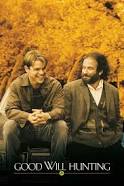
That’s me on the left and Matt on the right.  The likeness has never been my own opinion, but rather a conditioned response from so many people making the comparison.  If I really concentrate, focusing on certain facial features, I suppose I can acknowledge some resemblance.  But it’s a stretch at best, so it fascinates me I get this comment over and over again.  In yesterday’s instance, my dentist said it was most obvious when seeing my face in profile.  She must check out a lot of photos of Matt Damon.

Damon has made quite a name for himself on the silver screen.  Alongside Ben Affleck, he burst onto the scene in 1997 with his Academy-award winning screenplay Good Will Hunting.  His resume has been a fairly unbroken string of box-office successes since, including Saving Private Ryan, Ocean’s Eleven, the (four) Jason Bourne movies, The Martian, and most recently, Ford vs. Ferrari.  It’s fair to say Damon leans towards scripts with lots of action, with the occasional foray into comedy and drama.

With something of a physical likeness, I thought I should explore a little further under Damon’s skin (so to speak), to see if he and I have anything in common besides looks.  He’s eight years younger than I am.  He was born in Boston while I was born in Los Angeles.  His parents divorced when he was three while my parents remain married to this day.  He has one brother while I have four.  On the other hand, we’re both married and we both have daughters.  We’re identical in height at 5′-10″ (!!!)  And most significant to the topic at hand, we’re both products of a parent of English descent and another of Swedish.

Portman/Knightley

So Damon is (apparently) my biologically unrelated look-alike (aka doppelganger).  All of us have one or more out there in the world; mine just happens to be a “name”.  My dad was often associated with the late actor George Kennedy.  My mom – Nancy Reagan.  Hollywood itself has plenty of pairs, including Dax Shepherd/Zach Braff, Zooey Deschanel/Katy Perry, and IMHO the most twin-like of them all: Natalie Portman/Keira Knightley.  As for Matt Damon?  His doppelganger is not yours truly, at least not in his own social circles.  Maybe Mark Wahlberg.

Linus Caldwell

Let’s visit Damon’s movie characters for a second.  I identify with one in particular.  No, not the brilliant-but-shy, quick-talking Will from Good Will Hunting, with his rough edges, street smarts, and Boston accent.  Neither Jason Bourne, with his lightning-fast fighting skills and penchant for cross-continent espionage.  Not even Private Ryan, because I can’t claim to have worn the uniform nor lived in wartime. Ah, but then we have Ocean’s Eleven’s Linus Caldwell.  Linus is the hesitant participant in the heist.  He’s not keen to lead, but he likes being part of the team.  He’s on the quieter side, aims to please, takes a risk or two for the sake of respect, and comes across as Mr. Nice Guy.  He also sports the casual polo/khaki look, with the occasional zip-up jacket.  Yep, Linus could be my doppelganger as well.

Matt (not me)

You’ll find a lot of photos of Matt Damon on the web.  You’ll also find some personal quotes.  Here’s one of my favorites: “It’s just better to be yourself than to try to be some version of what you think the other person wants.”  As much as Damon’s an actor by trade, I’ve seen enough of his roles to believe his true persona often reflects in his characters.  He seems like a decent guy and he’s done very well for himself.  He has a solid marriage and three wonderful daughters.  He’s atypically modest and straight-shooting for a Hollywood headliner.  So if people want to “doppelgang” me with someone like that, who am I to care if I actually look like the guy?

Some content sourced from IMDb, “the world’s most popular and authoritative source for movie, TV, and celebrity content”.

A Sound of Thunder

Like it or not, we’ve changed our personal hygiene habits these last six months.  You’re wearing a mask because you choose to (or your governor mandates it).  You’re social distancing to be able to do things as simple as grocery shopping.  You may even be washing your hands longer (though I still can’t get through the “Happy Birthday” song twice).  But one habit hasn’t changed – I’m sure of it.  You’re sneezing as often as you normally would, and not necessarily because you’re sick.

How often do you sneeze?  The answer to that question is as varied as the number of people reading this post.  Sneezing is a highly personal habit, one you have no control over.  Your body needs to sneeze and will do so whether you fight it or not.  Technically, a sneeze is a “semi-autonomous, convulsive explosion of air from the lungs through the nose and mouth.”  In plain English, your body is fighting something irritating and sneezing helps to get rid of it.

I sneeze every day, without fail.  I know this because I can recall my last sneeze and the one before that; both within the last twenty-four hours.  More significantly, I sneeze twice at a time.  That’s another highly personal aspect.  Some sneeze once, others twice.  My dad sneezes consistently seven to ten consecutive times (to which he declares, “marvelous!”)  Consecutive sneezes either means a repeated effort to rid the irritant, or the body simply settling down in a reflexive sort of way.

My wife knows when I sneeze because I don’t hold back.  I feel one coming, I rear back, and I erupt for all the world to hear.  But once again, we all have our differences.  For some, it’s a sound of thunder.  For others, it’s akin to a cough.  Occasionally you’ll even hear a person squeak.  No matter the sound, it’s generally unalterable.  The body does what the body will do.

Stanford University once conducted a study and concluded a sneeze is the equivalent physiological response as one-quarter of a sexual orgasm.  Now how would Stanford know what one-quarter of an orgasm feels like?  Your one-quarter may feel different than my one-quarter.  Regardless, both responses release a bunch of endorphins and endorphins feel good.  Kinda makes you want to sneeze more often, doesn’t it?

An effort to control a sneeze can be downright comical.  In situations where you don’t want noise (church!), trying to avoid a sneeze can make it worse than just going through with it.  Picture the person anticipating a sneeze in the pews.  Deep breaths or holding the breath (count to ten!), pinching the nose, tilting the head back, and on and on.  The sneeze often comes anyway.

Trying to thwart a sneeze can be downright dangerous.  There’s no truth to the myth your eyeballs can pop out if you sneeze hard enough (though it’s not impossible to sneeze with your eyes open – try it).  But hold that blast in and you can damage blood vessels or the nasal cavity.  Best to just let the volcano erupt.  Even the mask naysayers can’t deny the value of today’s “mouthpieces” relative to sneezing.  A sneeze can emit up to 40,000 droplets of something you don’t want any part of.

What makes YOU superstitious?

Let’s put the superstitions to rest.  Your heart does not stop when you sneeze, even though there’s a quick break in the rhythm.  Nobody’s talking behind your back when you sneeze, nor does the number of times you sneeze indicate what they’re talking about.  There’s no relevant amount of good or bad luck with sneezing.  Finally, your soul won’t leap out of your body to be carried away by Satan (or for you atheists, your “breath of life”).

I like to think of my wife’s “God bless you!” as the protector of that last superstition.  She and I exchange the blessing unfailingly (religiously?) with every sneeze, as if not doing so will separate the soul from the body.  I suppose we could go with “Gesundheit” instead (since the Almighty certainly speaks German) but the English version somehow sounds more effective.  Here’s a coincidence for 2020: the very first “God bless you’s” were uttered after sneezes associated with the very first pandemic: the Plague of Justinian in the 6th century.

Sneezing can be encouraged, be it with pepper or snuff or some other artificial irritant.  Not for me.  My sneezes come often enough to simply deal with them as they do.  I’m sure you agree; the experience is not altogether unpleasant if you sense it coming.

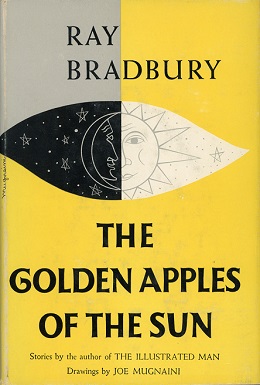
A final nod to sneezing science-fiction fans, who may recognize this post’s title as one of Ray Bradbury’s very best short stories, from his collection, The Golden Apples of the Sun.  “A Sound of Thunder” was the tale of time-travel, dinosaurs, and seemingly innocent tampering with evolution – suddenly gone very wrong.  It’s as chilling a read today as it was at its publication almost seventy years ago.  And the “sound of thunder”?  It wasn’t a sneeze.  You’ll just have to read the story for the real meaning.

Some content sourced from Wikipedia, “the free encyclopedia”.

Media Mainstream

Back when my wife and I raised the kids, we made sure to teach them the importance of good manners. “Don’t speak until you’re spoken to”, “respect your elders”, and all the other kiddo commands. We also taught them to use the good words often (“please”, “thank you”) while avoiding the bad ones entirely (esp. the four-letter kind). But the two words with the most challenge back then – ironically – are the ones we still wrestle with today: instant gratification.

“Dad, I want one now-w-w-w-w!”  I can’t tell you how many times I fielded a version of that phrase from my kids… then replied with the best defenses.  “You only want a <insert item here> because your friend just got one”, or “It’s not Christmas or your birthday, is it?”, and (perhaps the most effective), “You don’t have the money in your savings account to buy one.”  Whatever the reason, we did a pretty good job shifting gratification from “instant” to “delayed”.

Oh, if my kids could see me now (er, they can see me – I’m about to be called out on the hypocrisy of this post).  For you see, I’m a fairly recent Netflix subscriber.  My wife and I finally entered the tunnel to the arena; the one with the overhead sign blinking “Streaming Here”.  And boy is that arena vast, addicting, and instantly gratifying.  You can lose an entire week of your life in there (all you need is a pandemic).

Netflix is a revelation, especially for dyed-in-the-wool cable peeps like my wife & I.  “Cable” has a double-meaning here: a) a monthly subscription of a hundred or more channels (of which we watch like, four), and b) the hard-wired aspect of every one of our components.  But then we connected Apple TV and the streaming clouds parted.  Our son granted temporary access to his Netflix subscription (which became kinda-sorta permanent access until guilt drove us to our own account).  Amazon Prime reminded us our payment for free shipping included a bounty of movies and television.  And lately, we’ve been sampling several other apps – the ones that may finally, satisfyingly, get us to cut the cord on satellite tv forever.

Back to instant gratification and Netflix.  We never saw the addiction coming until the drug had long taken its nightly hold.  At first we tried a few movies – the one-and-done approach you could call no harm, no foul.  But then we tried a series (Heartland) and entire evenings suddenly disappeared in smoke.  After watching The Crown, we woke up one morning and realized winter had become spring.

Ultimately, I blame whoever recommended Outlander for our full-on succumbing to streaming.  Outlander (the violent/racy/but-oh-so-good time-travel romp through 18th-century Scotland) boasts five seasons of sixty-plus episodes; each an hour or more.  We became so invested in Outlander’s storyline and characters we started second-guessing any commitment threatening our nightly window (okay, binge) of episodes.  When we weren’t watching the show we were talking about it.  When we weren’t talking about it I was reading about it online.  Not gonna lie – Outlander was a full-on obsession.  The producers will eventually drop the sixth season and when it does, we’ll be at the front of the line ready to push “play”.

Five signs you’re watching too much Netflix:

  1. Every show Netflix recommends gets a “+ sign” move to “My List”.
  2. Your dinner-to-bedtime timeframe is a math problem, solved by: “number of episodes” x “length of episode”.
  3. Unlike New Year’s Eve, you’re not watching and waiting for the clock to strike midnight; it just gets there more often than you’d care to admit.
  4. You won’t watch the newer shows; the ones with only one season, because, well… there’s only one season.
  5. Your television screen frequently displays the message, “Are you still watching?” (meaning, you haven’t touched the remote for like, six episodes).

Binge is a bad word by any definition, especially in these pandemic times.  Maybe that’s why creative minds now label your Netflix habit an “experience”.  And that experience is getting more and more tailored to instant gratification.  The commercial pauses have already been removed.  Now take away the recap of the last episode and take away the credits.  You’re talking about a pure dose of entertainment, rolling from one episode into the next, one season into the next.  You want it now and Netflix is only too happy to oblige.  Sounds like a drug, doesn’t it?

Man, I gotta get out more.

Tough Nuts to Crack

My wife and I live on horse property here in Colorado: flat, open acreage with high-desert grass in all directions. When you’re out in the pastures it can feel like you’re alone on top of God’s green earth. But make no mistake; there’s a bustling world just below the surface. Every day it seems, one or more of our eight billion ground squirrels darts out of a hole, stands at attention, and gives me the cold-eyed stare down, as if to say, “you think this is your property, huh?”

Okay, so eight billion ground squirrels is a bit of an exaggeration (let’s go with seven billion).  And they’re not really our ground squirrels (although some definitions of real estate would disagree).  The fact of the matter is, we’re cohabitating with tons of rodents, and I often wonder which of us is in charge.

“Admit it – you think I’m cute.”

To be clear, we’re not talking about prairie dogs (the larger members of the squirrel family) nor chipmunks (the smaller), but rather those gregarious in-between’ers with the bold racing stripes down the back.  Ground squirrels have short tails, beady eyes, and perky little ears on top of smallish heads.  They forage for nuts and seeds (of which we have precious few) or insects in a pinch, and they can dig holes like champs.  Ground squirrels rise up on their hind legs in an instant when they sense danger, standing straight as a board and totally aware (an annoyingly cute habit).  They vanish into the earth with an alarming screech when they sense the slightest movement.

“Ah-ten…TION!”

But I digress.  I’ve seen enough of these little furballs to know who’s responsible for the Swiss cheese look of our land.  I saw one of them disappear down a hole once, then pop up fifty yards away mere seconds later.  And damn these little critters are bold.  One time I was looping the lawn on my John Deere ride-on mower when a squirrel stared me down from right there amongst the blades until I practically ran him over.  Picture that famous photo of the Tiananmen Square protestor in China; the one who refused to back down from the approaching tank.  That was me and the squirrel.

Bring it…

We have an understanding, the groundies and I (or so I thought).  I willingly cede them the pastures while they keep a distance from the lawn and patio.  Their holes are too small to cripple the horses, and it’s not like we have a grove of walnut trees just beckoning them to the buffet.  But the lawn?  Now that’s sacred territory, friends.  I used to think my lawn had a force field around the perimeter, keeping the ground squirrels at bay.  No longer.  I recently discovered two of their holes smack dab in the middle of the green.  In an instant I was thinking, “payback time, you, you rodents, you”.  I grabbed a big coil of garden hose, thrust the nozzle down one of the holes like a big ol’ snake, and turned on the water full-blast.  Then I watched the other hole with a smirk, waiting for my little traitor to come flying out atop a geyser of water.

Alas, Old Faithful never happened, not even like you see in cartoons.  Thirty minutes of fill-‘er-up and then I gave up and turned off the water.  Not only did I not flush out a ground squirrel, I didn’t even fully flood wherever those holes led to.  Which got me to wondering, just how big is this underground Habitrail?  Can you picture one of those sand-filled ant farms you used to get as a kid?  Is the foundation of our house resting precipitously on a network of squirrel tunnels and my water-dousing only accelerating its collapse?  Let’s hope I don’t tumble out of bed one night and wonder what just happened.  I will admit to this: a little while after me and the garden hose, I was at the kitchen sink when a groundie popped right up from one of those holes in the lawn.  He didn’t even look wet, but boy did he look pissed.  He stared right at me through the window with his beady little eyes, as if to say, “YOU. You killed my family”.  Nah.  More likely he was saying, “nyah, nyah, nyah – you didn’t get me”.  Probably stuck out his teeny-tiny tongue while he was at it.

I’m not one to take up arms, but ground squirrels have me thinking about a BB gun.  I’m just an average shot but the little critters make easy targets with their stand-and-freeze habits.  Maybe I could fashion a coat out of several dozen squirrel pelts and parade around the(ir) pastures.  But seriously now, how many BB’s would it take to make a dent in our Chip ‘n Dale population?  Ten thousand?  Twenty?  For crying out loud, that’s less than one-quarter of one percent (of seven billion).  The squirrels seem to be winning.

I’m going about this all wrong.  I need something stronger.  Do they sell nuclear bombs at Wal*Mart?

Some content sourced from Wikipedia, “the free encyclopedia”.

Come What Mayo

When I was a kid, I had this inexplicable obsession with cheese sandwiches. Maybe it was the popular Wonder Bread of the time (a slice of which could be reduced down to a compact dough ball with minimal effort). Maybe it was fondness for the Tillamook cheese my mother always had on hand; the sandwich merely serving as an edible container.  Surely it was because they were super-simple to make.  Whatever the reason, cheese sandwiches would’ve been utterly dry-mouthed and unappealing without the essential third ingredient: mayonnaise.

Tartar sauce or mayonnaise?

The easy guess here is you have mayonnaise in your refrigerator.  Go check.  Even if you don’t, you have the ingredients to make your own: eggs, oil, and vinegar or lemon juice (blended together at high speed and allowed to set).  The fancier versions of mayo add in some spices.  Your particular brand probably lives quietly in the refrigerator door or towards the back of one of the shelves, alongside several other condiments.  But the more I learn about mayonnaise the less inclined I am to group it together with the basics like ketchup and mustard.

West of the Rockies where I grew up, the standard brand of mayonnaise was always Best Foods.  When I moved east of the Rockies later in life, the name changed to Hellmann’s but the label, the jar, and ingredients were exactly the same.  That was always an oddity to me – until I learned Best Foods acquired Hellmann’s after both brands were solidly established.  Rather than drop one for the other Best Foods just kept them both.  Same product, same packaging, different name.  [Note: those of you in the southeastern U.S. may prefer Duke’s Mayonnaise – a distant third in sales.  At least Duke’s tastes distinctly different than these fraternal twins.]

The essential ingredients

Mayonnaise has one of those prolonged evolutions you could care less about, including its debatable origins.  Several moments in European history claim ties to its invention.  The most credible story (or the most romantic – take your pick) has the French winning the Seven Years’ War in 1756, and the victory dinner including a fish course, but no cream to make the tartar sauce.  The chef improvised with eggs, oil, and garlic instead, and voila: mayonnaise.  Further, the dinner took place in the Spanish port city of Mahon, so the sauce was dubbed “mahonnaise”.  Elegant name, no?

On French fries – seriously?

But for a few uses I can take or leave mayonnaise.  In addition to my childhood cheese sandwiches I only use mayonnaise for tuna salad, potato salad, or cole slaw.  I never put mayonnaise on a burger (do you?)  It’s ketchup on my French fries not mayonnaise (apparently that’s a “thing” with some of you).  It’s drawn butter on my artichokes (again, not mayonnaise).  And speaking of the cheese sandwiches, I recall my mother packing school lunches with bologna-and-mayonnaise sandwiches.  Meat and mayo on the bread – that was it.  No Tillamook cheese, no lettuce or tomato, no pickle on the side.  There’s a harsh simplicity to bologna and mayonnaise.  In other words, I hated the combo (and maybe that’s why mayonnaise only gets “a few uses” in my world now).

After my wife and I met, I discovered another refrigerator regular besides Hellmann’s: Miracle Whip.  You could say Miracle Whip masquerades as mayonnaise (same look, same wide-mouthed jar) but the taste is decidedly sweeter.  Check out MW’s ingredients and you’ll discover a clone of mayonnaise… but with a healthy dose of high fructose corn syrup (sugar).  I like the tangy taste of Miracle Whip but I can’t help thinking mayonnaise is the healthier alternative.  Credit Kraft Foods though, who debuted their “less expensive alternative to mayonnaise” at the Depression-era 1933 Chicago World’s Fair.  Almost a hundred years later MW’s a staple condiment, and the Miracle Whip-or-mayonnaise debate lands in the same conversation as Coke vs. Pepsi, Uncle Ben’s vs. Minute (rice), and Aunt Jemima’s vs. Log Cabin (syrup).

“Mayo-nnaise…”

If you’re like me, at some point in this post your sub-conscience drums up the 1982 romance “An Officer and a Gentleman” (If not, you’ve missed a great film).  If you’ve been to Ireland you probably know County Mayo in the northwest corner of the country.  Better yet, go visit the town of Mayo on the northeast coast of Florida.  A few years ago Mayo changed its name to Miracle Whip as a publicity stunt.  Okay, that tops all other “mayo” references I can come up with.

As little as I dip into my mayonnaise jar, I’ve seen plenty of expiration dates.  It might behoove me to make my own instead.  Eggs, oil, and vinegar, with a little salt to taste, whipped at high speed.  Sounds American easy-as-pie.  But call it mahonnaise, okay?  Then you’ll have something sounding more like what the French cooked up all those years ago.

Some content sourced from the 7/9/2020 Wall Street Journal article, “The Delicious Evolution of Mayonnaise”, and Wikipedia, “the free encyclopedia”.

Watch Your Steps!

The punk rock duo The Proclaimers are Scottish twins Craig and Charlie Reid. Now 58, the Reid’s were born just a month after I was, back in 1962. Even though The Proclaimers produced eleven albums and sold five million copies, I only know them for their 1988 chart-topper, “I’m Gonna Be (500 Miles)”. It’s the song thrumming in my head every time I’m close to getting my 10,000 steps for the day.

5,514.  Good Lord, I’m only halfway to my 10,000 steps today and it’s already two in the afternoon.  I need to get moving.  I even worked out this morning (lifting doesn’t get you many steps).  As usual, I strapped on my (Fitbit) tracker immediately after waking up but I’m usually further along by now.  I’m gonna have to go long with the dog tonight if I have any shot at making the magic number.

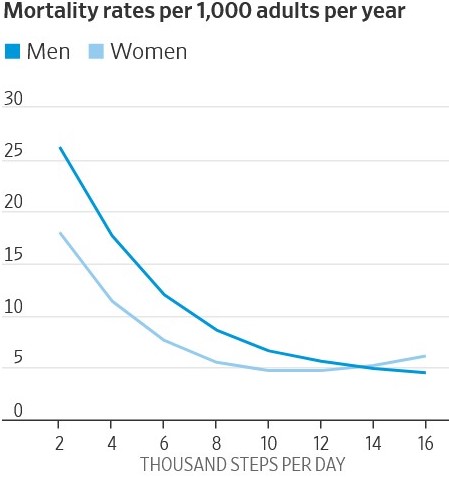
Magic number?  10,000 steps?  Who made this the “minimum for good health”?  A Japanese pedometer company; that’s who.  In 1965, they nicknamed one of their trackers the “10,000 step meter” and the number stuck all these years later.  Not that 10,000 steps has any significance when it comes to health benefits.  It’s all relative to whatever number you normally walk.  For that reason, we Americans can go less than half the 10,000 and still lower our mortality rate in a big way.

If you’re reading this post and you’re Amish, you’re already pooh-poohing 10,000 steps.  You and your people average 14,000-18,000/day just by removing motor vehicles from your world.  If you’re Australian or Swiss, 10,000 is just another day in the outback or the Alps (yodelayheehoo!).  Even the Japanese find a way to average 7,500 steps/day inside a small island nation.  Bringing up the rear?  The Americans, of course (drum roll, please…).  We clock an average of 4,800 steps a day – downright pathetic for residents of the fourth largest land-mass country in the world.  Is it any coincidence the U.S. makes and sells more vehicles than any other country besides China?

Source: Pedro F. Saint-Maurice, National Cancer Institute

Back to the “magical” 10,000 steps.  Let’s diminish the facts, shall we?  A recent collaborative five-year study of 15,000+ participants determined as few as 4,400 steps a day associates to a 40% reduction in mortality rate (when the norm is more like 2,700 steps).  Make it to 7,500 steps and the mortality rate drops by 65%.  In other words, you’re doing your body good well below 10,000 steps.  Unless you’re Amish, Australian, or Swiss.  Sorry, you people have to keep going.

Alas, no collaborative study nor determined blog post is going to change the world’s obsession with 10,000 steps.  The U.S. Department of Health and Human Services instead recommends five hours of moderate exercise a week (or half that much in “vigorous” exercise).  Doctors prefer a rather vague recommendation of “about 2,000 steps more than you normally walk”.  But none of that shuts down tracker production: 33 million devices shipped in the first quarter of this year alone.  You know who you are; doing mindless laps in the kitchen late at night just to “close your rings”.  10,000 steps remains the benchmark no matter the expert advice.

Close those rings!

Speaking for Americans at least, the magic number really is burned into our culture.  We’ve switched out our most glam watches for fitness trackers (because even a Rolex can’t count steps).  We download apps, print out weekly results, and obsess over “rings”, consecutive days, and “personal bests”.  We get cheap thrills when our tracker vibrates 10,000 and those little digital fireworks shower the screen.  Companies offer employees financial incentives if they can demonstrate extended habits of 10,000+/day.  We are beguiled of time and money for this fairly arbitrary number.

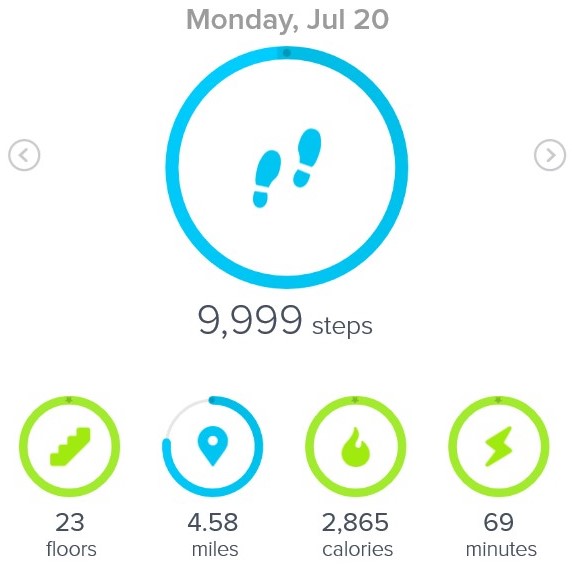
[Side note: The other day I woke up and checked my Fitbit history, only to discover I’d hit 9,999 steps the day before.  Didn’t bum me out; still strapped on the tracker and started a new day.  Kinda proud of that.  On the other hand, one time I strapped my tracker to my ankle to try to get “steps” out of a cycle class.  Didn’t work.  Not so proud of that.]

The pertinent lyrics of The Proclaimers’ “I’m Gonna Be” go like this:  But I would walk 500 miles, And I would walk 500 more, Just to be the man who walks a thousand miles, To fall down at your door.  No wonder I’ve got that song on the brain.  I don’t think I’d walk a thousand miles, even for my girl.  But I would walk five miles (about 10,000 steps) to hit my daily tracker goal.

Some content sourced from the 6/12/2020 Wall Street Journal article, “10,000 Steps a Day Is A Myth.  The Number to Stay Healthy Is Far Lower”, and Wikipedia, “the free encyclopedia”.