Mom-and-Pop Music

Flip through the chapters of my life and you’ll find a bookmark at 1975. It was the year I became a teenager. It was the year I started middle school. But most importantly, 1975 was my first foray into Top 40 music. In those days, punk, funk, disco, and metal were just getting started; all too progressive for a kid taking his first dip into the pool of radio rock. Instead, my preference was to chew on something a little sweeter. Like bubble gum.

In the 1970s, I was way too young to witness the birth of rock and roll.  I also missed the advent of pop music.  But I was right on time for a musical genre known as bubblegum.  Bubblegum siphoned off pop music’s more catchy, upbeat tunes and marketed them to children and adolescents.  And what better way to market theses songs than kid TV?  Anyone who ever watched The Partridge Family, The Monkees, or the cartoon rock of The Archies on Saturday mornings enjoyed bubblegum music.

As for 1970s Top 40, it’s easy to look back on those weekly lists and find bubblegum.  “Love Will Keep Us Together” (Captain & Tennille), “Laughter In The Rain” (Neil Sedaka), and “He Don’t Love You, Like I Love You” (Tony Orlando and Dawn) are just a few examples from fifty years ago.  Like most things back then, music was more innocent.

Having said that, bubblegum wasn’t even specific enough to define my own tastes.  The industry standard Billboard Magazine generates a Hot 100 list at the end of every year based on sales and radio plays.  It’s fun to go through the 1975 list and recognize just about every song.  But I was looking for three names in particular and – no surprise – all of them made the list with multiple entries.  Hello again, John, Olivia, and Barry.

John Denver was only 53 when he was tragically killed piloting a single-engine plane above California’s Monterey Bay, yet he managed to create over twenty-five years of gentle hits before that.  When I first heard his voice he’d already landed top-ten’s like “Leaving on a Jet Plane” (from the movie Armageddon for you younger readers), “Take Me Home, Country Roads”, and “Rocky Mountain High”.  One of Denver’s biggest hits, “Annie’s Song”, was a love song to his first wife.  Another, “Calypso”, paid tribute to the late ocean explorer Jacques Cousteau.  I purchased most of Denver’s albums (cassette tapes!) with a good chunk of my meager teenage savings.

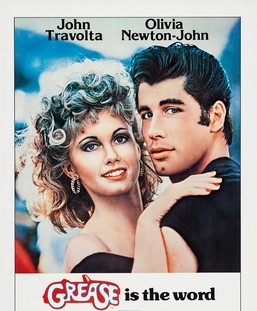
I was an Olivia Newton-John fan well before 1978’s Grease became a Hollywood phenomenon.  Newton-John and her sweet Australian accent were an instant teenage crush, with songs like “If You Love Me, Let Me Know”, “Have You Never Been Mellow”, and “I Honestly Love You”.  Then Grease came along and good-girl-turned-bad Olivia turned my teenage heat up several notches.  A testament to Newton-John’s popularity came in the form of 100 million records sold, fifteen top-ten singles, and four Grammy awards.  To this day, the soundtrack to Grease remains one of the world’s best-selling albums.

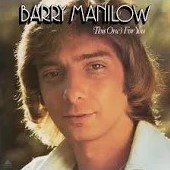
Barry Manilow and his music are more of a confession than the two we’ve already visited with.  It wasn’t at all cool to admit to liking Manilow’s “adult contemporary” music back then.  His hits were better suited for your parents, like “Mandy”, “This One’s For You”, and “Even Now”.  “Copacabana” was a dance number you couldn’t get out of your head.  “I Write the Songs” spoke to my inner-musician wannabe.  Manilow’s talents on the keyboard certainly captured my attention as I pursued the piano myself.  Unlike Denver and Newton-John, I purchased every Barry Manilow album as soon as it hit the shelves.  Somewhere in my attic I still have a boxed CD collection of his best work.

Like him or not, what is remarkable about Manilow is his enduring popularity.  He has been ensconced in Las Vegas for years now.  He just completed his 600th performance at Westgate’s Resort & Casino (an achievement which prompted this post), breaking a record held by Elvis Presley.  The one time I saw him in concert – at an outdoor venue in the Bay Area – I knew every song he performed.  Sure, almost all of his audience members are now graying at the temples, and his popular music is from five decades ago (!) but you still have to give him props.  The man has staying power.

Do I still listen to John, Olivia, or Barry?  No, but I can sing entire songs from memory.  There’s nothing like the music of those three to take me back to my teenage years.  Call it adult contemporary if you want, but this guy will always think of it as “Pop” music.

Some content sourced from The Atlantic article, “It’s Okay to Like Barry Manilow”, and Wikipedia, “the free encyclopedia”.

Map-Sap Goodness

A few months ago, authorities in New Zealand wrapped up a five-month sting where they confiscated the largest import of methamphetamine in the country’s history. Millions of dollars of the liquid stimulant were discovered in, of all places, a shipment of maple syrup jugs. Agents swapped out the drugs with water and let the jugs continue to Australia, where the recipients were quickly apprehended. Did this story captivate me?  Why yes it did, but not because of a million-dollar drug bust. I pretty much stopped reading at jugs of maple syrup.

With all due respect to fruit, I think maple syrup is the better example of “nature’s candy”.  After all, it’s essentially organic liquid sugar.  If you have the tree, the tools and the time (a lot of time), you can tap your own supply.  Simply drill a hole into the trunk of your sugar maple tree, hang a bucket below the opening, and let the goodness s-l-o-w-l-y flow.  After you’ve collected what you need, boil off the water, filter off the crystallized sugar, and your pancakes or waffles are set to be topped.

Sugar maple

If you prefer a more solid sweet, make snow candy like Little House on the Prairie’s Laura Ingalls did back in the day.  Pour boiling maple syrup into short lines on a fresh bed of snow.  Press Popsicle sticks into the lines.  Then roll the cooling syrup around the sticks and voila! – a sweet handheld-treat.  Last Saturday’s arrival of the fall season makes this confection seem extra appealing.

My very favorite doughnuts are maple bars

In the U.S., “real” maple syrup is not so common anymore.  Years ago at my childhood breakfasts I was already consuming imitators like Log Cabin, Mrs. Butterworth’s, or Aunt Jemima (more recently known as “Pearl Milling Company”).  These brands and countless others are known as “table syrups”, made from corn syrup and chemicals instead of anything found in a tree.  They can’t even use the word “maple” in their names because of a consumer protection law known as the Pure Food and Drug Act.

Maple sugar

Enough about the impersonators.  Maple syrup’s rich flavor and density should be the preference to table syrup’s as long as a) Your taste buds can be reeducated, and b) you’re willing to spend a few more pennies.  And maple syrup is just a step removed from some distinctive treats.  Maple sugar candy is compacted maple sugar formed into small squares or maple leaves (delicious!)  Maple taffy is what you get if you boil maple syrup past its liquid form.  And for the truly obsessed (me), you’ll also find maple versions of toffee, butter, and liqueurs.

Treacle tart

Let’s take a paragraph for a confection of honorable mention.  Ever heard of a treacle tart?  Yes you have, if you know the timeless children’s classic Chitty Chitty Bang Bang.  In the story, the evil Child Catcher in the fictional village of Vulgaria tempts young Jeremy and Jemima Potts with ice cream, candy, and treacle tarts (“and all for free!”)  Those tarts are small pastries filled with maple syrup, breadcrumbs, and a splash of lemon juice, served warm with a cream topping.  Yum.  Catch me if you can, Child Catcher.

If you know your flags, you can guess which country produces most of the world’s maple syrup.  Canada accounts for fully 80%, with most of the sweet stuff coming from the province of Quebec.  Vermont’s production is similarly dominant compared to other U.S. states.  Both locales are northern climates, where sugar maple trees thrive in the cold winters.  So as much as I’d like to channel my inner L.L. Bean by planting a maple tree and drilling a hole, donned in flannel shirt and snow boots, it’s never going to happen here in hot-and-humid South Carolina.  Guess I’ll have to settle for a store-bought jug of nature’s candy instead.

Some content sourced from the Deutsche Welle (DW) article, “Authorities find drugs worth millions hidden in maple syrup”, and Wikipedia, “the free encyclopedia”.

Living On The Edge

The state line between South Carolina (SC) and Georgia (GA) follows the twists and turns of the Savannah River. You know you’re heading into one state or the other whenever you cross the water. Driving from our part of South Carolina into nearby Augusta, GA is interesting. The interstate loops Augusta by starting in SC, touches a bit of GA, goes back to SC for a few miles, then continues into GA again as it follows the river. It’s an example of my life on the edge.

In California, W means “water”

Growing up on the coast of California, it never occurred to me the geography of my younger days was limited to only three of the four cardinal directions.  If I headed north I’d leave the urban stretches of Los Angeles for the more rural towns of the the central coast.  Head south and I’d parallel the beaches all the way to San Diego.  The only thing east of the city seemed to be the endless Mojave Desert.  As for the last of the four directions?  Not an option, at least not without a boat, plane, or a whole lot of swimming.  Horace Greeley would’ve never told me to “Go West, young man”.

South Bend sits where the yellow and red come together at the very top of Indiana.

In my college years in South Bend, IN, I was a fifteen-minute drive from the line where the Central and Eastern time zones meet.  Back then you didn’t touch your clock for Daylight Savings, so half the year you were the same time as Detroit while the other half you were Chicago.  It was confusing, but not as confusing as someone who lived on one side of the line and worked on the other.  Imagine leaving the house at 8:00am, driving an hour, and arriving at the office at… 8:00am?  It’s a neat trick, pulled off by a lot of those who live on the edge of a time zone.

Raising our kids in Colorado Springs, we always knew which direction we were heading because the line of the Rocky Mountains lay immediately to the west.  Those peaks rose up like the Great Wall of China, just daring you to push through.  Sure, we drove the interstates into the Rockies for skiing, hiking, and such, but day-to-day we were down at the base, literally living on the edge.  Like California, we had one less cardinal direction at our disposal.

Grays Peak, on Colorado’s Continental Divide

The Rockies conceal another important edge, known as the Continental Divide.  The Divide is elevated terrain separating neighboring drainage basins.  Plain English?  The north-south line from which water flows either west to the Pacific Ocean or east to the Atlantic.  I always wanted to stop somewhere flat on the Divide and pour out a bottle of water.  Let’s see if it really flows both ways from the line, right?  It’s an experiment that to this day remains unconducted.

Football is a game of lines and edges

Football, one of my favorite spectator sports, is all about lines and edges.  One team faces the other, on an imaginary line defined by where the referee places the ball.  Cross that line before the ball is snapped and you’ll be flagged with a penalty.  Advance the ball ten yards past that line – to another imaginary line – and your team is awarded more play.  The sidelines of the field might as well drop off to a bottomless void.  Catching a pass outside of that edge is not allowed.  Running the ball outside of that edge brings the game to a halt.  But catching or running across the lines at end of the field?  That rewards you with a score.

$50 gets you a spot on “The Edge” sky deck

For all this living and playing on thresholds, maybe I should visit one of New York City’s newest high-rise attractions.  One hundred floors above the sidewalk, The Edge is billed as “the highest outdoor sky deck in the Western Hemisphere”.  Jutting out from its host building, The Edge allows unparalleled views of the city below, because the surrounding walls are solid glass, as is a portion of the deck floor itself (yikes!) If Spider-Man is your thing, you can go even higher by scaling the outside of the remaining floors of the skyscraper.  I have to say, this sort of thing draws a “fine line” between entertainment and, well, insanity.

I won’t be going to The Edge… ever.  I’m not good with heights, so anything above a pedestrian Ferris Wheel just isn’t my cup of tea.  Nope, leave me behind, comfortably grounded, where crossing the Savannah River from one state to another is plenty adventurous.  That’s my definition of life on the edge.

Some content sourced from Wikipedia, “the free encyclopedia”.

Tuesday’s Child

Passing through another anniversary of the events of 9/11 this week, I was touched by a YouTube short of U.S. Marines demonstrating the proper method of folding the American flag. The video includes gentle background music but no words, lending reverence to the ceremony. Folding the Stars and Stripes the right way is not only a nod of respect to our nation’s banner, but also an example of (flag) etiquette.
 
One of my favorite memories of my late mother was her ability to gently but effectively prod her sons to behave properly.  She would sometimes say quietly, “Mind your manners”, which meant two things.  One, something in our current behavior wasn’t in sync with how she raised us; and two, we would get a talking to later.  “Please” and “thank you” barely scratched the surface of how my brothers and I were expected to carry ourselves back then.
 
I’ve always thought of manners and etiquette as one in the same, but the former is a subset of the latter.  Etiquette is “the set of norms of personal behavior in polite society”, while manners are simply behaviors deemed “good” or “bad”.  An example of both is the way we drive our cars.  We’re taught the rules of the road, also known as “driving etiquette”.  But when we blatantly ignore those rules by, say, refusing to let a car merge onto the interstate in front of us, we’re letting bad manners get the better of etiquette.
 
Manners always remind me of a book my grandparents encouraged us to read whenever we visited: Gelette Burgess’ 1903 classic The Goops (and How To Be Them).  Here’s an example of Goop behavior in Burgess’ poetry, simply titled “In Table”:
 
Why is it Goops must always wish
To touch each apple on the dish?
Why do they never neatly fold
Their napkins until they are told?
 
Why do they play with food, and bite
Such awful mouthfuls?  Is it right?
Why do they tilt back in their chairs?
Because they’re Goops!  So no one cares!
 
My mother probably labeled us Goops at one time or another, because my brothers and I were all about fingering our food or talking with food in our mouths or rocking back in our chairs.  It’s a wonder we developed any manners at all.  Maybe it’s because our mother’s parenting was fueled by a finishing school of sorts: her college sorority, where a premium was placed on etiquette.
 
Alpin Videmanette
Finishing schools, designed to “teach young women social graces as preparation for entry into society”, are something of an outdated concept now, at least in America.  You can still find a few “charm schools” in Europe, such as Switzerland’s prestigious Institut Alpin Videmanette – (whose teenage graduates included Lady Diana Spencer).  The Institut teaches young women to cook, make dresses, speak French, and even ski, but at its core, the curriculum is an education in etiquette.
 
Emily Post

The undisputed authority on etiquette, Emily Post, wrote several books and newspaper columns on the topic.  In the America of her lifetime (1872-1960) Post’s first etiquette book became a bestseller because it catered to “the country’s exotic mix of immigrants… eager to fit in with the establishment”.  I suggest most of Post’s etiquette is as relevant today as it was back then… and a lot of us could use an extensive refresher.

Always pass them together!
Besides the Goops, etiquette reminds me of an old poem teaching children the days of the week. “Monday’s Child” goes like this:
 
Monday’s child is fair of face,
Tuesday’s child is full of grace,
Wednesday’s child is full of woe,
Thursday’s child has far to go,
Friday’s child is loving and giving,
Saturday’s child works hard for a living,
And the child that is born on the Sabbath day, Is bonny and blithe, and good and gay.
 
Google tells me I was born on a Monday.  Darn it, so close.  If I was Tuesday’s Child I’d be defined as “… agreeable, refined, and polite in manner or behavior.”  In other words, demonstrating a solid understanding of etiquette.
 
The next time you’re standing on an escalator, step to the right to let those in a hurry pass by.  The next time you play golf, stay out of the line of sight when your opponent putts.  The next time you’re at the movies, don’t utter a word until the final credits roll.  And the next time you fold the flag, do it the way the Marines do. After all, you’d rather be credited with following the rules of etiquette than perceived as having bad manners.
 

Some content sourced from Wikipedia, “the free encyclopedia”.

Day (After Day) Drinking

In the refrigerator of the beach house where my family and I vacation every summer, you’ll find an extensive collection of aging condiments. With different people in the house almost every week, the mustards, ketchups, salsas and spreads breed at an alarming rate. And the beverages aren’t far behind. Forage past the wine and beer bottles and you encounter all sorts of curious cans and contents. One in particular tempted me this time around but I couldn’t muster the courage to take a sip. I mean, would you try something called “Liquid Death”?

If you’re already familiar with Liquid Death, you know the joke’s on me.  Liquid Death (“Murder Your Thirst!”) is nothing but drinking water, carefully sourced, packaged in a can covered with horror-movie graphics.  The company believes their distinctive can means a) one less plastic bottle into landfill and b) one more serving of water into you (instead of something less healthy).  Liquid Death also cans flavored sparkling waters and iced teas, and – no joke – invites you to sell your soul to the company.  The company’s sales are no joke either – $130 million last year alone.

Liquid Death is one of countless examples of “packaged water” available to consumers these days.  Since 2017, Americans are quaffing more bottled water than any other drink.  86% of us purchase water regularly, in addition to the H2O we drink from our faucets.  Why?  Because we’re waking up to the downsides of the sugar/chemical concoction known as the “soft drink”.  We’re also subscribing to the belief we’re healthier if we drink more water.  Finally, single/double/triple-serving containers appeal to us because we’ve already become so conditioned to them, thanks to… Starbucks.

Here’s a story to prove the statistics hold water.  At a volleyball tournament in Atlanta last weekend, I ventured to the nearby snack stand to buy a drink.  The cashier invited me to fish around in his giant coolers for whatever I wanted.  What I wanted was water, but all I could find were dozens of neglected bottles of soft drinks, “sports drinks”, and energy drinks.  So I asked the cashier, “What, no water?”, to which he replied, “Oh, we sold out of the waters hours ago”.

The new “drinking fountain”

Then I went in search of a drinking fountain and couldn’t find one in the entire arena.  Drinking fountains are quickly going the way of pay phones.  In their places: dispensers designed to fill your personal bottle.  I’m on board with this trend, especially because it reduces the use of plastic.  But don’t forget your water bottle like I did or you’ll be forced to settle for one of those more colorful concoctions.

Lest you think otherwise, the bottled waters dominating the marketplace are brought to you by the same companies behind soft drinks.  Accordingly, Dasani = Coca-Cola, Aquafina = PepsiCo, and Poland Spring = Nestlé.  On the other hand, Arrowhead is only Arrowhead water, as is Evian’s natural spring variety (and whether “Evian” is intentionally “naive” spelled backwards is for you to decide).

We’ve taken water one step further now.  Into our personal water bottles, tumblers, and jugs we add “flavor enhancers”, designed to a) give us more of what we lack (ex. electrolytes) or b) encourage us to drink more water by adding flavor.  Crystal Light and Gatorade set this tone years ago.  Today we choose from a dizzying array of powders, drops, and tablets, all designed to make water more appealing.  But if we’re thirsty, shouldn’t water be appealing enough just the way it is?

A final sip of this subject.  The average person has thirty-five “beverage occasions” a week.  With each occasion you choose the container, contents, and quantity of whatever you’re going to drink.  So even if your every day begins with a “Venti half-soy nonfat decaf latte” and ends with a fruit-forward, moderately dry Cabernet Sauvignon, you still have twenty-one other occasions for a tall drink of water.  Liquid Death, anyone?

Concourses or Golf Courses?

Whenever flying is a part of my travel plans, I wear my most comfortable pair of walking shoes. Long gone are the days of the coat-and-tie-to-fly dress code, in favor of sneakers (and jeans). My reason for rubber-soled kicks used to be, “What if we’re in some kind of accident and I need to get off in a hurry?” Today I go with a wholly different reason. The long, long walk I can expect from curb to concourse to airplane cabin simply demands something easy on the feet.

Here’s a startling comparison.  If you play golf and skip the cart, you’re going to walk over four miles to finish your round.  By almost the same token, if you’re connecting through Dallas-Ft. Worth or Atlanta and choose to walk from Terminal B to Terminal E, you’re going to walk over two miles.  Add in the inevitable search for food, a stop or two at retail, and a visit to the restroom and you’re closer to three miles.  And none of that includes the distance from the curb to the ticket counter, from the counter through security, and from your gate down the jetway to your seat on the plane.

How do they do it in heels?

Now for the bad news.  Airports are only getting bigger, and not for the reasons you might think.  Sure, more people fly than ever before, which adds more planes, more gates, and even more airports.  But behind the scenes a couple of stronger forces are at work.  One, airlines are shifting to larger aircraft, which translates to more space between parked planes.  Two, airport parking revenue is down (thanks to Uber, Lyft, and more mass transit), which translates to the airport’s need to find revenue elsewhere.  Where?  Retail, bars, and restaurants.

Don’t get used to these…

From recent trips through airports, I’ve noticed the following.  In Denver International, remodeled Concourse B is already labeled “Gates 1-100”, even though there aren’t a hundred gates.  It’s a straight-line concourse and it’s only going to get longer.  In Atlanta’s Hartsfield-Jackson, the concourses are so long and narrow (and so crowded), that last gate is farther than you can see without binoculars.  And in San Diego’s Lindbergh Field, when you’re processed into Terminal 2 from security, you can’t see a single gate, because you have to pass through a veritable shopping mall first.

In the ultimate insult to long walks to planes, some airports have left the moving walkways out of their concourse remodels.  Those walkways discourage you from passing directly in front of the food and retail the airport so desperately needs you to patronize.  And intentional or not, the airlines encourage these purchases by offering less food onboard.  You, weary traveler, are a captive audience to more than one performer.

I prefer this kind of walk

Let’s not forget the rental cars.  Avis’s slogan is “We try harder”.  Maybe it should be, “We try harder… to take more of your money“.  I just reviewed my receipt from a recent San Diego rental for a full-size standard Kia sedan.  Right there below the actual daily rate: “11.11% Concession Recovery Fee”; essentially the cost of doing business at the airport.  Add in Vehicle License Recoup fee, Customer Facility Charge (another airport fee), California Tourism Fee, and a final flourish of “tax”, and the rate increased by 32%.  All so I can walk further to get to my rental car?

An early chapter of my career was in airport planning.  We’re the people who figure out how to get the planes from the runways to the taxiways to the gates without hitting each other.  We also design the terminal buildings to include enough gates, concessions and restrooms (yeah, yeah, bring on the heat with that last item).  Concourse design used to be “spoke and hub”, meaning you walked down the spoke to a circular boarding hub of several gates.  It made the airplane taxiing a little trickier outside, but it significantly reduced a passenger’s walk to the gate.  Today, airports no longer favor the design (er, traveler) because it reduces the square footage for concessions.

For those of you who live and die by your 10,000 steps, take heart; airports are helping you accomplish your daily goal.  Phoenix Sky Harbor even disguised the long walk through the concourses by calling it a “Fitness Trail”.  Be sure to allow enough time to get in a (seriously overpriced) shopping trip at all those concessions.  But don’t forget, the airlines only allow one reasonably sized carry-on these days.  Any others will cost you a checked bag fee… because the airport isn’t making enough money already.

Some content sourced from the CNN Business article, “Why you have to walk so far to your gate at the airport”, and Wikipedia, “the free encyclopedia”.

Sphere Delight

My wife’s sister and her husband just wrapped up a visit here in South Carolina. On the drive down from Colorado they made several sightseeing detours, but the trip back was pedal-to-the-metal… with the exception of one stop: the Moon Marble Company in Bonner Springs, Kansas. Moon Marbles stocks beautiful handmade wooden games and toys but c’mon, who braves the barren wastelands of Kansas for those? Marbles on the other hand, would draw me in like a bee to nectar.

A marble is the perfect example of a sphere, isn’t it?  I love spheres (including the word itself; much more elegant than “ball” or “orb”).  Take a semicircle, revolve it a full loop around its diameter and voila! – a sphere.  Calculating the volume of a sphere involves cubing its radius but let’s stop right there with the math lesson.  Cubes and spheres just don’t belong in the same conversation.

Lemons can be oblate spheroids

Most of you readers are tuned in from the Northern Hemisphere, the half of our planet above the Equator.  I find it cool to think of Earth as a sphere (with “big blue marble” a close second).  It’s the biggest sphere we humans know (or have you been to Jupiter?)  At your next party, wow your friends by telling them Earth is actually an oblate spheroid: flattened at both poles and bulging at the Equator.  Ewwwww.  Not a very pretty sphere, now is it?

Here’s the paragraph where I cop out and simply list a bunch of spheres, like oranges, Christmas ornaments, eyeballs, pearls, and the moon, but that’s just so three-hundred-blog-posts ago.  Spheres can be much cooler.  For instance, picture an atom (I’ll pause for those who need a microscope).  An atom is a spherical cluster of neutrons and protons (which are also spheres) encircled by whizzing electrons (more spheres).  Did you know your body is made up of over 7 octillion atoms?  That’s a lot of spheres.  You might want to lose a little weight.

Glinda traveled to Oz in a sphere (photo courtesy of MGM)

Soap bubbles are spheres.  Sure, you aim to create those giant wibbly-wobbly monsters but for the most part you generate a cloud of perfectly spherical transparent globes, born on a whisper of air and extinguished seconds later.  I’m guessing soap bubbles have the shortest lifespans of all spheres.

When a college buddy visited several years ago, he brought a paperweight made by an artist near his hometown in New Jersey.  It’s a glass sphere with just the slightest bit of the bottom lopped off so it doesn’t roll off my desk.  I’ve picked up a lot of tchochkes over the years but I’m not letting this one go.  Did I mention spheres are cool?

Three years before he wrote Jurassic Park, Michael Crichton authored a novel called Sphere.  It’s about a group of scientists exploring a giant spacecraft sunk to the bottom of the Pacific Ocean.  In the spacecraft’s cargo hold: a mysterious sphere, determined to be extraterrestrial and literally mind-blowing.  Mark my words; spheres can be as terrifying as dinosaurs.  Read it.

Dimples can be cute.  Not this one.

Star Wars focused on a giant spherical colony – the Empire’s “Death Star” – but the air went out of my perfectly round balloon as soon as I saw the giant divot on its side, not to mention all those channels and openings pierced by the X-wing starfighters.  In other words, the Death Star was a decidedly less-than-perfect orb.  So I applauded alongside everybody else when Luke Skywalker blew this sphere to kingdom come.

Here’s a place you wouldn’t expect to find a sphere: a Christian hymn.  In the first verse of This Is My Father’s World we have, “All nature sings and round me rings, the music of the spheres”.  The plural throws me off, because more than one sphere suggests more than just Earth (the entire solar system?)  Or maybe we aren’t singing about the planets at all.  A quote from August Rush seems relevant; the final line in the movie: “The music is all around us… all you have to do, is listen.”

Coming soon to Sin City

We’re starting to go round and round here (heh) so let’s conclude with the world’s largest sphere.  The Guinness Book writers will deem it so once the “MSG Sphere” opens in Las Vegas in a few months.  At 300 feet tall and 500 feet wide, the Sphere will dramatically change a skyline that’s already pretty dramatic, especially with 1.2 million LEDs on its surface generating all sorts of images and animation.  For concerts, sports, and the like, the Sphere can seat up to 18,000 spectators.  I plan to be one of them…  just as soon as I make it to Moon Marbles in Kansas.

Some content sourced from the CNN Travel article, “This futuristic entertainment venue is the world’s largest spherical structure”, and Wikipedia, “the free encyclopedia”.

Cream of the (Dessert) Crop

A week ago last Tuesday, Salt Lake City hosted its first ever drone show of “fireworks”, replacing the traditional explosives residents have come to expect over the downtown park. The drones create colorful shapes and animations in the sky – even giant words – as well as a pretty good impression of the blooms and starbursts of fireworks. But let’s be honest: drones don’t replace fireworks.  The same can be said for the frozen treats aiming to be more popular than, say, a simple serving of ice cream.

On the heels of Independence Day, America has another celebration coming up.  National Ice Cream Day is the third Sunday of July in our country (and July itself National Ice Cream Month!) The “holiday” was signed into public law in the mid-1980s when Congress apparently had nothing better to do.  So how do you and I “celebrate” ice cream?  No clue, other than a Google search to figure out where to get a free scoop.  And if you think ice cream is a poor excuse for a holiday, consider, the first Saturday in February is Ice Cream for Breakfast Day… which pretty much confirms every day of the year is some sort of “Day”.

A stroll past the freezers of ice cream in any grocery store boasts an impressive variety of spins, including cones, sandwiches, pies, and bites. Ice cream is split by bananas, cherry-topped into sundaes, blended into shakes, cloaked as “gelato”, and even fried into crispy-covered bites.  I ask you, who buys all this stuff?  Sure, as a kid I had a thing for Eskimo Pies (because my mom bought them) and later on I ate my share of Dove Bars (because my dad loved them).  But feet to the fire, I’d rather spend my pennies on the best version of plain ol’ ice cream.  I have my favorite brand (and you have yours) and time and again it ends up in my grocery cart instead of any of those other treats.

For a few years there I got caught up in the Cold Stone Creamery concept, where your serving of ice cream is placed on a marble slab and combined with “mix-in’s”.  It was (still is) a trendy take on ice cream.  But after just a few visits I realized the draw was the mix-in’s more than the ice cream.  Safe to say Cold Stone doesn’t use a brand of ice cream anyone would consider “gourmet”.  They know what brings people through the doors: marble slabs and mix-in’s.  Cold Stone’s rival is even named Marble Slab.

For anyone growing up on the West Coast in the 1970s, the one-on-every-corner ice cream parlor was Baskin-Robbins.  Their ever-changing selection of thirty-one flavors guaranteed slow perusing, even if the final choice was vanilla or rocky road nine times out of ten (okay, I’ll grant you peanut-butter-and-chocolate too).  Today, Baskin-Robbins is still going strong, but I think most people prefer the flavors of whatever local parlor is closest to their house.  And let it be said for the millionth time: Vanilla is and will always be the king of ice cream flavors.  Simple, delicious, and versatile.

“Dreyer’s”, in fact

As for the commercial brands in grocery store freezers, Dreyer’s “Grand Ice Cream” is trying very hard to make its offerings your favorite.  They smartly purchased www.icecream.com and dressed up the website as a tribute to ice cream, but let’s be real: they’re just pushing their own products here.  My favorite brand is still Haagen-Dazs but get this: Haagen-Dazs is now a subsidiary of Dreyer’s.  Whoa.  Give it a few more years and Dreyer’s may turn into the Amazon of ice cream.

If you like to spend big on ice cream like I do (Haagen-Dazs is not inexpensive!) you might consider Cellato, a brand from Japan.  Cellato makes particularly fragrant gelatos, mixing in white and black truffles from Italy, champagne, and caviar.  Their “white night” flavor is topped with an edible gold leaf, two exquisite cheeses, and a sake-like paste.  The price of a single serving?  $6,380 USD, making it the most expensive ice cream in the world.  Might as well make the airplane seat to Japan first-class for a dessert like that.

Cellato’s pricey “White Night”

In closing, a very happy National Ice Cream Day to you!  However you choose to celebrate this Sunday, you don’t need Cellato.  You don’t need Coldstone Creamery either.  For me, the entire ice cream aisle at the grocery store might as well be reduced to the Haagen-Dazs flavors.  Those, and the choices at my local ice cream parlor satisfy my craving.  In other words, forget about the drones.  Traditional fireworks will always be better.

Some content sourced from the CNN Travel article, “Don’t drop it: World’s most expensive ice cream costs $6,400”, and Wikipedia, “the free encyclopedia”.
Power of the Purse

On a daylong trip to the shopping mall last week, my wife excused herself from my daughter and me and disappeared into a Kate Spade boutique. Forty-five minutes later she emerged with a purse, proudly declaring her new tote to be “discounted on top of the sale price”. As I’ve learned over many years of marriage, buying a new purse is a big deal for women, akin to slipping into the leather seat of a new sedan. After all, her purse is in hand almost as much as her smartphone.

The Kate Spade “Flower Jacquard Stripe Faye Medium Satchel”

If you’re a guy, don’t ever, EVER make the following statement about a purse: It’s just a bag.  When I was a young and naive husband, it took me several bags – er, purses – to realize a) a new one will always be on the near horizon, and b) a purse contains the very essence of a woman’s life.   There’s a lot in there and a lot going on in there – stuff we guys are better off not knowing about. Kind of like the women’s restroom.

In our defense, we guys can only relate from the perspective of the pedestrian wallet.  Our “purse” is a whole lot smaller, stored out of sight versus over the shoulder, and designed to hold a minimum of essentials.  In these terms, wallets and purses could be considered polar opposites.  Not to suggest bigger is better, mind you.

My style of “purse”

My wife’s purse has countless zips, snaps, buttons, and hidden compartments, each of which she designates for specific items.  She’ll go “here” for a pen, “over here” for some loose change, “out here” for the car keys, and “right here” for lip balm.  And I’m not even talking about the main space.  When you open the main pocket of a purse, it’s a dark, cavernous void suggesting a passageway to another world.  I don’t venture in there very often – usually just to help myself to a little of my wife’s “cash stash”- and then I always get caught.  No… no… not red-handed but rather after the fact, because I don’t put things back exactly as I found them.  My wife knows precisely how her purse is laid out, so I can never deny her accusation of, “HEY!!! Have you been in here?”

Every now and then my wife goes fishing for a something in her purse and can’t find that something.  This process is a joy to behold from the safe distance of the kitchen table.  She knows whatever she’s looking for is in there somewhere; it just won’t surface.  So she fishes and fishes to no avail.  Sometimes she’ll resort to pulling out half of her stuff just to see what’s underneath.  Other times her hand goes in so deep, half her arm disappears.  With this in mind, I should know better than to go into my wife’s purse.  I mean, there could be a wild animal in there!

When my wife moves into a new purse, it’s another process worth my witness.  Everything comes out of the old bag (darn it all, Dave… PURSE!) and piles up on the counter.  Then almost everything goes back into the new one (in exactly the same places).  What’s left behind on the counter could fill the shelves of a curiosity shop. Ancient starlight mints. Expired gift cards. Pens from businesses we’ll never use. Faded receipts. And photos so old, you can’t help but say about the person, “Man, didn’t they look great back then?”

A wallet is a wallet, but a “purse” – in more technical terms – is a shoulder, satchel, sling, quilted, clutch, minaudiere, hobo, wristlet, beach, or even, yes, “wallet”.  I’m sure the list goes on from there.  As for size, my wife’s satchel preference probably rates an “M” on a purse scale of XS/S/M/L/XL.  Too big to hold in the hand but too small to double as a changing room.  She’s tried a few times go bigger or smaller but inevitably returns to “just right”.  Goldilocks would’ve approved.

Little “Louis Vuitton”
Look closely…

My wife’s birthday is this Sunday.  If you read last week’s post you know I hinted at a rather expensive gift for her.  Instead, I think I’ve found something a little more affordable.  A purse, of course (don’t tell!)  It’s a yellowish-green Louis Vuitton, in the style of a handbag, with the bold pattern of the designer’s signature initials.  Gorgeous.  Admittedly, I have two concerns.  One, the bag (PURSE!) runs $69,000 USD.  Two, it measures 0.03″ wide, or barely visible to the human eye.  Yep, we’re talking an XXXXXXXXXXS from a 3D printer here, with it’s size described as “grain of salt” or “eye of needle”. It’s almost worth the cost just to see my wife try to move into it.

Some content sourced from the CNN Style article, “Handbag ‘smaller than a grain of salt’ sells for $63,000”.

Once in a Red Moon

I try to keep my blog topics timely, inspired by the come-hither headlines of my news feed, shouting, Click me! or No, click ME!  But it’s not often – once in a blue moon, in fact – where I talk about what happened last week and what happens next week inside of the same topic. The calendar positions us perfectly today to do just that. So let’s talk rubies.

My first introduction to the four “precious gems” was probably when I started going to the movies.  Diamonds Are Forever was as much about the title jewels as it was about James Bond.  Romancing the Stone – the first movie my wife and I ever saw together – was a swashbuckling pursuit of a giant emerald in South America.  The “Heart of the Ocean” pendant from Titanic was the biggest sapphire I’d ever seen (until someone reminded me it was actually a blue diamond).  And rubies, of course, became something magical through Dorothy’s red slippers in The Wizard of Oz.

The “Star of Fura” ruby

Last week, the largest ruby ever mined – 55.22 carats – came to the auction block at Sotheby’s.  For a cool $35 million it could’ve been yours.  Named the Estrela de Fura – Portuguese for the Mozambique mine where it was discovered – the “Star of Fura” was twice as big in its native form a year ago, then cut down and polished to the glistening red rock you see here.

Rubies aren’t made to be broken but world records are, and this one was shattered.  The previous largest ruby, known as  The Sunrise, was “only” half as big (25.59 carats).  To me, The Sunrise looks about as big as a red M&M.  The Estrela de Fura looks like a strawberry.  The most expensive strawberry in the world, that is.

Green?  Make that red!

If rubies are your thing, keep an eye on Mozambique.  Ruby mining is relatively new to this country in the south of Africa, with the first significant discovery of the gems made in 2009.  Less than fifteen years later we have the record-setting Estrela de Fura.  Surely an even bigger ruby can’t be far behind.

Moving on.  This week begins the month of July (and the second half of 2023) which means we have several reasons to see red.  America’s Independence Day includes a lot of red, whether the flag or the fireworks.  Sunbathers will see the color on their skin more often than they’d care to.  Strawberries are ripe and in abundance.  The month’s zodiac sign is cancer (the crab) and crabs are often red.  And July’s birthstone is, of course, the ruby.

Now’s a good time for some ruby trivia, the fun facts you most likely don’t already know.  The first one is my favorite for your next social gathering:

  1. Rubies are actually sapphires by definition (all mined from  the same crystalline form of aluminum oxide known as “corundum”).  In other words, rubies are simply rarer, red-colored sapphires.
    Don’t touch!
  2. Rubies have symbolized power and protection throughout human history, as with decorated warriors in battle (or slippered Dorothy in the Land of Oz).
    “The Hope”
  3. You’ve heard of the (blue) Hope Diamond but how about the (red) Hope Ruby?  The Hope is 32 carats, cradled in a ring and highlighted with just a few diamonds.  Same name, yes, but different gem, color, and setting.
  4. The most desirable (read: costly) rubies have a hint of blue in them, which contributes to the rich deep color known as “pigeon’s blood” red.
  5. A 10-carat ruby is typically more expensive than a comparably sized diamond.  Why?  Supply (and demand).  You just don’t find as many large rubies as you do diamonds.
Red sapphires, aka “rubies”

So there you have it: everything you need to know about rubies just in time for the month we celebrate them.  I’d be remiss (translation: “in trouble”) if I didn’t mention my wife’s birthday, which is next week as well.  Yes, her birthstone is the ruby, and “darn it all” I had the perfect gift idea if I’d only known about last week’s Estrela de Fura auction sooner.  These opportunities come along but once in a red moon.  Sorry honey, I need to be a little more on the ball.  Guess I’ll hang onto our $35M for next year’s birthday present.

Some content sourced from the CNN.com article, “Largest ruby ever to come to auction sells…”, and Wikipedia, “the free encyclopedia”.