Sugar Cured

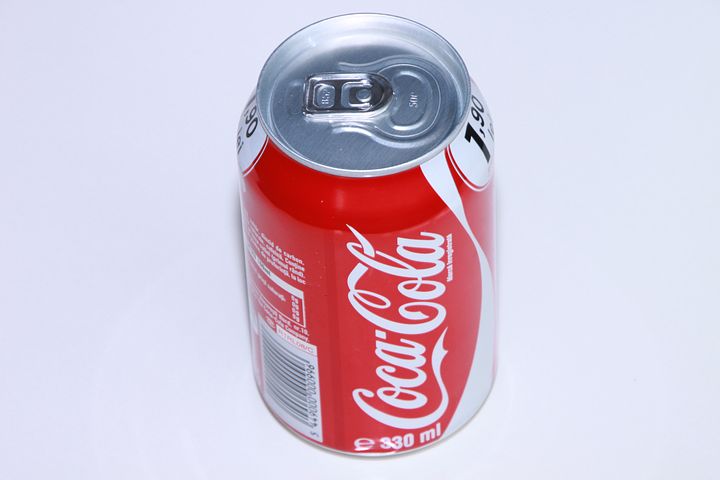
Coke. Zero. Sugar. Three little words; one new drink. In a nod to those who eschew sugar (and detest calories), Coca-Cola proudly offers its latest beverage. Coke was the original, of course. Coke Zero was the low-cal offering for men (Diet Coke was perceived as a “women’s” drink). And now the soda junkie may opt for Coke Zero Sugar, with the claim of original taste but no calories and no sugar.  For my money, let’s hope the sugared varieties still have a shelf life.  Otherwise my cure for headaches just went out the window.

Coke cures headaches?  Well, why not?  Those of us who experience the recurrent forehead fevers will jump on just about any bandwagon to chase away the relentless pain, and a Coke seems relatively harmless compared to the more potent options out there.  But truth be told, a can of Coke is only half the solution.  Chase the Real Thing with a Snickers bar and you have the coup de grace of headache cures. The combined overdose of caffeine, sugar, salt, and protein packs a punch more powerful than half a bottle of Excedrin tablets.

When I was a kid, headaches were my constant companion.  I could sense the pain unfolding well before it up and knocked on my forehead door.  In full bloom, my headaches could only be cured by retreating to a dark, quiet room and sleeping them off.  But try falling asleep when someone’s rapping a hammer against your brain.  The mental/physical anguish of the battle surely coined the phrase “toss-and-turn”.

My mother and my doctor (seemingly one and the same) drew frustratingly repetitive conclusions.  My headaches were not strong enough or persistent enough to prescribe migraine medication.  My headaches were likely brought on by “not enough of this or “too much of that.  Not enough sleep or not enough water.  Too much sun or too much sugar.  Too much sugar?  And now I’m promoting a headache cure with sugar as an essential ingredient?  Sorry Mom – it works.

At one point in my life my headaches were so bad I believed I could generate one by merely thinking about them.  My mother used to say, “don’t get too excited; you might get a headache”.  Ironically, her good intentions were dashed by the very mention of what she was trying to get me to avoid.  But the conjuring really did happen – on more than one occasion.  Think about a headache = get a headache.

Headaches are attributed – at least in part – to dilated blood vessels.  (Dilated blood vessels are attributed to way too many conditions to list here.)  The brain’s response to dilation is to summon a pain companion; a vehicle to announce, “something’s wrong”.  You see, for all its intelligence the brain lacks its own pain receptors, so it seeks another part of the body to act as its surrogate.  Enter: the headache.  Fascinating perhaps, but no fun for the recipient.  There were times I would’ve traded all of my worldly possessions (which admittedly didn’t amount to much) in exchange for the removal of headache pain.  On that note, I don’t want to even think about how a migraine headache feels (after all, I might get one).

Forty-five million Americans suffer from some form of headaches.  Thankfully, I’m no longer a member of that vast club.  Whether from corrective eye surgery I had as a teenager or better control of the “not enough of” or “too much of”, the pots-and-pans forehead pain endured as a kid simply doesn’t visit anymore.  I’m very thankful for that.  I’d like to think I’ve done my time with those miserable toss-and-turn episodes.  But as a former Boy Scout, I know it’s wise to be prepared.  If my brain gets into a “for old time’s sake” mood, I’ll have a can of Coke and a Snickers bar at the ready.

To and Fro

The band Lonestar penned a catchy tune back in 2003 called “My Front Porch Looking In”. The lyrics included the happy antics of the little family inside the house, implying the view “looking in” beat anything to the outside.  That song enters my mind every now and then, especially with the view from my home office looking out over our property. Which got me to wondering, whatever happened to the front-porch swing?

Swings have withstood the test of time, in a world increasingly complex and sophisticated.  The playground swings of my childhood – those chain-and-cloth contraptions suspended from a simple framework of iron pipes – are still in abundance in countless parks and schoolyards today.  Just last week – as my daughter chose an apartment in a large complex in Los Angeles, I noticed the grounds were scattered with small open spaces, each with benches and fountains… and lots of swings.

I can still remember my early days aboard a swing.  Once you figured out how to get your body to generate the momentum, there was no turning back from the addicting to-and-fro.  The reckless objective was to see how high you could go – to the point where you’d almost fall out as you stared down at the sand from the sky above.  If you really pushed it you could get high enough to cause the chains to lose their slack, resulting in a nasty jolt of the chains before you came plunging back to earth.  Finally, there was the I-dare-you launch, where you completed the forward swing with a propel of the body skyward, then dropping to the sand.  I often wondered if you could throw in a gymnastic somersault before you stuck your landing.  Never tried it.

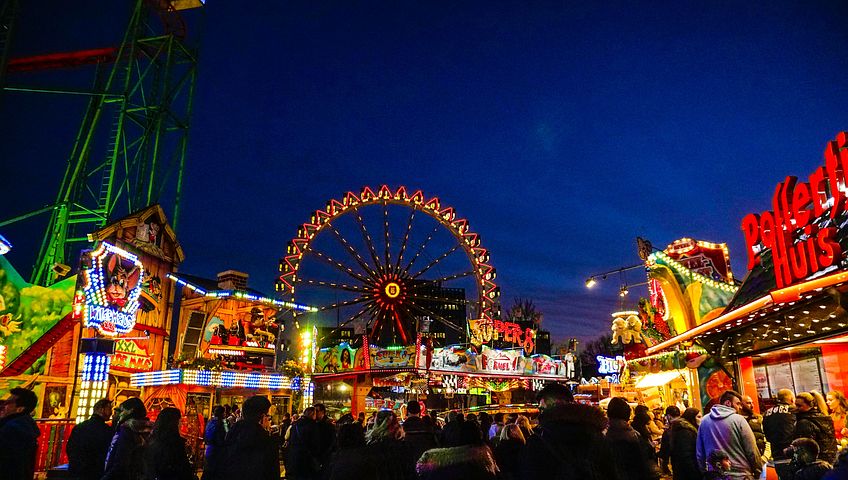
Just yesterday I passed a large carnival in a city park, with those bright, colorful thrill rides popping up higher than the trees.  Sure enough, they had one of those massive swings, where a dozen or more riders are suspended in a circle and twirled up into space.  That first rotation is a little unsettling, but I expect the rest is as relaxing as a merry-go-round.

Swings may still be in parks, but they seem to have gone missing from the front porch.  Therein lies my favorite “swing memory”.  My grandparents’ modest one-story house included a smooth concrete landing just outside the front door, facing a small lawn.  On this spot lived one of those wonderful old mechanical porch swings.  Picture a rocking couch really, with soft cushions and a cloth surround to keep in the shade and cool.  Over time the swing developed a bit of a smell from years of rain and morning dew, but we kids didn’t care.  Our feet easily touched the ground, creating the frantic engine of the to-and-fro.  When two or three of us would sit side-by-side (arms folded so as not to – ewww – touch each other), we would rock the swing so hard it’s mechanics would protest as loudly as my grandmother.  Sometimes we would lie down sideways and swing with just a push of the hands on the concrete.

No doubt, the appeal of the swing stems from those first few years of life, when all of us were rock-a-bye babies.  Just watching or listening to the cadence of something going to-and-fro is almost as appealing as the physical feel.  So when I see an adult on a swing, I’m not surprised.  When I see the long line of rocking chairs at a Cracker Barrel restaurant, I’m not surprised.  And when I find anything that goes back-and-forth, it gives me a sense of calm.

My front porch suddenly seems to be missing something.  I should get a swing.


Running for Roses

On the treadmill this week, surrounded by dozens of others tackling their workouts, an idea formed in my head. Whether it’s running, sprinting, or even dancing on the treadmill (the new trend these days), there’s a subconscious sense of competition with those around you.  Someone wants to leave the room believing they “won” their workout.

Flash back to state fair or neighborhood carnival memories for a second. Those light-bright terror-filled rides drew me in as a kid, but how about the midway games?  That’s where I dropped some serious cash. Ring toss. Shooting galleries. Fishing pond. Skee ball.

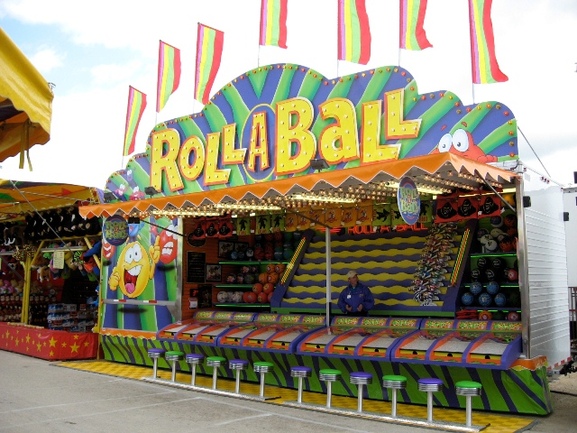
In my book, the most memorable of the midway games was the Roll-A-Ball horse race. A larger-than-average booth with a dozen open stools invited you to have a seat. Along the back was a massive tote-board with horses lined up top to bottom. You had a brief sense of mounting a thoroughbred and trotting into the starting gate. The game began (with an obnoxious bell), and each “jockey” rolled a ball up a small wooden board and into holes.  The further away the hole the faster your horse galloped across the board.  The closer the hole the less the gallop but also the quicker the ball came back to you.  First horse across the finish line won (another obnoxious bell).  Some versions of the game had you shoot targets with water guns instead of Roll-A-Ball.

Here’s a video of the Roll-A-Ball horse race in action.

There’s a ton of frantic energy with Roll-A-Ball.  You play while nervously glancing at the tote-board to see how your horse is coming along. Whenever someone hits a high-score hole their horse surges to the lead. Towards the end you’re aiming for the further holes in a desperate attempt to make up furlongs.  As if the distraction of carnival sounds isn’t enough, thundering hoof beats blare every time a horse makes a move.

With Roll-A-Ball in mind, let’s go back to the gym.  I propose we combine the horse-race concept with the treadmill workout.  Place a big tote board at the front of the room. Assign each treadmill to a runner on the board.  Then create several competitions as everyone works out simultaneously. Who has been running the longest? Who is running the fastest? Who is covering the most distance?  The runners advance across the tote-board according to the individual efforts on the treadmills.  Tote-board results change constantly as runners join or leave the game.

Would people “play”?  You bet they would.  Runners are competitive by nature as they vie to “medal” or win their age category or even just improve their “personal best”.  Runners are entering 5K’s and 10K’s, half-marathons and marathons in record numbers.

Me?  I run because it makes me feel good.  But don’t think I don’t notice the results of my workout spelled out in big, bold numbers on the treadmill display. Total Time. Total Miles. Average Speed. Calories Burned.  Sometimes I race against my former self.  Sometimes I increase my pace to match the faster runner three treadmills over. Sometimes I run longer to outlast the creeper who chose the treadmill right next to me when several others were open.

Competition leads to better workouts so the racing element is a slam-dunk.  Add a “join” option to the treadmill display and you instantly pop up on the tote-board.  Quit whenever your workout is done.  Even if you don’t “win” I’d bet dollars to doughnuts you’d get a better workout than if you were running in isolation.

Mark my words, someone more innovative than me will take this idea and “run with it”.  Gyms will cough up the purchase price because racing games would attract more memberships.  And maybe, just for a moment, runners will feel like they’ve stepped off the treadmill and back into the carnival of their childhood.

Famous Dave’s

In church a few weeks back, the congregation sang “A Mighty Fortress Is Our God”, the popular Methodist hymn with such confident, faith-building lyrics. I’ve heard “A Mighty Fortress…” a hundred times over, yet try as I might to focus on the words I only ever seem to think: “Davey and Goliath”.

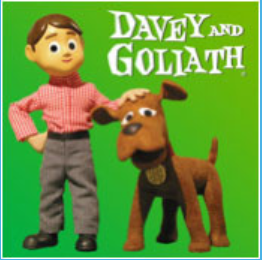
Davey and Goliath was an American clay-animated children’s television series produced by the Lutheran Church in the early 1960’s.  The show was created by Art Clokey (better known for his characters on Gumby and Friends), and focused on childhood life lessons born out of Davey’s experiences alongside his dog Goliath.  Davey always found himself in conscience-testing situations and Goliath brought the wisdom to steer him the right direction.  Davey and Goliath aired on Sunday morning television for the better part of five years and I didn’t miss many episodes.  So why the connection to “A Mighty Fortress…?”  Because the hymn trumpeted behind the closing credits of every Davey episode.  I can’t get that association out of my head.

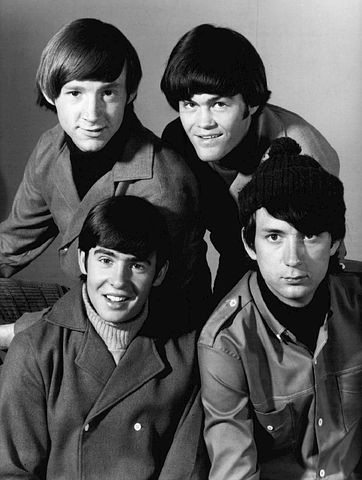
Memory association is a strange bird, as if there are kindred thoughts floating around out there just waiting to be connected.  I associate a Methodist hymn with an old children’s television show, whereas your association might go down a wholly different path.  Take it a step further for example.  With Davey and Goliath on the brain what comes to mind next?  You might think of the Bible story – the young and future king David bringing down the Philistine warrior Goliath with one pull of the slingshot.  Me, I think of The Monkees – the manufactured American rock band of the 1960’s.  The Monkees had the only other Davey I can think of – singer Davey Jones (lower left in the photo below).

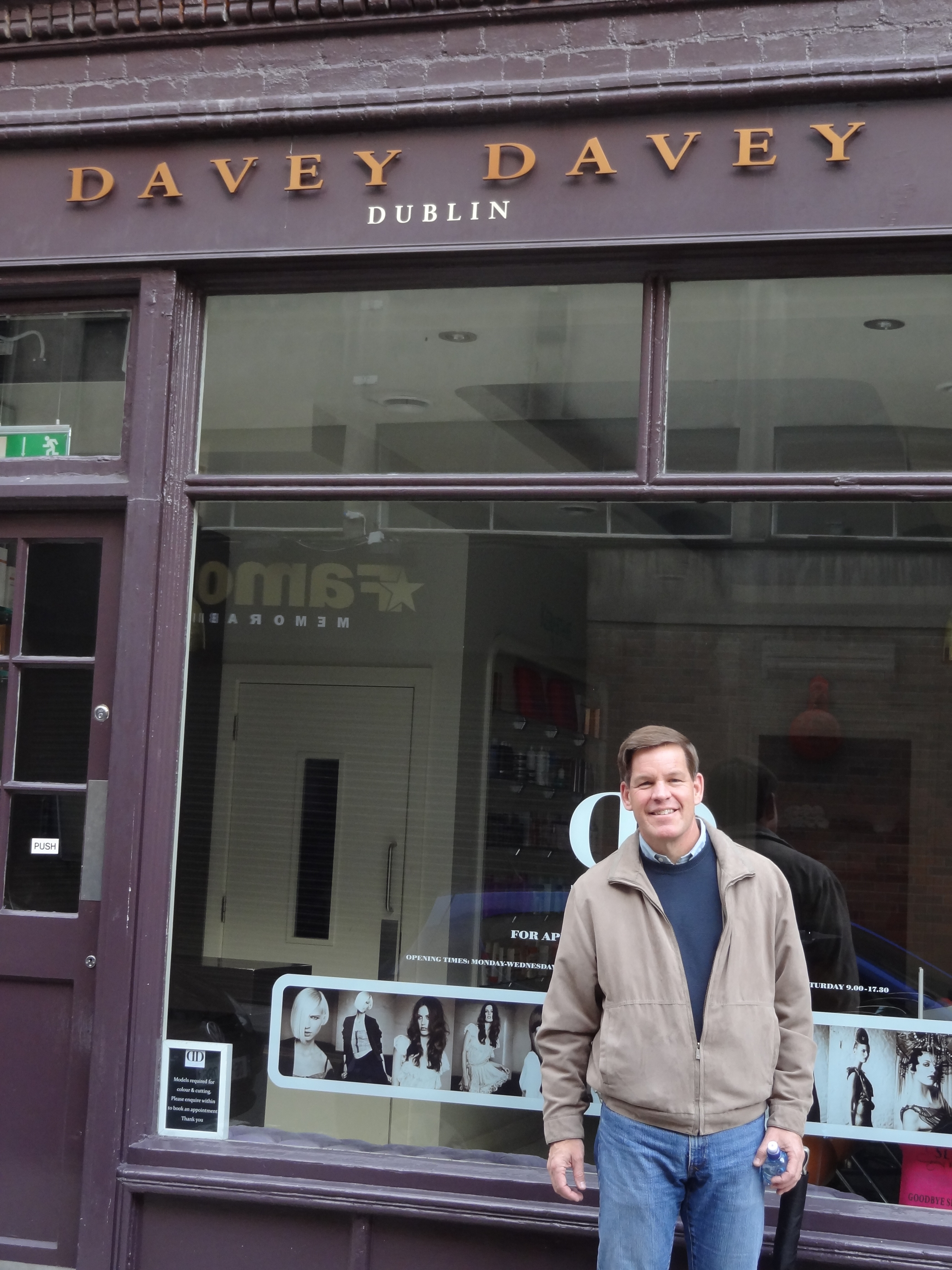
Now that I think about it (memory association at work again), I do have another Davey in mind, which you see in the below photo (not me – the shop).  Davey Davey is a “top hair salon” smack dab in the middle of Dublin, Ireland.  The owners – presumably brothers – have the surname Davey.  That’s a rare find: a surname more commonly used as a given name.

The Monkees always make me think of The Beatles, and just this week The Beatles associate to “sensational” (intentional) misspelling: “Beatles” vs. “Beetles”.  I never thought about it until my son brought it up but the “Beetles” became the “Beatles”, changing their name early on to associate more with musical beats than insects.  How’s that for useless trivia?

The Monkees are also a memory-association “cul-de-sac” for me; that is, I came back to Davey Jones shortly after I left him.  Davey Jones then memory-associates to several other David’s who made small but significant appearances in my life, as follows:

  • David Cassidy – Alongside the Partridge Family (and The Brady Bunch), Cassidy occupied several years of my Friday night childhood television.  Not one of my better life choices.
  • David Lee Roth – Alongside Van Halen, helped develop my appreciation for American rock in the 1970’s (if not the current fashion trends).  As Roth would say, “might as well jump!”
  • David Robinson – Alongside his Navy teammates, helped develop my appreciation for the best in college basketball post players.  Imagine, a class athlete and a class act.  That was “The Admiral” in a nutshell.
  • David Letterman – Reinvented late-night talk show for me and my fellow baby-boomers.  In college I didn’t miss a single Letterman opening monologue (or Top Ten list).
  • “David” – Michelangelo’s most famous sculpture, on display in Florence’s Galleria dell’Accademia near the Piazza della Signoria.  (How “the David” came to be is a remarkable story – read Irving Stone’s biographical novel “The Agony and the Ecstasy”.)
  • David Koresh – Alongside his Branch Davidian cult followers, showed me the horrors of brainwashing amidst the famous 1993 standoff with government officials in Waco, TX.  (There had to be at least one “shame-the-name” on this list.)
  • David Copperfield – Elevated magic to jaw-dropping larger-than-the-stage performances.  My family and I saw him perform in Colorado Springs in the 1990’s.  Copperfield was unquestionably one of the legends of his profession.
  • David Schwimmer – Still can’t get “I’ll Be There For You” (or Rachel) out of my head.

The list goes on and on – dozens of David’s making their mark out there.  Incidentally, the literal association of “David” is “beloved”, which also dates back to the Bible.  Nice.  But that’s not how my mind works.  I just keep coming up with famous Dave’s instead.

Some content sourced from Wikipedia, “the free encyclopedia”.


There’s Something About Mary

Mary Tyler Moore passed away over a week ago and I’ve been thinking about her ever since.  Countless actresses come and go, but then you have those who make indelible impressions with one or two jaw-dropping performances.  Audrey Hepburn, Julie Andrews and Maureen O’Hara, just to name a few.  Meryl Streep.  And Mary Tyler Moore.

81-indelible-1

There’s something about Mary. I read her filmography from start to finish – a span of sixty years of television and movies – and came up with two roles of any significance to me: Mary Richards in The Mary Tyler Moore Show (1970-1977), and Beth in the film Ordinary People (1980).  But I think most people would agree – those performances alone land Mary Tyler Moore in an acting class by herself.

Moore first became a familiar name as Laura Petrie in The Dick Van Dyke Show in the 1960’s, but that was a little before my time.  On the other hand, The Mary Tyler Moore Show was a weekend staple in my house.  At an age when my father still controlled the TV remote (er, TV channel – no remotes back then), my brothers and I were treated to CBS’s Saturday night “killer lineup”, which included The Mary Tyler Moore Show, The Bob Newhart Show, and The Carol Burnett Show.

81-indelible-2

The Mary Tyler Moore Show included memorable opening credits, if only because the theme song was so infectious (“…you’re gonna make it after all…”), as was the final scene where Mary spins and smiles and throws her hat into the air at a busy Minneapolis intersection.  That throw – and Mary Tyler Moore herself – is immortalized in a bronze sculpture you can find at that very same intersection today.

81-indelible-3

In 1980, just as I was heading off to college, Robert Redford directed the Best Picture winner Ordinary People, one of the most gut-wrenching, powerful, “real-life” dramas I have ever seen.  Timothy Hutton burst onto the Hollywood scene with an Oscar-winning performance as Conrad, the younger of two sons in a tormented Chicago family.  Judd Hirsch was also nominated for an Oscar (losing to Hutton) for his portrayal of the determined therapist who counseled Conrad back to stability.  But it was Mary Tyler Moore’s turn as the heartless and unforgiving mother Beth that stole the show.  Her performance was so counter to the sunny demeanor of Mary Richards, I wondered if she was tapping the energy of some real-life bout of depression.  That was the breadth of Mary Tyler Moore’s acting talents.  I’ve only seen Ordinary People a couple of times but the scene where Donald Sutherland tells Beth he no longer loves her still haunts me.  Moore’s silent, crestfallen reaction to that statement could’ve coined the phrase “verbal slap in the face”.

I am even more taken by Mary Tyler Moore when I read some of the details of her life.  Clearly, she tried to embody the positive demeanor and “independent woman” of Mary Richards, but she did so in the face of significant personal tragedy.  She dealt with alcoholism and smoking addiction, drug overdose (her sister), suicide (her son), and years of diabetes.   She took up the baton to promote diabetes awareness and animal rights.  Moore was even tougher and more outspoken than her little/big screen roles would suggest.

81-indelible-4

The theme song of The Mary Tyler Moore show begins with “Who can turn the world on with her smile?” Scroll back up to that first photo.  Talk about ear-to-ear!  And I can’t help but smile back, even as we now say goodbye to Mary.

Some content sourced from IMDb.com.

Demise of the Department Store

In today’s headlines the Wall Street Journal turns to Sears – the aging department store chain – which will close 150 locations in the next several months. Sears will also sell its iconic Craftsman tool brand (to competitor Stanley/Black & Decker) in a longer-term “fix-it-and-return-it” strategy intended to strengthen the company. Clearly these events feel like the beginning of the end for Sears, and the end has been coming for a long time. The day Sears shutters its last store will be a sad one – as if a slice of the proverbial American apple pie is lost forever.

77-senescent-1

In the defining years of baby-boomers Sears was the retail destination (and catalog) of choice.  Sears Roebuck and Company – as it was originally known – bridged the gap between America’s small-town general stores and today’s elaborate shopping malls.  As recently as 1989 Sears was still the largest retailer in the United States.  In a world dominated by Wal*Mart, Target, and The Home Depot it’s hard to picture Sears atop the department store heap just a few decades ago.

The Sears store where I grew up – on the west side of Los Angeles – is not one of the 150 due to close its doors this year.  That makes me happy.  My Sears store is forever embedded in my childhood memories.  It was where my mother clothed me and my four brothers.  It was where my father bought appliances and a workshop full of Craftsman tools (most of which I’m sure he still has today).  It was the brick-and-mortar embodiment of the Sears “wish book” – the wonderfully large and colorful catalog filled with 1960’s kids’ Christmas dreams.  Last and perhaps most significantly, Sears was the location of the “Portrait Studio”, for which my family dutifully dressed up and posed every Christmas.  One of my all-time favorite photos has all of my brothers standing smartly around the Sears-store Santa Claus, while I’m sitting in his lap bawling my two-year-old eyes out.

Sears would enter my life again somewhat unexpectedly, when I was in college studying to be an architect in the 1980’s.  On several trips to Chicago my classmates and I visited the Sears Tower, the distinctive stair-stepped black skyscraper in the center of the Windy City.  The Sears Tower was completed in 1973 as the tallest building in the world, and the first to use a “bundled-tube” structural design.  Forty-three years later it is still the second-tallest in the Western Hemisphere (behind the recently-completed One World Trade Center in New York City).

77-senescent-2

Today’s Wall Street Journal article about Sears – which you can find here – includes dozens of reader comments more insightful than the article itself.  The comments yearning for Sears’ glory days are clearly written by my peers.  The comments blaming Sears’ demise on Amazon and other on-line retailers are largely from younger writers.  In one particularly stinging but accurate account, Wade Harshman writes, “I still like the brand.  I just don’t like waiting in line 20 minutes to buy a wrench because the one Sears rep is wrestling with a 1980 IBM machine and trying to sell an extended warranty on a $5 extension cord.”

If you Google “Sears Department Store”, you get the following up top:

77-senescent-3

It’s a sad statement when all four sub-links of the initial hit point to marked-down prices as the way to get you to buy at Sears.  Then again this is senescent brick-and-mortar shopping we’re talking about.  Montgomery Ward disappeared in 2001.  K-Mart and J.C. Penny hang by a deteriorating thread.  Even Macy’s reports “dreary” holiday sales, poised to close (another) 68 stores this year.  Could Bloomingdale’s or Saks really be next?

Think about Sears and the disturbing/inevitable (take your pick) headlines of retail closings the next time you click your way to another on-line purchase.  Future generations of shoppers may not even understand the meaning of “department store”.

Sourcing the Christmas Spirit

The holiday season often feels like a sprint to the finish.  From the moment the Thanksgiving table is cleared, my brain shifts to the list of “essential tasks” preceding Christmas Day.  In no particular order I know we will a) put up a tree, b) hang the lights,  c) decorate the house, d) write and mail greeting cards, e) send packages to distant family members, f) shop for the Christmas dinner, g) bake cookies, and of course, h) purchase gifts for the family.  We don’t always get everything done.  Some years – like this one in fact – no lights get hung.  Other years no cookies get baked.  There’s never enough time, the calendar mercilessly counts down the days, and just forget about intentions of healthy eating at any point in the process.

75-provenance-1

Thankfully all of this Christmas prep includes a few heartwarming activities.  My family and I always seem to find time to drive around the neighborhood to see the lights.  We don’t trim the tree until the week before Christmas, choosing from more ornaments than we have branches.  We watch several of those cheesy Hallmark Channel movies, with the formula love stories and terrible acting and without-fail-happy-endings.  We keep egg nog in the frig and candy and cookies on the kitchen counters.  We tune our car radios to round-the clock holiday music stations.  We never miss Christmas Eve church.

More than twenty-five Christmases celebrated with my immediate family leads me to this conclusion: the spirit of Christmas is not born from the “prep list” I talked about above, nor even from the heartwarming activities I know will take place year after year.  Rather, the provenance of the spirit is moments that become memories, and memories that last far longer than the Christmas season itself.

I have a favorite Christmas memory from my childhood.  A neighborhood near where we lived staged an annual decorating contest between its several streets.  Not only were the houses fully adorned with lights and ornaments, but the streets themselves had Christmas themes, so decorating was consistent from sidewalk to sidewalk.  I remember one street decorated primarily with candy canes, another with bells, and still another with angels.  They even changed the street names for the season (i.e. “Candy Cane Lane”).  You always knew which street won the competition by the huge blue ribbon hanging from the first lamppost.  After touring every last street of this neighborhood, my brothers and I spent several hours at a nearby mall, purchasing gifts with the precious-few dollars we’d saved as kids.  Finally we’d join up with my parents for a late-night dinner out.  This memory of an evening of family fun stands the test of time – more than forty years ago by my estimate – and always brings a smile to my face.  This memory seems uniquely mine, as if dozens of other families didn’t tour those decorated streets or shop at that busy mall.

I have an equally favorite Christmas memory from recent years.  To slow down the events of Christmas morning, my wife and I created a trivia contest for our kids.  They stand at the top of the staircase outside their bedrooms and we start the questions.  Correct answers earn them a step down the staircase (closer to the gifts). Incorrect answers cost them a step backwards.  The trivia delayed the inevitable, but the first to reach the bottom stair won the privilege of opening the first gift.  It’s a tradition we’ve carried on for years, and a memory that will stay with me long after children stand at the top of our stairs on Christmas morning.

75-provenance-2

Let’s not kid ourselves.  The Christmas season will always be hectic as long as there are gifts to buy and greeting cards to write and family members to visit.  But there will also be moments – some planned and some not.  And memories – some fleeting and some longer-lasting.  It is those memories that without fail bring you comfort, joy, and Christmas spirit.

Patriot Games

Tomorrow a chessboard will be auctioned off in New York City, with an opening bid somewhere north of $75,000.  For that kind of money you’d picture a one-of-a-kind treasure beautifully crafted from the finest materials; perhaps inlaid with gold.  The chess pieces themselves would be intricately carved ivories or bronzes.  On the contrary, the auction block chessboard looks like most others: alternating light and dark wood squares with nondescript wooden pieces.  Not much to look at – unless you know its epic history.

70-allegory-1

In 1972, in what was later dubbed “Match of the Century”, American Bobby Fischer and Russian Boris Spassky met in Reykjavik, Iceland to play a total of twenty-one games of chess over a three month period.  The match recognized history’s eleventh World Chess Champion, with Fischer emerging as the eventual winner.  With the title Fischer claimed a purse that in today’s dollars would be almost $1.5 million.  The chessboard in tomorrow’s auction was used in Fischer/Spassky games 7 through 21, replacing a stone board used for the earlier games.

The significance of the Fischer/Spassky match goes entirely beyond the crowning of another World Chess Champion.  In the 1970’s the United States and its NATO allies, and Russia (then the Communist-ruled U.S.S.R) and its Eastern Bloc allies, were in the throes of a “Cold War” that defined the post-World War II tension between dominant world powers.  The sociopolitical cultures of these “western” and “eastern” countries could not have been more different.  Thus the chess match was seen as an allegory; especially with Fischer – the first American to ever compete for the title, taking on Spassky – the current World Chess Champion and one of five consecutive Soviets to hold the trophy dating back to the 1940’s.  It was as if a feisty newcomer was speaking loudly for the first time.  As former world champion Garry Kasparov described the outcome, “… the lone American genius challenges the Soviet chess machine and defeats it.”

The Fischer/Spassky competition attracted more worldwide attention than any chess match before or since.  All twenty-one games were televised (though the third game had to be illustrated with move-by-move graphics since Fischer insisted on temporarily moving away from the cameras).  In the years following the match, “Bobby Fischer Teaches Chess” became the best selling chess book ever published.  The opening scene of the James Bond film “From Russia With Love” depicted a chess match with moves patterned after Spassky’s .  Chess became supremely popular among American kids (maybe because Fischer was already playing in national championships at the age of fourteen).

70-allegory-2

I have a personal connection with the Fischer/Spassky match, as shown in the photo above.  I learned chess at an early age thanks to the determination of my grandfather.  He insisted on a game every time we were together, and most times he beat me.  Today I have one of his chess sets as a precious keepsake.  But my grandfather also urged me to participate in a school-wide chess tournament, and the trophy you see was the result.  From then on my grandfather teased me by saying he wouldn’t play anymore unless it was for the trophy.

Notice the date of the school tournament; inside the same year as the Fischer/Spassky match.  By wonderful coincidence I was competing at a time when chess was most prominent on the world stage.

My chess game never really matured from those grade school years – and Fischer and Spassky likewise descended into relative obscurity – but a marked impression was made by watching their 1972 match on television.  Now whenever I see a chessboard I’m reminded the game is not just kings and queens surrounded by their armies.  The successful bidder at tomorrow’s auction will hold an emblem of history – from a time when the world’s chess pieces were as divided as never before.

Some content sourced from Wikipedia, “the free encyclopedia”.

Banana Rant

Let’s start with a song today; or at least a verse from a song.  See if you remember this little number:

Jack, Jack bo-back, Banana-fana fo-fack. Fee-fi-mo-mack, Jack!

The song? It’s “The Name Game”, that annoying rhyming chant that should stick in your brain for the next several hours.  Here’s another one:

Day-O! Day-O! Daylight come and me wan’ go home!

The song?  It’s the “Banana Boat Song”, made popular by Harry Belafonte.

65-expunge-1

I mention these songs because they’re happy on bananas.  And I hate bananas. Let me rephrase: there is no fruit, vegetable, or otherwise consumable item on God’s green earth more singularly unappetizing to me than bananas.  I only have to think about the taste of a banana and I consider tossing my cookies.  Bad news for me though – supermarkets, songs, commercials, movies and desserts ensure my world is constantly bombarded with the yellow fruit.  Bananas are as prevalent in the urban jungle as they are in the real one.

I blame my growing-up years, now that I think about it.  My first bike was a 1968 Schwinn “Lemon-Peeler”- the one with the “banana” seat.  What in God’s name was I thinking?  I could’ve had Schwinn’s “Pea-Picker” (green) or Schwinn’s “Cherry-Picker” (red) but no; I had to opt for a “Banana-Peeler” (as it came to be known).  It horrifies me to realize I sat on a banana for a good chunk of my childhood.

My Saturday mornings included “The Banana Splits Adventure Hour”; that silly animal rock band I somehow found entertaining.  Disney crushed me with “The Jungle Book”: King Louie eating bananas every time he was on-screen and even singing about them.  (I will never sing about bananas.)  Finally, I can’t shake those Chiquita banana commercials, the ones with Miss Chiquita dancing and singing: I’m Chiquita banana and I’m here to say… catchy little jingle.  It’s like the media was conspiring to force me to like bananas.

65-expunge-2

Fruit was a requisite item in my school lunches back then.  Oftentimes my mom would put a banana in my school lunch instead of an apple or an orange or grapes.  My protests went unacknowledged at home so I gave bananas away at school, to anyone who showed interest.  Not that I got anything worthwhile in return.  Bananas have little value in the American high school.

All of the above pales in comparison with one ghastly horror-film-worthy banana-filled-memory.  Coming into the kitchen one morning before school, I found my mom busily frying bananas on the stove.  I rubbed my eyes in disbelief but the image didn’t go away – banana slices sizzling and popping in an oil-filled pan.  Seriously?  Aren’t bananas bad enough the way nature made them?  Couldn’t I opt for a bowl of sliced bananas and oranges instead, where enough shredded coconut on top blocks out the banana taste?  Apparently not.  Mom just had to be adventurous.  I can still picture that plate of thin, dark, hot, greasy banana slices next to my more redeeming breakfast items.  Gag.  It’s a forever-imprint on my brain.

65-expunge-4

Even the concept of “acquired taste” failed me with bananas.  For example, I used to hate tomatoes (and yogurt repulsed me even more), but somewhere in my food journey I actually learned to enjoy them.  Now they are staples in my diet.  Not so bananas.  Bananas are as choke-worthy today as they were in that frying pan forty years ago.

If I must eat bananas there’s only one way they’re going down the hatch – in banana bread.  I actually like banana bread.  That’s probably because the dozen other ingredients win the battle and effectively expunge the banana taste.  It’s like Fig Newtons if you hate figs.  Or Oysters Rockefeller, with enough broiled cheese and spinach to effectively kill the oyster.

Opinion: bananas foster, banana splits, banana cream pies, and banana pudding are all outstanding dessert choices as long as you leave off the bananas.

65-expunge-4

Facts: 100 billion bananas are consumed every year across the globe.  Americans alone account for 27 pounds/person/year, which equates to 108 bananas!  You’ll find bananas on the list of the “World’s Healthiest Foods”.  The Latin word for banana translates to “Fruit of the Wise Men”.  California even has a Banana Museum for crying out loud. (17,000 items!)

None of that moves me.  Gwen Stefani may sing B-A-N-A-N-A-S on “Hollaback Girl” and shirts or sweaters may tempt me at Banana Republic, but I will never put “like” and “bananas” into the same sentence (er, except this one).  But hey, call me if you’re hungry.  My 108 bananas are all yours.

65-expunge-5


Thirst (for) Knowledge

Water.

Two parts hydrogen compounded with one part oxygen.  Transparent, odorless, and tasteless, yet we can’t survive more than a few days without it.  If not for oceans, lakes, ponds; rivers, streams, and creeks; and a whole lot of underground aquifers, we humans would be in a heap of trouble.  With due respect to Harry Potter, water is the elixir of life.

63-elixir

It’s fair to say most of us don’t drink enough water for optimal health. The long-held belief that eight glasses a day is sufficient has been replaced by the following formula: your body weight in pounds, divided by two, expressed in ounces. For most of us that means even more than eight glasses.  Gulp.

Somewhere along the way of several years of working out, I developed the habit of drinking small amounts of water during exercise, instead of chugging just before or just after.  On the treadmill for instance, I take a slug every time I complete a kilometer.  In the cycle class I drink every time the instructor says to pick up the bottle.  In a road race I never pass up the tables of water cups.  No question; the body works better with a regular intake of water.  Or at least a splash to the face.

Whenever I know I’m not drinking enough water I recall two vivid memories where I reached full-on dehydration status.  The first occurred as a child, when I was driving in the desert with my family.  I let the day go by way too long without taking a drink, and before I knew it my throat was so parched I could barely speak.  The heat of the day surely made it worse.  I pleaded to my grandparents to stop at a gas station (or anywhere with a halfway sanitary drinking fountain), which we eventually did, and I’m sure I took in a quart or more to quench my thirst.  Here’s a little irony: my desert dehydration is a fond memory because I can still hear my grandfather’s distinctive voice, saying, “need to wet your whistle, do ya?”  That was over forty years ago.

My second “parchment” occurred just short of the summit of Pikes Peak here in Colorado Springs – the first time I climbed it.  Pikes Peak is the highest mountain in the southern Front Range of the Rockies, at just over 14,000 feet.  Using the popular Barr trail it’ll take you five or six hours to get to the top.  Despite recommendations to carry a lot of water I only brought one 12-oz. bottle in my pack, which I refilled at a campsite halfway up the mountain.  I was getting by okay until the very last mile, when I ran out of water and my body literally began to shut down.  The combination of the effects of dehydration and altitude was devastating.  I could only walk a hundred yards at a pop, taking a seat on the rocks each time to recover for several minutes.  Mercifully I was close enough to the summit that I finished the hike, but not before realizing I’d been woefully unprepared.  In extreme circumstances the body demands a lot of water.  Certainly more than half your body weight in ounces.

If an elixir is defined as “a magical or medicinal potion”, then water qualifies in my book, and especially here in the high altitude of the Rocky Mountains.  It took a few years for me to gain a little thirst knowledge, but now my water bottle is my constant companion.  On that note, I think I need a drink!