Caffè Companions

My wife made a batch of rolled sugar cookies last week, cut into traditional Christmas shapes like bells, wreaths, and stockings. It’s the first time in a long time for these cookies, inspired by the assistance of our young and attentive granddaughters. Though the cookies never donned their frosted/decorated costumes, they sure tasted great all by themselves. Kind of like the biscotti I’m giving up in 2026.

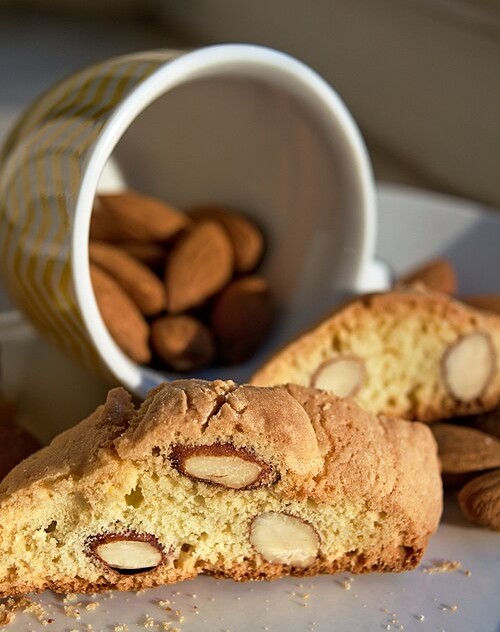
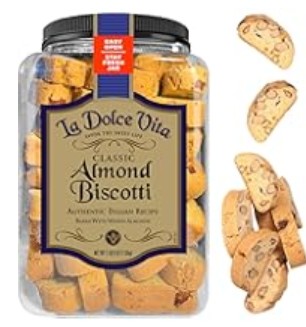
Are you a fan of biscotti?  They’re the small, oblong cookies that resemble tiny slices of sourdough bread.  They’re hard and dry, with just a smattering of almonds or almond extract for extra flavor.  Biscotti are meant to accompany a drink, just as two of them do every morning with my coffee.  Biscotti ward off the nausea I feel when I down my vitamins on nothing but a cup of joe.  Nice excuse for daily cookies, eh?

“Cantucci” (not biscotti)

When the calculator (which doesn’t lie) reveals you ate over seven hundred biscotti over the course of 2025, you quickly come to your senses and declare a resolution for the coming New Year: Shift biscotti from “habit” to “occasional treat”.  Yep, it’s time to cut down on carbs.

Before we seal the lid on the cookie jar however, biscotti deserve a little more attention to set the record straight.  First and foremost, the pint-sized pastries I consume with my morning caffè are not technically biscotti; they’re cantucci.  Cantucci contain ingredients like milk, butter, and flavorings, none of which are found in an authentic Italian recipe for biscotti.

Here’s another distinction.  Biscotti were never meant to be partnered with coffee.  They were (and still are) served alongside a glass of sweet wine as a light Italian dessert.  Americans pair cantucci with cappuccino at upper-crust hotels and coffeehouses.  You’re supposed to dunk to make them softer (and take the edge off the coffee) but I prefer to eat them just the way they are.

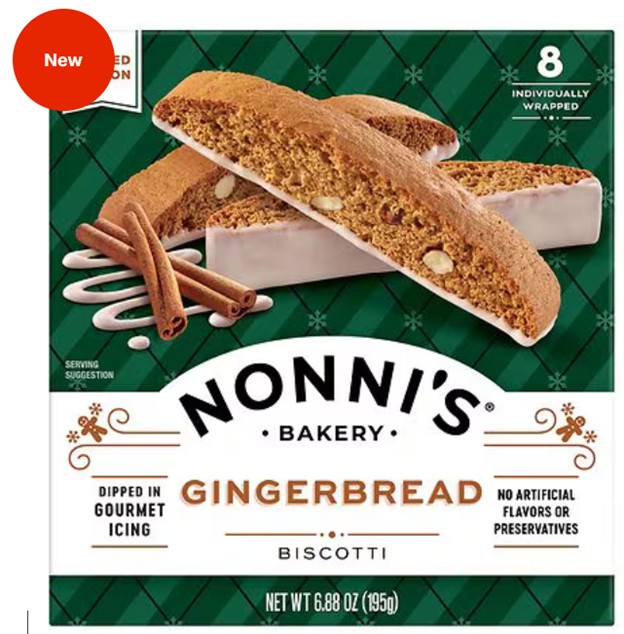
Biscotti translates to… not “biscuits”, but “twice-baked”, which is exactly how they’re made.  First baked as a full loaf; then baked again as individual cookies. Now then, another Italian translation for you: Nonni means “grandmother”.  Nonni’s also means a brand of biscotti (whoops, make that cantucci) you’ll find in your grocery store… and in my pantry.  The Nonni’s version is an unashamed dessert cookie, with a layer of chocolate, caramel, or lemon frosting to add to the appeal.  My advice: Nonni’s need to be put on a hard-to-reach shelf else they’ll become a habit just like the ones with my morning coffee.

In some Western European cultures biscotti are thrown into savory dishes, which I’m not going to get into because I find the idea unappealing.  Biscotti are classy little sweet treats in my book – one of the two items in my “grown-up milk and cookies”.  Alas, in 2026 it’ll just be “grown-up milk” for me… that is, as long as I stay away from my wife’s sugar cookies.

—————-

LEGO Trevi Fountain – Update #7

(Read about the start of this build in Brick Wall Waterfall)

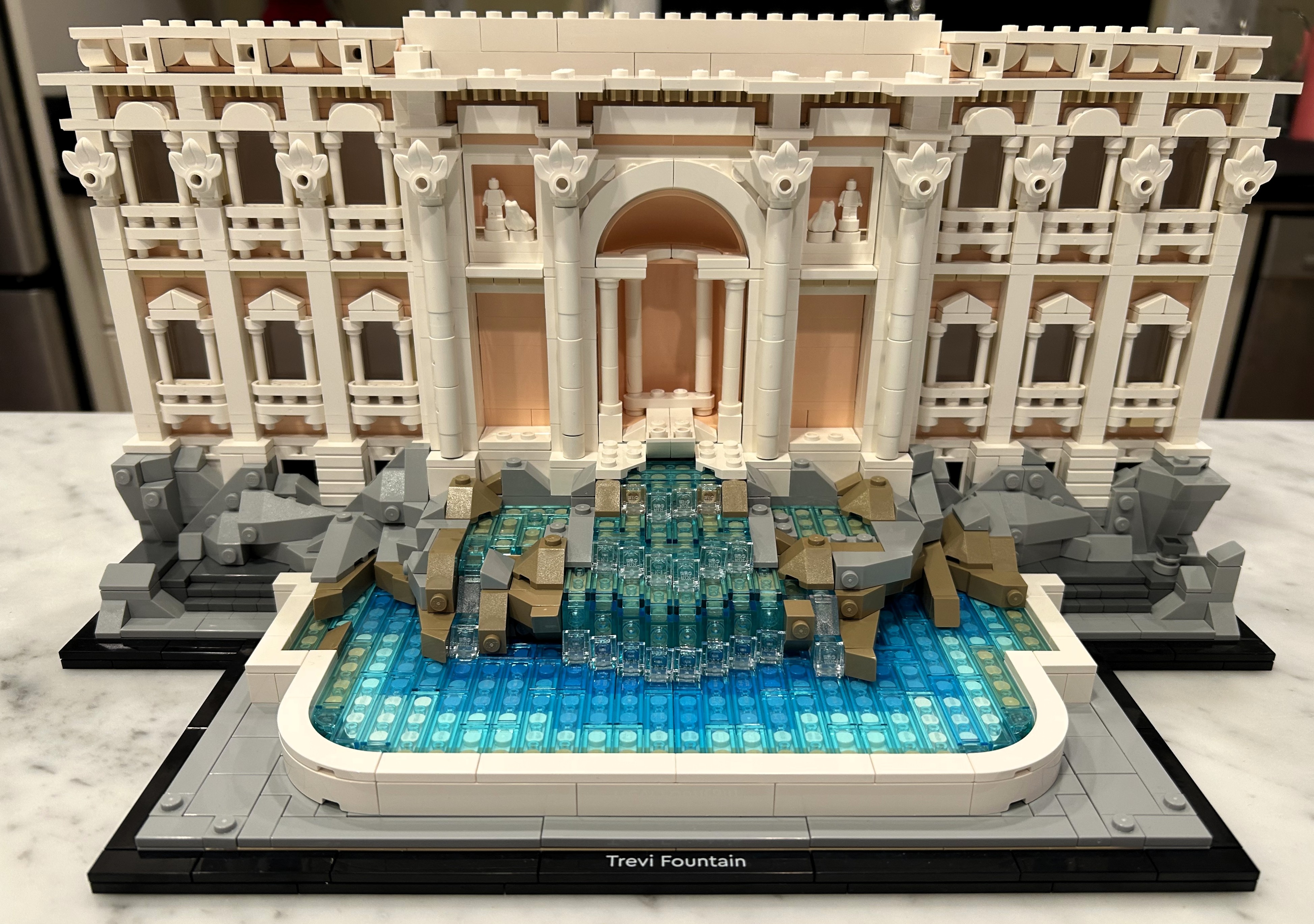
Today we took a mini road trip, as I chose to build the fountain’s Bags 12 and 13 – of 15 bags of pieces – on the kitchen counter (instead of upstairs in the home office).  Kind of fitting considering the counter is topped with white marble.  Kind of annoying considering the laundry machine and dishwasher were running nearby the whole time, interrupting Arcangelo Corelli’s moving “Christmas Concerto” in G Minor.

Trevi statues are TINY!

Maybe it was the change of venue but some strange stuff happened today.  To begin with, I couldn’t find the very first piece in the build at all, until I looked closer at the instruction manual drawing and realized I was after a tiny statue.  Once I found him I was off and running, though I found it sad that one of his companion statues ended up being a leftover piece.

Thought you should know: the back side of the LEGO Trevi is a sheer wall of white.

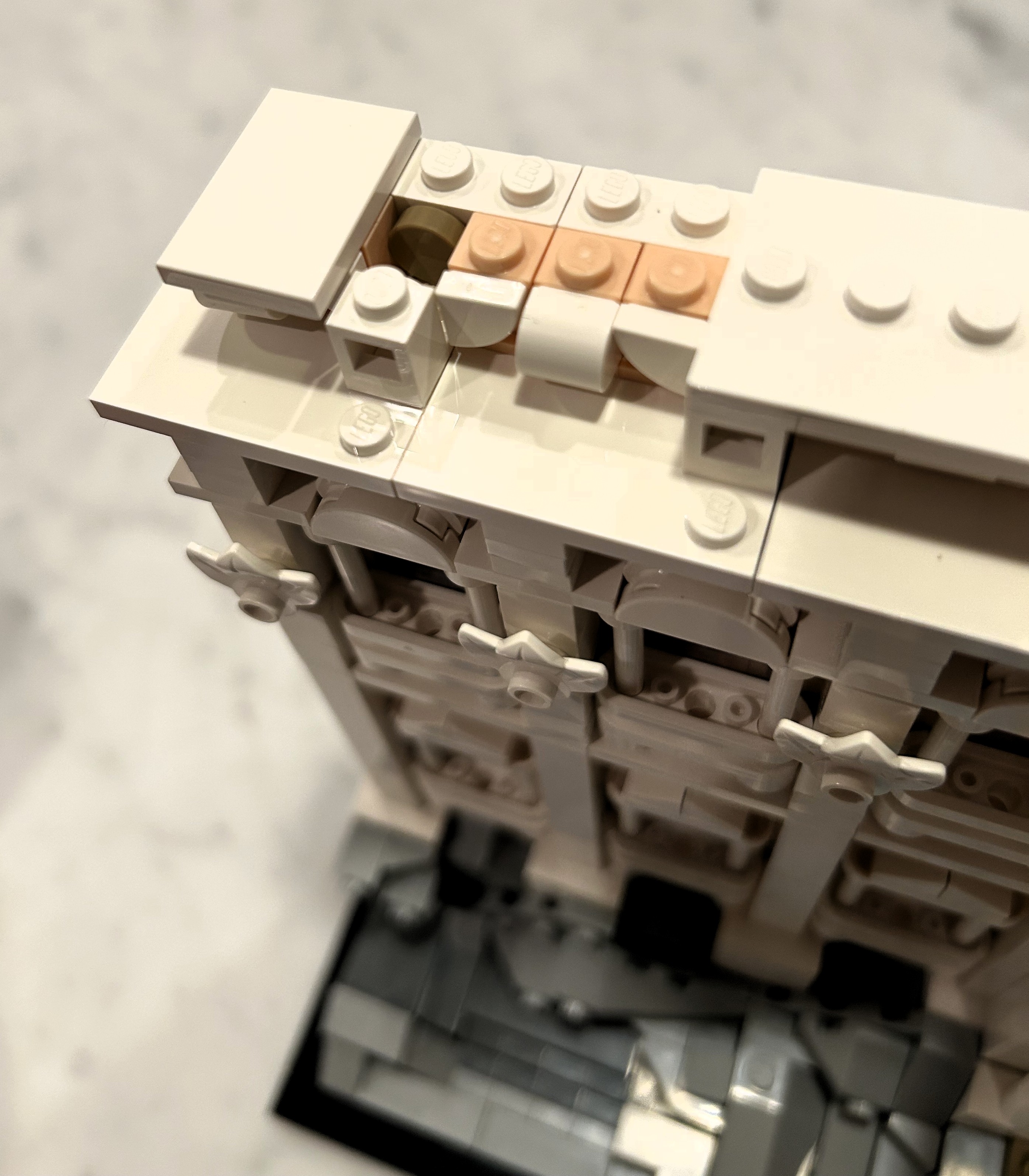
Now for the strange stuff.  I assembled a flat L-shaped piece on top of another flat L-shaped piece, only to discover they weren’t supposed to go together that way.  No amount of fingernail dexterity could pry those two apart.  Fortunately I found myself in the kitchen.  Sharp knives everywhere!  It took a careful pry without cutting myself but I finally got those two unmarried.  Never let it be said building LEGO models isn’t a dangerous sport.

That little brown round one (nestled top left) was missing from Bag 13!

More strange stuff.  LEGO left a piece out of Bag 13.  Okay, technically they left it out.  “Technically” because in my growing pile of leftover pieces I found its twin.  But considering LEGO never leaves out pieces, I had to wonder:  Did the little guy just wander over to my leftover pile when I wasn’t looking?  Or is he somewhere in the trash right now, along with the cellophane bag of Bag 13?  Maybe he’s resting quietly on the kitchen floor just waiting to stub my toe?  Who knows.  I’m just thankful I had a “replacement” from my leftovers.  And I don’t think I’ll be building LEGO models in the kitchen anymore.

Next week: The Trevi is completed!

Running build time: 6 hrs. 52 min.

Total leftover pieces: 35 (including a lonely little statue)

Some content sourced from Wikipedia, “the free encyclopedia”.

Cold Brew

Seemingly overnight, a new drive-thru named 7 Brew showed up next door to our local supermarket.  A quick glance as I drove by suggested their slogan: “Come for the coffee, come again for the people” is on the mark, with more employees dancing around the drive-thru lanes than making drinks in the petite building itself.  7 Brew advertises an “experience” as much as it does a menu of coffee and energy drinks.  It’s just the latest concept to steal market share from Starbucks.

7 Brew

Did you know today is “Red Cup Day” at Starbucks?  Red Cup Day is the coffeemaker’s nod to the beginning of the holiday season.  Buy a Starbucks “holiday” drink and you’ll also receive a festive reusable cup – more distinctive than the usual white ones.  The red cups suggest Christmas comes early this year, and encourage the purchase of peppermint mochas, eggnnog lattes, and iced gingerbread chais.  Somewhere in all that there might even be coffee.

I admit, the Starbucks Chestnut Praline Latte really is Christmas in a cup.  The drink tastes of the same spices you’ll use with Grandma’s cookie recipes this season.  And on a recent trip through Chicago O’Hare, my wife and I caved to a couple of Starbucks’ ever-popular Pumpkin Spice Lattes.  But here’s my point.  Starbucks is no longer my go-to for coffee drinks.  It never was my go-to either, but there were plenty of morning commutes when I couldn’t pass up a Flat White and a couple of egg bites.  Now I drive by without pause, the same way I’ve done so with McDonald’s for decades.  It begs the question: has Starbucks become passé?

There are signs suggesting we’ve already put Starbucks in the rear-view mirror, even if 38,000 locations still dot the globe.  Like 7 Brew, Starbucks has always tried to deliver an experience as much a drink.  Come on in.  Hang out for awhile.  Even if you don’t, peruse all the “merch” while you’re standing in line.  Chances are pretty good you’ll spend more on logo items and baked goods than coffee.

This year, Starbucks features a 20-oz. “Bearista” cup.  It’s a refillable glass ontainer with a straw and it’s being marketed as a collectible.  You’ll find these bears at your nearest Starbucks for $29.95.  Or maybe you won’t, because they seem to be disappearing as fast as they’re put on the shelves.  If you’re a little desperate, find one on eBay for $500 or more (coffee not included).

To me that’s a good way to describe Starbucks these days… a little desperate.  They’re closing stores without drive-thru lanes, which suggests they’re trying to reduce the money they spend on leases.  They’re laying off retail and non-retail employees, the typical corporate strategy to try to do more with less.  And they’re coming up with bear-shaped cups the size of a Starbucks “Venti”, so you’ll purchase their largest coffee when you wouldn’t have done so with a regular cup.

If you think the “bearista” is cute – and would pay $29.95 for it – how about “Hello Kitty” products?  Coming soon, you can buy a “plush” wearing a Starbucks green apron, and any one of five Hello Kitty containers, from water bottles to ceramic mugs.  Each of these runs you $30 or more (again, without the coffee).  Cats and coffee?  It’s a desperate strange marketing strategy, perhaps aimed at a generation of consumer that seeks something more trendy than coffee in a red cup.

This year, the Pumpkin Spice Latte showed up on the Starbucks menu on August 26th; hardly what I’d call “fall”.  Their Christmas-y drinks debut today, fully two weeks before Thanksgiving.  That’s stretching the seasons a little.  But let’s say I still splurge for a Grande Flat White, a couple of Egg Bites, and a slice of Iced Lemon Loaf.  I’ll pay $20 before I even consider the purchase of a “bearista” or a kitty.  It may be time to move on from the red cups.  Maybe I’ll give 7 Brew a try instead.  $7 gets you their smallest size… even pricier than Starbucks.  No guarantee you’ll find any coffee in that cup either.

(Coming next week: more updates on the LEGO Trevi Fountain!)

A Bowl of Snowflakes

Part of the appeal of Halloween – at least for us baby boomers – is the thought of innocent days (and nights) from our distant past. Not only were we kids back then, we cavorted in full costumes through our neighborhoods without a parent in sight. Every house left a light on or a door open to welcome trick-or-treating. Every street seemed safe and inviting.  And the treats were often as homemade as they were store-bought. Cookies. Lollipops. The odd neighbor doling out little sausages hot off the grill from his front yard (BBQ sauce optional). And the occasional popcorn ball.

Who doesn’t love a good popcorn ball?  Me.  I don’t.  Popcorn balls may be a nostalgic Halloween memory but they’re also an insult to popcorn.  Whoever invented them turned a savory snack into a sickly sweet one.  We’re not talking caramel-, chocolate-, or even kettle-corn sweet here;  just liquid sugar designed to act as glue to make popcorn a convenient handheld.  Awful.

I admit it, I’ve become a popcorn snob the way some people are about coffee.  There’s a way to enjoy popcorn and there’s a dozen ways not to.  It’s a snack that deserves to get it right, because getting it wrong is anything but a “treat” (like popcorn balls).

Popcorn eased its way into our after-dinner desserts by necessity.  One day (night) my wife and I sat there after the evening meal and realized we were having dessert way too often.  It was always ice cream, cookies, or whatever else we could find in the pantry.  Somehow a savory dinner necessitated a sweet dessert.  Bad habit – very bad.  Instead, make the dinner healthy enough, eat it early enough, and keep yourself off the couch watching TV.  Then dessert rarely enters the conversation.  Yeah, uh, we’re still working on that.  The dinners are healthy, but we can never get them on the table – er, couch – before 7pm.

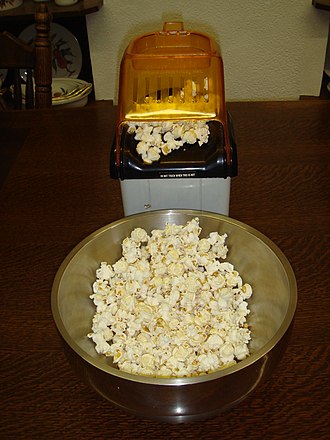
Popcorn to the rescue. It’s a dessert that doesn’t feel like a dessert.  It’s not sweet, and with an air popper it’s all of three ingredients.  Popped corn, topped with butter and salt.  Make those first two “organic” and the last one “Celtic sea”, and it sounds like something that’s actually good for you.

Popcorn belongs in a bowl, not in a ball.  We take the largest bowl in our kitchen, fill it almost full with popped corn, and call it dessert.  Oh, right, but that’s just for me.  Then we take the second-largest bowl in our kitchen and pop a similar serving for my wife.

Before…

Since I always aim to educate a little, here’s popcorn trivia worth remembering.  One, the corn used for popping is not the same as the kernels on the cob (so don’t get any ideas).  Two, when the kernels burst – literally inside out – you get one of two shapes; snowflakes or mushrooms.  Snowflakes are what we have at night for dessert, and what you find severely overpriced in movie theaters.  Mushrooms are what you find in a box of Cracker Jack or Fiddle-Faddle.  Think teeny-tiny popcorn balls.  As for the kernels that don’t pop?  They’re called “old maids”.  In the world of popcorn at least, you’d rather be a snowflake than an old maid.

After…

Some more fun facts.  Popcorn displaced movie candy during the WWII years because there was a shortage of sugar.  Years later it’s still the more popular concession at the theater.  On average every American consumes 58 quarts of popcorn every year.  Picture those red/white striped cardboard containers you see when you purchase popcorn from a cart.  Multiply by 58.  You eat a lot of popcorn.  But why shouldn’t you?  It’s convenient, easy-to-make, and healthy as long as you use an air popper.  Really healthy if you substitute olive oil for the butter, which a lot of people do these days.  But I say ewwwwwww to that.  Leave olive oil to the Mediterranean diet instead.

All this talk of popcorn has me thinking it’s time for dessert.  It’s easy to forego the sweet stuff when savory snowflakes beckon.  Just remember, it’s not a ball of popcorn, it’s a bowl.  A proper presentation precedes perfect popcorn.

—————-

LEGO Trevi Fountain – Update #2

(Read about the start of this build in Brick Wall Waterfall)

Let it echo throughout the streets of Rome, Dave is no Michelangelo (and yes, I know Michelangelo didn’t design the Trevi Fountain but he could sure sculpt).  In today’s effort to rise the LEGO fountain from its foundation, I made countless placement mistakes.  I got four steps into Bag 4 – of 15 bags of pieces – and realized I’d placed everything  just a little bit off on the foundation.  That meant breaking it all down, going back to the first step, and starting over.  Can you imagine my fate if I made this mistake with the real Trevi?  Placed and set the travertine just a little bit off?  The foreman would have my head! (which is no joke, at least not three hundred years ago).

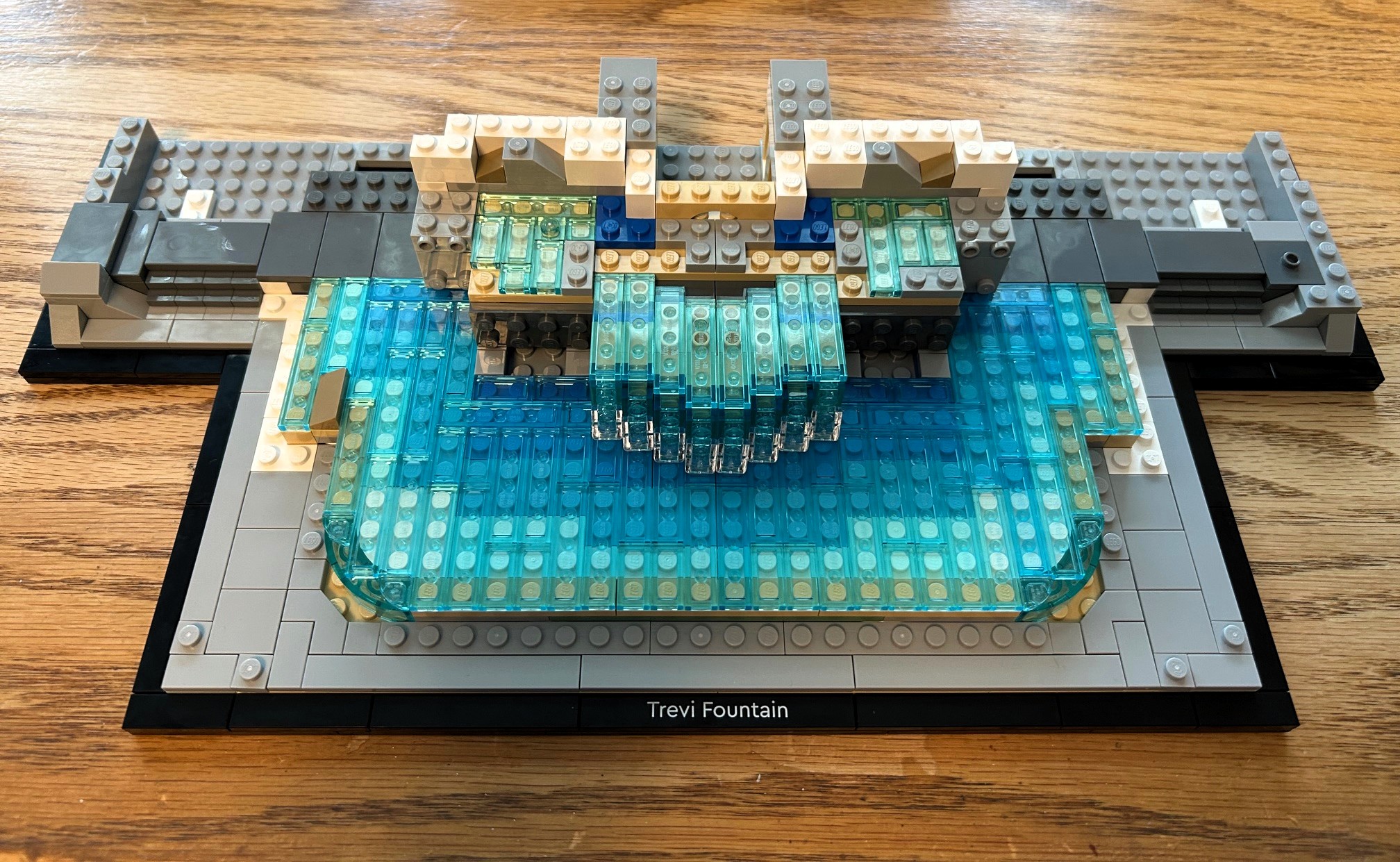
“Building” water is not that easy

Frankly, everything seemed off today.  I kept getting the piece placement slightly wrong, as if I refused to learn from my last mistake.  At one point I turned two pages forward in the instruction manual instead of one, skipping a full two steps in the build.  And the below photo is what “broke the camel’s travertine”.  Tell me reader, what’s wrong with this picture?  Five little leftover pieces and one BIG piece, that’s what.  LEGO never throws in big leftover pieces.  Sure enough, I paged back through the manual, and there it was.  I’d overlooked the step where you place that arch.  Never mind that it’s buried under “pieces” of blue water now.  Leave it out and our beautiful fountain might collapse into a pile of very expensive rubble.

You know who’s laughing about all of my missteps today?  The singers in the music I chose for my accompaniment: Rossini’s The Barber of Seville.  His opera may be about money, disguises, lovers and all that, but it sounded more like getting scolded over and over through song.  You got overconfident, Dave (tra-la-la).  You’re no sculptor, Dave (la-ha-ha).  Maybe LEGO isn’t for you after all, Dave (wha-ha-ha-HA!)

The gleeful singing in “The Barber of Seville” is all in Italian, so for all I know they really did change their tune to berate my amateur building efforts.  I took that to heart.  Bags 5 and 6 are gonna have to wait until next week.  I sure hope the foreman won’t look at this decision as “getting behind schedule”.  He might have my head!

Running build time: 1 hr. 44 min.

Total leftover pieces: 10

Some content sourced from Wikipedia, “the free encyclopedia”.

Horses on Circular Courses

In 1972, Billy Preston topped the Billboard Hot 100 chart with the catchy “Will It Go Round In Circles”. A year later, The Spinners spent five weeks at #1 on Billboard’s R&B chart with “I’ll Be Around”. More recently, Kacey Musgraves’ debut single “Merry Go ‘Round” won the Grammy Award for Best Country Song.  All of which is to say, if I’m asked to celebrate “National Carousel Day” I have a great choice of theme songs for the occasion… played on endless loop, of course.

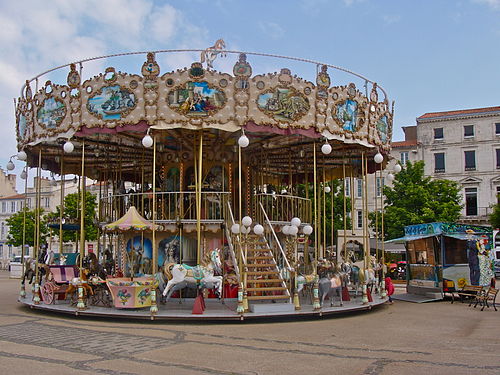
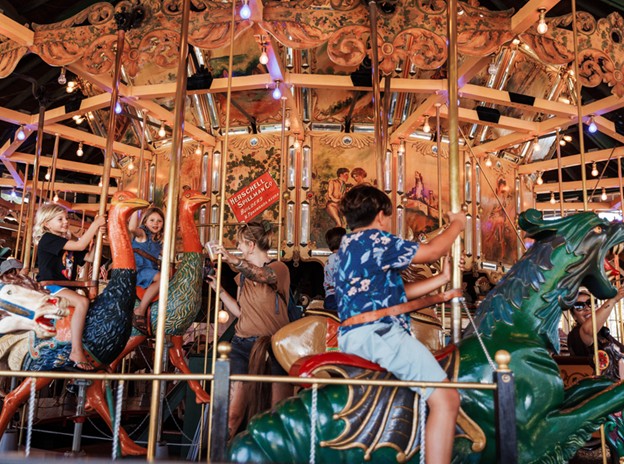
A double-decker!

National Merry-Go-Round Day (I prefer “Carousel”) was this past July 25th, as it has been every year since 2014.  Did you skip it like I did?  The holiday claims to “celebrate the carousel’s history and joy, particularly marking the first U.S. patent by William Schneider in 1871.”  And to celebrate, we’re meant to visit a local carousel, go for a spin, and post pictures of ourselves doing so online.  So we drop everything we’re doing on July 25th and climb on a wooden horse?  National M-G-R Day doesn’t even rate as a Hallmark holiday (and don’t waste your time trying to find a card to prove me wrong).

Contrary to my opinion about M-G-R Day, I think carousels are charming and a bit of innocent fun (other than those brass rings, which we’ll get to in a second).  Carousels inspired memorable scenes in Mary Poppins and BigCarousel was the Rodgers and Hammerstein musical that Time magazine deemed “the best of the 20th century”.  The “Carousel of Progress” was (and still is) one of the more unique attractions at Disneyland.  And of course, carousels led to those pipe and metal spinners we all played on at the park when we were kids.

Carousel is derived from the French word for “little battle”, which hints at why we’re riding them at all today.  In 17th century Europe, equestrian tournaments included “ring jousting”, where the rider attempts to spear a ring-on-a-string with his joust as he flies by.  To practice this sport without wearing out the horses, a clever soul invented the carousel, complete with wooden horses on poles and a real horse to pull the device in circles.  Eventually carousels made their way into carnivals, and then to the prominent locations where you find them today.

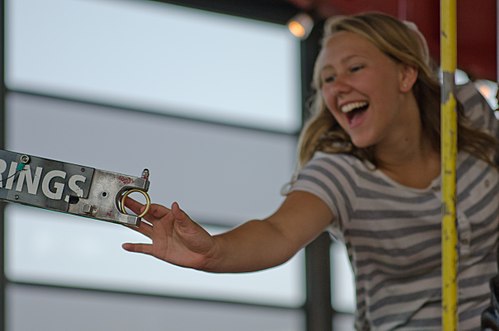
Care for a ring?

Now you also understand why early carousels had ring dispensers.  They were a nod to ring jousting!  The dispensers were filled with iron rings along with a few brass ones.  If you were lucky enough to ride an outside horse and grab a brass ring (which is harder than it sounds as your horse goes up and down), you could exchange the ring for a prize or another loop on the carousel.  For good reasons – safety being one – ring dispensers have been removed from most carousels today.

The people who came up with National M-G-R Day should’ve probably gone with “International”, because many of the world’s most distinguished carousels spin outside of the United States.  The Carousel El Dorado in Tokyo, Japan, built in 1907, is the oldest amusement park ride still in operation in the country.   The Lakeside Park Carousel in Ontario, Canada (1905) includes a self-playing organ that uses rolled sheets of music, rewinding one while playing the next.  The Letná Carousel in Prague, Czechia (1892!) is one of the oldest in Europe, remodeled in 2022 but still housed in its original wooden pavilion.

Looff Carousel (1911)

America has its share of prominent “gallopers” as well.  The Looff Carousel in Santa Cruz, CA is one of the few remaining with a ring dispenser, and entertains with the music of three organs.  The Over-The-Jumps Carousel in Little Rock, AR (1924) simulates the natural movement of a horse instead of just going up and down on a pole.  And the Flying Horse Carousel in Westerly, Rhode Island (1876!) is exactly as advertised.  The horses are attached to the center spindle instead of the wooden platform, creating a better sensation of flying through the air.

Dorothea Laub Carousel (1910)

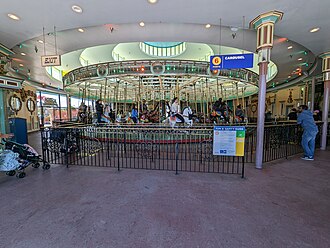
Okay, I have a confession.  I had the perfect opportunity to celebrate National M-G-R Day just days after it happened this year.  My wife and I traveled to San Diego with our children and grandchildren for a beach vacation and found ourselves in Balboa Park, home of the Dorothea Laub Carousel (brass ring dispenser!)  If we hadn’t already worn out the little ones on a long walk through the Japanese Friendship Garden we might’ve made it to the wooden horses.  But I’m not losing sleep about it.  After all, National M-G-R Day will come ’round again next year.

Some content sourced from Wikipedia, “the free encyclopedia”.

Pride, Pomp, and Circumstance

I managed to get through high school literature class without having to wrestle with Shakespeare, not even once. To me, Romeo and Juliet are simply characters from a movie I’ve never seen. Hamlet is another name for a small village. Othello is a board game I played as a teenager. But hey, maybe I should be a fan of Shakespeare. After all, he gets the credit for penning the phrase “pomp and circumstance”.

It’s true – “Pride, pomp, and circumstance (of glorious war!)” is a line from Shakespeare’s play Othello, written way back in 1603.  Somewhere in the hundreds of years since, “Pomp and circumstance” became the name of the musical march we all associate with graduation ceremonies.  But for today’s purposes, pomp and circumstance (or “P&C” if you will) means “formal and impressive ceremonies or activities”.  And Monday’s presidential inauguration ceremony was the perfect example of that.

I am a big fan of American P&C.  Without it the inauguration ceremony would’ve been nothing but mundane repeat-after-me oaths.  With it you get your heart fill-er-upped with pride.  Monday’s ceremony was replete with red, white, and blue decor.  American flags were everywhere.  The guests of honor were escorted to their seats by men and women in splendid uniforms.  The cannons nearby boomed over and over when the oaths were completed.  And for my American dollars, nothing says pomp and circumstance like those patriotic anthems.

U.S. Naval Academy Glee Club

Having spent most of my years in Colorado Springs, “America the Beautiful” is close to my heart because its lyrics were born from the top of nearby Pikes Peak.  All credit to Carrie Underwood for her performance of its first verse on Monday, enduring technical difficulties to sing a cappella.  Then there was the charismatic Rev. Lorenzo Sewell, embellishing his prayer of gratitude with the opening lines of “My Country Tis of Thee”.   And you’d be forgiven for shedding a tear during the soaring “Battle Hymn of the Republic”, belted out by the men and women of the U.S. Naval Academy Glee Club (and earning a standing ovation).

Macchio

But I’m forgetting one more anthem.  Or should I say, I can’t forget the one more.  Yes, Christopher Dean Macchio (“America’s tenor”) sang “The Star Spangled Banner” to close out the inauguration ceremony, but he also performed another anthem to kick things off and I’m still humming it today.  Why, I ask myself, have I never heard “O, America” before?

“O, America” – go figure – was written by an Irishman.  Brendan Graham penned the lyrics into a big hit for the group “Celtic Woman”.  You’d think the words would be from the perspective of someone overseas but “O, America” is clearly about someone here… and someone now.  Have a listen and I think you’ll agree.  In the words of Othello, “O, America” is all about “pride, pomp, and circumstance”.  This week I am filled with all three.


LEGO Notre-Dame de Paris – Update #2

(read about the start of this “church service” in Highest Chair)

I’m glad I remembered my antiperspirant today.  Bags 2 and 3 – of 34 bags of pieces – encouraged sweat, tested patience, and made me realize my fingers are anything but nimble.   My hands are still shaking after the hour and change it took to build this section.

We started by tiling the cathedral floor.  Look closely – those black and white pieces aren’t all the same shape or orientation.  I installed one wrong and almost needed pliers to get it back out.  Imagine if you made the same mistake on the floor of the real Notre-Dame.  You’d get fired for wasting priceless marble!

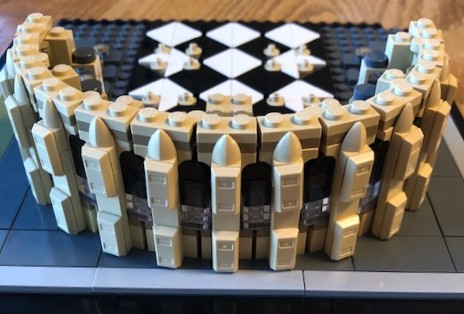
Having said that, the floor was just a warm up for the colonnade that now rises up around the altar.  It is made from tiny, tiny pieces!  I think LEGO should invent special gloves that a) allow you to easily grasp these little guys while b) protecting your fingers from their sharp edges.  Pressing them into place again and again can be painful!  Those beige column supports you see on the tile floor left little round dents in my fingertips.

Finally, notice the repetitive structure of the colonnade, like a circle of rocket ships ready to launch.  LEGO shows you how to build one of these vertical elements (each one is about twenty pieces) and then goes, “Okay Dave, do that fourteen more times”.  The Grand Piano was also tough but I wouldn’t say it was repetitive.  Notre-Dame de Paris has found a new way to test my patience.

Running build time: 1 hour 37 min.

Total leftover pieces: 5

Some content sourced from the Irish Central article, “Irishman’s song ‘O America’ performed at Trump’s inauguration”, and Wikipedia, “the free encyclopedia”.

You Can Say That Again

When I was a kid, I remember (or was told) I used creative pronunciations for common words. Instead of cinnamon I’d say cimm-anin. Instead of spaghetti it was bis-ketti. The library was the lie-berry. Maybe back then my excuse was in just learning to talk but I can’t play that card as an adult. So when someone says Feb-YOU-air-ee instead of Feb-ROO-air-ee, or Shur-BERT instead of Shur-BET, I tend to wince.

We’ve made it to the time of year where we reflect on the previous one, and we do so in year-in-review lists. “Most Influential People of 2024”. “Best Television Shows of 2024”.  “Significant World Events of 2024”.  And how about this one?  Most Mispronounced Words of 2024.  Thanks to Babbel, maker of language-learning platforms, the hard audio evidence doesn’t lie.  Babbel came up with ten words people mispronounced over and over last year.

I could print Babbel’s list here, but it’d be a waste of your time so I’ll just hyperlink it instead.  Eight of the words I never ever used in 2024 (and never will), and the only reason I spoke the other two was because they’re the last names of politicians featured in 2024 headlines.  To be honest, the list made me question Babbel’s approach to learning languages.  Are these the words promoting a budding English speaker’s proficiency?

Babbel also listed mispronounced words from other languages, including one of my favorites: espresso.  Not sure how we Americans get that one wrong time after time, but we do.  Maybe the myriad “ex-” words in the English language have us saying EX-presso but the concentrated coffee drink sounds exactly as it reads: ES-presso.  Keep that in mind and your next Italian barista will be happy to serve you.

As long as we’re speaking Italiano let’s get another one right – al dente.  When you want your pasta cooked just right; “not too soft but firm to the bite”, you describe it as ALL den-tay, not ALLA dawn-tay.  I only know this because I learned Italian when I was in college.  If I didn’t know better myself I’d probably go with AL dent.

Notre-Dame de Paris

As long as we’re talking foreign language mispronunciation, let’s correct another one.  Notre-Dame de Paris, the medieval Catholic cathedral in the middle of Paris (and the middle of the River Seine), can be mispronounced so many ways it’s almost as devastating as the fire from which it was resurrected.  On the surface it sounds something like NOH-tur daym day PEAR-iss, which is “English-French” at its absolute worst.  In actual French it sounds like this: NOH-tr dam due PAH-ree, where the two “r”s almost sound like “l”s.

You never saw it coming but today’s language lesson is a segue to the topic I’ll be covering for the next several weeks and months.  Notre-Dame de Paris is a magnificent structure and a renowned work of architecture.  It’s also a new model created by the good people at LEGO.  And speaking of good people (great, actually), my wife put that LEGO model under the Christmas tree for me this year.

For those who enjoyed the long journey of my building the LEGO Grand Piano (which I chronicled in Let’s Make Music!), and the shorter journey of the LEGO Fallingwater House (Perfect Harmony), I’ll be at it again as I attempt to rise Notre-Dame de Paris from the “ashes” of 4,383 plastic pieces.  Won’t you join me on this foray into all things FRON-says?  (That’s “French” for those of you who mispronounce it.)  You’ll learn about the world’s cathedrals along the way, many of which took hundreds of years to construct.  Let’s hope my own build of Notre-Dame de Paris is a whole lot shorter than that.

Some content sourced from the CNN World article, “These are the most mispronounced words of 2024”, and Wikipedia, “the free encyclopedia”.

Minuscule Marvels

For Christmas this year I’m putting a small ornament into my wife’s stocking. It’s a miniature of… well… let’s just leave it at “a miniature” in case she reads this post. But I know she’ll love this ornament and promptly hang it on our tree for the remainder of the season. Why will she love it? Because it’ll spark fond, romantic memories. But she’ll also love this ornament because she can’t help loving something that’s a little, well, little.

Ornaments are little

One of my bucket list items – still to be fulfilled – is a trip to the south of France for a taste of those wonderful wines created from Burgundy or Bordeaux grapes.  Maybe you hope to make the same trip some day so I’ll let you in on a little secret.  If your trip only allows a visit to Paris, you can still visit a vineyard… right in the middle of the city.  Most people visit the neighborhood of Montmartre to see the Sacre Coeur cathedral but most don’t know about the tiny vineyard just steps away.  Clos Montmarte produces wine on a single acre, from 2,000 vines forging a connection to the long-ago rural times of the region.  Compare an acre to the wineries in Bordeaux, with vines covering an average of fifty times that much property.

Harvesting the grapes at little Clos Montmartre

Clos Montmarte wines probably aren’t award-winning.  Who knows if I’d even care for the taste of their reds or rosés.  But does it really matter?  I love the thought of a teeny-tiny field of grapes right in the middle of Paris.  I love how the grapes are harvested by locals and transported to the cellars of the nearby Town Hall to be pressed and turned into wine.  The whole operation is appealing to me because it’s quaint and because it’s small.

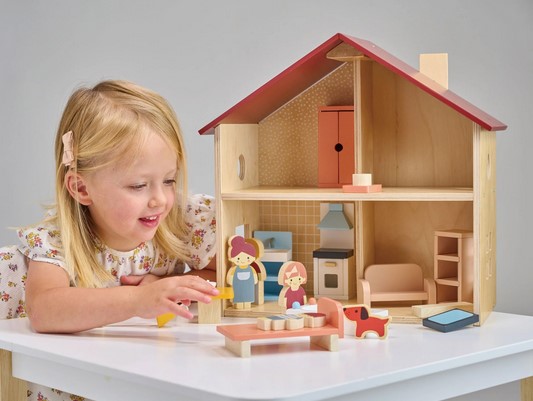
This affection for itty-bitty things must hearken back to our childhoods.  Who among us didn’t spend countless hours of playtime with (take your pick) little dolls, little cars, little houses, or scaled-down trains?  When we played at the beach we built little castles.  When we played in creeks we made little boats out of sticks or leaves and watched them flow with the water.  Tea parties meant tiny cups and plates on tiny tables.

My granddaughter’s little favorites

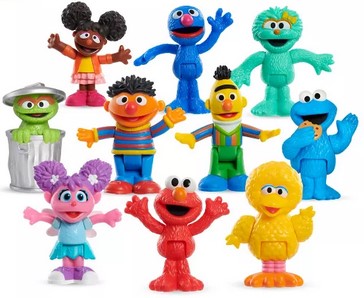
In today’s world the toys might be different but the attraction to small things remains.  It fascinates me to watch my (little) granddaughter choose her favorite toy from among dozens: a set of ten two-inch high Sesame Street characters.  She stands them up all over the house.  She hides them and then finds them.  She always seems to have one or two in her hands.  Even though my granddaughter doesn’t speak in complete sentences yet, she probably has complete thoughts as she considers tiny Big Bird.  You are a lot smaller than me and that’s why I like you so much.

Wee little cube

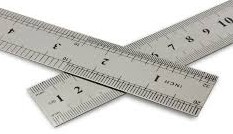
If you include Japanese toymaker MegaHouse in this year’s Christmas purchases, maybe you’ll go for their world’s smallest operational Rubik’s cube.  You can’t get one until next April, but picture this: the minuscule marvel is one 1,000th of the size of the original.  Pull out your metric measure to confirm it; a single face of the wee cube measures only 5mm from side to side.  Best throw a pair of tweezers into the Christmas stocking along with the cube.  There’s no way you’ll be able to rotate the Rubik’s colors with fingers alone.

Would I want the world’s smallest operational Rubik’s cube, you ask?  Heck yeah!  Consider, the faces of a traditional Rubik’s cube contain a 9×9 grid.  Then someone went and created a miniature Rubik’s cube with 2×2 grids.  I thought, how very cute.  I just had to have one so my original would have a little buddy.  My cubes are hanging out together on my home office shelf as we speak.  And they’re asking for an even littler buddy for Christmas.

Rubik’s “Mini”

So let’s summarize the pint-sized products we’ve covered today.  I already have the ornament for my wife in-hand (soon to be in-stocking).  I won’t put a bow on a bottle of Montmartre wine this year because I want the chance to see the tiny Paris winery for myself first.  And you probably thought I sprung for one of MegaHouse’s pee-wee Rubik’s cubes (and a pair of tweezers). Sadly, no.  I don’t have the $5,300 it costs to buy one (minuscule marvels aren’t cheap!) Thankfully, my wife will be happy with an adorable little ornament for $15 instead.

Some content sourced from the CNN Travel article, “The secret vineyard in the middle of Paris…”, and the CNN Style article, “This is the world’s smallest Rubik’s cube…”

Apple Pie meets Maple Syrup

On a visit to Detroit with my brothers last weekend, I was surprised to discover just how close the city streets are to the edge of the United States. Walk out of Detroit’s downtown Renaissance Center through the south doors (yes, I did just say “south”), cross Atwater Street, and you’ll find yourself standing on the edge of the Detroit River staring at Canada on the other shore.  Almost has you thinking in metric, “eh?”

Canada is south of the U.S. – who knew?

Here’s something I probably learned in middle school and promptly forgot: the border between Canada and the U.S. runs right through the middle of Lake Erie (and the Detroit River). It’s as if Americans and Canucks had a long drawn-out discussion about who deserved the lake more, and then clinked glasses of Budweiser and Molson with, “Okay, you get half and we get half”.  The same thing happened with three of the other four Great Lakes (America somehow got all of Lake Michigan) and that’s why – at least in Detroit – Canada lies to the south.

The view of Canada from Detroit

Not that you’d know it’s Canada, mind you.  Aside from the giant red and white flag billowing on the far shore, the streets, buildings, cars; everything looks exactly the same as America.  You might as well be looking at Saint Paul from Minneapolis.  And Windsor (the Canadian town you see) is so close you might as well swim for it.  The Detroit River is only a mile wide at this juncture.  I kind of wondered what would happen if I did swim for it.  Would a flurry of border patrol boats appear out of nowhere to haul me in?

Instead, my brothers and I kept it legal and drove across the Ambassador Bridge (there’s the Detroit-Windsor tunnel if you prefer).  It felt a little strange to hand over passports just to go to dinner.  And once we sat down at our Windsor table we were greeted with a hearty “Happy Thanksgiving!”  Thanksgiving?  Had we gone through some sort of time warp?  Oh, right – Canada celebrates Thanksgiving in October.

The view of Detroit from Canada

Naturally we asked our server how Canadians celebrate Thanksgiving.  She thought about it for a moment and said, in her wonderful Inland North accent, “Oh, y’know, we gather with our families and have the meal.”  That’s it?  Not even an embarrassingly-large, dozens-of-dishes, eat-’til-you-burst meal?  Just food with family?  But in fact, Canadian Thanksgiving is pretty much the same as “down south”.  Explorers crossed the ocean, landed safely in the New World, established a settlement, held a feast of thanks, blah-blah-blah.

Pumpkins make sense for Canadian Thanksgiving

Despite our server’s succinct description, the Canadian Thanksgiving meal includes most of the dishes we enjoy on this side of the Detroit River (including turkey).  Canucks also celebrate with parades, Oktoberfests, and other festivals.  There’s even a “Thanksgiving Classic” courtesy of the Canadian Football League.  Makes me wonder if the Detroit Lions somehow found a way to play that football game along with every (U.S.) Thanksgiving Day game since 1934.

Ambassador Bridge

As we crossed back over the bridge after dinner, two thoughts entered my mind.  One, the waterfront houses on the Canadian side of the Detroit River have a view of the United States all day long instead of seeing their own country.  That seems a little odd.  And two, I wondered whether goods and services in Windsor (or beyond) would be worth leaving the U.S. for, instead of just purchasing the same in Detroit.  You’d have to pay the bridge/tunnel toll both ways for a little Canadian Bacon (or backbacon), which might compromise the benefit.  You’d most certainly run out of pages for the stamps on your passport.

Earlier I said something about “almost” thinking in metric.  No, you really do have to think in metric in Canada.  As soon as we crossed over the Detroit River, our car’s GPS changed directions into kilometers (clicks) and meters.  Suddenly the next turn was “100 meters” away instead of “300 feet”.  Believe me, it’s a little disorienting watching the meters count down (slower) than the feet you expect.  After several bottles of wine at dinner (liters?), at least we could still navigate back to the bridge.  Otherwise this post might be coming to you from “up north”.

Some content sourced from Wikipedia, “the free encyclopedia”.

Too Many Roads Lead to Rome

I’ve wanted to take my wife to Italy pretty much since the day we met. After a memorable college year in Rome in the 1980s I knew I’d go back one day, especially since I tossed a few coins into the famous Trevi Fountain before I left. Today however, I sit wondering if I really will set foot in the Eternal City again. Thanks to overwhelming numbers of tourists, Rome might as well put a “sold out” sign on its city gates. Blame it on the Catholics?

Trevi Fountain, Rome

2025, less than four months from now, is a Jubilee Year for the Catholic Church.  Maybe your idea of a jubilee is a celebration, much like Britain’s in 2022 when they honored Queen Elizabeth’s unprecedented seventy years of service to the Crown.  Not so the Catholics.  They define a jubilee – every 25 or 50 years – as a “marked opportunity for the remission of sins, debts, and of universal pardon”.

Catholic jubilees traditionally include a pilgrimage to Rome.  I’d love to know who runs the calculations (and how) but the forecast for next year in Rome has Catholic pilgrims at around 32 million… in addition to the 50 million tourists who normally pass through.  To put that total in perspective, the population of Rome is only 3 million.  That’s a whole lot of extra pepperoni on the pizza (or piazza, if you will).

[Side note: 1983, the year I lived in Rome, was an out-of-cycle Catholic jubilee known as the Holy Year of the Redemption.  Do I remember millions of Catholics “roaming” through the city streets?  I do not.  Then again I’m a Methodist, so maybe I have an excuse for missing the obvious…]

You call this a crowd? Just wait ’til 2025.

Thanks to next year’s jubilee, officials are clamping down on a visitor’s ability to see or tour the city’s most famous attractions.  The Fontana di Trevi is a good example of how things will change.  In the 1980s I could stand in front of the Baroque fountain to my heart’s content.  In 2025 I will need a ticket through a reservation system.  That ticket gets me entry through one side of the piazza and exit through the other, at a specific time and for a specific (amount of) time.  Hired “stewards and hostesses” make sure I don’t linger, and collect a 2-euro fee for the experience.

If I really wanted to be herded like sheep I’d join a flock on the green, green grass of Ireland, instead of paying for the privilege in Rome.  And speaking of paying, the Trevi already collects over $1.5M in coins voluntary thrown into its waters (the money then donated to local charities).  Add in the new 2-euro fee, and even if just 10% of next year’s visitors make it to the Trevi, Rome will nab an additional $18M.  Jubilee indeed.

St. Peter’s Square, Rome

If I sound jaded about Rome’s forced hand, it’s only because I have the perspective of a time when everything seemed so much easier.  In the 1980s I could wander through St. Peter’s Square without photo-bombing dozens of iPhones.  I could also wander without encountering a random protest about a religious war or climate change.  I still remember plunking down on the cobblestones of that grand piazza to paint a watercolor of the Basilica, and nobody bothered me.  I also remember Frisbee with a fellow student in another piazza, while the local Italians watched the spinning disc in wonder.  Innocent times indeed.

Roman Forum

In 2024, a guided tour of the Vatican (the only way to see it) – including the sublime Sistine Chapel – will set you back $50.  A tour of the Colosseum and Roman Forum will cost you twice that much.  I’m sure next year’s pilgrims will pay these fees without blinking a sin-forgiven eye.  I just can’t get past my free-and-easy days as an architecture student, when each of the city’s wonders was as wide open and come-on-in accessible as you can imagine.

The truth is I’d go back to Rome in a heartbeat, even if I knew untold millions of pilgrims would be standing alongside me.  The Eternal City is worth the look even if you never step inside any of its buildings.  On the other hand, if I’m patient and wait until 2032, it’ll be the 50th anniversary of my college year.  That calls for a jubilee!  I’ll be the only pilgrim of course (er, two of us counting my wife) but at least we’ll have no hassles dropping coins into the Trevi.

Some content sourced from the Skift Newsletter article, “Rome Tourism Chief Says There’s ‘Total Chaos’ at Trevi Fountain…”, and Wikipedia, “the free encyclopedia”.

Do-Re-Mi… Oh My!

Salzburg, Austria, a day-trip destination from our recent Viking River Cruise, is a popular draw for tourists.  On most days you’ll find more internationals roaming Salzburg’s Old Town than you’ll find Austrians themselves.  The compact city is famous for its historic buildings: churches, palaces, and fortresses dating back 1,000 years or more.  Mozart was born here.  But try as they might, Austrians will never be able to separate Salzburg from what attracts many to its streets: The Sound of Music.

I can think of only one movie we forced our kids to sit down and watch while they still lived under our roof.  Close to Christmas one year (an arbitrary connection because of the lyrics of “My Favorite Things”), the five of us spent three hours together in front of our not-so-big-screen TV watching the somewhat true story of the von Trapp family.  I’ve lost track of the number of times I’ve followed Maria, the Captain, and those seven engaging children as they outwit the Nazis.

For all of the movies I’ve watched in my life (and I’ve watched quite a few), The Sound of Music stands alone.  I’d describe it as a jewel you display in an elegant glass box on the shelf, taken down every once in a while to appreciate up close. The Sound of Music is a feel-good story – if not accurate – produced in 1965 at the end of the Hollywood’s Golden Age.  It remains the most successful movie musical of all time (adjusted for inflation), but I question whether today’s movie-goers would appreciate it as much as I do.

Salzburg, Austria

Most tours of Salzburg include references to buildings and locations included in The Sound of Music.  Our own tour – cut well short because of the flooding of the Danube – was a brisk walk around the Old Town, with only an occasional mention of the movie.  What surprised me was not how little of The Sound of Music was actually filmed in Salzburg (most was done on sound stages back in the States) but rather the Austrians’ utter disdain for the movie.

Salzburg’s Nonnberg Abbey

Consider, when it was first released The Sound of Music was only twenty years removed from the end of WWII.  The Nazi overtones of the film didn’t sit well with citizens of Austria and Germany.  Reviews (and box-office receipts) were not favorable in either country.  Coupled with the liberties the producers took with the story, you can see why Salzburg residents don’t exactly “Climb Ev’ry Mountain” to claim the movie as their own.

You’ll find endless trivia about The Sound of Music at IMDB.com and elsewhere.  Most facts are meant to point out discrepancies between the film and the actual story.  Here are fifteen of “My Favorite Things”:

1) Julie Andrews was cast as Maria, of course, but only because Audrey Hepburn declined the part.  Hepburn also denied Andrews the opportunity to play Eliza Doolittle in the movie version of My Fair Lady.  Each played the opposite role in the original stage adaptations on Broadway.

2) Andrews kept getting knocked off her feet in the famous opening scene where she sings and spins in an Alpine meadow.  She couldn’t keep her balance because the hovering helicopter used to film the scene generated too much wind.

Not as easy as it looks!

3) Andrews’ hair was meant to be worn longer but a bad color job forced the pixie cut, which Andrews kept for most of her acting career

4) Christopher Plummer was not a fan of The Sound of Music.  He reluctantly agreed to the part of Captain von Trapp and regretted every moment on set, especially those with the children.  He described working with Julie Andrews as “being hit over the head with a big Valentine’s Day card, every day”.  He nicknamed the movie The Sound of Mucus.  Much later he acknowledged the film’s worldwide success, as well as the Oscar-nominated talent of Andrews.

5) Plummer regularly drowned his acting sorrows in Salzburg bars and restaurants.  As a result his outfits needed to be resized towards the end of filming to accommodate his added weight.

The gazebo (moved from its original location). The interior scenes were filmed In a much larger stage set reproduction.

6) The von Trapp children are Rupert, Agathe, Maria, Werner, Hedwig, Johanna, and Martina… not Liesl, Friedrich, Louisa, Kurt, Brigitta, Marta, and Gretl.  Also, none of the nine leads are Austrian (which certainly didn’t help the appeal of a film based in Salzburg).

7) Auditions for the parts of the von Trapp children included the four eldest Osmond brothers (not Donny), Kurt Russell, and Richard Dreyfuss.

8) Kym Karath, who played Gretl, the youngest of the von Trapp children, created her fair share of challenges.  She had a cold during much of the filming.  She almost drowned in the scene where the boat overturns in the lake because she didn’t know how to swim.  And she ate enough sweets on set to where her weight was too much for Christopher Plummer.  As a result, in the final scene walking over the Alps, Plummer is carrying a stand-in actress instead of Karath.

9) Nicholas Hammond, who played Friedrich, was not a natural blonde so his hair was bleached for the movie.  The coloring process caused some of his hair to fall out, which is why you see him wearing a “Tyrolean Traditional Alpine” hat when he’s seen singing “Do-Re-Mi”.

10) The day after the real von Trapp family left Austria (by train to Italy and then to the U.S., not on foot over the Alps to Switzerland), the Germans shut down all of Austria’s borders.

Salzburg’s Schloss Leopoldskron, where lakefront and garden scenes were filmed

11) The real Maria von Trapp is on screen at the beginning of the movie.

12) The real Maria also claims, if you can blieve it, her own personality was livelier than Andrews’ on-screen version.

13) The real Maria taught Julie Andrews how to yodel.  Watch the lesson here.

14) The film’s production demanded 4,500 extras, including those in the sold-out theater for the music festival.  The audience sings “Edelweiss” as if they know the song, but only because they spent time beforehand learning the words.

15) Despite the aforementioned Austrian disdain, The Sound of Music is played nonstop on the televisions of most Salzburg hotels.

Maybe all of this trivia changes your opinion of The Sound of Music.  Not mine.  There are countless reasons this film includes the tagline, “The Happiest Sound In All The World”.  The Sound of Music will always be that jewel in a glass box, waiting patiently to be enjoyed once more.  Suffice it to say, I’ll never say “So Long, Farewell” to the adventures of the von Trapp family.

Some content sourced from the Internet Movie Database (IMDb), and Wikipedia, “the free encyclopedia”.