Fresh-Breath Foods

There was a time, not so long ago, when the Girl Scouts knocked on your front door instead of standing outside your local supermarket, selling their popular cookies. My wife would tease me because I never had the heart to turn down the cute little uniformed kids on my doorstep. But let the record show, I really do like Girl Scout cookies. And if I had the money to buy just one box, it’d be the Thin Mints every time.

Nature’s fresh-breath herb

I’ve been a mint fan as long as I can remember.  I’m not talking about foods (yet) so much as the flavor itself.  Peppermint, spearmint, wintergreen, or even a fresh sprig right out of the ground – they all speak to me with a sort of spicy vibe.  I find a food so “tasteful” when it’s freshening your breath at the same time.

For a hot minute I thought the Girl Scout Thin Mints were gone for good.  A recent headline teased the departure of a “cult-favorite” cookie flavor and I feared the Mints had run their course.  Instead, it’s the lookalike “Raspberry Rally” calling it quits.  No harm, no foul.  As long as I can still buy the Thin Mints (and an occasional Caramel Delite) I’ll happily fork over the $5 (now $6) a box.

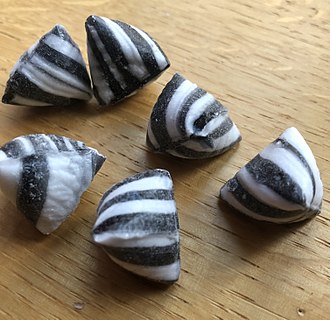
Mint-striped “humbug” candies

Had the Thin Mints really been gone for good, I needn’t look far to find other fresh-breath foods.  Who doesn’t like a scoop of peppermint or mint chocolate-chip ice cream?  A pack of Mentos?  Listerine?  Heck, I’ll even settle for that gritty peppermint paste the hygienist uses to polish your teeth.

Brach’s “Star Brights”

Minty consumables really do run the gamut.  You’ll find over fifty global brands of breath mints, including Altoids (my favorite), Breath Savers, Certs, Clorets, Ice Breakers, Tic Tac, and Velamints.  But put all of these together and you still wouldn’t come close to the Starlight Mint population.  The origin of Starlights is one of the world’s great mysteries.  Brach’s Candy claims their invention, but if so then why do they call them “Star Brights”?

If Starlights are too dime-store for your taste perhaps you prefer the softer texture of a “butter mint”.  Butters are often found, individually wrapped, in the lobbies of fine restaurants (gone are the days where you’d just spoon yourself a handful on the way out the door).  I’ve always thought a butter mint is caught in a quandary,  Does it identify more as “butter” or “mint”?

Mint julep

Speaking of a refined palate, minty liquors make for some mighty fine beverages.  The first drink my wife and I ever shared was hot chocolate and peppermint schnapps from a thermos at our college’s movie night.  A grasshopper (and my wife has a killer recipe for one) is a fresh-breath milkshake made with crème de menthe.  And the Kentucky Derby’s mint julep is more bourbon than mint but you’ll always find fresh sprigs garnishing the top.

If not the Starlights, my first introduction to mint was probably packs of Life Savers.  There used to be several mint flavors of “the candy with the hole in the middle” including Wint-O-Green, Stik-O-Pep, and Spear-O-Mint.  But when the trendier Mentos and Tic-Tac came along, Life Savers headed for the rear-view mirror.

Mistake-O-Mint

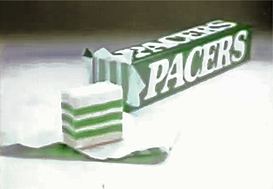
No mention of mint would be complete without a couple of failures (at least IMHO).  In the 1970s the makers of Starburst came out with a short-lived minty version called Pacers.  They never worked for me because I always expected those chewy little squares to be fruit-flavored.  Nabisco’s Oreo, which blossomed into 85+ varieties from their black-and-white signature sandwich cookie, include ones with green mint filling.  No, just no.  Oreos are meant to be the vanilla originals.  Food-color them orange for Halloween if you will but don’t change the taste.

[Side advertisement: The next time I fly overseas I’ll have to give Jet Blue’s Mint class a try.  Their individual “apart-mint” cubicles allow you to lie flat, with lots of cushions, a TV, and plenty of storage space for your carry-on items.  Fancy, huh?  All that’s missing is a chocolate mint on your memory foam pillow before you drift off to sleep.]

France’s “Monnaie de Paris” Mint

Here’s a chicken-or-egg question.  Which mint came first, the flavor itself or the stodgy industrial facility which manufactures coins?  I always thought it’d be cool to work in a mint.  You’re handling millions of dollars every day and if someone asked what you do for a living, you just say casually, “Oh, I make money.”  And If it were up to me I’d give all those coins a sweet-smelling scent on their way out the door so they’d be “freshly-minted” two times over.

Our Christmas celebrations used to include a box of Frango Mints, the melt-in-your-mouth chocolates you could buy at Chicago’s Marshall Field’s.  These days we go with Williams-Sonoma peppermint bark.  Our tree will always welcome a peppermint candy cane or two.  And if a Girl Scout should ever knock on my front door again, I’ll be happy to help her meet her quota, because the Thin Mints will always be a breath of fresh air.

Some content sourced from the CNN Business article, “The Girl Scouts are discontinuing a cult-favorite cookie”, and Wikipedia, “the free encyclopedia”.

Map-Sap Goodness

A few months ago, authorities in New Zealand wrapped up a five-month sting where they confiscated the largest import of methamphetamine in the country’s history. Millions of dollars of the liquid stimulant were discovered in, of all places, a shipment of maple syrup jugs. Agents swapped out the drugs with water and let the jugs continue to Australia, where the recipients were quickly apprehended. Did this story captivate me?  Why yes it did, but not because of a million-dollar drug bust. I pretty much stopped reading at jugs of maple syrup.

With all due respect to fruit, I think maple syrup is the better example of “nature’s candy”.  After all, it’s essentially organic liquid sugar.  If you have the tree, the tools and the time (a lot of time), you can tap your own supply.  Simply drill a hole into the trunk of your sugar maple tree, hang a bucket below the opening, and let the goodness s-l-o-w-l-y flow.  After you’ve collected what you need, boil off the water, filter off the crystallized sugar, and your pancakes or waffles are set to be topped.

Sugar maple

If you prefer a more solid sweet, make snow candy like Little House on the Prairie’s Laura Ingalls did back in the day.  Pour boiling maple syrup into short lines on a fresh bed of snow.  Press Popsicle sticks into the lines.  Then roll the cooling syrup around the sticks and voila! – a sweet handheld-treat.  Last Saturday’s arrival of the fall season makes this confection seem extra appealing.

My very favorite doughnuts are maple bars

In the U.S., “real” maple syrup is not so common anymore.  Years ago at my childhood breakfasts I was already consuming imitators like Log Cabin, Mrs. Butterworth’s, or Aunt Jemima (more recently known as “Pearl Milling Company”).  These brands and countless others are known as “table syrups”, made from corn syrup and chemicals instead of anything found in a tree.  They can’t even use the word “maple” in their names because of a consumer protection law known as the Pure Food and Drug Act.

Maple sugar

Enough about the impersonators.  Maple syrup’s rich flavor and density should be the preference to table syrup’s as long as a) Your taste buds can be reeducated, and b) you’re willing to spend a few more pennies.  And maple syrup is just a step removed from some distinctive treats.  Maple sugar candy is compacted maple sugar formed into small squares or maple leaves (delicious!)  Maple taffy is what you get if you boil maple syrup past its liquid form.  And for the truly obsessed (me), you’ll also find maple versions of toffee, butter, and liqueurs.

Treacle tart

Let’s take a paragraph for a confection of honorable mention.  Ever heard of a treacle tart?  Yes you have, if you know the timeless children’s classic Chitty Chitty Bang Bang.  In the story, the evil Child Catcher in the fictional village of Vulgaria tempts young Jeremy and Jemima Potts with ice cream, candy, and treacle tarts (“and all for free!”)  Those tarts are small pastries filled with maple syrup, breadcrumbs, and a splash of lemon juice, served warm with a cream topping.  Yum.  Catch me if you can, Child Catcher.

If you know your flags, you can guess which country produces most of the world’s maple syrup.  Canada accounts for fully 80%, with most of the sweet stuff coming from the province of Quebec.  Vermont’s production is similarly dominant compared to other U.S. states.  Both locales are northern climates, where sugar maple trees thrive in the cold winters.  So as much as I’d like to channel my inner L.L. Bean by planting a maple tree and drilling a hole, donned in flannel shirt and snow boots, it’s never going to happen here in hot-and-humid South Carolina.  Guess I’ll have to settle for a store-bought jug of nature’s candy instead.

Some content sourced from the Deutsche Welle (DW) article, “Authorities find drugs worth millions hidden in maple syrup”, and Wikipedia, “the free encyclopedia”.

Tuesday’s Child

Passing through another anniversary of the events of 9/11 this week, I was touched by a YouTube short of U.S. Marines demonstrating the proper method of folding the American flag. The video includes gentle background music but no words, lending reverence to the ceremony. Folding the Stars and Stripes the right way is not only a nod of respect to our nation’s banner, but also an example of (flag) etiquette.
 
One of my favorite memories of my late mother was her ability to gently but effectively prod her sons to behave properly.  She would sometimes say quietly, “Mind your manners”, which meant two things.  One, something in our current behavior wasn’t in sync with how she raised us; and two, we would get a talking to later.  “Please” and “thank you” barely scratched the surface of how my brothers and I were expected to carry ourselves back then.
 
I’ve always thought of manners and etiquette as one in the same, but the former is a subset of the latter.  Etiquette is “the set of norms of personal behavior in polite society”, while manners are simply behaviors deemed “good” or “bad”.  An example of both is the way we drive our cars.  We’re taught the rules of the road, also known as “driving etiquette”.  But when we blatantly ignore those rules by, say, refusing to let a car merge onto the interstate in front of us, we’re letting bad manners get the better of etiquette.
 
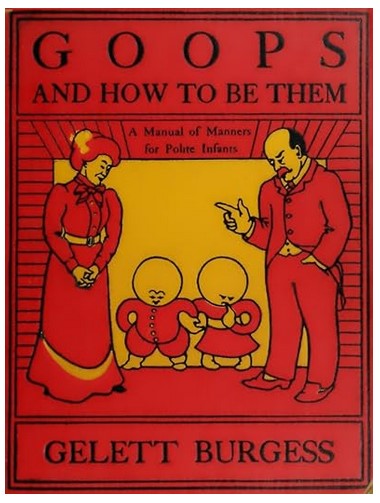
Manners always remind me of a book my grandparents encouraged us to read whenever we visited: Gelette Burgess’ 1903 classic The Goops (and How To Be Them).  Here’s an example of Goop behavior in Burgess’ poetry, simply titled “In Table”:
 
Why is it Goops must always wish
To touch each apple on the dish?
Why do they never neatly fold
Their napkins until they are told?
 
Why do they play with food, and bite
Such awful mouthfuls?  Is it right?
Why do they tilt back in their chairs?
Because they’re Goops!  So no one cares!
 
My mother probably labeled us Goops at one time or another, because my brothers and I were all about fingering our food or talking with food in our mouths or rocking back in our chairs.  It’s a wonder we developed any manners at all.  Maybe it’s because our mother’s parenting was fueled by a finishing school of sorts: her college sorority, where a premium was placed on etiquette.
 
Alpin Videmanette
Finishing schools, designed to “teach young women social graces as preparation for entry into society”, are something of an outdated concept now, at least in America.  You can still find a few “charm schools” in Europe, such as Switzerland’s prestigious Institut Alpin Videmanette – (whose teenage graduates included Lady Diana Spencer).  The Institut teaches young women to cook, make dresses, speak French, and even ski, but at its core, the curriculum is an education in etiquette.
 
Emily Post

The undisputed authority on etiquette, Emily Post, wrote several books and newspaper columns on the topic.  In the America of her lifetime (1872-1960) Post’s first etiquette book became a bestseller because it catered to “the country’s exotic mix of immigrants… eager to fit in with the establishment”.  I suggest most of Post’s etiquette is as relevant today as it was back then… and a lot of us could use an extensive refresher.

Always pass them together!
Besides the Goops, etiquette reminds me of an old poem teaching children the days of the week. “Monday’s Child” goes like this:
 
Monday’s child is fair of face,
Tuesday’s child is full of grace,
Wednesday’s child is full of woe,
Thursday’s child has far to go,
Friday’s child is loving and giving,
Saturday’s child works hard for a living,
And the child that is born on the Sabbath day, Is bonny and blithe, and good and gay.
 
Google tells me I was born on a Monday.  Darn it, so close.  If I was Tuesday’s Child I’d be defined as “… agreeable, refined, and polite in manner or behavior.”  In other words, demonstrating a solid understanding of etiquette.
 
The next time you’re standing on an escalator, step to the right to let those in a hurry pass by.  The next time you play golf, stay out of the line of sight when your opponent putts.  The next time you’re at the movies, don’t utter a word until the final credits roll.  And the next time you fold the flag, do it the way the Marines do. After all, you’d rather be credited with following the rules of etiquette than perceived as having bad manners.
 

Some content sourced from Wikipedia, “the free encyclopedia”.

Day (After Day) Drinking

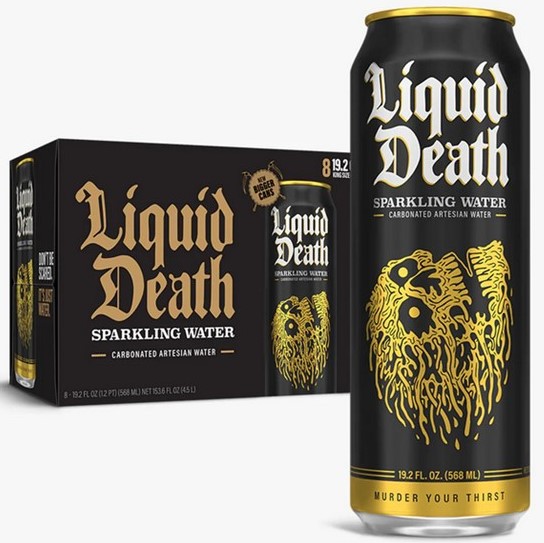
In the refrigerator of the beach house where my family and I vacation every summer, you’ll find an extensive collection of aging condiments. With different people in the house almost every week, the mustards, ketchups, salsas and spreads breed at an alarming rate. And the beverages aren’t far behind. Forage past the wine and beer bottles and you encounter all sorts of curious cans and contents. One in particular tempted me this time around but I couldn’t muster the courage to take a sip. I mean, would you try something called “Liquid Death”?

If you’re already familiar with Liquid Death, you know the joke’s on me.  Liquid Death (“Murder Your Thirst!”) is nothing but drinking water, carefully sourced, packaged in a can covered with horror-movie graphics.  The company believes their distinctive can means a) one less plastic bottle into landfill and b) one more serving of water into you (instead of something less healthy).  Liquid Death also cans flavored sparkling waters and iced teas, and – no joke – invites you to sell your soul to the company.  The company’s sales are no joke either – $130 million last year alone.

Liquid Death is one of countless examples of “packaged water” available to consumers these days.  Since 2017, Americans are quaffing more bottled water than any other drink.  86% of us purchase water regularly, in addition to the H2O we drink from our faucets.  Why?  Because we’re waking up to the downsides of the sugar/chemical concoction known as the “soft drink”.  We’re also subscribing to the belief we’re healthier if we drink more water.  Finally, single/double/triple-serving containers appeal to us because we’ve already become so conditioned to them, thanks to… Starbucks.

Here’s a story to prove the statistics hold water.  At a volleyball tournament in Atlanta last weekend, I ventured to the nearby snack stand to buy a drink.  The cashier invited me to fish around in his giant coolers for whatever I wanted.  What I wanted was water, but all I could find were dozens of neglected bottles of soft drinks, “sports drinks”, and energy drinks.  So I asked the cashier, “What, no water?”, to which he replied, “Oh, we sold out of the waters hours ago”.

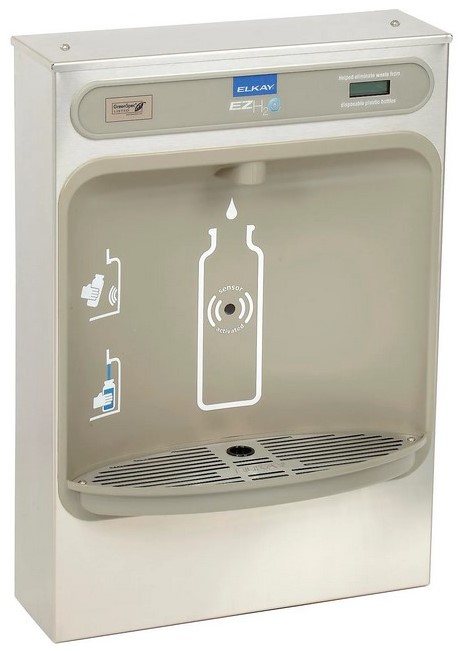
The new “drinking fountain”

Then I went in search of a drinking fountain and couldn’t find one in the entire arena.  Drinking fountains are quickly going the way of pay phones.  In their places: dispensers designed to fill your personal bottle.  I’m on board with this trend, especially because it reduces the use of plastic.  But don’t forget your water bottle like I did or you’ll be forced to settle for one of those more colorful concoctions.

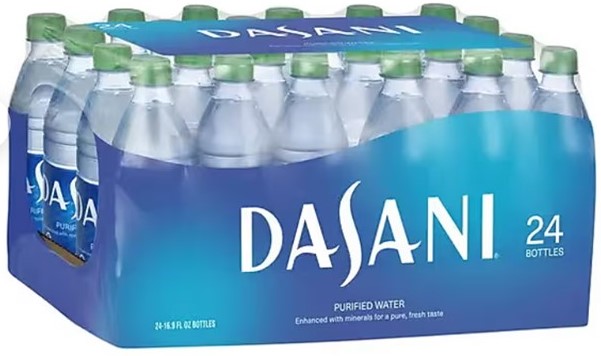
Lest you think otherwise, the bottled waters dominating the marketplace are brought to you by the same companies behind soft drinks.  Accordingly, Dasani = Coca-Cola, Aquafina = PepsiCo, and Poland Spring = Nestlé.  On the other hand, Arrowhead is only Arrowhead water, as is Evian’s natural spring variety (and whether “Evian” is intentionally “naive” spelled backwards is for you to decide).

We’ve taken water one step further now.  Into our personal water bottles, tumblers, and jugs we add “flavor enhancers”, designed to a) give us more of what we lack (ex. electrolytes) or b) encourage us to drink more water by adding flavor.  Crystal Light and Gatorade set this tone years ago.  Today we choose from a dizzying array of powders, drops, and tablets, all designed to make water more appealing.  But if we’re thirsty, shouldn’t water be appealing enough just the way it is?

A final sip of this subject.  The average person has thirty-five “beverage occasions” a week.  With each occasion you choose the container, contents, and quantity of whatever you’re going to drink.  So even if your every day begins with a “Venti half-soy nonfat decaf latte” and ends with a fruit-forward, moderately dry Cabernet Sauvignon, you still have twenty-one other occasions for a tall drink of water.  Liquid Death, anyone?

Concourses or Golf Courses?

Whenever flying is a part of my travel plans, I wear my most comfortable pair of walking shoes. Long gone are the days of the coat-and-tie-to-fly dress code, in favor of sneakers (and jeans). My reason for rubber-soled kicks used to be, “What if we’re in some kind of accident and I need to get off in a hurry?” Today I go with a wholly different reason. The long, long walk I can expect from curb to concourse to airplane cabin simply demands something easy on the feet.

Here’s a startling comparison.  If you play golf and skip the cart, you’re going to walk over four miles to finish your round.  By almost the same token, if you’re connecting through Dallas-Ft. Worth or Atlanta and choose to walk from Terminal B to Terminal E, you’re going to walk over two miles.  Add in the inevitable search for food, a stop or two at retail, and a visit to the restroom and you’re closer to three miles.  And none of that includes the distance from the curb to the ticket counter, from the counter through security, and from your gate down the jetway to your seat on the plane.

How do they do it in heels?

Now for the bad news.  Airports are only getting bigger, and not for the reasons you might think.  Sure, more people fly than ever before, which adds more planes, more gates, and even more airports.  But behind the scenes a couple of stronger forces are at work.  One, airlines are shifting to larger aircraft, which translates to more space between parked planes.  Two, airport parking revenue is down (thanks to Uber, Lyft, and more mass transit), which translates to the airport’s need to find revenue elsewhere.  Where?  Retail, bars, and restaurants.

Don’t get used to these…

From recent trips through airports, I’ve noticed the following.  In Denver International, remodeled Concourse B is already labeled “Gates 1-100”, even though there aren’t a hundred gates.  It’s a straight-line concourse and it’s only going to get longer.  In Atlanta’s Hartsfield-Jackson, the concourses are so long and narrow (and so crowded), that last gate is farther than you can see without binoculars.  And in San Diego’s Lindbergh Field, when you’re processed into Terminal 2 from security, you can’t see a single gate, because you have to pass through a veritable shopping mall first.

In the ultimate insult to long walks to planes, some airports have left the moving walkways out of their concourse remodels.  Those walkways discourage you from passing directly in front of the food and retail the airport so desperately needs you to patronize.  And intentional or not, the airlines encourage these purchases by offering less food onboard.  You, weary traveler, are a captive audience to more than one performer.

I prefer this kind of walk

Let’s not forget the rental cars.  Avis’s slogan is “We try harder”.  Maybe it should be, “We try harder… to take more of your money“.  I just reviewed my receipt from a recent San Diego rental for a full-size standard Kia sedan.  Right there below the actual daily rate: “11.11% Concession Recovery Fee”; essentially the cost of doing business at the airport.  Add in Vehicle License Recoup fee, Customer Facility Charge (another airport fee), California Tourism Fee, and a final flourish of “tax”, and the rate increased by 32%.  All so I can walk further to get to my rental car?

An early chapter of my career was in airport planning.  We’re the people who figure out how to get the planes from the runways to the taxiways to the gates without hitting each other.  We also design the terminal buildings to include enough gates, concessions and restrooms (yeah, yeah, bring on the heat with that last item).  Concourse design used to be “spoke and hub”, meaning you walked down the spoke to a circular boarding hub of several gates.  It made the airplane taxiing a little trickier outside, but it significantly reduced a passenger’s walk to the gate.  Today, airports no longer favor the design (er, traveler) because it reduces the square footage for concessions.

For those of you who live and die by your 10,000 steps, take heart; airports are helping you accomplish your daily goal.  Phoenix Sky Harbor even disguised the long walk through the concourses by calling it a “Fitness Trail”.  Be sure to allow enough time to get in a (seriously overpriced) shopping trip at all those concessions.  But don’t forget, the airlines only allow one reasonably sized carry-on these days.  Any others will cost you a checked bag fee… because the airport isn’t making enough money already.

Some content sourced from the CNN Business article, “Why you have to walk so far to your gate at the airport”, and Wikipedia, “the free encyclopedia”.

Oliver Twist

Because of the numbering system I use to save photos for my blog, I know last week’s dish on ice cream (ha) was my four-hundredth WordPress post. I’m not one to track statistics but unexpectedly, reaching this milestone begs the question: Will I make it to #500? Mind you, it’s not about staying in the game. Topics worth my exploration are endless and creative writing is a welcome escape. No, today begs a much more relevant question: What about artificial intelligence (AI)?

If I could meet you readers face-to-face in the Amazon rain forest I’d whisper a secret password for all to hear.  Then when I use that password in a post, you’d know it’s actually me, Dave, the human, and not some updated version of HAL 9000 doing the typing.  Surely you wonder, as I do, when will AI get so good at authoring documents, so genuine, you won’t even realize you’re reading something untouched by human hands?

“Hello, Dave.”

Before we go any further, I think “AI” sounds awfully impersonal.  I suppose impersonal is appropriate for a silicone wafer and a pile of circuit boards.  I just think we need a friendlier word for it; something we humans can better identify with.  How about “Oliver”?  Oliver is the third most popular boy name of 2023.  Oliver Twist was one of Charles Dickens’ most beloved characters (and AI will certainly be a twist on the way we ask for and receive information moving forward).  Let’s nickname it (him?) Ollie.

Wikipedia’s article on artificial intelligence (yes, there’s already an article) says one of Ollie’s primary goals is problem-solving.  Okay, that digests well.  But then you see goals like reasoning, learning, perception, and social intelligence and your stomach flips a flop.  My reasoning and perception are tools I use for this blog.  If Ollie develops those same tools, it’s only a matter of time before Dave 1.0 (me) is replaced by Dave 2.0 (machine).

Let’s go back to ice cream for a second.  Let’s say you want to read an opinion piece on ice cream.  If you have AI at your disposal, you could say, “Hey Ollie, write me a post about ice cream, 600 words or so, with arguments in favor of plain old ice cream over sundaes, bars, and other frozen treats.  Reference a few commercial ice cream brands, a few local brands, and finish by talking about the most expensive ice cream in the world.  Oh, and speak the page back to me in James Earl Jones’s voice.”  Then you’d hit the ENTER button and who knows?  Your screen might light up with something remarkably similar to my last post in Life In A Word.

Also consider, Ollie will have his own opinions on what you read.  After you ask about ice cream, he may spam you with posts on healthy lifestyle.  He also may counsel you about spending your time on more important topics.  Like world peace.  Newsflash, Ollie.  We’re all trying to figure out world peace.  How about you put your circuit boards together and come up with a post on that?

Here’s my point.  If you have Ollie you don’t need me.  In fact, you don’t even need the WordPress platform.  You could simply slip on a VR headset and ask for a post with just the right topic, tone, reading level, length, and restrictions. It’s like placing an order at the drive-thru of a fast food restaurant.  Seconds later, what you asked for is right there in front of you (no paper bag necessary).  And if Ollie “reads” all four hundred of my posts, he’ll write it pretty much the same way I would. 

At the rate I’m posting, I’ll publish blog #500 in about two years.  Two years.  Considering all we’ve covered today, how advanced will Ollie be in two years?  Enough to put WordPress out of business?  Enough to where you can generate your own Life In A Word posts by simply entering a handful of carefully chosen criteria?  I hope not.  I’m having a good time with you people (especially those of you who also write blogs).  Maybe all of us should pick up and move to the rain forest.  Then we could pass our handwritten pages around and keep this artificial intelligent party going.  Someone make sure Ollie doesn’t get an invite.

Some content sourced from Wikipedia, “the free encyclopedia”.
Cream of the (Dessert) Crop

A week ago last Tuesday, Salt Lake City hosted its first ever drone show of “fireworks”, replacing the traditional explosives residents have come to expect over the downtown park. The drones create colorful shapes and animations in the sky – even giant words – as well as a pretty good impression of the blooms and starbursts of fireworks. But let’s be honest: drones don’t replace fireworks.  The same can be said for the frozen treats aiming to be more popular than, say, a simple serving of ice cream.

On the heels of Independence Day, America has another celebration coming up.  National Ice Cream Day is the third Sunday of July in our country (and July itself National Ice Cream Month!) The “holiday” was signed into public law in the mid-1980s when Congress apparently had nothing better to do.  So how do you and I “celebrate” ice cream?  No clue, other than a Google search to figure out where to get a free scoop.  And if you think ice cream is a poor excuse for a holiday, consider, the first Saturday in February is Ice Cream for Breakfast Day… which pretty much confirms every day of the year is some sort of “Day”.

A stroll past the freezers of ice cream in any grocery store boasts an impressive variety of spins, including cones, sandwiches, pies, and bites. Ice cream is split by bananas, cherry-topped into sundaes, blended into shakes, cloaked as “gelato”, and even fried into crispy-covered bites.  I ask you, who buys all this stuff?  Sure, as a kid I had a thing for Eskimo Pies (because my mom bought them) and later on I ate my share of Dove Bars (because my dad loved them).  But feet to the fire, I’d rather spend my pennies on the best version of plain ol’ ice cream.  I have my favorite brand (and you have yours) and time and again it ends up in my grocery cart instead of any of those other treats.

For a few years there I got caught up in the Cold Stone Creamery concept, where your serving of ice cream is placed on a marble slab and combined with “mix-in’s”.  It was (still is) a trendy take on ice cream.  But after just a few visits I realized the draw was the mix-in’s more than the ice cream.  Safe to say Cold Stone doesn’t use a brand of ice cream anyone would consider “gourmet”.  They know what brings people through the doors: marble slabs and mix-in’s.  Cold Stone’s rival is even named Marble Slab.

For anyone growing up on the West Coast in the 1970s, the one-on-every-corner ice cream parlor was Baskin-Robbins.  Their ever-changing selection of thirty-one flavors guaranteed slow perusing, even if the final choice was vanilla or rocky road nine times out of ten (okay, I’ll grant you peanut-butter-and-chocolate too).  Today, Baskin-Robbins is still going strong, but I think most people prefer the flavors of whatever local parlor is closest to their house.  And let it be said for the millionth time: Vanilla is and will always be the king of ice cream flavors.  Simple, delicious, and versatile.

“Dreyer’s”, in fact

As for the commercial brands in grocery store freezers, Dreyer’s “Grand Ice Cream” is trying very hard to make its offerings your favorite.  They smartly purchased www.icecream.com and dressed up the website as a tribute to ice cream, but let’s be real: they’re just pushing their own products here.  My favorite brand is still Haagen-Dazs but get this: Haagen-Dazs is now a subsidiary of Dreyer’s.  Whoa.  Give it a few more years and Dreyer’s may turn into the Amazon of ice cream.

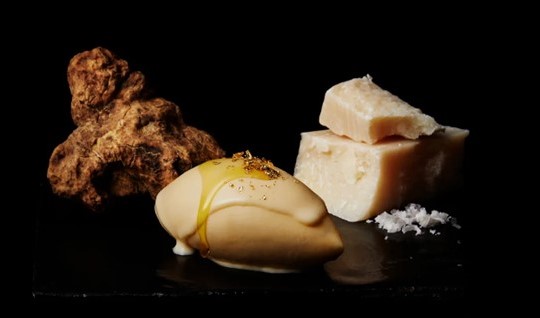
If you like to spend big on ice cream like I do (Haagen-Dazs is not inexpensive!) you might consider Cellato, a brand from Japan.  Cellato makes particularly fragrant gelatos, mixing in white and black truffles from Italy, champagne, and caviar.  Their “white night” flavor is topped with an edible gold leaf, two exquisite cheeses, and a sake-like paste.  The price of a single serving?  $6,380 USD, making it the most expensive ice cream in the world.  Might as well make the airplane seat to Japan first-class for a dessert like that.

Cellato’s pricey “White Night”

In closing, a very happy National Ice Cream Day to you!  However you choose to celebrate this Sunday, you don’t need Cellato.  You don’t need Coldstone Creamery either.  For me, the entire ice cream aisle at the grocery store might as well be reduced to the Haagen-Dazs flavors.  Those, and the choices at my local ice cream parlor satisfy my craving.  In other words, forget about the drones.  Traditional fireworks will always be better.

Some content sourced from the CNN Travel article, “Don’t drop it: World’s most expensive ice cream costs $6,400”, and Wikipedia, “the free encyclopedia”.

Crescents and Con Artists

Every Christmas without fail, my family enjoys croissants as part of the morning meal. We pop them into the oven after seeing what Santa left in our stockings (but before unwrapping anything under the tree). So last week, as I loaded our Easter ham into the garage frig, a tantalizing thought occurred to me: the leftover Christmas croissants are parked right next door in the freezer. Could they possibly be as light and flaky as they once were, four months after their initial rise-and-shine?

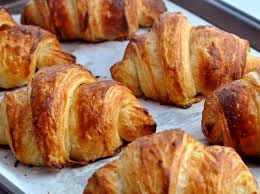
If you know anything about authentic croissants, “rise and shine” is a fitting description.  Thanks to some seriously active yeast, croissants rise to a soft, pillow-y consistency.  Thanks to a whole lot of butter (and a little egg yolk), croissants finish with a pleasing sheen on their delicate, crispy crust.  If there’s a more decadent baked good on the planet, my crescent-shaped ears are open and listening.

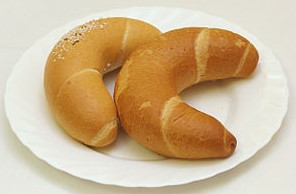
Austrian kipferi

Croissants have been around a long time.  They got their start centuries ago in France Austria as the more pedestrian kipferi yeast bread roll.  Eventually the French stepped up the game using leavened laminated dough and butter, ending up as the light, flaky, many-layered version you know and love today.

Croissant means “crescent” of course (which is why I get hunger pangs whenever I gaze at the moon).  Croissant also has an elegant pronunciation.  Turn the “roi” into a “weh”, drop the final “t”, and keep the sound a little inside the nose.  Cweh-saw.  Congratulations!  You speak French.

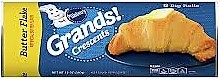
Even “crescent” has a dignified definition: a shape resembling a segment of a ring, tapering to points at the ends.  Can you picture it?  Sure you can, because now you’re thinking of Pillsbury Crescent Rolls.  They’re so “American”, aren’t they?  We take a centuries-old, meticulously refined shoo-in for the Baked Goods Hall of Fame and reduce it to sticky, doughy, fast food; vacuum-packed into a can you open with a spoon.

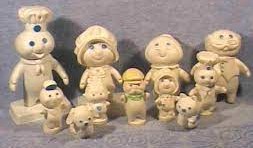
The Poppin’ Fresh family

[Speaking of Pillsbury, here’s something you didn’t know about the Dough Boy, otherwise known as “Poppin’ Fresh”.  He has a family!  His wife is Poppie Fresh, his kids are Popper and Bun-Bun, his grandparents Granpopper and Granmommer, and his Uncle Rollie.  Don’t forget the dog (Flapjack) and the cat (Biscuit).  In the 1970s you could purchase the entire clan as a set of dolls.]

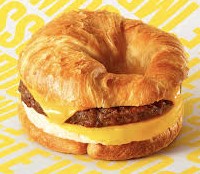
BK’s “Croissan’wich”

Pillsbury isn’t the only crescent con artist out there.  Burger King made a name for itself with its popular Croissan’wich breakfast entrees.  And Galaxy, the Williams-Sonoma mail-order croissants my family and I enjoy at Christmas, start out as frozen minis, rise impressively overnight on the kitchen counter, and bake to an excellent knock-off of the bakery-made originals.

The preparation of authentic croissants requires time and attention we Americans don’t have the patience for.  Watch the following video (which is thirteen minutes long so… maybe not) and you’ll learn what it takes.  At the least, you’ll understand why I pay almost $4.50 for a single croissant from Galaxy/Williams-Sonoma.

Most of us wouldn’t make it past  the initial “pre-dough” step in the video, let alone the labor-intensive lamination (folding/flattening), forming, fermentation, baking, cooling, and storage.  We’re talking hours and hours in the kitchen here, and that’s assuming you have the right equipment.  No wonder we’d rather just whack a Pillsbury tube on the counter edge and produce “crescent rolls” hot out of the oven 9-11 minutes later. 

Still, I implore you to watch the cweh-saw video.  The star of the show is Frédéric from Boulangerie Roy Le Capitole, narrating the process in his beautiful native language.  This man could be saying … and then we drag the smelly garbage out to the back alley for the cats to dig through and I’d still be glued the sound of his words.  Or, listen to our lovely video host and her delightful French accent (with the occasional incorrect word sprinkled in).

Lamination = Layers

I was so mesmerized by the French voices I really don’t remember much about the croissant-making itself.  But it’s hard to forget the facts.  Making an authentic batch takes three days.  A croissant is 30% butter and can have as many as fifty layers.  French bakeries have “bread laws” to protect their artisan products.  Finally, you can “hear” the sound of an authentic croissant by pushing through the crispy crust to the softer layers inside.

To the matter of my Christmas… er, Easter croissants, I’m happy (and satisfied) to report they tasted just as good last week as their holly, jolly predecessors a while ago.  Apparently four months isn’t too long to wait for good croissants.  But three days is too long to make them from scratch so I’ll keep buying from con artists.

Some content sourced from Wikipedia, “the free encyclopedia”.
Doorstop Topper

The word nerd in me thinks it’s cool when one can be modified to make four others simply by changing the same vowel. Batter will be in abundance the next several weeks with all of the baking. The holidays are always better when shared with others. Colorado’s bitter cold winters are a thing of our past now that we’ve moved to the South. The chaos of the holiday season doesn’t really “bott_er” me (okay, that one’s reaching). But finally, we have butter. Ah, there’s nothing better than (or bitter about) butter, is there?

The topic of butter is brought to you today by an utterly ridiculous here-today-gone-tomorrow suggestion to make your holiday hosting more glam than your neighbor’s: butter boards.  When I saw this picture I didn’t even understand what I was looking at.  Even more insulting to this word nerd: the opinion piece I found describes a butter board as “charcuterie”.  No, it’s not.  Charcuterie is meats, not dairy.  This unappetizing appetizer is nothing but butter, spread on a board, with toppings designed to take your attention away from the fact that it’s, well, butter on a board.  I mean, if you’re gonna do faux-fancy at least go with peanut butter on a board, right?

Butter boards are an insult to butter.  I think we can all agree, butter stands alone.  You don’t need nuts or roasted garlic or dried fruit to hide dress it up.  As long as your butter comes from fresh, quality ingredients, it makes anything it pairs with better.  Except a board.

Can you tell I’m “bott_ered” by butter boards?  It’s because my wife and I take our butter so seriously.  Ever since a trip to Ireland, we learned the best butter is not only about quality, but quantity.  At dinner in a quaint hotel in the Connemara region north of Galway, the waiter brought us a big serving of bread with an even bigger serving of butter.  Seriously, the butter was more “brick” than “stick” (and certainly not “pat”).  Ever since, our go-to butter is a brick.  It also makes a great doorstop straight from the freezer.

Our butter dish is even designed for a brick, see?  A stick would be lost in this Irish pottery; a pat even more so.

Speaking of butter pats, I must make mention of the device in the photo below.  I wrote a whole post about it once called Sentimental Utensil.  Who knew this petit guillotine was a timesaver to make butter pats?  It showed up mysteriously in one of our kitchen drawers one day and I can only assume I inherited it from my mother.  But inherited it shall stay.  I can never get enough memories of my mother, as I alluded to in this paragraph from the past post:

And thinking about it even more, I can picture my mother using her butter cutter when I was a kid, leaving a perfect little pat beside the crescent roll that was positioned carefully on the bread plate beside each place setting at the dinner table. Because that was my mother. She was all about the dinner table. Everything had its place, even the pats of butter.

If you read the article on butter boards (please don’t) there are several dead giveaways on how forced this holiday trend feels.  The first is right up there in the teaser subtitle: “Butter boards have gone viral…”.  No, they haven’t, else this topic wouldn’t be worth warning you posting about.  “… because of their novelty and shock value.”  Their novelty?  Shock value?  Is one of your guests going to look at your butter board and say, “Well now, isn’t that novel?”  And just what about a butter board causes “shock” other than the writer’s excuse to use (part of) the overused phrase “shock and awe”?  It’s just butter, people.

The article should’ve gone with just the title so we could draw our own conclusions.  Instead, you’ll find phrases like “… how fun the concept is…”, “… what’s fascinating about butter boards…”, and “… extremely versatile as an appetizer…”; none of which are true.  The writing takes itself way too seriously and goes on way too long about something I will way never prepare.  Unless it were frosting, of course.  A “frosting board” would get my attention for sure.  Put out a plate of cookies with a frosting board and I’m all hands.

But enough of the butter boards.  You’d have to be blind as a bat to fall for this faux-fancy offering.  I’ll bet you’ve already stopped reading.  If you did make it this far, thanks for sparing a bit of your time.  Comment so I know you’re not a bot.

Some content sourced from the Food Network article, “How to Make the Perfect Butter Board for the Holidays”.

Feast of Family

  • The turkey reminds me of my father-in-law, who always assumed the carving duties and insisted all dinners begin precisely at the top of the hour.
  • The dressing reminds me of my mother-in-law, who insists you taste-test as you go to make her meal-in-itself recipe just right.
  • The whipped cream reminds me of my son, who would top off his pie and then tip the can directly into his mouth for a second helping.
  • The crescent rolls remind me of my other son, who never lets the meal go forward without them.
  • The sweet potatoes (in scooped-out oranges) remind me of my daughter, whose version is best described as a work in progress.
  • The Waldorf salad reminds me of my dear mother, whose recipe – as I discovered years later – is notably different than the one served at the famous New York City hotel.
  • The mincemeat pie reminds me of my dear father, with whom I was the only family member to indulge in this carb-laden throwback treat.
  • … and finally, the pumpkin pie reminds me of my beautiful wife, who always doubles the spices to make the dessert (and everything else about the meal) twice as nice.

Today reminds me of the bounty of family and friends; a Thursday best spent with those you love (instead of reading blog posts).

Happy Thanksgiving!