Behind Bars

Every now and then I crave a Kellogg’s Frosted Brown Sugar Cinnamon Pop Tart. You can debate the matter and say the fruit Tarts are better – Strawberry, Cherry, and Blueberry – and I’ll give you those, but I stand by my boring-looking Brown Sugar Cinnamon. Maybe that’s because I consumed hundreds of them as a kid, piping hot from the toaster.

Somehow Pop Tarts eluded the otherwise healthy content of my mom’s pantry.  You’d walk in to dozens of those little red boxes of raisins, a pretty good assortment of nuts (which were more meant for recipes than snacking), and the occasional graham cracker.  The fruit and veggie drawers in the frig were loaded and there was always a gallon of milk on hand.  Yet there they were, in foil-wrapped packages of two: Kellogg’s Pop Tarts.  I wish I could see the ingredients list from the 1970’s versions versus those of today’s Tarts.  Surely the former leaned more towards “real food” and less towards chemicals, or my mom would’ve never gone for them.

Pop Tarts now come in twenty-seven varieties, which by any standard is ridiculous. Who wouldn’t be happy with the four I already mentioned? (Okay, let’s add Frosted Chocolate Fudge and call it good).  Do we really need options like “Wildlicious Wild! Cherry”, or “Confetti Cupcake”? Apparently so, because that’s where our demand for choices has taken us. The new approach to snacks: invent one, sell enough to get them into everyday conversation, then evolve to twenty-seven varieties.  Have you seen your options with Oreo’s these days?  I rest my case.

The other day I traveled down the cereal aisle of our grocery store for the first time in a long time (we have house guests). I was shocked to discover the “healthy cereal” section is just as big as the space reserved for regular cereals. Even more interesting, the overhead signs on the aisle first announce “Cereals”, followed by “Granola” a little further down, followed by “Diet and Fitness” a little further than that.  The entire aisle feels like the same kind of food, only you start with boxes, morph to bags, and end up with little bars.  I’d love to know the combined total grams of protein in the products in the “Diet and Fitness” section.  Gotta be ten thousand or more.

Fun facts: Americans now choose from over 400 brands of “healthy” bars, in 4,000 varieties.  At $6 billion in 2012, the healthy bar market was only 17% as big as that of savory snacks ($34 billion) but growing in a hurry.  American children consume almost 500 calories a day in snacks.  The routine starts when we’re young.

Snack bars seem to be almost-entirely carbs or almost-entirely protein. I won’t comment on the first variety because I don’t eat them (I’ve moved on from Pop Tarts), and I don’t even see the carb variety because our store puts them over in the cookie aisle. But protein bars are a challenging enough decision. For starters, are protein bars a “snack” or a “meal”? Many are advertised as “meal-replacements”. Others look small enough to be snacks. Even the ever-present “Nutrition Facts” label doesn’t really lend a hand, except to confirm you’re taking in more calories and sugar than you’d hoped.

I belong to Lifetime Fitness here In Colorado, a gym which stresses “healthy lifestyle” in everything they offer, whether personal training sessions, workout classes, spa treatments, or a cafeteria full of healthy choices. The mantra I hear like a broken record: “carb-up” at least an hour before the workout; “protein-up” within 45 minutes after. I’m sure some would dispute that approach, but regardless, it suggests a “snack” before AND after a workout.  And as I stand in “Diet and Fitness”, I ask myself, “Is that snack half of a “meal-replacement” bar?  Two or three of the “fun-size”?  Scrap the whole aisle and go with fruit and cheese instead?”

For my money, snack bars before and/or after a workout neither benefit the short run nor ease the long run. It’s kind of like my daily multi-vitamins: no clue whether they help me either (but I still take them). This much I know: I need to have a somewhat full stomach before I work out. On that note, maybe I’ll just skip the “Diet and Fitness” aisle from now on and go back to Pop Tarts.

Some content sourced from the Wall Street Journal article, “Our Misplaced Mania for ‘Healthy’ Snacks”.

Sneakin’ Around

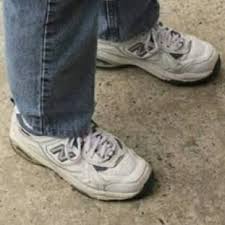
Six years ago, my wife and I visited Ireland for our 25th wedding anniversary. I remember the locals having this uncanny ability to figure out we were Americans, even before we uttered a word. They’d start with, “So where ya from in the States, the both of ya?”, or “What’s the weather like in America now?”, or “Traveled across the pond, did’ja?” It wasn’t until several years later I realized our feet had given us away. Our footwear – bright sneakers with white laces – effectively shouted, “Hello world! We’re from America!” We might have been the only rubber-soled couple in all of Dublin.

Funny people, those Europeans. They wear gym shoes when they’re going to the gym; running shoes when they’re going for a run. That’s about it. We Americans on the other hand (er, other foot), have a decades-long love affair with our “tennis shoes”. We have entire stores dedicated to the soft-soled shoe – Foot Locker, for example – though you’re more likely to find synthetics instead of rubber these days. Walk into a Foot Locker and say, “I need a good walking shoe”, and the salesperson will direct you to every single pair in the store. Americans and their gym shoes: where fashion trumps function.

“Gym shoes” is an awkward, dated description of America’s casual footwear, but we’ve yet to come up with a better name. Once upon a time we called them “tennis shoes”, but today that ask gets you a specialty shoe (for tennis, of course). As kids we wore “Keds”, “Converse” and “Vans”, because they were practical and cheap. 95% of my childhood plodded along in pairs of Keds (with the other 5% in bare feet, or the single pair of dress shoes my parents insisted for church). Today, Keds, Converse, and Vans have made a furious comeback, albeit as a pricey fashion statement.

More recently, Americans claim to be wearing “running shoes”, but how many of us run, really? Maybe we should side with the Brits and wear “trainers” instead. At least we could fib about being “in training”.

The Euros may be quick to judge footwear but trust me; that’s not all they’re looking at. American tourists give themselves away with a host of other fashion statements. If you’re partial to baseball caps, flip-flop sandals, or “athletic shorts” (another item demanding a name change), you’re an American. Speaking of shorts, any shorts in Europe labels you an American. Shorts are “children’s clothing” over there. Care to repack that suitcase? While you’re doing so, white “athletic socks” are a no-no. Euros match their socks to their pants (meaning skip the white pants too). Finally, leave the untucked, oversized, logo’d t-shirts in the drawer. Euro’s aren’t interested in poorly-fitting walking advertisements.
I may be guilty of several items on the “American Tourister” list, but I simply can’t give up my gym shoes. They’re too comfortable and practical, and they’ve become a lot more stylish than the Keds of old. That’s not to say I don’t feel self-conscious wearing them. A good friend – the author of the entertaining blog Brilliant Viewpoint – always insisted her husband wear “nice” shoes, no matter the occasion. Considering her Italian background (and his German), it makes a lot more sense now.

For the record, the American airport is a great place to catalogue footwear. On a recent visit, the traveler shoe pie was split into equal slices (whether males or females): gym shoes, sandals, and dark-soled. heeled, business-casuals. The irony of this airport visit – my wife and I were picking up two teenage visitors from Germany; students staying with us for awhile. As they walked out of the Customs area, my eyes dropped to their feet. What were they wearing? Gym shoes – both of them. Apparently there’s more to America’s global influence than fast food.

Cause for Alarms

A headline in this morning’s news feed announced , “Flaming Condoms are the Newest Threat to Southern Israel!” Just wanted you to be aware.

Now that I have your attention, let’s turn to a timelier topic. Big Ben, the iconic clock and tower at the north end of London’s Palace of Westminster, has been silent for almost a year now. In case you missed the news, Ben’s Great Bell and Quarter Chimes no longer toll – for another three years in fact – while much-needed repairs are made to the clock mechanics behind his massive face. At least the damage was simply wear-and-tear, and not the result of flaming condoms.

For Londoners, I have to believe the muting of Big Ben took some getting used to. Imagine, heard on miles of city streets, the Great Bell bonging every hour on the hour, and the Quarter Chimes playing every fifteen minutes (a stuck-in-your-head repeating melody of twenty notes). Now take all that away; replaced by uncomfortable silence. I’m sure city-dwellers subconsciously depended on Ben to remind them they had, say, thirty minutes to get to the office, or fifteen minutes left in the lunch hour, or no minutes before church (better start running). How will these people cope for the next three years?

In the absence of Ben, Londoners surely turn to alarm clocks more than they used to.  Not comfortable relying on their own senses (or the sun’s position in the sky), the English probably carry “Baby Ben’s” if you will – whether mobile phones or other portable devices.  I expect the additional chorus of beeps and chimes and other musical bites make a ride on the Tube even more enjoyable, as you’re left to wonder whether your neighbor’s getting a phone call or simply late for an appointment.

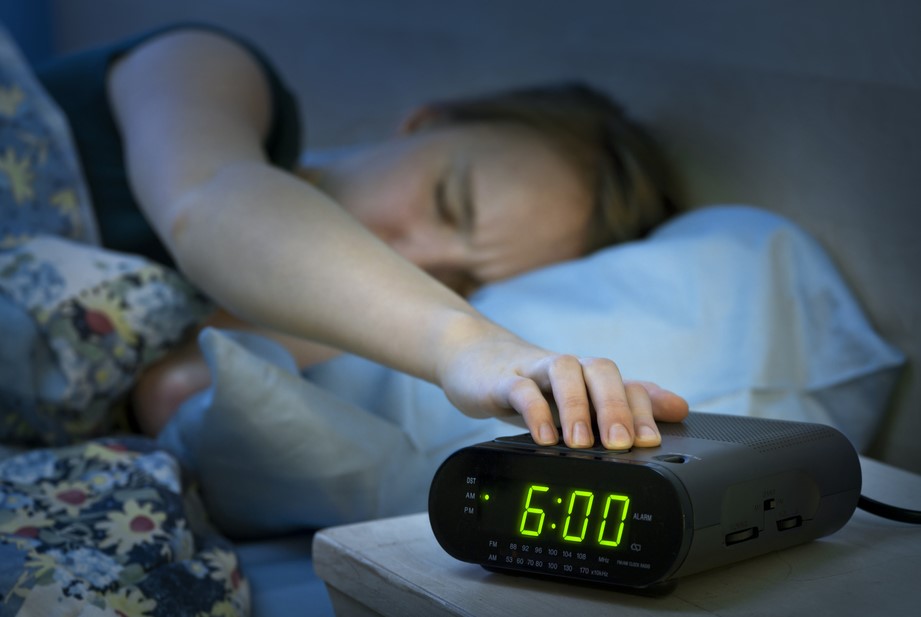
Alarms have come a long way since the basic digital LED box-clocks of old.  I wish those old bedside Ben’s were gone forever, but a visit to any Walmart or Radio Shack proves they’re more prevalent than ever.  My wife used to own one of the more potent models – with an enhhh…enhhh…ENHHH screech capable of levitating me out of a deep sleep, my pulse racing faster than an Indy car.  I’ll hear that murderous alarm even after I’m six feet under.

The colorful Beddi

Today – mercifully – we have several alarm clocks designed not so much to levitate but rather to ameliorate your transition into the conscious world.  Beddi – a “designer smart-clock” – is a sleek enough bedside companion.  Along with charging your phone, Beddi controls the dawning of your bedroom lights or the gradual amplification of your favorite playlist or even the pleasing aroma of your coffeemaker.  You choose how you wish to wake up.

The cute Kello

Kello is the spitting image of a toaster, but it’s really a partner for your body clock, with sleep-training modes to wake you a little earlier each day, or guided breathing exercises to help you nod off faster each night.  Kello also offers music in place of an alarm and can restrict the number of times you can whack the snooze button.

The sadistic Pavlok

Some people demand a little more, uh – torture – to get themselves up and out of bed.  Ruggie is exactly what it sounds like – an innocent-looking rug placed just to the side of the bed.  Ruggie is all about blasting music in louder and louder bursts, and the only way to shut the blessed thing up is to stand – full body-weight – atop of its fleeced surface for at least thirty seconds.  Then there’s Pavlok, a wearable alarm clock programmed via smart phone app.  Pavlok begins with a beep or a vibration (my advice – get up NOW) – but left to its own “devices” matures into a pulsing, zapping electric shock when you still don’t respond.  Pavlok is also happy to electrocute for trivial pursuits like biting your nails, smoking, or too much time on the Web.

Don’t know about you, but I have no interest in meeting Pavlok’s inventor.  Mr. Shock Clock is one messed-up sadistic soul, and probably has a host of other torture devices at the ready.  Like flaming condoms.

Two for the Money

Not so long ago people would say to me – my grandpa included – “a penny for your thoughts”. I always liked that phrase, though I was never paid for whatever was on my mind. Today you don’t hear it so much, because nothing is worth just a penny anymore. You’d be better off giving a dollar. Or two dollars.  Maybe then you’d find out what people think.

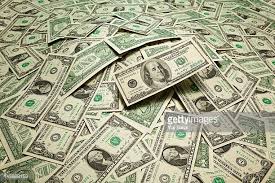
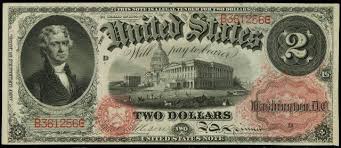
The other day I was in the drive-thru lane at my bank, and the teller cashed a twenty, returning a small stack of bills – a $1, a $5, a $10… and two $2-dollar bills.  I’ve seen plenty of the first three, but when was the last time you came across the double-dollar? U.S. currency may be downright boring compared to the colorful equivalents in other countries, but today I say this: the uncommon $2 is a cool bit of cash.

America’s paper money prints in just seven options today, from the $1 on up to the $100-dollar bill.  Fifty years ago you could find several larger denominations ($100,000!), but the big boys were dropped from circulation to deter organized crime.  Even today, the $50 and the $100 get second looks for fear of counterfeits.  The lion’s share of circulating bills is the $1 on up to the $20.  But the one that earns a second look? The $2.

What makes the $2 so tony?  Try finding one.  I asked my bank how many they have in the drawer at any given time.  They said none.  In fact, I didn’t just get my couple of $2’s – I had to ask for them – and the teller had to go back to the vault to find them.  The $2 just isn’t in demand anymore – hasn’t been for a long time.  The U.S. Mint stopped printing $2’s in 1966, but thanks to America’s bicentennial, started the presses again in 1976.  The most recent printing of the $2 was 2016 – almost 200 million – but it’s a drop in the bucket compared to the rest of the U.S. currency clan.  If you could shake the globe over a big basket, you’d find 40 billion U.S. bills in circulation right now.  But the overlooked $2 represents less than 0.5% of the lot.

I like the $2 because of its unique look.  Thomas Jefferson is on the front – oval-framed as in a portrait (only George on the $1 has the same look).  The words “Federal Reserve Note” curve gracefully over TJ’s head; on all other bills those words are in a mundane straight line.  Finally, the $2 is the only bill without a building on the back, like the Lincoln Memorial or the White House.  Instead, you have an edge-to-edge top-to-bottom rendition of the signers of the Declaration of Independence (replacing TJ’s Monticello home from earlier versions).

The two-dollar bill has several chapters of urban legend much more colorful than other denominations.  Apple co-founder Steve Wozniak purchases $2’s in uncut sheets; then has them perforated and glued like a Post-It pad.  He enjoys tearing off several for tipping.  U.S. Air Force pilots of the U-2 spy plane keep a $2 in their flight suit; a sort of badge of distinction. $2’s are often used by gun rights activists to show support for the Second Amendment. The website Where’s George? keeps track of the circulation of over five million registered $2’s.

Despite my enthusiasm for the buck-buck, it’s not without its challenges.  The $2 is not accepted at most vending machines.  The common misconception the $2 is no longer circulating leads to suspicion of counterfeiting.  Two years ago at Christa McAuliffe Middle School in Texas, a 13-year-old was denied lunch privileges for using a $2 at the cafeteria window.  A man in Baltimore was jailed for using $2’s to pay for a purchase at Best Buy.

My couple of $2’s will stay with me a little while, at least until the novelty wears off.  Maybe I’ll spend one of them just to see what happens.  Maybe I’ll return the other to the bank vault for safekeeping.  Today’s lesson; there’s more to American money than fives, tens, and twenties.  $2’s have a place at the U.S. currency table as well, just as they did when first minted in 1862.

Some content sourced from Wikipedia, “the free encyclopedia”.

Wee Wardens of Wash

Let’s wage a debate where the arguments “against” easily beat the arguments “for”, but we’re so stubbornly “for” we wage the debate anyway. Sound like politics?  Not today. Race relations? No way, José. Pepsi vs. Coke? Maybe another time. Today we’re putting a much hotter topic on the table: shampoo. More specifically, hotel shampoo.

Last weekend my family and I stayed at a Fairfield Inn – a low-end entrée on the Marriott hotel menu.  Fairfield’s are fine by us – clean and basic overnight accommodations, (with a free breakfast that actually digests).  In this instance, we entered the lobby to the smell of freshly-baked help-yourself chocolate-chip cookies.  That was a nice surprise.  After check-in, we made our way around the corner to the elevators, and on up to our third-floor rooms.

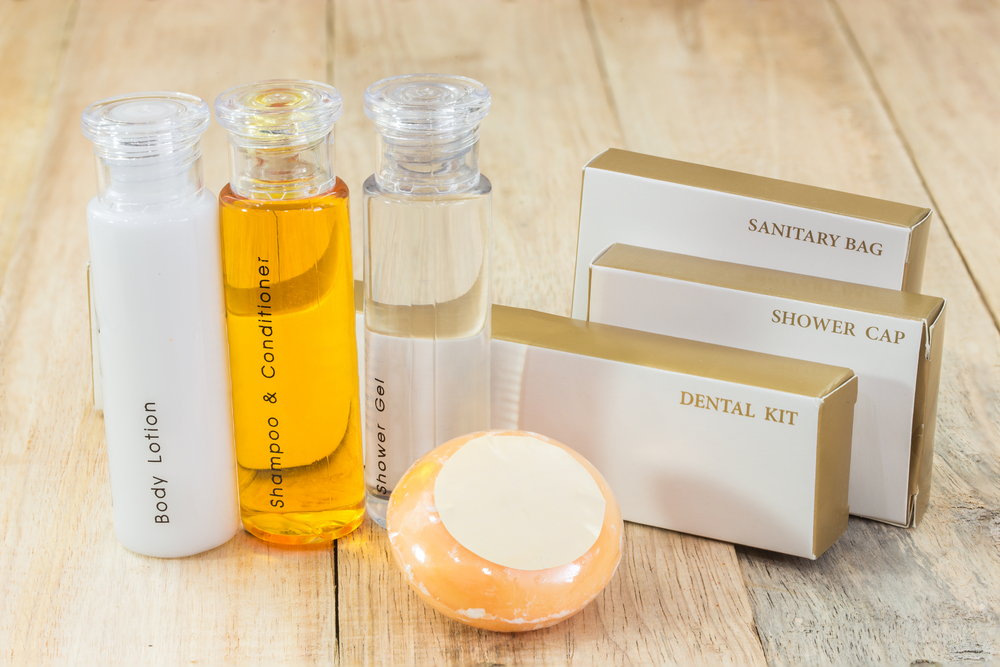
Let’s pause here for a quick survey.  What’s the first thing you do when you enter a hotel room – check out the view?  Channel-surf the TV?  Flop on the bed?  Not me. I head to the bathroom to check out the small “freebies” on the counter.  Chances are I’ll find (at a minimum) soap for the sink, soap for the shower, boxed tissues, makeup-remover wipes, and maybe even a tiny cloth to polish shoes.  Also for the taking: shampoo, conditioner, and body-wash bottles, lined up like little dominoes just waiting to take the plunge into the nearby shower.  But guess what?  Those little soldiers of sanitation are about to go MIA.

In the next few months, according to a Wall Street Journal article, many of America’s hotel bathrooms will drop “little bottles” in favor of shower-wall bulk dispensers.  In today’s environmentally-conscious world, you have to wonder why it hasn’t happened sooner.  Consider the arguments against these little grime-fighting gunners.  They create tons upon tons of plastic waste.  They get thrown away half-full – so effectively waste on top of waste.  The moment you need them is the moment you’re already wet in the shower (and they’re still over on the counter).  Finally, for anyone who requires reading glasses – hello, me – little bottle labels are impossible to decipher while you’re standing under shower spray. Raise your hand if you’ve ever put body wash in your hair.

More arguments against.  Bulk dispensers keep the shampoo in the hotel and the bottles out of the landfills.  They give you as much or as little product as you need.  Bulk dispensers can easily be refilled by housekeeping (though picture the short-straw employee who has to decant the contents of the leftover bottles into the dispensers).  Finally, bulk dispensers eliminate five billion little bottles a year.  Okay, that last argument is pretty much the only one you need.  And yet…

This change brings me pain.  Staying at hotels won’t be the same without my wee wardens of wash.  My singular argument for?  I’m all about personal touch; the little things that make you go, “wow, I feel special”.  Those little heroes of hygiene do that for me.  So do chocolate-chip cookies.

To add fuel to the fire, I expect hotels to eventually remove everything else from the bathroom counter.  You’ll find nothing but a faucet, towels, and TP.  While they’re at it, they’ll eliminate the logo pens, the paper pads, the stationery, and even the bedside clock-radio’s.  Cleanse the room of anything moveable.  Why do this?  Because hotels know they can condition you to bring your own stuff.  And before you say, “Dave, that’s a stretch”, consider the airlines.  It wasn’t that long ago the ticket agent checked you in, printed your boarding pass, and slapped the luggage tag on your suitcase.  Pretty soon you’ll be flying the plane.

Truthfully, I can do without my little defenders of disinfection, as long as hotels don’t take away my elbow room.  But that’s already happening, isn’t it? Blame Japan for the “little room” concept.  America is now a breeding ground for “capsule hotels”.  Capsules give you nothing more than a bed-closet and a down-the-hall community bathroom.  They’re described as “cheap, basic, overnight accommodations”.  Wait, wait, wait – isn’t that the same definition I gave our Fairfield Inn?  One of these days someone will say to me, “Wow, the Fairfield. Y’all stay nice.”

In the meantime, rest in peace little marines of clean.  Your work is done.  Time for the big boys to take over.

Creatures of Habit

WHAT IF Starbucks decided to close its stores for a whole day? Imagine, you’re driving to work with early-morning brain fog, you pass by the most convenient Starbucks, and from the street you see a big “CLOSED” sign behind the glass.  Not to be denied, you head for the drive-thru, but your access is blocked by green cones (everything matches at Starbucks).  You’re still in denial, so you pull into a parking space, get out of the car, and peer through the darkened windows. Horrors. Your 7×24 caffeine-addiction fixer-upper (well, almost 7×24, but who craves coffee at 3am?) has taken the day off.  Are you getting a case of the jitters just reading this paragraph? Is this a Catch-22, because you can’t think up another coffee option until you’ve actually had your morning coffee?

We had a little “sip” of this scenario earlier this week, didn’t we?  For reasons that were relevant-today gone-tomorrow (maybe), Starbucks took the high road and delivered several hours of anti-bias training to its employees, closing 8,000 locations in the process.  For one interminably-long afternoon and evening on Tuesday, you had to search a lot harder to find your grande no-whip Caramel Macchiato.  When Starbucks’ announcement lit up the front-page headlines last week, my first thought wasn’t, “the lines are about to get longer at the bathrooms” (though admittedly, it’s a legitimate concern since I’m a man of frequent visits), nor was my first thought, “we’re about to see a lot of, uh, interesting people at Starbucks now” (because we already do, don’t we?)  Rather, my thought was, “how the heck are we gonna cope with several hours of no-Starbucks, when 100 million patrons – you read that right – frequent their stores every week?”

In a related headline, an economist claimed this one-time Starbucks shutdown would cost the company $12 million and be a boon for “coffee competitors” like McDonald’s and Dunkin’ Donuts.  Laughable.  I know those restaurants have their fair share of coffee allegiance these days – if you consider “fair share” less than 1%.  No, the world didn’t rotate off its axis on Tuesday, but I also won’t promise patrons didn’t line up at the Starbucks drive-thru hours before the open on Wednesday morning.  Our Starbucks habit was ingrained at an early age, well before the competition stepped up.  Howard Schultz is a genius.

More likely, the impact of Tuesday’s shutdown is what I refer to as the “Chick-fil-A effect”.  If you’re a fan of CFA, you’ve known from the get-go their stores close on Sundays.  It’s a simple building block of the founder’s philosophy: CFA employees should spend their Sundays resting and at worship, with family and friends.  Now, you might pass Chick-fil-A on a Sunday and think, “Closed.  What a nice gesture – more companies should do that.” But I’m pretty sure you’re actually thinking, “Damn – I was really craving a #1 meal, hold the pickle, w/ lemonade”.  And that thought will stay with you until Monday. And Tuesday, And Wednesday, or whatever day you next pass by Chick-fil-A.  Maybe their alt-slogan should be, “Closure Makes the Heart Grow Fonder” or something like that.  It’s as much a business strategy as a thoughtful benefit for CFA employees.  On that note – trust me – Starbucks will make up Tuesday’s lost business by the time I hit the “publish” button on this post.

Nothing Bundt Cakes (“Home of the Most Delicious Bundt Cakes Ever!”) is kinda sorta the same animal as Chick-fil-A.  For reasons suspiciously vague, NBC allows its franchisees the option to close on Sundays.  Google your NBC’s hours before you head over for a white chocolate raspberry bundt or a lemon bundtlet.  The next time you find their doors unexpectedly locked, I predict your dreams will be relentlessly invaded by dozens of little flying bundtinis – at least until you satisfy your craving with a purchase.  Don’t say I didn’t warn you.

Here’s the irony about today’s musing: I’m typing my post from a Starbucks.  I’m sitting quietly at a table, enjoying a grande cold brew with a touch of cream.  The baristas are unusually perky (surely a side effect of their recent training).  The restaurant feels quiet and “inclusive”.  In other words, I didn’t cry over spilt coffee on Tuesday. Instead, I just proved my theory.  a) Tuesday afternoon I couldn’t go to Starbucks.  b) I wasn’t even planning to go.  c) The store closures were in the headlines, which inserted “caffeine denial” into my brain.  d) Here I am, just two days later, getting my Starbucks on again.

Touché, Mr. Schultz.

Tryst With a Twist

I’m leaving my wife for another woman. There, I said it.

I never thought it would come to this; I really didn’t. My wife and I have been together for thirty-one bliss-filled years – as smooth and as satisfying a marriage as one could hope for. And yet, tomorrow afternoon, I’ll catch a ride to the airport, kiss my beloved goodbye, and board a one-way flight to Las Vegas. All my worldly possessions stay behind, save for the overnight bag in my hand and the wad of cash in my pocket. When I get there, I’ll dress up, head over to one of the finer restaurants on the Strip and reunite with a woman over thirty years my junior. We’ll smile at each other and raise our glasses in anticipation. A new adventure will commence.

Now then, let’s shed a little more light on my tryst, shall we? Yes, I’m leaving my wife (but only for a day and half). Yes, I’m going to Sin City on a one-way ticket (but then I’ll turn around and drive back home the next day). And yes, I’m meeting up with a woman thirty years my junior. She also just happens to be my daughter.

Here’s the detail. After a year of living and working in Los Angeles, our youngest has decided to return to Colorado to give Denver a try (the “new adventure” I refer to above). The drive between those cities – if you’ve ever done it – is Las Vegas and a whole lot of nothing else. Imagine a twenty-hour jaunt in a lunar rover on the moon, only somewhere along the way you get thirty minutes in Disneyland. That’s LA to Denver: no people (at least, no sane ones) and a whole lot of cactus, dotted with a single oasis of slot machines and casino-hotels. Come to think of it, I’d wager big money the moon is more interesting than LA-Denver, especially the never-ending portion of the drive known as southern Utah.

Anyhoo, (to use a word from my daughter’s unique vocabulary), I’m sharing the Vegas-to-Denver drive with her – responsible father that I am – fully fourteen of the twenty hours it takes from Los Angeles. Somehow the idea of my daughter and her cat all alone in the desert doesn’t sit well with me.

The more I ponder this little adventure, the more I wonder if I shouldn’t be worried more about my time in Vegas. Think about it. I’ll show up at the hotel, and the front desk will undoubtedly eye my much-younger companion from head-to-toe. “Oh!”, I’ll say with a sheepish grin, “she’s my daughter.” Yeah, right pal, your ‘daughter’. When I arrive at the restaurant for dinner, the maitre d’ will say, “Sir, if you and your – uh – ‘niece’ will follow me, I’ll show you to your table.” Or let’s say I get my daughter to blow on the crap table dice for luck. Stink eyes all the way around. Hey big spender; who’s your prom date?

This is a no-win situation. Short of a blood test and a doctor’s proclamation, “Holy cow, they’re actually related!”, I’m destined to a jackpot’s worth of dirty-old-man looks in the next few days. At least I won’t be mistaken for a gigolo.

What happens in Vegas, stays in Vegas. Sorry, I beg to differ. I’ll be pleased as punch to share the intimate details of my time with my “other woman” in Sin City. Heck, maybe I’ll even make it my next blog post. We checked into the hotel. We went to dinner. Dropped a few quarters into the slots. Went to bed early so we’d be rested up for the long drive head. Riveting reading, huh?

Rumble in the Jungle

Last Friday, a Miami prep school put on a senior prom.  The party included the usual accoutrements: decorated tables surrounding a darkened dance floor, strobe lights sweeping in rhythm to the blaring music, and the students themselves, dressed in never-be-seen-in-again styles and colors.  The theme (there’s always a theme at prom) was “Welcome to the Jungle”, played out through the room’s exotic backdrops and fabricated trees.  Somewhere during the festivities, a pair of fire-eaters put on a show.  And eying everything that moved, from a cage at the edge of the dance floor?  One extremely agitated, very-much-alive, time-for-dinner, full-grown Bengal tiger.


I had to watch the video (here) to believe the headline, but yes, snopes.com – true story.  A tiger went to prom.  Judging from the size of the cage and the attitude of the animal, it’s no wonder the authorities were all over this one, from the Florida Fish & Wildlife Commission to PETA.  The students – er, administrators – will “have some ‘splainin’ to do, Lucy”.  For starters, where the heck did Principal Pugh find a Bengal tiger for rent?  And then, did Pugh and his staff really think students would want to see said tiger up close and personal? My date wouldn’t have been impressed as I peed in my tuxedo pants.

Prom wasn’t always this way.  Once upon a time it was entertainment enough to simply go to a high school gathering off high school grounds.  Prom was more about the one time you got to borrow Dad’s fancy car; the one time you could be at one of your town’s finer hotels as a minor; the one time you could stay out past curfew (oops; discovered that last one wasn’t actually true after the fact).  Prom was simply dinner and a dance; 95% perspiration and 100% awkward moments.

I can’t remember how I asked my date to prom.  These days, the asking is an event all of its own.  “Promposals” – as the ladies now expect – are supposed to be “creative, elaborate, and over-the-top” invites.  A Breaking Bad fan convinced Bryan Cranston to film a promposal for his date.  Another guy changed his name and photo in his date’s cell phone, so when he called her, the promposal popped up on the screen.  Yet another had a pizza delivered to his date’s house, with “PROM?” spelled out in pepperoni.  A phone call just isn’t enough to get a “yes” anymore.

Proms go back a long way; well over a hundred years.  Proms were originally deemed “times of firsts”, as in first “adult” social event for a teenager, first time taking the car out after dark, first real dress-up affair, first ride in a limo, first formal photo with a date, and so on.  Today, firsts happen a lot sooner, don’t they?  Maybe that’s why we add tigers and fire-eaters to quicken the pulse.  Or hold our prom in the East Room of the White House, as Susan Ford (daughter of the late President) did alongside her Holton-Arms classmates in 1975.

Photo courtesy of Gerald R. Ford Presidential Library

Here’s a bit of prom trivia: the word is short for promenade.  Promenade means “a stroll or a walk, especially in a public place, as for pleasure or display”.  Makes sense, doesn’t it?  Further, promenade comes from the Latin word prominare, which means “to drive (animals) onward, with shouts”.  With a nod to Miami – makes sense, doesn’t it?

(Note: PROM also stands for “programmable read-only memory”; a form of computing memory where the setting of each bit is locked.  Makes me think of teenage hormones, especially at prom.  Locked/loaded – nothing you can do to change any of the settings.)

Not to rain on this parade – er, promenade – but every time I think of prom I can’t help but think of the movie “Carrie” – the original version of course, with Sissy Spacek.  Still terrifying after all these years (and I can still hear her mother’s haunting scream, “They’re all gonna laugh at you!!!”).  At least now I’ll just have nightmares about hungry tigers.

Fit for a Queen

Two weeks this Saturday, the United Kingdom’s Prince Harry and America’s Meghan Markle will be married at England’s Windsor Castle; an event garnering lots of attention on both sides of the pond. In the line of succession to the British throne (still occupied by Queen Elizabeth II after a record sixty-five years), Harry is now sixth, behind his father Charles, his older brother William, and William’s three children: George, Charlotte, and ten-day-old Louis. Of all these royals, I’d love to see William’s daughter ascend to the throne someday. “Queen Charlotte” just sounds so regal, doesn’t it?

Photo by BEN STANSALL/AFP/Getty Images

Princess Charlotte is now three years old and already working on her Royal Highness wave (see above).  I thought she was named after Princess Charlotte Mecklenburg-Strelitz, the German-born wife of King George III from three centuries ago, but apparently that’s a-little-too ancient history.  Charlotte’s name is instead a nod to the feminine form of “Charles”, her grandfather.  Add in her middle names Elizabeth (her great-grandmother the Queen) and Diana (her grandmother), and Charlotte’s full name is quite a mouthful.  Perhaps you prefer the more formal “Her Royal Highness Princess Charlotte of Cambridge”?

I’m enamored with Charlotte because you just don’t see her given name in print very often.  Mecklenburg-Strelitz is one of just three Charlotte’s in the entire British monarchy.  Mecklenburg-Strelitz was Queen – by marriage – of Great Britain and Ireland for forty years in the late 1700’s, before those countries became a part of the United Kingdom.  Lest you think she was a power Queen, Charlotte was chosen by her husband King George III for just the opposite reason – her lack of interest in politics.  Charlotte bore George fifteen children (including future king George IV, who himself had a daughter Charlotte), so it’s fair to say she fulfilled her real obligation to the monarchy.

Princess Charlotte by Johann Georg Ziesenis, c. 1761

There’s America’s city of Charlotte, North Carolina, of course.  Charlotte really is named for Charlotte Mecklenburg-Strelitz, as she was the reigning “consort” (monarch’s spouse) at the time of the city’s incorporation in 1768.  America was still a grouping of British colonies back then, so the city’s naming makes more sense with that context.  Charlotte is aptly named the “Queen City” and is central to the county of Mecklenburg.  It’s as if we Americans are of British and German descent.

The only other reference to Charlotte I could find (in case someone up there is reading) is the town of Charlotte, Vermont.  “This” Charlotte was incorporated six years before North Carolina’s, no doubt also named for the eighteenth-century queen.  No surprise – Charlotte, VT is in America’s geographical region of New England.

On a personal note, my father’s older sister was named Charlotte.  She died not ten years old (of scarlet fever), so it’s a shame I never had the chance to know her.  I would’ve enjoyed calling her my Aunt Charlotte.

That’s the extent of my tour of Charlotte’s.  With any luck (and longevity), I’ll be witness to Queen Charlotte in my own lifetime.  Throne or not, the young princess’s estimated worth to the British economy is $4 billion over the course of her life.  Big number there.  Then again, I just contributed $7.95 of the total.  My wife and I renewed our Netflix subscription last night so we could watch “The Crown”.

Some content sourced from Wikipedia, “the free encyclopedia”.

Good Times and Laughter Too

My wife and I will attend two weddings this summer; one for friends and one for family.  This week I noticed one of the brides-to-be on Facebook, requesting “songs you want to hear/dance-to at the reception”.  Clever girl, making sure her guests have a say in the music.  My guess is – whether requested or not – the deejay will find room for Kool & The Gang’s enduring party anthem, “Celebration”.  It’s as timeless now as it was when we first heard it in 1980.  And ce–lah–brate-ing good times is as timeless at weddings as it is for the passing of a loved one.

Plucked from another section of the significant-life-events portfolio, my wife and I attended a Celebration of Life this past weekend, for my uncle (my dad’s twin brother).  I label two aspects of my uncle’s passing as “merciful”: 1) He was weakened by a heart condition over the last three years of his life; and 2) One or two of his family members were not available for an immediate memorial.  Because of the first aspect, the extended family had plenty of time to make peace with my uncle’s eventual passing.  Because of the second aspect, what may have been a funeral became a celebration of life instead.

No need to vote on this topic.  Whenever circumstances permit, choose Celebration of Life over Funeral.  Funerals lean to the shock and mourning of a life lost – somber affairs are they.  Celebrations of Life revel in the happy memories of one life, and the joy brought to countless others.  Such was the case with my uncle.  His celebration included a church service, hymns, and a homily (given by the “celebrant”, of course), but what moved me to my core – and what I couldn’t get enough of – were the stories shared by my cousins (my uncle’s children) and my father (his brother).  Those memories included things I never knew about my uncle, such as his talent as a cartoonist and his childlike demeanor with his grandchildren.  I’m even more inspired by the man than I already was.

My uncle’s celebration moved on from the church to a beautiful setting by the San Francisco Bay, where drinks, lunch, photos and memories were shared for several hours.  It was as much a family reunion as a celebration, and my uncle wouldn’t have had it any other way.  Before he passed, he let it be known we should make merry instead of mourn.  And so, …There was a party goin’ on right there; a celebration to last throughout the years.

Whether we celebrate births or birthdays, weddings or wedding anniversaries, Sunday Mass or Christ-mas, we get a healthy dose of festive occasions in our lifetimes.  Perhaps that’s why we’ve come up with so many words to describe them.  Merriam-Webster published one such list here, including Bash (America’s melding of “bang” and “smash”, somehow maturing into “party”); Blast (surely inspired by loud musical instruments and champagne bottles); Rave (actually inspired by a Middle-Ages term for “acts of madness”); Blowout (once defined as a “one-off indulgence”; somehow morphed into “major festive occasion”), and finally my favorite – Wingding (once “feigned seizures”, now “wild partying”).

But enough digression.  Well, almost enough.  My nod to all things “celebration” wouldn’t be complete without a mention of the town in Florida by the same name.  Developed by Disney as a utopian master-planned unincorporated community “created from scratch”, and “a town worthy of its brand and legacy”, Celebration was/is Disney’s nod to New Urbanism: development based on the small towns of early America, with compact downtowns, “walkable” streets, diverse housing stock, and plentiful public spaces. Celebration doesn’t even consider itself a town, preferring instead the label of community, as in “strong spirit, and desire for friendship with neighbors”.  Sounds like a festive gathering to me!

There will be many more celebrations of life before the one that has my own name on it.  I’m okay with that.  Celebrations of life are a unique blend of revel and revere, partying and paying respects – the dual reasons we raise our glasses to someone’s name.  Just be sure it’s a party.  As Kool & The Gang puts it: We’re gonna have a good time tonight… Let’s celebrate… It’s all right.