Celestial Strings of Pearls

When I take the dog for a walk after dark, I never know what to expect in the night sky above me. We live in an area devoid of city lights so the celestial show is clear and sometimes dramatic. Ursa Major (aka Big Dipper) often makes an appearance. Venus is the brightest star planet low in the western sky at twilight. And the full moon, seemingly biggest as it rises just above the pine trees, can be breathtaking. But none of this prepared me for the bold processional streaking across the heavens last Thursday night.

It could’ve been Santa Claus and his reindeer for all I knew.  Sitting around a backyard fire pit with friends, having drinks and swapping stories, one of the women suddenly shrieked, “LOOK!!!” and pointed skyward.  At first it didn’t register what we were seeing (nor at second, nor at third).  I can only describe it as a tiny string of bright pearls, two or three dozen in the strand, perfectly spaced and moving silently across the sky.  Neither pulling nor pushing, they simply proceeded in a line as if drawn to some unknown destination.  It almost looked like the one-after-another cars of a roller coaster, heading up that first steep incline.

Our group was at a loss to explain this extraterrestrial.  We thought it might be the neatly arranged contrails of a stealth fighter.  Or some faraway electronic billboard advertising in Morse code (only with dots, no dashes).  Turns out we weren’t even close.  Our little alien spacecraft parade was the latest launch of Starlink satellites from SpaceX.

You’ve probably heard of SpaceX, even if you don’t know much about what they do.  Founded in 2002, SpaceX is one of Elon Musk’s ambitious companies, with the “modest” long-term goal of colonizing Mars.  While they design and launch the spacecraft to make that happen, SpaceX is providing Starlink Internet service to under-served areas of the globe by building a “constellation” of satellites around the planet.  42,000 of them.

This is technology way beyond my understanding, but here’s the basic setup.  A transmitter somewhere on earth sends the Internet up to one of those satellites and the satellite then rebounds the signal back to you.  If the satellite loses your direct line of sight, it can hand off the signal to one of its buddies and your Internet service continues uninterrupted.  SpaceX earned the license for a ten-year window – starting in 2019 – to complete its Starlink constellation.  At last count they’ve already got 4,000 of these little guys in orbit.
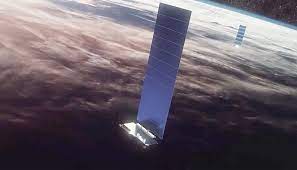
Starlink satellite

Credit Musk for identifying a market in need.  Mars may not be on my bucket list but faster Internet service certainly is.  Two years ago 10,000 Earthlings signed up for Starlink subscriptions (at $599 USD for the hardware and $120/month for the service). Today? Fully 1.5 million customers are bouncing data back and forth with all those satellites.  My rural location here in South Carolina (and the s-l-o-w speed of my current Internet provider) make me a prime Starlink candidate.  Later this year, I’ll also be able to switch over my cell phone service.  Yep, Elon Musk is literally taking over the planet.  Come to think of it, maybe the entire solar system.

A “string of pearls” before the satellites go their separate ways

Whether or not I subscribe to Starlink, I find the satellite technology fascinating.  We have a lot of “space junk” circling Earth but this constellation of man-made stars seems more elegant.  They’re launched in strings of up to 60, separating once they’re high enough. Each satellite’s thruster is powered by krypton and argon.  They talk to one another to avoid collisions.  They’re currently undergoing “dimming” to appease astronomers by taking a back seat to the real stars in space.  Finally, these satellites can “de-orbit”.  In other words, when they’re time is done (even satellites don’t live forever), they return home for a proper burial, which means burning up entirely as they attempt reentry through Earth’s atmosphere.

Starlink satellites x 42,000

Several websites track the continuing launches of Starlink satellite strings (like this one).  You can find out exactly when they’ll be passing overhead in your neighborhood, destined for their rightful place in the budding constellation.  If you see them stream by, remember, it’s not Santa and his reindeer (wrong month).  It’s a string of pearls designed to provide you with faster Internet service.

Some content sourced from Wikipedia, “the free encyclopedia”.

Smallest and Innermost

Mercury

Last month, I spent an entire post lavishing love and affection on Earth’s beautiful space neighbor, the planet Venus (see here). I was quick to point out – from Earth – you can occasionally see the planets Mars, Jupiter, and Saturn as well. Turns out that list is, ahem, incomplete by at least one planet. Clearly miffed by my post, our solar system’s Mr. Smallest and Innermost – the planet Mercury – decided to speak up this week.

Don’t burn yourself, little one (image courtesy of NASA)

For those of you who missed it, Mercury passed in front of the Sun on Monday.  For five hours or so, Mercury looked like a little black mole on the bright cheek of a much larger creature.  His orbit took him almost directly across the center of the Sun.  You may think Mercury’s show is no big deal; after all, he circles the Sun every 88 Earth days.  However, consider Earth, Mercury, and the Sun must be exactly lined up (put a ruler on it) for humans to witness a Mercury “Sun transit”.  We only get fourteen Mercury transits every Earth century.  The next one won’t happen until 2032.

I missed Monday’s Mercury transit myself, because a) I wasn’t up at sunrise in the Northern Hemisphere (when it happened), and b) I didn’t have the necessary eye protection to give it a direct look.  Instead, I enjoyed the online photos and videos from NASA and the world’s other space agencies (like this one).

Mercury’s the tough little guy on the left

The truth is, you don’t have to wait for a Mercury transit to observe the first rock from the Sun.  On several early mornings last month, you could’ve seen Mercury rising in the east (same as Venus), and you’ll see him again early next year – no telescope required.  Guess I got caught up in the allure of Venus and completely ignored her nearby brother.

If Mercury and Earth were side-by-side

Mercury – like all the planets – has some interesting facts.  He completes three rotations about his axis (days) for his every two orbits of the Sun (years).  Pretty slow for the smallest orbit in the solar system.  He has no moons.  He’s only about a third the size of Earth.  He’s pretty beat up, with the most craters of any planet, and “wrinkles” caused by the cooling and contracting of his iron core.  Only two of Earth’s spacecraft have ever visited Mercury, and even those stayed far away from the surface for obvious reasons (800.6°F on the sunny side; -279.4°F in the shade).

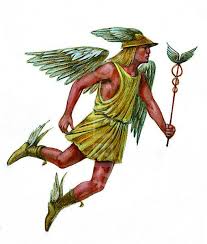
The Roman god for which Mercury is named is a lot “cooler” than the planet itself (ha).  Young Mercury wears a lot of hats, including (god of) financial gain, eloquence, and divination.  (Side note: perhaps Mercury should’ve been my blog mascot.  “Eloquence” was the theme of my very first post).  He also serves as the guide of souls to the underworld. Curiously, all these responsibilities take a back seat to Mercury’s most commonly known role – as speedy messenger to the other gods.  This role explains the naming of the planet, the fastest of the eight to circle the Sun.  Maybe we should also consider Mercury as messenger to the other planets, in case something gets weird with the Sun.  After all, Mercury will be the first to know.

I can’t talk about Mercury without a reference to the late, great Ray Bradbury.  Of all his wonderful science-fiction short stories – and there have been at least a hundred – my Bradbury top five includes “The Golden Apples of the Sun”.  “Apples” followed an exploratory rocket ship heading past Mercury to the Sun.  The crew is tasked with collecting a sample of the Sun’s golden fire.  I can still imagine the ship’s giant scoop as it extends from the hull and grabs a bit of the Sun.  The story’s real drama comes just after the collection, as the ship overheats and the life-support systems begin to shut down.  With respect to Bradbury, I won’t give away the ending.

Well then, enough about Mercury (probably too much).  I’ll conclude with a great tweet from Katie Mack, who was quick to note about Monday’s Mercury transit: “The official song of #TransitOfMercury is, obviously, ‘King of Pain’ by the Police.  But please note that the ‘little black spot on the Sun today’ referenced in the song is a ‘sunspot’, not Mercury, since ‘it’s the same old thing as yesterday,’ and (Mercury) transits only last a few hours.”

Keep on a-circling the Sun, Mercury.  I won’t forget ya next time.

Some content sourced from the BBC.com article, “Planet Mercury passes across the face of the Sun”, the Space-Facts.com article, Mercury Facts – Interesting Facts about Planet Mercury, and Wikipedia, “the free encyclopedia”.

Of Rings and Romans

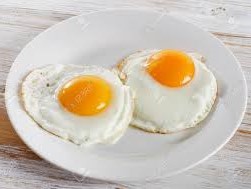
Eggs are a favorite food of mine.  A breakfast plate is hardly complete without a couple of the fried, scrambled, or omelette-d variety. They’re delicious for lunch in an egg salad sandwich, or for dinner in a chef’s salad or a quiche. Don’t forget deviled eggs for a tempting appetizer. Nothing’s unusual about these egg-zamples, but here’s where it gets borderline obsessive. Earlier this week I imagined two sunny-side-up eggs placed flat-side to flat-side (don’t ask me why; I just did). What do you get when you do that? SATURN!


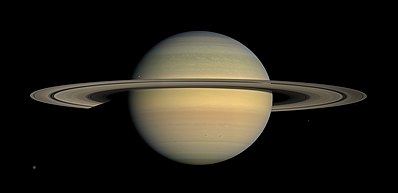
Perhaps you missed it on Tuesday, but the planet Saturn made a pageant-worthy appearance in our night sky.  Saturn “came to opposition” (sounds political), meaning Earth made its annual passage directly between the ringed world and the sun; at precisely 11am Colorado Time.  Saturn was closest to Earth at that very moment.  Ten hours hence, when Colorado’s sky was dark enough for stars and such, Saturn was already well above the horizon to the southeast.  At least I think it was Saturn.  Without a telescope, I channeled my most amateur inner-astronomer using handheld binoculars.  All I got was a shaky image of a bright, white pinprick in an otherwise fabric of black.  But I must say, it was a pretty big pinprick.

Saturn is certainly the most distinctive of the eight planets in our solar system (take that Pluto, you dwarf-pretender you).  Stage a planet beauty pageant and Saturn would simply flaunt her colorful rings to win ten out of ten times.  The distant runner-up, Mercury, would get a few sympathy votes for her steadfast “cool under fire”.  Mars would get no votes for her perpetual look of embarrassment.  Earth would be disqualified for serving as pageant host.  It’s Saturn with the sash every time.

There’s more to this heavenly body than meets the naked eye (WHOA; that may be the most risqué sentence I’ve ever written).  Saturn is a big ball of gas – hydrogen, helium – and less dense than water, which means if you threw her in the pool, she’d bob around like a big ol’ beach ball.  She completes a full rotation in ten hours; so fast in fact, her equator bulges enough to make her look like a flattened ball (not very becoming of you, Saturn).  Her glorious rings are circular masses of ice crystals, over sixty feet thick.  Her surface temperature is -300 degrees Fahrenheit, a reward for sitting sixth place from the sun.

All of which paints a not-so-rosy picture (but at least there are rings around the not-so-rosy – ha!).  If you could travel to Saturn (no spacecraft headed that way anytime soon), could stand on her surface (you can’t), and could withstand her “balmy” temps (one helluva spacesuit there), you’d still fly off into space on account of that zippy rotational speed and global shortage of gravity.  You’d probably splat into her pristine rings like a useless little bug. Ick.

Saturn

Saturn gets her name from the Roman god – not goddess – of agriculture and time.  Which begs the question, why am I calling him a her?  (Crud, I have to start this blog all over again.)  Even better, Saturn was also the god of wealth (now we’re talking).  In ancient Rome, the Temple of Saturn housed the town treasury.  And this same Roman god is why we call the first day of the weekend Satur(n)day (you’re welcome for that).  So, let’s review.  One of eight planets is named after you.  One of seven days is also named after you.  You must be one important dude.

And yet, Saturn (the planet or the god – you pick) doesn’t get much love in Earthly culture.  I scoured the web for references (okay; no I didn’t – I just looked up “Saturn” on Wikipedia), and all I came up with was a) a Sega video-game console, b) a discontinued brand of automobiles, c) a rocket booster (just the booster, not the rocket itself), and the annual trophies presented by the Academy of Science Fiction, Fantasy, and Horror Films.  Oh yeah, and a small, unincorporated community in Whitley County, Indiana.  Oh yeah again, and one of the primary characters in the “The Three Investigators” children’s books.  Er, wait, that was Jupiter Jones. Dang it!

Even if Earthly culture dresses down her sexy rings (again with the risqué), I still say Saturn wins the pageant (only now it’s a male pageant and that doesn’t work for me).  If you’re not convinced “he’d” win, consider this last fact.  Saturn has sixty-two moons.  Sixty-two!  Maybe Earth’s moon should head on out and join the party.  Can you imagine the night sky if you lived on Saturn?  The fabric would be loaded with pinpricks (including Titan, the second-largest moon in the entire solar system).  Moons, rings, Roman Gods, weekend days; what’s not to like?  As I said, it’s Saturn with the sash every time.  Now stop playing with your breakfast and get back to work.

Some content sourced from Wikipedia, “the free encyclopedia”, and the Universe Today article, “Ten Interesting Facts about Saturn”.