Overblown Air

When you travel to Colorado, you should pack a few things you might not think to bring. A reusable water bottle will be your constant companion since it’s high and dry in the Centennial State. Lip balm will be your pocket pal. Your wardrobe should be designed in layers since Colorado’s weather is so unpredictable. And finally, for the lack of air in the Rockies, don’t forget to bring a can or two of oxygen.
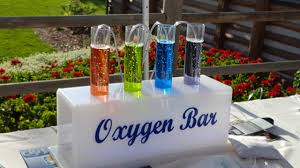
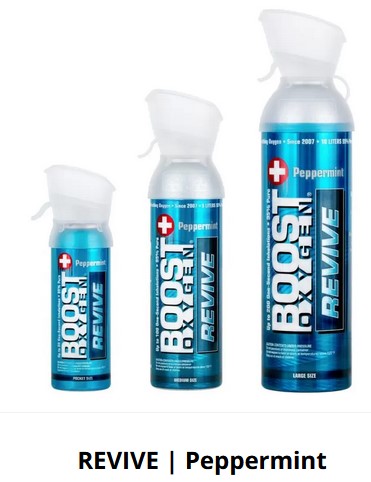
Canned oxygen?  For the longest time I thought this was the biggest scam on earth.  There was a time you could find “oxygen bars” at Colorado ski resorts – high altitude establishments where you’d pull up a stool and choose from a menu of “airs” to augment your oxygen intake.  Watching those suckers – heh – with their mouths attached to transparent hoses had me picturing a guy on the other side of the wall furiously working the plungers of bicycle pumps.  But forget oxygen bars.  Now you can take a hit from your very own can instead.

Boost , a popular brand of canned oxygen, has been around for a while since its humble beginnings through Shark Tank.  In Colorado you’ll find Boost products in every market, drug store, gas station, and airport concession.  Boost is  advertised as “95% Pure Supplemental Oxygen in lightweight, portable, and affordable canisters for health, recovery, natural energy, and athletic performance”.  That’s an impressive string of words to describe nothing but canned air.

First-timers will react to Boost with a well-defined smirk.  Gag gift for the relatives back home?  Stocking-stuffer?  After all, you’re paying $10 for a can of… well, nothing.  Yes, Boost comes in flavored varieties like lavender or eucalyptus menthol but in the end, it’s just air.  And watching someone take a hit of Boost is just like the goofball in your kitchen who tips the can of whipped cream directly into his mouth.  Even the sound of escaping compressed air is the same.  Just no whipped cream.

Naturally this is the point where I admit I’m a canned-air convert.  Never thought I’d see the day I’d actually need a “boost”.  But last January as I was moving belongings out of our Colorado house, I came to a breathtaking realization: I was no longer acclimated to the thin air of the Rocky Mountains.  Climbing a set of stairs had me huffing and puffing.  Lifting a box made my heart go pitter-patter.  For some reason I’d thought to add a can of Boost into my suitcase, so what do you know?  Compressed air to the rescue.  Every now and then I’d blast the can into my mouth and darned if it didn’t clear my head and help me breathe.  I was no whipped-cream junkie but rather a bold astronaut, seeking the occasional hiss of his supplemental oxygen.
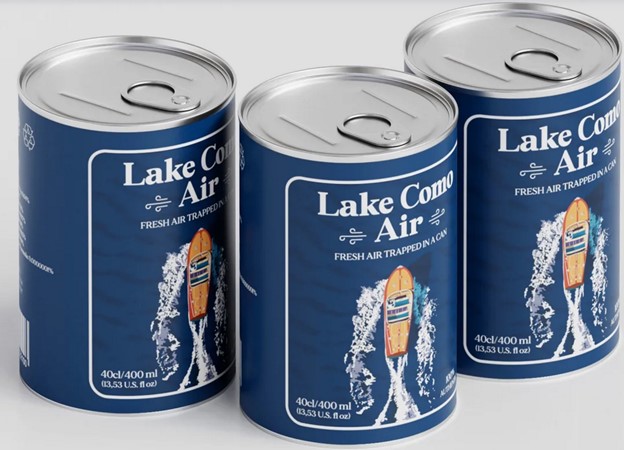
For all its success, the legitimacy of a product like Boost is sullied by similar products having no health benefits whatsoever.  On your next trip to Italy, head up to Lake Como in the far north for a look at the pristine waters and nearby snow-covered Alps.  While you’re there you can purchase a can of “Lake Como Air” for $11.  Lake Como Air claims no value other than “something original, provocative, and fun”, or “… a tangible memory you carry in your heart”.  Really?  I have lots of tangible memories from Italy and they didn’t cost me a dime.
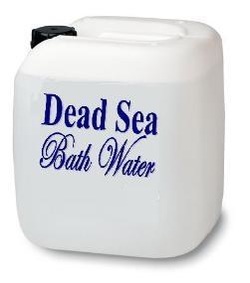
On your next trip to Israel (which best not be anytime soon), head over to the Dead Sea for a look at the biggest, saltiest resource of natural minerals in the world.  You can float in the Dead Sea without even treading water.  And no surprise, you can “purchase” the Dead Sea in small containers.  The so-called manufacturer claims its consumption “contributes measurably to feeling better and to looking wonderful and healthy”.  Huh.  Not sure about you but I like to think I feel better and look healthy just by drinking from the tap at my kitchen sink.
The list goes on and on.  Holy dirt from New Mexico.  Healing waters from right here in western South Carolina.  Rocks from outer space.  I mean, seriously, when are we going to stop paying for natural elements we can help ourselves to just by stepping outside our front doors?  Yeah, probably never.  That train left the station for good the day someone decided to bottle water.  Now we have canned air as well… and it’s a good thing.  Turns out, I’ll never take another trip to Colorado without a little Boost in my suitcase.

Some content sourced from the CNN Travel article, “Cans of ‘fresh air’ from Lake Como on sale to tourists in Italy”.
Celestial Silver Dollar

I walk the dog late at night, just to be sure he doesn’t nudge me awake in the wee hours of the morning. The walk can be a chore when I’m tired but most nights it’s a quiet, peaceful stroll through our pitch-black horse pastures. We’re usually blessed with clear skies here in South Carolina, which means the stars and planets put on a display worthy of a paid ticket to an observatory. Regardless, the moment I’m out the door I’m in search of my other faithful companion: the moon.

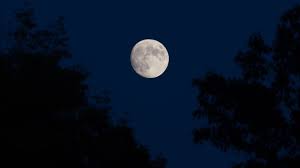
Through the trees

The “heavens” offer a plethora of topics to blog about (which I have: Saturn in Of Rings and Romans or Starlink satellites in Celestial Strings of Pearls, for example) but I’m overdue with a few words about the moon. Our nearest galactic neighbor is a constant wonder to me.  The moon (or is it “The Moon”?) is the reason we have ocean tides here on Earth and solar eclipses far, far away.  The moon has been the target of some of the most impressive space technology and exploration in history.  But let’s put the science aside, shall we?  Today I’d rather just muse about the moon as its sits in the night sky, like a shiny silver dollar laid out on top of a black velvet cloth.

My favorite moons are full – the perfectly round ones – but the shadowed partials can be just as beautiful.  Depending on the season and the atmosphere, the moon takes on countless looks.  Some nights it rises giant above the trees, as if invisible binoculars rest before my eyes.  Other nights the moon sits as an elegant crescent, a perfectly white slice of melon.  Still other nights the moon doesn’t rise at all, or at least, not until well after I’m in bed.  It’s a guessing game every time the dog and I head out into the dark.

I also make a game of trying to guess when the moon is full just by looking at it.  On the nights just before or after it occurs the moon can still appear as full.  So you have to look very carefully at the edges to decide if it’s perfectly round or not.  Conveniently, the moon is full about once a month, or at least, once every month in 2024.  Next year or the year after, perhaps we’ll get a “blue”: that second full moon in a calendar month.  Doesn’t happen very often, of course.

Here’s a fascinating fact about the moon.  It’s locked into place by the earth’s gravity, meaning it’s always showing you the same face.  Try to picture the earth taking a trip around the sun (once a year or so), while it’s spinning on its own axis (once a day), while the moon is spinning around the earth.  Technically the moon is rotating, just not on its own axis.  So you never get to see “the dark side”.

Here’s another fact that makes me pause.  If you drive across the United States from coast to coast and back again, you’re driving about 6,000 miles.  Do that same drive thirty times and you’ve driven to the moon.  Suddenly our celestial silver dollar doesn’t seem so far away, does it?

The next full moon (from my perspective), nicknamed “The Wolf”, is a week from this posting, on Thursday, January 25th.  It’ll be the first full one of the new year.  Good timing really, because some of you readers don’t make it to my blog until several days after the fact.  If you’re exactly a week late, walk outside tonight after dark.  A spectacular scene in the heavens awaits.

Some content sourced from Wikipedia, “the free encyclopedia”.

Girl Crush

The Goddess

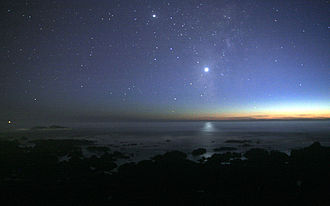
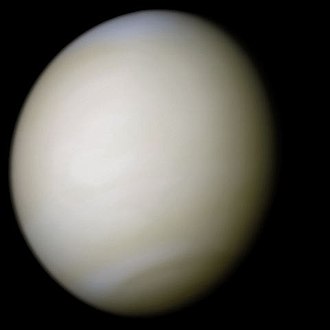
Last Sunday, our corner of the night sky was graced with a full moon called a “Tiny Hunter”. Tiny, because the moon was at the furthest point in its elliptical orbit. Hunter, because this time of year harvested fields leave few places for animals to hide. (Add a full moon and the hunting’s even easier). When our Tiny Hunter rose in the east that night, it was as if a giant flashlight switched on in the heavens, blotting out a typically starry night. But I know it didn’t blot out everything. Venus, beckoning brightly to the west, was saying hey, this is my party too.

Next to the moon, Venus is the brightest bulb in the night sky. Even if you don’t know where she sits, you can find her by simply scanning the western horizon at dusk or eastern at dawn for the most brilliant pinpoint of light. As if outshining all of the stars isn’t enough, Venus is also the most vivid planet. Mars, Saturn, and Jupiter occasionally make an appearance, but Venus always seems to be there. Even in broad daylight.

“Morning Star” or “Evening Star” – take your pick

I’m not gonna lie; Venus gives me a bit of a girl crush. After all, she’s the Roman goddess of love and beauty. Now consider her other “outstanding” attributes:

  • She’s the only planet in our solar system to identify as female.
  • She’s referred to as our “sister planet”, not only because she’s our closest neighbor, but because she’s virtually the same size.
  • She rotates in the opposite direction of seven of the eight planets (including Earth).
  • She hosts two continents: Ishtar Terra (named after the Babylonian goddess of love), and Aphrodite Terra (named after the Greek goddess of love).
  • Her rotation is so slow, a day in her world is longer than a year in ours. But, a year in her world is shorter than that same day. Say what? You read that right: Venus completes a trip around the sun faster than she completes a rotation on her own axis.
  • Her orbit is closer to the shape of a circle (vs. an ellipse) than all other planets.
  • She has no moons or rings. Naturally, why would the goddess of love and beauty need adornments?

No wonder the Babylonians referred to Venus as “bright queen of the sky”, eh?

Given her allure, it’s a wonder our earthly culture hasn’t done more to embrace her. I went in search of homage to Venus and here’s all I could come up with:

  • Sandro Botticelli’s iconic “The Birth of Venus” (top left), with our girl posed unashamedly naked on a seashell.
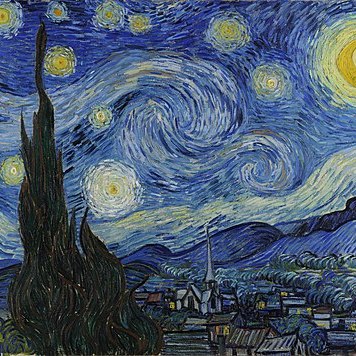
  • Vincent van Gogh’s post-impressionist “The Starry Night” (top center), with Venus as the bright “star” just to the right of the cypress tree.
  • The Bible’s Song of Songs (fitting, if you know the book’s subject matter), Chapter 6, Verse 10.
  • John Gray’s bestselling relationship guide, Men are from Mars, Women are from Venus.
  • Gillette’s “Venus” line of women’s shaving products.
  • The “Venus” women’s clothing line (catalog arrived for my wife just last week).
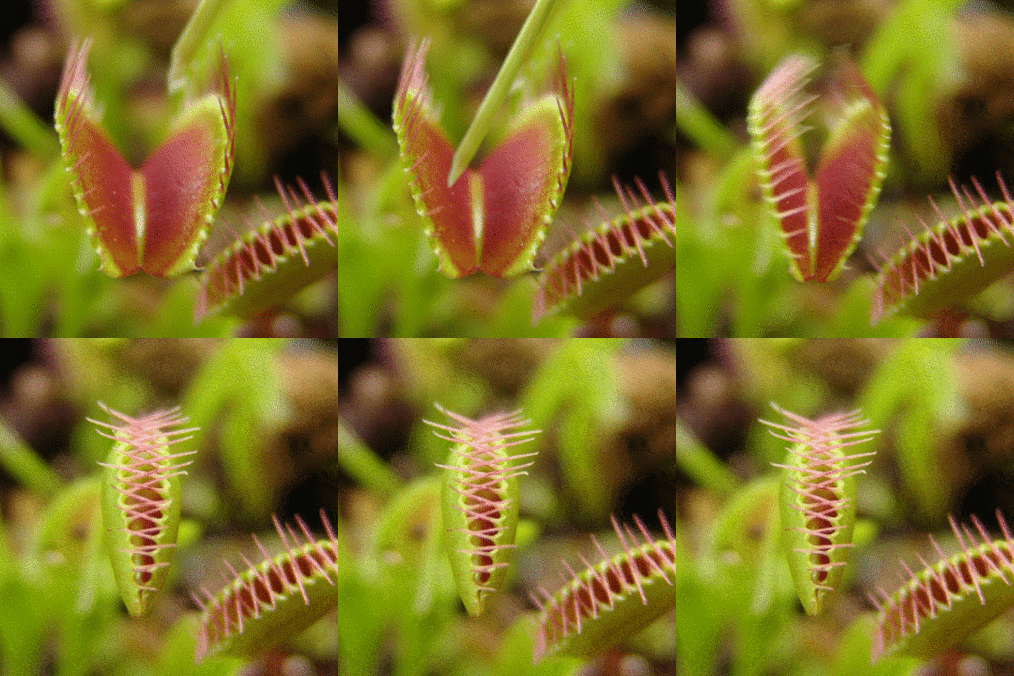
  • A nasty-looking fly-trapping plant.
  • Frankie Avalon’s adoring anthem “Venus” (Hey, Venus… oh, VENUS…).
  • Shocking Blue’s psychedelic rock hit “Venus” (I’m your Venus… I’m your fire, at your desire…).

If that’s the extent of our tribute to Venus, no wonder we have the phrase “hell hath no fury like a woman scorned”. Venus shows her not-so-lovely side if she wants to. She’s the hottest planet in the solar system (including Mercury), with an average surface temperature of 863 degrees F (462 C). Her atmospheric pressure is 92 times stronger than Earth’s (which is why her surface is beautifully crater-free). She’s covered in a thick layer of sulfuric acid clouds. Her wind speeds are extraordinarily high. And she’s explosive, with a long history of volcanic activity.

The second rock from the Sun… and the brightest of all eight.

Scientists believe – 700 million years ago under drastically different conditions – Venus was temperate enough to host oceans of water and life itself. So…, what in God’s name happened to make her so nasty now? Whatever it was, even our most advanced spacecraft can’t land on her surface today (though we’re working on it).

Considering this brief education on Venus, I suggest you ignore her siren song and simply admire her from afar. Even if you could speed your car along an interstellar highway, you’d need over forty years to get to Earth’s twisted sister. No; stay on her good side lest she show her surface temperatures and atmospheric pressures. That wouldn’t go well for you. I’d rather look Medusa in the eye and be turned to stone.

Some content sourced from the 9/22/19 Phys Org article, “Could Venus have been Habitable?”, “Venus Facts:…” from The Planets website, and Wikipedia, “the free encyclopedia”.

Of Rings and Romans

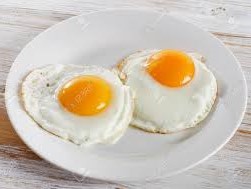
Eggs are a favorite food of mine.  A breakfast plate is hardly complete without a couple of the fried, scrambled, or omelette-d variety. They’re delicious for lunch in an egg salad sandwich, or for dinner in a chef’s salad or a quiche. Don’t forget deviled eggs for a tempting appetizer. Nothing’s unusual about these egg-zamples, but here’s where it gets borderline obsessive. Earlier this week I imagined two sunny-side-up eggs placed flat-side to flat-side (don’t ask me why; I just did). What do you get when you do that? SATURN!


Perhaps you missed it on Tuesday, but the planet Saturn made a pageant-worthy appearance in our night sky.  Saturn “came to opposition” (sounds political), meaning Earth made its annual passage directly between the ringed world and the sun; at precisely 11am Colorado Time.  Saturn was closest to Earth at that very moment.  Ten hours hence, when Colorado’s sky was dark enough for stars and such, Saturn was already well above the horizon to the southeast.  At least I think it was Saturn.  Without a telescope, I channeled my most amateur inner-astronomer using handheld binoculars.  All I got was a shaky image of a bright, white pinprick in an otherwise fabric of black.  But I must say, it was a pretty big pinprick.

Saturn is certainly the most distinctive of the eight planets in our solar system (take that Pluto, you dwarf-pretender you).  Stage a planet beauty pageant and Saturn would simply flaunt her colorful rings to win ten out of ten times.  The distant runner-up, Mercury, would get a few sympathy votes for her steadfast “cool under fire”.  Mars would get no votes for her perpetual look of embarrassment.  Earth would be disqualified for serving as pageant host.  It’s Saturn with the sash every time.

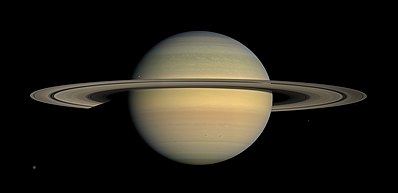
There’s more to this heavenly body than meets the naked eye (WHOA; that may be the most risqué sentence I’ve ever written).  Saturn is a big ball of gas – hydrogen, helium – and less dense than water, which means if you threw her in the pool, she’d bob around like a big ol’ beach ball.  She completes a full rotation in ten hours; so fast in fact, her equator bulges enough to make her look like a flattened ball (not very becoming of you, Saturn).  Her glorious rings are circular masses of ice crystals, over sixty feet thick.  Her surface temperature is -300 degrees Fahrenheit, a reward for sitting sixth place from the sun.

All of which paints a not-so-rosy picture (but at least there are rings around the not-so-rosy – ha!).  If you could travel to Saturn (no spacecraft headed that way anytime soon), could stand on her surface (you can’t), and could withstand her “balmy” temps (one helluva spacesuit there), you’d still fly off into space on account of that zippy rotational speed and global shortage of gravity.  You’d probably splat into her pristine rings like a useless little bug. Ick.

Saturn

Saturn gets her name from the Roman god – not goddess – of agriculture and time.  Which begs the question, why am I calling him a her?  (Crud, I have to start this blog all over again.)  Even better, Saturn was also the god of wealth (now we’re talking).  In ancient Rome, the Temple of Saturn housed the town treasury.  And this same Roman god is why we call the first day of the weekend Satur(n)day (you’re welcome for that).  So, let’s review.  One of eight planets is named after you.  One of seven days is also named after you.  You must be one important dude.

And yet, Saturn (the planet or the god – you pick) doesn’t get much love in Earthly culture.  I scoured the web for references (okay; no I didn’t – I just looked up “Saturn” on Wikipedia), and all I came up with was a) a Sega video-game console, b) a discontinued brand of automobiles, c) a rocket booster (just the booster, not the rocket itself), and the annual trophies presented by the Academy of Science Fiction, Fantasy, and Horror Films.  Oh yeah, and a small, unincorporated community in Whitley County, Indiana.  Oh yeah again, and one of the primary characters in the “The Three Investigators” children’s books.  Er, wait, that was Jupiter Jones. Dang it!

Even if Earthly culture dresses down her sexy rings (again with the risqué), I still say Saturn wins the pageant (only now it’s a male pageant and that doesn’t work for me).  If you’re not convinced “he’d” win, consider this last fact.  Saturn has sixty-two moons.  Sixty-two!  Maybe Earth’s moon should head on out and join the party.  Can you imagine the night sky if you lived on Saturn?  The fabric would be loaded with pinpricks (including Titan, the second-largest moon in the entire solar system).  Moons, rings, Roman Gods, weekend days; what’s not to like?  As I said, it’s Saturn with the sash every time.  Now stop playing with your breakfast and get back to work.

Some content sourced from Wikipedia, “the free encyclopedia”, and the Universe Today article, “Ten Interesting Facts about Saturn”.