The Sweets Life

“Pagina Non Trovata” has the look of an elegant Italian phrase (or an opera title), until translation and context reveal its harsh reality. The phrase means “page not found”, which in my instance referred to a (former) on-line job posting for Italian candy company Ferrero. My punishment for seeking the advertisement two months after the fact? Ferrero, the second largest chocolate/confectionery company in the world, is (was) looking for sixty taste-testers – “sensory judges” if you will – to offer opinions on its products. O.M.Gee I wish I’d seen this sooner.  Instead, I won’t be one of the chosen few because, well, “page not found”.

Let’s ponder this (past) job opportunity for a paragraph, shall we?  Ferrero is (was) searching the world for several “average consumers”, who would (will now) get paid to eat chocolate.  “No experience necessary”, they claimed (otherwise by definition you aren’t an average consumer).  The only real requirement, absent food allergies, is (was) a willingness to move to northwest Italy, which darn-it-all means France and Switzerland are just as easy to visit.  Ferrero gives (gave) three months of paid training, followed by an offer to join the company as a part-time taster. “Part-time” in Italy translates to maybe a) second job, or probably b) la dolce vita (“the sweet life”, which definitely does not include a job).  Ferrero’s job is akin to unwrapping a bar of chocolate and finding a Wonka golden ticket.

If Ferrero created run-of-the-mill chocolates, searching late on their job opp wouldn’t be such a tragedy.  But Ferrero makes Ferrero Rocher (of course they do), those gold-foiled balls of decadent chocolate and hazelnuts.  They also make Mon Cheri, those pink-foiled chocolate cubes filled with cherries and sweet liqueur.  They even make Tic-Tac’s for gosh sakes, the boxed pill-like mints all-the-rage when I was a kid.  And finally, their pièce de résistance (or in Italy, “piu degno de nota”), on which the entire company was founded over sixty years ago, Ferrero makes Nutella.

Maybe it was half-hearted reading up to now, but mention Nutella and most people really sit up and listen.  I’m convinced Ferrero puts a secret something into Nutella to make consumers crave hazelnut chocolate spread all the more (bolstering the theory Starbucks does the same with its coffee drinks).  Why else would shoppers storm a small store – and engage in a brawl – when the Nutella stock was discounted 50% (see video here)?  Which leads to an even nuttier question: why have I never tried Nutella myself?

Nuts+chocolate equals killer-combination – I get that.  Give me a basket of Halloween candy and I’ll fish out all the Reese’s Peanut Butter Cups.  Offer me thirty-one flavors at Baskin-Robbins and I’ll easily short-list peanut-butter-and-chocolate.  Sell me M&M’s at the movie theater and I’ll always choose peanut over plain.  But in all my examples, I’m talking peanuts, not hazelnuts.  Nutella spread is new territory for me, which means I’m the perfect candidate for Ferrero’s job. I have no experience with hazelnuts.

The more I read about my future employer, the more I’m impressed with their credentials.  Ferrero buys 25% of the world’s hazelnut production (and fittingly, acquired the world’s largest hazelnut producer four years ago).  They employ 40,000 candy-men and women in a network of 38 trading companies and 18 factories.  Ferrero keeps its recipes under lock-and-key, never letting the press into its facilities nor hosting a press conference, and always engineering its own production equipment.  A recent survey labeled Ferrero “the most reputable company in the world“.

As if I need a clincher to make this decision, last January Ferrero acquired the Nestle’s company’s candy division.  Holy cowbells.  On top of Nutella, I get to taste-test Sweetarts and Butterfingers and Laffy Taffy and the decadent Nestle’s Crunch (silver-foiled chocolate with a generous helping of crisped rice)?  Why even pay me?

I could do this job.  The more I think about it the more I’m convinced Ferrero needs 61 sensory judges.  I’m just (fashionably) late to the party.  All I need to do is brush up on my college Italian (no joke; I spent a year in Rome back then), convince my wife that our dogs, cats, and horses would be next to heaven in northwest Italy, and promptly board the next Alitalia flight.  Sweet life – er, dolce vita – here I come!

Some content sourced from Wikipedia, “the free encyclopedia”, and the USA Today article, “Dream Job: Italy’s Nutella maker seeks 60 taste-testers…”

Almond Joy

Think about the last time you invited friends to your place, for dinner or some other get-together. Did they bring a little something – a gesture of their gratitude – or did they show up empty-handed?  The gesture, whether a bottle of wine or baked goods, is especially thoughtful because it was never really expected, right?  You invited your guests after all, presumably with no strings attached.

When my wife and I hosted friends from Germany a few months ago, they arrived with a plethora of German candies (an embarrassing amount, really). From their suitcases emerged boxes of chocolates and all kinds of licorice. There were German cookies and tempting little cakes. Finally, they placed a curious-looking black round metal tin on the counter.  The label proclaimed, “Mann Des Jahres”, or “Man of the Year” (???)  The tin looked more like an award than candy.  Later, I discovered it was filled with marzipan.

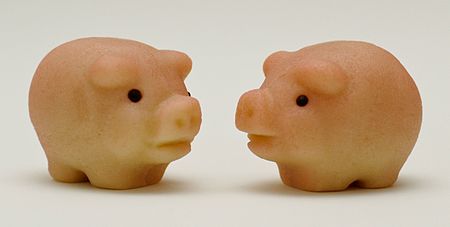
Marzipan translates to “March bread” by some and “a seated king” by others, but to me it is quite literally almond joy.  Sweetened with sugar or honey, marzipan derives its distinctive flavor from the paste, meal, or oil extract of almonds.  Marzipan is more popular in Europe than in the United States.  It is typically shaped into edible fruits, vegetables, or little animals – popular around Christmas and Easter.  Marzipan is also used in thin sheets as glazing for cakes.  The marzipan from my German friends was one big delightful chocolate-covered disc of almond cake.  In hindsight, I wish they’d brought a dozen “Man of the Year’s” and left everything else at home.

Marzipan was not my first introduction to the joy of almonds.  I fell for them back when chocolate bars like Almond Joy and Mounds were kings of the candy aisle (no Kit-Kat or Twix in my day).  Almond Joy was confection perfection: chocolate and coconut topped with whole almonds.  Then I discovered chocolate-covered almonds and realized I didn’t need the coconut.  Then I learned to appreciate almonds all by themselves – roasted and seasoned with sea salt – and realized I didn’t need the chocolate covering.  Today, I keep a bag of Marcona almonds in my car, to fend off less-healthy temptations.

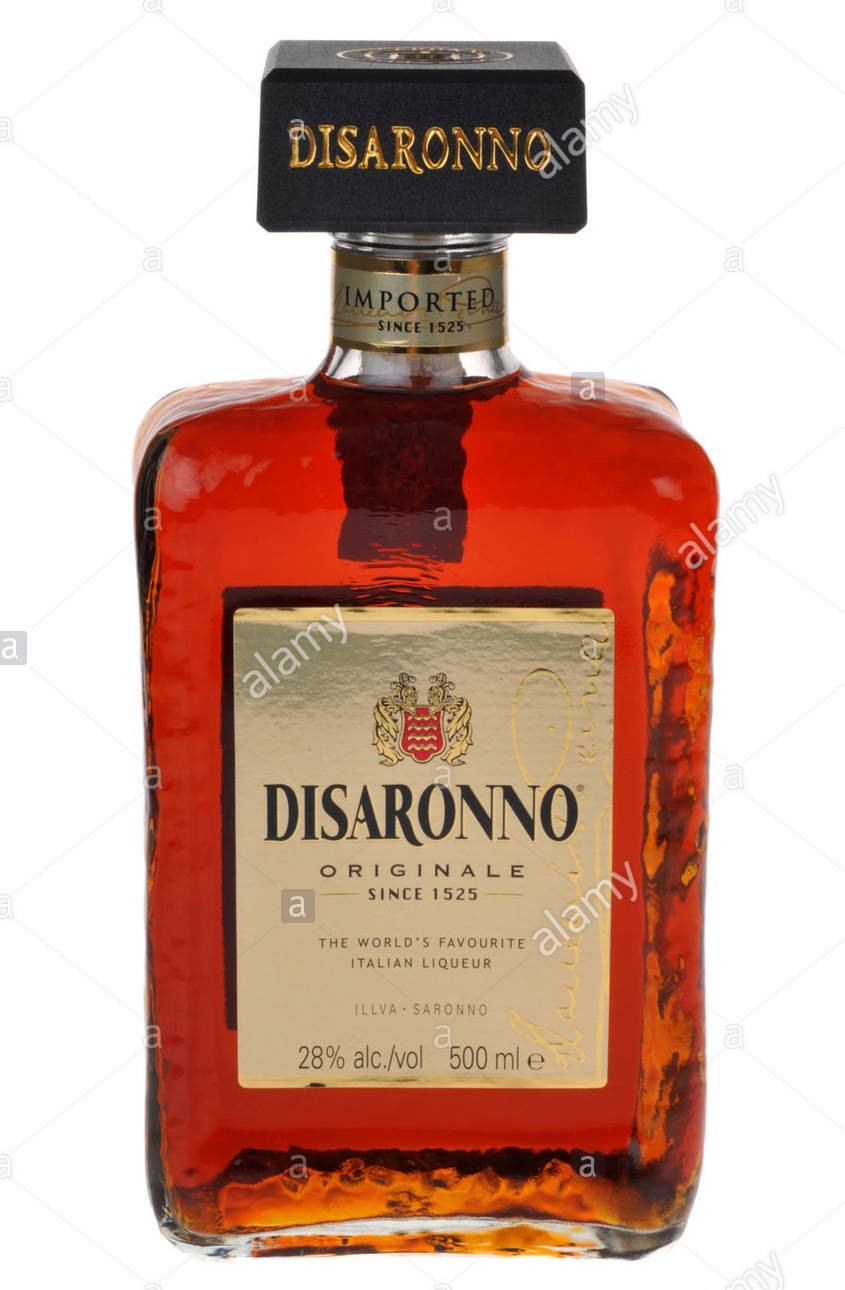
No discussion of almonds would be complete without a glass of amaretto.  In my junior year of college, studying abroad in Rome and not quite of drinking age, I was introduced to copious amounts of table wine, but also to Amaretto Disaronno, the elegant liquor from the northern part of Italy. The (supposed) origin of Disaronno is as colorful as the drink itself:

In 1525, a Saronno church commissioned artist Bernardino Luini, one of Leonardo da Vinci’s pupils, to paint its sanctuary with frescoes.  As the church was dedicated to the Virgin Mary, Luini needed to depict the Madonna, but was in need of a model.  He found his inspiration in a young widowed innkeeper, who became his model (and lover).  Out of gratitude and affection, the woman wished to give him a gift.  Her simple means did not permit much, so she steeped apricot kernels in brandy and presented the resulting concoction to a touched Luini. (from “A Brief History of Amaretto” – Shaw Media)

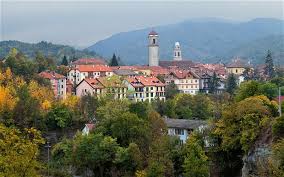
Saronno, Italy

Apricots still play a role in the making of amaretto, but its distinctive flavor comes from bitter almonds (amaretto translates to “bitter”).  Yet it’s still syrupy sweet – too sweet for me to drink straight.  Like most I “sour” mine with a shot or two of lemon juice.

Now that I think about it, we have almonds everywhere in our house.  Almond milk in the refrigerator.  Almond flour in the pantry.  Almond extract in the spice drawer.  Almond butter for our protein shakes and slivered almonds for our salads.  Amaretto in the liquor cabinet.

Still not enough.  I need to go find me some more marzipan.

Some content sourced from Wikipedia, “the free encyclopedia”.

Disc Chalky

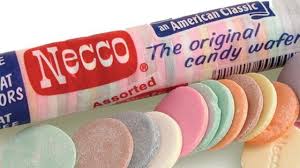
Woodstock Candy (“Let Sweet Flashbacks Sprinkle Down”) assembles collections of vintage candy and sells them on Amazon.  The “nostalgic retro mixes” tailor to the buyer’s age, as in “30th Birthday Box” or “65th Birthday Box”.  For those in my decade, Woodstock tosses in classics like Chuckles, Red Hots, Sugar Daddy’s and Smarties. Also, a few Pixy Stix, a Candy Necklace, and a long strip of those colorful Candy Buttons. Finally, buried quietly in the back of the box: one small roll of Necco wafers.

Four months ago, the Wall Street Journal alerted those of us with nostalgic sweet teeth of the fate of Necco wafers.  More correctly, NECCO – the New England Confectionery Company – would shutter if it didn’t secure a buyer.  Apparently, no one came to the candy counter, because the factory closed its doors late last month.  The consumer reaction was immediate – on the order of the Hostess Twinkies frenzy.  Rolls of Necco wafers flew off the shelves.  Frantic calls to candy stores demanded entire boxes be placed on hold.  One Necco devotee offered his 2003 Honda Accord in exchange for the company’s remaining product.  You might call it “disc(o) fever”.

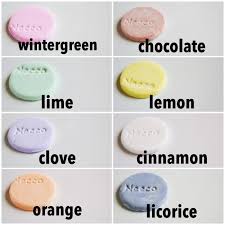
The Necco wafer/disc is an underappreciated candy of years gone by, though admittedly my affection for the confection is not what it used to be.  Necco’s are packaged in rolls of about thirty, in an assortment of eight flavors, including clove.  Clove.  Even the flavors sound dated.  A Necco wafer looks and tastes like a disc of chalk (drywall?), with a hint of flavoring to make it seem like food.  Eat a dozen wafers and your hands and clothes are covered with edible dust.  Eat a dozen more and the flavors all start to taste the same.  What used to be a satisfying crunch now feels like a threat to my dental work.

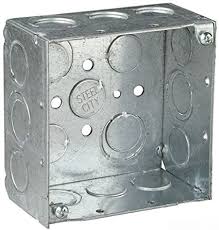
Why was I drawn to Necco wafers, when my back-in-the-day 7-Eleven store included an entire aisle of more appealing candy?  Maybe I just like little discs.  My father used to drive my brothers and I to some of his building sites, and I quickly discovered the concrete littered with dozens of metal coins.  These were “slugs” – today called KO’s or “knockouts”; the quarter-sized remains of partially-stamped openings in electrical junction boxes.  I collected hundreds of them – God knows why (but I was a kid, so I didn’t need a reason).

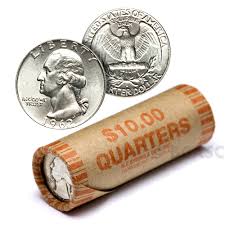
I also collected coins – more specifically quarters, because quarters were big money in my day, and translated into just about everything in that 7-Eleven aisle.  Quarters could also be stacked into paper wrappers; perhaps my precursor to a roll of Necco wafers.

At the same time in life, I had what was probably the coolest toy around.  It was called a “Rapid-Fire Tracer Gun” (if you were really cool you had the Star Trek version).  The Tracer fired little round plastic discs, spinning them out of the barrel so fast they hurt when they hit skin.  They even made a Tracer Rifle for more accurate shots.  The Tracer had a spring-driven magazine, so you could queue up a whole pile of plastic discs.  Or Necco wafers.

Necco wafers aren’t nearly as appealing as some of the stories behind them.  A hundred years ago Necco’s were carried by Arctic explorers and handed out to Eskimo children.  Their “suspiciously long” shelf life (Necco’s are sugar, corn syrup, and not much else) allowed them to be stored for months; then consumed by Union soldiers during America’s Civil War.  And therein lies the significance of the NECCO factory closing: the wafers have been around since 1847.

If I still don’t have your attention, consider this: NECCO also manufactures Sweethearts, the heart-shaped romantic-message-stamped equivalent of the Necco wafer, distributed by the billions on Valentine’s Day.  Think about that: no more candy hearts bearing “Kiss Me” or “Love You” or “Be Mine”.  Instead, just inedible greeting cards and meh grocery-store chocolates.  But don’t despair – I think the factory closing is just a hiatus.  The Hostess Twinkie came back and so will the Necco wafer.  It’s already underway, so join the movement: #SaveNecco.

Sugar Cured

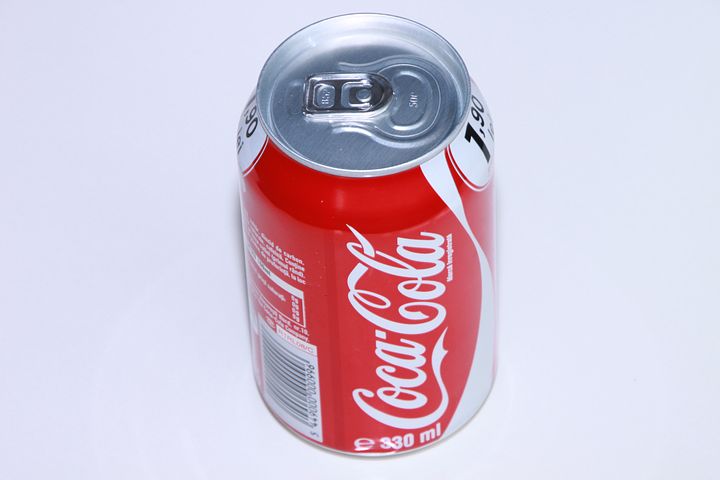
Coke. Zero. Sugar. Three little words; one new drink. In a nod to those who eschew sugar (and detest calories), Coca-Cola proudly offers its latest beverage. Coke was the original, of course. Coke Zero was the low-cal offering for men (Diet Coke was perceived as a “women’s” drink). And now the soda junkie may opt for Coke Zero Sugar, with the claim of original taste but no calories and no sugar.  For my money, let’s hope the sugared varieties still have a shelf life.  Otherwise my cure for headaches just went out the window.

Coke cures headaches?  Well, why not?  Those of us who experience the recurrent forehead fevers will jump on just about any bandwagon to chase away the relentless pain, and a Coke seems relatively harmless compared to the more potent options out there.  But truth be told, a can of Coke is only half the solution.  Chase the Real Thing with a Snickers bar and you have the coup de grace of headache cures. The combined overdose of caffeine, sugar, salt, and protein packs a punch more powerful than half a bottle of Excedrin tablets.

When I was a kid, headaches were my constant companion.  I could sense the pain unfolding well before it up and knocked on my forehead door.  In full bloom, my headaches could only be cured by retreating to a dark, quiet room and sleeping them off.  But try falling asleep when someone’s rapping a hammer against your brain.  The mental/physical anguish of the battle surely coined the phrase “toss-and-turn”.

My mother and my doctor (seemingly one and the same) drew frustratingly repetitive conclusions.  My headaches were not strong enough or persistent enough to prescribe migraine medication.  My headaches were likely brought on by “not enough of this or “too much of that.  Not enough sleep or not enough water.  Too much sun or too much sugar.  Too much sugar?  And now I’m promoting a headache cure with sugar as an essential ingredient?  Sorry Mom – it works.

At one point in my life my headaches were so bad I believed I could generate one by merely thinking about them.  My mother used to say, “don’t get too excited; you might get a headache”.  Ironically, her good intentions were dashed by the very mention of what she was trying to get me to avoid.  But the conjuring really did happen – on more than one occasion.  Think about a headache = get a headache.

Headaches are attributed – at least in part – to dilated blood vessels.  (Dilated blood vessels are attributed to way too many conditions to list here.)  The brain’s response to dilation is to summon a pain companion; a vehicle to announce, “something’s wrong”.  You see, for all its intelligence the brain lacks its own pain receptors, so it seeks another part of the body to act as its surrogate.  Enter: the headache.  Fascinating perhaps, but no fun for the recipient.  There were times I would’ve traded all of my worldly possessions (which admittedly didn’t amount to much) in exchange for the removal of headache pain.  On that note, I don’t want to even think about how a migraine headache feels (after all, I might get one).

Forty-five million Americans suffer from some form of headaches.  Thankfully, I’m no longer a member of that vast club.  Whether from corrective eye surgery I had as a teenager or better control of the “not enough of” or “too much of”, the pots-and-pans forehead pain endured as a kid simply doesn’t visit anymore.  I’m very thankful for that.  I’d like to think I’ve done my time with those miserable toss-and-turn episodes.  But as a former Boy Scout, I know it’s wise to be prepared.  If my brain gets into a “for old time’s sake” mood, I’ll have a can of Coke and a Snickers bar at the ready.

connoisseur

I love licorice.  It is hands down my favorite choice from any aisle, bag, box or bin in the candy store.  A lot of people love chocolate and so do I, but it’s not even a close second to licorice in my book.  Furthermore, I have a lifetime of experiences with licorice to where I am a practiced judge when it comes to flavors, textures, and brands.  Red or black, sweet or salty, soft or hard, domestic or imported.  I am a connoisseur of this unique confection.

photo - licorice

I was tastefully (ha) reminded of my licorice obsession this past Christmas.  My son and his wife gave me a Santa’s bag worth of the black and red (and yellow, green, and orange).  There were over twenty flavors, brands and colors in the bag.  For most people this would be a year’s worth of satisfaction.  For me, I’ve made a pretty good dent after just three months.  I’ll probably be looking to replenish my stash sometime this summer.

Licorice has come a long way since my childhood years.  My dad also had an affection (confection?) for licorice and he introduced me to a hard chewy black button known as the “Heide”, from the Henry Heide candy company.  To this day, the Heide is still my favorite licorice.  Years ago Heide was snapped up by a bigger candy manufacturer.  Before they were, I wrote them a letter and expressed my appreciation for their wonderful licorice products.  In return they sent me a generous box of samples and a small book that told the story of their product.  I wonder if companies still make that gesture today when they hear from their satisfied consumers.

Inevitably I get the question “red” or “black”?  Until recently I gave a rather smug answer, saying “black” is the only real licorice by definition.  Then I discovered the product of a small New Zealand company, through my local natural foods store.  Their soft, red raspberry licorice knocked me over; so much so that I sent my dad a bag.  It’s made from organic ingredients local to New Zealand, with a full-bodied fruity taste (no, I’m not talking about wine).  Isn’t it a wonder a product so unique and captivating can travel halfway around the world to the shelves of my local organic grocery?  Life is good.

I have several childhood memories of licorice.  Heide made other licorice-like products, including Jujubes, Jujyfruits, and Red Hot Dollars.  “Switzer’s” was a common brand years ago with a twist product similar to today’s “Twizzlers” or “Red Vines”.  Finally, I know I’ve eaten miles of “shoelaces” – the kind of licorice that some would call edible phone cable.

Here’s a fact that’s probably true of a lot of candies.  A generation or more ago licorice was made with “real” ingredients.  Even inside of the harsh plastic wrapper, you would find some derivative of licorice root in the ingredient list.  Then a really smart food chemist came along and figured out how to imitate for cheaper.  Any connection to real licorice disappeared, at least in this country.  But in the last few years I think we’re getting back to where we belong.  Whole organic foods are becoming the norm.  Even prepared foods, like my New Zealand brand licorice, are made from raw, natural, healthy ingredients.  For that reason, I will continue to be a connoisseur of the world’s brands of true licorice.  The next generation can have their Red Vines.