
Hello, I’m Veronica
The sky is not completely dark at night. Were the sky absolutely dark, one would not be able to see the silhouette of an object against the sky.


-
Sham Sandwich
Back in my high-school burger-flipping days at McDonald’s, I worked countless shifts at the “quarter-pounder” grill, which involved a whole lot of beef. McDonald’s standard hamburger was a little brown disc – barely a tenth of a pound – and you could grill fifty at once like a big array of domino dots. The quarter-pounder, on the other hand, was a real burger. Those big boys required higher temperatures and more real estate; hence their own grill. Even the ever-popular Big Mac – a double-decker of the smaller ones – couldn’t tip the scales like the quarter-pounder patty. But no matter the weight, at least we were cooking up beef (and hooking an occasional Filet-O-Fish). On today’s fast-food menus, beef is getting a little scarcer; nudged aside by… well, the “impossible”.

McDonald’s Quarter-Pounder “Veggie” burgers have been around in one form or another for the past forty years – mostly a quiet nondescript option at the bottom of the menu. Lately however, they’re starting to crowd the stage alongside beef. Maybe they’re just the same ol’ veggie burger, and today’s consumer is more tolerant because he/she is more health-conscious. But that can’t be true, can it, or I wouldn’t bother covering this topic today. Hey, when the New York Times makes a headline out of Burger King’s latest offering, it’s hard not to notice.
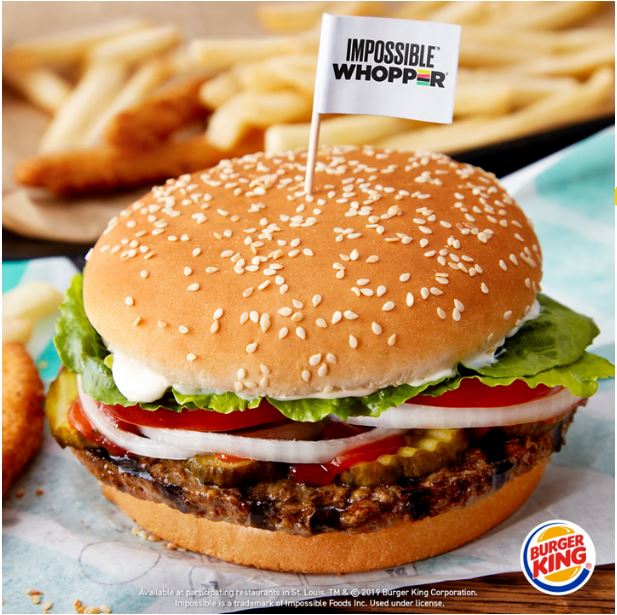
Impossible Foods (IF) is a small but rapidly-growing “burger” maker headquartered in Redwood City, CA. IF’s production takes place in a single factory across the bay in Oakland. After their latest contract, IF executives may be looking for more factory locations. They just signed a deal to add their product to the home of the Whopper. As you should figure by now, the IF burger is anything but meat. Not a “moo” to be heard anywhere in the building.

The Impossible If we were only talking about Burger King – and only a handful of pilot stores in Missouri and Illinois at that – the “Impossible Whopper” wouldn’t be such a big deal. But here’s what makes me pause. “The Impossible” is also about to appear on every Red Robin restaurant menu in the U.S. (over 500 locations). White Castle already sells an Impossible Slider in all of its restaurants (380). And Carl’s Jr – albeit with a competitor of IF – offers a veggie burger in 1,000 of its restaurants. Every one of these chains prides itself on beef burgers. Yet if the Burger King pilot is a success, we’ll see the Impossible Whopper in over 7,200 locations. What the heck is going on?
A reasonable alternative, and demand from a health/environment-conscious consumer – that’s what’s going on. We finally have a tasty veggie-competitor to the all-beef patty. The Impossible (also a great country song by Joe Nichols, by the way), has the endorsement of not only fast-food chains and the media, but food critics as well. Apparently, one cannot distinguish said imposter from beef. You don’t need so much as a sprig of lettuce on this one, because you’re already getting plenty of “vegetable”.
I could list the ingredients, technology, and environmental benefits of the Impossible, but it’s more fun to watch the company’s informational video. See if you aren’t inspired after spending a couple of minutes with Impossible Foods:
IF puts a lot of science into “beef taste”, and the numbers don’t lie (see below). Less cholesterol and saturated fat. Far fewer calories. And, consuming one Impossible instead of one Whopper saves the equivalent of a ten-minute shower in water. It also saves eighteen combustion-engine miles of greenhouse gases. Look at you, eating fast food with an empathetic nod to Mother Earth.

The Impossible To play devil’s advocate – despite the healthier ingredients and gentler impact on the environment – the success (or demise) of the Impossible will surely come down to taste. On that topic, I am not yet an expert. In fact, I am a skeptic. On one regrettable visit to Red Robin, I opted for their salmon burger over beef, thinking I was doing my body (and Earth) a favor. Mistake. Is it any wonder Red Robin no longer offers that sandwich?

I can’t use salmon burgers as an excuse not to try the Impossible. We have a couple of Red Robins in the neighborhood, and a local organic foods cafe already has one on the menu. No reason I can’t go down and give it a go. Also, “ground Impossible” will appear in grocery stores later this year (alongside the meats?), so I can even make my own patties. In other words, watch out McDonald’s. This veggie burger is no impossible dream.
Some content sourced from the New York Times article, “Behold the Beefless ‘Impossible Whopper’, and the Impossible Foods website.
-
Not-o Lotto Reasons to Play
Ponder the number “6” for a minute and see what spins around in your brain. A half-dozen eggs sitting neatly in their half-carton. The perfectly-square sides of a cube. Strings on a standard guitar. A team of volleyball players. The geese in “The Twelve Days of Christmas”? A Star of David, a purchase of beer, or the largest roll of a die? Forget ’em all; they pale in comparison to this week’s headlines. Here in America – happening more and more frequently – “6” causes a nationwide frenzy for a wholly different reason: ping-pong balls. Ping-pong balls?
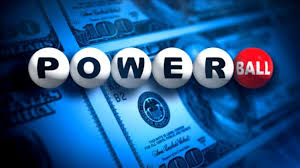
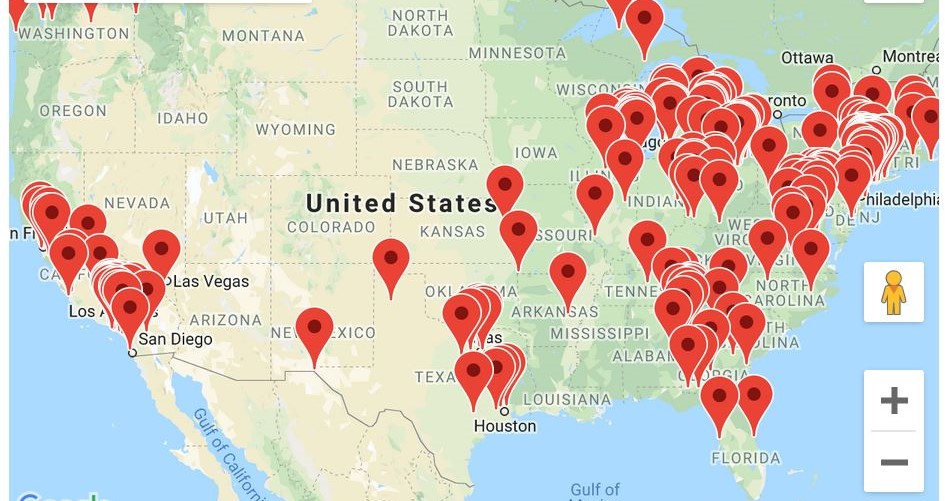
Powerball, the American lottery game shared by 44 of the 50 states, has its jackpot blossoming into the stratosphere again this week. The five white + one red (Power)balls are spinning relentlessly into our hopes and dreams. Local news is positively frothy over the $750,000,000 jackpot, the third-largest since Powerball began in 1992. Never mind the ridiculous odds of winning (1 in 292,201,338). Never mind no one picked the winning numbers in twenty-six consecutive drawings since Christmas. Also never mind not one of the 183 winning Powerball jackpot tickets has ever been sold in Colorado. That’s 16 years + 1,664 drawings = 0 winners in the Centennial State. Even tiny Rhode Island fared better than that (1 winner). No matter; our broadcasters still push aside this week’s actual news to cry, “Get your tickets now, people – you could be the next Powerball winner!” Yeah, right.

Powerball jackpot history does not favor Colorado Admittedly, my wife and I have played Powerball – but only a handful of times. It’s like we have an unwritten rule: no tickets unless the jackpot exceeds a half-billion dollars. But it’s not the news alerting us to all that potential windfall; it’s my mother-in-law. She follows the lottery like a hawk. Whenever we step into her house, she always knows exactly where the jackpot stands. Her tickets sit patiently on the kitchen counter, ready for that next biweekly drawing (as she unfailingly asks, “Have you bought yours?”) Just this week my mother-in-law realized her winnings can be multiplied several times over if she’s willing to pay more. That’s an important aspect of the game, Mom. Not that I consider the woman a Powerball guru. After all, she’s the one who holds up the convenience store line when she turns in her winning tickets… because she’s buying more tickets. You have to wonder if she ever sees cash in hand, or if this drill is just an endless cycle of ping-pong balls.

Colorado wasn’t always a part of Powerball. Our state came to the table late – in 2001 – almost a decade after the game began. Before joining, I remember the “legendary” stories of Coloradans who would drive all the way to Kansas or Nebraska (hours) just to purchase Powerball tickets. That mind-numbing trip to the east would cost you at least two tanks of gas, and the convenience stores at the borders would have hundreds of customers in line. That’s a lot of effort for odds of 1 in 192,000,000. A lot of gamble for a little game. Too fortuitous a foray for me.

Speaking of “game”, Powerball really isn’t one, is it? Yes, there’s a winner (and a whole lot of losers), but one can hardly claim to “play” Powerball. There’s no rolling of the dice, no dealing of the cards, and no moving of the game pieces. No strategy or rules. Instead, it’s just plunk down a few dollars for a quick-pick ticket; then go home and watch the ping-pong balls roll. “Fun”.
Admittedly (again), my wife and I play Powerball for those proverbial hopes and dreams. We always start our conversation with, “What would you do if you won?” That conversation alone is almost worth the cost of the ticket. What would I do with $750,000,000? Well, let’s break it down. The cash value of the jackpot (lump sum vs. 30 annual installments) is $477 million. Federal/state taxes drop that number to an even $300 million. Then I pay off the mortgage and any other debt. Set up a fund to gift my three kids the maximum tax-free amount allowed. Remodel the house and ranch. Travel the world. Give generously. Orbit the earth in a SpaceX rocket. The list does not go on and on. That’s about all I can come up with, folks.

Roughly calculated, my fulfilled hopes and dreams leave me with about $250 million yet to spend. This is exhausting. I’d rather play ping-pong with the numbered balls. Not that it matters – Powerball’s latest jackpot ticket was just purchased in Wisconsin. (Called it – Colorado is now 0-184.) That’s a lot of bread for a Cheesehead.
-
Let’s Do the Twist!
My Amazon order history says a lot about my purchasing habits. I am a buyer of needs vs. wants. Pet food. Printer ink. Humidifier filters. But every now and then, a little something nostalgic sneaks into My Shopping Cart. Favorite childhood books for my one-year-old granddaughter. A balloon-launching catapult to make a Thanksgiving turkey fly (it didn’t). Italian chocolates from Perugia, also discovered during a year abroad in college. And just today – on total impulse – a Rubik’s Cube.

Rubik’s Cube – adding a few wrinkles to us baby boomers – celebrates its forty-fifth birthday this year. Back in 1974 when it was invented (and originally dubbed “Magic Cube”), the 3x3x3 trinket earned our attention for its mechanical magic as well as its almost-impossible-to-memorize solution.
To be precise, there are 43,252,003,274,489,856,000 (that’s “quintillion”) possible positions of Rubik’s colorful squares. The Cube comes with neither instructions nor answers. Already solved in its packaging, you can’t help twisting it up into a mess of color. In our pre-Internet world, Rubik’s Cube required endless gyrations in search of the answer (instead of just, “Hey Alexa”). But there was something immensely satisfying about the resulting nine squares of single color on each of its six sides. There was also something tempting about peeling off the colored stickers and rearranging them instead.

Erno Rubik (courtesy of Wikipedia) Erno Rubik, a Hungarian inventor, was an architect and architecture professor “searching to find a good task for his students” when he completed the Cube’s first working prototype – a mess of wood blocks and rubber bands. A small plastics company took a chance on its manufacture and the rest is history. In the first four years alone, two hundred million Cubes were produced and sold.
I was in college (and also an architecture student) when Rubik’s Cube first hit the shelves. Its perfect symmetry and twisting ability to reinvent its colorful look went hand-in-hand with my interest in building design. I remember keeping a Cube on my dorm room desk – at first for mindless manipulation; later for successful solving. Not that I could solve it quickly, mind you. The world record – an average of five solves – is six seconds. The world record with one hand (???) is nine seconds. The world record using only your feet (again, ???) is twenty-two seconds. My solve is expressed in minutes, if not hours.


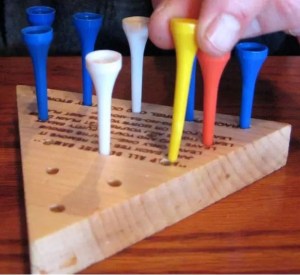
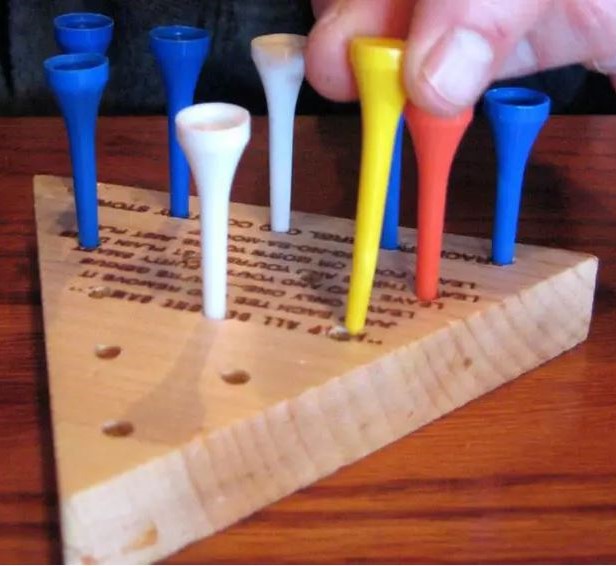
Few puzzles compete with Rubik’s Cube for sheer “can’t put it down”. But there are a few. One of my favorites was the wooden double maze, the box-like puzzle with the Etch-A-Sketch dials on the side, maneuvering the steel ball through the walled maze without dropping it through one of several holes. I devoted hours and hours to that puzzle, always sweating those final tricky turns to the finish. Another favorite: Marble Solitaire, where you hop-eliminated marbles in search of the perfect solution: a single marble standing proudly in the board’s center divot. Finally (courtesy of Cracker Barrel restaurants), how about “Triangle Peg Solitaire”, the hop-elimination puzzle with the colored golf tees? Thanks to that little game, my kids were supremely patient after the dinner order was placed.
With somewhere near four hundred million sold, Rubik’s Cube is considered the best-selling toy of all time. Its inventive design landed the Cube in the permanent collection of the Museum of Modern Art (MoMA) in 1982. The Cube also garnered “Toy of the Year” in eight countries, including Germany, France, and the U.S.

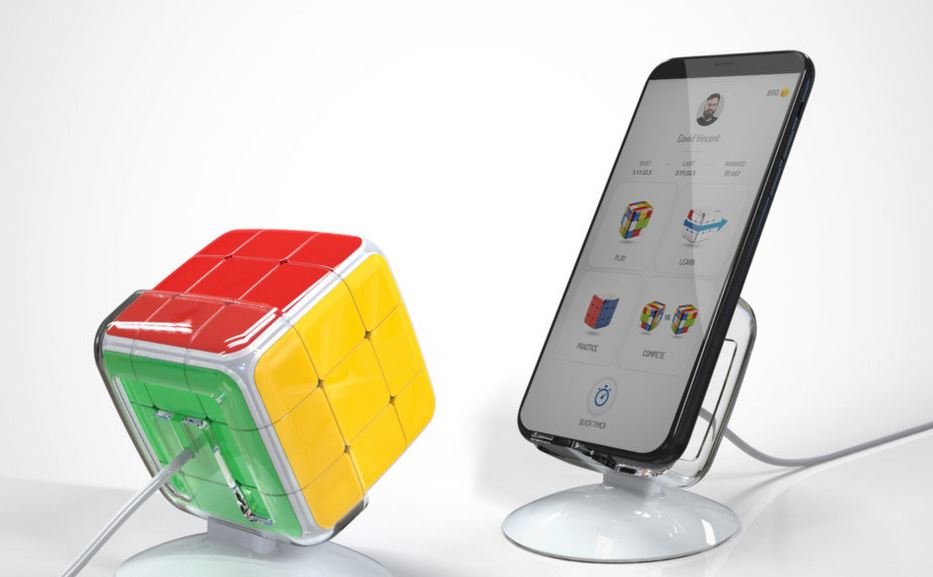
GoCube Inevitably, there were attempts to advance Rubik’s design, such as a 4x4x4 version (“Rubik’s Revenge”), or pyramid, dodecahedron, and hexahedron shapes. But going completely off the rails, look no further than GoCube – a thoroughly high-tech update to Rubik’s. GoCube is also 3x3x3, but rimmed with LED lights, and contains wireless smart sensors, an embedded gyro, and an accelerometer. Download the GoCube app to your phone (of course there’s an app), and watch your twists on-screen instead of on the cube itself. The app guides you to the solution (if you so choose), creates alternative mosaic-looking puzzles, and run reports on solving speed and efficiency. You can even wage virtual head-to-head competitions. All for “only” $119.

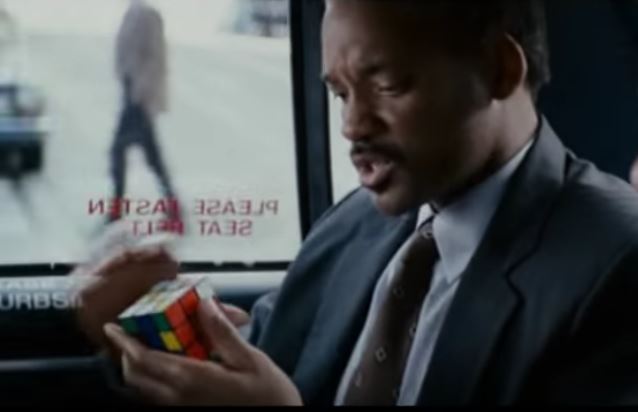
“The Pursuit of Happyness” (courtesy of Warner Brothers) I’m sure Erno Rubik (and Will Smith) would pooh-pooh GoCube as too much of a good thing. I would agree. The app-driven, light-up, hundred-dollar GoCube is over the top, with zero nostalgia to boot. On the other hand, Rubik’s Cube cost me $4.59 on Amazon. That’s a sweet deal, and a cheap way to learn how to do the twist all over again.
Some content sourced from Wikipedia, “the free encyclopedia”, and the Wall Street Journal article, “Never Solved the Rubik’s Cube?…”
-
Revolving Roar
Whenever I talk about Colorado’s extreme winter weather, I tend to speak in glass-half-full generalities. “We need the moisture”, I say, or, “we’re making up for the dry winter we had last year”. Earlier this season I got nods of agreement when I said things like that. Then the nods stopped, because the avalanches began. Colorado has so much snow in the high country this year we’re triggering “intentional” avalanches, so the skiers don’t get buried. But when yesterday arrived – and with it the first “bomb cyclone” storm in decades – I’ll admit; my glass edged precariously close to half-empty.

Haven’t heard of a “bomb cyclone”? Don’t fret; neither had I until yesterday. Bomb cyclones are roguish tropical hurricanes. They choose the wrong season and they land in the wrong location. Their formal name is even more ominous: explosive cyclogenesis or bombogenesis. Bomb cyclones are the perfect storm of rapidly-dropping air pressure, causing rapidly-increasing wind speeds, combined with a significant moisture source. BOOM! That was Colorado’s weather in a nutshell yesterday.
From the front line (or front window), I can tell you bomb cyclones are best left to their own devices. Stay inside, batten down the hatches, and brace yourself until all is calm again. Several Coloradans chose not to heed that advice, and the result was headlines news last night. 1,100 cars stuck on the roads in our county alone. Roofs ripped off buildings. Trees uprooted. One really stupid human rescued from a popular hiking trail. You’d think we were Kansas with the word “cyclone” to our vocabulary. Wait – come to think of it – we were Kansas yesterday. Our bomb cyclone settled squarely over the Sunflower State, rotating its very bad side effects back around to the Centennial State.
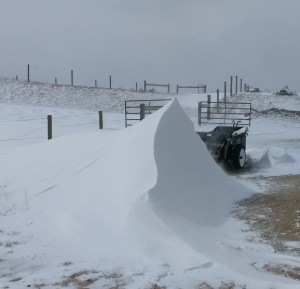
Local media called yesterday’s weather “a storm of historic proportions”. By some statistics they were correct. The air pressure was the lowest on record for Colorado. Two cities to the south of us received record rainfall for the 24-hour period. More miles of state highway were closed than ever before. 200,000 residents in the Denver area lost power. It was like being dropped into the New York City of the movie, “The Day After Tomorrow”.

Here on the ranch, the bomb cyclone delivered a mixed blessing. On the one hand, our power never went out, even though many of the neighborhoods around us lost theirs. Our gas went out, but not really because (courtesy of a Google search) I discovered our furnace intake/exhaust pipes were blocked with snow and ice. On the other hand, we now have a couple of snow drifts seemingly as high as the Rockies. We also have as much snow inside our barn as immediately outside its doors. The horses are not happy.

Glass-half-full again: it could be worse. For perspective, we’ve had several more impactful storms in our twenty-five years of Colorado living. One dumped enough snow to block our street for a week. Another knocked out the power for three days. Yet another put a mountain of snow on our back deck, eventually melting into enough water to flood our basement. If you choose Colorado, you accept the unpredictability of the weather, as well as its consequences. Wildfires in the summer. Snowstorms in the winter. Enough wind to make both even worse. Coloradans love the outdoors, but we know the adventures that come with the territory. Glass-half-full or glass-half-empty.

By the way, our bomb cyclone is spinning off to the east now, just as intense. The states in the Midwest should keep an eye out, oh, around “the day after tomorrow”. So long, sweetheart – we won’t miss ya.
-
It’s All in the Cards
Back in the Boy Scouts, my troop-mates and I memorized statements designed to make us better young men. The Boy Scout motto was, “Be Prepared”. The Scout slogan: “Do a Good Turn Daily” (help others). The Scout oath – several sentences stated with a raised right hand (fingers forming the Scout sign) – included obedience to the twelve points of the Scout law. Recently I’ve been thinking about Point #2 of the Scout law, Loyalty; showing care for family, friends, and country. But what about care for merchants?

Customer loyalty programs – those structured marketing ploys designed to tempt continued shopping at particular businesses – are standard retail procedure these days. The use of plastic and punch cards, account numbers, or scanned apps is as common as pulling out your Visa. I get suspicious when a merchant doesn’t have a loyalty program. It’s all about the points, and the allure of discounts or freebies through accumulated spending.

American Airlines, credited with starting the first full-scale customer loyalty program in modern times (1981), had no idea its “frequent fliers” would become the trendsetters for countless programs to follow. But the drive for customer loyalty started way before AA. Anyone who remembers pasting S&H Green Stamps into collection books, clipping Betty Crocker coupons straight from the product box, fishing prizes from Cracker Jack caramel corn, or joining the Columbia House Record Club (“8 CD’s for a penny!”) has dipped their toe into the customer loyalty pool before.
I took a quick inventory of my own customer loyalty and the numbers surprised me. I carry eight cards in my car. I have another eleven apps on my phone and another ten on-line accounts. That’s 29 unique programs, and over 30 if I include the couple of credit cards where my swipes eventually equal cash back. For someone who rarely shops on impulse, that’s more attention to spending than I’d care to admit.

If I did a little spring cleaning, I’d likely reduce my loyalty programs by one-third. Many sit gathering dust because I haven’t used the merchant or service in years. Others accumulate points at a snail’s pace. Fill my inbox with special sales alerts or saturate my voice mails with pleas to “buy now!”; it won’t matter. I purchase on my own terms.

Here are two recent loyalty experiences; the reasons I chose this topic today. Last September we took a weekend trip to Aspen, settling for a Westin hotel in nearby Snowmass (Aspen is over-the-top expensive to us commoners). When I went to Westin’s website for the booking, I discovered their loyalty program (Starwood) was merging with Marriott Rewards (now Marriott Bonvoy). Hallelujah – my Aspen getaway gets me points! But not so fast. Logging into Marriott Rewards, the home page alerted me to the fact the program merge was still in progress, and a Westin stay might not result in Marriott points. Long story short, I called the hotel, spoke to the front desk, and had them book the reservation for me instead. Yep, you can still do it the old-fashioned way. And you still get points.

My other recent loyalty experience involved Nicholas Mosse Pottery (Kilkenny, Ireland). Mosse makes beautiful handmade plates and bowls and the like, and we’ve been collecting a few pieces at a time since visiting Ireland a few years ago. Points for me (ha) for joining the Mosse loyalty program from the get-go. Just this week they alerted me me to my quietly-amassed rewards. I then purchased a $70 plate for virtually nothing.
My Mosse experience is the perfect example of my casual approach to customer loyalty. I don’t keep track of points until they equate to something significant. Sure, I favor certain products and services, but I’d still favor Marriott or Starbucks or Costco without their loyalty programs. For someone who tracks every penny, there’s something very satisfying in the surprise of unexpected discounts. That’s how it works best for me.

Here’s my advice. Don’t let customer loyalty programs drive your spending habits. If you do, the merchant “wins”, because you’re likely spending more along the way than whatever discount or freebie you end up getting. Loyalty = showing care; yes, but with retail that should only mean preferring one store over another. Despite what they’d have you believe, it’s not all in the cards.
Some content sourced from Wikipedia, “the free encyclopedia”, and from the Wall Street Journal article, “Inside the Marriott-Starwood Loyalty Program Turbulence”.













About Me
The sky is not completely dark at night. Were the sky absolutely dark, one would not be able to see the silhouette of an object against the sky.
Follow Me On
Subscribe To My Newsletter
Subscribe for new travel stories and exclusive content.
 Life In A Word