
Hello, I’m Veronica
The sky is not completely dark at night. Were the sky absolutely dark, one would not be able to see the silhouette of an object against the sky.


-
Vowing To Be Different
 When my son and his wife were married five years ago, there was a moment in the planning stages where I realized their wedding day would be anything but “traditional”. Credit their beautiful outdoor venue (no church), the “mixed-up” wedding party (ladies aside the groom; men aside the bride), their Keds canvas sneakers (no formal shoes beneath the tuxes and dresses) or the trays of truffles after dinner (no wedding cake) – they found dozens of details to make their day unique and memorable. But given the most recent wedding trends, perhaps my son and his wife were more old-school than I thought.
 Hindsight being what it is, my own wedding to my wife thirty-two years ago now seems downright formulaic. We were married in a church, accompanied by an organist and harpist. We exchanged rings and vows before a priest. We lit a “unity candle” at the altar. Our reception was in a hotel ballroom, with an open bar and live band. Dinner was served, wedding cake was cut, and the only time the dancing stopped was to toss the bouquet and garter. Our one and only off-script detail? We included a contemporary John Denver song in the ceremony (much to our priest’s dismay). Otherwise ours was a carbon copy of just about every other wedding of the 1980’s.
I’m sure you have examples of just what makes weddings different these days. Let me guess. They’re no longer just outdoors; they’re now in backyards or in barns or at faraway “destinations”. The ceremony is facilitated by an officiant (“basic online ordination package” – $29.99!) The bride grooves down the aisle to something more like Metallica than Mendelssohn. The vows – far removed from the dusty “to have and to hold” – could double as songs or poems. The receptions take place in twinkly-lit tents. The food is more likely “finger” than “buffet”. The wedding cake has been replaced by a cupcake tower.
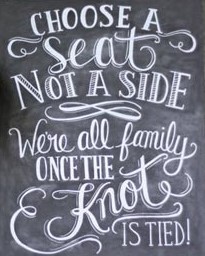 “Non-traditional” should be a non-surprise when it comes to modern-day weddings. After all, the average age of today’s marrying couples is 29, which typically follows years of living together or even a purchased home. Four of five couples who marry are millennials, and millennials are all about personalization. Thus, 44% write their own vows, and only one in four have their ceremony in a religious institution.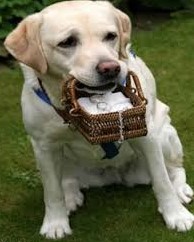
Fido bears the rings? Let’s dig deeper, shall we? If you’re not convinced the traditional wedding has gone completely off the altar, check out the Chapel of the Flowers website (“Voted Best Wedding Chapel in Las Vegas!”), particularly their article, “New Wedding Traditions to Trade In for the Classics”. Perhaps you and your future spouse will consider the following from their list of suggestions (not that I would):
- Rings – Skip the jewelry store and head for the tattoo parlor. Your wedding band tat will never fall off and the ink will remain… “until death do you part”! For that matter, your tattooist might also be an officiant, so you can have the whole shebang right there in the parlor. I’m sure the biker dude in the next chair will be happy to witness the signing of your marriage certificate.
- Wedding Dress – Skip the white in favor of pastel hues or bright, tropical colors. After all, the “innocence, purity, and light” of white may not be – ahem – the appropriate statement.
- Pocket the Phones – As in, ask guests to refrain from taking their own photos. Really? Is the Force with you or something? Unless you hand out physical restraints as your guests walk through the doors, those phones will keep on a-clickin’. Moving on…
- Smaller Wedding Parties – 1-3 family/friends at most. This suggestion is either overlooked, ignored, or most likely mocked. If anything, wedding parties seem to be getting bigger these days. Moving on again…
- Gifts – Out with the wedding registry and in with “donations to a good cause”. Say what? I get that modern-day couples live together and already have most everything they need, but what about cash? Clearly, money dances have fallen by the wayside. Donations to good causes works for funerals but not for weddings. Hard pass.
- Delayed Honeymoons – Don’t delay… I repeat, don’t delay. I know several couples who never had a honeymoon because, well, “more important” things got in the way (i.e. real life). I also know a couple who divorced before they even made it to their honeymoon. Don’t delay. Have some fun while you’re still carefree and unconditionally happy.
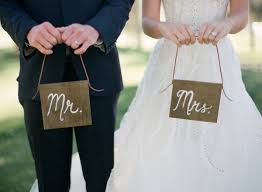 No matter how you feel about “new traditions” at weddings these days, there’s an underlying positive to be gleaned. At least we still have weddings. The vows may raise your eyebrows. The food and festivities may not be your particular glass of champagne. But those details don’t really matter, do they? At the end of the day, you still have two “I do’s” and one “I now pronounce you…”, sealed with a kiss. You still have a marriage.
Some content sourced from the Wall Street Journal article, “They Solemnly Swear Their Wedding Will Ditch Tradition”. (8/6/19)
-
The Senior Years
A human life has several stages, but exactly how many stages will probably cost you a Google search. Would you believe nine? Pregnancy, infancy, “the toddler years”, childhood, puberty, “the adolescent years”, adulthood, middle age, and “the senior years”. That’s a lot of stages (and I suddenly feel tired). According to my age – 57 – I’ve battled Father Time through the first seven on the list and hover somewhere between the last two. And therein lies today’s question: What the heck defines “the senior years”?

In case I forget – as seniors are wont to do – allow me to wish you a very happy “Senior Citizens Day”! No joke (and no Hallmark card – I checked), August 21st is the calendar date set aside “to increase awareness about the issues that face older adults”. Well now, doesn’t that just call for a celebration? No, it doesn’t. In fact, my fingers feel a little more arthritic just typing about it.
 Admittedly, I’ve been a senior before, back in a couple of those earlier life stages. I was a senior in high school. I was a senior in college. In the Boy Scouts, I was a senior patrol leader. If I’d thought to name one of my sons after myself, I could’ve been “Dave Sr.”. Now however, wrestling with the idea of advanced middle age, I’m forced to confront the one, true definition of “senior”. The word in that sense (especially senior citizen) – is a little daunting. I prefer “older” or “more experienced”. You know, the softer side of Sears.
Reagan Blame former U.S. President Ronald Reagan if you’re looking for a scapegoat. After all, he’s the one who – while in office – declared August 21st to be “National Senior Citizens Day” in America. Reagan signed said proclamation in 1988 at the ripe (older) age of 77. By all definitions, that made Reagan a senior citizen himself. Isn’t that kind of like throwing yourself a party?
Speaking of definitions, for all my searches I can’t thumb a tack into the specific age one enters life’s final stage. Consider the following takes on “senior citizen”:
- A polite expression for an old person.
- An older person, usually over the age of 60 or 65, esp. one who is no longer employed.
- The age at which one qualifies for certain government-sponsored benefits (i.e. Social Security, Medicare).
- The United Nations has agreed that 65+ may be usually denoted as “old age”.
- Being a senior citizen may be based on your age, but it is not a specific age (say what?)
The definitions get even vaguer, but you see the pattern. No one – not the United Nations nor Merriam-Webster – wants to tag “senior citizen” with a specific age. Well, I do. I want my bedside clock to turn to midnight on the designated date, and instead of beeping the alarm it squawks, “Senior Citizen! Senior Citizen!” I suppose, if someone held my aging feet to the fire and said, “Choose!”, I’d go with Definitions #2 and #4. At least then I’m backing up my truck to “middle age”.
 Perhaps your definition of senior citizen is more towards retail; as in, the age you start qualifying for discounts, freebies and such. Sorry old man (old woman?), you’re just complicating the matter (and seniors don’t do “complicated”). The shopping website DealNews just updated their article, “The 123 Best Senior Discounts to Use in 2019”. That’s a lot of “bests”, DealNews. But there’s even more homework for those nearsighted eyes. You must also know which discount kicks in at what age. Senior discounts ≠ senior citizen unless you need the following thirteen-year time frame to get used to the idea:
- Hardee’s – age 52 (that’s me!)
- McDonald’s – 55 (that’s me again! But only for coffee and I don’t do McDonald’s coffee).
- Applebee’s – 60 (may require “Golden Apple Card”. Oooooooo)
- Fazoli’s – 62 (and you get the “Club 62” discount menu. Okay, that sounds cooler than a “Golden Apple Card”)
- Taco Bell – 65 (plus free drink – ¡Olé!)
- Wendy’s – “age and offer vary depending on restaurant location” (c’mon, Wendy’s!)

Atta boy, Norm! Poets and playwrights try to soften the blow of “the senior years” with their eloquent quotes. The Englishman Robert Browning said, “Grow old along with me! The best is yet to be.” The American Ralph Waldo Emerson said, “As we grow old… the beauty steals inward.” Nice tries, noble poets, but I’ll go with positive thinker Norman Vincent Peale instead. Norm simply said, “Live your life and forget your age”. Take that, senior years!
-
Comfort Food For Thought
If you read my post last week, you know I was a little distressed over the recent shootings in my country. Blogging was intended to bring me a comfort in troubled times. In hindsight, maybe I was overthinking the situation. Maybe all I needed was comfort food. Enter Chick-fil-A. The popular fast-food chicken restaurant may never be forgiven for removing their awesome coleslaw from the “Sides” menu a few years back, but just this week they brought a new guest to the party. Hello, macaroni and cheese.
 Amanda Norris is Chick-fil-A’s executive director of menu and packaging. She’s now my new best friend. A chicken sandwich and waffle fries, with a second side of mac & cheese? Heaven in a to-go bag, my friends. As Amanda puts it, “Mac & cheese is the quintessential comfort food… the perfect pairing… but it’s also great on its own as a snack”. In other words, I’ve just been given permission to drive-thru Chick-fil-A and order only mac & cheese. I’m a kid again!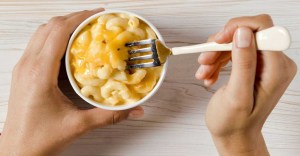
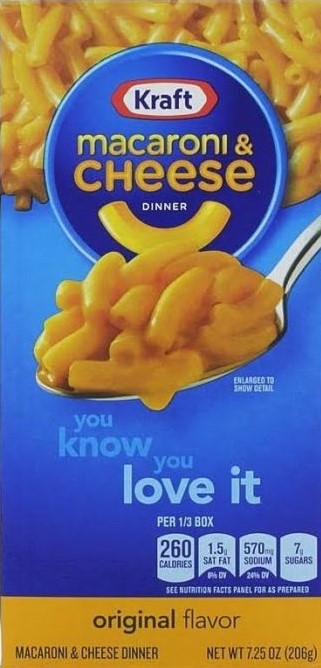
Chick-fil-A’s mac & cheese Chick-fil-A’s mac & cheese is made with a special blend of cheddar, Parmesan, and Romano, and baked fresh every day. Uh, push the pause button here. Three cheeses sounds a little fancy for the mac & cheese I had in mind. If the restaurant really wanted to arrow the bullseye, they should’ve done a deal with Kraft Foods and offered the mac & cheese. You know the one – the proud little blue-and-gold box of the “cheesiest”, with the pile of pasta curls and pouch of powdered who-knows-what? There’s simply no equal.
Kraft introduced its “Macaroni & Cheese Dinner” in 1937 with the slogan, “Make a meal for four in nine minutes”. Back then – the Depression years – you could buy two boxes of Kraft for a single food-rationing stamp (Make a meal for eight…!) Fast-forward to the 1980’s, when my wife and I were managing our shoestring food budget. At least we knew we could buy Kraft mac & cheese. Three boxes for a dollar!

Three-cheese blend aside, I agree with Chick-fil-A. Mac & cheese is the quintessential comfort food. Comfort food is defined as “… providing a nostalgic or sentimental value to someone”, and “…tends to be high in calories, high in carbs, and easy to prepare”. Well hey, you might as well just say, “Kraft Macaroni & Cheese Dinner”! Sure, you could turn to other comfort foods on Wikipedia’s short-list, like chicken soup, chocolate-chip cookies or grilled cheese (Tater Tots and sugary breakfast cereals didn’t make the list – for shame!), but take my money – and give me comfort – Kraft mac & cheese earns the top spot. Just ask any Canadian; it’s the most-purchased grocery item in the country.
 Recently, mac & cheese sits side-by-side with Brussels sprouts as a trendy restaurant offering, even in the fancy places. The problem is in the spin – all those added ingredients for a supposedly better taste. Lobster mac & cheese. Mac & cheese pizza (topped with shredded Colby-Jack). Mac & cheese pie (with a bready crust). Even Kraft messed with the Original (“Star Wars-shaped” pasta? Come on!). Admittedly, their “Shells & Cheese Dinner” with the Velveeta cheese sauce is a pretty good option. But it’s not the Original.
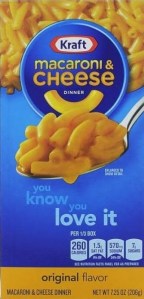 Comfort foods are further defined as “… food associated with the security of childhood. They are believed to be a great coping mechanism for rapidly soothing negative feelings.” There it is, and that’s what I need right now. The couple of Kraft boxes in my pantry are calling me home.
Some content sourced from Wikipedia, “the free encyclopedia”, and the foxnews.com article, “Chick-fil-A’s Mac and Cheese Hits Menus Nationwide”.
-
Mass Distraction

Hundreds (if not thousands) of bloggers commented on last weekend’s tragic events in El Paso and Dayton. A search of either city on the WordPress website produces an endless list of posts. As it should be. Some of us process by writing; others by reading. Within these countless perspectives are paragraphs to help us cope, reflect, heal, and begin to move on. Not that we should move on; not at all. Like 9/11, the loss of life is meaningless if it doesn’t lead to a modicum of positive change.
Politicians will debate this issue relentlessly; their credibility questionable in concert with partisan agendas and unrealistic campaign promises. The media will focus on band-aid suggestions which appear to address the issue but don’t land anywhere close to its foundations. Regardless, if all this attention – misguided as it may be – leads to constructive conversation and heightened awareness, we’re taking a step in the right direction. The capacity for mass murder is far more complicated than we want to admit.
I tried several times this week to blog as normal. I found the usual du jour topics worth delving into. Yet every time I started typing I was distracted, for at least a couple of reasons. One, any topic besides this one would be utterly trivial by comparison. Two, any topic besides this one suggests my head – and my heart – are not where they should be.
Do I know anyone in El Paso? No, I don’t, nor in Dayton. Doesn’t matter. I still grieve for the victims and their families. After all, these are fellow countrymen and women. These are people I believe share similar values and a love of country, regardless of race, political persuasion, and all the other so-called differentiators. These are people I’d be delighted to run into if I were halfway around the world. They are far from strangers.
American flags fly at half-staff this week, as if our country needs a reminder of a horrific behavior already ingrained in our culture for decades. My own reminder is my inability to adequately express my myriad feelings today. Perhaps the writings of my fellow bloggers will bring me solace.
Speaking of other writers, my thanks to Feeding On Folly, who re-posted Mitch Teemley’s “The 32 Second Killing Spree” (read it here). Mitch’s post narrows the issue to the specifics we need to consider and the questions we must answer. Here’s one answer. Good and evil will always coexist, but we have to find a way to tip the scales a little more towards the good. If only for them.
I’ll be back next week, less troubled and a little more hopeful. At least, that’s the plan.
-
Ahoy, Matey!
At the Jolly Roger Restaurant in the small Southern California town of Oceanside, you can order an Avocado Blast as a starter (tempura-battered avo stuffed with shrimp and tuna), Orange Coconut Salmon as an entree (panko-crusted with a sweet ginger glaze), and fruit-topped New York Cheesecake as a dessert, all while watching live entertainment on Friday and Saturday nights. The “JR” may be a little fancy for your tastes but let me tell you; it’s a LOT fancy for mine. That’s because the only version of the Jolly Roger I ever knew was my favorite boyhood burger joint. As pirates like to say, “Aarrr…”
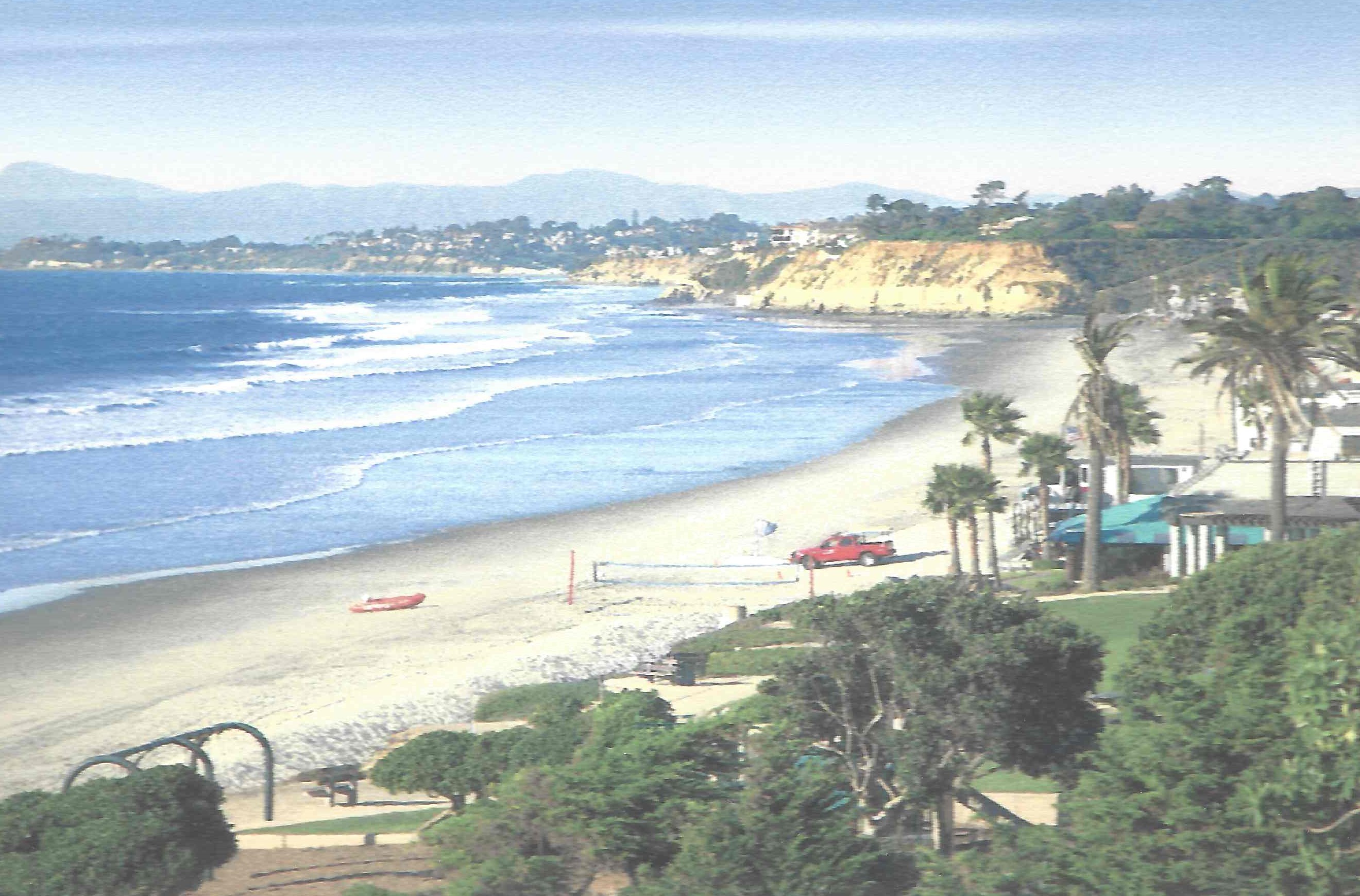
 Why blog about a long-ago restaurant? Because I’ve just returned from several days of vacation in Del Mar (just a few miles south of Oceanside), where my family and I spent my childhood summers. Del Mar is renowned for its county fair and thoroughbred racetrack (“Where the Turf Meets the Surf”), but for me it was – and still is – a nirvana of sun, sand, and surf; chock-full of happy, carefree memories. Including the Jolly Roger.
Del Mar beach The beauty of Del Mar back in the day, besides its seaside location, was the sheer simplicity of the place. The town was the perfect setup for a kid. You could walk or bike from the residential areas to the shops in minutes. You could spend pocket money on Slurpees and pinball at the 7-11. You could meet/greet frequent passenger trains at Del Mar’s tiny station (while those same trains flattened pennies on the rails). You could also sneak into the racetrack, collecting discarded betting tickets in hopes of finding an overlooked winner. And if you were lucky, you had dinner at the Jolly Roger.

Del Mar train crossing The Jolly Roger got its start as an ice cream parlor in 1945, adjacent to the lake in Big Bear, CA. But the lake promptly went dry, which led to a lack of landlubbers walking through the doors. The parlor then relocated to Newport Beach (where the ocean never goes dry). Patrons soon asked for more than ice cream, so the JR evolved into a coffee shop; then into a chain of restaurants. At its peak, the JR had forty locations, each adorned with the trademark black flag with skull and crossbones. But as one article cruelly described its demise in 1985, “…the Jolly Roger pirate has ‘walked the plank’, and the restaurant chain has been consigned to Davey Jones’ locker.” As far as I know, Oceanside is now the only remaining restaurant.
 There’s more to my JR memories than those couple of seaside locations. The JR also had a restaurant in the heart of Los Angeles, in a shopping center my dad developed back in the 1960’s. The center is still there but alas, not the JR (now a Mexican restaurant). No matter; the memories remain. I never complained when my dad wanted to stop by his center on weekends. That usually meant a family dinner at the JR, and a lot of yo-ho-ho-ing around the table.
Jolly Roger menu – original cover page Sadly, the Jolly Roger location where my family and I shared many a dinner – next door to Del Mar in Solana Beach – is also gone (converted into a Starbucks – shiver me timbers!) And the Oceanside restaurant has evolved into something a whole lot fancier. No matter again. My JR will always exist. I picture the restaurant where the waiters dressed like pirates, the kid’s menus looked like a pirate, and the best options for dinner were burgers & fries, grilled cheese, and milkshakes. The JR also had quite the dessert menu, including full-boat chocolate sundaes and coconut-cream pie.
Dead men tell no tales, but I sure do. Thanks for the memories, JR!







About Me
The sky is not completely dark at night. Were the sky absolutely dark, one would not be able to see the silhouette of an object against the sky.
Follow Me On
Subscribe To My Newsletter
Subscribe for new travel stories and exclusive content.
 Life In A Word