Hello, I’m Veronica
The sky is not completely dark at night. Were the sky absolutely dark, one would not be able to see the silhouette of an object against the sky.


-
Trilling on the Trail
An old friend stopped by to visit the other day. He appeared at my front door without warning, taking me back almost fifty years to the moment we first met. He is still quite the singer. His stride is supremely confident. Most annoyingly, he finds unqualified joy in every blasted thing he sees and hears. My friend is, after all, The Happy Wanderer.
If you’ve encountered The Happy Wanderer at some time in your life, you know exactly who I’m talking about. He is Mr. “Val-deri, Val-dera”. Those words alone should revive the sing-song tune fried into most brains since childhood. “The Happy Wanderer” could’ve been quarantined within Germany were it not for its award-winning performance by the Oberkirchen Children’s Choir (and subsequent radio broadcast by the BBC), in 1953. Then, Mr. Wanderer went worldwide-viral and there was no turning back ever.

Oberkirchen coat of arms According to his lyrics, The Happy Wanderer (we’ll just call him “Hap”) takes hikes into the mountains and alongside streams, his hat on his head; his knapsack on his back. Hap points out blackbirds and skylarks along the way, and his journey brings him unbridled giddy happiness and laughter (as in, “Val-deri, Val-der-ha-ha-ha-ha-ha…”). Our boy smiles the entire time and boldly invites YOU to join in the singing. In his final verse, Hap wants to wander (and sing) until the day he dies. That’s a little extreme for a children’s song, don’t you think?
Speaking of childhood, Hap and I first met way back then. He entered the “UK Singles Chart” on January 22, 1954, eight-years-to-the-day before I was born. Eight years after I was born, I henpecked Hap’s tune as I learned to play the piano. “Chopsticks”, “Twinkle Twinkle Little Star”, and “The Happy Wanderer” were almost assuredly the first three pieces I ever memorized.
 Hap wandered into my life again in the Boy Scouts. I recall a lot of singing on weekend hikes (not sure why – who’d be happy backpacking forty pounds towards some distant campsite?) Besides “John Jacob Jingleheimer Schmidt” and “The Ants Go Marching…”, we Scouts unabashedly sang “The Happy Wanderer” through mountains and alongside streams. Hap’s tune even made the official list of “Scout songs” (see here.)
I thought I was done with Hap years ago (it took me decades to forget his slaphappy song), but recently he resurfaced. First, on a cruise down Germany’s Rhine River, at an outdoor dinner in the little town of Rüdesheim. I was volunteered by my fellow travelers to play with the band. I manned a big oom-pah-pah drum while another poor soul clanged the cymbals. A band member played the clarinet. And our one and only performance – naturally – was “The Happy Wanderer”. To add shame to the silliness, we marched between the tables as we played. I did my best to look “happy”.
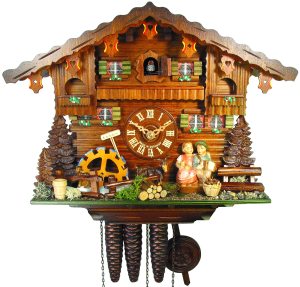 Hap’s other revelation may be a little more prolonged. On the same Rhine River cruise, in Bavaria, my wife and I bought a handmade cuckoo clock. The clock was shipped and arrived in the States two weeks ago. Imagine my delight when I wound the clock and the cuckoo bird busted through his little door, the dancers twirled, and the tiny music box played “Edelweiss”. The “sound of music” every hour on the hour! Er, every other hour on the hour. Turns out our cuckoo clock has two songs. Hello, Happy Wanderer. If I choose to, I hear his gleeful melody twelve times a day. Or, If I choose to, I can flip a switch and I don’t hear anything at all. I expect I’ll be flipping the switch any day now.
 If you’d like to add to my hap-aberration, go to 1-800-FLOWERS and have a hardenbergia violacea delivered to my door. HV is a species of flowering plant from the pea family. Some call it a lilac vine. Others give it nicknames like “false sarsasparilla” or “purple coral”. It’s also lovingly referred to as “The Happy Wanderer”.
Heaven help me.
Some content sourced from Wikipedia, “the free encyclopedia”.
-
Slush Fun

In the last few years, it seems every other corner in Colorado Springs sprouts a newly built “Kum & Go” gas station. Kum & Go’s bright red-and-white oval signs beckon consumers to plentiful pumps and come-hither convenience stores. Kum & Gos are clean and spacious, with competitive fuel prices. Started in Iowa by Krause Gentle Co. (hence the “K” and “G” in the name), Kum & Go operates 400 stores across 11 Midwestern states; rapidly adding more. They’re even gobbling up unwanted locations of my favorite childhood hangout: 7-Eleven.
7-Eleven, of course, is the remarkably resilient convenience store of the baby-boomer generation and before. 400 stores is a drop-in-the-bucket to 7-Eleven. Worldwide you’ll find almost 70,000. It’s safe to say 9 of 10 Americans – at some time in their lives – pass under the bright green, red, and orange of a 7-Eleven sign.
7-Eleven roots to 1927, when “Tote’m” Stores launched in central Texas (yes; a totem pole in front of every one). In the post-WWII era, Tote’m rebranded as “7-Eleven” to acknowledge an unprecedented window of operation – earlier in the morning and later at night than most others. Today of course, coupled with gas stations, 7-Elevens keep those doors open round the clock.
Last Thursday – and every year on “7/11” – 7-Eleven offered a free small Slurpee to all who passed through its doors. (I like number-calendar play, don’t you? “Pi Day” = 3.14, “Fry Day” – National French Fry Day = 7/13, and “Star Wars Day” = May the Fourth.) Best Slurpee trivia: its genesis was at Dairy Queen, where a franchisee put Cokes in the freezer and stumbled upon a soda slush he labeled the “ICEE”. 7-Eleven bought the license, changed the name, and the rest is history. Still one of the bestselling drinks anywhere.

This week, I find myself vacationing in the small coastal town where I spent many a childhood afternoon heading to 7-Eleven. I missed out on last week’s free Slurpee, but I went to one of their stores the day after just to have a look. I can’t tell you the last time I’d been in a 7-Eleven but know this: they haven’t changed much in fifty years. You’ll still find an entire aisle of candy. Hot dogs still rotate on heated rollers behind glass, ready for purchase. Doughnuts age in a plastic bakery case. The Slurpee machines grind away towards the back, beckoning with their cups and colors.
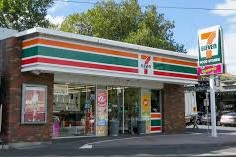
I’ll give you five reasons why 7-Eleven was the ideal destination for a tweenager of my day. First, 7-Elevens were located close enough to residential neighborhoods to get there on foot or by bike. Second, 7-Elevens were small; therefore, not intimidating. (A kid-sized grocery store, if you will.) Third, 7-Elevens parked a couple of pinball machines in the corner of the store (I can still hear the “knock” sound when you’d win a free game). Fourth, 7-Elevens had an entire aisle of “coin candy” (dozens of options for your hard-earned penny, nickel, dime, or quarter). Finally, 7-Elevens had Slurpees – the coolest kid drink around.
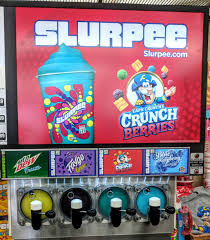
When I visited 7-Eleven last week, I bought a Slurpee for old time’s sake. Guess what? They’re exactly the same – that slushy mix of syrup, CO2, and water. You still choose from several sizes of paper/plastic cups (although now you can “Big Gulp” if you must have 32 oz.). The drink still rotates and mixes behind that round glass window; a tempting peek at the flavors before you commit. The straws still have that open spoon on the ends. And a Coke Slurpee is still the fan-favorite (I’d choose Cherry were it not for the stained lips). Frankly, the only difference between today’s Slurpee and the one in the 1970’s: you can buy a refillable cup for discounts on future purchases.

Kum & Go also offers a refillable cup – the $50 “gold” for unlimited coffee and soda for a year. But that’s hardly kid stuff nor kid prices. I only go to K & G for the gas anyway. But take my advice and stop into a 7-Eleven again. Buy a small Coke Slurpee (and a hot dog – they’re actually pretty good). The pinball machines are history, and the candy costs a lot more than a penny. Otherwise it’s like a step back in time.
Some content sourced from Wikipedia, “the free encyclopedia”, and the CNN.com article, “It’s 7-Eleven Day…”
-
Of Rings and Romans
Eggs are a favorite food of mine. A breakfast plate is hardly complete without a couple of the fried, scrambled, or omelette-d variety. They’re delicious for lunch in an egg salad sandwich, or for dinner in a chef’s salad or a quiche. Don’t forget deviled eggs for a tempting appetizer. Nothing’s unusual about these egg-zamples, but here’s where it gets borderline obsessive. Earlier this week I imagined two sunny-side-up eggs placed flat-side to flat-side (don’t ask me why; I just did). What do you get when you do that? SATURN!
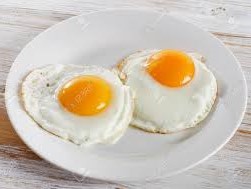
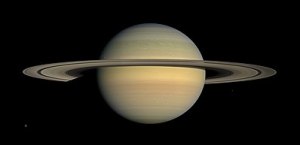
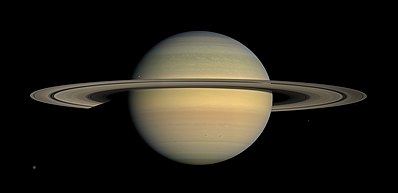
Perhaps you missed it on Tuesday, but the planet Saturn made a pageant-worthy appearance in our night sky. Saturn “came to opposition” (sounds political), meaning Earth made its annual passage directly between the ringed world and the sun; at precisely 11am Colorado Time. Saturn was closest to Earth at that very moment. Ten hours hence, when Colorado’s sky was dark enough for stars and such, Saturn was already well above the horizon to the southeast. At least I think it was Saturn. Without a telescope, I channeled my most amateur inner-astronomer using handheld binoculars. All I got was a shaky image of a bright, white pinprick in an otherwise fabric of black. But I must say, it was a pretty big pinprick.

Saturn is certainly the most distinctive of the eight planets in our solar system (take that Pluto, you dwarf-pretender you). Stage a planet beauty pageant and Saturn would simply flaunt her colorful rings to win ten out of ten times. The distant runner-up, Mercury, would get a few sympathy votes for her steadfast “cool under fire”. Mars would get no votes for her perpetual look of embarrassment. Earth would be disqualified for serving as pageant host. It’s Saturn with the sash every time.
 There’s more to this heavenly body than meets the naked eye (WHOA; that may be the most risqué sentence I’ve ever written). Saturn is a big ball of gas – hydrogen, helium – and less dense than water, which means if you threw her in the pool, she’d bob around like a big ol’ beach ball. She completes a full rotation in ten hours; so fast in fact, her equator bulges enough to make her look like a flattened ball (not very becoming of you, Saturn). Her glorious rings are circular masses of ice crystals, over sixty feet thick. Her surface temperature is -300 degrees Fahrenheit, a reward for sitting sixth place from the sun.
All of which paints a not-so-rosy picture (but at least there are rings around the not-so-rosy – ha!). If you could travel to Saturn (no spacecraft headed that way anytime soon), could stand on her surface (you can’t), and could withstand her “balmy” temps (one helluva spacesuit there), you’d still fly off into space on account of that zippy rotational speed and global shortage of gravity. You’d probably splat into her pristine rings like a useless little bug. Ick.

Saturn Saturn gets her name from the Roman god – not goddess – of agriculture and time. Which begs the question, why am I calling him a her? (Crud, I have to start this blog all over again.) Even better, Saturn was also the god of wealth (now we’re talking). In ancient Rome, the Temple of Saturn housed the town treasury. And this same Roman god is why we call the first day of the weekend Satur(n)day (you’re welcome for that). So, let’s review. One of eight planets is named after you. One of seven days is also named after you. You must be one important dude.
And yet, Saturn (the planet or the god – you pick) doesn’t get much love in Earthly culture. I scoured the web for references (okay; no I didn’t – I just looked up “Saturn” on Wikipedia), and all I came up with was a) a Sega video-game console, b) a discontinued brand of automobiles, c) a rocket booster (just the booster, not the rocket itself), and the annual trophies presented by the Academy of Science Fiction, Fantasy, and Horror Films. Oh yeah, and a small, unincorporated community in Whitley County, Indiana. Oh yeah again, and one of the primary characters in the “The Three Investigators” children’s books. Er, wait, that was Jupiter Jones. Dang it!
 Even if Earthly culture dresses down her sexy rings (again with the risqué), I still say Saturn wins the pageant (only now it’s a male pageant and that doesn’t work for me). If you’re not convinced “he’d” win, consider this last fact. Saturn has sixty-two moons. Sixty-two! Maybe Earth’s moon should head on out and join the party. Can you imagine the night sky if you lived on Saturn? The fabric would be loaded with pinpricks (including Titan, the second-largest moon in the entire solar system). Moons, rings, Roman Gods, weekend days; what’s not to like? As I said, it’s Saturn with the sash every time. Now stop playing with your breakfast and get back to work.
Some content sourced from Wikipedia, “the free encyclopedia”, and the Universe Today article, “Ten Interesting Facts about Saturn”.
-
The Fourth on the Fence
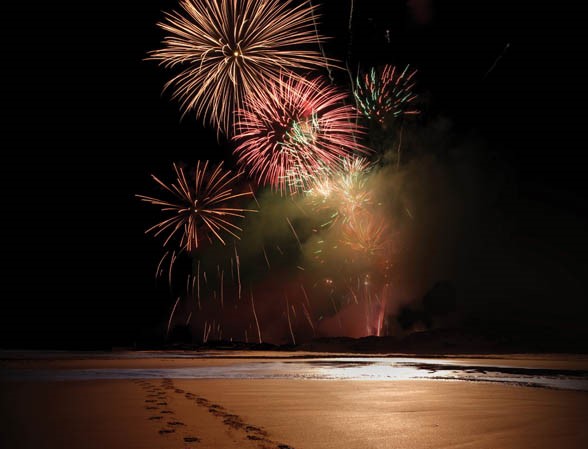
America’s Independence Day celebrations go full-on patriotic today, including a plethora of centuries-old traditions. Barbecues and fireworks. Downtown parades with marching bands. Baseball, apple pie, and ice cream. Flags, and countless costumes of red, white, and blue. Another round of Nathan’s Famous Hot Dog Eating Contest. These are the images consistent with America’s 243rd birthday party. But tennis shoes and tanks? Nope; not what I had in mind.
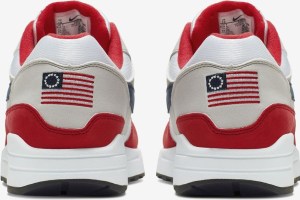
Photo by Nike I’m referring to recent headlines, of course. Nike – in an obvious nod to Independence Day – produced a limited-edition running shoe with the “Betsy Ross” on the heels (the version of the American Flag with a circle of thirteen stars on the field of blue). The shoe would’ve made it to hundreds of feet were it not for concerns voiced by activist (and Nike spokesperson) Colin Kaepernick. In response, Nike immediately recalled the shoe. In response to that, the state of Arizona withdrew financial incentives for the construction of Nike’s latest manufacturing plant. In response to that, the state of New Mexico created a political fence at the NM/AZ border, inviting Nike to “come on over”. “Betsy Ross” instantly became a hot topic on Twitter.

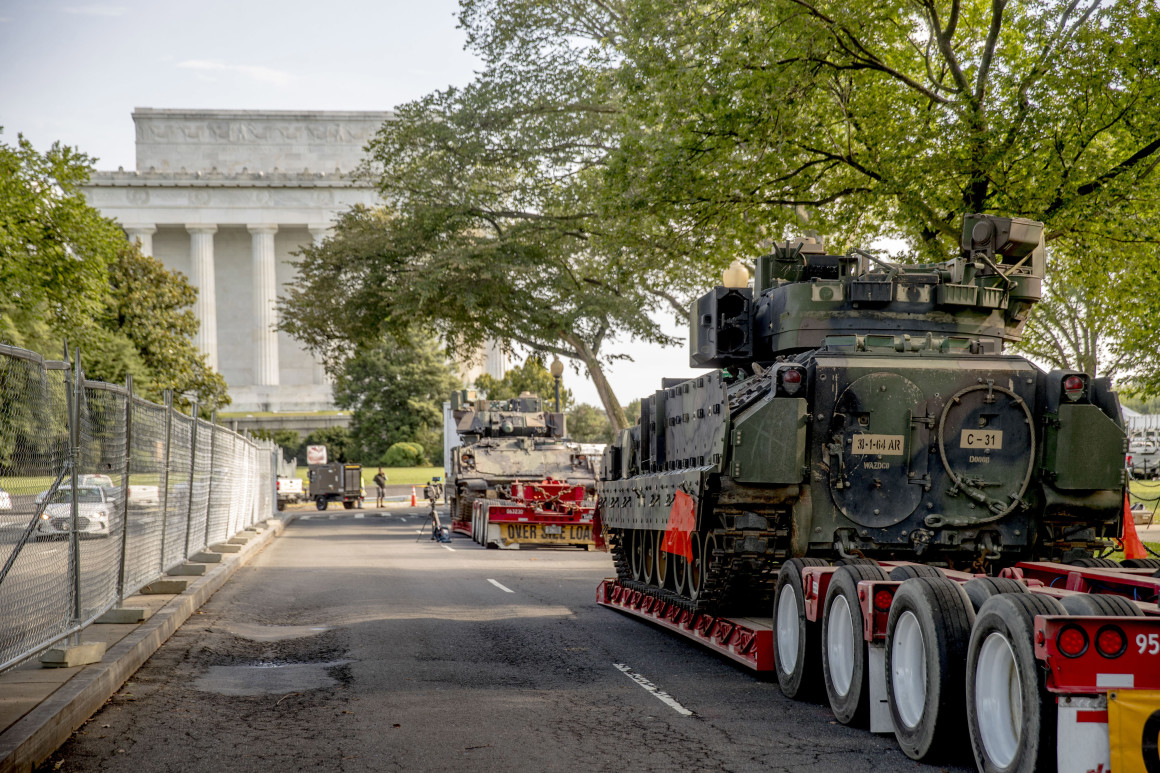
Photo by Andrew Harnik – AP As for the tanks, President Trump requested “reinforcements” for the “Salute to America” parade and flyover in Washington D.C. In a nod to the U.S. Armed Forces, parade-goers will enjoy a convoy of loud-and-proud servicemen and women and their vehicles. I can’t think of anything more patriotic: a fortified Independence Day parade in our nation’s capital hosted by the leader of the free world. But like the Betsy Ross shoes, we have controversy. D.C. locals are worried about tank-track damage to city streets and bridges. More predictably, the progressive left sees President Trump’s actions (and Salute speech) as an inappropriate opportunity for political gain. In response to that, there will be protestors and flag-burners galore.
 My Independence Day childhood memories have nothing to do with flag-burning, let alone tennis shoes and tanks. Our family would trek to the beach in Southern California full of pride and patriotism. We’d spread blankets on the sand at dusk alongside thousands of others, with a couple of buckets of Kentucky Fried Chicken for dinner. My brothers and I would run around in circles with sparklers. When it got dark enough we’d enjoy the fireworks erupting from a nearby pier.
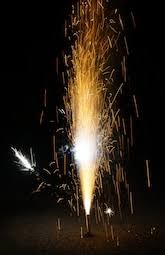 As a teenage boy – and budding pyrotechnic – Independence Day was all about the fireworks. My dad would purchase a large “Red Devil” assortment and we’d set them off on the beach. My favorites included “black snakes”, “ground-spinners”, and “fountains”. (Alas, I never experienced the machine-gunner thrill of hoisting a Roman Candle.)
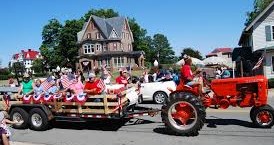 When my own children were young, I delighted in our local (and thoroughly hokey) Independence Day parade. Our supermarket participated with a group of dancing, shopping-cart-wielding cashiers. Our dentist shamelessly advertised on a float with a giant toothbrush. But our son carried the flag as a Boy Scout and our daughter rode her pony as part of an equestrian team. Later in the evening we’d gather at the shore of the nearby lake to watch the fireworks display, fully funded by donations to the local fire department. Small-town America at its best.
Like any other living, breathing American, I have my opinions on the tennis shoes and tanks. I don’t think Nike intended to dredge up Revolutionary War-era civil liberties simply by displaying the Betsy Ross on its products. I don’t think President Trump did anything more than exercise the privilege of the office by serving as host of our nation’s capital’s celebration. In both cases, I think digging for dirt below the surface only makes things dirtier. I’d wear the shoes or attend the Washington D.C. bash without an iota of self-consciousness. I’d simply be an American celebrating our Independence Day.
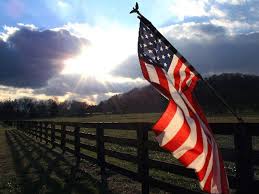 Nike defended its shoe recall by claiming it’s “proud of its American heritage”, but worried the Betsy Ross would “unintentionally offend and detract from the nation’s patriotic holiday”. President Trump’s advocates said he’s “… not afraid to buck convention and put his own twist on these types of events”. How about we get off the fence, take a step back, and remember what we’re celebrating? America’s birthday deserves more than focus on yesterday’s regrettable events or today’s relentless politics. Perhaps – just for a day – we could be the “United States” of America once again.
-
Cooler Water Cooler
In tiny Beaver, Utah – aside the I-15 and just south of the I-70 juncture, you’ll find a Chevron gas station (still) offering full-service at the pumps. Well, sort of full-service. You fill your own tank, and as soon as you do, the attendant comes over and cleans your windshield. He also checks under the hood. When all’s said and done, he doesn’t charge you extra nor will he accept a tip. It’s a nice throwback to a time when self-service was the exception. But these days we do just about everything for ourselves, don’t we? Including bottling our own water.
 I have to admit; this is a new one on me: filling my own water bottle from a public dispenser. Sure, I already know the drill at the gym (just before I navigate the zoo of torturous cardio equipment). My gym’s water machine beckons me to place my bottle under the spout, auto-fills to within an inch of the top, then magically shuts off before overflowing. There’s even a digital counter tracking how many plastic water bottles we avoid in the process. Last I checked, my gym’s counter was into the several hundred-thousands.
 Just this week – the “new one on me” – I noticed the same setup in the airport boarding lounge in Los Angeles. Two self-service machines are built into the wall adjacent to the restrooms. In the short time before my flight, at least three dozen people lined up and filled up, as if they’d been doing this for years. I earn the old-timer label for thinking there should’ve been a drinking fountain on the wall instead. Or a pay phone.
Like the full-service treatment in Beaver, Utah, self-service water dispensers are free of charge. But that’s about to change, if you believe a recent Wall Street Journal article. The water products of Coca-Cola (Dasani, Smartwater, Vitaminwater) or Pepsi (Aquafina, Life Water, Evian) may be your thing, and you’re about to get them – for a price – through self-service water dispensers. For a little more cost, you can even carbonate your water or add fruit flavoring. Safe to say, “plain water” (i.e. the brand-less, cost-less, out-of-the-tap option) may soon be hard to find in public places.
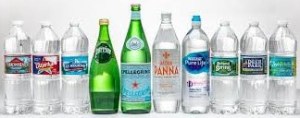
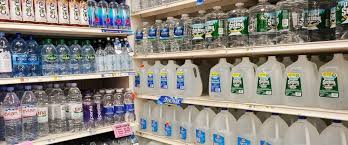
Now then, the facts. Water is consumed by the (plastic) bottle more than any other beverage except soda. America alone accounts for 42.6 billion bottles a year (the world: 200 billion bottles). That spills to thirty-two gallons/person/year. The cost? $100/person/year. You forgot that line item in your personal budget. Put it just below the cost of your Starbucks habit.
Here’s another breakdown of the beverage. Americans consume 2.2 million bottles of water every day, or 90,000 every hour, or 1,500 every minute. No wonder proprietary self-service machines are the latest trend in airports (and just about every other place where people gather). There’s a serious market for brand-name H20, and the manufacturers know today’s eco-friendly consumers prefer to drink from their own bottles.

[Nagging Thought for the Day: There are more than 125 brands of bottled water across the globe; 125 unique recipes for a drink with essentially two ingredients. What makes one different or better than the next? For that matter, with reasonable filtering, what makes one different from the fill you can get from your taps at home?]
 I wish I’d thought of self-service water dispensers myself (I also wish I’d “invented” bottled water). I’d be drinking in the riches. These days, “dispensed” water is psychologically preferable to “tap” water, even though some calculations put it 2,000 times more expensive. Are we just suckers for brand names? Hey, maybe I’ll invent brand-name oxygen. Oh wait – that ship already sailed…
Acqua di Cristallo Here’s one more stat to quench your data thirst. The most expensive of those brand-name waters – Acqua di Cristallo – costs $60,000 a bottle. The elixir (“water” doesn’t sound rich enough), is sourced from France and Fiji, comes in a 24-karat solid gold bottle, and contains a small sprinkling of gold dust. Acqua di Cristallo might as well be advertised as a panacea.
Lucky for you, maybe one day Acqua di Cristallo will be offered through public self-service dispensers. Might want to call your credit card company and increase your limit.
Some content sourced from the Wall Street Journal article, “Coke and Pepsi Want to Sell You Bottled Water Without The Bottle”, and the CreditDonkey article, “Bottled Water Statistics: 23 Outrageous Facts”.









About Me
The sky is not completely dark at night. Were the sky absolutely dark, one would not be able to see the silhouette of an object against the sky.
Follow Me On
Subscribe To My Newsletter
Subscribe for new travel stories and exclusive content.
 Life In A Word