Monk Fruit

Let’s talk about apricots. If you read my last post, apricots are the last topic you’d expect in a series about a Viking River Cruise.  But fate played a hand when our ship only got a taste of the Danube River (while others were literally underwater), so I suppose we needed to satisfy our appetites on something else instead.  Like apricots.

Apricots are petite and peach-like

I don’t associate apricots with Austria at all (how about all the “a” words in that sentence there, huh?)  Austria is more about snowy Alps, Mozart, and the hills coming alive in The Sound of Music.  So it was something of a surprise to find myself on a hot, sunny day, standing in an apricot orchard in Krems, Austria. Almost floating above this little riverside town, you’ll find the fruit trees on the property of a Benedictine monastery known as Göttweig Abbey.

Göttweig Abbey, near Krems, Austria

Göttweig is an impressive complex of buildings, and even more impressive for its lengthy history.  The Abbey was built in the 1100s, rebuilt larger after devastating fires in the 1500s and 1700s, and survived relatively intact after the Nazi occupation of WWII.  Its library contains 150,000 books and papers, and its main structure houses the largest Baroque staircase in Austria.  But who cares about all that, I hear you saying.  Tell me about the apricots, Dave!

The last of my apricot dumpling

Let it be said; Göttweig brought apricots back to life for me.  The Abbey tour starts in its apricot orchard, where we saw the trees up close, on the verge of harvest time.  The tour ended with a short class on making apricot dumplings (unquestionably as scrumptious as they sound: a whole pitted apricot wrapped in puff pastry, topped with vanilla-apricot sauce, served hot).  And the gift shop… oh my, the gift shop.  Shelf after shelf of everything apricots, from syrups to jams to cookies to candy.  Even better, you’ll find a tasting bar for several varieties of Göttweig apricot wine and brandy (also available for purchase, of course).

The Abbey’s apricot orchard

When the tour took us to a little theater for a short film on Göttweig’s history, one of the monks (at least, I think he was a monk) served us apricot juice in tall glasses as a refreshment.  It was the proverbial nectar of the gods… and I time-traveled to my childhood instantly.  My mother served apricot juice at breakfast occasionally, and I remember never really caring for its sweet/tart taste.  Guess I’ve grown up since then.  This juice was so delicious my wife and I are already in hot pursuit for a bottle here in the States.  Not something you’ll find in your ordinary grocery store.

[Blogger’s note: Don’t take “Göttweig” for a spin on Google Translate.  Our tour guide said they’ve never known the meaning of the word.  Google Translate doesn’t either (but its guess is a little ironic).]

The Abbey’s main entrance

Here’s a strange word you should associate with apricots: drupe.  It’s another word for stone fruit; as in, fruit where the flesh surrounds the pit.  So apricots are drupes, as are cherries, peaches, nectarines, and plums.  Even dates join this pit-y party.

Here’s another word you should associate with apricots: orchard.  There’s nothing more frustrating with the English language than two words with essentially the same definition.  So it is with orchard and grove.  Technically there’s a difference.  If your apricot trees are planted in neat rows with the intent of commercial production, you have an orchard.  If you’re walking through the forest and come across a natural stand of apricot trees, you’re in a grove.  But c’mon, if all that is true then why do we say “apple orchard” but “orange grove”?  Sigh…

Not quite ready for harvest

I wouldn’t care if I had an orchard or a grove as long as I had apricot trees.  I’m not really a peach or plum fan, but man I love the taste of apricots.  As a kid I also loved them dried, because they were so sweet they might as well have been candy.  But the adult version of me chooses the fresh fruit instead.  And now the juice.

The views from the Abbey are spectacular

Some of you more adventurous (and/or Christian) souls may be interested to know Göttweig Abbey lies on one of the routes of the Camino de Santiago, the soul-searching network of the Way of St. James.  A tall glass of apricot juice would be most refreshing along the 1,100-mile pilgrimage to the coast of Spain.  Of course, you don’t need to walk that far for the taste of apricots.  Just mosey down to your local grocery store, because they’re in season now.  Maybe you too will discover newfound appreciation for “monk fruit”.

Some content sourced from Wikipedia, “the free encyclopedia”.

Go(ing) With the Flow

In the camping days of my youth, I’d get a kick out of dropping little sticks into the water and watching them float lazily downstream.  I’d imagine them as little boats, navigating uncharted waters on their way to some exotic destination.  I’d see how far those sticks could go, sometimes removing obstructions to create clear channels.  Perhaps it’s no surprise then, all these years later, I’m drawn to the adventure of Viking River Cruises.

Maybe you’ve seen their commercials.  Viking River Cruises advertise by showing you one of their elegant white ships cruising slowly down a pristine river, with dramatic terrain sloping up and away from the shorelines.  Viking “longships” are low, flat, and narrow; a  wholly refined version of my stick in the stream.  Take your pick: the Nile in Egypt, the Rhine in Germany, or the Mississippi in America, to name a few.  Viking has you covered when it comes to cruising the world’s rivers.

My wife and I just completed our second Viking cruise (well, “completed” doesn’t really cut it but I’ll get to that in a moment).  Our first, in 2019, down the Rhine River from the Netherlands through Germany to Switzerland, was so satisfying we were ready to sign up for another as soon as we were done.  Then the world went a little off the rails so we had to wait until the waters calmed again, so to speak.  A week ago then, we returned from Viking’s Danube River cruise; Hungary through Austria to Germany.

There are at least two reasons why Viking River Cruises don’t appeal to those who seek a vacation on the water.  First, you’ll find little more to do on the ship besides eat and sleep.  Yes, you’ll find live music in the lounge and an occasional cooking demonstration by the head chef, but for the most part a Viking ship is a floating hotel.  Second, the daily excursions off the boat are fast-paced guided looks at whatever is worth seeing, with only a little free time at the end for shopping and such.  Best to bring a comfortable pair of walking shoes to keep up.

Those same reasons are why Viking cruises do appeal to us.  We’ve been on one of those floating-city ocean cruises before (Carnivalick), and everything from the buffet to the entertainment felt cheap and mass-produced.  A Viking river ship caters to only two hundred passengers, in rooms as nice as most anywhere we’ve stayed on shore.  As for the excursions, the tour guides are carefully chosen for their knowledge and personalities, adding so much more to the tour than if you were to go it alone.  Yes, you’re only getting a “taste” of each locale, but this means you see a lot in eight days of cruising, leaving you to choose if and where you might come back to for more in-depth looks.

Eight days is plenty of time to be on the river (at least in our book) but Viking offers several options twice as long, including a fifteen-day Grand European Tour covering the Rhine and the Danube.  You can also add “land-based” days to either end of a cruise, exploring the cities from where you embark and disembark.  Finally, Viking tailors its menus (and I do mean menus, not buffets) to the cuisine of the region you travel through.  From our experience, the food is excellent.

Passau, Germany (one of our destinations)

If this sounds like a ringing endorsement for a Viking River Cruise, let me silence that bell for just a moment.  Perhaps the only thing Viking can’t control is the water itself.  Unbeknownst to most Americans, the Danube River flooded its banks earlier this month, forcing the powers that be (and who exactly are those powers?) to “close” the river.  Residents in destinations downriver found themselves wading through four feet of water.  River ships couldn’t fit under low-flying bridges, let alone dock at the shores.  As a result, our cruise came to a premature halt in Vienna, Austria, with the remaining itinerary carried out with busses and hotels.

I’ll take the next several posts to dive deeper into our “Romantic Danube” Viking cruise.  We missed out on the time we expected on the river, but the destinations were no less impressive.  Budapest is a heck of an interesting city.  Gottweig Abbey (outside the Austrian town of Krems) is keeping apricots relevant.  So stick with me the next few weeks and you’ll find out more about what the Danube has to offer.  After all, river cruising is a whole lot more adventurous than floating a stick down a stream.

Flying Fur

When we take our aging dog for a drive, we go through a set routine to get him on board.  Prop the back passenger door of the truck wide open and position the homemade ramp against the threshold.  Get him into a running start so his momentum carries him up the ramp and onto the seat.  And don’t forget the water bucket, a couple of large poop bags, and a leash that doubles as a lead line for a horse.  With all that in mind I can’t imagine ever getting our St. Bernard onto an airplane.

You’re seeing furry friends on passenger laps more frequently these days (which creates a delightful image with a St. Bernard) so perhaps it’s no surprise to read about a commercial airline designed for “dog-first travel”.  BARK Air completed its inaugural flight last week from New York City to Los Angeles, hosting six dogs, six owners, four flight crew, and BARK Air’s CEO.  The ticket for each dog + owner cost an I-can’t-afford-it $6,000.  One way.

BARK Air’s mantra is “… to deliver a white-paw experience” and my jaw didn’t drop much when I read into the details.  Your dog only has to be leashed on takeoff and landing; otherwise he/she is free to romp around the plane and socialize with the other dogs and humans.  Your dog receives treats, toys, and calming scents and sounds along the way.  And “potty time” is anywhere – anywhere your dog wants it to be on the airplane.  The flight crew is trained to be at the ready for clean-up after every “accident”.  Would you want that job ?

I can see how BARK Air appeals to the one-percenters.  For the money they can’t seem to spend fast enough, they and their dogs fly in style instead of on “people planes” with the rest of us commoners.  Their dogs travel off-leash instead of in crates, which BARK Air speaks to repeatedly in its advertising.  In fact, BARK Air’s CEO traveled in a dog crate the entire inaugural flight, a nod I suppose, to their “dog-first travel” slogan.

Pretending to be rich/famous, I decided to book our St. Bernard and me on one of BARK Air’s New York-Paris flights next month.  I figured, why not take our boy to France, then on to Switzerland, where he could strap on a barrel of brandy, meet up with a bunch of other St. Bernards, and frolic in the Alpine snow?

The booking process was easier than I expected.  A few clicks on the website and BARK Air was ready to accept the $6,000 for me and my St. Bernard to fly.  Okay, so Paris isn’t one of their options yet (that’ll cost $8,000 when it is) but of the four flights in June, two were sold out and two were about half-full, so clearly dog lovers are going for the concept.  And unlike hotels, BARK Air doesn’t have the weight limit my St. Bernard always exceeds.

Still, I just can’t picture it.  My St. Bernard wouldn’t be coaxed, let alone be able to navigate that narrow steep ramp up onto the plane.  His constant panting would drown out BARK Air’s calming sounds.  His drool would be flung onto every other dog and passenger after he slurps from his water bucket.  And no amount of BARK Air’s calming scents could cleanse his breath, which my wife and I still back away from after all these years.

Our big boy is the one in the middle

We’re heading out on a two-week trip today, leaving our big boy behind for my daughter to take care of.  Gonna miss him big-time, which is probably why BARK Air somewhat appeals to me, crazy-expensive as it is.  But our St. Bernard’s in good hands while we’re gone, and he’ll do an adorably clumsy doggy dance when we walk back through our door.  Yep, I’ll leave BARK Air’s dog-first seats to someone else. Maybe I’ll reconsider when they start flying to Switzerland.

I’ll be back in touch after our vacation.

Some content sourced from the NPR article, “Air travel has gone to the dogs – literally…”, and the BARK Air website.

Ear Plugs Recommended

I try to avoid topics causing thoughts of negativity or fear. After all, who wants to read about invasions when they can find plenty about them in their daily news feed? But one particular assault has been relentless, both in the media’s coverage and the anticipation of its arrival. They’re coming… I know they’re coming. One day very soon I’m going to be surrounded by buzzing, mating, disgusting cicadas.

“I’m coming for you!”

Until we moved to the South, I admit to knowing virtually nothing about cicadas.  Sure, I could pronounce the word and probably had a vague idea of what they looked like, but I’d never heard, let alone seen the insect in locales further to the West.  Well, Mother Nature has decided to address that deficit of knowledge this year, in spades.  The forecast infiltration of B-flick bugs is projected to run into the billions (as if anyone could possibly count how many).  And they’ll be here in the next week or two.

To prepare for this overwhelming assault, I decided to learn a little more about the humble cicada.  It is one of God’s more bizarre creatures, both the look and the lifecycle.  Cicadas live underground almost their entire lives.  They feed on the sap of plant roots.  The only time they surface is to mate, about fifteen years after birth.  The females lay their eggs in slits they make in the branches of trees.  After birth their little “nymphs” plunge to the ground, where they burrow down deep to begin their subterranean lives, and the cycle starts over again while Mom and Dad promptly enter the pearly gates of cicada heaven.

“Bug eyes”

It’s the stuff of horror movies, this bonanza of bugs.  The problem is, a realistic depiction on the big screen has to include a soundtrack loud enough to make the viewing unbearable.  THIS is what your local reporter is so jazzed about.  The male cicada makes a shrill sound to attract the female, which can only be described as an incessant scritch-scritch, scritch-scritch.  Now multiply the sound by billions, and the better descriptor is “lawnmower” or “jet engine”.  Best get a set of earplugs while the stores still have them.

The “buzz” (ugh) about this year’s offensive is the overlapping emergence of two broods where there would normally only be one.  It’s a doubling-up that hasn’t happened since the days of Thomas Jefferson.  There’s enough membership in both clubs to adjust the forecast from “billions” to “trillions”.  Brings a new meaning to “take shelter”.

Let’s build the horror film script, shall we?  Cicadas make their skritch-skritch sound with vibrating membranes on their abdomens [pausing here to allow stomachs to settle].  Cicadas shed their exoskeleton as they transition from juvenile to adult (time to grow up, little ones), and leave those shells all over tree trunks for us humans to find afterwards.  Finally, cicadas are chock full of tree sap.  For a wish-I’d-never-read-it analogy, just think of cicadas as nature’s Gushers… the bright green variety of the candy.

Nope, absolutely not

Birds will be thrilled with the arrival of trillions of Gushers.  They’ll feed on them to their heart’s content.  Okay, so now we’re talking about two cicada invasions followed by one bird invasion.  Oh, and throw in several poisonous copperhead snakes while you’re at it.  The copperheads like to hang out at the base of the trees, to feed on any falling cicadas.  I told you this would be a horror movie.

The rumors are flying on the when and where of this year’s cicada onslaught.  America’s Midwest and Southeast regions seem to be sure things.  More specifically, Illinois and Georgia, although one report includes several counties here in South Carolina.  Seriously, the thought of untold numbers of these winged nightmares living below the very ground I walk my dog on puts some serious shakes into my legs.

Despite the headlines and anticipation (and the inevitable movie due out next Halloween) there’s very little “horror” to expect from the cicada raid.  They don’t bite, they don’t move around much, and they die pretty darned quick after they mate.  I’m guessing they don’t care much about the humans walking underneath them either, because they’re too busy making trillions of nymphs.

Mr. and Mrs. Miller

Normally this time of year I’m complaining about a wholly different invasion of insects. Out in Colorado – where we still have a “For Sale” sign on the property of our former ranch – we’re about to get a visit from the wretched miller moth (which I blogged about in Late Night Racquet Sports).  Like the cicada, miller moths don’t bite and don’t care much about humans, but man do they migrate.  Like, from the Midwest to the Rocky Mountain states and on into Utah.  They’re so messy I’d almost prefer a double dose of trillions of cicadas instead.  Like I have a choice.

Some content sourced from the Mercer University article, “What’s up with all the cicadas?…”, and Wikipedia, “the free encyclopedia”.

Fresh Food for Thought

When it comes to healthy lifestyle, the chatter seems to have shifted from diet to drugs. Instead of “you are what you eat” you could say, “you are… the product of whatever prescription you can afford”.  A regimen of Ozempic, the trendy weight loss injection of celebrities, will set you back $1,000 USD a month. So with this kind of pharmaceutical spending in mind, it was refreshing to read an article about the Atlantic Diet, a fresca (fresh) foods spinoff of its more famous predecessor, the Mediterranean.

“Atlantic” foods

Because it’s a common way to eat in Spain and Portugal, the Atlantic is formally known as the Southern European Traditional Atlantic Diet (a real “mouthful” there).  But you can just call it “The Atlantic” because it’s so simple.  A lot of fresh fish, a little meat and dairy, vegetables, whole-grain bread, and the occasional glass of wine.  To contrast, the Mediterranean demands more plant-based foods like fruits, vegetables, and olive oil on top of just about everything.

No surprise, the Atlantic improves your health by lowering blood pressure, insulin resistance, total cholesterol, and the circumference of your waist.  It’s not rocket science but it still takes fortitude to pass up the other temptations of, say, the American diet.  Soft drinks.  Processed foods.  Just about anything with sugar in it.  The usual sacrifices that come with a healthy diet.

There’s a more challenging aspect of the Atlantic diet besides whole foods.  The meals are meant to be home-cooked and served family style, encouraging social interaction.  Accordingly, an Atlantic dieter should a) turn off the TV, b) put away the cell phone, c) focus on meaningful conversations, d) chew slowly, and e) pause between bites.  Talk about overhauling the way you eat, huh?  So I ask, especially to you fellow Americans, which of those five would be the hardest to achieve?  You’re forgiven if you answer “all of the above”.

Admittedly, my wife and I would be challenged by the Atlantic approach.  We enjoy making dinner together, but after a long day there’s nothing more appealing than plopping our meals on trays and sitting down to another episode of mindless streaming TV.  And the cell phones are always nearby in case a text chimes in.  We’re so immersed in our show in fact, who knows how fast we chew or if we ever pause between bites.  Heck, do we even taste what we’re eating?

At least we’re not tempted by Ozempic.  “Miracle drug” perhaps, but don’t ignore the side effects.  Dropping the weight through injections can gift you with blurred vision, gallstones, allergic reactions, and a constant state of exhaustion (just to name a few).  Worst of all, you might literally wear your results with “Ozempic face”, a hollowed-out look with sagging skin and signs of premature aging.  No thanks.  Those couple of countries on the other side of the Atlantic have a much better approach.

Some content sourced from the CNN Health article, “A cousin to the Mediterranean Diet: the Atlantic Diet explained”, and Wikipedia, “the free encyclopedia”.

Loco for Cocoa

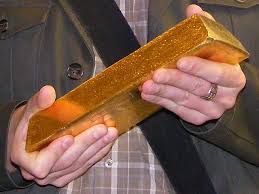
In the last few weeks a purchase of pure gold reached a record high of over $2,400 an ounce. Thanks to uncertain global markets and a stepped-up demand from China, the precious metal is a more popular investment than ever. I find it amazing you can stroll into your local Costco and add gold bars to your shopping basket.  The promo was so popular however, Costco ran out of their allotment in a couple of months.  But here’s an even bigger concern. I’m worried Costco’s going to run out of chocolate.

It takes a bold headline to get me to read the article, and here’s a recent example: Chocolate Might Never Be the Same.  What I hoped would be several paragraphs about a newer or even healthier spin on my favorite confection was anything but.  Instead, I was stopped dead in my reading glasses when I saw the words “global shortage”.  It seems the world’s supply of cacao beans, which come primarily from West Africa, has been threatened by climate change.

precious metal ingredient

What I found interesting in the story was not so much the reasons for the shortage (drought, disease, aging cacao trees) but rather the speculation on how chocolate as we know it will change.  Right away, of course, the cost of high-end products will increase (chocolate was already up 10% in 2023).  Down the road, the powers that be may even relax the definition of “chocolate”, which currently requires (only) 10% of a product’s weight in cocoa.  And further down the road you’ll find faux chocolate, which doesn’t contain any cocoa at all.  Kind of like an Impossible Burger.

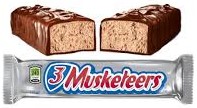
My relationship with chocolate, one that has matured beautifully over sixty-plus years, feels a little threatened.  Like most kids growing up in the 1960s, I loved Hershey bars… and a lot of other candies that gifted me a mouthful of cavities.  Then as a teenager, most of those candies fell by the wayside in favor of chocolate bars like 3 Musketeers, Milky Way, and Snickers.  But technically each of those is a “candy bar”, where the only chocolate to be found is the outside coating.

childhood chocolate

I credit three products for developing my taste for “just chocolate”.  First, Nestle’s Toll House Morsels, a bag of which could always be found in my mother’s pantry.  Second, Chunky’s foil-covered blocks, which brought appeal to, literally, consuming chunk chocolate.  Finally, Ghirardelli’s “Flicks”, colorful foil-covered tubes of what can only be described as oversized Toll House Morsels, sold alongside the popcorn and boxed candies at the movie theater.

theater chocolate

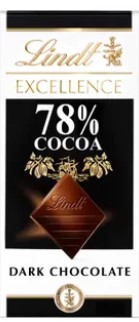
Little did I know at the time, I was nowhere near the best that chocolate had to offer.  A college year in Europe introduced me to more exotic brands like Perugina, Lindt, and Toblerone, and my taste for chocolate quickly matured from the milk to the dark varieties.  Here’s how far I’ve come since then.  The percentage of cocoa in a pure bar of Lindt chocolate starts at 70% (and goes all the way to 100% if you’re so bold).  My preference? 78%, a far cry from the minimum 10% definition of chocolate.  And a far cry from the chocolate bars of my youth.

We’re fortunate to have an authentic Belgian chocolate shop here in our small town.  Its proprietor was trained as a chocolate artisan in Belgium, and her creations start with Callebaut chocolate (also from Belgium).  Her truffles, as you can imagine, are exquisite.  The pure chocolate nibs she sells by the pound are even better.  And yet, as if to underscore today’s topic, her shop’s website now warns in a big, bold font: … at this time we are no longer able to accommodate wholesale prices.  Meaning her big buyers are now paying as much as we smaller ones.  Meaning chocolate is getting more expensive.

If the quality chocolate I’ve learned to love rises to price points I can’t digest, I might be forced to relive my childhood and settle for the “satisfaction” a milk chocolate Snickers bar claims to provide.  It’s a regression I don’t look forward to, but at least it beats faux chocolate.  Come to think of it, I should pick up a few of those gold bars at Costco. Maybe my Belgian chocolate shop takes more than cash or credit these days.

Some content sourced from The Atlantic article, “Chocolate Might Never Be the Same”, and Wikipedia, “the free encyclopedia”.

Where’s Wendy?

The 96th edition of the Academy Awards came and went last Sunday without much fanfare. Mercifully, Monday’s reviews were more about who won, instead of tabloid headlines like wardrobe malfunctions or acceptance speeches gone wrong. I only watched the opening monologue, and not because I cared about what Jimmy Kimmel had to say. Rather, I wanted to see if I could spot a seat filler.

Back in my days as a mid-level manager in corporate America, dozens of resumes came across my desk for prospective employees.  Their sections on “previous experience”  sometimes caught my eye, if only for the really strange stuff people do with their time. Innovation Sherpa. Hacker. Direct Marketing Demigod. Happiness Hero.  I wouldn’t sign up for any of those “jobs” but hey, at least they come with a paycheck.  The only compensation a seat filler gets is a free ticket to the show.

Seat fillers are out there… somewhere…

If the title isn’t self-evident, a seat filler is someone who attends a televised event (like the Academy Awards) and stands in the shadows of the outside aisles until a “real” attendee gets up to get a drink, use the restroom, socialize, or whatever.  The seat filler then dashes over to occupy the seat until the person returns, so the panning cameras give the television audience the impression the event is always filled to capacity.

I could spend several hundred words talking about the myriad ways live TV manipulates a viewer’s perception (flashing “APPLAUSE!” signs come to mind) but seat fillers may be the most absurd of all.  Thousands upon thousands of people apply for these opportunities, with only a handful chosen for a given event.  As if remaining nameless among the Hollywood elite isn’t humbling enough, seat filling is last-minute employment with all expenses paid by… you.

Imagine opening the email.  Congratulations!  You’re going to the Grammy Awards!  There’s the good news.  The bad news is, now you have to book an expensive flight and hotel, buy or rent a dress-code-worthy tux or formal gown, and plead for last-minute approval from your employer for a few days off.  Assuming you do make it to the Grammy Awards, you’re subject to a strict set of behaviors.  Surrender your ID and smartphone.  DON’T walk on the red carpet.  DON’T talk to celebrities (unless they talk to you first).  And plan on being on your feet for hours, in a covert location where you can’t even see the show, waiting for the command from the Manager of Seat Fillers to “fill that seat!”

As one filler described the experience, maybe there really is a breathless kind of rush when you plop down next to someone like Taylor Swift or Beyoncé.  But let’s get real here; celebrities see a seat filler coming from a mile away.  How many of them are going to engage with a smile, let alone a word of acknowledgement?  Even if you did manage to exchange a sentence or two, you’re going to ask yourself, “Why did I say that to Taylor?” for the rest of your days.

HURRY!  She’s not in her seat!

Without your phone, you won’t be able to capture your seat-filling fifteen minutes of fame.  You’ll be lucky if you nab a copy of the event program (which can be purchased online anyway).  Seat filling is a the very definition of “anonymous”, and it’ll be hard to convince your friends and family you were even there.  Unless the TV camera points your way at just the right time, of course.

As for my careful study of the Academy Awards audience on Sunday night, it seemed like a fun game at the time.  Pause the picture when the camera pans the people, then walk up to the screen and play a sort of “Where’s Waldo?” (or Wendy) to spot the seat fillers.  But I quickly realized the error of my ways.  I can’t even recognize the actors.  They’re either the too-old versions of the ones I remember (sorry people, the Botox doesn’t help) or they’re the too-young versions of actors I’ve never seen in anything at all.

Suffice it to say, I will never be a seat filler.  If I ever go to an awards show it’s because I’m a “real” attendee who deserves to be there (in other words, another lifetime).  In this life, I’ll consider more appealing employment prospects for my retirement. Beverage Dissemination Officer. Golf Ball Diver. Professional Sleeper.  Hey, at least those pay.

Some content sourced from the Business Insider article, “I was a seat filler at last year’s Grammys…”, and Wikipedia, “the free encyclopedia”.

First-Name Basis

It’s only Tuesday as I type, but I’ve already cleared my calendar for Friday. After all, I have a very important day ahead of me. So important in fact, I need to organize a parade, raise a flag, and prepare unique dishes for the expected throng of adoring fans. But why am I wasting words on the details? You already know we’re celebrating Saint David’s Day in a few days, don’t you?

They’ll be celebrating in Wales, at least, just as they do every first day of March.  You’ll find my cathedral there too, way down in the southwest corner of the country.  Well, St Davids Cathedral, I mean.  And the funny thing is, he’s not the David you’re thinking of, the one from the Bible who took down Goliath as a boy and became king as a man.  This David helped to spread Christianity throughout the UK, united the Welsh people against a warring England, and performed several miracles.  David’s a big deal in Wales.

David’s parade (not Patrick’s)

St. Patrick’s an even bigger deal, of course.  At least Patrick rates a celebration in the U.S.  But admit it, you’re not celebrating Patrick’s spread of Christianity throughout Ireland, nor his miracle of removing all snakes from the land.  You’re thinking more about what garment of green to wear, four-leaf clovers, beer, and maybe, just maybe, this is the year you participate in your local St. Paddy’s Day 5k.

Nice cathedral, Dave

This business of saints is interesting to me because, well, it’s not as defined as I was led to believe.  The rules and processes to put “Saint” in front a first name are a little vague.  Suffice it to say, you need to be a model citizen, as well as a teacher, person of influence, and someone who cares little for the material goods and comforts of this world.  I know a lot of people who fill this bill, but add in “wonder worker” or “source of benevolent power” and the list drops to zero.

Do you know the way to… ?

Saints are also on my mind because I grew up in California and, well, they’re all over the place out there.  Francisco to the north.  Diego to the south.  Barbara somewhere in the middle.  My childhood home was right down the street from Monica.  My brother lives in Fernando’s valley.  99.9% of the state’s residents think of those as “places”, but firstly they were people.  You’ll find “San’s” and “Santa’s” all over the Golden State.

Saints get a little watered down when you consider the Catholic Church’s take on them.  More than 10,000 have been recognized over time.  Even more to the point, Catholics acknowledge anyone making it to heaven to be a saint.  I’d hope that count is way more than 10,000 by now.  Maybe it’s the reason we have patron saints: the cream of the crop, the ones regarded as “heavenly advocates of particular nations, families, or people”.  My patron saint isn’t David by default, but I sure like his name.

Eat Welsh Rarebit when you celebrate on Friday (grilled cheese on toast, zero rabbit)

Admittedly, my mind wanders somewhere other than historical figures when I think of saints.  Our dog is a Saint Bernard, one of those gentle giants you picture with a brandy brandy around the neck.  A few years ago we went on a cruise, with a stop in the Baltic Sea port of Saint Petersburg.  “St. Elmo’s Fire” is a luminous phenomenon caused by an atmospheric electric field. (also a pretty good movie from the 1980s).  And so on.

You can read a bit more about Saint David and his cathedral in one of my very first blog posts: unsung.  You’ll discover that his town of Pembrokeshire – the smallest kingdom enclave in the UK – is right across St. George’s Channel from the Irish town of Kildare, where you’ll find St. Brigid’s Cathedral, my wife’s namesake.  The blog post is really about Brigid but at least David gets a mention towards the end.  Even if you don’t “read a little more”, remember, Friday’s the big day.  Parades, flags, and fun food, all for a darned decent guy.  Makes me blush anytime somebody says, “Dave, you’re a saint.”

Some content sourced from Wikipedia, “the free encyclopedia”.

Teeny-Weeny Towns

My daughter forwarded a video about a suburb of Knoxville known as Safety City. In this little town you’ll find roads and traffic signals, businesses and shops, but no cars. Sidewalks are for pedestrians while streets are reserved for bicyclists and other “non-motorized vehicles”. Everything in “SC” is an easy walk, whether to the post office, football stadium, movie theater, or dinner at Applebee’s. Oh, and I almost forgot to mention… everything in Safety City is miniature.

Safety City in Knoxville

Safety City is a novel concept because it reduces the real-life aspects of a town down to a dimension children can relate to.  And relate they do.  Entire classes bus over to Safety City to experience vehicular, pedestrian, bicycle, and fire safety at a young age.  So much more effective than traffic school on a blackboard!

I’ve always been a fan of miniatures; a feeling hearkening back to my childhood.  Anyone who read Gulliver’s Travels knows “miniature”, as in the inhabitants of the (literally) small town of Lilliput.  Anyone who ever held a snow globe imagined those little places and figures inside the glass coming to life.

Diorama

I wonder if grade-school children still make dioramas.  What a cool concept for a kid.  Within the confines of a shoebox you create a miniature world of your liking: buildings, people, animals, trees, etc.  Then you cut a peephole in the center of one end of the box and cover the open top with tissue paper.  When you look through the hole you see your little diorama world, with the light filtering through from above.  It gives your creation a startling sense of reality.

“HO”-scale model railroad

Model trains certainly fueled my interest in miniatures.  I remember several friends who collected the popular “HO”-scale sets (1:87, or about 2″-high trains).  They could buy so many accessories (endless tracks, buildings, trees, and figures) they could create an HO-scale world big enough to fill a two-car garage.  Go figure, the only train set I ever owned was the “G”-scale, where the train’s a good 8″-10″ in height.  Not so miniature.

Speaking of model trains, one of my favorite episodes of the old television series The Twilight Zone was called “Stopover in a Quiet Town”.  A couple wakes up in a strange house after a night of partying, can’t get the phone or the lights to work, and find the refrigerator stocked with plastic food.  They walk outside, only to discover the surrounding town is utterly still – no people, no sounds, no movement.  Then the train whistles and pulls into the station, so they hop aboard, hoping to be taken back to somewhere familiar.  But the train merely travels in a wide oval and returns to the same station where it picked them up.  As the couple steps off the train, the giant hand of a child reaches down to grab them, while a mother’s voice can be heard saying, “Be careful with your pets, dear…”  Twilight Zone indeed.

Replicas of miniature cities can be found everywhere, whether Knoxville’s Safety City, Disneyland’s Storybook Land (viewed from canal boats), or Legoland’s Billund Resort, Denmark’s largest tourist attraction outside of Copenhagen.  There’s even a “top ten” of the world’s miniature cities, including “Miniaturk”, 122 famous buildings of Turkey in a park-like setting in Istanbul; “Tobu World Square” in Japan, which showcases the world’s UNESCO world heritage sites in the presence of 140,000 miniature people, and The Museum of Roman Civilization (which I’ve seen myself), a remarkable recreation of ancient Rome’s “Golden Age” thirty-six years in the making.

Legoland

Maybe all this talk of miniatures has you thinking of the recent trend of tiny homes.  Those are an entirely different concept; not at all “miniature”.  A tiny home is like a full-scale house with most of the air sucked out of it.  The components are still full-scale but the spaces are decidedly smaller than normal.  Tiny homes kind of look like shoeboxes to me.  Maybe we should add peepholes on the ends so we can watch the inhabitants try to make a living in their cramped quarters.

Some content sourced from Wikipedia, “the free encyclopedia”.

Game, Set, Matches

The LEGO Eiffel Tower is the tallest of its model kits and undoubtedly the largest of its Architecture Series. At a deliberate count of 10,001 pieces, this behemoth is a whole lot more detailed than LEGO’s 2014 original, which clocked in at a mere 321 pieces. So imagine my awe (okay, and shock) when I learned about another Eiffel Tower model; one with a staggering 700,000 pieces. Suddenly 10,000 seems like a nice, reasonable number.

Matchstick model

It’s true, of course.  A Frenchman recently converted 700,000 matches into a model of the Eiffel Tower, in an attempt to break the world record for, naturally, “tallest matchstick Eiffel Tower”. (Is there a world record for everything these days?)  I suppose I can get past the 700,000 matches – even if I can’t picture that many in one model – but what I can’t fathom is the eight years Richard Plaud sacrificed to build his creation. I’m picturing Monsieur Plaud waking up each morning, bidding adieu to his wife after a croissant and some French press coffee, and heading off to his studio to play with matches, a giant bottle of glue in hand.  Day after day after day.

Our Frenchman’s accomplishment wouldn’t be so interesting if there weren’t a little drama thrown in for spice.  Turns out his 23.6-foot model may not earn the world record after all.  Why?  Because Plaud cut the heads off the matchsticks as he built.  When he got tired of cutting, he contacted a French “matchmaker” (ha) and asked if he could place a massive order of headless matches.  And there’s the rub, fellow model builders.  Guinness is disputing Plaud’s claim of the world record because the materials used can’t be purchased by you or me, should we try to build our own matchstick Eiffel Tower (but would we?)

Meanwhile, a 21.6-foot Eiffel Tower model built by Toufic Daher (coolest name ever) retains the world record.  Daher’s model was completed in 2009 using six million (headed) matches.  I have no idea how long it took him to build, but seriously, how long does it take to simply pick up six million little sticks, let alone shape and glue them into a replica of the Eiffel Tower?

“La Dame de fer”

Gustave Eiffel (another cool name) surely had no idea people like Plaud and Daher would be obsessed with his tower 135 years after the fact, in pursuit of world records.  Frankly (“France-ly?”) Eiffel’s “Iron Lady” is impressive enough to stand on her own wrought-iron feet.  After all, she’s among the most recognizable structures in the world.  She surpassed the Washington Monument when she opened to the public in 1889, as “tallest human-made structure” (sadly, seventy years before Guinness started tallying world records). Today she still merits an entry in the world record book, albeit for a different reason:”Most Visited Monument with an Entrance Fee”.

There’s a touch of iron-y to this post.  As much as I’m making blog fodder of these Eiffel Tower model builders, I’m tempted to become one myself.  Not with headless matchsticks; the LEGO version.  Several years ago I completed the LEGO U.S. Capitol Building (1,032 pieces), followed by the LEGO Grand Piano (3,662 pieces), and more recently, LEGO Fallingwater (811 pieces).  I keep an eye on the LEGO catalog for other models of interest but not one calls to me… except La Dam de fer.  But then I pause to ask myself, am I really willing to dive into a project that’s effectively one hundred bags of one hundred pieces each, where ever single piece dark grey?  Stay tuned.

LEGO’s version

As for our French ami Richard Plaud, his eight years of pick-up sticks may not have been in vain after all.  Guinness admits they might’ve been a little quick to dismiss his claim.  In their words, they wanted to make sure “the playing field is level for everyone”.  Playing field?  Ah, so this Eiffel Tower model-building is a game, is it?  For Plaud at least, I’d call it game, set, matches.

Some content sourced from the USA Today article, “8 years down the drain?…”, and Wikipedia, “the free encyclopedia”.