Flop O’ the Mornin’

Parked prominently within my wife’s impressive collection of teas are colorful boxes of English Breakfast and Irish Breakfast. The first is described as “expertly blended… a smooth classic” (strength: 4 tea leaves) while the second is “brilliantly blended… bold & robust” (3 tea leaves). Maybe those descriptions are right on the money but I’m a coffee drinker so what do I know? What do I know? I know I’d never let English breakfast or Irish breakfast anywhere near my dining table.

Sorry to disappoint but we’re not talking about tea at all today.  Instead, we’re talking about the food that goes with the tea.  Or rather, the food that should go with the tea.  In my world, the sanctity of breakfast is second only to the cornucopia of the Thanksgiving meal.  There’s a certain well-defined menu of dishes that screams BREAKFAST!!! and nobody in the Western Hemisphere (or at least, in the New World) would disagree.  Even so, I must acknowledge the “illegal aliens”; the dishes that try to crash the morning party when they really belong on the lunch or dinner table.  Or in the trash.  Or at least on the other side of the Atlantic.

The “Full English”

In its various forms, the full English breakfast starts out promising.  You’ll find eggs, bacon, and sausage almost without fail; even hash browns on occasion.  But the plate shatters after that.  You have a tomato, cut in half, fried, and doused with salt and pepper.  You have baked beans in tomato sauce (which aren’t even sweet the way Americans think of VanCamp’s or Bush’s). Finally, you have the horror known as black pudding, which can only be described through the hyperlink above instead of the words of this post, for fear I’ll lose my lunch – er, breakfast.

Unlike the teas, the full Irish breakfast is virtually identical to the full English, with the singular exception of white sausage instead of black.  Again, the definition will remain behind hyperlinked for the sake of a clean keyboard.  I was in Dublin on business years ago and took the “try anything once” approach with white pudding.  Bad, bad, very bad decision.

White pudding (not for the faint of stomach)

If I were born in England or Ireland I probably wouldn’t rain on the breakfast parade on the other side of the pond.  But here’s the thing: even if you like a savory tomato or “pudding” for breakfast, the entire plate is greasier than the wheel bearings in your car.  There’s not even anything to mop up said grease (like the slices of dry toast we Americans prefer).  I can’t imagine having much pep in my step after a weighty meal like this.

Denny’s is very helpful to reestablish breakfast order. If you walk into one of their restaurants and order the “Build Your Own Grand Slam”, you can construct your plate from four of the following: Eggs (7 different ways), pancakes (9 different), bacon (2), sausage, potatoes (3), toast (countless), muffin, biscuit, ham slice, or seasonal fruit.  With all those combos you could eat breakfast at Denny’s every day of the year and no version would be the same as another.  But more to the point, Denny’s offers breakfast items decidedly “All American”.  Add in waffles, hot/cold cereal, baked goods, and hash browns, and you’re looking at everything deserving of the list.

Where real “full breakfast” is served

American breakfast menus do include a few trendy alternatives these days (even at Denny’s).  You can keep it simple with a fruit smoothie, breakfast sandwich, or avocado toast.  These all-in-ones strike me more like convenience foods than full breakfasts.  Yes, you paint yourself a little healthier just for ordering them.  But let’s hang in there a few generations and see if they still show up on breakfast menus.  More likely they’ll just be memories the way porridge or salted meats have become breakfast history.

For the record, my wife’s English and Irish tea boxes sit largely untouched, except for the few bags she’s brewed.  They’re untouched for good reason.  Just the words on the box have me thinking of tomatoes, baked beans, and pudding.  Someone bring me a blueberry waffle stat.

Some content sourced from the CNN Travel article, “The Full English: How a greasy feast came to define and divide a nation”, and Wikipedia, “the free encyclopedia”.

Parts Party

I’ve always been fascinated – mesmerized even – by the mechanics of assembly line manufacturing. A product takes form from a single part, then moves down the line to where another part is added. Then another part, another, and another, until at long last the completed product presents itself at the very end for packaging. Assembly lines are becoming more and more automated, which begs the question: When will humans be removed from the process altogether?

“The Rouge”

On a recent trip to Detroit with my brothers, we were lucky enough to snag tickets to a tour of the Ford River Rouge Complex, where the F-150 truck (gas engine) is mass-produced. Ford has over 65 manufacturing plants worldwide but I think “The Rouge” is the only one you can tour. And boy is it worth it. You walk away with a lot more admiration for a fully-built F-150 than when you first set foot in the building.

The tour begins on the bridge at the lower left

Ford doesn’t allow you to take photos inside The Rouge (and they keep a close eye on visitors) else I’d include a few here. The tour starts with a couple of promotional videos in comfortable theaters, followed by an elevator trip to the top of the visitors center for a look down at the vast campus. Then things get serious. You put away your phones, listen to the rules and regulations about behaving inside the factory, and off you go.

Ford F-150

Here are the eye-popping numbers. The F-150 travels the length of a four-mile assembly line as it grows from parts to finished product. That line includes over two hundred stops to add parts (which aren’t really stops because the truck is always being pulled along). A fully-functioning F-150 rolls off The Rouge assembly line every 52 seconds, which translates to a remarkable 650 new vehicles per ten-hour working shift. And finally, the whole process is far from automated. 6,000 workers assemble the vehicles, each a specialist in the given part, calibration, or inspection the truck demands.

Of course, an F-150 has far more than two hundred parts. Some of those assembly line stops are for the installation of major components. The entire dashboard, for example, or most of the engine are installed in a single stop. But you also have workers who do nothing more than take a rubber mallet and pound on rear taillight covers. Think about it.  Can you imagine hammering on taillight covers 650 times a day?  It’s mindless, it’s repetitive, and you have to wonder about the toll it takes on the human body.

Cereal-making “back in the day”

Assembly line work can be more fun and less repetitive than building cars.  My family and I visited the Kellogg’s (cereal) factory in Battle Creek, Michigan in the early 1970s.  The smell of cooked corn flakes might’ve turned a kid’s nose but the tour was the next best thing to Willy Wonka’s.  You’d don a Kellogg’s paper hat and read the colorful brochure story about how “this little kernel went to Kellogg’s… first it was milled… then it was flavored…”.  Then you’d walk the assembly line of breakfast cereal, from cooking all the way to box filling.  The best part was at the very end, where you’d get free samples of all your Kellogg’s favorites, and postcards so you could brag about the place to your friends.  Alas, like many manufacturing facilities, safety and espionage concerns brought an end to the Kellogg’s tours in the mid-1980s.

At least I could watch assembly lines on TV after that.  How It’s Made was my kind of show.  The Canadian documentary spent years creating virtual factory tours so viewers could see the ins and outs of manufacturing processes.  In a single episode you’d watch the dizzying mechanics behind the creation of everything from candies to clothing to cars.  How It’s Made kind of gave you access where access wasn’t allowed.

Speaking of no access, the electric-engine version of the Ford F-150 – the “Lightning” – is produced in a plant where no tours are permitted (back to the espionage thing).  Instead, you watch a short video of the process after you’ve completed The Rouge tour.  How are the two F-150 assembly lines different?  Several thousand humans.  The Lightning production is almost entirely automated, with robotic machines hovering over the vehicles as they come together.  Our tour guide said the assembly line is eerily quiet, since a robot doesn’t require a banging mallet to add on a taillight cover.

For all my fascination with assembly lines and automation, I wonder whether “loss of humanity” is really the way to go.  All those jobs at The Rouge would disappear.  Machines would be one step closer to taking over the world.  Suddenly “handmade” sounds better than ever.

Some content sourced from the Michigan Blue article, “Visiting the Kellogg’s Factory”, and Wikipedia, “the free encyclopedia”.


Apple Pie meets Maple Syrup

On a visit to Detroit with my brothers last weekend, I was surprised to discover just how close the city streets are to the edge of the United States. Walk out of Detroit’s downtown Renaissance Center through the south doors (yes, I did just say “south”), cross Atwater Street, and you’ll find yourself standing on the edge of the Detroit River staring at Canada on the other shore.  Almost has you thinking in metric, “eh?”

Canada is south of the U.S. – who knew?

Here’s something I probably learned in middle school and promptly forgot: the border between Canada and the U.S. runs right through the middle of Lake Erie (and the Detroit River). It’s as if Americans and Canucks had a long drawn-out discussion about who deserved the lake more, and then clinked glasses of Budweiser and Molson with, “Okay, you get half and we get half”.  The same thing happened with three of the other four Great Lakes (America somehow got all of Lake Michigan) and that’s why – at least in Detroit – Canada lies to the south.

The view of Canada from Detroit

Not that you’d know it’s Canada, mind you.  Aside from the giant red and white flag billowing on the far shore, the streets, buildings, cars; everything looks exactly the same as America.  You might as well be looking at Saint Paul from Minneapolis.  And Windsor (the Canadian town you see) is so close you might as well swim for it.  The Detroit River is only a mile wide at this juncture.  I kind of wondered what would happen if I did swim for it.  Would a flurry of border patrol boats appear out of nowhere to haul me in?

Instead, my brothers and I kept it legal and drove across the Ambassador Bridge (there’s the Detroit-Windsor tunnel if you prefer).  It felt a little strange to hand over passports just to go to dinner.  And once we sat down at our Windsor table we were greeted with a hearty “Happy Thanksgiving!”  Thanksgiving?  Had we gone through some sort of time warp?  Oh, right – Canada celebrates Thanksgiving in October.

The view of Detroit from Canada

Naturally we asked our server how Canadians celebrate Thanksgiving.  She thought about it for a moment and said, in her wonderful Inland North accent, “Oh, y’know, we gather with our families and have the meal.”  That’s it?  Not even an embarrassingly-large, dozens-of-dishes, eat-’til-you-burst meal?  Just food with family?  But in fact, Canadian Thanksgiving is pretty much the same as “down south”.  Explorers crossed the ocean, landed safely in the New World, established a settlement, held a feast of thanks, blah-blah-blah.

Pumpkins make sense for Canadian Thanksgiving

Despite our server’s succinct description, the Canadian Thanksgiving meal includes most of the dishes we enjoy on this side of the Detroit River (including turkey).  Canucks also celebrate with parades, Oktoberfests, and other festivals.  There’s even a “Thanksgiving Classic” courtesy of the Canadian Football League.  Makes me wonder if the Detroit Lions somehow found a way to play that football game along with every (U.S.) Thanksgiving Day game since 1934.

Ambassador Bridge

As we crossed back over the bridge after dinner, two thoughts entered my mind.  One, the waterfront houses on the Canadian side of the Detroit River have a view of the United States all day long instead of seeing their own country.  That seems a little odd.  And two, I wondered whether goods and services in Windsor (or beyond) would be worth leaving the U.S. for, instead of just purchasing the same in Detroit.  You’d have to pay the bridge/tunnel toll both ways for a little Canadian Bacon (or backbacon), which might compromise the benefit.  You’d most certainly run out of pages for the stamps on your passport.

Earlier I said something about “almost” thinking in metric.  No, you really do have to think in metric in Canada.  As soon as we crossed over the Detroit River, our car’s GPS changed directions into kilometers (clicks) and meters.  Suddenly the next turn was “100 meters” away instead of “300 feet”.  Believe me, it’s a little disorienting watching the meters count down (slower) than the feet you expect.  After several bottles of wine at dinner (liters?), at least we could still navigate back to the bridge.  Otherwise this post might be coming to you from “up north”.

Some content sourced from Wikipedia, “the free encyclopedia”.

It’s (Not) Just a House

Let’s agree to disagree today (one of my favorite catchphrases). You see things one way while I see them another. Perspective, angle, viewpoint – choose your word – we all come to our conclusions on different roads. Which is ironic, because four of us came to Frank Lloyd Wright’s Fallingwater on the same road three weeks ago.

I blogged about Fallingwater in Perfect Harmony a couple of years ago.  The post was meant to be a primer on what makes the house an iconic work of American architecture.  At the time I was also building LEGO’s version, which is as close as I thought I’d ever get to the real thing.  Today I can say I’ve checked an up close and personal visit off my bucket list.

Fair warning: there’s no convenient route to travel to Fallingwater, which shouldn’t surprise you about a house hidden in the forest.  You’ll drive ninety minutes southeast of Pittsburgh on two-lane roads, some in desperate need of repair. And watch carefully for the driveway entry; it kind of pops up out of nowhere.

You won’t get to see Fallingwater without booking a reservation beforehand.  Despite my dismay in last week’s post about required reservations in Rome they make a ton of sense with Fallingwater.  It’s a small house after all, so it’d be overwhelming if visitors just showed up and walked in.  We took the final tour on a Saturday and our guide said 600 others had already been through the house earlier in the day.

Fallingwater’s Visitors Center

Thanks to the resources of the Frank Lloyd Wright Conservancy (which is still buying up property around Fallingwater), the experience begins before you ever see the house itself.  The driveway wanders past a guard house to a modest parking lot.  From there you walk to a beautiful Visitors Center nestled in the trees.  A central outdoor seating area is surrounded by a small museum of Wright’s work, a cafe, and a gift shop that offers much more than shirts and postcards.  Frankly, the Visitors Center is a nice little work of architecture all by itself.

The walk to the house begins down a kind of woodsy nature trail, so you can see the rocks, trees, and other materials used to construct Fallingwater in their native forms.  What impressed me most about the tour is how you never see the house until you’re practically at its front door, making for a dramatic reveal.  Your walk descends through the canyon of Bear Run (the river over which Fallingwater is perched) until the house’s signature cantilevered forms emerge from the dense forest.

As I described it in Perfect Harmony, Fallingwater looks like it was “constructed entirely offsite and dropped gently within the forest by pushing aside a few tree branches”.  After seeing the house in person, I wouldn’t change a word of that statement.  The design is a marvel, not only in how the indoor/outdoor spaces integrate with their natural surroundings, but also in how it was built as if floating over the waterfall below.

Enough with the fawning over Fallingwater, am I right?  After the four of us took the tour we had a chance to process what we’d seen, and my wife’s and brother’s reactions were clear: it’s just a house.  It’s not even a nice house, with its low ceilings, dark spaces, and anything-but-cozy use of rock, concrete, and glass.  Fallingwater is hard to get to, and it’s in the middle of nowhere.  And with its hundredth birthday not far off, everything about the house has a decidedly dated feel.

I did my best to explain why I love Fallingwater.  My sister-in-law, who appreciates everything about the arts, understood the significance of the house.  She “got” what Frank Lloyd Wright was conveying in the design, and allowed the sacrifice of comfortable living for the sake of the indoor-outdoor interplay.  She probably took in the house the way she would a painting at the Louvre.  My wife and my brother, not so much.  For them the ninety minute tour was probably sixty minutes too long.

Fallingwater promotes the thought: “one person’s junk is another’s treasure”.  My treasure is architecture (so much so I studied it in college).  Yours is probably something entirely different.  It fascinates me how my brother spent years and years of research, consulting, and money to restore a 1960s vintage Ferrari in his back garage.  To me, cars get you from Point A to Point B; a mere convenience.  My brother could spend hours explaining why his Ferrari goes worlds beyond that statement.

Still lingering on my bucket list is a visit to Paris, where among the city’s many wonders stands the Eiffel Tower.  I want to see this engineering/architectural masterpiece from far and near, and of course, ascend it’s many levels to fully experience the structure itself.  For now however, I’ll have to settle for building LEGO’s version.  As with Fallingwater, we can all agree to disagree. The Eiffel is (not) just a tower.

Some content sourced from Wikipedia, “the free encyclopedia”.

Too Many Roads Lead to Rome

I’ve wanted to take my wife to Italy pretty much since the day we met. After a memorable college year in Rome in the 1980s I knew I’d go back one day, especially since I tossed a few coins into the famous Trevi Fountain before I left. Today however, I sit wondering if I really will set foot in the Eternal City again. Thanks to overwhelming numbers of tourists, Rome might as well put a “sold out” sign on its city gates. Blame it on the Catholics?

Trevi Fountain, Rome

2025, less than four months from now, is a Jubilee Year for the Catholic Church.  Maybe your idea of a jubilee is a celebration, much like Britain’s in 2022 when they honored Queen Elizabeth’s unprecedented seventy years of service to the Crown.  Not so the Catholics.  They define a jubilee – every 25 or 50 years – as a “marked opportunity for the remission of sins, debts, and of universal pardon”.

Catholic jubilees traditionally include a pilgrimage to Rome.  I’d love to know who runs the calculations (and how) but the forecast for next year in Rome has Catholic pilgrims at around 32 million… in addition to the 50 million tourists who normally pass through.  To put that total in perspective, the population of Rome is only 3 million.  That’s a whole lot of extra pepperoni on the pizza (or piazza, if you will).

[Side note: 1983, the year I lived in Rome, was an out-of-cycle Catholic jubilee known as the Holy Year of the Redemption.  Do I remember millions of Catholics “roaming” through the city streets?  I do not.  Then again I’m a Methodist, so maybe I have an excuse for missing the obvious…]

You call this a crowd? Just wait ’til 2025.

Thanks to next year’s jubilee, officials are clamping down on a visitor’s ability to see or tour the city’s most famous attractions.  The Fontana di Trevi is a good example of how things will change.  In the 1980s I could stand in front of the Baroque fountain to my heart’s content.  In 2025 I will need a ticket through a reservation system.  That ticket gets me entry through one side of the piazza and exit through the other, at a specific time and for a specific (amount of) time.  Hired “stewards and hostesses” make sure I don’t linger, and collect a 2-euro fee for the experience.

If I really wanted to be herded like sheep I’d join a flock on the green, green grass of Ireland, instead of paying for the privilege in Rome.  And speaking of paying, the Trevi already collects over $1.5M in coins voluntary thrown into its waters (the money then donated to local charities).  Add in the new 2-euro fee, and even if just 10% of next year’s visitors make it to the Trevi, Rome will nab an additional $18M.  Jubilee indeed.

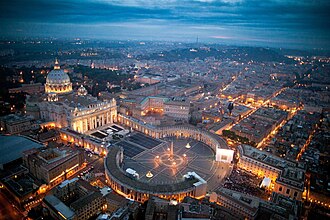
St. Peter’s Square, Rome

If I sound jaded about Rome’s forced hand, it’s only because I have the perspective of a time when everything seemed so much easier.  In the 1980s I could wander through St. Peter’s Square without photo-bombing dozens of iPhones.  I could also wander without encountering a random protest about a religious war or climate change.  I still remember plunking down on the cobblestones of that grand piazza to paint a watercolor of the Basilica, and nobody bothered me.  I also remember Frisbee with a fellow student in another piazza, while the local Italians watched the spinning disc in wonder.  Innocent times indeed.

Roman Forum

In 2024, a guided tour of the Vatican (the only way to see it) – including the sublime Sistine Chapel – will set you back $50.  A tour of the Colosseum and Roman Forum will cost you twice that much.  I’m sure next year’s pilgrims will pay these fees without blinking a sin-forgiven eye.  I just can’t get past my free-and-easy days as an architecture student, when each of the city’s wonders was as wide open and come-on-in accessible as you can imagine.

The truth is I’d go back to Rome in a heartbeat, even if I knew untold millions of pilgrims would be standing alongside me.  The Eternal City is worth the look even if you never step inside any of its buildings.  On the other hand, if I’m patient and wait until 2032, it’ll be the 50th anniversary of my college year.  That calls for a jubilee!  I’ll be the only pilgrim of course (er, two of us counting my wife) but at least we’ll have no hassles dropping coins into the Trevi.

Some content sourced from the Skift Newsletter article, “Rome Tourism Chief Says There’s ‘Total Chaos’ at Trevi Fountain…”, and Wikipedia, “the free encyclopedia”.

For Whom the Road Tolls

Because we raised our kids in Colorado, vacations to visit our extended families were often by airplane, since my relatives were in California and my wife’s were in Florida. It was the rare trip where we could see any of them by taking the car. So when my wife and I drove from South Carolina to Pennsylvania recently to visit my brother and his wife, we were reminded of what makes travel by car different than by plane. Toll roads, for instance.

Take your pick of payment

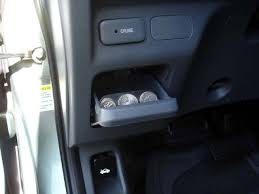
I have memories of toll roads my kids will never have. They’re old enough to remember passing through the booths and handing coins or bills to the collector. But they won’t remember the unmanned alternative, which was to toss exact change into a big plastic basket, listen to the coins process through the mechanics below, and hope/pray the gate to the toll road would raise. That automated approach seems almost quaint compared to today’s electronic alternatives.

I say alternatives (plural) because yes, that’s what we have with today’s toll roads. It confounds me. Why in heaven’s name haven’t we developed a painless, seamless, and most importantly, nationally coordinated approach to toll road payments? To some extent (nineteen states) we have a solution – E-ZPass, which by subscription and sticker allows convenient passage.  But even E-ZPass is not a perfect system.

Not so E-Z

For the rest of the country’s tolls – and for most of our round-trip drive between South Carolina and Pennsylvania – we have the clunky alternative. You pass through a now-unmanned (“un-personned?”) toll booth, where a camera grabs your license plate with a noticeable flash. Then, somewhere down the road (ha) a paper bill arrives in your mailbox. By my count I have four or five of these bills coming my way. It’s been ten days since we’ve returned home and I have yet to receive even one.

The cookie recipe is still on the back of the package

[Trivia detour:  Nestlé’s famous Toll House chocolate chip cookies aren’t named after toll booths but rather for an inn in Massachusetts where baker Ruth Wakefield came up with the recipe.  Wakefield and Nestlé struck a deal in the 1940s: her recipe printed on their bags in exchange for a lifetime supply of chocolate.  How very “Willy Wonka”, eh?]

Here is my unequivocally efficient approach to paying tolls across our many-highway’d nation. When you first get a driver’s license, you also sign up for a bank account-linked program which allows seamless paying of ALL tolls across the land – roads, bridges, tunnels, whatever – through a single readable sticker on your windshield. If you somehow don’t pay the tolls because of say, “insufficient funds”? Well sorry, your driver’s license doesn’t get renewed until you settle up at the DMV.

A $3 toll gets you through Baltimore’s Harbor Tunnel

My system is so logical it’s probably the reason I’ve never been pegged for a government job. In Colorado and elsewhere they almost have it right with the E-ZPass system – a sticker linked to a bank account. The problem is, they hold a minimum balance in a middleman (middle person?) account to guarantee payment of tolls.  I object, your honor. Why should Colorado have forty-odd dollars of my hard-earned money at all times when they can just settle up unpaid tolls whenever I renew my license?

Warning: cash-cow crossing

Then again, I have a beef with the tolls themselves, and that is, they pay for far more than the maintenance of the roads. You can’t tell me $10 per vehicle per crossing of the Golden Gate Bridge (GGB) is needed just to maintain the bridge. Here’s the jaw-dropping math for you.  112,000 cars cross the GGB every day.  That’s over forty million cars per year.  That puts the annual toll-taking at over four hundred million dollars.  $400M for bridge maintenance?  Sorry, fair traveler, you’re voluntarily lining the coffers of California (and San Francisco) every time you cross. “If I’m elected” (as we’ll hear countless times in the next two months), I’ll limit toll-taking to whatever it costs to maintain the bridge, road, or tunnel.  Not a dollar more.

On our return trip from Pennsylvania, I was amused to pass through one toll both with an actual human toll-taker. Those cordial people are still out there, collecting cash one car at a time. The woman in our instance happily returned us $19.25 on a $20.00 bill (and who’s happy to do that anymore?).

Time to bake cookies!

I was also amused… no, “gratified” is the better word; to pull into the parking lot of a South Carolina “rest area” shortly before we got home, for the use of a perfectly safe, clean, toll-free restroom on a toll-free highway. Maybe rest areas and their restrooms are the reason tolls cost more than the maintenance of the roads? Probably not. That would equate to a logical explanation for a government expenditure, which is an oxymoron.

Some content sourced from Wikipedia, “the free encyclopedia”.

Following the Leader

Technology birthed the self-guided tour. More and more often, an admission ticket to sights worth seeing grants you a pair of headphones and a wearable device instead of a name-tagged human to show-and-tell you the way.  Self-guided touring allows for a more convenient and less distracted experience.  But it also removes the storyteller, and that, my friends, makes all the difference between a memorable tour and a forgettable one.

Budapest, Hungary

Viking River Cruises, one of which we completed on the Danube River in early June (see Going With the Flow), provide a plethora of tour guide experiences.  On any given day of the cruise, you disembark to one or two “land-based” locales, in the (sometimes) capable hands of a personal tour guide.  Viking contracts with local agencies to provide these guides for small groups of its travelers.  For example, having a Hungarian show you the sights of downtown Budapest is so much more satisfying than hearing someone drone on about it on a headset.  Sharing a beer with a German on a tasting tour is almost like being invited into his house.

Nuremberg, Germany

If I ask you to share one of your own memories involving a tour guide, you’ll probably recall a particularly good one.  Maybe you’ll even remember a bad one.  Regardless, your stories would support my theory: a top-notch guide can make the what or the where of the tour almost irrelevant.  The guide himself or herself can make the difference between a memorable experience and a forgettable one.

Consider, I still remember a tour of a southern plantation with my family from almost fifty years ago.  Why?  Because the tour guide presented herself in a way that made me think we were being welcomed into her own house.  She also had this soft, syrupy unforgettable Southern accent that had me hanging on her every word.  Do I remember anything about the plantation?  No, but I sure remember the tour guide.

Szentendre, Hungary

So it was on the Viking cruise.  We had good guides and we had outstanding ones.  The very best of the dozen or so – ironically – was a young woman working on contract with Viking for the first time, as a stand-in for our scheduled guide in Munich.  She was, in every respect, delightful.  She started our tour with a greeting and a smile, then a little conversation and questions to break the ice.  As she led us from one sight to another, she spoke with an energy and pride in her city that can only be described as vivacious.  By the end of the tour, as the saying goes, she had us feeding out of her hand.  I was so enthralled I forgot to take a picture of her.

But we also had a lesser guide a few days earlier in Vienna, who I’d describe as a speed-walking encyclopedia.  He led us on a many-thousand-steps rush through the sights, filling our heads with facts and figure as he went, in a pretty thick Austrian accent.  He never smiled and I don’t think we ever stopped walking.  Can’t remember much about that tour (or him for that matter) because it was a rush-rush blurry overload of the senses.  I need to go back to Vienna again someday so I can (literally) stop and smell their famous roses.

Vienna, Austra

Courtesy of Viking and those many tours near the Danube, I present to you, therefore, the attributes of the consummate tour guide:

  1. A local, familiar with the city or sight at hand through regular exposure.
  2. A personality; warm, friendly, energetic, and engaging.
  3. An overflowing font of knowledge on his/her subject, able to answer just about any question thrown their way.
  4. A storyteller, able to weave anecdotes at will into the facts and figures to keep it interesting.
  5. In tune with his/her audience, making adjustments to the tour as necessary (ex. “Am I going too fast for you?”)

If you take enough sightseeing tours, you’ll know whether your guide is missing one or more of the above within the first five minutes.  You’ll also know whether the next hour or two will fly by or drag on for all eternity.  If your guide checks all five boxes, consider yourself lucky.  Most of us aren’t cut out for the job (myself included), whether we like to think we are or not.  It takes a special set of skills to be the leader everybody wants to follow.

Dave meets “Evy”

Renting a car at the airport used to be so hassle-free. You’d book the vehicle online, walk or bus to the parking lot, and bypass the counter by signing up for the company’s free membership program. All of that still happens, so what’s the difference today? You never know what vehicle you’re going to get, even if you choose the make/model ahead of time. And if you’ve never driven an electric vehicle (“Evy”) before, renting one is a real adventure.

Blame it on my laptop keyboard.  As I pecked my way through a recent Avis reservation, I inadvertently chose “Mystery Car” instead of “full-size sedan”.  Mystery car?  What the heck does that mean?  It means more flexibility for the rental car agency.  “Mystery car” means Avis gives you whatever it feels like giving you from its leftover inventory.  Maybe you get what you wanted.  Maybe you get a luxury vehicle for even less.  Or maybe you get Evy like I did.


I admit, I am not with the times of the latest vehicle technology.  I couldn’t tell you the first thing about operating Evy, let alone how she works under the hood.  So there I stood in the Avis parking lot, faced with the prospect of my first miles behind her wheel.  The rental companies should put a beginner’s guide on the driver’s seat for people like me.  I mean, imagine my hesitation (panic?) when I pushed Evy’s start button and nothing happened?  Something happened, of course.  The engine “started”; it just didn’t make any noise.  Yep, this was going to be a different kind of ride.

My first issue with Evy (or at least, the Genesis I rented) is the inexplicable need to make the dashboard wildly different than a conventional vehicle.  You don’t find the basic needs (ex. headlights, windshield wipers) where you expect to.  I actually considered talking to the vehicle instead of pushing random buttons, especially after my seat suddenly firmed up and vibrated when my I let my posture slip a little (“driver safety feature!”)  Seriously, all I’m asking for is dashboard buttons and levers where I expect them to be.

Once I found a modicum of comfort with Evy, the real challenge dawned on me: I have to recharge her before I go back to the airport.  And this, my friends, proved to be a challenge worthy of reality TV.  Those who already know Evy are welcome to say, “Oh c’mon Dave, it’s not that hard!” but truth be told, my charging station experience was just as daunting as the first time I pulled up to a gas pump as a teenager.

Credit Genesis, you can look up the nearest charging station right there on the dashboard.  The search gave me a choice of three.  The first station was in an Urgent Care clinic parking lot… and wasn’t working.  I’ve read that 15% of EV charging stations don’t work so now I’m a believer (EV Charging Flaw #1).

The next charging station option was in a McDonald’s parking lot.  When I arrived, both slots were occupied (EV Charging Flaw #2 – not enough to go around).  I have no problem waiting in line at gas stations but charging Evy takes a lot longer.  So I chose to drive another mile to the third option, a charger in a bank parking lot.  Nope.  No station to be found from one end of the lot to the other.  Genesis needs to update its locator software.

So back to McDonald’s I steamed went (and not for a Happy Meal, mind you).  The charging stations were still occupied, which begs the question, where do you form a line?  If I parked behind either car I’d be blocking their exit.  I’d also be blocking the McDonald’s drive-thru lane.  The only option was the parking space adjacent to the charging stations, with hopes of quickly maneuvering into an available charger before the next person pulls up (EV Charging Flaw #3).

This story only gets worse from here, so let’s keep it brief.  Once a station was finally available, I pulled in only to realize I had to face the car the other way for the charging cable to reach (EV Charging Flaw #4).  Then I tapped my credit card on the charger, only to find you have to download an app to make the station work; no cash or credit accepted (EV Charging Flaw #5).

Fifteen minutes later (because that’s what it takes when you only have one bar of wireless service – grrrrr) I got the app installed, the charging cable connected without electrocution (in pouring rain), and ta-dah… NOTHING!  Nada!  Zilch!  No “PRESS HERE TO CHARGE” or some other obvious way to get things started.  Instead, by the good graces of my EV-knowledgeable brother over the phone, I learned I had to zoom in on the tiny app map, identify the McDonald’s location of my charging station, and tap it (EV Charging Flaw #6).  Suddenly Evy’s gods smiled down on me through the thunderstorm and declared “Charge”.

To say I was giddy to make it back to the airport a day later without a dead Evy is an understatement.  To say I was the target of a sick joke when my very next Avis rental – same day, different airport – was a hybrid is undeniable.  But hey, at least a hybrid gives you the option of gasoline, so you get to fuel up the “old-fashioned way”.  Which brings me, humbly, to declare Dave Flaw #1:  Get to know Evy very, very well before your life – or at least your transportation – depends on her.

“Thoughtless Driving”

One of the inconveniences of living in a small town is the proximity to airports. In western South Carolina we actually have a choice of six, including tiny Augusta Regional just beyond the nearby Savannah River. But whether Augusta or one of the larger airports hours away on the East Coast, the drive to get there is mostly two-lane blacktop, speeding along and then slowing down through the small towns along the way. Correction. You’re supposed to slow down through the small towns.

Blame it on puzzle apps. My wife and I were just thirty miles into our eastward trek to Charleston International when we hit the pretty-much-forgotten small town of Springfield, SC. The speed limit sign suggested 25 through its residential streets. I chose 38 instead. Okay, I didn’t intentionally choose 38. I simply elected to ignore the laws of little Springfield, in favor of focusing on the puzzles my wife was trying to solve on her iPad. Maybe I missed the speed limit sign, but I did see the spinning blue/red lights on the police car sitting quietly in a church parking lot.

Here’s something all four of my life’s speeding violations have in common. As soon as each of them happened, I pulled over pretty much the moment the cop reached for his lights. My thought process went, “Hey, I’m breaking the law”, followed by “Hey, that cop noticed me breaking the law” and finally, “I think I’ll just pull over immediately and save him or her any further trouble”.

38 mph in a 25; yeah, that’s pretty bad. Totally deserved the ticket. At least it wasn’t another school zone this time. My last two speeding tickets, one in the middle of 1992 and the other around 2013, were earned as I passed by primary schools with loads of children on their playgrounds. Even worse, the 1992 ticket was collected from the driver’s seat of a midlife crisis two-door convertible Alfa Romeo Spider. Bet the cop loved ordering youngish me to traffic school in lieu of the ticket.

Speaking of “in lieu”, my Springfield, SC cop (who had nothing better to do because there’s nothing at all to do in Springfield) gave me a no-brainer choice in settling my flagrant speeding violation. Option 1: Pay the fine as advertised and earn four points against my driver’s license (“Ouch!”) Option 2: Pay an additional 30% on the fine and avoid the points entirely (not-so-“Ouch!”) Maybe Springfield’s not a bad little town after all… even if the ticket mocked my violation with a description of “thoughtless driving”.

Here’s the nice thing about making peace with a speeding violation before the cop even reaches the driver’s side window: you have a pleasant conversation. Officer: Do you know why I pulled you over?  Me: Why yes sir, I do, and here’s my driver’s license and registration. Officer: Okay Mr. David, let me spell out your options here (spells out options).  Me: Why thank you sir, I’ll take Option 2, if you please. Officer: Okay then Mr. David, pay the fine online and enjoy the rest of your day.  Me: And you too, officer!  It was almost as if a friendship was born over a speeding ticket.

I can’t talk about three of my speeding tickets without a mention of the fourth.  I made it through my high school driving years before ever getting pulled over – but just barely. It was on a graduation trip, where my parents loaned me their car and paid for enough gas to get me and a buddy a driving tour of the Western U.S. And right there in the middle of Colorado, streaking up the interstate towards the Rockies, I earned the blue/red lights for the very first time.

I will always remember two things about that first ticket. First, the officer gave me a personal escort to a nearby mailbox so he could watch me mail the check for the violation (no online or credit card option in 1980). Second, I turned to my buddy afterwards and said, “My parents are gonna kill me!”… which wasn’t true at all, but it’s how most teenagers feel after they get a speeding ticket in their parents’ car.

I doff my hat to those who make the effort to plead down a speeding ticket. I also admire those who continue driving after a violation, as if they don’t think the police car in the rear-view mirror intends to pull them over. Me, I embrace the fines for my brushes with the law.  It’s easy to claim accountability when you’ve only had four instances. And for the foreseeable future, I’ll be the most well-behaved driver behind the wheel.  You just won’t find me anywhere near Springfield, SC.

Connection Protection

The college my wife attended many years ago was a small Midwestern campus, maybe twenty buildings in all. Because of the extreme winter temps, the college had the foresight to install tunnels between the primary buildings, allowing for warm, comfortable walks from say, the dorms to the central dining hall. It’s the same concept my wife and I discovered in Nuremberg, Germany last month, only this tunnel complex was on a much larger scale.  And getting from Point A to Point B wasn’t its only intent.

Nuremberg, Germany

You’ll find Nuremberg in the center of Bavaria, the forested southwest region of Germany.  The city served as the final destination on our recent Viking River Cruise on the Danube.  Like Salzburg, Austria a few days before, Nuremberg is known for its “Old City” area (now surrounded by modern-day sprawl).  Once inside those towering protective walls, it’s like you’ve stepped back into the Middle Ages.  If there’s a more preserved city of the period, with its moats, castles, towers, and bridges, I’m not aware of it.

A walking tour of Nuremberg is impressive enough with the history, architecture, and stories, but what trumps everything about it is what lies beneath the city.  My wife and I signed up for an excursion called “Flavors of Nuremberg”, expecting to enjoy a culinary sampling of regional delights.  Indeed we did.  Our first stop was for a plate of Nuremberg’s famous white sausages (with a tall beer to wash them down). This could have been lunch alone, but we pressed on for more.

Our next stop was for Lebkuchen, or gingerbread.  It’s even more famous than the white sausages.  Here are two things to know about Nuremberg gingerbread.  One, it contains no ginger.  Two, it’s not nearly as sweet as its American counterpart (typical).  Okay, let’s add a Three: Lebkuchen is absolutely delicious.  We packed a pile of gingerbread cookies into our suitcases to give to family members (but most of them ended up in our own pantry).

Our final stop – of course -was at a Nuremberg brewery for several glasses of local beer.  But what I wasn’t prepared for was how we would get to our beer  Instead of just walking through the front door of Hausbrauerei Altstadthof, our guide took us to the top of a stone staircase, set right into the middle of a nondescript Nuremberg street.  The stair was surrounded by modest iron rails but otherwise would’ve been something you’d walk by without pause.  Our guide explained how the original brewery was located on this spot centuries ago, marked by a plaque in the street.

What followed might have been my favorite moment of the tour.  Our guide excused himself to “go get the key”, so he could unlock the imposing door at the bottom of the stairs.  The key was held by some nearby merchant and our guide had the credentials to borrow it.  I find that charming, versus typing on a computer keypad or gaining the approval of a German guard.  You just open the door with an old brass key.

Our guide returned, beckoned us down the stairs, opened the door, and away we went.  Or should I say, down we went.  Even after passing through the door fifteen feet below street level, we continued down what must’ve been the equivalent of three more floors of stairs.  Our guide stayed behind to lock the door behind us, so we kind of descended on our own.  The walls closed in and it got darker as we went.  Suddenly beer was the last thing on my mind.

Which way do we go, Mr. Guide sir?

What followed was the equivalent of rats in a maze.  Seriously, if I planned to gulp fresh air or glimpse daylight ever again, I was entirely dependent on the movements of our tour guide over the next forty-five minutes.  He’d turn here or turn there, beckon us down one tunnel or push us through another, and he stopped several times to click on or click off the bare bulbs weakly lighting our way.  We passed through several intersections where we could’ve spun off in half a dozen directions, to be hopelessly lost under the city forever.  We saw what looked like dungeons and prison cells.  Suddenly I really wanted a beer.  Above ground.

Dungeon, or just storage?

Our guide stopped us would-be-spelunkers at several junctures to explain the fascinating history of Nuremberg’s miles-long network of hand-dug tunnels, originally used in the making of beer, then used as the city’s prison, and finally, remarkably, used to hide the thousands of residents the Nazis sought during WWII.  It’s an amazing history I can’t begin to do justice in this post, but you can read more about it here.  Suffice it to say, us tourists had a taste of what it’d be like to live in suddenly protective, seemingly endless tunnels for months on end.  Not for the faint of heart.

Watch your step!

At long last, we carefully ascended another long, irregular staircase, and our guide unlocked the final door at the top, where we burst into the sunshine and fresh air of Hausbrauerei Altstadthof‘s colorful outdoor biergarten.  It was a surreal moment, being thrust back into modern-day civilization from the medieval tunnels below.  The several beers that followed not only quenched my thirst but also calmed my nerves.  This “flavors” city tour was unquestionably the most adventurous excursion of the entire river cruise.

Relief in a glass

There was a time, when we lived in Colorado, where my wife and I considered connecting our house to our nearby barn.  We thought, why not string together a series of shipping containers below ground, to act as a tunnel to keep us warm during the frigid winter months?  After our subterranean tour of Nuremberg, I wondered what we were thinking.  Better to just hoof it through the snow than to get lost in the grounds of Colorado forever.