Game, Set, Matches

The LEGO Eiffel Tower is the tallest of its model kits and undoubtedly the largest of its Architecture Series. At a deliberate count of 10,001 pieces, this behemoth is a whole lot more detailed than LEGO’s 2014 original, which clocked in at a mere 321 pieces. So imagine my awe (okay, and shock) when I learned about another Eiffel Tower model; one with a staggering 700,000 pieces. Suddenly 10,000 seems like a nice, reasonable number.

Matchstick model

It’s true, of course.  A Frenchman recently converted 700,000 matches into a model of the Eiffel Tower, in an attempt to break the world record for, naturally, “tallest matchstick Eiffel Tower”. (Is there a world record for everything these days?)  I suppose I can get past the 700,000 matches – even if I can’t picture that many in one model – but what I can’t fathom is the eight years Richard Plaud sacrificed to build his creation. I’m picturing Monsieur Plaud waking up each morning, bidding adieu to his wife after a croissant and some French press coffee, and heading off to his studio to play with matches, a giant bottle of glue in hand.  Day after day after day.

Our Frenchman’s accomplishment wouldn’t be so interesting if there weren’t a little drama thrown in for spice.  Turns out his 23.6-foot model may not earn the world record after all.  Why?  Because Plaud cut the heads off the matchsticks as he built.  When he got tired of cutting, he contacted a French “matchmaker” (ha) and asked if he could place a massive order of headless matches.  And there’s the rub, fellow model builders.  Guinness is disputing Plaud’s claim of the world record because the materials used can’t be purchased by you or me, should we try to build our own matchstick Eiffel Tower (but would we?)

Meanwhile, a 21.6-foot Eiffel Tower model built by Toufic Daher (coolest name ever) retains the world record.  Daher’s model was completed in 2009 using six million (headed) matches.  I have no idea how long it took him to build, but seriously, how long does it take to simply pick up six million little sticks, let alone shape and glue them into a replica of the Eiffel Tower?

“La Dame de fer”

Gustave Eiffel (another cool name) surely had no idea people like Plaud and Daher would be obsessed with his tower 135 years after the fact, in pursuit of world records.  Frankly (“France-ly?”) Eiffel’s “Iron Lady” is impressive enough to stand on her own wrought-iron feet.  After all, she’s among the most recognizable structures in the world.  She surpassed the Washington Monument when she opened to the public in 1889, as “tallest human-made structure” (sadly, seventy years before Guinness started tallying world records). Today she still merits an entry in the world record book, albeit for a different reason:”Most Visited Monument with an Entrance Fee”.

There’s a touch of iron-y to this post.  As much as I’m making blog fodder of these Eiffel Tower model builders, I’m tempted to become one myself.  Not with headless matchsticks; the LEGO version.  Several years ago I completed the LEGO U.S. Capitol Building (1,032 pieces), followed by the LEGO Grand Piano (3,662 pieces), and more recently, LEGO Fallingwater (811 pieces).  I keep an eye on the LEGO catalog for other models of interest but not one calls to me… except La Dam de fer.  But then I pause to ask myself, am I really willing to dive into a project that’s effectively one hundred bags of one hundred pieces each, where ever single piece dark grey?  Stay tuned.

LEGO’s version

As for our French ami Richard Plaud, his eight years of pick-up sticks may not have been in vain after all.  Guinness admits they might’ve been a little quick to dismiss his claim.  In their words, they wanted to make sure “the playing field is level for everyone”.  Playing field?  Ah, so this Eiffel Tower model-building is a game, is it?  For Plaud at least, I’d call it game, set, matches.

Some content sourced from the USA Today article, “8 years down the drain?…”, and Wikipedia, “the free encyclopedia”.
Poor Little Ginny

Next Tuesday, if I could drag myself out of bed before dawn, I’d see the planet Venus hole-punched into the inky sky, low and bright. If I looked further I’d probably see Mars – dim but distinctly red. And if I really did see Mars I’d be sad, because I know Ginny’s up there, all alone, waiting for someone to bring her home. I’m sorry, Ginny… I’m so sorry.  Nobody’s coming for you, not for a long, long time. Rest your rotors in peace, little helicopter.

“Ginny”

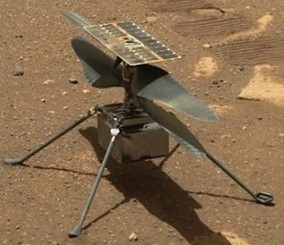
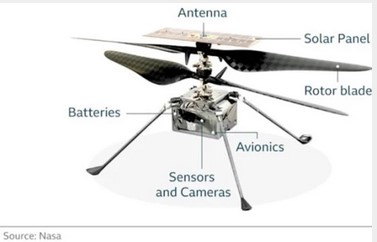
Ginny (known more formally as Ingenuity) is a brave little helicopter.  She may look like a nasty bug instead of something you’d want to cuddle with, but she’s quietly been filling up the record books with her remarkable achievements.  Four years ago Ginny hitched a ride to Mars on the belly of NASA rover “Perseverance”.  A few months after Percy plunked down on Mars, Ginny took her “first steps”.  She spun her rotor blade into a blur, rose ten feet above the Martian soil, took a quick look around, and dropped right back to where she started.  That brief maneuver earned her the title: “first powered, controlled, extraterrestrial flight by any aircraft”.

[Note: You can read about Ginny’s first flight in the post Whirlybird Wonder]

Ginny may not be easy on the eyes but I’m in awe of what she accomplished in her brief time on Earth (er, Mars).  I should’ve paid better attention in science class.  Imagine the teacher saying, “Okay Dave, here’s your assignment.  I need you to design a mini-copter that can travel to Mars, perform a few lighter-than-air maneuvers, and be able to take a few photos at the same time.  You’ll be at the controls back here on earth, so whatever communication mechanism you come up with needs to work over, uh, 140 million miles.” Cue my blank stare.

The smarter-than-I-am people at California’s Jet Propulsion Labs (JPL) designed little Ginny to do all those things.  What makes her ten-foot hop on Mars so remarkable is this: the atmosphere up there is less than 1% as dense as Earth’s, so there very little to hold Ginny aloft.  To put it another way, earthly helicopters can only fly to 25,000 feet.  Ginny had to be designed to fly to 80,000.

Let’s call her “The Little Copter That Could”, shall we?  Ginny was supposed to fly five times in thirty days.  Five little hops in a month’s time and her mission would’ve been considered an unqualified success.  But Ginny chose to be an explorer instead of an experiment.  She flew seventy-two individual missions, further and longer each time than her JPL designers ever expected.  She also captured images as she flew, so scientists could better decide where on Mars they wanted big-brother Percy to rove.

Ginny’s a good photographer!

Ginny was more “alive” than any helicopter I’ve ever known.  She cleaned herself up after nasty Martian dust storms.  Her solar panels froze unexpectedly during the rough winters, rendering her unable to fly or even take commands, yet she still radioed “wellness reports” to Percy so the JPL people would know she was (barely) there.  She made three emergency landings when her sensors detected trouble.  And even when one of those sensors went dead, Ginny kept her rotors a-whirling on demand.

Ginny captured the shadow of her “broken wing”

Whatever happened on Ginny’s Flight #72 two weeks ago remains a mystery, one Percy hopes to figure out as he rovers back to her location.  Ginny had been close to another landing when she suddenly stopped communicating.  A day later the JPL team reestablished the connection to find Ginny resting comfortably on the Martian soil.  Somehow she’d still landed on her feet.  Somehow however, she also damaged a rotor blade.  Ginny can’t repair herself so alas, her flying days are over.  Now her waiting days begin.

Admirers like me refer to Ginny as “that little extraterrestrial trailblazer”.  Haters call the dormant helicopter “the first piece of trash on Mars”.  As long as Percy’s in her neighborhood, Ginny will keep sending her little wellness reports (even though she’s really not so well).  I just hope the scientists at JPL are already hard at work on their next mission to Mars.  A brave little copter is waiting to be rescued and brought home to the Smithsonian.

Some content sourced from the CNN article, “After damaging a rotor blade, NASA’s Ingenuity helicopter mission ends on Mars”, and Wikipedia, “the free encyclopedia”.

 

Renaissance Man

In the second movement of Antonin Dvořák’s New World Symphony, the orchestra settles down as the English horn begins its soft, wailing solo. You’ve heard this famous lullaby in one version or another, but never more powerfully than in the “Largo” movement of Dvořák’s symphony, with the strings and woodwinds providing the sweeping background (~45 seconds into the following video). It’s one of my favorite classical pieces, and my performance is flawless every time I play it.  Play it in my head, that is.

I’ve developed a satisfying habit over the years which you might share (or at least, be willing to try).  Think about something that interests you, or an activity in which you like to participate.  Over time you’ve developed a fair understanding of your subject, though your level of knowledge and skill would never qualify you as a professional.  But what if it did?  What if you suddenly had the smarts or the talent to find yourself among the world’s best?  Wouldn’t your life be wildly different?

My years of piano lessons never propelled me anywhere close to the ranks of “professional” or “best”.  I never even advanced beyond the piano’s foundation to pursue an instrument like the English horn.  To do so would’ve meant a wholly different direction in life.  More practice and lessons instead of time spent with friends or years in the Boy Scouts.  A different college or at least a different degree.  Competitions.  Travel.

Music eventually gave way to an interest in sports and soon I found myself on the basketball court more than in front of the piano keyboard.  I’d practice endlessly at our backyard hoop, imagining myself making game-winning shot after shot.  I did play a couple of years of JV ball in high school and went to college games at nearby UCLA.  But my skills never developed to the varsity-, let alone college-level.  Was I infatuated with basketball at the time?  Yes, but I also knew early on I’d never be one of the greats.

You’re starting to see a pattern here and it continued in college.  I studied architecture (“I’ll be the next Frank Lloyd Wright!”) but only spent the first few years of my career in the field.  I had a good run with info technology companies (“Bill Gates!”) but never developed the level of expertise to be labeled a “techy”.  I write these weekly blog posts (“John Grisham!”) but have no plans for the next Great American Novel.

Here’s my point, and maybe you never saw it coming.  I find all of this dabbling and dreaming incredibly satisfying.  My interest in a subject or activity wanes well before it becomes an obsession, and then I simply move on to the next thing vying for my attention.  Why do I behave this way?  Two reasons.  First, I prefer to be a jack of all trades (or a master of none, if you will), not a virtuoso.  Second, more importantly, I am far too content with my life as it is to ever be tempted by the sacrifices necessary for the pursuit of singular success.

Michelangelo’s “David” 🙂

There’s a complimentary phrase for people like me: Renaissance Men.  We hearken back to the great thinkers and artists who came along just after the Middle Ages; Leonardo da Vinci and Michelangelo, for example, with “unquenchable curiosity” and “feverishly inventive imaginations”.  Mind you, I can’t paint like da Vinci or sculpt like Michelangelo, but my curiosity and imagination may run just as rampant.  The modern Renaissance Man, in a nutshell, has “broad interests” and “superficial talents”.  Me to a tee.

Playing in my head

The next time I hear Dvořák’s “New World Symphony”, I’ll think about playing the English horn.  Maybe I’ll sign up for lessons and eventually get good enough to play the “Largo” movement.  Maybe then I’ll join the local orchestra so I get the chance to perform in front of a live audience!  Yeah… probably not. Long before my much-anticipated stage debut, some other activity will vie for my attention and off I’ll go.

Some content sourced from Wikipedia, “the free encyclopedia”.

Celestial Silver Dollar

I walk the dog late at night, just to be sure he doesn’t nudge me awake in the wee hours of the morning. The walk can be a chore when I’m tired but most nights it’s a quiet, peaceful stroll through our pitch-black horse pastures. We’re usually blessed with clear skies here in South Carolina, which means the stars and planets put on a display worthy of a paid ticket to an observatory. Regardless, the moment I’m out the door I’m in search of my other faithful companion: the moon.

Through the trees

The “heavens” offer a plethora of topics to blog about (which I have: Saturn in Of Rings and Romans or Starlink satellites in Celestial Strings of Pearls, for example) but I’m overdue with a few words about the moon. Our nearest galactic neighbor is a constant wonder to me.  The moon (or is it “The Moon”?) is the reason we have ocean tides here on Earth and solar eclipses far, far away.  The moon has been the target of some of the most impressive space technology and exploration in history.  But let’s put the science aside, shall we?  Today I’d rather just muse about the moon as its sits in the night sky, like a shiny silver dollar laid out on top of a black velvet cloth.

My favorite moons are full – the perfectly round ones – but the shadowed partials can be just as beautiful.  Depending on the season and the atmosphere, the moon takes on countless looks.  Some nights it rises giant above the trees, as if invisible binoculars rest before my eyes.  Other nights the moon sits as an elegant crescent, a perfectly white slice of melon.  Still other nights the moon doesn’t rise at all, or at least, not until well after I’m in bed.  It’s a guessing game every time the dog and I head out into the dark.

I also make a game of trying to guess when the moon is full just by looking at it.  On the nights just before or after it occurs the moon can still appear as full.  So you have to look very carefully at the edges to decide if it’s perfectly round or not.  Conveniently, the moon is full about once a month, or at least, once every month in 2024.  Next year or the year after, perhaps we’ll get a “blue”: that second full moon in a calendar month.  Doesn’t happen very often, of course.

Here’s a fascinating fact about the moon.  It’s locked into place by the earth’s gravity, meaning it’s always showing you the same face.  Try to picture the earth taking a trip around the sun (once a year or so), while it’s spinning on its own axis (once a day), while the moon is spinning around the earth.  Technically the moon is rotating, just not on its own axis.  So you never get to see “the dark side”.

Here’s another fact that makes me pause.  If you drive across the United States from coast to coast and back again, you’re driving about 6,000 miles.  Do that same drive thirty times and you’ve driven to the moon.  Suddenly our celestial silver dollar doesn’t seem so far away, does it?

The next full moon (from my perspective), nicknamed “The Wolf”, is a week from this posting, on Thursday, January 25th.  It’ll be the first full one of the new year.  Good timing really, because some of you readers don’t make it to my blog until several days after the fact.  If you’re exactly a week late, walk outside tonight after dark.  A spectacular scene in the heavens awaits.

Some content sourced from Wikipedia, “the free encyclopedia”.

Calling… Into Question

When I first started piano lessons as a kid, my teacher gave me a little book of scales and keyboard exercises called “Teaching Little Fingers to Play”. I came across that book again recently, and the title made me think about smartphones. Our grandchildren will get their very first phones one of these days, on which they’ll be teaching their little fingers – not their little voices – to play.  Maybe the first word they should type is T-R-O-U-B-L-E.

Travis Tritt also wrote “T-R-O-U-B-L-E “, one of his country music hits from the 1990s.  The song’s chorus starts out with Well hello, T-R-O-U-B-L-E, Tell me what in the world, You doin’ A-L-O-N-E.  Kind of describes kids and their smartphones, doesn’t it?  They let their fingers do the talking instead of their voices.  It’s hardly a personal relationship with whoever’s on the other end, but more like the one you and I’ve developed through our back-and-forth blog comments.

If you’re an adult with kids who have smartphones, you’ve probably had the following conversation at some point in their lives: Daughter: I talked to Jacob today.  Dad:  Did you actually TALK to Jacob?  Daughter: Well no, we were texting but you know what I mean.  Sigh…

Telephones in transition

In a sense (or several senses), smartphones weaken our human connections instead of strengthen them.  Think about it: before the traditional telephone our default means of communication was face-to-face (sight).  Then the telephone comes along and we go ear-to-ear instead (sound).  Then the smartphone replaces ear-to-ear with typing (touch).  On the one hand it’s technical evolution; on the other, social regression.

Have a conversation with most members of Gen Z and you’ll want to type A-W-K-W-A-R-D.  The dialogue (if there actually is a dialogue) doesn’t flow.  They’re hesitant to offer insights or ask questions because they can’t back up the cursor and retype to get their words just right.  There are moments of uncomfortable silence; lots of them.

Moments of silence used to be a good thing.  Flashback to my teens, when a relationship with a girl meant spending a lot of time on the phone, defined as a corded handset held up to the ear (instead of a speakerphone where you multi-task).  Those conversations were priceless to a young person.  Phone calls helped to overcome shyness, and were practice to express feelings or ask a girl out on a date.  Sometimes we’d just stay on the line in silence, enjoying the fact we were the only person in each other’s moment.

The style I grew up with

Phone calls also helped me learn to talk to adults (and credit to my parents for not making them for me).  I still remember those first few dials to people or businesses, nervous over the fact it was me initiating the conversation.  What do I say?  Won’t I sound stupid?  I hope my voice doesn’t crack.

Texting absolutely has its merits, as a recent article in The Atlantic argued.  When exchanging brief, useful information, texting is dreamily efficient because there’s none of the “water cooler” effect.  As they say, get in, get out, and move on.  But when it comes to opinions, recommendations, or more detailed information, phone calls are essential, if only to allow the voice to add emphasis and/or emotion.  The Atlantic article made several arguments in support of the “gauche” phone call but surprisingly, “developing conversational skills” didn’t show up until the final paragraph.

Budding conversationalist

When I moved away from Colorado after almost thirty years, I left behind a particularly close friendship, one where we’d see each other weekly for an outdoor jog together.  But thanks to Zoom, I didn’t really leave it behind.  Once I got to South Carolina we looked at our calendars and booked a monthly videocall, where we could have the same conversations we had on the trail, with added ability to share photos, links, and documents in the moment.  Our conversations are as spontaneous as they were when we were face-to-face.  It’s a great way to keep in touch and maintain a relationship because technically… it’s a phone call.

Maybe Gen Z will figure this out before Gen A takes its rightful place as America’s youth.  If you can’t be face-to-face, at least pick up the phone and have a voice call.  Keep the topics light and spontaneous.  Let the conversation flow, and don’t get distracted by typing, emojis, or multi-tasking.  Build the relationship.

Dare I say it, there’s another word to be spelled on this topic: A-I.  I can envision a day when you’re talking to a friend, only you really aren’t because he or she has created an avatar who looks, talks, and thinks just like they do.  Heck, maybe their avatar is talking to your avatar, and you’re not even around to witness the conversation!  I’d call that another way to spell T-R-O-U-B-L-E.

Setting Little Booklets Free

In Breaking Away, the charming little movie about bicycling and broken dreams, there’s a scene where Barbara Barrie talks with her son about her passport. She’ll never really use it, she says, but she carries her passport all the time so she can present it proudly if ever asked. With newfound hindsight, I should’ve held onto my wife’s passport as tightly as Barbara Barrie held on to hers.

If you have a passport, you know the drill.  Every ten years you have to renew the little book.  The process is cumbersome, even online, because the authorities ask for almost as much information as they did the first time around.  Everything goes into the (re)application except a copy of your birth certificate.  Three pages of personal information later, you print, date, and sign, attach an unflattering black-and-white selfie (no smiling!) and mail it in together with your expiring passport.

So far so good with the hindsight.  But as soon as I went to the post office last October I made a big boo-boo; the so-called fatal error.  The desk clerk convinced me to send the application through regular mail.  “Save your pennies”, I remember him saying. “After all, you’re sending through one government entity to another government entity.  What could possibly go wrong?”  So I saved my pennies… and that’s the last I ever saw of my wife’s passport.

Did this machine eat my wife’s passport?

Okay, maybe not ever.  Perhaps the little booklet eventually finds its way home after completing whatever misguided tour it’s been taking.  Or maybe, as our travel agent was quick to suggest, it was mangled and shredded by the sorting machine of an automated postal facility.  Or maybe #3 – the one that has me staring at the ceiling into the wee hours of the night – it’s the latest identity of the head of an international drug cartel.

Laugh or feign horror at my expense, but you can’t blame me for wandering to the worst case scenario these days.  The outside of the mailing envelope said “National Passport Processing Center” while the inside contained what obviously feels like a passport.  Easy pickings, especially for an enterprising minimum-wage postal worker.  My recurring thought: why didn’t I fork over the fifteen bucks for a secure, insured, overnight envelope?  Because I’m cheap, that’s why.  Ah hindsight, thee be a cruel character.

Where o’ where did you go, little book?

Not that you’ll ever need it (because you’re learning from me) but there’s an easy process to report a “lost or stolen” passport.  You provide as much information as you can and if you’re lucky the authorities identify and “decommission” the missing booklet, reducing it to mere paper and plastic in the hands of another.  But that still left my wife with no passport, which meant filing a new (not “re”) application.  Dig out the birth certificate, take another photo, make an in-person appointment with the local post office, and pay another application fee.  Mercifully, I watched that application get sealed into one of those secure/insured mailers before disappearing down the conveyor belt.

My first inkling of identity theft hit when our credit card company informed us of a $500 charge from a merchant in Germany, a company I didn’t recognize (and couldn’t begin to pronounce).  My second inkling hit when our travel agent tried to make charges for the trip we needed the passports for, and our other credit card was rejected.  One inkling makes you pause, but two inklings?  That pushes the big ol’ panic button.  But the god of credit cards must’ve been looking down on me favorably because the first charge was cancelled while the second charge was only denied because our travel agent had an old card on file.  In other words – to my knowledge – we’re talking random events instead of identity theft.

There’s a happy ending to this story. (Actually, it’s more like an intermission since the authorities sent me a letter saying my wife’s passport is still lost or stolen until it’s not.)  We have new passports now, which means no renewal process for another ten years.  Our compromised credit card was cancelled and replaced.  And we froze our credit in case a “new wife” out there tries to open accounts.  I’m not convinced that’ll ever happen but I’m breathing easier as the months pass by.  And rest assured, I’m keeping our little booklets secure so nobody can, you know, “break away” with them.

Keeping Score at the Grocery Store

In the chaos of the supermarket a few days before Christmas, milk, eggnog, and a package of those Li’l Smokies sausages fell into our shopping cart. These items don’t usually find their way into our frig but the year-end holiday meals somehow demanded them. If the market wasn’t so frantic I would’ve also whipped out my phone to see if these purchases deserved my dollars. After all, just about everything we use in the kitchen (and bathroom) these days has a little numeric value lurking just below the surface.

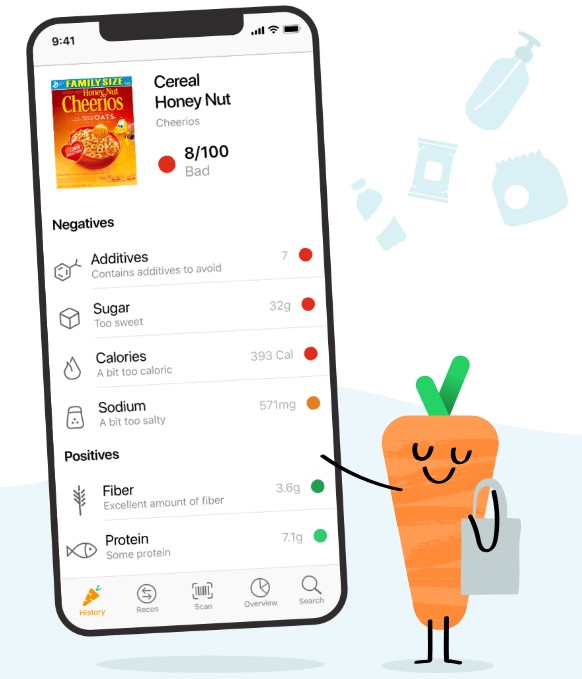
Nacho Cheese Doritos are now a “5” in my world.  You might say pretty good! until I tell you that’s on a scale of 1-100.  But let’s say you choose Blue Diamond’s Almond Nut-Thin Crackers instead.  The number skyrockets to 84.  A roll of Wint-O-Green Life Savers earns a 28 while a box of Tic Tac Freshmints doubles the number.  Nature Valley Granola Bars? 51. Heinz Ketchup? 33.  And in the ultimate insult to products considered “food”, perfectly round Nabisco Oreos earn a perfectly round 0/100.

What’s with all the tallying, you ask?  The numbers are simply the output of a little smartphone app called Yuka, which joined my personal parade of subscriptions last May.  In the words of its young French founders (Julie, and brothers Francois and Benoît), Yuka “deciphers product labels and analyzes the health benefits of foods and cosmetics”.  Plain English: Scan the barcode of anything in the supermarket and Yuka tells you whether to buy it or not.

Candidly, it wasn’t the numbers that sold me on Yuka.  Rather it’s this: the app is completely ad-free because brands cannot pay Yuka to advertise their products.  In other words, the numerical ratings I’ve shared are generated objectively, using common perceptions of the health benefits of ingredients.  Yuka has rocked the small space known as my kitchen pantry.

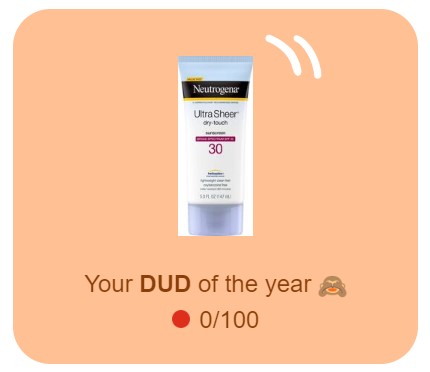
Never is this overhaul more evident than with “cosmetics”, Yuka’s catch-all for everything you find in the bathroom.  In the last eight months I’ve swapped out my deodorant, mouthwash, shaving cream, shampoo, and face wash for items with better Yuka numbers.  Five products I used every day and purchased for years just went flying off my medicine cabinet shelves, replaced by other products that are healthier on and in me (including Aveeno’s facial cleanser, which earns a perfect 100).

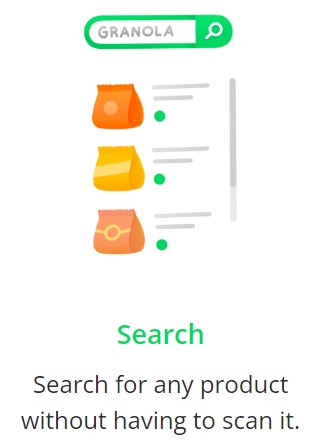
Yuka (the name is a nod to Yucatán) is about more than scan-and-score.  You can also simply search on products, mining a database of five million entries.  Even if a product isn’t in the database you can enter the ingredients from the label and Yuka will give it a number.  And if that number is lousy (like it is for your Oreos or my L’il Smokies) Yuka will point you to a list of alternatives with better numbers.  Again, Yuka doesn’t recommend one product over another; it just presents the numbers for you to consider.

In a nod to the healthy habits of Europeans (who favor fresh foods), Yuka’s founders realized its app was most popular in America, where we are so fond of packaged products.  So they packed up their French offices and French families and moved to the middle of Manhattan – temporarily – to better connect with their target audience.  Eventually they’ll head back home but not before Yuka is sure to land on the smartphones of millions of Americans.

Here’s one more aspect of Yuka I appreciate: the founders take time to communicate with their users.  In the eight months I’ve subscribed, they’ve sent me twelve emails with interesting articles about healthy eating, healthy “cosmetics”, and the entertaining evolution of their little company (which includes a dog as an employee).  They also sent me a fun video of their first few days in New York City.  And just last week I received a year-end recap of my app use (93 products scanned with an average score of 46).  No advertisements and no product pushes.

The subscriber version of Yuka is $15/year (you can try a more limited version for free), which includes the convenient scan-for-a-score feature.  Furthermore, your subscription dollars are what keeps Yuka in business, instead of funding manufacturers who’d like nothing more than to push their products on you.  That’s just one of the reasons I now keep score at the grocery store.

Christmas Customs Crisis?

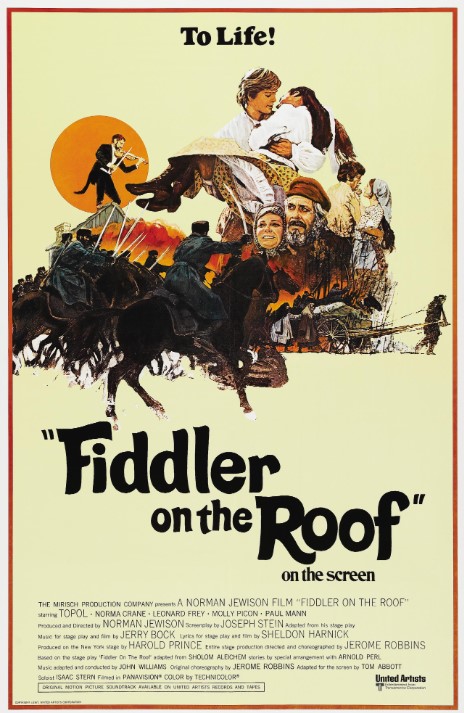
In the 1971 movie Fiddler on the Roof, the musical numbers are familiar even fifty years after the fact. Songs like “Matchmaker, Matchmaker” and “Sunrise, Sunset” play in my head in the voices of those long-ago performers. But it’s the opening number – “Tradition” – I hear most clearly, in the robust voice of actor Topol. The lyrics, covering the expected roles of father, mother, son, and daughter, speak to maintaining things as they always were. Which brings me to Christmas, and my family’s somewhat threatened traditions.

The easy way out here would be to list mine and ask you for yours.  We’d probably have some traditions in common and others we’d be hearing about for the first time.  Instead let me ask, are any of them robust enough to make it through the long haul?  As fast as the world is changing, you have to wonder what Christmas celebrations will look like ten and twenty years from now.  Seriously, do you expect hard-copy Christmas cards in the 2030s?  (Will you even have a mailbox?)

The Christmas tree is a good place to start.  As I’ve blogged about before, our tree is always real (versus artificial), purchased from a nearby lot after choosing the best fit for the house and budget.  This year however, I admit to a pause when I saw the price tags on the branches.  I swear the cost of Christmas trees doubled from 2022.  Economics says it’s a case of supply and demand, but in this case both are declining.  Tree farms surrender to developers.  The preference for artificial trees has risen steadily over the past fifteen years (to 77% of us now).  So less trees and less demand.  My 2030 Christmas may include an artificial tree whether I like it or not.

Christmas dinner faces a similar challenge.  The beef tenderloin we prefer for our celebration is a once-a-year luxury but it’s about to become a never-a-year purchase.  Even at a big box like Costco a trimmed tenderloin sets you back $40 a serving.  You start to wonder if burgers wouldn’t be just as satisfying simply for the money saved.  Even better – snacking throughout the day, and then your Christmas dinner appetite will be satisfied by a few side dishes and dessert?

Christmas (Eve) church already faced its toughest test (COVID) but did it really survive?  I remember the service we attended in 2020… from the “comfort” of our car with the preacher and the choir at the edge of the church parking lot.  The next two Christmases brought parishioners back indoors… but in far fewer numbers.  I admit to getting comfortable with “laptop church” every now and then, but Christmas Eve will be in person as long as there are sanctuaries and services.

Christmas carols may be the one tradition where serious change is in order.  Maybe you heard; Brenda Lee’s 1958 version of “Rockin’ Around the Christmas Tree” hit #1 on the Billboard Hot 100 this year .  That’s “staying power” (maybe staying a little too long) but it also suggests we’re not creating enough new music.  And how many versions of “Baby It’s Cold Outside” are we going to make before we decide not to change the lyrics but rather to ditch the song once and for all?  Bing Crosby, Nat King Cole, and Karen Carpenter will always have a place on Christmas playlists. The rest are getting old and it’s time for more “new”.

Christmas lights don’t leave much room for debate.  Not only will they be shining brighter than ever in the 2030s, they’ll be holographic, animatronic, and experiential.  Instead of a drive-thru Christmas display, the display will probably drive through you.  You’ll also have the option of enjoying your neighbors’ displays from the comfort of your living room (using the “mixed reality” headset you got for Christmas).

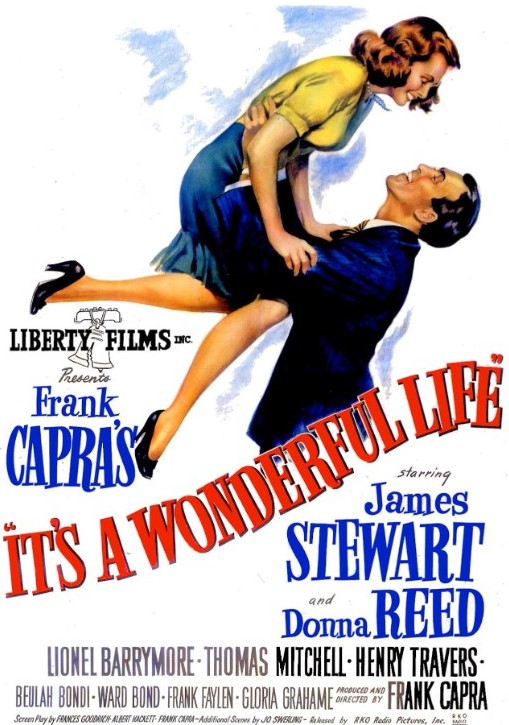
Finally, Christmas movies have pretty much run their course because you can only spin so many stories around the holiday (and anything on the Hallmark Channel doesn’t qualify as a movie).  Having said that, I’ll go to my grave watching It’s A Wonderful Life every December.  Even if there are no Christmas cards, tree, or dinner, and I’m tortured with yet another version of “Baby It’s Cold Outside”, I know I can always find tradition and the true meaning of Christmas alongside Jimmy Stewart, in a little town called Bedford Falls.

Merry Christmas!

Some content sourced from Wikipedia, “the free encyclopedia”.

The Give-and-Get Machine

This Christmas season, by tidy coincidence, our family’s Twelve Days of Christmas will give to us six family members, Five Gold Rings, four restaurant dinners, three neighborhood gatherings, two Christmas concerts, and a downtown parade of horses, dogs, and Santa. As if that’s not enough “get” this year, we’ll also have a couple dozen presents under the Christmas tree… most processed through the Give-and-Get Machine.

I’ll get to the Machine in a minute but let’s start with the exception.  In early October I walked into a local retailer, picked out a gift for my wife, and handed over a credit card.  In exchange, the clerk handed over my purchase in a small paper bag.  I took it home, wrapped it myself, and – two months later – placed it lovingly under the Christmas tree.  If you’re thinking, Man you went to a lot of trouble, Dave – I sure hope your wife appreciates it, then you, my friend, are a product of the Machine.

What is the Give-and-Get Machine?  It’s technology’s approach to gifting.  When you choose to give a gift this year, nine times out of ten you’ll plop down on the couch, open your laptop, and navigate to your favorite e-commerce website.  If you don’t know what to give, you can choose between “Last Minute Deals” or “Top Picks for You” (based on previous spending).  Once you decide, you’re probably less than five clicks from the finish line, especially if your recipient is in your “Address Book” and you’ve already stored your personal information.  Add to shopping cart, choose delivery address, confirm purchase, and you’re done.  But wait!  You can also add gift wrapping and a message for a few more pennies.  Well now, aren’t you the savvy gift-giver!

The convenience of the Give-and-Get Machine is undeniable.  After all, my purchase in October meant a one-hour roundtrip drive, to a shop where I may or may not have found something.  Add another fifteen minutes once I got home to wrap the gift and add the To:/From: tag.  You, meanwhile, accomplished the same “task” in maybe ten minutes, with a mug of hot chocolate and a few keystrokes from the comfort of your kitchen table.

“Task” is the operative word in the last paragraph.  Gifting should spring from the heart instead of the Task app of your smartphone, right?  Gifting should be a choice, not a chore.  Perhaps those of us who default to the easy-out Give-and-Get Machine are missing out on the real meaning of Christmas.

Admittedly, the Give-and-Get Machine includes some really nifty apps.  If you’ve ever used Gift Hero (“The Best Wish List Ever”) you know what I mean.  GH is the perfect solution for the family that exchanges gifts but has reached the age (or proximity) where no one knows what to get each other.  On GH each of you creates wish lists and the lists are shared with everyone else.  Once you choose a gift from another GH list it’s marked as “taken” to avoid duplicates.  Most gifts are hyperlinked to merchant websites for easy purchase, and you can add notes like color, size, and quantity.  Also, GH blocks you from knowing what has been taken from your own list by whom, so the element of surprise remains.

There’s an endless debate with apps like GH.  I mean, let’s be honest, it’s easy to skip any and all effort to be thoughtful about what somebody wants for Christmas when you have their list right in front of you.  On the other hand, you avoid the occasional embarrassing face-to-face exchange, where the recipient insists I love it when in fact they really don’t, and will probably regift it next Christmas.

Ultimately, the almighty dollar may be the decider between a gift from a store or the Give-and-Get Machine.  My wife and I found a nice assortment of books and toys for our Colorado granddaughters this year, at stores we visited both near and far.  We wrapped them all up, put them in a large box, and drove down to the post office.  The clerk measured the box and its weight and informed me the shipment “had to go by plane” instead of anything cheaper.  The cost was more than my annual subscription to Amazon Prime.

Maybe I shouldn’t be so critical of the Give-and-Get Machine after all.

Beyond Quenching

Last week on Thanksgiving, I drank the following beverages in a start-to-finish order I may or may not recall correctly: water, coffee, more water, eggnog, water again, wine, and just before bed, a final gulp of water. Eggnog aside (and wine only occasionally) it was a typical day of liquid consumption. But on the list of reasons why I drink anything at all, I find it interesting “quenching thirst” settles to the bottom of the pool.  Closer to the surface are the more interesting intentions.  Collectively you might refer to these habits as my daily fluid dynamics (DFDs).

When I wake up, the first thing I do (make that the second thing I do, after walking the dog) is to down a glass of water; a full sixteen ounces.  I used to knock back just enough to chase my daily vitamins but then I read how you should drink water first thing in the morning, because technically you’ve been dehydrating for the last eight hours.  So I started filling ‘er up to the top of the glass, a two-cup habit I’ve maintained for a long time now.  Let’s list that habit as DFD #1: To help swallow things (like vitamins).

My top-o’-the-mornin’ water stands in the way of the one drink that truly matters in life: coffee (or tea for the rest of you).  My daily dose of caffeine is always the same: twelve ounces of the rich and robust stuff, with just a splash of cream to take the edge off.  Coffee takes me from foggy to functioning in a matter of sips.  Post-coffee Dave is alert and ready to conquer the day.  Call it a chemical dependency?  Hardly.  I can skip my “daily grind” here or there and be none the worse for wear.  But morning brew is undeniably one of life’s simple pleasures.  DFD #2: To deliver a morning wake-me-up. 

Let’s make a brief rest stop on our tour of daily fluid dynamics… literally.  My morning coffee comes with one utterly inconvenient side effect: the recurring “call of nature”.  Something about caffeine seeks to clear out every available drop of moisture from my body, until I might as well be dust.  It’s like one of those juice presses, only press down uncomfortably on the fruit every, oh, twenty minutes.  If I could down an entire liter of cold brew, not only would I be bouncing off the walls but I’d also lose at least ten pounds in water weight over the next hour.  Maybe I’ve discovered America’s next diet craze.

Okay, we’re back from our visit to the “powder room”.  I’m chugging water several more times during the day (indeed, high/dry Colorado made my faithful companion a water bottle, wherever I go).  But is all this water because I’m thirsty or because I can’t get the old saw out of my head, the one that recommends “eight to ten cups a day”?  A similar water saw says to consume half your body weight in ounces, but let’s be real: I never get to that number (nor do I believe in one-rule-applies-to-all).  Yet getting enough H2O still rattles around in my brain.  So, DFD #3: To hydrate the body.

Eggnog done right (meaning it’s often done wrong) is my favorite drink of the holiday season.  Conveniently, the creamy concoction also serves as a throat-soother when you’re sick.  It’s cold, with a thicker-than-milk consistency that settles on your throat for a fair amount of time.  Reminds me of the old Pepto-Bismol jingle (“the pink stuff”), how it “coats, soothes”.  Eggnog might be as effective as a cough drop and it tastes a whole lot better.  DFD #4: To ease a sore throat or cough.

Wine makes my fluids list regularly, and it would even if I had no argument for a DFD.  But I do.  Like today’s college “pre-game” drinking (or tomorrow’s holiday party you’re dreading), sips of wine dull the senses, warm the insides, and melt away stress.  Loose lips are a common side effect, but wine in moderation typically makes the conversation flow.  Plus, the right vintage simply tastes great, time and again.  DFD #5 then: To act as a “social lubricant”.

Last (and least), water is not only my top o’ the mornin’ but also my close o’ the evenin’ drink.  After the toothpaste, the floss, and the oral rinse, the water goes in and comes right back out.  Swishing, gargling, rinsing, and spitting – it’s all an effort to restore order beyond the lips, so you head to bed without the breath of the dead.  The only more effective approach would be a fire hose on full blast. So, DFD #6: To cleanse the mouth.

Maybe you’re a little more introspective about your consumption of beverages now (and you’re welcome).  Like I said, quenching thirst is somewhere near the bottom of the pool.  So the next time you’re taking a sip, and someone notices you being particularly thoughtful about it, just tell them you’d like to explain a little something called daily fluid dynamics.