Go For a Drive

Imagine the conversation you’re having with your grandson several years from now, where you’re waxing nostalgic about a favorite car you used to own.  You’re smiling into the details, remembering how your stylish sedan hugged the open highway curves at a crisp 75 mph; how the in-dash digital receiver cranked favorite tunes via smartphone; how the feel of the steering wheel leather gave you the perfect combination of comfort and control.  Only then, your grandson interrupts you and says, “what’s a steering wheel“?

This week, the Wall Street Journal published a make-you-pause article titled “Your Next Car May Be a Living Room on Wheels”.  The subject matter is the technological luxuries in a vehicle where “driving” is no longer necessary.  Forward-facing seats rotate to face each other, perhaps around a central console.  Touchscreens – to control the vehicle; cameras – to enlarge the outside views; movie screens – simply for entertainment; each of these appear on the window glass with simple voice commands.  Microwaves, refrigerators and ice chests hide nearby for always-available snacking.  In other words, the very definition of “car” gets turned on its ear.  Your grandson won’t even know what a “dashboard” is.

Your grandson won’t remember “The Jetsons” either – the Hanna-Barbera animated sitcom from the early 1960’s.  In a mere twenty-four episodes, “The Jetsons” gave us a peek into a fascinatingly advanced world of the future.  George Jetson and his family enjoyed luxuries only present in a 1960’s imagination, like robot housekeepers or in-home treadmills.  The Jetsons lived in a high-rise apartment building floating in space.  My favorite concept: the “aerocar”.  There were no roads in George’s world, so he and his family bopped around in a airborne car.  Per the illustration above, the aerocar is effectively a flying saucer with a transparent bubble top.  I still hear the sound of its little engine.

At least George still drives, which is the premise of this post.  No matter how advanced the mode of transportation, I want the option to navigate whenever my heart desires.  If my family and I are heading out for a Sunday jaunt, I want to be able to steer us wherever the wind blows.  Maybe that’s the provider in me, or maybe that’s just driving for the sheer enjoyment of it.  We need our steering wheels.

Flying cars are closer to reality than you might think.  Airbus, Uber and a handful of other companies have created concept “cars” that take-off and land vertically – no wings.  No rotors either, like you’d see on a helicopter.  Yet some models – like Airbus’s “Vahana” – are designed to be pilot-less.  What fun is that?  Who’s at the controls?  Sounds like going for a ride in an oversized drone.  Regardless, even with perfect technology the real hurdles with flying cars lie in regulating airborne travel.  There must be rules.  You’d better believe the environmentalists will have a seat at the table too.

In my childhood days at Disneyland, I was led to believe monorails were the future mode of transportation.  I pictured vast elevated networks of elegantly formed concrete spreading out across the country, with graceful trains slithering along topside at impressive speeds.  Alas, Disney’s monorail in Florida – at 14.7 miles – remains one of the longest of its kind.  Only two others, in Japan and China, claim more riders.  Monorails just never took.

Maglev (magnetic levitation) replaced monorails as the potential mass-transit solution of modern times.  Magnets are super-efficient, providing both lift and propulsion towards a high-speed, low-friction, no-moving-parts solution.  Assuming an aesthetically-pleasing design, even the environmentalists would be on board with zero-emissions engines.  But there’s always a negative.  In this case, costs of maglev are projected at $50-$100 million per mile.  No wonder the few installations around the world travel very short distances.

Even if we mapped America with arteries of monorails or maglev, I’d still find dissatisfaction in the notion no one’s driving the bus.  More to the point, I am not driving the bus.  But at least we’re talking about mass-transit here; an option I chose willingly over my own car.  If I’m not “licensed to drive” I’m happy to leave the controls to someone else.

Living rooms on wheels will be tough for me to swallow.  The focus has shifted from enjoyment of the drive to enjoyment of the ride.  Maybe I should’ve seen this coming when automatic transmissions became an option to stick-shift.  Certainly it hit me over the head when Uber debuted its self-driving fleet.  Sir, please step away from the controls.

Here is my futile plea for now: don’t take away my steering wheel.  Let me have the option to play pilot.  At the very least, give me a set of handlebars and a little weight-shift control.

Some content sourced from Wikipedia, “the free encyclopedia”.

North Pole Vault

One of these days I’m going to visit Norway. The allure of Arctic glaciers, fjords, and waterfalls beckons me to snowshoe north of the Baltic Sea. My wife and I toured Denmark and Sweden a few years back, but if I were to choose only one of the Scandinavian countries it would be Norway. I must have a little Viking blood in me. In fact, my AncestryDNA results say I have about 14%.

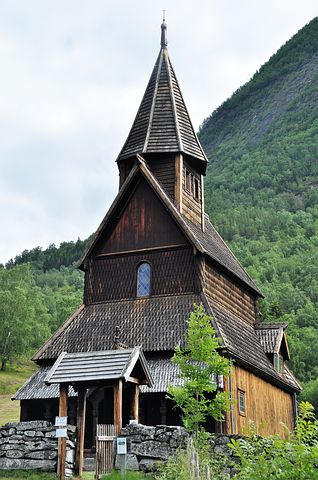
Besides its spectacular natural environs, Norway is known for hearty wooden structures that dot the land. Stave churches – quaint, timber-framed buildings from medieval times – can still be found in many of the villages.  One of the most famous is likely the most recognizable structure in Norway – the Urnes church in Songnefjorden (above photo), built back in 1130 and still standing today.

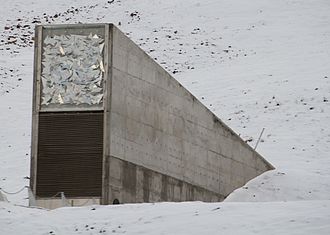
Here’s an even bolder proposition for my Norway expedition.  After I make the pilgrimage to the Urnes church, I could hop a plane four hours to the north, to the island of Spitsbergen in the remote archipelago of Svalbard.  I’m still in Norway but I’m a whole lot closer to the North Pole.  And it is here, 430 feet above sea level, I would find what may become the future most recognizable structure in Norway: the Svalbard Global Seed Vault.

The Svalbard Seed Vault is exactly what it sounds like – a place to store seeds.  Why would a country spend more than $9 million to build a seed vault?  Because bad things happen in this world, putting our food supply at risk. After reading about Svalbard I learned there’s an entire network of seed vaults around the globe (including one right here in Colorado).  These vaults contain food crop seed samples in the event the world “runs out” someday.  But even the vaults themselves have no guarantees.  The national seed bank of the Philippines was destroyed by fire, and the seed banks in Afghanistan and Iraq were lost to the ravages of war.  That’s where Svalbard comes to the rescue.

Svalbard is the “seed vault for the seed vaults”.  Think of it as a library.  If one of the world’s vaults needs a replenishment of seeds (or some global crisis destroys the vault entirely), they “borrow” packets from Svalbard.  Once more seeds are generated, a portion of them are returned to Svalbard to restore the library.  Almost 900,000 food crop varietals are represented in Svalbard – by half a billion seeds.  The facility is the size of a football field and all those seeds don’t even make it to the fifty-yard line.  Plenty of room left for more.

Svalbard is likely the most secure seed vault on the planet because it’s buried four hundred feet inside a sandstone mountain, encased in the Arctic’s permafrost.  Svalbard recently made the news when the vault flooded from snow melt and early season rain (that’s not supposed to happen – global warming anyone?)  But the water didn’t make it any further than the vault’s entrance tunnel before it froze again.  Sounds like all those seeds will be cold, dry, and undisturbed for a long time – just as the vault intends them to be.

Here’s another reason to like Norway.  Government-constructed projects exceeding a certain cost must include artwork.  Svalbard was expensive enough, so the seed vault entrance is decorated with stainless steel, mirrors, and prisms, reflecting the polar light of the summer months.  In the winter, the entrance is illuminated with greens and turquoises and whites through fiber-optic cables.  With this installation we get to appreciate the “importance and qualities of Arctic light”.  Pretty cool.

Sadly, if my Norway sojourn ever included the Svalbard Seed Vault, I wouldn’t get past the entrance.  There’s no receptionist (nor any other staff members 0n-site).  Instead the facility is monitored from a remote location around the clock.  You have to pass through five levels of security to get to the seeds themselves.  Tourists like me have no shot.

I won’t be getting to the Arctic anytime soon after all.  As for Norway, I’ll have to be content with a visit to a Stave church or two.  But I’m grateful for the Svalbard vault all the same.  On that note, I think I’ll head over to Home Depot and buy a few seed packets for my summer garden.

Some content sourced from Wikipedia, “the free encyclopedia”.


Reinstating the “Swoosh-Curl”

The Associated Press (AP) recently posted an article: “Cursive Writing Makes a Comeback in U.S. Schools”. That caught my eye, because I didn’t know cursive writing went anywhere in the first place. I assumed most everyone – regardless of age – can sign their name in cursive. Turns out the broad adoption of Common Core curriculum standards in 2010 removed “handwriting” as an essential skill.  The teaching time once used for cursive now goes to learning the keyboard.  Ask today’s student for a signature and you’ll probably get block letters instead of “continuous flow”.

I still remember my grade-school days spending hours on paper, forming my upper and lower-case letters.  Then I graduated to cursive, and the “swoosh-curl” of the loops as I progressed across the page without lifting the pencil.  Cursive evolved from block-letter writing as a way to speed up handwriting.  If speed were the only criteria, no wonder today’s generation prefers the keyboard.  In the race between my cursive on paper and my daughter’s thumbs on the smartphone, she wins by a landslide.

Speaking of cursive, here’s an example of my very own.  Hopefully you can read it.

That’s right:  The quick brown fox jumps over the lazy dog – a sentence I wrote over and over in cursive practice.  It’s a pangram – a sentence using all the letters of the alphabet.  The quick brown fox… is the most famous pangram but there are several others, including: Pack my box with six dozen liquor jugs!

The shortcoming of my own cursive writing is my speed – or lack thereof.  It took me almost sixty seconds to write the sentence above.  You could probably write the same sentence in half the time.  But I have a couple of challenges working against me.  One, I’m left-handed, which means I’ve developed a curious writing style where I curl my hand around the point where pen meets paper.  This forces my hand to stay higher on the page and avoids ink smears, but I can’t go very fast.  Two, I have essential tremor, where my hands shake slightly when held in certain ways (like writing).  If I don’t go s-l-o-w, my cursive is downright illegible.

If cursive writing was born of block letters, then block letters were born of calligraphy.  Calligraphy is writing elevated to a visual art, where the lettering is created with wide and narrow strokes and requires the use of a special pen.  Today’s computer fonts try very hard to simulate calligraphy but there’s nothing quite like the handcrafted version.  The finest examples – using the Latin script – are found in early copies of the Bible; the so-called “illuminated manuscripts” created before the advent of the printing press.  Today you’re more likely to find calligraphy on wedding invitations, college diplomas, and other formal documents.  I have an aunt who mastered calligraphy and I wish I’d kept some of her letters and thank-you notes.  That kind of penmanship suggests a certain level of elegance and refinement noticeably absent in today’s writing.

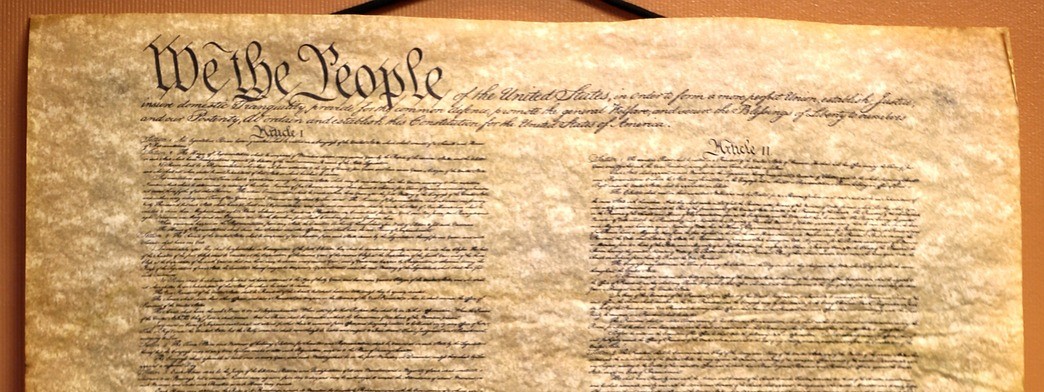
The AP news article claims fourteen states have reinstated cursive writing into their grade-school curriculum, so here’s hoping for more continuous flow signatures.  But there’s still plenty of debate about the “usefulness” of the swooshes and curls when keyboarding is clearly king.  To those who don’t see the value, consider this: our nation’s most important documents were written in cursive.  If you can’t write the U.S. Constitution in cursive you probably can’t read it in cursive either.  That would be a shame if you were ever lucky enough to see the original in the National Archives.

Some content sourced from Wikipedia, “the free encyclopedia”.

You Can’t Walk and Chew Gum

In the local news this week, we learned Amy Wilson and her newborn – residents of our fair city – are in critical condition in a Salt Lake City hospital as victims of a head-on collision. Wilson and her newborn suffer brain injuries as they struggle to survive, while two of three teenagers from the at-fault car are dead. The heartbreaking interview with Wilson’s husband here in Colorado included loss of words as he tried to reconcile the happiness of a birth with the tragedy of the accident.

My reaction to this story – besides donating to the “Amy and Baby Wilson Support” GoFundMe campaign – was the teenagers must have been texting at the wheel.  I wonder if they even left skid marks.  Prayers be with them, Amy Wilson and her newborn will survive and their injuries will be short-lived.  But the same cannot be said for the kids in the other car.  As it turns out they were street-racing when they jumped the median.  They might as well have been texting.

84-chastise-1

The victims on both sides of this accident will join the rising morbid statistics tied to “distracted driving”, which includes use of smartphones. We just can’t put them down, even with risk of life staring us in the face.  By no coincidence, the Wall Street Journal published an article this week about rising insurance rates tied to use of smartphones while driving.  36% of State Farm customers admitted to texting while driving, up 5% from five years earlier.  20% admitted to taking a photo while driving; another 10% take videos.  In those same five years smartphone ownership among drivers increased from 50% to 90%.

I will never understand the urgency to check a text while driving.   Apparently I’m not as addicted as most.  If I’m “late” in responding to a message, I can’t think of a better excuse than “I was behind the wheel”. When my phone rings or a text message dings, I will find a safe place to pull over if I can.  More often I’m not going to answer until I get where I’m going.

84-chastise-2

Perhaps I’m more motivated than most, because my son caused a distracted driving accident several years ago in high school.  As he fiddled with the car stereo leaving campus, he braked too late when he saw the red light in front of him, causing a chain-reaction fender-bender involving five cars.  Thankfully no one was hurt, but even at school-zone speeds my son caused a lot of damage.  Because of that incident I chastise my children any time I receive a text from them and realize they are driving.

Technology is trying to improve things, of course.  Voice-activated control is a lot better than it was just a few years ago.  But we’re not there yet.  Until it is commonplace to conduct a stream of communication from start to finish hands-free, the senseless accidents – and the insurance rates – will continue to rise.  Even if you perfect the technology, you still have the distraction.

84-chastise-3

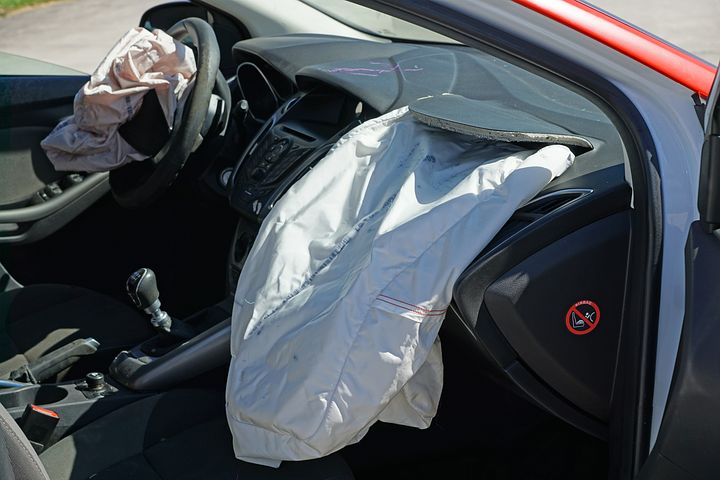
Sure, you can walk and chew gum at the same time, but not so texting and driving.  I looked at the photo above and thought, “what if you saw that through the windshield of the car coming towards you?”

The next time you’re on the road and you get that familiar ding, just keep going where you’re going.  No matter the message, it’s infinitely less important than the safety of those around you.

Planed English

Have you ever listened to a friend or family member talk, and you realize you just enjoy listening to them regardless of what they’re talking about? Why does this happen? What gets the credit for your undivided attention? I would venture to say your friend or family member has a personal command of the English language. That is, you are drawn to this person’s unique subset of the hundreds of thousands of words available to them. He or she can string together words in a way that makes you smile or laugh, or even react the particular way they would want you to. They speak with fluency and aptness. They speak with eloquence.

Today’s generation does not speak with eloquence. Thanks to the convenience of email and text, in fact they hardly speak at all. My children have a habit of telling me “they spoke to so and so” and when pressed, I realize they’re referring to texting. The phone calls of my generation have become the texts of theirs. Even email is beginning to take a back seat to instant messaging.

Whatever the medium, today’s conversations have been reduced to a minimum of words, or not even words at all! Incomplete sentences. Acronyms (i.e. LOL). Emoticons. Hashtags. It might as well be its own language. Are we really intent on leaving “Queen’s” English in the rear-view mirror, for something not even qualifying as “plain” English?

Most of what we see and do and experience can be summed up in a few words. My endeavor with this blog is to bring a single, elegant word to the table, back it up with a meaningful moment or story in my life, and send you away thinking how you might use that word more often in your everyday conversations. We all have something to say. But can we say it in a way that captivates and inspires? Can we say it with eloquence?

Join me on this journey, won’t you? Let me show you life in a word.