Your True Love’s a Nut Job

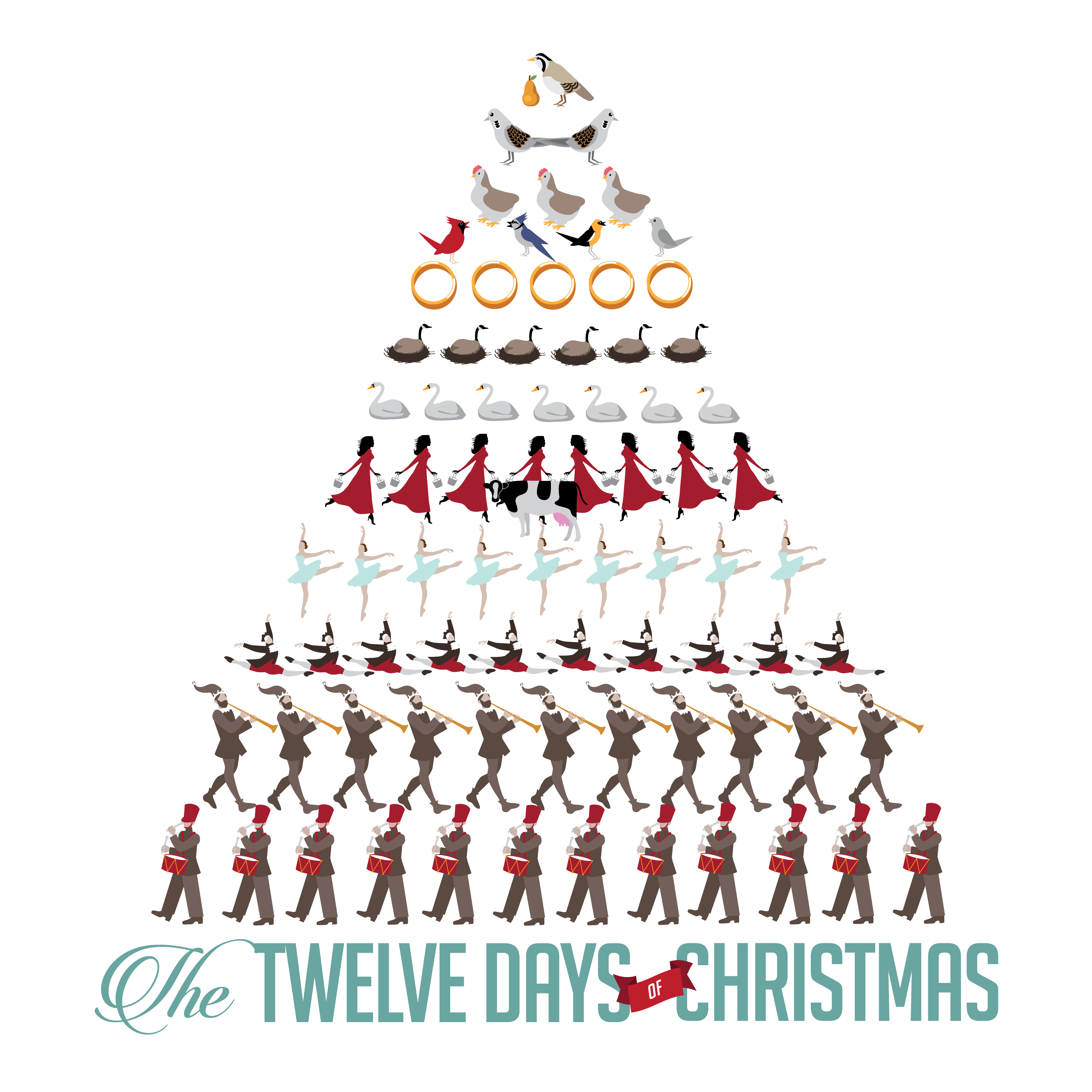
Each Christmas season (which translates to every waking moment from Thanksgiving to the New Year), I’m fascinated we still sing “The Twelve Days of Christmas”. I feel like a character in the Dickens world of Scrooge and Tiny Tim as I labor through the verses (ditto “Here We Come A-wassailing”).  I should sing with an English accent.  More to the point, I question the TDoC lyrics.  What other context do we have for turtle doves and calling birds?  What’s with the gold rings?  Don’t we owe it to ourselves to understand more about a carol we’ve been singing for over two hundred years?

Depending on the source, “The Twelve Days of Christmas” was either a) written as a children’s book – which eventually morphed into a song, or b) “code” for memorizing elements of Christian religion at a time when faith could not be openly practiced.  I prefer the latter.  For example, the two turtle doves represent the New and Old Testaments of the Bible, while the four calling birds represent the gospels of Matthew, Mark, Luke, and John.  The six geese represent the days of creation (“and on the seventh day He rested”), while the eleven pipers represent the faithful disciples of Jesus Christ.  “My True Love” is Jesus himself.  Clever, no? (see here for the full “code”).

Wikipedia claims “the exact origin and meaning of the Twelve Days song are unknown…” so perhaps we should just leave it buried in the past.  But I can’t do that.  TDoC is so much more fun if you take the literal approach to the words.

The title is innocent enough.  “The Twelve Days of Christmas” equals Christmastide, a season of the liturgical calendar in most churches.  Christmastide begins on December 25th and lasts until January 5th (the day before the season of Epiphany).  Twelve days.  That’s even more celebrating than Hanukkah.  Fine with me – our family likes to drag out Christmas as long as possible.

Beyond the title however, “The Twelve Days of Christmas” descends into total chaos.  Consider the structure of the carol.  TDoC is a “cumulative” song, which means you add the previous verse to the one you’re singing – just like all those animals in “Old MacDonald Had a Farm”.  By the twelfth verse you’re singing about everything, and you’re totally exhausted.  Some people solve the length by having a different voice for each gift.  That’s great for the partridge in a pear tree singer, but kind of sucks for the drummers drumming singer (who only gets one chance to shine).  Make sure you have a solid voice for the partridge in a pear tree.

Speaking of the gifts, let’s do some analysis.  Other than the rings, your true love has an obsession with birds.  He or she is gifting you an aviary on six of the first seven days.  Doves, hens, swans, and more.  Not only that, you’re getting pear trees and God knows how many eggs from those a-laying geese. (Note: pears and eggs make great Christmas gifts).

The final five days, your true love gifts you a bunch of workers and merrymakers for the estate you apparently have.  You’ll gain a herd of cows (what else are those maids a-milking?) and you’ll have a some dancers and a band making quite the ruckus on your front lawn.  The neighbors may complain.  C’mon, you say: how much noise can eleven pipers make?  Eleven?  So you forgot about the aggregate of a “cumulative” song, did you?  Your true love actually gave you twenty-two pipers by the time January 5th arrives… and twelve drummers, thirty-six dancers and thirty guys who like to jump.  And don’t look now, but your twelve pear trees are swarming with 184 birds.  Maybe you don’t have any pears after all.

Sorry, but if this is your true love’s idea of Christmas giving, he or she is a nut job (or at least an animal hoarder).  Here’s my advice: run.  Take your forty gold rings and date one of those lords or ladies instead.

Patriot State

Back when my wife and I lived on the West Coast, we had a neighbor who planted a “victory garden” in their front yard.  The houses on our block were small and close together, so the postage-stamp spaces in front allowed for modest landscaping at best.  There we were, nineteen neatly-mowed little lawns and one wildly out-of-control victory garden.  One of these things was not like the others.

Thankfully, victory gardens carry more significance than the presence of hippies next-door (who knows what was in that garden).  Victory gardens were originally planted during World War I to reduce pressure on the public food supply.  The gardens were also considered a morale booster for citizens supporting the war effort back home.  In that context, it’s nice to see an occasional victory garden around my neighborhood today.

Three days ago – the second Monday in August – the United States celebrated Victory Day, commemorating Japan’s surrender to the Allies at the end of World War II.  On second thought I shouldn’t say “United States”, because forty-nine of fifty states ignore V-Day altogether.  The only state still recognizing Victory Day?  Small but steadfast Rhode Island.  Since 1975, when Arkansas dropped its “World War II Memorial Day”, Rhode Island stands alone.

“The Ocean State” has good reason to continue its jubilant celebrations.  92,000 of its residents served in WWII alone (more than 1 in 10), and almost 2,200 were killed.  Rhode Island is the smallest U.S. state in size and the eighth-least populated, yet the proportion of participants in “The Good War” was far higher than most other states.  Perhaps that’s because Rhode Island hosted several armed encampments.  Perhaps that’s because of patriotism born from the first of the thirteen colonies to declare independence.

Victory Day was originally labelled V-J Day or “Victory over Japan Day”.  President Truman declared the holiday shortly after the atomic bombs dropped in Hiroshima and Nagasaki.  The original V-J Day was September 2nd, 1945 (marking the formal end date of WWII), but revised to August 14th to recognize the actual day of Japanese surrender.  V-J Day came shortly after V-E Day (“Victory in Europe” Day), signifying Nazi Germany’s formal surrender to the Allies the previous May.

Victory Day became infinitely more famous when Life Magazine published Albert Eisenstaedt’s photo of an anonymous sailor and nurse celebrating the moment of Japanese surrender in downtown New York City.  Today a massive statue of the “Unconditional Surrender” (more affectionately referred to as the “Kissing Sailor”) can be seen in San Diego’s downtown waterfront, adjacent to the USS Midway aircraft carrier.

Thirty-six countries besides the United States celebrate some form or another of a Victory Day.  Why not our other forty-nine states?  Are we (as in the recent events in Charlottesville) determined to erase the nice/not-so-nice history defining the freedoms Americans enjoy today?  Victory Day recognizes the triumph of good over evil, not the Confederate brand of freedom.  Note a critical detail as well: Japan struck first, in its late-1941 assault on Hawaii’s Pearl Harbor.  America was not the aggressor.

Maybe someday I’ll get to Rhode Island so I can a) witness the celebration of Victory Day, and b) thank the residents for keeping a most important moment in U.S. history alive.  In the meantime I’ll count on George Bailey every Christmas to remind me, immortalized in the movie “It’s A Wonderful Life”.  George was deaf in one ear so he couldn’t serve in WWII alongside his brother Harry.  Instead he stayed on the home front, running “paper drives… scrap drives… rubber drives.”  And, “… like everybody else on V-E Day, he wept and prayed… on V-J Day, he wept and prayed.”

Some content sourced from Wikipedia, “the free encyclopedia”.

All That Glitters

Audrey Hepburn will always be one of my favorite actresses.  Her grace, beauty, and acting – especially her comedic roles – combined for an enchanting big-screen presence.  I’ve only seen a handful of her movies but it didn’t take many to fall in love with Audrey’s delightful characters.  Eliza Doolittle in My Fair Lady (which premiered shortly after I was born).  Sabrina Fairchild in Sabrina.  Hap in Always (her final film).  And perhaps my favorite role, the quirky Holly Golightly in Breakfast at Tiffany’s.

In the opening scene of Breakfast at Tiffany’s, Holly gazes into the New York City Fifth Avenue store window and famously observes, “Nothing very bad could happen to you there.”  Holly’s probably right, but that’s not to say something very bad couldn’t happen to Tiffany’s itself.  Sales and profits are down significantly over the last two years.  Cartier and David Yurman steal market share from the ultra-wealthy.  As detailed in a recent Wall Street Journal article, Tiffany & Company is resorting to pedestrian strategies to restore its cachet.  And those strategies are so not Tiffany’s.

The first sign of Tiffany’s troubles might have surfaced last February, when the company debuted its first-ever Super Bowl ad.  I’m not sure what tarnished the Tiffany’s image more: a television commercial stuffed between plugs for beer and tortilla chips, or Lady Gaga as its newest sponsor.  Apparently, that’s an appeal to the Millennial generation (as if young people shop at Tiffany).  No offense, but Ms. Gaga is no Audrey Hepburn, as Zales is no Tiffany.  There’s a bit of a stain on the robin’s-egg blue.

The one and only time I visited Tiffany’s New York City location was two years ago with my family.  Despite our touristy dress we were greeted warmly by the security guard as we passed through the grand polished brass-and-glass doors.  Once inside, after a nervous glance at the showcases of diamonds (as if we could afford anything whatsoever), we were politely redirected to the fifth floor to “more affordable offerings”.  I took no offense, as I was only hoping my daughter could snag one of the famous blue boxes as a souvenir.  Turns out she purchased a Tiffany’s gold ring for several hundred dollars while my wife and I settled for a set of Tiffany’s ceramic mugs.

As satisfied as we were with our purchases, I have to admit gold rings and ceramic mugs removed a bit of the Tiffany prestige.  I more associate Tiffany’s with priceless diamonds and silver – befitting royalty.  In fact, that’s where Tiffany’s got its start: almost two hundred years ago as a purveyor to the Russian imperial family.  Tiffany’s also brings to mind its trademark advertisement, showcasing a single piece of jewelry against the silhouette of a couple embracing – a refined, iconic portrait of elegance.  Audrey Hepburn, not Lady Gaga.

Today you can purchase Tiffany ceramics, as well as Tiffany leather goods, paper products, watches, fragrances, and even a limited-edition cell phone.  You can find over 300 Tiffany shops in 22 countries around the world.  I thought Tiffany was more of the “Rome-Paris-London-New York City” kind of retailer, complete with stern, immobile security guard at each front door.

Admittedly, some of my first associations with “Tiffany” were far removed from diamonds and gemstones.  Tiffany Darwish was a flash-in-the-pan American singer in my late teens (her only real hit: a retread of Tommy James and the Shondells’ I Think We’re Alone Now).  I developed an affection for Tiffany lamps  – the stained leaded-glass variety – when I studied the Craftsman style of architecture in college.  And it’s hard to get the lyrics to Big Blue Something’s singular hit out of my head; especially the lines: “And I said, ‘What about Breakfast at Tiffany’s?’  She said, ‘I think I remember the film.’  And as I recall, I think we both kinda liked it.”

Tiffany & Co. recently ousted its Chief Executive in search of a new one, with hopes of improving both sales and image.  To the new leader in search of new answers, I say look back to the Golden Age of Hollywood for guidance, when the Tiffany blue was truly iconic.  As Holly Golightly would say, nothing very bad will ever happen to you there.

Some content sourced from Wikipedia, “the free encyclopedia”.

Survivor: Siberia

Very few shows capture my attention like CBS’s Survivor.  What started as a fairly contrived reality television competition has evolved over many years to a fascinating cat-and-mouse game of wits.  Survival of the environmental extremes pales in comparison to the mental madness brought on by deliberate deceit, misunderstood conversation, and naked errors in judgment.  The lack of sleep by itself (on some nights strategic, on others unavoidable) would have me stepping out of the game well before the final day.

Like most reality shows Survivor is edited to manipulate the viewing experience to be as entertaining as possible.  You only see what the producers want you to see.  Given hundreds of hidden cameras, I can only imagine how much film ends up on the “cutting room floor”.  Regardless, Survivor is undeniably popular in America (with similar competitions in fifty other countries).  The current season – the thirty-fourth – is watched by over ten million viewers.  There have been over five hundred episodes.  And the format of the game is relatively unchanged from the first competition seventeen years ago.

When “The Hunger Games” movies came out in 2012, I remember how I couldn’t help drawing several parallels to Survivor.  In both cases you have contestants battling until only one remains; the recipient of untold riches.  In both cases the contestants have but a few items of comfort and are forced to endure the harsh conditions of their surroundings.  Also in both cases, you have a game manipulated behind the scenes by the powers that be, to maximize the entertainment value for its viewers (even at the “expense” of contestants).

So now let’s talk about Game2: Winter, the latest spin on reality TV competition from Russia.  Brace yourself.

Game2: Winter (G2W) is a hybrid of Survivor and “The Hunger Games”.  Take fifteen men and fifteen women, drop them into a remote location in Siberia (which is anywhere in Siberia come to think of it), wait nine months and see who survives.  Each entrant must be declared “mentally sane” to qualify (kind of an oxymoron for a G2W player, don’t you think?) and chooses up to 100kg of equipment from a warehouse en route to Siberia.  Clothing.  Tools.  Weapons.  Whatever they feel they need to survive.  Each entrant also gets a satellite-linked panic button.  That comes in handy when they encounter the hungry wolves and bears in the region – assuming the production crew can get to them fast enough.

With a particular nod to “The Hunger Games”, G2W will be televised 24/7.  Oh, and the contestants can do anything they feel is necessary to win the game.  Anything.  The Russian government has gone on record to say players will be prosecuted for crimes (i.e. murder, rape, physical violence), and the producers say they won’t interrupt such activities.  2,000 cameras have been strategically located to capture the “entertainment”.

Games2: Winter premieres this July.  The extremes of Siberia (100 degrees in the summer, -40 in the winter), the lack of adequate food/shelter, and the resident wildlife make you wonder if anyone will survive, let alone commit a crime along the way.  But apparently the $1.6 million prize is worth the risk in Russia.  G2W has a lengthy waiting list for its thirty contestants.  To them I say: I hope one of you will outwit, outplay, and ultimately outlast the others.  I certainly hope it doesn’t take nine months, nor something worthy of prison time.  May the odds be ever in your favor, even if I know they won’t be in Siberia.

Some content sourced from Wikipedia, “the free encyclopedia”.

Bon Voyage!

Every now and then I come up with a topic for my blog, and then the topic somehow surfaces in the natural course of conversation later the same week. It’s a little unnerving – perhaps divine intervention – to watch someone bring up something you hadn’t thought about in years, or at least until a few days earlier.

85-bon-voyage-1

Such was the case this week when I opted for a (virtual) visit to Mont Saint-Michel, the majestic island commune and fortified abbey just off the coast of Normandy, France. Mont Saint-Michel came to mind because I received a mailer from my alma mater advertising a ten-day trip to the region next summer. The itinerary includes a stopover in Paris, a base hotel in the historic seaport village of Honfleur, extensive tours of Normandy focusing on the events of World War II, and finally, a full day exploring the island of “St. Michael’s Mount.” Mon dieu, what an adventure!

Mont Saint-Michel has a remarkable history on top of its dramatic architectural elements (which you can read about here).  Its buildings date to the 8th century, with the Romanesque abbey and monastery at the very top (“closest to God”), literally supported by a vast network of halls for stores and housing, and finished elegantly at the bottom – outside the walls – with individual houses for the handful of fishermen and farmers who live there.  The church inside the abbey is partnered with an open-air cloister (a square covered walkway for reflection).  A statue of the archangel Michael watches over the land from the very top of the church spire.  Magnifique, no?

85-bon-voyage-2      85-bon-voyage-3

Here’s an interesting bit of trivia about Mont Saint-Michel.  You may think the following photo is a distant view of the island.  Au contraire.  The Mont has a “sister” across the channel near Cornwall.  England’s island of “St. Michael’s Mount” is much smaller, but it still shares the characteristics of Mont Saint-Michel, including the significant rise/fall of the surrounding tides, the conical shape of the island, and a chapel at the top.

85-bon-voyage-5

In today’s world Mont Saint-Michel is a little touristy for my tastes, so perhaps it’s just as well I’ve never made the pilgrimage.  2.5 million visitors descend upon the island every year, hosted by only 25 full-time inhabitants (monks, nuns, and shopkeepers).  Tourism is literally the only source of income.  Besides a walk through the abbey and the spiraling streets, you’re channeled into the requisite shopping area, for food (including the famous to-go omelettes), and for purchases that can only be labelled as “tacky”. I actually have one of these souvenirs (below photo). Sacre’ bleu!  Maybe if they’d left off the sailboat…

85-bon-voyage-4

To further detract from the mystique of the Mont Saint-Michel, a permanent walking bridge was built three years ago, allowing round-the-clock access from the mainland car-park.  Once upon a time you had to wait until low tide and then quickly walk across the natural spit of land before the water returned.  Now you just cross whenever you want.  Too bad, but apparently the channel was filling in with silt and a bridge was the only way to keep the island an island.  C’est la vie.

My first introduction to Mont Saint-Michel was forty-odd years ago on the shores of California, not France.  San Diego County hosts elaborate sand-castle building competitions on its beaches, and one year I snapped the following photo of the winner.

86-bon-voyage-6

To visit Mont Saint-Michel, you’ll need to drive four hours to the west of Paris, all the way to the coast of the English Channel.  Unless you have a hankering for WWII history, there isn’t much else to draw you to the region.  Which brings me back to the start, and my comment about topics resurfacing later in the week.  Three days after I wrote this post, I was having a beer with some older friends and we got talking about the movie “Saving Private Ryan”.  One of the guys said his dad served in WWII and he’d taken him back to the beaches of Normandy, where he’d spent part of his time as a medic.  “Normandy?”, I said.  “Yes”, he said. “You know, in the northwest of France near Mont Saint-Michel?” To which I almost said, “excusez-moi?”

Some content sourced from Wikipedia, “the free encyclopedia”.


Something Wicked This Way Comes

This April, a movie called The Circle will arrive in theaters, and it just might generate enough buzz to displace political headlines.  The previews start innocently enough: a wide-eyed young woman “Mae”, who can’t believe her good fortune at being hired into the thoroughly glamorous Internet company “Circle” (a super-hybrid of Apple, Google, and Facebook).  Predictably, things take a turn for the not-so-good when Mae realizes her new employer seeks a singularly “true” Internet identity for its consumers, revealing all there is to know about a person.

The previews for The Circle intrigued me enough to give the book a try, even though the reviews were mediocre at best.  But no matter; the premise draws me in and keeps me reading.  What resolution can possibly exist in a not-so-distant future where an individual’s “privacy” goes completely out the window?  The Circle proposes an all-knowing (and therefore) all-exploiting Internet service; a corporate version of totalitarianism.  I can’t imagine a happy ending, can you?  As Ray Bradbury would say, something wicked this way comes.

83-prescient

Ray Bradbury authored countless short stories placing believable humans in not-quite-so believable circumstances, yet seeking a peek into a probable future.  “Fahrenheit 451” is perhaps his most famous example, but I have my own favorites, including “The Golden Apples of the Sun”, “A Sound of Thunder”, “Skeleton”, and “The Veldt”.  I own a collection of Bradbury’s “hundred best”, and find them just as compelling as when I first read them forty years ago.  Why?  Because they still aren’t quite believable.  The presumptions and technologies and societies of Bradbury’s stories are still somewhere around the corner of the world of today.  But I have no doubt they’re coming.

The same case can be made for the cult-classic neo-noir film Blade Runner, produced in 1982 but based on a book written decades earlier.  Blade Runner made several far-reaching assumptions about a dystopian Los Angeles of the future: a) climate change, creating an environment dominated by darkness and rain, b) culture change, where its inhabitants, language, and food are decidedly Asian, and c) technological change, where “replicants” (robots) perform the mundane tasks humans no longer care to do.  Blade Runner’s mystique is in the depiction of a familiar place transformed by radical changes; the kind that aren’t so unbelievable.  Not now perhaps, but they’re coming.  (Also coming: a sequel to Blade Runner later this year).

Here’s another example from Hollywood.  Logan’s Run (which was an on-screen disaster just begging to be remade thirty years later), depicted a completely controlled, pleasure-filled world inside a giant, sterile dome – but only until age thirty, when its inhabitants were ceremoniously put to death (to conserve the resources of a supposedly dying planet).  By default, Logan’s world is a society where everything is new and clean, everyone is “young”, and a day in the life is controlled by some behind-the-scenes, largely technological presence.  “Logan 5” and “Jenny 6” (a delightful nod to the loss of individualism) are too dependent on the comforts of their world to ever acknowledge its limitations. Considering how technology shapes our actions and decisions today, perhaps Logan’s world is not so far-fetched anymore.

The appeal of Ray Bradbury, Blade Runner, and Logan’s Run – even today – is stories about worlds that are (still) not believable.  We can enjoy them yet keep them at arm’s length, comforted by the thought “can’t really happen”.  And that’s what makes The Circle a serious conversation piece (even if it’s a box-office flop): a taste of an all-powerful, all-knowing Internet – if governments and corporations let it get that far.  Once we reach that point is there any turning back, or will “drones” more aptly describe humans than cool little flying machines?  Terrifying foresight for sure, but hopefully not prescient thinking.

Okay, you’re done reading now.  Back to your Facebook feed.

There’s Something About Mary

Mary Tyler Moore passed away over a week ago and I’ve been thinking about her ever since.  Countless actresses come and go, but then you have those who make indelible impressions with one or two jaw-dropping performances.  Audrey Hepburn, Julie Andrews and Maureen O’Hara, just to name a few.  Meryl Streep.  And Mary Tyler Moore.

81-indelible-1

There’s something about Mary. I read her filmography from start to finish – a span of sixty years of television and movies – and came up with two roles of any significance to me: Mary Richards in The Mary Tyler Moore Show (1970-1977), and Beth in the film Ordinary People (1980).  But I think most people would agree – those performances alone land Mary Tyler Moore in an acting class by herself.

Moore first became a familiar name as Laura Petrie in The Dick Van Dyke Show in the 1960’s, but that was a little before my time.  On the other hand, The Mary Tyler Moore Show was a weekend staple in my house.  At an age when my father still controlled the TV remote (er, TV channel – no remotes back then), my brothers and I were treated to CBS’s Saturday night “killer lineup”, which included The Mary Tyler Moore Show, The Bob Newhart Show, and The Carol Burnett Show.

81-indelible-2

The Mary Tyler Moore Show included memorable opening credits, if only because the theme song was so infectious (“…you’re gonna make it after all…”), as was the final scene where Mary spins and smiles and throws her hat into the air at a busy Minneapolis intersection.  That throw – and Mary Tyler Moore herself – is immortalized in a bronze sculpture you can find at that very same intersection today.

81-indelible-3

In 1980, just as I was heading off to college, Robert Redford directed the Best Picture winner Ordinary People, one of the most gut-wrenching, powerful, “real-life” dramas I have ever seen.  Timothy Hutton burst onto the Hollywood scene with an Oscar-winning performance as Conrad, the younger of two sons in a tormented Chicago family.  Judd Hirsch was also nominated for an Oscar (losing to Hutton) for his portrayal of the determined therapist who counseled Conrad back to stability.  But it was Mary Tyler Moore’s turn as the heartless and unforgiving mother Beth that stole the show.  Her performance was so counter to the sunny demeanor of Mary Richards, I wondered if she was tapping the energy of some real-life bout of depression.  That was the breadth of Mary Tyler Moore’s acting talents.  I’ve only seen Ordinary People a couple of times but the scene where Donald Sutherland tells Beth he no longer loves her still haunts me.  Moore’s silent, crestfallen reaction to that statement could’ve coined the phrase “verbal slap in the face”.

I am even more taken by Mary Tyler Moore when I read some of the details of her life.  Clearly, she tried to embody the positive demeanor and “independent woman” of Mary Richards, but she did so in the face of significant personal tragedy.  She dealt with alcoholism and smoking addiction, drug overdose (her sister), suicide (her son), and years of diabetes.   She took up the baton to promote diabetes awareness and animal rights.  Moore was even tougher and more outspoken than her little/big screen roles would suggest.

81-indelible-4

The theme song of The Mary Tyler Moore show begins with “Who can turn the world on with her smile?” Scroll back up to that first photo.  Talk about ear-to-ear!  And I can’t help but smile back, even as we now say goodbye to Mary.

Some content sourced from IMDb.com.

Sundance Man

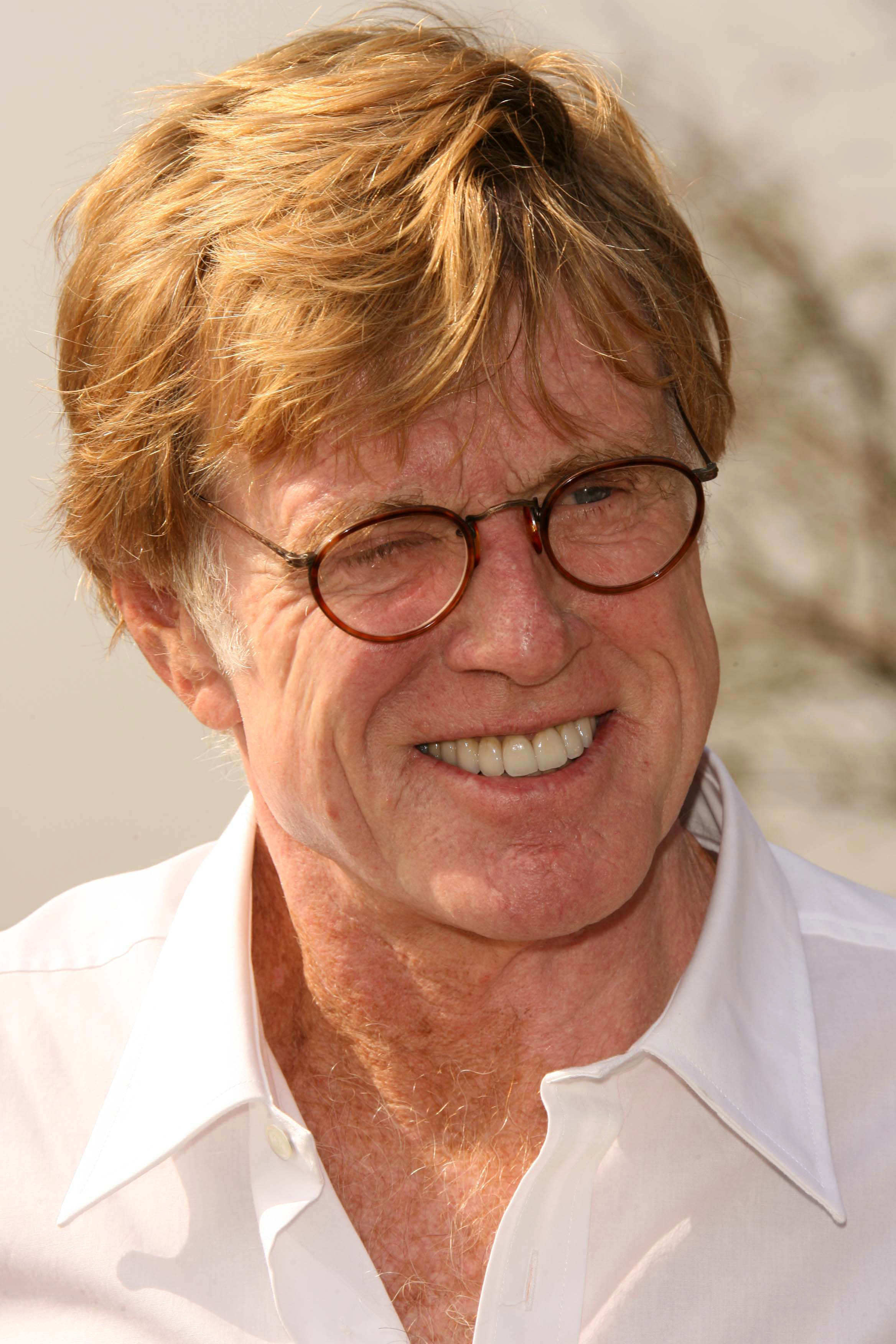
Two weeks ago we had a little excitement on the west side of town.  A street and two houses were borrowed for a Netflix production called Our Souls At Night.  For ten days cast and crew were hard at work while a few locals kept watch from lawn chairs across the street.  Maybe I too would have grabbed a lawn chair if I’d known the film’s stars were Robert Redford and Jane Fonda.

72-sardonic

I claim to be a Jane Fonda fan but really only for a handful of films; all between 1979 and 1981.  In those years you had The China Syndrome, The Electric Horseman, On Golden Pond, and 9 to 5.  On the other hand Robert Redford won me over for virtually every film he has acted in, produced, or directed.  I would be hard-pressed to come up with a Redford movie I didn’t care for (and he’s made well over a hundred of them).

Robert Redford has worked with many of Hollywood’s greats.  He made several films with Paul Newman for instance, including Butch Cassidy and the Sundance Kid, the earliest of Redford’s performances I can remember.  When I consider how many Redford movies I’ve seen since his turn as the Sundance Kid, it’s remarkable I somehow missed The Sting – also with Newman and considered one of Redford’s best.  Perhaps The Sting should be my “homework” for writing this blog.

Redford acted with Barbara Streisand in The Way We Were, with Dustin Hoffman in All The President’s Men, with Meryl Streep in Out of Africa, and with Brad Pitt in Spy Game.  His leading ladies included Glenn Close in The Natural, Demi Moore in Indecent Proposal, Kristin Scott Thomas in The Horse Whisperer, Debra Winger in Legal Eagles, and Fonda in several other movies (including Barefoot in the Park, one of Redford’s first films).

Remarkably, three of my favorite Redford films are ones where he’s behind the camera instead of in front of it.  in 1980 Redford directed Ordinary People, which won him the Oscar for Best Director (as well as Best Picture).  In 1992 Redford directed A River Runs Through It and also narrated a good portion of the film.  And in 2000 Redford produced The Legend of Bagger Vance, which proves that golf occasionally does make for good entertainment.

Redford is described as an “intelligent, reliable, sometimes sardonic good guy”.  Nice to know he can laugh at himself.  I also find it interesting he grew up in Van Nuys, CA (15 miles from my childhood home) and attended the University of Colorado (90 miles from my current home).  Redford now lives near Park City, Utah, on several hundred acres he calls Sundance Ranch (home of the film festival by the same name).  Redford once said, “I often feel I’ll just opt out of this rat race and buy another hunk of Utah”.  I can relate to that.

Last week Robert Redford was awarded the Presidential Medal of Freedom, the nation’s highest civilian award.  When asked to describe his body of work Redford said, “storytellers broaden our minds: engage, provoke, inspire, and ultimately, connect us.”  Redford will soon be done with acting, but thankfully he will continue to direct.  With that in mind I eagerly anticipate Our Souls At Night, and any other stories the man has yet to tell.

Some content sourced from Wikipedia, “the free encyclopedia” and IMDb.com


Hooked on Classics

If I am to believe certain lists, there are over forty different genres of music in the world today. The more common ones come to mind quickly: “Rock”, “Pop”, “Hip-Hop”. But now we have “Industrial” and “Tex-Mex” as well.  Indeed, definitions of music are becoming as diverse as the cultures from which they took flight.

Among music genres – the list of which inflates to hundreds if you include sub-categories – “Classical” looks a little lost. Classical music’s definition is broad and complicated, but most of us would acknowledge its “golden age” as the time frame between the lives of Bach and Beethoven (effectively, the 18th century). The volume of symphonies and concertos and sonatas created in that period is so vast, even those with no interest cannot deny a familiarity with the genre’s most famous compositions.

67-genre-1

The absence of orchestras (or music programs altogether) in today’s schools and universities is a tragedy.  Attendance at classical music concerts is down.  Even classical radio stations lack the advertising revenue to survive, depending instead on the generosity of their donors.  But here’s the good news: the genre still finds its outlets.

Consider the movies.  Year after year Hollywood produces fairly forgettable films, yet certain scenes are worth the watch if only to hear the accompanying classical music.  Some examples:

1) Ocean’s Eleven (2001). Danny Ocean’s gang of thieves finally completes the heist at the Bellagio Hotel, and gathers outside at the fountains for a moment of reflection.  The enchantment of that scene is as much about the fountains as it is in the soaring strings of Claude Debussy’s mesmerizing “Clair De Lune”.  Watch and listen here.

2) If I Stay (2014). Chloe Moretz’s character Mia performs “The Swan” (from Camille Saint-Saens’ “Carnival of the Animals”) on solo cello at a community concert, and the music continues through several more scenes.  “The Swan” is elegant and lullaby-soft.  Listen here (performance by Yo-Yo Ma).

3) Somewhere in Time (1980).  Christopher Reeves’ character’s obsession with the lovely Jane Seymour leads to a desperate time-travel effort to find her in her youth.  When the couple is finally reunited (in his dreams, of course),  we are treated to Sergei Rachmaninov’s powerful “Rhapsody on a Theme of Paganini”.  This scene would be nothing without Rachmaninov.  Listen here.

67-genre-2

Hollywood once created an entire movie about classical music.  The Competition (1980) – an early film in the careers of Richard Dreyfuss and Amy Irving – explored the rigors of the real-life Van Cliburn International Piano Competition.  Watch the movie and you’ll hear excerpts of Beethoven’s Piano Concerto No. 5 and Sergey Prokofiev’s Piano Concerto No. 3.  Listen to the glorious Prokfiev piece from start to furious finish and you’ll wonder how anyone can play the piano with that kind of speed and dexterity.

Even a child’s story can be uplifted by classical music.  In the stage production of “You’re A Good Man, Charlie Brown” Schroeder plays Beethoven’s “Moonlight Sonata” on his toy piano while Lucy accompanies him in song.  The lyrics are creative and work surprisingly well for a sonata created over 200 years ago.  Watch and listen here.

This post would not be complete without a begrudging nod to the album “Hooked on Classics”, created and performed in the 1980’s by Louis Clark and the Royal Philharmonic Orchestra.  “Hooked” is a mash-up of familiar classical pieces, attached to an annoyingly robotic drum track.  It’s a ten-minute audio nightmare for anyone who truly respects the genre.  Remarkably, the title track made it to #10 on the Billboard Hot 100 in 1982 (alongside Joan Jett’s “I Love Rock ‘n Roll” and Journey’s “Don’t Stop Believin'”).  If you must listen, go here.

67-genre-3

My campaign for the survival of classical music stems from years of childhood piano lessons, including a teacher who demanded strict adherence to the genre.  Thus I didn’t practice “Twinkle Twinkle Little Star” or “Frere Jacques”, but rather Bach’s “Solfeggietto”, Beethoven’s “Ecossaises”, and Albert Ellmenreich’s “The Spinning Song”.

Listen carefully the next time you’re at the movies.  Lend an ear to the classical strains of an orchestra or philharmonic.  Flip the radio dial to something instrumental every now and then.  Classical music lives, and still deserves a prominent place among the music genres.

Some Kind of Wonderful

I was skimming the headlines yesterday when I noticed Anne Hathaway paying tribute to director Garry Marshall for her acting breakthrough in The Princess Diaries movies. Then I realized the tribute was because Marshall had died recently, at 81 from pneumonia. Something about Marshall resonated with me but I couldn’t put my finger on it (okay, I may have watched the Diary movies with my daughter). When I checked his credits it made more sense. I’ve been drawn to Marshall’s work longer than I ever realized.  This guy was prolific.

53 - prolific

In the 1980’s, a burst of coming-of-age films hit the big screen.  Today they’d still be considered cult-classics. I was particularly drawn to Sixteen Candles (1984), The Breakfast Club (1985), Pretty In Pink (1986), and Ferris Bueller’s Day Off (1986). The characters were about my age and dealing with the kind of teenage angst I could really relate to. As it turns out, John Hughes wrote every single one of these movies.  He also wrote one of my all-time favorites (still to this day): Some Kind of Wonderful (1987). If you’re a guy and you’ve seen the movie perhaps you made the same connection.  Like Eric Stoltz’s character I was madly in love with Lea Thompson, until I realized I was really in love with Mary Stuart Masterson.

In my obsession with John Hughes (and director Howard Deutch), apparently I overlooked Garry Marshall.  Marshall entered my life early with The Lucy Show, The Dick Van Dyke Show and The Odd Couple in the mid-’70’s.  My brothers and I watched what my dad wanted to watch in those days, so Marshall gets the credit for some fond father-son memories side-by-side on the family room couch.

By the early ’80’s Marshall had moved on to Mork & Mindy, Laverne & Shirley, and Happy Days.  I’m sure I didn’t miss many episodes (and I can still hum the theme songs).  Along with The Brady Bunch those were my go-to shows.  Bit of trivia: Garry Marshall directed his sister Penny Marshall to fame in Laverne & Shirley.

Marshall solidified his influence on my life when he directed Pretty Woman in 1990.  I was so taken by the movie in fact, that I mimicked a few scenes for my wife’s birthday a few years later.  I woke her up with a handful of hundred-dollar bills, told her to go out and buy a nice dress for dinner; then showed up later in a limousine, standing through the sunroof in a tux with a bouquet of flowers.  It was fun to play the part, but alas I am no Richard Gere.

Trivia again: Garry Marshall played a small role as a tour guide in Pretty Woman.

My wife and I took a chance on the movie Mother’s Day this past May – a light comedy with Jennifer Aniston and Jason Sudeikis (and Pretty Woman star Julia Roberts).  Was it a great movie?  No.  But as it turns out it was the last film directed by Garry Marshall.  That little fact gave the movie more substance.  With Mother’s Day, Marshall managed to give me more than fifty years of television and movie memories.

Rest in peace Garry.  Thanks for so many kinds of wonderful.