Clash of the Titanium

The Mohs Scale (which you have no reason to be familiar with) is a 10-point scale used to measure the hardness of natural substances. For example, silver and gold can be shaped into jewelry with the easy tapping of a hammer, so they only rate a 2.5 on the Mohs. On the other hand, diamonds are so hard they’re used to make drill bits and saw blades. The Mohs Scale rates a diamond a 10 out of 10. And then there’s titanium, which rates a 6. Not diamond-hard but still pretty hard, right? So what in God’s name is titanium doing in a bag of Skittles candies?

You know it’s a slow week of headlines when an article on Skittles earns a spot in my newsfeed.  As if we don’t have enough high-profile lawsuits floating around (ex. Johnson & Johnson’s baby powder, Monsanto’s “Roundup”, Cleveland Brown QB Deshaun Watson’s, uh, “indiscretions”), we’re now dragging the “taste the rainbow” candies into court.  Why?  Because Skittles contain titanium (dioxide) and that means the colorful little guys could be toxic if ingested. Oh.

So this suit may not be so frivolous after all…

The “substance” of the Skittles lawsuit

And yet, if scientists are to be believed, we could be talking much ado about nothing.  Titanium dioxide (TiO2) can be toxic above a certain amount (operative words: can be).  The amount you’ll find in Skittles is below this amount.  But the consumer who filed the lawsuit uses the European Union (EU) as his “Exhibit A”, saying they’ve banned titanium dioxide as a food additive altogether.  He is correct, except the EU banned TiO2 as a measure of caution, not as a statement of “toxic or not toxic”.  Safe to say the ingredients in your Skittles won’t be changing anytime soon, and you can give in to the occasional sugar rush without worry.

I haven’t had a bag of Skittles in a long time.  My last taste was probably from the leftovers of the bowl of candy we handed out many, many Halloweens ago.  It never occurred to me to wonder how they make Skittles so brightly colored.  Yep, titanium oxide.  Without it they’d be slightly duller, like M&M’s.  Subconsciously you might not find them as appealing.

“Red” had a ten-year absence

Speaking of M&M’s, TiO2 has a parallel with a substance called “Red Dye No. 2” (RD2).  In the 1970s the Soviets (as the Russians were called back then) created a mass conniption fit when they claimed the RD2 caused cancer, which was a common food additive back then.  M&M’s was forced to remove their red-colored candy, even though it contained no RD2.  The claim was never proven but it took another decade before the public conscience allowed red M&M’s to be added back to the bag.  If this lawsuit gets enough press we may see the same impact to Skittles.  Duller colors, at least until people make peace with TiO2 again.

To be clear, I can take or leave Skittles these days.  Unnatural-looking, chewy candies are an obsession from my childhood, far removed from my relatively healthy diet today.  But there was a time, no doubt when I seemed intent on spending more time in the dentist’s chair.  Skittles didn’t hit America’s supermarket shelves until 1979 but by then I was already into several of their colorful counterparts, like Starburst, Jujyfruits, Now and Later, Mike and Ike, and Jujubes (the ultimate stick-to-your-teeth candy).  Oh, and anything with the word “licorice” in it.

“Skittles”

Skittles may revive my childhood memories, but not just because of the candy.  “Skittles” was also a clever wooden game (way before anything electronic), where you’d pull the string on a top and send it spinning down a board, knocking down pins for points.  Imagine, young people, a game where not only are no electronics involved, but no hands either.  You’d just pull the rip cord on the top, then sit back and watch.  Yep, kids actually had an attention span back then.

The other day in the supermarket checkout line, I made an uncharacteristic impulse purchase of a box of Good & Plenty.  The little pink and white candies are essentially black licorice with a candy coating and they’ve been on the shelves almost a hundred years longer than Skittles.  I’m surprised Good & Plenty hasn’t faced a lawsuit of its own.  The candies are the same size and shape as your standard prescription drug – bright little pills.  Then again, they’re not as bright as Skittles.  Yes, they may be junk food but at least they don’t contain any of the “nasty” TiO2.

Some content sourced from the Scientific American article, “Are Skittles Toxic from Titanium Dioxide?”, and Wikipedia, “the free encyclopedia”.
Food-and-Drink – Eternally Linked

In the proverbial question of the chicken or the egg, the operative word is or. One came first or the other came first – not both. Same with the game of chess; you choose to be the black or the white, not every piece on the board.  And the song you selected this morning to begin your morning commute? It was one of your favorites, not two (unless you found a mashup). So it boggles my find to discover, at Costco of all places, you can have a hot dog and a soda… just not or. It’s food and drink – or it’s nothing at all.

It’s been a while since I’ve shopped at Costco, so last Sunday’s visit felt like more than just a battle for space in the aisles.  Featured items seemed new and interesting and the free samples beckoned more than usual.  My wife and I go to Costco for paper goods, produce, wine, and not much else, so we made it to check-out sooner than most, but there was still a pretty good line of people.  While we waited, I realized Costco is savvy with its store layout.  Approaching the cashier, you face… the food court.  On this day, the court was b-u-s-y, with just about every seat taken.

I never ever patronize the food court at Costco (I like to think I lean healthier) but something triggered my brain this time around.  Just after July 4th a local radio host commented how “Costco hot dogs are the best, and believe me, I know hot dogs.”  Suddenly a Costco hot dog sounded pretty good!  So I asked my wife to stay in line while I pursued our spur-of-the-moment lunch.  A lot of people were standing by the counters (looking nothing like a line) and I realized they were already waiting for orders.  You see, at Costco you self-order on a computer screen – just touch the picture of the food or drink you want and insert a credit card.

Pepperoni pizza.  Hot turkey and provolone sandwich. “Chicken bake”.  Caesar salad.  Hot dog and a soda.  Ice cream.  Those are pretty much your choices at Costco.  The menu isn’t big and it’s certainly not your dietician’s recommendation, but it’s what the average Costco patron wants.  Just not this patron.  Not quite.

“Inseparable”

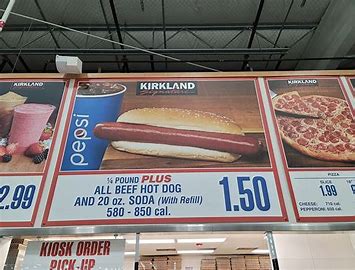
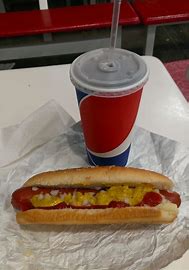
You Costco regulars already know this.  A hot dog and a 20 oz. soda at the food court is only $1.50.  Always has been and purportedly always will be.  But here’s the rub.  The computer screen doesn’t offer a picture of a hot dog.  You’ll only find a hot dog with a soda.  But there’s also a soda without a hot dog.  In what world of logic does this make sense?  I want a hot dog, Costco sells hot dogs, but I can only have one if I buy a 20 oz. soda as well.  But I don’t want a soda…

This quickly became a matter of principle (as you might expect).  I mean, $1.50 is reasonable for a hot dog so why not just go for the combo and throw away the empty soda cup, right?  Yeah, I wish it were that easy for me.  I challenged a couple of Costco employees about it back in the checkout line, and both said, “That’s the way it’s always been. It’s a nod to tradition. They’ll never change the price and they’ll never unlink the hot dog and the soda”.  When I pointed out that, hey, you could buy a soda on its own (but not a hot dog on its own), that made them pause.  A little.

Scold me now, please.  There’s a war going on in Eastern Europe.  Food and gas prices are through the roof.  The U.S. is experiencing one of its hottest summers in decades with states forced into rolling blackouts.  Meanwhile, I’m pitching fits because I can’t buy a hot dog all by itself at Costco.

Fittingly, you get the last laugh.  My wife and I pulled out of the Costco parking lot and still had a taste for a hot dog, and the only place we could think of was a little sports bar in my mother-in-law’s neighborhood.  So we go there and I order a hot dog with fries while my wife opts for the bratwurst with Tater Tots. (and yes, for those of you keeping score I could’ve ordered this hot dog all by itself).  Then the cashier rings up the order and says, “That’ll be $30.00” (not $1,50, not $3.00 – thirty bucks).  And how was my hot dog?  Delicious, actually. I’d have the same thing again nex time.  I just need to stop thinking about how I could’ve had twenty Costco hot dogs (and a bunch of empty soda cups) for the same price.

Many Happy Returns

Unlike 2021, the due date for U.S. tax returns was back to mid-April this year.  Most of us sweated under the ticking clock as we combed through statements and receipts in search of last-minute tax breaks. I have this recurring pipe dream where the IRS tells me to just keep what I owe (followed by the dream of how I would spend the money). Sadly, I’m a taxpayer who rarely sees a refund, and keeping what I owe certainly won’t happen. On the other hand, retailers could soon be asking me to keep what I want to return.  Now there’s something to ponder.

Picture this.  You place an Amazon order for a brand new Playstation 5.  You plunk down the $500 it costs and a few days later your purchase shows up on your doorstep.  But while you were waiting for your gaming console the IRS sent you a reminder about the balance due on your 2021 taxes. Whoops. You owe that $500 to the federal government, young taxpayer.  Hello, buyer’s remorse.  Full of regret, you contact Amazon to arrange the return, and their carefully worded response goes like this:

Dear Amazon Prime Member.  Thank you for your inquiry into the return of your Playstation 5 gaming console.  After reviewing our current stock we have determined it is not necessary for you to return this product.  Accordingly, nothing further is required at this time.  You can expect a full refund applied to the credit card used to make this purchase.  Thank you for shopping with Amazon.

Wait… keep the product AND get a refund, you say? Crazy, I know. Or maybe not, at least if you shop at Target or Wal*Mart.  Both retailers are considering this no-return approach with clothes, garden furniture, and “bulky” kids’ toys among other products they currently overstock.  It’s the result of consecutive worldwide events.  First, the pandemic, which allowed consumers to build up their savings accounts while mostly staying at home.  Second, record-setting inflation, which dragged a knife through what was supposed to be a post-pandemic spending frenzy.  Retailers stocked up early in anticipation of the purchase party, but then the lights and music were abruptly cut off.  The result: overstocked with a capital “O”.

This version of keep-the-product-keep-the-cash kinda-sorta happened to me years ago.  My sister-in-law ordered a ping-pong table for her family and when it came, they discovered a bit of damage in one corner.  So she contacted the company, who told her, “Keep it.  We’ll just send you another one.”  Thus, in a moment labeled “Christmas not on Christmas”, my family got a free ping-pong table (Thanks, Sis!) Sure, the bounce of the ball was a little off on that one corner, but my kids didn’t care.  Besides, before I knew it they were old enough (or not) to drink and pretty much destroyed the table when they shifted to beer pong.

But I digress. With a ping-pong table I’m almost sure the cost of shipping back to the manufacturer was more than the profit after fixing and reselling it.  So my sister-in-law got two tables for the price of one.  Hey, what if she’d bought ten ping-pong tables and all of them were defective?  She’d go up and down her street handing out free tables.  She’d gain a bunch of new best friends and her neighborhood would hold massive ping-pong tournaments.  All for the cost of one table.

The problem at Target and Wal*Mart is more than just the cost of returns and overstocked items.  It’s also, they can’t charge the same price they charged you.  For one, the item may be offered at a discounted price by the time you return it.  For two, certain items have to be classified as “used” and can’t be offered at full price after the first purchase, or even offered at all.

“Un-resellable”

Which brings me to orange juice.  Orange juice, you ask?  Yep.  Try to return a jug of juice to the market some time.  We bought five jugs a couple of months ago for our daughter’s bridal shower, assuming the mimosas would flow like Niagara Falls. Wrong. Only a few of the guests opted for the bubbly since the shower was mid-day.  So I called my local market to confirm the return of four unopened jugs of juice, and was horrified to hear, “Sure, you can return them for a full refund.  But we’ll just throw out the juice.” Throw out the juice?  Yes, it’s the world we live in these days.  Many food items cannot be resold for fear of tainting.  So I’m drinking a lot of orange juice right now.

Let’s wrap this public service announcement with a caveat.  One of these days you’ll be pleasantly surprised when you end up with a purchased product AND a full refund.  Lucky you – it’s “Christmas not on Christmas”!  If it’s through Amazon, however, be wary of the following purchases: hazardous materials, gift cards, jewelry, groceries, and live insects (uh, live insects?) None of those can ever be returned, nor will you get your money back.  In other words, the sea monkeys you adopted in a moment of nostalgia (remember those, Boomers?) should be considered bought and paid for.  No refunds.

Some content sourced from the CNN Business article, “Just keep your returns…”, and the Clark.com article, “12 Items That Can’t Be Returned to Amazon”.

Blues Choose

When our daughter gets married this June, she’ll include the tradition of “something old, something new, something borrowed, something blue”; all items meant to bring good luck.  “Old” is a ring from her grandmother; “New” a necklace.  “Borrowed” is still to be determined while “Blue” is the garter her husband-to-be tosses at the reception.  Now, if the “blue choose” were mine to make, I’d go with a handful of juicy berries instead.

This week I learned a few things about blueberries, my favorite fruit in any orchard, grove, or patch on earth.  Just outside the tiny town of Whiting, Maine (pop. 482) you’ll find Josh Pond, a farm known for its “organic hand-raked wild” blueberries.  Josh Pond is harvesting into its fourth generation and its 150 acres include a herd of Oberhasli goats and a giant field of strawberries.  In other words, shop on the JP website and you’ll find a variety of cheeses, jams, and jellies alongside the blues.

You already know a thing or two about organic produce but perhaps you’ve never heard the term “hand-raked”.  Check out the following video (which beats any description in words).  It’s a soothing process to watch and a bountiful harvesting technique.  Josh Pond can hand-rake up to 2,000 pounds of blueberries a day.  They’re then quick-frozen, packed into 5-pound boxes, and shipped directly to you…at $100 USD a pop.  Do the math.  Josh Pond grosses $40,000/day on its blueberries alone.

$20 for a pound of blueberries is way steep for my purchasing power.  I’m reluctant to pay half as much, and even then I drop them sparingly into my yogurt/granola breakfast.  But I may be stingier than I think.  JP customer Chelsea Balboni gushes in her online review, “My wild organic blueberry subscription has changed my life.  Every month a 5-pound case is overnighted to me…”  Every month?  Who spends $1,200/year on blueberries (besides Ms. Balboni)?  For the record, I’m not knocking Josh Pond.  If you want the best blues North America has to offer, JP is your go-to.  Just be ready to pay.

Maybe I still spend more on blueberries than you do, but I find it interesting my blues choose – when it comes to food in general – is very limited.  Quick – name a blue food (besides Josh Pond blueberries).  All I could come up with was Blue Curacao, which isn’t food so much as a liqueur served as a cordial or in tropical drinks.  Blue Curacao, ironically, comes from the dried peel of bitter orange and is then dyed blue. (Why blue? No idea, but we’re getting off-topic here).

A consult of a blue food list comes up with just a few worthy entries.  Blue crab.  Blue corn (tortillas).  Blue (or bleu) cheese.  And Brilliant blue FCF, a synthetic “safe and non-toxic” dye for ice cream, cotton candy, medications, and cosmetics.  I half-expected to find Kellogg’s Pop-Tarts on the list but then I remembered: the wholly chemical toaster pastries contain no blueberries whatsoever. (Okay, maybe a dried trace of them, way-y-y-y down on the ingredients list.)

Hello, Violet!

No post on blueberries would be complete without a mention of Violet Beauregarde.  Violet who?  C’mon now, channel your inner Charlie and the Chocolate Factory.  Violet was the obnoxious, gum-loving rich kid who sampled a chew of Willy Wonka’s four-course dinner gum, including the blueberry pie dessert that “wasn’t quite perfected yet”.  In a wonderful scene (from the classic 1971 version), Violet turns deep blue as she chews, and inflates into a giant blueberry.  The last we see of Violet, the Oompa-Loompas are rolling her away to the juice press to be squeezed back to normal size again.

Hello, Sal!

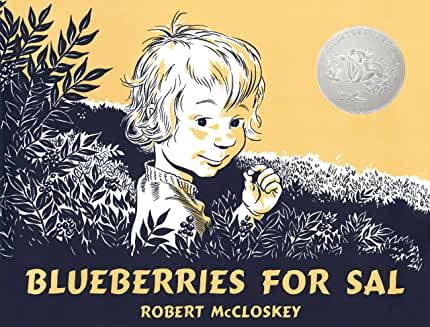
All of this blues talk reminds me I need to read my granddaughters Blueberries For Sal, one of my favorite childhood stories.  Also, I’ll probably cave to one of the giant blueberry muffins my wife brought home from Costco the other day.  As for the tempting bounty from Josh Pond?  Ah, if only I could purchase just a handful for my daughter on her wedding day.  Instead, I’ll leave those hand-raked beauties to blues-choosers with a little more discretionary income. 

Some content sourced from the Josh Pond website, the Prepared Cooks article, “18 Foods that are Blue”, and Wikipedia, “the free encyclopedia”.
——————–

Lego Grand Piano – Update #14

(Read about how this project got started in Let’s Make Music!)

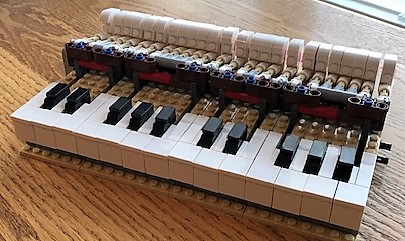
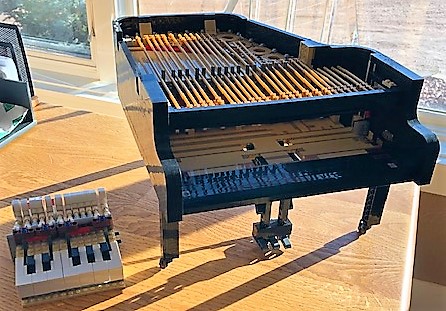
You’ve seen this before, as we cruise past the 2/3 DOWN, 1/3 TO GO road sign.  Bag #14 – of 21 bags of pieces – added another seven keys to the board for a total of twenty-four.  There’s a lone key remaining to the far right; then the whole assembly goes into the body of the piano (and heaven help me on that maneuver).

Piano keys are getting repetitive so let’s talk about Sergei Rachmaninoff.  His name is intimidating but his music has an interesting connection with pop.  If you remember Eric Carmen, you already know a little Rachmaninoff.  All By Myself is based on Sergei’s Piano Concerto No. 2Never Gonna Fall in Love Again is based on Sergei’s Symphony No. 2.  Both Carmen songs were huge hits but they’re also depressing.  Did Eric seek comfort in classical music when his personal relationships weren’t going his way?  Maybe, but it wasn’t without expense.  The Rachmaninoff estate brought “copyright” to Carmen’s attention, and promptly helped themselves to 12% of the royalties on both songs. 

Running Build Time: 11.0 hours.  Musical accompaniment: Rachmaninoff’s Piano Concerto No. 2 in C minor, Symphony No. 2 in E minor, and Rhapsody on a Theme of Paganini. Leftover pieces: 6.

Conductor’s Note: Forget Eric Carmen.  Rachmaninoff’s Rhapsody… is one of the most moving classical compositions you’ll ever hear.  The piece starts ever so simply on the piano, then brings in the orchestra to dramatic, sweeping interpretations.  My wife isn’t a classical music fan yet she loves Rachmaninoff’s Rhapsody… especially since it’s the theme of the romantic time-travel movie Somewhere in Time.  Have a listen here.

A Month of Sundaes

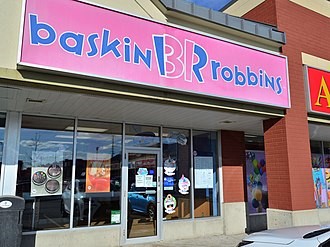
I seem to have an affection for the hyphen. The humble horizontal line appears regularly in my posts. The “dash” is more formal than the “dot-dot-dot” yet more relaxed than the semi-colon – perfect for blog pauses, don’t you agree? My hyphen habit may be the result of formative moments in my life, like Hanna-Barbera cartoons (hello, Yogi Bear) and Hewlett-Packard, where I worked most of my professional career. But if I had to pick just one – or should I say, thirty-one, I’d go with my favorite hyphen of them all.  Baskin-Robbins.

The next time I write a post, remind me to have something to eat before I sit down to the keyboard.  My last four entries cover graham crackers, doughnuts, waffles, and now ice cream.  Might be my anticipation of Easter Sunday (when my Lenten sweets sacrifice comes to an end).  Bring on the jellybeans, Peter Rabbit!  But today is about ice cream – and not just any.  It’s about the one you grew up with; the one you still identify with.  For me, it’ll always be Baskin-Robbins.

“B-R”, as they’re now called, has a quaint beginning worth a few sentences here.  Burt Baskin and Irv Robbins got into the ice cream business independent of each other.  Then Burt married Irv’s sister.  The now brothers-in-law decided to combine “Burton’s Ice Cream Shop” (10 flavors) with Irv’s “Snowbird Ice Cream” (21 flavors), and there you have it – the birth of “31 Flavors”.  B-R was a single shop back in 1948; today, how about 8,000 parlors in 50 countries?  Their new slogan – Seize the yay – has more to do with “celebrating small, joyous moments” than ice cream.  Even the rebranded logo removes the nostalgia of the B-R I grew up with (though the embedded “31” is clever).  But I get it – B-R needs to appeal to younger generations as well.

Dad’s favorite

Baskin-Robbins is inextricably tied to my childhood memories.  Our local B-R was one door over from my mother’s hair salon.  It was also right down the street from our church.  So ice cream for me was often the reward of patience with Mom or simply going to church with Dad, who often couldn’t resist a stop at B-R on the way home.  You could always find a container of B-R Rocky Road in Dad’s freezer, all the way up to the last day of his life.  He was fond of saying while he enjoyed a bowlful, “Nothing beats Baskin-Robbins’ Rocky Road.” (I beg to differ with B-R’s Peanut Butter ‘n’ Chocolate, but hey, we all have our favorites).

A lot of my posts mention ice cream yet I’ve only mentioned Baskin-Robbins once in all my blogging (in The Sweets Life three years ago).  Kind of a crime there because B-R deserves a post of its own, as does your favorite ice cream parlor.  Wikipedia has an article called List of Ice Cream Parlor Chains (of course they do).  Your favorite is on that list.  I may be partial to B-R but I’m familiar with several others, including Braum’s in Oklahoma and Texas, Carvel to the Northeast, Farrell’s to the West, and Lappert’s in Hawaii.

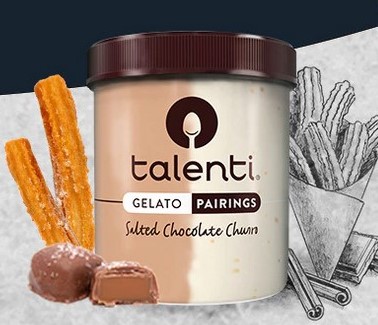
Of course, with Baskin-Robbins I’m talking “ice-cream-parlor ice cream”.  Back at home, you won’t find any B-R in our freezer because Häagen-Dazs (ice cream) and Talenti (gelato) earn the shelf space instead.  H-D goes a whole lot higher on the butterfat scale so naturally it tastes better.  H-D even has a hyphen!  And Talenti, well, it’s gelato.  Need I say more?

If you live in a bigger city than me, you have better ice cream options than Baskin-Robbins.  Big cities have wonderful local places (follow Lyssy in the City for some of the best in New York).  But do they have hyphens?  Mine does (as does this post – 48 if I counted correctly).  Yes, B-R may be updating its brand, but I’ll always insert the rainbow-sprinkle “dash” between the initials, returning me to those ice-cream parlor memories of old.

Some content sourced from the CNN Business article, “This 77-year-old ice cream chain is getting a makeover”, and Wikipedia, “the free encyclopedia”.

——————–

Lego Grand Piano – Update #13

(Read about how this project got started in Let’s Make Music!)

We passed the ten-hour mark with the build today, which amounts to a very long piano concerto. (Good thing you’re not being asked to sit and watch, eh?) Bag #13 – of 21 bags of pieces – added another five keys to the board for a total of fifteen.  Eight more next week will complete the entire set.  Maybe we’ll be installing them into the piano as well!

Here’s a stop-sign warning if you take on a project like this.  Pieces can easily be installed backwards.  For all my “practice” building keys these past few weeks, I got a few tiny pieces reversed today and had to disassemble to make things right.  Mr. Instruction Manual includes warning-like diagrams to make sure you don’t do this. In other words, the piano student must pay attention at all times!

Running Build Time: 10.2 hours.  Musical accompaniment: Strauss’s The Blue Danube waltz. Leftover pieces: 3

Conductor’s Note: The Blue Danube is familiar from the very first bars (especially if you saw 2001: A Space Odyssey and remember the scene with the rotating space station).  Strauss was fond of waltzes and this one is his most famous.  With its repeating theme, I thought The Blue Danube would be appropriate this time around since I’ve been building key after key after key.

Strange Bedfellows

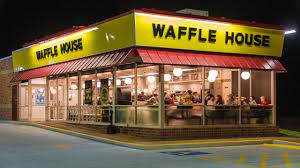
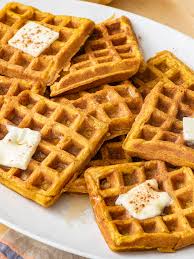
Welcome to Masters Week, sports fans! Even if you don’t know the first thing about professional golf, you’ve probably heard of The Masters.  The tournament begins again this Thursday (for the eighty-sixth time) at Augusta National Golf Club in Georgia. If you have nothing better to do this weekend, you can watch a dozen mind-numbing hours of the television coverage. While you’re at it you’ll discover the Masters traditions, like the champion’s green jacket, the clubhouse top-story “Crow’s Nest” (where the amateur golfers reside), the famous pimento cheese sandwiches, and of course, Waffle House. Wait, Waffle House?

Question: When do waffles and golf belong in the same sentence?  Answer: When it’s April at The Masters. Why?  Because alongside the golf hats, shirts, and commemorative this-and-that for purchase at the souvenir shop, you can buy a limited-edition pair of Adidas golf shoes for your long walk along the course.  The shoes will set you back $200 – a little pricier than most – but hey, they’re limited-edition.  You’ll be among the select few advertising Waffle House on their heels.

Before you think waffles and golf shoes are the most random “pairing” (ha) in the history of merchandising, remember; The Masters is in Georgia.  So is Waffle House.  Their headquarters is right down the road in Atlanta and they have over 400 restaurants across the Peach State (way more than any other state).  In other words, a pair of Waffle House Adidas at The Masters may earn as many thumbs-up as strange looks.

Speaking of strange, Adidas took the breakfast look of its limited-edition shoe to an extreme.  Besides the rear-facing logo, a square-after-square print runs along the side, in a muted tone meant to represent waffles and syrup.  Adidas calls it “batter-like colorway” (a phrase you’ll never hear again, ever).  Including syrup in the design and labeling it “batter-like” might be how Adidas keeps distance (and lawsuits) from competitor Nike, which famously created its first shoe using a waffle iron. Whatever. Shoes and waffles still make strange bedfellows.  I mean, look at the marketing photos spaced throughout this post.  Clever yes, but isn’t your first thought, “Get your dirty sneakers off my dining table!

[Props to Adidas, if you have buyer’s remorse with your breakfast kicks, at least you also get a shoebox looking exactly like a teeny, tiny Waffle House.]

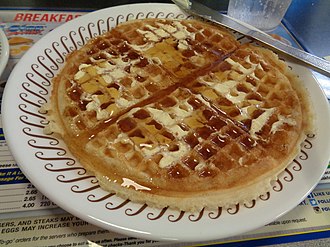
I’m not on my soapbox to knock Waffle House; quite the opposite.  Any restaurant keeping the doors open sixty years after the very first plate deserves my respect.  So does a restaurant where waffles are the main event because I love waffles.  If they’re on the menu, I’ll order waffles whether at Waffle House, Belgian-style, or made-to-order at the finest champagne brunch.  I’ve even been known to eat an Eggo or two.  Ideally, top your grids with strawberries and Chantilly cream, with syrup on the side for dipping.  Heaven on earth.

I’ve only been to Waffle House twice in my life.  Was it a memorable experience?  NO.  Both times I perched on a backless stool at the counter.  Both times I sat next to characters I’d never, ever choose to dine with.  Finally, the Waffle House kitchen is right there in the wide-open so you can watch your breakfast being prepared.  Wouldn’t say it was the most sanitary process I ever saw.

Waffle House does have its charms, however.  The original menu had just sixteen items; today, well over a hundred.  Each location is open all-day-all-night, which has some customers believing Waffle House doors don’t lock.  Each location also has a jukebox, including favorites from the “Waffle Records” label (Ex. They’re Cooking Up My Order by Alfreda Gerald, released in 2006).  Finally, two percent of all restaurant eggs in America are cracked at Waffle House.  Two percent is rarely a big number but in this case, it’s got a lot of zeroes.

Waffle House did make a famous mistake once.  In the 1960s, the chain was approached by one S. Truett Cathy, looking for an outlet for his proprietary chicken sandwich.  The sandwich was added to the menu for a short time, but sales were so strong Waffle House worried its waffles would lose the spotlight.  So Cathy moved on, and of course, Chick-fil-A soon became an even more popular place to eat.

Note the Waffle House shoebox

To be fair, the Adidas shoe isn’t the first time waffles and golf crossed paths. In 1996, Kevin Costner starred as a down-on-his-luck golfer in Tin Cup, which included a memorable scene at a Waffle House just before the U.S. Open.  Somehow this worked better than waffle-golf shoes.

According to its website, Waffle House has 10 locations in my home state of Colorado versus 439 locations in Georgia.  Do the math.  If a hundred Georgians order two waffles a day in each of those restaurants, Waffle House is cooking up over 600,000 Peach State waffles every week. WHOA. Now there’s my excuse to go to The Masters!

Some content sourced from the ESPN.com article, “Waffle House and Adidas team up for waffle-themed golf shoes”, and Wikipedia, “the free encyclopedia”.

——————–

Lego Grand Piano – Update #12

(Read about how this project got started in Let’s Make Music!)

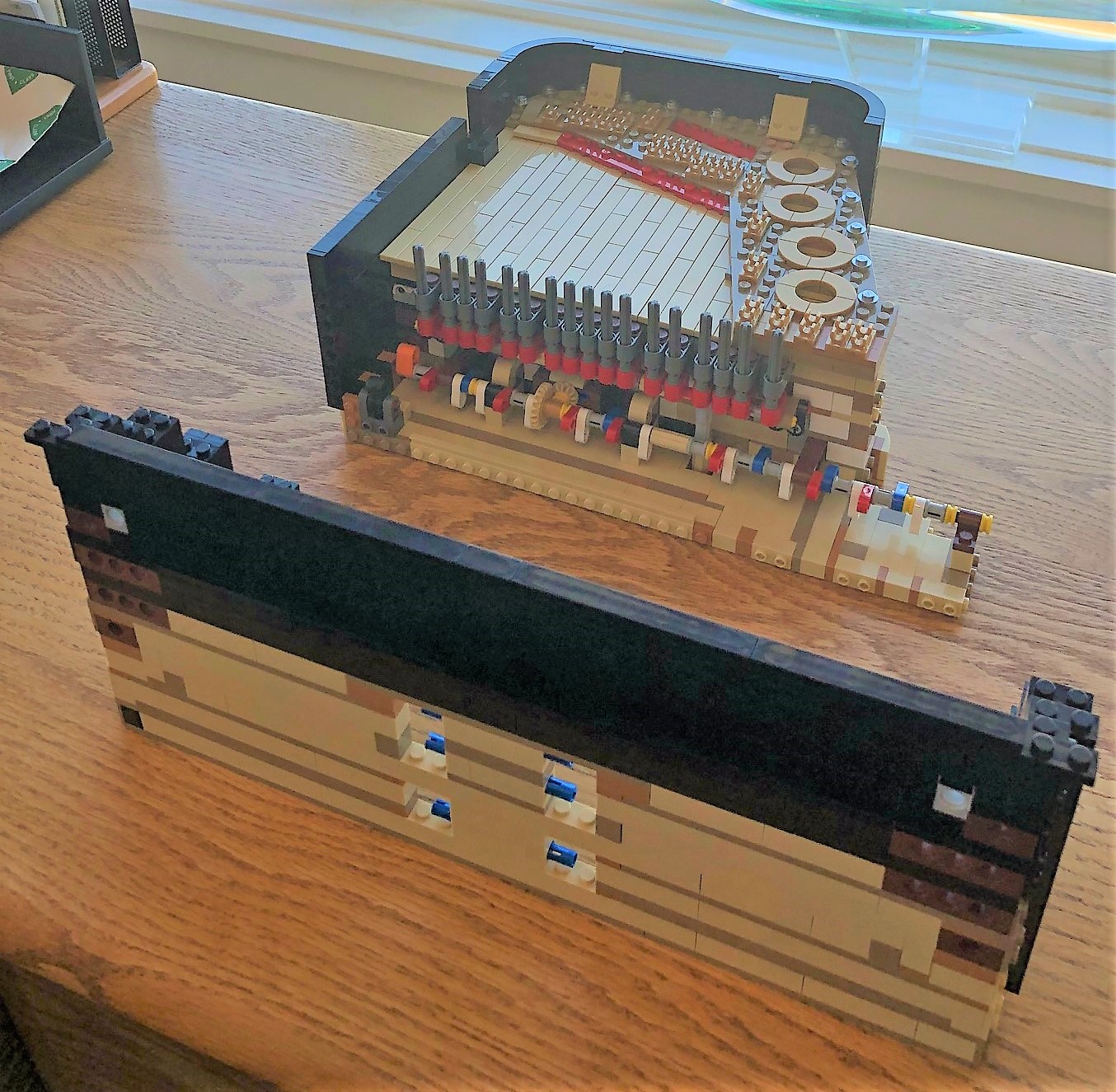
We’ll be “playing” the keyboard for the next few weeks. Bag #12 – of 21 bags of pieces – added another seven keys to the five I constructed last week, which puts us not quite halfway across the board.  I’m showing the complicated mechanical action in the photo because once the keys are installed it’ll be hard to see.  Notice how pressing the piano key down makes the rounded counterweight to the left go up.  The weight strikes the piano string above it (once inside the piano), and Voila! Music.

When you work on one of these Lego projects for almost ten hours you notice things. Little things. Today I realized, for the first time ever, Lego imprints its logo on every one of the thousands of raised “bumps” on its pieces (like the beige bumps just to the left of the black piano keys here).  A perfectionist would have all of those logos facing the same direction. Nope, not gonna happen; we’re on a one-way street here.

Running Build Time: 9.6 hours.  Musical accompaniment: Handel’s Water Music. Leftover pieces: 3

Conductor’s Note: Water Music is a collection of short pieces for a large orchestra.  Because Handel wrote the set of suites for King George I for a concert on the River Thames, Water Music is often performed outdoors.  Next to his choral work Messiah (“HA…lle-LU-jah!”), Water Music is Handel’s best-known composition.

This is Dough-NUTS!

Earlier this week, Krispy Kreme held the grand opening of its newest store just a few miles from my house. You’d have thought the first customers through the doors won the state lottery. I’ve never seen such an amped-up bunch of doughnut-lovers, at least the ones who stepped up to the television cameras. Even the news anchors caught the fever, practically giddy with their coverage, which in turn had me thinking, “Hello? Isn’t there anything more important going on in Colorado Springs?” Welcome to America, where the opening of a fast-food restaurant makes headline news.

Full disclosure: I’ve had a Krispy Kreme doughnut and they’re positively scrumptious.  Put a box of the original glazed in front of me and I’ll polish off at least half of ’em.  But that was years ago, back when Krispy Kreme was new and novel.  Today?  I take ’em or leave ’em, and apparently I leave ’em because I can’t tell you the last time I ate any brand of doughnut.  Regardless, doughnuts aren’t really my topic today; doughnut customers are.  Specifically, the ones who would get up at oh-dark-hundred just to say they’re among the first through Krispy Kreme’s doors on opening day.

Why?

Maybe these nuts for doughnuts are the same people who purchase tickets to the opening of a feature film; the ones who wait hours in line, watch the sold-out midnight show, then fall into bed bleary-eyed at 3am.  I want to get down on my knees and plead with them, “Hey you, the movie will be shown a hundred more times and will be just as good as the first showing”.  Why give up a good night’s sleep to say you saw it first?  Krispy Kreme will sell their doughnuts for years and they’ll taste just as good next year (and the year after that) as they do on “Grand Opening Day”.  Why the rush?

Here’s something else I don’t understand.  This same fast-food frenzy applied to Chick-fil-A, In-N-Out Burger, and two weeks ago, Whataburger when they opened their first stores in town.  The local news gave us updates for months until their “big days”, then cars backed up by the dozens through the drive-thru, then all you’d hear from neighbors was, “Did you hear what just opened?” like it was the juiciest bit of gossip ever. I can think of a dozen local, family-owned restaurants opening in the past several years, and not one of them earned the same hype as these national-chain fast-food commoners.  It’s like we Americans are addicted to fast food.  Which of course, we are.

Why again?

If I’d kept the local news on all day Tuesday, I would’ve seen the same on-the-spot reporter at Krispy Kreme, giving updates every two or three hours on the progress of the grand opening.  Instead, I just pulled up the news channel website and watched her short videos, one after the other after the other.  This reporter was at Krispy Kreme the entire day (that’s 5:30am-10:00pm for those who are counting).  She managed to look as fresh and bubbly with the first interview as with the last.  Probably hyped up on doughnut sugar.

At least she was getting paid.  Those first customers chose to be there voluntarily, which leads me to this question: what does the rest of your day feel like when you’ve been up since 3:00am?  One customer thought to pack pillows and blankets into her car for her three (pajama-clad) kids, so they could sleep while her husband waited in a line so long, the camera couldn’t find the end of it.  Another customer looked and talked like he’d just received his U.S. citizenship from a very faraway land, espousing the merits of the Krispy Kreme over the lesser doughnuts of his homeland.  A third customer, several dozen-doughnut boxes stacked carefully in her hands, boasted how popular she was going to be when she showed up at work (and between you and me, she looked like she’d had plenty of Krispy Kremes already).

Here’s my favorite part of this “news story”.  This isn’t the first Krispy Kreme to open in Colorado Springs.  Years ago, when KK doughnuts were a new rage, Colorado Springs got its first store.  A few years later it closed.  After that, you could only get pre-boxed Krispy Kremes at a few convenience stores around town.  After that you couldn’t get them at all.  Then several years pass.  Now we’re doing it all over again, with the same amount of hype.  To which I conclude: What does it say about your city when headline news that doesn’t deserve to be headline news becomes headline news all over again?

Now there’s a sentence I never thought I’d write.

Some content sourced from the Krispy Kreme website.

——————–

Lego Grand Piano – Update #11

(Read about how this project got started in Let’s Make Music!)

Today’s build stepped away from the body of the piano (again). Bag #11 – of 21 bags of pieces – started out as a bit of a mystery.  If I’d looked closer at Mr. Instruction Manual, I’d have known what was coming.  At some point in the thirty-five-minute assembly it became obvious.  Keys, Francis Scott.  Piano keys.

I put the Bag #11 keys side-by-side with the piano in the second photo so you can get a sense of scale.  They’re kind of a “module”, which should insert comfortably into the front of the piano later.  My next several builds may be more of the same.  Remarkably, the keys are weighted just like a real piano.  Press one down and the red-tipped weight way at the other end brings it back up.  Think see-saw.  Lest this photo has you thinking “easy build”, Bag #11 contained well over 200 pieces.

Running Build Time: 8.7 hours.  Musical accompaniment: Ravel’s Boléro (twice through). Leftover pieces: 2

Conductor’s Note: Boléro is one of my favorite classical pieces and Ravel’s most famous work.  Listeners either love it or hate it.  It’s a fifteen-minute variation on two themes, with the orchestra building slowly to its crash-bang finale.  The repeating themes are so simple I could probably play them with just the few piano keys I built today.  Ravel composed Boléro as a ballet (it does sound like a dance or a march) and predicted most orchestras would refuse to play it.  He was wrong.  Boléro also gained considerable notoriety as the theme music for the 1970s movie 10, starring Bo Derek and Dudley Moore.

Some content sourced from Wikipedia, “the free encyclopedia”.
Sweeter Than Honey

We all have favorite name-brand products, and crackers are no exception. I grew up on Nabisco’s Wheat Thins. Years later I developed a taste for the more sophisticated shredded-wheat Triscuit. When I first met my wife, she introduced me to Kellogg’s buttery Club Crackers. Each of these products is a little different (and today we prefer healthier versions of all three). But I think most would agree, there’s nothing quite like the taste of a graham cracker.

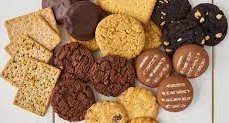
As I put graham crackers under the spotlight today I wonder what comes to your mind first.  For me, it’s two things.  First, I’m taken back to childhood mornings at Sunday school, where the preferred snack was honey graham crackers and pineapple juice.  I can’t think of another time or place where I ever had that combination of foods.  Maybe the sugar overload was a strategy to keep us awake during the Bible stories?  Second, I endlessly debate whether a graham is a cracker or a cookie.  If you’re at all familiar with the ingredients, grahams lean towards “cookie”.  They’re called a cracker, they look like a cracker, but nine out of ten stores stock them in the cookie aisle.

Graham cracker or “graham cookie”?

It’s appropriate my first memory of graham crackers is at church.  They’re named after Sylvester Graham, a nineteenth-century preacher whose constant message was temperance.  In Graham’s time, temperance was a movement against the consumption of alcoholic beverages, but also encouraged what may have been the first vegetarian diet.  Wheat was its cornerstone, and wheat (flour) is the primary ingredient in graham crackers.  To be clear, Sylvester didn’t invent the graham cracker (we’re not sure who did) but his preaching inspired its name.

“Blackstrap” molasses

The sweet ingredient in graham crackers used to be molasses, one of my favorite items in the pantry.  Inevitably, molasses gave way to processed sugar.  But as I discovered recently, honey is a key ingredient in today’s best-tasting grahams.

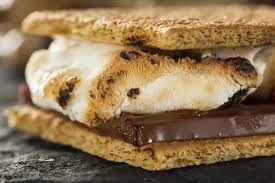
For you, maybe graham crackers taste best in s’mores (which I wrote about in Toasty of the Town), or the crust of a cheesecake, or even Moon Pies for you baby boomers.  But for me, grahams taste best all by themselves.  They play like a “cheat” to the more sugary options out there, and I can pretend I’m just snacking on a “cracker”.

I keep a stash of grahams in my office drawer to satisfy my occasional sweet tooth.  I only need a couple of the 2″x 5″s and I’m back on track.  The other day however, I pulled open the drawer to nothing but crumbs.  Horrors!  Grahams have been my go-to since the beginning of Lent because I’ve given up chocolate and “sweets”.  So I quickly added them to my store list and vowed to shop later in the day.

But as so often has been the case during the pandemic, I immediately paused and thought, “Wait a minute. Why buy graham crackers?  Maybe I can make them from scratch?

Here then, I present what is the best graham cracker recipe I’ve ever tried.  (Okay, it’s the only recipe I’ve ever tried but it doesn’t matter; I don’t need another one.)  Gemma’s Bigger Bolder Baking takes grahams to a way higher rung on the cookie ladder (including a helpful video if you’re baking-challenged like me).  I’ve eaten a million Honey-Maids yet it took me sixty years to realize grahams can be SO… MUCH… BETTER.  Why?  Because these contain a lot more of the good stuff and a lot less of the nasty chemical flavorings and preservatives.

You should expect these homemade grahams to taste better when you see the ingredients.  The ratio of flour to brown sugar is 2:1 (emphasis on the “1”).  Now add another 1/3 cup of honey.  That’s a lot of “sweet” for a cracker, er, cookie that looks like a thin cardboard rectangle.  But I’m talking delicious with a capital “D”.  Think chewy instead of crunchy, with a rich “graham” flavor lingering much longer than store brands.  They’re almost too good to be called a graham.

My grahams

Okay, let’s close the box on graham crackers with a quick review:

  1. They were invented as an alternative to unfavorable indulgences.
  2. They’re a cookie by definition but a cracker by name.
  3. They make you want to try Moon Pies (if you haven’t already).
  4. They satisfy a craving for sweets without being “a sweet” (disregard earlier comment about brown sugar and honey).
  5. They are unquestionably better made from scratch than store-bought.
Yum!

If I haven’t sold you on how much better the humble graham cracker can be, consider this.  They’re simple to make and you already have all of the ingredients you need.  So, what are you waiting for?  Go bake some crackers, Graham!

Some content sourced from Wikipedia, “the free encyclopedia”.

——————–

Lego Grand Piano – Update #10

(Read about how this project got started in Let’s Make Music!)

We worked entirely underneath the piano today, with the instrument flipped onto its back. Bag #10 – of 21 bags of pieces – contained an intimidating pile of tiny parts. I didn’t realize what I was even building until somewhat magically, pedals, legs, and castors appeared before my eyes.  That’s right folks, this baby-baby grand now rolls.

I also took a deep breath and tackled the “loose piece” I’ve mentioned with the last two builds.  Sparing you the heart-stopping details, let’s just admit I installed a tiny piece ninety degrees wrong.  Correcting meant removing all the piano strings and working in a deep, dark corner, with the assistance of an X-Acto knife, eyeglass screwdriver, and pliers.  Like I’ve said before, don’t get any part of this performance wrong.  It’ll cost you later. Dearly.

Elevated!

Running Build Time: 8.1 hours.  Musical accompaniment: Satie’s Gymnopidies 1, 2, and 3 (a deliberate choice to soothe me while I repositioned the loose piece). Leftover pieces: 3

Conductor’s Note: The tiny pedal to the right is called the “damper”. It’s used to sustain the notes you play after you take your hands off the keys.  Remarkably, the Lego Grand Piano has the same mechanical action you’d find with this pedal in a real piano.  Sit down at a keyboard some time, press the right pedal with your foot, and (with the piano lid raised) you’ll see just how many moving parts it takes to sustain notes.  You’ll find those same moving parts in the Lego Grand Piano.

Not-So-Sweet Jesus

If you take a stroll down your supermarket’s greeting card aisle today, you’ll find Valentine’s Day cards long gone and Easter cards in full force. It’s only the start of Lent, yet the aisle is bursting bright with pink bunnies, yellow chicks, and painted eggs. I won’t be sending Easter cards this year (haven’t done so since my kids were little) but I will give up something for Lent. I’m thinking “foods with added sugar”.

I know what you’re thinking.  We live in an age where giving up tempting foods isn’t as difficult as it used to be.  Whole foods are so available we have an entire chain of stores called “Whole Foods”.  Sugar has so many alternatives I should revise my sacrifice to “foods with added sweeteners“.  Even processed foods have matured to where “healthy snacks” are pleasing to the palate.  I have options.

Doesn’t matter.  Dropping added sugar will still be a challenge.  My desk drawer (second one down on the left if you’d like to help yourself) is replete with black and red licorice, and some form of chocolate, be it a bar, a cookie, or those little baking morsels straight out of the bag.  Giving up licorice for forty-six days and nights won’t be a stretch, but NO chocolate for all of March and half of April sounds like an eternity.  What can I say?  Everyone has a weakness and mine is chocolate.  It speaks to me from my closed drawer with “come hither” seductiveness.

Straight out of the bag…YUM!

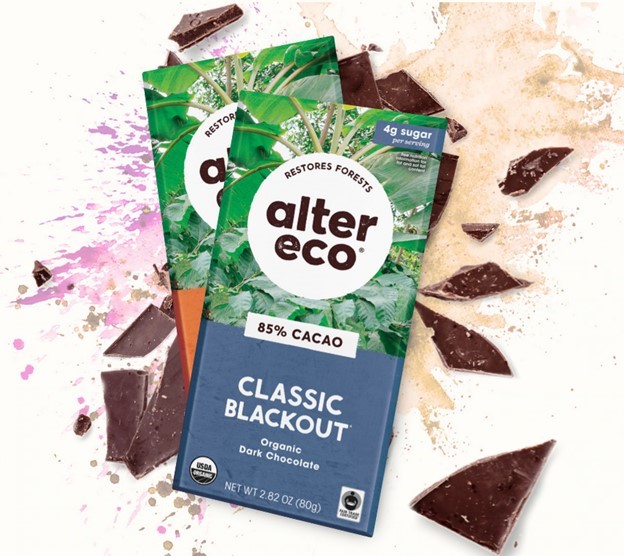
I’ll bet you’ll find thousands of blog posts about chocolate with a quick search.  I’ll bet you’ll find entire blogs about the sweet stuff.  I just checked my blog’s history and unearthed a dozen takes on chocolate (including this one from a year ago talking about the things people give up for Lent.  Chocolate tops the list).  So let’s make it a baker’s dozen because I invented a chocolate challenge.  I call it the “85 Percent Ascent”.

Let me explain.  There was a time when I liked my coffee sweeter than a Starbucks Sugar Cookie Frappuccino.  Together with artificial creamer I’d dump in sugar cubes or pour the white stuff straight from whatever you call those pourable glass containers.  That was a long, long time ago.  At some point (probably, er definitely my college year abroad in Italy) I realized coffee tasted pretty good all by itself.  I started to wonder why you’d “taint” coffee by adding the other stuff.  But let’s be real: it’s not like you go from Frappuccino to Americano cold turkey.  You’ve got to ease into the one extreme from the other.  Slowly I backed down the sugar (like years-slowly).  Slowly I backed down the creamer.  One day I eliminated the sugar altogether.  Today, I still go with a tablespoon of (almond-coconut non-dairy no-sugar) “creamer” but otherwise it’s straight dark-roasted coffee for me. I even fancy an espresso shot every now and then.

It’s a good analogy for my Percent Ascent challenge.  85% cocoa content is seriously dark chocolate (meaning not sweet at all).  If your go-to is a Hershey’s Bar or a Milky Way you’re down below 50%.  And moving from 50% to 85% is a serious ascent with chocolate.  It’s like standing on top of Kilimanjaro and seeing how much further you have to go to summit Everest.

A recent article on chocolate lists nine criteria for the healthiest and best-tasting bars in the world, including:

  1. The first ingredient must be cocoa, cocoa mass, or chocolate liquor (not sugar or milk chocolate).  In other words, put down the Nestle’s Crunch; it’s not even close.
  2. Ingredients must include real cocoa butter instead of (cheaper) vegetable oils.  95% of America’s chocolate manufacturers just dropped out of the race.
  3. The cocoa must come from an “Equator country” like Ivory Coast, Ghana, or Peru.
  4. The bar should be labeled “Organic” and/or “Non-GMO”.
  5. Bonus points: should be fairly traded and ethically harvested.

As if the search isn’t already difficult, NOW you have to go with >85% cocoa content.  Not so hard to find actually, especially if you go online.  I purchased a bar from five different manufacturers meeting every one of the above criteria, including Green & Black’s from the UK, and Theo from Seattle.   All five bars fall between 85% and 90% cocoa content (and yes, 100% is an option).  All five use scary words like “strong”, “super black”, and “extreme” to describe their product.  Not gonna lie; I’m a little nervous to take a bite.

As bitter as these chocolates are sure to be, I still have to give them up for Lent.  Every one of them has “added sugar” (albeit way down on the ingredients list).  So let’s just agree – I’m not going to break my Lenten covenant on a food that doesn’t even taste sweet.  Think I’ll opt for a piece of fruit instead.  I just hope it doesn’t come from the Garden of Eden.

Some content sourced from the “Experience Life” / Life Time article, “How to Find the Healthiest Dark Chocolate”.

——————–

Lego Grand Piano – Update #7

(Read about how this project got started in Let’s Make Music!)

Last week

I worked outside of the box again this week. Bag #7 – of 21 bags of pieces – assembled a second layer on top of the section I can’t yet attach to the bigger section behind it.  From “Last week” to “This week”, you can see I worked almost entirely in black, which suggests I’m creating more of the outside of the piano.

Despite the majestic wash of Debussy’s “La Mer”, Bag #7 was completed in less than thirty minutes, with only one heart-pounding moment where I thought I’d left out pieces in the Bag #6 build.  Thank goodness I was wrong. Still on track.

This week

Running Build Time: 6.0 hours.  Musical accompaniment: Debussy’s La Mer and Prélude à l’aprés-midi d’un Faune (try and say that ten times fast). Leftover pieces: One (clearly an extra, whew!)

Conductor’s Note: Today’s build wasn’t very exciting, so it helped to have Debussy booming in the background.  However, as I turned the page of Mr. Instruction Manual in anticipation of Bag #8, I saw pictures of… long, thin, reed-like pieces.  Holy buckets, Maestro, it’s time to make this piano a stringed instrument!

Fa-La-La Land Down Under

I have two nieces who, along with their families, call islands their homes. One lives on Hawaii’s Oahu, her house perched on the cliffs above Honolulu with sweeping ocean views to the west. The other lives in Brisbane, on the east coast of Australia. Sure, Australia isn’t really an island, though it is surrounded by water. By definition its landmass makes it a continent instead. But Australia does lay claim to a few islands off its shores.  Including one named “Christmas”.

Christmas Island’s picture-perfect “Flying Fish Cove”

Imagine living in a world so small you can walk from one end to the other in less than two hours.  Your fellow islanders are so few, your entire social life is like living in a college dorm.  Your diet consists of fruits, nuts, and crab.  Lots and lots of crab.  And the single contribution you and your island-mates make to the outside world is phosphorous from your underground mines.  That, in a crab shell, is life on Christmas Island.

The first time someone told me there was a “Christmas Island”, I was young enough to be watching Rudolph the Red-Nosed Reindeer every December on TV.  My favorite part of Rudolph’s story was the “Island of Misfit Toys”.  You remember, don’t you?  Rudolph was the reindeer-a non grata, mocked by the others because of his shiny nose.  Along with a couple other outcasts (Hermie, Santa’s elf who’d rather be a dentist, and Yukon Cornelius, the prospector who can never find silver or gold), Rudolph discovers the Island of Misfit Toys.  The island is a repository for unwanted toys.  As sad as that sounds, Rudolph’s island brings Christmas to mind much more than the little landmass I’m talking about today.

Palm trees (not pines) on Christmas Island

If you wonder why you’d ever visit Christmas Island, consider almost 65% of the island is a national park of unspoiled rainforest, with walking paths past 25 species of trees and 135 species of plants.  The only animals you’ll spy in the forest include the “flying fox” fruit bat, the recently introduced Javan deer, and the golden bosun (the island’s “official” bird).  Outside of the forest however, it’s impossible to miss the crabs.  Coconut crabs.  Red crabs.  Thirteen different species of land crabs, let alone those who prefer the ocean.  And here’s the best part.  Every year, one hundred million of them migrate from solid ground to water (to spawn), a sight mind-blowing enough to be called “one of the wonders of the natural world”.

Watch the following short video on the chaotic Christmas Island crab migration.  Makes you wonder how you can walk anywhere without getting “crabs”.  If this is something you simply must see in person, find your way to Perth on Australia’s western mainland, and book one of two weekly flights to Christmas Island courtesy of Virgin Airlines.  Your 3+ hours in the air will take you over nothing but the vast Indian Ocean.

It’s high time we addressed the most burning question about our little fa-la-la land down under.  Why is it named Christmas Island?  Here are popular theories.  One, “The rainforest is made up of nothing but evergreen (Christmas) trees.”  Two (for the geographically challenged), “The island is the closest landmass to the North Pole.”  And three “Christmas Island was the origin of the species diospyros virginiana, more commonly known as the sugar plum tree.”  The correct answer?  None of the above.  In the 1600s, European explorer Richard Rowe first set foot on the island, doing so on December 25th.  With no more creativity than a glance at the calendar, his discovery was dubbed Christmas Island.

Norfolk Island pine

I’ve got a much better “Christmas Island” for you.  Flip over to just off the east coast of Australia and you’ll find an even tinier landmass called Norfolk Island.  It’s about a quarter the size of Christmas, with the same number of inhabitants.  But Norfolk Island’s primary export is much more “Christmas” than phosphorous.  It is the evergreen Norfolk Island pine, a popular ornamental tree in Australia.  My wife and I found one at Home Depot a few years ago and bought it for her mother.  For small spaces, Norfolk Island pines make great Christmas trees.

“Christmas” looks a little like an Aussie Shepherd!

In defense of Christmas Island, there’s more going on within its shores than phosphorous and crabs.  Most of the residents live in the northern area of the island surrounding a coastal region known as Flying Fish Cove.  They speak one or more of five different languages.  There’s a high school and a public library.  There’s even a cricket club, which just celebrated sixty years in the game.  And most fitting to this time of year, twenty percent of the population call themselves Christians.  In other words, despite the uninspiring reason for its name, Christmas really does come to Christmas Island.

Some content sourced from Wikipedia, “the free encyclopedia”.