Connection Protection

The college my wife attended many years ago was a small Midwestern campus, maybe twenty buildings in all. Because of the extreme winter temps, the college had the foresight to install tunnels between the primary buildings, allowing for warm, comfortable walks from say, the dorms to the central dining hall. It’s the same concept my wife and I discovered in Nuremberg, Germany last month, only this tunnel complex was on a much larger scale.  And getting from Point A to Point B wasn’t its only intent.

Nuremberg, Germany

You’ll find Nuremberg in the center of Bavaria, the forested southwest region of Germany.  The city served as the final destination on our recent Viking River Cruise on the Danube.  Like Salzburg, Austria a few days before, Nuremberg is known for its “Old City” area (now surrounded by modern-day sprawl).  Once inside those towering protective walls, it’s like you’ve stepped back into the Middle Ages.  If there’s a more preserved city of the period, with its moats, castles, towers, and bridges, I’m not aware of it.

A walking tour of Nuremberg is impressive enough with the history, architecture, and stories, but what trumps everything about it is what lies beneath the city.  My wife and I signed up for an excursion called “Flavors of Nuremberg”, expecting to enjoy a culinary sampling of regional delights.  Indeed we did.  Our first stop was for a plate of Nuremberg’s famous white sausages (with a tall beer to wash them down). This could have been lunch alone, but we pressed on for more.

Our next stop was for Lebkuchen, or gingerbread.  It’s even more famous than the white sausages.  Here are two things to know about Nuremberg gingerbread.  One, it contains no ginger.  Two, it’s not nearly as sweet as its American counterpart (typical).  Okay, let’s add a Three: Lebkuchen is absolutely delicious.  We packed a pile of gingerbread cookies into our suitcases to give to family members (but most of them ended up in our own pantry).

Our final stop – of course -was at a Nuremberg brewery for several glasses of local beer.  But what I wasn’t prepared for was how we would get to our beer  Instead of just walking through the front door of Hausbrauerei Altstadthof, our guide took us to the top of a stone staircase, set right into the middle of a nondescript Nuremberg street.  The stair was surrounded by modest iron rails but otherwise would’ve been something you’d walk by without pause.  Our guide explained how the original brewery was located on this spot centuries ago, marked by a plaque in the street.

What followed might have been my favorite moment of the tour.  Our guide excused himself to “go get the key”, so he could unlock the imposing door at the bottom of the stairs.  The key was held by some nearby merchant and our guide had the credentials to borrow it.  I find that charming, versus typing on a computer keypad or gaining the approval of a German guard.  You just open the door with an old brass key.

Our guide returned, beckoned us down the stairs, opened the door, and away we went.  Or should I say, down we went.  Even after passing through the door fifteen feet below street level, we continued down what must’ve been the equivalent of three more floors of stairs.  Our guide stayed behind to lock the door behind us, so we kind of descended on our own.  The walls closed in and it got darker as we went.  Suddenly beer was the last thing on my mind.

Which way do we go, Mr. Guide sir?

What followed was the equivalent of rats in a maze.  Seriously, if I planned to gulp fresh air or glimpse daylight ever again, I was entirely dependent on the movements of our tour guide over the next forty-five minutes.  He’d turn here or turn there, beckon us down one tunnel or push us through another, and he stopped several times to click on or click off the bare bulbs weakly lighting our way.  We passed through several intersections where we could’ve spun off in half a dozen directions, to be hopelessly lost under the city forever.  We saw what looked like dungeons and prison cells.  Suddenly I really wanted a beer.  Above ground.

Dungeon, or just storage?

Our guide stopped us would-be-spelunkers at several junctures to explain the fascinating history of Nuremberg’s miles-long network of hand-dug tunnels, originally used in the making of beer, then used as the city’s prison, and finally, remarkably, used to hide the thousands of residents the Nazis sought during WWII.  It’s an amazing history I can’t begin to do justice in this post, but you can read more about it here.  Suffice it to say, us tourists had a taste of what it’d be like to live in suddenly protective, seemingly endless tunnels for months on end.  Not for the faint of heart.

Watch your step!

At long last, we carefully ascended another long, irregular staircase, and our guide unlocked the final door at the top, where we burst into the sunshine and fresh air of Hausbrauerei Altstadthof‘s colorful outdoor biergarten.  It was a surreal moment, being thrust back into modern-day civilization from the medieval tunnels below.  The several beers that followed not only quenched my thirst but also calmed my nerves.  This “flavors” city tour was unquestionably the most adventurous excursion of the entire river cruise.

Relief in a glass

There was a time, when we lived in Colorado, where my wife and I considered connecting our house to our nearby barn.  We thought, why not string together a series of shipping containers below ground, to act as a tunnel to keep us warm during the frigid winter months?  After our subterranean tour of Nuremberg, I wondered what we were thinking.  Better to just hoof it through the snow than to get lost in the grounds of Colorado forever.

Goulash by the Gallon

My mother used to make Beef Stroganoff when I was a kid; an easy one-pot concoction to satisfy a hungry family of seven. Mom’s recipe was a far cry from the elegant Russian original of beef strips in a sauce of sour cream and mustard. Hers started with Campbell’s Cream of Mushroom soup, added in whatever leftover beef and spices were found in the kitchen, and finished with soft egg noodles, all mixed together. It wasn’t my favorite dish, but as I recently discovered it’s a whole lot more satisfying than Hungarian Goulash.

This isn’t “Beef Stroganoff”, Dave

A month ago I didn’t know the first thing about Hungarian Goulash.  Now I know way too much about it.  That’s what happens when you visit Budapest.  Everything is about goulash.  And paprika.  Even goulash itself is about paprika.  But I’m getting ahead of myself here (kind of like I did with the last few blog posts, which were further down the Danube).

Before our plane landed in Hungary for the start of our Viking river cruise, I imagined goulash as a more traditional version of Mom’s Beef Stroganoff.  I expected a hearty casserole of meat, vegetables, and noodles, drenched in a rich, creamy sauce.  As it turns out, goulash isn’t even a poor man’s version of Stroganoff.  No “spoiler alert” here because you’re not missing much.  Goulash is plain ol’ broth-based soup.

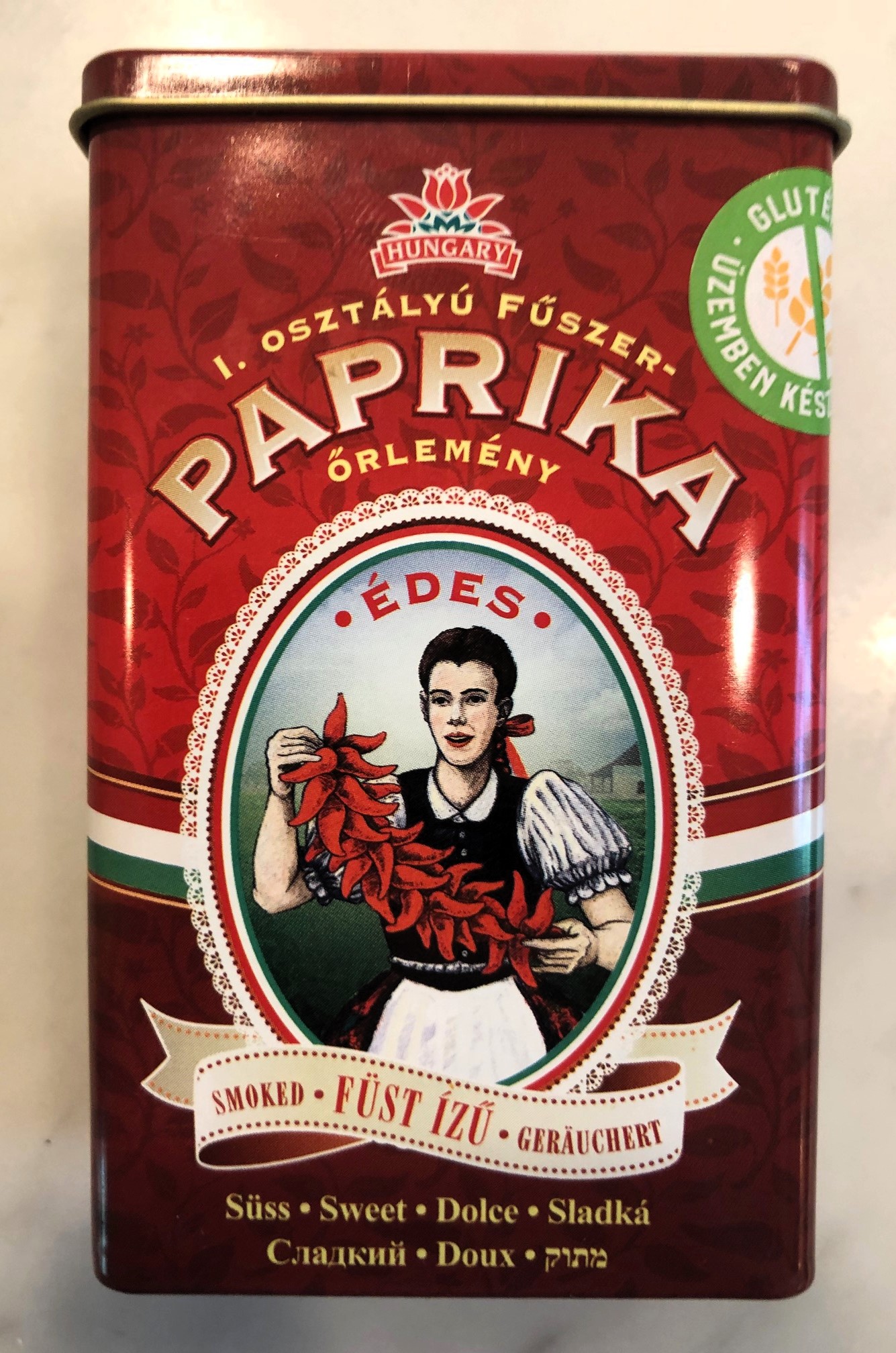
Check out the list of ingredients here.  Besides the ground caraway (ground “carraway”?), the only item standing out to me is the paprika, and only because paprika is synonymous with Hungary.  You find the peppery spice everywhere (and in everything) over there, in grades of sweet, mild, pungent, and strong.  Choose wisely; a small spoonful of the “strong” knocks your socks off even if you like it hot.

On a guided walking tour of Budapest (which included an hour inside the exquisite Parliament Building), we stopped for lunch in a basement restaurant for our first sampling of goulash.  The soup was served family-style with bread so we all ladled a helping.  In short, Hungarian Goulash didn’t “have me at hello”.  I was underwhelmed from the get-go.  I looked around the table at our fellow travelers and noticed the same reaction.  We struggled to come up with something distinctive or even complimentary about our meal.

Pálinka shots

Later on, we ventured into the countryside for a “Hungarian Folklore Dinner”.  As soon as we stepped off the bus, the place practically screamed “tourist trap”.  They greet you at the door with a shot or two of pálinka (fruit brandy), no doubt to dull the senses for what lies ahead the rest of the night.  Then they seat you at long picnic tables with people who look like, well, travelers from all of the other Danube river boats.  The gypsy folk dancing was impressive – I’ll grant them that – but the cauldron of goulash set unceremoniously in the center of the table was no more tasty than the helping we had at lunch.

Our goulash guide

The next day, we took another trip into the countryside for a walk through the several acres of an “open-air museum”, an interesting collection of buildings and settings from Hungary’s storied history.  The tour included lunch (hold tight, I know what you’re thinking), but even before lunch we stopped at an outside kitchen for a “special treat” – a demonstration on how to make goulash! (You’ll see I earned a diploma for my efforts.)  Then we were hustled into a nearby dining room for our third helping of goulash in twenty-four hours.  Part of the restaurant was already set up for a wedding reception later that afternoon.  Wonder what they were having for dinner…

Lest you dismiss Budapest over the goulash that seems to be oozing out of the city walls, let me set the menu, er, record straight.  It’s a beautiful city, whether you choose to tour the Buda or the Pest side of the Danube River.  The buildings are illuminated at night, the same way you’ll see Paris during the Summer Olympics in two weeks.  And Hungary’s history is adventurous and remarkable, with many more chapters than you’ll find in America’s.  But sorry comrades; the goulash (and the paprika) can only be described as superfluous.

One of the highlights of a Viking river cruise is the nightly dinner menu.  In addition to standing entrees, Viking chefs design “sampling menus” made up of the food of whatever city or region you happen to be passing through.  In Vienna it was the veal cutlet wienerschnitzel.  In Nuremberg it was the famous white sausage Weisswurst (correction: it would’ve been Weisswurst had our ship actually made it to Nuremberg).  And in Budapest it could’ve been Chicken Paprikash.  Instead, it was Hungarian Goulash… again.  Make that four helpings in two days.  I should’ve misbehaved so our captain could’ve sent me to my room without supper.

Some content sourced from Wikipedia, “the free encyclopedia”.

Intangible Cultural Coffee

I like stories to demonstrate the American Dream is alive and well.  Ten years ago a New York City husband and wife scraped together their savings (borrowing even more from friends) to open a coffee shop called Maman.  The couple put in eighty-hour weeks, passed up vacations, and kept paychecks to a minimum to give their little cafe a fighting chance.  A decade later, Maman is doing pretty well, with 34 locations and annual revenues of fifty million dollars.

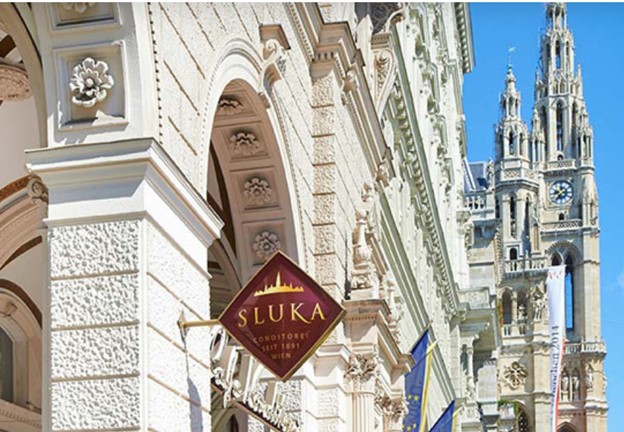
In Vienna, Austria, just a short walk from the magnificent cathedral of St. Stephen, you’ll find another coffee shop called Conditorei Sluka (or “Sluka” for short).  It’s the only location and its revenues are nowhere near $50 mil.  But Sluka doesn’t care about making a fortune.  They’re focused on delivering the quintessential Viennese Coffee House experience instead, which my wife and I were lucky enough to sample on our recent Danube River cruise.

With all due respect to the American Dream, sitting down to coffee at Maman will never come as close as a whisper to a cup at Sluka, no matter the amount of money invested or the number of locations opened.  Consider, Vienna opened its first coffee house in 1685, almost three hundred years before Starbucks landed in Seattle.  How can you possibly replicate that kind of history in a modern-day franchise?

Our “back room” seating at Sluka

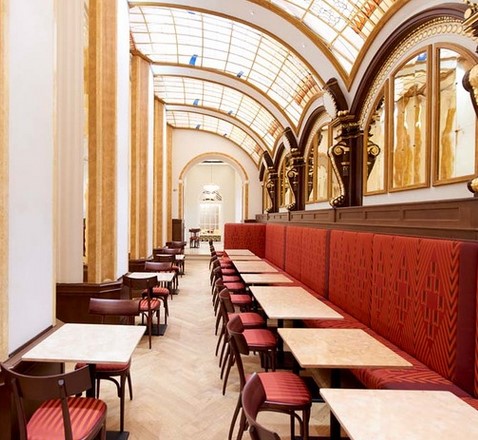
What makes the Viennese Coffee House experience incomparable?  For starters, the best of the Houses are still in their original locations in the city, which means surrounds of grand eighteenth-century architecture: high sky-lit ceilings, soaring columns and arches, elegant mirrored panels on the walls, and softly lit rooms.  The marble-topped tables are furnished with upholstered couches and dark wooden chairs of the period.  And the classical music you’ll hear – never too loud to be distracting – is often live from a nearby piano.

You could remove all of this “window dressing”, and coffee in Vienna still might be unmatched.  My wife and I went to Sluka on our tour guide’s recommendation, after several hours of sightseeing on foot.  We were just looking for a snack and a few moments of rest.  On our guide’s suggestion, we sat down at a table way in the back, in a cozy nook of a room that felt miles from the streets outside.

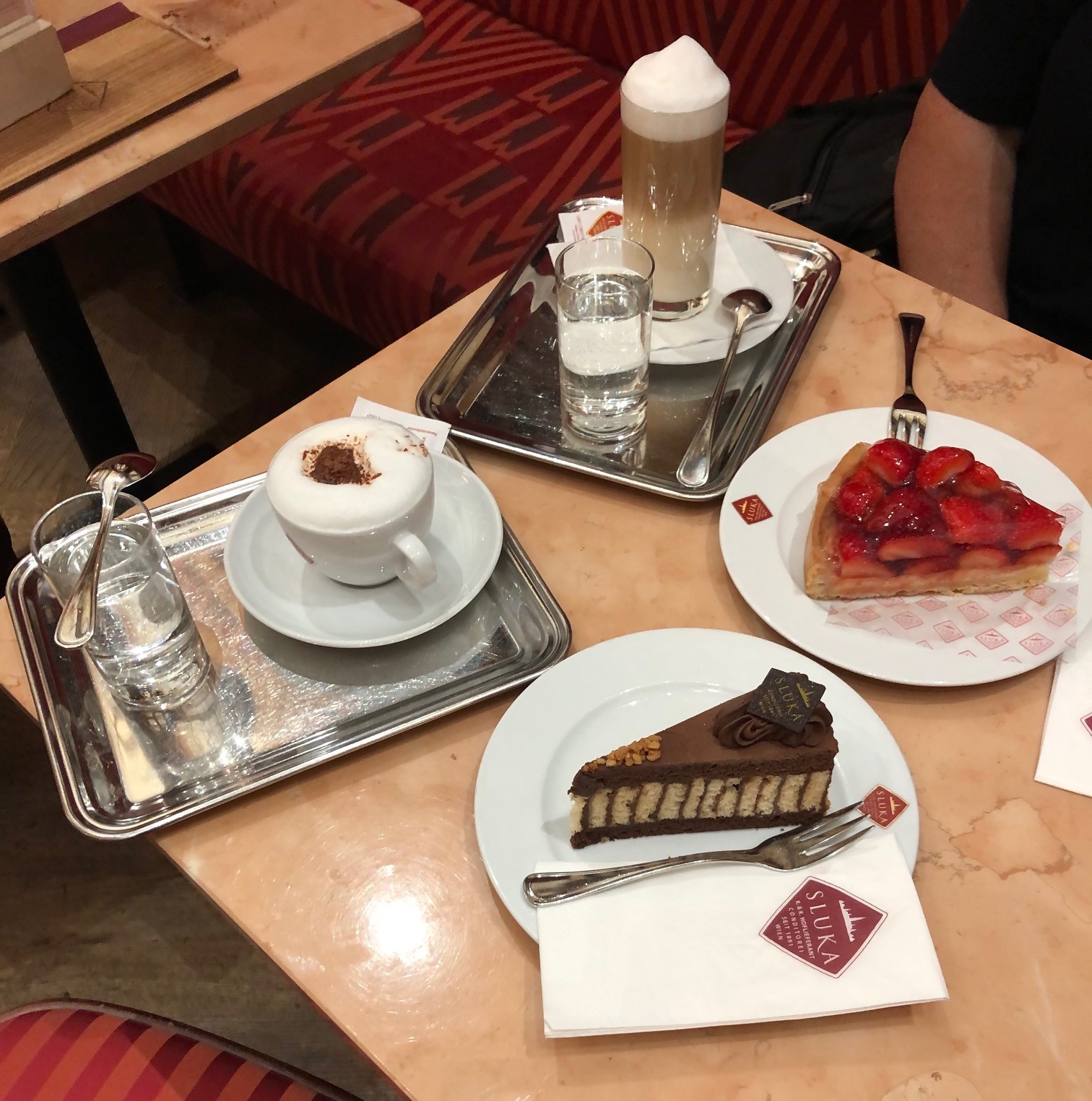
Our selections

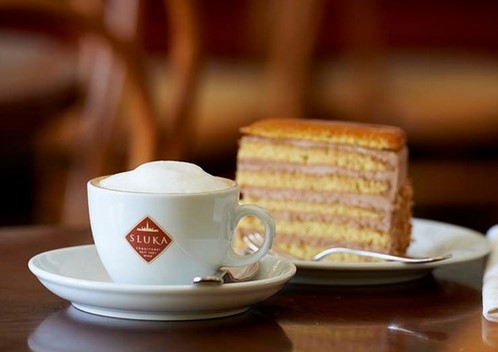
A smartly-dressed waiter took our coffee order from the several pages of the menu, then guided us to the nearby pastry case so we could point to our choices; Apfelstrudel, Linzer torte, or dozens of other cakes and tarts looking as if they’d been made just moments before in the nearby kitchen.  A short while later our order arrived; the coffee in china cups, the pastries on matching plates, all dolled up with tall glasses of water, logo napkins, and individual silver trays.  It was the most elegant presentation of coffee we’d ever been served.

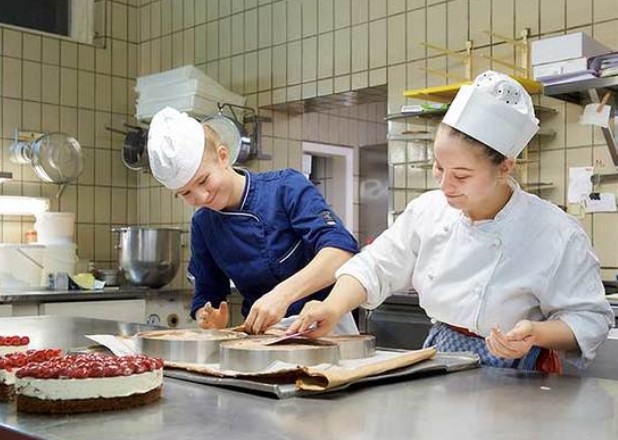
The kitchen at Sluka, steps from our table

At our waiter’s insistence, we relaxed at our table after paying the bill so we could wait out a passing thunderstorm.  We watched nearby patrons enjoying their conversations or reading one of the many newspapers the coffee house makes available.  We listened to the music.  Instead of pulling out our phones we simply breathed in the atmosphere of this most satisfying respite.  In a nutshell, this is the Viennese Coffee House experience, as it has been for hundreds of years.  Stop in and take a seat.  Enjoy exquisite coffee and pastries.  Socialize or read.  And forget about the world beyond the windows for a little while.  It’ll be there whenever you’re ready to go back.

The Viennese Coffee House experience is so distinctive it earns a place – per the United Nations – on a listing of Elements of Intangible Cultural Heritage.  For other examples, think Swiss watches, French perfumes, or German church organs.  We’re talking about physical representations here; those which you might naturally associate with a country or people.  America likes its coffee (and food) fast and to-go, while Austria prefers it slow and sit-down.  I’m not claiming one approach is necessarily better than the other.  I’ll just say instead; I can’t wait to go back to Vienna someday.

Some content sourced from the CNBC Make It article, “Couple spent ‘all of our money’ to open a New York cafe…”, the Conditorei Sluka website, and Wikipedia, “the free encyclopedia”.

Monk Fruit

Let’s talk about apricots. If you read my last post, apricots are the last topic you’d expect in a series about a Viking River Cruise.  But fate played a hand when our ship only got a taste of the Danube River (while others were literally underwater), so I suppose we needed to satisfy our appetites on something else instead.  Like apricots.

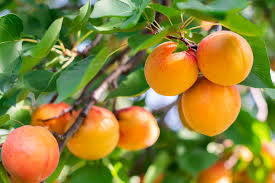
Apricots are petite and peach-like

I don’t associate apricots with Austria at all (how about all the “a” words in that sentence there, huh?)  Austria is more about snowy Alps, Mozart, and the hills coming alive in The Sound of Music.  So it was something of a surprise to find myself on a hot, sunny day, standing in an apricot orchard in Krems, Austria. Almost floating above this little riverside town, you’ll find the fruit trees on the property of a Benedictine monastery known as Göttweig Abbey.

Göttweig Abbey, near Krems, Austria

Göttweig is an impressive complex of buildings, and even more impressive for its lengthy history.  The Abbey was built in the 1100s, rebuilt larger after devastating fires in the 1500s and 1700s, and survived relatively intact after the Nazi occupation of WWII.  Its library contains 150,000 books and papers, and its main structure houses the largest Baroque staircase in Austria.  But who cares about all that, I hear you saying.  Tell me about the apricots, Dave!

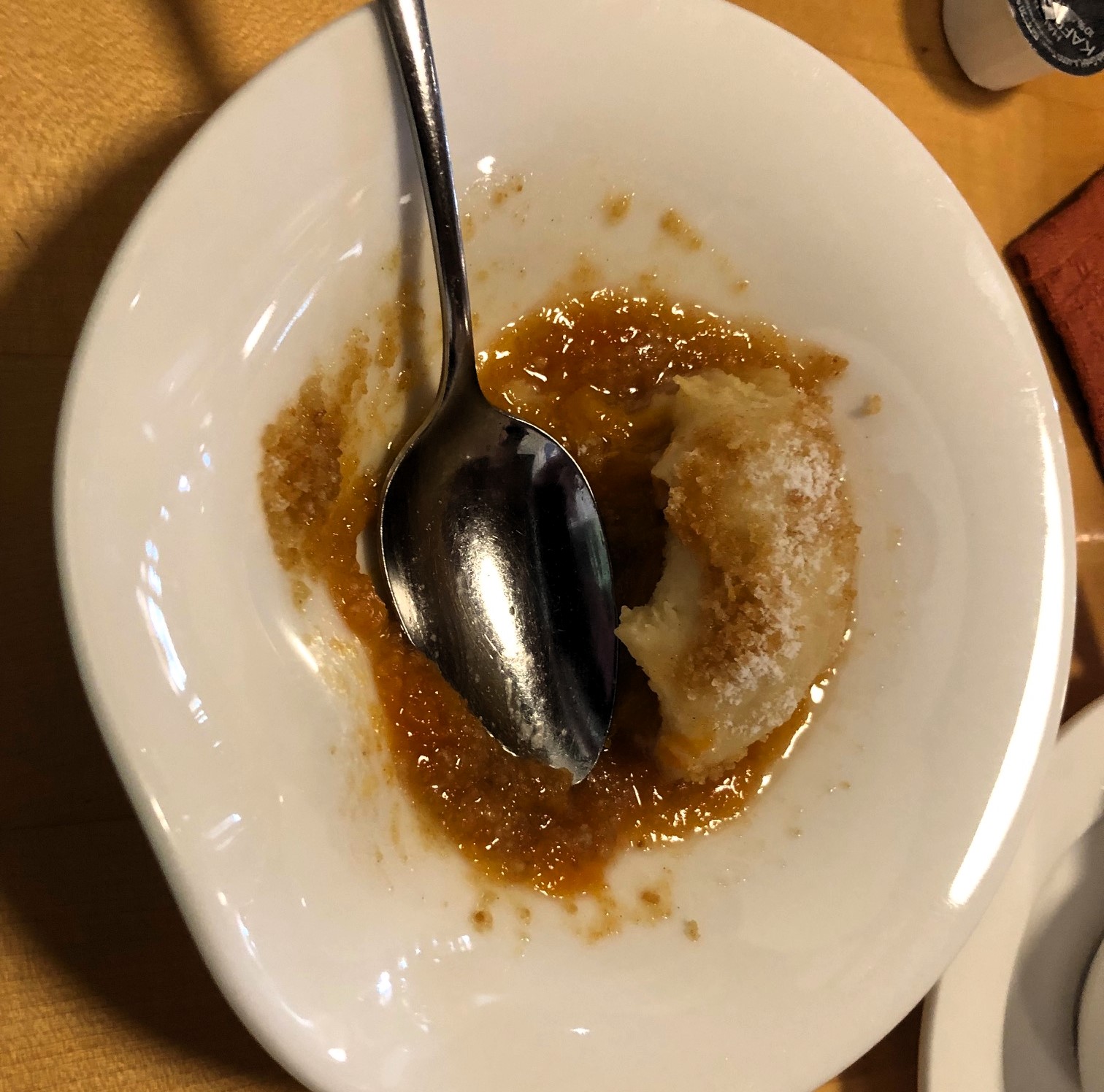
The last of my apricot dumpling

Let it be said; Göttweig brought apricots back to life for me.  The Abbey tour starts in its apricot orchard, where we saw the trees up close, on the verge of harvest time.  The tour ended with a short class on making apricot dumplings (unquestionably as scrumptious as they sound: a whole pitted apricot wrapped in puff pastry, topped with vanilla-apricot sauce, served hot).  And the gift shop… oh my, the gift shop.  Shelf after shelf of everything apricots, from syrups to jams to cookies to candy.  Even better, you’ll find a tasting bar for several varieties of Göttweig apricot wine and brandy (also available for purchase, of course).

The Abbey’s apricot orchard

When the tour took us to a little theater for a short film on Göttweig’s history, one of the monks (at least, I think he was a monk) served us apricot juice in tall glasses as a refreshment.  It was the proverbial nectar of the gods… and I time-traveled to my childhood instantly.  My mother served apricot juice at breakfast occasionally, and I remember never really caring for its sweet/tart taste.  Guess I’ve grown up since then.  This juice was so delicious my wife and I are already in hot pursuit for a bottle here in the States.  Not something you’ll find in your ordinary grocery store.

[Blogger’s note: Don’t take “Göttweig” for a spin on Google Translate.  Our tour guide said they’ve never known the meaning of the word.  Google Translate doesn’t either (but its guess is a little ironic).]

The Abbey’s main entrance

Here’s a strange word you should associate with apricots: drupe.  It’s another word for stone fruit; as in, fruit where the flesh surrounds the pit.  So apricots are drupes, as are cherries, peaches, nectarines, and plums.  Even dates join this pit-y party.

Here’s another word you should associate with apricots: orchard.  There’s nothing more frustrating with the English language than two words with essentially the same definition.  So it is with orchard and grove.  Technically there’s a difference.  If your apricot trees are planted in neat rows with the intent of commercial production, you have an orchard.  If you’re walking through the forest and come across a natural stand of apricot trees, you’re in a grove.  But c’mon, if all that is true then why do we say “apple orchard” but “orange grove”?  Sigh…

Not quite ready for harvest

I wouldn’t care if I had an orchard or a grove as long as I had apricot trees.  I’m not really a peach or plum fan, but man I love the taste of apricots.  As a kid I also loved them dried, because they were so sweet they might as well have been candy.  But the adult version of me chooses the fresh fruit instead.  And now the juice.

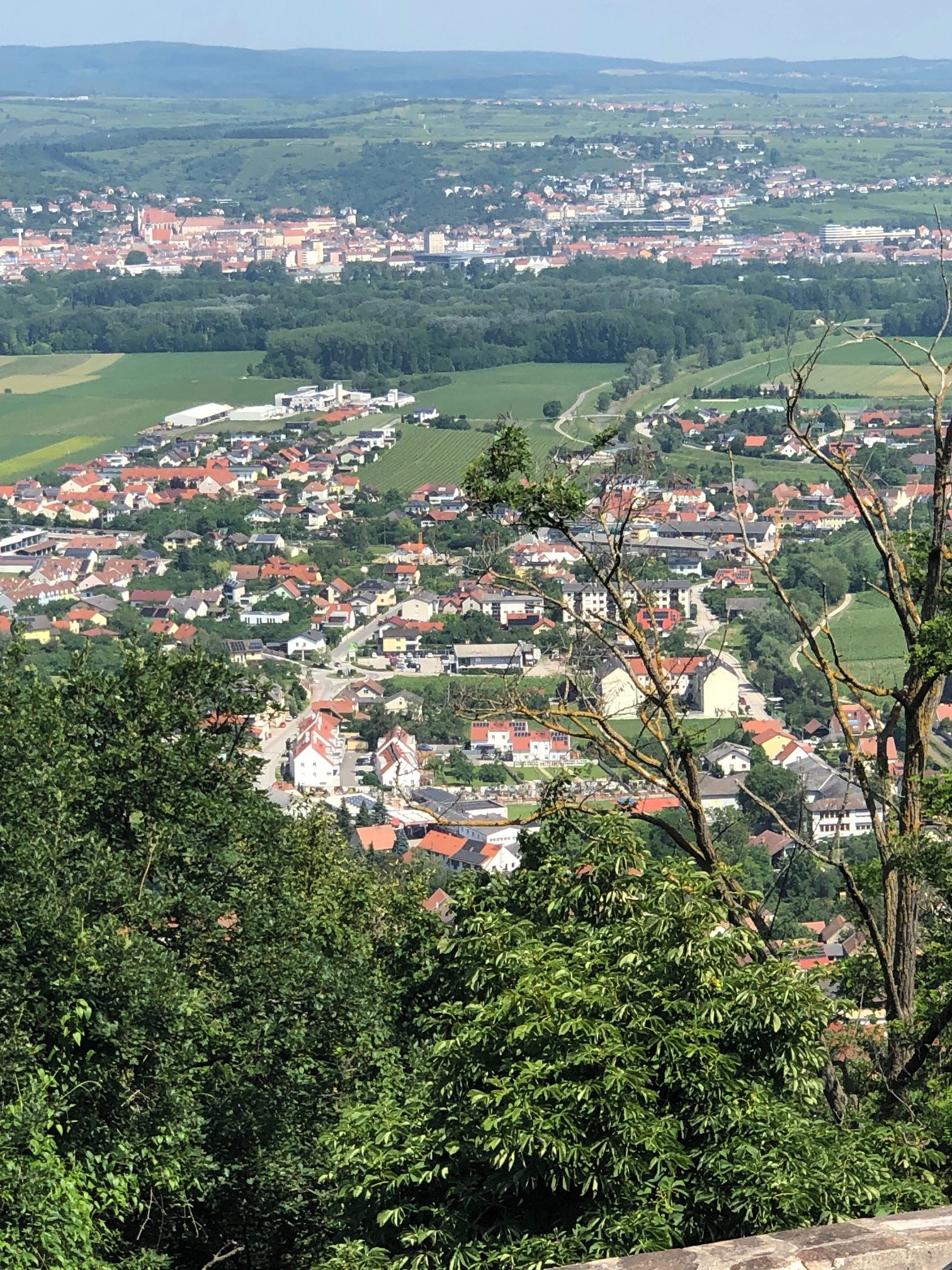
The views from the Abbey are spectacular

Some of you more adventurous (and/or Christian) souls may be interested to know Göttweig Abbey lies on one of the routes of the Camino de Santiago, the soul-searching network of the Way of St. James.  A tall glass of apricot juice would be most refreshing along the 1,100-mile pilgrimage to the coast of Spain.  Of course, you don’t need to walk that far for the taste of apricots.  Just mosey down to your local grocery store, because they’re in season now.  Maybe you too will discover newfound appreciation for “monk fruit”.

Some content sourced from Wikipedia, “the free encyclopedia”.

Go(ing) With the Flow

In the camping days of my youth, I’d get a kick out of dropping little sticks into the water and watching them float lazily downstream.  I’d imagine them as little boats, navigating uncharted waters on their way to some exotic destination.  I’d see how far those sticks could go, sometimes removing obstructions to create clear channels.  Perhaps it’s no surprise then, all these years later, I’m drawn to the adventure of Viking River Cruises.

Maybe you’ve seen their commercials.  Viking River Cruises advertise by showing you one of their elegant white ships cruising slowly down a pristine river, with dramatic terrain sloping up and away from the shorelines.  Viking “longships” are low, flat, and narrow; a  wholly refined version of my stick in the stream.  Take your pick: the Nile in Egypt, the Rhine in Germany, or the Mississippi in America, to name a few.  Viking has you covered when it comes to cruising the world’s rivers.

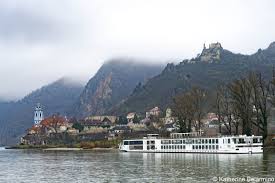
My wife and I just completed our second Viking cruise (well, “completed” doesn’t really cut it but I’ll get to that in a moment).  Our first, in 2019, down the Rhine River from the Netherlands through Germany to Switzerland, was so satisfying we were ready to sign up for another as soon as we were done.  Then the world went a little off the rails so we had to wait until the waters calmed again, so to speak.  A week ago then, we returned from Viking’s Danube River cruise; Hungary through Austria to Germany.

There are at least two reasons why Viking River Cruises don’t appeal to those who seek a vacation on the water.  First, you’ll find little more to do on the ship besides eat and sleep.  Yes, you’ll find live music in the lounge and an occasional cooking demonstration by the head chef, but for the most part a Viking ship is a floating hotel.  Second, the daily excursions off the boat are fast-paced guided looks at whatever is worth seeing, with only a little free time at the end for shopping and such.  Best to bring a comfortable pair of walking shoes to keep up.

Those same reasons are why Viking cruises do appeal to us.  We’ve been on one of those floating-city ocean cruises before (Carnivalick), and everything from the buffet to the entertainment felt cheap and mass-produced.  A Viking river ship caters to only two hundred passengers, in rooms as nice as most anywhere we’ve stayed on shore.  As for the excursions, the tour guides are carefully chosen for their knowledge and personalities, adding so much more to the tour than if you were to go it alone.  Yes, you’re only getting a “taste” of each locale, but this means you see a lot in eight days of cruising, leaving you to choose if and where you might come back to for more in-depth looks.

Eight days is plenty of time to be on the river (at least in our book) but Viking offers several options twice as long, including a fifteen-day Grand European Tour covering the Rhine and the Danube.  You can also add “land-based” days to either end of a cruise, exploring the cities from where you embark and disembark.  Finally, Viking tailors its menus (and I do mean menus, not buffets) to the cuisine of the region you travel through.  From our experience, the food is excellent.

Passau, Germany (one of our destinations)

If this sounds like a ringing endorsement for a Viking River Cruise, let me silence that bell for just a moment.  Perhaps the only thing Viking can’t control is the water itself.  Unbeknownst to most Americans, the Danube River flooded its banks earlier this month, forcing the powers that be (and who exactly are those powers?) to “close” the river.  Residents in destinations downriver found themselves wading through four feet of water.  River ships couldn’t fit under low-flying bridges, let alone dock at the shores.  As a result, our cruise came to a premature halt in Vienna, Austria, with the remaining itinerary carried out with busses and hotels.

I’ll take the next several posts to dive deeper into our “Romantic Danube” Viking cruise.  We missed out on the time we expected on the river, but the destinations were no less impressive.  Budapest is a heck of an interesting city.  Gottweig Abbey (outside the Austrian town of Krems) is keeping apricots relevant.  So stick with me the next few weeks and you’ll find out more about what the Danube has to offer.  After all, river cruising is a whole lot more adventurous than floating a stick down a stream.

Berry Expensive

When it comes to fruit, berries top the list of my favorites.  I’ve always been a fan of grapes, apples, and pears – probably because I ate a lot of them when I was a kid – but over the years I’ve come to appreciate berries as much for their taste as for their healthy benefits.  Now don’t ask me to choose a favorite berry because I’d struggle between strawberries, blueberries, and raspberries.  And where-oh-where would I rank pineapples?

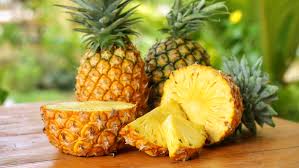
That’s no berry blunder I just made there.  Pineapples – go figure – are a berry.  I meant to start this post from a wholly different angle but I couldn’t get past this juicy tidbit of trivia.  As a pineapple plant grows, the individual flowers fuse together to create a cluster of “berries”, which go through an extraordinary evolution to end up as the cohesive pineapple you and I know and love.  Grow one in your garden sometime and watch it happen.  For the most part, all you have to do is slice off the top of the fruit and plant it.

I could’ve guessed pineapples fall among nature’s sweetest fruits.  In fact, on a list of the top ten the pineapple rates second-sweetest of them all (only mangoes contain a higher concentration of fructose).  For perspective, grapes, cherries, and strawberries are further down the list and each of those are plenty sweet.  We might as well be talking about candy here instead of pineapple.

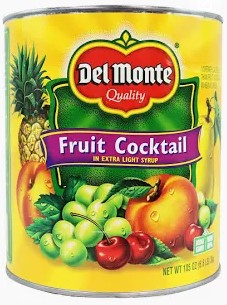
I do love pineapple, and I’m guessing part of the appeal is the nostalgia of childhood eats.  My mother liked to serve pineapple chunks on top of cottage cheese as a side salad.  She occasionally broke out a can of Del Monte “Fruit Cocktail”, a concoction of pineapple and other fruit pieces submerged in a sickly-sweet syrup.  My mother also baked whole hams with pineapple rings dotting the surface.  I won’t claim baked pineapple tastes as good as a fresh slice, but the slightly-burnt taste comes to memory like it was yesterday.

There was a pineapple upside-down cake or two in my childhood but I was never really a fan.  Fruit belongs in pies if you ask me (hence my dislike of Easter hot cross buns and Christmas fruitcake).  Admittedly, he or she was a clever soul who realized fruit could be nestled into the top of a cake if placed at the bottom of the pan first (followed by the cake batter, followed by a flip of the pan after baking).  And who knew: prunes, not pineapples, were the first fruit to grace upside down cakes.

My favorite pineapple story comes from our honeymoon.  Through a travel agent we booked several days at an all-inclusive resort in Hawaii.  The first morning we ordered fresh pineapple from room service.  It was so delicious we ordered more every morning thereafter, enjoyed on our private balcony as we gazed out to the Pacific.  But at check-out, my jaw dropped when I saw every one of those (overpriced) breakfasts on my bill.  I promptly asked the hotel manager to look into it and he goes, “Oh, that all-inclusive package your travel agent booked was discontinued years ago.  You have to pay for the breakfasts now.  Might want to take her back an updated brochure”.  Whoops.

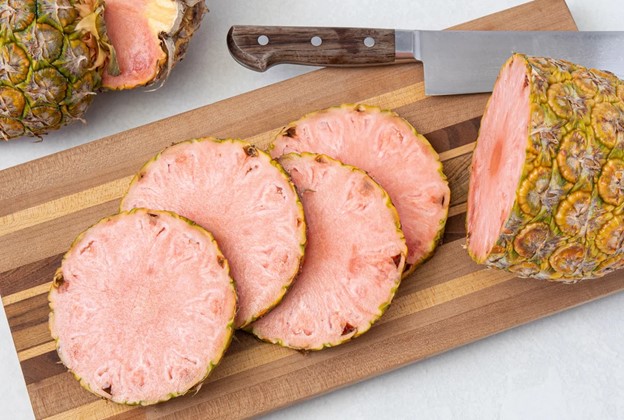
Del Monte’s “Rubyglow” pineapple

Speaking of pricey pineapple, a new spin on the tropical fruit will set you back almost $400.  Say that again, Dave.  Okay, you’ll pay $400 for a pineapple if you really want to.  One of Del Monte’s unique “Rubyglow” pineapples costs that much (and yes, I did say one).  Those who have already indulged say the only difference is the lack of bitter aftertaste you get with a regular pineapple.  Otherwise, you’re paying more for the distinctive look (and the fancy box) than you are for the fruit inside.  My first thought when I saw the photo: the Rubyglow looks like pineapple and ham all in one food.

At the start of this post I was stuck on “berry”.  Now I’m stuck on “berry expensive”.  $400 for a piece of fruit is bonkers.  I’ll never pay it.  For my hard-earned dollars I’ll take forty overpriced piña coladas instead.

Some content sourced from the Medium.com article, “Top 10 Sweetest Fruits”, the CNN Business article, “$400 for one pineapple: The rise of luxury fruit”, and
Wikipedia, “the free encyclopedia”.
Going for a Spin, Spin, Spin

My wife and I enjoy popcorn after dinner, probably because we’re watching more movies at home these days. It’s easy prep thanks to our Presto air popper. Dump in the kernels, plug in the popper, and “presto”; a delicious snack in an instant.  Of course, one of these days our air popper will break and we’ll have to buy another one. Unlike our KitchenAid stand mixer, which will spin,spin,spin until the end of time.

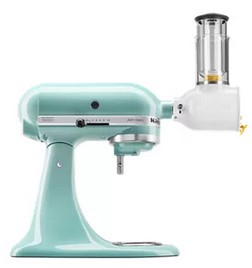
KitchenAid’s classic stand mixer

If your kitchen is like ours, the cupboards are full of appliances that only make an occasional appearance.  Our Breville panini press hasn’t made a “melt” in months.  Our Marcato pasta maker last saw action in the early 2000s.  And our George Foreman grill is retired for good, because it’s just as easy to fire up the barbecue.  But our KitchenAid stand mixer spins to our “Aid” time and again, always ready to make bread dough, cake batter, or cookies.

Stand mixers date to the early 1900s.  KitchenAid’s version came along in the 1930s, and it wouldn’t surprise me to learn some of the original models are still spinning almost a hundred years later.  The appliance is just that good.  The KitchenAid was designed to be as simple, efficient, and robust as possible, and with only one task in mind: to spin ingredients in dizzying circles until they’re thoroughly mixed.  Sure, you can add dozens of specialized attachments but none change what the stand mixer does at its core.  Spin, spin, spin.

with slicer/shredder attachment

When I make a batch of cookies, I stand back in wonder as our KitchenAid does its thing.  As I add the ingredients, the paddle blade works harder and harder to blend them together.  By the time I get to the last of a dozen ingredients; say, chocolate chips, the mixer is practically bouncing across the counter as it struggles to plow through the dough.  You’d expect the mixer to break down at any second in an explosion of flying gears and sizzling smoke.  But it never does.

I know a lot of people who own a KitchenAid stand mixer, and I’ve never heard of one that stopped working.  Even if it did break, the appliance is designed for easy repair.  The parts can be swapped out individually and quickly, eliminating the need for a repair person or a new mixer.  It reminds me of the old Maytag washers, and how their repairman was described as “the loneliest guy in town”.

Like most appliances, Maytags aren’t what they used to be.  We yearn for the models from the 1980s or earlier, which could wash anything and never break down.  Today’s Maytags are a shadow of their former selves.  They don’t do as good of a job, and every five years you’re thinking about replacing them.  Not so the KitchenAid stand mixer.  I have no doubt ours will be a part of our kids’ inheritance someday.

Speaking of kids, our daughter has her own KitchenAid and it sits proudly on her kitchen counter.  Counter space in the kitchen is precious so only a few appliances deserve to be full-time residents.  A coffeemaker.  Some sort of toaster oven.  And a KitchenAid stand mixer, which somehow manages to look appliance-elegant with its curves and swoops.

Color “ice”, with copper bowl

“Mixmasters” (a popular nickname for the KitchenAid) aren’t cheap.  Most models run about $300 USD for the basic setup.  Consider though, it’s the only stand mixer you’re ever going to need.  KitchenAid even admitted they expanded their color selection and limited-edition models in an effort to generate more repeat customers.  (This year – and only this year – you can buy one in “iridescent periwinkle blue”.)

Our Colorado kitchen had a very cool below-counter cabinet, designed specifically for a heavy stand mixer.  You opened the door, pulled a shelf handle, and your Mixmaster rose effortlessly out of the cabinet on special hinges, snapping into place at counter level.  An appliance has to be awfully special to justify a custom cabinet.  Or a spot in the Smithsonian Museum, where the KitchenAid stands as a part of the Julia Child exhibit.

Right there on Julia’s countertop

I don’t need to go to the Smithsonian to see a stand mixer (nor do you).  I have my KitchenAid right here in the kitchen cabinet.  I can put down the laptop and whip up a batch of cookies anytime I want.  Like, right now.  Time for my Mixmaster to spin, spin, spin again, just like it’s done a thousand times before.

Some content sourced from The Atlantic article, “KitchenAid Did it Right 87 Years Ago”, and Wikipedia, “the free encyclopedia”.

Fresh Food for Thought

When it comes to healthy lifestyle, the chatter seems to have shifted from diet to drugs. Instead of “you are what you eat” you could say, “you are… the product of whatever prescription you can afford”.  A regimen of Ozempic, the trendy weight loss injection of celebrities, will set you back $1,000 USD a month. So with this kind of pharmaceutical spending in mind, it was refreshing to read an article about the Atlantic Diet, a fresca (fresh) foods spinoff of its more famous predecessor, the Mediterranean.

“Atlantic” foods

Because it’s a common way to eat in Spain and Portugal, the Atlantic is formally known as the Southern European Traditional Atlantic Diet (a real “mouthful” there).  But you can just call it “The Atlantic” because it’s so simple.  A lot of fresh fish, a little meat and dairy, vegetables, whole-grain bread, and the occasional glass of wine.  To contrast, the Mediterranean demands more plant-based foods like fruits, vegetables, and olive oil on top of just about everything.

No surprise, the Atlantic improves your health by lowering blood pressure, insulin resistance, total cholesterol, and the circumference of your waist.  It’s not rocket science but it still takes fortitude to pass up the other temptations of, say, the American diet.  Soft drinks.  Processed foods.  Just about anything with sugar in it.  The usual sacrifices that come with a healthy diet.

There’s a more challenging aspect of the Atlantic diet besides whole foods.  The meals are meant to be home-cooked and served family style, encouraging social interaction.  Accordingly, an Atlantic dieter should a) turn off the TV, b) put away the cell phone, c) focus on meaningful conversations, d) chew slowly, and e) pause between bites.  Talk about overhauling the way you eat, huh?  So I ask, especially to you fellow Americans, which of those five would be the hardest to achieve?  You’re forgiven if you answer “all of the above”.

Admittedly, my wife and I would be challenged by the Atlantic approach.  We enjoy making dinner together, but after a long day there’s nothing more appealing than plopping our meals on trays and sitting down to another episode of mindless streaming TV.  And the cell phones are always nearby in case a text chimes in.  We’re so immersed in our show in fact, who knows how fast we chew or if we ever pause between bites.  Heck, do we even taste what we’re eating?

At least we’re not tempted by Ozempic.  “Miracle drug” perhaps, but don’t ignore the side effects.  Dropping the weight through injections can gift you with blurred vision, gallstones, allergic reactions, and a constant state of exhaustion (just to name a few).  Worst of all, you might literally wear your results with “Ozempic face”, a hollowed-out look with sagging skin and signs of premature aging.  No thanks.  Those couple of countries on the other side of the Atlantic have a much better approach.

Some content sourced from the CNN Health article, “A cousin to the Mediterranean Diet: the Atlantic Diet explained”, and Wikipedia, “the free encyclopedia”.

Loco for Cocoa

In the last few weeks a purchase of pure gold reached a record high of over $2,400 an ounce. Thanks to uncertain global markets and a stepped-up demand from China, the precious metal is a more popular investment than ever. I find it amazing you can stroll into your local Costco and add gold bars to your shopping basket.  The promo was so popular however, Costco ran out of their allotment in a couple of months.  But here’s an even bigger concern. I’m worried Costco’s going to run out of chocolate.

It takes a bold headline to get me to read the article, and here’s a recent example: Chocolate Might Never Be the Same.  What I hoped would be several paragraphs about a newer or even healthier spin on my favorite confection was anything but.  Instead, I was stopped dead in my reading glasses when I saw the words “global shortage”.  It seems the world’s supply of cacao beans, which come primarily from West Africa, has been threatened by climate change.

precious metal ingredient

What I found interesting in the story was not so much the reasons for the shortage (drought, disease, aging cacao trees) but rather the speculation on how chocolate as we know it will change.  Right away, of course, the cost of high-end products will increase (chocolate was already up 10% in 2023).  Down the road, the powers that be may even relax the definition of “chocolate”, which currently requires (only) 10% of a product’s weight in cocoa.  And further down the road you’ll find faux chocolate, which doesn’t contain any cocoa at all.  Kind of like an Impossible Burger.

My relationship with chocolate, one that has matured beautifully over sixty-plus years, feels a little threatened.  Like most kids growing up in the 1960s, I loved Hershey bars… and a lot of other candies that gifted me a mouthful of cavities.  Then as a teenager, most of those candies fell by the wayside in favor of chocolate bars like 3 Musketeers, Milky Way, and Snickers.  But technically each of those is a “candy bar”, where the only chocolate to be found is the outside coating.

childhood chocolate

I credit three products for developing my taste for “just chocolate”.  First, Nestle’s Toll House Morsels, a bag of which could always be found in my mother’s pantry.  Second, Chunky’s foil-covered blocks, which brought appeal to, literally, consuming chunk chocolate.  Finally, Ghirardelli’s “Flicks”, colorful foil-covered tubes of what can only be described as oversized Toll House Morsels, sold alongside the popcorn and boxed candies at the movie theater.

theater chocolate

Little did I know at the time, I was nowhere near the best that chocolate had to offer.  A college year in Europe introduced me to more exotic brands like Perugina, Lindt, and Toblerone, and my taste for chocolate quickly matured from the milk to the dark varieties.  Here’s how far I’ve come since then.  The percentage of cocoa in a pure bar of Lindt chocolate starts at 70% (and goes all the way to 100% if you’re so bold).  My preference? 78%, a far cry from the minimum 10% definition of chocolate.  And a far cry from the chocolate bars of my youth.

We’re fortunate to have an authentic Belgian chocolate shop here in our small town.  Its proprietor was trained as a chocolate artisan in Belgium, and her creations start with Callebaut chocolate (also from Belgium).  Her truffles, as you can imagine, are exquisite.  The pure chocolate nibs she sells by the pound are even better.  And yet, as if to underscore today’s topic, her shop’s website now warns in a big, bold font: … at this time we are no longer able to accommodate wholesale prices.  Meaning her big buyers are now paying as much as we smaller ones.  Meaning chocolate is getting more expensive.

If the quality chocolate I’ve learned to love rises to price points I can’t digest, I might be forced to relive my childhood and settle for the “satisfaction” a milk chocolate Snickers bar claims to provide.  It’s a regression I don’t look forward to, but at least it beats faux chocolate.  Come to think of it, I should pick up a few of those gold bars at Costco. Maybe my Belgian chocolate shop takes more than cash or credit these days.

Some content sourced from The Atlantic article, “Chocolate Might Never Be the Same”, and Wikipedia, “the free encyclopedia”.
Season Before the Sun

Every now and then I come across a little fact that makes me feel my age.  Fifty years ago this month a one-hit wonder named Terry Jacks released the single “Seasons In The Sun”, which parked at #1 on the music charts for three weeks and burned itself into my twelve-year old brain forever.  Any teen from back then will never forget the We had joy, We had fun lyrics.  Ironically it wasn’t a happy song (as in …goodbye Papa, it’s hard to die…) but not to worry.  Today I want to talk about the season before the sun instead.

Whether you celebrate Easter (this Sunday), the vernal equinox (a week ago Tuesday), or college basketball’s March Madness (on-going), the hints are everywhere: spring is beginning to, uh, spring.  For my wife and I, the season means strawberries, when the best of the fruit is available for the next sixty days.  For others it means the kids are out of school for a week.  But surely there’s no better indication of spring than flowers.  The bright bursts put winter’s doldrums behind us while the sun shines more often.  Flowers signify new beginnings.

Oz is full of poppies

Guys don’t talk about flowers much (unless we’re gardeners) but it doesn’t mean we haven’t had our share of close encounters with them.  My first was probably with dandelions (yes, they’re flowers) and the childhood fascination of blowing the blooms into countless flying bits.  Growing up in Southern California also meant going to the Rose Parade, where the bigger floats average more than 50,000 flowers. Senior prom was probably the one and only time I bought flowers in high school.  Call a wrist corsage awkward if you will, but hey, it beats the terror of pinning flowers on a girl’s dress.

dicey

Speaking of awkward, when I first met my wife in college I decided to be coy and send flowers, forcing her to make the next move.  But fate played a part when the bouquet was delivered to the wrong dorm, the flowers wilting at the front desk for days.  I didn’t hear from her for a while and she didn’t hear from me, and that meant we were thinking nasty thoughts about each other. “Ungrateful” (my end). “Loser” (hers).  Another girl finally let her know about the flowers and it’s a good thing she found out.  A marriage was saved!

pricey

If you’re thinking my spend on flowers is below average, I’m confident I made up for it in a single day: at my daughter’s wedding.  Her bouquet, her bridesmaids’ bouquets, down the aisle, around the altar, at the centers of the reception tables, and on and on – the blooms were everywhere.  Let’s just say the cost of all that color was probably enough to buy a small car.

I’ve brought home several flower bouquets over the years, whether to my wife or to my mother.  What used to be an in-shop, DIY experience is now pretty much Amazon, where you click your way through the colorful screens of 1-800 FLOWERS or FTD to create the perfect arrangement.  And as you know, you rarely get the exact look you choose from the photos.  The fine print protects the companies by stating something like “depending on availability”.
I like to bake (which is not the same as “to cook”), so when someone says “flower” I’m thinking “flour”.  After all, flour is to baking as flowers are to spring.  Flowers wouldn’t taste good in my chocolate-chip cookies, but you do find them in other foods.  Top your soup with a squash blossom, your tea with chamomile flowers, or your salads with calendulas, pansies, or marigolds. Not for me; no thanks.  When it comes to flowers as food additives I might be tempted to say, “the bloom is off the rose”.

The Masters is full of azaleas

Okay, so I went through the lyrics of “Seasons In The Sun” again and noticed …now that the spring is in the air, with the flowers everywhere… , so… what do you know?  Terry and I are talking about the same season after all.  At least this one lyric brings a little joy and fun to an otherwise depressing song.  It’s what this kid born in the 1960s might call “flower power”.

Blogger’s note: “Seasons In The Sun” really was #1 on the music charts exactly fifty years ago this month.  My wife and I bought strawberries last weekend, which had me thinking about seasons, which had the song bouncing around in my brain.  But the fifty-years thing is an eerie coincidence, don’t you agree?  Maybe a higher flower power is at work here.

Some content sourced from Wikipedia, “the free encyclopedia”.