Bathroom Sync

During our town’s annual “Parade of (new) Homes” last summer, my wife and I came across a master bathroom with two showerheads in the same space. The fixtures were mounted on a single wall, almost beckoning the future owners to a side-by-side shower date. Several other couples gave pause alongside us. Shower at the same time? Nope.  We’re not among the 77% who love the idea. On the other hand, my wife and I would never give up our side-by-side sinks.

In a recent Wall Street Journal article, “My Biggest Remodeling Regret…”, the author bemoans the lost space consumed by her dual master bathroom sinks.  She says, in hindsight, she would’ve exchanged the space of one sink for a linen closet.  Remarkably, in the seven years since the remodel, she claims she and her husband never used their side-by-side sinks simultaneously.  In a nutshell, she’d prefer to spend her bathroom time alone.

We’re in the midst of a remodel ourselves, which displaces my wife and I to the upstairs for several months.  As a result, we’re sharing a bathroom with one small sink.  It doesn’t work very well for us.  Why?  Because we like our own sink real estate.  We like the freedom of our respective bathroom routines whether or not we’re both in there.

Too “cozy”!

Bathroom habits speak to our individuality, don’t they?  What works for my wife, what works for me, and what works for our juxtaposition may be a far cry from your own preference.  Consider this scenario: would it bother you if your connecting bathroom were open to your bedroom (that is, no door)?  I’ve seen several layouts where the bathroom counter is the first thing you see when you prop yourself up in bed.  Ugh.  Our bathroom demands a door.  Having said that, I have no problem barging through said door, even if my wife is in the middle of getting ready.  Why?  Because a) we’re comfortable sharing our bathroom routines, and b) the toilet has its own little room; a “water closet” with a door.

But why side-by-side sinks specifically?  Because we often get ready for the day (or the night) at the same time.  Sure, we’re pretty good about weaving and bobbing around each other with a single sink (like we’re doing right now), but I much prefer grooming in my own space.  Then there’s the chatter.  We routinely ask each other’s mirrored reflections “how does your day look?” or “how does tomorrow look?” while we’re in bathroom sync.  We’ve done this for so long I can even understand my wife’s responses through her teeth-brushing.

The Journal article spends several paragraphs lauding the opportunity for privacy in the bathroom – not because habits are embarrassing, but because the bathroom can be a therapeutic escape from the chaos beyond its doors.  The bathroom is cozy-small.  The bathroom is typically simple and without clutter.  The Journal suggests magazines or iPad time or even singing (singing?) to promote rejuvenation.  I’m not here to dispute the notion.  I’m simply saying the bathroom’s not where I’d choose to rediscover my mojo.  Pretty sure my wife feels the same way, else I’d lose my barge-through-the-door privileges.

I’ll concede one point to the Journal.   The author brings up (and promptly tears down) another recent side-by-side trend: toilets.  Really?  “Going” at the same time?  Then again, I see more and more men un-self-consciously on their phones while “taking care of business” in public restrooms.  Maybe they’d be okay with a bowl-by-bowl conversation.  Seriously, how would you feel about receiving a call from a public restroom?  I’d reach for the hand sanitizer. I’d also demand the caller focus instead on his/her business and call back later.  Much later.

Check-Out Champ

We had a good drop of snow the other night; the best we’ve had since the new year began. The flakes fell quickly, adding inches to the front porch and everything in the yard beyond. As I surveyed the vast, white blanket before me, my mind wandered to snow angels and snowmen, to pulling the sled out of the garage. I pictured wandering lines of deep footprints, far as the eye could see, or snowballs piled up and ready, waiting for a battle with the neighborhood kids. Without knowing it, I was effectively ticking the list of images from Ezra Jack Keats’ 1962 children’s classic, “The Snowy Day”.

Confession time. I didn’t remember the story of “The Snowy Day” until I stopped by my local bookstore the other day for a copy (destined to my granddaughter’s bookshelf). It’s a simple book: the snow-filled adventures of a little boy on a winter’s day, captured in less than two hundred words. The images tell the story as well as the words, including the boy’s disappointment when he realizes a snowball carefully packed into his coat pocket melted moments after entering the warmth of his house.

Why all the fuss over a short children’s story, authored almost sixty years ago? Consider this: “The Snowy Day” is the most checked-out book in the 125-year history of the New York Public Library (NYPL). That’s 485,583 individual borrows, putting the book comfortably ahead of hundreds of thousands of others. (Safe to say the “Jeopardy” writers jotted down that bit of trivia for future use.)

You’d think I’d have checked out “The Snowy Day” when I was little. After all, the library was a weekly – if not bi-weekly destination as a kid. My older brothers took music lessons right across the street, leaving the library as a convenient “babysitter” while Mom went to the grocery store. I’ll always be grateful to her for that strategy, which generated countless check-outs and a lifetime love of reading.

I find it remarkable the NYPL maintains complete records – most of them on paper – backing up its check-out claim for “The Snowy Day”. The book topped several other bestsellers I would’ve chosen instead. Take “Fahrenheit 451” (#7 all-time checked-out), or “Harry Potter and the Sorcerer’s Stone” (#9). How about other children’s titles like “The Cat in the Hat” (#2) and “Where the Wild Things Are” (#4)? “The Snowy Day” sits atop the list with fewer words and fewer pages (except perhaps #10, “The Very Hungry Caterpillar”) Good on you, Ezra Jack Keats.

Dale Carnegie’s “How to Win Friends and Influence People” seems out of place in the NYPL top-ten (#8) – the only non-fiction read on the list. I’ve never checked out a Carnegie self-help book, let alone bought one (not that I couldn’t use the help). For that matter, I’ve never checked out any of the NYPL top-ten. Maybe #6 Charlotte’s Web, but that was a long time ago.

“The Snowy Day” brought to mind storybooks from my own childhood, I took a few minutes to recall the following favorites (sans Google search):

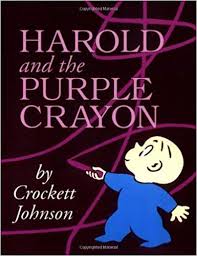
  • Harold and the Purple Crayon
  • Clifford the Big Red Dog
  • The Red Balloon
  • Make Way for Ducklings
  • Blueberries for Sal
  • Mike Mulligan’s Steam Shovel
  • Are You My Mother?
  • Sparky’s Magic Piano
  • Caps for Sale

The brain is remarkable. I can give you a complete synopsis of each of the above stories, fifty years after I first read them. Furthermore, “Harold and the Purple Crayon” and “The Red Balloon” manage to tell their stories without a single word. Nothing but photos and illustrations. They make “The Snowy Day” look like a novel.

I can’t tell you the last time I set foot in a library, but I know it’s been years. I’d say I’m “overdue” and should “check out” one of the nearby branches. After all, the stories of my childhood have endured the test of time, waiting patiently on the shelves; perfect reads for the next “snowy day”.

Some content sourced from the 1/13/2020 Wall Street Journal article, “These Are the Most Frequently Checked-Out Books in the History of the New York Public Library“.

Identity Crisis

Whenever I go for a workout, I face a choice as I walk through the front doors of my gym. The welcome desk gatekeepers scan the barcode on the back of my membership card to a) make sure I’m really me, and b) keep track of my visits (a motivational data point reported back to me at month-end). Recently, my club gave me the choice to scan my mobile phone instead, using a barcode produced by their app. And there you have it: the emergence of the virtual ID badge.

Please don’t steal this

Given the myriad uses of phones these days, you’d ask why I wouldn’t shred my physical gym card and embrace virtual identity.  Alas, what works at the welcome desk does not work beyond it.  My gym’s lockers still use the physical card as part of their securing mechanism.  Insert card, close door, release key.  Yet I still need my phone to collect heart monitor stats or listen to music.  My identity therefore remains physical and virtual for the foreseeable future.

Workout facilities are a basic example of what’s going on here.  The more sophisticated virtual ID installations reside at the offices of large companies, where hundreds of employees pass through secure doors morning, noon, and night.  Forget “keycards” – how would you prefer to be ID’d in the year 2020? Facial recognition? Iris scan? Fingerprints?  Even those technologies seem dated with what’s being tested in the lab.  How about gait recognition (the way you walk)?  Or microchips – a grain of rice if you will – implanted gently between the thumb and forefinger?  Everyday security is about to advance to a whole new level.

My first couple of office jobs were environments too small to worry about real security.  The front desk attendant could greet every employee who stepped off the elevator by name.  But then I joined Hewlett-Packard (HP) – 50,000 humans worldwide – and even HP’s smallest offices demanded more than a casual glance at those passing through.  In the early years I had a simple name badge, to be clipped on the shirt and worn at all times.  Then I graduated to a photo ID card (w/ lanyard, as dress codes relaxed).  Finally, HP added magnetic stripes to the back of the cards, so we could self check-in the way you now self check-out at grocery stores.

The new identity technologies are rooted in biometrics: your sui generis body measurements and calculations.  With that in mind – and body – your ID is just the tip of the data iceberg.  As long as your heart rate, steps, and movement are measured, wouldn’t your employer want those data points as well?  It’s like having a giant Apple Watch lording over an entire workforce.  In theory your manager could use this information as a gauge of your “wellness” (i.e. stress), but more likely they’ll be interested in how it relates to your productivity.  They’ll also know where you are, when, and for how long, all the day long.

If microchip implants become the norm (something I wouldn’t have fathomed even a decade ago), the benefits are endless.  Swipe your hand at a conference room door for access/reservation.   Swipe your hand in front of the vending machine for a snack.  Check your resting heart rate.  On the other hand (ha), consider; the microchip is always watching, including your taps at the keyboard.  No message – even the one you deleted before sending – is safe from scrutiny.

When my wife and I joined our church last year, we were issued name badges. Wearing them is not so much an expression of membership as it is a convenience to greet fellow parishioners by name. But what if we start using biometrics someday?  Will my pastor know when I’m at church and when I’m not? More importantly, will He know? Ah, let’s be real; the Almighty doesn’t need an ID system.  He already knows when I’m in church and when I’m not.

Some content sourced from the 1/6/2020 Wall Street Journal article, “The Humble Office ID Badge Is About to Be Unrecognizable”.

Ribbons and Bows

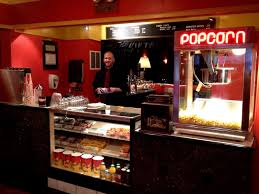
My wife and I went to the movies the day after Christmas. The theater lobby looked a little forlorn after the holiday rush. There weren’t many patrons besides the two of us. The employees wandered here and there without seemingly much to do. The concessions were woefully under-stocked. In fact, as we stood at the counter, we realized there were no nachos, no hot dogs, and not a single bottle of water to be found. Did all those “Star Wars” groupies buy up everything before us?  Did a link go missing in the supply chain? Can we blame the aliens?  Ah, but popcorn.  At least they had popcorn.

I can’t see a movie without cradling a big ol’ tub of theater popcorn.  Don’t ask me what chains the two together, but popcorn and movies are a heaven-on-earth marriage.  It’s like that Kacey Musgraves Christmas song about a ribbon without a bow.  The movie might be Oscar-worthy but there’s a big something missing without popcorn.  The next time you watch “Field of Dreams”, consider the ball field is surrounded by acres and acres of corn.  As if you need a metaphor.

Popcorn wasn’t always an option at the movies.  In the early 1900’s, the theater-going experience was different.  The auditoriums were much smaller.  The carpets and seats were lush and expensive.  The patrons tended towards upper-crust.  And the movies themselves… had no sound.  Any one of those reasons made popcorn a poor concession choice.  Theaters didn’t want kernels ground into their pricey floor coverings.  Patrons didn’t want a snack associated with the lower-class circuses and sporting events of the time.  Most importantly, no one wanted to hear crunching and munching while trying to read the subtitles of a silent movie.

The Great Depression – and “talkies” – ushered in the union of popcorn and movies.  A broader cross-section of patrons sought the theater for an inexpensive distraction to the hard times.  Popcorn was easy to mass-produce, and the smell and pop created an effective lure for the concession stand.  Crunching and munching was no longer a concern up against soundtracks.  And popcorn was affordable, even to those who could barely scrape together enough for the movie itself.

Do you prefer “mushroom” or “butterfly”?

There’s a little science behind popcorn to get it from husk to Hollywood.  Growers developed the appealing “butterfly bud”, with several “ears” to trap the butter and salt.  Growers also worked to shape popcorn to take up as much room in the bag as possible (less air), giving a more satisfying feel to the overall weight.  They coined terms like “expansion rate” and “mouth feel” and “finger control” – anything to make you buy more of the fluffy stuff.

All this talk of popcorn reminds me of a children’s book about a farmer who grew acres and acres of corn.  He’d store his corn in giant metal silos next to his field.  One summer day, the silos got so hot the corn inside started to pop.  The farmer heard the sound and climbed on the roof of one of the silos to see what was going on.  Suddenly the silo burst open, and the roof started rising above all that popcorn.  Up, up, up went the farmer.  When the popping finally stopped, the farmer was high up in the sky with no way to get down.  His neighbors came from miles around to try to help him.  The fire department’s ladders weren’t long enough.  The town had no helicopter.  Finally, the people talked it over and realized all they had to do was start eating the popcorn straight from the silo.  Down, down, down came the farmer until he was safe.

As much as I love popcorn, I only seem to eat it at the movies.  When my son was in college, he admitted to going to the theater, buying popcorn at the concession stand, and… leaving the building.  Who does that?  Then again, there’s nothing wrong with the idea (high price aside).  It’s like having turkey when it’s not Thanksgiving.  Or dessert before dinner.  Seems a little off, but really, why not?
As for me, I’ll continue to enjoy my popcorn with my movie.  I’ll pay the ridiculous price for the shrinking bag, and still eat too much.  The only problem with this scenario?  Finding decent movies anymore.  They seem to be fewer and further, at least on the big screen.  Thank goodness for Netflix and my air popper.
Some content sourced from the Wall Street Journal article, “How AMC Gets Its Popcorn From Stalk to ‘Star Wars'”, and from the Smithsonian Magazine article, “Why Do We Eat Popcorn at the Movies?”

Heavy Metal

The most appealing aspect of my slim bi-fold wallet is – slipped into my front pocket – I sometimes forget it’s even there. Between the couple of credit cards, insurance cards, driver’s license, and the wallet itself, you’re talking about an item less than a half-inch thick, weighing just a couple ounces. That suits (pants?) me just fine, since I don’t want to be weighed down (or bulged) any more than I have to be. Maybe that’s why I don’t understand the fuss over trendy credit cards made of metal. Then again, my “vanity score” probably wouldn’t qualify me for one anyway.
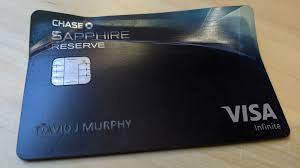
I guess I missed the memo on metal credit cards. They’re in circulation to the tune of 32 million these days, which sounds impressive until you stack them up against the four billion plastic cards out there. Less than 1% of any total is never impressive, but the forecasters say metal cards will quadruple in the next two years. One reason for the increase: some financial institutions issue metal cards as a replacement for expiring plastic ones. Another reason: consumers are willing to pay an annual fee for the privilege of metal vs. plastic.

The demand for this sort of thing fascinates me. If my financial institution wants to gift me a metal card (whose hefty feel apparently makes me feel special and therefore inclined to spend more), so be it. Just don’t charge me an annual fee. Speaking of annual fees, here’s the extreme example with metal. A by-invitation-only American Express Centurion “Titanium” card will set you back $5,000/year, just so you can carry it in your wallet. You’ll also be tagged with a $10,000 initiation fee. I know several country clubs who’d let me in the door for less than that.

Honestly, I have no problem with holders of metal cards. Those same 32 million people probably pay for vanity license plates and gold-colored trim on their cars. They also pay to avoid standing in line, whether at the airport or at Disneyland. Maybe there should be a website to purchase “vanity fair” in one place. We could call it IFeelSpecial.com

Let’s get the drawbacks of metal cards out of the way up front. They’re high-maintenance. Apple has a titanium credit card, complete with care guide, which advises “… against keeping it in a pocket or bag with loose change… or other potentially abrasive objects”. Metal cards also demand a cleaning solution (like rubbing alcohol), though I suspect that’s more to make them look pretty than keep them charging. Finally, metal cards destroy your shredder if you try to get rid of them when they expire. Buy a pair of tin snips instead.

I’ll own up to having an American Express Platinum card and a Visa Platinum card, but both are plastic, and “Platinum” simply means they have a rewards program. Which brings me to a point of missed opportunity. If issuers are trending towards metal cards, why not make them out of whatever material they’re named for? A platinum card should be made of platinum. A titanium card titanium. Citibank’s Diamond Preferred card? Oooooooo.

It’s not the craziest idea. Metal cards weigh up to five grams. If Amex issued my Platinum card from five grams of pure platinum, they could charge me $600 (current market value). A Gold card made of gold would be worth almost $1,000. A Silver card made of silver? Okay, that’d only be worth eleven bucks. But think about it. Your card gets declined? No problem. Just surrender it and say, “I’d like the current market value in cash, please”.

[As usual, someone beat me to the punch with my great ideas. If you live in the Middle East, Singapore, or the Czech Republic, you have access to a company called CompoSecure. CompoSecure makes its credit cards out of pure gold.]

Counter to the forecasters, I think metal cards will be challenged by no cards at all. Meaning, pay-thru-phone (i.e. Apple Pay, Google Pay, Venmo) is on the rise, and the security of these transactions – not to mention no need to carry cards and cash – may trump the “special feelings” metal brings. Can you imagine – plunking down your country-club-rate Amex Titanium after dinner, and one of your guests goes, “Really? You still pay with a physical card? How old-school!”

Pretty sure I’m going to miss the metal credit card movement completely (even if they do make better ice-scrapers than plastic). I’ll be jumping straight from my plastic Amex Platinum to digital one of these days.

It would probably help if I set up Apple Pay on my iPhone first.

Some content sourced from the 12/5/2019 Wall Street Journal article, “Once a Tool of the Elite, Metal Credit Cards Now Turn Up Everywhere”.

Untying the Knot

A once-popular saying – now sprinkled with dust – goes, “there’s nothing like the feel of a well-tailored suit”. It’s been awhile since I bought a tailored suit (off-the-rack seems to do it these days), but there’s something to be said for “feeling as good as you look”. If the shirt, belt, socks, shoes, and even pocket square aren’t carefully coordinated however, the suit falls short. And what about the necktie? Once upon a time the tie question was, “which knot should I use?” Now the better question might be, “should I even bother”?

Neckties seem to be more of a fashion statement than staple these days.  Once an indicator of labor (vs. leisure), ties are now disappearing altogether, in favor of the open collar (if there even is a collar).  The irony of today’s neckties is you’re more likely to see them on a security guard or restaurant waiter than you are a CEO or bank manager.  Today’s fashionistas likely dismiss ties as a passing fad akin to the sweater vest or leg warmers.  Yet in their current post-cravat form, ties have been around over two centuries.

Neckties didn’t mark labor (vs. leisure) so much for me.  Rather, they marked California vs. Colorado.  In my early years in the workforce in California, as an architect and then airport planner, I unfailingly wore a tie to work.  I also wore a suit, or at least a sport coat.  The nature of the work however – hovering over a drafting board with pencils and other instruments of design – demanded the coat be relegated to the closet for most of the day.  As for the tie, we architects developed a habit of throwing the tail over the shoulder, much the way the superstitious toss a pinch of salt.  As a result, I have more memories of the back of a tie than of the front.

Once I moved to Colorado in the 1990’s, and my job moved to the technology sector, ties retreated to my bedroom closet for good.  Twenty-five years on, my need for them equates to weddings, funerals, and a handful of restaurants with dress codes.  Quite a contrast from my childhood, when ties were worn not only every Sunday in church, but also on every trip on an airplane.  Thank goodness my parents bought me the “clip-on” variety.  As a kid, I had no clue how to tie the knot.  I didn’t a care for a “noose” around my neck either.

Neckties carry more history than today’s post allows.  They evolved from costumes of war, with the cravat becoming the first formal statement.  Several variations followed, but it was the “Langsdorf” – or “long tie” – which eventually took hold.  Along the way, ties morphed from short to long (and back to short again), and from wide to narrow (and back to wide again).  Neckties changed from white to black, from solid-colored to striped, paisley, and geometric.  Ties even went through a phase where the designs were more free-form and specific; vertical artwork if you will.  Picture a big fish, head down.

Made in Britain

Here’s an interesting bit of tie trivia (assuming the topic comes up at your next party).  In Britain and its Commonwealth countries, diagonal stripes on ties run from the left shoulder down to the right side, as a nod to the regimental dress of the military.  In the United States, it’s the opposite – right shoulder down to left side.  Don’t believe me?  Go check the closet or your local department store.  (I’ll wait.)  Furthermore, those stripes aren’t really on the diagonal.  If you unstitch the tie into the single piece of cloth it started with, you’ll see those stripes run horizontal.

The “Atlantic” backwards knot

Neckties birthed some elegant terminology, like Steinkirk, Solitaire, Ascot, Langsdorf, and a handful of words just for the knots (four-in-hand, Pratt, Shelby, Windsor).  Speaking of knots, guess how many ways you can tie a necktie?  Eighty-five – although only thirteen are recognized as symmetrical and balanced.  One of those, the Atlantic, boasts a knot tied backwards, but on a forward-facing tie.  I like it.

Pillow design and photo courtesy of Randi Zubin

Someday I’ll donate my ties to Goodwill (or sell them on Etsy – the makers out there are doing cool things).  Now however, they’ll serve as a reminder of the way things used to be: in some ways good; in other ways a little tight around the collar.

Some content sourced from the 12/2/2019 Wall Street Journal article, “The Knottiest Problem: What to Do With a Closet Full of Old Ties?”, and Wikipedia, “the free encyclopedia”.

The Twenty-four Days of Christmas

The Christmas season seems to begin a little earlier each year. Stores decorate and start their sales around Halloween. Lights go up on houses well before Thanksgiving, while Christmas cards show up in mailboxes by Black Friday.  The longer the season though, the more abrupt the conclusion. Be honest; who among us sings Christmas carols (or watches Hallmark movies) on December 26th?  Not many.  We worry and scurry for weeks about a single day – then suddenly it’s over.  Here’s a better approach.  Let’s focus instead on the one, true Christmas season preceding the day. Let’s focus on Advent.

For most Christians, Advent refers to the twenty-four days before Christmas (not to be confused with the song-famous Twelve Days, which come after Christmas).  Advent begins four Sundays before December 25th.  The word literally means “coming”, as in the (first coming) birth of Jesus at Christmas, and the (second coming) reappearance of Jesus at the end of time.  If you’re looking for the season’s theme song, go with “O Come, O Come Emmanuel”.  It’s the one, true Advent carol.

Once upon a time Advent included fasting, penance, and daily prayer, but today the season seems to be nothing more than a countdown.  Even in Sunday church services, the four candles of the Advent wreath are lit as the four Sundays pass by – a weekly countdown to the Christmas candle in the center. Here’s a more efficient idea.  Let’s add another ball in Times Square; one that takes twenty-four days to drop instead of sixty seconds.  Might save a lot of wreaths and calendars.

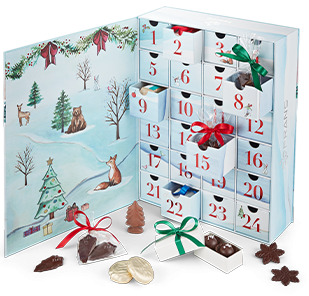
Speaking of calendars, maybe a countdown is enough to signify a season.  Advent calendars are all the rage these days.  I had one when I was a kid; the flat, cardboard kind with twenty-four numbered doors of varying shapes and sizes.  Oddly, the doors were never arranged numerically, as if the calendar was made more appealing by having to search for a given day.  Not so oddly, each door fronted a bit of chocolate.  As if waiting twenty-four days for Christmas wasn’t hard enough, Advent calendars forced a kid to wait twenty-four hours to “open” each piece of chocolate.  A test of patience.


If cardboard and chocolate don’t catch your attention, perhaps you’d prefer a more elaborate version of an Advent calendar.  Consider Fran’s Chocolates of Seattle (above left), which produces its annual calendar fronted by an original watercolor.  Add in twenty-four delectable chocolates in twenty-four drawers, and this calendar sets you back $175.  Or how about Liberty London’s “Beauty Advent Calendar” (above right), which includes twenty-four wellness products – many of them full-size – like probiotic deodorant, essential oil candles, and skin bronzer?  This one sets you back $275, with the price justification you can re-gift whatever items are not to your taste.

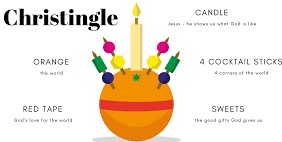
Lest you think a fancy (or not) calendar is the only way to acknowledge Advent, I can’t close without mentioning the Christingle.  I don’t remember creating one of these as a kid.  A Christingle is made up of an orange, a candle, a bit of red ribbon, and four sets of dried fruits or sweets, skewered on cocktail sticks.  It’s a strange-looking assembly, but the Christingle gets an “A” for symbolism.  The orange represents the world.  The candle represents Jesus as the light of the world.  The red ribbon represents God’s love (or Jesus’ blood).  The fruits/sweets represent the gifts God gives us, and the cocktails sticks represent the four corners of the globe.  Lots going on in one sort-of-neat package.

Austria may lay claim to the biggest Advent calendar in the world!

If you’re reading this post before December 1st, you have the entire twenty-four days of Advent ahead of you.  Twenty-four days to slow down and appreciate the meaning of day twenty-five.  Sounds more like a season than a single day, doesn’t it?  Mark your calendar then.  Advent is here.

Some content sourced from Wikipedia, “the free encyclopedia”.

Media Meltdown

Nope, not that media.

A few weeks ago, I gave Legacybox a try.  Heard of ’em?  Legacy converts old home movies – the ones you may have on VHS or 8mm tapes (or even reel-to-reel) – into clean, digitized formats. I sent Legacy a heaping box of my tapes (reel-to-reel was slightly before my time), and a month later received a single, tiny thumb drive in return. Remarkable really: dozens of hours of precious video memories packed into a bits-n-bytes “box” the size of a fingernail clipper. If I’d chosen a digital download instead of the thumb drive, I wouldn’t have received anything (physical) in return.

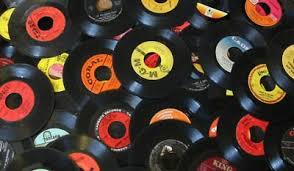
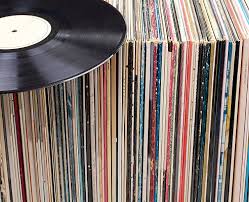
We’ve flash-landed into a digital, live-stream, can’t-hold-it-in-your-hands world of multimedia these days.  Phonograph records, celluloid film, audio and video cassettes, and optical media like CD’s and DVD’s spin firmly in the rear-view mirror; collectables reserved for only the most nostalgic.

[It’s not a stretch to say print media – books, newspapers, magazines, and photographs – aren’t far behind, but that’s another post for another day.]

For those of you born in the last century – literally, not figuratively – let’s eulogize some of these once-upon-a-time physical media formats.

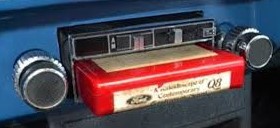
The “8-track”

I’m old enough to remember 8-track tapes, are you?  Before I owned my first “LP” or “45” record, I was regularly subjected to my dad’s music choices on his car stereo 8-track player.  In hindsight, there’s something endearing about the bulky, inefficient format of the 8-track tape (except when your only memory is your dad’s music).

The smallish 45 “single”

Before the 8-track tape gave way to the compact cassette, I built up a pretty good collection of 1970’s 45 rpm records (“singles”) – 100 or more.  My older brother – who built a sizeable collection of 1970’s 33 rpm records (“LP’s”), understandably disdained my choices in music.  His flavor was “classic” rock (ex. Rick Wakeman, Emerson, Lake & Palmer) while mine was “bubblegum” (ex. Olivia Newton-John, Barry Manilow).  Appropriately, I have Olivia’s “Let’s Get Physical” re-running in my head as I cover today’s topic.

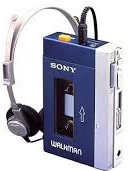
The cool thing about compact cassettes was – of course – you could record things (birthing the concept of the “playlist”).  Just as noteworthy, you could play cassettes in your car’s “deck”.  Your records had to stay home.  It wasn’t long before my 45’s were stashed in the closet and I was all-in on “tape”.  I spent countless hours recording and listening as I hugged my very first tape recorder.  I spent countless weekly allowance dollars on the Columbia House Record and Tape Club.  When the ultra-compact Sony Walkman debuted in 1979, cassette-tape music went everywhere you did.

Right about the same time as the Walkman, JVC (VHS) and Sony (Betamax) figured out how to put video on tape.  My early memories of movie rentals at the video store include renting the video player too.  After all, the price tag on first-generation “VCR’s” ran into the thousands of dollars.  I can still picture myself lugging a bulky VCR down the street to my apartment, with a pile of cables, an instruction booklet, and a stack of videotapes to watch.  Then, twenty-four hours later, I’d pack it all up and lug it back to the store.

The colorful “laserdisc”

Compact discs (CD’s) and digital versatile discs (DVD’s) felt like space-age technology in the ’80’s and ’90’s.  But press the Pause button for a moment.  Did you forget laserdiscs (LD)?  LD’s were the first optical disc storage medium, and man did I buy into the hype of those rainbow Frisbees.  By the time I invested in a (bulky) LD player and loaded up on (pricy) LD’s themselves, DVD’s were beginning to take over the home video market.  Sadly, I still have my LD collection today (along with my no-longer-functioning LD player).  I figure the whole setup isn’t even worth the time to advertise on Craigslist.  In hindsight, laserdiscs were the very definition of unwieldy.

Finally (for physical media), I never graduated from DVD’s to Blu-ray discs, but “cinephiles” claim Blu-ray looks and sounds even better than its digital successors.  Regardless, Blu-ray should be considered the final frontier in a history of physical media dating back to the 1800’s.  Check out Wikipedia’s timeline of audio formats (player-piano rolls!) here.

Thanks to companies like Legacybox, Netflix, and Spotify, digital media is here to stay.  But I must concede, there’s little pride in perusing a collection of utterly un-physical files and folders on my laptop.  Maybe Olivia Newton-John knew what she was singing about after all.

Or maybe that’s why I’m still hanging onto my laserdiscs.

Some content sourced from the 10/11/2019 Wall Street Journal article, “Streaming Is Killing Physical Media.  Here’s Why You Won’t Miss It”, and Wikipedia, “the free encyclopedia”.

Smallest and Innermost

Mercury

Last month, I spent an entire post lavishing love and affection on Earth’s beautiful space neighbor, the planet Venus (see here). I was quick to point out – from Earth – you can occasionally see the planets Mars, Jupiter, and Saturn as well. Turns out that list is, ahem, incomplete by at least one planet. Clearly miffed by my post, our solar system’s Mr. Smallest and Innermost – the planet Mercury – decided to speak up this week.

Don’t burn yourself, little one (image courtesy of NASA)

For those of you who missed it, Mercury passed in front of the Sun on Monday.  For five hours or so, Mercury looked like a little black mole on the bright cheek of a much larger creature.  His orbit took him almost directly across the center of the Sun.  You may think Mercury’s show is no big deal; after all, he circles the Sun every 88 Earth days.  However, consider Earth, Mercury, and the Sun must be exactly lined up (put a ruler on it) for humans to witness a Mercury “Sun transit”.  We only get fourteen Mercury transits every Earth century.  The next one won’t happen until 2032.

I missed Monday’s Mercury transit myself, because a) I wasn’t up at sunrise in the Northern Hemisphere (when it happened), and b) I didn’t have the necessary eye protection to give it a direct look.  Instead, I enjoyed the online photos and videos from NASA and the world’s other space agencies (like this one).

Mercury’s the tough little guy on the left

The truth is, you don’t have to wait for a Mercury transit to observe the first rock from the Sun.  On several early mornings last month, you could’ve seen Mercury rising in the east (same as Venus), and you’ll see him again early next year – no telescope required.  Guess I got caught up in the allure of Venus and completely ignored her nearby brother.

If Mercury and Earth were side-by-side

Mercury – like all the planets – has some interesting facts.  He completes three rotations about his axis (days) for his every two orbits of the Sun (years).  Pretty slow for the smallest orbit in the solar system.  He has no moons.  He’s only about a third the size of Earth.  He’s pretty beat up, with the most craters of any planet, and “wrinkles” caused by the cooling and contracting of his iron core.  Only two of Earth’s spacecraft have ever visited Mercury, and even those stayed far away from the surface for obvious reasons (800.6°F on the sunny side; -279.4°F in the shade).

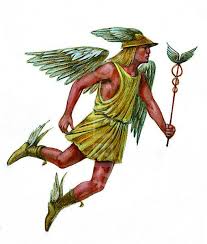
The Roman god for which Mercury is named is a lot “cooler” than the planet itself (ha).  Young Mercury wears a lot of hats, including (god of) financial gain, eloquence, and divination.  (Side note: perhaps Mercury should’ve been my blog mascot.  “Eloquence” was the theme of my very first post).  He also serves as the guide of souls to the underworld. Curiously, all these responsibilities take a back seat to Mercury’s most commonly known role – as speedy messenger to the other gods.  This role explains the naming of the planet, the fastest of the eight to circle the Sun.  Maybe we should also consider Mercury as messenger to the other planets, in case something gets weird with the Sun.  After all, Mercury will be the first to know.

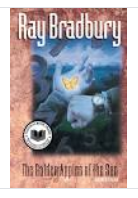
I can’t talk about Mercury without a reference to the late, great Ray Bradbury.  Of all his wonderful science-fiction short stories – and there have been at least a hundred – my Bradbury top five includes “The Golden Apples of the Sun”.  “Apples” followed an exploratory rocket ship heading past Mercury to the Sun.  The crew is tasked with collecting a sample of the Sun’s golden fire.  I can still imagine the ship’s giant scoop as it extends from the hull and grabs a bit of the Sun.  The story’s real drama comes just after the collection, as the ship overheats and the life-support systems begin to shut down.  With respect to Bradbury, I won’t give away the ending.

Well then, enough about Mercury (probably too much).  I’ll conclude with a great tweet from Katie Mack, who was quick to note about Monday’s Mercury transit: “The official song of #TransitOfMercury is, obviously, ‘King of Pain’ by the Police.  But please note that the ‘little black spot on the Sun today’ referenced in the song is a ‘sunspot’, not Mercury, since ‘it’s the same old thing as yesterday,’ and (Mercury) transits only last a few hours.”

Keep on a-circling the Sun, Mercury.  I won’t forget ya next time.

Some content sourced from the BBC.com article, “Planet Mercury passes across the face of the Sun”, the Space-Facts.com article, Mercury Facts – Interesting Facts about Planet Mercury, and Wikipedia, “the free encyclopedia”.

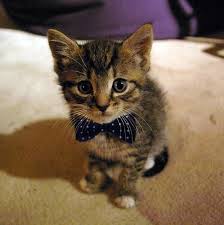
Raining Cats and… More Cats

Google “cat”, and you’ll get a return of 6.4 billion hits. Spend five seconds per hit and you’ll need a millennium to get through ’em all. That’s a thousand years on everything there is to know about cats. Your dog will think you’re nuts. Your cat, on the other hand, will wonder why you didn’t start your search sooner. Felis catus, after all, is more manipulative than we humans want to believe.

Something in the cosmos moved me to write about cats this week.  When I started this post (last week), the calendar just closed on National Black Cat Day (10/27) as well as National Cat Day (10/29).  Then my daughter relocated to Seattle, which involved two cars, her cat, and a whole lot of packing.  (Pretty sure half the packing was for the cat.)  Then Monday Night Football happened, and the video of a black cat eluding officials during the Giants-Cowboys game went viral.  Finally, the Wall Street Journal (WSJ) spiced up its headlines with a piece called, “Should Your Cat Be Vegan?”

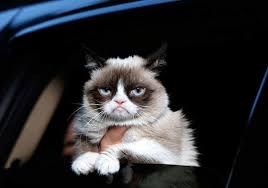
I think this cat-aclysm of events caused all other blog topics to step aside this week (again with the manipulation).  Maybe it was my daughter’s cat, a little upset I hadn’t written about her after several hundred posts.  More likely it was another WSJ article I’ve been saving from last April: “There Is Now Scientific Proof Your Cat Is Ignoring You”.  Now there’s a headline.  Talk about manipulation.  Assuming a little obedience school and training, you probably have your dog right where you want him.  Your cat?  Obedient?  Never.

Per the WSJ article, cats hear and recognize their names; they just choose to show no response.  When they do show a response it’s not for affection, but for potential reward, like petting or playing or food.  Jennifer Vonk, an animal cognition psychologist, says, “…we (humans) sort of reward them for doing what they want to do… they’re better at manipulating our behavior than vice versa.”  In other words, your dog wants to please you while your cat just wants to please itself.

Aside from persistent clawing (which can take down an upholstered chair faster than an army of serrated knives) I rather enjoy the company of cats.  They’re quiet.  They’re soft.  They’re cute when they’re little fluff balls rolling around the carpet playing with toys.  And they’re low maintenance, preferring to catnap or full-on sleep while you dutifully attend to their litter box and food bowl.  So it’s a wonder to learn (“…Scientific Proof…”) – despite their outward laziness – cats have the cognitive ability to do everything dogs can.  They just choose not to.  A little disturbing, no?

Dogs make six distinctive sounds: barking, whining, whimpering, and so on.  Cats – as if to one-up their canine competition – make seven, and they all mean different things.  Cats meow, purr, trill, chatter, yowl, hiss, and growl.  (Listen to every one of them here.)  If you’ve ever heard a cat chatter, it’s mildly disturbing, as if he’s on the verge of a paws-to-the-walls freak-out.  But if you ever hear a cat growl, it’s one of the most unsettling bass-voice attention-getters ever emitted from a small, carnivorous mammal.  My daughter’s cat growled while sitting on my lap once.  Small wonder I didn’t wet my pants.

Domesticated cats have a long history, dating back to 3000 years BC in Egypt or something like that.  They fare well whether “house” (dependent), “farm” (semi-dependent) or “feral” (fully independent).  They also have an impressive list of trivia bits.  A few of my favorites:

  • Cats spend up to 50 percent of their day grooming themselves.  Maybe humans should too.  Grooming tones down their scent to avoid predators, cools them down, and promotes blood flow.  Smart.
  • A group of kittens is called a kindle.  I’ll never look at my e-reader the same way again.  Also, a group of full-grown cats is called a clowder (hold the clams).
  • The average running feline can clock around 30 mph.  No wonder I’ll never catch my daughter’s cat after she “autographs” the upholstery.
  • Cats can’t taste sweets.  In other words, keep an eye on the steak but don’t worry about the big cake in the middle of the table.  Your cat doesn’t care.
  • Your cat has more bones than you do: 244 vs. 206.  No wonder they’re so nimble.
  • Cats sweat.  Through their paws, in fact.  They also pant, which should be the eighth distinctive (and disturbing) sound they make.
  • Disneyland hosts approximately 200 feral cats.  Their job, of course, is to control the amusement park’s rodent population.  Think about that the next time you’re deep inside the Haunted Mansion.

I learned a lot about cats as I prepared for this post.  I realize the whole “nine lives” concept simply means cats are smart enough to cheat death more than most animals. Including humans.  Maybe that’s why they ignore us.  We’re less intelligent.  And easier to manipulate.

Some content sourced from Wikipedia, “the free encyclopedia”.