Concourses or Golf Courses?

Whenever flying is a part of my travel plans, I wear my most comfortable pair of walking shoes. Long gone are the days of the coat-and-tie-to-fly dress code, in favor of sneakers (and jeans). My reason for rubber-soled kicks used to be, “What if we’re in some kind of accident and I need to get off in a hurry?” Today I go with a wholly different reason. The long, long walk I can expect from curb to concourse to airplane cabin simply demands something easy on the feet.

Here’s a startling comparison.  If you play golf and skip the cart, you’re going to walk over four miles to finish your round.  By almost the same token, if you’re connecting through Dallas-Ft. Worth or Atlanta and choose to walk from Terminal B to Terminal E, you’re going to walk over two miles.  Add in the inevitable search for food, a stop or two at retail, and a visit to the restroom and you’re closer to three miles.  And none of that includes the distance from the curb to the ticket counter, from the counter through security, and from your gate down the jetway to your seat on the plane.

How do they do it in heels?

Now for the bad news.  Airports are only getting bigger, and not for the reasons you might think.  Sure, more people fly than ever before, which adds more planes, more gates, and even more airports.  But behind the scenes a couple of stronger forces are at work.  One, airlines are shifting to larger aircraft, which translates to more space between parked planes.  Two, airport parking revenue is down (thanks to Uber, Lyft, and more mass transit), which translates to the airport’s need to find revenue elsewhere.  Where?  Retail, bars, and restaurants.

Don’t get used to these…

From recent trips through airports, I’ve noticed the following.  In Denver International, remodeled Concourse B is already labeled “Gates 1-100”, even though there aren’t a hundred gates.  It’s a straight-line concourse and it’s only going to get longer.  In Atlanta’s Hartsfield-Jackson, the concourses are so long and narrow (and so crowded), that last gate is farther than you can see without binoculars.  And in San Diego’s Lindbergh Field, when you’re processed into Terminal 2 from security, you can’t see a single gate, because you have to pass through a veritable shopping mall first.

In the ultimate insult to long walks to planes, some airports have left the moving walkways out of their concourse remodels.  Those walkways discourage you from passing directly in front of the food and retail the airport so desperately needs you to patronize.  And intentional or not, the airlines encourage these purchases by offering less food onboard.  You, weary traveler, are a captive audience to more than one performer.

I prefer this kind of walk

Let’s not forget the rental cars.  Avis’s slogan is “We try harder”.  Maybe it should be, “We try harder… to take more of your money“.  I just reviewed my receipt from a recent San Diego rental for a full-size standard Kia sedan.  Right there below the actual daily rate: “11.11% Concession Recovery Fee”; essentially the cost of doing business at the airport.  Add in Vehicle License Recoup fee, Customer Facility Charge (another airport fee), California Tourism Fee, and a final flourish of “tax”, and the rate increased by 32%.  All so I can walk further to get to my rental car?

An early chapter of my career was in airport planning.  We’re the people who figure out how to get the planes from the runways to the taxiways to the gates without hitting each other.  We also design the terminal buildings to include enough gates, concessions and restrooms (yeah, yeah, bring on the heat with that last item).  Concourse design used to be “spoke and hub”, meaning you walked down the spoke to a circular boarding hub of several gates.  It made the airplane taxiing a little trickier outside, but it significantly reduced a passenger’s walk to the gate.  Today, airports no longer favor the design (er, traveler) because it reduces the square footage for concessions.

For those of you who live and die by your 10,000 steps, take heart; airports are helping you accomplish your daily goal.  Phoenix Sky Harbor even disguised the long walk through the concourses by calling it a “Fitness Trail”.  Be sure to allow enough time to get in a (seriously overpriced) shopping trip at all those concessions.  But don’t forget, the airlines only allow one reasonably sized carry-on these days.  Any others will cost you a checked bag fee… because the airport isn’t making enough money already.

Some content sourced from the CNN Business article, “Why you have to walk so far to your gate at the airport”, and Wikipedia, “the free encyclopedia”.

The Times of Sand

I’ve often thought the airport is the best place to people-watch. With downtime while you wait for your flight and the close proximity to others, it’s inevitable you’re going to look around. Every kind of person can be found at the airport (sporting every size, shape, fashion statement, stress level, and age). Travelers are unknowingly entertaining to those who watch them. But today let’s explore perhaps an even better venue where people do their thing: the beach.

As I type today, a sweeping look at the sandy shore beyond my patio shows me (in no particular order): A mother and daughter in animated conversation with a lifeguard; a group of teenagers (male) playing an aggressive form of beach four-square called Spikeball; another group of teenagers (female) sprawled on beach towels in giggly conversation; a father dragging his young son through the shallow waves on a boogie-board; a surfer wiping out in the not-so-shallow waves further out; and an ambitious child shoveling dirt out of a divot of sand as if digging to China.

I look away for a second and then look again: A pack of aggressive seagulls pecking away at someone’s leftovers aside their abandoned beach chair; that same lifeguard sprinting into the water to rescue a struggling swimmer; an older couple having a (clearly) not-so-happy conversation at the water’s edge; a jogger attempting to put in the miles while dodging the less active in his way; and a paused beach volleyball game where the players can’t determine if the ball hit the (sand) line or not.

It’s a rare treat when I can create a blog post from the goings-on on right in front of me, but the beach allows me to do just that.  More to today’s point, an active beach like this one changes character throughout the day.  In other words, there are the sands of time and then there are the times of sand:

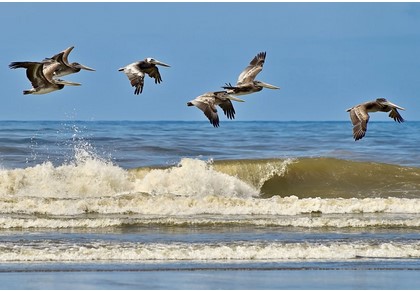
  • Dawn: Seagulls, sand, and surf.  The beach at its most peaceful and pristine.
  • Early morning: Serious runners at the shore (unlike the casual joggers later in the day); an Asian elder performing a standing form of meditative yoga; a surf camp for pre-teens to the north; a lifeguard training camp for teens to the south; a pickup truck clearing the trash from the evenly-spaced cans.
  • Mid-morning: The gradual arrival of the masses (and all they bring with them).  Also the arrival of the lifeguards, with bright cones marking the “no-man’s land” for emergency vehicles, flags indicating the adjacent street number so people know where to find you, and more flags to mark the beach’s “surf zone” versus “swim zone”.
  • Midday: Everything I observed at the start of this post (and so much more).
  • Mid-afternoon: The gradual departure of the masses, and (hopefully) all they brought with them.  Also the departure of the lifeguards, signing off with a megaphone farewell to those who remain behind.
  • Early evening: The ritual of the sun-worshippers, who simply must remain behind to witness the (West Coast) sunset.  There’s nothing like a setting sun to bring a person to a focused standstill.
  • Dark: An umbrella of stars, a rhythmic ribbon of white foam as the waves crash to shore, and an occasional party of two out for a romantic stroll at the water’s edge.

Trust me, it’s easy to be mesmerized by the times of sand if you watch them long enough.  They’re the reason I never make progress with my latest “summer read”, and the reason I can abandon my electronic devices for hours at a time.  Frankly, it’s a wonder I was able to turn away from the sands long enough to bring you this blog post today.

Solitary Singles

A recent study of lifestyles determined the eight healthy habits that can add the most years to a human life. It’s a list of what to do (four) and what not to do (another four) to live longer. All eight are fairly commonsense, but one in particular stood out to me: Surround yourself with positive social relationships.  You’ll increase your chances of a longer life by five percent, and you won’t be able to claim COVID-y words like “lonely” and “isolated”.

Let’s not make this a sad blog post, okay?  I could spend the rest of my paragraphs talking about loneliness and isolation, but why bother when so many musicians have already done so before me?  “Lonely” songs go back decades.  In 1960, one of the biggest solitary singles was Roy Orbison’s Only The Lonely.  The same year, Elvis released Are You Lonesome Tonight?  And anybody who remembers the Beatles’ Eleanor Rigby (1966) knows Eleanor’s story is all about loneliness.

The 1960s is a little too far back for my purposes.  I’d rather focus on two more recent songs you know (from popular re-recordings) and another one you might know.  One thing’s for sure; all three play in my brain now and again, but especially when I’m “Alone” or “All by Myself”.

Alone

The power ballad made famous by Heart (and then Celine Dion) is not so much about being alone but about wanting to be with a particular someone else… but not being able to.  “Alone’s” lyrics voice the frustration of a romantic longing.  It’s more about how do I get you alone than actually being alone.  There’s even this suggestion of before versus after: Till now I always got by on my own.  But the song’s final lines – nothing but repeating, wailing, unsatisfied “alones” – gets me every time.  Heart’s version of “Alone” spent three weeks at #1 on the U.S. Billboard Hot 100 and still makes an occasional appearance on the radio.

All by Myself

Even though this was another Celine Dion’s hit (what’s with all the loneliness, Celine?), no one who lived through the 1970s would ever take “All by Myself” away from Eric Carmen.  The song hit #2 on Billboard’s Top 100 and sold more than a million copies (back when listeners actually purchased music).  “All by Myself” is also categorized as a power ballad; “a style of music that often deals with romantic or intimate relationships… usually in a solemn but poignant manner”.  The second verse is a good example:

Livin’ alone
I think of all the friends I’ve known
But when I dial the telephone
Nobody’s home

Like “Alone”, there’s no happy ending to “All by Myself”. In fact, the lyrics are disconsolate from start to finish (yet somehow they work).  Also, trivia buffs, you’ll hear the song’s melody in the second movement of Sergei Rachmaninoff’s classical Piano Concerto No. 2 in C minor, which is odd but intentional.

Alone Again (Naturally)

I find it fascinating when a song sounds happy but really isn’t.  Maybe that’s why Gilbert O’Sullivan’s “Alone Again (Naturally)” has stayed with me all these years.  It’s easily the “loneliest” song of the three I cover today, and seems to take pride in being so from start to finish.  “Alone Again” manages to pack suicide, being left at the altar, wondering if there’s a God, and losing one’s parents into a single set of lyrics, layered on top of a merry duet of piano and guitar.  The song spent six weeks at #1 on the U.S. Billboard Top 100 and was re-recorded by several others, including two American Neils (Diamond and Sedaka).  But it’s Irishman O’Sullivan’s rendition I’ll always hear in my head.

Regarding those healthy habits I mentioned earlier, I think my report card’s looking pretty good.  So good in fact, I can enjoy these chart-topping “lonely” songs without getting down.  I hope you can do the same.

Some content sourced from the CNN article, “These 8 habits could add up to 24 years to your life, study says”, and Wikipedia, “the free encyclopedia”.
Cream of the (Dessert) Crop

A week ago last Tuesday, Salt Lake City hosted its first ever drone show of “fireworks”, replacing the traditional explosives residents have come to expect over the downtown park. The drones create colorful shapes and animations in the sky – even giant words – as well as a pretty good impression of the blooms and starbursts of fireworks. But let’s be honest: drones don’t replace fireworks.  The same can be said for the frozen treats aiming to be more popular than, say, a simple serving of ice cream.

On the heels of Independence Day, America has another celebration coming up.  National Ice Cream Day is the third Sunday of July in our country (and July itself National Ice Cream Month!) The “holiday” was signed into public law in the mid-1980s when Congress apparently had nothing better to do.  So how do you and I “celebrate” ice cream?  No clue, other than a Google search to figure out where to get a free scoop.  And if you think ice cream is a poor excuse for a holiday, consider, the first Saturday in February is Ice Cream for Breakfast Day… which pretty much confirms every day of the year is some sort of “Day”.

A stroll past the freezers of ice cream in any grocery store boasts an impressive variety of spins, including cones, sandwiches, pies, and bites. Ice cream is split by bananas, cherry-topped into sundaes, blended into shakes, cloaked as “gelato”, and even fried into crispy-covered bites.  I ask you, who buys all this stuff?  Sure, as a kid I had a thing for Eskimo Pies (because my mom bought them) and later on I ate my share of Dove Bars (because my dad loved them).  But feet to the fire, I’d rather spend my pennies on the best version of plain ol’ ice cream.  I have my favorite brand (and you have yours) and time and again it ends up in my grocery cart instead of any of those other treats.

For a few years there I got caught up in the Cold Stone Creamery concept, where your serving of ice cream is placed on a marble slab and combined with “mix-in’s”.  It was (still is) a trendy take on ice cream.  But after just a few visits I realized the draw was the mix-in’s more than the ice cream.  Safe to say Cold Stone doesn’t use a brand of ice cream anyone would consider “gourmet”.  They know what brings people through the doors: marble slabs and mix-in’s.  Cold Stone’s rival is even named Marble Slab.

For anyone growing up on the West Coast in the 1970s, the one-on-every-corner ice cream parlor was Baskin-Robbins.  Their ever-changing selection of thirty-one flavors guaranteed slow perusing, even if the final choice was vanilla or rocky road nine times out of ten (okay, I’ll grant you peanut-butter-and-chocolate too).  Today, Baskin-Robbins is still going strong, but I think most people prefer the flavors of whatever local parlor is closest to their house.  And let it be said for the millionth time: Vanilla is and will always be the king of ice cream flavors.  Simple, delicious, and versatile.

“Dreyer’s”, in fact

As for the commercial brands in grocery store freezers, Dreyer’s “Grand Ice Cream” is trying very hard to make its offerings your favorite.  They smartly purchased www.icecream.com and dressed up the website as a tribute to ice cream, but let’s be real: they’re just pushing their own products here.  My favorite brand is still Haagen-Dazs but get this: Haagen-Dazs is now a subsidiary of Dreyer’s.  Whoa.  Give it a few more years and Dreyer’s may turn into the Amazon of ice cream.

If you like to spend big on ice cream like I do (Haagen-Dazs is not inexpensive!) you might consider Cellato, a brand from Japan.  Cellato makes particularly fragrant gelatos, mixing in white and black truffles from Italy, champagne, and caviar.  Their “white night” flavor is topped with an edible gold leaf, two exquisite cheeses, and a sake-like paste.  The price of a single serving?  $6,380 USD, making it the most expensive ice cream in the world.  Might as well make the airplane seat to Japan first-class for a dessert like that.

Cellato’s pricey “White Night”

In closing, a very happy National Ice Cream Day to you!  However you choose to celebrate this Sunday, you don’t need Cellato.  You don’t need Coldstone Creamery either.  For me, the entire ice cream aisle at the grocery store might as well be reduced to the Haagen-Dazs flavors.  Those, and the choices at my local ice cream parlor satisfy my craving.  In other words, forget about the drones.  Traditional fireworks will always be better.

Some content sourced from the CNN Travel article, “Don’t drop it: World’s most expensive ice cream costs $6,400”, and Wikipedia, “the free encyclopedia”.

Once in a Red Moon

I try to keep my blog topics timely, inspired by the come-hither headlines of my news feed, shouting, Click me! or No, click ME!  But it’s not often – once in a blue moon, in fact – where I talk about what happened last week and what happens next week inside of the same topic. The calendar positions us perfectly today to do just that. So let’s talk rubies.

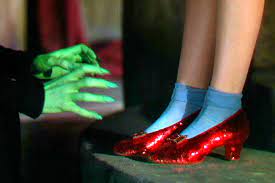
My first introduction to the four “precious gems” was probably when I started going to the movies.  Diamonds Are Forever was as much about the title jewels as it was about James Bond.  Romancing the Stone – the first movie my wife and I ever saw together – was a swashbuckling pursuit of a giant emerald in South America.  The “Heart of the Ocean” pendant from Titanic was the biggest sapphire I’d ever seen (until someone reminded me it was actually a blue diamond).  And rubies, of course, became something magical through Dorothy’s red slippers in The Wizard of Oz.

The “Star of Fura” ruby

Last week, the largest ruby ever mined – 55.22 carats – came to the auction block at Sotheby’s.  For a cool $35 million it could’ve been yours.  Named the Estrela de Fura – Portuguese for the Mozambique mine where it was discovered – the “Star of Fura” was twice as big in its native form a year ago, then cut down and polished to the glistening red rock you see here.

Rubies aren’t made to be broken but world records are, and this one was shattered.  The previous largest ruby, known as  The Sunrise, was “only” half as big (25.59 carats).  To me, The Sunrise looks about as big as a red M&M.  The Estrela de Fura looks like a strawberry.  The most expensive strawberry in the world, that is.

Green?  Make that red!

If rubies are your thing, keep an eye on Mozambique.  Ruby mining is relatively new to this country in the south of Africa, with the first significant discovery of the gems made in 2009.  Less than fifteen years later we have the record-setting Estrela de Fura.  Surely an even bigger ruby can’t be far behind.

Moving on.  This week begins the month of July (and the second half of 2023) which means we have several reasons to see red.  America’s Independence Day includes a lot of red, whether the flag or the fireworks.  Sunbathers will see the color on their skin more often than they’d care to.  Strawberries are ripe and in abundance.  The month’s zodiac sign is cancer (the crab) and crabs are often red.  And July’s birthstone is, of course, the ruby.

Now’s a good time for some ruby trivia, the fun facts you most likely don’t already know.  The first one is my favorite for your next social gathering:

  1. Rubies are actually sapphires by definition (all mined from  the same crystalline form of aluminum oxide known as “corundum”).  In other words, rubies are simply rarer, red-colored sapphires.
    Don’t touch!
  2. Rubies have symbolized power and protection throughout human history, as with decorated warriors in battle (or slippered Dorothy in the Land of Oz).
    “The Hope”
  3. You’ve heard of the (blue) Hope Diamond but how about the (red) Hope Ruby?  The Hope is 32 carats, cradled in a ring and highlighted with just a few diamonds.  Same name, yes, but different gem, color, and setting.
  4. The most desirable (read: costly) rubies have a hint of blue in them, which contributes to the rich deep color known as “pigeon’s blood” red.
  5. A 10-carat ruby is typically more expensive than a comparably sized diamond.  Why?  Supply (and demand).  You just don’t find as many large rubies as you do diamonds.
Red sapphires, aka “rubies”

So there you have it: everything you need to know about rubies just in time for the month we celebrate them.  I’d be remiss (translation: “in trouble”) if I didn’t mention my wife’s birthday, which is next week as well.  Yes, her birthstone is the ruby, and “darn it all” I had the perfect gift idea if I’d only known about last week’s Estrela de Fura auction sooner.  These opportunities come along but once in a red moon.  Sorry honey, I need to be a little more on the ball.  Guess I’ll hang onto our $35M for next year’s birthday present.

Some content sourced from the CNN.com article, “Largest ruby ever to come to auction sells…”, and Wikipedia, “the free encyclopedia”.
Seaweed Sarge

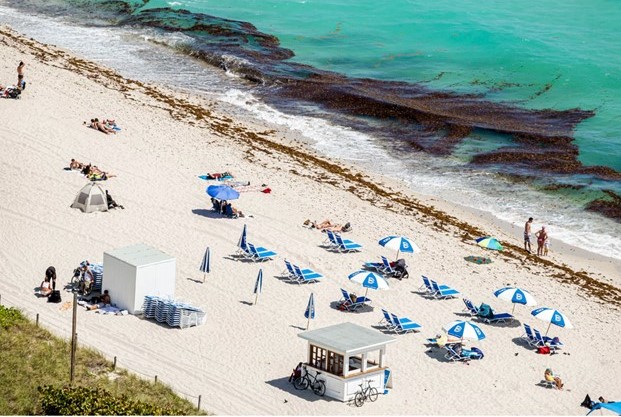
With the U.S. Memorial Day holiday in the rear view mirror, the 2023 summer season is officially upon us. According to surveys from American Express Travel, sun-and-fun seekers prefer New York City, Las Vegas, and Los Angeles this year. Las Vegas raises an eyebrow (after all, summer in Sin City is broiler-setting hot) but notice something else: Florida didn’t make the top three. Maybe – no, probably – it’s because Seaweed Sarge is already wreaking havoc on the Sunshine State’s beaches.

Miami Beach

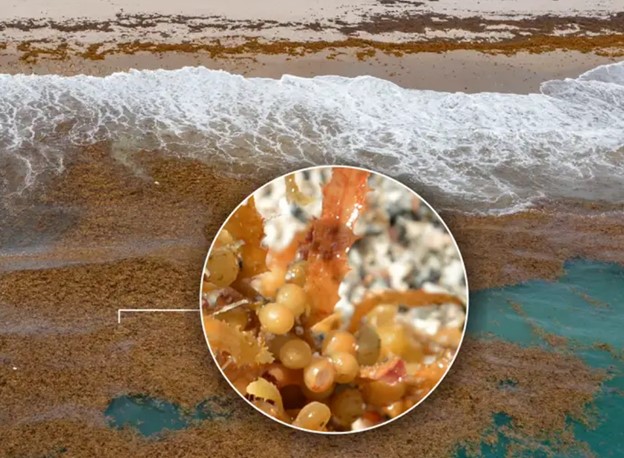
If you don’t know Seaweed Sarge, it’s because 1) you deliberately avoid the news these days – an increasingly popular trend – or 2) like me, you need a more creative label for sargassum, because it’s a weird name for the seaweed intent on taking over the world.  Sarge is a little intimidating, if only for his size.  Picture him as a belt of algae 5,000 miles long (I can’t picture anything 5,000 miles long, can you?)  Now consider: Sarge will double in size by July, the peak of his “bloom season”.

Sargassum

Sargassum is a particularly annoying form of seaweed.  It’s rootless, which means it can reproduce while simply floating around on the ocean’s surface.  Its rapid growth is bolstered by nutrients leached into rivers and oceans from land-based agriculture.  Once it makes shore sargassum rots immediately, releasing irritating hydrogen sulfide and the stench of rotten eggs.  And trying to remove countless tons of seaweed begs the question: where the heck do you put it all?

Florida’s gonna have to figure out the answer to that last question, and fast.  Sarge is already littering beaches from Ft. Lauderdale to Key West and we’re just getting started.  Come July and August it’ll be virtually impossible to walk along the shoreline.

Ft. Lauderdale

My own visits to the beach have been blissfully Sarge-free.  Most of my sun-and-fun takes place in San Diego, far from Sarge’s primary Atlantic Ocean residence.  The only real nuisances on San Diego beaches are the occasional jellyfish or stingray, and a once-in-a-blue-moon shark sighting (which stirs up more anxiety than actual sightings).  Admittedly, Sarge washes ashore in San Diego as well, but mostly just here and there as a remnant of off-shore harvesting.  Seaweed does have its upsides, in foods, medicines, and fertilizers.

Ironically, I have fond memories of Sarge as a kid.  He’s built with giant flappy leaves reminiscent of a mermaid’s fishtail.  He’s got countless air sacs to keep him afloat, which make a popping sound as satisfying as squeezing bubble wrap.  If I’d thought to take pictures back in the day, I could show you Sarge as an adornment to many a childhood sand castle.

It’s time for robots

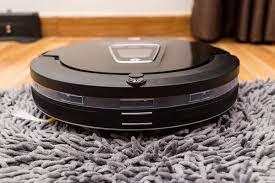
An army of beach tractors could work all summer in South Florida and barely make a dent in Sarge.  The seasonal maintenance of the single half-mile beach in Key West alone is in the millions of dollars.  But a better solution may be in play.  A prototype robot has been designed to do battle at sea.  “AlgaRay” cruises slowly through the water, hooking tons of Sarge’s strands in a single pass.  Once at capacity, AlgaRay drags Sarge underwater to a depth where all of those air sacs explode.  No longer buoyant, Sarge sinks to the ocean floor; a “watery grave” if you will.  AlgaRay has been likened to a weed-eating Pac-Man or a vacuuming Roomba.  Either image works for me.

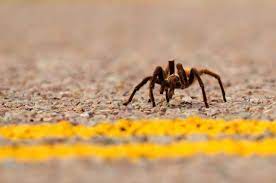
Let’s have one more look at those tourist surveys.  One in ten say they’d cancel or reschedule a trip to Florida if they knew Sarge was coming ashore.  Maybe that explains why landlocked Las Vegas ranked #2 on this summer’s most popular U.S. destinations.  Not that Vegas doesn’t have its own threats.  Three years ago a swarm of locusts descended on the Strip, blotting out casino windows and streetlights.  An annual migration of tarantulas passes by in the surrounding desert.  So take your pick: hordes of flying/crawling bugs or a giant mass of inanimate algae.  Maybe Sarge isn’t so bad after all.

Some content sourced from the NPR.org article, “Giant blobs of seaweed are hitting Florida…”

State Flyovers

The heavy-duty bracket I purchased to display our American flag sits patiently on the garage shelf. The flagpole and flag stay wrapped in the plastic they came in. I hesitate with this little DIY project because I’m mounting the bracket onto a rounded wood column on the front porch. If the column isn’t solid throughout, it may not support the Stars and Stripes. Or the Palmetto State flag, for that matter.

South Carolina

If you’re not familiar with the South Carolina state flag, you are now.  Not very exciting, eh?  A white palmetto tree in the middle and a white crescent to the upper left, on a rectangle of deep blue.  Okay, but what about why the flag has this look?  That’s a little more interesting.  All of it is a nod to the Revolutionary War.  The crescent could be found on an American soldier’s cap, palmetto logs were used to build the forts they fought from, and the deep blue was the color of their uniforms.  My assumption was simply, “Oh, our state has a lot of palm trees and a lot of clear moonlit nights.”

Colorado

The same could be said for the state of our former residence.  Colorado’s flag is likewise simple, with a big red “C” for Colorado surrounding what I assumed was a yellow nod to the state’s bountiful days of sunshine (300+/year).  Nope, I only got the sunshine part right.  The “C” represents “columbine” (state flower) and “centennial” (Colorado became a state in the hundredth year of America’s independence).  The red represents the state’s distinctive sandstone soil, the white its ever-present snow, and the blue its endless skies (which really are an amazing blue).  More than meets the eye with this “state flyover”, am I right?

Maine

Not content with just SC and CO, I decided to give a few other state flags a whirl… literally.  I flicked my mouse wheel the way someone might spin the bottle, for an unsuspecting kiss choice from the list.  Up came ME.  There’s a lot going on with Maine’s state flag, including a couple of proud characters and a moose that looks rather cartoonish.  “Dirigo”, from a long-ago-but-now-defunct language of the region, means simply, “I lead”.

Here’s a further sampling of U.S. state flag trivia:

  • Arkansas was the first of the fifty states to produce diamonds.
  • Hawaii was once under British control, so their flag includes a small version of the “Union Jack”.
  • Montana’s motto is “gold and silver”.
  • Ohio’s flag is not rectangular and includes a “swallowtail” notch (which can’t be said for any of the others).
  • Oregon’s flag has a different design on each side.
  • Utah’s flag changes in 2024, to better represent the makeup of the state’s residents.
Ohio

If you live in an American state, you should play this game yourself.  Scroll to the image of your flag in the article: The state flag for all 50 states… but before you read the written description, make your best guess on the colors and symbols.  It’s fair to say most Americans don’t really know our state flags.

Go Dawgs!

South Carolinians love to fly flags.  You’ll see the colors of colleges and universities from all over down here (including the red/black of those nearby football champion Georgia Bulldogs).  You’ll see a lot of those “garden flags” designed to represent the year’s seasons and holidays.  But mostly you see the Stars and Stripes, and the Palmetto and Crescent.  South Carolina’s forever nod to the Revolutionary War means I’ll never look at our flag the same way again.  Now I just have to get the bracket where it belongs so I can hoist the banner same as every other resident.

Some content sourced from the USA Today article, “The state flag for all 50 states…”, and Wikipedia, “the free encyclopedia”.

Celestial Strings of Pearls

When I take the dog for a walk after dark, I never know what to expect in the night sky above me. We live in an area devoid of city lights so the celestial show is clear and sometimes dramatic. Ursa Major (aka Big Dipper) often makes an appearance. Venus is the brightest star planet low in the western sky at twilight. And the full moon, seemingly biggest as it rises just above the pine trees, can be breathtaking. But none of this prepared me for the bold processional streaking across the heavens last Thursday night.

It could’ve been Santa Claus and his reindeer for all I knew.  Sitting around a backyard fire pit with friends, having drinks and swapping stories, one of the women suddenly shrieked, “LOOK!!!” and pointed skyward.  At first it didn’t register what we were seeing (nor at second, nor at third).  I can only describe it as a tiny string of bright pearls, two or three dozen in the strand, perfectly spaced and moving silently across the sky.  Neither pulling nor pushing, they simply proceeded in a line as if drawn to some unknown destination.  It almost looked like the one-after-another cars of a roller coaster, heading up that first steep incline.

Our group was at a loss to explain this extraterrestrial.  We thought it might be the neatly arranged contrails of a stealth fighter.  Or some faraway electronic billboard advertising in Morse code (only with dots, no dashes).  Turns out we weren’t even close.  Our little alien spacecraft parade was the latest launch of Starlink satellites from SpaceX.

You’ve probably heard of SpaceX, even if you don’t know much about what they do.  Founded in 2002, SpaceX is one of Elon Musk’s ambitious companies, with the “modest” long-term goal of colonizing Mars.  While they design and launch the spacecraft to make that happen, SpaceX is providing Starlink Internet service to under-served areas of the globe by building a “constellation” of satellites around the planet.  42,000 of them.

This is technology way beyond my understanding, but here’s the basic setup.  A transmitter somewhere on earth sends the Internet up to one of those satellites and the satellite then rebounds the signal back to you.  If the satellite loses your direct line of sight, it can hand off the signal to one of its buddies and your Internet service continues uninterrupted.  SpaceX earned the license for a ten-year window – starting in 2019 – to complete its Starlink constellation.  At last count they’ve already got 4,000 of these little guys in orbit.

Starlink satellite

Credit Musk for identifying a market in need.  Mars may not be on my bucket list but faster Internet service certainly is.  Two years ago 10,000 Earthlings signed up for Starlink subscriptions (at $599 USD for the hardware and $120/month for the service). Today? Fully 1.5 million customers are bouncing data back and forth with all those satellites.  My rural location here in South Carolina (and the s-l-o-w speed of my current Internet provider) make me a prime Starlink candidate.  Later this year, I’ll also be able to switch over my cell phone service.  Yep, Elon Musk is literally taking over the planet.  Come to think of it, maybe the entire solar system.

A “string of pearls” before the satellites go their separate ways

Whether or not I subscribe to Starlink, I find the satellite technology fascinating.  We have a lot of “space junk” circling Earth but this constellation of man-made stars seems more elegant.  They’re launched in strings of up to 60, separating once they’re high enough. Each satellite’s thruster is powered by krypton and argon.  They talk to one another to avoid collisions.  They’re currently undergoing “dimming” to appease astronomers by taking a back seat to the real stars in space.  Finally, these satellites can “de-orbit”.  In other words, when they’re time is done (even satellites don’t live forever), they return home for a proper burial, which means burning up entirely as they attempt reentry through Earth’s atmosphere.

Starlink satellites x 42,000

Several websites track the continuing launches of Starlink satellite strings (like this one).  You can find out exactly when they’ll be passing overhead in your neighborhood, destined for their rightful place in the budding constellation.  If you see them stream by, remember, it’s not Santa and his reindeer (wrong month).  It’s a string of pearls designed to provide you with faster Internet service.

Some content sourced from Wikipedia, “the free encyclopedia”.

Another Peg in the Car

Our daughter gave birth to her firstborn this week, a precious little bundle with rosy cheeks and strawberry blonde hair. For her and her husband, life has changed forever. And for our granddaughter, barely two days old now, every sight and sound will be a complete and utter mystery. In other words, her game of life has only just begun.

The 1960s edition

I was only nine or ten myself when I started playing at life.  Not real life, of course, but the board game in a box by Milton Bradley . “Life” (as we simply called it back then) was a significant rung up on the board game ladder. Once discovered, “Don’t Break the Ice”, “Hi Ho! Cherry O”, “Chutes and Ladders”, and the well-worn “Candy Land“stayed on the shelf forever.  Win or lose, “Life” was a ton of fun pretending to be an adult.  After all, we kids had no idea what we were doing.

The original board

The genius of “Life”, like “Monopoly”, is that its players are too young to understand what they’re playing at.  In Monopoly, you buy and sell real estate, mortgage properties, and pay income tax, and somehow all of this is “fun” (especially when you win and become the one and only landlord in town).

In “Life”, you’re making decisions ten or fifteen years ahead of your time.  I find it ironic “Life” is a game for kids yet it skips the entire chapter of childhood.  The first move is to “Start a Career” or “Start College” (you choose).  If you start college you “Borrow $100,000 from the bank”, so you’re already saddled with debt.  You pay taxes or get a refund.  You earn raises or sometimes lose your job.  Wait, this is fun?  You bet it is.  You’re a kid and you don’t know the meaning of “responsibilities”.

Eventually,  the colorful cardboard path of “Life” takes you by a church, where you get married and add a spouse peg to your car.  Soon after you have babies (more pegs) and soon after that you buy a house.  The meandering path continues, until it stops “years” later at either “Millionaire Estates” (you’re rich!) or “Countryside Acres” (you’re not!)

When “Life” is over, it’s time to account for your accomplishments, which means simply adding up all of your cash.  The player with the most money wins.  Wouldn’t that be an interesting conversation with St. Peter?  Hey Pete, I won The Game of Life because I had the most money!  Open up the gates – I’ve earned my entry!

“The Game of Life” has evolved since it was first produced many years ago.  My childhood plays were on the 1960s version, which included a folding rectangular board with the wandering path for the cars, little plastic mountains you’d pass through at the corners, little plastic buildings you’d pass by here and there, and, smack-dab in the middle, a giant spinning numbers wheel to determine how far your car would go on any given turn.

Linkletter

The 1960s version also had insurance policies, promissory notes, and stock certificates.  Art Linkletter, who promoted the board game on TV, smiled out at you from the center of the $100,000 bills.  Finally, your choices on your final “Day of Reckoning” were “Millionaire Acres” or “Poor Farm”, depending on the size of your bank account.  But even before you chose “Poor Farm” you had a last-gasp chance to win the game by betting all of your money on the numbers wheel.

Today’s edition

The newest version of “Life” seems the same, with the little mountains and plastic buildings and giant numbers wheel.  But look closer and you’ll find the game is delightfully “PC” now.  You can perform “community service” or “good deeds” (which translate to monetary value at the end).  Your career choices include less traditional vocations like “Hair Stylist” and “Athlete”.  Your housing includes a mobile home or a “luxurious mountain retreat”.  You can even sue other players to the tune of six figures.  Today’s kids might actually understand that aspect of the game.

Finally, in a full-on nod to modern times, “Life” wants you to know it’s “Your Life, Your Way”.  Accordingly, you can choose pets instead of kids.  And the little people pegs are no longer just pink or blue because… you know.

Here’s the last word on “Life”.  The corner of the box top gleefully shouts, “Now with one-time assembly!”, meaning as soon as you put the mountains and buildings and spinner into place, the board is good to go every time you play it.  Now what fun is that?  Just like “Mouse Trap”, half the enjoyment of “The Game of Life” was putting the whole thing together.  At least we kids understood how to do that. As for what the game itself represented?  Not so much.

Some content sourced from Wikipedia, “the free encyclopedia”.

Crescents and Con Artists

Every Christmas without fail, my family enjoys croissants as part of the morning meal. We pop them into the oven after seeing what Santa left in our stockings (but before unwrapping anything under the tree). So last week, as I loaded our Easter ham into the garage frig, a tantalizing thought occurred to me: the leftover Christmas croissants are parked right next door in the freezer. Could they possibly be as light and flaky as they once were, four months after their initial rise-and-shine?

If you know anything about authentic croissants, “rise and shine” is a fitting description.  Thanks to some seriously active yeast, croissants rise to a soft, pillow-y consistency.  Thanks to a whole lot of butter (and a little egg yolk), croissants finish with a pleasing sheen on their delicate, crispy crust.  If there’s a more decadent baked good on the planet, my crescent-shaped ears are open and listening.

Austrian kipferi

Croissants have been around a long time.  They got their start centuries ago in France Austria as the more pedestrian kipferi yeast bread roll.  Eventually the French stepped up the game using leavened laminated dough and butter, ending up as the light, flaky, many-layered version you know and love today.

Croissant means “crescent” of course (which is why I get hunger pangs whenever I gaze at the moon).  Croissant also has an elegant pronunciation.  Turn the “roi” into a “weh”, drop the final “t”, and keep the sound a little inside the nose.  Cweh-saw.  Congratulations!  You speak French.

Even “crescent” has a dignified definition: a shape resembling a segment of a ring, tapering to points at the ends.  Can you picture it?  Sure you can, because now you’re thinking of Pillsbury Crescent Rolls.  They’re so “American”, aren’t they?  We take a centuries-old, meticulously refined shoo-in for the Baked Goods Hall of Fame and reduce it to sticky, doughy, fast food; vacuum-packed into a can you open with a spoon.

The Poppin’ Fresh family

[Speaking of Pillsbury, here’s something you didn’t know about the Dough Boy, otherwise known as “Poppin’ Fresh”.  He has a family!  His wife is Poppie Fresh, his kids are Popper and Bun-Bun, his grandparents Granpopper and Granmommer, and his Uncle Rollie.  Don’t forget the dog (Flapjack) and the cat (Biscuit).  In the 1970s you could purchase the entire clan as a set of dolls.]
BK’s “Croissan’wich”

Pillsbury isn’t the only crescent con artist out there.  Burger King made a name for itself with its popular Croissan’wich breakfast entrees.  And Galaxy, the Williams-Sonoma mail-order croissants my family and I enjoy at Christmas, start out as frozen minis, rise impressively overnight on the kitchen counter, and bake to an excellent knock-off of the bakery-made originals.

The preparation of authentic croissants requires time and attention we Americans don’t have the patience for.  Watch the following video (which is thirteen minutes long so… maybe not) and you’ll learn what it takes.  At the least, you’ll understand why I pay almost $4.50 for a single croissant from Galaxy/Williams-Sonoma.

Most of us wouldn’t make it past  the initial “pre-dough” step in the video, let alone the labor-intensive lamination (folding/flattening), forming, fermentation, baking, cooling, and storage.  We’re talking hours and hours in the kitchen here, and that’s assuming you have the right equipment.  No wonder we’d rather just whack a Pillsbury tube on the counter edge and produce “crescent rolls” hot out of the oven 9-11 minutes later. 

Still, I implore you to watch the cweh-saw video.  The star of the show is Frédéric from Boulangerie Roy Le Capitole, narrating the process in his beautiful native language.  This man could be saying … and then we drag the smelly garbage out to the back alley for the cats to dig through and I’d still be glued the sound of his words.  Or, listen to our lovely video host and her delightful French accent (with the occasional incorrect word sprinkled in).

Lamination = Layers

I was so mesmerized by the French voices I really don’t remember much about the croissant-making itself.  But it’s hard to forget the facts.  Making an authentic batch takes three days.  A croissant is 30% butter and can have as many as fifty layers.  French bakeries have “bread laws” to protect their artisan products.  Finally, you can “hear” the sound of an authentic croissant by pushing through the crispy crust to the softer layers inside.

To the matter of my Christmas… er, Easter croissants, I’m happy (and satisfied) to report they tasted just as good last week as their holly, jolly predecessors a while ago.  Apparently four months isn’t too long to wait for good croissants.  But three days is too long to make them from scratch so I’ll keep buying from con artists.

Some content sourced from Wikipedia, “the free encyclopedia”.