You Can’t Walk and Chew Gum

In the local news this week, we learned Amy Wilson and her newborn – residents of our fair city – are in critical condition in a Salt Lake City hospital as victims of a head-on collision. Wilson and her newborn suffer brain injuries as they struggle to survive, while two of three teenagers from the at-fault car are dead. The heartbreaking interview with Wilson’s husband here in Colorado included loss of words as he tried to reconcile the happiness of a birth with the tragedy of the accident.

My reaction to this story – besides donating to the “Amy and Baby Wilson Support” GoFundMe campaign – was the teenagers must have been texting at the wheel.  I wonder if they even left skid marks.  Prayers be with them, Amy Wilson and her newborn will survive and their injuries will be short-lived.  But the same cannot be said for the kids in the other car.  As it turns out they were street-racing when they jumped the median.  They might as well have been texting.

84-chastise-1

The victims on both sides of this accident will join the rising morbid statistics tied to “distracted driving”, which includes use of smartphones. We just can’t put them down, even with risk of life staring us in the face.  By no coincidence, the Wall Street Journal published an article this week about rising insurance rates tied to use of smartphones while driving.  36% of State Farm customers admitted to texting while driving, up 5% from five years earlier.  20% admitted to taking a photo while driving; another 10% take videos.  In those same five years smartphone ownership among drivers increased from 50% to 90%.

I will never understand the urgency to check a text while driving.   Apparently I’m not as addicted as most.  If I’m “late” in responding to a message, I can’t think of a better excuse than “I was behind the wheel”. When my phone rings or a text message dings, I will find a safe place to pull over if I can.  More often I’m not going to answer until I get where I’m going.

84-chastise-2

Perhaps I’m more motivated than most, because my son caused a distracted driving accident several years ago in high school.  As he fiddled with the car stereo leaving campus, he braked too late when he saw the red light in front of him, causing a chain-reaction fender-bender involving five cars.  Thankfully no one was hurt, but even at school-zone speeds my son caused a lot of damage.  Because of that incident I chastise my children any time I receive a text from them and realize they are driving.

Technology is trying to improve things, of course.  Voice-activated control is a lot better than it was just a few years ago.  But we’re not there yet.  Until it is commonplace to conduct a stream of communication from start to finish hands-free, the senseless accidents – and the insurance rates – will continue to rise.  Even if you perfect the technology, you still have the distraction.

84-chastise-3

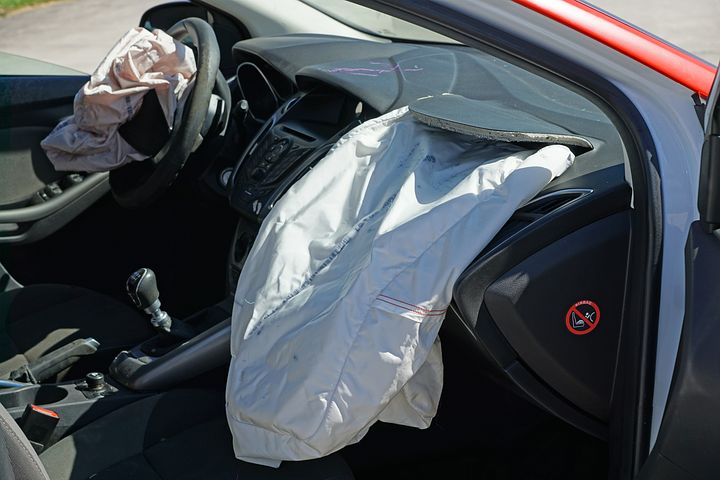
Sure, you can walk and chew gum at the same time, but not so texting and driving.  I looked at the photo above and thought, “what if you saw that through the windshield of the car coming towards you?”

The next time you’re on the road and you get that familiar ding, just keep going where you’re going.  No matter the message, it’s infinitely less important than the safety of those around you.

Something Wicked This Way Comes

This April, a movie called The Circle will arrive in theaters, and it just might generate enough buzz to displace political headlines.  The previews start innocently enough: a wide-eyed young woman “Mae”, who can’t believe her good fortune at being hired into the thoroughly glamorous Internet company “Circle” (a super-hybrid of Apple, Google, and Facebook).  Predictably, things take a turn for the not-so-good when Mae realizes her new employer seeks a singularly “true” Internet identity for its consumers, revealing all there is to know about a person.

The previews for The Circle intrigued me enough to give the book a try, even though the reviews were mediocre at best.  But no matter; the premise draws me in and keeps me reading.  What resolution can possibly exist in a not-so-distant future where an individual’s “privacy” goes completely out the window?  The Circle proposes an all-knowing (and therefore) all-exploiting Internet service; a corporate version of totalitarianism.  I can’t imagine a happy ending, can you?  As Ray Bradbury would say, something wicked this way comes.

83-prescient

Ray Bradbury authored countless short stories placing believable humans in not-quite-so believable circumstances, yet seeking a peek into a probable future.  “Fahrenheit 451” is perhaps his most famous example, but I have my own favorites, including “The Golden Apples of the Sun”, “A Sound of Thunder”, “Skeleton”, and “The Veldt”.  I own a collection of Bradbury’s “hundred best”, and find them just as compelling as when I first read them forty years ago.  Why?  Because they still aren’t quite believable.  The presumptions and technologies and societies of Bradbury’s stories are still somewhere around the corner of the world of today.  But I have no doubt they’re coming.

The same case can be made for the cult-classic neo-noir film Blade Runner, produced in 1982 but based on a book written decades earlier.  Blade Runner made several far-reaching assumptions about a dystopian Los Angeles of the future: a) climate change, creating an environment dominated by darkness and rain, b) culture change, where its inhabitants, language, and food are decidedly Asian, and c) technological change, where “replicants” (robots) perform the mundane tasks humans no longer care to do.  Blade Runner’s mystique is in the depiction of a familiar place transformed by radical changes; the kind that aren’t so unbelievable.  Not now perhaps, but they’re coming.  (Also coming: a sequel to Blade Runner later this year).

Here’s another example from Hollywood.  Logan’s Run (which was an on-screen disaster just begging to be remade thirty years later), depicted a completely controlled, pleasure-filled world inside a giant, sterile dome – but only until age thirty, when its inhabitants were ceremoniously put to death (to conserve the resources of a supposedly dying planet).  By default, Logan’s world is a society where everything is new and clean, everyone is “young”, and a day in the life is controlled by some behind-the-scenes, largely technological presence.  “Logan 5” and “Jenny 6” (a delightful nod to the loss of individualism) are too dependent on the comforts of their world to ever acknowledge its limitations. Considering how technology shapes our actions and decisions today, perhaps Logan’s world is not so far-fetched anymore.

The appeal of Ray Bradbury, Blade Runner, and Logan’s Run – even today – is stories about worlds that are (still) not believable.  We can enjoy them yet keep them at arm’s length, comforted by the thought “can’t really happen”.  And that’s what makes The Circle a serious conversation piece (even if it’s a box-office flop): a taste of an all-powerful, all-knowing Internet – if governments and corporations let it get that far.  Once we reach that point is there any turning back, or will “drones” more aptly describe humans than cool little flying machines?  Terrifying foresight for sure, but hopefully not prescient thinking.

Okay, you’re done reading now.  Back to your Facebook feed.

For Heaven’s Snakes!

On a recent jog along the dusty unpaved roads of my neighborhood, I heard – and then saw – a couple of energetic dogs intent on chasing me down. They leaped off the front porch of a nearby house, tore across the wide-open acreage adjacent to the street, and came to a halt just inside what must have been an invisible fence. Barking and jumping, they made it clear I was intruding on their space. Not that I really noticed. I was scanning the road and the shoulder where I was running instead, looking for snakes.

82-indigenous-2

Perhaps you’re wondering why I’m on the lookout for snakes in the dead of winter, when wildlife should be hibernating.  Or maybe you’re wondering why I’m even running in an area where I might step on one.  Truth be told, it’s highly unlikely I’d come across a snake in my neighborhood, even in the middle of a hot summer running deep into the weeds.  Colorado has plenty of the slithery ones, but they prefer the rocky habitat of the foothills to the west (up against the Rocky Mountains).  Yet I still look for them out of a long-enforced habit.

Does my snake-dislike qualify as a phobia?  Probably.  It was my earliest face-to-face with a rattler that turned me to the dark side.  Summertime, backyard of our house – living in the close confines of a narrow canyon – and I whacked a tennis ball into the neighbor’s yard.  Didn’t mean to do that and needed the ball back.  Nobody was home next door but a side gate meant I could sneak around unnoticed.  As I moved beyond the house and into an unkempt grassy area, I spied the tennis ball and made a beeline for it.  What I didn’t see was the five-foot snake nestled in my path, coiled and ready to strike.  Peripheral vision or his rattle made me leap and hurdle at the last second.  I landed on the other side of him and kept running.  Someone came to my aid and the rattler was caught soon after, but the damage to my psyche was done.  Snakes = not good.

There are four species of poisonous snakes indigenous to the United States: copperhead, coral, cottonmouth, and rattlesnakes (of which there are several sub-species).  I’ve had the “pleasure” of encountering two of these four up close and personal.  In California I came across several more rattlesnakes after my tennis ball adventure, including those big, nasty diamondbacks on desert hikes with the Boy Scouts.  Then, years later, while visiting my wife’s family in North Carolina, I played a round of golf and discovered copperheads are fond of the short grass out there.  I approached my ball on one of the fairways and just about left my shoes when a long, black snake sprinted across my field of vision.  One of the locals I was playing with just laughed and said, “copperheads; get used to ’em kid!”  Whether that was sage advice or mind games, golf in North Carolina lost all appeal.

Snakes have been in their share of films.  I’ve never seen snakes on a plane and I never saw Snakes on a Plane so I’m still okay to fly.  A friend dragged me to Anaconda, which killed any interest in seeing the Amazon.  And in Raiders of the Lost Ark of course, Harrison Ford is asked “Indie, why does the floor move?”  The following scene with all those snakes is a close-up I wish they’d left on the editing room floor.

82-indigenous-2

Some say you’ve got to get your nightmares out in the open to get past them.  Maybe I’m doing that by writing about them.  Doesn’t mean I won’t keep looking for slithery ones when I run.

There’s Something About Mary

Mary Tyler Moore passed away over a week ago and I’ve been thinking about her ever since.  Countless actresses come and go, but then you have those who make indelible impressions with one or two jaw-dropping performances.  Audrey Hepburn, Julie Andrews and Maureen O’Hara, just to name a few.  Meryl Streep.  And Mary Tyler Moore.

81-indelible-1

There’s something about Mary. I read her filmography from start to finish – a span of sixty years of television and movies – and came up with two roles of any significance to me: Mary Richards in The Mary Tyler Moore Show (1970-1977), and Beth in the film Ordinary People (1980).  But I think most people would agree – those performances alone land Mary Tyler Moore in an acting class by herself.

Moore first became a familiar name as Laura Petrie in The Dick Van Dyke Show in the 1960’s, but that was a little before my time.  On the other hand, The Mary Tyler Moore Show was a weekend staple in my house.  At an age when my father still controlled the TV remote (er, TV channel – no remotes back then), my brothers and I were treated to CBS’s Saturday night “killer lineup”, which included The Mary Tyler Moore Show, The Bob Newhart Show, and The Carol Burnett Show.

81-indelible-2

The Mary Tyler Moore Show included memorable opening credits, if only because the theme song was so infectious (“…you’re gonna make it after all…”), as was the final scene where Mary spins and smiles and throws her hat into the air at a busy Minneapolis intersection.  That throw – and Mary Tyler Moore herself – is immortalized in a bronze sculpture you can find at that very same intersection today.

81-indelible-3

In 1980, just as I was heading off to college, Robert Redford directed the Best Picture winner Ordinary People, one of the most gut-wrenching, powerful, “real-life” dramas I have ever seen.  Timothy Hutton burst onto the Hollywood scene with an Oscar-winning performance as Conrad, the younger of two sons in a tormented Chicago family.  Judd Hirsch was also nominated for an Oscar (losing to Hutton) for his portrayal of the determined therapist who counseled Conrad back to stability.  But it was Mary Tyler Moore’s turn as the heartless and unforgiving mother Beth that stole the show.  Her performance was so counter to the sunny demeanor of Mary Richards, I wondered if she was tapping the energy of some real-life bout of depression.  That was the breadth of Mary Tyler Moore’s acting talents.  I’ve only seen Ordinary People a couple of times but the scene where Donald Sutherland tells Beth he no longer loves her still haunts me.  Moore’s silent, crestfallen reaction to that statement could’ve coined the phrase “verbal slap in the face”.

I am even more taken by Mary Tyler Moore when I read some of the details of her life.  Clearly, she tried to embody the positive demeanor and “independent woman” of Mary Richards, but she did so in the face of significant personal tragedy.  She dealt with alcoholism and smoking addiction, drug overdose (her sister), suicide (her son), and years of diabetes.   She took up the baton to promote diabetes awareness and animal rights.  Moore was even tougher and more outspoken than her little/big screen roles would suggest.

81-indelible-4

The theme song of The Mary Tyler Moore show begins with “Who can turn the world on with her smile?” Scroll back up to that first photo.  Talk about ear-to-ear!  And I can’t help but smile back, even as we now say goodbye to Mary.

Some content sourced from IMDb.com.

Band of the Leader

Last week at church I was pleasantly surprised to see a brass quintet accompanying the organist.  Trumpets, tubas and French horns are typically reserved for the Christmas season services but there they were – a small group of our members – playing along with the hymns of the day.  It somehow made the service more meaningful.

80-credence

At President Trump’s inauguration I was pleasantly surprised to see a small band accompanying young Jackie Evancho as she performed America’s national anthem.  It was the first time I’d heard Jackie sing, and I thought her performance of “The Star-Spangled Banner” was flawless.  Perhaps some of you know Jackie as the singer from “America’s Got Talent”.  For me, her most recent performance lent credence to her status as “the youngest solo artist ever to go platinum”.  Jackie also performed for former President Obama at the Lighting of the National Christmas Tree, suggesting a refreshing lack of political persuasion in her decision to sing.

But back to the band – the “band of the leader” as it turns out.  Shortly after Jackie finished America’s anthem one of the inauguration commentators labeled the accompanying musicians “The President’s Own”.  That phrase stuck with me the rest of the day.  Thanks to my curiosity and an in-depth article on Wikipedia I now know more about this talented group.  In brief:

  • “The President’s Own” is formally called the “United States Marine Band” (USMB).  It is the oldest of the United States Military Bands, established in 1798.
  • The USMB became “The President’s Own” in 1801, after a performance for then president John Adams.  Later that year Thomas Jefferson requested a performance at his own presidential inauguration, and the USMB has performed at every inauguration since.  Counting President Trump’s that’s a total of fifty-three inaugurations.
  • The USMB has 130 members but typically performs with only 42.
  • The USMB performs about five hundred times a year, including state funerals and dinners, and arrival ceremonies for visiting heads of state.
  • The USMB’s most common performance is fifteen-minute “patriotic openers” for large events, including the playing of “Marine’s Hymn” (official hymn), “Semper Fidelis (official march), and “The Star-Spangled Banner”.
  • The USMB’s most famous director – back in the late 1800’s – was John Phillip Sousa, who composed “Semper Fidelis”, “The Stars and Stripes Forever”, and other famous march music.
  • USMB members serve a four-year contract as active duty enlisted Marines.  They are not required to complete the training of a typical Marine and are therefore never involved in combat missions.
  • Without a musical instrument in his/her hands, you could still recognize a USMB member by the lyre on their uniform rank insignia (replacing the normal crossed rifles).

I love the historical significance of “The President’s Own”, one of many uniquely American elements linking our current leaders to our Founding Fathers.  I also love the pomp and circumstance – bands, parades, fireworks and other “fuss” designed to accentuate our country’s most important moments.

Speaking of President Trump’s inauguration and the unquestionable divide of the people over his first week of actions, I found the words of the following quote spot-on.  Perhaps you can imagine “The President’s Own” playing in the background as you read, somehow making the words even more meaningful:

“We were a country that has been snoozing. Now we are alert. Whether it’s negative or positive, energy has risen. People are engaged. They’re studying. They are thinking more. And I think that’s good. You can’t get that without someone being bold enough to say things people don’t agree with.” —Hall of Fame running back Jim Brown to the Wall Street Journal.

Some content sourced from Wikipedia, “the free encyclopedia”.

Have You Lost Your Marbles?

Nestled quietly amid the several headlines for the Presidential Inauguration and the Women’s March on Washington last week, the Associated Press (AP) reported an incident of marble madness near Indianapolis: “… a truck carrying 38,000 pounds of marbles lost its trailer… the marbles were on the shoulder and in the median… there were no injuries, but a lane of traffic in that area was affected by the cleanup during much of the day.”

I was lucky to catch the marbles story on my news feed.  It rolled in and rolled out (ha) in the space of about twenty minutes, making way for the more important headlines of the day.  A spill of 38,000 pounds of marbles!  That’s a whole lot of little glass orbs, people. Your average marble weighs 0.16 ounce (proving once again you can find anything on the Web), so with sixteen ounces to the pound you have a nice “round” estimate of 3,800,000 marbles commanding chaos on that Indiana highway.

79-convex-1As short as the AP article was (you’re reading just about all of it in the quotes above), I love the handful of details. One, the marbles were “on the shoulder and in the median”. In other words, they cleaned up themselves by rolling both directions off the convex surface of the asphalt. Two, “there were no injuries”. My first thought was the image of windmilling arms and dancing feet caused by a pail of marbles thrown in front of someone (I guess cars don’t react the same way). Finally, we have “… the cleanup during much of the day.” How the heck do you clean up 3.8 million marbles? My first choice would be a gigantic ride-on monster vac, preferably something designed by Dr. Seuss.

79-convex-2This story resonates with me because I had a childhood obsession with marbles – and marble games.  In the 1960’s the toy company Ideal came out with “Mousetrap”, one of the first mass-produced three-dimensional games.  Mousetrap was a fascinating contraption which – when completed – moved marbles and other game pieces in a start-to-finish process attempting to trap another player’s mouse.  When I first saw Mousetrap in action I became an instant marble enthusiast.

Mousetrap surely inspired the Matchbox game “Cascade” (which I was lucky enough to own).  Cascade consisted of three small trampolines arranged in a row between a tower and a scoring tray.  The tower included a clever “marble elevator” – a corkscrew raising the marbles to the top – only to dump them down a chute where they would bounce one-two-three on the trampolines and land in the scoring tray.  I’m not sure where in this endless loop you have a “game” but Cascade was sure fun to watch (see video here).  A more advanced version of Cascade came out the same year in Ideal’s “Bing-Bang-Boing”.

79-convex-3Countless marble contraptions have been designed since the games of my youth (the Web is full of fun videos), and let’s not forget Nintendo’s famous video game “Marble Madness”.  But as an adult I prefer the more elegant applications like Chinese checkers and marble solitaire (above photo), and the wooden box mazes I write about in Back in the Sandbox.

79-convex-2In the spirit of storm-chasers, I’d love to race down the highway to watch the next truck to lose its marbles somewhere in this country.  But maybe I’ll just stick to the marbles I own myself.  After all, what’s the saying?  A marble in the hand is worth 3.8 million on the road?  Or something like that.

Horsing Around

My wife runs an equestrian facility on our property – boarding, training, therapy and recreational riding for those who enjoy horses.  It’s a lot of activity and it’s a whole lot of work to maintain.  When our barn help doesn’t show up, that’s where I come in.  I don’t ride but I can do the work.  I suppose you could say I’m a horse of a different color.  My wife and I knock out the myriad chores in about four hours (morning and evening combined), and I get a kick (hoof?) out of all of the terms and phrases that are uniquely “equine”.  Consider the five essential aspects of daily horse care:

78-myriad-1

Grain – Are you “feeling your oats” today?  That’s a reference to horses (of course!) and the boost of energy derived from their daily dose of grain.  “Grain” means a lot more than “oats” these days.  Grain is a general barn term to include the endless supplements for the specific needs of a horse (i.e. fiber boost, joint care, digest assist, immune system boost, metabolic stimulation).  Solid, liquid or “mash” (something in between the first two), grain is measured in bins, sacks, and baggies; scoops, cans, and cups, and even tiny bits like pinches, eye-droppers, and capfuls.  When all is measured and done – voila! – your horse has a complete pan to feast on.  So remember – grain is not just grain.  That’s putting the cart before the horse.

78-myriad-2

Grass – Have you ever been the recipient of a “haymaker”?  That’s a powerful, forceful punch (which means someone must’ve been really mad at you).  But a haymaker is also a machine that dries grass, thus creating “hay”.  And horses need a lot of hay.  You could start with a handful but your horse will probably demand a flake or a cube, and if he’s really hungry he will devour an entire bale.  But I’m talking the 50 lb. bale you see stacked in the fields.  If you want to seriously hay your horses (and take a two-week vacation), opt for large bales – round or square – which can weigh up to a ton.  Your horse will think he’s found an all-you-can-eat-buffet.

78-myriad-5

Water – You can lead a horse to water but you can’t make him drink.  When a horse does drink however, he’ll take in a gallon or more at a time; a glassful simply won’t do.  Watering horses requires everything from a hose to a pan to a pail to a bucket to a tank to a trough.  If you want to get really crazy you can even install a cistern (or a water tower) and then you never have to worry where your water’s coming from (even if your well dries up).  Finally, don’t forget the fishnet to keep the water clean.  Horses muck it up while they’re munching on hay.

78-myriad-3

Cleaning – Speaking of mucking it up, are you a “muckety-muck”?  I hope not because that means you’re an arrogant, self-important person.  But come join me in barn chores and I’ll show you all the “muck” you could ever want.  A horse processes grain, hay, and water into a mountain of manure, and unfortunately for me a horse does his business wherever he pleases.  That means a lot of cleaning.  You’re going to need a muck rake for starters (and a hoe if it’s cold enough outside because then manure sticks to the ground).  You’re also going to need a muck cart – the wheels underneath the muck tub where you’ll deposit all of that manure.  Lastly your manure needs a final destination.  That would either be a manure pile (which is eventually removed by a manure hauler), or your pastures themselves, by means of a manure spreader.  Not to beat a dead horse, but your goal is to get all those “apples” as far away from the barn as possible.

78-myriad-6

Enclosures – If it came straight from the horse’s mouth, y0ur equine would demand to be put out on pasture and never ever brought in.  That’s because he wants to graze all day and night, which is almost never a good idea.  So a horse “comes in”, which means he retires to a pen or a stall.  If he’s really lucky, his stall has a run, and sometimes he can hang with other horses in a paddock before he’s moved back to pasture.  If he wants a place to go when he needs some alone time or gets tired of the rain he goes into a loafing shed.  And when he’s actually ridden he goes to an indoor or outdoor arena, or perhaps for a trail ride (which is sometimes just called “down the road”).

78-myriad-4

There’s a lot more equine-speak where that came from but it’s time I got off my high horse.  If you’re in the market for a horse I hope everything I’ve talked about here is enlightening.  To me it’s just horse sense.

Demise of the Department Store

In today’s headlines the Wall Street Journal turns to Sears – the aging department store chain – which will close 150 locations in the next several months. Sears will also sell its iconic Craftsman tool brand (to competitor Stanley/Black & Decker) in a longer-term “fix-it-and-return-it” strategy intended to strengthen the company. Clearly these events feel like the beginning of the end for Sears, and the end has been coming for a long time. The day Sears shutters its last store will be a sad one – as if a slice of the proverbial American apple pie is lost forever.

77-senescent-1

In the defining years of baby-boomers Sears was the retail destination (and catalog) of choice.  Sears Roebuck and Company – as it was originally known – bridged the gap between America’s small-town general stores and today’s elaborate shopping malls.  As recently as 1989 Sears was still the largest retailer in the United States.  In a world dominated by Wal*Mart, Target, and The Home Depot it’s hard to picture Sears atop the department store heap just a few decades ago.

The Sears store where I grew up – on the west side of Los Angeles – is not one of the 150 due to close its doors this year.  That makes me happy.  My Sears store is forever embedded in my childhood memories.  It was where my mother clothed me and my four brothers.  It was where my father bought appliances and a workshop full of Craftsman tools (most of which I’m sure he still has today).  It was the brick-and-mortar embodiment of the Sears “wish book” – the wonderfully large and colorful catalog filled with 1960’s kids’ Christmas dreams.  Last and perhaps most significantly, Sears was the location of the “Portrait Studio”, for which my family dutifully dressed up and posed every Christmas.  One of my all-time favorite photos has all of my brothers standing smartly around the Sears-store Santa Claus, while I’m sitting in his lap bawling my two-year-old eyes out.

Sears would enter my life again somewhat unexpectedly, when I was in college studying to be an architect in the 1980’s.  On several trips to Chicago my classmates and I visited the Sears Tower, the distinctive stair-stepped black skyscraper in the center of the Windy City.  The Sears Tower was completed in 1973 as the tallest building in the world, and the first to use a “bundled-tube” structural design.  Forty-three years later it is still the second-tallest in the Western Hemisphere (behind the recently-completed One World Trade Center in New York City).

77-senescent-2

Today’s Wall Street Journal article about Sears – which you can find here – includes dozens of reader comments more insightful than the article itself.  The comments yearning for Sears’ glory days are clearly written by my peers.  The comments blaming Sears’ demise on Amazon and other on-line retailers are largely from younger writers.  In one particularly stinging but accurate account, Wade Harshman writes, “I still like the brand.  I just don’t like waiting in line 20 minutes to buy a wrench because the one Sears rep is wrestling with a 1980 IBM machine and trying to sell an extended warranty on a $5 extension cord.”

If you Google “Sears Department Store”, you get the following up top:

77-senescent-3

It’s a sad statement when all four sub-links of the initial hit point to marked-down prices as the way to get you to buy at Sears.  Then again this is senescent brick-and-mortar shopping we’re talking about.  Montgomery Ward disappeared in 2001.  K-Mart and J.C. Penny hang by a deteriorating thread.  Even Macy’s reports “dreary” holiday sales, poised to close (another) 68 stores this year.  Could Bloomingdale’s or Saks really be next?

Think about Sears and the disturbing/inevitable (take your pick) headlines of retail closings the next time you click your way to another on-line purchase.  Future generations of shoppers may not even understand the meaning of “department store”.

Back in the Sandbox

76-zen-1       76-zen-2

Draw a line in the sand.

Therein lies the allure of the most unique Christmas gift I received this year.  The before/after photos above depict a modern-age spin on a Zen garden, only the “gardening” is done automatically; almost magically.  Place the ball where you feel the magnetic pull, spin a couple of dials underneath, and sit back and watch.  The ball is pulled invisibly around the sand, creating beautiful designs like the one in the second photo.  My “Sandscript” (which can be found here if you want one of your own) reminds me of “Spirograph”, the geometric drawing toy I had as a kid.  But my Zen garden is so much more than cool drawings.  It’s about finding calm within the daily chaos, or perhaps just a different way of looking at things.

Here’s what’s really Zen about my Sandscript.  First, you determine when the drawing is done by turning off the dials – the ball doesn’t just come to a stop on its own.  Second, the line drawings are random, and rarely symmetrical.  That’s my own brand of Zen right there.  I like things a little too neat and organized, so anything never really finished or never really perfect is my kind of therapy.

I always thought Zen gardens – one of countless cultural contributions from the Chinese and Japanese – were a little out there.  Authentic Zen gardens are the size of basketball courts and have you shuffling around the gravel and rocks, raking and rearranging as you seek your higher self.  Several years ago we bought my mother-in-law a tabletop Zen garden and I found myself drawn to the “gardening”, not really understanding why.  There is an undeniable calming effect when you draw lines in the sand.

The same can be said for mazes.  I loved mazes as a kid, especially the books you could draw in or the tabletop box where you turn the dials and tilt the maze to get the ball from start to finish.  Mazes are purported to have the same calming affect as Zen gardens.  I always thought mazes were limited to the hedge or cornfield variety but there are all sorts, including a chain of amusement parks throughout America.  We have a maze right here in our neighborhood, fashioned from painted lines on the asphalt surface of a cul-de-sac.  I’ve walked a few mazes in my lifetime but I’m still in search of the Zen in the experience.  I think I’m too preoccupied with finding my way out to discover any calming effect.

Zen is a great word, by the way.  There’s something about the sound of the “Z”.  Zen.  Or maybe I just like words starting with “Z” because they’re not used all that often.  Quick, name ten words off the top of your head starting with “Z”.  I gave myself sixty seconds and could only come up with seven.

If you don’t think Zen goes hand-in-hand with American culture, check out the following photo from a visit to a local retailer:

76-zen-3

My posts on Life In A Word will continue to run the gamut of topics, including personal experiences and humor for added zest (ha).  As you read you may find unexpected comfort in my words.  That’s not by chance – it’s probably just me playing with my Zen sandbox before I sat down to the keyboard.

Sourcing the Christmas Spirit

The holiday season often feels like a sprint to the finish.  From the moment the Thanksgiving table is cleared, my brain shifts to the list of “essential tasks” preceding Christmas Day.  In no particular order I know we will a) put up a tree, b) hang the lights,  c) decorate the house, d) write and mail greeting cards, e) send packages to distant family members, f) shop for the Christmas dinner, g) bake cookies, and of course, h) purchase gifts for the family.  We don’t always get everything done.  Some years – like this one in fact – no lights get hung.  Other years no cookies get baked.  There’s never enough time, the calendar mercilessly counts down the days, and just forget about intentions of healthy eating at any point in the process.

75-provenance-1

Thankfully all of this Christmas prep includes a few heartwarming activities.  My family and I always seem to find time to drive around the neighborhood to see the lights.  We don’t trim the tree until the week before Christmas, choosing from more ornaments than we have branches.  We watch several of those cheesy Hallmark Channel movies, with the formula love stories and terrible acting and without-fail-happy-endings.  We keep egg nog in the frig and candy and cookies on the kitchen counters.  We tune our car radios to round-the clock holiday music stations.  We never miss Christmas Eve church.

More than twenty-five Christmases celebrated with my immediate family leads me to this conclusion: the spirit of Christmas is not born from the “prep list” I talked about above, nor even from the heartwarming activities I know will take place year after year.  Rather, the provenance of the spirit is moments that become memories, and memories that last far longer than the Christmas season itself.

I have a favorite Christmas memory from my childhood.  A neighborhood near where we lived staged an annual decorating contest between its several streets.  Not only were the houses fully adorned with lights and ornaments, but the streets themselves had Christmas themes, so decorating was consistent from sidewalk to sidewalk.  I remember one street decorated primarily with candy canes, another with bells, and still another with angels.  They even changed the street names for the season (i.e. “Candy Cane Lane”).  You always knew which street won the competition by the huge blue ribbon hanging from the first lamppost.  After touring every last street of this neighborhood, my brothers and I spent several hours at a nearby mall, purchasing gifts with the precious-few dollars we’d saved as kids.  Finally we’d join up with my parents for a late-night dinner out.  This memory of an evening of family fun stands the test of time – more than forty years ago by my estimate – and always brings a smile to my face.  This memory seems uniquely mine, as if dozens of other families didn’t tour those decorated streets or shop at that busy mall.

I have an equally favorite Christmas memory from recent years.  To slow down the events of Christmas morning, my wife and I created a trivia contest for our kids.  They stand at the top of the staircase outside their bedrooms and we start the questions.  Correct answers earn them a step down the staircase (closer to the gifts). Incorrect answers cost them a step backwards.  The trivia delayed the inevitable, but the first to reach the bottom stair won the privilege of opening the first gift.  It’s a tradition we’ve carried on for years, and a memory that will stay with me long after children stand at the top of our stairs on Christmas morning.

75-provenance-2

Let’s not kid ourselves.  The Christmas season will always be hectic as long as there are gifts to buy and greeting cards to write and family members to visit.  But there will also be moments – some planned and some not.  And memories – some fleeting and some longer-lasting.  It is those memories that without fail bring you comfort, joy, and Christmas spirit.