
When I was a kid, I remember (or was told) I used creative pronunciations for common words. Instead of cinnamon I’d say cimm-anin. Instead of spaghetti it was bis-ketti. The library was the lie-berry. Maybe back then my excuse was in just learning to talk but I can’t play that card as an adult. So when someone says Feb-YOU-air-ee instead of Feb-ROO-air-ee, or Shur-BERT instead of Shur-BET, I tend to wince.
 We’ve made it to the time of year where we reflect on the previous one, and we do so in year-in-review lists. “Most Influential People of 2024”. “Best Television Shows of 2024”. “Significant World Events of 2024”. And how about this one? Most Mispronounced Words of 2024. Thanks to Babbel, maker of language-learning platforms, the hard audio evidence doesn’t lie. Babbel came up with ten words people mispronounced over and over last year.
 I could print Babbel’s list here, but it’d be a waste of your time so I’ll just hyperlink it instead. Eight of the words I never ever used in 2024 (and never will), and the only reason I spoke the other two was because they’re the last names of politicians featured in 2024 headlines. To be honest, the list made me question Babbel’s approach to learning languages. Are these the words promoting a budding English speaker’s proficiency?
 Babbel also listed mispronounced words from other languages, including one of my favorites: espresso. Not sure how we Americans get that one wrong time after time, but we do. Maybe the myriad “ex-” words in the English language have us saying EX-presso but the concentrated coffee drink sounds exactly as it reads: ES-presso. Keep that in mind and your next Italian barista will be happy to serve you.
 As long as we’re speaking Italiano let’s get another one right – al dente. When you want your pasta cooked just right; “not too soft but firm to the bite”, you describe it as ALL den-tay, not ALLA dawn-tay. I only know this because I learned Italian when I was in college. If I didn’t know better myself I’d probably go with AL dent.

As long as we’re talking foreign language mispronunciation, let’s correct another one. Notre-Dame de Paris, the medieval Catholic cathedral in the middle of Paris (and the middle of the River Seine), can be mispronounced so many ways it’s almost as devastating as the fire from which it was resurrected. On the surface it sounds something like NOH-tur daym day PEAR-iss, which is “English-French” at its absolute worst. In actual French it sounds like this: NOH-tr dam due PAH-ree, where the two “r”s almost sound like “l”s.
You never saw it coming but today’s language lesson is a segue to the topic I’ll be covering for the next several weeks and months. Notre-Dame de Paris is a magnificent structure and a renowned work of architecture. It’s also a new model created by the good people at LEGO. And speaking of good people (great, actually), my wife put that LEGO model under the Christmas tree for me this year.
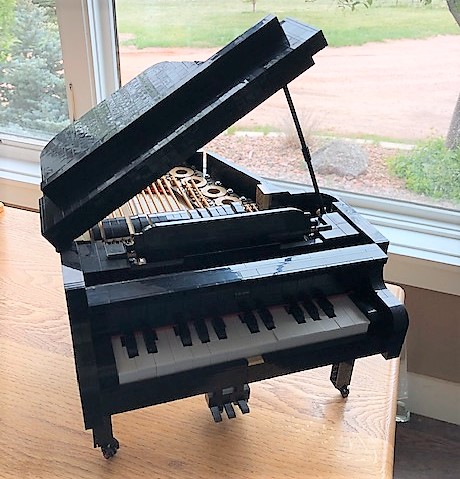
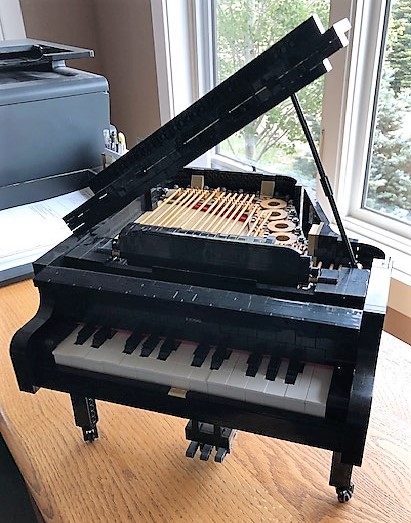
 For those who enjoyed the long journey of my building the LEGO Grand Piano (which I chronicled in Let’s Make Music!), and the shorter journey of the LEGO Fallingwater House (Perfect Harmony), I’ll be at it again as I attempt to rise Notre-Dame de Paris from the “ashes” of 4,383 plastic pieces. Won’t you join me on this foray into all things FRON-says? (That’s “French” for those of you who mispronounce it.) You’ll learn about the world’s cathedrals along the way, many of which took hundreds of years to construct. Let’s hope my own build of Notre-Dame de Paris is a whole lot shorter than that.
Some content sourced from the CNN World article, “These are the most mispronounced words of 2024”, and Wikipedia, “the free encyclopedia”.


 Life In A Word