Eggs-asperating Prep

Every now and then I get a hankering to bake something, which nine of ten times means chocolate-chip cookies. That tenth time I’ll venture into breads or cakes but they’re usually too time-consuming for my “taste”. Thus I’ll buy a perfectly prepared croissant before I ever labor to make one on my own. Maybe the same should be said for so-called perfectly prepared eggs.

Eggs-spensive!

We’re all talking about eggs these days, the same way we talked about gas during the “Energy Crisis” of the late 1970s. Eggs are scarce and evermore expensive, which translates to being more choosy about how we use them at home. I like eggs for breakfast every other day and I’m not likely to change that habit on account of rising prices. My dog may have to forego the occasional scrambled egg on top of his kibble, but until I pay as much for a dozen eggs as I do to fill my gas tank, I’ll still be buying them.

I prefer mine soft-boiled

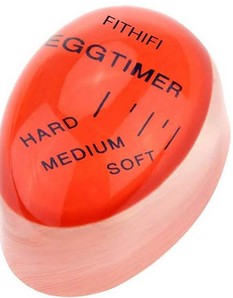
What I won’t be doing is cooking my eggs any differently than I did last week or last month, even if scientists now claim the “perfect method” (their words) to do so.  I prefer my eggs soft-boiled, which means a pot, some water, a $2.99 submersible egg timer from Wal*Mart, and less than ten minutes of prep after the water is boiled.  It’s a quick, mindless process I can pull off even before my morning coffee.
Would you prefer a more time-consuming method instead, with only slightly better results?  Okay.  Take two pots of water and heat one to boiling (212 F for us Americans, 100 C for most of the rest of you) and the other pot to “lukewarm” (86 F, 30 C).  Drop your eggs into the boiling water for two minutes, then transfer them to the lukewarm water for two minutes.  Repeat seven more times.  That’s right, seven more times.  On your calculator as well as mine, that’s 32 minutes until breakfast is ready, and you’re too busy to do other stuff while you’re waiting.

If I dedicate 32 minutes to egg-making, I’m expecting something much more grand and decadent.  An omelette at the least.  A scramble with a load of cut-up veggies.  “Benedict”, including the hollandaise sauce.  Heck, I’d even don my French chef’s hat and try sous vide eggs, which are…. oh, never mind – those take an hour or more.
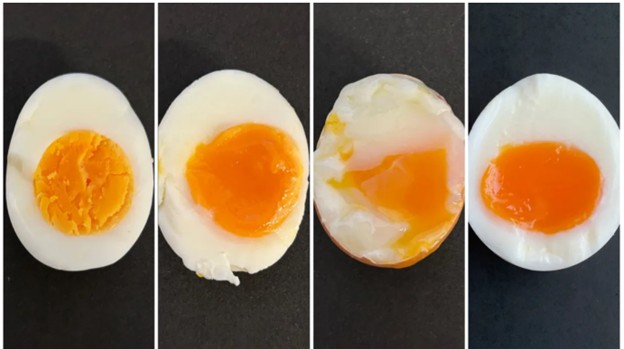
The second is soft-boiled; the fourth is supposedly “perfect”

The thought of “perfect” eggs in 32 minutes instead of soft-boiled in less than 10 is exasperating.  If I wanted to go all science on you, I’d explain why 32-minute eggs allow the albumen and yolk to cook perfectly together, even though each has a different composition.  I’d also explain why this method retains the maximum nutritional benefit of eating eggs (protein and so on).  But c’mon, do you really care about those details when you’re just looking for grub to get your day started?  Heck, the prep of my 10-minute eggs even allows me to feed the dog and clean up last night’s dishes while I wait.

The “perfect eggs” news article is interesting enough but I had to laugh when the writer inserted the standard “… be forewarned that consuming raw or undercooked eggs may increase your risk of foodborn illness”…”  Wait, I thought these eggs were perfectly cooked.  Now you’re hinting the process may cause food poisoning?  Sorry Mr. Scientist, I’ll stick to my $2.99 Wal*Mart egg timer method instead.


LEGO Notre-Dame de Paris – Update #7

(Read about the start of this “church service” in Highest Chair)

Maybe LEGO’s engineers got impatient with the construction of the east-end chancel of Notre-Dame de Paris, because Bags 10 and 11… of 34 bags of pieces, laid out the rest of the foundation of the entire cathedral.  Indeed, when we finished today’s rather brisk build (24 minutes!) we put down enough marble to allow the capacity 1,500 parishioners to “take a pew”.

24 minutes was barely a French coffee break back in the day when Notre-Dame was actually built.  In fact, we’re now twenty years into the construction: AD 1182.  With the chancel complete enough to host church services, we’ll spend the next twenty years (or rather, the builders did) rising the transcept (the “cross” bar, remember?) and first bays of the nave (the cross “long” bar).

Speaking of “bars”, note that I added LEGO’s signature “title bar” to the near edge of the model today (photo below).  LEGO wants you to know what cathedral you’re looking at, even though I’m teaching you enough detail so you won’t need a title bar.  But don’t be fooled; you won’t find a title bar in the foundation of the real Notre-Dame de Paris.

Today’s build was quick but not without the usual antics.  Once again I installed a piece incorrectly – a tiny bit of marble.  Once again I reached for the LEGO lever but it couldn’t lever out this kind of piece.  So I resorted to my paper clip “crowbar” instead and ZING!!! – the piece went flying across the room and ricocheted (another word with French roots – nice, no?) off the wall.  Good thing I managed to find it or several of Notre-Dame’s parishioners would trip on their way out.

Running build time: 5 hrs. 56 min.

Total leftover pieces: 24

Some content sourced from the CNN Science article, “Scientists developed a new method for the perfect boiled egg…”.

Many Happy Returns

Unlike 2021, the due date for U.S. tax returns was back to mid-April this year.  Most of us sweated under the ticking clock as we combed through statements and receipts in search of last-minute tax breaks. I have this recurring pipe dream where the IRS tells me to just keep what I owe (followed by the dream of how I would spend the money). Sadly, I’m a taxpayer who rarely sees a refund, and keeping what I owe certainly won’t happen. On the other hand, retailers could soon be asking me to keep what I want to return.  Now there’s something to ponder.

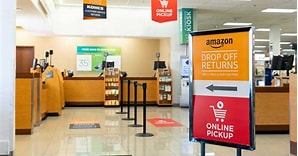
Picture this.  You place an Amazon order for a brand new Playstation 5.  You plunk down the $500 it costs and a few days later your purchase shows up on your doorstep.  But while you were waiting for your gaming console the IRS sent you a reminder about the balance due on your 2021 taxes. Whoops. You owe that $500 to the federal government, young taxpayer.  Hello, buyer’s remorse.  Full of regret, you contact Amazon to arrange the return, and their carefully worded response goes like this:

Dear Amazon Prime Member.  Thank you for your inquiry into the return of your Playstation 5 gaming console.  After reviewing our current stock we have determined it is not necessary for you to return this product.  Accordingly, nothing further is required at this time.  You can expect a full refund applied to the credit card used to make this purchase.  Thank you for shopping with Amazon.

Wait… keep the product AND get a refund, you say? Crazy, I know. Or maybe not, at least if you shop at Target or Wal*Mart.  Both retailers are considering this no-return approach with clothes, garden furniture, and “bulky” kids’ toys among other products they currently overstock.  It’s the result of consecutive worldwide events.  First, the pandemic, which allowed consumers to build up their savings accounts while mostly staying at home.  Second, record-setting inflation, which dragged a knife through what was supposed to be a post-pandemic spending frenzy.  Retailers stocked up early in anticipation of the purchase party, but then the lights and music were abruptly cut off.  The result: overstocked with a capital “O”.

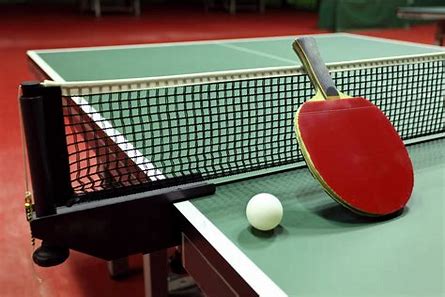
This version of keep-the-product-keep-the-cash kinda-sorta happened to me years ago.  My sister-in-law ordered a ping-pong table for her family and when it came, they discovered a bit of damage in one corner.  So she contacted the company, who told her, “Keep it.  We’ll just send you another one.”  Thus, in a moment labeled “Christmas not on Christmas”, my family got a free ping-pong table (Thanks, Sis!) Sure, the bounce of the ball was a little off on that one corner, but my kids didn’t care.  Besides, before I knew it they were old enough (or not) to drink and pretty much destroyed the table when they shifted to beer pong.

But I digress. With a ping-pong table I’m almost sure the cost of shipping back to the manufacturer was more than the profit after fixing and reselling it.  So my sister-in-law got two tables for the price of one.  Hey, what if she’d bought ten ping-pong tables and all of them were defective?  She’d go up and down her street handing out free tables.  She’d gain a bunch of new best friends and her neighborhood would hold massive ping-pong tournaments.  All for the cost of one table.

The problem at Target and Wal*Mart is more than just the cost of returns and overstocked items.  It’s also, they can’t charge the same price they charged you.  For one, the item may be offered at a discounted price by the time you return it.  For two, certain items have to be classified as “used” and can’t be offered at full price after the first purchase, or even offered at all.

“Un-resellable”

Which brings me to orange juice.  Orange juice, you ask?  Yep.  Try to return a jug of juice to the market some time.  We bought five jugs a couple of months ago for our daughter’s bridal shower, assuming the mimosas would flow like Niagara Falls. Wrong. Only a few of the guests opted for the bubbly since the shower was mid-day.  So I called my local market to confirm the return of four unopened jugs of juice, and was horrified to hear, “Sure, you can return them for a full refund.  But we’ll just throw out the juice.” Throw out the juice?  Yes, it’s the world we live in these days.  Many food items cannot be resold for fear of tainting.  So I’m drinking a lot of orange juice right now.

Let’s wrap this public service announcement with a caveat.  One of these days you’ll be pleasantly surprised when you end up with a purchased product AND a full refund.  Lucky you – it’s “Christmas not on Christmas”!  If it’s through Amazon, however, be wary of the following purchases: hazardous materials, gift cards, jewelry, groceries, and live insects (uh, live insects?) None of those can ever be returned, nor will you get your money back.  In other words, the sea monkeys you adopted in a moment of nostalgia (remember those, Boomers?) should be considered bought and paid for.  No refunds.

Some content sourced from the CNN Business article, “Just keep your returns…”, and the Clark.com article, “12 Items That Can’t Be Returned to Amazon”.

Scour Power Bars

I like to calculate trivial quantities for my own entertainment. For instance, in the timeframe of my years in grade school, my mother made me over 2,000 sack lunches (thanks, Mom!)  Or how about, in the sixteen years my wife & I have lived at our current address, I’ve driven up and down our street over 12,000 times. Trivial or not, these numbers lend perspective to things we don’t think a lot about.  Like soap.  And my soap number is +650.  That is, the number of bars I’ve consumed over the years in a daily effort to keep clean.

Seriously, when was the last time you gave a bar of soap more than a passing glance?  The poor little 3″ x 2″ x 1″ pastel-colored brick spends its month-long life sitting somewhere in your shower or bath, 23.75 out of 24 hours a day.  In those remaining fifteen minutes (probably less) he gets his one moment of adventure, traveling all over your body while he works to return you to fresh ‘n’ clean.  But with each passing day, Mr. Soap gets smaller and smaller until the dreaded moment of deliberation.  Is his remaining sliver too little for effective scour power?  You’d never know it with all the water, but maybe Mr. Soap sweats as he shrinks, anticipating the moment he gets demoted from the shower to the trash bin.

In the spirit of don’t try this at home (because it’s already been determined), a bar of soap really does last about a month, assuming a daily shower.  And that’s me.  I take a morning shower every day whether I need it or not.  Even if there’s nothing to “get ready” for I still want to face my day like there is.  So, Mr. Soap matters to me. You can understand why I’m getting into a bit of a lather on this topic.

In the chemistry lab, soap equals a surfactant derived from the chemical compound of a fatty acid.  In the supermarket, soap is simply a waxy, floral-smelling substance you purchase in solid or liquid form.  Behold some of the more common brands in America (as advertised online by Wal*Mart):

  • Caress
  • Coast
  • Degree
  • Dial
  • Dove
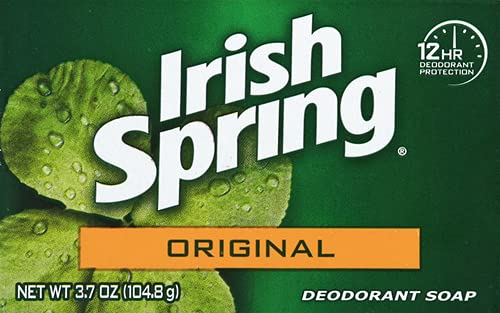
  • Irish Spring
  • Ivory
  • Jergens
  • Lever
  • Olay
  • Safeguard
  • Yardley
  • Zest

Admit it, as unimportant as soap may be to you, there’s a favorite brand out there, probably from the list above.  Mine is a little more exotic.  I go with Dr. Bronner’s All-One Hemp Lavender Pure-Castile (and how’s that for a mouthful of soap?)  Dr. Bronner’s is harder to find and more expensive than the commoners above, but I sure like it.  Maybe it’s the hemp; you know, maybe I’m getting a little “high ‘n’ clean”?  You could claim I’m “soap-stoned” when I shower.

My wife & I stream most of our entertainment these days so we miss a lot of commercials.  But ads for soap – at least those of several decades ago – took scrubbing bubbles to ridiculous claims.  Coast convinced you its product would “awaken your senses” and “bring you back to life” in the mere minutes of a shower.   Irish Spring advertised itself as “springtime in a bar” as a towel-clad Irishman cut into the soap with a knife he just happened to be carrying, uh… where, exactly?  And Zest had you thinking “you’re not fully clean until you’re Zest-fully clean”.  As if Zest was somehow noticeably better than other options.

Even though my Dr. Bronner’s might label me a soap snob, I want to give a shoutout to Ivory.  The simple white bars claim to be 99.44% pure soap.  The other 0.56% includes the sharp tang of fresh ginger root, a smell I will always associate with my grandparent’s house.  I can’t come up with another smell so “cleanly” connected to my distant past, so Ivory gets my nod of gratitude.

Some of you reading this far dismiss the entire topic since your preference is liquid soap.  I say, good on you!  Liquid soap has all of the cleansing benefits of bar soap and is typically a better moisturizer for the skin.  Liquid soap is also less likely to gather germs than Mr. Soap since he sits fully exposed in the shower all day every day.  But bar soap contains fewer ingredients and more natural ingredients than liquid – better for you and for the environment.  As they say, tom-ay-to, tom-ah-to. 

This opera of soap is just about done, but not before I leave you with one final trivial number: 4,800.  That’s how many years soap’s been a thing, invented by those brilliant but ancient Egyptians.  Think about it the next time you unearth a mummy.  You’ll never know who’s under the wrappings, but at least you can be pretty sure he or she was left fresh ‘n’ clean.

Some content sourced from the RompaGroup article, “17 facts about soap, the most popular hygiene product in the world”, the Healthy Group article, “Is Liquid Soap Better than Bar Soap?”, and Wikipedia, “the free encyclopedia”.