Dental Essential

When I filled a prescription at my supermarket’s pharmacy recently, the line of customers snaked down an aisle of toiletries. I surfed on my phone for a few minutes as I waited but eventually took note of the products on display around me. To the right, endless shampoos, conditioners, sprays, and other hair care items. To the left, nothing but rows and rows of toothpaste.

If you’re a Millennial or older, I’ll bet you’ve brushed a time or two with Crest or Colgate.  Both products have dominated the toothpaste market since their humble beginnings in the 1950s.  I was raised on Crest and saw no reason to change brands as a young adult.  But these days, like most anything I put into my mouth I’m a little more selective.

The shelves of toothpaste in my supermarket caught my attention for two reasons.  First, the options from a single manufacturer these days are daunting.  Crest may have only eight product lines (like “Gum Health” or “Kids”) but that translates to a total of fifty-seven unique tubes of paste.  Wow.  So you’re telling me you’d know which one would be perfect for you?

My second observation: there are surprisingly few players in the game for a product each of us uses at least twice a day.  Crest and Colgate dominate the shelf space; I’d put the number at 85%.  The other 15% – at least in my supermarket – goes to products from Sensodyne and Arm & Hammer.  Sensodyne targets those of you with sensitive teeth.  Arm & Hammer promotes, naturally, the perceived benefits of baking soda.
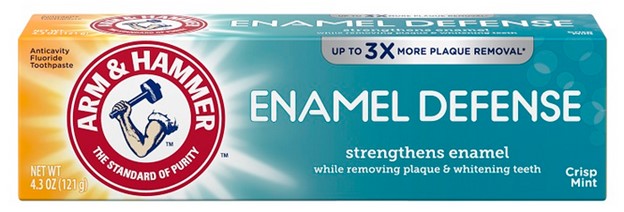
The truth is, there are dozens of toothpastes besides Crest and Colgate.  Just think of it like a chessboard: you have the two kings and then you have the rest of the pieces.  Those pieces include a few that make me nostalgic.  For a short time I had a “brush” with Pepsodent; its unique taste flavored with sassafras.  My dentist’s recommendations during my cavity-prone years included Mentadent and Aim (neither of which took hold).  And honorable mention goes to Pearl Drops, which I never tried but was the first product to add sex appeal to brushing your teeth.
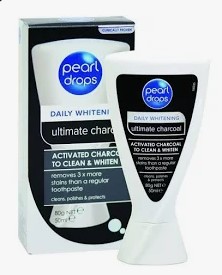
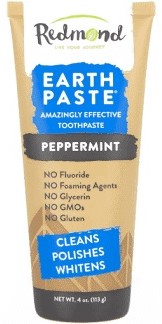
I don’t know anyone who uses Pepsodent or Pearl Drops anymore, but I also think Crest and Colgate are finally getting serious challengers.  Today’s generation (and those behind it) is more enlightened.  In fact, my own choice for my toothbrush – Earthpaste – has to be purchased at a specialty store or online.
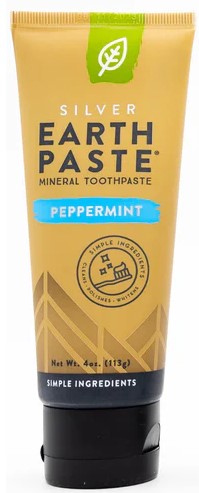
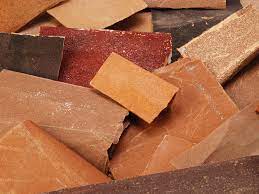
I’ve talked about Earthpaste before, in Polishing the Pearls. That post was more about the ingredients in toothpaste than the products themselves.  But ingredients certainly matter.  Crest contains between fifteen and twenty (and some are better left in a science lab).  Earthpaste contains just five, including bentonite clay, salt, and essential oils.  I have no problem putting any of those in my mouth, including the “dirt” of bentonite clay.

The truth is, if you can stand the bitter taste you can just brush with baking soda.  It’s a short list of ingredient that actually benefit your dental hygiene.  And for me, the habits I’ve locked in besides brushing far outweigh the importance of which toothpaste I choose.  Daily flossing (at night).  Oral rinses.  Toothpicks for my close-together teeth.  Recent trips to the dentist would suggest I’ve got a good regimen going.
As for you Gen X, Y, Z and especially Alpha members, there’s a palpable point to this post.  99% of humans will continue to brush with toothpaste.  Crest and Colgate still dominate the market seventy-odd years after their debuts (at least in America).  It seems to me there’s room for another low-ingredient high-health product like Earthpaste.  I’d fire up that home chemistry lab before someone else beats you to it.  There’s potential prodigious profit in the production of paste!

Some content sourced from Wikipedia, “the free encyclopedia”.

Beyond Quenching

Last week on Thanksgiving, I drank the following beverages in a start-to-finish order I may or may not recall correctly: water, coffee, more water, eggnog, water again, wine, and just before bed, a final gulp of water. Eggnog aside (and wine only occasionally) it was a typical day of liquid consumption. But on the list of reasons why I drink anything at all, I find it interesting “quenching thirst” settles to the bottom of the pool.  Closer to the surface are the more interesting intentions.  Collectively you might refer to these habits as my daily fluid dynamics (DFDs).

When I wake up, the first thing I do (make that the second thing I do, after walking the dog) is to down a glass of water; a full sixteen ounces.  I used to knock back just enough to chase my daily vitamins but then I read how you should drink water first thing in the morning, because technically you’ve been dehydrating for the last eight hours.  So I started filling ‘er up to the top of the glass, a two-cup habit I’ve maintained for a long time now.  Let’s list that habit as DFD #1: To help swallow things (like vitamins).

My top-o’-the-mornin’ water stands in the way of the one drink that truly matters in life: coffee (or tea for the rest of you).  My daily dose of caffeine is always the same: twelve ounces of the rich and robust stuff, with just a splash of cream to take the edge off.  Coffee takes me from foggy to functioning in a matter of sips.  Post-coffee Dave is alert and ready to conquer the day.  Call it a chemical dependency?  Hardly.  I can skip my “daily grind” here or there and be none the worse for wear.  But morning brew is undeniably one of life’s simple pleasures.  DFD #2: To deliver a morning wake-me-up. 

Let’s make a brief rest stop on our tour of daily fluid dynamics… literally.  My morning coffee comes with one utterly inconvenient side effect: the recurring “call of nature”.  Something about caffeine seeks to clear out every available drop of moisture from my body, until I might as well be dust.  It’s like one of those juice presses, only press down uncomfortably on the fruit every, oh, twenty minutes.  If I could down an entire liter of cold brew, not only would I be bouncing off the walls but I’d also lose at least ten pounds in water weight over the next hour.  Maybe I’ve discovered America’s next diet craze.

Okay, we’re back from our visit to the “powder room”.  I’m chugging water several more times during the day (indeed, high/dry Colorado made my faithful companion a water bottle, wherever I go).  But is all this water because I’m thirsty or because I can’t get the old saw out of my head, the one that recommends “eight to ten cups a day”?  A similar water saw says to consume half your body weight in ounces, but let’s be real: I never get to that number (nor do I believe in one-rule-applies-to-all).  Yet getting enough H2O still rattles around in my brain.  So, DFD #3: To hydrate the body.

Eggnog done right (meaning it’s often done wrong) is my favorite drink of the holiday season.  Conveniently, the creamy concoction also serves as a throat-soother when you’re sick.  It’s cold, with a thicker-than-milk consistency that settles on your throat for a fair amount of time.  Reminds me of the old Pepto-Bismol jingle (“the pink stuff”), how it “coats, soothes”.  Eggnog might be as effective as a cough drop and it tastes a whole lot better.  DFD #4: To ease a sore throat or cough.

Wine makes my fluids list regularly, and it would even if I had no argument for a DFD.  But I do.  Like today’s college “pre-game” drinking (or tomorrow’s holiday party you’re dreading), sips of wine dull the senses, warm the insides, and melt away stress.  Loose lips are a common side effect, but wine in moderation typically makes the conversation flow.  Plus, the right vintage simply tastes great, time and again.  DFD #5 then: To act as a “social lubricant”.

Last (and least), water is not only my top o’ the mornin’ but also my close o’ the evenin’ drink.  After the toothpaste, the floss, and the oral rinse, the water goes in and comes right back out.  Swishing, gargling, rinsing, and spitting – it’s all an effort to restore order beyond the lips, so you head to bed without the breath of the dead.  The only more effective approach would be a fire hose on full blast. So, DFD #6: To cleanse the mouth.

Maybe you’re a little more introspective about your consumption of beverages now (and you’re welcome).  Like I said, quenching thirst is somewhere near the bottom of the pool.  So the next time you’re taking a sip, and someone notices you being particularly thoughtful about it, just tell them you’d like to explain a little something called daily fluid dynamics.

Polishing the Pearls

Twice a day, my toothpaste tube and I do battle.  When I take the tube out of the medicine cabinet and realize there’s only a little bit left, I can see it smirking as if to say, “You’re not getting any more out of ME!”  Yeah, right.  I just flatten it from one end to the other (I recommend a hairbrush here), forcing every last bit of paste to gather at the top, ready to launch.  Then I take off the cap and squeeze like crazy.  It’s a good workout for the hands, and a mindless challenge to extend the life of your toothpaste.

Speaking of toothpaste – yep, that’s my topic today – here’s a really good trivia question.  In the Roald Dahl classic, “Charlie and the Chocolate Factory”, what did Charlie’s dad do for a living?  He screwed the caps onto toothpaste tubes… before machines were invented to do the job for him.  (He also died before the first paragraph and was never part of the story, so it’s a little weird I remember that bit.  But I digress.)

Quick, name the first ingredient you think of in toothpaste.  Flouride?  Not a bad guess, but did you know fluoride makes up only a tenth of a percent of toothpaste?  That’s like a pinprick on the tip of your finger.  Flouride is potent, my friends.  Good for healthy enamel but only in itty-bitty doses.  Keep those chemicals close, but not too close.

Was your first ingredient surfactants?  A surfactant is basically a “foaming agent”, which helps distribute the paste around the inside of your mouth, which translates to better cleaning.  Surfactants remind me of those animated scrubbing bubbles you’d see in TV commercials, whirling around the bathtub surface.  You also find them in shampoos and conditioners.  Without surfactants, most of the hairs on your head would get clean and conditioned, but others would be left high and dry.

“Minty fresh!”

How about flavorants – you know, peppermint, spearmint, wintergreen, or cinnamon?  If flavorants were the first ingredient you thought about with toothpaste, go directly to Jail (i.e. do not pass GO, do not collect $200).  Flavorants do zilch for your teeth.  They just make brushing a more pleasant experience and fool you into thinking you have a fresher mouth when you’re done.  You might as well chew gum.  The sugarless kind, that is.

Okay, let’s cut to the chase.  The primary ingredient in toothpaste is abrasives (and if this was your answer, you win a free dental drill).  Abrasives make up 50% of what’s inside the toothpaste tube.  They’re “designed to help remove plaque” (remember that phrase).  Think of abrasive-laden toothpaste as liquid sandpaper.  Abrasives are the reason you don’t want to swallow toothpaste.  And don’t brush too hard either.  With enough pressure, these bad boys would be happy to remove your enamel.

Toothpaste also has grit

I could list even more toothpaste ingredients (ex. antibacterial agents, whiteners, re-mineralizers), but let’s just agree: there’s a big, diverse party going on inside the tube.  Now for the bad news.  Toothpaste has no significant impact on the reduction of plaque – so says certain clinical studies. That’s why abrasives are described as “designed to help remove”.  That’s a sneaky way of saying they just keep things in check until your next appointment with the dentist.  Sorry (Charlie), no amount of brushing can replace those nasty power tools your hygienist has so much fun using.

For all my talk about toothpaste ingredients, the brand I use has very few.  Earthpaste (“Amazingly Effective!”) has no fluoride, no foaming agents, and almost no flavor.  In fact, Earthpaste has only four ingredients – water, clay, salt, and essential oils.  It’s like brushing with mud.  Wait, it IS brushing with mud!  Just as effective, without the chemicals (subtle plug).  You’ll find it on Amazon.

So all this talk about toothpaste may be important, but so is getting every last bit out of the tube.  And there may finally be a solution to that battle.  The very smart peeps at Massachusetts Institute of Technology (MIT) have developed an edible product called LiquiGlide.  It’s invisible (which okay, is a little disturbing), and it’s designed to coat the inside of a container so the contents will completely empty with just gravitational pull.  Can you imagine?  No more flattening, squeezing, or hand workouts.  Just upend the tube and 100% of the product comes pouring out.  Get-your-money’s-worth people like me silently rejoice.

LiquiGlide’s proof is in the pudding, er – ketchup.  No more smacking or shaking the bottle.  No more “An-ti-ci-pay-yay-tion” (for those of you who remember the 1970s Heinz jingle).  Our future ketchup bottles and toothpaste tubes will be transparent – and empty – by the time they head to the recycling bin.

Unfortunately, I’d have to give up my Earthpaste and move to Europe if I want to experience the benefits of LiquiGlide.  (The company has no immediate plans to sell its products in North America).  That’s not gonna happen, so until further notice you’ll find me in the bathroom, doing battle with my toothpaste tube.  It’s not so much about getting my teeth clean.  It’s about getting my money’s worth.

Some content sourced from the CNN.com article, “How MIT could help you pour ketchup”, the CNN.com article, “Colgate’s new toothpaste tube…”, and Wikipedia, “the free encyclopedia”.

Foul Mouth

Search the Guinness World Records website using the word “mouth”, and you’ll get pages and pages of results – over 250 mouthy records. Most seedless grapes stuffed into the mouth: 94. Most lit candles: 37. Most tennis balls: 5 (by a dog). Most drinking straws: 459. We’ll put just about anything into our mouths these days.  Now add to the list baking soda for brushing, coconut oil for “pulling”, and charcoal for whitening.  That last one; it makes me pause. Charcoal?

Charcoal is the mound of briquettes in your barbecue.  Charcoal is the sooty remains of a smoldering campfire.  Charcoal is “lightweight black carbon and ash residue produced from animal and vegetation substances”.  Yet we choose to put this substance into our mouths?  Apparently “Sensodyne”, “Pearl Drops”, and all those other white-whiteners didn’t do the trick.  Checkmate.  Black wins.

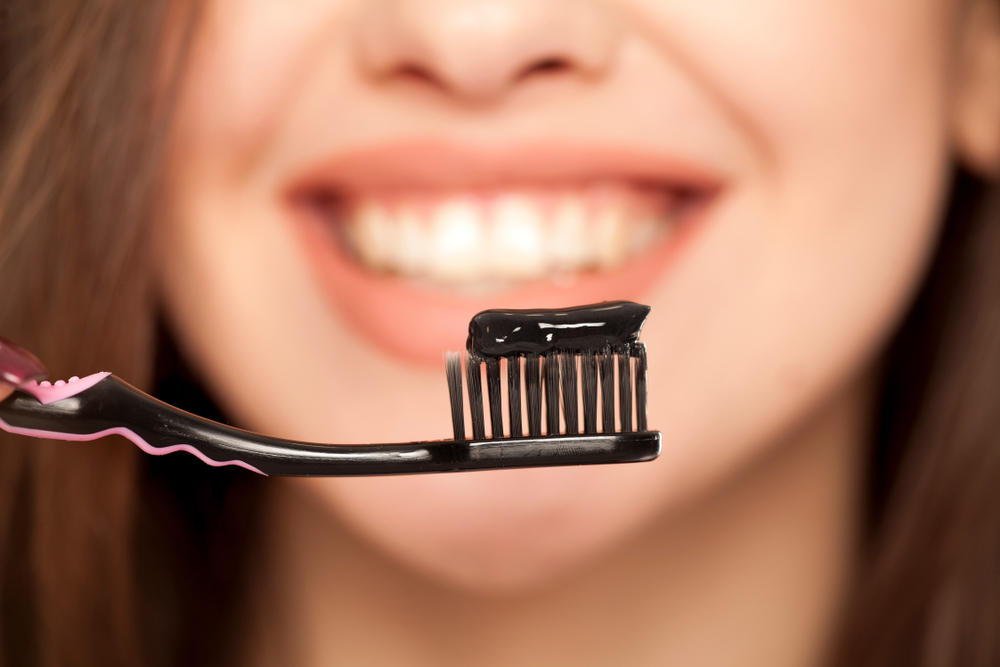
If hygiene headlines speak the truth, black is the new white (or something like that).  Charcoal powders and pastes are the trend-setters these days, turning the mouth solid black before – allegedly – turning the teeth a whiter shade of white.  The color cycle of toothpastes is now complete, starting with the classic whites from days gone by, moving through the entire rainbow (including the blues and reds of Colgate; the green gels of several), and concluding with a shade the darker side of midnight.  But is blacker really better? Some fan-quotes are a little vague: “I’m using this [to show] I’m in the know,” says one, and “Everyone wants to try something new, but it has to be something that looks cool,” says another, and “I’m doing it to encourage dialogue.” Sounds like charcoal is more about image and less about whiter teeth.

Rather than post an in-progress and visually-disgusting photo, check out Hannah Hart’s brief demonstration of charcoal whitening here.  She dips her brush into what can only be described as a tin of shoe polish, morphs her mouth/lips/teeth from clean-and-white to blacker-than-black, destroys her sink (honestly; it’ll never be the same again), and finally, shows off her stained tongue; a regrettable side effect of thirty days of carbon consumption.

Watching Hannah’s video, I can’t help picture something entirely inedible dripping from her mouth.  Looks like black paint, used motor oil, or the sap of some deep forest tree you wouldn’t take big money to consume.  No matter how effective charcoal powder is for your pearlies, I can’t stomach the idea. Maybe I should try it without a mirror.

Now let me admit to a little hypocrisy:

1) I relish black foods, so I have no problem putting “black” into my mouth.  Among my favorites: olives, licorice, coffee, and black beans.  I also don’t shy away from blackberries, black bread (made with bamboo charcoal!), black rice, and the black of mushrooms.  I’m told I should try squid ink pasta.

2) I brush my teeth with a product called “Earthpaste”.  Earthpaste (“amazingly natural”) is exactly what it sounds like.  Mix together dirt (well, clay actually), a little salt, sweetener, and oil, and brush, brush, brush.  It’s not sweet – though flavors include peppermint, lemon twist, cinnamon – and the dry, gritty feel takes some getting used to.  But Earthpaste sold me for what it doesn’t contain: glycerin, fluoride, foaming agents, and artificial colorings.

It stands to reason if a) I have no problem putting black things into my mouth, and b) I’m willing to brush with dirt, I should be willing to c) brush with charcoal (A+B=C or something like that).  But Hannah’s video ruined it for me.  So did the facts behind the teeth-whitening.  Yes, bleaching gels abound, but for the most part “whitening” means abrasives.  Over time, you’re removing the top layer of your teeth to expose something whiter underneath.  Goodbye enamel; goodbye tooth strength.  Charcoal, as it turns out, does the same thing, only in black.  Short-term: whiter teeth.  Long-term: digging into the dentin.

My recommendation? Skip the charcoal.  Maintain your inner child.  Eat dirt instead.

Some content sourced from Wikipedia, “the free encyclopedia”.  Also, from the Wall Street Journal article, “The Latest Fad in Tooth Whitening Is to Turn Them Black”.