
When you travel to Colorado, you should pack a few things you might not think to bring. A reusable water bottle will be your constant companion since it’s high and dry in the Centennial State. Lip balm will be your pocket pal. Your wardrobe should be designed in layers since Colorado’s weather is so unpredictable. And finally, for the lack of air in the Rockies, don’t forget to bring a can or two of oxygen.
 Canned oxygen? For the longest time I thought this was the biggest scam on earth. There was a time you could find “oxygen bars” at Colorado ski resorts – high altitude establishments where you’d pull up a stool and choose from a menu of “airs” to augment your oxygen intake. Watching those suckers – heh – with their mouths attached to transparent hoses had me picturing a guy on the other side of the wall furiously working the plungers of bicycle pumps. But forget oxygen bars. Now you can take a hit from your very own can instead.
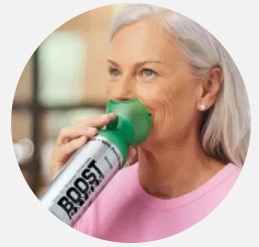 Boost , a popular brand of canned oxygen, has been around for a while since its humble beginnings through Shark Tank. In Colorado you’ll find Boost products in every market, drug store, gas station, and airport concession. Boost is advertised as “95% Pure Supplemental Oxygen in lightweight, portable, and affordable canisters for health, recovery, natural energy, and athletic performance”. That’s an impressive string of words to describe nothing but canned air.
First-timers will react to Boost with a well-defined smirk. Gag gift for the relatives back home? Stocking-stuffer? After all, you’re paying $10 for a can of… well, nothing. Yes, Boost comes in flavored varieties like lavender or eucalyptus menthol but in the end, it’s just air. And watching someone take a hit of Boost is just like the goofball in your kitchen who tips the can of whipped cream directly into his mouth. Even the sound of escaping compressed air is the same. Just no whipped cream.
 Naturally this is the point where I admit I’m a canned-air convert. Never thought I’d see the day I’d actually need a “boost”. But last January as I was moving belongings out of our Colorado house, I came to a breathtaking realization: I was no longer acclimated to the thin air of the Rocky Mountains. Climbing a set of stairs had me huffing and puffing. Lifting a box made my heart go pitter-patter. For some reason I’d thought to add a can of Boost into my suitcase, so what do you know? Compressed air to the rescue. Every now and then I’d blast the can into my mouth and darned if it didn’t clear my head and help me breathe. I was no whipped-cream junkie but rather a bold astronaut, seeking the occasional hiss of his supplemental oxygen.
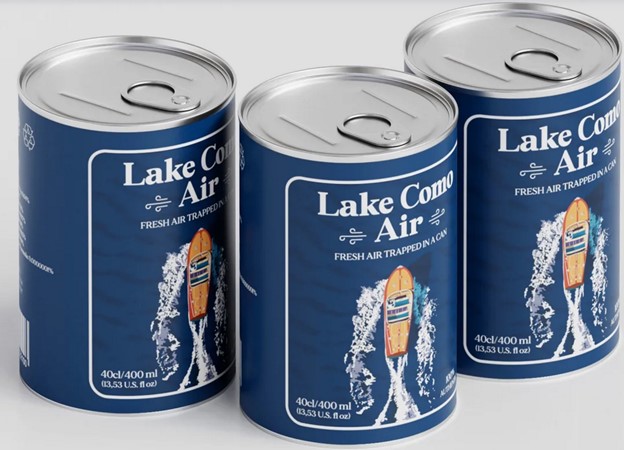 For all its success, the legitimacy of a product like Boost is sullied by similar products having no health benefits whatsoever. On your next trip to Italy, head up to Lake Como in the far north for a look at the pristine waters and nearby snow-covered Alps. While you’re there you can purchase a can of “Lake Como Air” for $11. Lake Como Air claims no value other than “something original, provocative, and fun”, or “… a tangible memory you carry in your heart”. Really? I have lots of tangible memories from Italy and they didn’t cost me a dime.
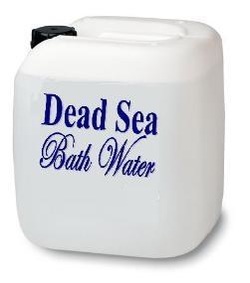 On your next trip to Israel (which best not be anytime soon), head over to the Dead Sea for a look at the biggest, saltiest resource of natural minerals in the world. You can float in the Dead Sea without even treading water. And no surprise, you can “purchase” the Dead Sea in small containers. The so-called manufacturer claims its consumption “contributes measurably to feeling better and to looking wonderful and healthy”. Huh. Not sure about you but I like to think I feel better and look healthy just by drinking from the tap at my kitchen sink.
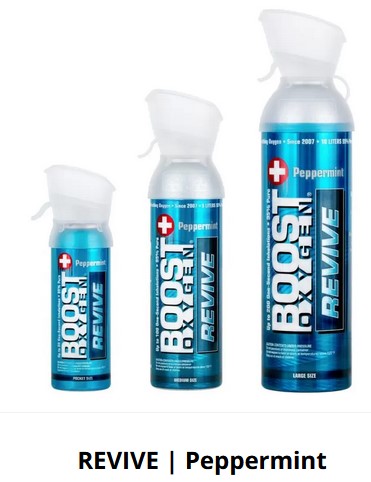 The list goes on and on. Holy dirt from New Mexico. Healing waters from right here in western South Carolina. Rocks from outer space. I mean, seriously, when are we going to stop paying for natural elements we can help ourselves to just by stepping outside our front doors? Yeah, probably never. That train left the station for good the day someone decided to bottle water. Now we have canned air as well… and it’s a good thing. Turns out, I’ll never take another trip to Colorado without a little Boost in my suitcase.
Some content sourced from the CNN Travel article, “Cans of ‘fresh air’ from Lake Como on sale to tourists in Italy”.

 Life In A Word