
When my wife and I travel we toe the line on the weight limits the airlines impose on baggage. Our suitcases, looking ready to burst, always come in at 48-point-this or 49-point-that on the front counter scale. There’s a sigh of relief when we don’t hit the number where we’d have to pay more. So call it unfamiliar territory when my suitcase was only two-thirds full for a weekend getaway earlier this month. I mean, there was space in there still looking to be filled. I was tempted to throw in the pillow I sleep on just to keep everything from jostling around. It was a dilemma that came back to me just this morning over breakfast.
 Allow me to introduce you to one of my favorite foods. Nature’s Path Organic produces grain-based cereals with the rare double-win: they taste great and they’re good for you. Nature’s Path combines exotics like amaranth, quinoa, millet, and spelt, and somehow makes them taste delicious alongside a little fruit and milk. My wife loves their “Golden Tumeric” variety while I prefer their popular “Heritage Flakes”. Sometimes I go with the sweeter “Flax Plus Maple Pecan Crunch”. Trust me, breakfast cereal has come a long way since Kellogg’s Corn Flakes.
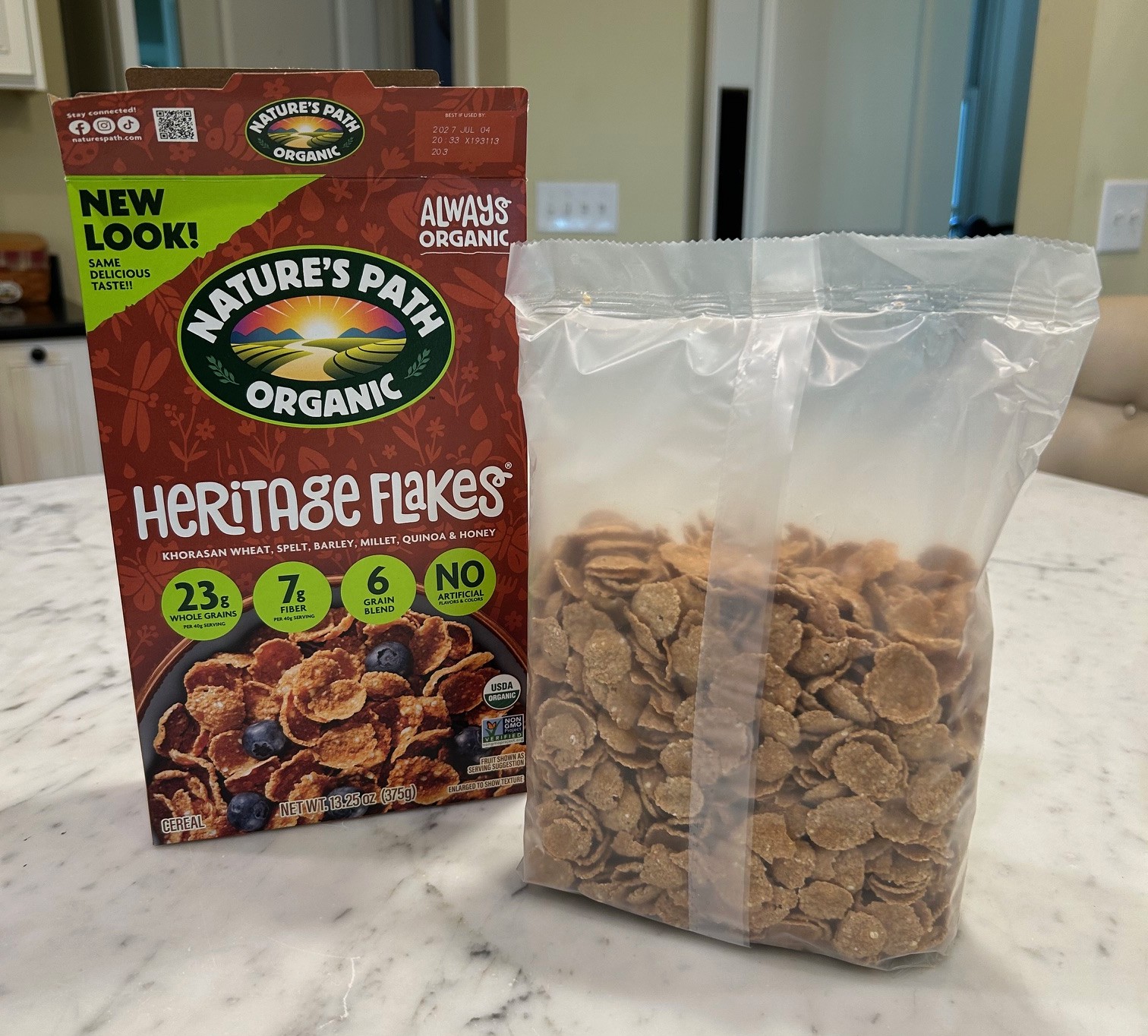
What hasn’t changed about breakfast cereal however, is the amount of product you find in the bag when you first open the box. The photo you see here is a source of constant irritation for me. You have a box, a bag, and some cereal. The size of the bag is consistent with the size of the box. So why-oh-why (like my recent suitcase) is the bag only two-thirds full? Why not a) dial up the setting on the bag-filling machine to top things off, or b) reduce the size of the box to match the amount of the cereal?
This is the age-old game manufacturers choose to play with us consumers, of course. As production and material costs rise, they find subtle (or not-so-subtle) ways to make us believe we’re buying the same amount of the same product for the same price. At least Nature’s Path doesn’t swap out their ingredients for some chemical alternative. But they do fill the box with air along with the cereal. Honestly, I wonder if the box was ever completely full.
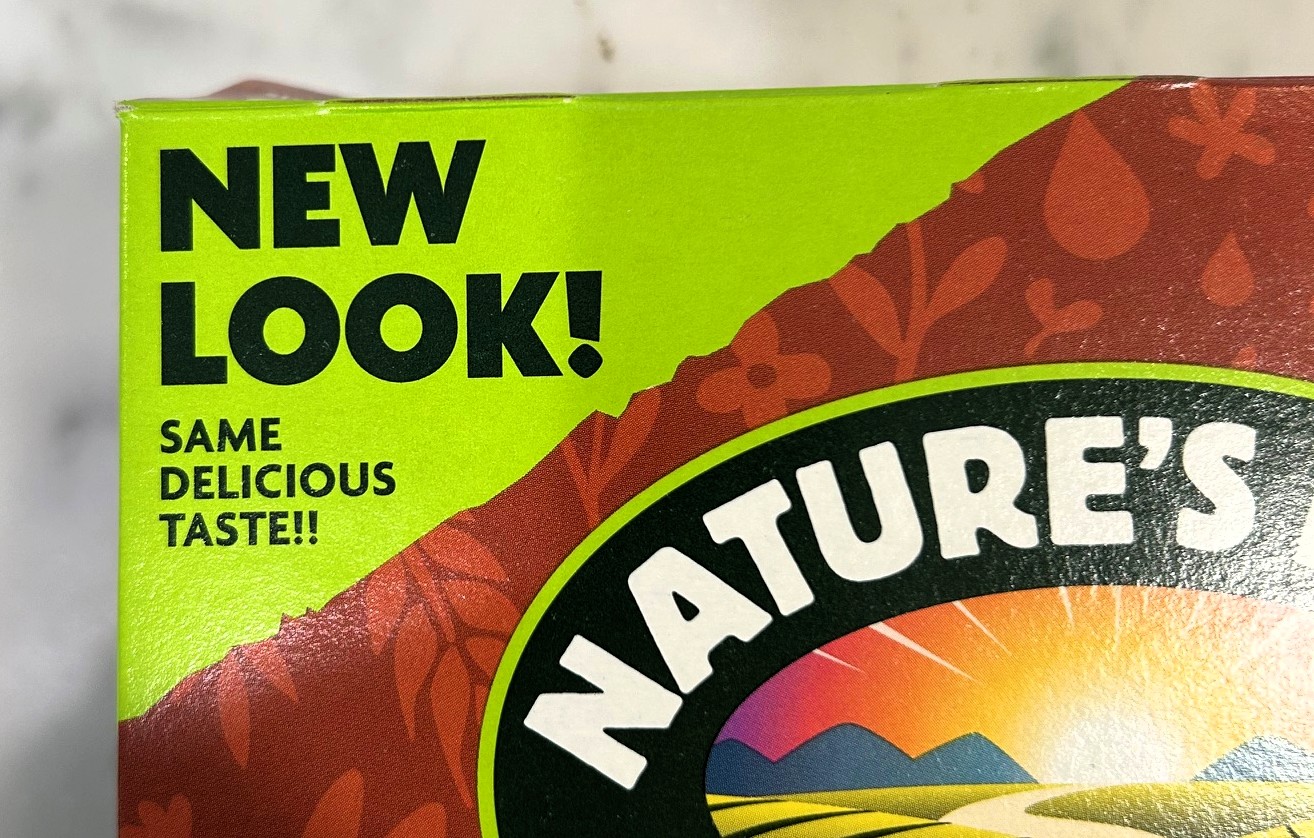 Here’s another sales ploy. Nature’s Path claims this cereal has a “new look” with the “same delicious taste”. What exactly is the new look (and do I even remember the “old look”)? Did the flakes change shape or size or is it the box that has a new look? More importantly, why would I care about a new look when all I want is the same bowl of cereal I bought last time? What aren’t they telling us here?
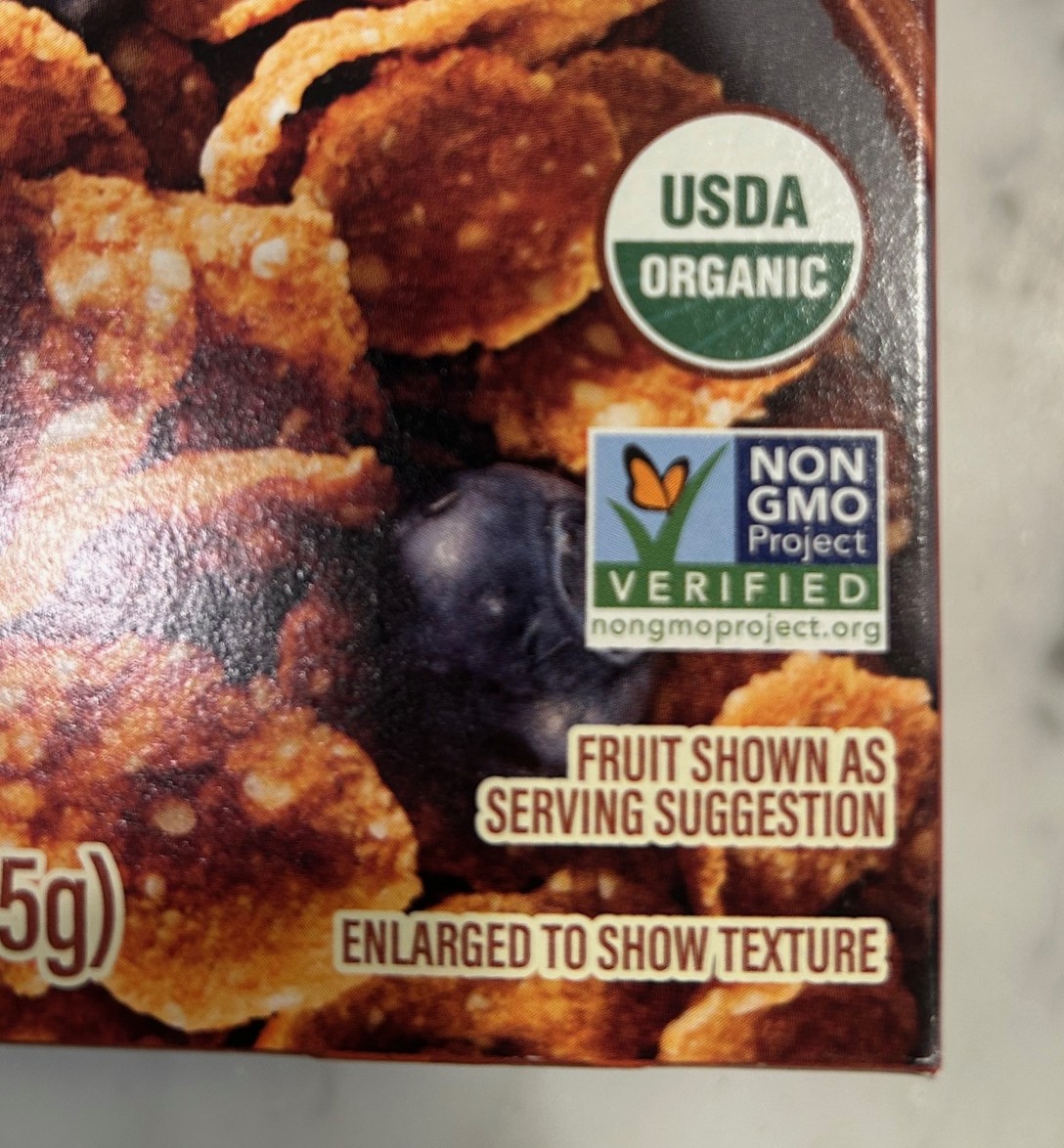
Now note the fine print at the bottom right corner of the box. First we have a disclaimer of “fruit shown as serving suggestion”. Followed by “enlarged to show texture”. Both statements let me know that what I see is not what I will get. There is zero fruit in the box. The cereal flakes are not as large as the photo suggests. And for today’s water cooler question, does cereal flake texture make it more likely you’ll buy a box?
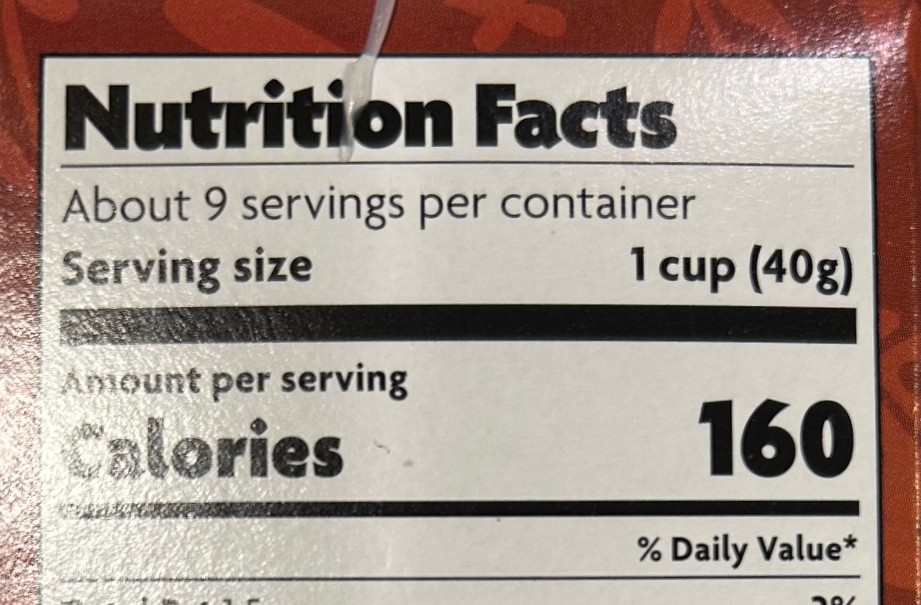 Finally – and this one probably goes back to the early days of cereal production – the “serving size” suggested by Nature’s Path is one cup. One cup. Try the following some time: Without measuring, pour out what you’d think would be one cup of cereal into a bowl. I guarantee you’ll pour more than a cup. Imagine the saddest, smallest portion of food you will ever see and I present one cup of cereal in a decent-sized bowl. But “one cup” allows Nature’s Path to boast “about 9 serving per container”. No sir. My serving size (and yours) means I’m lucky if I get four bowls out of the entire box.
 Look, I get it; organic foods are expensive. A box of Heritage Flakes would run me ten dollars or more if Nature’s Path filled the bag to the top. Add blueberries and milk and it’s an even pricier breakfast. But I’m willing to pay more for flakes instead of air. I suggest Nature’s Path go with the plan for my two-thirds-full suitcase instead. Throw in a giant marshmallow to take up all of that extra space.
———————————————————–

LEGO Neuschwanstein Castle – Update #8 (read about the start of this project in Fit for a (Fairy Tale) King
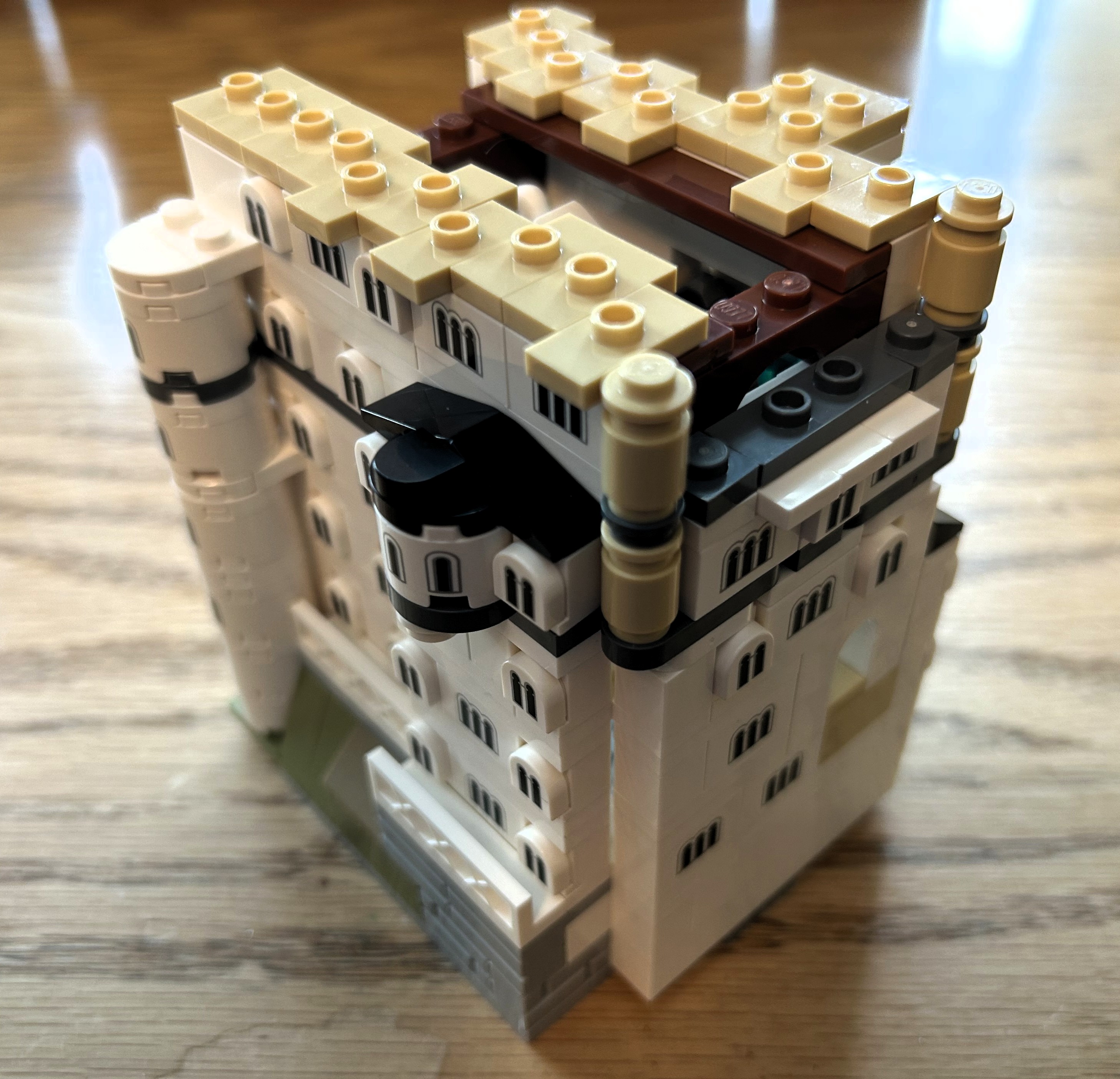
Today’s construction felt like building a miniature castle within the walls of a much larger one. Bags 15 and 16 (of 23 bags of pieces) were entirely dedicated to the “Palas”, Neuschwanstein’s main residential structure. Within the walls of this building you’ll find King Ludwig’s stateroom, his servant’s quarters, a conservatory, a salon (a room to entertain guests), and an enclosed grotto at the very top. Makes me wonder why Ludwig needed to build the rest of Neuschwanstein, but I guess that’s just his way of showing off.
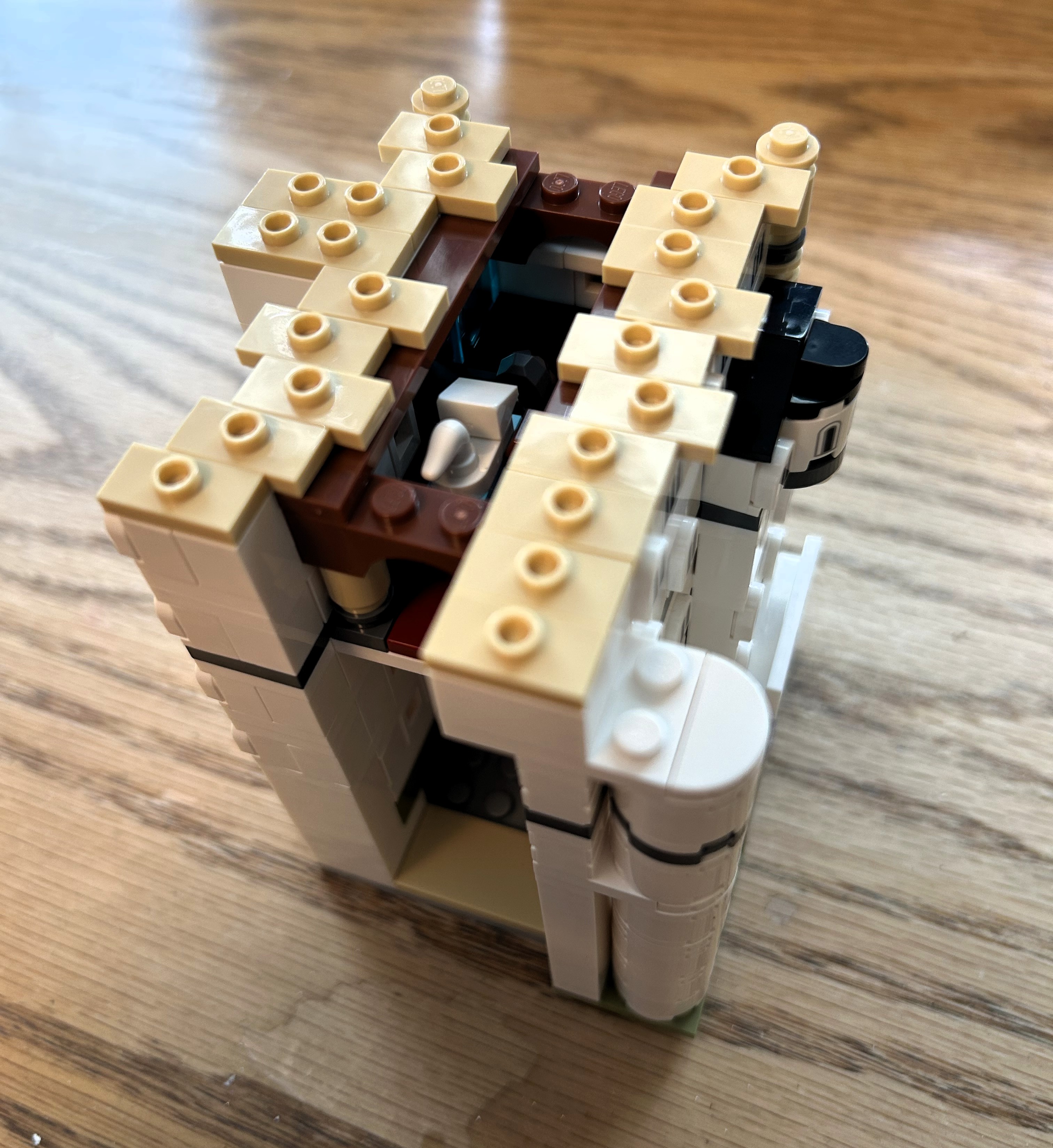
The grotto sounds like a nice place for a king to hang out, even if the LEGO equivalent makes it look a little cramped. It’s a covered outdoor space with a waterfall, colored lights, and sliding glass doors for unobstructed views of the surrounding Alps. Pretty darned progressive for a castle built in the late 1800s.
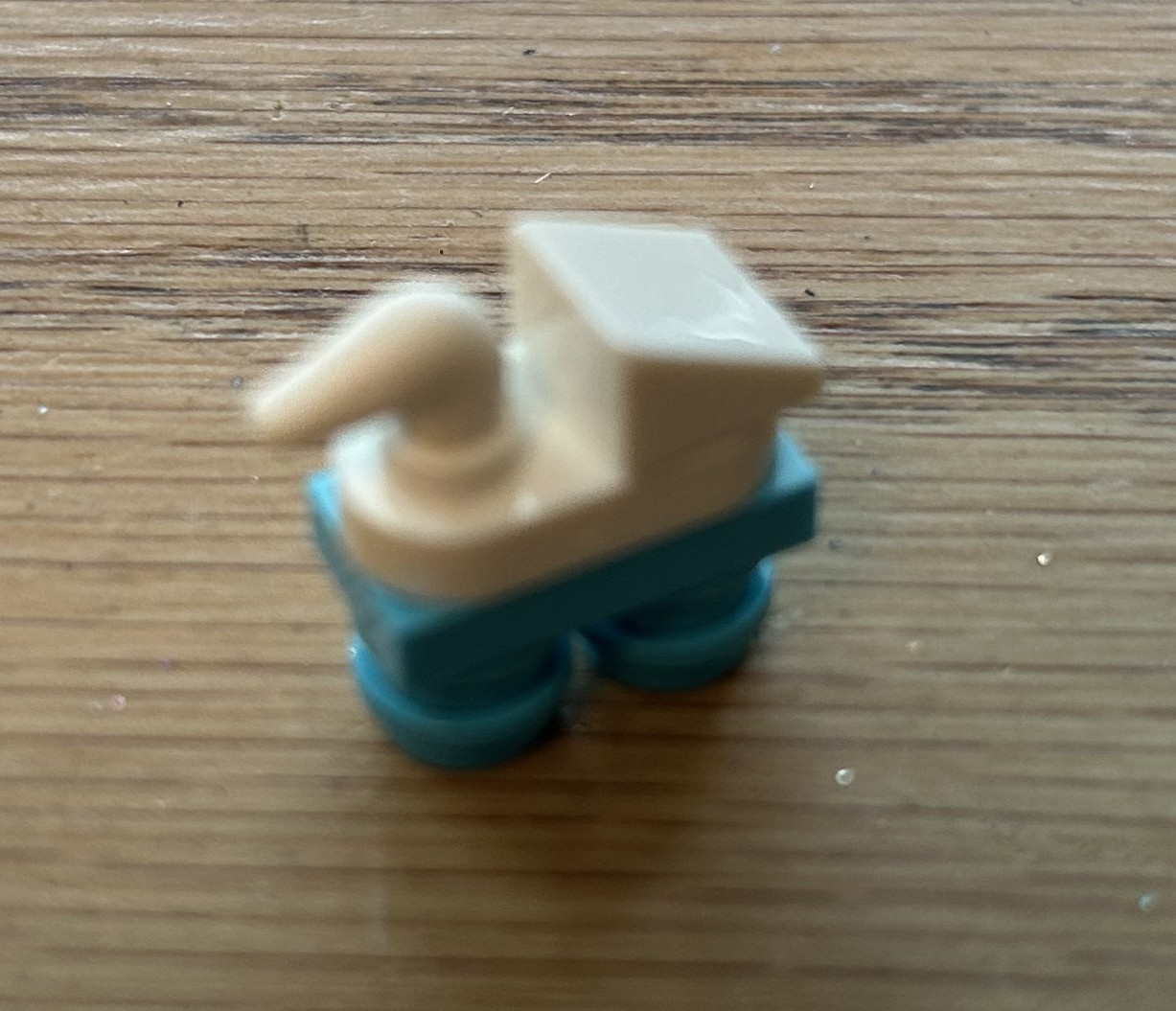 Finally, Ludwig had a thing for swans. He probably had several live ones living at the base of the waterfall but he also had the large sculpture you see above, placed prominently in the grotto. For the record, it’s a futile exercise to create a realistic-looking swan out of LEGO blocks. And the “headpiece” is so small LEGO threw in an extra one in case I somehow misplaced it.
Running build time: 7:57
Total leftover pieces: 52
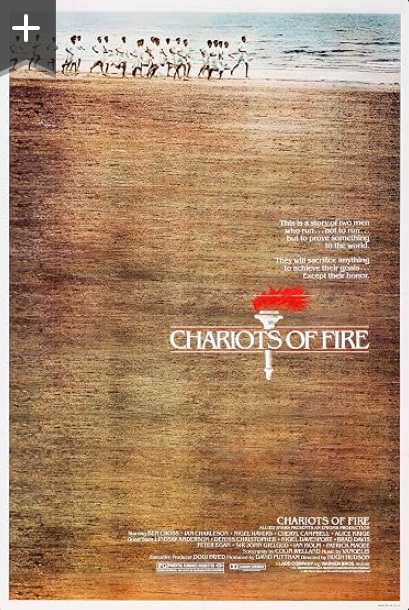 Accompanying movie soundtrack: Chariots of Fire (1981). The theme song from Greek composer Vangelis is iconic; easily one of the most recognizable pieces of movie soundtrack music ever composed, whether the leadoff with the hunting horn or the sweeping piano tune itself. The melody really does evoke images of the human body in motion. However, I was quickly reminded this film score hardly represents a satisfying listen without watching the film at the same time. The rest of the synthesizer music can only be described as bizarre. Some parts are designed to accompany dramatic slow-motion running scenes. Other parts have zero rhyme/reason when they stand alone. And right in the middle of the soundtrack you get an abrupt shift to church organ music and the voices of a beautiful choir. But never mind all that. Just listen to the famous theme here.

