Only In Iowa

If you’ve ever made graham crackers from scratch (which are miles better than the store-bought ones), there’s a step in the recipe where you have to get your hands dirty. Take a stick of butter, cut it into very small pieces, dump the pieces into the mixture of dry ingredients, and dive on in with your fingers until the dough starts to clump together. It may be the only time butter and my hands ever come in contact with each other. Which is also to say, I won’t be sculpting a butter cow any time soon.

Sculptor, cow

Creating art out of food seems like an inevitable destination. I mean, back in Michelangelo’s day everyone was taking a block of marble and seeing what they could do with it. Then all but one of them quickly realized there was only one Michelangelo. The others probably turned to an easier material to work with like wood or clay. 1,000 years on, we’re sculpting food. Chocolate is a popular medium. Cakes are shaped into just about everything imaginable. But a cow made out of butter – what’s that all about?

A more fitting Hawkeye State image

We turn to Iowa to learn more about this oddity.  Most people prefer to fly over Iowa but since you’re reading and not flying, let me enlighten you.  On the list of 10 Things to Know About Iowa, there is no butter and there is no cow. There are a lot of pigs (the most of any state) and millions of acres of corn (also “the most”), and Iowa’s “Hawkeye” nickname is a reference to the birth of the red delicious apple (who knew?).  But none of this gets us to butter and cows.

The “10 Things…” list does mention the Iowa State Fair, and it is here that we find real cows by the hundreds… and a life-sized one made out of butter.  The Fair, whose 2025 edition wrapped up three weeks ago, has been making “buttered cows” since 1911, thanks to five Iowans who’ve passed the butter baton down over the years.  The latest, Sarah Pratt, has been making the cows for the last nineteen years, and only after apprenticing with the last sculptor fifteen years before that.  Some people blog; others make cows out of butter.

The 1911 original

Like papier-mâché, a butter cow is created on top of a frame built from wood, wire, and/or metal.  Then we heap on some fun statistics.  600 lbs. of “low moisture, pure cream, Iowa butter” is applied to create a cow that’s five-and-a-half feet tall and eight feet long.  The sculptor’s “studio” is a walk-in cooler set to 40ºF.  After the cow is displayed at the fair, all that butter is recycled for use on the next ten years of cows.  Unless you’d rather use it for toast, which would butter 19,200 slices.

Michelangelo didn’t stop sculpting after his famous David, of course, and neither does Sarah Pratt with her butter cows.  Also following tradition, she creates a “companion sculpture” to keep the cow company.  Sometimes the companion is an homage to Iowa, such as a John Deere tractor.  Most years the companion is a random anniversary, like the 40th anniversary of Neil Armstrong’s walk on the moon (totally random because Neil wasn’t born in Iowa).  This year the sculpture featured the characters from “Toy Story”, denoting the movie’s 30th anniversary.  You get the feeling Sarah enjoys sculpting butter so much that a life-sized cow just isn’t enough.

Woody, Buzz

For all of my research, I can’t figure out why a cow made out of butter and Iowa belong in the same sentence.  Nearby Wisconsin and Michigan are better known for dairy cows.  California tops the list of the five states producing the most butter (and Iowa isn’t one of the other four).  No matter, this tradition isn’t stopping anytime soon.  The butter cow even has a place in the Smithsonian Institution (thankfully, as a replica that will never melt).

I love butter, but more on top of baked goods and in graham cracker recipes than in the shape of a cow.  I will admit to buying my butter by the brick instead of by the stick.  But now that I know about Iowa’s annual creations, I’ll never look at my morning toast again without thinking, mooooooooo.

Some content sourced from the Iowa State Fair website, the U.S. News article, “10 Things to Know About Iowa”, and Wikipedia, “the free encyclopedia”.


Renaissance Man

In the second movement of Antonin Dvořák’s New World Symphony, the orchestra settles down as the English horn begins its soft, wailing solo. You’ve heard this famous lullaby in one version or another, but never more powerfully than in the “Largo” movement of Dvořák’s symphony, with the strings and woodwinds providing the sweeping background (~45 seconds into the following video). It’s one of my favorite classical pieces, and my performance is flawless every time I play it.  Play it in my head, that is.

I’ve developed a satisfying habit over the years which you might share (or at least, be willing to try).  Think about something that interests you, or an activity in which you like to participate.  Over time you’ve developed a fair understanding of your subject, though your level of knowledge and skill would never qualify you as a professional.  But what if it did?  What if you suddenly had the smarts or the talent to find yourself among the world’s best?  Wouldn’t your life be wildly different?

My years of piano lessons never propelled me anywhere close to the ranks of “professional” or “best”.  I never even advanced beyond the piano’s foundation to pursue an instrument like the English horn.  To do so would’ve meant a wholly different direction in life.  More practice and lessons instead of time spent with friends or years in the Boy Scouts.  A different college or at least a different degree.  Competitions.  Travel.

Music eventually gave way to an interest in sports and soon I found myself on the basketball court more than in front of the piano keyboard.  I’d practice endlessly at our backyard hoop, imagining myself making game-winning shot after shot.  I did play a couple of years of JV ball in high school and went to college games at nearby UCLA.  But my skills never developed to the varsity-, let alone college-level.  Was I infatuated with basketball at the time?  Yes, but I also knew early on I’d never be one of the greats.

You’re starting to see a pattern here and it continued in college.  I studied architecture (“I’ll be the next Frank Lloyd Wright!”) but only spent the first few years of my career in the field.  I had a good run with info technology companies (“Bill Gates!”) but never developed the level of expertise to be labeled a “techy”.  I write these weekly blog posts (“John Grisham!”) but have no plans for the next Great American Novel.

Here’s my point, and maybe you never saw it coming.  I find all of this dabbling and dreaming incredibly satisfying.  My interest in a subject or activity wanes well before it becomes an obsession, and then I simply move on to the next thing vying for my attention.  Why do I behave this way?  Two reasons.  First, I prefer to be a jack of all trades (or a master of none, if you will), not a virtuoso.  Second, more importantly, I am far too content with my life as it is to ever be tempted by the sacrifices necessary for the pursuit of singular success.

Michelangelo’s “David” 🙂

There’s a complimentary phrase for people like me: Renaissance Men.  We hearken back to the great thinkers and artists who came along just after the Middle Ages; Leonardo da Vinci and Michelangelo, for example, with “unquenchable curiosity” and “feverishly inventive imaginations”.  Mind you, I can’t paint like da Vinci or sculpt like Michelangelo, but my curiosity and imagination may run just as rampant.  The modern Renaissance Man, in a nutshell, has “broad interests” and “superficial talents”.  Me to a tee.

Playing in my head

The next time I hear Dvořák’s “New World Symphony”, I’ll think about playing the English horn.  Maybe I’ll sign up for lessons and eventually get good enough to play the “Largo” movement.  Maybe then I’ll join the local orchestra so I get the chance to perform in front of a live audience!  Yeah… probably not. Long before my much-anticipated stage debut, some other activity will vie for my attention and off I’ll go.

Some content sourced from Wikipedia, “the free encyclopedia”.

Agony or Ecstasy?

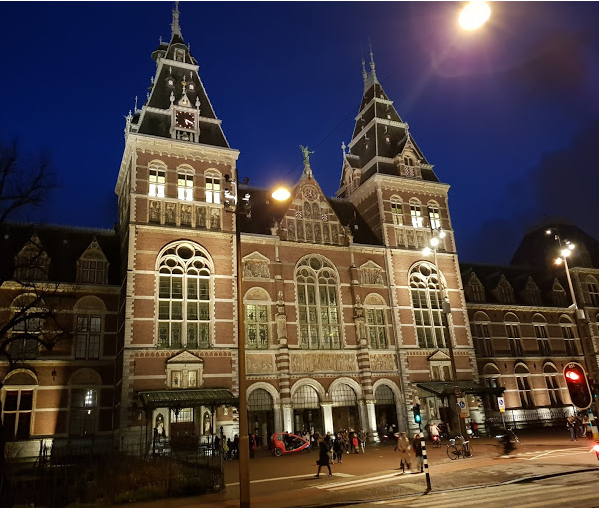
Rijksmuseum, Amsterdam, The Netherlands

On a first visit to The Netherlands earlier this year, our plan was to traverse the quaint canals and bridges of Amsterdam, stand in the shadows of Kinderdjyk’s working windmills, and learn more about the country’s wartime era, perhaps through a stop at the Anne Frank House. I also looked forward to a field of their famous tulips, and Dutch treats like stroopwafels, poffertjes, and bitterballen.  Sure, I ticked the boxes on several of these items, but I was also blindsided by a group-tour-captive stop at Amsterdam’s Rijksmuseum. 8,000 artworks covering 800 years of Dutch history (in what felt like 80 different rooms)?  Not my idea of a delightful morning in Holland.

I’m not what you’d call a “patron of the arts”, though I’m about to contradict myself.  I love a classical performance by a symphony orchestra.  I’m drawn to the theater’s foremost stage productions (Les Miserables comes to mind).  I even enjoy the occasional visit to a museum, provided the subject is specific and of my choosing (ex. Amsterdam’s Dutch Resistance Versetsmuseum).  But endless rooms of paintings on walls and free-standing sculptures behind glass?  As the Dutch would say, nee bedankt ik zal slagen.  No thanks, I’ll pass.

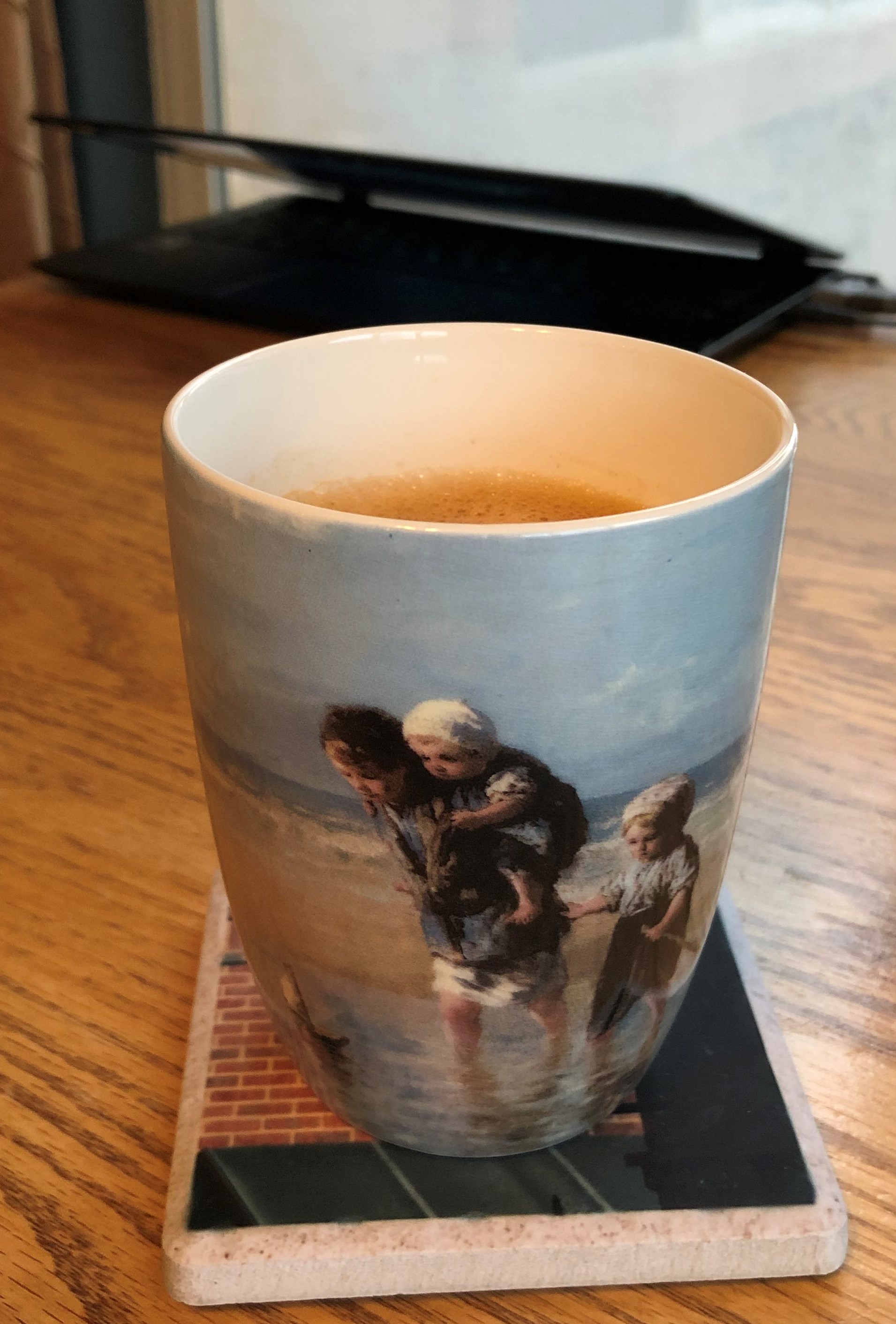
Here’s where I contradict myself a second time.  As I type this post I’m sipping morning coffee from the mug in the photo.  The mug is a souvenir from my “captivating” visit to the Rijksmuseum.  The painting on the mug is called “Children of the Sea” (1872), by Dutch artist Jozef Israels.  Go figure; I was able to blow past the throngs flocking to the Rembrandts and Vermeers and van Goghs; yet a small artwork in the corner of Rijksmuseum Room 118 captivated me enough to take a little piece of it home.  I probably spent as much time in front of that painting as I did the rest of the museum.

Jozef Israels’ “Children of the Sea” (1872), Rijksmuseum, The Netherlands

Naturally I had to learn more about “Children of the Sea”.  When I returned to Colorado, I read up on Jozef Israels.  Not only was he “… a leading member of a group of landscape painters known as the Hague School…”, Israels was “… the most respected Dutch artist of the second half of the nineteen century”.  Do I know how to pick ’em or what?  Maybe I have a little art appreciation in me after all.

“Children of the Sea”, as you might expect, offers a deeper message than a group of kids playing on the beach.  Their simple clothing and toys hint at a life of poverty.  The eldest child is quite literally carrying his family on his shoulders.  The boat suggests the rigors of life at sea.  From that perspective, I find the painting even more enthralling.

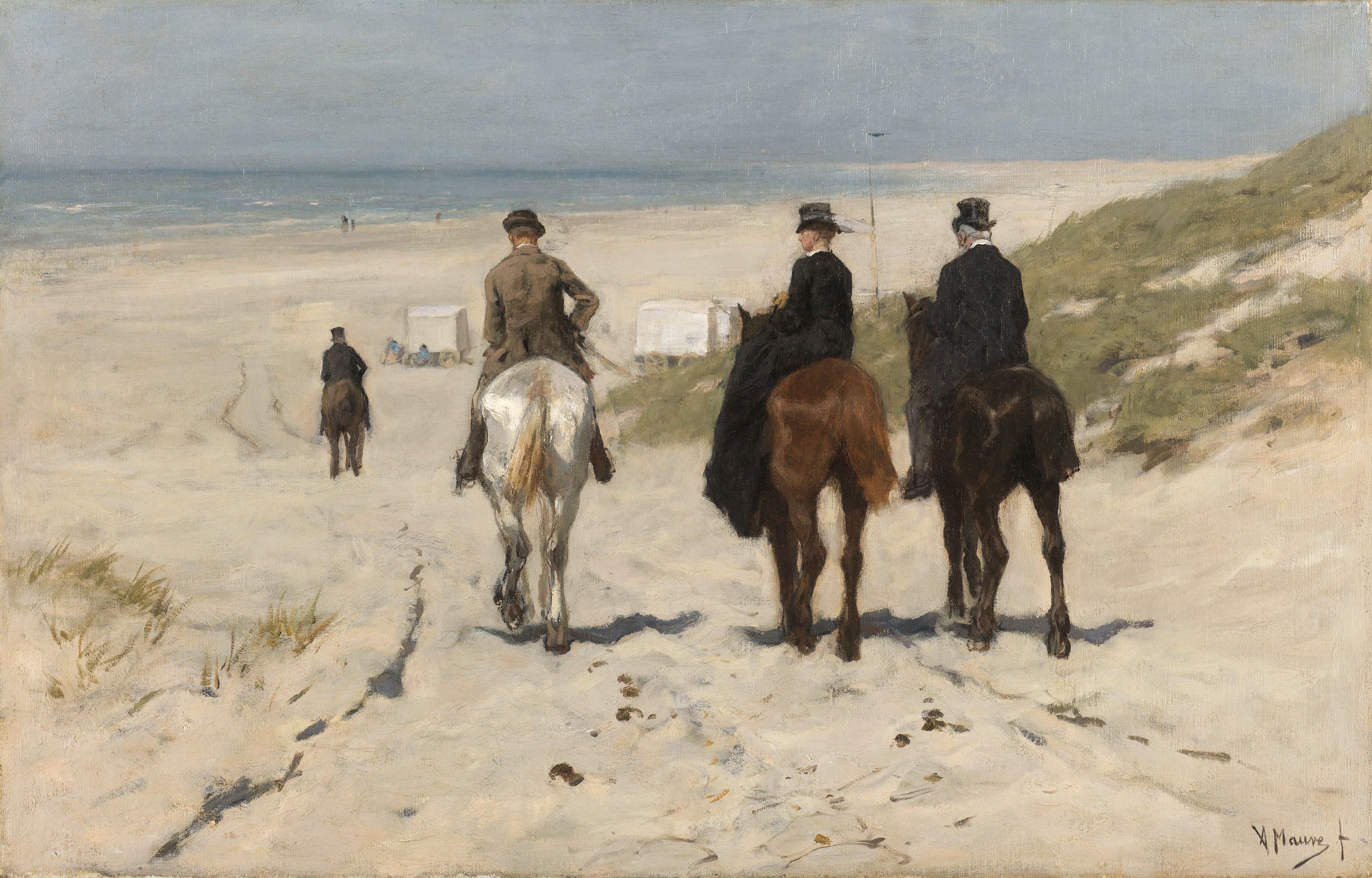
Anton Mauve’s “Morning Ride along the Beach” (1876), Rijksmuseum, The Netherlands

Adjacent to “Children of the Sea” in Rijksmuseum Room 118, I also enjoyed a moment in front of the artwork shown above.  It is called “Morning Ride along the Beach”, and I mistook it for another Jozef Israels masterpiece.  Instead, “Morning…” was painted by Anton Mauve, another Dutch painter of the same era (and Hague School).  “Morning…” provides a contrast to the harsh existence of the poor fishermen of the time, by focusing instead on the “well-to-do bourgeoisie”: horses, elegantly dressed riders, bathing cabins – all on a pastel-colored sunny day.  No souvenir mug with this one, but equally compelling to the eye.

Caravaggio’s “The Calling of Saint Matthew” (1699-1700), Contarelli Chapel, San Luigi dei Francesi, Rome

Admittedly, the Hague School paintings weren’t the first artwork to stop me in my tracks, nor were they the last.  In my college year of architecture studies in Rome, the Renaissance-era paintings and sculptures were as impressive as the cathedrals that housed them (I could write an entire post on the stunning chiaroscuro works of Caravaggio).  Case in point, I was so taken by the life and work of Michelangelo I read all 700 pages of Irving’s Stone’s fictional biography, “The Agony and the Ecstasy”.

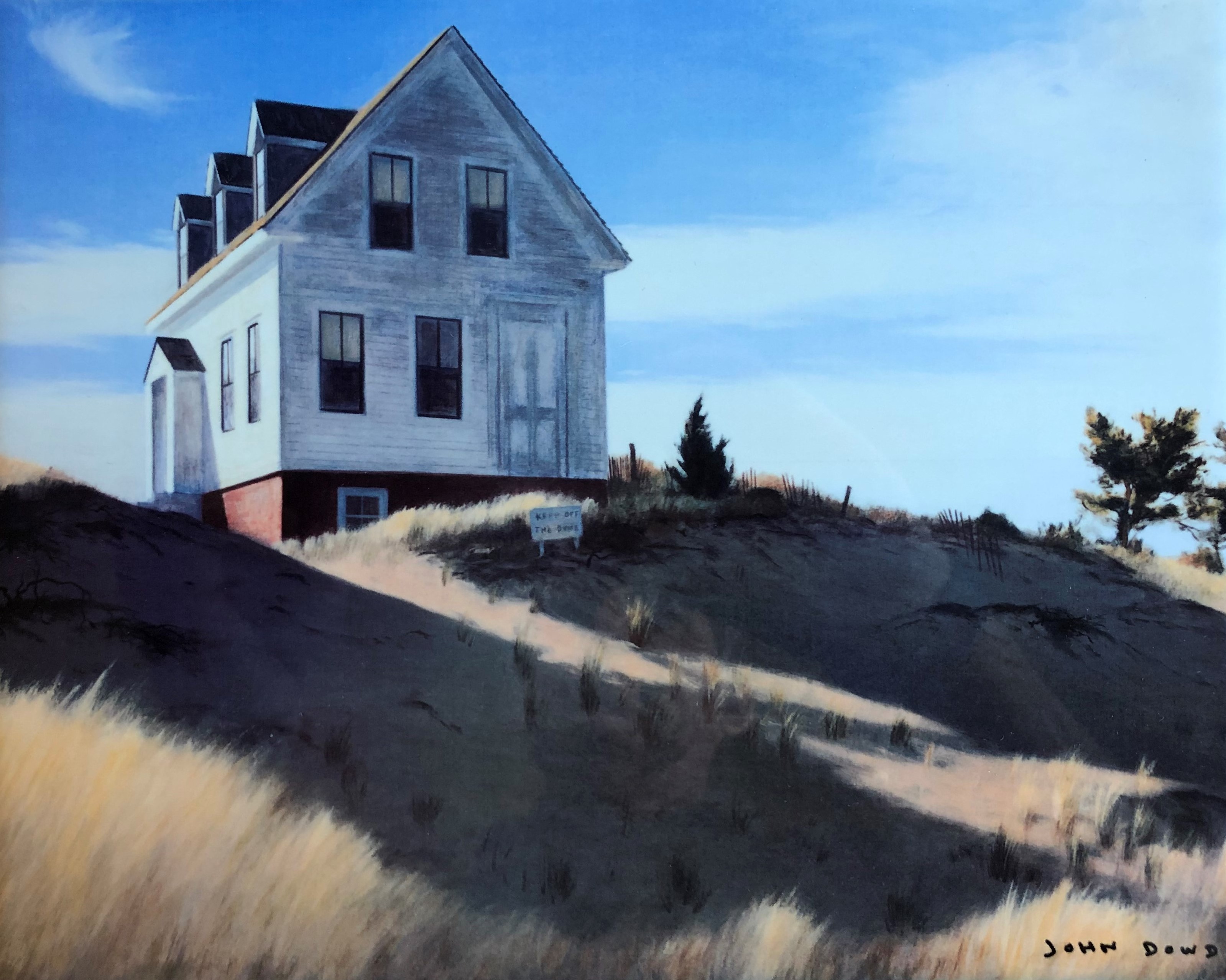
John Dowd’s “Provincetown Summer” (1997), Provincetown, MA


As for my latest artwork pause, my wife and I visited Cape Cod last month, all the way out to Provincetown at the tip.  One of Provincetown’s pier-side shops sold tiles of local artists’ paintings.  The tile above (left) – John Dowd’s depiction of a nearby Provincetown Cape house in 1997 – sits on our fireplace mantle now.  The photo above (right) is how the painter’s subject looks today.

Someday I would love to return to The Netherlands for more adventures, but I assure you my itinerary would not include another trip to the Rijksmuseum.  However, I can’t claim I wouldn’t pause on the sidewalk if I walked past the museum’s massive entrance.  After all, in Room 118 there’s a very small painting, utterly captivating to this non-patron of the arts.

Some content sourced from The Netherlands Rijksmuseum website, and Wikipedia, “the free encyclopedia”.

Famous Dave’s

In church a few weeks back, the congregation sang “A Mighty Fortress Is Our God”, the popular Methodist hymn with such confident, faith-building lyrics. I’ve heard “A Mighty Fortress…” a hundred times over, yet try as I might to focus on the words I only ever seem to think: “Davey and Goliath”.

Davey and Goliath was an American clay-animated children’s television series produced by the Lutheran Church in the early 1960’s.  The show was created by Art Clokey (better known for his characters on Gumby and Friends), and focused on childhood life lessons born out of Davey’s experiences alongside his dog Goliath.  Davey always found himself in conscience-testing situations and Goliath brought the wisdom to steer him the right direction.  Davey and Goliath aired on Sunday morning television for the better part of five years and I didn’t miss many episodes.  So why the connection to “A Mighty Fortress…?”  Because the hymn trumpeted behind the closing credits of every Davey episode.  I can’t get that association out of my head.

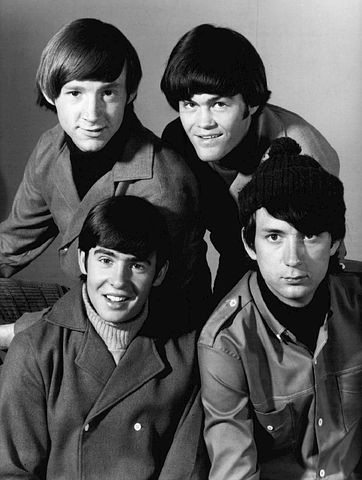
Memory association is a strange bird, as if there are kindred thoughts floating around out there just waiting to be connected.  I associate a Methodist hymn with an old children’s television show, whereas your association might go down a wholly different path.  Take it a step further for example.  With Davey and Goliath on the brain what comes to mind next?  You might think of the Bible story – the young and future king David bringing down the Philistine warrior Goliath with one pull of the slingshot.  Me, I think of The Monkees – the manufactured American rock band of the 1960’s.  The Monkees had the only other Davey I can think of – singer Davey Jones (lower left in the photo below).

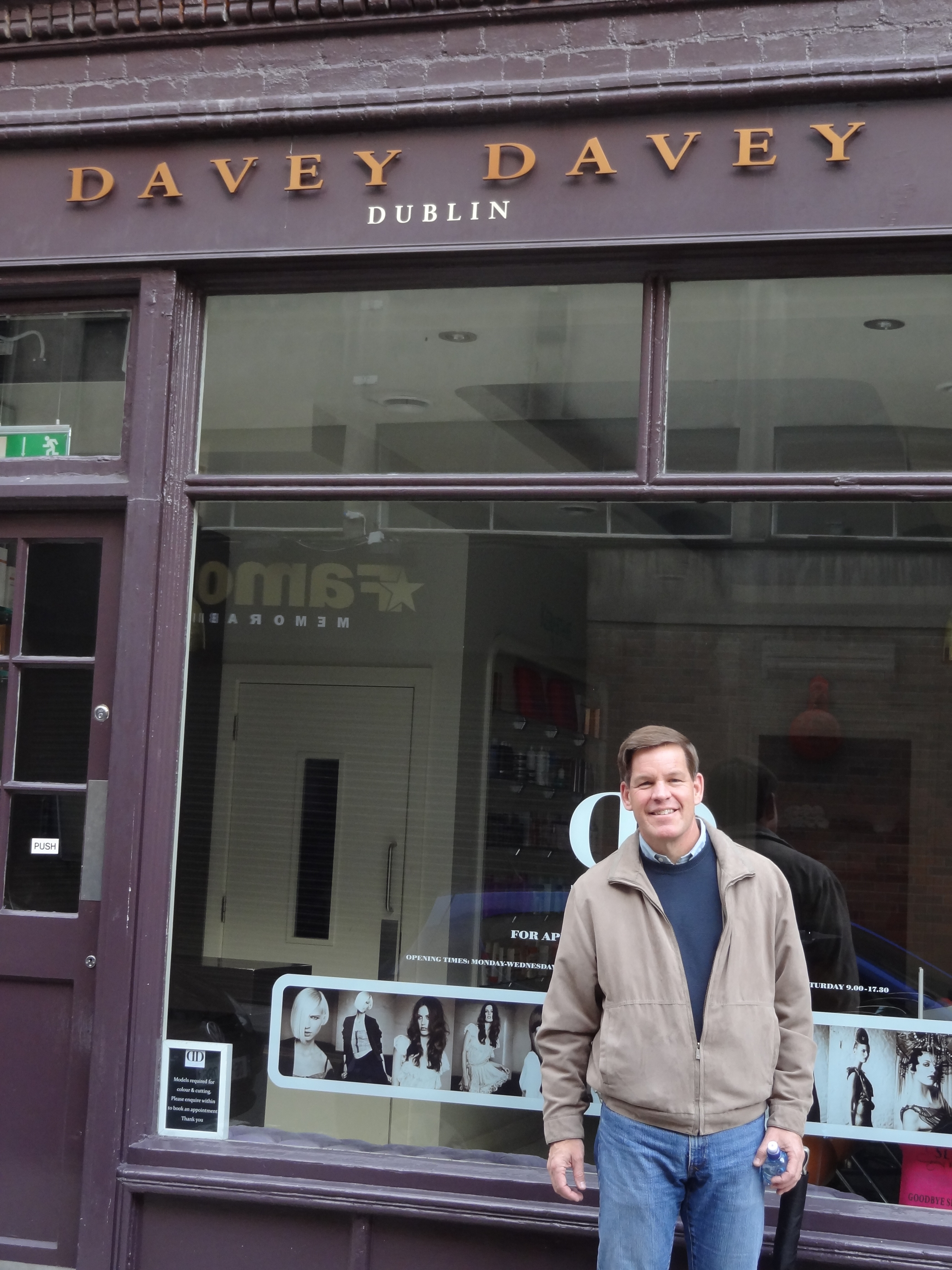
Now that I think about it (memory association at work again), I do have another Davey in mind, which you see in the below photo (not me – the shop).  Davey Davey is a “top hair salon” smack dab in the middle of Dublin, Ireland.  The owners – presumably brothers – have the surname Davey.  That’s a rare find: a surname more commonly used as a given name.

The Monkees always make me think of The Beatles, and just this week The Beatles associate to “sensational” (intentional) misspelling: “Beatles” vs. “Beetles”.  I never thought about it until my son brought it up but the “Beetles” became the “Beatles”, changing their name early on to associate more with musical beats than insects.  How’s that for useless trivia?

The Monkees are also a memory-association “cul-de-sac” for me; that is, I came back to Davey Jones shortly after I left him.  Davey Jones then memory-associates to several other David’s who made small but significant appearances in my life, as follows:

  • David Cassidy – Alongside the Partridge Family (and The Brady Bunch), Cassidy occupied several years of my Friday night childhood television.  Not one of my better life choices.
  • David Lee Roth – Alongside Van Halen, helped develop my appreciation for American rock in the 1970’s (if not the current fashion trends).  As Roth would say, “might as well jump!”
  • David Robinson – Alongside his Navy teammates, helped develop my appreciation for the best in college basketball post players.  Imagine, a class athlete and a class act.  That was “The Admiral” in a nutshell.
  • David Letterman – Reinvented late-night talk show for me and my fellow baby-boomers.  In college I didn’t miss a single Letterman opening monologue (or Top Ten list).
  • “David” – Michelangelo’s most famous sculpture, on display in Florence’s Galleria dell’Accademia near the Piazza della Signoria.  (How “the David” came to be is a remarkable story – read Irving Stone’s biographical novel “The Agony and the Ecstasy”.)
  • David Koresh – Alongside his Branch Davidian cult followers, showed me the horrors of brainwashing amidst the famous 1993 standoff with government officials in Waco, TX.  (There had to be at least one “shame-the-name” on this list.)
  • David Copperfield – Elevated magic to jaw-dropping larger-than-the-stage performances.  My family and I saw him perform in Colorado Springs in the 1990’s.  Copperfield was unquestionably one of the legends of his profession.
  • David Schwimmer – Still can’t get “I’ll Be There For You” (or Rachel) out of my head.

The list goes on and on – dozens of David’s making their mark out there.  Incidentally, the literal association of “David” is “beloved”, which also dates back to the Bible.  Nice.  But that’s not how my mind works.  I just keep coming up with famous Dave’s instead.

Some content sourced from Wikipedia, “the free encyclopedia”.