Adventures in Library-ing

Early each calendar year I look back on the previous year’s expenses to discover areas in the family budget where I can trim. The price of food, gasoline, and other “have-to-have’s” always seems to go up, so I search for items that are not so “have-to-have” to balance things out. A good example is books. I read two or three a month on my Kindle e-Reader. At say, $14.99 a pop that’d be over $500 I could carve out of annual expenses… if I could only get those same books at no cost. But where-oh-where could I possibly find books for free?

You bibliophiles out there (and the rest of you, for that matter) are laughing as I’m about to describe going to the library as an adventure, but here’s the thing.  I’ve been e-reading on my Amazon Kindle for so long that the idea of holding a book and turning its pages – let alone checking one out of a library – has become, well, novel again.

I wouldn’t have reached this crossroads were it not for a particular book.  Amazon described Frank Delaney’s The Matchmaker of Kenmare just the way I’d hope: an intriguing WWII-era work of fiction.  So I went to “try a sample”(where Amazon allows you the first several pages of the book for free) and – horror of horrors – it’s not available in digital format.  WHAT?  No e-Version?  You’re saying, Amazon, I have to shell out $24.99 for the hard copy if I want to read it?

A book for $10 doesn’t make me pause but one for $25 sure does.  Hence began my library adventure.  The last time I spent meaningful time in one was in college (and I don’t want to tell you how long ago that was).  The library experience is probably different in every way now, starting online. When I “checked out” my library’s website (ha) I discovered I could get a digital library card almost immediately.  With the digital card I could reserve and check out books from the comfort of my home computer.  Hurrah, free books here I come!

Oh how I wish it were that easy.  Turns out, my library’s software is not compatible with an Amazon Kindle.  No digital books for me, sigh.  And besides, physical books – like the one I wanted – require a physical library card.  So with no other excuse to avoid it, I got in my car and headed off to my local branch.  Guess what?  Parking at the library is free.  Entering the building itself is free (no cover charge!).  Getting a library card is free.  Even the library bathrooms can be used without having to check out a book first.

Our main (and modern) library branch

Yes, this is my tax dollars at work of course, but the illusion of all this free stuff is fun while it lasts.  And boy howdy, libraries aren’t what they used to be.  Ours has all these rooms and services and people, as if the surrounding shelves of books are merely a carry-over from past generations.  You can sit down to public-access computers, attend a lecture, host a meeting, rent DVDs, buy coffee, and even spend time in a room of books dedicated to the history of the surrounding county.  Maybe this is all review for you, but it’s a little overwhelming for an e-reader who’s navigating libraries of the new world.

Our secondary (and ancient) library branch

There’s more to this adventure in library-ing than I have time for today (including the over-the-river and through-the woods visit to a different and decidedly ancient branch in my library’s network), but let’s close the book on this topic with a “laugh’s on me” conclusion.  As I was researching for this blog post I went to the Amazon page for my Matchmaker… novel again.  Go figure; it’s available in digital format after all, and even in paperback.  How did I miss these options the first time around?  Must be the library gods telling me to go old-school and get a physical copy for free.


LEGO Notre-Dame de Paris – Update #4

(Read about the start of this “church service” in Highest Chair)

Click the photo for a more detailed view

As Notre-Dame de Paris rises slowly from its foundations, I often picture a congregation of parishioners down there at ground level, sitting quietly in the pews.  Startled by the snap of a LEGO block above them, they gaze skyward, see my giant fingers, and wonder, “OMG is that the hand of God?”  No, no, little ones, it’s just Dave, working through Bag 7… of 34 bags of pieces.

The little devil was still in the bag

Today almost included the long-awaited moment where I realize with mock horror that LEGO left a piece out of one of their model sets.  I churned through my piles of pieces, endlessly stirring and turning them over and over, but to no avail.  A piece was missing, and that sick-to-your-stomach feeling settled in deep, the way you reach the end of a jigsaw puzzle minus one piece.  Then, to my utter amazement, I spied it out of the corner of my eye.  The tiny traitor was still in Bag 7.  Wow.  Good thing that plastic bag wasn’t already relegated to the trash, huh?

“Underfed” buttresses

On the other hand, with more excitement than it probably deserved, today we began construction of Notre-Dame’s signature flying buttresses.  At first I was disappointed in the LEGO pieces, because I thought they looked a little, well, “underfed”.  Then I remembered; we’re only beginning the structure of the buttresses.  The finished look you see on the outside of Notre-Dame is supported by a complex of arches and columns well below it.  Here I thought my “God’s hand” was already working at roof level but in fact, we’re only about halfway up the structure.

Running build time: 3 hrs. 32 min.

Total leftover pieces: 16

Highest Chair

When we babysit our granddaughters here at the house, we tap into several items to make the job easier. A big basket of toys and stuffed animals sits in the corner of our living room. A dozen children’s books line the lowest shelf just waiting to tell their stories. Sesame Street is easily streamed on the nearby television. And at dinner time we roll out the high chair so everyone’s on the same level. So who would’ve thought a high chair would be my blog topic for today? Maybe you, if you know anything about cathedrals.

Notre-Dame de Paris

We’re almost there, loyal readers.  I will lay the corner-block of my LEGO model of Notre-Dame de Paris next week.  Why not this week, you ask?  Because before we crack the seal on the giant box of pieces, we need to pay a little respect to the real Cathedral.  I want you to know a few things about the stone and glass Notre-Dame before you witness the rising of the plastic one.

West facade

It’s a cathedral in the middle of Paris, Dave… what more do I need to know?  Uh, a LOT more.  To begin with, do you even know what a cathedral is?  I didn’t (and I have a background in architecture, for gosh sake).  It’s a big, giant church with stained glass and chapels and a raised altar, you say.  Well yes, you’re right, but what makes a church a cathedral?  Interestingly, it has nothing to do with the building itself.  Instead, a cathedral is the seat of a bishop (the ordained clergy-person who presides over the surrounding parishes). For lack of a church this person could just as easily be in a small house and it would still be considered a cathedral.

Cathedrals really do have “high chairs” on their altars for the bishops (cathedra in Latin means “seat”) but Notre-Dame de Paris is much more than a place for furniture.  First and foremost, it took a hundred years to construct (1163-1260).  In that era the building evolved from the common Romanesque style of the period to the more elegant French Gothic.  Notre-Dame feels unusually vertical and airy for a structure of its time and there’s a novel reason for this: flying buttresses.

Flying buttresses

Imagine Notre-Dame’s architect – Eugène Viollet-le-Duc – talking to the Paris city council in the twelfth century and saying, “Look guys, let’s think outside the box here… literally.  The structural support for this church ought to be outside of the building instead of inside”.  Why would the architect want this?  Because the flying buttresses assume the structural load that was previously handled by short, thick interior walls.  The result is taller, more dramatic spaces, filled with the light of high-up stained glass windows.  In other words, flying buttresses allow Notre-Dame to “reach for the heavens” much better than its Romanesque predecessors.

North rose window

There’s also more to this French “grande dame” than structure, of course.  Notre-Dame has twenty-nine chapels surrounding the main sanctuary (that’s gonna take a lot of LEGO).  It features three spectacular stained glass “rose” windows that would not be as large or as high were it not for those flying buttresses.  Notre-Dame’s twin towers host ten massive bronze bells and they each have first names.  “Emmanuel” (listen to his sound bite below) and “Marie” are so big they take up the entire south tower, while their eight ringing siblings all fit into the north tower.

Notre-Dame also has a central flèche, a spire not unlike the ones you see on more modest churches.  This spire, however, is topped by a bronze rooster, which is not only the symbol of the French state but also a container for (supposedly) a small piece of the Crown of Thorns, worn by Jesus leading up to his crucifixion.

Rooster-topped “flèche”

As you would expect, Notre-Dame de Paris hosts countless works of art, whether paintings or sculptures.  Many of the sculptures are biblical scenes intended to educate the illiterate parishioners of the twelfth century.  But my favorite sculptures may be those of the twelve apostles, way up high surrounding the base of the flèche and looking outwards towards Paris… all except one.  St. Thomas – patron saint of architects – faces Notre-Dame itself, and was given the facial features of Viollet-le-Duc.

Okay, so now you know more about Notre-Dame de Paris than just the LEGO model.  Considering there are over 500 Gothic cathedrals in Europe, it’s impressive to see Notre-Dame at the very top of at least one “Top Ten Cathedrals” list.  We’ll visit some of those other “high chairs” in future posts, to add even more life to my pile of plastic pieces. In the meantime, my LEGO “church service” begins promptly at 10am next Thursday.

Some content sourced from Wikipedia, “the free encyclopedia”.

Christmas Customs Crisis?

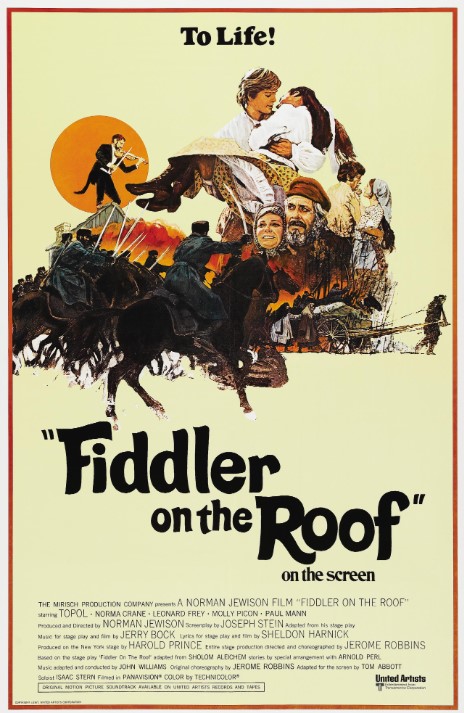
In the 1971 movie Fiddler on the Roof, the musical numbers are familiar even fifty years after the fact. Songs like “Matchmaker, Matchmaker” and “Sunrise, Sunset” play in my head in the voices of those long-ago performers. But it’s the opening number – “Tradition” – I hear most clearly, in the robust voice of actor Topol. The lyrics, covering the expected roles of father, mother, son, and daughter, speak to maintaining things as they always were. Which brings me to Christmas, and my family’s somewhat threatened traditions.

The easy way out here would be to list mine and ask you for yours.  We’d probably have some traditions in common and others we’d be hearing about for the first time.  Instead let me ask, are any of them robust enough to make it through the long haul?  As fast as the world is changing, you have to wonder what Christmas celebrations will look like ten and twenty years from now.  Seriously, do you expect hard-copy Christmas cards in the 2030s?  (Will you even have a mailbox?)

The Christmas tree is a good place to start.  As I’ve blogged about before, our tree is always real (versus artificial), purchased from a nearby lot after choosing the best fit for the house and budget.  This year however, I admit to a pause when I saw the price tags on the branches.  I swear the cost of Christmas trees doubled from 2022.  Economics says it’s a case of supply and demand, but in this case both are declining.  Tree farms surrender to developers.  The preference for artificial trees has risen steadily over the past fifteen years (to 77% of us now).  So less trees and less demand.  My 2030 Christmas may include an artificial tree whether I like it or not.

Christmas dinner faces a similar challenge.  The beef tenderloin we prefer for our celebration is a once-a-year luxury but it’s about to become a never-a-year purchase.  Even at a big box like Costco a trimmed tenderloin sets you back $40 a serving.  You start to wonder if burgers wouldn’t be just as satisfying simply for the money saved.  Even better – snacking throughout the day, and then your Christmas dinner appetite will be satisfied by a few side dishes and dessert?

Christmas (Eve) church already faced its toughest test (COVID) but did it really survive?  I remember the service we attended in 2020… from the “comfort” of our car with the preacher and the choir at the edge of the church parking lot.  The next two Christmases brought parishioners back indoors… but in far fewer numbers.  I admit to getting comfortable with “laptop church” every now and then, but Christmas Eve will be in person as long as there are sanctuaries and services.

Christmas carols may be the one tradition where serious change is in order.  Maybe you heard; Brenda Lee’s 1958 version of “Rockin’ Around the Christmas Tree” hit #1 on the Billboard Hot 100 this year .  That’s “staying power” (maybe staying a little too long) but it also suggests we’re not creating enough new music.  And how many versions of “Baby It’s Cold Outside” are we going to make before we decide not to change the lyrics but rather to ditch the song once and for all?  Bing Crosby, Nat King Cole, and Karen Carpenter will always have a place on Christmas playlists. The rest are getting old and it’s time for more “new”.

Christmas lights don’t leave much room for debate.  Not only will they be shining brighter than ever in the 2030s, they’ll be holographic, animatronic, and experiential.  Instead of a drive-thru Christmas display, the display will probably drive through you.  You’ll also have the option of enjoying your neighbors’ displays from the comfort of your living room (using the “mixed reality” headset you got for Christmas).

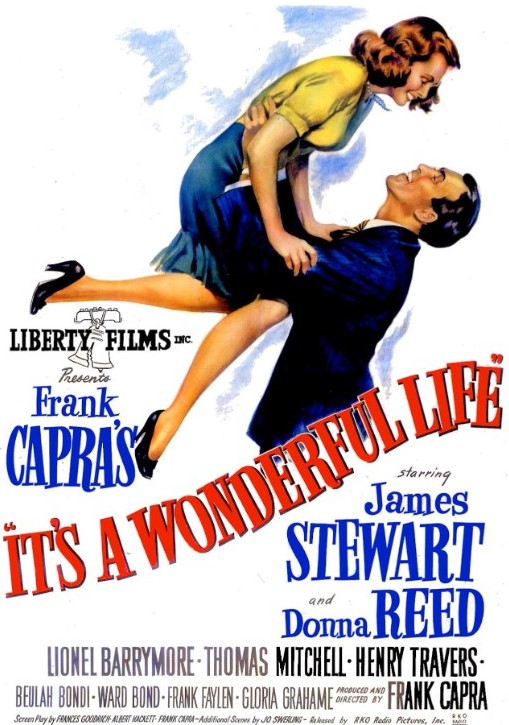
Finally, Christmas movies have pretty much run their course because you can only spin so many stories around the holiday (and anything on the Hallmark Channel doesn’t qualify as a movie).  Having said that, I’ll go to my grave watching It’s A Wonderful Life every December.  Even if there are no Christmas cards, tree, or dinner, and I’m tortured with yet another version of “Baby It’s Cold Outside”, I know I can always find tradition and the true meaning of Christmas alongside Jimmy Stewart, in a little town called Bedford Falls.

Merry Christmas!

Some content sourced from Wikipedia, “the free encyclopedia”.

Wings and Prayers

One of the must-sees on a visit to Colorado Springs is the campus of the United States Air Force Academy (USAFA). Besides a training ground for our future servicemen and women, the Academy hosts a high school, an airfield, two golf courses, and a cohesive campus of modernist buildings spread across 18,500 acres of the Rocky Mountain Front Range. But one structure stands prouder and taller than anything else on the property. Welcome to the USAFA Cadet Chapel.

USAFA Cadet Chapel

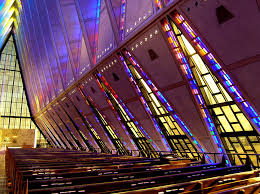
If you’re following my blog posts on architecture (as I complete my LEGO Fallingwater model), you’ll recall Thorncrown Chapel from a few weeks back.  The USAFA Cadet Chapel is a much bolder animal, dominating the academy campus skyline and easy to see from miles around.  Instead of Thorncrown’s wood and glass, the Cadet Chapel boasts an impressive open structural steel frame, married with tall triangular stained glass windows.  The main sanctuary is big enough to seat 1,200 (or about 25% of the USAFA student body); more like a church than a chapel.  Frankly, the only thing the Cadet Chapel has in common with Thorncrown is its design inspiration: France’s Sainte-Chapelle.

Fighter jets all in a row?

The distinctive feature of the USAFA Cadet Chapel is its seventeen spires, marching from one end of the building to the other.  The bold design, by architect Walter Netsche, took a little getting used to when the doors opened in 1962.  Visitors described the structure as a giant accordion made of triangles.  I describe it, more fittingly, as a series of fighter jets standing on their tails.

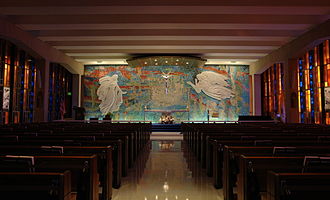
If you haven’t visited the Cadet Chapel you probably don’t know its biggest secret.  It’s a chapel for all faiths.  The main sanctuary is just the top floor of a multi-level structure.  Hidden below, you’ll find individual chapels for Catholics (500 seats), Jews (100 seats), Muslims, and Buddhists.  You’ll even find two “all-faiths rooms” and an outdoor area for “Earth-Centered Spirituality” (reserved for you Pagans and Druids).  It’s safe to say your acceptance into the Academy has nothing to do with who or how you choose to worship.

USAFA Catholic chapel (lower level)

The Cadet Chapel is a structural marvel, assembled from precisely one hundred prefabricated tetrahedral panels.  Over the years its popularity has grown to where it was designated a National Historic Landmark in 2004.  That’s the good news.  Now for the bad.  The original design called for a series of gutters to transfer water away from the building, instead of streaming directly down its panels.  But the gutters were scrapped due to budget constraints…

Mistake.

Sixty years of caulking and recaulking leaks finally forced the Academy to close the chapel for remodeling in 2019.  Now for the really bad news… they’re still not finished with the repairs.  In fact, you won’t be able to walk through the doors for another four years.  What’s taking so long?  Adding all those gutters, the ones that were supposed to be there in the first place.

The Cadet Chapel is “boxed” until 2027

One more bit of bad news (the fighter jets are really nosediving).  Getting construction workers to the tops of the chapel spires meant building an entire hangar-like structure around the chapel.  No joke – they put the whole building in a box.  In other words, not only can you not walk through the doors, you can’t even see the Cadet Chapel today.  Trust me, absence makes the heart grow fonder.  Mark your calendar for 2027, because you really need to see the USAFA Cadet Chapel.  It’s the only place I know where a (jet) wing and a prayer can be found in the same place.

Now for the latest on LEGO Fallingwater…

____________________

LEGO Fallingwater – Update #4  (Read how this project got started in Perfect Harmony)

I’m starting to wish I’d built Fallingwater before the LEGO Grand Piano, so you’d see me taking on a greater challenge versus the other way around.  30 pages (or 33%, or 118 minutes) into the build, this is what we have:

Pretty much the same as last week.  We added some landscape to the left side (the green/brown pieces), more landscape along the back, and we raised the foundation a little higher up off the water.  We have yet to see any of the distinctive house itself.  Not so adventurous.

What IS adventurous is sifting through 800 tiny pieces.  There’s no logic in how they were bagged (thanks, LEGO!) so I end up just spilling everything out onto the desk, searching for a lot of minutes followed by building for a few minutes.  Tedious?  Heck no, this is a blast.  If “tedious” entered my brain I’d have no business building LEGO models.

LEGO Gamble House by Grant W. Scholbrock

Props to my college buddy Bruce for sharing this photo, an example of a custom LEGO build… and one you can’t buy.  It belongs in a museum if you ask me.  There are pedestrian model builders (yours truly) and then there are professionals.  Way to go, Grant!

Tune in next Thursday as construction continues!  Now for another nod to Frank Lloyd Wright…

Solomon R. Guggenheim Museum

Guggenheim Museum

I’m not a big fan of museums.  Maybe that’s because, as Frank Lloyd Wright said, a lot of them look like “Protestant barns”.  No wonder New York City’s Guggenheim Museum is radically different.  When Wright set out to design it in 1943 he vowed to “make the building and the paintings a symphony such as never existed before in the World of Art”.

I can’t describe “The Goog” any better than the website of the Frank Lloyd Wright Foundation.  Their words: “… a white ribbon curled into a cylindrical stack that grows continuously wider as it spirals upwards towards a glass ceiling.” In other words, you the visitor climb in circles ever-ascending, enjoying the art as you go.  The Guggenheim was the first museum design where the “physical home” played an important role in the experience of the art itself.  If you’ve ever been to a museum that deserves a similar description, you have the Guggenheim to thank.

LEGO Guggenheim

In closing I ask, is the Goog significant enough to earn a spot in the LEGO Architecture series of models?  Why yes, it is!

Some content sourced from the Frank Lloyd Wright Foundation website, and  Wikipedia, “the free encyclopedia”.

Crowned Jewel

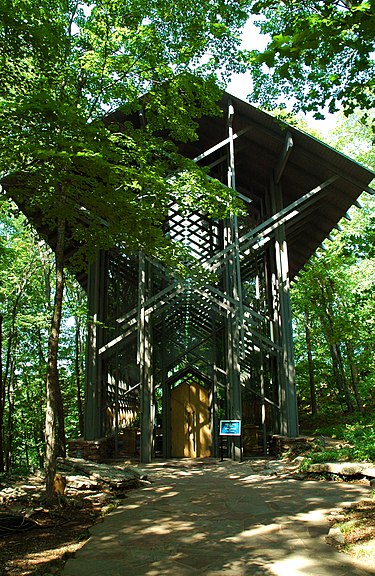
A little south and a little west of our downtown proper, you’ll find a wide street with stately old homes. The homes sit to the back of their properties, playing second fiddle to lines of majestic oak trees closer to the street. Overhead, the tree branches are densely intertwined, barely allowing the sun to peek through, creating a cozy, comforting canopy as you drive through. It’s a look that could’ve inspired the design of Thorncrown Chapel in Eureka Springs, Arkansas.

Thorncrown Chapel

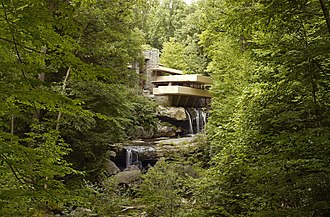
When I gushed about Fallingwater in last week’s Perfect Harmony, I thought it would be appropriate to revisit some of my favorite American architecture as I share the adventure of my LEGO model build.  Were it not for my architecture degree in college I probably wouldn’t be aware of these beautiful structures.  Instead, all these years later I can recall my favorites from memory.  They’re a diverse bunch but I think they exemplify almost-perfect spaces, thanks to the work of the architect behind the scenes.

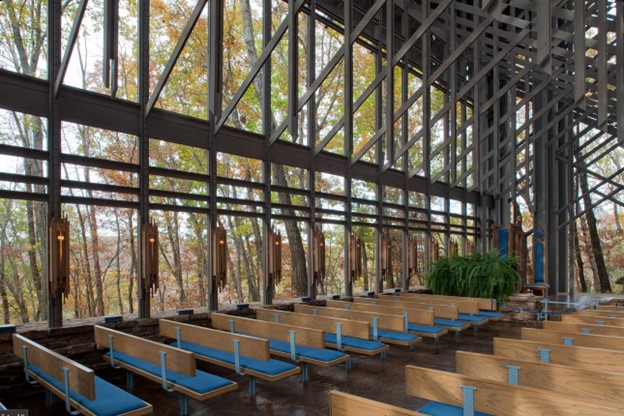
Thorncrown Chapel is an appropriate choice to lead off my list.  Just like Fallingwater, the chapel’s intent is to bring the outside in so that worship (or weddings, or any other celebration) feels as if you’re one with nature, yet with the conveniences and comfort of an enclosed space.  Thorncrown was built in 1980 (by coincidence, my freshman year of college).  Its architect, E. Fay Jones, turned a childhood interest in treehouses into a decorated career, including an apprenticeship under Frank Lloyd Wright.  Fay Jones’ designs “focused primarily on the intimate rather than the grandiose“.  Hence, chapels.

As a disciple of Wright (and the only one to win the American Institute of Architect’s [AIA] prestigious Gold Medal), it’s no surprise Fay Jones’ Thorncrown Chapel design is reminiscent of Wright’s Prairie School houses, with its broad overhanging eaves, horizontal lines,  and deliberate integration with the landscape.  Thorncrown contains 425 individual windows.  Those with stained glass bring in so much colored light the chapel’s interior is often described as “jewel-like”.

As with Fallingwater, Thorncrown is constructed of organic materials, including Southern pine and flagstone from the surrounding area.  The chapel seats 100 and is non-denominational, intended more for meditation for those who make the pilgrimage to Eureka Springs (in other words, go see it!)  For all of the beautiful structures you’ll find in America over the last forty years, the AIA has given Thorncrown the distinction of “best American building constructed since 1980”. 

Sainte-Chapelle

Despite my longtime familiarity with Thorncrown, I never thought to wonder how it got its name.  Turns out, Thorncrown’s design was not only inspired by Frank Lloyd Wright but also by Sainte-Chapelle, the Gothic church in Paris, France.  And at some point in its history, Sainte-Chapelle supposedly housed the crown of thorns worn by Jesus Christ.

If your wanderings ever bring you to the northwest corner of Arkansas, take time to visit this crowned jewel of a chapel.  Whether it strikes you as a treehouse or a miniature cathedral, being in church will never feel so comforting and cozy.

Now then, let’s turn our attention to (LEGO) Fallingwater, shall we?

____________________

Fallingwater – Update #1

As with the LEGO Grand Piano, the first step in the build is to simply open the box and assess the contents.  Here’s what is immediately apparent about the LEGO Fallingwater model:

  1. The finished product will look much more like LEGO than the Grand Piano looks like a miniature piano.  I can’t pinpoint the date LEGO first produced its Fallingwater model but it must’ve been years before the Grand Piano, with pieces more in line with basic LEGO blocks.  I mean, check out the photo below.  Would you believe this inventory of boring little pieces comes together as a house over a waterfall?
  2. The Fallingwater model will be completed much faster than the Grand Piano.  The design is intricate, yes, and we’re still talking about thousands of pieces, but the instruction manual hints at a much easier assembly.  I won’t have those heartstopping moments like I did with the Piano, where I realized I’d built a section backwards.  (Then again, my LEGO-building confidence may be getting the best of me.)
  3. The Piano was interesting to look at even as it was coming together.  Fallingwater… not so much.  Under construction it’ll look like haphazard piles of LEGO bricks.  Not exactly riveting to you the reader.  Instead, as I did with the Piano and classical music, I’ll cover a few of Frank Lloyd Wright’s other designs, so you gain a better appreciation for the diversity of his life’s work.

Next week, “groundbreaking”!

Some content sourced from the official Thorncrown website, and Wikipedia, “the free encyclopedia”.

(No) Separation of Church and State

This weekend my wife & I packed up the last of our things and moved from Colorado to South Carolina. We’ve decided the lower elevation and milder temps of the “Palmetto State” make better sense for our retirement. But instead of a moving truck, we trailered the horse (and the dog and the barn cat) along with our suitcases. A half-ton of horse means driving in the slow lane, our top speed 65 mph without blowing a gasket. And driving through Kansas in the slow lane – or any lane for that matter – feels like forever.

The western edge of Kansas, at Interstate 70, is an encouraging starting point as you leave Colorado.  You pass an attractive “Welcome Center”, a convenient place to take a break and learn a little about the “Sunflower State” before you venture further.  More importantly, you notice an immediate improvement in the road conditions.  Kansas, unlike Colorado, not only earmarks tax dollars to keep its highways pristine, the state actually spends those dollars accordingly (instead of dipping into them for other purposes).  Our horse – standing on four legs the entire journey – appreciated the smoother ride, if not the triple-digit temps.

Twenty or thirty miles into Kansas, the sobering reality of America’s Heartland sets in.  For one, you could lay a ruler on the hundreds of miles of Interstate 70 and hardly need a turn of the steering wheel.  For two, you realize every town along the way – save Kansas City to the far east – looks exactly the same.  Water tower. Cell phone tower. Church. Gas station. Fast food. A surround of corn fields. Lather, rinse, repeat.  It’s like someone drew up a generic template of a town and laid it down a couple dozen times along the interstate.  Doesn’t help to keep a slow driver alert, especially when you’re on cruise control.

But suddenly, mercifully, and completely out of nowhere, you see little Victoria, Kansas on the horizon.  Not Victoria, British Columbia (though it might feel like you’re driving all the way to Canada).  Victoria, Kansas, with its mere 1,200 residents and one square mile of town.  And right in the middle of Victoria, rising out of the earth as abruptly as the Rocky Mountains, sits the Basilica of St. Fidelis, better known as the Cathedral of the Plains.

You can probably spy St. Fidelis from fifty miles away as you approach, but you certainly don’t believe what you’re seeing.  Kansas is as flat as a pancake yet Victoria boasts a cathedral worthy of a spot in Rome.  The first time I saw St. Fidelis several years ago (driving a whole lot fast than 65 mph), I thought it was the Kansas heat bringing me a heavenly mirage.  I half expected the clouds to part (even though there weren’t any) and a host of angels to surround those tall twin spires.

But St. Fidelis is a lot more real than a mirage.  It was built in the early 1900s by German and Russian immigrants, each of whom pledged to haul six wagonloads of limestone and another four of sand from nearby quarries.  St. Fidelis predates any kind of construction equipment so the entire structure was raised by hand.  These industrious Kansans knew the meaning of hard work.

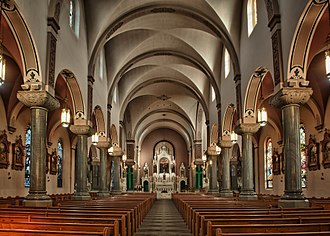
St. Fidelis boasts forty-eight handcrafted stained-glass windows, valued at more than $1M.  Its beautiful procession of Romanesque-style arches hovers above marble floors.  The cathedral was “elevated” to the status of Minor Basilica by decree of the Pope in 2014, and earned a place on America’s National Register of Historic Places.  In other words, there’s no separating this church from this state.  Not bad for an old building in a tiny metropolis in the middle of cornfields.  I only wish I’d had the time to exit the interstate and head down to Victoria for a closer look.

The Sunflower State has adopted the Latin phrase ad astra per aspera as its motto.  It means “to the stars through difficulties”, representing the aspirations and hard-working spirit of the state.  I’d say the Cathedral of the Plains is Kansas’ perfect example, wouldn’t you?

Some content sourced from Wikipedia, “the free encyclopedia”.

Ketchup Catch-Up

At the Communion rail in our pre-COVID, in-person church days, my wife and I would sometimes laugh at the size of the hunk of bread they’d tear off the loaf. The pieces were so big I’d often be chewing all the way back to my seat (and think I should’ve asked for seconds). On the other hand, today’s “drive-in church” Communion amounts to hermetically-sealed plastic capsules handed gingerly through the car window. Peel back the plastic to reveal the tasteless wafer and half-swallow of grape juice inside. No, it’s not breakfast by any definition, but at least we’re still achieving the higher purpose.

Communion and ketchup are strange bedfellows but I’m about to explain why they belong in the same sentence.  If you’ve followed the headlines lately, you know – just below the latest details of the Myanmar conflict – we’re all worried about whether there’ll be enough ketchup packets for our next take-out meal.  That’s right, the world is currently lacking in – not ketchup – but ketchup packets.  If we don’t address the situation soon, buildings will burn and looting will run rampant.  Even worse, we might have to top everything with mustard instead.

It’s the pandemic to blame, of course.  As soon as traditional sit-down restaurants shifted to pick-up and delivery, their demand for packeted condiments jumped up to the level of Wendy’s and McDonald’s.  In fact, Wendy’s and McDonald’s removed ketchup packets from their front counters, not because customers were taking too many, but because other restaurants were raiding their supplies.  Yep, it’s gotten that kind of desperate out there in burger land.

Heinz, the undisputed king of ketchup, recently committed to increasing packet production by 25% to fend off potential mayhem in the streets.  125% of Heinz’s typical annual production amounts to, well… let’s just say there’d be enough to place a packet in the hand of every man, woman, and child on the planet.  Dang.  That’s a whole lot of processed tomato spread.

Speaking of processed tomato spread, here’s my favorite ingredient in ketchup: mustard (powder).  It’s true.  Go check the ingredients list on the bottle I know you have in your refrigerator.

Will there be enough to go around?

But I digress.  Let’s get back to the global packet shortage.  Call me highbrow but I’m having a hard time caring, because honestly I can’t remember the last time I used a ketchup packet.  The restaurants of my choosing always bring the bottle to the table when you ask for it.  Furthermore – burgers aside – I don’t have a lot of use for ketchup.  Not on my fries, not on my meatloaf, neither eggs nor hash browns.  And while we’re at it can we all agree: mustard only on a bratwurst or a hot dog?  It should be a cardinal rule.

But I digress… again.  FOCUS!

If I don my eco-friendly hat for a moment (and don’t I look sharp?), the last thing I want to hear about is Heinz upping ketchup packet production to 12 billion a year.  That sounds like enough plastic to Ziploc a small country many times over.  But I get it.  In these times of please-pass-the-virus (or better yet, don’t), we demand individually wrapped one-and-done solutions.  Like ketchup packets.  Like Communion elements.

Handy host

Good things come in small packages, so the saying goes.  Yeah, well, they come in big packages too.  Like ketchup from a bottle instead of a plastic packet.  Like Communion from a loaf of freshly baked bread instead of hole-punched from a sheet of Styrofoam. And seriously, who uses just one ketchup packet?  Picture a baby burger you can balance between your finger and thumb and maybe it’s enough.  Anything larger and you’re grabbing packets by the handful.

Let’s wrap this topic on a personal note.  If ketchup packets disappear, my granddaughters won’t understand a really good bedtime story, the kind where they’ll giggle every time they talk about it.  You know the story, the one where my buddies and I pocket ketchup packets from our school lunch trays, take ’em out to the playground asphalt, and stomp on ’em to give some unsuspecting kid a tomato facewash?  Oh please, drop the mock horror.  You know you were out there on the playground too, doing the very same thing.

Some content sourced from the 4/8/2021 CNN.com article, “America is facing a ketchup packet shortage”.

Forty Days and Forty Nights

Tuesday seems like weeks ago.  Some call it “Fat Tuesday” (esp. those pancake-bingers partying hard at Mardi Gras) but to me, it’s just the last day of my food free-for-all.  My wife and I decided to give up “flour” for Lent (more on that in a minute) so Tuesday night we overate at our favorite Mexican restaurant.  Chips and salsa (the chips a hybrid of corn and flour).  Enchiladas and tacos wrapped in big, fluffy flour tortillas.  Sopapillas fried from puffy flour tortillas, drenched in honey.  Big, frosty margaritas to wash it all down.  It was kind of a fiesta final before Lent.

Now it’s Ash Wednesday as I type and I’m already obsessing about my forbidden flour.  This morning’s breakfast was hardly a fiesta – coffee and a protein shake.  Not a tablespoon of flour to be found anywhere.  My upcoming fever dreams will be liberally dusted with flour.  I’ll have fantasies of consuming an entire bakery case (shelves and all), eating my way out of a gigantic loaf of bread, or parking my mouth below the pasta-maker while endlessly turning the crank.  I’m looking at all the snow outside my office window right now.  It looks exactly like white flour.  It probably IS white flour.  Hang on, I’ll be right back…

As of today, we’ve officially started the season of Lent again. The next forty-odd days and nights are gonna be the usual challenge. Did you know the Old English translation of “Lent” is “spring season”?  How that computes with all the flour I’m seeing outside my windows right now is beyond me.  More to today’s point, Ash Wednesday is the deadline to answer the question, “What am I giving up for the next seven weeks?”

Lent = “no mas”

Lent, as even non-Christians know, is the religious season of preparation leading up to Easter.  It’s the time to reflect inward, with more attention to prayer and the Good Book, less attention to “shortcomings” (sins, people), more charitable service to others, and finally, a cruel little something called “self-denial”.  Self-denial is anything you want it to be, but the idea is to subtract from your daily equation: something you don’t need but you’ll struggle to be without.  Consider seven popular choices for 2021:

  1. Chocolate.  Maybe this one’s popular because it’s the easy way out.  Chocolate’s often in my desserts, occasionally in my protein shakes, and every-now-and-then in my mid-afternoon pick-me-ups.  But I can certainly do without the sweet stuff for forty days.  C’mon, people used to give up food for Lent!  A little chocolate’s not really what the Big Guy had in mind.
  2. Meat.  Christians forego meat on Lenten Fridays anyway but some choose to give it up the whole way.  Not me.  If I’m giving up flour, I’ve got to have meat-and-potatoes to soften the blow of all my bread, pasta, and baked goods currently on hiatus.  For Pete’s sake, I can’t even have chicken noodle soup!  What was I thinking?
  3. Smoking or Drinking.  Maybe these are your vices but they’re not mine, so either would be a Lenten cop-out.  I enjoy the occasional glass of wine or a beer, sure, but putting them on the shelf for the next month or so? Hardly a stretch.
  4. Coffee.  Okay, we just shifted from first to fourth gear.  There is nothing – NOTHING – to fill the vast and infinite void left behind by my morning cup of joe.  I understand self-denial but don’t turn me into a raging lunatic.  Force me to give up coffee for Lent and I’ll have a newfound respect for the next option, which is…
  5. Sleeping In.  Normally this would be another cop-out for me because I’m one of those annoying morning people.  But deny me my coffee and I’ll gladly hibernate until early afternoon – every day until Easter.
  6. Social Media.  I dropped Facebook late last year.  I’m only on Instagram a couple of times a week.  I have no Twitter feed.  I get it – it’s 2021 – but this one’s a no-brainer for me.  I mean seriously, just give me a call.
  7. Speaking Poorly about Others.  I asked my sister-in-law what she was giving up for Lent and she said, “I’m going to be nice to others”.  That gave me a good laugh until I found this item on the list.  My sister-in-law has plenty of company.  So, consider: could YOU give up airing dirty laundry for forty days?

One more thing about Lent. Each of the liturgical seasons has a color, and Lent’s is purple.  You’ll see a lot of it in churches, cathedrals, and flower arrangements this month and next.  I like purple enough, but ask me to name purple items and all I come up with is eggplant (the nightmare vegetable of my youth), figs (the nightmare fruit of my youth), grapes (I prefer the green ones), cauliflower (yep, it comes in colors), and lavender and amethysts, both of which I have little use for.  Purple is about as smart a choice for Lent as giving up flour.

In conclusion, I could use your prayers as I endure my forty-day flour fast.  By late March my car tires will look like doughnuts and my paperback novel a nice, thick Pop-Tart.  Toss me a Frisbee and I’ll slather it in syrup and devour it like a pancake.  Put your pasta under lock and key.  Guard your pizza with your life.  I’m coming for your cupcakes.

Some content sourced from the Delish.com article, “7 Things To Give Up For Lent That Go Beyond Food”, and Wikipedia, “the free encyclopedia”.

It’s Been a Silent Night

When singer Amy Grant released “Tennessee Christmas” in 2016 it’d been years since she recorded a holiday collection. In fact, her platinum-level “A Christmas Album” arrived way back in 1983; her triple-platinum “Home for Christmas” in 1992. “Tennessee Christmas” didn’t achieve platinum, gold, or anything else for that matter.  As my brother said at the time, “She never should’ve done it.” He’s right. Amy should’ve released just “I Need a Silent Night” and called it good.

Amy Grant can still pen lyrics (even if her voice isn’t as strong as it used to be).  “I Need a Silent Night” asks us to find the true meaning of Christmas in the midst of the inevitable commercial distractions.  Instead of “December traffic” and “Christmas rush” and “Shopping and buying and standing forever in line”, Amy asks:

I need a silent night, a holy night
To hear an angel voice through the chaos and the noise
I need a midnight clear, a little peace right here
To end this crazy day with a silent night

As if we’ve been granted Amy’s wish (ha), this season has been remarkably placid.  The message of Advent is always “prepare” and that’s what we’re doing.  It’s just – unlike most years – we’re not using words like “rush” and “chaos”.  We’re experiencing more of a “silent night” instead.

Our Christmas prep never begins until after Thanksgiving (I stand on holiday principles here) but by the following Saturday I was eagerly unpacking the decorations and streaming holiday tunes.  More importantly, I also found myself saying “yes” to just about every reason for the season:

  • Since we can’t have in-person services our church offered Advent wreaths to build and display in whatever room you “go to church” in at home.  We asked for a wreath as soon as they were available.
  • A family involved in our local 4-H advertised festive bags of scented pine cones as a fundraiser for their activities.  We bought two bags and they delivered them straight to our door.  There’s nothing that says “Christmas” like the tiny voice of a five-year-old saying, “Thank you, Mr. Wilson!”
  • Our church set up a virtual giving tree where you can pick presents from a list, buy them, and return them to the church for distribution to needy families.  I bought six.
  • We’ve been baking up a kitchen storm so we decided to put together plates of cookies for our neighbors and deliver them.  Front doors were opened cautiously, to which we said, “Well, this may be the only chance we get to see you face-to-face this year.  Merry Christmas!”
  • We’ll be having drive-in Christmas Eve services this year so our church put out a big bin of ornaments, asking us to decorate them and put them on trees surrounding the parking lot.  I grabbed several.
  • Starbucks moves to Christmas drinks and goodies shortly after Halloween.  There’s this unspoken opportunity to “pay it backwards” by taking care of the car behind you in the drive-thru, and then speeding off to remain anonymous.  I’ve been doing this for weeks.
  • Colorado Springs advertises a Christmas For Kids effort where you’re assigned a needy child’s Christmas list.  You buy the gifts, wrap them up, and pass them on to case workers who make sure the kids get them in time for Christmas.  I sponsored two.

Most of these Christmastime gestures (and why should they only happen at Christmas, right?) would not find room in our “normal years”.  We’d be rushing about trying to find one last gift, throwing up Christmas lights and decorations, and hastily preparing our cards to put in the mail.  We’d be wrapping presents ’til well past midnight on Christmas Eve.  Yet this year we’re completely organized and ready, including all those meaningful extras I mentioned above.

Let me “wrap” (ha) with one more holiday task we completed earlier than usual: decorating our tree.  Christmas trees must’ve been in high demand (or short supply) this year because our local lot only had one left in the 10′-12′ range we prefer.  It’s tall and thin (kind of like you see in Whoville in the original “Grinch” movie).  It’s so tall our angel at the top seems poised in the heavens, which is wonderfully appropriate this year.  She was the only decor on the tree all of last Sunday before we added everything else the following night.  So now our tree boasts the usual organized chaos of lights and ornaments.  But it’s only the angel I see.  She’s watching over us and giving us exactly what we need this year: a silent night, a holy night.

This post is in memory of Marion.

A Sound of Thunder

Like it or not, we’ve changed our personal hygiene habits these last six months.  You’re wearing a mask because you choose to (or your governor mandates it).  You’re social distancing to be able to do things as simple as grocery shopping.  You may even be washing your hands longer (though I still can’t get through the “Happy Birthday” song twice).  But one habit hasn’t changed – I’m sure of it.  You’re sneezing as often as you normally would, and not necessarily because you’re sick.

How often do you sneeze?  The answer to that question is as varied as the number of people reading this post.  Sneezing is a highly personal habit, one you have no control over.  Your body needs to sneeze and will do so whether you fight it or not.  Technically, a sneeze is a “semi-autonomous, convulsive explosion of air from the lungs through the nose and mouth.”  In plain English, your body is fighting something irritating and sneezing helps to get rid of it.

I sneeze every day, without fail.  I know this because I can recall my last sneeze and the one before that; both within the last twenty-four hours.  More significantly, I sneeze twice at a time.  That’s another highly personal aspect.  Some sneeze once, others twice.  My dad sneezes consistently seven to ten consecutive times (to which he declares, “marvelous!”)  Consecutive sneezes either means a repeated effort to rid the irritant, or the body simply settling down in a reflexive sort of way.

My wife knows when I sneeze because I don’t hold back.  I feel one coming, I rear back, and I erupt for all the world to hear.  But once again, we all have our differences.  For some, it’s a sound of thunder.  For others, it’s akin to a cough.  Occasionally you’ll even hear a person squeak.  No matter the sound, it’s generally unalterable.  The body does what the body will do.

Stanford University once conducted a study and concluded a sneeze is the equivalent physiological response as one-quarter of a sexual orgasm.  Now how would Stanford know what one-quarter of an orgasm feels like?  Your one-quarter may feel different than my one-quarter.  Regardless, both responses release a bunch of endorphins and endorphins feel good.  Kinda makes you want to sneeze more often, doesn’t it?

An effort to control a sneeze can be downright comical.  In situations where you don’t want noise (church!), trying to avoid a sneeze can make it worse than just going through with it.  Picture the person anticipating a sneeze in the pews.  Deep breaths or holding the breath (count to ten!), pinching the nose, tilting the head back, and on and on.  The sneeze often comes anyway.

Trying to thwart a sneeze can be downright dangerous.  There’s no truth to the myth your eyeballs can pop out if you sneeze hard enough (though it’s not impossible to sneeze with your eyes open – try it).  But hold that blast in and you can damage blood vessels or the nasal cavity.  Best to just let the volcano erupt.  Even the mask naysayers can’t deny the value of today’s “mouthpieces” relative to sneezing.  A sneeze can emit up to 40,000 droplets of something you don’t want any part of.

What makes YOU superstitious?

Let’s put the superstitions to rest.  Your heart does not stop when you sneeze, even though there’s a quick break in the rhythm.  Nobody’s talking behind your back when you sneeze, nor does the number of times you sneeze indicate what they’re talking about.  There’s no relevant amount of good or bad luck with sneezing.  Finally, your soul won’t leap out of your body to be carried away by Satan (or for you atheists, your “breath of life”).

I like to think of my wife’s “God bless you!” as the protector of that last superstition.  She and I exchange the blessing unfailingly (religiously?) with every sneeze, as if not doing so will separate the soul from the body.  I suppose we could go with “Gesundheit” instead (since the Almighty certainly speaks German) but the English version somehow sounds more effective.  Here’s a coincidence for 2020: the very first “God bless you’s” were uttered after sneezes associated with the very first pandemic: the Plague of Justinian in the 6th century.

Sneezing can be encouraged, be it with pepper or snuff or some other artificial irritant.  Not for me.  My sneezes come often enough to simply deal with them as they do.  I’m sure you agree; the experience is not altogether unpleasant if you sense it coming.

A final nod to sneezing science-fiction fans, who may recognize this post’s title as one of Ray Bradbury’s very best short stories, from his collection, The Golden Apples of the Sun.  “A Sound of Thunder” was the tale of time-travel, dinosaurs, and seemingly innocent tampering with evolution – suddenly gone very wrong.  It’s as chilling a read today as it was at its publication almost seventy years ago.  And the “sound of thunder”?  It wasn’t a sneeze.  You’ll just have to read the story for the real meaning.

Some content sourced from Wikipedia, “the free encyclopedia”.