Tricks of the Trader

Our town, like so many others, offers the choice of grocery shopping at a national-brand market or at one with a more local vibe. We spend our dollars at Publix (1,300 stores across eight Southeastern states) but also splurge at The Fresh Market (161 stores) when we’re after something a little more unique. Having said that, our town lacks another popular market and it begs the question: What is the appeal of Trader Joe’s?
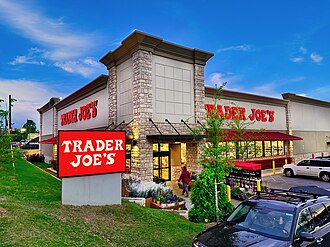
Chattanooga, TN

This post was originally headed in a different direction.  Trader Joe’s made the headlines because of its popular cloth “mini-tote” bags; so popular they were reselling on eBay for $500.  That led me to think, America has an obsession with miniatures and let’s make that today’s topic.  But no, I can’t get Trader Joe’s itself out of my mind, so let’s walk through their aisles for a few minutes.

Very popular!

The cloth bags are a great place to start.  Did you know Trader Joe’s was the first grocer to offer reusable shopping bags, beginning in 1977?  The trend didn’t catch on with other stores for another fifteen years.  Even better, “TJ’s” encourages use by refunding you $0.05 per bag or entry into a weekly raffle for a $25 gift card.

The above paragraph was brought to you by the food-and-drink enthusiast website Tasting Table.  Their 25 Facts About Trader Joe’s… is a convincing sell, maybe getting you to dash over to your nearest TJ’s for a look inside.  But a company’s commitment to sustainability isn’t enough to draw me in over and over.  There must be something else at play.

Maybe it’s more about TJ’s “revolving door of new products”.  They frequently discontinue one product in favor of another, so what you find on the shelves is constantly changing.  They limit certain items to seasons (right now you’ll find pumpkin-spice everything).  And their product line is impressively diverse for a medium-sized grocery store, which probably attracts more than your run-of-the-mill shopper.
I suppose you could make the same argument for a restaurant.  Shaking up the menu is a good idea every now and then (hence “specials”).  Leave the core set of entrees alone but occasionally introduce new ones to see if they’ll take.  Yet it’s not a perfect analogy for Trader Joe’s.  My impression is, nothing on TJ’s shelves is safe for the long haul because all products are under constant scrutiny.

How about “affordable prices”?  Here’s where I take my hat off to TJ’s.  The advertised price of a given product at Trader Joe’s is the one-and-only price.  No discounts, coupons, gift card offers, special promotions, or even online ordering to cloud the cost to the consumer.  And since 80% of what TJ’s sells can only be purchased at their stores, price-shopping the competition is a waste of time.
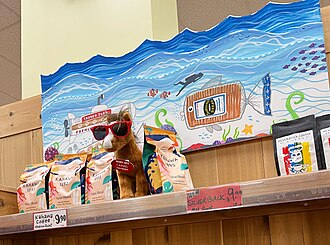
Stuffed animals are hiding at TJ’s

TJ’s probably draws in young families because the shopping experience is fun.  The nautical theme is apparent in its decor, as well as on its “crew member” uniforms.  A stuffed animal hides somewhere in the store – find it and win a prize.  And a bell rings (again, the nautical thing) to alert employees to open new check-out lines or answer customer questions.  I like that approach a whole lot more than simply announcing the need over a loudspeaker.

You can try a lot of things at Trader Joe’s (Costco on steroids?), you can call the store ahead of time to reserve popular items, and you can usually get a refund on anything you regret buying (regardless of reason, proof of purchase, or the amount of the product you’ve consumed).  What I highlight in italics here is impressive for a grocery store yes, but it still doesn’t make me a return customer.

At the end of the day (or a list of “25 Facts…”) I go to a grocery store because it carries the items I need.  To put it another way, I am brand-loyal and fairly routine in what I buy.  Perhaps that is the genius of Trader Joe’s.  It draws people in again and again because, well, they want to be more creative in the kitchen.  Try out new things.  Emerge from the doldrums of the same thing on their plates every other week.  And who can argue with variety as the spice of life?

Oakland, CA

Maybe, collectively, 25 facts explain Trader Joe’s success.  Or maybe someone from out West will chime in and solve the mystery.  After all, California was the birthplace of Trader Joe’s (Pasadena), and the number of stores in the state has ballooned to over 200.  There should be plenty of TJ’s experts out there to explain what the fuss – er, repeat business is all about.  Then, just then, I might get into my car to drive the hour and change it’ll take me to get to my nearest location.

Some content sourced from Wikipedia, “the free encyclopedia”.
For Whom the Road Tolls

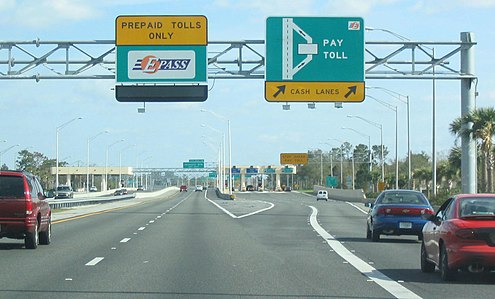
Because we raised our kids in Colorado, vacations to visit our extended families were often by airplane, since my relatives were in California and my wife’s were in Florida. It was the rare trip where we could see any of them by taking the car. So when my wife and I drove from South Carolina to Pennsylvania recently to visit my brother and his wife, we were reminded of what makes travel by car different than by plane. Toll roads, for instance.

Take your pick of payment

I have memories of toll roads my kids will never have. They’re old enough to remember passing through the booths and handing coins or bills to the collector. But they won’t remember the unmanned alternative, which was to toss exact change into a big plastic basket, listen to the coins process through the mechanics below, and hope/pray the gate to the toll road would raise. That automated approach seems almost quaint compared to today’s electronic alternatives.

I say alternatives (plural) because yes, that’s what we have with today’s toll roads. It confounds me. Why in heaven’s name haven’t we developed a painless, seamless, and most importantly, nationally coordinated approach to toll road payments? To some extent (nineteen states) we have a solution – E-ZPass, which by subscription and sticker allows convenient passage.  But even E-ZPass is not a perfect system.

Not so E-Z

For the rest of the country’s tolls – and for most of our round-trip drive between South Carolina and Pennsylvania – we have the clunky alternative. You pass through a now-unmanned (“un-personned?”) toll booth, where a camera grabs your license plate with a noticeable flash. Then, somewhere down the road (ha) a paper bill arrives in your mailbox. By my count I have four or five of these bills coming my way. It’s been ten days since we’ve returned home and I have yet to receive even one.

The cookie recipe is still on the back of the package

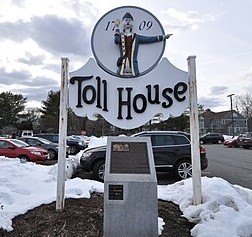
[Trivia detour:  Nestlé’s famous Toll House chocolate chip cookies aren’t named after toll booths but rather for an inn in Massachusetts where baker Ruth Wakefield came up with the recipe.  Wakefield and Nestlé struck a deal in the 1940s: her recipe printed on their bags in exchange for a lifetime supply of chocolate.  How very “Willy Wonka”, eh?]

Here is my unequivocally efficient approach to paying tolls across our many-highway’d nation. When you first get a driver’s license, you also sign up for a bank account-linked program which allows seamless paying of ALL tolls across the land – roads, bridges, tunnels, whatever – through a single readable sticker on your windshield. If you somehow don’t pay the tolls because of say, “insufficient funds”? Well sorry, your driver’s license doesn’t get renewed until you settle up at the DMV.

A $3 toll gets you through Baltimore’s Harbor Tunnel

My system is so logical it’s probably the reason I’ve never been pegged for a government job. In Colorado and elsewhere they almost have it right with the E-ZPass system – a sticker linked to a bank account. The problem is, they hold a minimum balance in a middleman (middle person?) account to guarantee payment of tolls.  I object, your honor. Why should Colorado have forty-odd dollars of my hard-earned money at all times when they can just settle up unpaid tolls whenever I renew my license?

Warning: cash-cow crossing

Then again, I have a beef with the tolls themselves, and that is, they pay for far more than the maintenance of the roads. You can’t tell me $10 per vehicle per crossing of the Golden Gate Bridge (GGB) is needed just to maintain the bridge. Here’s the jaw-dropping math for you.  112,000 cars cross the GGB every day.  That’s over forty million cars per year.  That puts the annual toll-taking at over four hundred million dollars.  $400M for bridge maintenance?  Sorry, fair traveler, you’re voluntarily lining the coffers of California (and San Francisco) every time you cross. “If I’m elected” (as we’ll hear countless times in the next two months), I’ll limit toll-taking to whatever it costs to maintain the bridge, road, or tunnel.  Not a dollar more.

On our return trip from Pennsylvania, I was amused to pass through one toll both with an actual human toll-taker. Those cordial people are still out there, collecting cash one car at a time. The woman in our instance happily returned us $19.25 on a $20.00 bill (and who’s happy to do that anymore?).

Time to bake cookies!

I was also amused… no, “gratified” is the better word; to pull into the parking lot of a South Carolina “rest area” shortly before we got home, for the use of a perfectly safe, clean, toll-free restroom on a toll-free highway. Maybe rest areas and their restrooms are the reason tolls cost more than the maintenance of the roads? Probably not. That would equate to a logical explanation for a government expenditure, which is an oxymoron.

Some content sourced from Wikipedia, “the free encyclopedia”.

First-Name Basis

It’s only Tuesday as I type, but I’ve already cleared my calendar for Friday. After all, I have a very important day ahead of me. So important in fact, I need to organize a parade, raise a flag, and prepare unique dishes for the expected throng of adoring fans. But why am I wasting words on the details? You already know we’re celebrating Saint David’s Day in a few days, don’t you?

They’ll be celebrating in Wales, at least, just as they do every first day of March.  You’ll find my cathedral there too, way down in the southwest corner of the country.  Well, St Davids Cathedral, I mean.  And the funny thing is, he’s not the David you’re thinking of, the one from the Bible who took down Goliath as a boy and became king as a man.  This David helped to spread Christianity throughout the UK, united the Welsh people against a warring England, and performed several miracles.  David’s a big deal in Wales.

David’s parade (not Patrick’s)

St. Patrick’s an even bigger deal, of course.  At least Patrick rates a celebration in the U.S.  But admit it, you’re not celebrating Patrick’s spread of Christianity throughout Ireland, nor his miracle of removing all snakes from the land.  You’re thinking more about what garment of green to wear, four-leaf clovers, beer, and maybe, just maybe, this is the year you participate in your local St. Paddy’s Day 5k.

Nice cathedral, Dave

This business of saints is interesting to me because, well, it’s not as defined as I was led to believe.  The rules and processes to put “Saint” in front a first name are a little vague.  Suffice it to say, you need to be a model citizen, as well as a teacher, person of influence, and someone who cares little for the material goods and comforts of this world.  I know a lot of people who fill this bill, but add in “wonder worker” or “source of benevolent power” and the list drops to zero.

Do you know the way to… ?

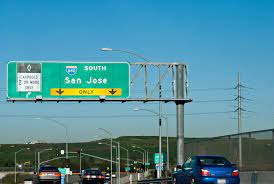
Saints are also on my mind because I grew up in California and, well, they’re all over the place out there.  Francisco to the north.  Diego to the south.  Barbara somewhere in the middle.  My childhood home was right down the street from Monica.  My brother lives in Fernando’s valley.  99.9% of the state’s residents think of those as “places”, but firstly they were people.  You’ll find “San’s” and “Santa’s” all over the Golden State.

Saints get a little watered down when you consider the Catholic Church’s take on them.  More than 10,000 have been recognized over time.  Even more to the point, Catholics acknowledge anyone making it to heaven to be a saint.  I’d hope that count is way more than 10,000 by now.  Maybe it’s the reason we have patron saints: the cream of the crop, the ones regarded as “heavenly advocates of particular nations, families, or people”.  My patron saint isn’t David by default, but I sure like his name.

Eat Welsh Rarebit when you celebrate on Friday (grilled cheese on toast, zero rabbit)

Admittedly, my mind wanders somewhere other than historical figures when I think of saints.  Our dog is a Saint Bernard, one of those gentle giants you picture with a brandy brandy around the neck.  A few years ago we went on a cruise, with a stop in the Baltic Sea port of Saint Petersburg.  “St. Elmo’s Fire” is a luminous phenomenon caused by an atmospheric electric field. (also a pretty good movie from the 1980s).  And so on.

You can read a bit more about Saint David and his cathedral in one of my very first blog posts: unsung.  You’ll discover that his town of Pembrokeshire – the smallest kingdom enclave in the UK – is right across St. George’s Channel from the Irish town of Kildare, where you’ll find St. Brigid’s Cathedral, my wife’s namesake.  The blog post is really about Brigid but at least David gets a mention towards the end.  Even if you don’t “read a little more”, remember, Friday’s the big day.  Parades, flags, and fun food, all for a darned decent guy.  Makes me blush anytime somebody says, “Dave, you’re a saint.”

Some content sourced from Wikipedia, “the free encyclopedia”.

Living On The Edge

The state line between South Carolina (SC) and Georgia (GA) follows the twists and turns of the Savannah River. You know you’re heading into one state or the other whenever you cross the water. Driving from our part of South Carolina into nearby Augusta, GA is interesting. The interstate loops Augusta by starting in SC, touches a bit of GA, goes back to SC for a few miles, then continues into GA again as it follows the river. It’s an example of my life on the edge.

In California, W means “water”

Growing up on the coast of California, it never occurred to me the geography of my younger days was limited to only three of the four cardinal directions.  If I headed north I’d leave the urban stretches of Los Angeles for the more rural towns of the the central coast.  Head south and I’d parallel the beaches all the way to San Diego.  The only thing east of the city seemed to be the endless Mojave Desert.  As for the last of the four directions?  Not an option, at least not without a boat, plane, or a whole lot of swimming.  Horace Greeley would’ve never told me to “Go West, young man”.

South Bend sits where the yellow and red come together at the very top of Indiana.

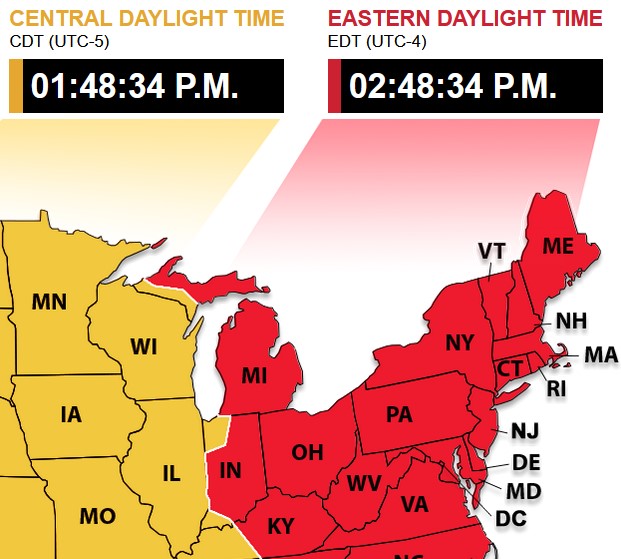
In my college years in South Bend, IN, I was a fifteen-minute drive from the line where the Central and Eastern time zones meet.  Back then you didn’t touch your clock for Daylight Savings, so half the year you were the same time as Detroit while the other half you were Chicago.  It was confusing, but not as confusing as someone who lived on one side of the line and worked on the other.  Imagine leaving the house at 8:00am, driving an hour, and arriving at the office at… 8:00am?  It’s a neat trick, pulled off by a lot of those who live on the edge of a time zone.

Raising our kids in Colorado Springs, we always knew which direction we were heading because the line of the Rocky Mountains lay immediately to the west.  Those peaks rose up like the Great Wall of China, just daring you to push through.  Sure, we drove the interstates into the Rockies for skiing, hiking, and such, but day-to-day we were down at the base, literally living on the edge.  Like California, we had one less cardinal direction at our disposal.

Grays Peak, on Colorado’s Continental Divide

The Rockies conceal another important edge, known as the Continental Divide.  The Divide is elevated terrain separating neighboring drainage basins.  Plain English?  The north-south line from which water flows either west to the Pacific Ocean or east to the Atlantic.  I always wanted to stop somewhere flat on the Divide and pour out a bottle of water.  Let’s see if it really flows both ways from the line, right?  It’s an experiment that to this day remains unconducted.

Football is a game of lines and edges

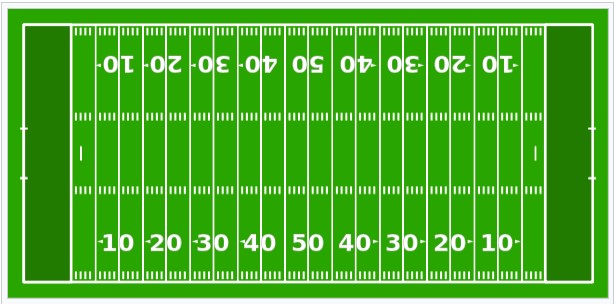
Football, one of my favorite spectator sports, is all about lines and edges.  One team faces the other, on an imaginary line defined by where the referee places the ball.  Cross that line before the ball is snapped and you’ll be flagged with a penalty.  Advance the ball ten yards past that line – to another imaginary line – and your team is awarded more play.  The sidelines of the field might as well drop off to a bottomless void.  Catching a pass outside of that edge is not allowed.  Running the ball outside of that edge brings the game to a halt.  But catching or running across the lines at end of the field?  That rewards you with a score.

$50 gets you a spot on “The Edge” sky deck

For all this living and playing on thresholds, maybe I should visit one of New York City’s newest high-rise attractions.  One hundred floors above the sidewalk, The Edge is billed as “the highest outdoor sky deck in the Western Hemisphere”.  Jutting out from its host building, The Edge allows unparalleled views of the city below, because the surrounding walls are solid glass, as is a portion of the deck floor itself (yikes!) If Spider-Man is your thing, you can go even higher by scaling the outside of the remaining floors of the skyscraper.  I have to say, this sort of thing draws a “fine line” between entertainment and, well, insanity.

I won’t be going to The Edge… ever.  I’m not good with heights, so anything above a pedestrian Ferris Wheel just isn’t my cup of tea.  Nope, leave me behind, comfortably grounded, where crossing the Savannah River from one state to another is plenty adventurous.  That’s my definition of life on the edge.

Some content sourced from Wikipedia, “the free encyclopedia”.

All Manor of Reflection

I find music boxes enchanting, especially the small glass cases where you can watch the cylinder spin its tune like a lazy water wheel. It’s as if someone opened the top, held it up to the wind, and captured a simple melody floating by. Maybe this is why I find the concept of a glass church so appealing. Welcome to California’s Crystal Cathedral.

Crystal Cathedral, Garden Grove, CA

Whether or not you liked Phillip Johnson’s Glass House from a couple of posts ago (survey says “not”), you’ll concede he was creative in his use of glass.  The Crystal Cathedral is, by far, his most impressive example.  When it was constructed in 1980, it was immediately dubbed the largest glass church in the world.  By a mile.

Schuller standing in the “cheap seats”

Johnson designed the Cathedral (partnering with architect John Burgee) for Dr. Robert Schuller.  Rev. Schuller was a televangelist in the 1970s, beginning his ministry by preaching to carloads from atop the refreshment stand of a Southern California drive-in theater.  The proceeds of his Sunday morning “Hour of Power” financed the Cathedral, on a property Schuller called a “22-acre shopping center for Jesus Christ”.  As for the building itself, Schuller declared, “If a two-by-four comes between your eyeball and the changing edge of a cloud, something is lost”.  Hence, he demanded a glass church.

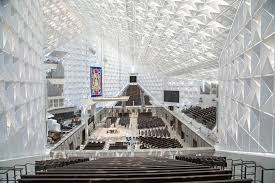
The Crystal Cathedral is impressive enough to look at from the surrounding parking lot; a flattened diamond floor plan covered with 10,000 rectangle panels of glued-on mirrored glass.  But walk inside – and believe me, it’s a walk – passing beneath the floating bleachers of pews and choir lofts into the explosion of the sanctuary itself, and you’ll understand why the Cathedral really “shines”.  The space is so vast that – like some of today’s enclosed football stadiums – you’ll swear you’re still outside.

The Crystal Cathedral is a glass music box of sorts.  Its organ is the fifth-largest in the world, with 16,000 pipes.  Its choir numbers into the hundreds of voices.  Needless to say, the church service needs to be grand to satisfy a room of 2,500 parishioners.

As much as I prefer a modest venue for worship, I can appreciate the megachurch approach if it’s done with a modicum of grace.  I’m not sure this is the case with the Crystal Cathedral.  Down the center aisle you’ll find a long reflecting pool, spotted with gushing fountains that suddenly cease when Schuller appears at the pulpit.  A pair of towering “Cape Canaveral” doors behind the altar swing open, so Schuller can give a wave and a prayer to the masses parked outside.  And in a full-on nod to Broadway, the Cathedral’s annual “Glory of Christmas” pageant includes a smoke machine for storm simulations, seven flying angels, and scores of live animals (everything from camels to water buffaloes).  Should this surprise me, in the cavernous glass box of a world-famous televangelist?

The Crystal Cathedral is open to the public… er, if you’re willing to take in a Catholic Mass while you’re at it.  Schuller’s Reformed Church ministry filed for bankruptcy in 2010 (in part because of the overwhelming operating costs of the facility).  Schuller himself died in 2015.  Soon after, the local Catholic diocese purchased the property at a deep discount and renamed it “Christ Cathedral”.  I hope the fountains, spaceship doors, and Broadway shows have taken a break since then.  After all, the building itself is ample reason for reflection.

Now for the latest on LEGO Fallingwater…

____________________

LEGO Fallingwater – Update #9 (Read how this project got started in Perfect Harmony)

We worked off-model again this week, on the house itself, assembling one floor at a time before everything comes together.  80 pages (or 88%, or 203 minutes) into the build, this is what we have:

It’s convenient to halt the construction for this photo, because you can see the individual floors before they’re stacked together and hidden.  The level in the foreground is the bottom story, with the living room in back and smooth decks in front and to the right.  The other level is the middle story, a bedroom with smaller balconies to the left and right.

Next week I’ll assemble the top (and final) level, a “gallery” whose use was as much for the surrounding views as for the interior space.  Then I’ll stack the floors together, insert them into the open space you see to the right of the glass tower, and our Fallingwater model will finally be complete.

Tune in next Thursday as construction continues!  Now for another nod to Frank Lloyd Wright…

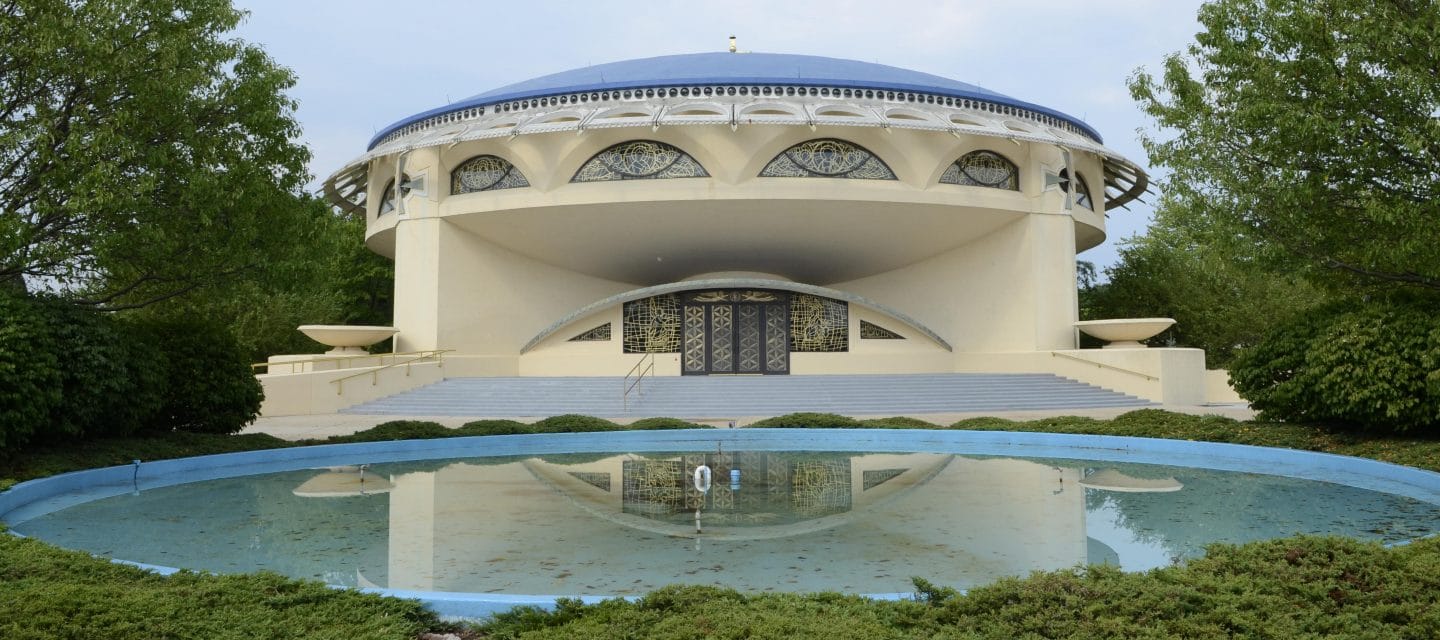
Annunciation Greek Orthodox Church

Since we toured a cathedral today, it seems only fitting we acknowledge one of Wright’s handful of religious structures.  Wauwatosa, Wisconsin’s Annunciation Greek Orthodox Church was one of his last designs, not completed until after his death in 1959.  Wright consulted his wife (who was raised in the faith) on its important symbols.  Accordingly, the dome and the Greek cross play significantly in the building design.  The structural arches and pillars reflected on the exterior allow the sanctuary to be an uninterrupted circular space.  The dome is not as you would imagine the interior to be, but rather the cap on an inverted dome, reflecting as a sort of bowl suspended above the sanctuary.

Annunciation Greek Orthodox Church

Lest you think Annunciation Church is a bit of a spaceship, the design intentionally pulls elements from its more famous predecessor, Hagia Sophia mosque in Istanbul, Turkey.  Annunciation Greek Orthodox Church is included on America’s National Register of Historic Places.

Some content sourced from Johnson/Burgee: Architecture, the Frank Lloyd Wright Foundation website, and Wikipedia, “the free encyclopedia”.

This Gamble Pays Off

In the movie Back to the Future, there’s a memorable scene shortly after Marty McFly time-travels back to 1950s California. Marty looks up Doc Brown in the phone book and heads over to his house. Doc doesn’t recognize Marty when he opens the door but he drags him inside anyway.  The scene is memorable because Doc’s house (the exterior, at least) is recognizable to any student of American architecture. Welcome to Pasadena’s Gamble House.

Greene and Greene’s Gamble House

Maybe you guessed this Gamble wasn’t won in a wager (although it would’ve been a handsome payoff!)  Rather, it was built for a member of the (Proctor &) Gamble family who liked the look of his next-door neighbor’s place.  That house, and many others on the same street, was designed by sibling architects (Charles) Greene and (Henry) Greene.  The Gamble House is perhaps their most famous design.

Front doors and foyer

The Greene brothers, who studied architecture at MIT, made a significant stop on their journey to the West Coast.  They spent time at the 1893 Columbian Exposition in Chicago.  While there, they picked up design influences from the temple look of the Japanese pavilion (wood construction, tiled roofs, open verandas).

Dining area

The Greene and Greene “ultimate bungalow” look, with its liberal use of dark wood slats and panels, became known as the Craftsman style of architecture.  This label was all the more fitting because the Greene brothers also studied furniture design, and incorporated many custom pieces into their houses.  Even more impressive, the finished look relies on elegant leather straps and wooden pegs as fasteners; not a nail or screw in sight.

Main staircase

The Gamble House is 6,000 square feet of indoor/outdoor living, in concert with California’s mild temperatures.  You can tour the house courtesy of the USC School of Architecture students who get to live there every school year (luckies!)  A separate tour walks you through the neighborhood to see other Greene and Greene designs.  But the Gamble remains their masterpiece.  And if you ever see this inviting residence, you may wish you owned a time-traveling DeLorean to take you back to its heyday in the early 1900s.

Courtesy of Universal Pictures

Now for the latest on LEGO Fallingwater…

____________________

LEGO Fallingwater – Update #3  (Read how this project got started in Perfect Harmony)

I find it funny how this Fallingwater model is “rising” off of its foundation at the same time the water below is “falling”.  It’s like I’m going in opposite directions at the same time.  20 pages (or 22%, or 83 minutes) into the build, this is what we have.

As you can see, the stream is now “built” from the front of the house all the way to the back, with the modest waterfall front and center.  We also have our first piece of “landscape”, that dark green strip you see on the left.  Otherwise, we’re still at the foundation level.  I expect the house to rise dramatically in the next few chapters of the build.

LEGO “wrench”

Here’s something unnerving about this model.  You don’t really understand what you’re building as you go.  You’re putting together very small pieces which look like, well, LEGO blocks, until you stand back and take the whole model in.  For this reason, you have to build very, very carefully.  I still got the location of a few pieces wrong and had to utilize my handy-dandy wrench to yank them out.  It’s like pulling teeth.

Tune in next Thursday as construction continues!  Now for another nod to Frank Lloyd Wright…

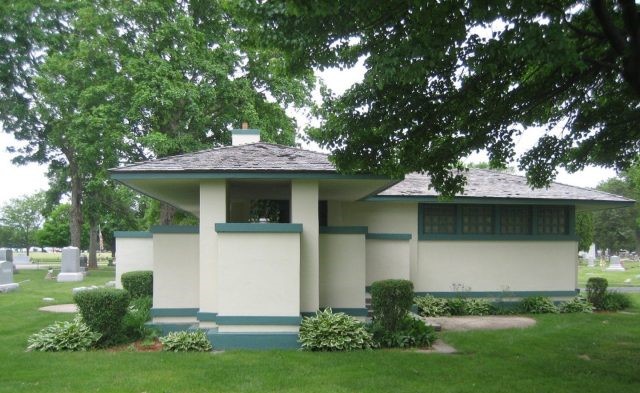
Pettit Memorial Chapel

Over five hundred structures were built from the designs of Frank Lloyd Wright, but only one of those five hundred is in a cemetery.  That would be the Pettit Chapel in Belvidere, Illinois.  Dr. Pettit was a beloved physician of his time, and his sudden passing prompted his wife to hire Wright to design a graveside chapel as a memorial to the man.

Pettit Chapel

The design of the “petite” Pettit is very much in line with Wright’s signature Prairie Style.  The low roof lines, broad eaves, and high horizontal bands of glass are typical.  Wright used the shape of a cruciform – common in medieval cathedrals – to house the smallest of sanctuaries, as well as two open-air porches and a central fireplace.  He then added storage, restrooms, and a furnace so the chapel could be used for public functions.

The Pettit Chapel has survived since its construction in 1906, thanks to restorations in 1977 and 2003.  The chapel is open to the public, and, like many structures designed by Wright, included on America’s National Register of Historic Places.

Some content sourced from The Museum of Lost Things website article, “The Real ‘Back to the Future’ House”, and Wikipedia, “the free encyclopedia”.
Arid (and) Extra Dry

Most of us reacted to eighteen months in the unwelcome company of COVID-19 the same. We reflected on our time with Mr. Virus and wondered, “What would we have done more of?” More get-togethers? More travel? More dinners out?  Yes, yes, and yes.  But instead, we hunkered down and waited for things to get better. Our routines became more… routine.  Everything faded to black and white.  Clocks came to a standstill. It’s the same feeling I had, coincidentally, enduring a drive from Colorado to California earlier this month.

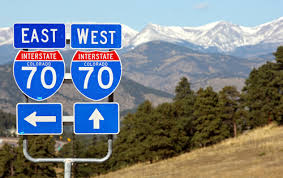
My advice: choose “East” while you still can

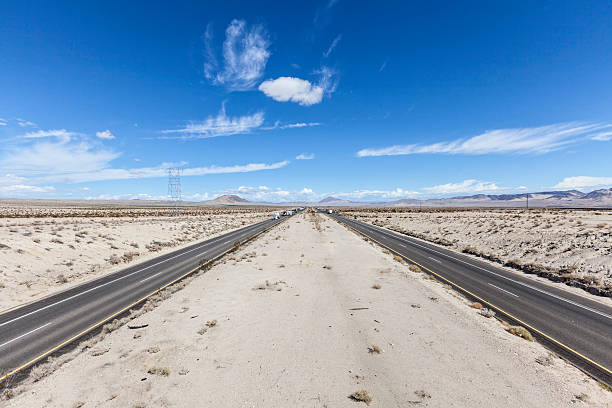
Maybe you’ve made the trek: Denver to San Diego via Interstate 70 and then Interstate 15.  Sounds so clean and easy, doesn’t it?  Two highways.  Plenty of lanes.  Rocky Mountains on one end and Pacific Ocean on the other.  Yeah, well, it’s all the mind-numbing in-between stuff that makes you want to burst through your sunroof and flag down a helicopter heading west.  There’s a whole lot of nothing in the desert.

The problem with this drive (which was not a flight because my wife & I wanted to bring our bikes) is the beautiful part comes first.  From Denver, it’s four hours of majestic snow-capped mountains, rushing rivers, red rock canyons, and breathless (literally) summits as you cruise on over to Grand Junction.  There’s good reason America the Beautiful was penned in the Rockies.

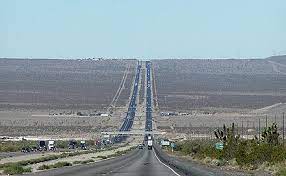
Cruise control suggested here

But don’t get comfortable.  Once you reach Grand Junction (which isn’t so grand), beauty takes a big break.  Pretend you’re a marble inside a rolled-up blanket.  Then someone flips that blanket out and off you go, rolling across the flattest, most desolate desert floor you’ve ever seen.  The mountains reduce to buttes reduce to sand dunes reduce to nothing.  The highway morphs from all sorts of curvy to ruler-straight. Your cell phone signal goes MIA.  You suddenly feel parched.  And you wonder, why-oh-why does the dusty sign say “Welcome to Utah” when there’s nothing welcoming about it at all?

So it goes in middle-eastern Utah.  Every exit is anonymously labeled “Ranch Road” (and why would you want to exit anyway?)  The highway signs counting down the mileage to Interstate 15 march endlessly.  When you finally do arrive at I-15 (your single steering wheel turn the entire journey), you bring out the balloons and the confetti and do a happy dance.  YOU MADE IT ACROSS THE MOON!  Well, sort of.  Now you’re just in central Utah.

I-15 wanders south a couple hours to St. George.  It’s probably a perfectly nice place to live, but St. George reminds me of the Middle East.  Squarish stucco/stone buildings, mostly white.  Not many people on the streets.  The temperatures quietly ascended to triple digits when you weren’t looking.  You realize you’re starting to sunburn through the car windows.

Proceed with caution (and water)

But then you make it to Arizona (briefly).  The landscape changes, suddenly and dramatically, as if Arizona declares, “Take that, Utah!  We’re a much prettier state!”  You descend through curve after highway curve of a twisting, narrow canyon, rich with layers of red rock. It’s the entrance to the promised land!  Alas, Arizona then gives way to Nevada, and here my friends, are the proverbial gates of Hell.  Welcome to the arid, endless, scrub-oak-laden vastness of the Mojave Desert, where everything is decidedly dead except for a brief glittery oasis known as Las Vegas.  The Mojave looks like it wants to swallow you whole and spit you out (except spit requires water so you’d probably just be gone forever).

Hang on to those dashboard gauges for dear life, friends, because it’s a full four hours in the Mojave broiler before your car gasps past the “Welcome to California” sign.  In those hours you’ll call your kids (one last time?), declare your final wishes, and wonder why you didn’t visit your parents more often.  Anything you see in motion off the highway is probably a mirage.  If you do make it to California, you’ll pull over and kiss the ground sand before wondering, “Hey, how come California looks exactly like Nevada?  Then Google Maps smirks the bad news.  You’re nowhere near the end of the Mojave Desert.

Baker. Barstow. Victorville. Hesperia.  You’ll pass through each of these towns and wonder, a) Why does anybody live here? and b) Is this the land that time forgot?  But finally, mercifully, you’ll descend the mighty Cajon Pass (the outside temperature descending alongside you), burst forth onto the freeway spaghetti of the LA Basin, and declare, “Los Angeles.  Thank the Good Lord.  I must be close now”.

You’re never alone on the Cajon

Except you’re not.  The Basin is dozens of cities, hundreds of miles, and millions of cars collectively called “Los Angeles”.  Hunker down, good buddy.  The Pacific is still hours away.

Here’s the short of it.  My wife & I made it to San Diego.  The car didn’t die in the middle of the Mojave.  Neither did we (though I left a piece of my soul behind).  We even rode the bikes a few times.  But I can’t account for those nineteen hours behind the wheel.  It’s like Monday morning became Tuesday night in a single blink.  Just like 2019 became 2021 without much in between.

What goes down must come back up.  The time has come to do the death drive in reverse.  Ugh.  Maybe we’ll leave the bikes in San Diego and catch a flight instead.

Behind the Wheels

Every summer when my wife and I head to the West Coast for a little sunshine and sand, the only intentional exercise we get is a walk on the beach or a dip in the ocean. So this year we decided our vacation equation needed to get behind the wheels. We skipped the flight, racked the bikes onto the back of the SUV, and drove 1,100 Utah/Arizona/Nevada desert miles to bridge the gap between Colorado and California. Now the Pacific Coast sun shines above, the Pacific Ocean waves crash below, and the bikes… well, the bikes just beckon to be ridden every day.

It’s already happened, as I suspected it would.  When we took our first pedal tour around this little seaside town, I saw him for a few fleeting moments.  He was a younger, thinner, blonder version of me.  He was seated confidently behind the drop handlebars of a white Nishiki Regal ten-speed, focused solely on the road in front of him.  He was dressed in Converse tennis shoes, ballcap in place of a bike helmet, white socks halfway to the knees.  When this kid wasn’t body surfing, playing basketball, or working the evening shift at McDonald’s, he was logging mile after mile on his bicycle, in search of driver’s license freedoms, even if he wasn’t old enough to have one.

My fleeting companion is the “me” of forty-five years ago.  In most respects it’s a long period of time.  In others we could be talking about last week.  Bicycling was serious thread in the fabric of my childhood.  It was a way to leave the familiar behind, to pursue esoteric wonders beyond the streets I grew up on.  Bicycling asked the questions, “Where would you like to go?” “Why?”  “And how far?”  At fifteen years old, the answers were limitless.

The Schwinn “Lemon Peeler”

My love of cycling began at a young age (and continues today in weekly spin classes at the gym).  I still remember the very first hand-me-down bike my brothers and I shared – a small blue two-wheeler with no gears, the kind you had to pedal backward to brake.  From there I graduated to a glam Schwinn Lemon Peeler Sting Ray, the all-yellow beauty with the fenders above fat tires, sporting the signature banana seat.

But my Nishiki Regal ten-speed brought bicycling to a whole new level.  I bought it myself: months of hard-earned allowance and odd-jobs cash plunked down for the biggest purchase of my young life.  The Nishiki granted me access to the more sophisticated language of bicycling; terms like “chain stay”, “saddle”, and “derailleur”, even if I couldn’t afford the Raleigh or Motobecane imports more deserving of those words.

Also, the Nishiki meant bike maintenance became a labor of love instead of a chore; a bonding afternoon with friends.  The shade of my dad’s carport colored our “workshop”, where we dismantled, fine-tuned, and reassembled over and over; my friends and I exchanging tools and advice for each other’s spare parts.  I still remember the final touch when the Nishiki was all back together: the pristine white finishing tape wrapped carefully around those drop handlebars, signifying it was finally time to ride.

I was never far behind…

One story of me and my Nishiki will always stand out.  It was all about beating the school bus home.  When the bell rang after my final class, I’d sprint to the rack, jump on my bike, and launch into the six-mile trek back to my house.  The bus meanwhile, needed several minutes to load its passengers, not to mention dozens of stops before it would’ve dropped me.  It was always a neck-and-neck battle as I’d pass the bus and then it’d pass me.  Most times I’d lose the race by mere seconds, easing up on the pedals in exhausted frustration.  But every now and then I’d get the victory.  Did some of my friends deliberately take their time exiting the bus, knowing I was in hot pursuit?  Maybe.

In 1979, a few months after I turned seventeen, a wonderful little film called Breaking Away won the Academy Award for Best Picture.  The movie centered around four friends, bicycling, and Bloomington, Indiana’s “Little 500” bike race, but it was mostly about coming of age.  Learning life’s lessons while putting the miles on the pedals.

Little wonder Breaking Away‘s lead character was named Dave.

[Note: If anything about this post resonates with you, be sure to read Steve Rushin’s Sting-Ray Afternoons.  The author’s childhood is set in Minnesota, but the growing-up memories are remarkably similar to my own.  Even the kid on the cover looks a little like me.  Steve and I could’ve been brothers.]

Some content sourced from Wikipedia, “the free encyclopedia”.

Dots ‘n’ Dashes

Back in my days in the Boy Scouts, they had a merit badge called “Signaling”. To earn the badge you had to build a basic communication device (buzzer, blinker) and demonstrate a knowledge of Semaphore – visual signaling by flags – and Morse – audible signaling by “dots” and “dashes”. Today most people wouldn’t have a clue about Semaphore, and their only familiarity with Morse might be from the frantic telegraph typing in the movie Titanic.  Dots ‘n’ dashes have stepped down, more associated with the mundane pavement markings of the streets we drive.  Well hey, at least they’re still signaling devices.

“Dashing through the… street…”

Let’s talk about street dashes first.  The highway to our rural neighborhood was recently restriped, mostly dashes but occasionally a solid for safety’s sake.  Some lanes were shifted, and they just covered up the old stripes with blackish paint similar to the asphalt below.  But my car was not fooled, no sir.  It still sees the old striping.  Anytime I pass over those areas my car’s “lane-keeping assist” emits an audible warning and tries to bump me back onto the road, when in fact I’m just passing over covered-up stripes.  That’s annoying.  Either car tech needs to improve or road striping needs to come up with a better cover.  Until one or the other happens I’m all over the road.

Here’s an even better story about dashes.  Long ago, my parents were driving my brothers and me back from my grandparents’ house.  We were cruising along a paved winding road late at night when all of a sudden my dad gets to wondering about those highway dashes.  He starts to guess – if you measured one, how long would a dash be?  Talk about useless information, right?  But then, right in the middle of a darkened highway, no cars in the rear-view mirror, my father stops the car, gets out, and starts measuring a dash, foot-in-front-of-foot like he’s taking a sobriety test.  Then he gets back into the car and announces proudly, “six feet”.  Think about that the next time you pass those stripes at forty miles an hour.  (But please, don’t get out and actually measure one).

California highways are usually dotted, not dashed.

Now let’s talk about street dots.  You know, those round, non-reflective raised pavement markers used to designate lanes and borders and such?  They’re actually called Botts’ dots.  It’s a name I’ve known since childhood because I grew up in California where they were invented.  California has over 25 million of the little guys marking its endless streets.  And if you must know, Botts’ dots were named for their inventor, Elbert Dysart Botts (and how’s that for a mouthful?)

Kinda cute, right?

Botts’ dots might’ve never been a thing were it not for their total makeover.  At first they were glass discs attached to the road with nails. (How’d you like to have that job?  Whack, whack, whack!).  But then they started popping loose, and people got flat tires from the nails and the broken glass.  So Botts (or a coworker) devised a hard plastic to replace the glass and an asphalt-friendly epoxy to replace the nails.  Now the dots – and the speeding cars above them – stay where they’re supposed to.

But now Botts’ dots have a whole new challenge.  We face a future with self-driving cars.  Turns out, Botts’ dots mess with that technology.  The car may or may not recognize a dot as the border of a lane.  That’s not good when you put your steering wheel in the hands of a robo-chauffeur.  But can you imagine the task of removing 25 million Botts’ dots?  That’s worse than hammering them in one by one!

Botts’ dots may go the way of the telegraph.

Over here in rural Colorado, I got pretty excited about the prospect of California surrendering all of its Botts’ dots.  We can use ’em.  You see, out here we have mostly two-lane highways divided by dashes, or occasionally solid lines instead of the dashes (don’t pass!), or very occasionally the luxury of a defined left-turn lane.  But “dash-it-all” when it snows.  You not only lose the striping, you lose the road.  At least a Bott’s dot would make noise and give you a jolt to let you know you’re not about to cruise into somebody’s cow pasture.

Alas, my dream of millions of Botts’ dots flying over the Rocky Mountains died before it was born.  Turns out the asphalt epoxy of a Botts’ dot cannot compete with the combined weight and speed of a snowplow.  The dots’d go flying every which way from the snowplow blade, like hundreds of tiny shuffleboard discs.  Ping! Ping! Ping!

Signaling merit badge was retired by the Boy Scouts in 1992 (yet another reminder of my advancing age).  Looks like the Botts’ dot is headed for a similar scrap heap, at least if self-driving cars become more mainstream.  Meanwhile, you’ll find me out in my neighborhood navigating the painted dashes.  Even if I do prefer the dots.

Some content sourced from Wikipedia, “the free encyclopedia”.

Mass Distraction

Hundreds (if not thousands) of bloggers commented on last weekend’s tragic events in El Paso and Dayton. A search of either city on the WordPress website produces an endless list of posts. As it should be. Some of us process by writing; others by reading. Within these countless perspectives are paragraphs to help us cope, reflect, heal, and begin to move on. Not that we should move on; not at all. Like 9/11, the loss of life is meaningless if it doesn’t lead to a modicum of positive change.

Politicians will debate this issue relentlessly; their credibility questionable in concert with partisan agendas and unrealistic campaign promises. The media will focus on band-aid suggestions which appear to address the issue but don’t land anywhere close to its foundations. Regardless, if all this attention – misguided as it may be – leads to constructive conversation and heightened awareness, we’re taking a step in the right direction. The capacity for mass murder is far more complicated than we want to admit.

I tried several times this week to blog as normal. I found the usual du jour topics worth delving into. Yet every time I started typing I was distracted, for at least a couple of reasons. One, any topic besides this one would be utterly trivial by comparison. Two, any topic besides this one suggests my head – and my heart – are not where they should be.

Do I know anyone in El Paso? No, I don’t, nor in Dayton. Doesn’t matter. I still grieve for the victims and their families. After all, these are fellow countrymen and women. These are people I believe share similar values and a love of country, regardless of race, political persuasion, and all the other so-called differentiators. These are people I’d be delighted to run into if I were halfway around the world. They are far from strangers.

American flags fly at half-staff this week, as if our country needs a reminder of a horrific behavior already ingrained in our culture for decades. My own reminder is my inability to adequately express my myriad feelings today. Perhaps the writings of my fellow bloggers will bring me solace.

Speaking of other writers, my thanks to Feeding On Folly, who re-posted Mitch Teemley’s “The 32 Second Killing Spree” (read it here). Mitch’s post narrows the issue to the specifics we need to consider and the questions we must answer. Here’s one answer. Good and evil will always coexist, but we have to find a way to tip the scales a little more towards the good. If only for them.

I’ll be back next week, less troubled and a little more hopeful. At least, that’s the plan.