
When we moved into our current house (and even the one before it), we made the classic mistake of saying, “We’re never moving again”. After all, picking up and going from one place to the next can be a real pain in the you-know-what, especially with pets and vehicles to relocate on top of the furniture and clothes. But at least we’re only talking about moving houses. What if you had to move an entire town?
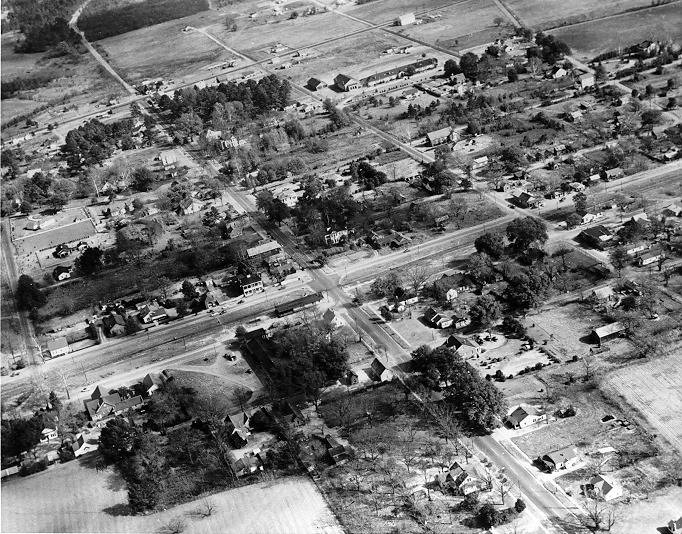
If you live in an RV or a tiny home, you’d think nothing of pulling up stakes and going somewhere else. You have the wheels or the flatbed to make it happen. But moving an entire town means a population of people and a collection of structures. it sounds like something that could only happen on a Hollywood movie set. Unless you’re the U.S. government with its sights set on Ellenton, South Carolina.
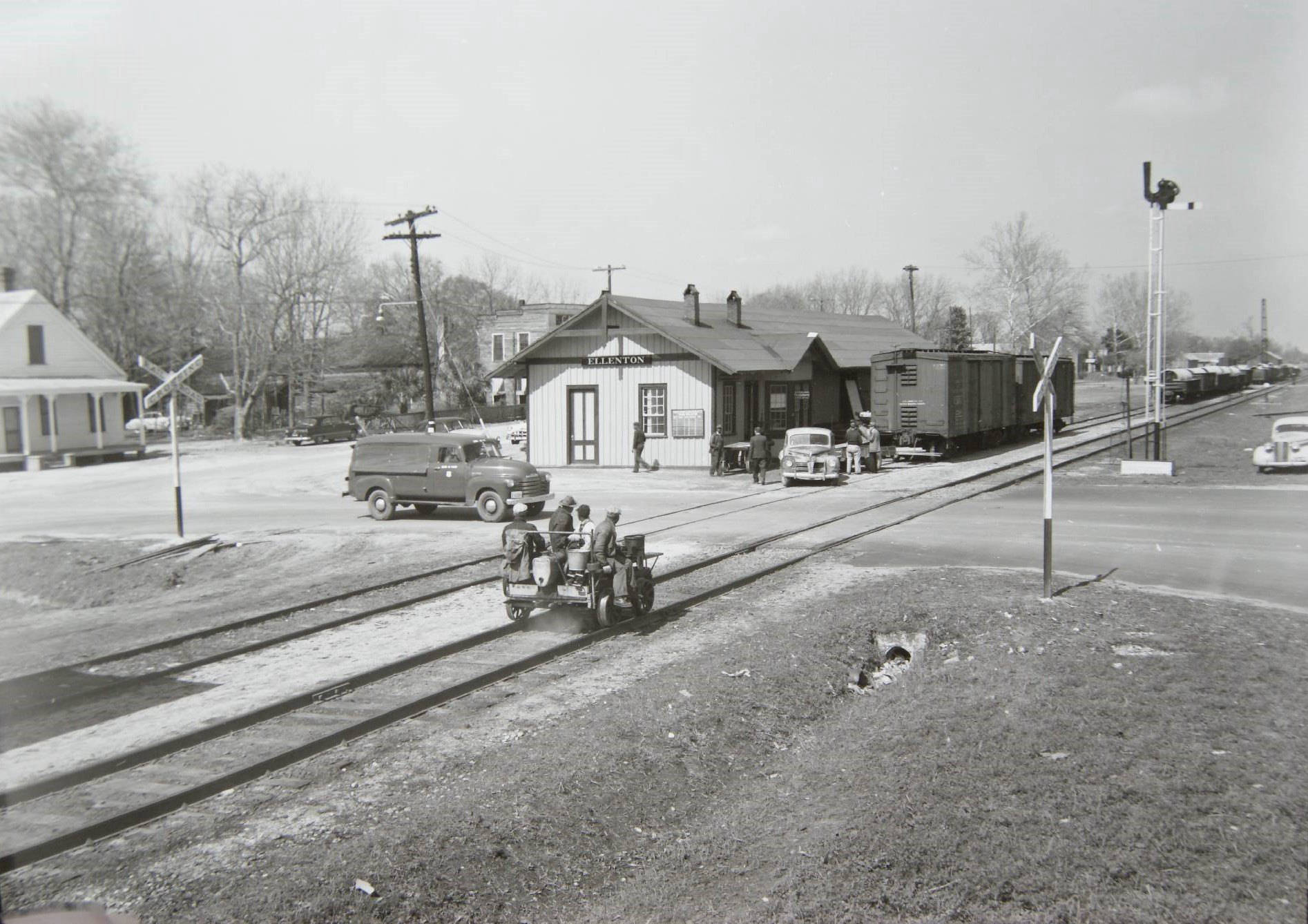
Ellenton first appeared on a map the way a lot of small towns did back in the day. The railroad was interested in running new tracks through the farms of the area and a deal was made to acquire the land, including a plot for the train station. In Ellenton’s case, the railroad developer was smitten with the primary landowner’s daughter (Ellen). The relationship never blossomed but he did name the budding town after her. Thus we have “Ellen’s Town”, shortened to “Ellenton”.
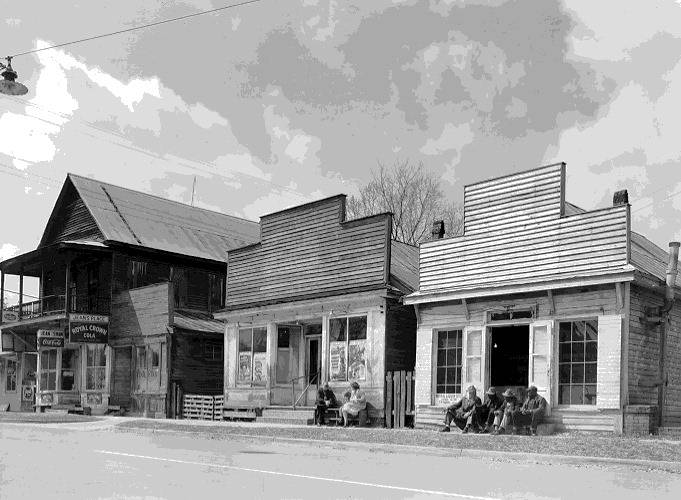 Ellenton grew quickly in the late 1800s, from a host of agricultural productions to a working, living community of 600 residents. Eventually you’d find churches, schools, a post office, a general store, a dairy, and even a milling company and a cotton gin. But what nobody saw coming was the potential of the area for the construction of a massive facility know as the Savannah River Site (SRS). In the 1950’s in Cold War America, the U.S. government decided Ellenton and its surrounds were the perfect riverside location for plutonium and tritium production, for the development of the hydrogen bomb. Ellenton “won the lottery” over a hundred other locations.
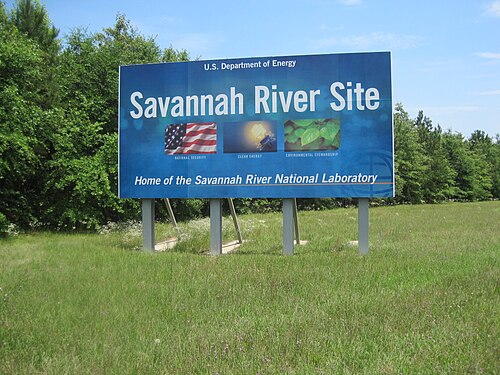 I can’t imagine sitting in Ellenton’s town hall back when the announcement was made. Someone who drew a very short straw had to stand in front of the residents and say, “Sorry folks, we’re going to tear down your town so we need you to find somewhere else to live”. Then the government wrote checks for the properties and businesses and simply walked away. Eminent domain in capital letters.
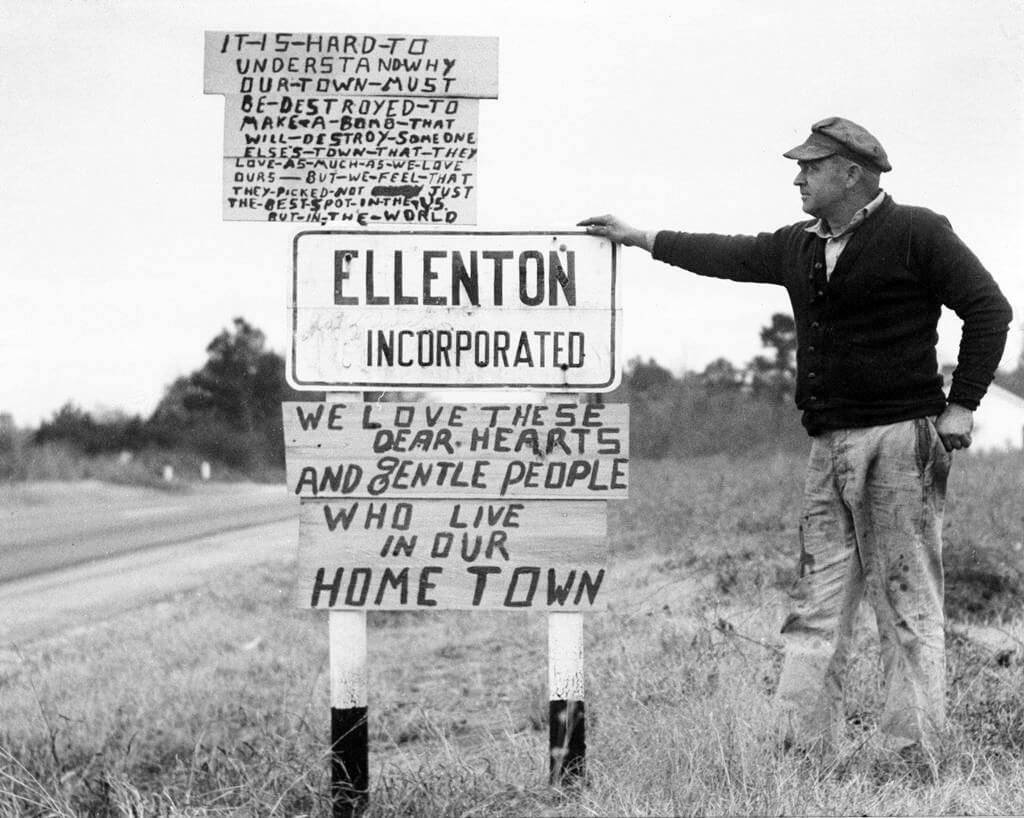 I’ll admit I thought the government really did move Ellenton to another location. I pictured a cartoon image of the world’s largest spatula, sliding under Ellenton’s streets and buildings like an entire sheet cake, then dropping the whole mess several miles away. But I really thought the government moved Ellenton because we live right down the street from a town called New Ellenton. Turns out, New Ellenton is simply where a good chunk of the original residents chose to call home. The government had nothing to do with it.
Maybe the government didn’t move the living but the law required they move the dead. By the time Ellenton and several other small towns were acquired and shut down, the SRS property encompassed 310 square miles. That meant the relocation of 130 cemeteries, amounting to over 6,000 grave sites. They didn’t get every last one, so it’s fair to say old Ellenton still has a few residents.
 The black-and-white photos I share here – from the Ellenton website – give the town a charming, old-timey feel. The few residents alive today hold reunions to share the memories of a place they can no longer see or even visit. Some of Ellenton’s stories make it sound very cozy. I wish I could say the same about New Ellenton, which is nothing more than a couple miles of highway with gas stations and bars scattered on either side. Frankly, the only reason you drive through New Ellenton is because you’re on your way to somewhere else.
 I wouldn’t be nostalgic for Ellenton if the government didn’t make it disappear. Kind of reminds me of Brigadoon, the Scottish village that magically appeared out of the mist every hundred years. Maybe Ellenton will appear out of a nuclear winter on the hundredth anniversary of it’s own demise. In the meantime, a songwriter captured the story of the town in a rather sad ballad. “The Death of Ellenton” was never a big hit, but the town it celebrates sure took one.
Some content sourced from the WJBF website article, “Hometown History: The Forgotten Town of Ellenton”; the Ellenton SC website (including all photographs); and Wikipedia, “the free encyclopedia”.

 Life In A Word