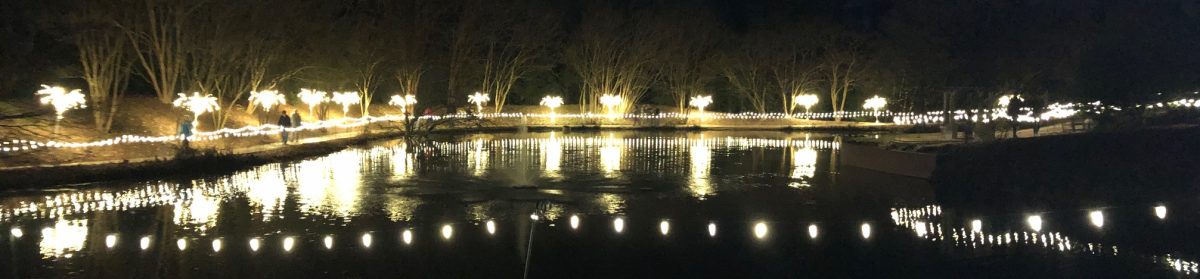
Following the Leader

Technology birthed the self-guided tour. More and more often, an admission ticket to sights worth seeing grants you a pair of headphones and a wearable device instead of a name-tagged human to show-and-tell you the way.  Self-guided touring allows for a more convenient and less distracted experience.  But it also removes the storyteller, and that, my friends, makes all the difference between a memorable tour and a forgettable one.

Budapest, Hungary

Viking River Cruises, one of which we completed on the Danube River in early June (see Going With the Flow), provide a plethora of tour guide experiences.  On any given day of the cruise, you disembark to one or two “land-based” locales, in the (sometimes) capable hands of a personal tour guide.  Viking contracts with local agencies to provide these guides for small groups of its travelers.  For example, having a Hungarian show you the sights of downtown Budapest is so much more satisfying than hearing someone drone on about it on a headset.  Sharing a beer with a German on a tasting tour is almost like being invited into his house.

Nuremberg, Germany

If I ask you to share one of your own memories involving a tour guide, you’ll probably recall a particularly good one.  Maybe you’ll even remember a bad one.  Regardless, your stories would support my theory: a top-notch guide can make the what or the where of the tour almost irrelevant.  The guide himself or herself can make the difference between a memorable experience and a forgettable one.

Consider, I still remember a tour of a southern plantation with my family from almost fifty years ago.  Why?  Because the tour guide presented herself in a way that made me think we were being welcomed into her own house.  She also had this soft, syrupy unforgettable Southern accent that had me hanging on her every word.  Do I remember anything about the plantation?  No, but I sure remember the tour guide.

Szentendre, Hungary

So it was on the Viking cruise.  We had good guides and we had outstanding ones.  The very best of the dozen or so – ironically – was a young woman working on contract with Viking for the first time, as a stand-in for our scheduled guide in Munich.  She was, in every respect, delightful.  She started our tour with a greeting and a smile, then a little conversation and questions to break the ice.  As she led us from one sight to another, she spoke with an energy and pride in her city that can only be described as vivacious.  By the end of the tour, as the saying goes, she had us feeding out of her hand.  I was so enthralled I forgot to take a picture of her.

But we also had a lesser guide a few days earlier in Vienna, who I’d describe as a speed-walking encyclopedia.  He led us on a many-thousand-steps rush through the sights, filling our heads with facts and figure as he went, in a pretty thick Austrian accent.  He never smiled and I don’t think we ever stopped walking.  Can’t remember much about that tour (or him for that matter) because it was a rush-rush blurry overload of the senses.  I need to go back to Vienna again someday so I can (literally) stop and smell their famous roses.
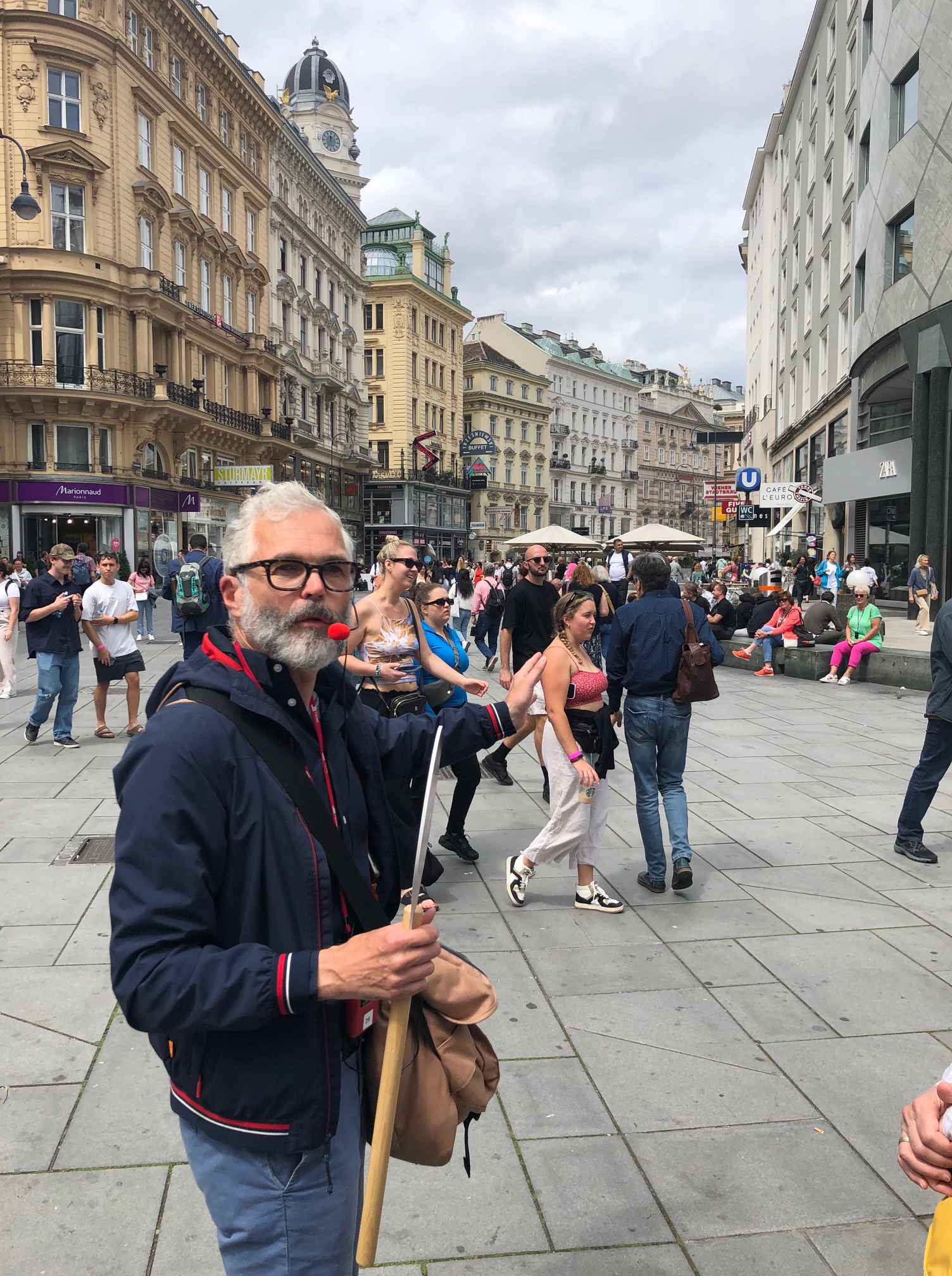
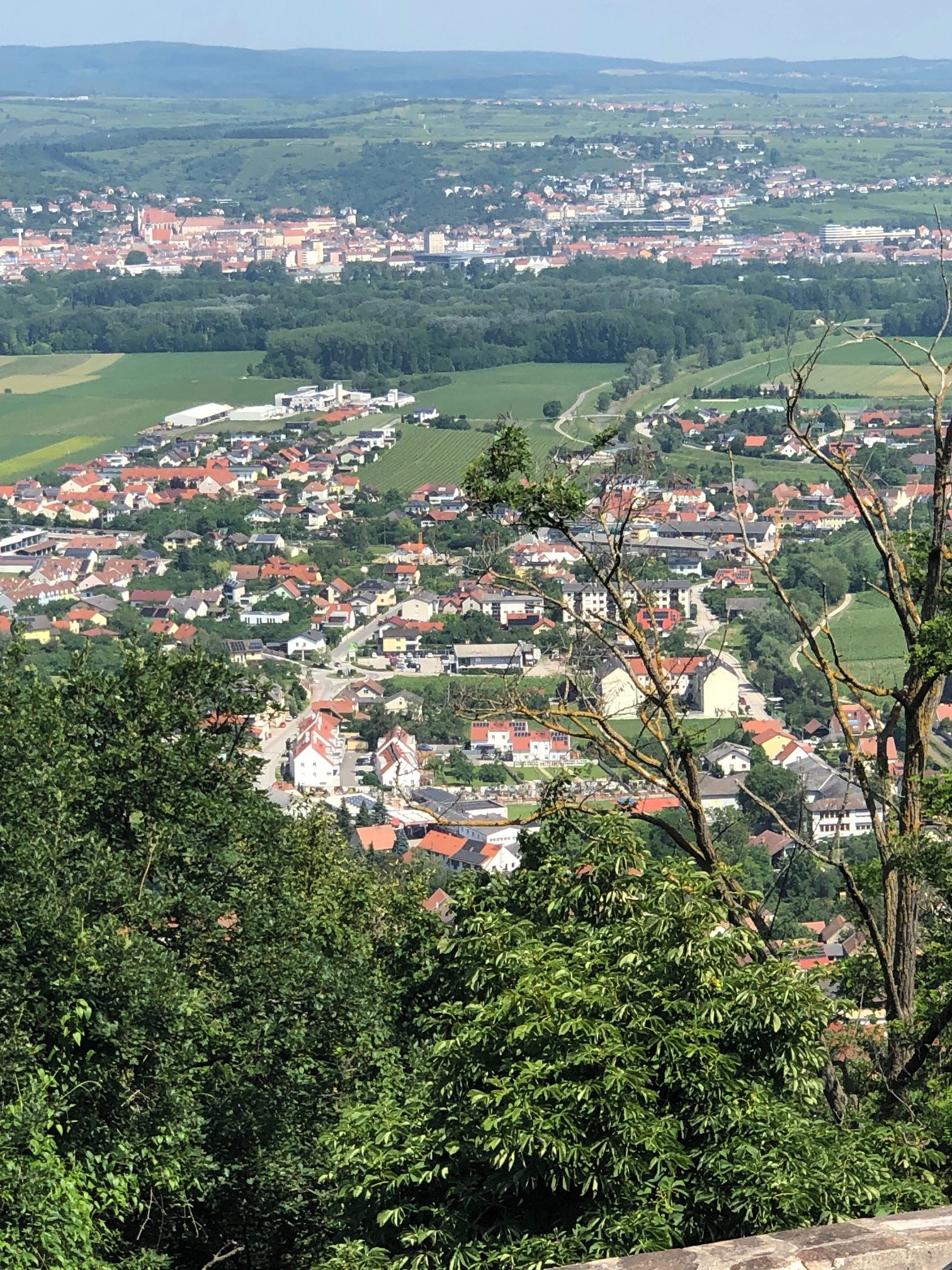
Vienna, Austra

Courtesy of Viking and those many tours near the Danube, I present to you, therefore, the attributes of the consummate tour guide:

  1. A local, familiar with the city or sight at hand through regular exposure.
  2. A personality; warm, friendly, energetic, and engaging.
  3. An overflowing font of knowledge on his/her subject, able to answer just about any question thrown their way.
  4. A storyteller, able to weave anecdotes at will into the facts and figures to keep it interesting.
  5. In tune with his/her audience, making adjustments to the tour as necessary (ex. “Am I going too fast for you?”)

If you take enough sightseeing tours, you’ll know whether your guide is missing one or more of the above within the first five minutes.  You’ll also know whether the next hour or two will fly by or drag on for all eternity.  If your guide checks all five boxes, consider yourself lucky.  Most of us aren’t cut out for the job (myself included), whether we like to think we are or not.  It takes a special set of skills to be the leader everybody wants to follow.

Do-Re-Mi… Oh My!

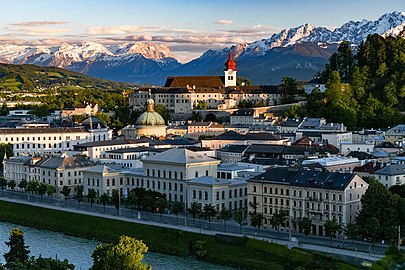
Salzburg, Austria, a day-trip destination from our recent Viking River Cruise, is a popular draw for tourists.  On most days you’ll find more internationals roaming Salzburg’s Old Town than you’ll find Austrians themselves.  The compact city is famous for its historic buildings: churches, palaces, and fortresses dating back 1,000 years or more.  Mozart was born here.  But try as they might, Austrians will never be able to separate Salzburg from what attracts many to its streets: The Sound of Music.

I can think of only one movie we forced our kids to sit down and watch while they still lived under our roof.  Close to Christmas one year (an arbitrary connection because of the lyrics of “My Favorite Things”), the five of us spent three hours together in front of our not-so-big-screen TV watching the somewhat true story of the von Trapp family.  I’ve lost track of the number of times I’ve followed Maria, the Captain, and those seven engaging children as they outwit the Nazis.

For all of the movies I’ve watched in my life (and I’ve watched quite a few), The Sound of Music stands alone.  I’d describe it as a jewel you display in an elegant glass box on the shelf, taken down every once in a while to appreciate up close. The Sound of Music is a feel-good story – if not accurate – produced in 1965 at the end of the Hollywood’s Golden Age.  It remains the most successful movie musical of all time (adjusted for inflation), but I question whether today’s movie-goers would appreciate it as much as I do.

Salzburg, Austria

Most tours of Salzburg include references to buildings and locations included in The Sound of Music.  Our own tour – cut well short because of the flooding of the Danube – was a brisk walk around the Old Town, with only an occasional mention of the movie.  What surprised me was not how little of The Sound of Music was actually filmed in Salzburg (most was done on sound stages back in the States) but rather the Austrians’ utter disdain for the movie.

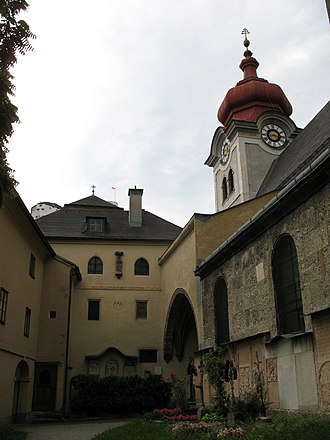
Salzburg’s Nonnberg Abbey

Consider, when it was first released The Sound of Music was only twenty years removed from the end of WWII.  The Nazi overtones of the film didn’t sit well with citizens of Austria and Germany.  Reviews (and box-office receipts) were not favorable in either country.  Coupled with the liberties the producers took with the story, you can see why Salzburg residents don’t exactly “Climb Ev’ry Mountain” to claim the movie as their own.

You’ll find endless trivia about The Sound of Music at IMDB.com and elsewhere.  Most facts are meant to point out discrepancies between the film and the actual story.  Here are fifteen of “My Favorite Things”:

1) Julie Andrews was cast as Maria, of course, but only because Audrey Hepburn declined the part.  Hepburn also denied Andrews the opportunity to play Eliza Doolittle in the movie version of My Fair Lady.  Each played the opposite role in the original stage adaptations on Broadway.

2) Andrews kept getting knocked off her feet in the famous opening scene where she sings and spins in an Alpine meadow.  She couldn’t keep her balance because the hovering helicopter used to film the scene generated too much wind.
Not as easy as it looks!

3) Andrews’ hair was meant to be worn longer but a bad color job forced the pixie cut, which Andrews kept for most of her acting career

4) Christopher Plummer was not a fan of The Sound of Music.  He reluctantly agreed to the part of Captain von Trapp and regretted every moment on set, especially those with the children.  He described working with Julie Andrews as “being hit over the head with a big Valentine’s Day card, every day”.  He nicknamed the movie The Sound of Mucus.  Much later he acknowledged the film’s worldwide success, as well as the Oscar-nominated talent of Andrews.

5) Plummer regularly drowned his acting sorrows in Salzburg bars and restaurants.  As a result his outfits needed to be resized towards the end of filming to accommodate his added weight.

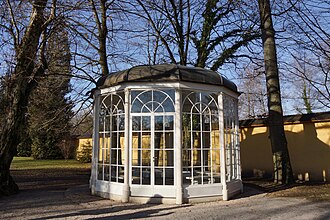
The gazebo (moved from its original location). The interior scenes were filmed In a much larger stage set reproduction.

6) The von Trapp children are Rupert, Agathe, Maria, Werner, Hedwig, Johanna, and Martina… not Liesl, Friedrich, Louisa, Kurt, Brigitta, Marta, and Gretl.  Also, none of the nine leads are Austrian (which certainly didn’t help the appeal of a film based in Salzburg).

7) Auditions for the parts of the von Trapp children included the four eldest Osmond brothers (not Donny), Kurt Russell, and Richard Dreyfuss.

8) Kym Karath, who played Gretl, the youngest of the von Trapp children, created her fair share of challenges.  She had a cold during much of the filming.  She almost drowned in the scene where the boat overturns in the lake because she didn’t know how to swim.  And she ate enough sweets on set to where her weight was too much for Christopher Plummer.  As a result, in the final scene walking over the Alps, Plummer is carrying a stand-in actress instead of Karath.

9) Nicholas Hammond, who played Friedrich, was not a natural blonde so his hair was bleached for the movie.  The coloring process caused some of his hair to fall out, which is why you see him wearing a “Tyrolean Traditional Alpine” hat when he’s seen singing “Do-Re-Mi”.

10) The day after the real von Trapp family left Austria (by train to Italy and then to the U.S., not on foot over the Alps to Switzerland), the Germans shut down all of Austria’s borders.

Salzburg’s Schloss Leopoldskron, where lakefront and garden scenes were filmed

11) The real Maria von Trapp is on screen at the beginning of the movie.

12) The real Maria also claims, if you can blieve it, her own personality was livelier than Andrews’ on-screen version.

13) The real Maria taught Julie Andrews how to yodel.  Watch the lesson here.

14) The film’s production demanded 4,500 extras, including those in the sold-out theater for the music festival.  The audience sings “Edelweiss” as if they know the song, but only because they spent time beforehand learning the words.

15) Despite the aforementioned Austrian disdain, The Sound of Music is played nonstop on the televisions of most Salzburg hotels.

Maybe all of this trivia changes your opinion of The Sound of Music.  Not mine.  There are countless reasons this film includes the tagline, “The Happiest Sound In All The World”.  The Sound of Music will always be that jewel in a glass box, waiting patiently to be enjoyed once more.  Suffice it to say, I’ll never say “So Long, Farewell” to the adventures of the von Trapp family.

Some content sourced from the Internet Movie Database (IMDb), and Wikipedia, “the free encyclopedia”.

Noble Neigh-Sayers

She’s only fourteen months and our granddaughter has already developed a keen interest and affection for our horses. As soon as she gets to the house she hightails it to the living room windows to see if our big boys are grazing in the nearby pasture. She calls them “Neigh-Neighs”; just about the cutest couplet of words you’ll ever hear from the lips of a small child. Makes me think she’d be utterly over the moon if she ever caught a glimpse of the Neigh-Neighs… er, horses at the Spanish Riding School in Vienna.

If you asked me to describe the nerve-wackiest moment of our Viking River Cruise last month, it would’ve been nine months beforehand when I went online to book the sightseeing excursions.  One of those tours – “Behind the Scenes at the Lipizzaner Stallions” – was, at least for us, the excursion of the entire trip.  If the Lipizzaners were sold out, well, there’s a good chance we would’ve a) cancelled the whole cruise, or b) emptied a nearby ATM of Euros, in hopes a couple of our fellow travelers would give up their reserved seats.  Lucky for us we didn’t have to do either.

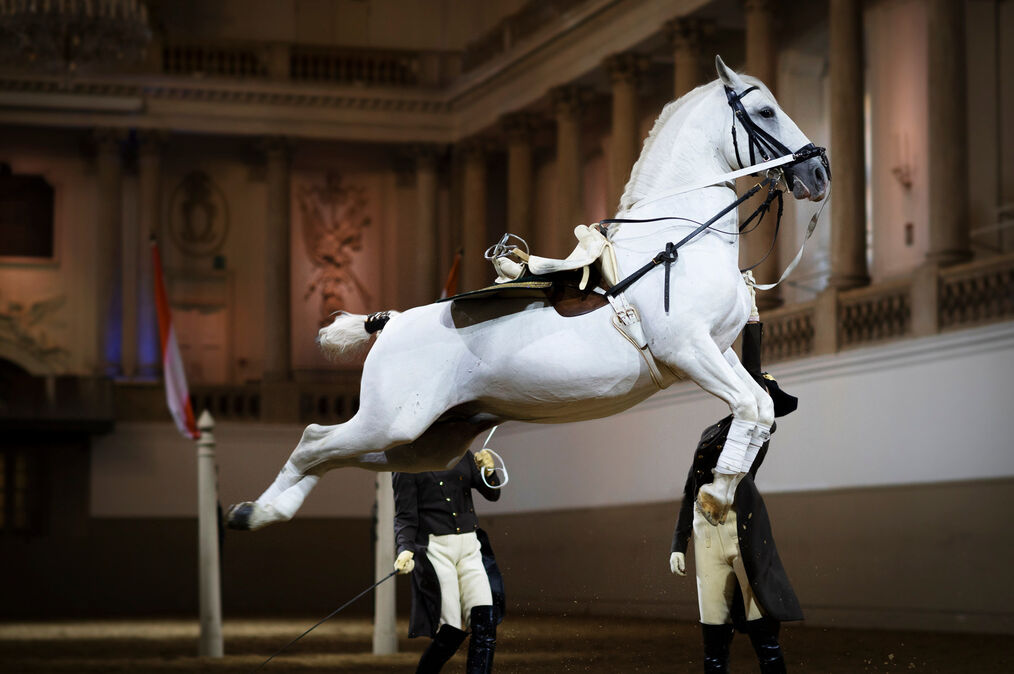
Maybe you’ve heard of them before.  The Lipizanners are a renowned breed of riding horse developed in sixteenth-century Austria.  All these years later they’re among the world’s most famous animals, both for their uniform look and unparalleled skill in the movements of classical dressage.  Five of these movements – known as “airs above the ground” – require horse and rider (sans stirrups) to completely leave the ground.  It’s a performance you’ll only see at prestigious academies like Vienna’s Spanish Riding School, and not in, say, the Olympic dressage competition later this month in Paris.

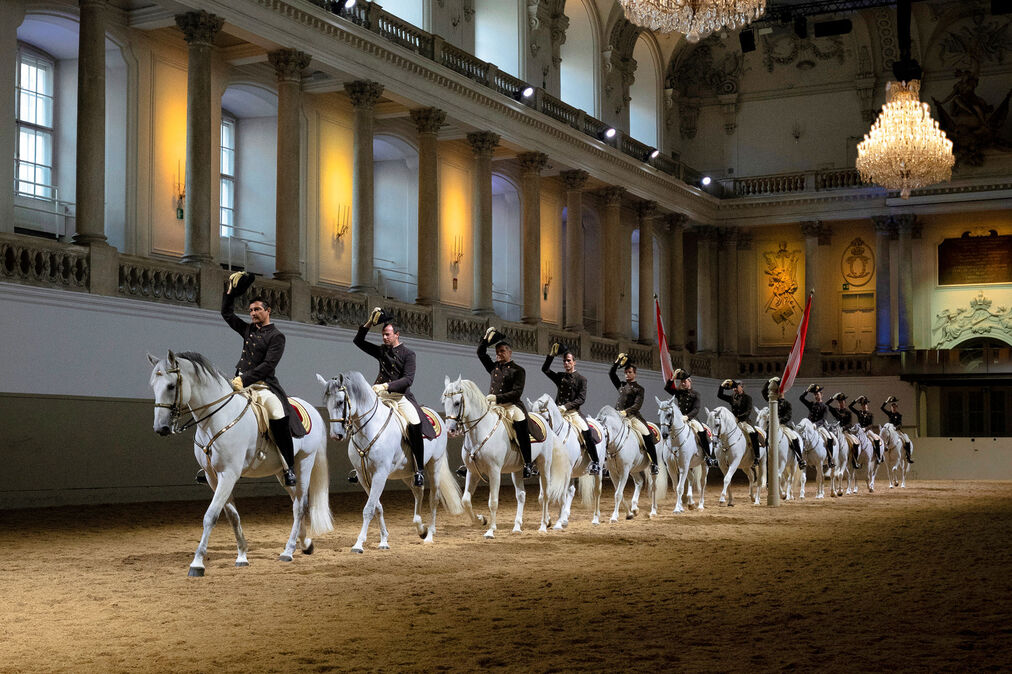
Spanish Riding School – central hall

So how was this remarkable performance?  I wish I could tell you.  We were in Vienna on a Tuesday and the Lipizzaners only show on Saturdays and Sundays.  But we knew this was the case heading into our trip.  The draw of the excursion was more about a behind-the-scenes look at the riding school facility, learning about the care and training, and of course, a peek at the horses themselves.  The Spanish Riding School is located in the former Imperial Palace of the Habsburg Monarchy, smack-dab in the middle of downtown Vienna.  Were it not for the smell of hay and manure you wouldn’t even know the stable was right through the stone walls adjacent to the sidewalk.

Tack room

But oh my, what a stable!  Each of the 68 resident stallions enjoys a roomy private stall (with a fancy nameplate), as well as outdoor courtyards for fresh air and exercise.  Those weekend performances take place in the spectacular sky-lit central hall, which still contains the royal box from the Habsburg era.  The tack room contains custom-made saddles, bridles, and reins representing a small fortune in leather craftsmanship.  And hay storage, manure removal, and other supporting aspects are somehow completely out of sight.  The Lipizzaners have it as good as we’ve ever seen for horses, at least in an urban setting.

Lipizzaner foals at the Piber breeding farm

Speaking of the Lipizzaners, the Spanish Riding School is just a part-time residence.  They spend a good portion of the year in nearby Heldenberg, enjoying the peace and quiet of the countryside instead of the hustle and bustle of the city.  Their breeding farm in Piber – even further removed from Vienna – is nicknamed “The Cradle of the Famous White Horses”.  And as you might expect, most of the young Lipizzaners go straight from Piber to the easy life in Heldenberg, without so much as a glance at the Spanish Riding School.  Only a select few achieve the look and confirmation worthy of this elite level of training and performance.

A couple weeks ago I described the Viennese Coffee House experience as an Element of Intangible Cultural Heritage.  So it is with the Spanish Riding School.  UNESCO has deemed the Vienna facility, the Lipizzaners, and their horse/rider performances as “an essential component… of [Austrian] cultural diversity and creative expression”.

Horses can fly?  Who knew?

I can understand why most visitors to Vienna would choose to see the Lipizzaners in their “Sunday best” instead of lounging in their stalls.  But I encourage you to see both.  A visit with these beautiful animals up close and personal is a unique experience (even if most tourists don’t seem to know how to behave around horses).  You’ll learn why the Spanish Riding School hosts one black stallion among the dozens of whites.  You’ll learn the historical significance of the trained movements of the Lipizzaners, as well as how to identify a rider’s ranking based on his uniform and equipment.  My granddaughter would have plenty of reasons to give this tour a “neigh-neigh”, but your own response is more likely to be “yay-yay!”

Some content sourced from the website of the Spanish Riding School, and Wikipedia, “the free encyclopedia”.

Monk Fruit

Let’s talk about apricots. If you read my last post, apricots are the last topic you’d expect in a series about a Viking River Cruise.  But fate played a hand when our ship only got a taste of the Danube River (while others were literally underwater), so I suppose we needed to satisfy our appetites on something else instead.  Like apricots.

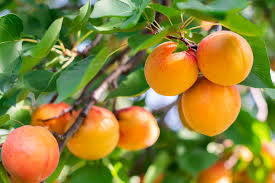
Apricots are petite and peach-like

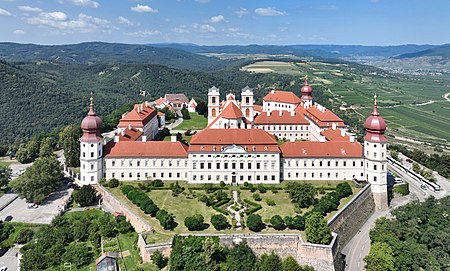
I don’t associate apricots with Austria at all (how about all the “a” words in that sentence there, huh?)  Austria is more about snowy Alps, Mozart, and the hills coming alive in The Sound of Music.  So it was something of a surprise to find myself on a hot, sunny day, standing in an apricot orchard in Krems, Austria. Almost floating above this little riverside town, you’ll find the fruit trees on the property of a Benedictine monastery known as Göttweig Abbey.

Göttweig Abbey, near Krems, Austria

Göttweig is an impressive complex of buildings, and even more impressive for its lengthy history.  The Abbey was built in the 1100s, rebuilt larger after devastating fires in the 1500s and 1700s, and survived relatively intact after the Nazi occupation of WWII.  Its library contains 150,000 books and papers, and its main structure houses the largest Baroque staircase in Austria.  But who cares about all that, I hear you saying.  Tell me about the apricots, Dave!

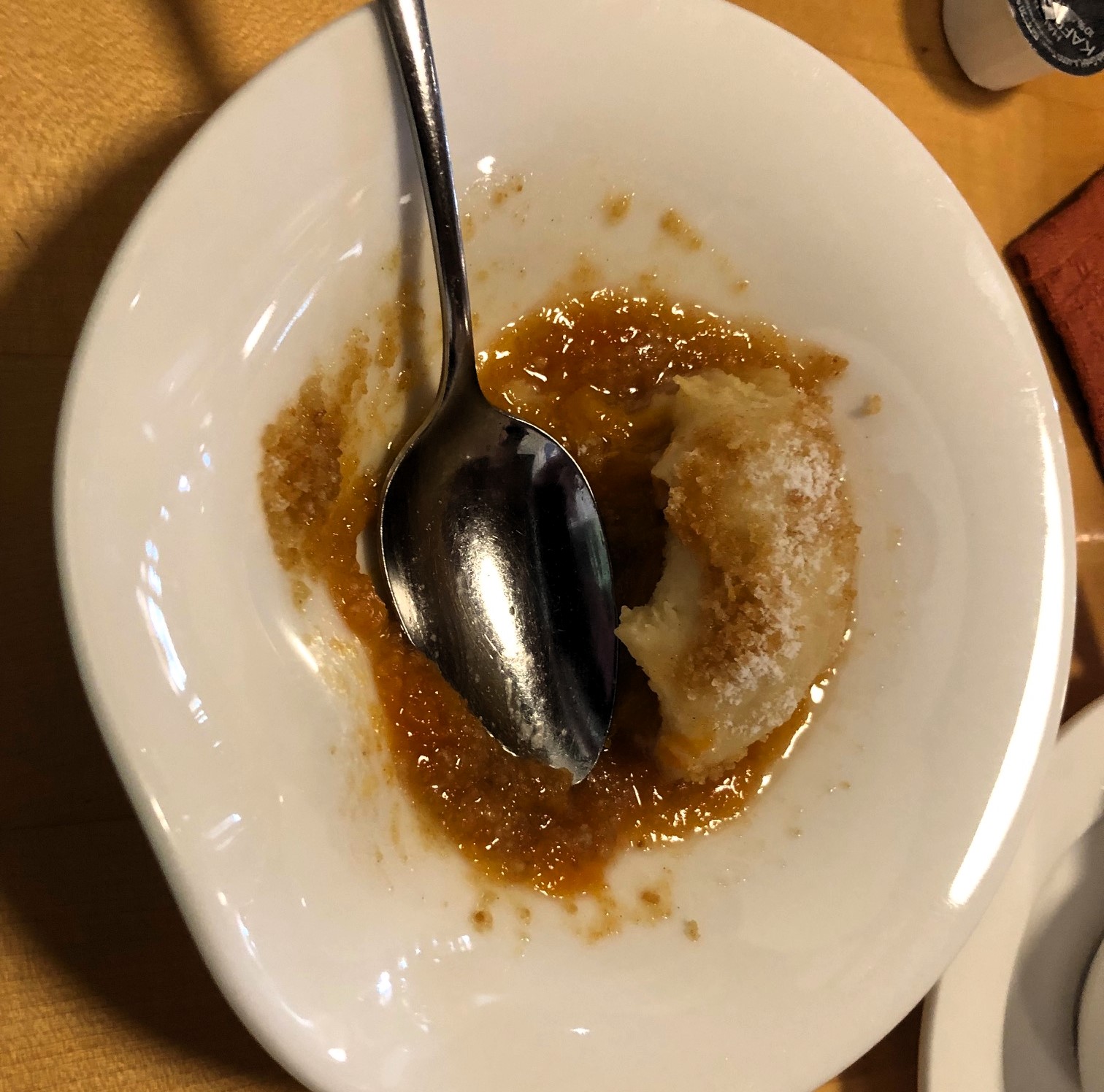
The last of my apricot dumpling

Let it be said; Göttweig brought apricots back to life for me.  The Abbey tour starts in its apricot orchard, where we saw the trees up close, on the verge of harvest time.  The tour ended with a short class on making apricot dumplings (unquestionably as scrumptious as they sound: a whole pitted apricot wrapped in puff pastry, topped with vanilla-apricot sauce, served hot).  And the gift shop… oh my, the gift shop.  Shelf after shelf of everything apricots, from syrups to jams to cookies to candy.  Even better, you’ll find a tasting bar for several varieties of Göttweig apricot wine and brandy (also available for purchase, of course).

The Abbey’s apricot orchard

When the tour took us to a little theater for a short film on Göttweig’s history, one of the monks (at least, I think he was a monk) served us apricot juice in tall glasses as a refreshment.  It was the proverbial nectar of the gods… and I time-traveled to my childhood instantly.  My mother served apricot juice at breakfast occasionally, and I remember never really caring for its sweet/tart taste.  Guess I’ve grown up since then.  This juice was so delicious my wife and I are already in hot pursuit for a bottle here in the States.  Not something you’ll find in your ordinary grocery store.

[Blogger’s note: Don’t take “Göttweig” for a spin on Google Translate.  Our tour guide said they’ve never known the meaning of the word.  Google Translate doesn’t either (but its guess is a little ironic).]

The Abbey’s main entrance

Here’s a strange word you should associate with apricots: drupe.  It’s another word for stone fruit; as in, fruit where the flesh surrounds the pit.  So apricots are drupes, as are cherries, peaches, nectarines, and plums.  Even dates join this pit-y party.

Here’s another word you should associate with apricots: orchard.  There’s nothing more frustrating with the English language than two words with essentially the same definition.  So it is with orchard and grove.  Technically there’s a difference.  If your apricot trees are planted in neat rows with the intent of commercial production, you have an orchard.  If you’re walking through the forest and come across a natural stand of apricot trees, you’re in a grove.  But c’mon, if all that is true then why do we say “apple orchard” but “orange grove”?  Sigh…

Not quite ready for harvest

I wouldn’t care if I had an orchard or a grove as long as I had apricot trees.  I’m not really a peach or plum fan, but man I love the taste of apricots.  As a kid I also loved them dried, because they were so sweet they might as well have been candy.  But the adult version of me chooses the fresh fruit instead.  And now the juice.

The views from the Abbey are spectacular

Some of you more adventurous (and/or Christian) souls may be interested to know Göttweig Abbey lies on one of the routes of the Camino de Santiago, the soul-searching network of the Way of St. James.  A tall glass of apricot juice would be most refreshing along the 1,100-mile pilgrimage to the coast of Spain.  Of course, you don’t need to walk that far for the taste of apricots.  Just mosey down to your local grocery store, because they’re in season now.  Maybe you too will discover newfound appreciation for “monk fruit”.

Some content sourced from Wikipedia, “the free encyclopedia”.

Go(ing) With the Flow

In the camping days of my youth, I’d get a kick out of dropping little sticks into the water and watching them float lazily downstream.  I’d imagine them as little boats, navigating uncharted waters on their way to some exotic destination.  I’d see how far those sticks could go, sometimes removing obstructions to create clear channels.  Perhaps it’s no surprise then, all these years later, I’m drawn to the adventure of Viking River Cruises.

Maybe you’ve seen their commercials.  Viking River Cruises advertise by showing you one of their elegant white ships cruising slowly down a pristine river, with dramatic terrain sloping up and away from the shorelines.  Viking “longships” are low, flat, and narrow; a  wholly refined version of my stick in the stream.  Take your pick: the Nile in Egypt, the Rhine in Germany, or the Mississippi in America, to name a few.  Viking has you covered when it comes to cruising the world’s rivers.

My wife and I just completed our second Viking cruise (well, “completed” doesn’t really cut it but I’ll get to that in a moment).  Our first, in 2019, down the Rhine River from the Netherlands through Germany to Switzerland, was so satisfying we were ready to sign up for another as soon as we were done.  Then the world went a little off the rails so we had to wait until the waters calmed again, so to speak.  A week ago then, we returned from Viking’s Danube River cruise; Hungary through Austria to Germany.

There are at least two reasons why Viking River Cruises don’t appeal to those who seek a vacation on the water.  First, you’ll find little more to do on the ship besides eat and sleep.  Yes, you’ll find live music in the lounge and an occasional cooking demonstration by the head chef, but for the most part a Viking ship is a floating hotel.  Second, the daily excursions off the boat are fast-paced guided looks at whatever is worth seeing, with only a little free time at the end for shopping and such.  Best to bring a comfortable pair of walking shoes to keep up.

Those same reasons are why Viking cruises do appeal to us.  We’ve been on one of those floating-city ocean cruises before (Carnivalick), and everything from the buffet to the entertainment felt cheap and mass-produced.  A Viking river ship caters to only two hundred passengers, in rooms as nice as most anywhere we’ve stayed on shore.  As for the excursions, the tour guides are carefully chosen for their knowledge and personalities, adding so much more to the tour than if you were to go it alone.  Yes, you’re only getting a “taste” of each locale, but this means you see a lot in eight days of cruising, leaving you to choose if and where you might come back to for more in-depth looks.

Eight days is plenty of time to be on the river (at least in our book) but Viking offers several options twice as long, including a fifteen-day Grand European Tour covering the Rhine and the Danube.  You can also add “land-based” days to either end of a cruise, exploring the cities from where you embark and disembark.  Finally, Viking tailors its menus (and I do mean menus, not buffets) to the cuisine of the region you travel through.  From our experience, the food is excellent.

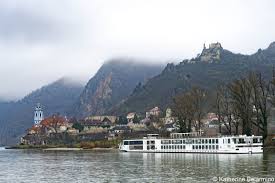
Passau, Germany (one of our destinations)

If this sounds like a ringing endorsement for a Viking River Cruise, let me silence that bell for just a moment.  Perhaps the only thing Viking can’t control is the water itself.  Unbeknownst to most Americans, the Danube River flooded its banks earlier this month, forcing the powers that be (and who exactly are those powers?) to “close” the river.  Residents in destinations downriver found themselves wading through four feet of water.  River ships couldn’t fit under low-flying bridges, let alone dock at the shores.  As a result, our cruise came to a premature halt in Vienna, Austria, with the remaining itinerary carried out with busses and hotels.

I’ll take the next several posts to dive deeper into our “Romantic Danube” Viking cruise.  We missed out on the time we expected on the river, but the destinations were no less impressive.  Budapest is a heck of an interesting city.  Gottweig Abbey (outside the Austrian town of Krems) is keeping apricots relevant.  So stick with me the next few weeks and you’ll find out more about what the Danube has to offer.  After all, river cruising is a whole lot more adventurous than floating a stick down a stream.

Crescents and Con Artists

Every Christmas without fail, my family enjoys croissants as part of the morning meal. We pop them into the oven after seeing what Santa left in our stockings (but before unwrapping anything under the tree). So last week, as I loaded our Easter ham into the garage frig, a tantalizing thought occurred to me: the leftover Christmas croissants are parked right next door in the freezer. Could they possibly be as light and flaky as they once were, four months after their initial rise-and-shine?

If you know anything about authentic croissants, “rise and shine” is a fitting description.  Thanks to some seriously active yeast, croissants rise to a soft, pillow-y consistency.  Thanks to a whole lot of butter (and a little egg yolk), croissants finish with a pleasing sheen on their delicate, crispy crust.  If there’s a more decadent baked good on the planet, my crescent-shaped ears are open and listening.

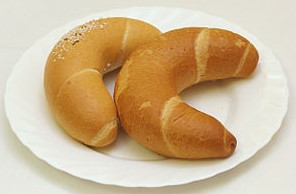
Austrian kipferi

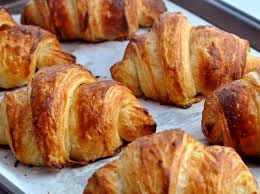
Croissants have been around a long time.  They got their start centuries ago in France Austria as the more pedestrian kipferi yeast bread roll.  Eventually the French stepped up the game using leavened laminated dough and butter, ending up as the light, flaky, many-layered version you know and love today.

Croissant means “crescent” of course (which is why I get hunger pangs whenever I gaze at the moon).  Croissant also has an elegant pronunciation.  Turn the “roi” into a “weh”, drop the final “t”, and keep the sound a little inside the nose.  Cweh-saw.  Congratulations!  You speak French.

Even “crescent” has a dignified definition: a shape resembling a segment of a ring, tapering to points at the ends.  Can you picture it?  Sure you can, because now you’re thinking of Pillsbury Crescent Rolls.  They’re so “American”, aren’t they?  We take a centuries-old, meticulously refined shoo-in for the Baked Goods Hall of Fame and reduce it to sticky, doughy, fast food; vacuum-packed into a can you open with a spoon.

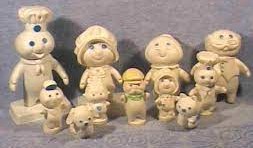
The Poppin’ Fresh family

[Speaking of Pillsbury, here’s something you didn’t know about the Dough Boy, otherwise known as “Poppin’ Fresh”.  He has a family!  His wife is Poppie Fresh, his kids are Popper and Bun-Bun, his grandparents Granpopper and Granmommer, and his Uncle Rollie.  Don’t forget the dog (Flapjack) and the cat (Biscuit).  In the 1970s you could purchase the entire clan as a set of dolls.]

BK’s “Croissan’wich”

Pillsbury isn’t the only crescent con artist out there.  Burger King made a name for itself with its popular Croissan’wich breakfast entrees.  And Galaxy, the Williams-Sonoma mail-order croissants my family and I enjoy at Christmas, start out as frozen minis, rise impressively overnight on the kitchen counter, and bake to an excellent knock-off of the bakery-made originals.

The preparation of authentic croissants requires time and attention we Americans don’t have the patience for.  Watch the following video (which is thirteen minutes long so… maybe not) and you’ll learn what it takes.  At the least, you’ll understand why I pay almost $4.50 for a single croissant from Galaxy/Williams-Sonoma.

Most of us wouldn’t make it past  the initial “pre-dough” step in the video, let alone the labor-intensive lamination (folding/flattening), forming, fermentation, baking, cooling, and storage.  We’re talking hours and hours in the kitchen here, and that’s assuming you have the right equipment.  No wonder we’d rather just whack a Pillsbury tube on the counter edge and produce “crescent rolls” hot out of the oven 9-11 minutes later. 

Still, I implore you to watch the cweh-saw video.  The star of the show is Frédéric from Boulangerie Roy Le Capitole, narrating the process in his beautiful native language.  This man could be saying … and then we drag the smelly garbage out to the back alley for the cats to dig through and I’d still be glued the sound of his words.  Or, listen to our lovely video host and her delightful French accent (with the occasional incorrect word sprinkled in).

Lamination = Layers

I was so mesmerized by the French voices I really don’t remember much about the croissant-making itself.  But it’s hard to forget the facts.  Making an authentic batch takes three days.  A croissant is 30% butter and can have as many as fifty layers.  French bakeries have “bread laws” to protect their artisan products.  Finally, you can “hear” the sound of an authentic croissant by pushing through the crispy crust to the softer layers inside.

To the matter of my Christmas… er, Easter croissants, I’m happy (and satisfied) to report they tasted just as good last week as their holly, jolly predecessors a while ago.  Apparently four months isn’t too long to wait for good croissants.  But three days is too long to make them from scratch so I’ll keep buying from con artists.

Some content sourced from Wikipedia, “the free encyclopedia”.

Bl-ess-ed Island

I’ve always liked Southwest Airlines’ slogan. “Wanna Get Away?” Their first television commercials featured people having bad days – then up pops the Southwest phrase in big, bold letters. It wasn’t so much where you wanted to go, just that you wanted to go.  So today I have Southwest on the brain, not only because I “wanna get away” (and don’t we all?) but because I know precisely where. Take me to the Julian Alps in northwest Slovenia, please.  There you’ll find a tiny fairyland oasis known as Lake Bled.

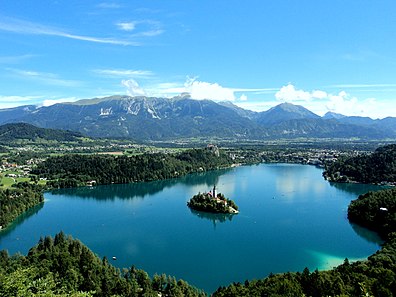
Let me tease you with a photo.  Here, you’re standing on a steep vista known as Little Osojnica Hill.  Lake Bled’s emerald green waters are a squarish mile of blended glacial melt and hot springs.  And those mountains in the distance?  You’re looking at Austria and its Alps.  The country and its majestic peaks are less than ten miles from Slovenia and Lake Bled.

But forget about the surroundings for a moment because it’s Lake Bled I really want to talk about.  Here’s how you get there.  From Frankfurt, Germany, catch a 75-minute flight (KLM or Lufthansa, not Southwest) to Slovenia’s capital city of Ljubljana.  Instead of spending time trying to pronounce “Ljubljana”, make your way to the city train station.  Travel thirty miles northwest on the rails and step off at the Lesce-Bled station.  Congrats!  You’re only a two-mile walk from Lake Bled.

Now for the best part.  You’re not only going to Lake Bled; you’re going to the island in the middle.  Bled Island may be the most picturesque islet I’ve ever seen.  It’s perfectly surrounded by the lake.  It’s lush with trees.  But best of all, Bled Island hosts a soaring 17th-century pilgrimage church.  It’s like a miniature Mont-Saint-Michel, only it’s not in France and you have to climb a wide stairway to get to the church doors.  Brace yourself; we’re talking ninety-nine steps on that stairway.  But you’re not gonna come all this way and not see the church, right?

Earlier I told you Lake Bled is like something out of a fairy tale.  Here’s another reason why.  The only way to get from the lakeshore to the island is on a pletna.  What’s a pletna? A wooden, flat-bottomed boat, seating a dozen or so and powered by a very-much-in-shape Slovenian oarsman.  He stands in the back like a Venetian gondolier, using his two oars to propel the boat slowly across the pristine waters.  Doesn’t it just add to the image?  Better than muddying up things with something motorized.

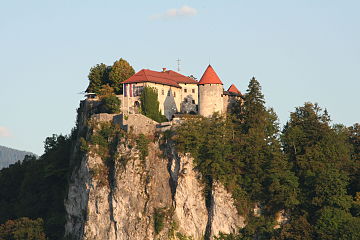
Bled Castle

If Lake Bled and its islet aren’t enough to get you booking flights, how about a couple more temptations?  High above the lakeshore stands the oldest medieval castle in all of Slovenia.  Drawbridge, moat, courtyards, towers; Bled Castle has everything you’d expect in an 11th-century fortification.  Must be worth the price of admission because it’s one of the most visited attractions in the entire country.

Yum!

Maybe you’re not into castles.  How about a plate of Chantilly cream pastries instead?  The cremeschnitte is the region’s culinary specialty.  The pastry is so highly regarded, the Slovenian government designated it a “protected dish” in 2016.  An annual festival celebrates nothing but the dessert.  Over the last sixty years, a hotel near Lake Bled has baked over sixty million of them.  That’s what I’d call a recipe refined to perfection.

In a recent post I mentioned my daughter is getting married next year.  For my future son-in-law’s sake, I’m glad she didn’t choose the church on Bled Island.  Local tradition says it’s good luck for the groom to carry the bride up the stone steps before ringing the church bell and making a wish.  Up ninety-nine steps?  The groom better be as strong as a pletna oarsman if he’s going to make that kind of climb.

Photos are nice but videos are the real clincher.  Spend a couple of minutes with the following YouTube tour.  I guarantee you’ll “wanna get away” to Bled Island, and soon.

Some content sourced from Wikipedia, “the free encyclopedia”.