Tripping on Trips

I should pay more attention to the actual cost of things. A movie ticket is fifteen dollars… until you add in concessions, preferred seating, and online processing. A dinner out can be reasonable… until you add in the taxes and tip. And rental car companies add so many fees to the base rate it’s like you’ve just been bumped to a new tax bracket. With that in mind let’s visit the airport today, or more specifically, getting to the airport.
How do I get here?

Flying is expensive; always has been.  But it’s easy to overlook the cost of the airport itself.  Maybe you already know, a portion of the ticket you just bought goes to a landing fee (LF) – what the airline pays the airport for the privilege of pulling up to the gate.  Maybe you also know another portion goes to a passenger facility charge (PFC), which supposedly goes to improvement projects in the name of airport safety and security.

I don’t trust PFCs.  I think they really go to things like art exhibits, children’s play areas, pet relief areas, and smoking lounges.  I mean really, how much less would that plane ticket be if all you had for an airport was a ticket counter, some security and restrooms, and a gate to board your plane? 

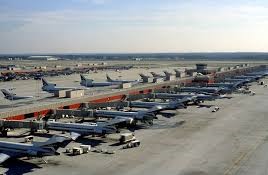
You pay dearly for this space

The airport needs more than LF’s and PFC’s to pay its bills, of course.  It’s the reason you pay so much for parking.  I mean, think about it.  Once the parking garage is built it requires little to operate.  Mechanical systems and a few employee salaries yes, but certainly nothing in the neighborhood of say, $30/car/day.  Which brings me to my current conundrum.
By taxi? Cost-prohibitive

Most of you don’t have the following challenge.  When you fly, you’re close enough to the airport to where you can get a ride from a friend or take mass transit.  Me?  I have a choice of three major airports here in the South… but each of them is a two to three hour drive from my house.  Which begs the question, how does Dave get from his house to the airport and back for the least amount of money?

  1. Simple but Expensive.  Dave drives his car to the airport, parks, and drives his car back to his house after he gets back.  Works for short trips but what if I’m gone for three weeks (starting next Saturday)?  Parking at Atlanta-Hartsfield is $30/day (and that’s long-term). Throw in a tank of gas for the car and I’m north of $700 just for the airport to/from.
  2. Simpler but Even More Expensive.  This idea unexpectedly sent me in the wrong direction (financial, not travel).  I put in for a quote for car and driver from a service right here in our little town.  They got back to me almost immediately.  Little did I know my car is a limo and my driver wears a tuxedo.  My wife and I can “sit back and enjoy their ride” for $520 each way.  Gratuity not included.

  3. Slightly Less Expensive.  Here’s a fun option/comparison.  Drive to nearby (tiny) Augusta Regional Airport and fly to Atlanta.  The two round trip tickets plus parking?  Less than the cost of the drive and parking at Atlanta. If flights out of Augusta were ever on time I might actually consider it.
  4. Clever But… Drive to nearby (tiny) Augusta Regional Airport, rent a car, drive to Atlanta, and return the car.  Repeat the procedure in reverse when I return.  No.  The rental car companies want $300+ for Augusta to Atlanta.  Multiply that by two to get back home.

    By shuttle? “Cozy”
  5. Less Expensive but More Cozy.  We have shuttle services nearby; van companies where you share the ride to the airport with strangers.  $200 gets us the trip to Atlanta and back.  Okay, but now we’re driving our car just to get driven by a van just to get flown in a plane.  Seems like a lot.  And you leave when the shuttle service says you leave; not when you really want to.

Five solutions in and I still haven’t made it to Atlanta with any sense of fiscal satisfaction.  I’m starting to think I should just skip the airplane and drive all the way to our destination.  Or ride my bike with a pile of luggage on my back.  But wait!  There’s always 6. Entirely Less Expensive.  Convince local son-in-law to drive us to Atlanta (and back).  He can’t charge me more than the options I presented here, can he?  Er, not if he doesn’t read this blog post first.  I better call him… stat.
Concourses or Golf Courses?

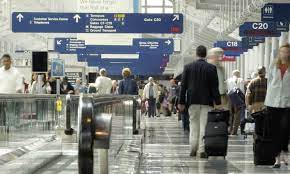
Whenever flying is a part of my travel plans, I wear my most comfortable pair of walking shoes. Long gone are the days of the coat-and-tie-to-fly dress code, in favor of sneakers (and jeans). My reason for rubber-soled kicks used to be, “What if we’re in some kind of accident and I need to get off in a hurry?” Today I go with a wholly different reason. The long, long walk I can expect from curb to concourse to airplane cabin simply demands something easy on the feet.

Here’s a startling comparison.  If you play golf and skip the cart, you’re going to walk over four miles to finish your round.  By almost the same token, if you’re connecting through Dallas-Ft. Worth or Atlanta and choose to walk from Terminal B to Terminal E, you’re going to walk over two miles.  Add in the inevitable search for food, a stop or two at retail, and a visit to the restroom and you’re closer to three miles.  And none of that includes the distance from the curb to the ticket counter, from the counter through security, and from your gate down the jetway to your seat on the plane.

How do they do it in heels?

Now for the bad news.  Airports are only getting bigger, and not for the reasons you might think.  Sure, more people fly than ever before, which adds more planes, more gates, and even more airports.  But behind the scenes a couple of stronger forces are at work.  One, airlines are shifting to larger aircraft, which translates to more space between parked planes.  Two, airport parking revenue is down (thanks to Uber, Lyft, and more mass transit), which translates to the airport’s need to find revenue elsewhere.  Where?  Retail, bars, and restaurants.

Don’t get used to these…

From recent trips through airports, I’ve noticed the following.  In Denver International, remodeled Concourse B is already labeled “Gates 1-100”, even though there aren’t a hundred gates.  It’s a straight-line concourse and it’s only going to get longer.  In Atlanta’s Hartsfield-Jackson, the concourses are so long and narrow (and so crowded), that last gate is farther than you can see without binoculars.  And in San Diego’s Lindbergh Field, when you’re processed into Terminal 2 from security, you can’t see a single gate, because you have to pass through a veritable shopping mall first.

In the ultimate insult to long walks to planes, some airports have left the moving walkways out of their concourse remodels.  Those walkways discourage you from passing directly in front of the food and retail the airport so desperately needs you to patronize.  And intentional or not, the airlines encourage these purchases by offering less food onboard.  You, weary traveler, are a captive audience to more than one performer.

I prefer this kind of walk

Let’s not forget the rental cars.  Avis’s slogan is “We try harder”.  Maybe it should be, “We try harder… to take more of your money“.  I just reviewed my receipt from a recent San Diego rental for a full-size standard Kia sedan.  Right there below the actual daily rate: “11.11% Concession Recovery Fee”; essentially the cost of doing business at the airport.  Add in Vehicle License Recoup fee, Customer Facility Charge (another airport fee), California Tourism Fee, and a final flourish of “tax”, and the rate increased by 32%.  All so I can walk further to get to my rental car?

An early chapter of my career was in airport planning.  We’re the people who figure out how to get the planes from the runways to the taxiways to the gates without hitting each other.  We also design the terminal buildings to include enough gates, concessions and restrooms (yeah, yeah, bring on the heat with that last item).  Concourse design used to be “spoke and hub”, meaning you walked down the spoke to a circular boarding hub of several gates.  It made the airplane taxiing a little trickier outside, but it significantly reduced a passenger’s walk to the gate.  Today, airports no longer favor the design (er, traveler) because it reduces the square footage for concessions.

For those of you who live and die by your 10,000 steps, take heart; airports are helping you accomplish your daily goal.  Phoenix Sky Harbor even disguised the long walk through the concourses by calling it a “Fitness Trail”.  Be sure to allow enough time to get in a (seriously overpriced) shopping trip at all those concessions.  But don’t forget, the airlines only allow one reasonably sized carry-on these days.  Any others will cost you a checked bag fee… because the airport isn’t making enough money already.

Some content sourced from the CNN Business article, “Why you have to walk so far to your gate at the airport”, and Wikipedia, “the free encyclopedia”.

Drinkin’ Problem

Thanks to social media, product advertising is a complex challenge these days. Hiring an “agency” no longer suffices, at least not for major corporations. They depend on “brand builders” instead – Interbrand, for example. Interbrand boasts “…a global team of thinkers and makers [encouraging] bold moves to leap ahead of customers and competitors.” Interbrand also values the companies they help build. On their list, well inside the top ten: Coca-Cola.

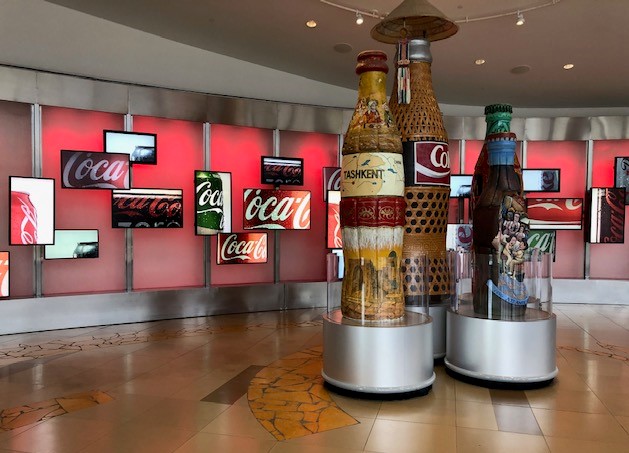
My brothers and I gathered in Atlanta last week for a semi-annual reunion.  Our initial stop wasn’t Coca-Cola’s world headquarters but rather, its popular “World of Coca-Cola” tour.  If you haven’t walked through these doors, Coke has turned an impressive three-story building into a glittery three-ring circus to promote its products, with a side of historical context.  As if Coke needs more promotion.  The genius of this soft drink, as we learn on the tour, is the relentless, boundless effort to put Coke’s brand everywhere imaginable.  Cans, clothing, and cars, just to name a few.  But pixels?

Here’s a weird suggestion.  Go into your home laboratory, create a flavor, and label it something that doesn’t have a flavor.  This is Coke’s latest go-to gimmick to retain market share.  Coca-Cola Zero Sugar “Byte” has come and gone (limited-edition products are another way to retain market share) and you probably didn’t have a taste. And what does “data” taste like?  According to drinkers it’s pretty much the same as Coke Zero, adding in the sensation of the old “Pop Rocks” candy.

Coca-Cola also developed “Coke Starlight”, somehow determining the taste of “outer space”.  Drinkers said it tasted like Coke with an aftertaste of cereal milk (ewwwww).  Go to the store today and you can purchase the latest of these curiosities: “Coke Dreamworld”, which has been described as “Coke soaked in sour peach rings” (ewwwww again).  As the saying goes, there’s no accounting for taste… or should I say, with Coca-Cola there’s no caring for taste.  Instead, the bottles and cans promote music, videos, and other products through a QR code.  And there’s the branding concept in a nutshell.  You’re attracted to the purchase because it’s a Coca-Cola product, but the draw is anything but the drink itself.

I shouldn’t be surprised how far the taste of Coke has, uh, evolved in the one hundred and thirty years since its market debut.  The variations on the original formula are myriad, including Cherry Coke, Vanilla Coke, Diet Coke, and “Coke Zero” (no added sugar but plenty of artificial sweeteners).  Let’s not pretend any of these drinks are actually good for your consumption.  But at least vanilla and cherry are tastes we understand.  Dreams?  Not so much.

“Dreamworld” and the other recent flavors target “gamers and younger audiences”.  My brothers and I saw a lot of kids on the “World of Coca-Cola” tour so maybe the advertising is working.  Regardless, Coca-Cola has a bigger challenge to confront.  Sales of soft drinks are on a serious decline, in favor of bottled water and healthier options.  Coke recently cut its portfolio of soft drinks by fifty percent (bye-bye Tab) in an effort to improve its bottom line.  To me, that’s a sound business strategy.  But flavors that aren’t really flavors?  That’s desperate.

Coca-Cola had a big red flag in the 1980s (appropriate color, no?), one that should’ve discouraged future dabbling with their products.  Who among you doesn’t remember the debacle of “New Coke”? The flavor variation – the first in Coca-Cola’s long history – debuted to rave reviews, with claims it was better than Coke or Pepsi.  But here’s what Coca-Cola didn’t see coming: consumers immediately defended the original flavor.  Instead of buying New Coke, they cleared the shelves of the original flavor for fear it would go away forever.  Begrudgingly (and very quickly), Coca-Cola returned the original flavor to stores under the name “Coke Classic”.  But New Coke never found legs and eventually disappeared from the shelves altogether, while “Coke Classic” returned as simply “Coke”.

” Coke Dreamworld”, as you would expect, features prominently in the “World of Coca-Cola” tour.  The flavor that isn’t a flavor, along with a silly 3-D movie and a giant retail store, targets the youngest of consumers.  But let’s be honest, most people go on the tour for the tasting room, where they can sample Coca-Cola’s products to their heart’s content.  “New Coke” is not among those choices.  Pretty soon I don’t expect to see any flavors-that-aren’t flavors either.

Some content sourced from the CNN Business article, “Coke’s latest bizarre flavor is here”, and Wikipedia, “the free encyclopedia”.

Small Fly

Whenever we travel to our favorite little town in South Carolina, we have the option of a connecting flight through Dallas/Fort Worth (DFW) or Atlanta (ATL) to get there. DFW is the fourth-busiest airport in the world, with five terminals, seven runways, and 164 gates. The airport property covers twenty-seven square Texas miles, with its own zip code, police, and fire departments. Meanwhile, ATL is merely the busiest airport in the world, hosting 300,000 passengers and 60,000 workers every day. One of ATL’s runways is so long they hold an annual 5k running race on it. DFW and ATL are mega-ports and can be mega-stressful to pass through, which is why landing in little Augusta, Georgia, our final flying destination, is like a breath of small-town fresh air.

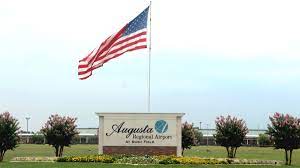
Augusta Regional Airport (“…at Bush Field”, or simply “AGS”) is the smallest airport in the world.  Okay, that’s not even close to true (especially if you consider landing strips in cornfields) but it sure feels like it.  AGS sits quietly on the banks of the Savannah River, just west of the Georgia state line.  It’s served by the smallest aircraft of Delta and American.  Its tiny terminal building is shaped like a capital “T”, with two little ticket counters at the top, followed by a quick stroll down the middle to a boarding lounge the size of an oversized living room.  If you average out the flight schedule, AGS has a single plane touching down every two hours.  They should hire the Augusta High School marching band to welcome each landing (“Go Orioles!”)

The first time I realized AGS was big-time-small was after a late landing on a weekday night.  Walking down the brief concourse the airport was noticeably dark.  The rental car counters were already shuttered for the night.  At baggage claim, the single attendant (literally, the only employee in the building) announced bags would be hand-delivered to the curb instead of circulating on the belt.  Yep, they just lined ’em all up by the waiting cars.

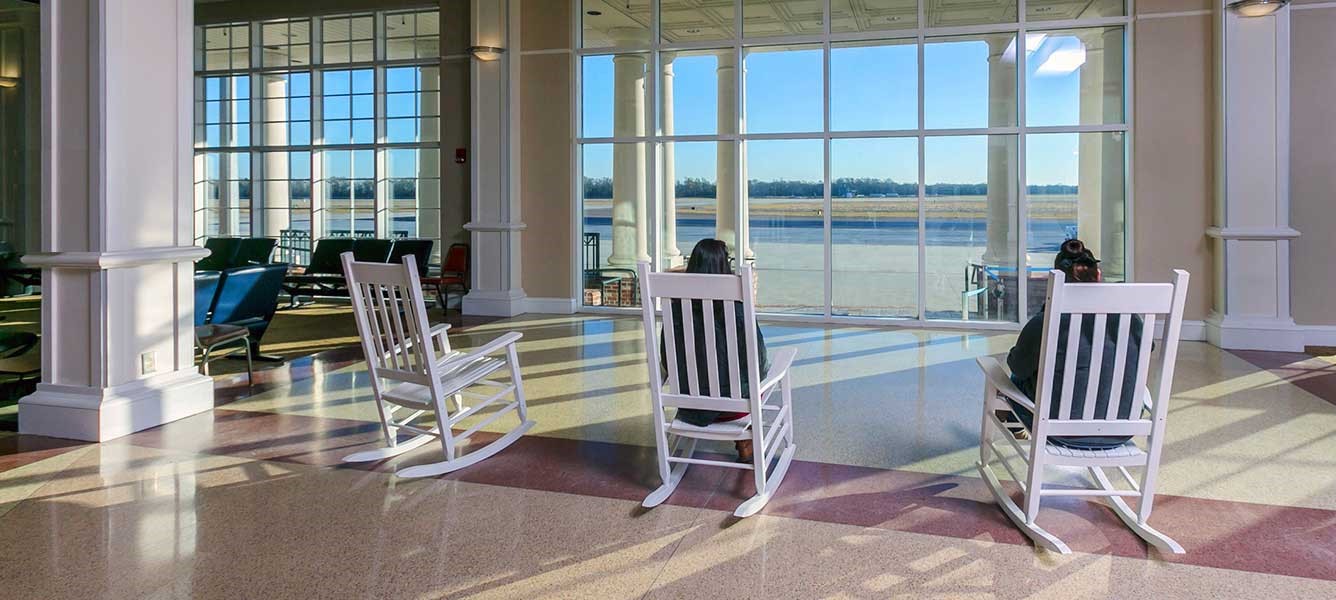
Watch the planes from the “front porch”

My other AGS big-time-small moment was the first time I saw the parking lot (free for 30 min, $8/day).  Half the lot was given over to rental cars.  Think about the number of rental car spaces you need for an airport where just a handful of planes land each day.  Now double the number.  That’s the size of Augusta Regional’s parking lot.

The design of AGS, boasting one-story red brick, proud white columns, and suburban landscaping, reminds me of the clubhouse of a golf course.  In fact, Augusta Regional bears the nickname “The Country Club Airport”, entirely fitting since The Masters professional golf tournament is held every April just twelve miles from its runways. 

Lounge outside (past security) before you board…

AGS reminds me of my first small airport experience back when I was a freshman in college.  Flying from Los Angeles (LAX – second-busiest in the U.S.), I deplaned in a modest midwestern town, and for the first time ever descended stairs onto the outside tarmac instead of through a jetway to the terminal.  I happened to be the first passenger off the plane, which meant leading a line of people to the glass doors of the boarding lounge.  Only I couldn’t open the glass doors.  They wouldn’t “push” despite my best efforts.  Several greeters on the other side of the glass (this was pre-9/11) gestured to “pull” instead of “push”.  Took me just a little too long to figure that out.  Believe I heard the words “city boy” as I was on my way to baggage claim.

When we landed in Augusta most recently, we were the last flight of the night.  As we sat on the park-like benches at the curb waiting for our daughter to pick us up, I watched one of the few remaining employees bring in the trash cans and turn out the lights.  She made sure we had a ride, then locked the terminal building doors.  Only one other passenger was waiting to be picked up.  It was a little strange to be among the last couple of people on the property.  I mean, most airports don’t even close.

… or play a little golf.

At Dallas/Fort Worth, you can rent private rooms at the “Minute Suites” for naps or freshening up right there in the airport terminal.  There’s even a full-service spa.  In Atlanta you’ll find a Starbucks in six of the seven airport concourses.  Augusta Regional? How about a soft pretzel at the one concession stand, or an overpriced unofficial souvenir from The Masters?  Doesn’t matter.  You can show up less than an hour before your departure, and you can take in the take-offs from a comfy rocking chair.  Yep, this little small-fly is a pretty sweet landing pad.

Some content sourced from the Augusta Regional Airport website.

——————–

Lego Grand Piano – Update #8

(Read about how this project got started in Let’s Make Music!)

Last week

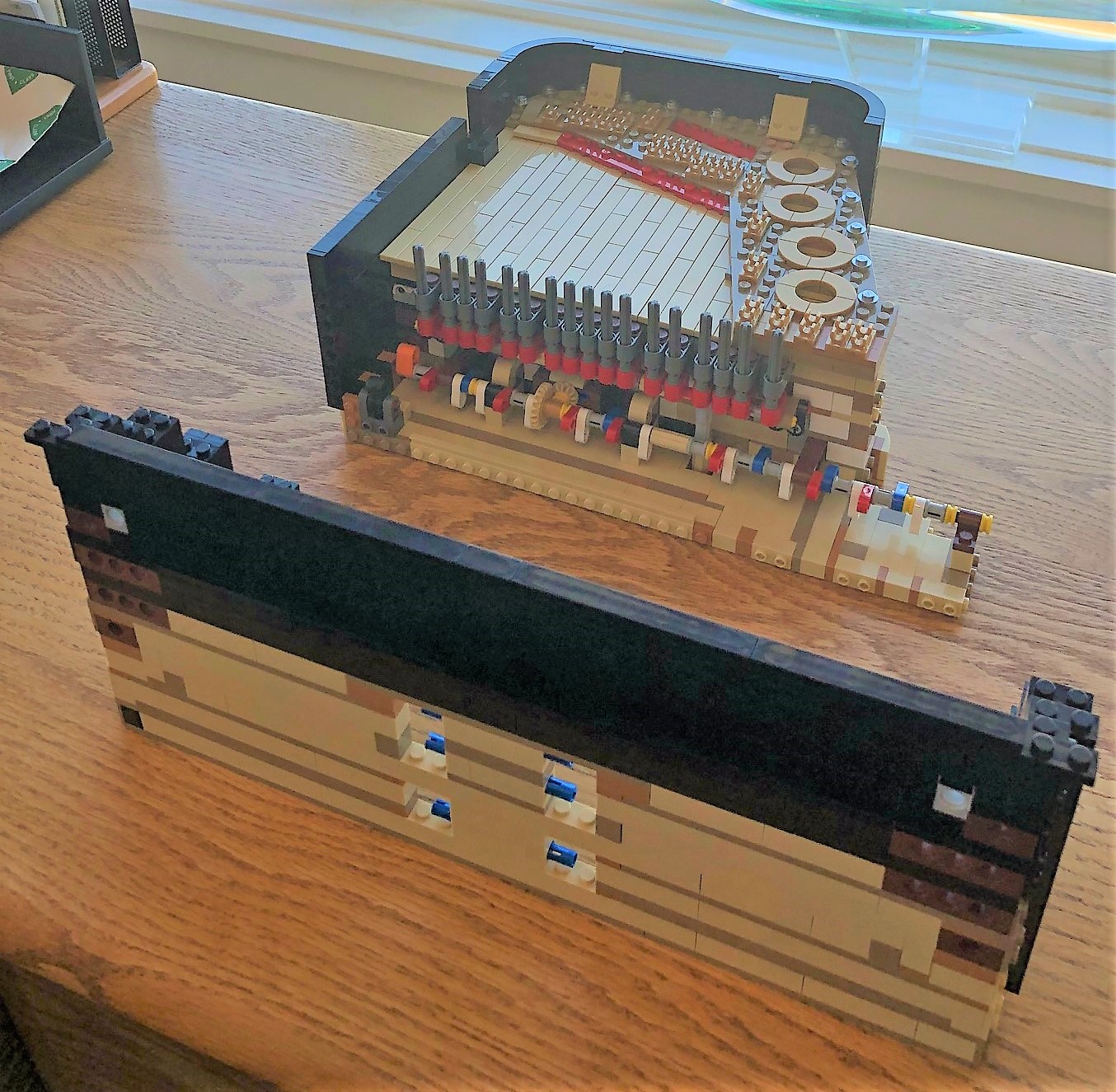
Our instrument really came together this week, as you’ll see in the second photo. Bag #8 – of 21 bags of pieces – not only connected both large pieces, but also added strings!  We now have enough of the black frame in place to where our little gem is finally starting to look like a piano.

I went with Haydn’s “Surprise Symphony” today because I completed this section in the early morning hours and needed the famous jolt the orchestra gives you at the end of an otherwise piano movement. (Yes, “piano” can be an adjective).  Haydn was famous for these little “jokes”, placed randomly the middle of his compositions.

This week

Running Build Time: 6.75 hours.  Musical accompaniment: Haydn’s Symphony No. 94 in G Major. Leftover pieces: 4 (including a couple of piano strings).

Conductor’s Note: We’re getting very close to boxing in the complex mechanics of the instrument… and I’m nervous.  We have a couple “loose ends” in there which must somehow attach so they’ll do something productive (like make music).  Hoping next week’s Bag #9 addresses this concern.