Mom-and-Pop Music

Flip through the chapters of my life and you’ll find a bookmark at 1975. It was the year I became a teenager. It was the year I started middle school. But most importantly, 1975 was my first foray into Top 40 music. In those days, punk, funk, disco, and metal were just getting started; all too progressive for a kid taking his first dip into the pool of radio rock. Instead, my preference was to chew on something a little sweeter. Like bubble gum.

In the 1970s, I was way too young to witness the birth of rock and roll.  I also missed the advent of pop music.  But I was right on time for a musical genre known as bubblegum.  Bubblegum siphoned off pop music’s more catchy, upbeat tunes and marketed them to children and adolescents.  And what better way to market theses songs than kid TV?  Anyone who ever watched The Partridge Family, The Monkees, or the cartoon rock of The Archies on Saturday mornings enjoyed bubblegum music.

As for 1970s Top 40, it’s easy to look back on those weekly lists and find bubblegum.  “Love Will Keep Us Together” (Captain & Tennille), “Laughter In The Rain” (Neil Sedaka), and “He Don’t Love You, Like I Love You” (Tony Orlando and Dawn) are just a few examples from fifty years ago.  Like most things back then, music was more innocent.

Having said that, bubblegum wasn’t even specific enough to define my own tastes.  The industry standard Billboard Magazine generates a Hot 100 list at the end of every year based on sales and radio plays.  It’s fun to go through the 1975 list and recognize just about every song.  But I was looking for three names in particular and – no surprise – all of them made the list with multiple entries.  Hello again, John, Olivia, and Barry.

John Denver was only 53 when he was tragically killed piloting a single-engine plane above California’s Monterey Bay, yet he managed to create over twenty-five years of gentle hits before that.  When I first heard his voice he’d already landed top-ten’s like “Leaving on a Jet Plane” (from the movie Armageddon for you younger readers), “Take Me Home, Country Roads”, and “Rocky Mountain High”.  One of Denver’s biggest hits, “Annie’s Song”, was a love song to his first wife.  Another, “Calypso”, paid tribute to the late ocean explorer Jacques Cousteau.  I purchased most of Denver’s albums (cassette tapes!) with a good chunk of my meager teenage savings.

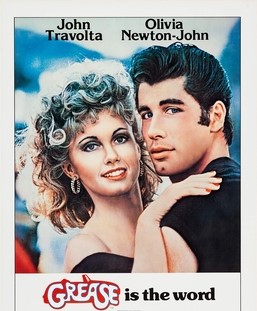
I was an Olivia Newton-John fan well before 1978’s Grease became a Hollywood phenomenon.  Newton-John and her sweet Australian accent were an instant teenage crush, with songs like “If You Love Me, Let Me Know”, “Have You Never Been Mellow”, and “I Honestly Love You”.  Then Grease came along and good-girl-turned-bad Olivia turned my teenage heat up several notches.  A testament to Newton-John’s popularity came in the form of 100 million records sold, fifteen top-ten singles, and four Grammy awards.  To this day, the soundtrack to Grease remains one of the world’s best-selling albums.
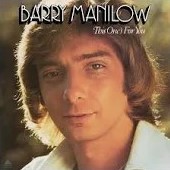
Barry Manilow and his music are more of a confession than the two we’ve already visited with.  It wasn’t at all cool to admit to liking Manilow’s “adult contemporary” music back then.  His hits were better suited for your parents, like “Mandy”, “This One’s For You”, and “Even Now”.  “Copacabana” was a dance number you couldn’t get out of your head.  “I Write the Songs” spoke to my inner-musician wannabe.  Manilow’s talents on the keyboard certainly captured my attention as I pursued the piano myself.  Unlike Denver and Newton-John, I purchased every Barry Manilow album as soon as it hit the shelves.  Somewhere in my attic I still have a boxed CD collection of his best work.

Like him or not, what is remarkable about Manilow is his enduring popularity.  He has been ensconced in Las Vegas for years now.  He just completed his 600th performance at Westgate’s Resort & Casino (an achievement which prompted this post), breaking a record held by Elvis Presley.  The one time I saw him in concert – at an outdoor venue in the Bay Area – I knew every song he performed.  Sure, almost all of his audience members are now graying at the temples, and his popular music is from five decades ago (!) but you still have to give him props.  The man has staying power.
Do I still listen to John, Olivia, or Barry?  No, but I can sing entire songs from memory.  There’s nothing like the music of those three to take me back to my teenage years.  Call it adult contemporary if you want, but this guy will always think of it as “Pop” music.

Some content sourced from The Atlantic article, “It’s Okay to Like Barry Manilow”, and Wikipedia, “the free encyclopedia”.

Map-Sap Goodness

A few months ago, authorities in New Zealand wrapped up a five-month sting where they confiscated the largest import of methamphetamine in the country’s history. Millions of dollars of the liquid stimulant were discovered in, of all places, a shipment of maple syrup jugs. Agents swapped out the drugs with water and let the jugs continue to Australia, where the recipients were quickly apprehended. Did this story captivate me?  Why yes it did, but not because of a million-dollar drug bust. I pretty much stopped reading at jugs of maple syrup.

With all due respect to fruit, I think maple syrup is the better example of “nature’s candy”.  After all, it’s essentially organic liquid sugar.  If you have the tree, the tools and the time (a lot of time), you can tap your own supply.  Simply drill a hole into the trunk of your sugar maple tree, hang a bucket below the opening, and let the goodness s-l-o-w-l-y flow.  After you’ve collected what you need, boil off the water, filter off the crystallized sugar, and your pancakes or waffles are set to be topped.

Sugar maple

If you prefer a more solid sweet, make snow candy like Little House on the Prairie’s Laura Ingalls did back in the day.  Pour boiling maple syrup into short lines on a fresh bed of snow.  Press Popsicle sticks into the lines.  Then roll the cooling syrup around the sticks and voila! – a sweet handheld-treat.  Last Saturday’s arrival of the fall season makes this confection seem extra appealing.

My very favorite doughnuts are maple bars

In the U.S., “real” maple syrup is not so common anymore.  Years ago at my childhood breakfasts I was already consuming imitators like Log Cabin, Mrs. Butterworth’s, or Aunt Jemima (more recently known as “Pearl Milling Company”).  These brands and countless others are known as “table syrups”, made from corn syrup and chemicals instead of anything found in a tree.  They can’t even use the word “maple” in their names because of a consumer protection law known as the Pure Food and Drug Act.

Maple sugar

Enough about the impersonators.  Maple syrup’s rich flavor and density should be the preference to table syrup’s as long as a) Your taste buds can be reeducated, and b) you’re willing to spend a few more pennies.  And maple syrup is just a step removed from some distinctive treats.  Maple sugar candy is compacted maple sugar formed into small squares or maple leaves (delicious!)  Maple taffy is what you get if you boil maple syrup past its liquid form.  And for the truly obsessed (me), you’ll also find maple versions of toffee, butter, and liqueurs.

Treacle tart

Let’s take a paragraph for a confection of honorable mention.  Ever heard of a treacle tart?  Yes you have, if you know the timeless children’s classic Chitty Chitty Bang Bang.  In the story, the evil Child Catcher in the fictional village of Vulgaria tempts young Jeremy and Jemima Potts with ice cream, candy, and treacle tarts (“and all for free!”)  Those tarts are small pastries filled with maple syrup, breadcrumbs, and a splash of lemon juice, served warm with a cream topping.  Yum.  Catch me if you can, Child Catcher.

If you know your flags, you can guess which country produces most of the world’s maple syrup.  Canada accounts for fully 80%, with most of the sweet stuff coming from the province of Quebec.  Vermont’s production is similarly dominant compared to other U.S. states.  Both locales are northern climates, where sugar maple trees thrive in the cold winters.  So as much as I’d like to channel my inner L.L. Bean by planting a maple tree and drilling a hole, donned in flannel shirt and snow boots, it’s never going to happen here in hot-and-humid South Carolina.  Guess I’ll have to settle for a store-bought jug of nature’s candy instead.

Some content sourced from the Deutsche Welle (DW) article, “Authorities find drugs worth millions hidden in maple syrup”, and Wikipedia, “the free encyclopedia”.

Living On The Edge

The state line between South Carolina (SC) and Georgia (GA) follows the twists and turns of the Savannah River. You know you’re heading into one state or the other whenever you cross the water. Driving from our part of South Carolina into nearby Augusta, GA is interesting. The interstate loops Augusta by starting in SC, touches a bit of GA, goes back to SC for a few miles, then continues into GA again as it follows the river. It’s an example of my life on the edge.

In California, W means “water”

Growing up on the coast of California, it never occurred to me the geography of my younger days was limited to only three of the four cardinal directions.  If I headed north I’d leave the urban stretches of Los Angeles for the more rural towns of the the central coast.  Head south and I’d parallel the beaches all the way to San Diego.  The only thing east of the city seemed to be the endless Mojave Desert.  As for the last of the four directions?  Not an option, at least not without a boat, plane, or a whole lot of swimming.  Horace Greeley would’ve never told me to “Go West, young man”.

South Bend sits where the yellow and red come together at the very top of Indiana.

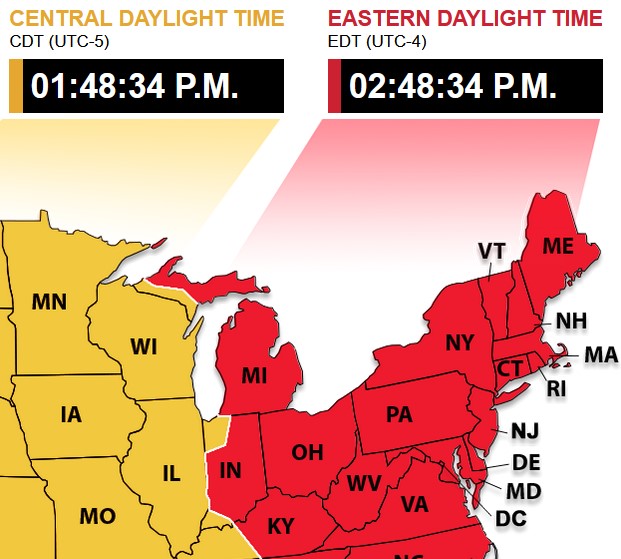
In my college years in South Bend, IN, I was a fifteen-minute drive from the line where the Central and Eastern time zones meet.  Back then you didn’t touch your clock for Daylight Savings, so half the year you were the same time as Detroit while the other half you were Chicago.  It was confusing, but not as confusing as someone who lived on one side of the line and worked on the other.  Imagine leaving the house at 8:00am, driving an hour, and arriving at the office at… 8:00am?  It’s a neat trick, pulled off by a lot of those who live on the edge of a time zone.

Raising our kids in Colorado Springs, we always knew which direction we were heading because the line of the Rocky Mountains lay immediately to the west.  Those peaks rose up like the Great Wall of China, just daring you to push through.  Sure, we drove the interstates into the Rockies for skiing, hiking, and such, but day-to-day we were down at the base, literally living on the edge.  Like California, we had one less cardinal direction at our disposal.

Grays Peak, on Colorado’s Continental Divide

The Rockies conceal another important edge, known as the Continental Divide.  The Divide is elevated terrain separating neighboring drainage basins.  Plain English?  The north-south line from which water flows either west to the Pacific Ocean or east to the Atlantic.  I always wanted to stop somewhere flat on the Divide and pour out a bottle of water.  Let’s see if it really flows both ways from the line, right?  It’s an experiment that to this day remains unconducted.

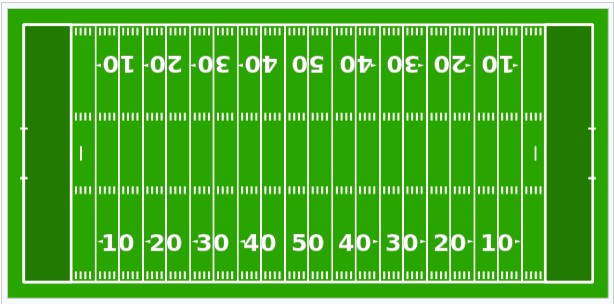
Football is a game of lines and edges

Football, one of my favorite spectator sports, is all about lines and edges.  One team faces the other, on an imaginary line defined by where the referee places the ball.  Cross that line before the ball is snapped and you’ll be flagged with a penalty.  Advance the ball ten yards past that line – to another imaginary line – and your team is awarded more play.  The sidelines of the field might as well drop off to a bottomless void.  Catching a pass outside of that edge is not allowed.  Running the ball outside of that edge brings the game to a halt.  But catching or running across the lines at end of the field?  That rewards you with a score.

$50 gets you a spot on “The Edge” sky deck

For all this living and playing on thresholds, maybe I should visit one of New York City’s newest high-rise attractions.  One hundred floors above the sidewalk, The Edge is billed as “the highest outdoor sky deck in the Western Hemisphere”.  Jutting out from its host building, The Edge allows unparalleled views of the city below, because the surrounding walls are solid glass, as is a portion of the deck floor itself (yikes!) If Spider-Man is your thing, you can go even higher by scaling the outside of the remaining floors of the skyscraper.  I have to say, this sort of thing draws a “fine line” between entertainment and, well, insanity.

I won’t be going to The Edge… ever.  I’m not good with heights, so anything above a pedestrian Ferris Wheel just isn’t my cup of tea.  Nope, leave me behind, comfortably grounded, where crossing the Savannah River from one state to another is plenty adventurous.  That’s my definition of life on the edge.

Some content sourced from Wikipedia, “the free encyclopedia”.

Tuesday’s Child

Passing through another anniversary of the events of 9/11 this week, I was touched by a YouTube short of U.S. Marines demonstrating the proper method of folding the American flag. The video includes gentle background music but no words, lending reverence to the ceremony. Folding the Stars and Stripes the right way is not only a nod of respect to our nation’s banner, but also an example of (flag) etiquette.
 
One of my favorite memories of my late mother was her ability to gently but effectively prod her sons to behave properly.  She would sometimes say quietly, “Mind your manners”, which meant two things.  One, something in our current behavior wasn’t in sync with how she raised us; and two, we would get a talking to later.  “Please” and “thank you” barely scratched the surface of how my brothers and I were expected to carry ourselves back then.
 
I’ve always thought of manners and etiquette as one in the same, but the former is a subset of the latter.  Etiquette is “the set of norms of personal behavior in polite society”, while manners are simply behaviors deemed “good” or “bad”.  An example of both is the way we drive our cars.  We’re taught the rules of the road, also known as “driving etiquette”.  But when we blatantly ignore those rules by, say, refusing to let a car merge onto the interstate in front of us, we’re letting bad manners get the better of etiquette.
 
Manners always remind me of a book my grandparents encouraged us to read whenever we visited: Gelette Burgess’ 1903 classic The Goops (and How To Be Them).  Here’s an example of Goop behavior in Burgess’ poetry, simply titled “In Table”:
 
Why is it Goops must always wish
To touch each apple on the dish?
Why do they never neatly fold
Their napkins until they are told?
 
Why do they play with food, and bite
Such awful mouthfuls?  Is it right?
Why do they tilt back in their chairs?
Because they’re Goops!  So no one cares!
 
My mother probably labeled us Goops at one time or another, because my brothers and I were all about fingering our food or talking with food in our mouths or rocking back in our chairs.  It’s a wonder we developed any manners at all.  Maybe it’s because our mother’s parenting was fueled by a finishing school of sorts: her college sorority, where a premium was placed on etiquette.
 
Alpin Videmanette
Finishing schools, designed to “teach young women social graces as preparation for entry into society”, are something of an outdated concept now, at least in America.  You can still find a few “charm schools” in Europe, such as Switzerland’s prestigious Institut Alpin Videmanette – (whose teenage graduates included Lady Diana Spencer).  The Institut teaches young women to cook, make dresses, speak French, and even ski, but at its core, the curriculum is an education in etiquette.
 
Emily Post

The undisputed authority on etiquette, Emily Post, wrote several books and newspaper columns on the topic.  In the America of her lifetime (1872-1960) Post’s first etiquette book became a bestseller because it catered to “the country’s exotic mix of immigrants… eager to fit in with the establishment”.  I suggest most of Post’s etiquette is as relevant today as it was back then… and a lot of us could use an extensive refresher.

Always pass them together!
Besides the Goops, etiquette reminds me of an old poem teaching children the days of the week. “Monday’s Child” goes like this:
 
Monday’s child is fair of face,
Tuesday’s child is full of grace,
Wednesday’s child is full of woe,
Thursday’s child has far to go,
Friday’s child is loving and giving,
Saturday’s child works hard for a living,
And the child that is born on the Sabbath day, Is bonny and blithe, and good and gay.
 
Google tells me I was born on a Monday.  Darn it, so close.  If I was Tuesday’s Child I’d be defined as “… agreeable, refined, and polite in manner or behavior.”  In other words, demonstrating a solid understanding of etiquette.
 
The next time you’re standing on an escalator, step to the right to let those in a hurry pass by.  The next time you play golf, stay out of the line of sight when your opponent putts.  The next time you’re at the movies, don’t utter a word until the final credits roll.  And the next time you fold the flag, do it the way the Marines do. After all, you’d rather be credited with following the rules of etiquette than perceived as having bad manners.
 

Some content sourced from Wikipedia, “the free encyclopedia”.

Day (After Day) Drinking

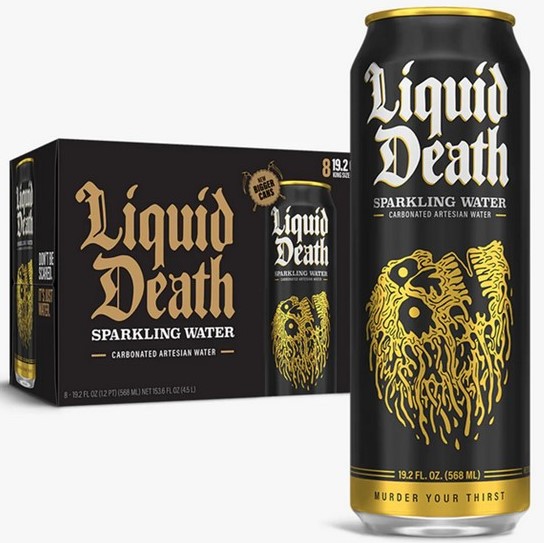
In the refrigerator of the beach house where my family and I vacation every summer, you’ll find an extensive collection of aging condiments. With different people in the house almost every week, the mustards, ketchups, salsas and spreads breed at an alarming rate. And the beverages aren’t far behind. Forage past the wine and beer bottles and you encounter all sorts of curious cans and contents. One in particular tempted me this time around but I couldn’t muster the courage to take a sip. I mean, would you try something called “Liquid Death”?

If you’re already familiar with Liquid Death, you know the joke’s on me.  Liquid Death (“Murder Your Thirst!”) is nothing but drinking water, carefully sourced, packaged in a can covered with horror-movie graphics.  The company believes their distinctive can means a) one less plastic bottle into landfill and b) one more serving of water into you (instead of something less healthy).  Liquid Death also cans flavored sparkling waters and iced teas, and – no joke – invites you to sell your soul to the company.  The company’s sales are no joke either – $130 million last year alone.

Liquid Death is one of countless examples of “packaged water” available to consumers these days.  Since 2017, Americans are quaffing more bottled water than any other drink.  86% of us purchase water regularly, in addition to the H2O we drink from our faucets.  Why?  Because we’re waking up to the downsides of the sugar/chemical concoction known as the “soft drink”.  We’re also subscribing to the belief we’re healthier if we drink more water.  Finally, single/double/triple-serving containers appeal to us because we’ve already become so conditioned to them, thanks to… Starbucks.

Here’s a story to prove the statistics hold water.  At a volleyball tournament in Atlanta last weekend, I ventured to the nearby snack stand to buy a drink.  The cashier invited me to fish around in his giant coolers for whatever I wanted.  What I wanted was water, but all I could find were dozens of neglected bottles of soft drinks, “sports drinks”, and energy drinks.  So I asked the cashier, “What, no water?”, to which he replied, “Oh, we sold out of the waters hours ago”.

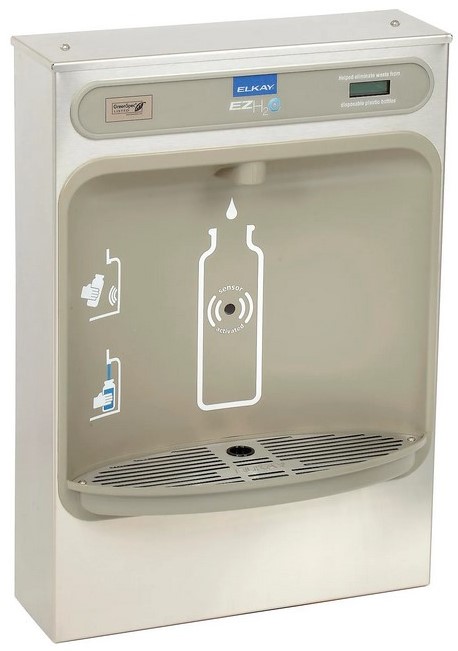
The new “drinking fountain”

Then I went in search of a drinking fountain and couldn’t find one in the entire arena.  Drinking fountains are quickly going the way of pay phones.  In their places: dispensers designed to fill your personal bottle.  I’m on board with this trend, especially because it reduces the use of plastic.  But don’t forget your water bottle like I did or you’ll be forced to settle for one of those more colorful concoctions.

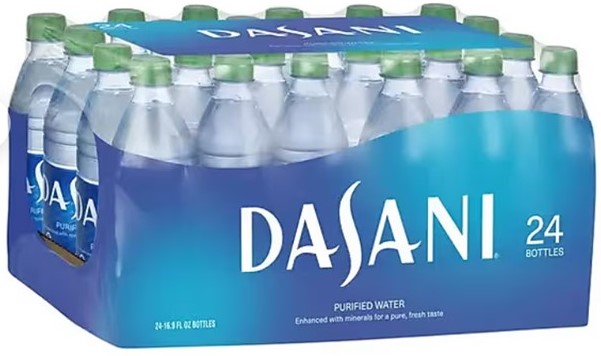
Lest you think otherwise, the bottled waters dominating the marketplace are brought to you by the same companies behind soft drinks.  Accordingly, Dasani = Coca-Cola, Aquafina = PepsiCo, and Poland Spring = Nestlé.  On the other hand, Arrowhead is only Arrowhead water, as is Evian’s natural spring variety (and whether “Evian” is intentionally “naive” spelled backwards is for you to decide).

We’ve taken water one step further now.  Into our personal water bottles, tumblers, and jugs we add “flavor enhancers”, designed to a) give us more of what we lack (ex. electrolytes) or b) encourage us to drink more water by adding flavor.  Crystal Light and Gatorade set this tone years ago.  Today we choose from a dizzying array of powders, drops, and tablets, all designed to make water more appealing.  But if we’re thirsty, shouldn’t water be appealing enough just the way it is?

A final sip of this subject.  The average person has thirty-five “beverage occasions” a week.  With each occasion you choose the container, contents, and quantity of whatever you’re going to drink.  So even if your every day begins with a “Venti half-soy nonfat decaf latte” and ends with a fruit-forward, moderately dry Cabernet Sauvignon, you still have twenty-one other occasions for a tall drink of water.  Liquid Death, anyone?

(Not far from) Madding Crowds

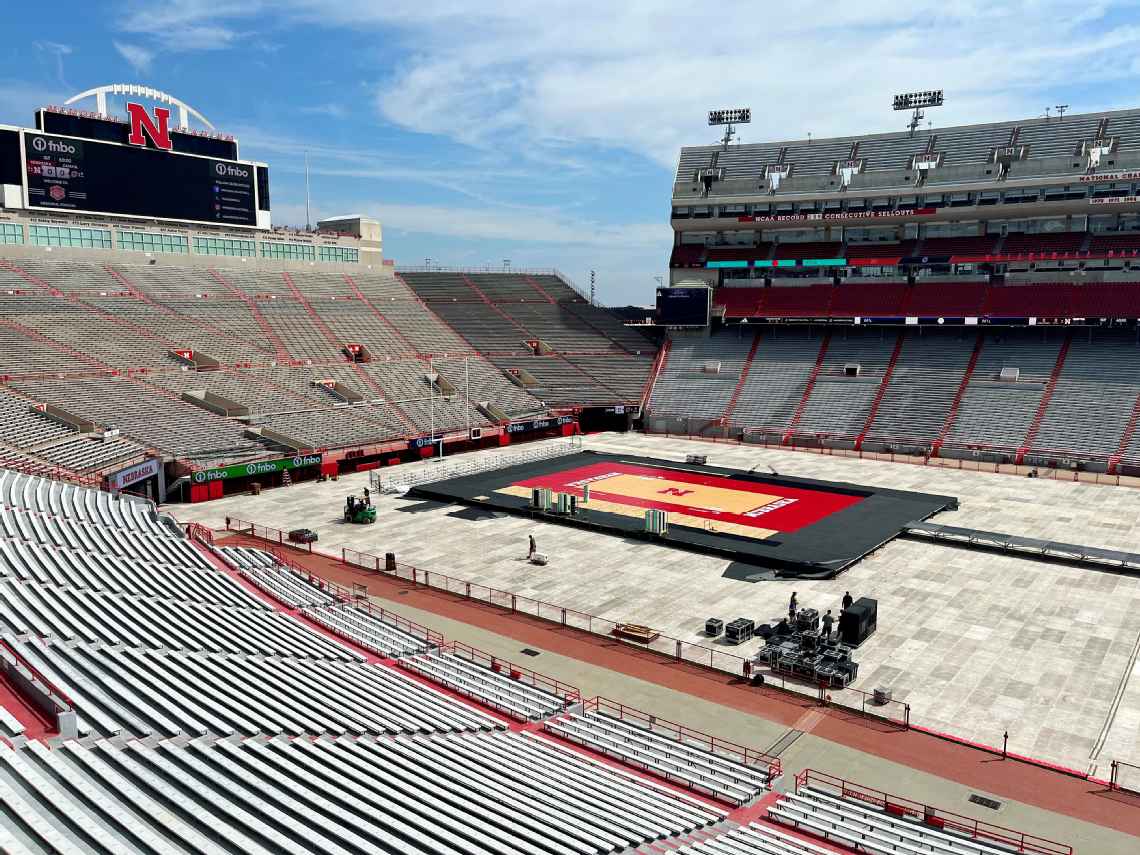
Last night, the University of Nebraska women’s volleyball team played the fourth match of their 2023 campaign. College volleyball doesn’t get much coverage sharing seasons with (American) football, but this match made the sports headlines for several reasons. One, it was played outdoors. Two, it was played in Nebraska’s massive Memorial Stadium (normally a football venue). And three – most notably – the Huskers brought home the straight-sets win in front of 90,000 riotous fans… at $25 a ticket.

Volleyball instead of football

I know what you’re thinking.  How do you get 90,000 people to cough up $25 for a college volleyball match?  Well, it helps to throw in a country music concert for starters.  Then add a second match to double the volleyball (Nebraska-Kearney vs. Wayne State).  Finally, most importantly, let fans know they just might break the regular-season attendance record for a women’s volleyball match… the same attendance record that volleyball rival Wisconsin stole from Nebraska just last season.

Memorial Stadium on any given Saturday

It fascinates me to read about sports competitions played in front of massive sold-out stadiums, weekend after weekend.  Nebraska has filled those same 90,000 seats for every Husker football game for the past sixty years (making the venue the “third-largest city in Nebraska” for several hours each Saturday).  Michigan’s Wolverines compete in the largest college stadium in America – 108,000 seats – with every seat taken more often than not.  And like Nebraska’s volleyball match last night, my fascination is not just with the number of fans but also with how much they’re willing to pay.  I’m in the market for tickets for my beloved Notre Dame; the football team headed to nearby Clemson later this season.  Unless I’m looking for a nosebleed I’ll be paying north of $450 no matter where I sit.

My weekends are busy so I’m lucky to watch a football game on TV, let alone attend one in person.  Yet every Saturday (and Sunday with the NFL) you have tens of thousands of fans gladly opening their wallets and purses to do just that.  It’s a loud, colorful thread (rope?) in the fabric of American society.

Denver’s “Coors Field”

Major League Baseball (MLB), with an average of 45,000 seats per stadium, is even more confounding to me.  In an endless spring-summer season of 162 games, half are played at the team’s home stadium.  The majority of those seats are taken by season ticket-holders.  With an average ticket price of $36 you’re handing over $3,000 for the season before you’ve even seen the first game.  Besides, who has the time to watch so many baseball games (mostly at night)?  Do what my friends back in Colorado do: split the season ticket in half with another fan and sell most of the tickets to family and friends.  You’ll make a small profit and still go to as many baseball games as you can stomach.

My appetite for baseball games is about two a season; that’s it.  Frankly I enjoy sitting outside in the summer air beside a friend as much as I do the game itself.  Otherwise, keep me far from those madding crowds.  The investment of time, money, effort (and sometimes hassle) to watch a game in person is almost always won over by the convenience, commentary, and cameras of television.

San Diego’s “Rady Shell at Jacobs Park”

Of course, this is sports we’re talking about.  If the topic was music and concerts, my post would take on a decidedly different “tone” (heh).  Tempt me with a chart-topper from the 1980s – Billy Joel comes to mind – and I’d give up the time and money to see a live performance.  Even better, dangle classical concert tickets in front of me, such as the San Diego Symphony at its cozy waterfront bandshell, or a summer concert in the outdoor gardens of Vienna’s Schönbrunn Palace (see below video).  Classical concert crowds are not nearly as madding as those for sports.

Nebraska is a five-time national volleyball champion

About that regular-season attendance record for a women’s volleyball match.  Wisconsin set the bar with an impressive 16,833 fans last season by filling its basketball arena.  Nebraska’s official tally last night was 92,003 fans… more than five times as many (on a Wednesday night, no less).  Way to crush those rival Badgers, Husker Nation.  That’s what I call a madding crowd.

Some content sourced from the ESPN article, “How Nebraska volleyball plans to pack Memorial Stadium”, and Wikipedia, “the free encyclopedia”.

Concourses or Golf Courses?

Whenever flying is a part of my travel plans, I wear my most comfortable pair of walking shoes. Long gone are the days of the coat-and-tie-to-fly dress code, in favor of sneakers (and jeans). My reason for rubber-soled kicks used to be, “What if we’re in some kind of accident and I need to get off in a hurry?” Today I go with a wholly different reason. The long, long walk I can expect from curb to concourse to airplane cabin simply demands something easy on the feet.

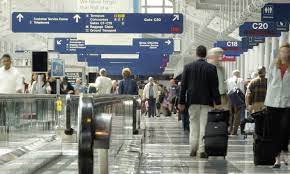
Here’s a startling comparison.  If you play golf and skip the cart, you’re going to walk over four miles to finish your round.  By almost the same token, if you’re connecting through Dallas-Ft. Worth or Atlanta and choose to walk from Terminal B to Terminal E, you’re going to walk over two miles.  Add in the inevitable search for food, a stop or two at retail, and a visit to the restroom and you’re closer to three miles.  And none of that includes the distance from the curb to the ticket counter, from the counter through security, and from your gate down the jetway to your seat on the plane.

How do they do it in heels?

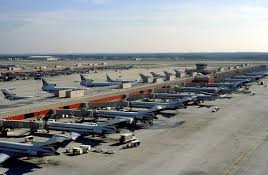
Now for the bad news.  Airports are only getting bigger, and not for the reasons you might think.  Sure, more people fly than ever before, which adds more planes, more gates, and even more airports.  But behind the scenes a couple of stronger forces are at work.  One, airlines are shifting to larger aircraft, which translates to more space between parked planes.  Two, airport parking revenue is down (thanks to Uber, Lyft, and more mass transit), which translates to the airport’s need to find revenue elsewhere.  Where?  Retail, bars, and restaurants.

Don’t get used to these…

From recent trips through airports, I’ve noticed the following.  In Denver International, remodeled Concourse B is already labeled “Gates 1-100”, even though there aren’t a hundred gates.  It’s a straight-line concourse and it’s only going to get longer.  In Atlanta’s Hartsfield-Jackson, the concourses are so long and narrow (and so crowded), that last gate is farther than you can see without binoculars.  And in San Diego’s Lindbergh Field, when you’re processed into Terminal 2 from security, you can’t see a single gate, because you have to pass through a veritable shopping mall first.

In the ultimate insult to long walks to planes, some airports have left the moving walkways out of their concourse remodels.  Those walkways discourage you from passing directly in front of the food and retail the airport so desperately needs you to patronize.  And intentional or not, the airlines encourage these purchases by offering less food onboard.  You, weary traveler, are a captive audience to more than one performer.

I prefer this kind of walk

Let’s not forget the rental cars.  Avis’s slogan is “We try harder”.  Maybe it should be, “We try harder… to take more of your money“.  I just reviewed my receipt from a recent San Diego rental for a full-size standard Kia sedan.  Right there below the actual daily rate: “11.11% Concession Recovery Fee”; essentially the cost of doing business at the airport.  Add in Vehicle License Recoup fee, Customer Facility Charge (another airport fee), California Tourism Fee, and a final flourish of “tax”, and the rate increased by 32%.  All so I can walk further to get to my rental car?

An early chapter of my career was in airport planning.  We’re the people who figure out how to get the planes from the runways to the taxiways to the gates without hitting each other.  We also design the terminal buildings to include enough gates, concessions and restrooms (yeah, yeah, bring on the heat with that last item).  Concourse design used to be “spoke and hub”, meaning you walked down the spoke to a circular boarding hub of several gates.  It made the airplane taxiing a little trickier outside, but it significantly reduced a passenger’s walk to the gate.  Today, airports no longer favor the design (er, traveler) because it reduces the square footage for concessions.

For those of you who live and die by your 10,000 steps, take heart; airports are helping you accomplish your daily goal.  Phoenix Sky Harbor even disguised the long walk through the concourses by calling it a “Fitness Trail”.  Be sure to allow enough time to get in a (seriously overpriced) shopping trip at all those concessions.  But don’t forget, the airlines only allow one reasonably sized carry-on these days.  Any others will cost you a checked bag fee… because the airport isn’t making enough money already.

Some content sourced from the CNN Business article, “Why you have to walk so far to your gate at the airport”, and Wikipedia, “the free encyclopedia”.

The Times of Sand

I’ve often thought the airport is the best place to people-watch. With downtime while you wait for your flight and the close proximity to others, it’s inevitable you’re going to look around. Every kind of person can be found at the airport (sporting every size, shape, fashion statement, stress level, and age). Travelers are unknowingly entertaining to those who watch them. But today let’s explore perhaps an even better venue where people do their thing: the beach.

As I type today, a sweeping look at the sandy shore beyond my patio shows me (in no particular order): A mother and daughter in animated conversation with a lifeguard; a group of teenagers (male) playing an aggressive form of beach four-square called Spikeball; another group of teenagers (female) sprawled on beach towels in giggly conversation; a father dragging his young son through the shallow waves on a boogie-board; a surfer wiping out in the not-so-shallow waves further out; and an ambitious child shoveling dirt out of a divot of sand as if digging to China.

I look away for a second and then look again: A pack of aggressive seagulls pecking away at someone’s leftovers aside their abandoned beach chair; that same lifeguard sprinting into the water to rescue a struggling swimmer; an older couple having a (clearly) not-so-happy conversation at the water’s edge; a jogger attempting to put in the miles while dodging the less active in his way; and a paused beach volleyball game where the players can’t determine if the ball hit the (sand) line or not.

It’s a rare treat when I can create a blog post from the goings-on on right in front of me, but the beach allows me to do just that.  More to today’s point, an active beach like this one changes character throughout the day.  In other words, there are the sands of time and then there are the times of sand:

  • Dawn: Seagulls, sand, and surf.  The beach at its most peaceful and pristine.
  • Early morning: Serious runners at the shore (unlike the casual joggers later in the day); an Asian elder performing a standing form of meditative yoga; a surf camp for pre-teens to the north; a lifeguard training camp for teens to the south; a pickup truck clearing the trash from the evenly-spaced cans.
  • Mid-morning: The gradual arrival of the masses (and all they bring with them).  Also the arrival of the lifeguards, with bright cones marking the “no-man’s land” for emergency vehicles, flags indicating the adjacent street number so people know where to find you, and more flags to mark the beach’s “surf zone” versus “swim zone”.
  • Midday: Everything I observed at the start of this post (and so much more).
  • Mid-afternoon: The gradual departure of the masses, and (hopefully) all they brought with them.  Also the departure of the lifeguards, signing off with a megaphone farewell to those who remain behind.
  • Early evening: The ritual of the sun-worshippers, who simply must remain behind to witness the (West Coast) sunset.  There’s nothing like a setting sun to bring a person to a focused standstill.
  • Dark: An umbrella of stars, a rhythmic ribbon of white foam as the waves crash to shore, and an occasional party of two out for a romantic stroll at the water’s edge.

Trust me, it’s easy to be mesmerized by the times of sand if you watch them long enough.  They’re the reason I never make progress with my latest “summer read”, and the reason I can abandon my electronic devices for hours at a time.  Frankly, it’s a wonder I was able to turn away from the sands long enough to bring you this blog post today.

Solitary Singles

A recent study of lifestyles determined the eight healthy habits that can add the most years to a human life. It’s a list of what to do (four) and what not to do (another four) to live longer. All eight are fairly commonsense, but one in particular stood out to me: Surround yourself with positive social relationships.  You’ll increase your chances of a longer life by five percent, and you won’t be able to claim COVID-y words like “lonely” and “isolated”.

Let’s not make this a sad blog post, okay?  I could spend the rest of my paragraphs talking about loneliness and isolation, but why bother when so many musicians have already done so before me?  “Lonely” songs go back decades.  In 1960, one of the biggest solitary singles was Roy Orbison’s Only The Lonely.  The same year, Elvis released Are You Lonesome Tonight?  And anybody who remembers the Beatles’ Eleanor Rigby (1966) knows Eleanor’s story is all about loneliness.

The 1960s is a little too far back for my purposes.  I’d rather focus on two more recent songs you know (from popular re-recordings) and another one you might know.  One thing’s for sure; all three play in my brain now and again, but especially when I’m “Alone” or “All by Myself”.

Alone

The power ballad made famous by Heart (and then Celine Dion) is not so much about being alone but about wanting to be with a particular someone else… but not being able to.  “Alone’s” lyrics voice the frustration of a romantic longing.  It’s more about how do I get you alone than actually being alone.  There’s even this suggestion of before versus after: Till now I always got by on my own.  But the song’s final lines – nothing but repeating, wailing, unsatisfied “alones” – gets me every time.  Heart’s version of “Alone” spent three weeks at #1 on the U.S. Billboard Hot 100 and still makes an occasional appearance on the radio.

All by Myself

Even though this was another Celine Dion’s hit (what’s with all the loneliness, Celine?), no one who lived through the 1970s would ever take “All by Myself” away from Eric Carmen.  The song hit #2 on Billboard’s Top 100 and sold more than a million copies (back when listeners actually purchased music).  “All by Myself” is also categorized as a power ballad; “a style of music that often deals with romantic or intimate relationships… usually in a solemn but poignant manner”.  The second verse is a good example:

Livin’ alone
I think of all the friends I’ve known
But when I dial the telephone
Nobody’s home

Like “Alone”, there’s no happy ending to “All by Myself”. In fact, the lyrics are disconsolate from start to finish (yet somehow they work).  Also, trivia buffs, you’ll hear the song’s melody in the second movement of Sergei Rachmaninoff’s classical Piano Concerto No. 2 in C minor, which is odd but intentional.

Alone Again (Naturally)

I find it fascinating when a song sounds happy but really isn’t.  Maybe that’s why Gilbert O’Sullivan’s “Alone Again (Naturally)” has stayed with me all these years.  It’s easily the “loneliest” song of the three I cover today, and seems to take pride in being so from start to finish.  “Alone Again” manages to pack suicide, being left at the altar, wondering if there’s a God, and losing one’s parents into a single set of lyrics, layered on top of a merry duet of piano and guitar.  The song spent six weeks at #1 on the U.S. Billboard Top 100 and was re-recorded by several others, including two American Neils (Diamond and Sedaka).  But it’s Irishman O’Sullivan’s rendition I’ll always hear in my head.

Regarding those healthy habits I mentioned earlier, I think my report card’s looking pretty good.  So good in fact, I can enjoy these chart-topping “lonely” songs without getting down.  I hope you can do the same.

Some content sourced from the CNN article, “These 8 habits could add up to 24 years to your life, study says”, and Wikipedia, “the free encyclopedia”.
Rocket Men (and Women)

A year from today, we’ll all be glued to our televisions and tablets watching the Olympic Games in Paris. I will be glued, at least.  The Summer Games get me all fired up, especially the track and field events. Especially especially the field events. I mean, c’mon, you can watch running all year long, but how often do you get to see a javelin thrown, a discus tossed, or a shot “put”? (and how often do you even say “javelin” or “discus”?)  But one field event tops all others.  There’s simply nothing more gawky-entertaining than a human launched into space by a pole.

If you live in a two-story place with a fairly flat roof, it might be a little unnerving to learn Swedish-American pole vaulter Armand Duplantis can jump over your house.  While the rest of us have to walk around at ground level to get to your backyard, Armand will simply sprint up your front path, plant his pole in your rose bushes, launch himself past the bedroom windows and between the chimneys, and make a splash landing in your swimming pool.  Armand can do this because he can pole vault 20.4 feet, a world record he set last February.  It’s the fifth time this twenty-something has broken his own world record.

Duplantis

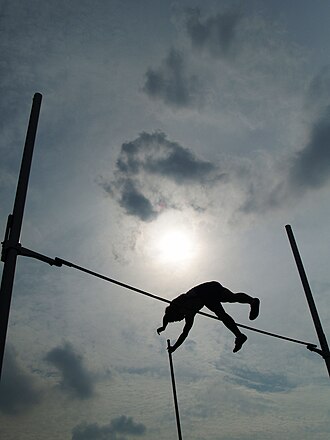
Pole vaulting is a truly bizarre sequence of movements constituting an Olympic event.  The vaulter balances a long fiberglass pole in one hand while sprinting down a rubber-surfaced runway. Just before running out of runway he or she raises the pole overhead with both hands, stabs the leading end into a boxed area on the ground, and pushes… hard.  The ensuing bend of the pole and a whole lot of momentum hoists the vaulter into the air, feet first.  With gymnastic flair, the vaulter then rotates his or her body around to be facing a high horizontal bar, just as gravity counters flight.  The final flop back to Earth (and onto a giant cushion) is typically punctuated with a mid-air fist pump if the bar is successfully cleared.

Armand doing what Armand does best

Imagine that exhilarating feeling when a pole vaulter is at peak height, pointing skyward, feet above body, pole released, practically cruising into the earth’s atmosphere.  As Elton John sings “… it’s gonna be a long, long time ’til touchdown brings me round again…”

Four Olympic field events involve jumping: 1) pole vault, 2) long jump, 3) high jump, and 4) triple jump (the ol’ “hop, skip, and jump”).  None of the last three hold my interest because they’re easy to do.  But not pole vaulting, not even close.  Launching my body even a few feet off the ground with a bendy pole?  Let’s just agree, I am no Rocket Man.

Pole vaulting brings to mind two questions (or three if you include Why in heaven’s name does anyone do this?).  First question: What happens if the pole breaks?  Seriously, sports equipment fails.  Golf clubs break in two with enough swings.  Tennis racket strings get loose.  At some point a pole vault pole will bend one too many times.  Yikes.  Second question: How does the pole translate horizontal energy into vertical energy?  It’s a physics problem akin to the catapult, but I’d have to go back to high school to solve it.  No thanks.

Leap of faith

The origin of pole vaulting is a bit of a letdown.  My too-many-movies imagination pictured a medieval war, with soldiers clearing castle walls on long pieces of bamboo.  Instead, pole vaulting is a rough translation of an old technique used to scale narrow natural obstacles, like watery marshes.  Get a running start, plant the pole, and sail from one side of the marsh to the other.  But those poles don’t bend, and nobody cares how high you go as long as you make it over.  So you see, even the origin of pole vaulting is gawky. 

The pole vaulting world record was eighteen feet in 1970.  Fifty years later it’s been pushed two feet higher.  Do the math; maybe we’ll be clearing one hundred feet by the year 2773.  But we’ll probably have flying cars by then as well, so any interest in humans launched by poles will be gone.  My advice: watch the Paris Games, especially the pole vault.  These rocket men and women won’t be around forever.

Some content sourced from the CNN article, “Olympic champion Armand Duplantis…”, and Wikipedia, “the free encyclopedia”.