
Hello, I’m Veronica
The sky is not completely dark at night. Were the sky absolutely dark, one would not be able to see the silhouette of an object against the sky.


-
Golden Thrones
Every now and then the local news sneaks in a headline to showcase our local taxes and fees at work. A swanky new visitor center is about to open on the top of nearby Pikes Peak (14,115′) at a cost of $66M. A 250-ft. pedestrian bridge ($18.7M) spans gracefully over downtown railroad tracks, connecting a public park to our new U.S. Olympic museum complex. Increased traffic between Colorado Springs and Denver demands eighteen miles of a new interstate toll lane ($350M).

Colorado Springs must be “flush” with tax dollars These efforts make sense and I’m happy to write the check, especially with the potential for revenue in return. But another project almost escaped my news feed and Mr. Mayor, I respectfully request a refund. We now have a fully-accessible fully-automated self-cleaning public toilet in a small park on the west side of town. Cost: $415,000. That’s a lot of loot for a little lavatory, no?
On the surface our golden throne sounds good enough to try out. It’s a touchless experience once you “ring the doorbell”. The restroom door opens/closes automatically with a sanitary-sounding hiss. Circulating air and classical music provide the white noise you need to mask unpleasant sounds. A bathroom “host” politely pipes in over the loudspeaker to let you know you have ten minutes to do your thing. After that – reason in itself to just go and watch from a distance – all doors open whether or not you’re buttoned up. Talk about getting caught with your pants down.
 Our city’s posh powder room comes from Exeloo (great name), an Australian company expanding its footprint into North America. Besides the fancy features mentioned above Exeloo toilets are self-cleaning, which means they spray down and disinfect their surfaces from wall-mounted nozzles every thirty uses or so. Makes me think the kitchens of Chinese restaurants could use the same treatment.
The (cheaper) Exeloo “Saturn” Learning more about Exeloo didn’t make me feel better about my tax dollars. That’s because our city purchased the fanciest model on the website. Exeloo offers six different “loos”, with names like Jupiter, Saturn, and Orbit. (Why – because going to the bathroom should be an out-of-this-world experience?) Our city chose the model simply named “Fully Accessible”. It looks at least twice as big as any of the others.
Let me contrast our wet-n-wild washroom with a more modest facility. Just off the coast at Torrey Pines in North San Diego County you’ll find a nondescript public restroom sandwiched between the beach and the parking lot. It has no doors. It has no music. It’s made entirely of cinderblocks and concrete. A flush requires an “old-fashioned” pull of the handle, emitting just enough water to clear the bowl. The sinks offer just a trickle of water to rinse your hands. The mirrors aren’t mirrors at all, but big polished metal panels with just enough of a reflection. This restroom is bombproof.
Which brings me to my point. Why does my town need a bathroom good enough for a visit from Queen Elizabeth when cinderblock and concrete will do just as well? The Torrey Pines toilet probably cost $4,000, not $400,000. The next headline I’ll be reading is how a homeless person took up residence in our well-to-do water closet and now our tax dollars have to fund a full-time attendant as well.
 The first time I experienced a first-class public flush was in Boston Common. Smack dab in the middle of the grass expanse and softball diamonds we found a restroom similar to an Exeloo, only more like a double-wide RV. It was a welcome sight after hours exploring the city on foot. An attendant sat quietly on a nearby park bench, keeping an eye on things. And the cherry on top of this sanitation sundae: the facility was sponsored by a non-profit called Friends of the Public Garden. Not a tax dollar to be spent.
Could’ve had this whole house for less than our Exeloo, Mr. Mayor Since we can’t go out to dinner or see a concert or even go to church this Christmas, I think I’ll take the family to see our sparkling Exeloo public restroom instead. Maybe they’ve scented the circulating air to smell like Christmas cookies or pine trees. Maybe they’ve switched out the classical music for holiday favorites. Hopefully they’ve dressed up the attendant to look like Santa. It’s the least they can do for my tax dollars.
Some content sourced from the 11/6/2020 Springs Magazine article, “At Least We Have a $300K Bathroom”.
-
Cookie-Cutter Cinema
We’ve collected a pretty good stack of Christmas movie DVD’s over the years but most are one-time-watch forgettable. Yet no Christmas celebration is complete without sitting down to “It’s A Wonderful Life” (1946) and “Miracle on 34th Street” (1947’s original). Add in a televised version of “A Christmas Carol” (hopefully 1938’s original) and you’d swear all of the best Christmas movies were made before 1950. Of course, the Hallmark Channel would respectfully disagree. Love ’em or hate ’em, Hallmark’s been baking their cookie-cut Christmas movies for over twenty years.
 Unlike most companies, even a global pandemic doesn’t slow down Hallmark. I just checked my Hallmark app (yes, they have an app) and another forty Christmas originals are coming out of Hallmark’s holiday oven this year. The first of these (“Jingle Bell Bride”) premiered on October 24th, so if you didn’t find the Christmas spirit before Halloween you’re already way behind. Drop everything and grab the TV remote – you’ve got movies to watch! Fresh cookies await: twelve of Hallmark’s 2020 offerings haven’t made their debut yet.
 In life before electronic media Hallmark was the, well… hallmark of the greeting-card industry. You bought a Hallmark card “when you cared enough to send the very best”. You went to their “Gold Crown” stores to purchase wrapping paper, stationery, Christmas ornaments, and picture frames. In brick-and-mortar days Hallmark seemed like anything but a media empire. So they kind of snuck up on us with their bonanza of Christmas movies, didn’t they?
We should’ve seen this coming. Hallmark quietly sponsored a couple of radio-based storytelling programs in the 1940’s. Then they jumped into in-house productions with their “Hallmark Hall of Fame” (HHF) series. You never knew when an HHF movie would pop up on TV but it must’ve been fairly often. HHF is considered the longest-running prime-time series in the history of television. For the record HHF movies were better than Hallmark Christmas movies. Way better. Maybe that’s because Hallmark Christmas movies run a budget of about a million dollars. That’s not very much, even for a made-for-TV movie.
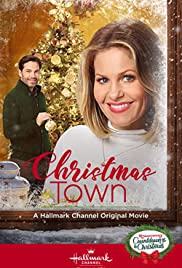 Admit it, you’ve watched a Hallmark Christmas movie. You might’ve even enjoyed it. But once you stood back and gained perspective you realized Hallmark Christmas movies are really bad. They’re the very definition of schmaltz. The acting is God-awful. The outfits are dusted off from last year’s Hallmark movies. The piled-up snow looks a little too perfectly placed around porches and lampposts. The sets are nameless little towns in western Canada with same-looking Main Streets.
Then there’s the storylines. Dear Lord. Every Hallmark Christmas movie is the same sugary-sweet cutout cookie baked at 350 degrees for 10-12 minutes. The lead finds herself in a Christmas-related predicament. She conveniently crosses paths with “him”. He unwittingly steps in to help with her predicament. They find themselves on screen together the rest of the movie (read: flirt). Then – but not until the last two minutes of the movie – they figure out they’ve fallen in love. Quick kiss. Holiday smiles. Roll credits.
 Even the actresses look alike. That’s because they’re all the same actress. Well, almost. A dozen women grace Hallmark’s pantheon of “Queens of Christmas”. If you recognize Rachel Boston, Candace Cameron Bure, Lacey Chabert, Danica McKellar, Alicia Witt, or a few others, you know the Queens. Perhaps you’ve seen them on Hallmark’s “Countdown to Christmas” (an hour of Christmas
 commercialsmovie previews). Perhaps you’ve heard them pushing their movies on Sirius XM’s “Hallmark Channel Radio”.Why stop at Christmas? Hallmark Channels want to be considered your “year-round destination for celebrations”. Accordingly you’ll also find their themed movies around Valentine’s Day, Mother’s Day, New Year’s Day, and – lest they feel like left-out seasons – the beginning of spring, summer, and fall. You can even bask in “Christmas in July” if you missed some of the previous year’s premieres (but why would you?)
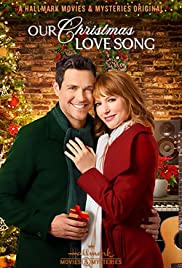


Hallmark is a much brighter bulb than any of the actors you see here. There must be a ton of profit in schmaltz; otherwise why would Lifetime, Netflix, Disney, and Apple also jump into Christmas movies? Gonna be hard to catch Hallmark: their productions can be found on four television channels, three apps, and that Sirius XM radio station.
 Counting 2020, Hallmark has produced and aired over 250 Christmas movies. Talk about a marathon: it would take you twenty days to watch them all (after which you’d be surgically removed from your couch). Not me. I’ll stick with George Bailey in Bedford Falls, Kris Kringle at Macy’s, and Ebenezer Scrooge and his ghosts. Real actors, real stories, and genuine Christmas spirit. No cookie cutters.
Some content sourced from the 11/17/2019 Wall Street Journal article, “The Most Wonderful Time of the Year: Netflix and Disney Battle Hallmark for Christmas Viewers”, and Wikipedia, “the free encyclopedia”.
-
Mixed Messages
My dad called the other day for a chat, but not before letting me know my answering machine was full. Since he couldn’t leave a message he just called over and over ’til I finally picked up. But here’s the thing: I don’t have any messages on my answering machine. It’s not full at all. So after the call I said to my wife, “Dad’s almost 92. I’ll forgive him a little confusion now and then. Probably mixed me up with one of my brothers.”
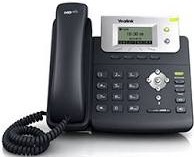
I still have one of these Do you still have a landline in your house, the one with a bulky handset and built-in answering machine? If you do, it’s tethered to the wall with wires, which then connect to a march of telephone poles outside (more wires), which eventually route your call to wherever it needs to go. Imagine – in a world of wireless – a phone call with a physical connection from one end all the way to the other. It’s positively antique.
[Random thought: once the world is fully wireless what’ll we do with all those telephone poles. Caber toss, anyone?]
 Go ahead and mock my out-land-ish outdated phone – at least I don’t have a party line. Back in the day, if you lived in the sticks you shared a single physical line with your neighbors. You were a “party” of subscribers who often found themselves talking over each other (“crosstalk”) or connected to the wrong party at the other end. Party lines it is said, were the birthplace of gossip.
 The reason I stubbornly cling to my landline is probably not the same as yours. I keep my landline exclusively for those calls with my dad (er, and to divert telemarketers from my smartphone). My dad can’t hear very well so anything wireless is a challenge, especially when you get the occasional syncing issue in the conversation. On a landline Dad hears LOUD and CLEAR… even if he doesn’t always acknowledge what I say. Are his calls worth the monthly subscription fee? He’s 92! You bet they are.
Now let me ask you this. How often do you call your own phone number? Why would you? Pick up the phone and you get dial tone – all good. Set the answering machine to “on” so people can leave messages – even better. Except when they can’t. Let’s suppose – “hypothetically” – your phone company redirects your phone number to a random voicemail box. And that mailbox is already full. How would you know? Only if you called your own phone number, right? Or, only if the one person who calls you (“hypothetically” your dad) insists he can’t leave a message.
Damn. Dad was right after all.
 Here’s the best part. I can’t even call my phone company to fix the problem. Why? Because I “bundled”. You know, where you combine TV, Internet, wireless, landline, and whatever else you have so they’re all billed and serviced through a single provider? Mis-take. Try calling your satellite TV provider to ask about landline phone service. After you explain what a landline IS, the young person at the far end transfers you to a “specialist” (someone much older who actually understands landlines). That person acts as intermediary between you and the phone company. There’s a lot of, “Can I put you on hold for a sec?” and, “You still there? and, “Hold tight, we’re still working on it” and even the occasional, “You did say this was a landline, right? Y’know, you really should get rid of your landline…”.
Long story short, it took me the better part of a week but now my dad can leave messages on my answering machine again. He also says I should listen to my father more often. (For younger readers, this is an excellent example of “eating crow”. Look it up.)
 Electric Light Orchestra (ELO) – the English band of the ’70’s who somehow fused pop, rock, and classical – had their biggest U.S. hit with Telephone Line. Its final verse begins, “Okay… so no one’s answering. Well can’t you just let it ring a little longer, longer, longer?” No ELO, I can’t let it ring a little longer – the phone company rerouted my number to a full voicemail box.
But hey, thanks for calling.
-
The Original “Black Friday”
The first two weeks of November were jammed with “un-often” events this year. For starters the bright light of Halloween’s blue moon spilled into the wee hours of November 1st. During those same wee hours most of us lost Daylight Savings Time. The very next day (Monday) marked the official arrival of Hurricane Eta to our shores. The day after that we voted in a presidential election. A week later we staged the Masters golf tournament (it’s supposed to be in April, people). Then we had another hurricane (Iota), the first time we’ve had two in November. Finally, we spiked positive COVID-19 tests in record numbers after months of declines.
 That’s a pile of rarities in a short amount of time. So why not add one more to the heap? Friday the 13th. I missed it completely. Maybe you missed it too (and you’d be forgiven with all those other distractions). Last Friday – the 13th – came and went without an ounce of bad luck to blog about. Ironically, the only story I can share brought good luck. I placed a carry-out dinner order last Thursday night and the restaurant gave me someone else’s food. When I went back for the right order they told me to keep both. As a result my Friday the 13th dinner was unexpectedly “on the house”.
 Are you superstitious? I’m not – not in the least. I have no problems with sidewalk cracks, leaning ladders, or black cats. I don’t lose sleep anticipating the third occurrence of a bad thing. I gladly pick up a penny (it’s free money after all) but with no expectations of luck. I’ve broken mirrors (deliberately, in remodel projects) and wishbones (on a whim, in turkeys). I’ve even knocked on lots of wood (mostly doors) but hey, my life goes on as usual.
Leonardo da Vinci’s masterpiece As for Friday the 13th’s “un-luck”, its long-ago origins are suspiciously weak. The most common comes from the story of Jesus in the Bible: thirteen individuals at the Last Supper (Thursday) followed by Jesus’ foretold crucifixion the following day. Other theories point to fighting gods in mythology and fighting knights in the Middle Ages. None of these carry water in my book. Seriously, how did misfortune come to be associated with the collision of a particular day and date?
I read up on calendar averages, thinking the 13th falling on a Friday was as uncommon as a blue moon. Maybe the 13th favors the other days of the week instead? Nope, try the reverse. Over a significant number of years the 13th falls on Friday more than Saturday, Sunday, or any other day of the week.
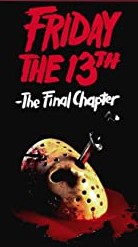 To add a helping of confusion, look no further than Spain or Greece. These countries have an irrational fear of Tuesday the 13th. Italy? Friday the 17th. Imagine watching America’s famous horror movie franchise in any of these places and wondering, “so… why do they call it ‘Friday the 13th’”?
 No matter my efforts to undermine this superstition, the effects are real. Over 17 million Americans admit to a dread of Friday the 13th. Some avoid airplane travel and others won’t even get out of bed. Buildings remove the thirteenth floor from the stack (which is a lot of demolition for a superstition, isn’t it?) Elevators conspicuously delete the “13” button. Numbered seats in stadiums go 10, 11, 12… 14, 15, 16.
For some of you, Black Friday means bargains. For others, Black Friday means “13”. If nothing else, I’ll give you a couple of words to describe the circumstance of the latter’s irrational fear. If you’re afraid of the number 13 you have triskaidekaphobia. If you’re afraid of just Friday the 13th you have paraskevidekatriaphobia. (Me, I only have acrophobia. At least your phobias sound more sophisticated.)
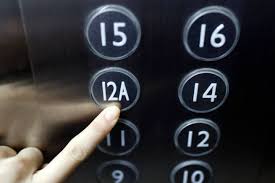 Fact check. This post was published close to the midpoint between Black Friday (the 13th) and Black Friday (the retail binge). Okay-y-y-y. This post also contains exactly 666 words. WHOO boy.
Let me repeat… I am NOT superstitious.
Some content sourced from Wikipedia, “the free encyclopedia”.
-
Joe Whoops-a-Lazy
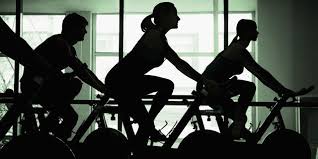
 Cycle class at the gym (also called “spin”) goes very well as long as you’re careful with your setup before starting the wheels a-turnin’. Adjust the seat and handlebars until you’re “one with the cycle”. Remove the “cages” from the pedals if you wear cycle shoes. Secure your water bottle in the holder with the top open. Place your towel within easy swabbing distance. And bring an extra mask to replace the one you destroy when you rip it away from your face gasping for air.
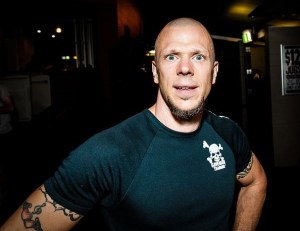 I’ve been committed to weekly cycle for a long time now so my setup routine is darned near perfect. As it was this morning. Everything in its place – time to get after it, Dave. But then the classroom door flew open and in strode Joe Whoops-a-Lazy. And curse you Murphy’s law, Joe chose the cycle right next to mine.
You know Joe. He’s the boisterous bruiser who announces his presence just by lumbering across the room. He’s big and he’s bald, with too many tattoos and not enough clothing. He breathes in and out like a bull pre-stampede, even when all he’s doing is setting up his bike. He gives the rest of us a beady-eyed sneer to size up his competition (as if you can somehow be “competitive” on a stationary bike.)
Poor Joe. He’s not just Joe, he’s Joe Whoops-a-Lazy. Every time the cycle instructor gives a shout-out to see if we’re all still alive and kicking, Joe yells, “WHOOOOP!!!” or “AW YEAH!!!” or “LET’S DO THIS!!!”. To Joe, it’s an hour-long party on wheels! Joe wants the rest of us to know he’s really into cycle. Personally I think he’s just really into our cycle instructor. Here’s where it all goes wrong, Joe. If you gave it a millisecond of thought you’d realize none of the rest of us are going “WHOOOOP!!!” or “AW YEAH!!!” We don’t utter a word when the instructor shouts out her lusty, “How ya’ doin’ out there?”. Why? Because we… can’t… talk. We can’t even form a coherent thought. For God’s sake, we can barely breathe. We’re all about the non-verbals in those oxygen-deprived moments. Head nodding. Thumbs-up. Not whooping it up like a cheerleader at a football game.
If Joe were giving cycle class his all, his last name might be Whoops-Amazing instead of Whoops-a-Lazy. Instead, he’s all about looking good and flirting with the instructor (as if a “WHOOOOP” melts her in her cycle shoes). Sorry Joe, if you have enough breath to cheerlead, you’re leaving something on the table. In other words, you’re kinda lazy. Here’s another betrayal of Joe’s he-man persona. While the rest of us push up an imaginary hill, our cycles cranked to all kinds of resistance, JW is standing on his pedals a head higher than the entire class. Joe thinks cycling as he stands makes him look uber-strong. Er, he got that one backward. Anyone who cycles even a little knows you work harder in the seat than standing on the pedals.
 Maybe you’ll be seated next to Joe Whoops-a-Lazy the next time you ride a rollercoaster. Joe’s the one with his hands held high in the sky as the coaster ascends the first incline, whooping and hollering before the death drops even begin. He’s more like Joe Whoops-a-Crazy, cackling down the hills and around the curves as his straining seat belt threatens ejection.
I’m fine with Rollercoaster Joe. I’m also fine with Sports Bar Joe, yelling at the game on the big-screen TV. But I’m not fine with Golf Fan Joe going, “IN THE HOLE!!!” after a Tiger Woods putt. And I’m not fine with Cycle Class Joe and his big ol’ “WHOOOOP!!!”. Take that swagger back to the weight room, big guy.







About Me
The sky is not completely dark at night. Were the sky absolutely dark, one would not be able to see the silhouette of an object against the sky.
Follow Me On
Subscribe To My Newsletter
Subscribe for new travel stories and exclusive content.
 Life In A Word