
Hello, I’m Veronica
The sky is not completely dark at night. Were the sky absolutely dark, one would not be able to see the silhouette of an object against the sky.


-
quintessential
This time of year – Halloween in particular – sparks memories of a more innocent time. In the trick-or-treat years of my day, costumes were homemade from whatever scraps of clothing, cardboard, or construction paper could be found lying around the house. Pumpkins became Jack O’ Lanterns using a dark pencil and a sharp kitchen blade – no “carving kits” to speak of – easy faces and single candles, lit and placed on the front porch to greet the neighborhood each night. Halloween treats were simple and seasonal (Wax Lips! Candy Cigarettes!) collected and piled high in bright orange plastic pumpkins. “It’s The Great Pumpkin, Charlie Brown!” was thirty minutes of can’t-miss television.
If I’m to put one Halloween memory at the top of my list however, no recollection touches my soul quite like my mom’s “pumpkin cookies”. These colorful characters go straight to my heart every year I bake up another batch. Behind those happy/sad/laughing/angry faces are my quintessential childhood memories.

Look closely at the photo. Mom’s pumpkin cookies are a fairly simple treat – no family secret here. Find a good rolled ginger cookie recipe (the kind that banks on molasses, cinnamon, ginger, and cloves); roll and shape the cookies like pumpkins; bake to the consistency of gingerbread; frost to a bright orange; and devise the faces with candy corn, M&M’s, and fruit smiles. Be sure to let them dry before you protect them with a little plastic wrap. A recipe that claims a yield of sixty will get you about two dozen if you make them the right size. These cookies are B-I-G.
Mom’s pumpkin cookies tug at my heartstrings for two reasons. First, mom let my brothers and I do the decorating from a very young age. We would sit at the dining table – our makeshift bakery – with bowls of candy and row upon row of cookies just waiting for their faces. Not all of the candy made it onto the cookies. This was a child’s dream.
Second and more significantly, we handed out Mom’s pumpkin cookies from a big bowl at the front door on Halloween night. That’s right; instead of Smarties or Abba-Zaba’s or Sugar Babies, we sent dozens of homemade, orange-frosted, funny-faced cookies out into the neighborhood. Does it get any more innocent than that?
In the early 1970’s, after a rash of highly-publicized incidents involving tampered Halloween candy, a lot of the fun went out of the holiday. Trick-or-treat candy quickly became the mass-produced, store-bought, plastic-wrapped variety you can buy anytime, anywhere. Parents took to driving their kids from door to door instead of letting them navigate the streets alone. “Safe” trick-or-treating was born in churches and shopping malls.
And Mom’s pumpkin cookies started landing in the trash can at the end of our driveway.
Perhaps that explains why forty years later I still bake up a batch. Perhaps it’s my annual salute to the innocence of Halloween. Or better, perhaps it’s my mom as I remember her all those years ago, urging me to open the bakery yet again. Cookies are waiting for their faces.
M&M’s are easy to find, while candy corn requires a bit of a search. But fruit smiles are becoming the real challenge. Cracker Barrel stopped selling them a few years ago, no doubt for lack of sales. But a local candy manufacturer still makes them, so every October I visit their shop and buy my lot. This year, the older woman behind the counter asked me what I was going to do with four dozen fruit smiles. So I dipped into my quintessential memories and told her about Mom’s pumpkin cookies. And just for a moment she paused and closed her eyes, perhaps once again a little girl dressed in costume, running and laughing through darkened streets in search of that next Halloween treat.
-
waning
I remember well when I was a kid, those sleight-of-hand magic tricks that were always accompanied by the words “now you see it, now you don’t”. Even up close my eyes would deceive me as the silver dollar was in the hand, and then suddenly it wasn’t.
Now that I’m a few years past the half-century mark I have a better application for “now you see it, now you don’t”. Eyesight. Sure, a lot of things go south as you get older, but with the eyes you just don’t see it coming. Before you know it you’re a regular squinter. No more 20/20 for you. Your vision is waning.
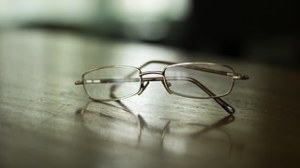
In all fairness I never had perfect vision to begin with. I was born with a lazy eye and wore glasses from an early age. I sported a pirate patch for a couple of years to force the lazy eye to work harder – didn’t get me any girlfriends. When I switched to soft contacts in high school it was like I’d buried the secret of my imperfect vision forever.
Fast-forward another thirty years. During a routine visit to the eye doctor the question was posed, “do you wear reading glasses?” I remember kind of puffing up my chest as I said, “no, I do not wear reading glasses”. At that, the doc glided back in his chair, grinned at me and said, “well, you will soon”. And I’ll be damned if he wasn’t right. Within a year I was shopping for readers at my local drug store.
Keeping things in focus has evolved to a constant adventure. When I first bought reading glasses I kept them in that place where you think they’ll be whenever you need them. Wrong. Very quickly I discovered it made more sense to buy a half-dozen readers and just leave them all over the place. I put a pair in the car, one by the bed, another in the bathroom, a fourth in the home office, and a fifth in the family room. That fifth pair even travels to the kitchen and laundry room every now and then.
Speaking of the laundry room, reading glasses have become an essential for clothing labels. I can find the label all right but I better have my readers and some bright light if I expect to read the label. Trust me; f you’re not in focus your brain can convince you that “let hang dry” actually reads “tumble dry low”, and the next thing you know your wife’s sweater goes to charity as a gift for a small child.
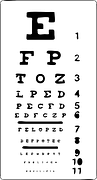
In my home office I’ve graduated to two pairs of reading glasses, because my waning eyesight decided I needed the 1.0 prescription for the computer monitor and the 2.0 for the printed word. So that’s me in the office, flip-flopping readers every time I glance from the computer to the page. Please find me some bi-focal reading glasses.
Here’s a genius idea for modern times: flat, bendable readers for your smartphone. They live in a little pocket that sticks to the back of your phone, just waiting to come out to help you see all those tiny pixels. They don’t have the side supports that go back to the ears, but just pinch/perch on your nose. I snapped up a pair at Target the moment I found them. Sure they look funny but so does squinting to read text messages.
I just moved into a pair of bifocals. Doc said dry, aging eyes will eventually reject my contact lenses, so I’m trying the two-for-one approach. Above the line gets you driving eyes; below the line gets you reading eyes. For your sake I hope I never put them on upside down.
-
phenomenon
Our neck of the woods is considered “country roads” by most standards. Some call us “outside the city proper” while others go with “unincorporated county”. No matter the label, living in these parts presents its unique challenges. It takes a little longer to get to your groceries and gas. The wind gusts enough to make the patio furniture take flight. The wildlife big and small sneaks into the backyard or peeks through the dog door.
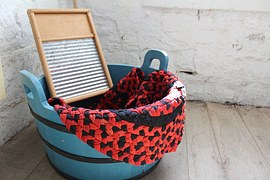
There’s one more aspect of “the country” I didn’t expect when we moved here: washboard. Washboard is a constant phenomenon on our dirt roads. The pressure of rotating car tires makes small ripples in the dirt, which quickly turn into bigger ripples, and eventually you have speed-bump city.
The concrete on the interstate is smooth as silk, while the asphalt on the city streets generates a soothing hum. But washboard is all kinds of nasty on the ears. If I could drop an audio file into this post you’d think I was riding a Harley in need of a tune-up. Just try to have a conversation while you’re bumping along on washboard.
I have this recurring nightmare where I’m driving on washboard and all four wheels simultaneously vibrate off the axles and bound away. Then my car slams to the surface of the road and comes to a skidding halt. Then one of my neighbors walks by, chuckles at me and my car-with-no-wheels, and wanders on.
Scientists (with way too much time on their hands) have determined that a car’s suspension – once thought to be the cause of washboard – actually has no bearing on the creation of all those ripples. They also ran a few experiments and decided the only way to avoid the creation of washboard is to drive at 3 mph or less. I guess I could do that – if I wanted to take twenty minutes to drive the distance I normally cover in two.
Now that I have you utterly spellbound over the phenomenon of washboard (not), look for it on sandy beaches and snow-covered ski slopes. Ocean waves and speedy skiers produce the same effect on entirely different surfaces.
How our county resources “fix” our washboard roads drives me nuts. Our street is a mile long with a half-dozen houses on either side. That’s not enough country bumpkins to generate the tax revenue (or traffic) to justify paving the road. Instead, every couple of weeks the county sends out a giant Caterpillar tractor, which drags and pushes and manicures the dirt until all of the washboard is gone. But those grooves just reappear in the next day or two. This futility reminds me of the Golden Gate Bridge, where once the painters finish a fresh coat it’s time to go back to the other end and start again. That’s how it is with washboard.
The upside of living on washboardy roads is that you never have to wash your car. There’s no point. The moment you hit the washboard you’re giving your car an all-over dirt bath. So I just ignore the thoughtful “wash me” notes that show up on my back window every now and then.
The other day at the gym I was working out and I overheard a guy talking about his “washboard abs”. For reasons that are now obvious to you, I cringed and promptly left the room.
-
aggrandize
On a recent trip to Sweden, my wife and I went to an “ice bar” in one of Stockholm’s downtown hotels. The experience is unique and exactly as advertised. You enter a small lobby adjacent to the hotel, where payment gets you admission and a drink. Then you don parka and gloves and pass through double-doors into the bar itself. The temperature immediately plummets to well below freezing, and everything – I mean everything – is made of ice.

The photo above is the ice bar itself, where drinks are prepared and served. If you look closely you can see the “glasses” lined up along the back – really just big cubes of ice hollowed out to hold the alcohol. Once you have your drink you’re encouraged to seat yourself at one of the nearby booths. Your table and chair are made of ice. Several free-standing ice walls define the space. The lighting changes slowly – different colors and levels of brightness – to accentuate the nature scenes and cityscapes expertly carved into the walls. The entire facility is melted and reconstructed twice a year.
As I think back on our ice bar experience I realize this is an example of reinventing a rather ordinary activity. Take away the ice and all we’re doing is having a drink in a bar. The genius of the ice bar is that its inventor realized people would pay good money for the novelty. This, my friends, is how you aggrandize an everyday activity.
If you’ve heard of ice bars you’ve probably heard of oxygen bars too. Another clever soul realized people would pay good money ($1/minute!) to consume flavored varieties of oxygen. Throw in the purported health benefits and the customers came a-flocking. I won’t cave into an oxygen bar anytime soon but I might pay good money to see the patrons themselves – fitted with an apparatus that goes around the ears and up into the nostrils – breathing what is obviously available for free in the atmosphere around them.
Los Angeles boasts a gourmet water bar, which includes a 46-page menu of bottled waters; some as much as $20/bottle. And for $50 you can take a water-tasting class. The venture has been described as a “rousing financial success”, expanding recently with two more locations. Consider that California – drought-stricken as this generation has ever experienced – boasts a thriving pay-for water business. I admit I’ve had my share of bottled water, but I’ll sooner pay $25 for my ice bar drink than $20 for my water bar water.
We are a generation that aggrandizes; infusing new life into run-of-the-mill doings. Movies have evolved from silent to “talkies”, from black-and-white to color, from two dimensions to three, and from sound to “surround”. Bowling and miniature golf offer glow-in-the-dark versions. Ski and snowboard at night under the lights.
Just before our trip to Sweden we also visited Denmark, home of the famous author Hans Christian Andersen. If you know Andersen’s story “The Emperor’s New Clothes”, it’s a fitting fairy tale for the subject at hand. The emperor wants a stunning new outfit for the royal parade, so his clever tailors convince him to spend a couple of trunks of gold coins on invisible clothes – so stunning they are “like nothing he’s ever seen”. Thus the emperor parades in his underwear while the tailors escape with a small fortune. Money for nothing.
Maybe we need to reconsider how we spend our hard-earned dollars on things like ice bars and oxygen and movies. Aggrandize all you want, but in the end isn’t it really just about the drink?
-
naive
Someone once described me as “wet behind the ears”. At the time I didn’t realize I was being called naive. I thought it really was about the water. You know, do a better job toweling off after the shower. Use the hair dryer longer.

Now that I’m older and supposedly wiser, I still believe it’s about the water. For an opening argument consider my astrological sign. I’m an Aquarius – the so-called water-bearer. Aquarians are more nobly representative of “the Gods nourishing the earth with life-giving energies”. Not from my experience. We January/February birthdays are all about the wet stuff.
I should have seen this coming, really. Twenty-eight years ago, in the San Francisco B&B where my wife and I spent our wedding night, we awoke the following morning to a steady drip onto the middle of our bed from the ceiling above. What a fitting prelude to the years that followed.
The ball really got rolling (correction: the river really started running) with the handful of houses we’ve purchased over the years. Our first place – a townhouse – was built on landfill. That landfill began sinking years before we bought the place. There weren’t water problems to speak of, but the bulk of our monthly homeowner’s dues paid for fixes to the leaking underground plumbing (not to mention the lawsuit that came with it).
Our second house – a modest old lady from the 1940’s – endured the 1989 San Francisco earthquake. There wasn’t much damage, except the water heater fell over in the garage, and for awhile we had a nice little stream from our driveway to the street.
It gets better. In fact, our third house was the piece de resistance of our liquid adventures. This place was somehow built without a french drain; essential for transporting water away from the building foundation. In the spring of that first year therefore, the melting snow turned our basement into a scene from Titanic. You’ve heard the term “floating ceiling”? This was “floating floor”; carpet, furniture, and all.
The house we live in now – on several acres of land – includes a retention pond that is part of a network of neighborhood creeks and reservoirs designed to move water safely through the region. But we had no idea the previous owners dug out our pond much deeper than its engineered specs. So the first really good spring rain not only overflowed the pond, but broke the dam to the creek that moved through downstream properties. The result: a custom-made flash flood. Our neighbors received so much surface water they should have gone into the rice paddy business.
In my research on astrological signs, I came across the website beliefnet.com, which hosts a ten-question quiz to determine which element – air, earth, fire water – best describes a person. On a 0-100 scale, a “water person” is between 21 and 50. Does it surprise you my answers rated me a 41? Then again, I’m not sure how much credence I can give to a quiz where “water people” are described as “go with the flow”, “bubbly”, “enjoy meditation especially in steam baths”, have eyes that are “deep and liquid”, are “prone to tears”, are “inconsistent as the tides”, and possess a wonderful sensitivity that can “go overboard”. Somewhere the water gods are laughing at me.
You think I’d learn. Every summer we spend our vacations at the seashore. Last month we took a cruise. Most hours of the day my companion is a glass of water. For heaven’s sake, do you SEE the banner photo I chose for my blog? It’s as if I’m taunting those gods of Aquarius. But I think this is more of a fate thing. And I’m not naive about this anymore either. I’ll bet you a case of Dasani it won’t be long before something new rains on my parade.


About Me
The sky is not completely dark at night. Were the sky absolutely dark, one would not be able to see the silhouette of an object against the sky.
Follow Me On
Subscribe To My Newsletter
Subscribe for new travel stories and exclusive content.

