Jack Be Quick

If the lazy days of summer sap your get-up-n-go, here’s an idea. Find a friendly donkey (not a stubborn one). Halter him and attach a solid lead rope – at least fifteen feet worth. Saddle your jack with thirty pounds of gear, including a pick, a shovel, and a gold pan.  Finally, don your running shoes and head out to Fairplay, CO. $50 gets you into the World Championship of Pack Burro Racing.  Welcome to the state sport of Colorado.

Pack burro racing seemed a little ridiculous to me… until I dived into the details.  For starters, its origin is as legendary as the Greeks and the marathon.  Back in the strike-it-rich days, two Colorado gold-miners hit it big in the same location, and supposedly raced back to town (burros in tow) – first miner to the claims office wins.  Here’s another detail: pack burro racing really is a marathon – 28-30 miles up and back with your donkey, making the halfway turn at an elevation of 13,000 ft.  My favorite rule?  No riding.  However, the runner may push, pull, drag, or carry the burro.  Carry the burro?  A thousand pounds of ass?

Capitals, flags, songs, and birds – of course – but I never knew states had official sports, until recently, when California considered its options.  If your first choice for the Golden State is surfing, California’s state assembly agrees with you.  The Wall Street Journal reports the assembly just passed the “bill”, and now the tiff moves to the state senate.  I say tiff because a host of other Cali residents say not so fast.  Those who don’t live near the beach choose skateboarding.  Why skateboarding?  Because surfing is already the state sport of Hawaii.  They also say skateboarding is essentially surfing on wheels.  Maybe.

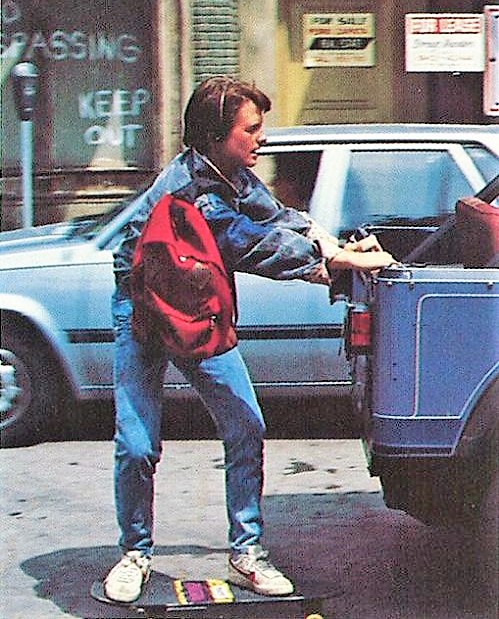
I grew up in California, but neither surfed nor skateboarded.  Still, I deserve a vote.  I did my share of body-surfing, so know what it’s like to catch a wave.  I did my share of bicycling, so know what it’s like to cruise on wheels.  You can put yourself in either camp, but arguments abound for both.  As one state assemblyman said, “Hawaii may have invented surfing, but California ‘mainstreamed’ the sport”.  Others say, “Surf ranches” and their wave machines bring the sport to the inland areas of the state.  On the other side of the aisle, skateboarding is a sport enjoyed by the masses just about anywhere.  And skateboarding really was invented in California, evolving from crude combinations of roller skates and wooden produce boxes.  Marty McFly should get a vote too.

By coincidence, surfing and skateboarding will join the Olympics in 2020.  The lighting of the torch in Tokyo will surely reignite the debate in California, no matter which sport is chosen.  Or maybe the state will still be arguing one over the other, instead of dealing with – ahem – more important issues of government.

Only a handful of U.S. states claim a sport in their list of symbols.  Some make sense, as in Alaska (dog-mushing), Minnesota (ice hockey), and Wyoming (rodeo).  Others have me saying, “What the heck?”, as in Maryland (jousting), and Delaware (bicycling).  I don’t live in Maryland or Delaware.  Maybe they banned every other sport in those states.  Of course, Marylanders and Delawareans probably feel the same way about Colorado and its pack burro racing.

Admittedly, Colorado could wage a healthy state-sport debate of its own.  The Rocky Mountains alone inspire a half-dozen seemingly better options.  If on water, go with river-rafting or kayaking.  If on snow, go with skiing or snowboarding.  If on land, go with hiking or mountain biking.  Yet none of those acknowledge the state’s rich lore of gold-mining.  None of them combine a human activity with an equestrian one.  Come to think of it, Colorado has enough runners and horses to win the debate, gold-mining legend or not.

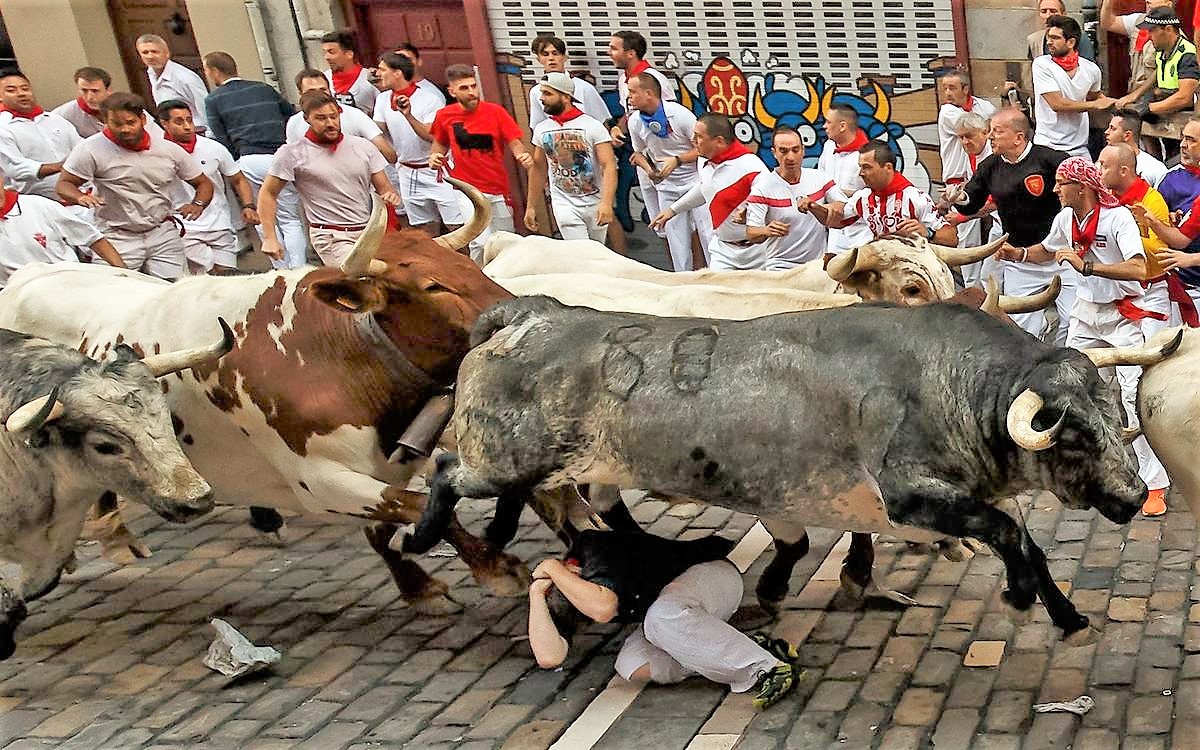
According to the Western Pack Burro Association (“Celebrating 70 Years of Hauling Ass”), Colorado’s pack burro racing series still has several to go this year.  The first three are considered the “Triple Crown”, but I can still catch the remaining action in the towns of Leadville, Buena Vista, and Victor.  It’ll be like the running of the bulls in Pamplona!

Some content sourced from Wikipedia, “the free encyclopedia”.

Sneakin’ Around

Six years ago, my wife and I visited Ireland for our 25th wedding anniversary. I remember the locals having this uncanny ability to figure out we were Americans, even before we uttered a word. They’d start with, “So where ya from in the States, the both of ya?”, or “What’s the weather like in America now?”, or “Traveled across the pond, did’ja?” It wasn’t until several years later I realized our feet had given us away. Our footwear – bright sneakers with white laces – effectively shouted, “Hello world! We’re from America!” We might have been the only rubber-soled couple in all of Dublin.

Funny people, those Europeans. They wear gym shoes when they’re going to the gym; running shoes when they’re going for a run. That’s about it. We Americans on the other hand (er, other foot), have a decades-long love affair with our “tennis shoes”. We have entire stores dedicated to the soft-soled shoe – Foot Locker, for example – though you’re more likely to find synthetics instead of rubber these days. Walk into a Foot Locker and say, “I need a good walking shoe”, and the salesperson will direct you to every single pair in the store. Americans and their gym shoes: where fashion trumps function.

“Gym shoes” is an awkward, dated description of America’s casual footwear, but we’ve yet to come up with a better name. Once upon a time we called them “tennis shoes”, but today that ask gets you a specialty shoe (for tennis, of course). As kids we wore “Keds”, “Converse” and “Vans”, because they were practical and cheap. 95% of my childhood plodded along in pairs of Keds (with the other 5% in bare feet, or the single pair of dress shoes my parents insisted for church). Today, Keds, Converse, and Vans have made a furious comeback, albeit as a pricey fashion statement.

More recently, Americans claim to be wearing “running shoes”, but how many of us run, really? Maybe we should side with the Brits and wear “trainers” instead. At least we could fib about being “in training”.

The Euros may be quick to judge footwear but trust me; that’s not all they’re looking at. American tourists give themselves away with a host of other fashion statements. If you’re partial to baseball caps, flip-flop sandals, or “athletic shorts” (another item demanding a name change), you’re an American. Speaking of shorts, any shorts in Europe labels you an American. Shorts are “children’s clothing” over there. Care to repack that suitcase? While you’re doing so, white “athletic socks” are a no-no. Euros match their socks to their pants (meaning skip the white pants too). Finally, leave the untucked, oversized, logo’d t-shirts in the drawer. Euro’s aren’t interested in poorly-fitting walking advertisements.

I may be guilty of several items on the “American Tourister” list, but I simply can’t give up my gym shoes. They’re too comfortable and practical, and they’ve become a lot more stylish than the Keds of old. That’s not to say I don’t feel self-conscious wearing them. A good friend – the author of the entertaining blog Brilliant Viewpoint – always insisted her husband wear “nice” shoes, no matter the occasion. Considering her Italian background (and his German), it makes a lot more sense now.

For the record, the American airport is a great place to catalogue footwear. On a recent visit, the traveler shoe pie was split into equal slices (whether males or females): gym shoes, sandals, and dark-soled. heeled, business-casuals. The irony of this airport visit – my wife and I were picking up two teenage visitors from Germany; students staying with us for awhile. As they walked out of the Customs area, my eyes dropped to their feet. What were they wearing? Gym shoes – both of them. Apparently there’s more to America’s global influence than fast food.

Precisely Enchanting

If you watched any of the Winter Olympics the past couple weeks, you witnessed dramatic moments only the Games can deliver.  Some literally took my breath away: the edge-of-your-seat overtime shootout in the women’s hockey final (a 3-2 win by the Americans); the exquisite battle for gold between the highly-touted Russians in women’s figure-skating; and the first-ever victory for the U.S. in the team sprint of women’s cross-country skiing, where Jessie Diggins’ come-from-behind lunge at the finish line took the gold by 0.18 of a second.


Consider “0.18 of a second” (for a second).  The blink of an eye takes twice as long.  Now consider measuring 0.18 of a second.  Remarkably, we’ve had the technology to do so since the 1950’s.  For the Olympics, that precision was provided by Omega, the watch manufacturer from Switzerland.  Of course the timekeepers were Swiss.  What other country is so renowned for the keeping of time?  What other country coordinates forty-six individual railway companies on a single network of tracks, bringing its trains into the stations on-time every time?  Where else in the world would you feel more confident banking your cash?  Six years ago, Omega developed technology capable of measuring one-millionth of a second.  At the Pyeongchang Olympics they used a photo-finish camera capable of ten thousand snaps per-second.  The Swiss redefine “attention to detail”.

I’ve had an affection for Switzerland from a very young age.  As a kid, my introduction took place in subtle ways.  Shirley Temple’s “Heidi” was based in Switzerland. The Switzer brand of red/black licorice (still available in “vintage” candy stores) was a frequent purchase.  The cute little Swiss Miss in our pantry beckoned me to hot chocolate.  As a Boy Scout, I always carried one of the Victornox Swiss army knives.  At Disneyland I roller-coasted through a scaled-down replica of the Matterhorn – one of the Alps.  I had my first taste of fondue.  And for a Suisse exclamation point, I consumed a ton of that “holiest” of cheeses.  My ancestry test should’ve produced a little Swiss DNA, don’t you think?

As an adult, Switzerland’s products are no less present in my life.  Lindt is my favorite chocolate (and I’ve tried my fair share of chocolate). A Rolex watch is still the material equivalent of corporate-America success (though my tastes are more modest – perhaps a Swatch [Swiss-watch]?)  Velcro can be found on several items in my wardrobe.  Haagen Daz is my favorite brand of ice cream (a product of the Swiss company Nestlé).  And a lengthy search for “adult” Swiss licorice led me to Chateau D’Lanz, a family-run business in Washington state producing some of the best.

Speaking of Nestlé, the Toll House chocolate-chip cookie recipe is also one of my favorites. Here’s a bit of trivia: Toll House was an inn in Whitman, Massachusetts.  Ruth Graves Wakefield is credited with inventing the chocolate chip cookie (by mistake) somewhere nearby the Toll House.  The price Nestlé paid for the right to Ruth’s recipe? A lifetime supply of Swiss chocolate.

Now speaking of Velcro, here’s another bit of trivia.  George de Mestral was a Swiss engineer and amateur mountaineer from the 1940’s. Hiking in the Alps one day, George noticed seeds kept sticking to his clothes and to his dog’s fur. When he returned home, George developed a synthetic “sticking” technology like what he’d found in nature; a hook-and-loop zipper alternative eventually patented as Velcro. The clever name is a child of the French parents velours (velvet) and crochet (hook).

Okay, we’ve covered Swiss precision and some world-class products, but I haven’t addressed what makes Switzerland so fetching.  How’s this for starters: the entire country can fit within the greater Dallas/Ft. Worth area.  Bordered by France, Italy, and Austria, the Swiss are typically fluent in French, Italian, and German; as well as their home-country language of Romansh.  Switzerland produces some of the best in skiing, snowboarding, and mountain-climbing (of course), but also tennis? (hello, Roger Federer).


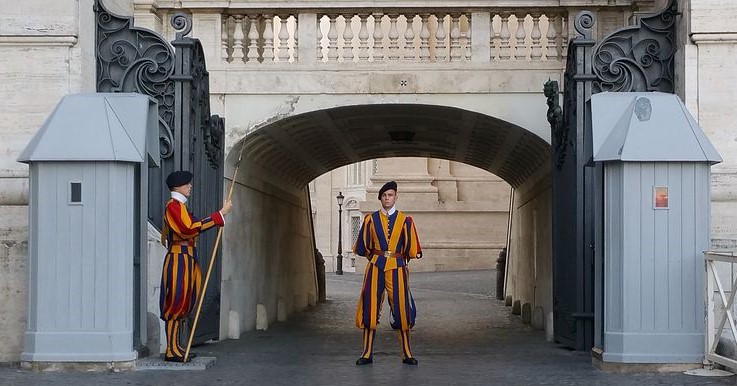
Here’s some more Swiss charm.  The colorful Guards in the Vatican City are the only foreign military service permitted to its citizens.  Switzerland’s “non-interference policy” dictates its only participation in foreign wars is typically through the high-profile benevolence of its Red Cross organization.  And citizenship in this fair country?  You’d better hope you have blood ties through birth or marriage.  Otherwise it’ll take twelve years of a special-residency permit, combined with a long-term work visa.

Despite my obvious affection, I should probably stay away from precisely enchanting Switzerland.  It’s a real country like any other after all, which means not everything comes up roses.  Perhaps I’ll cling to my snow-globe impression of the Suiss Alpenland instead: a gentle people living high on the Happiness Scale; the cleanest and quaintest cities imaginable; cobble-stoned streets and chalet-like houses.  The magnificent Alps serve as the backdrop, their slopes ascended by rickety cog railways and descended by skillful skiers.  Listen for an accordion or a little yodeling.  Look carefully enough into my globe and you might even notice the von Trapp family, marching down the mountain trail from Austria, singing their do-re-mi song.

Some content sourced from Wikipedia, “the free encyclopedia”.

Game Over

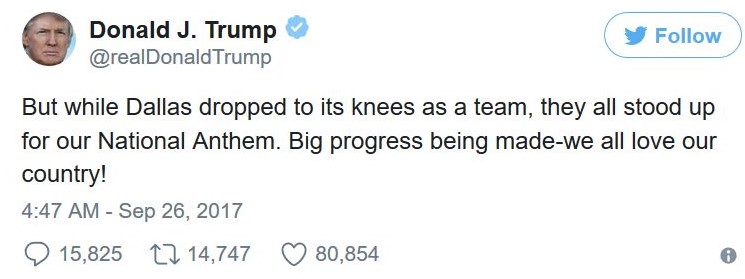
Tag the Dallas Cowboys with “politically correct” for their actions Monday night. The National Football League staged fifteen games last weekend – and thirty protests – but it wasn’t until the final contest Monday night where we saw something bordering on considerate. With the Cowboys, we witnessed unified “free speech” and regard for the American flag; neither action compromising the intent of the other.

If you missed Monday night’s game you would’ve been misled by Tuesday’s headlines, including, “Jerry Jones Leads Cowboys in Taking a Knee…”.  Jones – the Cowboys’ owner, president, and general manager – did take a knee, but he did so alongside his players and coaches; a unified show of disagreement with President Trump’s comments.  More importantly, Dallas knelt prior to the national anthem, so as not to confuse protest with allegiance to country.  During the anthem, the team stood with arms locked together and helmets removed.  I’m okay with that approach.  Even President Trump is okay with that approach.

As for the other twenty-nine teams, it was myriad versions of disunity and disrespect before kickoffs.  (NPR’s website lists them all here).  Random players knelt during the anthem while other stood – a visibly mixed message.  Owners and coaches stayed away for the most part, suggesting the same divisiveness alluded to by the President.  The Pittsburgh “Kneelers”, Seattle Seahawks, and Tennessee Titans – in total contempt of country – stayed off the field entirely during the national anthem.

Athletes exercising their right to free speech in sports venues is a distraction and nothing more, at least to the average fan.  The football field is simply not an effective platform for politics.  I, along with millions of others, tune in to watch the game, so anything outside the action itself (i.e. commercials) is irritating.  It’s the same reason I no longer watch awards shows; I don’t want the inevitable helping of political commentary along with the acceptance speeches.  The day the same thing happens in movie theaters is the day I buy my last ticket.  Sports and other entertainment venues should be escapes from the endless newsreel of the real world.

With the NFL, I’d argue the protests are not just irritating, but damaging.  Based on the number of emails Sports Illustrated received from disgruntled fans after last weekend, viewership is already taking a significant hit.  The NFL can’t afford to lose viewership.  The league is having enough trouble dealing with losses of sponsorship, and lawsuits tied to chronic traumatic encephalopathy (CTE).  Forget about viewers; one of these days the NFL might not have players.

Tyler Eifert, a tight end for the Cincinnati Bengals and a graduate of my alma mater Notre Dame, contributed one of the better player perspectives in his essay, “Why I Stand“.  His words could’ve been mine when he said, “I am not questioning anyone’s reasons or rights to protest, but instead the method.  This entire protest about raising awareness for racial inequality has gotten lost in the media and turned into a debate about whether to sit or stand for the national anthem… I stand because I love my country.  I stand because I want to honor the people putting their lives on the line for me on a daily basis…”  Tyler Eifert gets it.  The American flag stands for the freedom allowing him to play football in the first place.

Kneeling in front of the flag (or absence from the field altogether) is trickling into other sports as well.  Oakland Athletics catcher Bruce Maxwell became the first pro baseball player to join the anthem protests by taking a knee before his team’s game.  The Minnesota Lynx joined arms on the court before the WNBA finals began on Sunday, while the Los Angeles Sparks returned to their locker room during the anthem.  Even high-schoolers are kneeling.  Until we see something more constructive, these actions have little merit.

NFL player protests will cease, especially if franchise owners enforce a league-sanctioned code of conduct they currently choose to ignore.  The country is no less divided because of these demonstrations.  Rockies baseball manager Bud Black says, “…for me to be arrogant enough to say that the other half of the country is wrong or that I’m definitely right, I think (that) is the wrong thing to do. … I’m proud to be an American. And I’m also thankful to have the First Amendment, so I see it both ways. I have my opinions, but that does not mean they are right, so I’ll keep them to myself.”

I wish NFL players would keep their opinions to themselves, at least on game days.  Sports fans are switching off their televisions in record numbers, including me.  I have better things to do with my Sunday afternoons.

Fade to black.

American Tune-Up

Each of the fifty United States is represented by more than just a flag. America’s state symbols include animals, birds, trees, flowers, and songs. As a kid growing up in California I memorized these items, and years later I’ve still got them.  The “Golden State” has the Grizzly Bear, the Valley Quail, the Redwood, the Poppy, and “I Love You, California”.  Imagine my interest then, when Brooklyn Magazine took an updated stab at the state songs, publishing “The Musical Map of the United States”.

Image courtesy of Brooklyn Magazine, October 2016

Brooklyn Mag’s map is more than meets the eye (see here).  It’s not a collection of easy ditties you and I might come up with: Beach Boys for CA, John Denver for CO, Frank Sinatra for NY.  Instead, it’s a broad spectrum of lesser-known tunes, attached to the states by writers who chose them.  Read their stories and listen to their song choices.  It’s like 50+ blogs in one, plus a playlist if you want to shift the whole shebang to your smartphone.

Here’s a sampling of the Map’s creativity.  The writers chose Kenny Knight’s “America” for Colorado, a “dusty, country rock gem” with lyrics befitting its patriotic title (even if the song itself twangs along modestly).  For California, the writers needed two songs – Joni Mitchell’s “California”, and Dr. Dre’s “The Next Episode”.  The former artist is Canadian; the latter raised in the gangland streets of Compton near Los Angeles.  You’ll find Mitchell’s folk music as appropriate as Dre’s rap for such a diverse state.

As I studied the Map, I realized each of us possesses our own musical geography, accumulating map dots as we move through life.  My own map began on the 8-track player of my father’s Cadillac in the 1960’s, crooning along with Perry Como as he claimed, “the bluest skies you’ve ever seen (are) in Seattle”.  By the 1970’s, I’d moved on to a hard-earned collection of 45-rpm records (“singles”), focusing on Top 40 bubble-gum one-hit wonders like Paper Lace’s “The Night Chicago Died” and Terry Jack’s “Seasons in the Sun”.  Also in the 70’s – courtesy of my brother’s extensive LP collection (and a stereo capable of a sonic boom) – I mapped to all kinds of rock, including Emerson Lake, & Palmer, The Eagles, Elton John, and Linda Ronstadt.

By the 1980’s, I’d graduated to cassette tapes and the easy-listening music of John Denver, Olivia Newton-John, and Barry Manilow (to which some would say, two steps forward three steps back).  Later in the ’80’s, I embraced compact discs with a budding affection for country music (Alabama), continuing to this day (Thomas Rhett).

Throw in a handful of downloads from my kids (Katy Perry, Meghan Trainor), sprinkle the whole mess with classical symphonies and concertos – a carryover from childhood piano lessons – and you have my musical map.  I’ll bet yours is wildly different.

Even the world of sports has a musical map, as Steve Rushin wrote in an excellent piece in this week’s Sports Illustrated (“Cheer and Trebling”).  You can’t hear the whistling of “Sweet Georgia Brown” without thinking Harlem Globetrotters, just as you can’t make it through baseball’s seventh inning without singing “Take Me Out to the Ballgame”.  You won’t leave Yankee Stadium without Sinatra’s “New York, New York”, just as you won’t hear John Williams’ spectacular “Fanfare” without thinking Olympic Games.  Moments of silence at sporting events are literally reserved for the dearly departed.  Otherwise it’s all marching bands, pipe organs, and loudspeaker instrumentals.

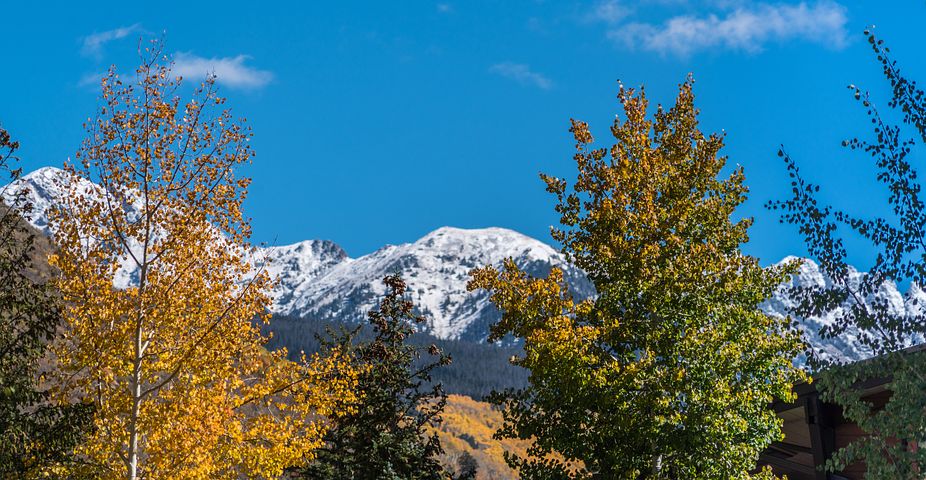
My now-home state Colorado has a set of symbols like California.  The “Centennial State” has the Bighorn Sheep, the Lark Bunting, the Blue Spruce, the Columbine, and John Denver’s “Rocky Mountain High”.  But the song could just as easily be Katharine Lee Bates’ “America the Beautiful”, inspired by the Rocky Mountain peak I can see as I type.  The song could also be Kenny Knight’s “America”.

You listen.  You choose.  There are no right or wrong answers here.  Remember, even Google Maps gives you several options as you navigate your way.

All That Glitters

Audrey Hepburn will always be one of my favorite actresses.  Her grace, beauty, and acting – especially her comedic roles – combined for an enchanting big-screen presence.  I’ve only seen a handful of her movies but it didn’t take many to fall in love with Audrey’s delightful characters.  Eliza Doolittle in My Fair Lady (which premiered shortly after I was born).  Sabrina Fairchild in Sabrina.  Hap in Always (her final film).  And perhaps my favorite role, the quirky Holly Golightly in Breakfast at Tiffany’s.

In the opening scene of Breakfast at Tiffany’s, Holly gazes into the New York City Fifth Avenue store window and famously observes, “Nothing very bad could happen to you there.”  Holly’s probably right, but that’s not to say something very bad couldn’t happen to Tiffany’s itself.  Sales and profits are down significantly over the last two years.  Cartier and David Yurman steal market share from the ultra-wealthy.  As detailed in a recent Wall Street Journal article, Tiffany & Company is resorting to pedestrian strategies to restore its cachet.  And those strategies are so not Tiffany’s.

The first sign of Tiffany’s troubles might have surfaced last February, when the company debuted its first-ever Super Bowl ad.  I’m not sure what tarnished the Tiffany’s image more: a television commercial stuffed between plugs for beer and tortilla chips, or Lady Gaga as its newest sponsor.  Apparently, that’s an appeal to the Millennial generation (as if young people shop at Tiffany).  No offense, but Ms. Gaga is no Audrey Hepburn, as Zales is no Tiffany.  There’s a bit of a stain on the robin’s-egg blue.

The one and only time I visited Tiffany’s New York City location was two years ago with my family.  Despite our touristy dress we were greeted warmly by the security guard as we passed through the grand polished brass-and-glass doors.  Once inside, after a nervous glance at the showcases of diamonds (as if we could afford anything whatsoever), we were politely redirected to the fifth floor to “more affordable offerings”.  I took no offense, as I was only hoping my daughter could snag one of the famous blue boxes as a souvenir.  Turns out she purchased a Tiffany’s gold ring for several hundred dollars while my wife and I settled for a set of Tiffany’s ceramic mugs.

As satisfied as we were with our purchases, I have to admit gold rings and ceramic mugs removed a bit of the Tiffany prestige.  I more associate Tiffany’s with priceless diamonds and silver – befitting royalty.  In fact, that’s where Tiffany’s got its start: almost two hundred years ago as a purveyor to the Russian imperial family.  Tiffany’s also brings to mind its trademark advertisement, showcasing a single piece of jewelry against the silhouette of a couple embracing – a refined, iconic portrait of elegance.  Audrey Hepburn, not Lady Gaga.

Today you can purchase Tiffany ceramics, as well as Tiffany leather goods, paper products, watches, fragrances, and even a limited-edition cell phone.  You can find over 300 Tiffany shops in 22 countries around the world.  I thought Tiffany was more of the “Rome-Paris-London-New York City” kind of retailer, complete with stern, immobile security guard at each front door.

Admittedly, some of my first associations with “Tiffany” were far removed from diamonds and gemstones.  Tiffany Darwish was a flash-in-the-pan American singer in my late teens (her only real hit: a retread of Tommy James and the Shondells’ I Think We’re Alone Now).  I developed an affection for Tiffany lamps  – the stained leaded-glass variety – when I studied the Craftsman style of architecture in college.  And it’s hard to get the lyrics to Big Blue Something’s singular hit out of my head; especially the lines: “And I said, ‘What about Breakfast at Tiffany’s?’  She said, ‘I think I remember the film.’  And as I recall, I think we both kinda liked it.”

Tiffany & Co. recently ousted its Chief Executive in search of a new one, with hopes of improving both sales and image.  To the new leader in search of new answers, I say look back to the Golden Age of Hollywood for guidance, when the Tiffany blue was truly iconic.  As Holly Golightly would say, nothing very bad will ever happen to you there.

Some content sourced from Wikipedia, “the free encyclopedia”.

America Makes the List

Last Friday’s celebration of the Chicago Cubs in the Windy City made headlines the following day. The fantastic turnout to celebrate a long-awaited World Series victory – from those lining the parade route to those further south at the rally – was generously estimated at FIVE MILLION people. That’s a serious confluence of baseball fans. But the number really gave me a jolt several days later, when someone ranked the gathering as the seventh largest in human history.

69-confluence-1

Five million.  Hard to picture that many people in one location.  The population of Chicago is only half as much so the suburbs must’ve emptied out as well (it was a record day for the Metra commuter rail service).  Maybe I should’ve hired a helicopter or the Goodyear blimp and flown overhead, just to see all those human heads from a single vantage point.

Perspective?  If you take the combined attendance to Major League Baseball games in the 2016 season – 73,159,044 fans watching 30 teams play 2,424 games  – Friday’s crowd was almost 7% of that.  If you only consider the attendance to the seven games of the World Series – 299,704 fans watching 2 teams play 7 games, Chicago’s party drew seventeen times that many.

Five million people live in Norway (though I challenge you to see every single Norwegian from one location).  Five million people also live in the Russian city of Saint Petersburg, but how would you get them all to stand still while you counted?

I still can’t picture five million, but maybe the following will help.  Dunkin’ Donuts just announced its “DD Perks Rewards” program exceeded five million members.  Whirlpool just announced a recall of five million tumble dryers in the UK because of “blaze risk” (same technology as the Galaxy Note 7 phone?)  A recent census indicated five million people have jobs in Switzerland.  By the year 2020, a bunch of new robots will be added to the global workforce, thereby eliminating – you guessed it – five million jobs.  Finally, here in Colorado the government’s ‘Project Baseline” built a vault to store all kinds of seeds for future experiments, in response to climate change and environmental degradation.  Scientists have been collecting the seeds since 2012 and the vault now contains… five million of the little buggers.

Those are some fun facts but they don’t really paint the picture I’m looking for.  Let’s consider five million another way.  When someone says “seventh-largest gathering”, you want to know about gatherings one through six, don’t you?  What would you guess – religious pilgrimage?  Papal mass?  State funeral?  Correct, correct, and correct.  Here are the top ten gatherings in mankind’s recorded history:

  1. Kumba Mela pilgrimage, India, 2013 – 30 million
  2. Arbaeen festival, Iraq, 2014 – 17 million
  3. Funeral of CN Annadurai, India, 1969 – 15 million
  4. Funeral of Ayatollah Khomeini, Iran, 1989, 10 million
  5. Papal gathering in the Philippines, 2015 – 6 million
  6. World Youth Day (also attended by the Pope), Philippines, 5 million
  7. Chicago Cubs World Series Celebration – 5 million
  8. Funeral of Gamal Abdel Nasser, 1970 – 5 million
  9. Rod Stewart concert, Brazil, 1994 – 3.5 million
  10. Hajj pilgrimage, Mecca, Saudi Arabia – 3 million

Thanks to the Cubs, America finally makes the list.  But I’m no closer to picturing five million people than I was at the start of this post, and I’m running out of words.  Tell you what.  If the Cubs win the World Series next year (meaning the world comes to an end again), I’m heading to Chicago to be a part of the victory celebration.  If I can’t picture the number, at least I can say I was “one in a million”.  Or five million.

American Pastime

Over the next three months, on any given Saturday, the spotlight of college athletics will shine brightly on football. Millions of fans will flock to stadiums (or in one instance, a motor speedway) to witness this most American of sports. Tailgate parties will crop up hours before kickoff.  Team-branded merchandise will fly off shelves to the tune of millions of dollars.  Broadcasters will endlessly debate one team’s merits versus another’s shortcomings.  It’s fair to say college football will be a more consuming topic than the presidential election.

60-indelible

Last weekend my family and I experienced the unique opportunity to attend two college football games in Texas on consecutive days. UCLA played Texas A&M in College Station on Saturday, where A&M’s Aggies won in thrilling fashion in overtime. Then Notre Dame played Texas in Austin on Sunday, where UT’s Longhorns also won in thrilling fashion in double overtime. On Friday we could’ve added yet another game, passing through Waco as Baylor opened its season against Northwestern State.

Here are a few college football statistics for your consideration:

  • There are well over 100 NCAA Division 1 college football teams competing on any given Saturday of the season.
  • The combined attendance to last weekend’s games involving at least one team in the Associated Press (AP) Top 25 was over 1.5 million fans. That included UCLA-Texas A&M (100,443) and Notre Dame-Texas (102,315 – an all-time record for a Texas home game).
  • The face value of a major college football game ticket is around $100 this year.  Accordingly last Saturday’s AP Top 25 games alone generated $150 million (not counting merchandise, concessions, and parking).
  • There are eight college football stadiums in the U.S. with more than 100,000 seats, and another twenty-two stadiums with more than 75,000 seats.  The largest NFL football stadium has 82,500 seats.
  • Next Saturday’s college football game between Tennessee and Virginia Tech will be held at Bristol Motor Speedway (TN).  The 150,000 fans expected in the grandstands will shatter the all-time record for college football single-game attendance.

Sure, college football has some impressive numbers.  The game will only get more popular.  Yet last weekend also reminded me there are more indelible memories than the game or the venue itself.  Consider:

  • The heart-warming spirit of hometown Texas A&M.  As a fan of the opposing team, the reception in College Station is akin to a stranger inviting you into his living room for sweet tea and cookies.  I lost track of how many Aggies welcomed us to campus, wished our team well, or simply thanked us for making the trip.  Their politeness is downright 1950’s-sitcom.  With that in mind, add See a football game in College Station to your bucket list.
  • A&M’s Fightin’ Texas Aggie Band.  Also known as the Corps of Cadets, the four hundred musicians comprise the largest military marching band in the world.  Their movements are so coordinated and precise you’d swear you were looking at a computer-generated equivalent.  One Aggie actually apologized to me for the “old-fashioned” feel of the Corp.  On the contrary; it was one of the most impressive halftime shows I’ve ever seen.
  • The Littlest Fans.  Texas A&M and Texas alike draw a healthy number of families to their games.  My favorites are the little ones: those fans between the ages of 5 and 15.  They’re decked out in their team colors and face paint, with shiny hair ribbons and pom-poms.  We had several of them sitting right in front of us at the Notre Dame-Texas game.  Their innocence and unabashed enthusiasm were priceless.

My advice after my mega-weekend of college football?  Ditch the television.  GO to a game and see what you’re missing.  There happens to be one this Saturday, and not far from where you live.

Just Beyond the Spotlight

34.9 million people (including most of Jamaica) watched on Monday night as Usain Bolt claimed track and field legend at the Olympics by winning the Men’s 100m.  It was Bolt’s third straight gold medal in the event; remarkable considering he is eight years older now than when he won it the first time.  Like Michael Phelps and swimming, the hype leading up to Bolt’s latest victory was justified.  NBC covered every one of Bolt’s qualifying heats in prime-time, and delivered a good twenty minutes of back story before the final.  Bolt will be a household name if he is not already.

runner-311737__340_edited

The 100m run is one of several Olympic events I never miss.  It is a wondrous display of athletic power, and I’m always on edge to see who will become the “world’s fastest human”.  However, the prime-time Olympic spotlight need also shine on lesser known events and athletes.  Herein lies the oft-overlooked beauty of the Olympics: it is these “others” that emerge with the most inspiring stories.  They are not so much superstars, yet are still among the best at what they do.  A few examples for your consideration:

57 - wondrous 1

Charlotte Dujardin of Great Britain rode to a gold-medal performance in Individual Dressage.  Show Jumping may be the more popular Olympic equestrian event but Dressage is the more difficult (and defined as “the highest expression of horse training).  Dujardin and her Dutch Warmblood horse “Valegro” floated through an almost magical routine, completing one spectacular movement after another.  Dujardin and her mount were graceful, elegant, and significantly better – at least on points – than the silver medalist.  And her story became even more poignant when I learned Dujardin was engaged to be married shortly after receiving the gold medal, while Valegro has earned his last championship (of many) and will be retired from the sport.

57 - wondrous 2

Sanne Wevers of the Netherlands leaped to a gold-medal win on the balance beam in Women’s Gymnastics.  It was the first women’s gymnastics medal of any kind in her country’s history.  Wevers’ routine featured several jaw-dropping maneuvers I’d never seen before, including several spins while balanced precariously on one foot.  The judges were won over by Wever’s creativity and skill.  American television tried desperately to keep the spotlight on our own athletes (who were favored to win), but Wevers was clearly the humble star this night.  And her story was made even more poignant when the cameras turned to her twin sister Leika in the stands – also a member of the Dutch gymnastics team – as she reacted to Sanne’s upset win with tears of disbelief.

57 - wondrous 3

Molly Huddle of the United States ran what should have been a gold-medal performance in the Women’s 10,000m run.  Except she didn’t win the gold medal.  When a group of eight women broke away from the pack after several laps – most of them Kenyans and Ethiopians – Huddle broke away with them.  After twenty-five laps Huddle crossed the finish line in sixth place, breaking the American record for the event by almost nine seconds.  And her story was made even more poignant when I learned Huddle’s finishing time would have been good enough for the gold medal in three of the last four Olympics.

The Games continue for several more days.  More superstars will be at their best on prime-time television.  Just remember to look around and see what else is going on.  There are wonderful stories just beyond the spotlight.

Rings of Summer

Over the next two weeks, the world will be witness to the greatest gathering of athletes and sports mankind has to offer. The XXXI Olympiad -that’s 31st for you non-Romans – will be hosted by the city of Rio de Janeiro.  (Just saying “Rio” reminds me of “FedEx” – it’s simply not the whole enchilada).  I must admit I didn’t realize “Olympiad” refers to the four-year period between Olympic Games – not the Games themselves.  Count backwards by fours and you’ll realize the first modern Olympic games was held way back in 1896.

55 - Olympiad

You may say, non-sports-fan that you are, there is nothing seventeen days of sports competitions can do to stir your soul. But I urge you, put away the electronics and have a look, even if only for an hour or two. A moment will be there and you don’t want to miss it.

The first Olympic Games I remember well was 1976 in Montreal.  As a fourteen-year old, I was captivated watching Nadia Comaneci – also fourteen (!) – as she won three gold medals and scored seven perfect 10.0’s in women’s gymnastics.  I love this trivia item: the gymnastics scoreboard could only hold three digits, so Comeneci’s perfect scores were expressed as “1.0”.  For anyone who watched, it was one of the most electrifying performances in any sport and in any Olympics.  It was a moment to remember.

The second Olympic Games I remember well was 1980, but only because the United States boycotted the events due to Russia’s invasion of Afghanistan at the time (which is ironic given America’s involvement in that country today).

That brings us to 1984: the XXIII Olympiad in Los Angeles.  I was a senior in college, working a summer internship in Southern California.  I was witness to a city transformed.  The Games were hosted in a revitalized Coliseum (the same venue where the Olympics were held in 1932).  Ronald Reagan was President and opened the Games in person.  Sports venues were spread across the city, and the coincidence of several competitions on Fridays caused most businesses to shift to 4×10 workweeks.  American flags were everywhere.  The Olympic spirit was alive and well in the City of Angels.

I distinctly remember the torch relay at the L.A. Games, passing through the neighborhood where I grew up; John Williams’ glorious musical composition at the opening ceremonies (where dozens of white grand pianos were played simultaneously); Mary Lou Retton’s golds in women’s gymnastics; and Carl Lewis’s golds in track and field.  I also remember the women’s 3,000 meter run, highly-anticipated because America’s Mary Decker was racing South African sensation Zola Budd.  The two collided mid-race, Decker went down, and she never finished the race (Decker’s anguished face as she lay on the track is one of the Olympics’ classic photos).  There were moments in L.A.

Here’s one more Olympic moment which may surpass any I’ve mentioned above.  It was the women’s marathon.  I don’t even remember the city or the year or the woman who won the gold.  But I do remember the woman who won the bronze.  As she entered the stadium for the final meters of the race, she looked over her shoulder and saw… no one.  The bronze was hers.  She raised her arms in triumph as she finished that final lap, crying in apparent disbelief.  The unbridled joy and tears on her face as she crossed the finish line is a moment I’ll never forget.

The Olympics.  Rio de Janeiro.  Starting tomorrow.  Watch.  A moment will be there and you don’t want to miss it.