The Twenty-four Days of Christmas

The Christmas season seems to begin a little earlier each year. Stores decorate and start their sales around Halloween. Lights go up on houses well before Thanksgiving, while Christmas cards show up in mailboxes by Black Friday.  The longer the season though, the more abrupt the conclusion. Be honest; who among us sings Christmas carols (or watches Hallmark movies) on December 26th?  Not many.  We worry and scurry for weeks about a single day – then suddenly it’s over.  Here’s a better approach.  Let’s focus instead on the one, true Christmas season preceding the day. Let’s focus on Advent.

For most Christians, Advent refers to the twenty-four days before Christmas (not to be confused with the song-famous Twelve Days, which come after Christmas).  Advent begins four Sundays before December 25th.  The word literally means “coming”, as in the (first coming) birth of Jesus at Christmas, and the (second coming) reappearance of Jesus at the end of time.  If you’re looking for the season’s theme song, go with “O Come, O Come Emmanuel”.  It’s the one, true Advent carol.

Once upon a time Advent included fasting, penance, and daily prayer, but today the season seems to be nothing more than a countdown.  Even in Sunday church services, the four candles of the Advent wreath are lit as the four Sundays pass by – a weekly countdown to the Christmas candle in the center. Here’s a more efficient idea.  Let’s add another ball in Times Square; one that takes twenty-four days to drop instead of sixty seconds.  Might save a lot of wreaths and calendars.

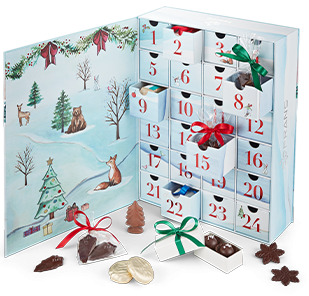
Speaking of calendars, maybe a countdown is enough to signify a season.  Advent calendars are all the rage these days.  I had one when I was a kid; the flat, cardboard kind with twenty-four numbered doors of varying shapes and sizes.  Oddly, the doors were never arranged numerically, as if the calendar was made more appealing by having to search for a given day.  Not so oddly, each door fronted a bit of chocolate.  As if waiting twenty-four days for Christmas wasn’t hard enough, Advent calendars forced a kid to wait twenty-four hours to “open” each piece of chocolate.  A test of patience.


If cardboard and chocolate don’t catch your attention, perhaps you’d prefer a more elaborate version of an Advent calendar.  Consider Fran’s Chocolates of Seattle (above left), which produces its annual calendar fronted by an original watercolor.  Add in twenty-four delectable chocolates in twenty-four drawers, and this calendar sets you back $175.  Or how about Liberty London’s “Beauty Advent Calendar” (above right), which includes twenty-four wellness products – many of them full-size – like probiotic deodorant, essential oil candles, and skin bronzer?  This one sets you back $275, with the price justification you can re-gift whatever items are not to your taste.

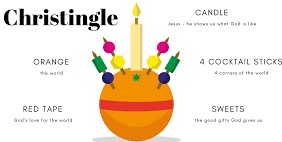
Lest you think a fancy (or not) calendar is the only way to acknowledge Advent, I can’t close without mentioning the Christingle.  I don’t remember creating one of these as a kid.  A Christingle is made up of an orange, a candle, a bit of red ribbon, and four sets of dried fruits or sweets, skewered on cocktail sticks.  It’s a strange-looking assembly, but the Christingle gets an “A” for symbolism.  The orange represents the world.  The candle represents Jesus as the light of the world.  The red ribbon represents God’s love (or Jesus’ blood).  The fruits/sweets represent the gifts God gives us, and the cocktails sticks represent the four corners of the globe.  Lots going on in one sort-of-neat package.

Austria may lay claim to the biggest Advent calendar in the world!

If you’re reading this post before December 1st, you have the entire twenty-four days of Advent ahead of you.  Twenty-four days to slow down and appreciate the meaning of day twenty-five.  Sounds more like a season than a single day, doesn’t it?  Mark your calendar then.  Advent is here.

Some content sourced from Wikipedia, “the free encyclopedia”.

Media Meltdown

Nope, not that media.

A few weeks ago, I gave Legacybox a try.  Heard of ’em?  Legacy converts old home movies – the ones you may have on VHS or 8mm tapes (or even reel-to-reel) – into clean, digitized formats. I sent Legacy a heaping box of my tapes (reel-to-reel was slightly before my time), and a month later received a single, tiny thumb drive in return. Remarkable really: dozens of hours of precious video memories packed into a bits-n-bytes “box” the size of a fingernail clipper. If I’d chosen a digital download instead of the thumb drive, I wouldn’t have received anything (physical) in return.

We’ve flash-landed into a digital, live-stream, can’t-hold-it-in-your-hands world of multimedia these days.  Phonograph records, celluloid film, audio and video cassettes, and optical media like CD’s and DVD’s spin firmly in the rear-view mirror; collectables reserved for only the most nostalgic.

[It’s not a stretch to say print media – books, newspapers, magazines, and photographs – aren’t far behind, but that’s another post for another day.]

For those of you born in the last century – literally, not figuratively – let’s eulogize some of these once-upon-a-time physical media formats.

The “8-track”

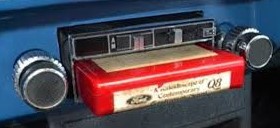
I’m old enough to remember 8-track tapes, are you?  Before I owned my first “LP” or “45” record, I was regularly subjected to my dad’s music choices on his car stereo 8-track player.  In hindsight, there’s something endearing about the bulky, inefficient format of the 8-track tape (except when your only memory is your dad’s music).

The smallish 45 “single”

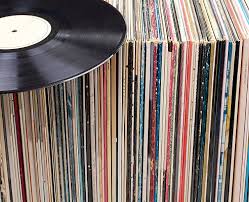
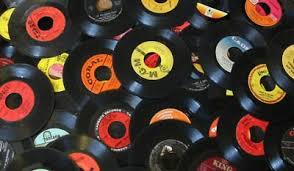
Before the 8-track tape gave way to the compact cassette, I built up a pretty good collection of 1970’s 45 rpm records (“singles”) – 100 or more.  My older brother – who built a sizeable collection of 1970’s 33 rpm records (“LP’s”), understandably disdained my choices in music.  His flavor was “classic” rock (ex. Rick Wakeman, Emerson, Lake & Palmer) while mine was “bubblegum” (ex. Olivia Newton-John, Barry Manilow).  Appropriately, I have Olivia’s “Let’s Get Physical” re-running in my head as I cover today’s topic.

The cool thing about compact cassettes was – of course – you could record things (birthing the concept of the “playlist”).  Just as noteworthy, you could play cassettes in your car’s “deck”.  Your records had to stay home.  It wasn’t long before my 45’s were stashed in the closet and I was all-in on “tape”.  I spent countless hours recording and listening as I hugged my very first tape recorder.  I spent countless weekly allowance dollars on the Columbia House Record and Tape Club.  When the ultra-compact Sony Walkman debuted in 1979, cassette-tape music went everywhere you did.

Right about the same time as the Walkman, JVC (VHS) and Sony (Betamax) figured out how to put video on tape.  My early memories of movie rentals at the video store include renting the video player too.  After all, the price tag on first-generation “VCR’s” ran into the thousands of dollars.  I can still picture myself lugging a bulky VCR down the street to my apartment, with a pile of cables, an instruction booklet, and a stack of videotapes to watch.  Then, twenty-four hours later, I’d pack it all up and lug it back to the store.

The colorful “laserdisc”

Compact discs (CD’s) and digital versatile discs (DVD’s) felt like space-age technology in the ’80’s and ’90’s.  But press the Pause button for a moment.  Did you forget laserdiscs (LD)?  LD’s were the first optical disc storage medium, and man did I buy into the hype of those rainbow Frisbees.  By the time I invested in a (bulky) LD player and loaded up on (pricy) LD’s themselves, DVD’s were beginning to take over the home video market.  Sadly, I still have my LD collection today (along with my no-longer-functioning LD player).  I figure the whole setup isn’t even worth the time to advertise on Craigslist.  In hindsight, laserdiscs were the very definition of unwieldy.

Finally (for physical media), I never graduated from DVD’s to Blu-ray discs, but “cinephiles” claim Blu-ray looks and sounds even better than its digital successors.  Regardless, Blu-ray should be considered the final frontier in a history of physical media dating back to the 1800’s.  Check out Wikipedia’s timeline of audio formats (player-piano rolls!) here.

Thanks to companies like Legacybox, Netflix, and Spotify, digital media is here to stay.  But I must concede, there’s little pride in perusing a collection of utterly un-physical files and folders on my laptop.  Maybe Olivia Newton-John knew what she was singing about after all.

Or maybe that’s why I’m still hanging onto my laserdiscs.

Some content sourced from the 10/11/2019 Wall Street Journal article, “Streaming Is Killing Physical Media.  Here’s Why You Won’t Miss It”, and Wikipedia, “the free encyclopedia”.

Vowing To Be Different

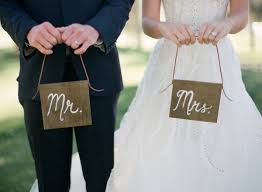
When my son and his wife were married five years ago, there was a moment in the planning stages where I realized their wedding day would be anything but “traditional”. Credit their beautiful outdoor venue (no church), the “mixed-up” wedding party (ladies aside the groom; men aside the bride), their Keds canvas sneakers (no formal shoes beneath the tuxes and dresses) or the trays of truffles after dinner (no wedding cake) – they found dozens of details to make their day unique and memorable. But given the most recent wedding trends, perhaps my son and his wife were more old-school than I thought.

Hindsight being what it is, my own wedding to my wife thirty-two years ago now seems downright formulaic.  We were married in a church, accompanied by an organist and harpist.  We exchanged rings and vows before a priest.  We lit a “unity candle” at the altar.  Our reception was in a hotel ballroom, with an open bar and live band.  Dinner was served, wedding cake was cut, and the only time the dancing stopped was to toss the bouquet and garter.  Our one and only off-script detail? We included a contemporary John Denver song in the ceremony (much to our priest’s dismay).  Otherwise ours was a carbon copy of just about every other wedding of the 1980’s.

I’m sure you have examples of just what makes weddings different these days.  Let me guess.  They’re no longer just outdoors; they’re now in backyards or in barns or at faraway “destinations”.  The ceremony is facilitated by an officiant (“basic online ordination package” – $29.99!)  The bride grooves down the aisle to something more like Metallica than Mendelssohn.  The vows – far removed from the dusty “to have and to hold” – could double as songs or poems.  The receptions take place in twinkly-lit tents.  The food is more likely “finger” than “buffet”.  The wedding cake has been replaced by a cupcake tower.

“Non-traditional” should be a non-surprise when it comes to modern-day weddings.  After all, the average age of today’s marrying couples is 29, which typically follows years of living together or even a purchased home.  Four of five couples who marry are millennials, and millennials are all about personalization.  Thus, 44% write their own vows, and only one in four have their ceremony in a religious institution.

Fido bears the rings?

Let’s dig deeper, shall we?  If you’re not convinced the traditional wedding has gone completely off the altar, check out the Chapel of the Flowers website (“Voted Best Wedding Chapel in Las Vegas!”), particularly their article, “New Wedding Traditions to Trade In for the Classics”.  Perhaps you and your future spouse will consider the following from their list of suggestions (not that I would):

  1. Rings – Skip the jewelry store and head for the tattoo parlor.  Your wedding band tat will never fall off and the ink will remain… “until death do you part”!  For that matter, your tattooist might also be an officiant, so you can have the whole shebang right there in the parlor.  I’m sure the biker dude in the next chair will be happy to witness the signing of your marriage certificate.
  2. Wedding Dress – Skip the white in favor of pastel hues or bright, tropical colors.  After all, the “innocence, purity, and light” of white may not be – ahem – the appropriate statement.
  3. Pocket the Phones – As in, ask guests to refrain from taking their own photos.  Really?  Is the Force with you or something?  Unless you hand out physical restraints as your guests walk through the doors, those phones will keep on a-clickin’.  Moving on…
  4. Smaller Wedding Parties – 1-3 family/friends at most.  This suggestion is either overlooked, ignored, or most likely mocked.  If anything, wedding parties seem to be getting bigger these days.  Moving on again…
  5. Gifts – Out with the wedding registry and in with “donations to a good cause”.  Say what?  I get that modern-day couples live together and already have most everything they need, but what about cash?  Clearly, money dances have fallen by the wayside.  Donations to good causes works for funerals but not for weddings.  Hard pass.
  6. Delayed Honeymoons – Don’t delay… I repeat, don’t delay.  I know several couples who never had a honeymoon because, well, “more important” things got in the way (i.e. real life).  I also know a couple who divorced before they even made it to their honeymoon.  Don’t delay.  Have some fun while you’re still carefree and unconditionally happy.

No matter how you feel about “new traditions” at weddings these days, there’s an underlying positive to be gleanedAt least we still have weddings.  The vows may raise your eyebrows.  The food and festivities may not be your particular glass of champagne.  But those details don’t really matter, do they?  At the end of the day, you still have two “I do’s” and one “I now pronounce you…”, sealed with a kiss.  You still have a marriage.

Some content sourced from the Wall Street Journal article, “They Solemnly Swear Their Wedding Will Ditch Tradition”. (8/6/19)

Trilling on the Trail

An old friend stopped by to visit the other day. He appeared at my front door without warning, taking me back almost fifty years to the moment we first met. He is still quite the singer. His stride is supremely confident. Most annoyingly, he finds unqualified joy in every blasted thing he sees and hears. My friend is, after all, The Happy Wanderer.

http://www.youtube.com/watch?v=5GgJHe0bC34

If you’ve encountered The Happy Wanderer at some time in your life, you know exactly who I’m talking about.  He is Mr. “Val-deri, Val-dera”.  Those words alone should revive the sing-song tune fried into most brains since childhood.  “The Happy Wanderer” could’ve been quarantined within Germany were it not for its award-winning performance by the Oberkirchen Children’s Choir (and subsequent radio broadcast by the BBC), in 1953.  Then, Mr. Wanderer went worldwide-viral and there was no turning back ever.

Oberkirchen coat of arms

According to his lyrics, The Happy Wanderer (we’ll just call him “Hap”) takes hikes into the mountains and alongside streams, his hat on his head; his knapsack on his back.  Hap points out blackbirds and skylarks along the way, and his journey brings him unbridled giddy happiness and laughter (as in, “Val-deri, Val-der-ha-ha-ha-ha-ha…”).  Our boy smiles the entire time and boldly invites YOU to join in the singing.  In his final verse, Hap wants to wander (and sing) until the day he dies.  That’s a little extreme for a children’s song, don’t you think?

Speaking of childhood, Hap and I first met way back then.  He entered the “UK Singles Chart” on January 22, 1954, eight-years-to-the-day before I was born.  Eight years after I was born, I henpecked Hap’s tune as I learned to play the piano.  “Chopsticks”, “Twinkle Twinkle Little Star”, and “The Happy Wanderer” were almost assuredly the first three pieces I ever memorized.

Hap wandered into my life again in the Boy Scouts.  I recall a lot of singing on weekend hikes (not sure why – who’d be happy backpacking forty pounds towards some distant campsite?)  Besides “John Jacob Jingleheimer Schmidt” and “The Ants Go Marching…”, we Scouts unabashedly sang “The Happy Wanderer” through mountains and alongside streams.  Hap’s tune even made the official list of “Scout songs” (see here.)

I thought I was done with Hap years ago (it took me decades to forget his slaphappy song), but recently he resurfaced.  First, on a cruise down Germany’s Rhine River, at an outdoor dinner in the little town of Rüdesheim.  I was volunteered by my fellow travelers to play with the band.  I manned a big oom-pah-pah drum while another poor soul clanged the cymbals.  A band member played the clarinet.  And our one and only performance – naturally – was “The Happy Wanderer”.  To add shame to the silliness, we marched between the tables as we played.  I did my best to look “happy”.

Hap’s other revelation may be a little more prolonged.  On the same Rhine River cruise, in Bavaria, my wife and I bought a handmade cuckoo clock.  The clock was shipped and arrived in the States two weeks ago.  Imagine my delight when I wound the clock and the cuckoo bird busted through his little door, the dancers twirled, and the tiny music box played “Edelweiss”.  The “sound of music” every hour on the hour!  Er, every other hour on the hour.  Turns out our cuckoo clock has two songs.  Hello, Happy Wanderer.  If I choose to, I hear his gleeful melody twelve times a day.  Or, If I choose to, I can flip a switch and I don’t hear anything at all.  I expect I’ll be flipping the switch any day now.

If you’d like to add to my hap-aberration, go to 1-800-FLOWERS and have a hardenbergia violacea delivered to my door.  HV is a species of flowering plant from the pea family.  Some call it a lilac vine.  Others give it nicknames like “false sarsasparilla” or “purple coral”.  It’s also lovingly referred to as “The Happy Wanderer”.

Heaven help me.

Some content sourced from Wikipedia, “the free encyclopedia”.

A Distant Third

America’s Election Day finds us one week post-Halloween, fifty days pre-Christmas, and still adjusting to that pesky hour gained from the loss of Daylight Savings Time (got all that?) Fittingly, I’m working through a small pile of candy corn and M&M’s while placing a couple of online orders for holiday gifts. And that, my friends, is the perfect lead-in to today’s topic. With Halloween fading fast as the sun, and Christmas approaching like Starbucks’ holiday cups (just when did those show up already?), where in God’s name is the love of Thanksgiving?

Of course, Thanksgiving gets steamrolled every year between the other two loudmouths – just seems the real estate on either side is getting bigger. Our neighborhood’s professional haunted houses, pumpkin patches, and corn mazes opened gates in early September. Then Christmas’ onslaught of decor, music, and retail made its entrance the moment front-porch lights switched off on trick-or-treating. In short, Holiday 1 and Holiday 3 officially overlapped each other, suffocating Holiday 2 onto life support. It’s the classic case of middle-child syndrome – “exclusion caused by the more specific attention to the others”. Poor Thanksgiving.

To be fair, ranking the standard aspects of holidays puts Thanksgiving in third place in just about every category.  Let’s review a few:

ORIGIN: Halloween dates to 2,000 years ago; the ancient Celtic festival of Samhain (in present-day Ireland), when people lit bonfires and wore costumes to ward off ghosts. That’s pretty cool.  Thanksgiving dates a mere 400 years, mimicking the harvest meal shared by the Wampanoag Indians and English Pilgrims. Christmas – at least to us Christians – dates over 2,000 years ago to the birth of Christ. Measured by the calendar then, Christmas (C) takes first place, Halloween (H) second, and Thanksgiving (T) a distant third.

CELEBRATION: Halloween used to be just children’s trick-or-treating. Now we’ve evolved to a month of the aforementioned haunted houses, pumpkin patches, and corn mazes; then costume contests, themed drinks, and increased cover charges at the bars; and a plethora of scary movies at the theater. Thanksgiving?  One day preparing one meal to be consumed in (more or less) one hour.  Christmas has its December 25th, but it also has a season’s worth of caroling, parties, movies, concerts, parades, church services, craft shows, decorations, temporary ice-skating rinks, and on and on and on.  Again – First Place: C, Second: H, (Distant) Third: T.

MUSIC: Halloween: “Werewolves of London”, “The Time Warp”, “The Monster Mash”, “Ghostbusters”, “Thriller”. Christmas: You-pick-’em – a dozen of your favorites (from hundreds if not thousands of carols). Thanksgiving: Not one.  Not one single, solitary tune comes to mind. First Place: C, Second: H, Late-to-the-party: T.

COLORS: Halloween: Red, Orange, Yellow (and every shade in between). Thanksgiving: brown. Christmas: Red, Green, White. Let’s call it a first-place tie between C and H.  In third place (and looking awfully uncolorful): T.

APPAREL – Let’s give this category about five seconds. Halloween is all about apparel, so anything goes and everything works. Christmas allows for – at least once in the season – your Sunday best, or getting all dolled up for some special occasion. Thanksgiving? All I come up with is stretch pants to ease the digestion of the meal.  First place: H, Second place: C, Absent-From-The-Podium: T.

FOOD – Halloween brings forth every imaginable candy, with a side of bobbed apples and witch’s brew. Christmas explodes with candy canes, decorated cookies, the Grinch’s roast beast, and those wretched fruit cakes. But here comes Thanksgiving for the kill – turkey, stuffing, potatoes, cranberries, dinner rolls, salads, vegetables, two-maybe-three kinds of pie, and whatever else you can cram onto the table. Assuming this carb-crazy feast is your cup of tea, Thanksgiving wins in a runaway. First place: T, Second place: C, Third Place (+ Sugar Coma): H.

Let’s tally the results.  In five of six categories, Thanksgiving gets the beat-down from Halloween and Christmas.  The mega-holidays appear to be reducing Turkey Day to a trifle.  But lest you think it’s a dying bird, I’m here to convince you Thanksgiving isn’t down for the count.  Stay tuned: there’s more to discuss about the little holiday that could.

Lack’n Keys

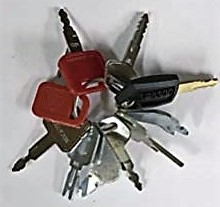
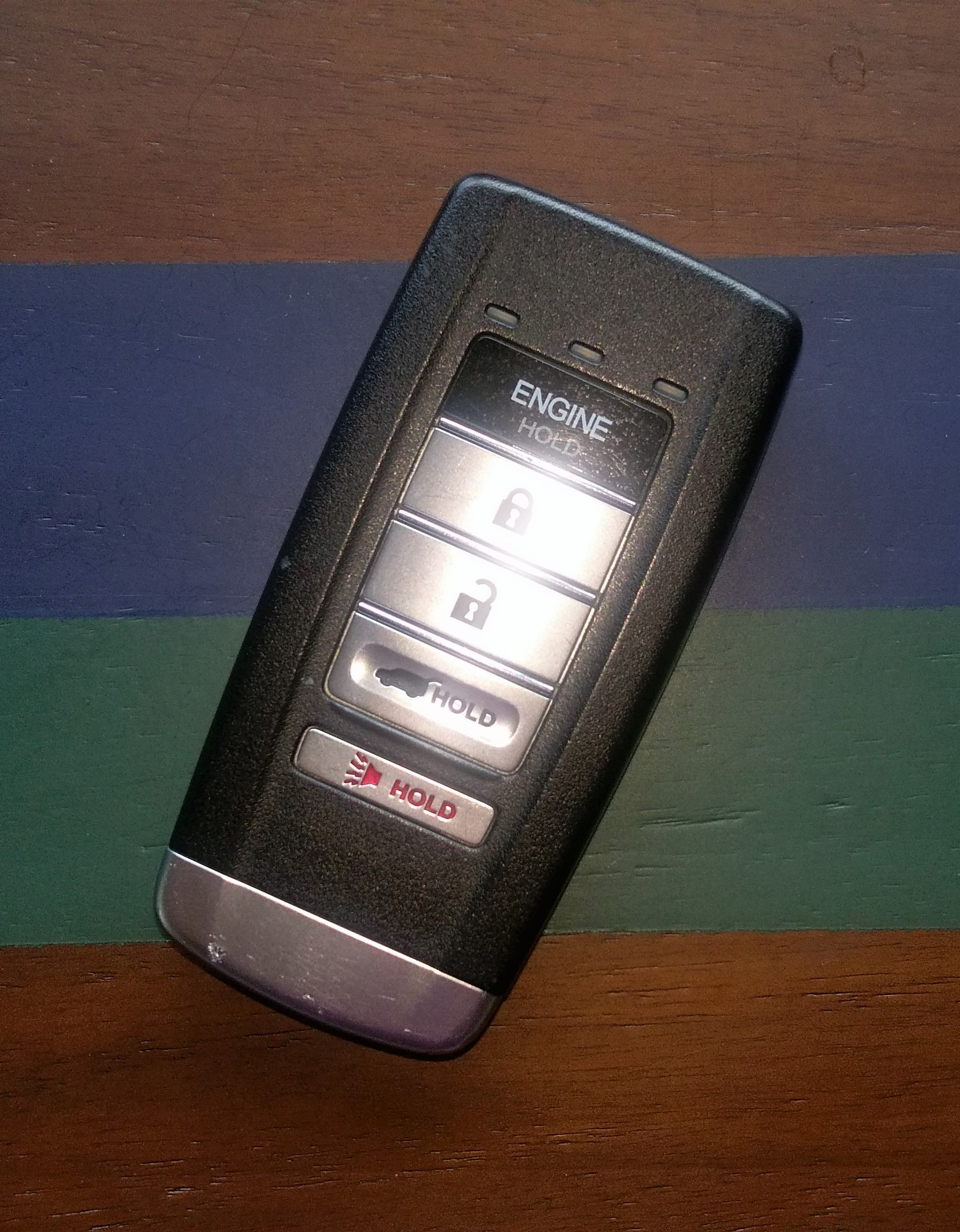
Walking out the front door, I can count on one hand the items I typically carry. I always wear a watch, choosing between a stylish timepiece and a fitness tracker. I pocket a slim leather wallet on my left, containing a minimum of cards and ID. I stash a handkerchief on my right, an acquired habit to handle life’s unexpected messes. My cell phone goes in my back pocket, but really, I’m just shifting it from one location to another (house to car, car to office, etc.)  Finally, I pocket a ring of jingling keys… or should I say “key”… or should I surrender to: “remote transmitter”?

Before

After

Key rings (or chains), still found by the eye-catching dozens at souvenir shops and car washes, used to be a symbol of status.  The more occupants on the ring, the more important the man.  Add on a colorful fob – perhaps boasting of a car brand or a sports team, and your key ring spoke volumes.

At the height of my own “importance”, I carried six keys: two for the cars (mine and my wife’s), and one each for the house door, office door, office file cabinet, and safety deposit box.  Each key had its own character, which made the collection even more interesting.  The house key contained a little light you could shine on the lock when it was dark.  The office cabinet key had a tubular shape.  The safety deposit key was flat and ancient (the senior member of the ring) and required a companion key from a bank teller to open the box.

First toy for our granddaughter

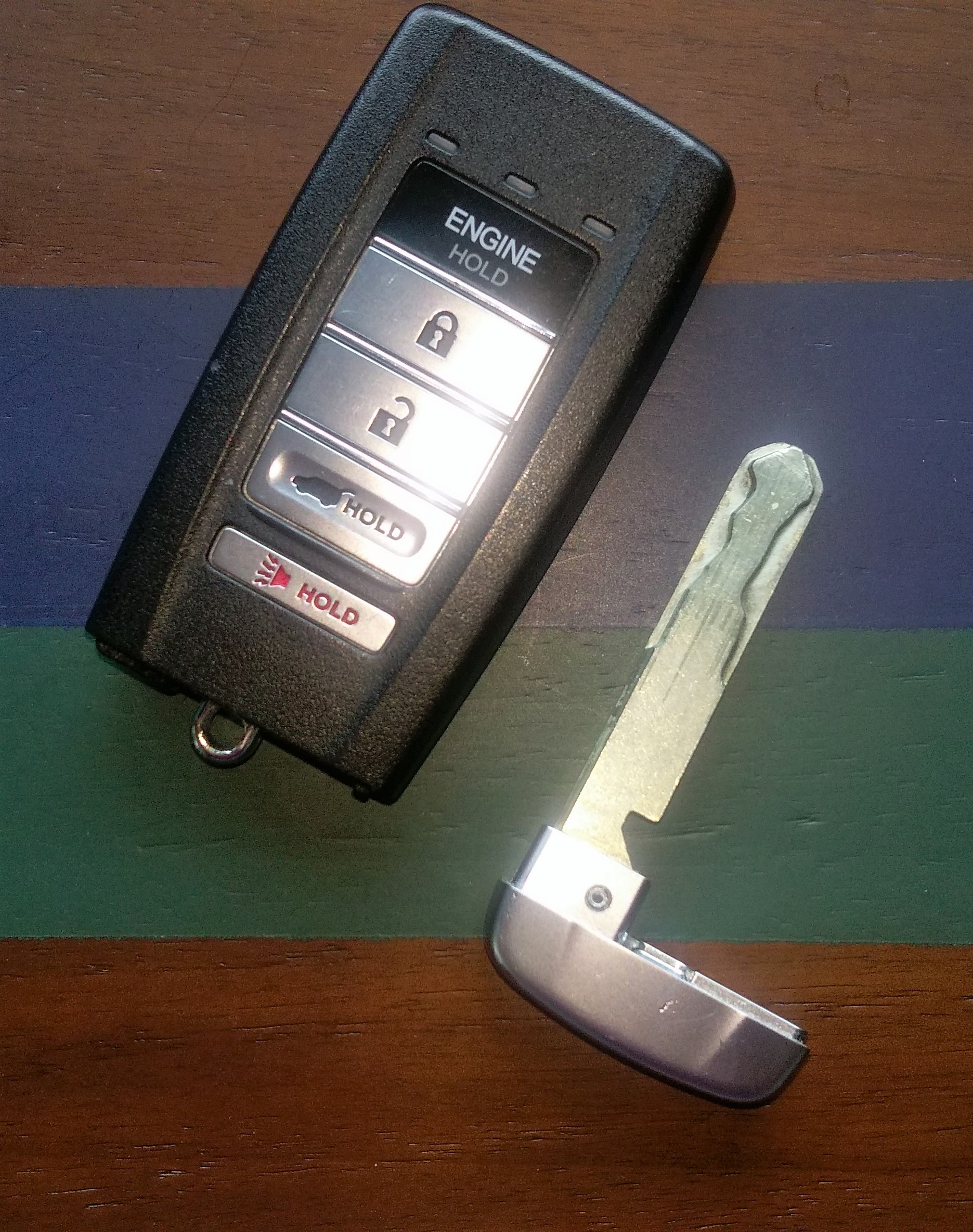
Alas, my key ring is now retired.  In its place is Mr. Remote Transmitter; technology’s answer to key-free cars.  The house door sports a lock with an electronic keypad.  Both office keys went away the day I began working from home.  My wife’s truck key shifted to a drawer in our foyer, in case hers gets lost.  And Mr. Flat-and-Ancient retreated to the home safe; a more prudent location than on a ring in public.

Keys carry a certain mystique in knowing they open something, which is why I miss them.  They also bleed a little nostalgia.  When I was a kid, I carried a tubular key for the lock securing the only vehicle I owned at the time – my bicycle.  When I practiced piano, eighty-eight black-and-white keys beckoned to make music.  When I played basketball, I never went far from the court “key”.  A childhood trip to Baltimore’s Fort McHenry taught me the origin of America’s national anthem…. and therefore about Francis Scott Key.

See why it’s called “the key”?

Keys also appeared in college.  Studying architecture introduced me to the keystone (the central block or other piece at the apex of an arch or vault).  Working architectural drawings always included a table-of-contents “key”, deciphering the symbols and acronyms on the greater page.

(Not-so-random thought: how did I never listen to the soul-filled R&B music of Alicia Keys?)

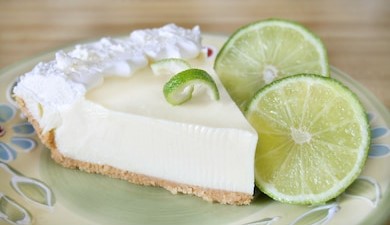
The “real” version requires Florida Key limes.

When I first met my wife, the keys kept coming.  Her family owned a home in the Florida Keys (small, low-elevation, sandy islands formed on the surface of coral reefs).  When she and I moved to Colorado, we flirted with the idea of a ski condo – in Keystone of course.  Our 25th wedding anniversary in Ireland included dinner at Dublin’s “Quays” Restaurant (pronounced, yes… “Keys”).  Also credit my wife for gifting me the most important key of all:

A lifetime of keys makes me a sad I’m “lack’n” them today.  But that’s not quite true, is it?  I spend most days clicking away on my computer keyboard, after all.  Even better, my remote transmitter contains – behind all that technology – a modest little back-up key.  Nice to know I’m still carrying.

Some content sourced from Wikipedia, “the free encyclopedia”.

Teacher of Note(s)

In church last Sunday, early in the service, the congregation was treated to a beautiful rendition of the hymn, “My God and I”.  The young female soloist, introduced with aspirations of the Broadway stage, stood poised behind the microphone, beaming through pitch-perfect singing.  As captivating as she might have been, my attention was drawn to her much older accompanist; a bespectacled white-haired woman at the piano, carefully dividing attention between sheet music and protege.  Wordless communication was exchanged; subtle nods of encouragement; cursory, confident smiles.  And just like that I was no longer in church, but back in second grade, toiling away at the keyboard in anticipation of my weekly piano lesson.
Josephine Siple [Sahy-puhl] – a name and face I’ll remember until my dying day – was my piano teacher from age eight until well into high school.  Why I remember her first name is a mystery (she was always “Mrs. Siple” to me) – perhaps adults said it often enough.  Josephine was the perfect embodiment of a grandmother – the white silvery hair, the abundance of wrinkles, the old-fashioned glasses, the matronly clothes, the wry smiles, and the soothing demeanor to make you feel more like a family member than a piano student.  But make no mistake; Josephine was first and foremost a teacher, educating her students as much about life’s lessons as she did the notes on the page.

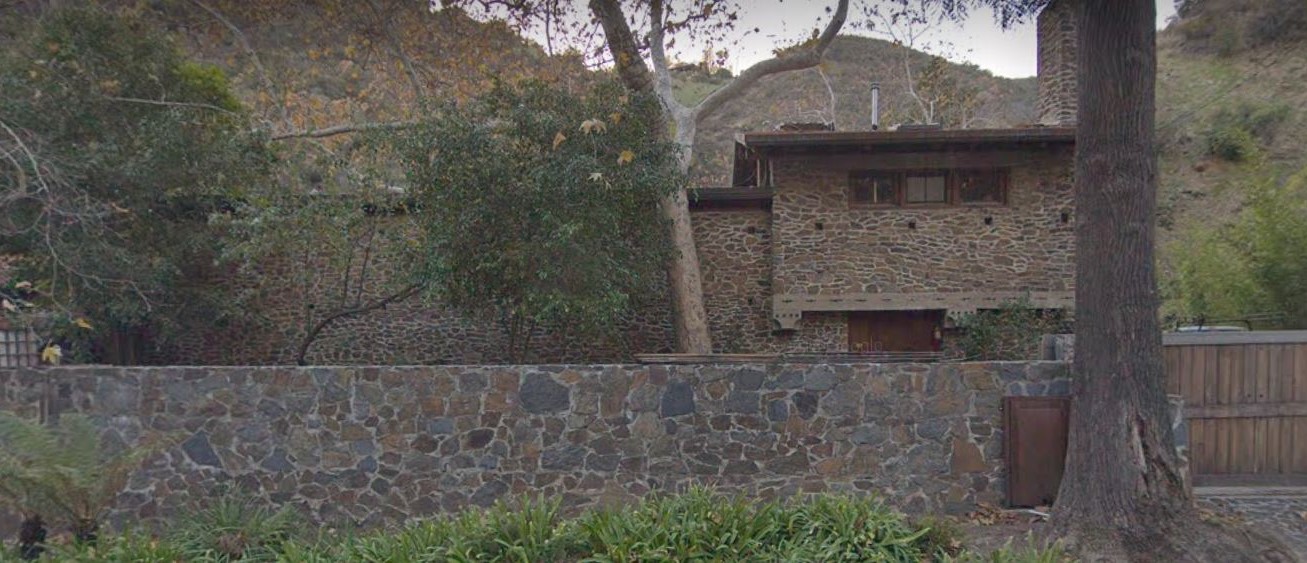
To add to my Norman Rockwell painting (or take away from it), Josephine lived in an unusual house just a few doors up from my own, which I traveled to by bike.  It looked and felt much more like a fortress than a residence.  You passed through an imposing wooden doorway into a stone-floored foyer.  All I remember was the vast living room to the left (the piano lesson room, with a grand and an upright side-by-side), and the rustic kitchen to the right.  A front-and-center staircase disappeared to the second level (where, for all I knew, Mr. Siple dwelled).

Bless you, Google Earth, for I confirmed – fifty years later – Josephine’s house still stands (photo above).  Her place may have been uninviting, but Josephine found a way to make it feel warm and welcoming, even to a timid child.  She would host recitals for parents in the big living room, allowing her students the luxury of a performance at the grand piano.  I can still picture Josephine in the kitchen afterwards, happily serving and chatting behind a big glass punch bowl loaded up with a concoction of 7-Up and lime sherbet, boiling and fizzing like witch’s brew.


A good friend confided in me recently about his granddaughter’s impatience.  He said she’d begun piano lessons – about the same age I was – but simply refused to practice.  Her parents, with utter resignation (and delusions), allowed their daughter to move on to the violin instead.  Why on earth would they endorse an infinitely-more difficult instrument when mere piano practice was already too high a hurdle?

Piano practice was never a problem for me, and I give Josephine all the credit.  She instilled a sense of responsibility which I know translated to a stick-with-it attitude in other aspects of life.  I remember one lesson where I knew I hadn’t practiced enough the week prior.  Josephine sensed it immediately, and though the exact wording escapes me, her comment had just enough, um, wisdom and sting to reevaluate my priorities.  I never showed up unprepared again.

As things are wont to do in childhood, my piano practice and lessons eventually fell by the wayside, in favor of other activities which pale by comparison.  Thanks to Josephine, I entered a few piano competitions. (I was no Van Cliburn contestant but I certainly learned how to perform under pressure.)  Thanks to Josephine, I explored outside of my comfort zone: lessons on the church organ; percussion instruments in the school orchestra; dabbles with flute in college.  None of those instruments consumed me like the piano. Then again, none of those teachers were Josephine.

My piano teacher extraordinaire is long gone, but the memories and lessons she gave me are life-long companions.  I can resurrect Josephine in a heartbeat, as through an accompanist in church.  I can also bring her back in other seemingly-random moments, reminding me her teachings went well beyond the piano.

Cause for Alarms

A headline in this morning’s news feed announced , “Flaming Condoms are the Newest Threat to Southern Israel!” Just wanted you to be aware.

Now that I have your attention, let’s turn to a timelier topic. Big Ben, the iconic clock and tower at the north end of London’s Palace of Westminster, has been silent for almost a year now. In case you missed the news, Ben’s Great Bell and Quarter Chimes no longer toll – for another three years in fact – while much-needed repairs are made to the clock mechanics behind his massive face. At least the damage was simply wear-and-tear, and not the result of flaming condoms.

For Londoners, I have to believe the muting of Big Ben took some getting used to. Imagine, heard on miles of city streets, the Great Bell bonging every hour on the hour, and the Quarter Chimes playing every fifteen minutes (a stuck-in-your-head repeating melody of twenty notes). Now take all that away; replaced by uncomfortable silence. I’m sure city-dwellers subconsciously depended on Ben to remind them they had, say, thirty minutes to get to the office, or fifteen minutes left in the lunch hour, or no minutes before church (better start running). How will these people cope for the next three years?

In the absence of Ben, Londoners surely turn to alarm clocks more than they used to.  Not comfortable relying on their own senses (or the sun’s position in the sky), the English probably carry “Baby Ben’s” if you will – whether mobile phones or other portable devices.  I expect the additional chorus of beeps and chimes and other musical bites make a ride on the Tube even more enjoyable, as you’re left to wonder whether your neighbor’s getting a phone call or simply late for an appointment.

Alarms have come a long way since the basic digital LED box-clocks of old.  I wish those old bedside Ben’s were gone forever, but a visit to any Walmart or Radio Shack proves they’re more prevalent than ever.  My wife used to own one of the more potent models – with an enhhh…enhhh…ENHHH screech capable of levitating me out of a deep sleep, my pulse racing faster than an Indy car.  I’ll hear that murderous alarm even after I’m six feet under.

The colorful Beddi

Today – mercifully – we have several alarm clocks designed not so much to levitate but rather to ameliorate your transition into the conscious world.  Beddi – a “designer smart-clock” – is a sleek enough bedside companion.  Along with charging your phone, Beddi controls the dawning of your bedroom lights or the gradual amplification of your favorite playlist or even the pleasing aroma of your coffeemaker.  You choose how you wish to wake up.

The cute Kello

Kello is the spitting image of a toaster, but it’s really a partner for your body clock, with sleep-training modes to wake you a little earlier each day, or guided breathing exercises to help you nod off faster each night.  Kello also offers music in place of an alarm and can restrict the number of times you can whack the snooze button.

The sadistic Pavlok

Some people demand a little more, uh – torture – to get themselves up and out of bed.  Ruggie is exactly what it sounds like – an innocent-looking rug placed just to the side of the bed.  Ruggie is all about blasting music in louder and louder bursts, and the only way to shut the blessed thing up is to stand – full body-weight – atop of its fleeced surface for at least thirty seconds.  Then there’s Pavlok, a wearable alarm clock programmed via smart phone app.  Pavlok begins with a beep or a vibration (my advice – get up NOW) – but left to its own “devices” matures into a pulsing, zapping electric shock when you still don’t respond.  Pavlok is also happy to electrocute for trivial pursuits like biting your nails, smoking, or too much time on the Web.

Don’t know about you, but I have no interest in meeting Pavlok’s inventor.  Mr. Shock Clock is one messed-up sadistic soul, and probably has a host of other torture devices at the ready.  Like flaming condoms.

Personal Space

We’re in the midst of Holy Week (for us Christians), which for some means spending more than the usual amount of time in church. Starting with this past Sunday, most Christian denominations conduct a total of five church services unique to this week: Palm Sunday, Maundy Thursday, Good Friday, Holy Saturday, and Easter Sunday. Our Methodist church here in Colorado devotes an hour to each of these services (short by Catholic standards); some during the day, others at night. No matter how you slice it, Holy Week means a lot of time in the sanctuary.

The church sanctuary wasn’t always a welcoming place.  Growing up in Los Angeles, my family and I belonged to a formal Methodist church, with a sanctuary I can only describe as intimidating (at least from a kid’s point of view).  You entered the building from the back, where the doorway greeters beckoned you to a narrow narthex.  So far, so good.  But the imposing sanctuary lay just beyond, through a wall of soundproof windows and closed doors, with stern-faced ushers protecting its every entrance.  The pews were hardwood and upright with thin cushions, thirty deep on either side of the main aisle, marching in perfect unison towards the steps of an even-more-intimidating white marble altar.  The booming organ drowned out any conversation (which was always at a whisper anyway), and the soaring structure of the ceiling made a kid wonder when it would all come a tumblin’ down like Jericho’s walls.

The congregation of worshipers was a lot of “old folks”; the kind of people who thought kids belonged in “Sunday School” instead of the sanctuary (that is, neither seen nor heard).  Hence as teenagers, my friends and I sat up in the balcony (at the back of the space, kind of like the last seat on the bus).  You couldn’t always hear the pastor, but at least we didn’t feel the eyes of the disapproving adults down below watching our every move.  From our vantage point they were just a bunch of suits and dresses, topped by a whole lot of gray hair.

“Sanctuary” took on new meanings as I grew older.  The San Diego Wild Animal Park (now the “Safari Park”) opened its gates in the 1970’s and put a completely new spin on the concept of a zoo.  Animals lived in wide open spaces instead of enclosures; broad, beautiful environments designed to mimic their natural habitats.  Instead of pressing noses against cages or glass, visitors saw the animals from a distance, confined to the seats of a quiet tram circling the park.  If I ever come back as a member of an endangered species (like the northern white rhino I mentioned last week), put me in the San Diego Safari Park.  That’s what I call an animal sanctuary.

Also in the ’70’s, Hollywood produced “Logan’s Run”.  The movie depicted a utopian society of the future, offering a wealth of pleasures and resources and good living… at least until you turn thirty.  At thirty you reported to the “Carousel”, where you were assured a place in “Sanctuary” – the supposedly better hereafter.  Logan and his friends decide to find Sanctuary before they turn thirty, and that’s where the curtain of the ugly truth is drawn back.  I can still hear Logan fighting the controlling supercomputer as he moans “THERE IS NO SANCTUARY!”  Logan’s world was seductive for sure, but it was the mystery of sanctuary that had me watching to the end.

Recently, sanctuary has taken on more puzzling associations.  In the 1980’s, American thrash metal produced the band Sanctuary (but nothing in my research explains the name).  Sanctuary Clothing is a line described as “…capturing the Los Angeles lifestyle… vintage styling with a handcrafted focus on detail…”  Again, nothing about the name.  The SyFy Channel’s Sanctuary ran for four seasons and explored gene therapy and cloning, and the “strange and sometimes terrifying beings” that emerged within the human population.  Finally, today’s sanctuary cities appear to be anything but, as the political feud between the Fed and the state overshadows any sense of actual security.

My definition of sanctuary will always be that primary space for worship in a church; or to put it in broader terms, “a place of refuge or safety”.  Whether that’s somewhere inside, worshiping in the pews as I’ll do tonight; or somewhere outside; say, walking on a quiet path in the forest, it’s more about a feeling than a location.  Sanctuary is all about personal space.

All By Myself

I’ve always thought “Prime Minister” is an elegant name for a politician.  Prime suggests first-in-charge, while Prime Minister implies several others in the political hierarchy one or more levels down.  In the United Kingdom, Theresa May is the PM; the head of “Her Majesty’s Government”, with a cabinet of other Ministers at her disposal on par with Secretaries in the United States.  Minister of Agriculture, Minister of the Interior, Minister of the Defence (love the British spelling), and so on.  In all, Ms. May commands twenty-one unique ministers.  As of January, make that twenty-two.  Who’s the latest to join the tea party?  The Minister of Loneliness.

When I think “lonely”, a country of 60 million people doesn’t come to mind.  No country comes to mind.  Instead, I think about individuals in far-away, desolate places.  A scientist conducting an experiment near the Arctic Circle.  A criminal in solitary confinement in the bowels of an isolated prison.  Tom Hanks in “Castaway”.  So it’s no wonder the New York Times article about the newest U.K. minister, Tracey Crouch, caught my eye.  Even more eye-opening was to read about the loneliness “epidemic” responsible for her appointment.

Britain’s research indicates nine million or more of its citizens “often or always feel lonely”.  That’s 15% of their population.  I find it remarkable all those people would own up to feeling that way, but perhaps the survey was their opportunity to say, “please help”.  Consider this: 200,000 senior citizens in the U.K. hadn’t had a conversation with a friend or relative in more than a month.  Makes me wonder if vocal cords stop working if they’re not used long enough.

Loneliness is not a trademark of the U.K. alone, of course.  It’s unavoidable in any country or culture.  “Lonely” brings to mind several songs over the past fifty years: Bobby Vinton’s Mr. Lonely (1962) to Adam Lambert’s Another Lonely Night (2015).  Elvis had a hit with Are You Lonesome Tonight?, as did Roy Orbison with Only The Lonely and Yes with Owner of a Lonely Heart.  Eric Carmen’s two biggest hits in the 1970’s were about loneliness: All By Myself and Never Gonna Fall In Love Again.  And if you want the best example of loneliness in music, look no further than Charles Ives’ short classical piece The Unanswered Question.  The haunting conversation between solo trumpet and woodwind quartet makes you realize even a brass instrument wishes it had a few friends.

The Internet Movie Database (IMDb) lists over 75 movies about loneliness.  A few familiar examples: Carrie, Silence of the Lambs, and Brokeback Mountain.  The History Channel hosted several years of a reality television series called “Alone”, which shared the daily struggles of individuals as they survived in the wilderness for as long as possible. The participants were isolated from each other and all other humans, and the one who remained the longest won a grand prize of $500,000.  This is entertainment?

I don’t want to be lonely just to be able to write a best-selling song or win a half-million dollars, but that doesn’t mean I mind being alone.  Lonely and alone are decidedly different creatures.  If one is lonely, the dictionary says he is “destitute of sympathetic or friendly companionship” (sounds miserable, doesn’t it?).  If one is alone, he is “separate, apart, or isolated from others”.  And that is not such a bad thing.  In fact, we introverts (persons concerned primarily with their own thoughts and feelings) handle “alone” much better than you extroverts (persons concerned primarily with the physical and social environment).  We introverts prefer our gatherings in smaller numbers.

I’ll never forget an encounter I had with a neighbor years ago, at Halloween.  As my kids knocked on her door for treats, I realized we’d lived right next door for several months but never formally introduced ourselves.  I apologized as I shook her hand, yet her response was, “oh no problem at all; that’s why we moved to this neighborhood.  People stay to themselves here.”

Is this the world we live in now, with electronics and social media and work-from-home promoting more alone time?  At least the Brits are acting, before too much “alone” becomes too much “lonely”.   They’ve started a Facebook group for those affected by loneliness.  They’ve set up a fund to study the detrimental effects.  And they’ve appointed a new minister to lead the way.

Perhaps the U.S. should appoint a Secretary of Loneliness too, ministering to those who can’t seem to find companionship among 323 million others.  The Surgeon General claims loneliness can be associated with “greater risk of cardiovascular disease, dementia, depression and anxiety”.  On that note, what first appeared to be an LOL headline is no laughing matter at all.  Get out there and mingle.

Some content sourced from Wikipedia, “the free encyclopedia”.