Horses on Circular Courses

In 1972, Billy Preston topped the Billboard Hot 100 chart with the catchy “Will It Go Round In Circles”. A year later, The Spinners spent five weeks at #1 on Billboard’s R&B chart with “I’ll Be Around”. More recently, Kacey Musgraves’ debut single “Merry Go ‘Round” won the Grammy Award for Best Country Song.  All of which is to say, if I’m asked to celebrate “National Carousel Day” I have a great choice of theme songs for the occasion… played on endless loop, of course.

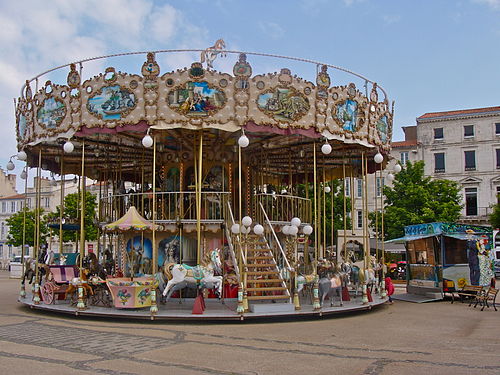
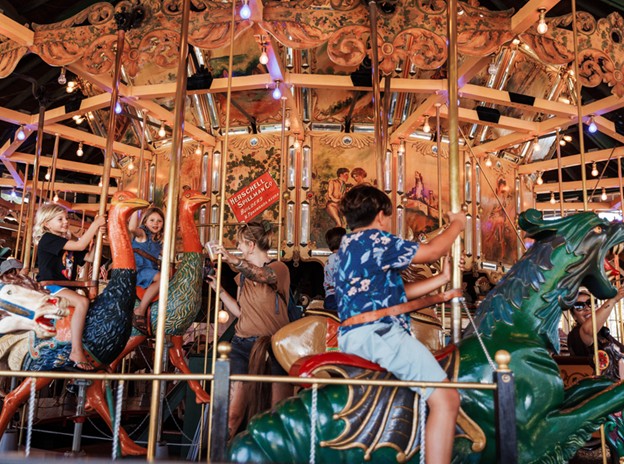
A double-decker!

National Merry-Go-Round Day (I prefer “Carousel”) was this past July 25th, as it has been every year since 2014.  Did you skip it like I did?  The holiday claims to “celebrate the carousel’s history and joy, particularly marking the first U.S. patent by William Schneider in 1871.”  And to celebrate, we’re meant to visit a local carousel, go for a spin, and post pictures of ourselves doing so online.  So we drop everything we’re doing on July 25th and climb on a wooden horse?  National M-G-R Day doesn’t even rate as a Hallmark holiday (and don’t waste your time trying to find a card to prove me wrong).

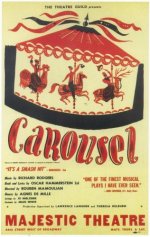
Contrary to my opinion about M-G-R Day, I think carousels are charming and a bit of innocent fun (other than those brass rings, which we’ll get to in a second).  Carousels inspired memorable scenes in Mary Poppins and BigCarousel was the Rodgers and Hammerstein musical that Time magazine deemed “the best of the 20th century”.  The “Carousel of Progress” was (and still is) one of the more unique attractions at Disneyland.  And of course, carousels led to those pipe and metal spinners we all played on at the park when we were kids.

Carousel is derived from the French word for “little battle”, which hints at why we’re riding them at all today.  In 17th century Europe, equestrian tournaments included “ring jousting”, where the rider attempts to spear a ring-on-a-string with his joust as he flies by.  To practice this sport without wearing out the horses, a clever soul invented the carousel, complete with wooden horses on poles and a real horse to pull the device in circles.  Eventually carousels made their way into carnivals, and then to the prominent locations where you find them today.

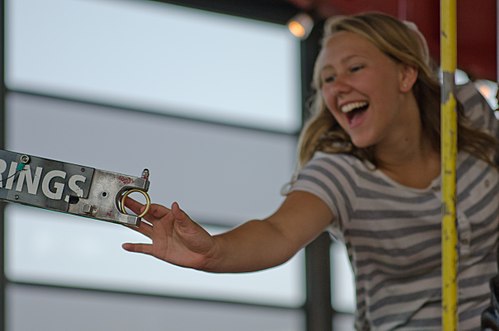
Care for a ring?

Now you also understand why early carousels had ring dispensers.  They were a nod to ring jousting!  The dispensers were filled with iron rings along with a few brass ones.  If you were lucky enough to ride an outside horse and grab a brass ring (which is harder than it sounds as your horse goes up and down), you could exchange the ring for a prize or another loop on the carousel.  For good reasons – safety being one – ring dispensers have been removed from most carousels today.

The people who came up with National M-G-R Day should’ve probably gone with “International”, because many of the world’s most distinguished carousels spin outside of the United States.  The Carousel El Dorado in Tokyo, Japan, built in 1907, is the oldest amusement park ride still in operation in the country.   The Lakeside Park Carousel in Ontario, Canada (1905) includes a self-playing organ that uses rolled sheets of music, rewinding one while playing the next.  The Letná Carousel in Prague, Czechia (1892!) is one of the oldest in Europe, remodeled in 2022 but still housed in its original wooden pavilion.

Looff Carousel (1911)

America has its share of prominent “gallopers” as well.  The Looff Carousel in Santa Cruz, CA is one of the few remaining with a ring dispenser, and entertains with the music of three organs.  The Over-The-Jumps Carousel in Little Rock, AR (1924) simulates the natural movement of a horse instead of just going up and down on a pole.  And the Flying Horse Carousel in Westerly, Rhode Island (1876!) is exactly as advertised.  The horses are attached to the center spindle instead of the wooden platform, creating a better sensation of flying through the air.

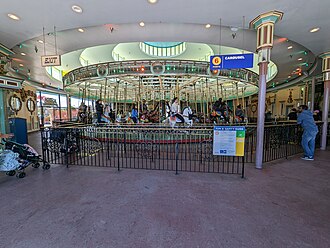
Dorothea Laub Carousel (1910)

Okay, I have a confession.  I had the perfect opportunity to celebrate National M-G-R Day just days after it happened this year.  My wife and I traveled to San Diego with our children and grandchildren for a beach vacation and found ourselves in Balboa Park, home of the Dorothea Laub Carousel (brass ring dispenser!)  If we hadn’t already worn out the little ones on a long walk through the Japanese Friendship Garden we might’ve made it to the wooden horses.  But I’m not losing sleep about it.  After all, National M-G-R Day will come ’round again next year.

Some content sourced from Wikipedia, “the free encyclopedia”.

Ellen Makes Her Move

When we moved into our current house (and even the one before it), we made the classic mistake of saying, “We’re never moving again”.  After all, picking up and going from one place to the next can be a real pain in the you-know-what, especially with pets and vehicles to relocate on top of the furniture and clothes. But at least we’re only talking about moving houses. What if you had to move an entire town?

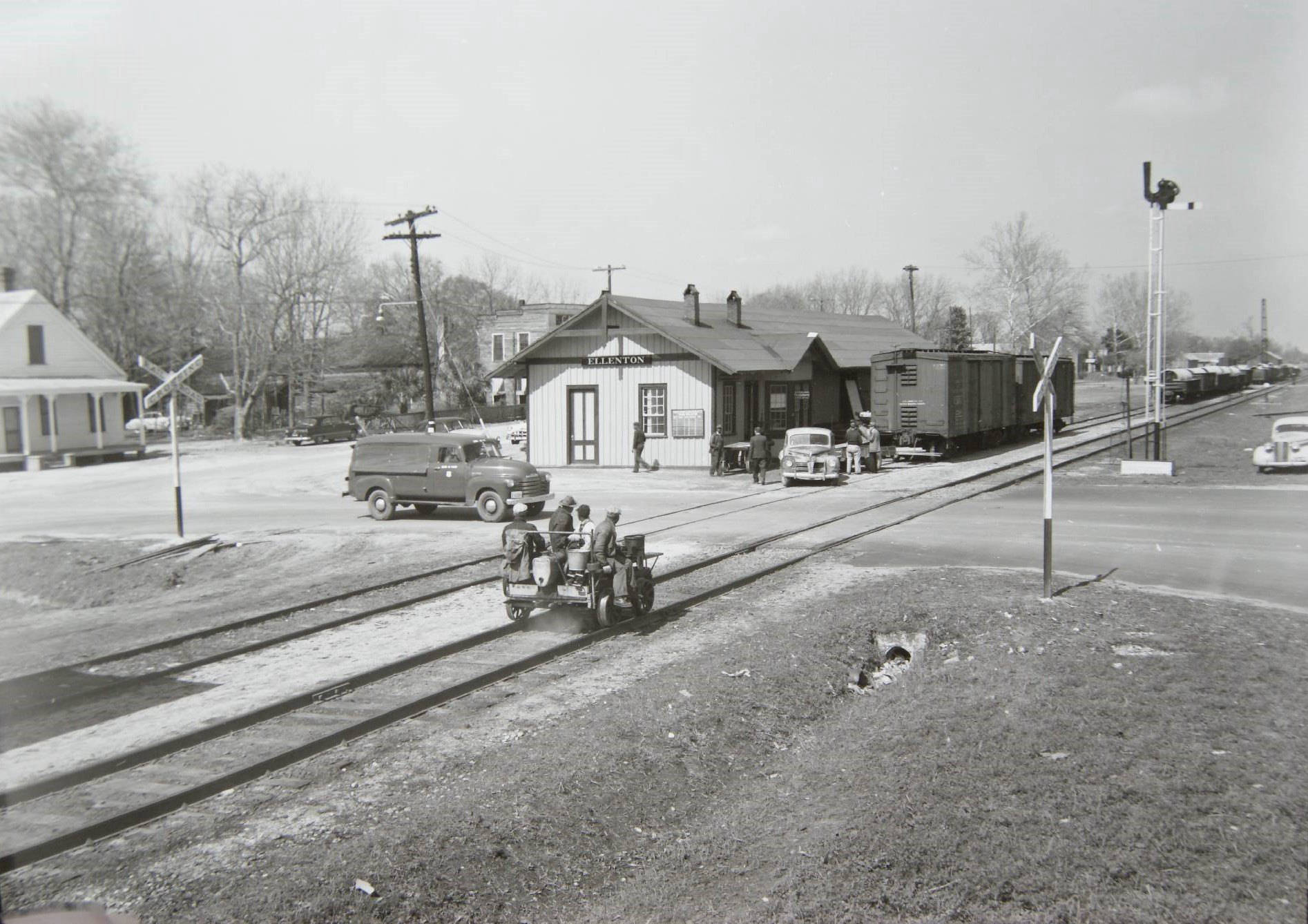
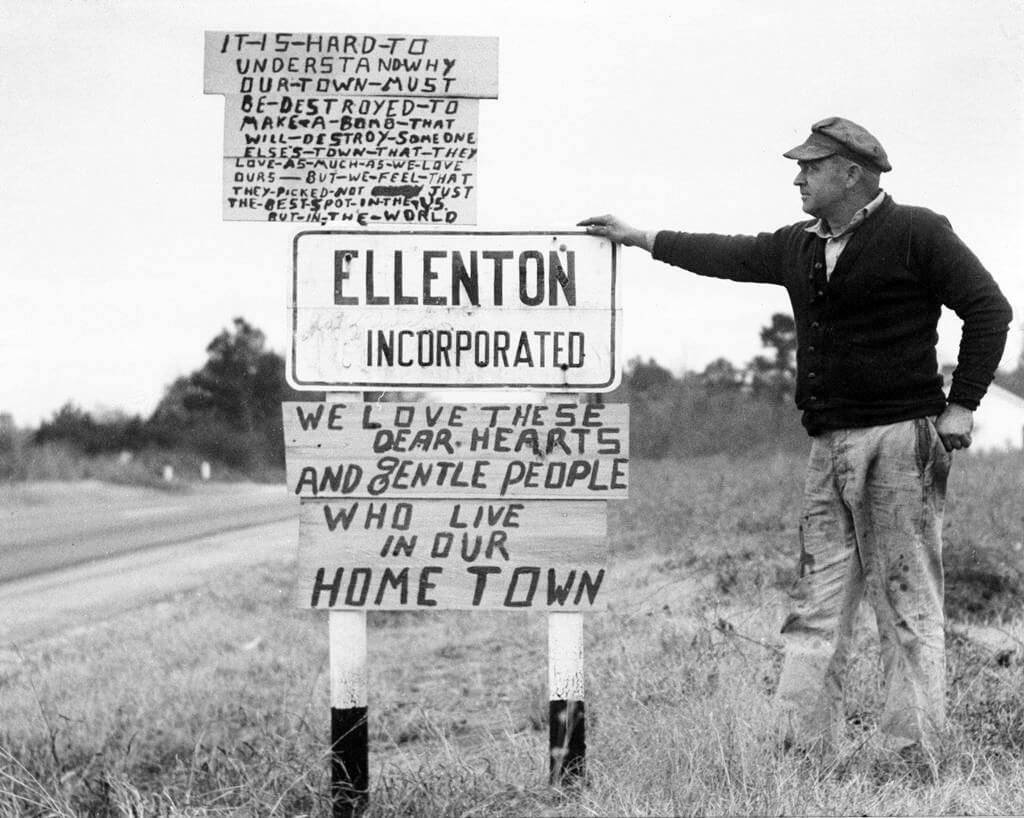
Ellenton, SC

If you live in an RV or a tiny home, you’d think nothing of pulling up stakes and going somewhere else.  You have the wheels or the flatbed to make it happen.  But moving an entire town means a population of people and a collection of structures.  it sounds like something that could only happen on a Hollywood movie set.  Unless you’re the U.S. government with its sights set on Ellenton, South Carolina.

Ellenton train depot

Ellenton first appeared on a map the way a lot of small towns did back in the day.  The railroad was interested in running new tracks through the farms of the area and a deal was made to acquire the land, including a plot for the train station.  In Ellenton’s case, the railroad developer was smitten with the primary landowner’s daughter (Ellen).  The relationship never blossomed but he did name the budding town after her.  Thus we have “Ellen’s Town”, shortened to “Ellenton”.

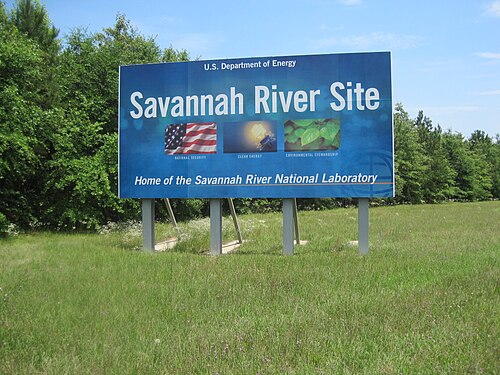
Ellenton grew quickly in the late 1800s, from a host of agricultural productions to a working, living community of 600 residents.  Eventually you’d find churches, schools, a post office, a general store, a dairy, and even a milling company and a cotton gin.  But what nobody saw coming was the potential of the area for the construction of a massive facility know as the Savannah River Site (SRS).  In the 1950’s in Cold War America, the U.S. government decided Ellenton and its surrounds were the perfect riverside location for plutonium and tritium production, for the development of the hydrogen bomb.  Ellenton “won the lottery” over a hundred other locations.

I can’t imagine sitting in Ellenton’s town hall back when the announcement was made.  Someone who drew a very short straw had to stand in front of the residents and say, “Sorry folks, we’re going to tear down your town so we need you to find somewhere else to live”.  Then the government wrote checks for the properties and businesses and simply walked away.  Eminent domain in capital letters.

I’ll admit I thought the government really did move Ellenton to another location.  I pictured a cartoon image of the world’s largest spatula, sliding under Ellenton’s streets and buildings like an entire sheet cake, then dropping the whole mess several miles away.  But I really thought the government moved Ellenton because we live right down the street from a town called New Ellenton.  Turns out, New Ellenton is simply where a good chunk of the original residents chose to call home.  The government had nothing to do with it.

Maybe the government didn’t move the living but the law required they move the dead.  By the time Ellenton and several other small towns were acquired and shut down, the SRS property encompassed 310 square miles.  That meant the relocation of 130 cemeteries, amounting to over 6,000 grave sites.  They didn’t get every last one, so it’s fair to say old Ellenton still has a few residents.

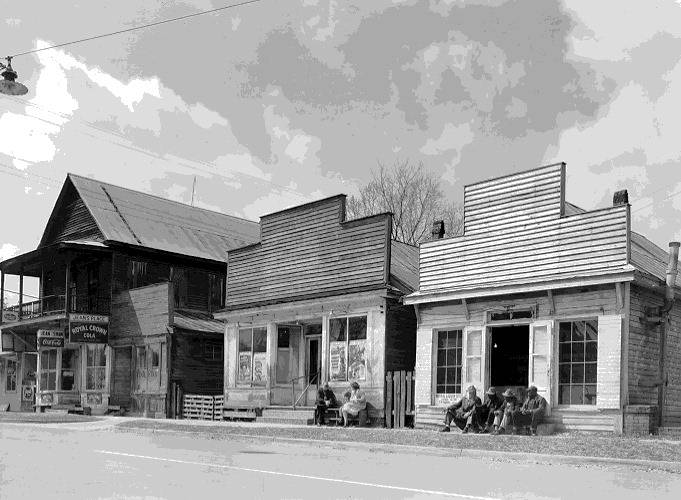
The black-and-white photos I share here – from the Ellenton website – give the town a charming, old-timey feel.  The few residents alive today hold reunions to share the memories of a place they can no longer see or even visit.  Some of Ellenton’s stories make it sound very cozy.  I wish I could say the same about New Ellenton, which is nothing more than a couple miles of highway with gas stations and bars scattered on either side.  Frankly, the only reason you drive through New Ellenton is because you’re on your way to somewhere else.

I wouldn’t be nostalgic for Ellenton if the government didn’t make it disappear.  Kind of reminds me of Brigadoon, the Scottish village that magically appeared out of the mist every hundred years.  Maybe Ellenton will appear out of a nuclear winter on the hundredth anniversary of it’s own demise.  In the meantime, a songwriter captured the story of the town in a rather sad ballad.  “The Death of Ellenton” was never a big hit, but the town it celebrates sure took one.

Some content sourced from the WJBF website article, “Hometown History: The Forgotten Town of Ellenton”; the Ellenton SC website (including all photographs); and Wikipedia, “the free encyclopedia”.

Golden Recall

My wife and I go for massages once a month, which has turned out to be a solid therapeutic routine. As is the case with any spa, the air is diffused with pleasant scents as well as soothing instrumental music. They also overlay a soundtrack of birds, as if to place you in the out of doors. The sensations are designed to relax and they do their job; so well in fact I’d swear I was transported to the shores of a pond.  More on that in a minute.

Candidly, it’s not often I notice the background music in a spa. I focus on breathing deep and keeping my eyes closed instead. But I couldn’t ignore the music when “Bring Him Home” from Les Miserables started playing. Whatever playlist the spa chose included a simple rendition of that song; just piano and violin. It was beautiful, and suddenly I was back in the Broadway theater where we saw the show years ago. I would’ve put “Bring Him Home” on “repeat” if I could have.

But we’re not talking about Les Miserables today. We’re talking about a pond. “Bring Him Home” was followed by a nameless instrumental piano piece, and again my mind began to drift. Then I heard the birds. Piano keys.  Birds.  And there I went… back to “On Golden Pond”.

Several instrumental movie soundtracks will reside in my brain forever. Whenever their signature melodies play I’m immediately returned to the film itself. I’m not talking about the bold, orchestral works of John Williams (think Star Wars or Jurassic Park) but rather the simpler repetitive tunes that still somehow define the story on the screen. Chariots of Fire is a good example. Cast Away is another. Leap Year was a so-so movie but the soundtrack is wonderfully catchy. And the music of A Little Romance – Diane Lane’s debut film – was so well done it won 1979’s Oscar for Best Original Score.

So you see, this is how a massage becomes a trip back to On Golden Pond, a movie from almost fifty years ago. The piano plays. The birds sing (even if they aren’t loons). And there it is, that simple poignant story playing out in front of my closed eyes as if I’d just seen the film last week.

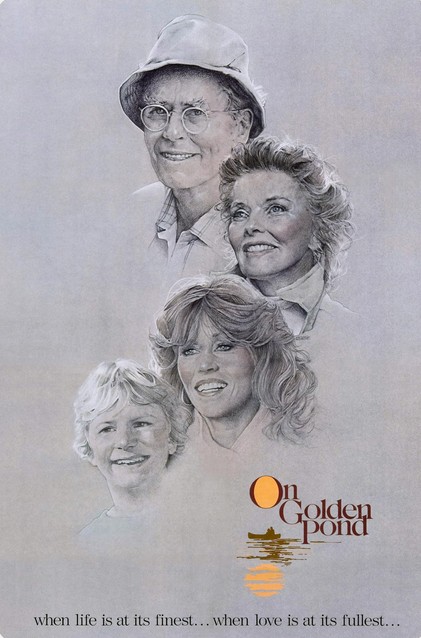
Was I ever a fan of Jane Fonda? Not really. I remember her more for her workout videos than her movies. But On Golden Pond was the exception because she’s on screen with Henry Fonda, her father in real life and her father in the movie. The movie is about the struggles of their father-daughter relationship, which surely echoed real life. Add in Katherine Hepburn as the mother character and the bar is raised well beyond the movie itself. The story is good enough, but who from my generation wouldn’t watch Henry Fonda and Katherine Hepburn in anything together?

Henry Fonda died less than a year after the filming of On Golden Pond. Katherine Hepburn made a few more movies but this was pretty much the conclusion of her career as well. So On Golden Pond is something of a swan song for both. If you have any recollection of the film, try this: Ask Alexa for instrumental piano music. Ask Siri for a soundtrack of birds at the same time. Then close your eyes and relax.  You may be transported back to a golden pond. It’s pretty cool.

Some content sourced from IMDB, the “Internet Movie Database, and Wikipedia, “the free encyclopedia”.
I’m All About Paul

Before another Independence Day celebration completely fades into the July of last week, I want to visit a story from early early American history. In 1973 I began middle school at Palisades-Brentwood Junior High, so named because it straddled the limits of both towns just outside of Los Angeles. But I never knew it as “Palisades-Brentwood”. A year after opening in 1955 it was rebranded Paul Revere Junior High. So Paul and I have a little something in common.  It’s like we’re compatriots, only separated by two and a half centuries. 

If you know nothing else about Paul Revere, you’ll recall his courageous “midnight ride”.  In the months leading up to the Revolutionary War in 1775 Revere took to his horse outside of Boston to alert “minutemen” of the approaching British troops.  Minutemen were residents of the American colonies trained to defend “at a minute’s notice”.  Revere himself was the notice, at least for what would become the early battles at Lexington and Concord.

Longfellow’s impression

Were it not for Henry Wadsworth Longfellow a hundred years later, Revere’s legacy would’ve faded as quickly as last Friday’s fireworks.  Instead we have the poet’s “Paul Revere’s Ride” as the chronicle, with these well-known opening lines:

Listen, my children, and you shall hear
Of the midnight ride of Paul Revere,
On the eighteenth of April, in Seventy-Five:
Hardly a man is now alive…

Thanks to Longfellow’s poetic license (lots of it), we have a skewed version of what Revere did and did not do in April, 1775.  For starters, he was one of three riders spreading the news that “The British are coming!  The British are coming!” (so why didn’t the other two riders get any poetic love?)  Further, Revere never said the words “The British are coming!” but rather some disguised version of the warning to fool the Redcoats already hiding in the countryside.  And the famous “one-if-by-land, two-if-by-sea” lanterns were put in place by Revere, not for him.

Boston, MA

Revere didn’t even own a horse.  He had to borrow a neighbor’s steed  (named “Brown Beauty”) to make the ride.  And instead of galloping all the way to Concord as the poem suggests, Revere and his horse were captured by British troops somewhere along the way.  Lucky for Paul, the capture turned into a release when the Brits realized they were about to be overwhelmed by the locals.  So they took Paul’s horse and fled instead.

Enough of the history lesson (real or poetic).  Why a West Coast middle school would go with “Paul Revere” is beyond me, but the campus culture certainly embraced the name.  A select number of boys (including me) were the “Minutemen” who raised and lowered the American flag each day.  A select number of girls – “Colonial Belles” – were responsible for some similar task.  The school yearbook was known as the “Patriot”, while the newspaper was labeled the “Town Crier”.  And students called “Silversmiths” did something-or-other, but it certainly wasn’t casting fine products in Metal Shop.

Our school even plagiarized Longfellow (and not very well), as in:

Listen, my children, and you shall hear
of the growing pride of Paul Revere.
On the twelfth of September in Fifty-Five
Our middle school began to thrive.
 
If all I can point to is my middle school’s name, it’s a weak argument to claim Paul Revere and I have something in common.  We have nothing in common.  Revere was a Jack Paul of all trades, dabbling in roles from military leader to dentist, artist, and silversmith, before finally settling on copper caster.  Revere became the best caster of church bells in all of young America before his midnight ride became his signature accomplishment.
 
You’d be better off saying Revere and I were polar opposites.  I never served in the military.  I’ve only been the patient of a dentist (too often at that), I have zero art skills, I don’t make the silver (I just polish it), and the only casters I’m familiar with are the ones under a couple of my rolling chairs.
 
“Revere Ware”
Thanks to the church bell thing, Revere Copper Company became a successful business which still exists to this day.  You may remember their “Revere Ware” products, most of which are considered collectibles today.  Maybe I should collect a few pieces myself.  They’d remind me of the guy I seem to think I have something in common with.  Or at least, they’d remind me of junior high school.
 

Some content sourced from the Paul Revere Charter Middle School website, the History Channel article, “9 Things You May Not Know About Paul Revere”, and Wikipedia, “the free encyclopedia”.

There’s Something About Mary

Now that I have young granddaughters, the songs and nursery rhymes of my own toddling days bubble up from the long forgotten frontiers of my brain. Humpty Dumpty is together again and back up on his wall. The sky is unstable if Chicken Little is to be believed. And the debate rages anew whether “pease porridge” is hot or cold (even if it is forever nine days old).  The list goes on and on but none of these tiny tales holds a candle to the one bizarre question asked of Mary. So let’s ask her again, shall we?

I wouldn’t have remembered Mary were it not for the daily online puzzles of the New York Times. Two weeks ago they devoted an entire word search to the sentences of this odd nursery rhyme.  Which got me to thinking, just who was Mary, why was she “contrary” (other than a convenient rhyme), and what the heck was going on in her garden?

As the saying goes, be careful what you wish for.  As Google goes, be careful what you search for.  Jack and Jill really did go up a hill.  Old MacDonald had a farm.  There’s at least one itsy bitsy spider on the water spout.  But Mary and her garden?  She doesn’t belong anywhere near your grandchildren.

The first interpretation of “Mary, Mary” I came across was completely sanitized from the original.  It claims Mary is the Mary (as in, Jesus’ mother).  Mary’s garden is the growing Catholic church.  Silver bells are the same jinglers used in the church service to recognize miracles with “a joyful noise”.  Cockle shells refer to faithful pilgrims, as in the badges worn by those completing the Way of St. James.  And pretty maids are nuns, lined up for a life of devotion.

Badge of devotion

If we stopped right there, Mary would be heartily embraced by the rest of the kid-friendly characters in my granddaughters’ nursery rhymes.  But more likely we’re singing about “Mary I”, Queen of England in the 1500’s.  This Mary was no saint.  In her brief five-year reign she cleansed her country of heretics… by burning hundreds of them at the stake.  “Bloody Mary” – her apt nickname – somehow became a drink at the bar (which I will never order) and the subject of a child’s nursery rhyme.

Not-so-nice Mary

Mary I was at odds with her father King Henry VIII’s agenda; hence she was “quite contrary”.  Okay that’s fine, but I wish the rhyme stopped right there.  Her garden was likely a reference to a graveyard.  The silver bells and cockle shells describe torture devices of the time (and I won’t be using a Google search to learn more about those).  The maids were innocent women lined up for execution.

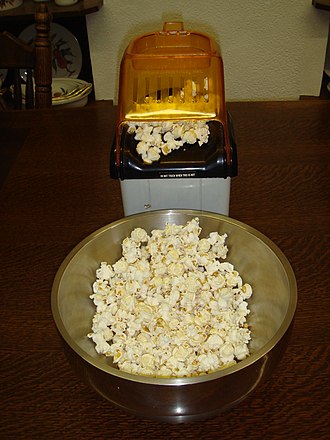
This is the stuff of nursery rhymes?  I’m trying to picture little girls back then, sitting around in a circle and coming up with short songs from what they see right in front of them.  Like Rosie and her ring, if some interpretations are to be believed.   As for Ms. Contrary, I think I’ll go with a garden similar to the one shown here.  But since the origins of her rhyme continue to be debated, I’m steering my granddaughters clear of her.  Instead, we’ll sing about the other Mary, the one with the little lamb.

Some content sourced from Wikipedia, “the free encyclopedia”.

Up, Up and Away Birthday

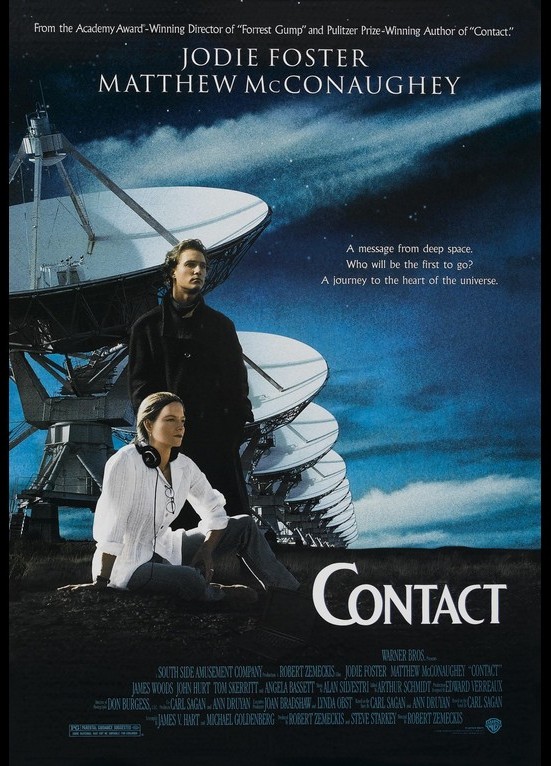
One of my favorite lines from the science-fiction classic “Contact” (starring a young Jodie Foster and and even younger Matthew McConoughey) comes from one of the lesser-known characters. Foster’s Dr. Arroway discovers a communication stream from beyond Earth, while an anonymous millionaire funds the spaceship capable of traveling to the source of the signal. The donor then turns to Foster’s character with a smirk and says, “What do you say, Dr. Arroway… wanna take a ride?”  This year, the same question was posed by the (good) people at Goodyear.

Wingfoot Two is a “semi-rigid airship”

In a nod to my advancing age, the Goodyear Blimp turned 100 on Tuesday (or I should say, one of the Goodyear Blimps).  “Pilgrim”, Goodyear’s dirigible based in Akron, Ohio, took it’s first flight on June 3, 1925.  Now Goodyear can claim a hundred years of lighter-than-air travel, even if this noteworthy form of transportation never made it to the masses.

To be clear, Goodyear started with rubber, and then tires.  They manufactured tires for bicycles and carriages back in the day as well as horseshoe pads and poker chips, before Pilgrim first took to the skies.  Sure, you’ll find their products on vehicles everywhere but what comes to mind when I say “Goodyear”; tires or blimps?

The Goodyear Blimp of my childhood

I choose blimps.  I grew up just thirty minutes from Goodyear’s blimp airbase in Carson, CA.  The blimp I saw back in the ’60’s and ’70’s was named something like “Puritan” or “Reliance” or “Defender”, because Goodyear honored the sailboat winners of the America’s Cup.  Not today.  Thanks to a public naming contest the blimp down the street from my childhood neighborhood is named “Wingfoot Two”.  (I prefer the America’s Cup names instead.)

Maybe you also choose blimps because you drive on Michelins or Firestones.  More likely it’s because you’ve seen a blimp buoyant over the Super Bowl or other sporting event.  And speaking of football, if the Goodyear Blimp sets down on the field it covers 80% of the yardage.  That’s one big balloon.

“LZ 129 Hindenburg”

Goodyear’s flying machines of my childhood were literally balloons filled with helium, without any of the technology of today to make them easier to steer.  Coincident with middle-school history class, whenever I’d see the blimp I’d think of Germany’s Hindenburg, the Nazi propaganda passenger dirigible that, like the Titanic, is best known for its final flame-filled disaster, on approach to Lakehurst Naval Air Station in New Jersey in 1937.  Perhaps we should be thankful Goodyear never promoted its blimps as a form of mass transportation.

Also in my childhood, blimps offered a far more romantic image in the movie Chitty Chitty Bang Bang, where a colorful zeppelin traveled here and there over the fictional country of Vulgaria, carrying the villainous Baron Bomburst and his crew.  (And here’s my opportunity to distinguish between terms.  A zeppelin has more of a cylindrical shape, while a blimp looks more like a sausage.  A dirigible? Just a general term for an airship.)

Speaking of sausage, it was inevitable someone would open a sub sandwich shop named after the aircraft.  The Blimpie franchise (“America’s Sub Shop”) began in the 1960s, spread to locations around the world, and enjoyed a good fifty years of success.  Today most of the helium has left their balloon.  There are only about 25 Blimpie stores left in the U.S. (compared with almost 20,000 Subways).  IMHO Blimpie’s was the better product, at least the version I remember from the 1990s.

Oh how I wish I could’ve concluded this post with another wanna take a ride?  You and I missed the boat, er, airship on that opportunity.  Goodyear held a contest at the start of 2025 and leading up to Pilgrim’s birthday, where three lucky passengers won a blimp ride.  I say “lucky”, when in fact my fear of heights takes away any personal appeal to float up, up, and away.  No worries, because now I’m thoroughly distracted by hunger pangs.  Think I’ll hunt me down a “blimp sandwich”.

Some content sourced from IMDb,  “the Internet Movie Database”, and Wikipedia, “the free encyclopedia”.

Liquid Dreams

On the few occasions I buy water at a convenience store, I don’t think twice about downing the bottle I just paid two dollars for. Maybe you pay more or maybe you pay less, but I’m guessing the price doesn’t make you hesitate either. Even so, you could’ve gotten the same sixteen ounces for free out of your kitchen tap. That kind of thinking danced in my head last week when I reviewed a contractor’s bid for a new swimming pool in our backyard. I mean, it’s basically a divot filled with water.  How much could it possibly cost?

Like fancy cars and country clubs, I’ve just been reminded a pool earns the label of “luxury item”.  It’s a something you may want but definitely a something you don’t need.  The cost is just one of the reasons people flock to public pools instead of having one of their own.  But even public pools aren’t free. Maintenance. Insurance. Labor (lifeguards). The water itself.  The list goes on and on; the same costs you’d have with your own pool.  Okay, maybe not the lifeguards (unless my wife has visions of Baywatch studs in our backyard) but add it all up and pools are expensive with a capital E.

The contractor was more than happy to stop by our house last week for a look.  He loved the proposed location: flat, unobstructed, and right behind the back porch.  Then we debated the dimensions.  My wife wanted a lap lane for exercise, but just how long should a lap lane be?  Forty feet? Fifty feet?  Something to host the next Olympic Games?  Eventually we settled on fifty.  Then we added a “sun shelf” at one end for the grandchildren and a small patio at the other for an umbrella table and chairs.

Here’s where I got annoyed and suspicious (take your pick).  The whole time we’re talking, the pool contractor is doing nothing else besides talking.  He’s not sketching, he’s not measuring or taking notes, and he has no examples of what we’re looking for.  He’s just talking and nodding his head.  He did manage to find time to tell us how he likes to take his boat to the Bahamas several times a year (!) And before I could wrap my head around that he shook my hand with a hearty “Okay Dave! I’ll get you a quote by next week!”.

Well, “next week” is this week and I’m staring at a single page with a single number.  $89,750 without any bells or whistles.  Go ahead and gasp the way I did, as if you’re underwater in your new pool and can’t breathe (heh).  A few of you – those who already have pools – are nodding your heads and saying, “Yep, sounds about right, Dave.”  But now all I’m thinking about is how I’m helping this guy make his mortgage payments on his boat.  The quote is suspiciously vague as well; not even broken down into labor and materials.  My pool does come with a net and brush, a session of “pool school”, and an underwater light (“whoo-hoo”).  I also get a credit for “no diving board”, even though it doesn’t say for how much.

This experience reminds me of our last house, and a contractor who gave us a bid on a very large all-seasons deck.  We talked briefly while he stood on our lawn, gazing over to where the deck would go.  Then he held up his hands as if framing a painting.  After a few moments of silence he turned to us and simply said, “$200,000”.  Seriously?  Not only can you instantly estimate the cost of our new deck, but the number comes out to exactly $200k?  So I asked this guy for a more detailed quote and he said, “Yeah, no.  I am an artist (he pronounced it “ar-teest“).  People pay good money for my work”.  Yeah, not these people pal.

Our community has a small pool, sized to somewhere between soaking and short laps.  Really short laps.  My wife will take two or three strokes before having to think about her flip move to head the other way.  She’ll burn more calories switching directions than she will the swimming itself.  But hey, at least we won’t have to worry about the maintenance and insurance (or the mortgage payments on someone else’s boat).  For now at least, our pool will remain a liquid dream.

Chugga Chugga Chew Chew

Technology isn’t always our friend. Recent studies show plastic water bottles shed as many as 24,000 “micro-bits” of plastic into the consumer’s body. These bits measure 1/1000th of a meter across. But more recent studies – studies we didn’t have the technology for even five years ago – reveal the same bottles sheds another 200,000 “nano-bits”. At 1/1,000th the width of a human hair, these infinitesimal particles are so small they pass through the membranes of the body’s organs, leading to heaven knows what kind of damage. “Gulp!”

We love our water bottles!

Let’s leave this horror movie of science-you-didn’t-want-to-know behind and go with glass or metal containers instead.  But it’s virtually impossible to avoid ingesting plastic particles anyway.  And many people make a habit of it every day… with chewing gum.  Gum contains the same microplastics as water bottles.  No surprise there.  You shouldn’t really ingest any of the ingredients in chewing gum.

When you’re a kid however, you don’t care about ingredients (let alone bits of plastic).  Gum chewing is a habit I absolutely subscribed to in childhood.  I still remember the barber who cut my hair when I was single-digits old.  The reward for being a good boy in the chair was to help myself to one of those little wrapped chunks of Bazooka bubble gum.  Bubble gum has a distinctive flavor I can still recall decades later.  The pink stuff also has the built-in game of blowing big, sticky bubbles.

gumballs

After Bazooka came Bubble Yum, a trendy alternative because it was a softer chew from the get-go and packaged in larger chunks.  Bubble Yum came in several flavors.  But for me, chewing gum evolved from “bubble” to “sugarless” in a heartbeat, thanks to one too many trips to the dentist.  Choosing from the “prize shelf” after my fillings, I always went for the pack of Dentyne instead of the toys.  Dentyne was the dentist’s way of encouraging less sugar (and more saliva).  Dentyne was my way of thinking it was still okay to chew gum.

Somewhere between Bubble Yum and Dentyne came those slim packs of “stick gum”, including Doublemint, Juicy Fruit, Clove, and for this licorice aficionado, Black Jack.  I also consumed my fair share of Chiclets.  But my gum habit eventually evolved to more of  a”breath mint” chew.  The one I remember best was “Freshen Up”, the green chunk of gum encasing the small dose of mouthwash gel.  You’d get this mind-blowing burst of mint the moment you bit into it.  Pretty novel for chewing gum.

What I never saw coming – which ground my chewing gum habit to an abrupt halt – was TMJ, also known as (the more scary-sounding) “dysfunction of the temporomandibular joint”.  In plain English, TMJ is sustained pain in the jaw muscles from overuse.  It’s nasty, and if you’re not careful it can be chronic.  For me it was relieved by backing off on the chewing gum… as well as breakfast bowls of Grape Nuts.  If you’ve had TMJ yourself, you know it’s a little unnerving (pun intended) because there’s no guarantee you’re ever gonna get rid of it.

Every now and then someone offers me a piece of gum and I politely decline.  I’m not interested in the return of jaw pain and besides, I’ve developed a preference for breath mints instead.  As for you, whether you chugga chugga (your water) or chew chew (your gum), don’t forget about those nasty nano-plastics.  Just like Mr. TMJ, they’re not your friend.


LEGO Notre-Dame de Paris – Update #11

(Read about the start of this “church service” in Highest Chair)

Today we “leveled the praying field” 🙂   Bags 19, 20, and 21… of 34 bags of pieces, brought the height of the nave to virtually the same as the chancel.  It’s safe to say the lion’s share of the remaining pieces will be (tiny and) focused on building the roof structure and west end bell towers.

Arches and more arches

Dropping a piece down, down, down into the sanctuary – which I managed to do twice today through the top square openings you see here – is no laughing matter.  You might say, “Just flip the model over and shake them out, Dave” but I’m way too far along to risk it falling apart.  Instead, I had to reach down with my giant fingers, gently pinch, and then pull back like a construction crane.  I hope I didn’t scare the parishioners in the process.

We built framed windows today, (plastic) glass and all!  These can be seen in the final photo, on the west end of the cathedral above the doors.  We also built – in somewhat assembly-line fashion – another fourteen of the cathedral’s distinctive flying buttresses.  But the most tedious, time-consuming task of all was the arched windows you see along the upper walls of the nave in the first photo.  Each is assembled from a dozen finger-numbing pieces.

Uniform height

Finally, a word about weight.  I picked up the cathedral the other day and went, “Holy cow!” (ha).  Turns out this beast weighs a robust three pounds already.  That’s a lot of plastic.  And given today’s blog topic I’m thankful the model isn’t edible. 

Running build time: 10 hrs. 28 min.

Total leftover pieces: 28 (no new ones!)

Some content sourced from the CNN Health article, “Chewing gum can shed microplastics into saliva…”, and Wikipedia, “the free encyclopedia”.

Fruit of the Bloom

On Monday I noticed a lot of the wearing o’ the green because, of course, Americans celebrate St. Patrick’s Day as if we are somehow Irish. It’s a fitting burst of color as winter slowly but inevitably surrenders the seasonal baton. Soon you’ll find a full-on rainbow of blooms in every garden you pass. For now however, let’s drink and dance in honor of another bright color this week: pink. More to today’s topic, cherry pink.

If you’re tuning in from Washington D.C. you already know where I’m going with this one.  Today is the first day of spring, and the beginning of the Cherry Blossom Festival in our nation’s capital: four weeks of seemingly countless opportunities to celebrate the flowering of the graceful trees on the banks of the Potomac.  If you’d asked me a week ago what the bloomin’ fuss is all about, I’d have said the festival’s significance is as shallow as the water in the Lincoln Memorial Reflecting Pool.  But now I’m properly informed.  There’s more to this story than just pretty in pink.

“Yoshino” cherry blossom

In the early 1900s, America and Japan were unconditionally friendly countries (years before that little dust-up in the 1940s).  To acknowledge the friendship, Tokyo’s mayor shipped 3,000 Japanese cherry trees to Washington D. C.  There’s a longer, more convoluted history behind this gesture, including players from both countries making repeated efforts to populate the city with trees, but the details are about as interesting as pushing a bill through Congress.  Suffice it to say cherry trees were planted along the river, up and down the avenues, and in numbers worthy of an annual festival starting in the 1930s.

I love cherries; always have.  I think the flavor itself appealed to me before the fruit, in the popular junk food of the 1970s.  Hostess Fruit Pies.  Life Savers.  Slurpees from 7-11.  Or the proverbial maraschino on top of an ice cream sundae.  As much as I got my fill of those, I could never get my fill of my mother’s homemade cherry pie, and I mean homemade.  The cherries were passed down from her mother each year, picked, jarred, and ready to go.  The crust was made from scratch, including the signature latticework on top.  It’s a wonder the butter wasn’t churned from the milk of a family cow.

Alas, no longer on the menu

It’s also a wonder I’ve never been to D.C.’s Blossom Festival, considering my unabashed affection for the fruit.  I’m sure I’d find a couple dozen new ways to enjoy cherries besides the usuals.  I’d happily scarf down a serving of flambéed Cherries Jubilee over ice cream, or the cherry-filled sponge cake of a Black Forest gateau.  For the more adventurous there’s a savory Hungarian soup made with sour cherries.

“Petals and Paddles” race

Of course, there’s a lot more to the Blossom Festival than just food.  You’ll find parades, concerts, and kite-flying, with every shade of pink you can imagine.  Tour the historic Anderson House, filled with art and floral displays (featuring the cherry blossom, of course).  Compete in a “Petals and Paddles” boat race across the tidal basin surrounded by the trees.  Or get wet in “Pink in the Pool”, a family-friendly swim party replete with colorful beach balls.  There’s even an “Opening Ceremony” event on the first Saturday, (already sold out by the time I checked the website).  The weeks-long agenda proudly declares “events are primarily free” but I beg to differ. Tickets to the first several on the list were decidedly pricey.

For all I’ve just written, it’s a wonder the word “cherry” appears less than ten times in the hundreds of posts I’ve published on Life In A Word.  One time I referred to the children’s game “Hi Ho! Cherry-O”.  Another I talked about Cherry Coke.  The rest were the same things I mention here – ice cream sundaes, Slurpees, and so on.  So let’s add the Blossom Festival to the list, shall we?  With four weeks of celebrating, it’s safe to say life is a lot more than just a bowl of cherries.


LEGO Notre-Dame de Paris – Update #9

(Read about the start of this “church service” in Highest Chair)

What was once a giant box of LEGO pieces is finally starting to resemble a cathedral!  Bags 15 and 16… of 34 bags of pieces, focused entirely on the body (nave) of the structure.  We’re now building in the years 1220-1225, when the walls of the nave rise to the same height as the semicircular chancel at the east end.

Under construction
Fully fortified

The parishioners look rather tiny, now that we’re working so far above them.  And notice all those free-standing columns from last week aren’t so free-standing anymore.  We’ve capped them with structural elements to support what is still to be built up above.  Also notice we’ve closed in the west end of the cathedral, which patiently awaits the addition of the soaring bell towers.

West end “front doors”

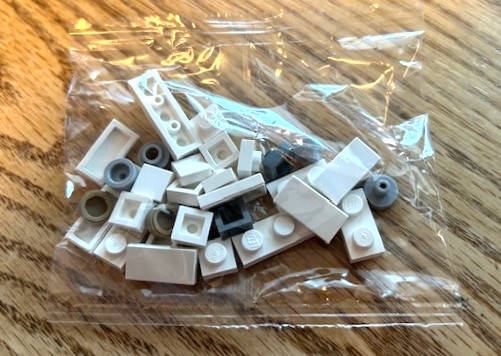
Okay, it’s time to address the elephant in the room; an elephant that gets bigger with every update.  A few of you have sounded the alarm on my running count of leftover pieces.  It’s a fair concern, considering the LEGO Grand Piano also started as thousands of pieces but only amounted to a handful of extras.

extras

Here’s the truth of it: the twenty-six leftovers shown here amount to just a handful as well.  Every one of them is among the tiniest pieces in the entire cathedral.  It probably cost LEGO pennies to add in these “bench players”.  And given the tendency of pieces to run away I’m grateful to have them.  Heck, by the time the cathedral is finished maybe I’ll have enough leftovers to build a small elephant. 

Running build time: 7 hrs. 57 min.

Total leftover pieces: 26

Some content sourced from the National Cherry Blossom Festival website, and Wikipedia, “the free encyclopedia”.
(Not) Making Cents

The other day when I drove into town I felt a sneeze coming on, so I reached into my car’s pull-out coin drawer and grabbed a handkerchief. If I’d wanted a breath mint for my mouth or an eye drop for my contacts I’d reach into the same place. But I wouldn’t find quarters, dimes, nickels, or pennies anywhere in there.  Come to think of it, someday soon I won’t find pennies anywhere at all.

You probably caught the headline in your news feed.  The population growth of U.S. pennies is about to come to a grinding halt.  Our country will no longer mint shiny new “Lincolns” for the first time since their debut in 1787.  Two hundred years and change (ha) is a darned good run for a coin but the penny appears to have been done in by compelling arguments.  One, the production cost is three times the face value.  And two – and perhaps most humiliating – the penny’s face value has descended into, well, obsolescence.

There was a time not so long ago when I wouldn’t pass up a lost penny lying in the street.  In addition to “free money” there was the old adage find a penny pick it up, and all day long you’ll have good luck.  Today you’d better settle for just the luck because you can’t buy anything for pennies anymore.  You’d be better off using them for more practical purposes like checking your tire tread depth or turning screws.  My brother and his wife turned thousands of their pennies into a beautiful, copper-colored floor for their kitchen.

Losing their shine

Speaking of copper (I’m easily distracted today) I had no idea pennies are no longer made of copper.  They’re primarily zinc because of the rising cost of metals (yet they still cost three cents apiece?)  You’d assume quarters, dimes, and nickels were made from an alloy of silver, lead, or aluminum, but – go figure – those coins are primarily copper.

Enough with the facts.  I’m bummed to see the penny put out to pasture.  Along with it goes a ton of childhood memories.  You could roll pennies into coin wrappers and enjoy the thrill of exchanging the whole lot for paper bills at the bank.  You could drop them into handheld banks for untold savings (and my banks were delightfully mechanical).  Finally, you could walk into any 7-Eleven or drug store, hit the candy aisle, and find several “penny candy” choices.  A chunk of Bazooka bubble gum, hard candies, or licorice whips could be purchased for just a few cents back then.

Three cents each… a long, long time ago

Practically speaking I’m on board with the penny’s retirement, because I can’t recall the last time I involved a cent in a financial transaction.  If something costs $9.99, are you telling me you’d reach into your pocket and pay the $9.99 in cash and coin?  Nope, you’d more likely hand over a ten-dollar bill and then what happens?  You get a penny in return.  What are you supposed to do with that?

Certain sayings will have to head out to pasture as well.  An expensive item can no longer be described as “a pretty penny”.  “A penny saved is a penny earned” literally has no value.  A frugal person should now be described as a “quarter-pincher” (in case the nickel and dime are also on life support).  And “pennies from heaven” certainly don’t describe good fortune anymore, even if the song of the same name will continue to be sung.

Do you have one of these?

For my money, I hope car manufacturers continue to include coin drawers in their dashboards.  I keep important things in there and I’d prefer not to change my ways.  Then again maybe I should keep a few pennies in the drawer, if only for my childhood memories.  Those will always have value.


LEGO Notre-Dame de Paris – Update #5

(Read about the start of this “church service” in Highest Chair)

I decided to have my lunch today while working through Bag 8… of 34 bags of pieces.  That was a mistake.  I reached for a LEGO piece, grabbed a little block of cheese instead, and Notre-Dame de Paris almost had cheddar in its walls. I immediately vowed food would go nowhere near the assembly ever again.  It’s unnerving enough putting in the real pieces.

As I worked on the uppermost level you see here I used a little too much force, and a piece in the level below loosened and scampered down into the sanctuary.  I shook, rattled, and rolled the entire cathedral trying to get it out but to now avail.  Just before admitting defeat, the little devil finally emerged (he must’ve gone to confession).  And here’s where I learned an unnerving truth: re-assembling pieces long after you’re supposed to can be near impossible.  I had to tear down an entire wall to get the piece back in place.  We’re working in close quarters here, people.

“LEGO lever”

Today is also a good chapter to point out the tool to the right.  It’s a “LEGO lever” (my words), designed to easily remove a piece from a place it wasn’t meant to go.  I didn’t need my lever through the first seven bags, but today?  Half a dozen times.  My mind’s eye was off just a hair and I kept assembling pieces a quarter or half-inch off from where they were supposed to go.  LEGO lever = life saver.

Pasta noodles?

Bag 8 started slow and repetitious but finished grand and confident.  In fact, I was so full of myself after the mere forty-five minutes of construction, I boldly plunged into Bag 9.  Mistake.  I mean, look at the pieces in this photo!  Are these LEGOs or the little bits of pasta you find in your chicken soup?  Seriously, we may be almost a quarter of the way through the bag count but the pieces are shrinking.  Some Sunday soon the parishioners will look to the heavens and be burned by the giant magnifying glass above them.

Running build time: 4 hrs. 22 min.

Total leftover pieces: 17

Some content sourced from the CNN Business article, “Trump instructs Treasury to halt penny production”, and Wikipedia, “the free encyclopedia”.