Too Many Roads Lead to Rome

I’ve wanted to take my wife to Italy pretty much since the day we met. After a memorable college year in Rome in the 1980s I knew I’d go back one day, especially since I tossed a few coins into the famous Trevi Fountain before I left. Today however, I sit wondering if I really will set foot in the Eternal City again. Thanks to overwhelming numbers of tourists, Rome might as well put a “sold out” sign on its city gates. Blame it on the Catholics?

Trevi Fountain, Rome

2025, less than four months from now, is a Jubilee Year for the Catholic Church.  Maybe your idea of a jubilee is a celebration, much like Britain’s in 2022 when they honored Queen Elizabeth’s unprecedented seventy years of service to the Crown.  Not so the Catholics.  They define a jubilee – every 25 or 50 years – as a “marked opportunity for the remission of sins, debts, and of universal pardon”.
Catholic jubilees traditionally include a pilgrimage to Rome.  I’d love to know who runs the calculations (and how) but the forecast for next year in Rome has Catholic pilgrims at around 32 million… in addition to the 50 million tourists who normally pass through.  To put that total in perspective, the population of Rome is only 3 million.  That’s a whole lot of extra pepperoni on the pizza (or piazza, if you will).

[Side note: 1983, the year I lived in Rome, was an out-of-cycle Catholic jubilee known as the Holy Year of the Redemption.  Do I remember millions of Catholics “roaming” through the city streets?  I do not.  Then again I’m a Methodist, so maybe I have an excuse for missing the obvious…]

You call this a crowd? Just wait ’til 2025.

Thanks to next year’s jubilee, officials are clamping down on a visitor’s ability to see or tour the city’s most famous attractions.  The Fontana di Trevi is a good example of how things will change.  In the 1980s I could stand in front of the Baroque fountain to my heart’s content.  In 2025 I will need a ticket through a reservation system.  That ticket gets me entry through one side of the piazza and exit through the other, at a specific time and for a specific (amount of) time.  Hired “stewards and hostesses” make sure I don’t linger, and collect a 2-euro fee for the experience.

If I really wanted to be herded like sheep I’d join a flock on the green, green grass of Ireland, instead of paying for the privilege in Rome.  And speaking of paying, the Trevi already collects over $1.5M in coins voluntary thrown into its waters (the money then donated to local charities).  Add in the new 2-euro fee, and even if just 10% of next year’s visitors make it to the Trevi, Rome will nab an additional $18M.  Jubilee indeed.

St. Peter’s Square, Rome

If I sound jaded about Rome’s forced hand, it’s only because I have the perspective of a time when everything seemed so much easier.  In the 1980s I could wander through St. Peter’s Square without photo-bombing dozens of iPhones.  I could also wander without encountering a random protest about a religious war or climate change.  I still remember plunking down on the cobblestones of that grand piazza to paint a watercolor of the Basilica, and nobody bothered me.  I also remember Frisbee with a fellow student in another piazza, while the local Italians watched the spinning disc in wonder.  Innocent times indeed.
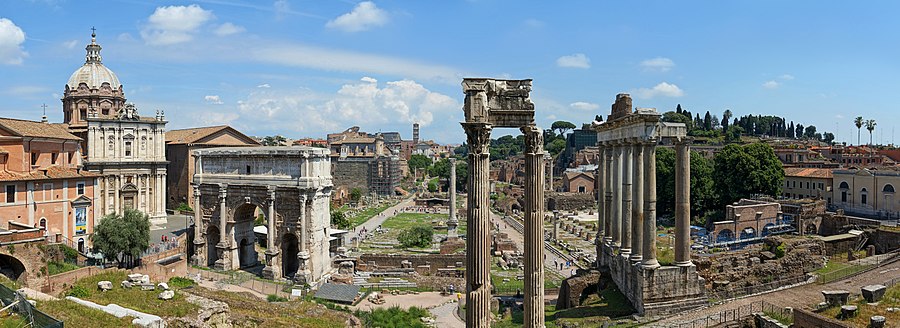
Roman Forum

In 2024, a guided tour of the Vatican (the only way to see it) – including the sublime Sistine Chapel – will set you back $50.  A tour of the Colosseum and Roman Forum will cost you twice that much.  I’m sure next year’s pilgrims will pay these fees without blinking a sin-forgiven eye.  I just can’t get past my free-and-easy days as an architecture student, when each of the city’s wonders was as wide open and come-on-in accessible as you can imagine.

The truth is I’d go back to Rome in a heartbeat, even if I knew untold millions of pilgrims would be standing alongside me.  The Eternal City is worth the look even if you never step inside any of its buildings.  On the other hand, if I’m patient and wait until 2032, it’ll be the 50th anniversary of my college year.  That calls for a jubilee!  I’ll be the only pilgrim of course (er, two of us counting my wife) but at least we’ll have no hassles dropping coins into the Trevi.

Some content sourced from the Skift Newsletter article, “Rome Tourism Chief Says There’s ‘Total Chaos’ at Trevi Fountain…”, and Wikipedia, “the free encyclopedia”.


Do-Re-Mi… Oh My!

Salzburg, Austria, a day-trip destination from our recent Viking River Cruise, is a popular draw for tourists.  On most days you’ll find more internationals roaming Salzburg’s Old Town than you’ll find Austrians themselves.  The compact city is famous for its historic buildings: churches, palaces, and fortresses dating back 1,000 years or more.  Mozart was born here.  But try as they might, Austrians will never be able to separate Salzburg from what attracts many to its streets: The Sound of Music.

I can think of only one movie we forced our kids to sit down and watch while they still lived under our roof.  Close to Christmas one year (an arbitrary connection because of the lyrics of “My Favorite Things”), the five of us spent three hours together in front of our not-so-big-screen TV watching the somewhat true story of the von Trapp family.  I’ve lost track of the number of times I’ve followed Maria, the Captain, and those seven engaging children as they outwit the Nazis.

For all of the movies I’ve watched in my life (and I’ve watched quite a few), The Sound of Music stands alone.  I’d describe it as a jewel you display in an elegant glass box on the shelf, taken down every once in a while to appreciate up close. The Sound of Music is a feel-good story – if not accurate – produced in 1965 at the end of the Hollywood’s Golden Age.  It remains the most successful movie musical of all time (adjusted for inflation), but I question whether today’s movie-goers would appreciate it as much as I do.

Salzburg, Austria

Most tours of Salzburg include references to buildings and locations included in The Sound of Music.  Our own tour – cut well short because of the flooding of the Danube – was a brisk walk around the Old Town, with only an occasional mention of the movie.  What surprised me was not how little of The Sound of Music was actually filmed in Salzburg (most was done on sound stages back in the States) but rather the Austrians’ utter disdain for the movie.

Salzburg’s Nonnberg Abbey

Consider, when it was first released The Sound of Music was only twenty years removed from the end of WWII.  The Nazi overtones of the film didn’t sit well with citizens of Austria and Germany.  Reviews (and box-office receipts) were not favorable in either country.  Coupled with the liberties the producers took with the story, you can see why Salzburg residents don’t exactly “Climb Ev’ry Mountain” to claim the movie as their own.

You’ll find endless trivia about The Sound of Music at IMDB.com and elsewhere.  Most facts are meant to point out discrepancies between the film and the actual story.  Here are fifteen of “My Favorite Things”:

1) Julie Andrews was cast as Maria, of course, but only because Audrey Hepburn declined the part.  Hepburn also denied Andrews the opportunity to play Eliza Doolittle in the movie version of My Fair Lady.  Each played the opposite role in the original stage adaptations on Broadway.

2) Andrews kept getting knocked off her feet in the famous opening scene where she sings and spins in an Alpine meadow.  She couldn’t keep her balance because the hovering helicopter used to film the scene generated too much wind.

Not as easy as it looks!

3) Andrews’ hair was meant to be worn longer but a bad color job forced the pixie cut, which Andrews kept for most of her acting career

4) Christopher Plummer was not a fan of The Sound of Music.  He reluctantly agreed to the part of Captain von Trapp and regretted every moment on set, especially those with the children.  He described working with Julie Andrews as “being hit over the head with a big Valentine’s Day card, every day”.  He nicknamed the movie The Sound of Mucus.  Much later he acknowledged the film’s worldwide success, as well as the Oscar-nominated talent of Andrews.

5) Plummer regularly drowned his acting sorrows in Salzburg bars and restaurants.  As a result his outfits needed to be resized towards the end of filming to accommodate his added weight.

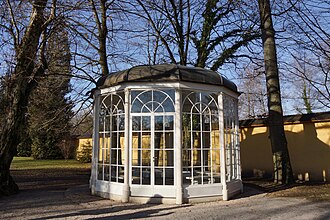
The gazebo (moved from its original location). The interior scenes were filmed In a much larger stage set reproduction.

6) The von Trapp children are Rupert, Agathe, Maria, Werner, Hedwig, Johanna, and Martina… not Liesl, Friedrich, Louisa, Kurt, Brigitta, Marta, and Gretl.  Also, none of the nine leads are Austrian (which certainly didn’t help the appeal of a film based in Salzburg).

7) Auditions for the parts of the von Trapp children included the four eldest Osmond brothers (not Donny), Kurt Russell, and Richard Dreyfuss.

8) Kym Karath, who played Gretl, the youngest of the von Trapp children, created her fair share of challenges.  She had a cold during much of the filming.  She almost drowned in the scene where the boat overturns in the lake because she didn’t know how to swim.  And she ate enough sweets on set to where her weight was too much for Christopher Plummer.  As a result, in the final scene walking over the Alps, Plummer is carrying a stand-in actress instead of Karath.

9) Nicholas Hammond, who played Friedrich, was not a natural blonde so his hair was bleached for the movie.  The coloring process caused some of his hair to fall out, which is why you see him wearing a “Tyrolean Traditional Alpine” hat when he’s seen singing “Do-Re-Mi”.

10) The day after the real von Trapp family left Austria (by train to Italy and then to the U.S., not on foot over the Alps to Switzerland), the Germans shut down all of Austria’s borders.

Salzburg’s Schloss Leopoldskron, where lakefront and garden scenes were filmed

11) The real Maria von Trapp is on screen at the beginning of the movie.

12) The real Maria also claims, if you can blieve it, her own personality was livelier than Andrews’ on-screen version.

13) The real Maria taught Julie Andrews how to yodel.  Watch the lesson here.

14) The film’s production demanded 4,500 extras, including those in the sold-out theater for the music festival.  The audience sings “Edelweiss” as if they know the song, but only because they spent time beforehand learning the words.

15) Despite the aforementioned Austrian disdain, The Sound of Music is played nonstop on the televisions of most Salzburg hotels.

Maybe all of this trivia changes your opinion of The Sound of Music.  Not mine.  There are countless reasons this film includes the tagline, “The Happiest Sound In All The World”.  The Sound of Music will always be that jewel in a glass box, waiting patiently to be enjoyed once more.  Suffice it to say, I’ll never say “So Long, Farewell” to the adventures of the von Trapp family.

Some content sourced from the Internet Movie Database (IMDb), and Wikipedia, “the free encyclopedia”.

Season Before the Sun

Every now and then I come across a little fact that makes me feel my age.  Fifty years ago this month a one-hit wonder named Terry Jacks released the single “Seasons In The Sun”, which parked at #1 on the music charts for three weeks and burned itself into my twelve-year old brain forever.  Any teen from back then will never forget the We had joy, We had fun lyrics.  Ironically it wasn’t a happy song (as in …goodbye Papa, it’s hard to die…) but not to worry.  Today I want to talk about the season before the sun instead.

Whether you celebrate Easter (this Sunday), the vernal equinox (a week ago Tuesday), or college basketball’s March Madness (on-going), the hints are everywhere: spring is beginning to, uh, spring.  For my wife and I, the season means strawberries, when the best of the fruit is available for the next sixty days.  For others it means the kids are out of school for a week.  But surely there’s no better indication of spring than flowers.  The bright bursts put winter’s doldrums behind us while the sun shines more often.  Flowers signify new beginnings.

Oz is full of poppies

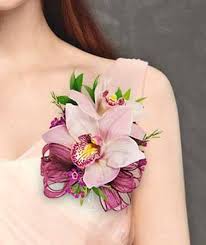
Guys don’t talk about flowers much (unless we’re gardeners) but it doesn’t mean we haven’t had our share of close encounters with them.  My first was probably with dandelions (yes, they’re flowers) and the childhood fascination of blowing the blooms into countless flying bits.  Growing up in Southern California also meant going to the Rose Parade, where the bigger floats average more than 50,000 flowers. Senior prom was probably the one and only time I bought flowers in high school.  Call a wrist corsage awkward if you will, but hey, it beats the terror of pinning flowers on a girl’s dress.

dicey

Speaking of awkward, when I first met my wife in college I decided to be coy and send flowers, forcing her to make the next move.  But fate played a part when the bouquet was delivered to the wrong dorm, the flowers wilting at the front desk for days.  I didn’t hear from her for a while and she didn’t hear from me, and that meant we were thinking nasty thoughts about each other. “Ungrateful” (my end). “Loser” (hers).  Another girl finally let her know about the flowers and it’s a good thing she found out.  A marriage was saved!

pricey

If you’re thinking my spend on flowers is below average, I’m confident I made up for it in a single day: at my daughter’s wedding.  Her bouquet, her bridesmaids’ bouquets, down the aisle, around the altar, at the centers of the reception tables, and on and on – the blooms were everywhere.  Let’s just say the cost of all that color was probably enough to buy a small car.

I’ve brought home several flower bouquets over the years, whether to my wife or to my mother.  What used to be an in-shop, DIY experience is now pretty much Amazon, where you click your way through the colorful screens of 1-800 FLOWERS or FTD to create the perfect arrangement.  And as you know, you rarely get the exact look you choose from the photos.  The fine print protects the companies by stating something like “depending on availability”.

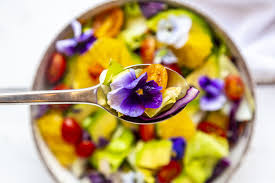
I like to bake (which is not the same as “to cook”), so when someone says “flower” I’m thinking “flour”.  After all, flour is to baking as flowers are to spring.  Flowers wouldn’t taste good in my chocolate-chip cookies, but you do find them in other foods.  Top your soup with a squash blossom, your tea with chamomile flowers, or your salads with calendulas, pansies, or marigolds. Not for me; no thanks.  When it comes to flowers as food additives I might be tempted to say, “the bloom is off the rose”.

The Masters is full of azaleas

Okay, so I went through the lyrics of “Seasons In The Sun” again and noticed …now that the spring is in the air, with the flowers everywhere… , so… what do you know?  Terry and I are talking about the same season after all.  At least this one lyric brings a little joy and fun to an otherwise depressing song.  It’s what this kid born in the 1960s might call “flower power”.

Blogger’s note: “Seasons In The Sun” really was #1 on the music charts exactly fifty years ago this month.  My wife and I bought strawberries last weekend, which had me thinking about seasons, which had the song bouncing around in my brain.  But the fifty-years thing is an eerie coincidence, don’t you agree?  Maybe a higher flower power is at work here.

Some content sourced from Wikipedia, “the free encyclopedia”.

First-Name Basis

It’s only Tuesday as I type, but I’ve already cleared my calendar for Friday. After all, I have a very important day ahead of me. So important in fact, I need to organize a parade, raise a flag, and prepare unique dishes for the expected throng of adoring fans. But why am I wasting words on the details? You already know we’re celebrating Saint David’s Day in a few days, don’t you?

They’ll be celebrating in Wales, at least, just as they do every first day of March.  You’ll find my cathedral there too, way down in the southwest corner of the country.  Well, St Davids Cathedral, I mean.  And the funny thing is, he’s not the David you’re thinking of, the one from the Bible who took down Goliath as a boy and became king as a man.  This David helped to spread Christianity throughout the UK, united the Welsh people against a warring England, and performed several miracles.  David’s a big deal in Wales.

David’s parade (not Patrick’s)

St. Patrick’s an even bigger deal, of course.  At least Patrick rates a celebration in the U.S.  But admit it, you’re not celebrating Patrick’s spread of Christianity throughout Ireland, nor his miracle of removing all snakes from the land.  You’re thinking more about what garment of green to wear, four-leaf clovers, beer, and maybe, just maybe, this is the year you participate in your local St. Paddy’s Day 5k.

Nice cathedral, Dave

This business of saints is interesting to me because, well, it’s not as defined as I was led to believe.  The rules and processes to put “Saint” in front a first name are a little vague.  Suffice it to say, you need to be a model citizen, as well as a teacher, person of influence, and someone who cares little for the material goods and comforts of this world.  I know a lot of people who fill this bill, but add in “wonder worker” or “source of benevolent power” and the list drops to zero.

Do you know the way to… ?

Saints are also on my mind because I grew up in California and, well, they’re all over the place out there.  Francisco to the north.  Diego to the south.  Barbara somewhere in the middle.  My childhood home was right down the street from Monica.  My brother lives in Fernando’s valley.  99.9% of the state’s residents think of those as “places”, but firstly they were people.  You’ll find “San’s” and “Santa’s” all over the Golden State.

Saints get a little watered down when you consider the Catholic Church’s take on them.  More than 10,000 have been recognized over time.  Even more to the point, Catholics acknowledge anyone making it to heaven to be a saint.  I’d hope that count is way more than 10,000 by now.  Maybe it’s the reason we have patron saints: the cream of the crop, the ones regarded as “heavenly advocates of particular nations, families, or people”.  My patron saint isn’t David by default, but I sure like his name.

Eat Welsh Rarebit when you celebrate on Friday (grilled cheese on toast, zero rabbit)

Admittedly, my mind wanders somewhere other than historical figures when I think of saints.  Our dog is a Saint Bernard, one of those gentle giants you picture with a brandy brandy around the neck.  A few years ago we went on a cruise, with a stop in the Baltic Sea port of Saint Petersburg.  “St. Elmo’s Fire” is a luminous phenomenon caused by an atmospheric electric field. (also a pretty good movie from the 1980s).  And so on.

You can read a bit more about Saint David and his cathedral in one of my very first blog posts: unsung.  You’ll discover that his town of Pembrokeshire – the smallest kingdom enclave in the UK – is right across St. George’s Channel from the Irish town of Kildare, where you’ll find St. Brigid’s Cathedral, my wife’s namesake.  The blog post is really about Brigid but at least David gets a mention towards the end.  Even if you don’t “read a little more”, remember, Friday’s the big day.  Parades, flags, and fun food, all for a darned decent guy.  Makes me blush anytime somebody says, “Dave, you’re a saint.”

Some content sourced from Wikipedia, “the free encyclopedia”.
Keeping Score at the Grocery Store

In the chaos of the supermarket a few days before Christmas, milk, eggnog, and a package of those Li’l Smokies sausages fell into our shopping cart. These items don’t usually find their way into our frig but the year-end holiday meals somehow demanded them. If the market wasn’t so frantic I would’ve also whipped out my phone to see if these purchases deserved my dollars. After all, just about everything we use in the kitchen (and bathroom) these days has a little numeric value lurking just below the surface.

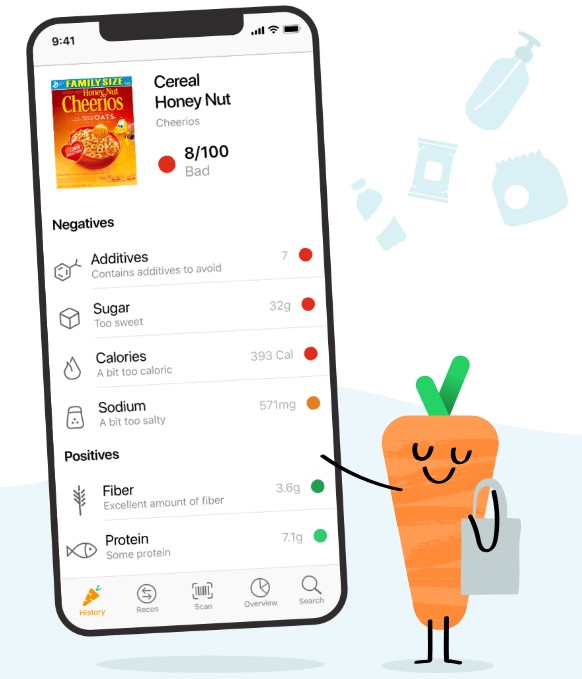
Nacho Cheese Doritos are now a “5” in my world.  You might say pretty good! until I tell you that’s on a scale of 1-100.  But let’s say you choose Blue Diamond’s Almond Nut-Thin Crackers instead.  The number skyrockets to 84.  A roll of Wint-O-Green Life Savers earns a 28 while a box of Tic Tac Freshmints doubles the number.  Nature Valley Granola Bars? 51. Heinz Ketchup? 33.  And in the ultimate insult to products considered “food”, perfectly round Nabisco Oreos earn a perfectly round 0/100.

What’s with all the tallying, you ask?  The numbers are simply the output of a little smartphone app called Yuka, which joined my personal parade of subscriptions last May.  In the words of its young French founders (Julie, and brothers Francois and Benoît), Yuka “deciphers product labels and analyzes the health benefits of foods and cosmetics”.  Plain English: Scan the barcode of anything in the supermarket and Yuka tells you whether to buy it or not.

Candidly, it wasn’t the numbers that sold me on Yuka.  Rather it’s this: the app is completely ad-free because brands cannot pay Yuka to advertise their products.  In other words, the numerical ratings I’ve shared are generated objectively, using common perceptions of the health benefits of ingredients.  Yuka has rocked the small space known as my kitchen pantry.

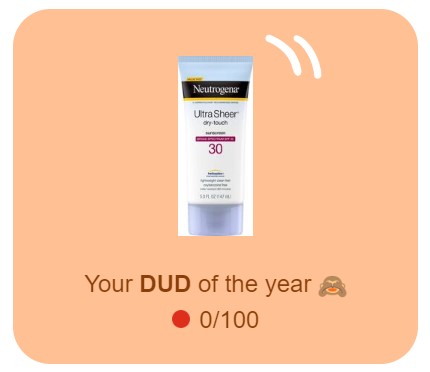
Never is this overhaul more evident than with “cosmetics”, Yuka’s catch-all for everything you find in the bathroom.  In the last eight months I’ve swapped out my deodorant, mouthwash, shaving cream, shampoo, and face wash for items with better Yuka numbers.  Five products I used every day and purchased for years just went flying off my medicine cabinet shelves, replaced by other products that are healthier on and in me (including Aveeno’s facial cleanser, which earns a perfect 100).

Yuka (the name is a nod to Yucatán) is about more than scan-and-score.  You can also simply search on products, mining a database of five million entries.  Even if a product isn’t in the database you can enter the ingredients from the label and Yuka will give it a number.  And if that number is lousy (like it is for your Oreos or my L’il Smokies) Yuka will point you to a list of alternatives with better numbers.  Again, Yuka doesn’t recommend one product over another; it just presents the numbers for you to consider.

In a nod to the healthy habits of Europeans (who favor fresh foods), Yuka’s founders realized its app was most popular in America, where we are so fond of packaged products.  So they packed up their French offices and French families and moved to the middle of Manhattan – temporarily – to better connect with their target audience.  Eventually they’ll head back home but not before Yuka is sure to land on the smartphones of millions of Americans.

Here’s one more aspect of Yuka I appreciate: the founders take time to communicate with their users.  In the eight months I’ve subscribed, they’ve sent me twelve emails with interesting articles about healthy eating, healthy “cosmetics”, and the entertaining evolution of their little company (which includes a dog as an employee).  They also sent me a fun video of their first few days in New York City.  And just last week I received a year-end recap of my app use (93 products scanned with an average score of 46).  No advertisements and no product pushes.

The subscriber version of Yuka is $15/year (you can try a more limited version for free), which includes the convenient scan-for-a-score feature.  Furthermore, your subscription dollars are what keeps Yuka in business, instead of funding manufacturers who’d like nothing more than to push their products on you.  That’s just one of the reasons I now keep score at the grocery store.

Christmas Customs Crisis?

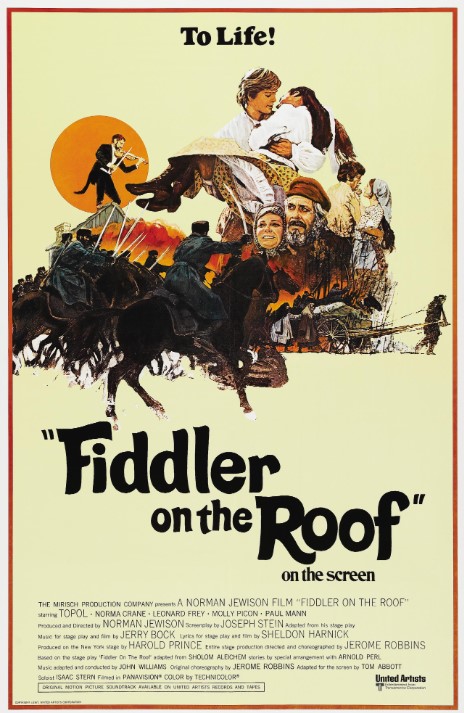
In the 1971 movie Fiddler on the Roof, the musical numbers are familiar even fifty years after the fact. Songs like “Matchmaker, Matchmaker” and “Sunrise, Sunset” play in my head in the voices of those long-ago performers. But it’s the opening number – “Tradition” – I hear most clearly, in the robust voice of actor Topol. The lyrics, covering the expected roles of father, mother, son, and daughter, speak to maintaining things as they always were. Which brings me to Christmas, and my family’s somewhat threatened traditions.

The easy way out here would be to list mine and ask you for yours.  We’d probably have some traditions in common and others we’d be hearing about for the first time.  Instead let me ask, are any of them robust enough to make it through the long haul?  As fast as the world is changing, you have to wonder what Christmas celebrations will look like ten and twenty years from now.  Seriously, do you expect hard-copy Christmas cards in the 2030s?  (Will you even have a mailbox?)

The Christmas tree is a good place to start.  As I’ve blogged about before, our tree is always real (versus artificial), purchased from a nearby lot after choosing the best fit for the house and budget.  This year however, I admit to a pause when I saw the price tags on the branches.  I swear the cost of Christmas trees doubled from 2022.  Economics says it’s a case of supply and demand, but in this case both are declining.  Tree farms surrender to developers.  The preference for artificial trees has risen steadily over the past fifteen years (to 77% of us now).  So less trees and less demand.  My 2030 Christmas may include an artificial tree whether I like it or not.

Christmas dinner faces a similar challenge.  The beef tenderloin we prefer for our celebration is a once-a-year luxury but it’s about to become a never-a-year purchase.  Even at a big box like Costco a trimmed tenderloin sets you back $40 a serving.  You start to wonder if burgers wouldn’t be just as satisfying simply for the money saved.  Even better – snacking throughout the day, and then your Christmas dinner appetite will be satisfied by a few side dishes and dessert?

Christmas (Eve) church already faced its toughest test (COVID) but did it really survive?  I remember the service we attended in 2020… from the “comfort” of our car with the preacher and the choir at the edge of the church parking lot.  The next two Christmases brought parishioners back indoors… but in far fewer numbers.  I admit to getting comfortable with “laptop church” every now and then, but Christmas Eve will be in person as long as there are sanctuaries and services.

Christmas carols may be the one tradition where serious change is in order.  Maybe you heard; Brenda Lee’s 1958 version of “Rockin’ Around the Christmas Tree” hit #1 on the Billboard Hot 100 this year .  That’s “staying power” (maybe staying a little too long) but it also suggests we’re not creating enough new music.  And how many versions of “Baby It’s Cold Outside” are we going to make before we decide not to change the lyrics but rather to ditch the song once and for all?  Bing Crosby, Nat King Cole, and Karen Carpenter will always have a place on Christmas playlists. The rest are getting old and it’s time for more “new”.

Christmas lights don’t leave much room for debate.  Not only will they be shining brighter than ever in the 2030s, they’ll be holographic, animatronic, and experiential.  Instead of a drive-thru Christmas display, the display will probably drive through you.  You’ll also have the option of enjoying your neighbors’ displays from the comfort of your living room (using the “mixed reality” headset you got for Christmas).

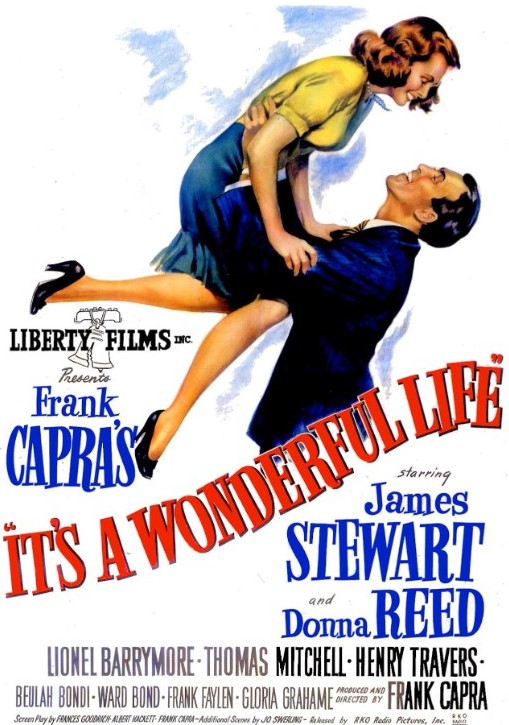
Finally, Christmas movies have pretty much run their course because you can only spin so many stories around the holiday (and anything on the Hallmark Channel doesn’t qualify as a movie).  Having said that, I’ll go to my grave watching It’s A Wonderful Life every December.  Even if there are no Christmas cards, tree, or dinner, and I’m tortured with yet another version of “Baby It’s Cold Outside”, I know I can always find tradition and the true meaning of Christmas alongside Jimmy Stewart, in a little town called Bedford Falls.

Merry Christmas!

Some content sourced from Wikipedia, “the free encyclopedia”.

The Give-and-Get Machine

This Christmas season, by tidy coincidence, our family’s Twelve Days of Christmas will give to us six family members, Five Gold Rings, four restaurant dinners, three neighborhood gatherings, two Christmas concerts, and a downtown parade of horses, dogs, and Santa. As if that’s not enough “get” this year, we’ll also have a couple dozen presents under the Christmas tree… most processed through the Give-and-Get Machine.

I’ll get to the Machine in a minute but let’s start with the exception.  In early October I walked into a local retailer, picked out a gift for my wife, and handed over a credit card.  In exchange, the clerk handed over my purchase in a small paper bag.  I took it home, wrapped it myself, and – two months later – placed it lovingly under the Christmas tree.  If you’re thinking, Man you went to a lot of trouble, Dave – I sure hope your wife appreciates it, then you, my friend, are a product of the Machine.

What is the Give-and-Get Machine?  It’s technology’s approach to gifting.  When you choose to give a gift this year, nine times out of ten you’ll plop down on the couch, open your laptop, and navigate to your favorite e-commerce website.  If you don’t know what to give, you can choose between “Last Minute Deals” or “Top Picks for You” (based on previous spending).  Once you decide, you’re probably less than five clicks from the finish line, especially if your recipient is in your “Address Book” and you’ve already stored your personal information.  Add to shopping cart, choose delivery address, confirm purchase, and you’re done.  But wait!  You can also add gift wrapping and a message for a few more pennies.  Well now, aren’t you the savvy gift-giver!

The convenience of the Give-and-Get Machine is undeniable.  After all, my purchase in October meant a one-hour roundtrip drive, to a shop where I may or may not have found something.  Add another fifteen minutes once I got home to wrap the gift and add the To:/From: tag.  You, meanwhile, accomplished the same “task” in maybe ten minutes, with a mug of hot chocolate and a few keystrokes from the comfort of your kitchen table.

“Task” is the operative word in the last paragraph.  Gifting should spring from the heart instead of the Task app of your smartphone, right?  Gifting should be a choice, not a chore.  Perhaps those of us who default to the easy-out Give-and-Get Machine are missing out on the real meaning of Christmas.

Admittedly, the Give-and-Get Machine includes some really nifty apps.  If you’ve ever used Gift Hero (“The Best Wish List Ever”) you know what I mean.  GH is the perfect solution for the family that exchanges gifts but has reached the age (or proximity) where no one knows what to get each other.  On GH each of you creates wish lists and the lists are shared with everyone else.  Once you choose a gift from another GH list it’s marked as “taken” to avoid duplicates.  Most gifts are hyperlinked to merchant websites for easy purchase, and you can add notes like color, size, and quantity.  Also, GH blocks you from knowing what has been taken from your own list by whom, so the element of surprise remains.

There’s an endless debate with apps like GH.  I mean, let’s be honest, it’s easy to skip any and all effort to be thoughtful about what somebody wants for Christmas when you have their list right in front of you.  On the other hand, you avoid the occasional embarrassing face-to-face exchange, where the recipient insists I love it when in fact they really don’t, and will probably regift it next Christmas.

Ultimately, the almighty dollar may be the decider between a gift from a store or the Give-and-Get Machine.  My wife and I found a nice assortment of books and toys for our Colorado granddaughters this year, at stores we visited both near and far.  We wrapped them all up, put them in a large box, and drove down to the post office.  The clerk measured the box and its weight and informed me the shipment “had to go by plane” instead of anything cheaper.  The cost was more than my annual subscription to Amazon Prime.

Maybe I shouldn’t be so critical of the Give-and-Get Machine after all.

Five Gold Rings

So… if it really was the fifth day of Christmas you wouldn’t be singing Christmas carols anymore, now would you? I mean, how many of us do Christmas anything after December 25th?  Not many.  Accordingly this post is an early Christmas present to you: five carols worthy of the coveted Gold Ring award. “It’s impossible”, you say. “Select only five Christmas carols?”  Yes, I get you, but today’s challenge isn’t fruit(cake)-less. We just need a few rules to refine the recipients:

  1. You can’t choose more than one from the same singer (which eliminates about five hundred from Amy Grant).
  2. You can’t choose more than one version of the same song (in other words, please dream of only one “White Christmas”).
  3. Your choices should dance into your head like sugar plums, instead of having to consult your several Spotify holiday playlists.
  4. (and perhaps the most difficult): Your choices should qualify as “carols” and not just “songs”.  I mean, c’mon people, if we’re giving out gold rings the music better convey the spirit of Christmas, right?

Here then, my five gold rings; the ones adorning my hand every Christmas for as long as I can remember (or at least, for as long as Carrie Underwood’s been alive).  They’re probably not the same as your five gold rings but that’s okay, because you wouldn’t give me the same presents I give you, would you?  Would you?

Sissel Kyrkjebo/Mormon Tabernacle Choir“In The Bleak Mid-Winter”.  The Methodist church I grew up in always reserved a spot for this 1906 carol in its Christmas Eve services, so it blooms with nostalgia for me.  Sissel’s angelic voice – backed by The Choir – captivates me every time, especially on the introspective lyrics of the final verse.  I think you’ll agree; Sissel is as graceful as one of those seven swans a-swimming.

Amy Grant“Breath of Heaven”.  I love everything Amy Grant sings about Christmas (until her 2016 album “Tennessee Christmas” came along, which was as bad as curdled eggnog).  I thought it would be difficult to choose just one of her carols, but “Breath of Heaven” is Amy’s unparalleled signature to Christmas.  The lyrics “Help me be strong… help me be… help me…” always get to me, and are as successive as three french hens, one after another.

Laura Story“I Lift My Eyes”.  Laura Story is a pastor, songwriter, and singer (better known for her contemporary Christian hit “Blessings”).  She sings from the heart.  Of the ten carols a-leaping on her Christmas album “God With Us”, “I Lift My Eyes” leaps the highest.  Frankly, it soars.

Michael W. Smith“Almost There”.  Bit of a cheat here because Amy Grant shares in the singing, but I still consider this one a standout Michael W. Smith carol.  The lyrics speak to Mary’s journey to Bethlehem, her journey to the birth itself, and anyone’s journey through Advent to Christmas.  You could also say it’s a carol about the partridge pursuing the pear tree, but not quite to the branches yet.

Carrie Underwood“All Is Well”.  Michael W. Smith also gets the credit for this one, which was recorded by two other artists before this latest rendition.  The lyrics are simple and repetitive, but with Carrie’s ridiculous range you’ve got something more powerful than eleven pipers piping.  Carrie draws out the final (all is) “well” for so long, you’ll wonder if it isn’t New Years Day when the carol is done.

So there you have them, and now it’s time for your own gold rings.  Remember, five off the top of your head, only one per singer, only one version of any choice, and music that speaks reverently to the season.  Gift your rings back to me in the comments and we’ll feel as cozy as two turtle doves.  Whatever those are.

Beyond Quenching

Last week on Thanksgiving, I drank the following beverages in a start-to-finish order I may or may not recall correctly: water, coffee, more water, eggnog, water again, wine, and just before bed, a final gulp of water. Eggnog aside (and wine only occasionally) it was a typical day of liquid consumption. But on the list of reasons why I drink anything at all, I find it interesting “quenching thirst” settles to the bottom of the pool.  Closer to the surface are the more interesting intentions.  Collectively you might refer to these habits as my daily fluid dynamics (DFDs).

When I wake up, the first thing I do (make that the second thing I do, after walking the dog) is to down a glass of water; a full sixteen ounces.  I used to knock back just enough to chase my daily vitamins but then I read how you should drink water first thing in the morning, because technically you’ve been dehydrating for the last eight hours.  So I started filling ‘er up to the top of the glass, a two-cup habit I’ve maintained for a long time now.  Let’s list that habit as DFD #1: To help swallow things (like vitamins).

My top-o’-the-mornin’ water stands in the way of the one drink that truly matters in life: coffee (or tea for the rest of you).  My daily dose of caffeine is always the same: twelve ounces of the rich and robust stuff, with just a splash of cream to take the edge off.  Coffee takes me from foggy to functioning in a matter of sips.  Post-coffee Dave is alert and ready to conquer the day.  Call it a chemical dependency?  Hardly.  I can skip my “daily grind” here or there and be none the worse for wear.  But morning brew is undeniably one of life’s simple pleasures.  DFD #2: To deliver a morning wake-me-up. 

Let’s make a brief rest stop on our tour of daily fluid dynamics… literally.  My morning coffee comes with one utterly inconvenient side effect: the recurring “call of nature”.  Something about caffeine seeks to clear out every available drop of moisture from my body, until I might as well be dust.  It’s like one of those juice presses, only press down uncomfortably on the fruit every, oh, twenty minutes.  If I could down an entire liter of cold brew, not only would I be bouncing off the walls but I’d also lose at least ten pounds in water weight over the next hour.  Maybe I’ve discovered America’s next diet craze.

Okay, we’re back from our visit to the “powder room”.  I’m chugging water several more times during the day (indeed, high/dry Colorado made my faithful companion a water bottle, wherever I go).  But is all this water because I’m thirsty or because I can’t get the old saw out of my head, the one that recommends “eight to ten cups a day”?  A similar water saw says to consume half your body weight in ounces, but let’s be real: I never get to that number (nor do I believe in one-rule-applies-to-all).  Yet getting enough H2O still rattles around in my brain.  So, DFD #3: To hydrate the body.

Eggnog done right (meaning it’s often done wrong) is my favorite drink of the holiday season.  Conveniently, the creamy concoction also serves as a throat-soother when you’re sick.  It’s cold, with a thicker-than-milk consistency that settles on your throat for a fair amount of time.  Reminds me of the old Pepto-Bismol jingle (“the pink stuff”), how it “coats, soothes”.  Eggnog might be as effective as a cough drop and it tastes a whole lot better.  DFD #4: To ease a sore throat or cough.

Wine makes my fluids list regularly, and it would even if I had no argument for a DFD.  But I do.  Like today’s college “pre-game” drinking (or tomorrow’s holiday party you’re dreading), sips of wine dull the senses, warm the insides, and melt away stress.  Loose lips are a common side effect, but wine in moderation typically makes the conversation flow.  Plus, the right vintage simply tastes great, time and again.  DFD #5 then: To act as a “social lubricant”.

Last (and least), water is not only my top o’ the mornin’ but also my close o’ the evenin’ drink.  After the toothpaste, the floss, and the oral rinse, the water goes in and comes right back out.  Swishing, gargling, rinsing, and spitting – it’s all an effort to restore order beyond the lips, so you head to bed without the breath of the dead.  The only more effective approach would be a fire hose on full blast. So, DFD #6: To cleanse the mouth.

Maybe you’re a little more introspective about your consumption of beverages now (and you’re welcome).  Like I said, quenching thirst is somewhere near the bottom of the pool.  So the next time you’re taking a sip, and someone notices you being particularly thoughtful about it, just tell them you’d like to explain a little something called daily fluid dynamics.

It’s Thanksgiving Season (#4)

Well now, I told you the Thanksgiving season would fly by didn’t I?  Those 23 days came, went, and BAM! here we are – Thanksgiving Day itself.  Good thing you kept a Gratitude Calendar like I asked you to.  You did keep one, didn’t you – the list of things you’re grateful for this season?  No, you can’t have my list (who are you, that kid who copied off of others in grade school?) but I will let you read it:

  1. WordPress, which allowed me to schedule this post ahead of time so I can spend Thanksgiving Day focused on much more important things.
  2. Thanksgiving cards, purchased for family and friends before the torrent of Christmas cards pushed them off the shelves.
  3. Our son, visiting this weekend all the way from Colorado.
  4. Witnessing my beloved alma mater face Clemson on the football field (even if Notre Dame “didn’t show up”).
  5. Today’s extra hour of sleep, even if I couldn’t manage to sleep for an extra hour.
  6. Babysitting my granddaughter, even if she produced what I’d politely call a “blowout”.
  7. Making it to the car dealership safely on a suspect front left wheel.
  8. Repair of that wheel by mechanics who know a lot more about fixing cars than I do.
  9. A perfectly still morning with the dog and a cup of coffee before easing into the day’s activities.
  10. My mother, who was born on this day 95 years ago.
  11. My body, which allows me to continue the regular, rigorous workouts I enjoy.
  12. My wife, my endless source of love and laughter.
  13. The quiet, peaceful, safe community I live in (and utterly take for granted).
  14. A long-awaited rain shower, and hopefully the first of many.
  15. The many entertaining blog posts from my “online family”: those I faithfully follow and who faithfully follow me.
  16. The family and friends who keep us tied to our former years in Colorado.
  17. A perfect fall day in Colorado, allowing me to accomplish the many things I had on my agenda.
  18. The reunion of my wife’s family with her mother (a gathering that hasn’t taken place in over ten years).
  19. A visit with my Colorado granddaughters, and the opportunity to walk my eldest to kindergarten the following morning.
  20. A visit with my best buddy and his wife, and the realization our relationship will stay strong no matter the time or distance.
  21. The countless workers in the airline industry who make travelling safe, including the singing traffic cop at the airport crosswalk.
  22. The simple comforts of being back at home 
  23. My brothers and their families, who I will truly miss this year as they gather together in Williamsburg, VA.

And… that’s enough for today.  You should be focused on family and friends anyway, not blog posts.  Wait – one more thing – a throwback term to mix in with your Thanksgiving spread: requital (with the middle part of the word pronounced like “quite”).  A requital is a return or a reward for an act of kindness.  Here’s how Beethoven used it back when he was still making music: As a slight requital of your kind souvenir, I take the liberty to send you some variations, and a Rondo with violin accompaniment.  Fancy, huh?  Now, go impress your guests around the table by using your new word.

Oh, and if you didn’t keep a calendar of things to be thankful for? Seriously, what are you waiting for?  C’mon, get grateful already!