Save the Bowl

Back in the 1980’s, Hollywood produced an awful movie called “The Stuff”.  The story began with a couple of miners discovering a pasty-white goo pouring forth from the earth.  Giving it a taste, they realized it was not only edible, but the more you ate the more you seemed to want.  So, they package the goo, brand it “The Stuff”, and begin selling cartons to the masses.  Turns out – besides tasting good – “The Stuff” melts your brain, turns you into a zombie, and leaves you with nothing but an insatiable appetite for more.  That’s the entire comedy-horror plot, save for an FBI agent and a teen trying desperately to rescue the planet.  “The Stuff” was like a light/airy “Invasion of the Body Snatchers”: no taste and little substance.

Even a “distasteful” movie can be a prophecy, however.  Maybe you’re craving “The Stuff” after reading that paragraph.  Guess what?  It just may exist, disguised as the pint-sized “ice cream” products from Halo Top, Arctic Zero, Enlightened, and others.  All available this very minute at your local grocery store!  What are you waiting for?

Halo Top (HT) is – in one aspect – the dream dessert.  Halo Top is a full pint of ice cream (per the label – four servings), engineered to be consumed straight from the container in one sitting, but with none of the guilt/gluttony associated with full-fat competitors.  HT can’t hide its pride – the biggest lettering on the container is the calories (just 280 for the whole pint; 25% of Ben & Jerry’s), while elsewhere the packaging promotes immediate and total consumption with slogans like “save the bowl” and “stop when you hit the bottom”.

On the other hand, Halo Top is not dream-tasty.  Some describe HT as “shaved ice” while others say it leaves a chalky aftertaste (hello, stevia).  The chocolate-chip cookie dough has very little “dough”, and the cookies-and-cream has no cookies.  Every review I found recommends time at room temperature to achieve a more ice-cream-like consistency.  On a recent visit to the grocery store, I “hefted” one of these pints.  It was hard as a rock, yet somehow so light/airy it felt like a little helium balloon, ready to ascend from my grasp.

Here’s the real wonder to me: none of the above gotchas stop consumers from filling their baskets with Halo Top pints.  Last year’s sales were over $350 million, a 500% increase from the previous year.  In the same time, “regular” ice cream sales increased less than 10%.  As one consumer declares, it’s a brave new world of ice cream – quantity over quality.

What I find most disturbing about Halo Top and its peers is the manufacturer’s intent.  They’re effectively encouraging you to clean your plate by design.  Four servings make more sense than one because you should eat the whole pint.  Whether you’ve already quenched your appetite is irrelevant; it’s about getting to the bottom of the container.  Arctic Zero claims “…our love of ice cream runs deep, like eat-the-entire-pint-deep.”  Enlightened even offers how-often guidelines.  In their website FAQ’s, we’re told ice cream is not just for dessert: “Not at all! Low in calories, fat, and sugar, and packed with protein and fiber, Enlightened Ice Cream is truly good for you. It can be enjoyed at breakfast, lunch, and dinner… or anytime in between!”

Let’s translate the “more is better” concept to the movie theater.  If we drop the guilt factor from junk-food concessions, we could sell popcorn in containers the size of trash cans.  Soda could be hosed to each theater seat for hours of non-stop slurping (restroom logistics aside).  String licorice could be coiled on floor-mounted reels.  M&M’s could be the size of hamburgers.

We’ve just about come full-circle here.  If all of us binge on Halo Top, honing our full-container consumption habits for breakfast lunch, dinner, “and anytime in between”, haven’t we created a modern-day version of “The Stuff”?  All that’s missing is the magic ingredient in Starbucks and Chinese food that triggers “I want more”.  As for me, I’ve never tried any of the products I’ve talked about today, nor do I intend to.  I’d rather not become a zombie.

Some content sourced from the Wall Street Journal article Can’t Stop, Won’t Stop…“.

All By Myself

I’ve always thought “Prime Minister” is an elegant name for a politician.  Prime suggests first-in-charge, while Prime Minister implies several others in the political hierarchy one or more levels down.  In the United Kingdom, Theresa May is the PM; the head of “Her Majesty’s Government”, with a cabinet of other Ministers at her disposal on par with Secretaries in the United States.  Minister of Agriculture, Minister of the Interior, Minister of the Defence (love the British spelling), and so on.  In all, Ms. May commands twenty-one unique ministers.  As of January, make that twenty-two.  Who’s the latest to join the tea party?  The Minister of Loneliness.

When I think “lonely”, a country of 60 million people doesn’t come to mind.  No country comes to mind.  Instead, I think about individuals in far-away, desolate places.  A scientist conducting an experiment near the Arctic Circle.  A criminal in solitary confinement in the bowels of an isolated prison.  Tom Hanks in “Castaway”.  So it’s no wonder the New York Times article about the newest U.K. minister, Tracey Crouch, caught my eye.  Even more eye-opening was to read about the loneliness “epidemic” responsible for her appointment.

Britain’s research indicates nine million or more of its citizens “often or always feel lonely”.  That’s 15% of their population.  I find it remarkable all those people would own up to feeling that way, but perhaps the survey was their opportunity to say, “please help”.  Consider this: 200,000 senior citizens in the U.K. hadn’t had a conversation with a friend or relative in more than a month.  Makes me wonder if vocal cords stop working if they’re not used long enough.

Loneliness is not a trademark of the U.K. alone, of course.  It’s unavoidable in any country or culture.  “Lonely” brings to mind several songs over the past fifty years: Bobby Vinton’s Mr. Lonely (1962) to Adam Lambert’s Another Lonely Night (2015).  Elvis had a hit with Are You Lonesome Tonight?, as did Roy Orbison with Only The Lonely and Yes with Owner of a Lonely Heart.  Eric Carmen’s two biggest hits in the 1970’s were about loneliness: All By Myself and Never Gonna Fall In Love Again.  And if you want the best example of loneliness in music, look no further than Charles Ives’ short classical piece The Unanswered Question.  The haunting conversation between solo trumpet and woodwind quartet makes you realize even a brass instrument wishes it had a few friends.

The Internet Movie Database (IMDb) lists over 75 movies about loneliness.  A few familiar examples: Carrie, Silence of the Lambs, and Brokeback Mountain.  The History Channel hosted several years of a reality television series called “Alone”, which shared the daily struggles of individuals as they survived in the wilderness for as long as possible. The participants were isolated from each other and all other humans, and the one who remained the longest won a grand prize of $500,000.  This is entertainment?

I don’t want to be lonely just to be able to write a best-selling song or win a half-million dollars, but that doesn’t mean I mind being alone.  Lonely and alone are decidedly different creatures.  If one is lonely, the dictionary says he is “destitute of sympathetic or friendly companionship” (sounds miserable, doesn’t it?).  If one is alone, he is “separate, apart, or isolated from others”.  And that is not such a bad thing.  In fact, we introverts (persons concerned primarily with their own thoughts and feelings) handle “alone” much better than you extroverts (persons concerned primarily with the physical and social environment).  We introverts prefer our gatherings in smaller numbers.

I’ll never forget an encounter I had with a neighbor years ago, at Halloween.  As my kids knocked on her door for treats, I realized we’d lived right next door for several months but never formally introduced ourselves.  I apologized as I shook her hand, yet her response was, “oh no problem at all; that’s why we moved to this neighborhood.  People stay to themselves here.”

Is this the world we live in now, with electronics and social media and work-from-home promoting more alone time?  At least the Brits are acting, before too much “alone” becomes too much “lonely”.   They’ve started a Facebook group for those affected by loneliness.  They’ve set up a fund to study the detrimental effects.  And they’ve appointed a new minister to lead the way.

Perhaps the U.S. should appoint a Secretary of Loneliness too, ministering to those who can’t seem to find companionship among 323 million others.  The Surgeon General claims loneliness can be associated with “greater risk of cardiovascular disease, dementia, depression and anxiety”.  On that note, what first appeared to be an LOL headline is no laughing matter at all.  Get out there and mingle.

Some content sourced from Wikipedia, “the free encyclopedia”.

Precisely Enchanting

If you watched any of the Winter Olympics the past couple weeks, you witnessed dramatic moments only the Games can deliver.  Some literally took my breath away: the edge-of-your-seat overtime shootout in the women’s hockey final (a 3-2 win by the Americans); the exquisite battle for gold between the highly-touted Russians in women’s figure-skating; and the first-ever victory for the U.S. in the team sprint of women’s cross-country skiing, where Jessie Diggins’ come-from-behind lunge at the finish line took the gold by 0.18 of a second.


Consider “0.18 of a second” (for a second).  The blink of an eye takes twice as long.  Now consider measuring 0.18 of a second.  Remarkably, we’ve had the technology to do so since the 1950’s.  For the Olympics, that precision was provided by Omega, the watch manufacturer from Switzerland.  Of course the timekeepers were Swiss.  What other country is so renowned for the keeping of time?  What other country coordinates forty-six individual railway companies on a single network of tracks, bringing its trains into the stations on-time every time?  Where else in the world would you feel more confident banking your cash?  Six years ago, Omega developed technology capable of measuring one-millionth of a second.  At the Pyeongchang Olympics they used a photo-finish camera capable of ten thousand snaps per-second.  The Swiss redefine “attention to detail”.

I’ve had an affection for Switzerland from a very young age.  As a kid, my introduction took place in subtle ways.  Shirley Temple’s “Heidi” was based in Switzerland. The Switzer brand of red/black licorice (still available in “vintage” candy stores) was a frequent purchase.  The cute little Swiss Miss in our pantry beckoned me to hot chocolate.  As a Boy Scout, I always carried one of the Victornox Swiss army knives.  At Disneyland I roller-coasted through a scaled-down replica of the Matterhorn – one of the Alps.  I had my first taste of fondue.  And for a Suisse exclamation point, I consumed a ton of that “holiest” of cheeses.  My ancestry test should’ve produced a little Swiss DNA, don’t you think?

As an adult, Switzerland’s products are no less present in my life.  Lindt is my favorite chocolate (and I’ve tried my fair share of chocolate). A Rolex watch is still the material equivalent of corporate-America success (though my tastes are more modest – perhaps a Swatch [Swiss-watch]?)  Velcro can be found on several items in my wardrobe.  Haagen Daz is my favorite brand of ice cream (a product of the Swiss company Nestlé).  And a lengthy search for “adult” Swiss licorice led me to Chateau D’Lanz, a family-run business in Washington state producing some of the best.

Speaking of Nestlé, the Toll House chocolate-chip cookie recipe is also one of my favorites. Here’s a bit of trivia: Toll House was an inn in Whitman, Massachusetts.  Ruth Graves Wakefield is credited with inventing the chocolate chip cookie (by mistake) somewhere nearby the Toll House.  The price Nestlé paid for the right to Ruth’s recipe? A lifetime supply of Swiss chocolate.

Now speaking of Velcro, here’s another bit of trivia.  George de Mestral was a Swiss engineer and amateur mountaineer from the 1940’s. Hiking in the Alps one day, George noticed seeds kept sticking to his clothes and to his dog’s fur. When he returned home, George developed a synthetic “sticking” technology like what he’d found in nature; a hook-and-loop zipper alternative eventually patented as Velcro. The clever name is a child of the French parents velours (velvet) and crochet (hook).

Okay, we’ve covered Swiss precision and some world-class products, but I haven’t addressed what makes Switzerland so fetching.  How’s this for starters: the entire country can fit within the greater Dallas/Ft. Worth area.  Bordered by France, Italy, and Austria, the Swiss are typically fluent in French, Italian, and German; as well as their home-country language of Romansh.  Switzerland produces some of the best in skiing, snowboarding, and mountain-climbing (of course), but also tennis? (hello, Roger Federer).


Here’s some more Swiss charm.  The colorful Guards in the Vatican City are the only foreign military service permitted to its citizens.  Switzerland’s “non-interference policy” dictates its only participation in foreign wars is typically through the high-profile benevolence of its Red Cross organization.  And citizenship in this fair country?  You’d better hope you have blood ties through birth or marriage.  Otherwise it’ll take twelve years of a special-residency permit, combined with a long-term work visa.

Despite my obvious affection, I should probably stay away from precisely enchanting Switzerland.  It’s a real country like any other after all, which means not everything comes up roses.  Perhaps I’ll cling to my snow-globe impression of the Suiss Alpenland instead: a gentle people living high on the Happiness Scale; the cleanest and quaintest cities imaginable; cobble-stoned streets and chalet-like houses.  The magnificent Alps serve as the backdrop, their slopes ascended by rickety cog railways and descended by skillful skiers.  Listen for an accordion or a little yodeling.  Look carefully enough into my globe and you might even notice the von Trapp family, marching down the mountain trail from Austria, singing their do-re-mi song.

Some content sourced from Wikipedia, “the free encyclopedia”.

Wait For It

Let’s wager a guess over something that happened to you in the past few days. It probably happened several times in the past few days. It wasn’t by choice, nor were you alone.  It might even be happening right now. What is this recurring, oft-maddening event in your daily world (and mine)? Somewhere, for some good reason, in person or in the car, deliberately or unintentionally, you found yourself waiting in line.

Call it a common courtesy or call it the primary by-product of consumer demand. Waiting in line is a timeless (or time-wasting) necessary evil with no satisfactory alternative.  While the world behaves efficiently with smartphones, computers and even data-consuming “IoT” appliances, those snaking, switch-backing, several-option, several-category lines of humans seem to grow ever longer.  Including traffic on the highways – another version of waiting – you’ll spend one to two years of your life in line.

Consider some of the common reasons why we wait in line:
– store cashiers
– airport security
– phone calls (on hold)
– amusement parks
– voting
– public restrooms

If I wrote this post fifty years ago, I would’ve listed the very same reasons why we wait in line.  We have options now, but let’s face it; those options are waiting-in-line in disguise.  Store cashiers now work side-by-side with an area of self-check-out machines (which draws its own line).  Airports promote pay-for lines like TSA Pre and CLEAR.  Telephone on-hold mechanisms offer callbacks instead of waiting (“for an additional $0.75”).  Disneyland installed “FastPass” lines; again, for a fee.  Voting can be done by mail (forcing your ballot to wait in line instead of you).  And public restrooms?  Okay, there’s no option to waiting for the potty.  Maybe reconsider that second beer.

The Brits refer to a line of people as a queue.  I like that (and not just because we need more words beginning with the letter “q”).  Leave it to those on the far side of the pond to class up the most mundane activity imaginable.  At least we have our phones as distractions when we “queue”.  But the old-fashioned distractions still work.  It’s why they put candy bars by the cashiers, magazines in the waiting room, mirrors by the elevators, and televisions in the airport.  Anything to help you forget you’re waiting in line.

Julio C. Negron

You’d think waiting in line is mindless – no-brainer science really – but I have experienced flaws in the system.  Recently in Lowe’s, waiting patiently in a single, central line at the self-check-out area, I was confronted by the person behind me, who demanded I “choose one side or the other” (as if logic demanded a separate line for each row of self-check-out machines).  My response to him was not one of my finer moments.  Another example – at the airport – my wife and I waited at the curb with a dozen others for the parking lot shuttle, only to discover the “front of the line” was a variable determined by the point on the curb where the driver chooses to stop his vehicle.  If you want to see what not waiting in line looks like, try to catch a parking lot shuttle at the airport.

In today’s world, we have new reasons why we wait in line:
– to purchase the latest iPhone
– at restaurants, with pagers (clever disguise for waiting in line)
on-line (i.e. for concert tickets or sports tickets at a specified time)
– Black Friday sales

Finally, we will always stand in line for our kids, whether to see Santa Claus at the mall or to buy something they simply must have.  Years ago, I remember taking my kids to the local bookstore for the latest “Harry Potter” (which they started and finished before the next sunrise).  It was the only time I’ve stood in line for the right to stand in line again.  The bookstore insisted on selling a limited number of tickets at noon, to be exchanged for the book later that same day, when the publisher allowed its release.

I believe the longest I’ve ever waited in line is five hours – to see the first Star Wars movie in 1977.  With no electronic devices to keep my friends and I company back then, five hours was even longer than it sounds, especially knowing two consecutive showings of the movie would run before I even entered the theater.  Then again, the truly morbid among us believe we are all simply waiting to die.  If that’s the case, let’s hope we’re in a really, really long line.

Bad Check

Last week I flew to Indiana for a conference, connecting briefly through Chicago O’Hare.  After finally touching down and exiting the tiny plane, I noticed a cluster of passengers right there in the jet bridge, waiting for luggage to be brought up the stairs.  I headed to the baggage claim area instead, where the rest of us watched the carousel lumber round and round.  The minutes passed interminably as the belt continued its relentless rotation; passengers leaving one-by-one with their bags.  Suddenly everything came to a grinding halt, and the carousel let out its big, mechanical sigh.  I found myself in the quiet and solitary confinement of an empty claim area.  My luggage?  Nowhere to be found.

The airlines advertise a ton of performance statistics, but here’s a new one on me: rate of mishandled bags.  For every passenger who files a lost-luggage report, the carrier gets a ding.  That ding is well-deserved, representing the stress of lost luggage, the hassle of filing a report in one of those stuffy little offices, and the inevitable delay reuniting with your bag.  Not that it happens very often.  According to the following chart – part of a Wall Street Journal article – American Airlines reports a mere 2.8 incidents of lost luggage per 1,000 passengers.  But hold the phone, folks – there’s more to the losing than meets the eye.  Turns out American (and most other airlines) avoid a lost-luggage ding if they alert you to the “mishandled” bag.  Today’s smart tags make it easy to track the bag (even if it’s heading in a different direction than you are).  So that bit of information – proactively communicated in a text or email – avoids a bad stat.  And that’s why the chart below shows a dramatic improvement in August.  American Airlines started its proactive notification process the month prior.

I don’t choose my airline according to “rate of mishandled bags” (or any other statistic for that matter – it’s all about the ticket price), but I have observed the adjusted behavior of others.  Carry-on baggage is all the rage now, in brand-new shapes and sizes.  Look around next time you board a plane and count how many passengers violate the airline’s carry-on policy.  The person with the roll-y suitcase and oversized backpack is probably one bag over the limit.  The person with the valise slightly larger than the space “under the seat in front of you” probably should’ve checked it.  But chances are the flight attendant won’t make a fuss, at the risk of negative publicity.

Speaking of backpacks, the oversized versions seem to be all the rage these days; far surpassing the number of “wheelies” and “over-the-shoulder’s” so common with past generations.  It’s like everyone’s back in high school again.

Here’s another trend.  Passengers carry-on instead of checking, knowing there isn’t enough room in the overhead bins.  Once the bins are full, they surrender their bags at the end of the jet bridge instead, for attendants to tromp down the stairs and into the belly of the plane.  After landing, the process works in reverse (thus the cluster of passengers on my recent flight).  But credit to these travel warriors; they avoid $50 of baggage fees, as well as smashing bags into overhead bins (which always brings to mind square pegs and round holes).

One more trend.  Airlines are shifting the baggage-check process into the hands of travelers.  At self-check-in, the kiosk now dispenses a bag tag along with the boarding pass.  You attach the tag to the bag.  You haul the bag to the belt, where – in some cases – you place the bag on the belt.  Congratulations – you’re an airline employee working free of charge.  You might even be helping the airline avoid a mishandled bag stat.

My own lost-luggage story had a happier-than-expected ending.  At the baggage service office, the attendant took my tag into the back, reappearing moments later with my bag.  Turns out my suitcase flew on another plane, arriving at my same destination before I did (explain that bit of magic, please).  Crisis averted, but instead I lost my excuse to go purchase a suitcase of new clothes.

Love Thee, Notre Dame

I used to love “back-to-school” nights in my elementary school days. My brothers and I would lead my parents through the gates of our asphalt-paved campus on the west side of Los Angeles, eager to show off the classroom projects and displays we prepared for their annual visit.  Mom & Dad would cram into our child-sized desks for talks from our teachers while we’d join friends for playground fun under the lights. Finally, we’d enjoy a KFC picnic dinner at the outdoor tables where we kids would have lunch during the day. Back-to-school night was equal parts adventure and pride, returning to campus at a time when we didn’t have to be students.

Such was the feeling this past weekend, visiting my alma mater in northern Indiana.  Notre Dame, that most Catholic of universities located near the south bend of the St. Joseph River – founded by Fr. Edward Sorin and his band of Holy Cross brothers in the mid-1800’s – drew me away from more convenient West Coast options like UCLA or Stanford (neither of which accepted me… details). Who was I, a Methodist from California, to attend a smallish Catholic school over 2,000 miles from home? Notre Dame’s admissions counselor did a heckuva sales job. Rather than own up to the humid months of the first semester or the penetratingly-cold months of the second, he focused instead on the promise of an outstanding faith-based education, coupled with small-dorm camaraderie, nationally competitive sports teams, and Midwestern hospitality.  When I graduated in 1985, it’s fair to say Notre Dame delivered on all of those.

Administration Building aka “The Golden Dome”, Central Quad

Thirty years later – this past weekend – I set foot on campus again, adding to only a handful of visits since my long-ago commencement. I won’t lie – returning to my college roots was a little daunting.  The Notre Dame of my years was by all definitions smaller, more modest, and less prestigious than the globally-renowned multi-campus university of today. My Notre Dame was an intimate cluster of buildings surrounding just three quads, one end of campus seemingly a stone’s throw from the other.  The student union was as small as a cracker box.  Two dining halls offered the modest sort of food – cafeteria style – I recognized from elementary school.  Diplomas were issued in just twenty fields of study. Four percent of the student body claimed a faith other than Catholic.  The clear majority of students came from Midwestern states, and only a handful chose to study abroad.

O’Shaughnessy Hall, South Quad

Thirty years later, my Notre Dame of yesteryear has been consumed by a property twice the size.  New quads and facilities cover the open fields that once hosted tailgaters before football games.  Another one hundred buildings have been added to the eighty or so of my day.  The new student union – opening just weeks ago – is the length of a football field (and in fact, co-located with the football stadium).  Today’s undergraduates choose from countless degree programs, with another fifty masters, doctoral, and professional programs to follow.  Add to the options, fifty foreign study-abroad opportunities in forty countries.

“Only” 80% of students are Catholic now (diverse by Notre Dame’s standards), and – speaking of diverse – almost 20% of the student body comes from outside the U.S.  Visiting one of the dining halls for lunch, it wasn’t the broad choice of foods (organic, ethnic, made-to-order) that impressed me, but rather the students themselves.  I witnessed a pretty good slice of the global pie at the tables around me.

Stairway to The Grotto and St. Mary’s Lake

Notre Dame’s mission statement includes the following: “In all dimensions of the University, Notre Dame pursues its objectives through the formation of a human community graced by the Spirit of Christ.”  Clearly that objective is reflected in the Notre Dame of today.  A school once known for little more than football is now an academic behemoth, built on an unwavering foundation of faith and service to God and fellow man.

“In Celebration of Family”

Notre Dame’s alma mater concludes with the following sentence: “…and our hearts forever, love thee Notre Dame.”  There may be a lot of “new” on campus today, but I still find the pathways of “my” years.  The Golden Dome, the Basilica of the Sacred Heart, and the Grotto will always form the heart of campus.  I maintain ties with only a handful of those who were in school with me, but we’ll always be proud members of the Fighting Irish family.  And every time I set foot on campus, I never fail to sense the memories of old, the encouragement of new, and the presence of the Spirit.  Indeed, Notre Dame is in my heart forever.

Tingling the Spines

When Amazon began opening bookstores a couple years back, I wondered why an uber-successful online enterprise would turn to brick-and-mortar, especially after sales of more than fifty million Kindle e-readers through its website. Turns out Amazon’s walk-in shopping experience is worth the walls. It’s retail at its most relaxing – and it has a place in the equation.  As CEO Miriam Sontz (Powell’s Books in Portland, OR) puts it, “something special occurs in a physical bookstore that is not replicable online”.

I’ve been to an Amazon Books just once (fewer than twenty locations in the U.S.), but vividly remember what made my shopping experience so compelling.  First, the manager greeted me with, “Welcome to Amazon, and what was the last book you read?”  When I told him (Kristin Hannah’s “The Nightingale”), he replied, “Oh, that’s a wonderful book.  Wasn’t it so interesting to read an account of the war in France instead of in Germany?  Have a look on Aisle 3 – you’ll find some other great WWII fiction.”

As I indeed had a look on Aisle 3, the manager moved on to other customers, prompting similar conversations.  Suddenly I realized the whole interaction was intentional.  Personalize/focus my shopping experience by discovering what I’m reading.  Pique my curiosity by allowing me to overhear what other people are reading.  A + B = Increase the odds I’ll make a purchase.

What really sets Amazon Books apart from the others is the displays.  The books are laid flat and on angled shelves, so you’re looking right at the cover as you’re standing in the aisle.  Below each book, an easy-to-read card delivers a crisp synopsis of the book, as well as a smattering of the ratings and reviews you’d find online.  Think about that tactic.  You peruse the entire colorful cover.  You take in the book title and author without cocking your head ninety degrees to the left or right.  And you know a little about the book (and whether it’s a recommended read) without turning a single page.  It’s almost like those moments in front of paintings in an art gallery.  “Displayed flat” sounds counter-intuitive in the per-square-foot world of retail, but damned if it isn’t a great way to shop.

Photo by Natasha Meininger

Amazon isn’t the only spine-tingler these days.  In a truly baffling trend, interior decorators and collectors are shelving books with the spines… facing the walls.  That’s right: take a book off the shelf, turn it all the way around, and place it back on the shelf.  Why?  Because “eggshell” – the typical color of the pages themselves – is aesthetically pleasing, instead of that rainbow of bright, colorful book jackets.  The linen texture is uniform, blending more confidently with whatever else is going on in the room.  Really?  Is this Feng shui on steroids?

Alas, as the Wall Street Journal reports, backward-bookshelving is no fad, .  You can purchase books on the cheap specifically for this approach.  Check out the goods at booksbythefoot.com.  BBTF sells you reclaimed books, covers removed, of various shapes and sizes, and yes; purchased “by the foot”.  You can even purchase your tomes in a color scheme (i.e. “burgundy wine” or “earth tones”).  Arrange them any way you want: facing in or out, flat or standing up, in piles or as standalones.  Any way you stack ’em they’ll look fully nondescript, suggesting you’d never go so far as to – gasp! – read them.  As Chuck Roberts (BBTF President) puts it, “Some people don’t want to have the literature as a distraction… they want books as objects on a shelf.”  You mean, like lobotomizing the intellectual meaning from the aesthetic?  Weird, just weird.

Or maybe not.  Now that I think about it, I own the complete works of Charles Dickens, painstakingly acquired years ago, one book at a time through the Franklin Press or some other mail-order rag.  My Dickens collection (above photo) sits neatly on the shelf gathering dust, just waiting for me to crack the first spine or read the first page.  But no matter; don’t they look pretty?

Some content sourced from Wikipedia, “the free encyclopedia”.


Crafts of the Hand

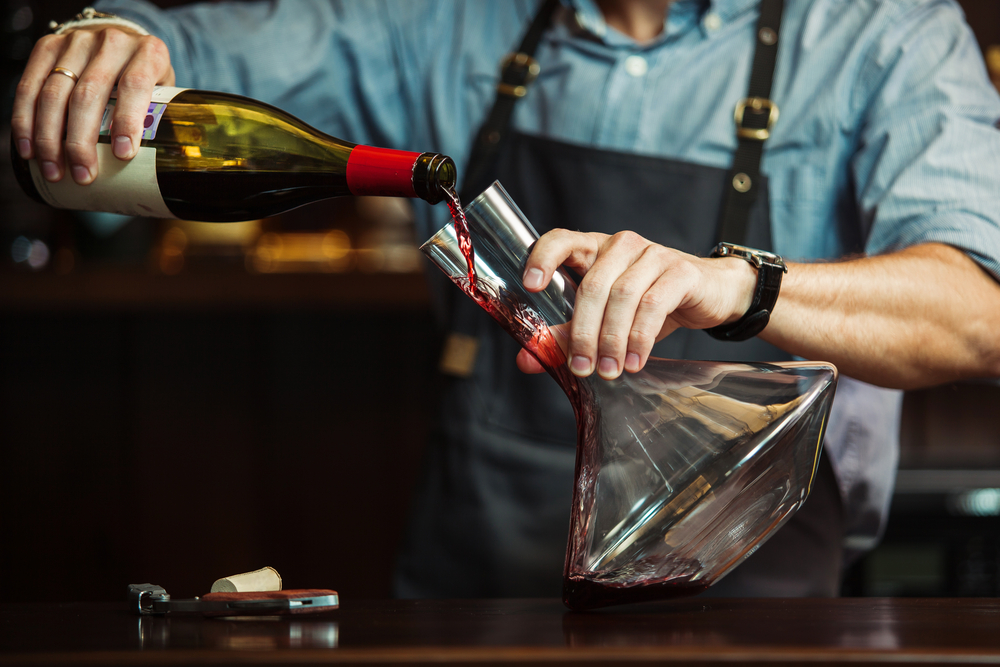
Several months ago, my wife and I went to dinner at one of our favorite Mexican restaurants – a place we frequent every few weeks.  As we pondered margarita options, we asked the waiter for an order of table-side guacamole, a delicious specialty and a great way to kick off the meal.  Much to our disappointment, our waiter informed us we could no longer get guac table-side; rather, it would come already prepared and straight from the kitchen.  Sigh.  Add another item to the demise of handmade food and beverages.  Rekindle the pour-over argument.

What’s the “pour-over argument”?  It’s perhaps the most contemporary example of the struggle between handicraft and automation.  At your local coffee bar, most drinks are poured-over, meaning individually-prepared using a single paper filter, adding the coffee grounds and finishing with a slow pour of the water.  If your coffee arrives with foam-art, consider it a pour-over.  The argument asks whether it’s worth the wait for an individually-prepared coffee, when a large-batch machine can produce the same result in a fraction of the time.  One estimate claims large-batch can produce 100 coffees in an hour, while a barista creates less than ten.

I’m not here to defend the pour-over, but simply to discuss it.  In fact, my first thought when I heard “pour-over” is what you see in the photo above.  Admittedly, I love the speed and consistency of Keurig’s K-Cup’s, and I’m an unashamed frequent-flier at Starbucks.  But that’s not to say there’s not a chair at the table of life for pour-over’s.  Even if the quality of handmade can’t be distinguished from large-batch (taste test, anyone?), what about the calm of watching “drink-art” creation, and the opportunity to socialize with the barista?  Perhaps it’s the fringe-benefits making pour-over’s the healthier option.

Table-side guac is just one example of “pour-over’s” threatened by today’s demand for speed and efficiency.  If I ask you to think of a product previously handmade but now produced by automation, I’m sure you can name several.  Milkshakes. Beer. Even pizza, which can now be prepared start-to-finish by a robotic chef.  But the flip-side of robots is advertisement focused on food-prep the old-fashioned way.  “Handmade” milkshakes.  “Craft” beers.  “Fresh-squeezed” lemonade.  And pour-over coffee.

Business’s bottom line loves the idea of automation.  Labor is typically your most expensive line-item, so who would argue with removing it?  Well, maybe those willing to pay for the experience.  At your finer restaurants, you can still find table-side salads (Caesar), entrees (Chateaubriand or Steak Tartare), and flaming desserts (Baked Alaska, Bananas Foster, Cherries Jubilee).  At Sunday brunches you can still enjoy made-to-order omelettes and waffles.  With those examples, I’d argue you’re not just paying for the food.  You’re also paying for a slow-down moment: a chance to enjoy a chef-artisan do his/her thing while engaging in a little conversation. As a recent Wall Street Journal article puts it, “[pour-over]… is more about delivering peace in a fast-paced time”.

Here’s my plea.  The next time you’re having something prepared in front of you – whether a simple burrito at Chipotle or an elegant Steak Diane adjacent to your white-clothed table, put away the phone, take a deep breath, and just enjoy the moment.  Have a chat with whomever is preparing your meal.  It’s an experience worth poring over.
The Final Word

This time of year, we assemble our latest collection of “best-of’s” and “…of-the-year’s”.  On Monday, America crowned its national champion in college football (Alabama). In a few weeks we’ll get the NFL’s equivalent in the Super Bowl. Last month several magazines recognized 2017 of-the-year’s in photography and current events. Soon we’ll also have best-of’s in music (Grammy) and film (Oscar). In this spirit, did you know there’s an of-the-year for words?

To be clear, “word-of-the-year” doesn’t refer to the annual expansion of the Merriam-Webster (.com) Dictionary or the Oxford Dictionaries Online. With the former, over 250 words were added last fall; with the latter, over a thousand.  Instead, word-of-the-year is a single choice, representing “lasting potential as a word of cultural significance”.  That’s how the people at Oxford see it, and thus this year’s honoree is “youthquake”.  Huh?  Maybe if you’re in Britain you’re not shaking your head like me.  “Youthquake” means “a significant cultural, political, or social change arising from the actions or influence of young people.”  “Youthquake” has been around since 1965, but back then it was only a reference to the fashion and music industries.  Today, it could (and is) being used in reference to the myriad demonstrations of change commanded by the millennial generation.

With the Academy Awards – should you not agree with, “and the winner is…” – at least you might have a favorite in the list of nominees.  But the short list for 2017’s word-of-the-year is the following bunch of odd ducks: white fragility, unicorn, kompromat, broflake, newsjacking, gorpeore, milkshare duck, and antifa.  Okay, maybe “antifa” would’ve been a good choice, but I count at least four others I’m seeing for the first time.  More to the point, what happened to better choices like “hipster” or “pregame” or “alt-right”?  Did none of those even make it into the dictionary expansion?  They’re certainly more word-of-mouth than “youthquake”.

Perhaps “youthquake” will make it across the pond in the next year or two and enter America’s daily conversations.  But the word is not off to a good start, considering several in Britain – including the CEO of a youth leadership organization – claim they’ve never heard of it.  Maybe Oxford just has an affection for the word, so they throw it out there as an “of-the-year”.  But that’s kind of like being labeled “America’s Best City To Live In”.  The mere advertisement draws a bunch of tourists and other undesirables and next thing you know you’re no longer “best”.  By the time we Americans get right with “youthquake”, Oxford and Britain will have moved on to 2018’s word-of-the-year.
Merriam-Webster’s Peter Sokolowski claims their word-of-the-year (apparently the honor is shared) “…gives us insight into the collective curiosity of the public”. M-W took a more scientific approach to it’s recipient, looking at how often certain words were looked up online, and their context with respect to current events.  M-W’s 2017 word-of-the-year?  Feminism.  Look-ups of “feminism” increased 70% over 2016, and spikes in that activity were tied to comments made by politicians in Washington D.C., “The Handmaid’s Tale” and “Wonder Woman”, and the sexual harassment revelations of the past several months.  M-W gives “feminism” two definitions, but I prefer the second: “organized activity on behalf of women’s rights and interests.”
Two years ago, Oxford made a particularly clever word-of-the-year choice in “pictograph”.  Rather than show the word, Oxford showed an emoji.  If my spell-check is any indication, it takes at least two years to embrace the current word-of-the-year recipient.  “Emoji” did not underline.  “Youthquake” most definitely did.


Planed English

Have you ever listened to a friend or family member talk, and you realize you just enjoy listening to them regardless of what they’re talking about? Why does this happen? What gets the credit for your undivided attention? I would venture to say your friend or family member has a personal command of the English language. That is, you are drawn to this person’s unique subset of the hundreds of thousands of words available to them. He or she can string together words in a way that makes you smile or laugh, or even react the particular way they would want you to. They speak with fluency and aptness. They speak with eloquence.

Today’s generation does not speak with eloquence. Thanks to the convenience of email and text, in fact they hardly speak at all. My children have a habit of telling me “they spoke to so and so” and when pressed, I realize they’re referring to texting. The phone calls of my generation have become the texts of theirs. Even email is beginning to take a back seat to instant messaging.

Whatever the medium, today’s conversations have been reduced to a minimum of words, or not even words at all! Incomplete sentences. Acronyms (i.e. LOL). Emoticons. Hashtags. It might as well be its own language. Are we really intent on leaving “Queen’s” English in the rear-view mirror, for something not even qualifying as “plain” English?

Most of what we see and do and experience can be summed up in a few words. My endeavor with this blog is to bring a single, elegant word to the table, back it up with a meaningful moment or story in my life, and send you away thinking how you might use that word more often in your everyday conversations. We all have something to say. But can we say it in a way that captivates and inspires? Can we say it with eloquence?

Join me on this journey, won’t you? Let me show you life in a word.