Brick Wall Waterfall

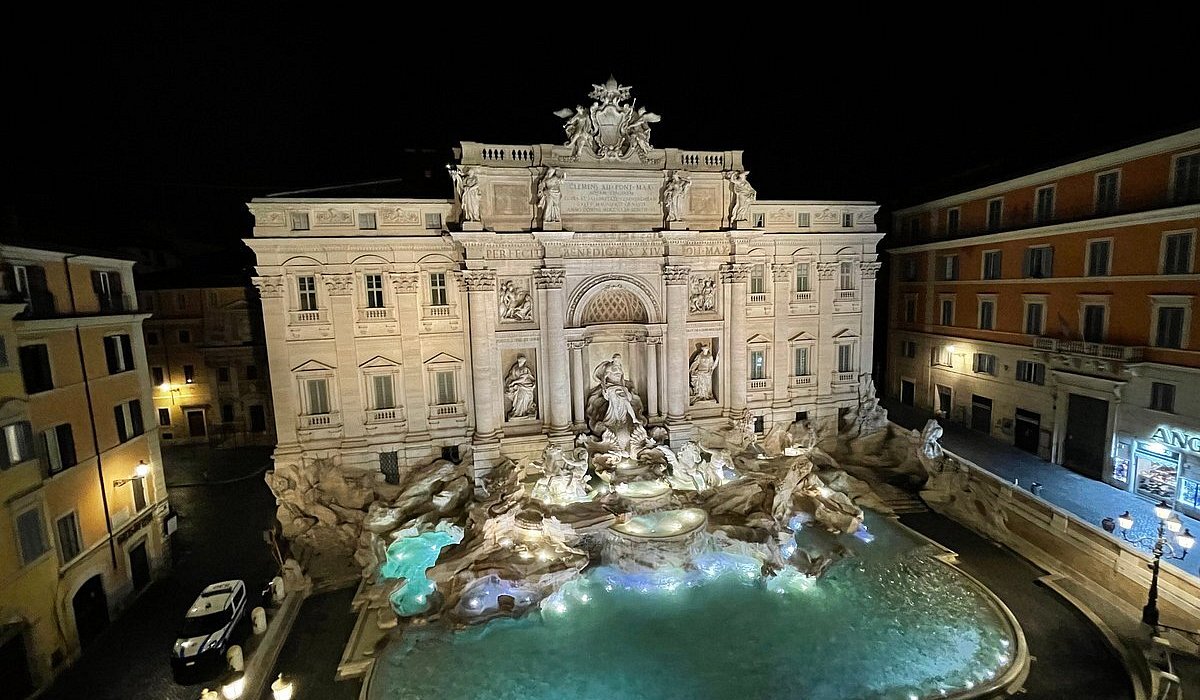
If you were to spend an entire year in Rome, you could visit five churches every day and still miss out on some of the more than 1,600 within the city limits. You could also visit five piazzas (public squares) and never see all 2,000. If monuments are your thing, Rome has so many that instead of an actual count they simply say “more than any other city in the world”. And then we have Rome’s fountains. You could dip your hand in five a day and never see them all in a year. So here’s a better idea.  Just spend a few hours at the Trevi and assume all of the others are second best.

Fontana di Trevi

I wouldn’t decree “best fountain in all of Rome” if I hadn’t been there and seen it for myself.  I spent a college year in the Eternal City studying architecture, and you can’t help noticing the other elements of the city while you’re at it.  Like fountains on every street corner.  The Trevi Fountain was walking distance from the hotel/dorm we Americans lived in, so you can bet I stood before the Trevi’s gushing waterfalls many a day.  Even a few nights.

Most people assume “Trevi” is an Italian word.  It’s actually two words mashed into one. Tre = three, vie = ways.  The Trevi is located at the intersection of three streets.  It’s also the terminus for an aqueduct from ancient times.  Water is picked up from a source outside of the city, carried over fourteen miles through the aqueduct, and deposited “with a splash” at the Trevi, to be further dispersed to the city underground.

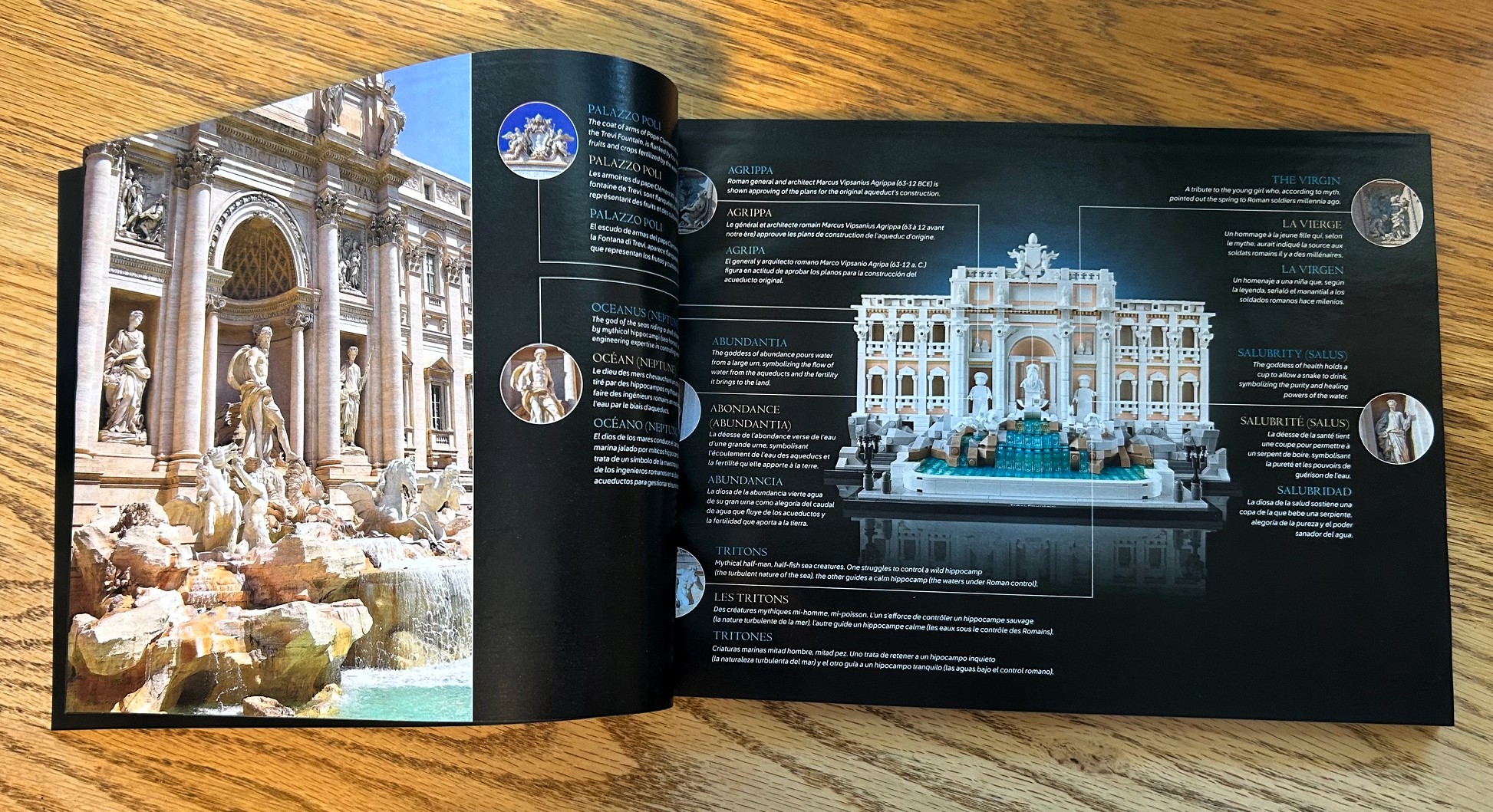
Here’s a little more trivia on the Trevi.  It was designed and built in the 1700s, on the back wall of a palace.  It’s primary material is travertine stone (pricey!) quarried from nearby Tivoli.  Besides the columns, arches, and niches along the wall, you have quite the trove of imagery going on over the water, with mythological creatures like tritons and hippocamps.  I have no idea who the sculpted figures gazing down from either side are, but the big guy front and center is Oceanus, a pre-Olympian god.

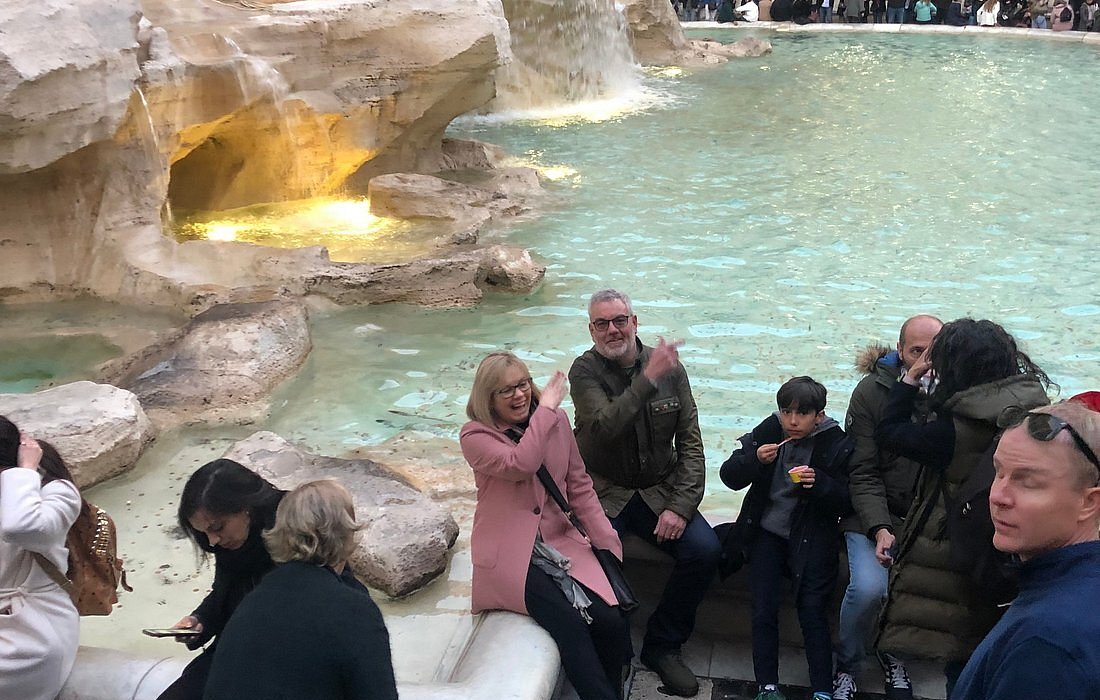
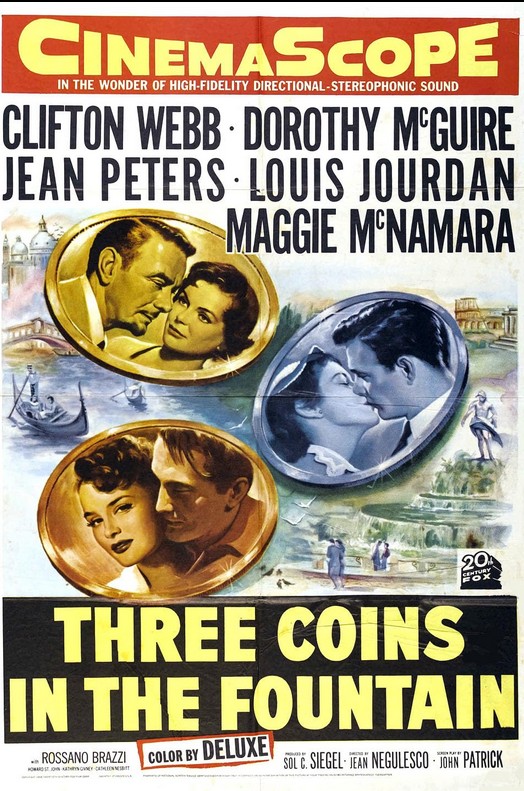
If you’re a top-five tourist attraction in Rome, you must be pretty darned attractive for a city with countless places to visit.  Maybe it’s the coin thing.  Why do tourists stand with their backs to the fountain and toss three coins over their shoulder into the water (right hand, left shoulder)?  Because legend says they’ll return to Rome some day if they do.  “Legend” is really just Hollywood, from the movie Three Coins in the Fountain.  But if you really know your Trevi trivia, you say the tossed coins follow the ancient tradition of honoring the gods of the waters, granting you safe passage home.  

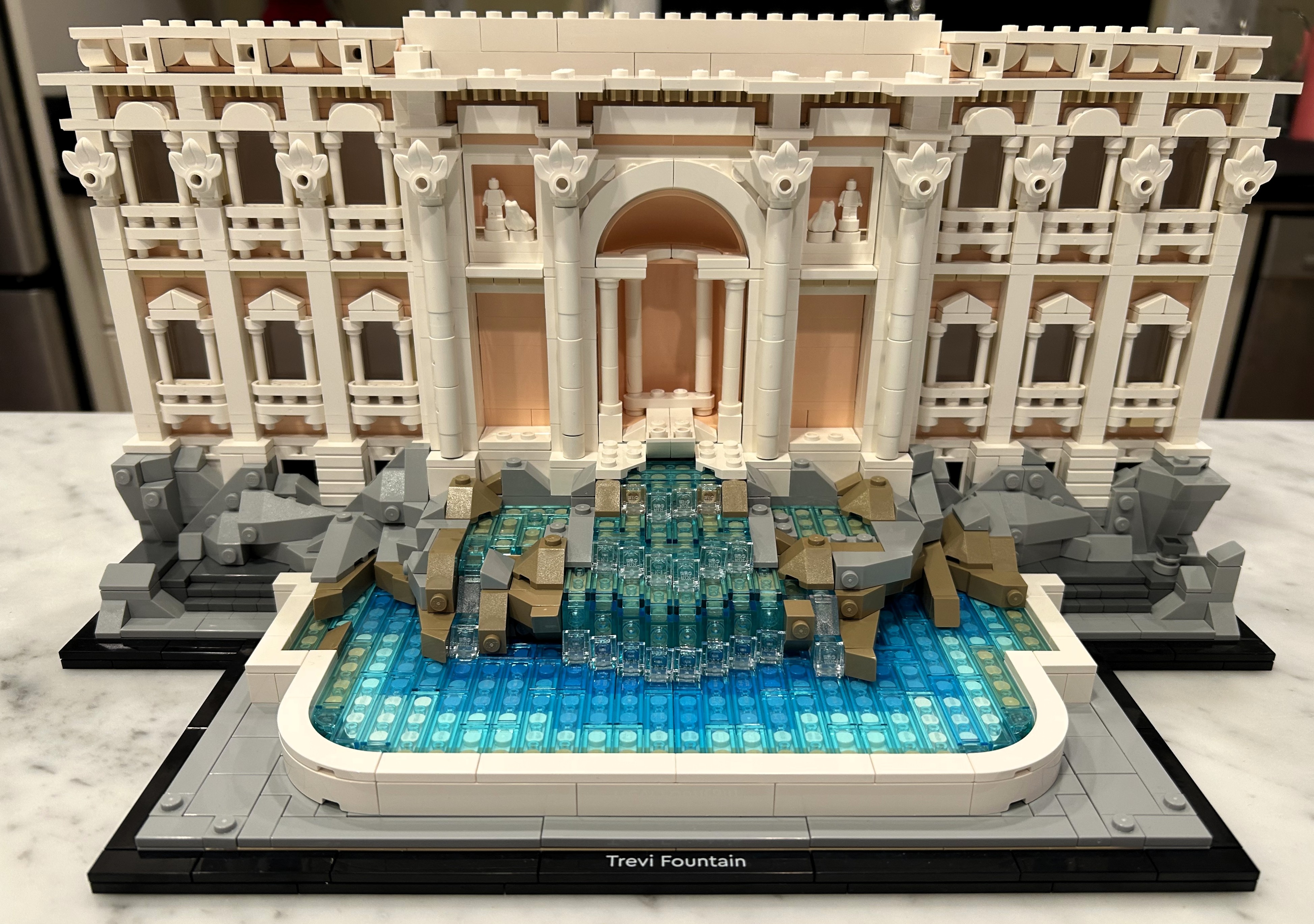
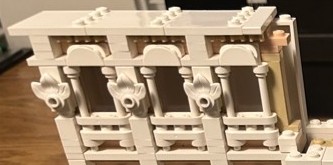
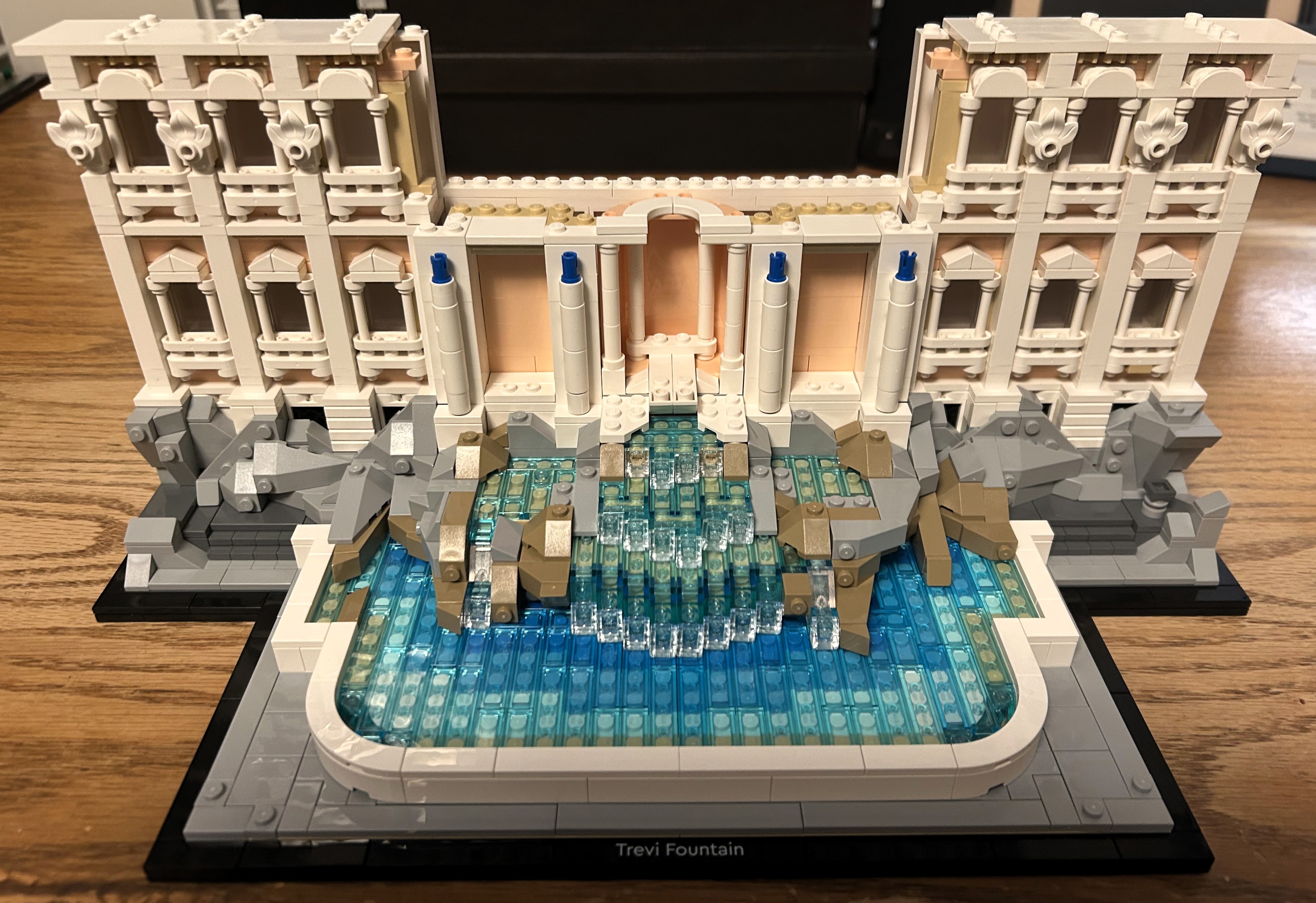
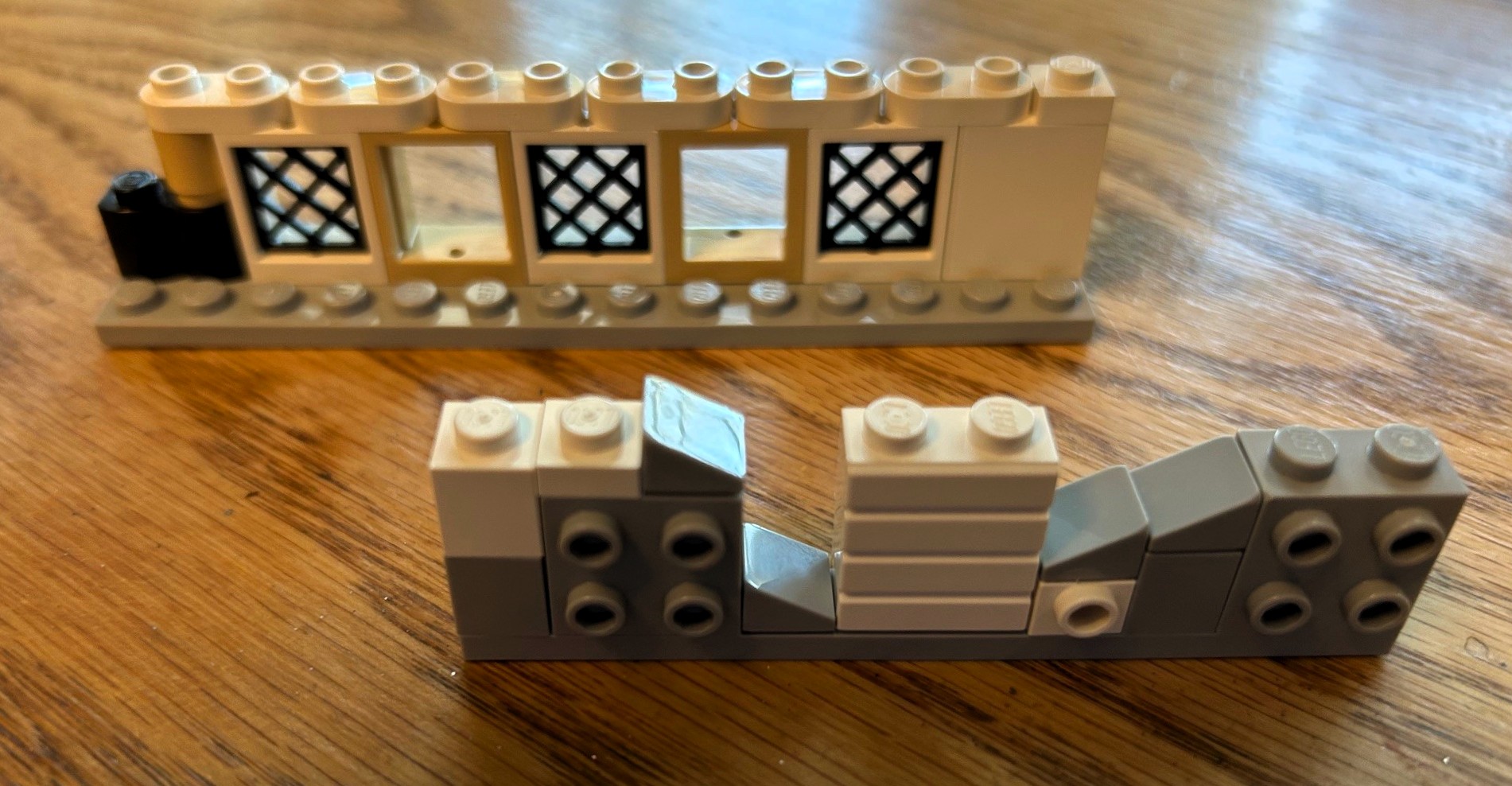
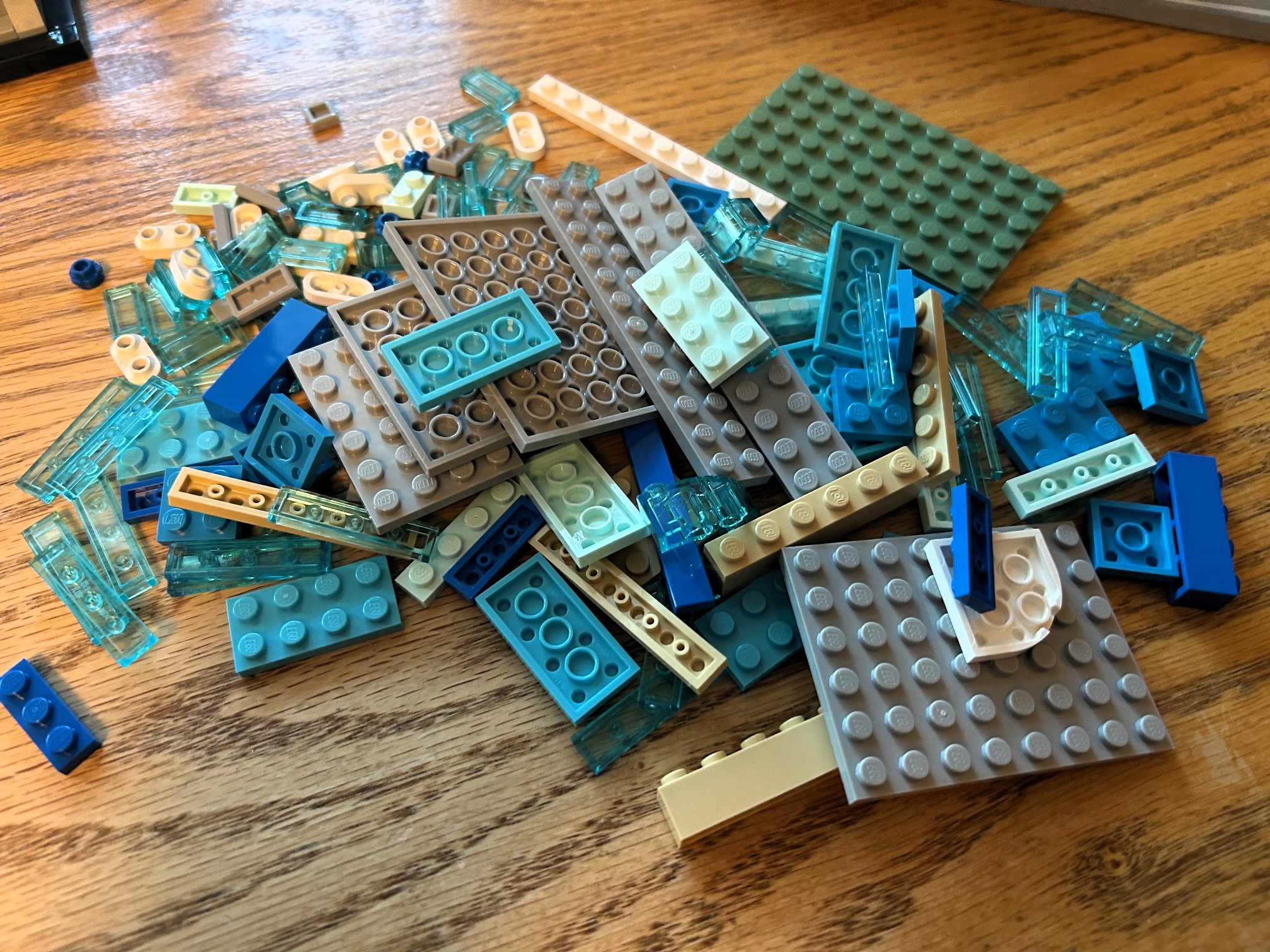
I’ve talked about the Trevi before, in Too Many Roads Lead to Rome.  The fountain has become so popular you now need a ticket and a specific time to stand in front of it.  But what I haven’t done before is build the Trevi.  Last spring, the “architects” at LEGO immortalized the fountain in a 731-piece model, which I will construct over the next several blog posts.  I haven’t put my hands on a piece of LEGO since Notre-Dame du Paris last January (which still beckons me to add its lighting kit).  I might be a little rusty at this.  The fountain might leak a little.  But I’m up for a dip in this brick wall waterfall if you are.

Author’s Note: The title of this post was inspired by the strange-but-sweet Dickie Roberts: Former Child Star.  The movie included a little ditty my thirty-one year old daughter can still recite to this day: “Brick wall, waterfall, Dickie thinks he got it all but he don’t, and I do, so BOOM with that attitude. Peace punch, Cap’n Crunch, I’ve got something you can’t touch. Bang-bang choo-choo train, wind me up I do my thing. No Reese’s Pieces, 7-Up, you mess with me, I’ll mess you up.”

Some content sourced from the TripAdvisor.com article, “Everything you need to know about the Trevi Fountain coins”; IMDB, “the Internet Movie Database”; and Wikipedia, “the free encyclopedia”.

Horses on Circular Courses

In 1972, Billy Preston topped the Billboard Hot 100 chart with the catchy “Will It Go Round In Circles”. A year later, The Spinners spent five weeks at #1 on Billboard’s R&B chart with “I’ll Be Around”. More recently, Kacey Musgraves’ debut single “Merry Go ‘Round” won the Grammy Award for Best Country Song.  All of which is to say, if I’m asked to celebrate “National Carousel Day” I have a great choice of theme songs for the occasion… played on endless loop, of course.

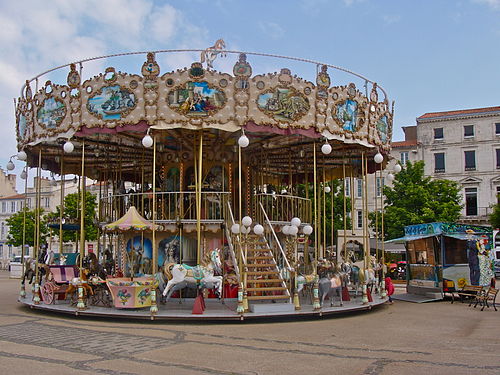
A double-decker!

National Merry-Go-Round Day (I prefer “Carousel”) was this past July 25th, as it has been every year since 2014.  Did you skip it like I did?  The holiday claims to “celebrate the carousel’s history and joy, particularly marking the first U.S. patent by William Schneider in 1871.”  And to celebrate, we’re meant to visit a local carousel, go for a spin, and post pictures of ourselves doing so online.  So we drop everything we’re doing on July 25th and climb on a wooden horse?  National M-G-R Day doesn’t even rate as a Hallmark holiday (and don’t waste your time trying to find a card to prove me wrong).

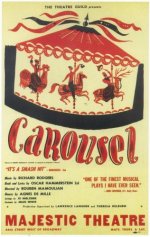
Contrary to my opinion about M-G-R Day, I think carousels are charming and a bit of innocent fun (other than those brass rings, which we’ll get to in a second).  Carousels inspired memorable scenes in Mary Poppins and BigCarousel was the Rodgers and Hammerstein musical that Time magazine deemed “the best of the 20th century”.  The “Carousel of Progress” was (and still is) one of the more unique attractions at Disneyland.  And of course, carousels led to those pipe and metal spinners we all played on at the park when we were kids.

Carousel is derived from the French word for “little battle”, which hints at why we’re riding them at all today.  In 17th century Europe, equestrian tournaments included “ring jousting”, where the rider attempts to spear a ring-on-a-string with his joust as he flies by.  To practice this sport without wearing out the horses, a clever soul invented the carousel, complete with wooden horses on poles and a real horse to pull the device in circles.  Eventually carousels made their way into carnivals, and then to the prominent locations where you find them today.

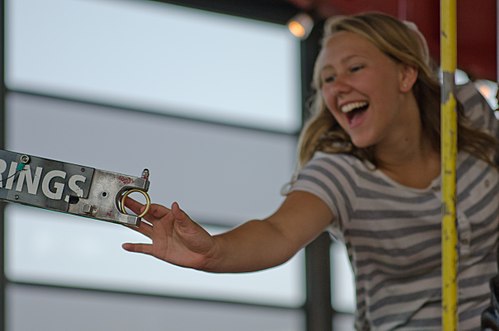
Care for a ring?

Now you also understand why early carousels had ring dispensers.  They were a nod to ring jousting!  The dispensers were filled with iron rings along with a few brass ones.  If you were lucky enough to ride an outside horse and grab a brass ring (which is harder than it sounds as your horse goes up and down), you could exchange the ring for a prize or another loop on the carousel.  For good reasons – safety being one – ring dispensers have been removed from most carousels today.

The people who came up with National M-G-R Day should’ve probably gone with “International”, because many of the world’s most distinguished carousels spin outside of the United States.  The Carousel El Dorado in Tokyo, Japan, built in 1907, is the oldest amusement park ride still in operation in the country.   The Lakeside Park Carousel in Ontario, Canada (1905) includes a self-playing organ that uses rolled sheets of music, rewinding one while playing the next.  The Letná Carousel in Prague, Czechia (1892!) is one of the oldest in Europe, remodeled in 2022 but still housed in its original wooden pavilion.

Looff Carousel (1911)

America has its share of prominent “gallopers” as well.  The Looff Carousel in Santa Cruz, CA is one of the few remaining with a ring dispenser, and entertains with the music of three organs.  The Over-The-Jumps Carousel in Little Rock, AR (1924) simulates the natural movement of a horse instead of just going up and down on a pole.  And the Flying Horse Carousel in Westerly, Rhode Island (1876!) is exactly as advertised.  The horses are attached to the center spindle instead of the wooden platform, creating a better sensation of flying through the air.

Dorothea Laub Carousel (1910)

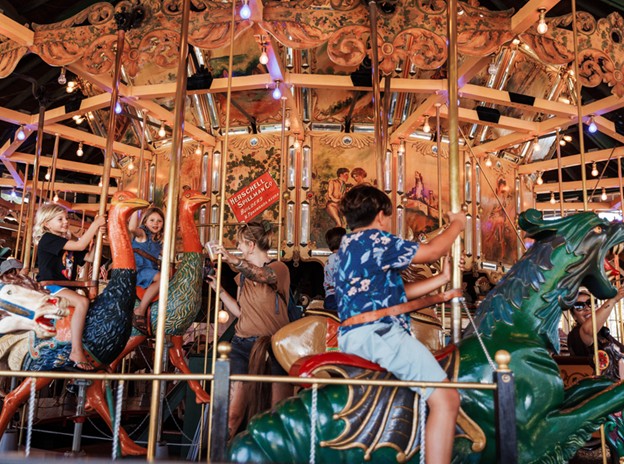
Okay, I have a confession.  I had the perfect opportunity to celebrate National M-G-R Day just days after it happened this year.  My wife and I traveled to San Diego with our children and grandchildren for a beach vacation and found ourselves in Balboa Park, home of the Dorothea Laub Carousel (brass ring dispenser!)  If we hadn’t already worn out the little ones on a long walk through the Japanese Friendship Garden we might’ve made it to the wooden horses.  But I’m not losing sleep about it.  After all, National M-G-R Day will come ’round again next year.

Some content sourced from Wikipedia, “the free encyclopedia”.

Ellen Makes Her Move

When we moved into our current house (and even the one before it), we made the classic mistake of saying, “We’re never moving again”.  After all, picking up and going from one place to the next can be a real pain in the you-know-what, especially with pets and vehicles to relocate on top of the furniture and clothes. But at least we’re only talking about moving houses. What if you had to move an entire town?

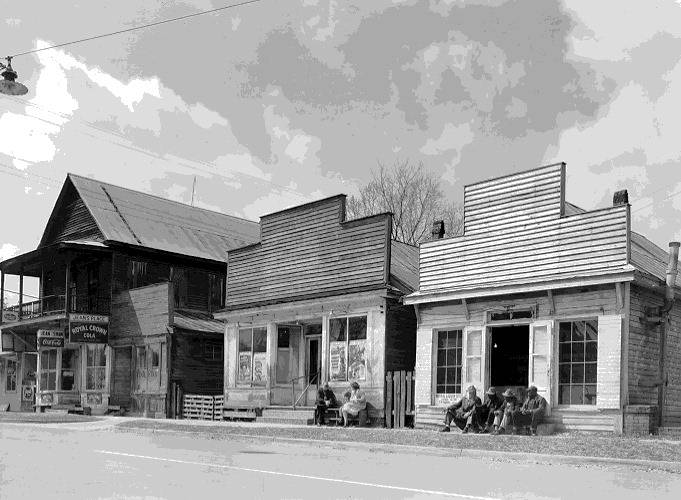
Ellenton, SC

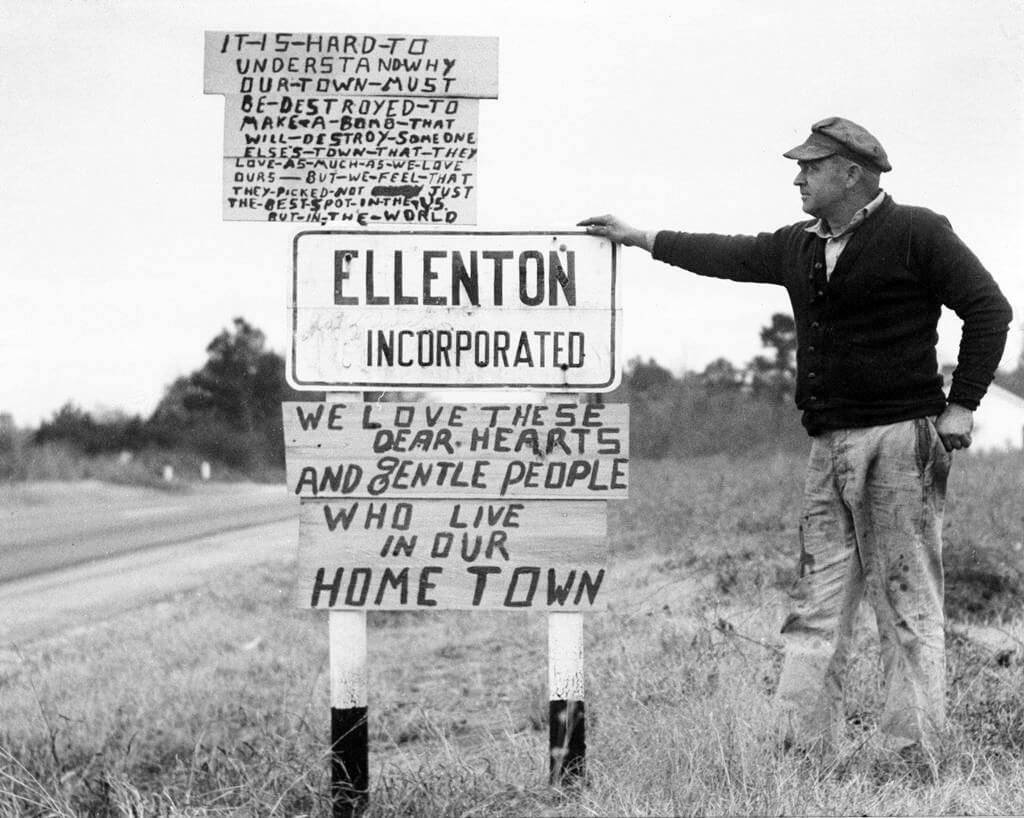
If you live in an RV or a tiny home, you’d think nothing of pulling up stakes and going somewhere else.  You have the wheels or the flatbed to make it happen.  But moving an entire town means a population of people and a collection of structures.  it sounds like something that could only happen on a Hollywood movie set.  Unless you’re the U.S. government with its sights set on Ellenton, South Carolina.

Ellenton train depot

Ellenton first appeared on a map the way a lot of small towns did back in the day.  The railroad was interested in running new tracks through the farms of the area and a deal was made to acquire the land, including a plot for the train station.  In Ellenton’s case, the railroad developer was smitten with the primary landowner’s daughter (Ellen).  The relationship never blossomed but he did name the budding town after her.  Thus we have “Ellen’s Town”, shortened to “Ellenton”.

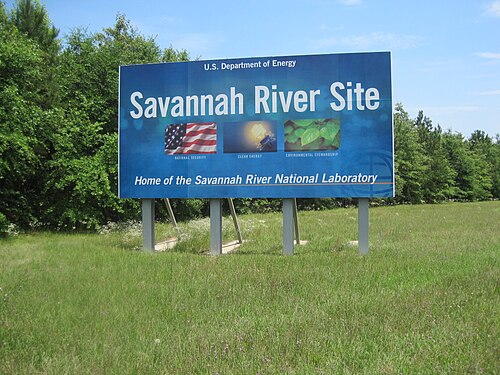
Ellenton grew quickly in the late 1800s, from a host of agricultural productions to a working, living community of 600 residents.  Eventually you’d find churches, schools, a post office, a general store, a dairy, and even a milling company and a cotton gin.  But what nobody saw coming was the potential of the area for the construction of a massive facility know as the Savannah River Site (SRS).  In the 1950’s in Cold War America, the U.S. government decided Ellenton and its surrounds were the perfect riverside location for plutonium and tritium production, for the development of the hydrogen bomb.  Ellenton “won the lottery” over a hundred other locations.

I can’t imagine sitting in Ellenton’s town hall back when the announcement was made.  Someone who drew a very short straw had to stand in front of the residents and say, “Sorry folks, we’re going to tear down your town so we need you to find somewhere else to live”.  Then the government wrote checks for the properties and businesses and simply walked away.  Eminent domain in capital letters.

I’ll admit I thought the government really did move Ellenton to another location.  I pictured a cartoon image of the world’s largest spatula, sliding under Ellenton’s streets and buildings like an entire sheet cake, then dropping the whole mess several miles away.  But I really thought the government moved Ellenton because we live right down the street from a town called New Ellenton.  Turns out, New Ellenton is simply where a good chunk of the original residents chose to call home.  The government had nothing to do with it.

Maybe the government didn’t move the living but the law required they move the dead.  By the time Ellenton and several other small towns were acquired and shut down, the SRS property encompassed 310 square miles.  That meant the relocation of 130 cemeteries, amounting to over 6,000 grave sites.  They didn’t get every last one, so it’s fair to say old Ellenton still has a few residents.

The black-and-white photos I share here – from the Ellenton website – give the town a charming, old-timey feel.  The few residents alive today hold reunions to share the memories of a place they can no longer see or even visit.  Some of Ellenton’s stories make it sound very cozy.  I wish I could say the same about New Ellenton, which is nothing more than a couple miles of highway with gas stations and bars scattered on either side.  Frankly, the only reason you drive through New Ellenton is because you’re on your way to somewhere else.

I wouldn’t be nostalgic for Ellenton if the government didn’t make it disappear.  Kind of reminds me of Brigadoon, the Scottish village that magically appeared out of the mist every hundred years.  Maybe Ellenton will appear out of a nuclear winter on the hundredth anniversary of it’s own demise.  In the meantime, a songwriter captured the story of the town in a rather sad ballad.  “The Death of Ellenton” was never a big hit, but the town it celebrates sure took one.

Some content sourced from the WJBF website article, “Hometown History: The Forgotten Town of Ellenton”; the Ellenton SC website (including all photographs); and Wikipedia, “the free encyclopedia”.

Only In Iowa

If you’ve ever made graham crackers from scratch (which are miles better than the store-bought ones), there’s a step in the recipe where you have to get your hands dirty. Take a stick of butter, cut it into very small pieces, dump the pieces into the mixture of dry ingredients, and dive on in with your fingers until the dough starts to clump together. It may be the only time butter and my hands ever come in contact with each other. Which is also to say, I won’t be sculpting a butter cow any time soon.

Sculptor, cow

Creating art out of food seems like an inevitable destination. I mean, back in Michelangelo’s day everyone was taking a block of marble and seeing what they could do with it. Then all but one of them quickly realized there was only one Michelangelo. The others probably turned to an easier material to work with like wood or clay. 1,000 years on, we’re sculpting food. Chocolate is a popular medium. Cakes are shaped into just about everything imaginable. But a cow made out of butter – what’s that all about?

A more fitting Hawkeye State image

We turn to Iowa to learn more about this oddity.  Most people prefer to fly over Iowa but since you’re reading and not flying, let me enlighten you.  On the list of 10 Things to Know About Iowa, there is no butter and there is no cow. There are a lot of pigs (the most of any state) and millions of acres of corn (also “the most”), and Iowa’s “Hawkeye” nickname is a reference to the birth of the red delicious apple (who knew?).  But none of this gets us to butter and cows.

The “10 Things…” list does mention the Iowa State Fair, and it is here that we find real cows by the hundreds… and a life-sized one made out of butter.  The Fair, whose 2025 edition wrapped up three weeks ago, has been making “buttered cows” since 1911, thanks to five Iowans who’ve passed the butter baton down over the years.  The latest, Sarah Pratt, has been making the cows for the last nineteen years, and only after apprenticing with the last sculptor fifteen years before that.  Some people blog; others make cows out of butter.

The 1911 original

Like papier-mâché, a butter cow is created on top of a frame built from wood, wire, and/or metal.  Then we heap on some fun statistics.  600 lbs. of “low moisture, pure cream, Iowa butter” is applied to create a cow that’s five-and-a-half feet tall and eight feet long.  The sculptor’s “studio” is a walk-in cooler set to 40ºF.  After the cow is displayed at the fair, all that butter is recycled for use on the next ten years of cows.  Unless you’d rather use it for toast, which would butter 19,200 slices.

Michelangelo didn’t stop sculpting after his famous David, of course, and neither does Sarah Pratt with her butter cows.  Also following tradition, she creates a “companion sculpture” to keep the cow company.  Sometimes the companion is an homage to Iowa, such as a John Deere tractor.  Most years the companion is a random anniversary, like the 40th anniversary of Neil Armstrong’s walk on the moon (totally random because Neil wasn’t born in Iowa).  This year the sculpture featured the characters from “Toy Story”, denoting the movie’s 30th anniversary.  You get the feeling Sarah enjoys sculpting butter so much that a life-sized cow just isn’t enough.

Woody, Buzz

For all of my research, I can’t figure out why a cow made out of butter and Iowa belong in the same sentence.  Nearby Wisconsin and Michigan are better known for dairy cows.  California tops the list of the five states producing the most butter (and Iowa isn’t one of the other four).  No matter, this tradition isn’t stopping anytime soon.  The butter cow even has a place in the Smithsonian Institution (thankfully, as a replica that will never melt).

I love butter, but more on top of baked goods and in graham cracker recipes than in the shape of a cow.  I will admit to buying my butter by the brick instead of by the stick.  But now that I know about Iowa’s annual creations, I’ll never look at my morning toast again without thinking, mooooooooo.

Some content sourced from the Iowa State Fair website, the U.S. News article, “10 Things to Know About Iowa”, and Wikipedia, “the free encyclopedia”.

Ten Days to “Ben-Yays”

I’ve never met a French baked good I didn’t want to devour at first sight. Macarons have called my name ever since my wife and I tried them in a little shop in Strasbourg. I’ve made a surprisingly good Croquet Madame (disguised as a three-cheese breakfast pizza) considering my limited skills in the kitchen. And croissants, well, croissants speak for themselves don’t they? So when a neighbor challenged my wife and I to make beignets ten days ago, I confidently replied, “oui!”

“ben-yays”

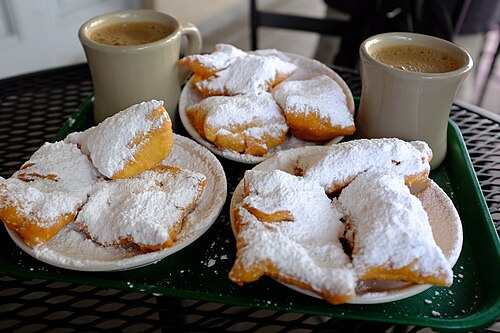
Technically we’re not talking about a baked good today.  Beignets are fried in oil, like doughnuts.  In fact, they’re exactly like sugar doughnuts, just not as sweet.  Think Krispy Kreme’s Original Glazed without the glaze.  Small, chewy pillows of heaven.

So why would a neighbor request beignets?  Because she invited us to a college football game watch (Clemson vs. Louisiana State) and she’s one of those who turns a basic entertainment into a full-on festivity.  Louisiana State is in Baton Rouge so her menu was start-to-finish Cajun. Étouffée. Muffuletta. Red Beans and Rice. Chantilly Cake. I mean, if she’s going to make all of that how could I say non to beignets?

étoufée

Thankfully, I found an “Easy Beignets Recipe” online (note: whenever a recipe starts with “easy”, it’s anything but).  At least I already had the ingredients in my pantry.  But beignets start out like a high school science experiment.  Heat the water to exactly 105°.  Add yeast and a little sugar, because yeast “feeds” on sugar.  Then watch it all foam.  If it doesn’t foam, you killed the yeast and you have to start over. (No pressure Dave, little lives are at stake here.)

science experiment

My yeast foamed (it lives!) so I was then allowed to proceed with the more traditional ingredients.  Shortening, sugar, milk, and egg whites all mixed together, to which you add boiling water.  When the temp is exactly 105°-110° (again with the science experiment) add the foamy yeast, flour and salt, and into the refrigerator it all goes, to rise for an hour or more.

Did my foamy-yeast-shortening-and-other-stuff concoction really rise?  I have no idea.  It looked the same as it did an hour before.  But I threw caution to the wind and proceeded.  At this point my wife had to get involved, because (as the recipe warns in capital letters), THIS IS A TWO-PERSON JOB.  Maybe a three-person.  One of you slaves over a pot of boiling oil (my wife), another gently transfers the beignets to paper towels to “oil off” (me), and the third suffocates them in powdered sugar (me again).

Handle with care!

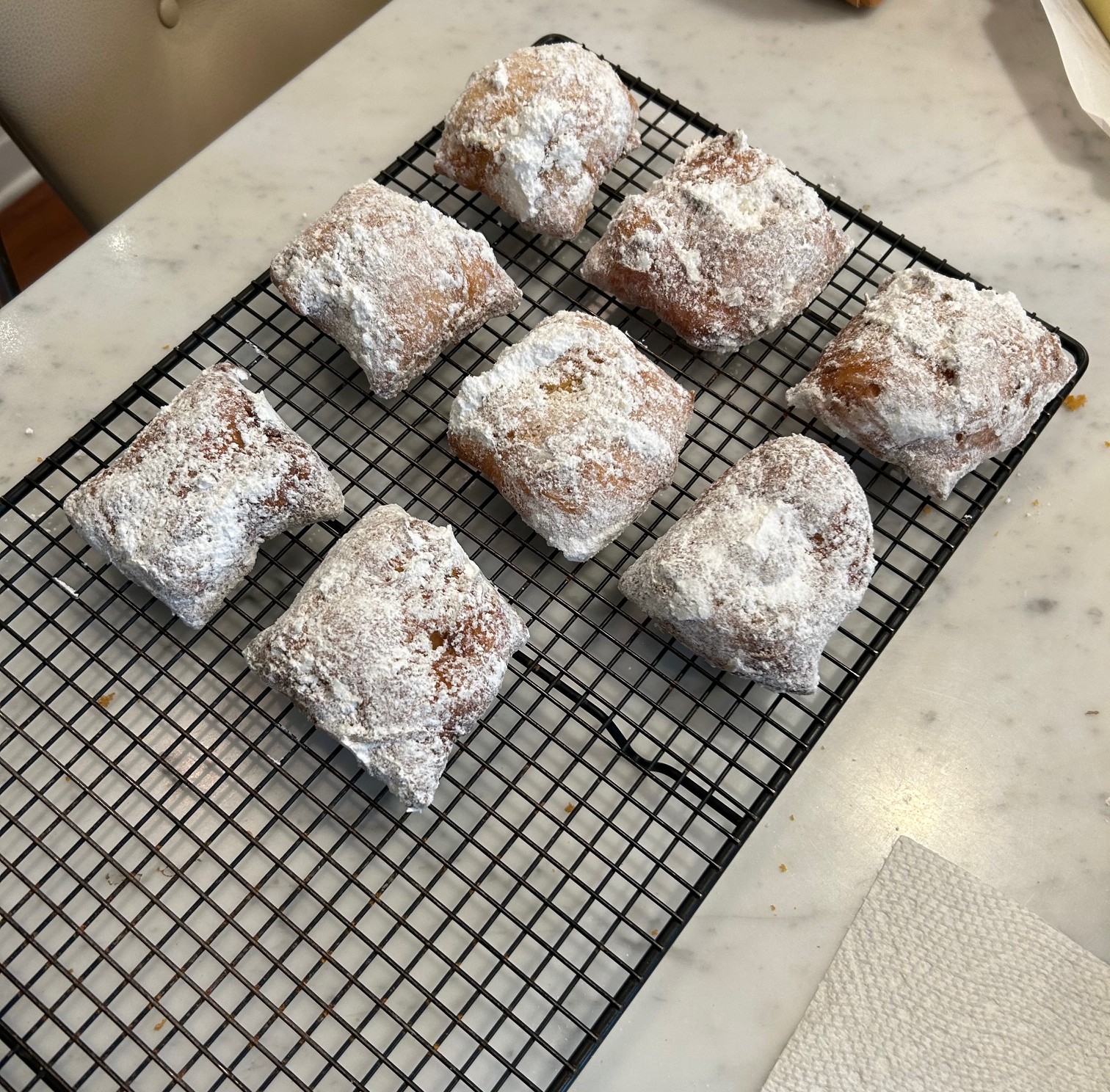
That last sentence happens very quickly.  You can’t get the timing wrong on any step or the beignets won’t taste right.  They fry for a minute or so on each side, rest for a minute on the paper towel, and don their coat of powdered sugar with just enough oil remaining to serve as the glue.

When beignets are done correctly, they’re light and flaky.  The shortening and yeast create an air pocket inside.  But you’re not really sure if this science happens until you rescue them from the boiling oil.  Remarkably, ours really did rise.  Doused in powdered sugar they really were pretty good (then my wife mixed a little cinnamon and vanilla into the dough and they were even better).

Magnifique!

There’s a reason why beignets are so much better at the famous Cafe du Monde in New Orleans than in Dave’s kitchen.  You need to eat them as soon as they’re powdered with sugar, and wash them down with a top-shelf cup of coffee. You see, beignets, sadly, have the shortest life of any baked good I know.  If you don’t eat them warm, minutes after they’re fried, they’ll shed their light and airy consistency.  An hour later they’re as cold and chewy as day-old doughnuts at 7-Eleven.  And God forbid you leave them overnight on the counter.  The next morning you’ll have nothing but rocks.

So, you ask, were our beignets a hit at our neighbor’s game watch?  Well, let’s just say the other guests were being polite by declaring, “very good!”, especially when they ate more of our frosted sugar cookies instead (our backup dessert).  Hey, our kitchen is no Cafe du Monde.  I never said it was.  It’s the reason I’m never making étoufée.  At least I have a neighbor who will be happy to do it for me.

Some content sourced from Wikipedia, “the free encyclopedia”.

Where The Buffalo Roam

In southwestern Alberta, Canada, there’s a historical landmark curiously named “Head-Smashed-In Buffalo Jump”. It’s the former location of a vast communal bison trap. Thousands of years ago native hunters would drive herds of the roaming animals over the plains and then right over the adjacent cliffs, in what is described as “the single greatest food-gathering method ever developed in human history.” The buffalo aren’t running in this part of Canada anymore. They’re no longer running in Boulder, Colorado either.

In case you missed it, the American college football season kicked off last Saturday… in Dublin, Ireland.  Kansas State played Iowa State in a converted rugby stadium in front of a sell-out Guinness-filled crowd.  A roving reporter took to the streets to ask locals what they knew about the American game and the answers were wonderfully ignorant.  How many points is a touchdown? (“4?”)  Name any American college football team (“Yankees?” “Dodgers?”)  And then my favorite: What is Kansas State’s mascot? (“A tractor?”)  Not a bad answer if you ask me.  I’d guess there are more tractors than wildcats in Kansas.

Ralphie’s run

Speaking of wild things, let’s get back to Boulder.  The University of Colorado (CU) boasts one of the few live animal mascots in college football: a full-grown snortin’ stompin’ buffalo named Ralphie.  Before each half of the home games Ralphie is released from her trailer on the sidelines (yes, Ralphie is a “her”) to run a horseshoe lap around the field at full speed, before her five handlers corral her back into the trailer.  It’s the stuff of rodeos, and more than a few handlers have eaten dirt in the process (but at least they earn a varsity letter for their efforts).

Ralphie is actually the sixth live buffalo to represent CU since the mascot was selected in 1934.  But Ralphie VI – aka “Ember” – has a singular distinction.  She’s just not into the run.  Whereas her five predecessors ran for at least ten seasons each, Ember decided to call it quits after just three.  The University officially called it “indifference to running” and cut Ember from the team so she could spend the rest of her days roaming in pastures.  Maybe Ember’s thinking she’s going to go over a cliff every time she runs.  Can you blame her for hanging it up?  No word on whether Ralphie VII is up for the task.

At least CU has a ferocious mascot, one a fan would associate with the Colorado surrounds.  Like Texas’s Longhorn or Florida’s ‘Gator, you want a mascot that speaks to your particular locale and does so with a confident puff of the chest.  But instead, a lot of America’s college football mascots have you thinking either lightweight or what the heck is THAT?

Don’t mess with Texas!

Cases in point.  If I pull up this year’s top college football teams, I guarantee I’ll find several to underscore my point.  And I am right.  Ohio State’s mascot is a buckeye (which is a tree, and not a very ferocious one at that).  Georgia’s is a bulldog, described as “loyal, gentle, and affectionate”.  Oregon’s is a duck (A duck!)  Alabama is known as “the Crimson Tide”, which was a reporter’s colorful spin on a long-ago game played in the mud (and not a mascot at all).  Finally, Arizona State’s is a Sun Devil, which better belongs on Saturday morning cartoons than Saturday afternoon football fields.

On the other hand, you have the Penn State Nittany (Mountain) Lions, the Michigan Wolverines (don’t mess with wolverines), the South Carolina Gamecocks (don’t mess with those either), and the Miami Hurricanes (not an animal, but points for ferociousness and local flavor). Any one of those deserves to stand side-by-side with a live buffalo.

Notre Dame’s leprechaun

As much as I’d like leave this topic with Ember the Buffalo and her chest-thumping buddies, I sheepishly include one more: my beloved alma mater Notre Dame.  We at Notre Dame are the Fightin’ Irish, because our football teams (at least those from the early 1900s) showed “the grit, determination, and tenacity characteristic of Irish immigrants”)  That all sounds great until you see our mascot: a leprechaun who looks like he’s taking a break from the Lucky Charms cereal box.  Is there anything less ferocious and less “state of Indiana” than that?

NOW we’re talking!

If it were up to me, Notre Dame’s mascot would be an open-wheeled, open-cockpit IndyCar (VROOM! VROOM!), the kind they race every year at the Indianapolis 500 just four hours south of campus.  An IndyCar toughs out a jigging leprechaun by a mile, not to mention an indifferent buffalo who’d rather roam than run.  I still say, good on you for choosing to head out to pasture, Ember.  I wish the Notre Dame leprechaun would tag along.

Some content sourced from the Athabasca University Press article, “Imagining Head-Smashed-In”, the CUBuffs.com article, “Ralphie VI retires”, and Wikipedia, “the free encyclopedia”.

Shark Attack!

Our annual summer vacations in San Diego have become a little more adventurous because of an increase in shark activity off the coast of California. I enjoy body surfing, but the thought of a pair of big, hungry jaws beneath the water’s surface gets my heart a-pounding. So imagine my shock when I really did have an encounter with a baby shark. Er, make those letters capitals. I meant to say “Baby Shark”.

My adorable two-year old granddaughter is just beginning to take off with her vocabulary.  She can say “Mama”, “Dada”, and even “Chop! Chop!” when she wants us to hurry up.  She also says “Bayba Shawk”… constantly, because she wants an adult to play the song for the forty-thousandth time.  After three weeks on repeat I can’t get the darned thing out of my head.  I need brain surgery.

My granddaughter’s finger puppets

“Baby Shark” is the story of a little family of sharks hunting for fish.  The fish get away and… that’s it.  It’s not so much a story as an excuse to sing a verse about each family member: Baby, Mommy, Daddy, Grandma, and Grandpa.  The first time I heard it (forty thousand time ago) I wondered, Why doesn’t Baby Shark have siblings?  Where are his (her?) other grandparents?  Aunts?  Uncles?

Of course, it’s not really Baby Shark’s family that make the tune so addicting.  It’s the “doo’s”… as in doo doo doo-doo doo-doo.  You sing those six “doo’s” in every verse and that’s the part that gets into your head.  Add in the accompanying up-and-down arm dance (imitating the jaws of a shark) and you somehow have a hit.  More like a worldwide phenomenon.

If a children’s sing-song doesn’t get your attention, consider this.  “Baby Shark” is the most-watched YouTube video of all time.  I said of all time.  If your guess would’ve been something by Ed Sheeran or Katy Perry or Maroon 5 you would’ve also landed in the Top Thirty, but nowhere near the top of the list.  “Baby Shark” has been viewed over 16 billion times, more than twice the number as the runner-up.  And that’s only for the version from South Korea’s Pingfong.  The one by Cocomelon (a children’s YouTube channel) lands in twenty-third place with another four billion views.

The “Baby Shark Dance”

“Baby Shark” has been around longer than you might think.  It showed up somewhere in the late 1990’s in the public domain.  Then Pinkfong got ahold of it, created the 2016 video with cute little Korean kids, and the rest continues to be history.  Coincidentally, a lawsuit was settled just this month where an American songwriter claimed rights to “Baby Shark”.  He lost, but only because the song was still in the public domain when he created his version.  You can’t blame him for trying; “Baby Shark” has generated over $150M in revenue in the last ten years.

Of course, all that revenue comes from more than just a YouTube video (hence the “worldwide phenomenon”).  “Baby Shark” is showing up in places and with people that seem downright ridiculous.  There’s a children’s book and a television series.  There’s a video game.  It’s part of a tourism promotion for Singapore.  It’s used by certain professional baseball players as they walk up to the plate.  Or certain politicians as they walk up to the podium.  Finally, it’s the subject of a Kellogg’s breakfast cereal, a berry version of Fruit Loops with little marshmallows posing as sharks.  “Yum?”

My favorite use of “Baby Shark” comes out of West Palm Beach, FL.  Local authorities were desperate to clear a lakeside pavilion of homeless people, so they played the song over and over on loudspeakers until everyone left (running and screaming for the hills, no doubt).  If I’m inclined to run and scream myself, I can drive a couple hours north of here to see a production of Baby Shark Live, a 75-minute stage musical.  I’m not inclined.

The whole time I’ve been typing this post I’ve had doo doo doo-doo doo-doo on loop in my head.  If my hands and arms weren’t busy on the keyboard they’d be doing the Baby Shark Dance instead.  It’s maddening, and makes me want to body surf again with hopes I’ll be eaten by a real shark.  Instead, I’ll just hope I find another blog topic next week that consumes me more than “Baby Shark”.  I leave you with the video.  Guard your sanity.

Some content sourced from Wikipedia, “the free encyclopedia”.

I’m All About Paul

Before another Independence Day celebration completely fades into the July of last week, I want to visit a story from early early American history. In 1973 I began middle school at Palisades-Brentwood Junior High, so named because it straddled the limits of both towns just outside of Los Angeles. But I never knew it as “Palisades-Brentwood”. A year after opening in 1955 it was rebranded Paul Revere Junior High. So Paul and I have a little something in common.  It’s like we’re compatriots, only separated by two and a half centuries. 

If you know nothing else about Paul Revere, you’ll recall his courageous “midnight ride”.  In the months leading up to the Revolutionary War in 1775 Revere took to his horse outside of Boston to alert “minutemen” of the approaching British troops.  Minutemen were residents of the American colonies trained to defend “at a minute’s notice”.  Revere himself was the notice, at least for what would become the early battles at Lexington and Concord.

Longfellow’s impression

Were it not for Henry Wadsworth Longfellow a hundred years later, Revere’s legacy would’ve faded as quickly as last Friday’s fireworks.  Instead we have the poet’s “Paul Revere’s Ride” as the chronicle, with these well-known opening lines:

Listen, my children, and you shall hear
Of the midnight ride of Paul Revere,
On the eighteenth of April, in Seventy-Five:
Hardly a man is now alive…

Thanks to Longfellow’s poetic license (lots of it), we have a skewed version of what Revere did and did not do in April, 1775.  For starters, he was one of three riders spreading the news that “The British are coming!  The British are coming!” (so why didn’t the other two riders get any poetic love?)  Further, Revere never said the words “The British are coming!” but rather some disguised version of the warning to fool the Redcoats already hiding in the countryside.  And the famous “one-if-by-land, two-if-by-sea” lanterns were put in place by Revere, not for him.

Boston, MA

Revere didn’t even own a horse.  He had to borrow a neighbor’s steed  (named “Brown Beauty”) to make the ride.  And instead of galloping all the way to Concord as the poem suggests, Revere and his horse were captured by British troops somewhere along the way.  Lucky for Paul, the capture turned into a release when the Brits realized they were about to be overwhelmed by the locals.  So they took Paul’s horse and fled instead.

Enough of the history lesson (real or poetic).  Why a West Coast middle school would go with “Paul Revere” is beyond me, but the campus culture certainly embraced the name.  A select number of boys (including me) were the “Minutemen” who raised and lowered the American flag each day.  A select number of girls – “Colonial Belles” – were responsible for some similar task.  The school yearbook was known as the “Patriot”, while the newspaper was labeled the “Town Crier”.  And students called “Silversmiths” did something-or-other, but it certainly wasn’t casting fine products in Metal Shop.

Our school even plagiarized Longfellow (and not very well), as in:

Listen, my children, and you shall hear
of the growing pride of Paul Revere.
On the twelfth of September in Fifty-Five
Our middle school began to thrive.
 
If all I can point to is my middle school’s name, it’s a weak argument to claim Paul Revere and I have something in common.  We have nothing in common.  Revere was a Jack Paul of all trades, dabbling in roles from military leader to dentist, artist, and silversmith, before finally settling on copper caster.  Revere became the best caster of church bells in all of young America before his midnight ride became his signature accomplishment.
 
You’d be better off saying Revere and I were polar opposites.  I never served in the military.  I’ve only been the patient of a dentist (too often at that), I have zero art skills, I don’t make the silver (I just polish it), and the only casters I’m familiar with are the ones under a couple of my rolling chairs.
 
“Revere Ware”
Thanks to the church bell thing, Revere Copper Company became a successful business which still exists to this day.  You may remember their “Revere Ware” products, most of which are considered collectibles today.  Maybe I should collect a few pieces myself.  They’d remind me of the guy I seem to think I have something in common with.  Or at least, they’d remind me of junior high school.
 

Some content sourced from the Paul Revere Charter Middle School website, the History Channel article, “9 Things You May Not Know About Paul Revere”, and Wikipedia, “the free encyclopedia”.
There’s Something About Mary

Now that I have young granddaughters, the songs and nursery rhymes of my own toddling days bubble up from the long forgotten frontiers of my brain. Humpty Dumpty is together again and back up on his wall. The sky is unstable if Chicken Little is to be believed. And the debate rages anew whether “pease porridge” is hot or cold (even if it is forever nine days old).  The list goes on and on but none of these tiny tales holds a candle to the one bizarre question asked of Mary. So let’s ask her again, shall we?

I wouldn’t have remembered Mary were it not for the daily online puzzles of the New York Times. Two weeks ago they devoted an entire word search to the sentences of this odd nursery rhyme.  Which got me to thinking, just who was Mary, why was she “contrary” (other than a convenient rhyme), and what the heck was going on in her garden?

As the saying goes, be careful what you wish for.  As Google goes, be careful what you search for.  Jack and Jill really did go up a hill.  Old MacDonald had a farm.  There’s at least one itsy bitsy spider on the water spout.  But Mary and her garden?  She doesn’t belong anywhere near your grandchildren.

The first interpretation of “Mary, Mary” I came across was completely sanitized from the original.  It claims Mary is the Mary (as in, Jesus’ mother).  Mary’s garden is the growing Catholic church.  Silver bells are the same jinglers used in the church service to recognize miracles with “a joyful noise”.  Cockle shells refer to faithful pilgrims, as in the badges worn by those completing the Way of St. James.  And pretty maids are nuns, lined up for a life of devotion.

Badge of devotion

If we stopped right there, Mary would be heartily embraced by the rest of the kid-friendly characters in my granddaughters’ nursery rhymes.  But more likely we’re singing about “Mary I”, Queen of England in the 1500’s.  This Mary was no saint.  In her brief five-year reign she cleansed her country of heretics… by burning hundreds of them at the stake.  “Bloody Mary” – her apt nickname – somehow became a drink at the bar (which I will never order) and the subject of a child’s nursery rhyme.

Not-so-nice Mary

Mary I was at odds with her father King Henry VIII’s agenda; hence she was “quite contrary”.  Okay that’s fine, but I wish the rhyme stopped right there.  Her garden was likely a reference to a graveyard.  The silver bells and cockle shells describe torture devices of the time (and I won’t be using a Google search to learn more about those).  The maids were innocent women lined up for execution.

This is the stuff of nursery rhymes?  I’m trying to picture little girls back then, sitting around in a circle and coming up with short songs from what they see right in front of them.  Like Rosie and her ring, if some interpretations are to be believed.   As for Ms. Contrary, I think I’ll go with a garden similar to the one shown here.  But since the origins of her rhyme continue to be debated, I’m steering my granddaughters clear of her.  Instead, we’ll sing about the other Mary, the one with the little lamb.

Some content sourced from Wikipedia, “the free encyclopedia”.

Licking My Lips

I wouldn’t normally be drawn to a company whose products target women. I’m pretty well stocked when it comes to lip balms, lotions, and shaving cream. But here comes EOS (“Evolution of Smooth”), a newish company using organic ingredients and bright, colorful packaging to entice its buyers. Now I’m enticed too because EOS just came out with an orange product. Or should I say, a product in an orange. You could say it’s something that only comes ’round once in a blue moon.
Evolution of Smooth may be trying to target men as well.  Why else would they concoct a lip balm that tastes like Blue Moon?  If you haven’t had so much as a sniff of beer, Blue Moon is an everyday man’s brew produced by the Canadian-American conglomerate Molson Coors.  It’s a Belgian-style wheat beer: high on the wheat but not so much on the malted barley.  And now it’s a flavor of EOS lip balm inside of a plastic orange.

If you order a Blue Moon off the menu, the bottle or glass should arrive garnished with an orange slice.  It’s a nod to the orange peel component of the beer; an ingredient giving the witbier its subtle citrus flavor.  I should know because I’ve had more Blue Moons than any other beer out there.  When you live in Colorado as long as I did (almost 30 years) sooner or later you’ll tour the Molson Coors facility in Golden, just west of Denver.  They bus you around town first (a quaint holdover from the era of the Pikes Peak Gold Rush) before depositing you at the doors of the rather industrial-looking facility. 

Golden, Colorado

When you get down to touring – walking through the massive brewery, seeing the step-by-step production process, and sort-of-but-not-really believing the beer’s water content flows straight from the nearby Colorado Rockies – you’ll get a better appreciation of just how much effort goes into a single bottle.  But like most breweries a beer fan anticipates the final stop – the tasting room – where you’re offered brands and flavors not yet released to the public.  It was here I discovered Blue Moon, back in 1995 when it was just a concept beer.

Fancy homes boast of well-stocked, temp-regulated walk-in wine cellars with dozens of the finest bottles on display.  I boast of a 24″x 24″x 36″ below-counter drink cooler, purchased on sale at The Home Depot for $225.  I may not have dozens of the finest bottles on display, but in my house you’ll always find a half-dozen bottles of Blue Moon at the ready.

My “wine cellar”

To be clear, I’m any occasional beer drinker at best.  I can make a six-pack last a month.  The only time a beer really appeals to me is after an afternoon of hard, sweaty, gnat-filled yard work.  I’ll come back into the house after hours of that kind of fun and Blue Moon beckons. And even if I consumed more than a half-dozen bottles a month I certainly wouldn’t be put off by the price.  A six runs you $11.99 at Target.

I do know how good a beer can really taste.  Make your way to Dublin, Ireland sometime, tour the downtown Guinness Storehouse brewery (which trumps the Molson Coors experience in every way imaginable), and have a fresh pint in the top floor tasting room as you gaze out the floor-to-ceiling windows at the fairy-tale surroundings below.  You’ll never want to leave.  You’ll also realize that Guinness you’ve been having in America doesn’t measure up to the one you can have on Irish soil.

Dublin, Ireland

Any beer connoisseur reading this post is laughing at my reverence to Blue Moon.  It’s a product whose color, strength, and lack of history bears little resemblance to the storied lagers of the world.  It’s like the cosmopolitan offerings among the “real” alcoholic drinks on the bar menu.  Light on ingredients and better meant for women.

No, Blue Moon isn’t necessarily meant for women (I hope), but maybe EOS’ latest lip balm is a clever way to get them interested.  It certainly got my attention, and the thought of the taste of Blue Moon on my lips the entire time I’m working outside sounds amazing.  No bottle or glass to juggle while I run the lawn mower.  No garnish of an orange slice necessary.  $4.99 instead of $11.99.  Good call, EOS.  I’m in.

Some content sourced from the CNN Business article, “Blue Moon… is being turned into a lip balm”, and Wikipedia, “the free encyclopedia”.