Local Fare for the Win

When you pick up and move to a new town 1,500 miles from where you used to live, “getting the house in order” is a little overwhelming. Thirty years in the same spot creates a lot of favorite “thises” and preferred “thats”. So whenever my wife & I step away from the endless unpacking, we’re trying out supermarkets, large-animal vets (for the horses), and restaurants, to figure out which ones best replace those we chose time and time again in Colorado. And here’s what we’ve quickly discovered about life in the South (of the U.S.): good Mexican food is a tough ask.
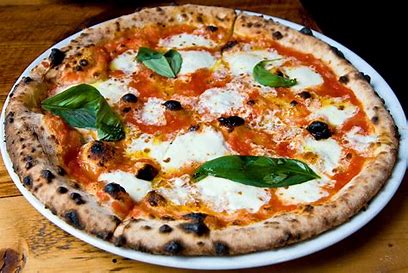
Pizza as it should be

Let’s take a bit of a detour. (Don’t worry; we’ll be back on the main highway before you know it.)  In a surprisingly candid post from fellow blogger Brilliant Viewpoint, her recent trip to Rome and Florence determined pizza – at least the classic Italian version of the pie – is not what it used to be.  The writer suggested the crusts are like cardboard, the mozzarella chunky and unappetizing, and the pizza itself a little soggy.  Having spent a college year in Italy (when I survived on pizza and not much else), I found her conclusions shocking.  Maybe this is why Domino’s – they of the generic-but-convenient home-delivered product in America – decided to give Italy a try?  It’s true.  In 2015, a Dominos franchise opened several stores across Italia to capture the then non-existent delivery market.  It almost worked.

No matter what the state of Italian pizza these days, Domino’s Pizza stores in this of all countries lands on my “you’ve got to be kidding me” list (alongside Starbucks coffee).  Put yourselves in their shoes to understand the absurdity of it all.  You’re an Italian.  Pizza was invented in your country, which has thousands more years of history than America.  You can choose from any pizzeria on any block of any street in your town and the homemade product will be excellent.  Yet you’re going to call Domino’s to order a mass-produced American knock-off instead?  At least Baskin-Robbins was sensible enough to stay away instead of going head-to-head with gelato.

You shouldn’t be surprised to learn – after a seven-year run – Domino’s Italian franchisee filed for bankruptcy in April.  “Of course“, you say. “Their product just couldn’t compete.”  Well, that’s not quite the story.  It was more about pizza delivery itself.  Remarkably, Italy had very little delivery before the pandemic.  You wanted a pie back then, you went out into the streets and got it.  But just like American restaurants, Italian pizzerias did whatever it took to survive the pandemic years, and that meant delivery to front doors.  Domino’s thought they had the market cornered before they ever entered it.  Next thing they knew, everyone else was doing the same thing.
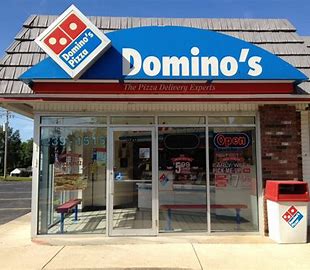
No matter the reason, I’m happy to say arrivederci to Domino’s Pizza in Italy.  Franchise food doesn’t feel right in a country with so much history and wonderful local food.  Shortly after my college year in the 1980s, I learned a McDonald’s restaurant somehow landed a lease at the base of Rome’s famous Spanish Steps.  That’s like painting a mustache on the Mona Lisa.  America has much to offer the world, but fast food is not our proudest accomplishment.  I’m not even sure it’s an accomplishment.

Let’s get back to the main highway now.  Up top we were talking about Mexican food… er, the lack of it, in the American South.  It’s true, if our new little town is any indication.  Yes, we have several options to beat a sit-down at Taco Bell, but they’re only a whisper better.  Everything looks and tastes so generic.  What should be salsa roja inside of enchiladas tastes more like pizza sauce.  What should be a margarita with the sublime afterbite of tequila tastes like syrupy lemonade.  The chips might as well be Doritos.  Yet you look around and the restaurant is packed.  These people don’t know what they’re missing, but they seem happy enough.  As a result, just like Dominos, I don’t expect a Mexican restaurant from outside of the region to waltz into town and do well.

My theory on good Mexican food goes like this: the further west and south you go the better it gets.  Colorado and Tex-Mex trump anything east of the Mississippi.  Arizona and Southern California fare trump Colorado and Texas.  In other words, my favorite Mexican place in my new hometown is destined to be close to my front door. In fact, it’s inside my front door.  It’s my kitchen.  Time to start making my own margaritas and enchiladas. 

Some content sourced from the CNN Business article, “Domino’s tried to sell pizza to Italians…”, and the Brilliant Viewpoint blog.

(No) Separation of Church and State

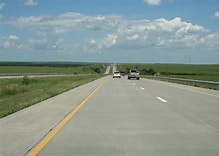
This weekend my wife & I packed up the last of our things and moved from Colorado to South Carolina. We’ve decided the lower elevation and milder temps of the “Palmetto State” make better sense for our retirement. But instead of a moving truck, we trailered the horse (and the dog and the barn cat) along with our suitcases. A half-ton of horse means driving in the slow lane, our top speed 65 mph without blowing a gasket. And driving through Kansas in the slow lane – or any lane for that matter – feels like forever.

The western edge of Kansas, at Interstate 70, is an encouraging starting point as you leave Colorado.  You pass an attractive “Welcome Center”, a convenient place to take a break and learn a little about the “Sunflower State” before you venture further.  More importantly, you notice an immediate improvement in the road conditions.  Kansas, unlike Colorado, not only earmarks tax dollars to keep its highways pristine, the state actually spends those dollars accordingly (instead of dipping into them for other purposes).  Our horse – standing on four legs the entire journey – appreciated the smoother ride, if not the triple-digit temps.

Twenty or thirty miles into Kansas, the sobering reality of America’s Heartland sets in.  For one, you could lay a ruler on the hundreds of miles of Interstate 70 and hardly need a turn of the steering wheel.  For two, you realize every town along the way – save Kansas City to the far east – looks exactly the same.  Water tower. Cell phone tower. Church. Gas station. Fast food. A surround of corn fields. Lather, rinse, repeat.  It’s like someone drew up a generic template of a town and laid it down a couple dozen times along the interstate.  Doesn’t help to keep a slow driver alert, especially when you’re on cruise control.

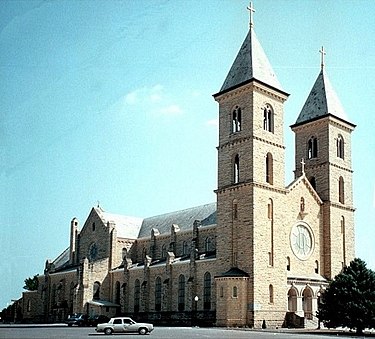
But suddenly, mercifully, and completely out of nowhere, you see little Victoria, Kansas on the horizon.  Not Victoria, British Columbia (though it might feel like you’re driving all the way to Canada).  Victoria, Kansas, with its mere 1,200 residents and one square mile of town.  And right in the middle of Victoria, rising out of the earth as abruptly as the Rocky Mountains, sits the Basilica of St. Fidelis, better known as the Cathedral of the Plains.

You can probably spy St. Fidelis from fifty miles away as you approach, but you certainly don’t believe what you’re seeing.  Kansas is as flat as a pancake yet Victoria boasts a cathedral worthy of a spot in Rome.  The first time I saw St. Fidelis several years ago (driving a whole lot fast than 65 mph), I thought it was the Kansas heat bringing me a heavenly mirage.  I half expected the clouds to part (even though there weren’t any) and a host of angels to surround those tall twin spires.

But St. Fidelis is a lot more real than a mirage.  It was built in the early 1900s by German and Russian immigrants, each of whom pledged to haul six wagonloads of limestone and another four of sand from nearby quarries.  St. Fidelis predates any kind of construction equipment so the entire structure was raised by hand.  These industrious Kansans knew the meaning of hard work.

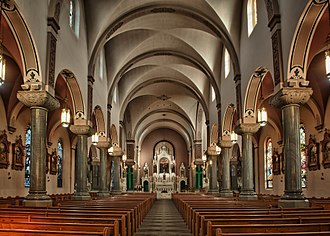
St. Fidelis boasts forty-eight handcrafted stained-glass windows, valued at more than $1M.  Its beautiful procession of Romanesque-style arches hovers above marble floors.  The cathedral was “elevated” to the status of Minor Basilica by decree of the Pope in 2014, and earned a place on America’s National Register of Historic Places.  In other words, there’s no separating this church from this state.  Not bad for an old building in a tiny metropolis in the middle of cornfields.  I only wish I’d had the time to exit the interstate and head down to Victoria for a closer look.

The Sunflower State has adopted the Latin phrase ad astra per aspera as its motto.  It means “to the stars through difficulties”, representing the aspirations and hard-working spirit of the state.  I’d say the Cathedral of the Plains is Kansas’ perfect example, wouldn’t you?

Some content sourced from Wikipedia, “the free encyclopedia”.

Floral Fire

Billboard ranks “Firework” as Katy Perry’s best-selling single, with millions of downloads since its 2010 release. The self-empowerment tune “skyrocketed” to #1 on Billboard’s Top 100 at the time and ranked in the top five on twenty other charts worldwide. “Firework” also “sparked” an award-winning music video, and Katy has since performed the anthem live at two presidential inaugurations and during the halftime show of the Super Bowl.  Searching Wikipedia for “firework”, therefore, it comes as no surprise to be asked, “Do you mean the song or the low-explosive pyrotechnic device?” Today, I choose the latter.

For the first time in countless July 4th celebrations I can’t speak to having seen a single overhead firework display this year. No giant “willows” with their graceful descending trails of sparks; no “peonies” where those same trails radiate in straight lines from the center; and no “horsetails” (my favorite) where each trail bursts a second time, followed by a crackling, glittering shower of fire.  Also, no “grand finale” where it looks like the entire sky is splitting open to some fiery furnace beyond.

“Chrysanthemums”

From the vantage point of our house, we used to count on the fireworks show from the nearby U.S. Air Force Academy. That show has been canceled for the last ten years because of budget cutbacks.  We also used to bring blankets to the shore of a nearby lake, where we were treated to a “small-town” fireworks display funded by donations from the public.  Today, that display has been swallowed up by a bigger all-day “Festival on the Fourth”, where you pay for parking and walk a mile or two just to secure a spot on the lake several hours ahead of the fireworks.  Even so, we thought we’d see bits and bursts from one of the other nine shows scattered around nearby Colorado Springs.  Nope, not so much as a snap, crackle, or pop.

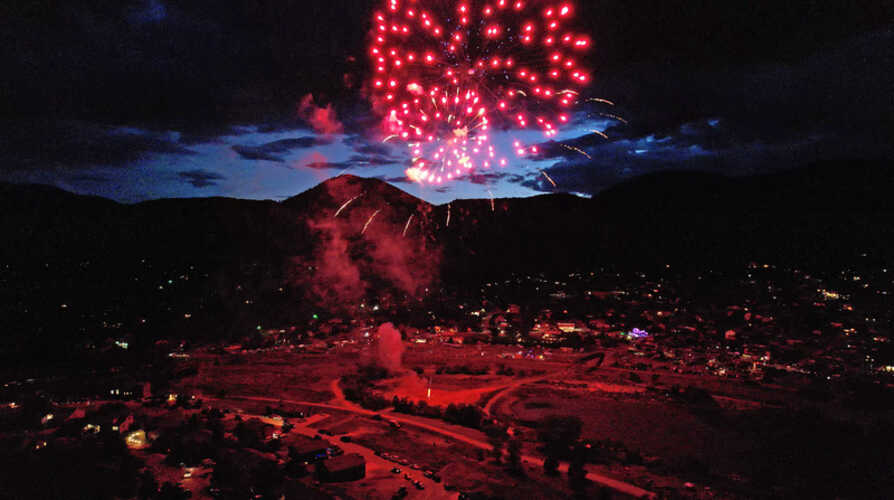
Palmer Lake, CO 2022 fireworks display (photo courtesy of local resident Bartley Willson)

Fireworks are nostalgic for me, with two distinct memories from childhood.  The first, in the 1970s, brings me back to the beach of the Pacific Ocean in Los Angeles.  Back then the only commercial displays seemed to be over the ocean.  My parents would grab a bucket of Kentucky Fried Chicken and several blankets, and the whole family would find a place on the beach where for several hours, we’d eat and play as twilight became dark, in anticipation of the late, late fireworks show from the end of the nearby pier.

The second memory, a decade later, also brings me to the Pacific Ocean but to a beach further south near San Diego, where we’d shoot off our own fireworks (from the “Safe and Sane” boxed collections my dad brought home every year), followed by an overhead display from the nearby county fair.  Every childhood July 4th was the same: food, fun, and fireworks; lots and lots of fireworks.

“Waterfall”

In 1976 – America’s bicentennial year – the firework display in New York City included an unforgettable “waterfall” effect off one of the bridges.  This year, that same July 4th display (sponsored by Macy’s) ballooned to a two-hour televised extravaganza with over 2,000 blasts and effects per minute.  I’d say Macy’s department stores and their profit margins are doing just fine, wouldn’t you?

I shouldn’t be surprised to learn fireworks were invented by the Chinese (well over a thousand years ago) but here’s a less-obvious bit of floral fire trivia: Disney is the largest consumer of fireworks in the world.  It used to be – back when their single amusement park was California’s “Disneyland” – you’d only catch a Disney firework show on summer evenings (directly above Cinderella’s castle), and only if you stayed until just before the park closed.  Today you’ll find displays at any one of the twelve Disney parks, in any month of the year.  For the record, only the U.S. Department of Defense purchases more explosive devices than Disney.

There’s more firework trivia, of course.  The very first iterations were empty bamboo shoots, creating a mild popping sound when ignited because of natural air pockets.  Seeking more pyrotechnics, the Chinese added explosive chemicals to the shoots to create firecrackers”.  Eventually they figured out how to launch and propel their creations, and the overhead fireworks display was born, in an impressive rainbow of chemical colors. But take note; you won’t see a blue firework very often.  Blue requires an infusion of copper at just the right temperature, and the “cool” color tends to get lost next to the “hotter” reds and yellows.

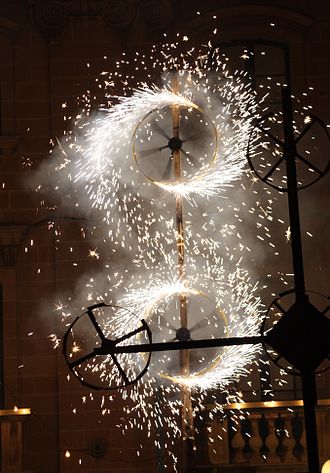
“Catherine wheels”

I’m still puzzled why I didn’t hear so much as a “BOOM! BOOM! BOOM” aftershock (to quote Katy Perry) of a firework display this year.  Maybe most of my fellow Coloradoans kept the bursts and blasts to the ground instead, from what they purchased at the local firework stand. Those of you living in New Jersey, Massachusetts, or Delaware can’t relate because consumer fireworks are illegal in your states.  Not so much as a sparkler in your hand. (Which may be a good thing since sparklers can heat up to 2000 ºF)  So you probably did what I did this year – simply watch a recap of the Washington D.C. grand finale on your smartphone.  It was the only floral fire I could find.

Some content sourced from the BuzzFeed article, “17 Things You Probably Never Knew About Fireworks”, the Macy’s Fourth of July Fireworks website, and Wikipedia, “the free encyclopedia”.

Emerald Greens

In the final lines of our national anthem, Americans sing, “O’er the land of the free, and the home of the brave”.  Those labels are a little dicey today.  Are we really free?  Are we really brave?  It’s a debate best left to more intellectual bloggers. I’m simply looking for less controversial words to describe the United States.  Take Ireland, for example.  The little republic is nicknamed “The Emerald Isle”.  Of this, there can be no doubt.  Before your flight even touches down, the window seat view is nothing but endless rolling green hills.  And not just any green.

See what I did there?  Inside of a single paragraph I distanced myself from heavy topics like freedom and bravery, and now I’m focused on the color green.  Bravo, Dave! Now then, let’s continue.

“The Emerald Isle”

Emeralds have always been my favorite of the precious gems.  In the jewelry shop it’s hard to ignore diamonds (because they’re everywhere), yet somewhere in the glass cases you’ll find the more colorful stones. Blood-red rubies. Royal blue sapphires. Modest little garnets (my birthstone).  And green, green emeralds.  I’m drawn to emeralds because green is my favorite color.  On that note, do you realize your favorite color never changes?  Nobody says, “Well, I used to like purple but now my favorite color is orange”.  You can move to another country, switch up your career, or overhaul your wardrobe, but your favorite color is a constant.

I digress (sorry). I have emeralds on the brain for good reason.  My wife & I just celebrated thirty-five years of marriage (thank you very much), and she hinted emeralds might be a nice gift.  So I paid a visit to my jeweler.  I told her I was looking for something understated, maybe earrings and a necklace.  She showed me a pretty set, where I thought my only decision was the shape of the stones (Round? Square? Pear?).  But then she threw me a curve when she said, “Would you prefer natural or lab-created?” Huh? Why would I buy my wife anything other than the real thing?

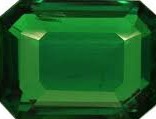
“Natural”
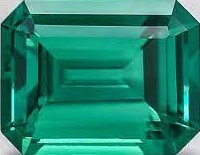
“Lab-created”

Here’s the rub of the green.  Lab-created gems are the real thing.  They’re “chemically, physically, and optically identical to their natural counterparts.” So why choose one over the other?  Cost. Lab-created gems can be significantly less expensive, especially as the number of carats grows.  In other words, easy choice, right?  Wrong.  The lab-created gems – at least in my jewelry shop – were small enough to be the same price as the naturals.  Instead, my decision came down to color.

Was I tempted by the blue-green clarity of the lab-created?  Absolutely.  Did I choose them?  Absolutely not.  I kept coming back to the emeralds in my brain.  Call it natural green, kelly green, or Irish green, but I prefer the green on the left.  And I think my wife did too.

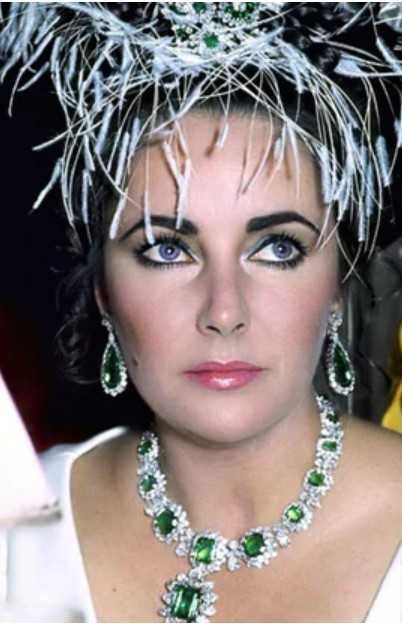
Liz is wearing $6.5M worth of emeralds and diamonds

I’d like to share some trivia on today’s topic but – warning – it’s a little pedestrian.  Emeralds are one of the twelve birthstones (conveniently, the month of May).  Emeralds come from the mineral Beryl (as do aquamarines).  Their rarity makes them “precious”, alongside diamonds, rubies, and sapphires.  They’re delicate, susceptible to chipping.  Finally, emeralds are considered, among other things, a symbol of rebirth.

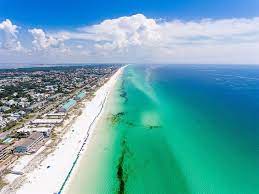
A section of the Florida Panhandle is called the Emerald Coast for the area’s clear, green water.  The Wizard of Oz lived in the Emerald City for reasons only Oz fanatics can explain.  And little Ireland, deservedly, earns its nickname for those rolling green hills, as well as Irish jewelry, made primarily from green gems (if not all emeralds).

Florida’s Emerald Coast

I saved one more fact for last, mostly to make points with my wife.  After I bought her the earrings and necklace, I said to my jeweler, “By the way, it’s silver for the 25th anniversary and gold for the 50th, but what about the 35th?” She replied, “Emerald” (even though several Google searches suggest jade).  Whoa. I didn’t plan on that coincidence but I’ll certainly take the credit.  After all, my wife is one-quarter Irish. My daughter’s name is Kelly. And my favorite color is green. How could it be anything but emeralds?

Some content sourced from Wikipedia, “the free encyclopedia”.

——————–

Lego Grand Piano – Update #17

(Read about how this project got started in Let’s Make Music!)

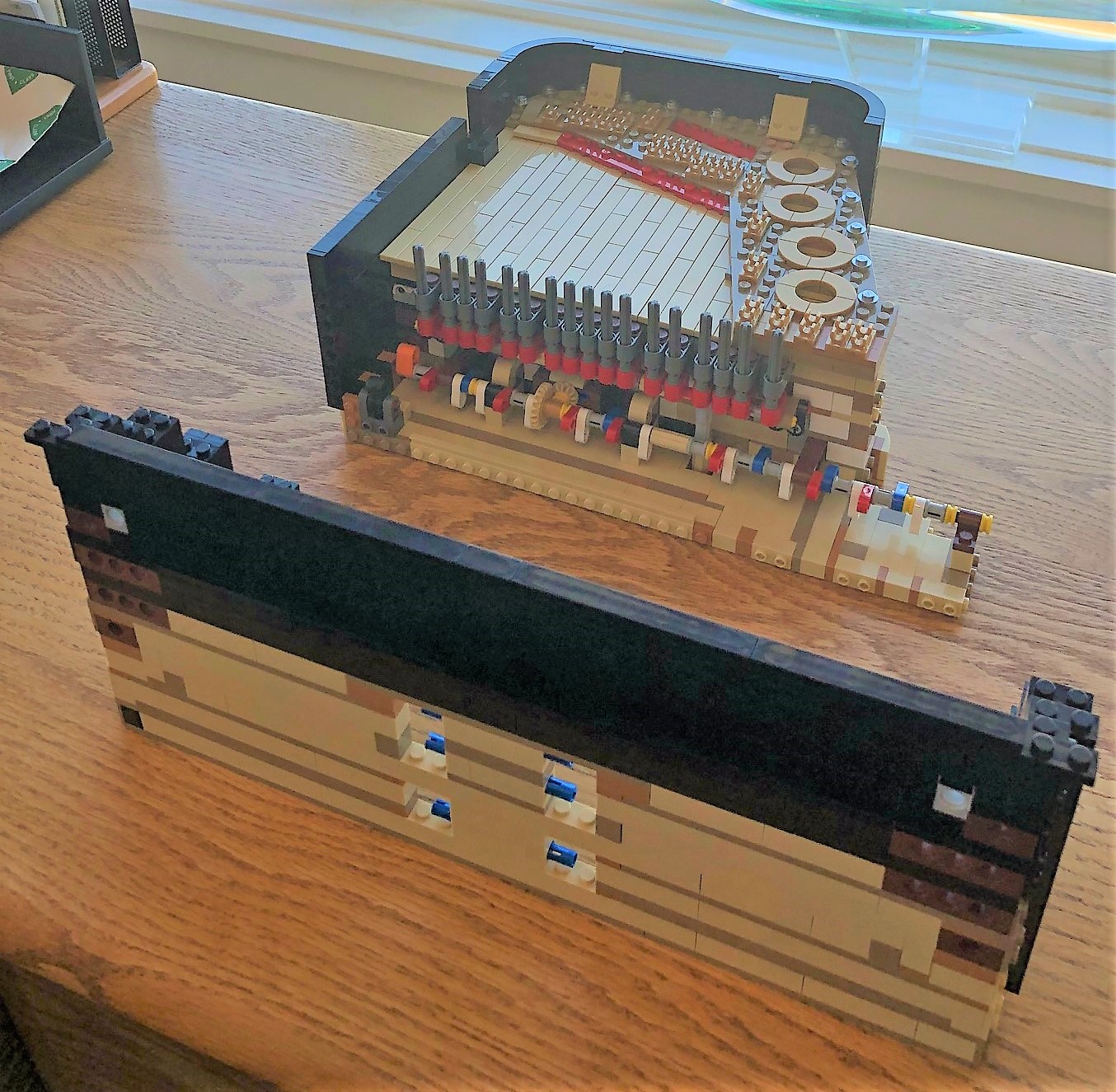
Today’s build demanded more of an overhead view so you can see the difference between last week and this week. Bag #17 – of 21 bags of pieces – earned me the row of seventeen black caps you see in the second photo (on top of the piano wires), as well as the wide stand for sheet music, just behind the keyboard cover.

Last week

The piano is a remarkable instrument.  When you press down on a key, you’re actually pushing a “hammer” up against the underside of a piano wire, creating a musical sound (or “note”).  When you release the key, a black “damper” (one of the seventeen I just built) drops down on the top of the wire, silencing the sound.  Add in the functions of the three pedals at the base and you should consider the piano a musical mechanical marvel.

Running Build Time: 12.5 hours.  Musical accompaniment: Rimsky-Korsakov’s Flight of the Bumblebee. Leftover pieces: 2

This week

Conductor’s Note: The Bumblebee is a brief orchestral interlude of an opera, composed well over a hundred years ago. Nikolai Rimsky-Korsakov’s furious little piece, when played on the violin, really does sound like a buzzing bee.  It’s only 84 seconds in length, but you find yourself catching your breath after you’ve heard it.  It’s even more remarkable when played on the piano, the fingers almost a blur.  Have a listen to the audio file here. I’m sure you’ll recognize the tune from some of today’s movies and cartoons.

Not-So-Sweet Jesus

If you take a stroll down your supermarket’s greeting card aisle today, you’ll find Valentine’s Day cards long gone and Easter cards in full force. It’s only the start of Lent, yet the aisle is bursting bright with pink bunnies, yellow chicks, and painted eggs. I won’t be sending Easter cards this year (haven’t done so since my kids were little) but I will give up something for Lent. I’m thinking “foods with added sugar”.

I know what you’re thinking.  We live in an age where giving up tempting foods isn’t as difficult as it used to be.  Whole foods are so available we have an entire chain of stores called “Whole Foods”.  Sugar has so many alternatives I should revise my sacrifice to “foods with added sweeteners“.  Even processed foods have matured to where “healthy snacks” are pleasing to the palate.  I have options.

Doesn’t matter.  Dropping added sugar will still be a challenge.  My desk drawer (second one down on the left if you’d like to help yourself) is replete with black and red licorice, and some form of chocolate, be it a bar, a cookie, or those little baking morsels straight out of the bag.  Giving up licorice for forty-six days and nights won’t be a stretch, but NO chocolate for all of March and half of April sounds like an eternity.  What can I say?  Everyone has a weakness and mine is chocolate.  It speaks to me from my closed drawer with “come hither” seductiveness.

Straight out of the bag…YUM!

I’ll bet you’ll find thousands of blog posts about chocolate with a quick search.  I’ll bet you’ll find entire blogs about the sweet stuff.  I just checked my blog’s history and unearthed a dozen takes on chocolate (including this one from a year ago talking about the things people give up for Lent.  Chocolate tops the list).  So let’s make it a baker’s dozen because I invented a chocolate challenge.  I call it the “85 Percent Ascent”.

Let me explain.  There was a time when I liked my coffee sweeter than a Starbucks Sugar Cookie Frappuccino.  Together with artificial creamer I’d dump in sugar cubes or pour the white stuff straight from whatever you call those pourable glass containers.  That was a long, long time ago.  At some point (probably, er definitely my college year abroad in Italy) I realized coffee tasted pretty good all by itself.  I started to wonder why you’d “taint” coffee by adding the other stuff.  But let’s be real: it’s not like you go from Frappuccino to Americano cold turkey.  You’ve got to ease into the one extreme from the other.  Slowly I backed down the sugar (like years-slowly).  Slowly I backed down the creamer.  One day I eliminated the sugar altogether.  Today, I still go with a tablespoon of (almond-coconut non-dairy no-sugar) “creamer” but otherwise it’s straight dark-roasted coffee for me. I even fancy an espresso shot every now and then.

It’s a good analogy for my Percent Ascent challenge.  85% cocoa content is seriously dark chocolate (meaning not sweet at all).  If your go-to is a Hershey’s Bar or a Milky Way you’re down below 50%.  And moving from 50% to 85% is a serious ascent with chocolate.  It’s like standing on top of Kilimanjaro and seeing how much further you have to go to summit Everest.

A recent article on chocolate lists nine criteria for the healthiest and best-tasting bars in the world, including:

  1. The first ingredient must be cocoa, cocoa mass, or chocolate liquor (not sugar or milk chocolate).  In other words, put down the Nestle’s Crunch; it’s not even close.
  2. Ingredients must include real cocoa butter instead of (cheaper) vegetable oils.  95% of America’s chocolate manufacturers just dropped out of the race.
  3. The cocoa must come from an “Equator country” like Ivory Coast, Ghana, or Peru.
  4. The bar should be labeled “Organic” and/or “Non-GMO”.
  5. Bonus points: should be fairly traded and ethically harvested.

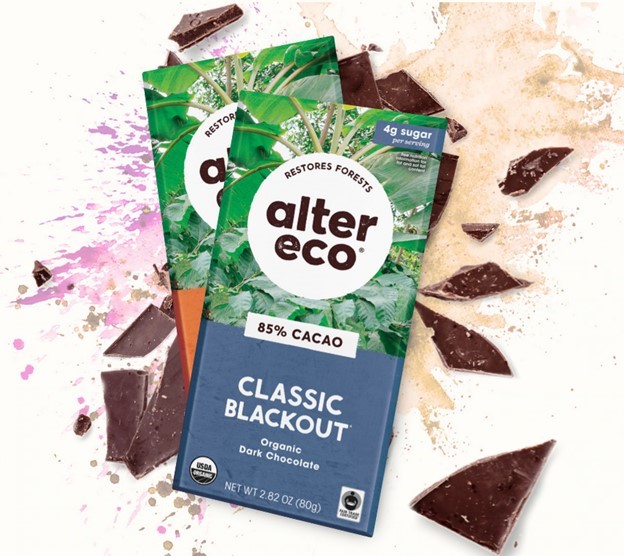
As if the search isn’t already difficult, NOW you have to go with >85% cocoa content.  Not so hard to find actually, especially if you go online.  I purchased a bar from five different manufacturers meeting every one of the above criteria, including Green & Black’s from the UK, and Theo from Seattle.   All five bars fall between 85% and 90% cocoa content (and yes, 100% is an option).  All five use scary words like “strong”, “super black”, and “extreme” to describe their product.  Not gonna lie; I’m a little nervous to take a bite.

As bitter as these chocolates are sure to be, I still have to give them up for Lent.  Every one of them has “added sugar” (albeit way down on the ingredients list).  So let’s just agree – I’m not going to break my Lenten covenant on a food that doesn’t even taste sweet.  Think I’ll opt for a piece of fruit instead.  I just hope it doesn’t come from the Garden of Eden.

Some content sourced from the “Experience Life” / Life Time article, “How to Find the Healthiest Dark Chocolate”.

——————–

Lego Grand Piano – Update #7

(Read about how this project got started in Let’s Make Music!)

Last week

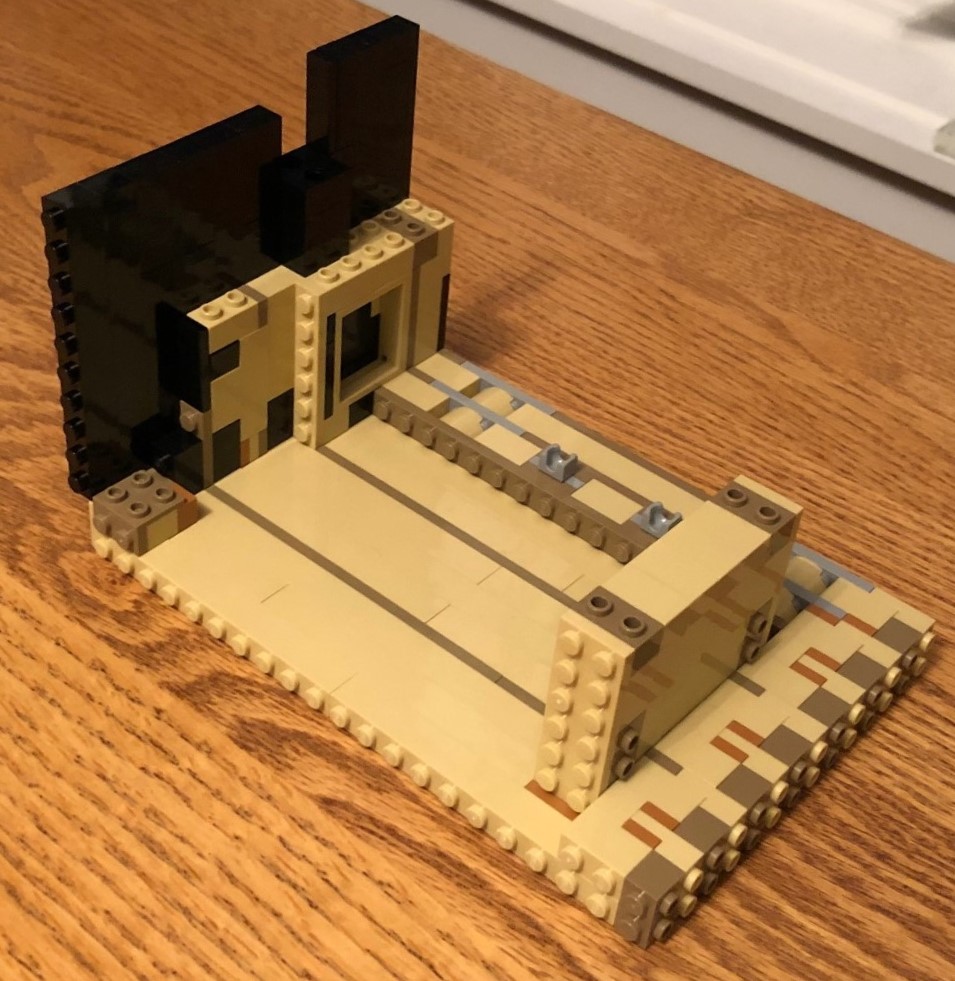
I worked outside of the box again this week. Bag #7 – of 21 bags of pieces – assembled a second layer on top of the section I can’t yet attach to the bigger section behind it.  From “Last week” to “This week”, you can see I worked almost entirely in black, which suggests I’m creating more of the outside of the piano.

Despite the majestic wash of Debussy’s “La Mer”, Bag #7 was completed in less than thirty minutes, with only one heart-pounding moment where I thought I’d left out pieces in the Bag #6 build.  Thank goodness I was wrong. Still on track.

This week

Running Build Time: 6.0 hours.  Musical accompaniment: Debussy’s La Mer and Prélude à l’aprés-midi d’un Faune (try and say that ten times fast). Leftover pieces: One (clearly an extra, whew!)

Conductor’s Note: Today’s build wasn’t very exciting, so it helped to have Debussy booming in the background.  However, as I turned the page of Mr. Instruction Manual in anticipation of Bag #8, I saw pictures of… long, thin, reed-like pieces.  Holy buckets, Maestro, it’s time to make this piano a stringed instrument!

I Just Turned 59.99589!

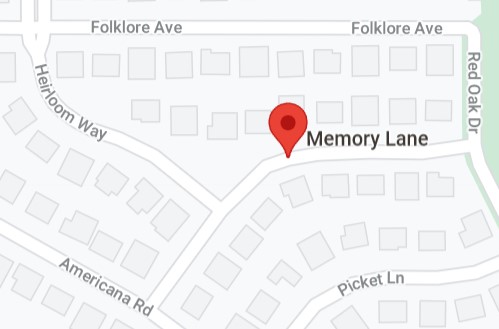
It may interest you to know there are real Memory Lanes in the bedroom communities of every American state. Look them up on Google Maps (I stopped searching after finding dozens.) Must be fun to be one of those residents and see the look on someone’s face when you give them your address.  No, I don’t know anyone who lives on Memory Lane, but me, I kind of do; one with no stripes or sidewalks. Mine is paved with sixty years of material, some of it worth a visit; other items best left alone.  All of this “Dave” stuff is somewhere between my ears and today it’s time for a big – okay, little – reveal.

59.99589.  If you’re reading this post the day it was published, I’ve just revealed my age to ridiculous exactness.  The 0.99589 amounts to 363 out of the past 365 days.  You could say I’m still in my late fifties (very late, Dave), but more accurately you’ll say I’m either sixty on the dot or a mere forty-eight hours removed from it.  Do I feel old now?  Of course not!  Er, until I calculate my age in months.  I’ve spent 720 of those bad boys.  For Pete’s sake, what have I been doing all my life?

Well, let me answer that question.  In fact, let’s make it a game because then you get to play too.  Think about the last sixty years (or in your case, however many decades you’ve been around).  Now let’s create a list – off the top of our graying heads – of up to ten significant world events in the timeframe of our years.  No, no, no; not the events you learned in the history books, but the ones with lasting, maybe even personal impact.  Here are mine, in no particular order:

  1. 9/11 (2001)
  2. COVID-19 (2020-???)
  3. San Francisco Bay Area earthquake (1989)
  4. Space Shuttle Challenger (1986)
  5. America’s war in Afghanistan (2001-2021)
  6. Apollo rockets (1961-1972)
  7. Colorado’s Black Forest wildfire (2013)

I don’t have enough time to explain my choices (after all, I only have forty-eight hours until I”m a “sexy-genarian”) but trust me; these seven came to mind in a heartbeat.  Now arrange them in chronological order to paint an interesting picture.  My childhood was inspired by Apollo rocket launches (courtesy of black-and-white TV’s); my young adult years by two disasters – the Challenger explosion and the devastating earthquake in the San Francisco Bay Area; and my adult years by big-bad-ticket items like terrorism, war, wildfire, and a global pandemic.  Sadly, not one of these events makes anyone’s “good list” (am I a product of headline news or what?). But that’s not to say my sixty years have been altogether bad.  Quite the contrary.

Now, here’s where the game gets more interesting.  Make a similar list as above, but include up to ten significant events of a personal nature.  These are the formative moments, where you’re not the same person after they happened as you were before.  Leave off relationships (including marriage) and having kids, because most of us have or will have those in common.  Let’s see now.  My eyes are closed, I’m in a thoughtful trance, and I’m typing, all at the same time (a man of many talents, no?) Okay, pencils down.  Here’s my “formative” list, also in no particular order:

  1. Corrective eye surgery (1977)
  2. I-survived-but-the-car-didn’t rollover (1984)
  3. Immersive year of studies in Rome, Italy (1982-83)
  4. Traded California’s coast for Colorado’s Rockies (1993)
  5. First job <McDonald’s> (1975)
  6. All things Boy Scouts (1973-1978)
  7. Architecture career ends, tech career begins (1993)
  8. All things basketball (1974-1979)

Again, I’d love to wax on about my choices but I’d turn 61 before I’d be done typing.  Instead, sort my formatives from earliest to most recent.  Notice anything?  All happened between the ages of 10 and 30.  My “clay was molded’ in a mere one-third of my lifetime.  Not really true, of course.  Ages 1-10 – none of us remember much of those.  But now I hear you saying, “So Dave, what have you been doing for the last thirty years?”  Well, you know the answer already  The same thing as most every other red-blooded American male.  Raising a family.  Making a living.  Loving my wife.  Loving my life.

I predict my sixties will be my greatest decade; just you wait and see.  I’ll witness another significant world event or two (maybe even a “good one”!)  I’ll break my thirty-year run of nothing and come up with at least one more formative experience.  I’ll write another 520 blog posts (and you’ll block a chunk of your calendar to read them).  But let’s be real; this is just musings about my sixties.  I’m only in my fifties. My account still shows a credit of forty-eight hours.

——————–

Lego Grand Piano – Update #2

The concert is underway! (read about my hesitant warm-up in the post Let’s Make Music!).  Bag #2 – of 21 bags of pieces – started out innocently enough, with big pieces and easy assembly.  My maestro-confidence overfloweth.

Suddenly things got v-e-r-y complicated in Mr. Instruction Manual.  Tiny, tiny pieces!  Mechanical components!  Cables!  Batteries!  Here’s last week’s build, and then below, this week’s additions for comparison.  Enlarge the second photo for a better look at the colorful, scary-looking “spindle”, running top left to bottom right.  I have no idea what it’s for but it connects to the gray/white motor (at least I think it’s a motor) just behind it. I count forty-five little Legos on the spindle, each required to be positioned exactly as you see them.  Almost walked off the stage when I was done with that step.

Running build time: 2.5 hours.  Musical accompaniment: Beethoven’s Piano Concerto No. 5 “Emperor” (three times through!)  Leftover pieces: 5 (Conductor’s note: Last week I only had 1 leftover piece.  5 = concern.  I need to double-check this week’s work before moving forward.  Safe to say you can’t go back and “repair” after the fact).

Fa-La-La Land Down Under

I have two nieces who, along with their families, call islands their homes. One lives on Hawaii’s Oahu, her house perched on the cliffs above Honolulu with sweeping ocean views to the west. The other lives in Brisbane, on the east coast of Australia. Sure, Australia isn’t really an island, though it is surrounded by water. By definition its landmass makes it a continent instead. But Australia does lay claim to a few islands off its shores.  Including one named “Christmas”.

Christmas Island’s picture-perfect “Flying Fish Cove”

Imagine living in a world so small you can walk from one end to the other in less than two hours.  Your fellow islanders are so few, your entire social life is like living in a college dorm.  Your diet consists of fruits, nuts, and crab.  Lots and lots of crab.  And the single contribution you and your island-mates make to the outside world is phosphorous from your underground mines.  That, in a crab shell, is life on Christmas Island.

The first time someone told me there was a “Christmas Island”, I was young enough to be watching Rudolph the Red-Nosed Reindeer every December on TV.  My favorite part of Rudolph’s story was the “Island of Misfit Toys”.  You remember, don’t you?  Rudolph was the reindeer-a non grata, mocked by the others because of his shiny nose.  Along with a couple other outcasts (Hermie, Santa’s elf who’d rather be a dentist, and Yukon Cornelius, the prospector who can never find silver or gold), Rudolph discovers the Island of Misfit Toys.  The island is a repository for unwanted toys.  As sad as that sounds, Rudolph’s island brings Christmas to mind much more than the little landmass I’m talking about today.

Palm trees (not pines) on Christmas Island

If you wonder why you’d ever visit Christmas Island, consider almost 65% of the island is a national park of unspoiled rainforest, with walking paths past 25 species of trees and 135 species of plants.  The only animals you’ll spy in the forest include the “flying fox” fruit bat, the recently introduced Javan deer, and the golden bosun (the island’s “official” bird).  Outside of the forest however, it’s impossible to miss the crabs.  Coconut crabs.  Red crabs.  Thirteen different species of land crabs, let alone those who prefer the ocean.  And here’s the best part.  Every year, one hundred million of them migrate from solid ground to water (to spawn), a sight mind-blowing enough to be called “one of the wonders of the natural world”.

Watch the following short video on the chaotic Christmas Island crab migration.  Makes you wonder how you can walk anywhere without getting “crabs”.  If this is something you simply must see in person, find your way to Perth on Australia’s western mainland, and book one of two weekly flights to Christmas Island courtesy of Virgin Airlines.  Your 3+ hours in the air will take you over nothing but the vast Indian Ocean.

It’s high time we addressed the most burning question about our little fa-la-la land down under.  Why is it named Christmas Island?  Here are popular theories.  One, “The rainforest is made up of nothing but evergreen (Christmas) trees.”  Two (for the geographically challenged), “The island is the closest landmass to the North Pole.”  And three “Christmas Island was the origin of the species diospyros virginiana, more commonly known as the sugar plum tree.”  The correct answer?  None of the above.  In the 1600s, European explorer Richard Rowe first set foot on the island, doing so on December 25th.  With no more creativity than a glance at the calendar, his discovery was dubbed Christmas Island.

Norfolk Island pine

I’ve got a much better “Christmas Island” for you.  Flip over to just off the east coast of Australia and you’ll find an even tinier landmass called Norfolk Island.  It’s about a quarter the size of Christmas, with the same number of inhabitants.  But Norfolk Island’s primary export is much more “Christmas” than phosphorous.  It is the evergreen Norfolk Island pine, a popular ornamental tree in Australia.  My wife and I found one at Home Depot a few years ago and bought it for her mother.  For small spaces, Norfolk Island pines make great Christmas trees.

“Christmas” looks a little like an Aussie Shepherd!

In defense of Christmas Island, there’s more going on within its shores than phosphorous and crabs.  Most of the residents live in the northern area of the island surrounding a coastal region known as Flying Fish Cove.  They speak one or more of five different languages.  There’s a high school and a public library.  There’s even a cricket club, which just celebrated sixty years in the game.  And most fitting to this time of year, twenty percent of the population call themselves Christians.  In other words, despite the uninspiring reason for its name, Christmas really does come to Christmas Island.

Some content sourced from Wikipedia, “the free encyclopedia”.

Christmas-Colored Glasses

The twenty-minute drive from my house to the gym is fairly nondescript. The streets are two-lane straight with a few turns and traffic lights along the way. Not much to look at on a winter’s morning. But the month of December brings about a miraculous change. With the car stereo belting out songs of the season there’s suddenly a lot to see through the windshield.  It’s as if I’m viewing the world through Christmas-colored glasses.

Maybe you’re like me when you’re on the morning drive.  You’re half-asleep, a little bit late, and the slightest miscue by another driver puts you in a bad mood.  I try to blank out the world around me by toggling my radio presets between news and sports.  It’s a wonder my lack of focus gets me to the right destination.  But Christmas music changes all that.  The happy tunes bring everything back to the crystal and clear.  They’re like a gift for the spirit.


Two radio stations in this part of Colorado switch over to Christmas music in December.  An adult contemporary station runs an endless loop of about thirty “holiday favorites” from Thanksgiving to New Years Day.  I’ll bet they play the Boston Pops’ version of “Sleigh Ride” and Mariah Carey’s “All I Want for Christmas” four or five times a day.  It gets old.  But they also play the best of Nat King Cole, Frank Sinatra, and Andy Williams so I forgive them. Then we have our Christian contemporary station.  Their round-the-clock Christmas playlist keeps it fresh, with more carols than pop songs.  They’re a little more in tune with the reason for the season.

Earlier this week I absentmindedly tuned back to one of my regular music stations.  Mistake. Their version of celebrating the season had people calling in to say why they deserved to be on “Santa’s naughty list”.  One caller said she babysat recently and told the misbehaving child Santa died of COVID.  Another said he slept with his ex’s sister and a week later slept with the sister’s best friend.  Seriously?  This is the spirit of the season?


Spotify plays its part on my drive, especially when radio stations bend to the inevitable commercials.  But not playlists.  Albums.  Spotify Christmas playlists just don’t cut it for me.  I have yet to find the perfect mix – you know, not too much of this, not too little of that.  I think Christmas albums by individual artists or groups do a better job of a “just right” playlist, which is why I’m peppering this post with three of my favorites.


Now then, let’s get back to those Christmas-colored glasses.  Exactly what did I see on my twenty-minute drive?  A lot more than I did before I tuned in to the season’s songs…

  • Children headed to school, laughing and singing as they walked.  I think we can agree; Christmas is all about children.  Or at least, one child.
  • Signs in front of churches advertising Christmas Eve services.  Most offer a 5pm, 7pm, and 9pm option, meaning lots of people are heading to church on Christmas Eve.  As we should be this year.
  • A lone tree at the end of a driveway decorated with just two ornaments.  What to make of it?  Maybe a senior citizen lives here, and two ornaments are all he or she can manage.  A reminder to gift to our local “Christmas for Seniors” program.
  • A third-story apartment and its tiny balcony decorated with garlands, wreaths, and lights.  Yes, all walks of life celebrate Christmas no matter the look of their “house”.
  • The sign at the gas station advertising today’s fuel prices.  Unleaded is advertised in red numbers, diesel in green.  How’s that for impromptu Christmas decor?
  • Our little town’s myriad Christmas decorations, covering trees, buildings, and lampposts, I may not always agree with the spending of our tax dollars but with this investment, they get it right year after year.

This is my personal mandate for the 2021 holiday season.  Take the rest of the month and listen to nothing but carols whenever you’re in the car.  You’ll don a pair of Christmas-colored glasses and be amazed at what you’ve been missing around you.  Believe it or not, the world looks pretty good right now.

Some content sourced from Wikipedia, “the free encyclopedia”.

O’ Come Let Us Adorn

There’s an older fellow in Egypt who wakes up every morning, throws on a flannel shirt and well-worn pants, and goes to his workshop behind the corrugated roll-up door of a small, industrial warehouse. Using ancient tools and techniques, he churns out hundreds of colorful, ornate, square cement tiles. He’s a true artisan, our tilemaker, carrying on his craft from many generations before him.  His product endures amid countless mass-produced ceramic and porcelain alternatives. Perhaps our tilemaker would feel more at home in Lauscha, Germany.  Lauscha is home to dozens of glassblowers, who still create colorful, ornate, Christmas ornaments by hand.

Lauscha “baubles”

Every December about this time, my wife & I bring home our Christmas tree (real, not artificial – see Is It Live or Is It Memorex? for that debate).  We take our tree through the same steps from start to adorned.  First, fresh-cut the trunk, set the tree into the stand, and fill with warm water (and one baby aspirin!).  Next, let gravity bring the branches down for a few days.  Then, bring out the ladder, top the tree with the angel, and string the lights generously down all sides.  Finally, adorn with ornaments.  Our collection is larger than the real estate of any Christmas tree we buy, so there’s always debate on which ornaments make the tree and which are re-relegated to the closet for another year of waiting.  In the end, we stand back and admire a pleasing mix of homemade, school-made, photo-framed, and collectibles.

You can never have enough ornaments, and the glassblowers in Lauscha would agree.  The process they use to create the simplest of glass balls is already beyond my artistic abilities.  For one, you must work fast because the molten glass cools in a hurry.  For two, you must have steady hands as you add color and detail.  Have a look at the following short video and you’ll learn a thing or two you never knew about making Christmas ornaments.  My favorite part of the process? “Silvering”.  Who knew the mirror-like aspect of a Christmas ball is painted on the inside of the glass?

Germans (and more people than I’d probably guess) refer to Christmas ornaments as baubles, which is ironic because Americans define a bauble as a “showy cheap trinket”.  Nothing produced in Lauscha, Germany is a showy cheap trinket.  Then again, Americans figured out how to mass-produce Christmas ornaments and the result is a generic, sometimes-plastic alternative to the real thing.  “Bauble” indeed.

The very first Christmas ornaments were anything but glass-blown baubles.  You had fruit, candy canes, pastries, strings of popcorn, and whatever else you could find around the house.  The Lauscha baubles then came along in the mid-1600s.  Short of the post-WWII years (when the German government used the glass factories for more important products) they’ve been making them ever since.

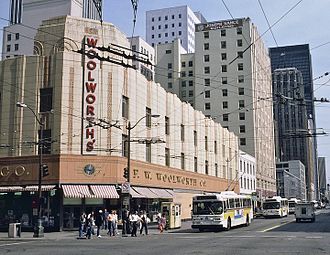
Credit Woolworth’s once-popular department stores for the proliferation of Christmas ornaments in America.  In the late 1800s, Woolworth’s started carrying the Lauscha baubles.  Soon after, they stocked mass-produced American-made versions, taking tree-decorating to a whole new level.  By the mid-20th-century, Woolworth’s was banking $25 million on Christmas decoration sales alone.

Hallmark “Keepsake Ornament”

Hallmark jumped on the bauble bandwagon in the 1970s.  Clever folks, those people at Hallmark.  Their original ornament collection was made available only for the current year, followed by a new collection the following year, and so on.  Today, Hallmark Keepsake Ornaments are so popular you have to join a club (just $49.95!) if you want to own their newest limited-edition ornaments.

As much as I’d like to add a Lauscha bauble or two to my tree, I prefer the more personal ornaments we hang instead.  A dozen or more of them were designed around primary-school photos of our kids (“art projects”, they called them).  Souvenir ornaments from favorite trips we’ve taken over the years.  Several more with imprinted dates, to remind us of special occasions like weddings, births, or passings.

Five years ago, I wrote my one and only work of fiction on this blog, a post about a Christmas ornament.  It seems fitting to include a link to The Best Branch on the Tree, assuming you haven’t followed me that long.  Because, you know, ornaments – er, baubles – have feelings too.

Some content sourced from Wikipedia, “the free encyclopedia”.

Third-Wheel Meal

In last week’s ’tis the Seasonings post, I wondered why “ginger” and “red hair” were synonymous. Paula from Monday Morning Rail replied with the answer which probably trumps all others (thanks, Paula!).  Ginger Grant, the glam character from the sixties sitcom Gilligan’s Island had a healthy head of red hair.  Sometime after the sixties a “ginger” became a person with red hair.  I’m satisfied, so let’s move to a question more appropriate for this week.  Why is (America’s) Thanksgiving celebrated on a Thursday?

Yes, it’s time for my annual Thanksgiving rant.  Rather, my everything-steps-all-over-Thanksgiving rant.  It’s not really an annual rant but perhaps it should be.  Three years ago I had so much to vent about Thanksgiving’s due, it took me two blog posts to let off the steam (see A Distant Third).  This year I realized, zero progress has been made since then.  In fact, the situation is snowballing.  Thanksgiving is finding less and less air as it gasps between the behemoths known as Halloween and Christmas.

Poor choice of word, “snowballing”.  It’ll make readers think about Christmas and I need you to stay focused.  My campaign is to keep each of the year-end holidays corralled into its respective month.  In other words, November equals Thanksgiving. (Repeat ten times, please).  Turkeys and pumpkin pie, not Santas and plum pudding.

There, I said it.  Apologies to those of you who’ve already shopped and wrapped presents.  Apologies to the rest of you who’ve already decorated your houses.  I’m just trying to give Thanksgiving its rightful place among the “big three” instead of its laggard position as “third wheel”.

You can name a dozen things associated with Halloween, and two dozen more with Christmas.  But with Thanksgiving?  Three (at least here in America).  We have the meal itself, the parades, and football.  That’s pretty much it.

Let’s dig a little deeper into the American Thanksgiving trifecta.  The meal is hanging in there despite efforts to make it healthier.  Turkey, stuffing, and pumpkin pie are still Thanksgiving staples (while “tofurky” is not).  I sometimes wonder why I don’t enjoy these foods on other days of the year as well.  Also, more people make the Thanksgiving meal at home than order online or go to a restaurant. (Do I have the data to back this up?  No, I do not.)  But I must acknowledge Friendsgiving, which has become common enough to remove the quotation marks.  Not only is Friendsgiving celebrated on any day but Thursday, the table spread can be decidedly different. Watch out.  There may come a November when – GASP! – more people celebrate the “friends” version than the “family”.

Parades remain more about Thanksgiving than the other two holidays.  You’ll find the Macy’s Thanksgiving Day Parade on television this week and at the same time, Chicago, New Orleans, Philadelphia, and Plymouth, MA host large-scale parades.  But here’s my Davey-downer factoid.  The Macy’s Parade may be the world’s largest (as well as the second-oldest in America) but it’s also an imposter.  It began as the “Macy’s Christmas Parade” in 1924, designed to launch a longer retail season at the end of the year.  So you see, the name may have changed but the parade is still decidedly “holly-jolly”.

Football brings out the smirk in sports fans again this Thanksgiving.  As they have every year since 1934 (save the WWII years) the NFL’s Detroit Lions will be playing on Thanksgiving Day.  As they have been every year (seemingly), the Detroit Lions are a truly awful football team.  In the last twenty years the Lions have amassed exactly four winning seasons.  This year?  The Lions are the only team in the NFL without a win.  The Lions are so bad in fact, the NFL has added two other games to your Thanksgiving Day lineup so you have options.

We’re almost done here, but don’t panic; I haven’t forgotten the original question.  Why is Thanksgiving celebrated on a Thursday?  Here’s the easy answer.  President Lincoln made it so back in 1863, as the final Thursday in November.  President Roosevelt also made it so back in 1941, more specifically the fourth Thursday in November.  Yeah, but… why a Thursday?

Here’s the real answer (or at least my answer).  Thanksgiving is on a Thursday.  Thursday is named for the Norse God Thor.  Thor is the God of Thunder.  See the pattern?  Thanksgiving-Thursday-Thor-Thunder.  It’s the whole “Th” thing.  Thanksgiving doesn’t really fit on a Friday (but maybe Friendsgiving does).  Besides, by Friday we’ve forgotten all about turkey and stuffing as we turn to computers and shopping malls.

Now then, banish all that “Th” nonsense from memory.  The real intent here is to give Thanksgiving its proper time and space mid-holiday season.  Let’s move Turkey Day from “third wheel” to “equal wheel” by finding more Thanksgiving stakes to claim in the month of November.  Maybe we should all dress up as pilgrims.  Maybe we should also have our kids “trade” instead of “trick-or-treat”.

With that, I wish you a Happy Thanksgiving.  And next week, I might even wish you a Merry Christmas.  You know, in December.

Some content sourced from Wikipedia, “the free encyclopedia”.