Perfect Harmony

In the toe of my wife’s Christmas stocking this year, I nestled a small gift to help her sleep. It’s a travel version of one of those sound machines, where you can dial up anything from rain to ocean waves to lull you off to Never Never Land. You can even mimic a waterfall, which would be my personal choice. After all, it’s the same sound the Kaufmann family enjoyed for years at their stunning retreat in the Pennsylvania forest, southeast of Pittsburgh. Seeing this famous house is an entry on my bucket list. Yes, one of these days I will make the trek to Fallingwater.

If you’re old enough to remember, “I’d Like to Teach the World to Sing”, you know the song’s about more than just apple trees and honey bees.  It’s about “perfect harmony”, which is how anyone would describe Fallingwater.  This beautiful structure is exactly as named: a house on top of a waterfall.  It is considered one of architect Frank Lloyd Wright’s greatest achievements.  The design is a melding of interior and exterior spaces, a principle borrowed from the Japanese.  Fallingwater is a building, yes, but it’s more often described as “… harmony between man and nature”.
If you know anything about Wright, you know he was an eccentric architect.  When the Kaufmann’s called to stop by his studio for a progress report, Wright hadn’t even begun the drawings.  Yet by the time they arrived two hours later, Wright had completed the entire design.  This production under pressure reminds me of author Ray Bradbury’s Fahrenheit 451, a novel written in just nine days and considered one of Bradbury’s greatest works.

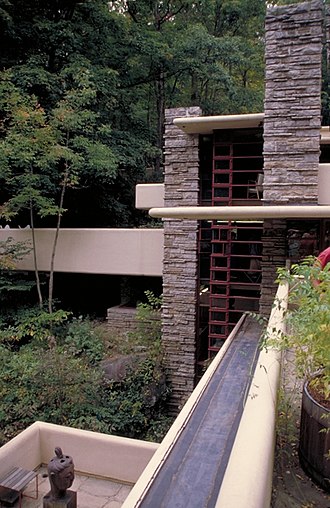
The genius of Fallingwater’s design is in the details, or perhaps the lack of them.  The house is constructed of reinforced concrete, stone, and glass.  Its interior spaces are small and dark, encouraging more time spent outdoors.  The sound of water can be heard everywhere, whether from the stream and waterfall below or from the natural spring allowed to drip along one of the hallways.  Fallingwater’s distinctive cantilevered terraces are meant to resemble nearby rock formations, extending in every direction to the forested surroundings.  Its dramatic perch on top of the waterfall is hidden from the approach to the house, lending to a sense of modesty.

Fallingwater brings the outdoors in wherever possible, and its best example may be a ledge-shaped rock in the living room, left undisturbed in its original location.  The surrounding stone floor is waxed while the ledge is left plain and dull, creating the look of a rock protruding from a stream.  A stair descends from the same room, several steps down to a platform whose function is to simply admire the stream.  From photos, you’d believe Fallingwater was constructed entirely offsite and dropped gently within the forest by pushing aside a few tree branches.

Today, Fallingwater is a National Historic Landmark.  You can tour the house and grounds with the purchase of a ticket at the visitor’s information website.  If I were to visit, it’d be a ten-hour drive from where I live.  That’s not going to happen anytime soon.  Instead, I will build Fallingwater; literally.  It is a model in the LEGO Architecture series and I am lucky to own a copy.  As I tell my family, there are only two LEGO models I’ve ever wanted to build: the Grand Piano (completed last year and blogged about here), and Fallingwater.  It’s a new year and it’s time to get started.

I’ll bring you along for the ride as my miniature Fallingwater takes shape in my home office.  You can look for updates at the end of the next several posts.  Eight hundred pieces from now, when all is said and done, I may borrow that little sleep aid I gave my wife for Christmas.  After all, no house built on top of a waterfall would be complete without the sounds to go with it.  Remember, we’re talking (er, singing) about perfect harmony here.

Some content sourced from Wikipedia, “the free encyclopedia”.

Selfish Shopping

The hustle and bustle of the holiday season is on full display this week.  We’ve reached the critical timeframe – ten days out – where packages must be sent if they’re getting to destinations by Christmas.  We’re making lists, not just for Santa but also for last-minute purchases.  Now here’s the good news, weary shopper: no matter where you’re spending your holiday dollars, self-checkout is often an option.

If you’re like me, you beeline to self-checkout when you’re done shopping.  You still have “the control”, as people like to say (who also prefer to drive instead of fly).  With self-checkout you believe you can scan and bag faster than those who are paid to do so.  Maybe, but consider the decisions you have to make in the process::

  1. When do you choose self-checkout?  Most of the time, (especially if the checker-bagger lines are long) but what if you have a lot of items?  Self-checkout is awkward with a full shopping basket (ignore the stares).  One time my wife and I snagged side-by-side registers, put the cart between them, and scanned away.  Against the rules, you say?  What rules? 🙂
  2. Where do you stand in line?  This is touchy territory, shopper.  If you face the typical arrangement where one set of registers sits opposite the other, with enough open space in between, you can get separate lines for each set… which gets ugly when a person assumes he/she is entitled to the next available register on either side.  Prepare for battle.
  3. Which register do you choose?  Murphy’s Law of Self-Checkout: One of the registers doesn’t work.  You just assumed it was available because you couldn’t see the “out of order” screen until you were right in front of it.  Now you have to turn around and reclaim your place in line.  Again, ignore the stares.
  4. When do you alert the self-checkout human assistant (oxymoron?)  How many times have you gotten ahead of the system only to hear, “unexpected item in bagging area” or “please wait for assistance”?  Here’s a tip: don’t wait for assistance.  Most of the time the register is trying to catch up and just needs a little more time.  Congrats, you’re faster than a computer.

Hard to believe, but retail self-checkout just celebrated forty years.  We shoppers been doing what one writer describes as “quasi-paid unforced labor under surveillance” since the 1980s.  I remember how I wasn’t thrilled about the concept when it debuted.  Back then I thought, “Why do I have to do the checking out when someone else is paid to do it for me?”

I was even more annoyed when the airlines put up their “selfish” kiosks and dared travelers to check themselves in and print their own boarding passes.  How quickly we adapt.  Today I’ll choose self-checkout any time I’m given the option (even though surveys say 67% have a bad experience).  In fact, we’ve been conditioned to self-checking out ever since the debut of the bank ATM in the late 60s.  DIY checkout will only get more prevalent as companies reduce labor costs.  One of these days I can picture a self-checkout Starbucks, with a fully mechanical barista standing by to whip up your skinny latte.  Don’t bet against it.

Reasons we choose self-checkout (web.mit.edu)

Self-checkout is about to enter a new arena: clothing stores.  But what about those security devices attached to the sleeves or pant legs?  And how will they know if we slip an extra pair of shoes into the box? The bigger concern, however, may be image.  How will Saks or Bloomingdales look with a bank of self-checkout registers next to their fancy cosmetic counters?  Not the pretty picture of luxury shopping we’ve come to expect.

Image doesn’t matter to me so much, but my time does.  If self-checkout returns a few minutes to my day, I say sign me up.  But somewhere we’ve got to draw the line, people.  At the rate we’re going, human interaction will soon be the exception, not the rule.  It’s also not the direction a world in need of more face time should be heading.

With that, I put down the keyboard for the remainder of 2022.  Remember, the holidays are anything but “selfish”, and everything about face time.  Merry Christmas!

Some content sourced from the CNN Business article, “Self-checkout annoys some customers…”

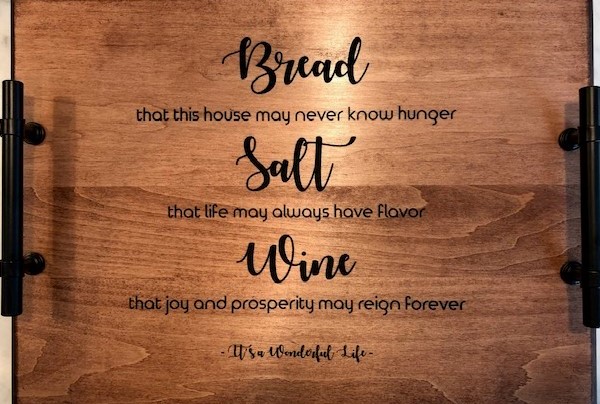
Bread, Salt, and Wine

As the endless loop of Christmas-cookie-cut Hallmark movies beckons yet again this year, the tried-and-true season classics struggle for air time and our time.  If it weren’t for streaming you might not be able to watch A Charlie Brown Christmas anymore.  You’ll have an easier time finding Miracle on 34th Street (but maybe not the 1947 original).  On the other hand, you should find It’s A Wonderful Life right there in your online library or movie collection.  You do have a copy of the greatest Christmas movie of all time, don’t you?

CNN Entertainment recently posted a list of “Hollywood’s stars’ favorite Christmas movies”, which is wrong on so many levels.  I’m not saying an actor can’t be an authority on movies.  Some of those interviewed have been in Christmas movies themselves.  No, it’s more about the concept of ranking Christmas movies.  It’s a futile attempt to place one above another, when the truth is each of us already has a favorite.  I may be trying to sway you to my favorites today, but deep down I know you have yours and they’ll never change.  Until a better one comes along, that is.

CNN’s list – or anyone’s for that matter – includes movies I struggle to associate with Christmas.  Home AloneThe HolidayYou’ve Got Mail?  Sure, each of these takes place during the season but they’re not really Christmas movies.  Strike them from the list, please.

How about The Santa Clause, Rudolph the Red-Nosed Reindeer (the 1964 stop-motion original), or How the Grinch Stole Christmas (Boris Karloff or Jim Carrey, you choose).  Okay, now we’re starting to get somewhere.  With each of these films you can at least claim a story about Christmas.  They even include pretty good messages about the spirit of Christmas.  Just not THE message.

A Charlie Brown Christmas still gets me at the end when the Peanuts gang sings, “Hark! The Herald Angels Sing”.  The Polar Express asks us to just “Believe”, which I would if I could get past its creepy animation technique.  And Love Actually is a collection of feel-good rom-com stories where viewers tend to choose just one as their favorite (again with the rankings).  But none of these films dig much below the surface of the reason for the season. 

[For the record, I’ve never been a fan of “A Christmas Story”.  I think it’s a cult classic with a bizarre sense of humor.  One or more of you will disagree, which means you’ll be happy to know about HBO Max’s follow-up film featuring Peter Billingsley (again) as very grown-up Ralphie.]

Okay, I’ve stalled long enough.  I could take on another dozen so-called classics and explain why they don’t belong on any “best list” of the season’s movies.  Instead, let’s cut to the chase and cover the three films whose stories illustrate the meaning of Christmas:

A Christmas Carol.  The Charles Dickens classic has been recreated on film more times than I can count (and most versions are pretty good) but it’s hard to top the 1938 original.  Maybe it’s because Dickens’ ghosts really scared me the first time I saw them (even in black-and-white).  More likely it’s because Reginald Owen so perfectly portrays the remarkable transformation of Ebenezer Scrooge from mean and miserly to giddy and grateful.

Miracle on 34th Street.  Again we have several versions here, but none better than Edmund Gwenn’s turn as Kris Kringle in the 1937 original (for which he won an Academy Award).  Also, I’ll watch any movie with the lovely Maureen O’Hara, and Natalie Wood is adorable as sweet, innocent Susan Walker.  But above all, “Miracle…” is about believing.  C’mon, you remember the scene… all those bags of letters to Santa being dragged into the courtroom…

It’s A Wonderful Life… is, simply put, in a Christmas class all by itself.  When critics describe this film as, “The holiday classic to define all holiday classics…”, you know you’ve got something special.  If you’ve never seen It’s A Wonderful Life, kindly put down your electronic device and spend the next two hours with George Bailey in his little town of Bedford Falls.  Talk about the meaning of Christmas.  I won’t give it away, but the final scene where Mary drags George down the stairs to see “the miracle” is the message of the entire movie.

Maybe you don’t agree with my top Christmas movies (comments, please!), but you should at least admit to an underlying concern.  All three of my choices were produced over fifty years ago.  Fifty years!  Am I suggesting there hasn’t been a more meaningful Christmas movie made in the last half-century?  YES, I AM!  Seriously, Hollywood, you can do a whole lot better than Elf.

If you’ve spent any time watching the Hallmark Channel this season (and… sigh… a ranking of those Christmas movies can be found here), you owe it to yourself to also watch at least one of the three movies I highlight above.  Hopefully you’re watching them again, not for the first time.  After all, as we learn in It’s A Wonderful Life, there’s much more to bread, salt, and wine than just the title of a blog post.

Some content sourced from the CNN Entertainment article, “Tom Hanks and more stars share their favorite Christmas movies”, and IMDb, the Internet Movie Database.

Sitting in the Catbird Seat

Though she’s only four, our granddaughter relishes being the eldest in her family.  She already demonstrates the authority associated with the role, especially in the presence of her siblings.  She seems to understand how her position in the order comes with slightly increased expectations.  Her sisters will challenge her command as they grow older (and won’t that be fun?) but for now, for the most part, they take her lead.  Not that I would understand “first position”, mind you.  I’m neither the oldest nor the youngest in the family I grew up in.  I’m what you might call an “off-center middle”.

If there’s a significant advantage to being a middle child (I’m the fourth of five) I’ve yet to discover it after all these years.  The eldest child experiences the “firsts” (driving, voting, etc.) while the rest of us wonder when it’ll be our turn.  The youngest receives a gentler version of parenting (and who can blame a parent after five kids?)  Meanwhile, the middle(s) are looking in both directions wondering where to take sides. Inevitably, to appease all, the middle child finds a way to agree with everyone.  Our son is also a middle and he’s neutral so often we’ve nicknamed him “Switzerland”.

Maybe we middles have it better after all.  It’s not often I fall into the vast minority on a topic but today I do, because… I prefer the middle seat on airplanes.  A recent survey says only 6 out of every 1,000 frequent flyers feel the same way.  My five outliers and I have our reasons; mine make flying more comfortable for me.  On the aisle I can’t help leaning out a little, to where beverage carts or those passing by brush up against me.  On the window (which I happily bequeath to my wife) I have less elbow room up against the glass.  Even when the passengers on either side of me take the armrests (a subject to toss about another day) I still feel my greatest sense of freedom is in the middle seat.

I can now reap rewards for my middle-mindedness.  In a promotion sounding equal parts creative and desperate, Virgin Australia (VA) is giving away prizes to make the middle seats on its airplanes more appealing. Just by choosing the middle, I enter a lottery for a million VA frequent flyer miles, a helicopter pub crawl (a what?), or a bungee jump (but isn’t Australia flat?).  I can even win tickets to the final of the Australian Football League.  Of course, entering VA’s “Middle Seat Lottery” assumes I want to fly somewhere within Australia.  I also have to join VA’s frequent-flyer program.  And I’ll need to figure out Australian football, which may be the toughest ask of all.  But you get the idea.  “In the middle” is now a little cooler.

Maybe the airlines should revive an old saying.  They could call the middles catbird seats instead.  After all, “sitting in the catbird seat” refers to a position of advantage or superiority.  I can win the helicopter pub crawl and you can’t (advantage) and I’ve deluded myself into thinking I have more elbow room than you do (superiority).  All from the catbird seat.

Try as I might, definitions of “middle” never stray far from “average”, or at best “neither one extreme nor the other”. The dictionary also labels me as “ordinary”, “mediocre”, “commonplace”, and “pedestrian”.  Even if I spice up the word to “middling”, I’m still defined as just “medium” or “moderate”.  I could stretch things a bit and go with “fair to middling” but even then I’m merely slightly above average.  Nope, the only “outstanding” middle I can come up with is our stomachs when we’re, ahem, not in the best of shape. 

“Sitting in the catbird seat” works well for today’s topic, because I moved to the American South just a few months ago.  The phrase originated down here a long time ago.  Literally, it’s a bird’s habit of singing from way up high in a tree, a sort of nyah-nyah-nyah to its predators who can’t climb nearly as high.  And maybe that’s my aim for today: to elevate us “middle-peeps”, even if I haven’t come up with much substance to do so.  But consider this: the more of us there are, the less likely you’ll be sitting in the middle seat.  As a thank-you, the least you can do is meet me in the middle and pick up my beer tab when I win the helicopter pub crawl.

Some content sourced from the CNN Travel article, “Airline launches lottery to entice more passengers to sit in the middle seat”.

Drinkin’ Problem

Thanks to social media, product advertising is a complex challenge these days. Hiring an “agency” no longer suffices, at least not for major corporations. They depend on “brand builders” instead – Interbrand, for example. Interbrand boasts “…a global team of thinkers and makers [encouraging] bold moves to leap ahead of customers and competitors.” Interbrand also values the companies they help build. On their list, well inside the top ten: Coca-Cola.

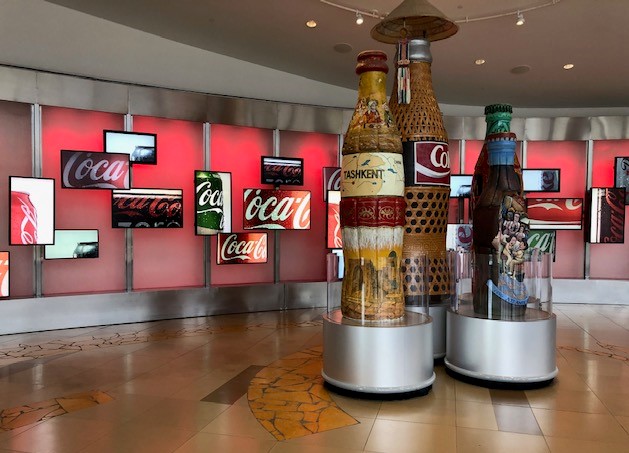
My brothers and I gathered in Atlanta last week for a semi-annual reunion.  Our initial stop wasn’t Coca-Cola’s world headquarters but rather, its popular “World of Coca-Cola” tour.  If you haven’t walked through these doors, Coke has turned an impressive three-story building into a glittery three-ring circus to promote its products, with a side of historical context.  As if Coke needs more promotion.  The genius of this soft drink, as we learn on the tour, is the relentless, boundless effort to put Coke’s brand everywhere imaginable.  Cans, clothing, and cars, just to name a few.  But pixels?

Here’s a weird suggestion.  Go into your home laboratory, create a flavor, and label it something that doesn’t have a flavor.  This is Coke’s latest go-to gimmick to retain market share.  Coca-Cola Zero Sugar “Byte” has come and gone (limited-edition products are another way to retain market share) and you probably didn’t have a taste. And what does “data” taste like?  According to drinkers it’s pretty much the same as Coke Zero, adding in the sensation of the old “Pop Rocks” candy.

Coca-Cola also developed “Coke Starlight”, somehow determining the taste of “outer space”.  Drinkers said it tasted like Coke with an aftertaste of cereal milk (ewwwww).  Go to the store today and you can purchase the latest of these curiosities: “Coke Dreamworld”, which has been described as “Coke soaked in sour peach rings” (ewwwww again).  As the saying goes, there’s no accounting for taste… or should I say, with Coca-Cola there’s no caring for taste.  Instead, the bottles and cans promote music, videos, and other products through a QR code.  And there’s the branding concept in a nutshell.  You’re attracted to the purchase because it’s a Coca-Cola product, but the draw is anything but the drink itself.

I shouldn’t be surprised how far the taste of Coke has, uh, evolved in the one hundred and thirty years since its market debut.  The variations on the original formula are myriad, including Cherry Coke, Vanilla Coke, Diet Coke, and “Coke Zero” (no added sugar but plenty of artificial sweeteners).  Let’s not pretend any of these drinks are actually good for your consumption.  But at least vanilla and cherry are tastes we understand.  Dreams?  Not so much.

“Dreamworld” and the other recent flavors target “gamers and younger audiences”.  My brothers and I saw a lot of kids on the “World of Coca-Cola” tour so maybe the advertising is working.  Regardless, Coca-Cola has a bigger challenge to confront.  Sales of soft drinks are on a serious decline, in favor of bottled water and healthier options.  Coke recently cut its portfolio of soft drinks by fifty percent (bye-bye Tab) in an effort to improve its bottom line.  To me, that’s a sound business strategy.  But flavors that aren’t really flavors?  That’s desperate.

Coca-Cola had a big red flag in the 1980s (appropriate color, no?), one that should’ve discouraged future dabbling with their products.  Who among you doesn’t remember the debacle of “New Coke”? The flavor variation – the first in Coca-Cola’s long history – debuted to rave reviews, with claims it was better than Coke or Pepsi.  But here’s what Coca-Cola didn’t see coming: consumers immediately defended the original flavor.  Instead of buying New Coke, they cleared the shelves of the original flavor for fear it would go away forever.  Begrudgingly (and very quickly), Coca-Cola returned the original flavor to stores under the name “Coke Classic”.  But New Coke never found legs and eventually disappeared from the shelves altogether, while “Coke Classic” returned as simply “Coke”.

” Coke Dreamworld”, as you would expect, features prominently in the “World of Coca-Cola” tour.  The flavor that isn’t a flavor, along with a silly 3-D movie and a giant retail store, targets the youngest of consumers.  But let’s be honest, most people go on the tour for the tasting room, where they can sample Coca-Cola’s products to their heart’s content.  “New Coke” is not among those choices.  Pretty soon I don’t expect to see any flavors-that-aren’t flavors either.

Some content sourced from the CNN Business article, “Coke’s latest bizarre flavor is here”, and Wikipedia, “the free encyclopedia”.

Conifer Confetti

When you move to a new city and state, you deal with the expected and the unexpected. The expected includes boxes that don’t unpack themselves (but what a great invention, right?), over-the-fence greetings with neighbors (categorized as “nice”, “cranky”, and “utterly weird”), and enough wrong turns on roads where you finally pull over and mutter, “Where the heck am I?” Unexpected includes the drip of a leaky pipe ($$$, sigh), chew-crazy squirrels in the backyard (anything plastic is fair game), and, oh yes… pine cones. Lots and lots of pine cones.

Five acres may seem like a lot to some of you readers but to us it’s downsizing from our ranch in Colorado.  You’d think a property a sixth the size of the former would suggest lower maintenance.  After last Sunday I’m not so sure.  My wife came in from the barn the day before and said, rather gently, “We should probably pick up the pine cones in the back pasture before they get out of control.”  Simple enough.  After we fed and watered the horses, we went out to the field with the muck rakes and began picking.  A muck rake can hold ten pine cones.  Around the first tree I figured I picked up fifteen rakes’ worth.  Again, simple enough… except we have at least twenty pine trees.  Do the math.  Our pickup amounted to a motherlode of pine cones, somewhere between two and three thousand.

Back in Colorado we had, like, one pine tree on our property (a magical one actually, which I wrote about in My Dandy-Lion Pine Tree).  After last weekend I’m thinking I should’ve amended our purchase agreement on the new place to say, “Remove nineteen of twenty pine trees”.

I need the “giant” version of this

What does Dave do with all of his pine cones?  Nothing, for now.  The most efficient system of gathering is to throw them against the base of the trees and then haul them away to the “yard waste” dump.  But in the three hours we collected cones, I had plenty of time to think about better ways to do it.  The neighbors suggested a “pasture vacuum”, which is like one of those big spinning brushes you see in the car wash, dragged behind the tractor.  Others suggested a big bonfire, pretty much the last thing a person from Colorado wants to see in their backyard.

My new pet

Here’s thinking outside of the box: I could get a pet Parasaurolophus, the dinosaur with a distinctive crested head.  The Para has thousands of teeth perfectly suited for their favorite meal: pine cones.  But I’d need a time machine so I can bring one back from sixty million years ago.  Looks like it’s still me and the muck rake for now.

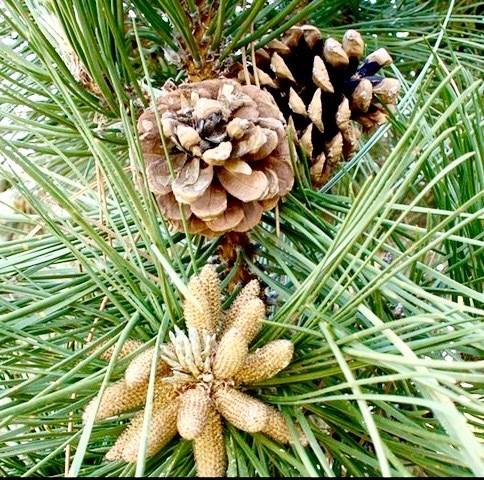
Conifer cones”, which include pine cones, play a vital role in the evolution of the trees.  Between all those little wooden scales are the seeds, first pollinated and later released.  It’s a sophisticated process which you can read a lot more about here.  In its simplest terms you have the smaller, meeker “males”, who release pollen for the “females” to catch.  Then the females release the seeds, even after they lay in my pastures by the thousands, seemingly dead.

“He” (lower) doesn’t even look like a pine cone

There was a moment in all that raking where I followed a squirrel as he bounded across the grass and onto the trunk of one of the trees.  Up, up, up he went until he disappeared into the umbrella of the branches above.  And that’s where, to my horror, I noticed how many thousands of pine cones sat poised above me. Maybe millions… almost all of them female.  It’s like having the world’s biggest sorority row above my backyard, and every house is about to disgorge its girls for a giant party on the ground.  Maybe I should hire Sticky Vikki & The Pine Cones for the music.

“Widowmaker” cone

I know, I know, it could be worse.  I could live in Maine, where there are so many pine trees the state flower is the pine cone (and a pine cone is not even a flower).  Or I could have Coulter pine trees, with cones so big they’re nicknamed “widowmakers”.  Seriously, these ladies are massive – you don’t want one falling on your head. Speaking of falling, the mere sound of a plummeting cone is unnerving enough.  It’s like a warplane flying overhead and releasing a bomb, only the bomb whistles straight to the ground without detonating. “THUNK”.

I’d have a massive herd of these Scandinavian toys

We shared the story of our pine cone bounty with my brother-in-law, who promptly encouraged us to do something creative with them.  Make wreaths for the holidays.  Turn them into coffee and jam like they do in Eastern Europe.  Sell them as the fertility charm they’re supposed to be.  Nah, I don’t have time for all that.  We’re expecting extra wind in the next few days courtesy of Hurricane Ian.  I have another three thousand pine cones to pick up.

Some content sourced from the HuffPost blog, “Thirteen Things You Never Knew About Pine Cones…”, and Wikipedia, “the free encyclopedia”.

Lost in a Dense Fog

When I first learned to play the piano, it was a challenge to master the weight of the keys. Weighted keys allow the piano’s sound to be louder or softer depending on how hard you press them down. Since fingers vary in size and shape it takes practice before the index and ring fingers (for example) generate the same volume on the keyboard. In hindsight, if I’d chosen the theremin over the piano I could’ve developed the technique much faster because this instrument makes its music without weighted keys. In fact, the theremin makes music without any touch at all.

I should’ve posted about the theremin closer to Halloween because it produces one of the eeriest sounds you’ll ever hear.  Click the red preview button on this list of Theramin Sound Effects and tell me if you disagree. Doesn’t your mind conjure up a ghostly apparition floating in the darkness of a haunted house?  The theremin provides the perfect soundtrack for all things scary. New York Times critic Harold C. Schonberg once described the theremin’s wail as “a cello lost in a dense fog, crying because it does not know how to get home.”  I like that (and it’s much classier than “pig squeal”).

How the theremin creates its unique sound involves too much science to keep your attention today (and more words than I want to type).  Suffice it to say, the instrument has two antennae; a looped one to control volume and an upright one to delineate pitch.  The player’s darting hand/finger movements – touching nothing but the air in between – create its spooky music. 

Now watch the following performance.  Seeing the theremin played is almost as jaw-dropping as listening to it.

I find the theremin to be a fish out of water next to traditional orchestra instruments, yet there are several other weirdos out there.  The bassoon features a tiny mouthpiece attached to a massive piece of black pipe and requires a deliberate overbite to create its nasal tones.  The glockenspiel (which gets points for a fancy name) is really nothing more than a metal xylophone.  The tam-tam is a giant gong, lucky to be struck more than once in a performance.  And the hand saw doubles as a musical instrument when you warp and release the blade (and sounds pretty darned close to the theremin).  But each of these outliers requires physical touch to make their sounds.  The theremin sings with mere jabs of the air.

[Author’s aside:  Every time I write theremin my brain wants to override with Theraflu, the over-the-counter cold and flu medicine (“Discover the Powerful Relief!”)  You don’t find many thera- words in the English language – therapy being the only other one I can come up with.  I’m happy to announce I need neither Theraflu nor therapy at the moment.]

The theremin was invented in the 1920s by Russian physicist Leon Theremin (whose life story involved a lot more than science).  RCA picked up the commercial production rights but the musical instrument never really developed a following.  Instead, its soprano voice showed up randomly in music and movies.  If you recall the Beach Boys’ hit, “Good Vibrations” you should also recall the theramin solo at the end of the song.  You’ll also hear its moan in the opening bars of Fleetwood Mac’s “Little Lies”.  But the theramin seems a more logical fit in the soundtracks of horror and science fiction movies like The Spiral Staircase, The Day the Earth Stood Still, The Thing from Another World, and more recently, Monster House.

My favorite account of the theremin (and with this I close) is a collection of melodies recorded and blasted into outer space back in 2001.  The effort was an attempt to communicate with other worlds, including Gershwin’s Summertime and Vivaldi’s The Four Seasons.  The name of this collection? First Theremin Concert for Extraterrestrials.  Seriously?  We chose the theremin?  Wouldn’t these classics have sounded a whole lot smarter on the instruments they were originally written for?  No wonder the (more intelligent) races out there haven’t stopped by our little planet to say hello.

Some content sourced from Wikipedia, “the free encyclopedia”.

Local Fare for the Win

When you pick up and move to a new town 1,500 miles from where you used to live, “getting the house in order” is a little overwhelming. Thirty years in the same spot creates a lot of favorite “thises” and preferred “thats”. So whenever my wife & I step away from the endless unpacking, we’re trying out supermarkets, large-animal vets (for the horses), and restaurants, to figure out which ones best replace those we chose time and time again in Colorado. And here’s what we’ve quickly discovered about life in the South (of the U.S.): good Mexican food is a tough ask.

Pizza as it should be

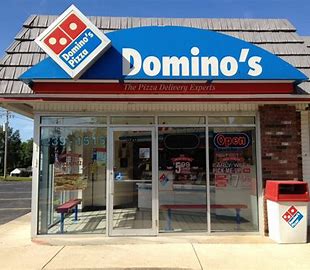
Let’s take a bit of a detour. (Don’t worry; we’ll be back on the main highway before you know it.)  In a surprisingly candid post from fellow blogger Brilliant Viewpoint, her recent trip to Rome and Florence determined pizza – at least the classic Italian version of the pie – is not what it used to be.  The writer suggested the crusts are like cardboard, the mozzarella chunky and unappetizing, and the pizza itself a little soggy.  Having spent a college year in Italy (when I survived on pizza and not much else), I found her conclusions shocking.  Maybe this is why Domino’s – they of the generic-but-convenient home-delivered product in America – decided to give Italy a try?  It’s true.  In 2015, a Dominos franchise opened several stores across Italia to capture the then non-existent delivery market.  It almost worked.

No matter what the state of Italian pizza these days, Domino’s Pizza stores in this of all countries lands on my “you’ve got to be kidding me” list (alongside Starbucks coffee).  Put yourselves in their shoes to understand the absurdity of it all.  You’re an Italian.  Pizza was invented in your country, which has thousands more years of history than America.  You can choose from any pizzeria on any block of any street in your town and the homemade product will be excellent.  Yet you’re going to call Domino’s to order a mass-produced American knock-off instead?  At least Baskin-Robbins was sensible enough to stay away instead of going head-to-head with gelato.

You shouldn’t be surprised to learn – after a seven-year run – Domino’s Italian franchisee filed for bankruptcy in April.  “Of course“, you say. “Their product just couldn’t compete.”  Well, that’s not quite the story.  It was more about pizza delivery itself.  Remarkably, Italy had very little delivery before the pandemic.  You wanted a pie back then, you went out into the streets and got it.  But just like American restaurants, Italian pizzerias did whatever it took to survive the pandemic years, and that meant delivery to front doors.  Domino’s thought they had the market cornered before they ever entered it.  Next thing they knew, everyone else was doing the same thing.

No matter the reason, I’m happy to say arrivederci to Domino’s Pizza in Italy.  Franchise food doesn’t feel right in a country with so much history and wonderful local food.  Shortly after my college year in the 1980s, I learned a McDonald’s restaurant somehow landed a lease at the base of Rome’s famous Spanish Steps.  That’s like painting a mustache on the Mona Lisa.  America has much to offer the world, but fast food is not our proudest accomplishment.  I’m not even sure it’s an accomplishment.

Let’s get back to the main highway now.  Up top we were talking about Mexican food… er, the lack of it, in the American South.  It’s true, if our new little town is any indication.  Yes, we have several options to beat a sit-down at Taco Bell, but they’re only a whisper better.  Everything looks and tastes so generic.  What should be salsa roja inside of enchiladas tastes more like pizza sauce.  What should be a margarita with the sublime afterbite of tequila tastes like syrupy lemonade.  The chips might as well be Doritos.  Yet you look around and the restaurant is packed.  These people don’t know what they’re missing, but they seem happy enough.  As a result, just like Dominos, I don’t expect a Mexican restaurant from outside of the region to waltz into town and do well.

My theory on good Mexican food goes like this: the further west and south you go the better it gets.  Colorado and Tex-Mex trump anything east of the Mississippi.  Arizona and Southern California fare trump Colorado and Texas.  In other words, my favorite Mexican place in my new hometown is destined to be close to my front door. In fact, it’s inside my front door.  It’s my kitchen.  Time to start making my own margaritas and enchiladas. 

Some content sourced from the CNN Business article, “Domino’s tried to sell pizza to Italians…”, and the Brilliant Viewpoint blog.

(No) Separation of Church and State

This weekend my wife & I packed up the last of our things and moved from Colorado to South Carolina. We’ve decided the lower elevation and milder temps of the “Palmetto State” make better sense for our retirement. But instead of a moving truck, we trailered the horse (and the dog and the barn cat) along with our suitcases. A half-ton of horse means driving in the slow lane, our top speed 65 mph without blowing a gasket. And driving through Kansas in the slow lane – or any lane for that matter – feels like forever.

The western edge of Kansas, at Interstate 70, is an encouraging starting point as you leave Colorado.  You pass an attractive “Welcome Center”, a convenient place to take a break and learn a little about the “Sunflower State” before you venture further.  More importantly, you notice an immediate improvement in the road conditions.  Kansas, unlike Colorado, not only earmarks tax dollars to keep its highways pristine, the state actually spends those dollars accordingly (instead of dipping into them for other purposes).  Our horse – standing on four legs the entire journey – appreciated the smoother ride, if not the triple-digit temps.

Twenty or thirty miles into Kansas, the sobering reality of America’s Heartland sets in.  For one, you could lay a ruler on the hundreds of miles of Interstate 70 and hardly need a turn of the steering wheel.  For two, you realize every town along the way – save Kansas City to the far east – looks exactly the same.  Water tower. Cell phone tower. Church. Gas station. Fast food. A surround of corn fields. Lather, rinse, repeat.  It’s like someone drew up a generic template of a town and laid it down a couple dozen times along the interstate.  Doesn’t help to keep a slow driver alert, especially when you’re on cruise control.

But suddenly, mercifully, and completely out of nowhere, you see little Victoria, Kansas on the horizon.  Not Victoria, British Columbia (though it might feel like you’re driving all the way to Canada).  Victoria, Kansas, with its mere 1,200 residents and one square mile of town.  And right in the middle of Victoria, rising out of the earth as abruptly as the Rocky Mountains, sits the Basilica of St. Fidelis, better known as the Cathedral of the Plains.

You can probably spy St. Fidelis from fifty miles away as you approach, but you certainly don’t believe what you’re seeing.  Kansas is as flat as a pancake yet Victoria boasts a cathedral worthy of a spot in Rome.  The first time I saw St. Fidelis several years ago (driving a whole lot fast than 65 mph), I thought it was the Kansas heat bringing me a heavenly mirage.  I half expected the clouds to part (even though there weren’t any) and a host of angels to surround those tall twin spires.

But St. Fidelis is a lot more real than a mirage.  It was built in the early 1900s by German and Russian immigrants, each of whom pledged to haul six wagonloads of limestone and another four of sand from nearby quarries.  St. Fidelis predates any kind of construction equipment so the entire structure was raised by hand.  These industrious Kansans knew the meaning of hard work.

St. Fidelis boasts forty-eight handcrafted stained-glass windows, valued at more than $1M.  Its beautiful procession of Romanesque-style arches hovers above marble floors.  The cathedral was “elevated” to the status of Minor Basilica by decree of the Pope in 2014, and earned a place on America’s National Register of Historic Places.  In other words, there’s no separating this church from this state.  Not bad for an old building in a tiny metropolis in the middle of cornfields.  I only wish I’d had the time to exit the interstate and head down to Victoria for a closer look.

The Sunflower State has adopted the Latin phrase ad astra per aspera as its motto.  It means “to the stars through difficulties”, representing the aspirations and hard-working spirit of the state.  I’d say the Cathedral of the Plains is Kansas’ perfect example, wouldn’t you?

Some content sourced from Wikipedia, “the free encyclopedia”.

Floral Fire

Billboard ranks “Firework” as Katy Perry’s best-selling single, with millions of downloads since its 2010 release. The self-empowerment tune “skyrocketed” to #1 on Billboard’s Top 100 at the time and ranked in the top five on twenty other charts worldwide. “Firework” also “sparked” an award-winning music video, and Katy has since performed the anthem live at two presidential inaugurations and during the halftime show of the Super Bowl.  Searching Wikipedia for “firework”, therefore, it comes as no surprise to be asked, “Do you mean the song or the low-explosive pyrotechnic device?” Today, I choose the latter.

For the first time in countless July 4th celebrations I can’t speak to having seen a single overhead firework display this year. No giant “willows” with their graceful descending trails of sparks; no “peonies” where those same trails radiate in straight lines from the center; and no “horsetails” (my favorite) where each trail bursts a second time, followed by a crackling, glittering shower of fire.  Also, no “grand finale” where it looks like the entire sky is splitting open to some fiery furnace beyond.

“Chrysanthemums”

From the vantage point of our house, we used to count on the fireworks show from the nearby U.S. Air Force Academy. That show has been canceled for the last ten years because of budget cutbacks.  We also used to bring blankets to the shore of a nearby lake, where we were treated to a “small-town” fireworks display funded by donations from the public.  Today, that display has been swallowed up by a bigger all-day “Festival on the Fourth”, where you pay for parking and walk a mile or two just to secure a spot on the lake several hours ahead of the fireworks.  Even so, we thought we’d see bits and bursts from one of the other nine shows scattered around nearby Colorado Springs.  Nope, not so much as a snap, crackle, or pop.

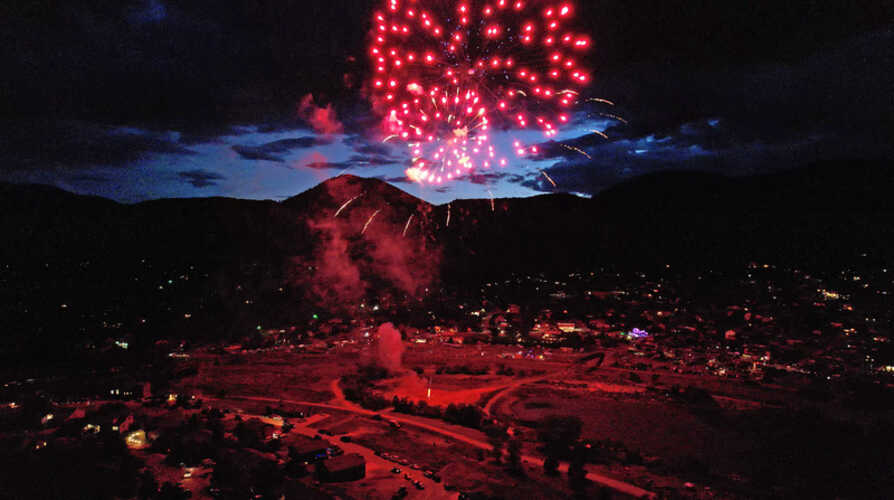
Palmer Lake, CO 2022 fireworks display (photo courtesy of local resident Bartley Willson)

Fireworks are nostalgic for me, with two distinct memories from childhood.  The first, in the 1970s, brings me back to the beach of the Pacific Ocean in Los Angeles.  Back then the only commercial displays seemed to be over the ocean.  My parents would grab a bucket of Kentucky Fried Chicken and several blankets, and the whole family would find a place on the beach where for several hours, we’d eat and play as twilight became dark, in anticipation of the late, late fireworks show from the end of the nearby pier.

The second memory, a decade later, also brings me to the Pacific Ocean but to a beach further south near San Diego, where we’d shoot off our own fireworks (from the “Safe and Sane” boxed collections my dad brought home every year), followed by an overhead display from the nearby county fair.  Every childhood July 4th was the same: food, fun, and fireworks; lots and lots of fireworks.

“Waterfall”

In 1976 – America’s bicentennial year – the firework display in New York City included an unforgettable “waterfall” effect off one of the bridges.  This year, that same July 4th display (sponsored by Macy’s) ballooned to a two-hour televised extravaganza with over 2,000 blasts and effects per minute.  I’d say Macy’s department stores and their profit margins are doing just fine, wouldn’t you?

I shouldn’t be surprised to learn fireworks were invented by the Chinese (well over a thousand years ago) but here’s a less-obvious bit of floral fire trivia: Disney is the largest consumer of fireworks in the world.  It used to be – back when their single amusement park was California’s “Disneyland” – you’d only catch a Disney firework show on summer evenings (directly above Cinderella’s castle), and only if you stayed until just before the park closed.  Today you’ll find displays at any one of the twelve Disney parks, in any month of the year.  For the record, only the U.S. Department of Defense purchases more explosive devices than Disney.

There’s more firework trivia, of course.  The very first iterations were empty bamboo shoots, creating a mild popping sound when ignited because of natural air pockets.  Seeking more pyrotechnics, the Chinese added explosive chemicals to the shoots to create firecrackers”.  Eventually they figured out how to launch and propel their creations, and the overhead fireworks display was born, in an impressive rainbow of chemical colors. But take note; you won’t see a blue firework very often.  Blue requires an infusion of copper at just the right temperature, and the “cool” color tends to get lost next to the “hotter” reds and yellows.

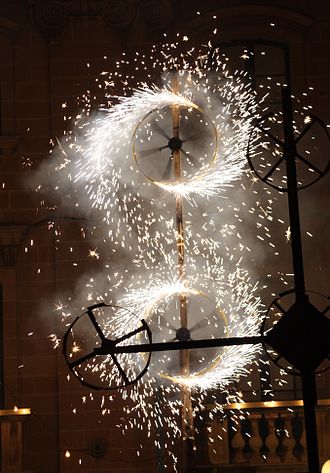
“Catherine wheels”

I’m still puzzled why I didn’t hear so much as a “BOOM! BOOM! BOOM” aftershock (to quote Katy Perry) of a firework display this year.  Maybe most of my fellow Coloradoans kept the bursts and blasts to the ground instead, from what they purchased at the local firework stand. Those of you living in New Jersey, Massachusetts, or Delaware can’t relate because consumer fireworks are illegal in your states.  Not so much as a sparkler in your hand. (Which may be a good thing since sparklers can heat up to 2000 ºF)  So you probably did what I did this year – simply watch a recap of the Washington D.C. grand finale on your smartphone.  It was the only floral fire I could find.

Some content sourced from the BuzzFeed article, “17 Things You Probably Never Knew About Fireworks”, the Macy’s Fourth of July Fireworks website, and Wikipedia, “the free encyclopedia”.