Sugar Cured

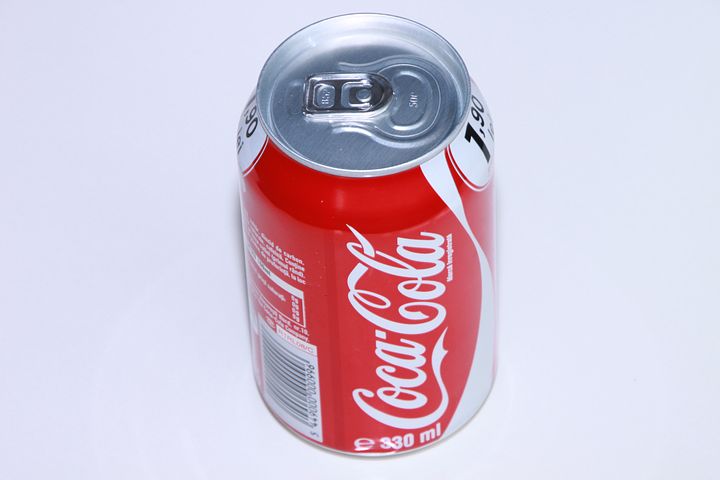
Coke. Zero. Sugar. Three little words; one new drink. In a nod to those who eschew sugar (and detest calories), Coca-Cola proudly offers its latest beverage. Coke was the original, of course. Coke Zero was the low-cal offering for men (Diet Coke was perceived as a “women’s” drink). And now the soda junkie may opt for Coke Zero Sugar, with the claim of original taste but no calories and no sugar.  For my money, let’s hope the sugared varieties still have a shelf life.  Otherwise my cure for headaches just went out the window.

Coke cures headaches?  Well, why not?  Those of us who experience the recurrent forehead fevers will jump on just about any bandwagon to chase away the relentless pain, and a Coke seems relatively harmless compared to the more potent options out there.  But truth be told, a can of Coke is only half the solution.  Chase the Real Thing with a Snickers bar and you have the coup de grace of headache cures. The combined overdose of caffeine, sugar, salt, and protein packs a punch more powerful than half a bottle of Excedrin tablets.

When I was a kid, headaches were my constant companion.  I could sense the pain unfolding well before it up and knocked on my forehead door.  In full bloom, my headaches could only be cured by retreating to a dark, quiet room and sleeping them off.  But try falling asleep when someone’s rapping a hammer against your brain.  The mental/physical anguish of the battle surely coined the phrase “toss-and-turn”.

My mother and my doctor (seemingly one and the same) drew frustratingly repetitive conclusions.  My headaches were not strong enough or persistent enough to prescribe migraine medication.  My headaches were likely brought on by “not enough of this or “too much of that.  Not enough sleep or not enough water.  Too much sun or too much sugar.  Too much sugar?  And now I’m promoting a headache cure with sugar as an essential ingredient?  Sorry Mom – it works.

At one point in my life my headaches were so bad I believed I could generate one by merely thinking about them.  My mother used to say, “don’t get too excited; you might get a headache”.  Ironically, her good intentions were dashed by the very mention of what she was trying to get me to avoid.  But the conjuring really did happen – on more than one occasion.  Think about a headache = get a headache.

Headaches are attributed – at least in part – to dilated blood vessels.  (Dilated blood vessels are attributed to way too many conditions to list here.)  The brain’s response to dilation is to summon a pain companion; a vehicle to announce, “something’s wrong”.  You see, for all its intelligence the brain lacks its own pain receptors, so it seeks another part of the body to act as its surrogate.  Enter: the headache.  Fascinating perhaps, but no fun for the recipient.  There were times I would’ve traded all of my worldly possessions (which admittedly didn’t amount to much) in exchange for the removal of headache pain.  On that note, I don’t want to even think about how a migraine headache feels (after all, I might get one).

Forty-five million Americans suffer from some form of headaches.  Thankfully, I’m no longer a member of that vast club.  Whether from corrective eye surgery I had as a teenager or better control of the “not enough of” or “too much of”, the pots-and-pans forehead pain endured as a kid simply doesn’t visit anymore.  I’m very thankful for that.  I’d like to think I’ve done my time with those miserable toss-and-turn episodes.  But as a former Boy Scout, I know it’s wise to be prepared.  If my brain gets into a “for old time’s sake” mood, I’ll have a can of Coke and a Snickers bar at the ready.

All That Glitters

Audrey Hepburn will always be one of my favorite actresses.  Her grace, beauty, and acting – especially her comedic roles – combined for an enchanting big-screen presence.  I’ve only seen a handful of her movies but it didn’t take many to fall in love with Audrey’s delightful characters.  Eliza Doolittle in My Fair Lady (which premiered shortly after I was born).  Sabrina Fairchild in Sabrina.  Hap in Always (her final film).  And perhaps my favorite role, the quirky Holly Golightly in Breakfast at Tiffany’s.

In the opening scene of Breakfast at Tiffany’s, Holly gazes into the New York City Fifth Avenue store window and famously observes, “Nothing very bad could happen to you there.”  Holly’s probably right, but that’s not to say something very bad couldn’t happen to Tiffany’s itself.  Sales and profits are down significantly over the last two years.  Cartier and David Yurman steal market share from the ultra-wealthy.  As detailed in a recent Wall Street Journal article, Tiffany & Company is resorting to pedestrian strategies to restore its cachet.  And those strategies are so not Tiffany’s.

The first sign of Tiffany’s troubles might have surfaced last February, when the company debuted its first-ever Super Bowl ad.  I’m not sure what tarnished the Tiffany’s image more: a television commercial stuffed between plugs for beer and tortilla chips, or Lady Gaga as its newest sponsor.  Apparently, that’s an appeal to the Millennial generation (as if young people shop at Tiffany).  No offense, but Ms. Gaga is no Audrey Hepburn, as Zales is no Tiffany.  There’s a bit of a stain on the robin’s-egg blue.

The one and only time I visited Tiffany’s New York City location was two years ago with my family.  Despite our touristy dress we were greeted warmly by the security guard as we passed through the grand polished brass-and-glass doors.  Once inside, after a nervous glance at the showcases of diamonds (as if we could afford anything whatsoever), we were politely redirected to the fifth floor to “more affordable offerings”.  I took no offense, as I was only hoping my daughter could snag one of the famous blue boxes as a souvenir.  Turns out she purchased a Tiffany’s gold ring for several hundred dollars while my wife and I settled for a set of Tiffany’s ceramic mugs.

As satisfied as we were with our purchases, I have to admit gold rings and ceramic mugs removed a bit of the Tiffany prestige.  I more associate Tiffany’s with priceless diamonds and silver – befitting royalty.  In fact, that’s where Tiffany’s got its start: almost two hundred years ago as a purveyor to the Russian imperial family.  Tiffany’s also brings to mind its trademark advertisement, showcasing a single piece of jewelry against the silhouette of a couple embracing – a refined, iconic portrait of elegance.  Audrey Hepburn, not Lady Gaga.

Today you can purchase Tiffany ceramics, as well as Tiffany leather goods, paper products, watches, fragrances, and even a limited-edition cell phone.  You can find over 300 Tiffany shops in 22 countries around the world.  I thought Tiffany was more of the “Rome-Paris-London-New York City” kind of retailer, complete with stern, immobile security guard at each front door.

Admittedly, some of my first associations with “Tiffany” were far removed from diamonds and gemstones.  Tiffany Darwish was a flash-in-the-pan American singer in my late teens (her only real hit: a retread of Tommy James and the Shondells’ I Think We’re Alone Now).  I developed an affection for Tiffany lamps  – the stained leaded-glass variety – when I studied the Craftsman style of architecture in college.  And it’s hard to get the lyrics to Big Blue Something’s singular hit out of my head; especially the lines: “And I said, ‘What about Breakfast at Tiffany’s?’  She said, ‘I think I remember the film.’  And as I recall, I think we both kinda liked it.”

Tiffany & Co. recently ousted its Chief Executive in search of a new one, with hopes of improving both sales and image.  To the new leader in search of new answers, I say look back to the Golden Age of Hollywood for guidance, when the Tiffany blue was truly iconic.  As Holly Golightly would say, nothing very bad will ever happen to you there.

Some content sourced from Wikipedia, “the free encyclopedia”.

Flying in the Face of Reason

If you’ve traveled across the United States more than a handful of times, chances are you’ve passed through Denver International Airport (DIA). There aren’t many connecting airports in the Rocky Mountain states, so DIA gets most of the east-west air traffic. The sharp peaks of the main terminal roof fabric serve as the signature design element, symbolic of the nearby snow-capped mountains (and Native American teepees from Colorado’s history). DIA’s land mass of 52.6 square miles is twice the size of Dallas-Fort Worth (DFW), making it far and away the largest airport in the country. A “cutting-edge” automated baggage system became an infamous failure back when DIA opened, causing a 16-month delay and ballooning the budget by $2 billion.

But enough about the facts.  I’d rather focus on the conspiracy theories attached to DIA; the conjecture to make your airport experience a little more entertaining.  Clearly, there’s more going on at Denver International than just takeoffs and landings.

Let’s start with DIA’s biggest conspiracy of all.  Remember the movie The Da Vinci Code with Tom Hanks; the wild-goose chase across Western Europe in search of the Holy Grail?  Tom should’ve included DIA in his travels because the newest Illuminati headquarters is located several stories beneath the airport.  The DIA dedication capstone inside the main terminal (and several cryptic words inscribed in the terminal floor) serve as hints, referring to funding from the “New World Airport Commission” (NWAC), a wholly fictitious organization (Google NWAC – you won’t find anything).  As is the case with conspiracy theories, NWAC somehow associated to the Illuminati, including their efforts to establish a single all-powerful global government.  Controlling America’s largest airport certainly helps.  That $2 billion of budget overrun apparently built the headquarters – a complete working underground city.

NWAC also associates to NWO – or New World Order – a more believable conspiracy theory tied to world domination.  NWO is said to be a resurgent Nazi group, so perhaps the Third Reich financed DIA as its future headquarters.  At least you’ll find symbolism on the map: DIA’s runways are laid out in the shape of a swastika.  (DIA prefers “pinwheel” as the more politically correct term.)  So, if not the Illuminati, the Nazis are amassing under DIA.  What say the rest of the world’s leaders?  Crickets.  They’re sitting back and letting the Nazis foot the bill.  They see DIA’s “underground bunker” as a refuge for their own safety during the next apocalypse (a conspiracy theory of its own).  They’ll pounce on the Nazi facility if/when they need to.


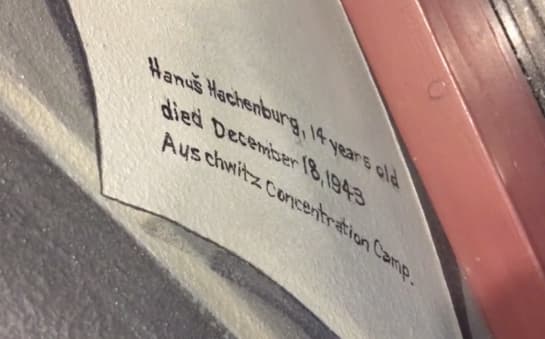
DIA contains a lot of artwork too, but the large murals in the baggage claim area are particularly disturbing.  Titled In Peace and Harmony With Nature and The Children of the World Dream of Peace, some interpret them as anything but “peaceful”.  The imagery suggests apocalyptic bio-warfare leading to mass chaos; step one of the NWO plan of world domination.  Even if that’s not your interpretation, you won’t overlook the image of the ghostly Nazi soldier, or the epitaph from a child who perished at Auschwitz.

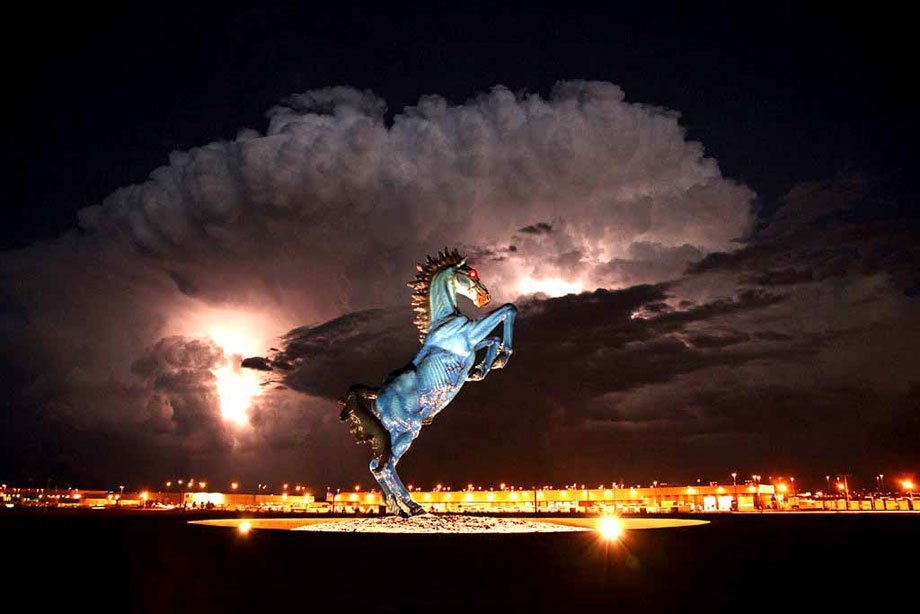
Here’s one more conspiracy theory.  DIA has “Blue Mustang”, the 32-foot tall 9,000 lb. rearing horse as you approach the main terminal by car.  “Blucifer” is solid blue with creepy red eyes, glowing day and night.  Ask Luis Jimenez – the artist – why he chose blue and red, but he won’t reply to your email.  He was killed during the statue’s construction when a piece fell on him and severed an artery in his leg.  For this reason (and the bizarre colors), Blucifer is said to represent the Fourth Horseman of the Apocalypse, from the biblical book of Revelations.  So, take comfort; Death awaits you at the door of DIA (or at least in the morgue supposedly hidden somewhere inside the facility).

For more details on Denver International’s conspiracy theories, check out the entertaining Buzzfeed article here, or the Business Insider article here.  My favorite part of the Buzzfeed article: the comments that follow, where several way-too-serious types debate the legitimacy of the claims.  To them I say, life’s too short.  Let the conspiracy theories bloom, if for no other reason than we might grin a little more as we bear our oft-nightmarish airport experience.

Some content sourced from Wikipedia, “the free encyclopedia”.

Blame it on the Dutch

Last Saturday, after the umpteenth edition of dinner-and-a-movie with my wife (or in this case, movie-and-a-dinner), we arrived back home to a phone message from the restaurant, saying I’d left my credit card behind. I never make that mistake. Let me rephrase – since my wife reads this blog – I almost never make that mistake.  Credit the restaurant for taking our phone number when we arrived, “just in case we need to contact you later”.  Credit the very nice bottle of wine – empty by the end of the meal – for contributing to my forgetfulness (though not to my driving).

Hey, at least I paid the bill before I left my card behind.  Because that’s what I do when it comes to nights out with my wife.  The gentleman pays.

“The gentlemen pays” is up for judgment in the new world order.  “Paying etiquette” – especially on first dates – has become a lot more complicated with modern social conventions (i.e. dating apps).  As if first dates aren’t stressful enough already.

Whether the guy invites the girl out for a drink, or the guy invites the girl out for dinner, or even the girl invites the guy out for dinner, you’d be inclined to say he/she who does the inviting picks up the bill, right?  I know I would, but it’s not that simple.

“A drink” (as in, the result of a swipe on the Tinder app) implies a quick meet-up, where one or both parties dance around the potential for a longer-term relationship.  If this really is the agenda (and nothing else), I’d argue both parties split the bill.  Could get awkward.

“A dinner” (as in, the result of a well-designed profile on the eHarmony app) implies a more serious stab at a relationship.  In this case I’d argue the “inviter” pays the bill, not the “invitee”.  Unless you’re in New York or San Francisco.  Social convention in those cities leans towards both parties splitting the bill, since restaurant tabs flirt with the $200 mark. Not exactly disposable income for most young people.  Could get awkward.

In “the girl invites the guy” (as in, the Bumble app, where only she can “make the first move”), I’d argue the girl pays.  But what if the girl is “traditional”, and holds out on paying just to see if he’s a “gentleman”?  Again, could get awkward.

If “who pays?” hasn’t been decided beforehand, the mind games really kick in with gestures to pay the bill, otherwise known as “the reach”.  Some women do “the reach” to appear a team player (when in fact they have no intention of paying the bill).   Some men interpret the woman’s reach as her wish to pay; in return, somehow “looking good by not falling into stereotypes”.  Other men pounce on the woman’s reach as the perfect opportunity to suggest half and half.

Half and half is also known as “going Dutch”; a phrase with take-your-pick origins.  The most common origin ties back to the 17th century Anglo-Dutch wars (also coining the phrases “Dutch treat” and “Dutch courage”).  The more fitting origin however, comes from “Dutch door”; the farmhouse invention of two equal halves.  A Dutch door is sometimes referred to as a “split door”.  “Fits the bill”, wouldn’t you say?

Going Dutch is not as safe as it sounds.  One time my wife and I met a couple in downtown Chicago, for a pricey meal atop the John Hancock tower.  As we waited in the bar for our table, the husband knocked back several expensive drinks, followed by several more at dinner.  Imagine my shock when the dinner bill was merged with the bar bill.  The husband casually said, “let’s just split this, shall we?”

My daughter is a twenty-something, brand new to the dating scene in Los Angeles.  As far as she’s concerned, forget everything I’ve discussed in the paragraphs above.  She has one and only one rule: the gentleman always pays.  Frankly, that’s just fine with me.

Go For a Drive

Imagine the conversation you’re having with your grandson several years from now, where you’re waxing nostalgic about a favorite car you used to own.  You’re smiling into the details, remembering how your stylish sedan hugged the open highway curves at a crisp 75 mph; how the in-dash digital receiver cranked favorite tunes via smartphone; how the feel of the steering wheel leather gave you the perfect combination of comfort and control.  Only then, your grandson interrupts you and says, “what’s a steering wheel“?

This week, the Wall Street Journal published a make-you-pause article titled “Your Next Car May Be a Living Room on Wheels”.  The subject matter is the technological luxuries in a vehicle where “driving” is no longer necessary.  Forward-facing seats rotate to face each other, perhaps around a central console.  Touchscreens – to control the vehicle; cameras – to enlarge the outside views; movie screens – simply for entertainment; each of these appear on the window glass with simple voice commands.  Microwaves, refrigerators and ice chests hide nearby for always-available snacking.  In other words, the very definition of “car” gets turned on its ear.  Your grandson won’t even know what a “dashboard” is.

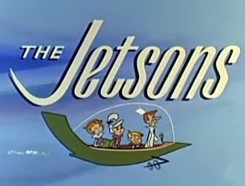
Your grandson won’t remember “The Jetsons” either – the Hanna-Barbera animated sitcom from the early 1960’s.  In a mere twenty-four episodes, “The Jetsons” gave us a peek into a fascinatingly advanced world of the future.  George Jetson and his family enjoyed luxuries only present in a 1960’s imagination, like robot housekeepers or in-home treadmills.  The Jetsons lived in a high-rise apartment building floating in space.  My favorite concept: the “aerocar”.  There were no roads in George’s world, so he and his family bopped around in a airborne car.  Per the illustration above, the aerocar is effectively a flying saucer with a transparent bubble top.  I still hear the sound of its little engine.

At least George still drives, which is the premise of this post.  No matter how advanced the mode of transportation, I want the option to navigate whenever my heart desires.  If my family and I are heading out for a Sunday jaunt, I want to be able to steer us wherever the wind blows.  Maybe that’s the provider in me, or maybe that’s just driving for the sheer enjoyment of it.  We need our steering wheels.

Flying cars are closer to reality than you might think.  Airbus, Uber and a handful of other companies have created concept “cars” that take-off and land vertically – no wings.  No rotors either, like you’d see on a helicopter.  Yet some models – like Airbus’s “Vahana” – are designed to be pilot-less.  What fun is that?  Who’s at the controls?  Sounds like going for a ride in an oversized drone.  Regardless, even with perfect technology the real hurdles with flying cars lie in regulating airborne travel.  There must be rules.  You’d better believe the environmentalists will have a seat at the table too.

In my childhood days at Disneyland, I was led to believe monorails were the future mode of transportation.  I pictured vast elevated networks of elegantly formed concrete spreading out across the country, with graceful trains slithering along topside at impressive speeds.  Alas, Disney’s monorail in Florida – at 14.7 miles – remains one of the longest of its kind.  Only two others, in Japan and China, claim more riders.  Monorails just never took.

Maglev (magnetic levitation) replaced monorails as the potential mass-transit solution of modern times.  Magnets are super-efficient, providing both lift and propulsion towards a high-speed, low-friction, no-moving-parts solution.  Assuming an aesthetically-pleasing design, even the environmentalists would be on board with zero-emissions engines.  But there’s always a negative.  In this case, costs of maglev are projected at $50-$100 million per mile.  No wonder the few installations around the world travel very short distances.

Even if we mapped America with arteries of monorails or maglev, I’d still find dissatisfaction in the notion no one’s driving the bus.  More to the point, I am not driving the bus.  But at least we’re talking about mass-transit here; an option I chose willingly over my own car.  If I’m not “licensed to drive” I’m happy to leave the controls to someone else.

Living rooms on wheels will be tough for me to swallow.  The focus has shifted from enjoyment of the drive to enjoyment of the ride.  Maybe I should’ve seen this coming when automatic transmissions became an option to stick-shift.  Certainly it hit me over the head when Uber debuted its self-driving fleet.  Sir, please step away from the controls.

Here is my futile plea for now: don’t take away my steering wheel.  Let me have the option to play pilot.  At the very least, give me a set of handlebars and a little weight-shift control.

Some content sourced from Wikipedia, “the free encyclopedia”.

Banner Birthday

I unfurled my American flag off the back deck of our house yesterday. It’s a prominent location for the Stars & Stripes, where people passing by on the adjacent street can’t miss it. Then again, we live in a quiet neighborhood so I’d be surprised if many took notice. I’d be even more surprised if they knew why I was flying the flag.  Perhaps you missed it too.  Yesterday was Flag Day.

To be brutally honest, I’m not sure why America has a Flag Day.  Oh sure, the history books tell us Flag Day commemorates the adoption of the U.S. flag, way back on June 14, 1777.  One could argue there’s no amount of honor and celebration large enough for our country’s heritage and freedom.  But Independence Day gets a whole lot more attention than Flag Day.  Ditto Memorial Day and Veterans Day.  At least those days are true “holidays” in the United States.

Flag Day was established in 1916, so what-do-ya-know that makes this year’s celebration the 100th anniversary.  I didn’t see any parades or fireworks to commemorate the centennial, did you?  Then again, I don’t think America fully embraces Flag Day.  If we adopted our flag in 1777, why did we need another 140 years to give it a “day”?  Flag Day isn’t even an official holiday in this country.  The President has the discretion to decide if it should be celebrated in a given year.  On that note, I don’t recall a proclamation from President Trump so maybe I should’ve kept my flag in the closet.

There’s further confusion about Flag Day.  Congress didn’t put the commemoration into “law” until 1949, thirty-three years after Woodrow Wilson established the day.  No states acknowledged Flag Day before 1937, when Pennsylvania became the first.  Other states – notably New York – decided it made better sense to put Flag Day on a weekend, as in the second weekend in June.  We can’t even agree on the date.

There’s history about Flag Day that precedes President Wilson, but it’s spotty.  The earliest reference is 1861, when a citizen of Hartford, CT suggested the idea and the city put together a celebration.  That didn’t take.  I885, Bernard Cigrand of Waubeka, WI began a prolonged push for a U.S. Flag Day.  After one local observance, he traveled around the country “promoting patriotism, respect for the flag, and the need for the annual observance”.  Thanks to Cigrand, Wilson established Flag Day thirty years later.  Cigrand is thus earned the title, “Father of Flag Day”.

Despite the facts, Flag Day still has me scratching my head.  The “National Flag Day Foundation” celebrates – like New York – on the second Sunday in June, yet the Star-Spangled Banner Flag House in Baltimore and the Betsy Ross House in Philadelphia prefer June 14th (lending credence to “National Flag Week”).  Parades and festivities take place around the country, but the discretion seems to be with the states as much as the President.  Here in Colorado Springs, home of the Air Force Academy and several other military bases, Flag Day came and went without so much as a whisper.

Fifty other countries have a Flag Day so there is some legitimacy to the concept.  But in many cases, those countries celebrate their independence as well.  That makes a lot more sense to me.  The flag is a connotation for liberty, so why not go with one holiday instead of two?

I admire the homes with the permanent flagpoles in the front yard, their owners pridefully raising the Stars & Stripes day in and day out.  But Flag Day must be “just another day” to these people.  Fittingly, americanflags.com describes Flag Day as “consistently overlooked yet universally beloved”.  I’d agree with the first part of that statement.

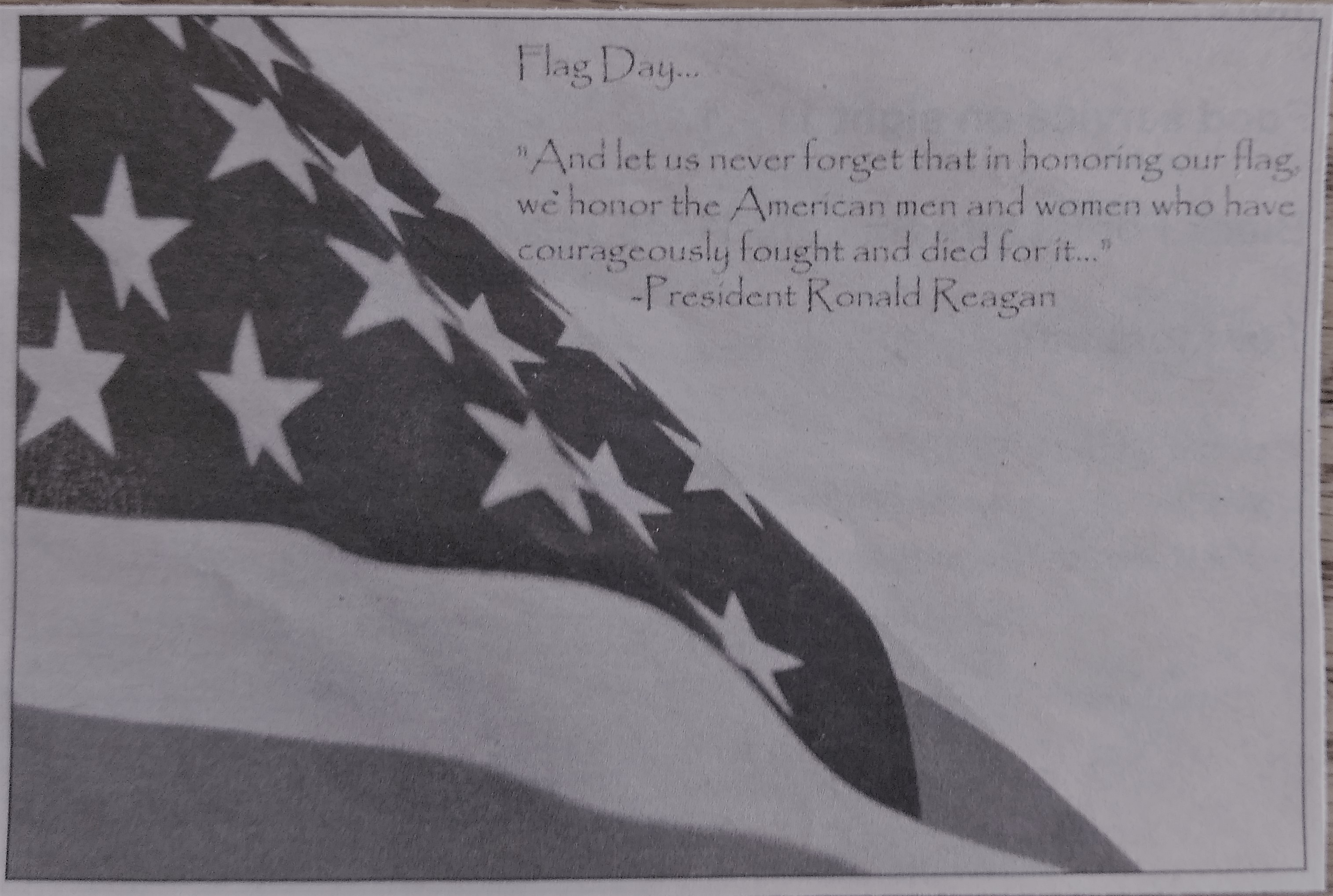
With all due respect, I’ll continue to unfurl the Stars & Stripes on Flag Day, no matter how many people notice.  If for no other reason, to echo the words of one of our most revered presidents:

Some content sourced from Wikipedia, “the free encyclopedia”.


To and Fro

The band Lonestar penned a catchy tune back in 2003 called “My Front Porch Looking In”. The lyrics included the happy antics of the little family inside the house, implying the view “looking in” beat anything to the outside.  That song enters my mind every now and then, especially with the view from my home office looking out over our property. Which got me to wondering, whatever happened to the front-porch swing?

Swings have withstood the test of time, in a world increasingly complex and sophisticated.  The playground swings of my childhood – those chain-and-cloth contraptions suspended from a simple framework of iron pipes – are still in abundance in countless parks and schoolyards today.  Just last week – as my daughter chose an apartment in a large complex in Los Angeles, I noticed the grounds were scattered with small open spaces, each with benches and fountains… and lots of swings.

I can still remember my early days aboard a swing.  Once you figured out how to get your body to generate the momentum, there was no turning back from the addicting to-and-fro.  The reckless objective was to see how high you could go – to the point where you’d almost fall out as you stared down at the sand from the sky above.  If you really pushed it you could get high enough to cause the chains to lose their slack, resulting in a nasty jolt of the chains before you came plunging back to earth.  Finally, there was the I-dare-you launch, where you completed the forward swing with a propel of the body skyward, then dropping to the sand.  I often wondered if you could throw in a gymnastic somersault before you stuck your landing.  Never tried it.

Just yesterday I passed a large carnival in a city park, with those bright, colorful thrill rides popping up higher than the trees.  Sure enough, they had one of those massive swings, where a dozen or more riders are suspended in a circle and twirled up into space.  That first rotation is a little unsettling, but I expect the rest is as relaxing as a merry-go-round.

Swings may still be in parks, but they seem to have gone missing from the front porch.  Therein lies my favorite “swing memory”.  My grandparents’ modest one-story house included a smooth concrete landing just outside the front door, facing a small lawn.  On this spot lived one of those wonderful old mechanical porch swings.  Picture a rocking couch really, with soft cushions and a cloth surround to keep in the shade and cool.  Over time the swing developed a bit of a smell from years of rain and morning dew, but we kids didn’t care.  Our feet easily touched the ground, creating the frantic engine of the to-and-fro.  When two or three of us would sit side-by-side (arms folded so as not to – ewww – touch each other), we would rock the swing so hard it’s mechanics would protest as loudly as my grandmother.  Sometimes we would lie down sideways and swing with just a push of the hands on the concrete.

No doubt, the appeal of the swing stems from those first few years of life, when all of us were rock-a-bye babies.  Just watching or listening to the cadence of something going to-and-fro is almost as appealing as the physical feel.  So when I see an adult on a swing, I’m not surprised.  When I see the long line of rocking chairs at a Cracker Barrel restaurant, I’m not surprised.  And when I find anything that goes back-and-forth, it gives me a sense of calm.

My front porch suddenly seems to be missing something.  I should get a swing.


North Pole Vault

One of these days I’m going to visit Norway. The allure of Arctic glaciers, fjords, and waterfalls beckons me to snowshoe north of the Baltic Sea. My wife and I toured Denmark and Sweden a few years back, but if I were to choose only one of the Scandinavian countries it would be Norway. I must have a little Viking blood in me. In fact, my AncestryDNA results say I have about 14%.

Besides its spectacular natural environs, Norway is known for hearty wooden structures that dot the land. Stave churches – quaint, timber-framed buildings from medieval times – can still be found in many of the villages.  One of the most famous is likely the most recognizable structure in Norway – the Urnes church in Songnefjorden (above photo), built back in 1130 and still standing today.

Here’s an even bolder proposition for my Norway expedition.  After I make the pilgrimage to the Urnes church, I could hop a plane four hours to the north, to the island of Spitsbergen in the remote archipelago of Svalbard.  I’m still in Norway but I’m a whole lot closer to the North Pole.  And it is here, 430 feet above sea level, I would find what may become the future most recognizable structure in Norway: the Svalbard Global Seed Vault.

The Svalbard Seed Vault is exactly what it sounds like – a place to store seeds.  Why would a country spend more than $9 million to build a seed vault?  Because bad things happen in this world, putting our food supply at risk. After reading about Svalbard I learned there’s an entire network of seed vaults around the globe (including one right here in Colorado).  These vaults contain food crop seed samples in the event the world “runs out” someday.  But even the vaults themselves have no guarantees.  The national seed bank of the Philippines was destroyed by fire, and the seed banks in Afghanistan and Iraq were lost to the ravages of war.  That’s where Svalbard comes to the rescue.

Svalbard is the “seed vault for the seed vaults”.  Think of it as a library.  If one of the world’s vaults needs a replenishment of seeds (or some global crisis destroys the vault entirely), they “borrow” packets from Svalbard.  Once more seeds are generated, a portion of them are returned to Svalbard to restore the library.  Almost 900,000 food crop varietals are represented in Svalbard – by half a billion seeds.  The facility is the size of a football field and all those seeds don’t even make it to the fifty-yard line.  Plenty of room left for more.

Svalbard is likely the most secure seed vault on the planet because it’s buried four hundred feet inside a sandstone mountain, encased in the Arctic’s permafrost.  Svalbard recently made the news when the vault flooded from snow melt and early season rain (that’s not supposed to happen – global warming anyone?)  But the water didn’t make it any further than the vault’s entrance tunnel before it froze again.  Sounds like all those seeds will be cold, dry, and undisturbed for a long time – just as the vault intends them to be.

Here’s another reason to like Norway.  Government-constructed projects exceeding a certain cost must include artwork.  Svalbard was expensive enough, so the seed vault entrance is decorated with stainless steel, mirrors, and prisms, reflecting the polar light of the summer months.  In the winter, the entrance is illuminated with greens and turquoises and whites through fiber-optic cables.  With this installation we get to appreciate the “importance and qualities of Arctic light”.  Pretty cool.

Sadly, if my Norway sojourn ever included the Svalbard Seed Vault, I wouldn’t get past the entrance.  There’s no receptionist (nor any other staff members 0n-site).  Instead the facility is monitored from a remote location around the clock.  You have to pass through five levels of security to get to the seeds themselves.  Tourists like me have no shot.

I won’t be getting to the Arctic anytime soon after all.  As for Norway, I’ll have to be content with a visit to a Stave church or two.  But I’m grateful for the Svalbard vault all the same.  On that note, I think I’ll head over to Home Depot and buy a few seed packets for my summer garden.

Some content sourced from Wikipedia, “the free encyclopedia”.


Touched by Midas

We’re in the midst of America’s red-carpet season of horse racing; the trifecta otherwise known as the “Triple Crown”. Over the course of five weeks we’ll witness the fastest three-year old’s thoroughbred racing has to offer. The jewels of the Crown – the Kentucky Derby in Lexington, the Preakness in Maryland, and the Belmont Stakes in New York – showcase a combination of sport, fashion, and tradition like no other.  Don’t miss the Belmont on June 10th; at a mile-and-a-half the longest of the jewels.

The service industry also has crown jewels.  Apple, Starbucks, and Amazon deliver a customer experience just about as satisfying as the products they sell.  FedEx is so reliable a delayed or lost package is not even a remote possibility.  But let’s kick it up a notch and talk about the Ritz-Carlton Hotel Company.  The Ritz-Carlton is such a renowned, decorated jewel of service excellence it deserves its own category.  Only the Walt Disney Company could claim such preeminence.

My wife and I were fortunate to experience “the new gold standard” of Ritz-Carlton’s hospitality this past weekend.  Celebrating our thirtieth wedding anniversary, we ventured into the Colorado Rockies for a couple of days of rest and relaxation at the Ritz in Beaver Creek, near Vail.  Colorado is in “mud season” now – mid-May through Memorial Day – so mountain-town resorts deep-discount, befitting the budgets of mere mortals like us.

Pulling up to the Ritz, the valet offered us bottled water and whisked away our luggage and car.  At the front desk we were assured a “lovely, quiet room far out on the north wing”.  In the room itself the porter promptly stowed our bags and explained all the little details.  With our modest room-service dinner our attendant produced a complimentary bottle of champagne and stack of those little pillow chocolates.  Happy Anniversary!

But here’s where our story gets a little dicey.  Sometime after midnight my wife and I woke to the sounds of a very nearby party.  Turns out the room next door housed the groomsmen and a whole lot of guests from a wedding at the hotel.  Blasting our sleepy ears: music, dancing, dozens of loud, happy voices, and… the unmistakable smell of marijuana.  Thank you neighbors; my dreams were colorful enough already.

The next morning over room service breakfast, we voiced a carefully-worded complaint to the attendant who brought our tray.  How many guests do you allow in a single hotel room?  Is this a non-smoking hotel?  Can you smell the still-pungent aroma of pot drifting under the doorway of the adjacent room?

Time for a taste of the Ritz-Carlton gold standard.  Our attendant immediately comped our breakfast, assured us we would be moved to another room, and said to expect a call from the hotel manager.  The manager told us another room was already being prepared and we would be moved at our earliest convenience.  When the bellhop escorted us to the south wing, he was quick to note, “this is one of my favorite rooms in the hotel”.

In fact, the room was breathtaking.  The Ritz labels this one an “executive suite”, complete with large sitting room, fireplace, refrigerator, two televisions, two bathrooms, separate shower and bath, and a spacious outdoor balcony facing spectacular Vail Mountain.  Safe to say, the remainder of our anniversary weekend was spent in unexpected luxury.

The gold standard of Ritz-Carlton service excellence is no secret.  Early in their colorful history, the hotelier recognized no amount of luxury or elegance derives the same return as an attitude of “the customer is always right”.  Every interaction begins with the thought, “The answer is ‘yes’!  What is the question?”  The hundreds of valets, bellhops, and concierges are trained as thoroughly as the management team, as they are the true face of the hotel.  Thus are these employees always addressed as “Ladies” and “Gentlemen”.  To add an exclamation point, the Ritz created a Leadership Center and Learning Institute, where thousands of managers from other companies train on the Ritz’s incomparable principles.

You can learn more about Ritz-Carlton’s brand of excellence by reading Joseph Michelli’s The New Gold Standard.  You can also sign up for a session at their Leadership Center.  My advice: stay at a Ritz hotel sometime (hopefully you have a “mud season”).  Nothing explains the gold standard better than the Midas touch itself.


Game of Stones

Do you know the absurd story of the London Bridge? Built in 1831, the famous bridge lasted 130 years over the Thames River before overwhelming traffic demanded the construction of a new one. So, what did London do with the old one? They sold it. Robert McCulloch, an American oilman, paid over $2 million to have the bridge dismantled into pieces, shipped to the coast of California (through the Panama Canal), trucked across the desert to the edge of Arizona, and reconstructed in newly-established Lake Havasu City.  Look at that photo below – that’s a lot of truckloads.  Call him crazy but McCulloch recouped his bridge money by selling the surrounding desert properties to retirees. He also took several thousand bits of the bridge and put them in tiny glass bottles for souvenirs. I bought one of these bottled bits when I was a kid.

The London Bridge story came to mind this week after reading a Wall Street Journal article about Hawaii.  It seems volcanoes are making their way to mainland America much the same way the London Bridge made its way to Arizona.  Tourists to Hawaii’s Volcanoes National Park – the 500-square mile preserve on the Big Island – are stuffing lava rocks into their suitcases as souvenirs; some over a foot long.  I’d like to see the size of the volcano you could build from all the lava bits stolen (yes stolen; helping yourself to rocks in a national park is technically illegal).  That volcano would be hundreds of feet taller than the paper mache science project you assembled in your youth (baking soda + vinegar = lava flow!)

This rock-robbing in Hawaii is big business.  How do I know?  Because the real story here is the hundreds of rocks being returned to Volcanoes National Park.  Park rangers claim they’re receiving mailings every day, each containing a) a stolen lava rock, and b) a letter of apology.  Turns out – if you believe this sort of thing – taking lava rocks puts a curse on your life and bad things start to happen.  In one case, a tourist claimed his sons began having behavioral problems, his marriage fell apart, and his mother died; all within a few months of bringing home a lava rock.

The Hawaiian Goddess of fire, lightning, wind, and volcanoes – Pele – is responsible for the curse.  She is credited with creating the Hawaiian Islands in the first place.  Her domain encompasses all volcanic activity on the Big Island, and she’s known for her power, passion, jealousy, and capriciousness.  Yo, don’t take Pele’s rocks!

(Note: as I was reading up on “Madame Pele” I recalled the 2014 computer-animated short “Lava”.  Remember the story, about two volcanoes who fall in love – “Uku” and “Lele”?  Maybe Lele was Pele in disguise – casting her powerful curse from the big screen!)

My wife and I went to Hawaii on our honeymoon thirty years ago.  We saw several volcanoes but never did we consider taking a lava rock home (loading up on pineapples and several boxes of chocolate-covered macadamia nuts instead).  I mean really, what do you do with a lava rock: display it in your living room as if you own a share of Hawaii?

Perhaps these rock-robbers are the same peeps who fell for Pet Rocks in the 1970’s.  If you weren’t around back then, Pet Rocks were smooth stones gathered from Mexico’s Rosarito Beach.  They had cute painted faces and were sold as if live animals, in little boxes with straw beds and breathing holes.  They included a lengthy training manual to “properly raise and care for one’s new Pet Rock”.  (The easiest commands were “sit” and “stay”.)  The Pet Rock phenomenon was as absurd as rebuilding the London Bridge, yet 1.5 million were sold for four dollars apiece in a six-month frenzy.  Gary Dahl – “founder” of the Pet Rock – became an instant millionaire.

My conclusion on all this rock talk?  Real people are as capricious as Hawaii’s fiery goddess.  London Bridge inspired a nursery rhyme (“… is falling down…”) so we sing about rocks.  Hawaii’s volcanoes inspired a Pixar story so we watch a movie about rocks.  But stealing rocks inspired a curse, cast on all who dare to help themselves.  No thanks, Pele.  Put it in stone; if I must have a rock I’ll take my chances and invest in the $4 pet-friendly variety instead.

Some content sourced from Wikipedia, “the free encyclopedia”.