
Somewhere in the wee hours of Tuesday morning I had a bizarre dream; one I retained well into my conscious hours. I was on some sort of overseas sightseeing excursion with others, and our group stopped for lunch at a historic convent. Egg salad sandwiches were handed out by the nuns and I promptly dropped mine onto the cobblestones. The dream only gets more disconnected from there but I’ll share one more noteworthy detail. My traveling companion was the actress Mary Stuart Masterson.

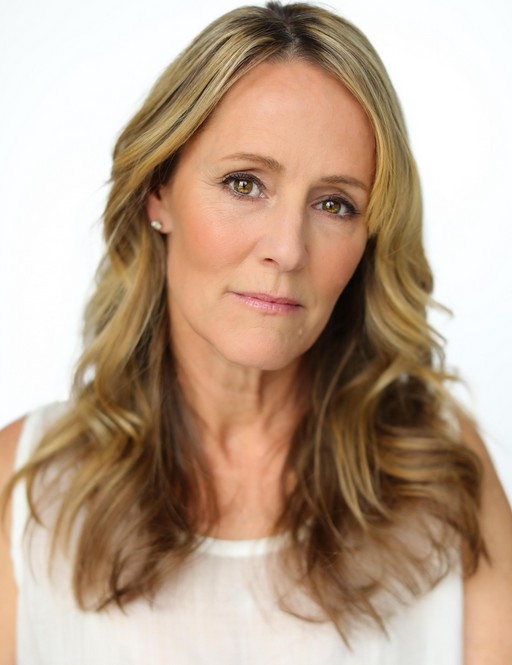
Got all that? Okay, now forget about everything except Mary Stuart. Masterson has had a respectable (if not award-winning) career as an actress. She was only ten years old when she first appeared on the silver screen, in the original version of The Stepford Wives. She went on to play colorful characters in Fried Green Tomatoes and Benny & Joon. But her most enduring performance – the one she will forever be linked with – was as “Watts”, the companion/tomboy of “Keith” in the high school rom-com Some Kind of Wonderful. Masterson’s turn as the loyal friend who quietly wanted to be more absolutely stole the show.
 As if nuns and egg salad sandwiches aren’t enough, you’re wondering why Mary Stuart Masterson was sitting next to me in my dream. Actually it wasn’t Masterson herself; it was her movie character Watts. Which brings me to the Cambridge Dictionary’s 2025 Word of the Year. Would you believe Cambridge added 6,000 new words to its big book this year? 5,999 of them were runner-ups to parasocial, a word “describing a connection people feel with someone they don’t know (ex. celebrities, influencers, and other online personalities)”.
Blogger’s Note: WordPress needs to get on the ball here. “Parasocial” is underlined here in my draft post as being an unrecognized word.

Parasocial’s win as Word of the Year has everything to do with Taylor Swift. Her engagement to NFL star Travis Kelce generated countless claims of “heartfelt feelings toward a couple the vast majority had never met”. The same applies to Watts. I don’t know the first thing about Mary Stuart Masterson herself, but I know everything about Watts from watching Some Kind of Wonderful a dozen times or more.
“Parasocial” has actually been around since the 1950’s. In that era it referred to the innocence of television viewers connecting to television characters (or in my case, movie viewer to movie character). But today’s version of the word is described as “an unhealthy modern phenomenon”. Why? Because of social media. Because of artificial intelligence.
My example of Watts is one movie and one instance. I’ll finish this post and the “encounter” will fade into my memory forever. But social media – which brings the viewer constant feeds about the “viewed”, and artificial intelligence – which creates a sense of connection where there really isn’t one, makes it clear why there’s reason to be concerned. Are we really so desperate as to develop foundation-less relationships with strangers?
 AI has already found its place on Spotify. Search for Xania Monet, the first artificially intelligent singer to grab a ranking on a Billboard chart (Adult R&B). Everything about Xania was created on a keyboard. But her face, her social media profile, and her voice suggest she’s a living, breathing human somewhere out there in the world. I wouldn’t be surprised if you can even chat online with Xania. If so, you’re developing a one-sided relationship (you) with someone who isn’t real whatsoever (a computer). Seriously, who has time for this nonsense?

Coincidence or not, one of the Cambridge Dictionary’s runner-ups for Word of the Year was “slop”, which in this day and age means “content on the internet that is of very low quality, especially when created by artificial intelligence”. Let’s declare “slop” a lot of what’s going in parasocial relationships as well.
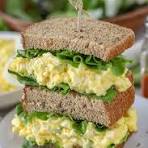 The real message of this dictionary winner is clear. We need to remove the “para” from parasocial and focus on simply socializing with our fellow humans. It’s the only path to truly fulfilling relationships. Having said that, for some reason I’d love an egg salad sandwich right about now.
—————-
LEGO Trevi Fountain – Update #4
(Read about the start of this build in Brick Wall Waterfall)
The travertine is stacking up quickly as we continue our work on the LEGO Trevi Fountain. Bags 7 and 8 – of 15 bags of pieces – came together like the Domenico Scarlatti piano sonatas that accompanied them – seemingly simple on the surface but more intricate and involved the further we dove in.


The Trevi Fountain has some strange elements, made even stranger when represented by chunky LEGOs. Check out the shapes I assembled today (and don’t ask me what they’re meant to represent). Little LEGO pieces positioned in just about every point on the compass. My singular mistake this round – realized well after the fact – was putting the right piece in place, only the wrong color. Then when I came across another “right piece wrong color” I knew I had them transposed. Took a little disassembly to get everything correct.
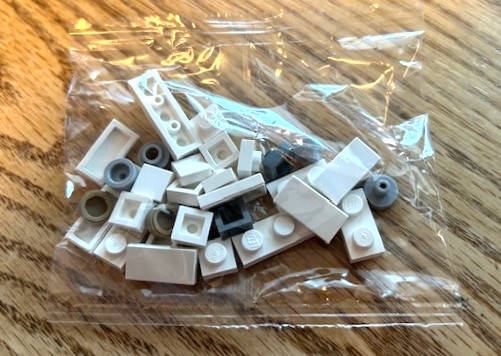
A continuing mystery of LEGO sets is bags within bags. When I opened Bags 7 and 8, each came with a smaller bag of pieces like you see here. It’s not like the smaller bag represents its own unit of the fountain. You just tap into those pieces every now and then as the instruction manual demands. Yes they’re tiny, tiny but you also find tiny pieces in the bigger bag. Maybe someday I’ll tour the LEGO factory and solve this packaging mystery.
 We worked with some surprisingly large pieces of travertine today – the entire wall of white you see behind the fountain and the white surround you now see defining the entire front of the main pool. Would’ve taken a dozen Italians to put these monster pieces in place on the real Trevi. And don’t miss the pink accent strips to the left and right of center (pink!) This fountain is turning out to be more colorful than I expected.
 Running build time: 3 hrs. 5 min.
Total leftover pieces: 23 (10 more extras today!)
Some content sourced from the BBC.com article, “Parasocial is Cambridge Dictionary Word of the Year”, IMDB, “the Internet Movie Database”, and Wikipedia, “the free encyclopedia”.








 Life In A Word