Running Amuck

Last Saturday our little town hosted a festive 10k run.  High school cheerleaders pom-pommed us away from the starting line while hundreds of residents waved flags and tossed water bottles along the way. The finish in the town square was packed with people, and included the music, food, and fun you’d find at a carnival.   As I struggled to complete the last couple of “k’s” I struck up a conversation with a nearby runner to distract myself from the effort.  She was pleasant enough, with just the right pace, and she was even a human being.  At least, I think she was.

Suddenly, shockingly, we’ve come to this.  The entry form for your next running race may ask you to identify as 1) human being, or 2) human-oid .  If you choose the latter, you’re saying you still have the physical form and characteristics of a human being.  You just happen to be a robot.

Ten days ago this eerie scenario really played out in Beijing.  A half-marathon took place with thousands of human participants, but the spotlight was clearly on the twenty-one humanoids who also showed up at the starting line.  These robots were accompanied by operators running close behind them, but make no mistake; absent of the wires or other attachments you might expect with a remote-controlled device.  They were running free, with the look and gait of any other runner in the race.

I’m wondering how any of the human runners kept their focus as they ran this race.  I’d want to pace myself against one or two of these machines and just admire their every step.  The humanoid winner, Tiangong Ultra, finished the half-marathon in 2 hours and 40 minutes, or about five miles an hour.  Trust me: five miles an hour is not a walk; it’s a run.

I’ll have to search for the video online, because a still of a running humanoid doesn’t do the accomplishment justice.  I just can’t get over the fact we now have robots who run.  Granted, the Beijing half-marathon wasn’t what you’d call a “run in the park” for these technological marvels.  Only six of the twenty-one finished the race.  Others fell down or exhausted their battery packs.  Still others lost their heads or spun out of control.  If there had been a humanoid hospital nearby, its ER would’ve been a machine-shop hotbed of activity.

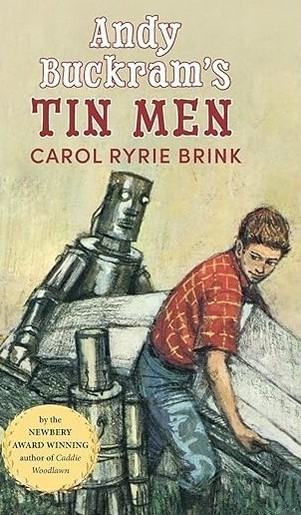
My perception of all things “robot” is clearly outdated.  I’m more inclined to picture self-guided vacuum cleaners and assembly-line automatons than race-running humanoids.  Case in point: I’ll never forget the grade-school novel, Andy Buckram’s Tin Men.  It was a wonderfully imaginative tale about a boy who created a family of robots from a pile of cans, and his unexpected adventures when those robots came to life courtesy of a lightning strike.  The book was written in the 1960s and was a work of fiction.  Of course it was.
I’ll also never forget the movie Silent Running (1972), a future shock story of a destroyed Earth, with spaceships housing giant terrariums cared for by lovable lifelike service robots.  Or Westworld – the 1973 original, not the HBO series  – an adult amusement park of sorts where robots catered to the guilty pleasures of their human customers (until collectively the robots decided to run amuck).

C-3PO

C-3PO from the original Star Wars trilogy (1977) might’ve been the first humanoid to get me wondering if such technology was possible.  Blade Runner (1982) took the concept an interesting step further, with humanoids desperate to demonstrate their emotional capacity.  Less than fifty years later we’re still working on that emotions bit, but I certainly wouldn’t have bet we’d have humanoids who could run.

Let’s be clear – we’re at least another fifty years removed from any technology that remotely suggests “human”.  Even if Siri and Alexa appear to read your mind and hold meaningful conversations with you, they’re not going to jump out of your smartphone tomorrow and land on two legs.  Even if  your little robot dog wags its tail, lies down, and rolls over, it’s not going to take a bite out of your leg when it doesn’t get enough attention.  Your Roomba might suck up the lion’s share of dust and dirt in your house but it’s not coming for your valuables.

I sleep peacefully at night knowing the nightmares of Westworld and Blade Runner continue to be the stuff of (evil) Hollywood imaginations.  Virtual reality will remain virtual, and robots will continue to be nothing more than subservient devices for years to come.  But admittedly, you can’t help but question “years to come” when you see a humanoid run a half-marathon.


LEGO Notre-Dame de Paris – Update #13

(Read about the start of this “church service” in Highest Chair)

I’m not sure I’ve ever stopped the construction of a LEGO model smack-dab in the middle of a bag of pieces.  Imagine our priest at Notre-Dame de Paris, pausing midway/mid-sentence into his homily only to say to his congregation, “I’m tired.  Let’s pick this up next week, shall we?”

Cathedral roof structure

Bags 25-28 – of 34 bags of pieces, were a study in opposites.  In a crisp fifteen minutes, Bag 25 assembled to the roof structure you see here, covering the remainder of the nave (the sanctuary) and transept (the cross section).  Even Bag 26 wasn’t a stretch as we built the “cores” of the uppermost cubes of the cathedral towers.

Two bags = hundreds of pieces.  Seriously.

But that’s when I should’ve stepped on the brakes.  The instruction manual told me to break open Bags 27 and 28 together and this is what stared up at me.  If you think the pile on the right adds up to a lot of pieces, you are correct about both piles and you’re probably underestimating the number.  These tiny, tiny pieces come together slowly to complete the uppermost cubes of the cathedral towers.  One cube took 75 minutes.  Why so long?  186 pieces each.  No kidding – zoom in on the top of the completed tower below and you’ll get some sense of how intricate it is.  Now you understand why we paused in the middle of the homily.  I just didn’t have the energy to build up the other tower.  Next week!

(Click the photo for more detail)

Since we’re close to the end of the build, let me admit to looking ahead in the process.  The remaining six bags are small, and the pieces inside of them are minuscule.  If I had visions of finishing off the cathedral in a flurry of construction, they’ve been dashed by the thought that I’m still a good five hundred pieces from the finish line.  Sigh… this church service is getting a little long.

Running build time: 13 hrs. 0 min.

Total leftover pieces: 32

Some content sourced from the Smithsonian Magazine article, “Humanoid Robots Just Raced Alongside Human Runners…”, and Wikipedia, “the free encyclopedia”.

Sphere Delight

My wife’s sister and her husband just wrapped up a visit here in South Carolina. On the drive down from Colorado they made several sightseeing detours, but the trip back was pedal-to-the-metal… with the exception of one stop: the Moon Marble Company in Bonner Springs, Kansas. Moon Marbles stocks beautiful handmade wooden games and toys but c’mon, who braves the barren wastelands of Kansas for those? Marbles on the other hand, would draw me in like a bee to nectar.

A marble is the perfect example of a sphere, isn’t it?  I love spheres (including the word itself; much more elegant than “ball” or “orb”).  Take a semicircle, revolve it a full loop around its diameter and voila! – a sphere.  Calculating the volume of a sphere involves cubing its radius but let’s stop right there with the math lesson.  Cubes and spheres just don’t belong in the same conversation.

Lemons can be oblate spheroids

Most of you readers are tuned in from the Northern Hemisphere, the half of our planet above the Equator.  I find it cool to think of Earth as a sphere (with “big blue marble” a close second).  It’s the biggest sphere we humans know (or have you been to Jupiter?)  At your next party, wow your friends by telling them Earth is actually an oblate spheroid: flattened at both poles and bulging at the Equator.  Ewwwww.  Not a very pretty sphere, now is it?

Here’s the paragraph where I cop out and simply list a bunch of spheres, like oranges, Christmas ornaments, eyeballs, pearls, and the moon, but that’s just so three-hundred-blog-posts ago.  Spheres can be much cooler.  For instance, picture an atom (I’ll pause for those who need a microscope).  An atom is a spherical cluster of neutrons and protons (which are also spheres) encircled by whizzing electrons (more spheres).  Did you know your body is made up of over 7 octillion atoms?  That’s a lot of spheres.  You might want to lose a little weight.

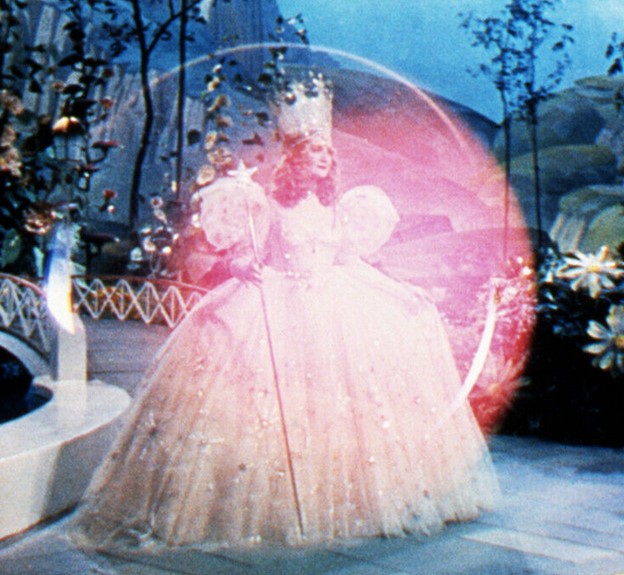
Glinda traveled to Oz in a sphere (photo courtesy of MGM)

Soap bubbles are spheres.  Sure, you aim to create those giant wibbly-wobbly monsters but for the most part you generate a cloud of perfectly spherical transparent globes, born on a whisper of air and extinguished seconds later.  I’m guessing soap bubbles have the shortest lifespans of all spheres.

When a college buddy visited several years ago, he brought a paperweight made by an artist near his hometown in New Jersey.  It’s a glass sphere with just the slightest bit of the bottom lopped off so it doesn’t roll off my desk.  I’ve picked up a lot of tchochkes over the years but I’m not letting this one go.  Did I mention spheres are cool?

Three years before he wrote Jurassic Park, Michael Crichton authored a novel called Sphere.  It’s about a group of scientists exploring a giant spacecraft sunk to the bottom of the Pacific Ocean.  In the spacecraft’s cargo hold: a mysterious sphere, determined to be extraterrestrial and literally mind-blowing.  Mark my words; spheres can be as terrifying as dinosaurs.  Read it.

Dimples can be cute.  Not this one.

Star Wars focused on a giant spherical colony – the Empire’s “Death Star” – but the air went out of my perfectly round balloon as soon as I saw the giant divot on its side, not to mention all those channels and openings pierced by the X-wing starfighters.  In other words, the Death Star was a decidedly less-than-perfect orb.  So I applauded alongside everybody else when Luke Skywalker blew this sphere to kingdom come.

Here’s a place you wouldn’t expect to find a sphere: a Christian hymn.  In the first verse of This Is My Father’s World we have, “All nature sings and round me rings, the music of the spheres”.  The plural throws me off, because more than one sphere suggests more than just Earth (the entire solar system?)  Or maybe we aren’t singing about the planets at all.  A quote from August Rush seems relevant; the final line in the movie: “The music is all around us… all you have to do, is listen.”

Coming soon to Sin City

We’re starting to go round and round here (heh) so let’s conclude with the world’s largest sphere.  The Guinness Book writers will deem it so once the “MSG Sphere” opens in Las Vegas in a few months.  At 300 feet tall and 500 feet wide, the Sphere will dramatically change a skyline that’s already pretty dramatic, especially with 1.2 million LEDs on its surface generating all sorts of images and animation.  For concerts, sports, and the like, the Sphere can seat up to 18,000 spectators.  I plan to be one of them…  just as soon as I make it to Moon Marbles in Kansas.

Some content sourced from the CNN Travel article, “This futuristic entertainment venue is the world’s largest spherical structure”, and Wikipedia, “the free encyclopedia”.
Fantastic Plastic

On Christmas Day, any parent of small children will stifle a yawn, having built bicycles, dollhouses, and train sets the night before. After all, Santa doesn’t deliver unassembled toys. But hang in there a few years, Mom & Dad, because the building shifts from the giver to the receiver. Older kids want to create. In my generation it was Hot Wheels, Erector Sets, and Lincoln Logs. And one other toy surpassed all others for its ease of use and versatility. Lego.

This piano even plays!

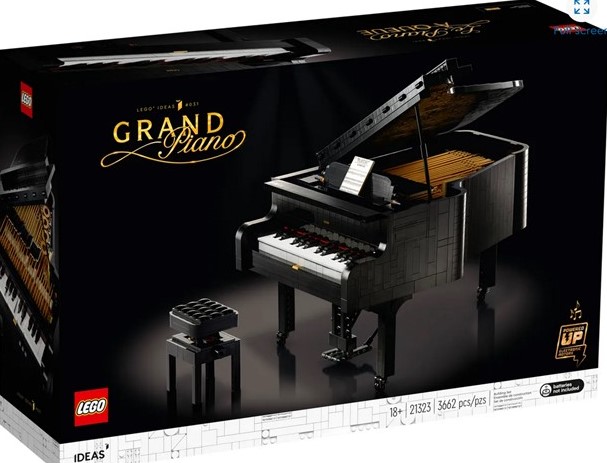
My Christmas gift from my wife this year was a grand piano. Can you top that? Okay, so it wasn’t the kind worth five figures or special movers to get it across the threshold.  My piano measures a mere 12″ x 14″ and comes from the Lego “Ideas” collection.  When it’s finished it will have been built from 3,662 individual pieces.  I can’t wait to get started.

A grand piano made of Legos means the simple interlocking blocks I had as a kid have come a long, long way.  Lego Ideas sets are “products inspired by and voted for by Lego fans”.  The collection includes a typewriter, a ship in a bottle, the house from the Home Alone movies, and the apartment from the Seinfeld sitcom.  Every Ideas product involves thousands of Lego pieces to assemble.  Every Ideas product was also completely sold out for Christmas on the Lego website.

Fifty years ago, Lego was blessedly innocent.  All you had were small bricks in primary colors and if you were lucky, a paper set of instructions to create a simple house or a vehicle.  Otherwise, you just built whatever your imagination could come up with.  When my own kids were kids, Lego moved to product-specific sets like a T. Rex from Jurassic World or an X-wing Starfighter from Star Wars.  Sure, they looked cool when they were built, but I was always skeptical because the sets removed creativity from the experience.  You’d just follow the step-by-steps in the little booklet and voila – a T. Rex.  But call me a hypocrite because this sixty-year-old can’t wait to build his step-by-thousand-steps Lego Grand Piano.

Lego has an interesting history – too many chapters to cover here.  The numbers tell the story in a nutshell.  The Denmark-based company is considered the largest toy company in the world.  Their bricks have inspired movies, video games, building competitions, and eight amusement parks.  Their factories have been churning out little plastic pieces for almost 75 years.  And at last count, that pile of pieces surpassed 600 billion (or 75 Legos for every man, woman, and child on earth).

I didn’t expect to be a Lego fan as an adult but then came the Architecture series in 2008, cool buildings like the Taj Mahal, Eiffel Tower, and Empire State Building.  I just had to have one, so last Christmas my wife gifted me the 1,032-piece United States Capitol Building.  I didn’t clock how long it took to complete but I must’ve looked awfully confident in the assembly because now I’m staring down the more daunting Grand Piano.  Maybe my wife wants me locked down in my home office for the next several months?

To underscore the popularity of Lego these days, the Architecture series alone includes 50 buildings and cityscapes, with more coming out each year (the Taj Mahal was released just last summer).  These sets run anywhere from $50 to $250, with the discontinued ones setting you back three times as much.  Sure, I’d love a Lego version of Frank Lloyd Wright’s “Fallingwater” house, but I’m not going to pay $800 to a collector just to have one.

Lego “Church of Christ”

No discussion of Lego would be complete without a nod to custom creations.  Our local Scheels department store has a larger-than-life Denver Broncos football player made of Legos, posing front and center in the toy department.  The Church of Christ creation in the photo here didn’t forget seating for an 80-member choir (below the big yellow crosses).  And the biggest custom creation of them all?  A full-scale Lego replica of the previously-mentioned X-wing Starfighter, first displayed outdoors in New York’s Times Square.  Try to picture 5.3 million Lego pieces and 23 tons of “toy” in the shape of a fighter jet.  Or just check out the photos here.

Now that I’m done writing it’s time to break open the first bag of pieces to begin my Lego Grand Piano (and time for you to watch the ingenious stop-motion video below).  I’ll use the stopwatch on my iPhone to capture the hours I consume to complete it.  Er, days? Weeks?  I mean, Rome wasn’t built in a day.  Neither is a grand piano.  You might want to check in with me next summer to make sure I haven’t gone bats.

Some content sourced from Wikipedia, “the free encyclopedia” and the Lego.com website.

Feeding Frenzy

Thanks to a whole lot of snow in Colorado I was pretty much housebound this week.  I was also reminded of the number of mouths I’m expected to feed. That total is nine… if I count the four horses, two cats, and one dog besides my wife & me. Now that I think about it, a horse eats enough for two so let’s bump the number to eleven mouths. And nine of those belong to animals.

A year or so ago I wrote a post called Sign Me Up!, where I marveled at the rapidly growing world of subscription-based services.  Among my own subscriptions I listed a magazine, a newspaper, and digital music, I also included Chewy, the online pet food supplier whose mission is “to be the most trusted and convenient online destination for pet parents (and partners), everywhere.”  At the time I was just trying Chewy out, not willing to go all-in with a subscription.  Today?  I’m fully on board and wondering why I didn’t sign up sooner.

Even the U.S. Post Office celebrates “fur babies”

Every time a Chewy pet food box shows up at my front door my first thought is, “Why didn’t I come up with this idea?”  Chewy’s concept is wonderfully simple… and wildly successful.  First, create a list of the world’s major suppliers of dog and cat food.  Second, negotiate bulk purchases of their products at a discount.  Third, set up a small network of fulfillment centers.  Finally, sell to customers with some of the discount, keeping the rest for your own operation and profit.  It’s a middleman’s recipe for millions.  Er, make that billions.

If you think this post is a plug for Chewy you’re darned tootin’ it is.  Chewy offers over 2,000 brands of pet food to 15 million subscribed customers.  97% say they’re satisfied.  Chewy’s net sales in 2019 were $4.8 billion dollars.  Nosh on that impressive number for a second.  $4.8 billion sounds like the GDP of a small country.  A small country with a lot of pets.

Foresight is everything here.  Ten years ago I wouldn’t have believed there were 200 brands of pet food, let alone 2,000.  If I go back to my childhood (way more than ten years ago) I can name exactly four pet food brands or products of the day: Purina, Friskies, Alpo, and a curious General Mills creation called Gaines Burgers (“The canned dog food… without the can!”)  Well, I also remember a variety box of dog biscuits called “Fives”, but that’s because I snacked on them every now and then when there wasn’t anything else in the pantry.  Fives were fit for human consumption.  At least, I think they were.

The pet food demand of the 1970s wouldn’t have sustained a subscription service like Chewy.  On the other hand, today’s market is a feeding frenzy, especially with more people opting for “fur babies” over children.  And don’t think Chewy hasn’t noticed all the doggy daycare and emotional support.  Now they also deliver food for your fish, your bird, your snake, and all those farm animals grazing on your backyard lawn (alpacas, anyone?)  Chewy even offers a pharmacy of over-the-counter meds when your pet is in some way under the weather.

Hello, “Chewy”!

I was going to wrap up this plug by smugly suggesting Chewy cater to our horses, but of course they already do.  I can’t subscribe to hay bales yet (I’m sure they’re working on that) but I can buy grain, treats, blankets, tack, and fly spray.  So instead, let me speculate it probably won’t be long before Chewy gets into the “human” food delivery business as well, to compete with Amazon, Wal*Mart, and Target.  With Chewy’s millions of subscribed customers, the new offering would take off like a bull in a china shop.  Or better, like a big, furry bad boy in a Star Wars movie.

Slush Fun

In the last few years, it seems every other corner in Colorado Springs sprouts a newly built “Kum & Go” gas station. Kum & Go’s bright red-and-white oval signs beckon consumers to plentiful pumps and come-hither convenience stores. Kum & Gos are clean and spacious, with competitive fuel prices. Started in Iowa by Krause Gentle Co. (hence the “K” and “G” in the name), Kum & Go operates 400 stores across 11 Midwestern states; rapidly adding more. They’re even gobbling up unwanted locations of my favorite childhood hangout: 7-Eleven.

7-Eleven, of course, is the remarkably resilient convenience store of the baby-boomer generation and before. 400 stores is a drop-in-the-bucket to 7-Eleven. Worldwide you’ll find almost 70,000. It’s safe to say 9 of 10 Americans – at some time in their lives – pass under the bright green, red, and orange of a 7-Eleven sign.

7-Eleven roots to 1927, when “Tote’m” Stores launched in central Texas (yes; a totem pole in front of every one). In the post-WWII era, Tote’m rebranded as “7-Eleven” to acknowledge an unprecedented window of operation – earlier in the morning and later at night than most others. Today of course, coupled with gas stations, 7-Elevens keep those doors open round the clock.

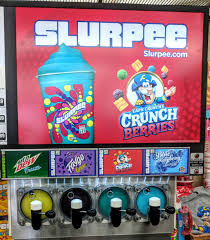
Last Thursday – and every year on “7/11” – 7-Eleven offered a free small Slurpee to all who passed through its doors. (I like number-calendar play, don’t you? “Pi Day” = 3.14, “Fry Day” – National French Fry Day = 7/13, and “Star Wars Day” = May the Fourth.) Best Slurpee trivia: its genesis was at Dairy Queen, where a franchisee put Cokes in the freezer and stumbled upon a soda slush he labeled the “ICEE”. 7-Eleven bought the license, changed the name, and the rest is history. Still one of the bestselling drinks anywhere.

This week, I find myself vacationing in the small coastal town where I spent many a childhood afternoon heading to 7-Eleven. I missed out on last week’s free Slurpee, but I went to one of their stores the day after just to have a look. I can’t tell you the last time I’d been in a 7-Eleven but know this: they haven’t changed much in fifty years. You’ll still find an entire aisle of candy. Hot dogs still rotate on heated rollers behind glass, ready for purchase. Doughnuts age in a plastic bakery case. The Slurpee machines grind away towards the back, beckoning with their cups and colors.

I’ll give you five reasons why 7-Eleven was the ideal destination for a tweenager of my day. First, 7-Elevens were located close enough to residential neighborhoods to get there on foot or by bike. Second, 7-Elevens were small; therefore, not intimidating. (A kid-sized grocery store, if you will.) Third, 7-Elevens parked a couple of pinball machines in the corner of the store (I can still hear the “knock” sound when you’d win a free game). Fourth, 7-Elevens had an entire aisle of “coin candy” (dozens of options for your hard-earned penny, nickel, dime, or quarter). Finally, 7-Elevens had Slurpees – the coolest kid drink around.

When I visited 7-Eleven last week, I bought a Slurpee for old time’s sake. Guess what? They’re exactly the same – that slushy mix of syrup, CO2, and water. You still choose from several sizes of paper/plastic cups (although now you can “Big Gulp” if you must have 32 oz.). The drink still rotates and mixes behind that round glass window; a tempting peek at the flavors before you commit. The straws still have that open spoon on the ends. And a Coke Slurpee is still the fan-favorite (I’d choose Cherry were it not for the stained lips). Frankly, the only difference between today’s Slurpee and the one in the 1970’s: you can buy a refillable cup for discounts on future purchases.

Kum & Go also offers a refillable cup – the $50 “gold” for unlimited coffee and soda for a year. But that’s hardly kid stuff nor kid prices. I only go to K & G for the gas anyway. But take my advice and stop into a 7-Eleven again. Buy a small Coke Slurpee (and a hot dog – they’re actually pretty good). The pinball machines are history, and the candy costs a lot more than a penny. Otherwise it’s like a step back in time.
Some content sourced from Wikipedia, “the free encyclopedia”, and the CNN.com article, “It’s 7-Eleven Day…”

Wait For It

Let’s wager a guess over something that happened to you in the past few days. It probably happened several times in the past few days. It wasn’t by choice, nor were you alone.  It might even be happening right now. What is this recurring, oft-maddening event in your daily world (and mine)? Somewhere, for some good reason, in person or in the car, deliberately or unintentionally, you found yourself waiting in line.

Call it a common courtesy or call it the primary by-product of consumer demand. Waiting in line is a timeless (or time-wasting) necessary evil with no satisfactory alternative.  While the world behaves efficiently with smartphones, computers and even data-consuming “IoT” appliances, those snaking, switch-backing, several-option, several-category lines of humans seem to grow ever longer.  Including traffic on the highways – another version of waiting – you’ll spend one to two years of your life in line.

Consider some of the common reasons why we wait in line:
– store cashiers
– airport security
– phone calls (on hold)
– amusement parks
– voting
– public restrooms

If I wrote this post fifty years ago, I would’ve listed the very same reasons why we wait in line.  We have options now, but let’s face it; those options are waiting-in-line in disguise.  Store cashiers now work side-by-side with an area of self-check-out machines (which draws its own line).  Airports promote pay-for lines like TSA Pre and CLEAR.  Telephone on-hold mechanisms offer callbacks instead of waiting (“for an additional $0.75”).  Disneyland installed “FastPass” lines; again, for a fee.  Voting can be done by mail (forcing your ballot to wait in line instead of you).  And public restrooms?  Okay, there’s no option to waiting for the potty.  Maybe reconsider that second beer.

The Brits refer to a line of people as a queue.  I like that (and not just because we need more words beginning with the letter “q”).  Leave it to those on the far side of the pond to class up the most mundane activity imaginable.  At least we have our phones as distractions when we “queue”.  But the old-fashioned distractions still work.  It’s why they put candy bars by the cashiers, magazines in the waiting room, mirrors by the elevators, and televisions in the airport.  Anything to help you forget you’re waiting in line.

Julio C. Negron

You’d think waiting in line is mindless – no-brainer science really – but I have experienced flaws in the system.  Recently in Lowe’s, waiting patiently in a single, central line at the self-check-out area, I was confronted by the person behind me, who demanded I “choose one side or the other” (as if logic demanded a separate line for each row of self-check-out machines).  My response to him was not one of my finer moments.  Another example – at the airport – my wife and I waited at the curb with a dozen others for the parking lot shuttle, only to discover the “front of the line” was a variable determined by the point on the curb where the driver chooses to stop his vehicle.  If you want to see what not waiting in line looks like, try to catch a parking lot shuttle at the airport.

In today’s world, we have new reasons why we wait in line:
– to purchase the latest iPhone
– at restaurants, with pagers (clever disguise for waiting in line)
on-line (i.e. for concert tickets or sports tickets at a specified time)
– Black Friday sales

Finally, we will always stand in line for our kids, whether to see Santa Claus at the mall or to buy something they simply must have.  Years ago, I remember taking my kids to the local bookstore for the latest “Harry Potter” (which they started and finished before the next sunrise).  It was the only time I’ve stood in line for the right to stand in line again.  The bookstore insisted on selling a limited number of tickets at noon, to be exchanged for the book later that same day, when the publisher allowed its release.

I believe the longest I’ve ever waited in line is five hours – to see the first Star Wars movie in 1977.  With no electronic devices to keep my friends and I company back then, five hours was even longer than it sounds, especially knowing two consecutive showings of the movie would run before I even entered the theater.  Then again, the truly morbid among us believe we are all simply waiting to die.  If that’s the case, let’s hope we’re in a really, really long line.