Shark Attack!

Our annual summer vacations in San Diego have become a little more adventurous because of an increase in shark activity off the coast of California. I enjoy body surfing, but the thought of a pair of big, hungry jaws beneath the water’s surface gets my heart a-pounding. So imagine my shock when I really did have an encounter with a baby shark. Er, make those letters capitals. I meant to say “Baby Shark”.

My adorable two-year old granddaughter is just beginning to take off with her vocabulary.  She can say “Mama”, “Dada”, and even “Chop! Chop!” when she wants us to hurry up.  She also says “Bayba Shawk”… constantly, because she wants an adult to play the song for the forty-thousandth time.  After three weeks on repeat I can’t get the darned thing out of my head.  I need brain surgery.

My granddaughter’s finger puppets

“Baby Shark” is the story of a little family of sharks hunting for fish.  The fish get away and… that’s it.  It’s not so much a story as an excuse to sing a verse about each family member: Baby, Mommy, Daddy, Grandma, and Grandpa.  The first time I heard it (forty thousand time ago) I wondered, Why doesn’t Baby Shark have siblings?  Where are his (her?) other grandparents?  Aunts?  Uncles?

Of course, it’s not really Baby Shark’s family that make the tune so addicting.  It’s the “doo’s”… as in doo doo doo-doo doo-doo.  You sing those six “doo’s” in every verse and that’s the part that gets into your head.  Add in the accompanying up-and-down arm dance (imitating the jaws of a shark) and you somehow have a hit.  More like a worldwide phenomenon.

If a children’s sing-song doesn’t get your attention, consider this.  “Baby Shark” is the most-watched YouTube video of all time.  I said of all time.  If your guess would’ve been something by Ed Sheeran or Katy Perry or Maroon 5 you would’ve also landed in the Top Thirty, but nowhere near the top of the list.  “Baby Shark” has been viewed over 16 billion times, more than twice the number as the runner-up.  And that’s only for the version from South Korea’s Pingfong.  The one by Cocomelon (a children’s YouTube channel) lands in twenty-third place with another four billion views.

The “Baby Shark Dance”

“Baby Shark” has been around longer than you might think.  It showed up somewhere in the late 1990’s in the public domain.  Then Pinkfong got ahold of it, created the 2016 video with cute little Korean kids, and the rest continues to be history.  Coincidentally, a lawsuit was settled just this month where an American songwriter claimed rights to “Baby Shark”.  He lost, but only because the song was still in the public domain when he created his version.  You can’t blame him for trying; “Baby Shark” has generated over $150M in revenue in the last ten years.

Of course, all that revenue comes from more than just a YouTube video (hence the “worldwide phenomenon”).  “Baby Shark” is showing up in places and with people that seem downright ridiculous.  There’s a children’s book and a television series.  There’s a video game.  It’s part of a tourism promotion for Singapore.  It’s used by certain professional baseball players as they walk up to the plate.  Or certain politicians as they walk up to the podium.  Finally, it’s the subject of a Kellogg’s breakfast cereal, a berry version of Fruit Loops with little marshmallows posing as sharks.  “Yum?”

My favorite use of “Baby Shark” comes out of West Palm Beach, FL.  Local authorities were desperate to clear a lakeside pavilion of homeless people, so they played the song over and over on loudspeakers until everyone left (running and screaming for the hills, no doubt).  If I’m inclined to run and scream myself, I can drive a couple hours north of here to see a production of Baby Shark Live, a 75-minute stage musical.  I’m not inclined.

The whole time I’ve been typing this post I’ve had doo doo doo-doo doo-doo on loop in my head.  If my hands and arms weren’t busy on the keyboard they’d be doing the Baby Shark Dance instead.  It’s maddening, and makes me want to body surf again with hopes I’ll be eaten by a real shark.  Instead, I’ll just hope I find another blog topic next week that consumes me more than “Baby Shark”.  I leave you with the video.  Guard your sanity.

Some content sourced from Wikipedia, “the free encyclopedia”.
(Not far from) Madding Crowds

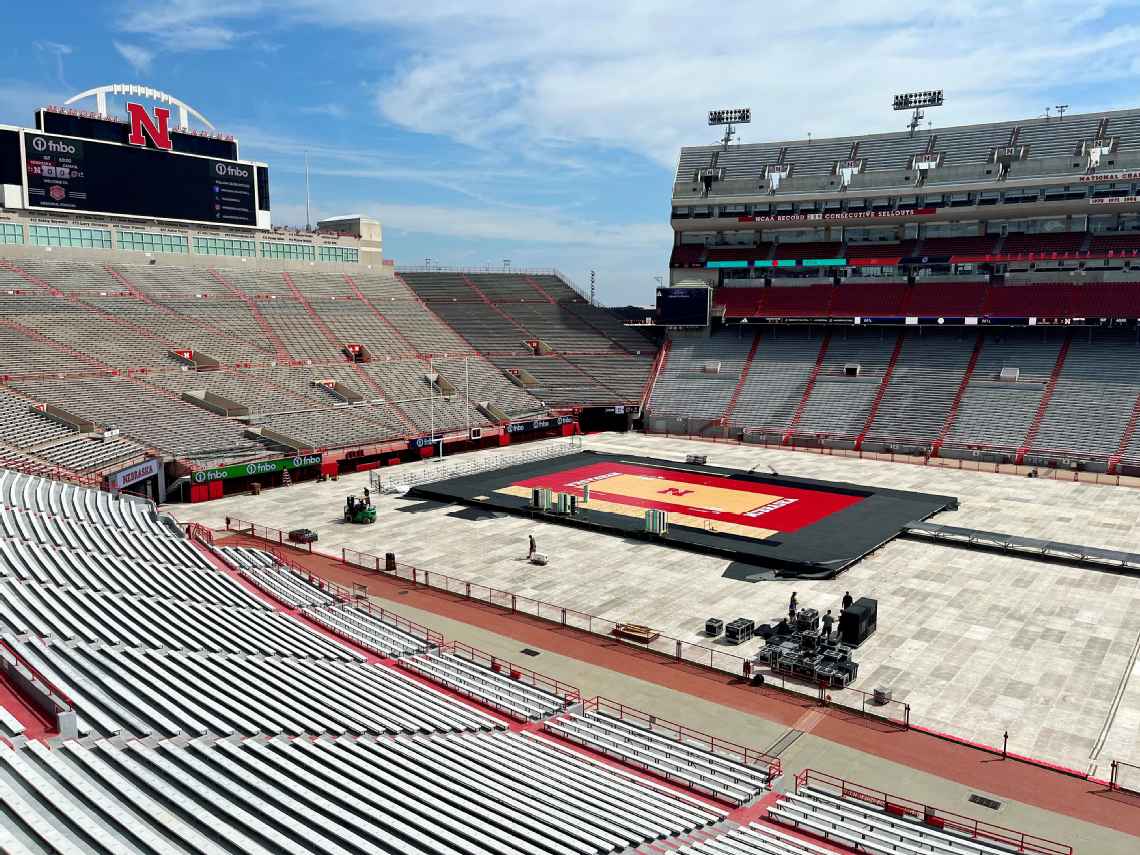
Last night, the University of Nebraska women’s volleyball team played the fourth match of their 2023 campaign. College volleyball doesn’t get much coverage sharing seasons with (American) football, but this match made the sports headlines for several reasons. One, it was played outdoors. Two, it was played in Nebraska’s massive Memorial Stadium (normally a football venue). And three – most notably – the Huskers brought home the straight-sets win in front of 90,000 riotous fans… at $25 a ticket.

Volleyball instead of football

I know what you’re thinking.  How do you get 90,000 people to cough up $25 for a college volleyball match?  Well, it helps to throw in a country music concert for starters.  Then add a second match to double the volleyball (Nebraska-Kearney vs. Wayne State).  Finally, most importantly, let fans know they just might break the regular-season attendance record for a women’s volleyball match… the same attendance record that volleyball rival Wisconsin stole from Nebraska just last season.

Memorial Stadium on any given Saturday

It fascinates me to read about sports competitions played in front of massive sold-out stadiums, weekend after weekend.  Nebraska has filled those same 90,000 seats for every Husker football game for the past sixty years (making the venue the “third-largest city in Nebraska” for several hours each Saturday).  Michigan’s Wolverines compete in the largest college stadium in America – 108,000 seats – with every seat taken more often than not.  And like Nebraska’s volleyball match last night, my fascination is not just with the number of fans but also with how much they’re willing to pay.  I’m in the market for tickets for my beloved Notre Dame; the football team headed to nearby Clemson later this season.  Unless I’m looking for a nosebleed I’ll be paying north of $450 no matter where I sit.

My weekends are busy so I’m lucky to watch a football game on TV, let alone attend one in person.  Yet every Saturday (and Sunday with the NFL) you have tens of thousands of fans gladly opening their wallets and purses to do just that.  It’s a loud, colorful thread (rope?) in the fabric of American society.

Denver’s “Coors Field”

Major League Baseball (MLB), with an average of 45,000 seats per stadium, is even more confounding to me.  In an endless spring-summer season of 162 games, half are played at the team’s home stadium.  The majority of those seats are taken by season ticket-holders.  With an average ticket price of $36 you’re handing over $3,000 for the season before you’ve even seen the first game.  Besides, who has the time to watch so many baseball games (mostly at night)?  Do what my friends back in Colorado do: split the season ticket in half with another fan and sell most of the tickets to family and friends.  You’ll make a small profit and still go to as many baseball games as you can stomach.

My appetite for baseball games is about two a season; that’s it.  Frankly I enjoy sitting outside in the summer air beside a friend as much as I do the game itself.  Otherwise, keep me far from those madding crowds.  The investment of time, money, effort (and sometimes hassle) to watch a game in person is almost always won over by the convenience, commentary, and cameras of television.

San Diego’s “Rady Shell at Jacobs Park”

Of course, this is sports we’re talking about.  If the topic was music and concerts, my post would take on a decidedly different “tone” (heh).  Tempt me with a chart-topper from the 1980s – Billy Joel comes to mind – and I’d give up the time and money to see a live performance.  Even better, dangle classical concert tickets in front of me, such as the San Diego Symphony at its cozy waterfront bandshell, or a summer concert in the outdoor gardens of Vienna’s Schönbrunn Palace (see below video).  Classical concert crowds are not nearly as madding as those for sports.

Nebraska is a five-time national volleyball champion

About that regular-season attendance record for a women’s volleyball match.  Wisconsin set the bar with an impressive 16,833 fans last season by filling its basketball arena.  Nebraska’s official tally last night was 92,003 fans… more than five times as many (on a Wednesday night, no less).  Way to crush those rival Badgers, Husker Nation.  That’s what I call a madding crowd.

Some content sourced from the ESPN article, “How Nebraska volleyball plans to pack Memorial Stadium”, and Wikipedia, “the free encyclopedia”.

Concourses or Golf Courses?

Whenever flying is a part of my travel plans, I wear my most comfortable pair of walking shoes. Long gone are the days of the coat-and-tie-to-fly dress code, in favor of sneakers (and jeans). My reason for rubber-soled kicks used to be, “What if we’re in some kind of accident and I need to get off in a hurry?” Today I go with a wholly different reason. The long, long walk I can expect from curb to concourse to airplane cabin simply demands something easy on the feet.

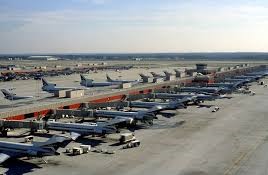
Here’s a startling comparison.  If you play golf and skip the cart, you’re going to walk over four miles to finish your round.  By almost the same token, if you’re connecting through Dallas-Ft. Worth or Atlanta and choose to walk from Terminal B to Terminal E, you’re going to walk over two miles.  Add in the inevitable search for food, a stop or two at retail, and a visit to the restroom and you’re closer to three miles.  And none of that includes the distance from the curb to the ticket counter, from the counter through security, and from your gate down the jetway to your seat on the plane.

How do they do it in heels?

Now for the bad news.  Airports are only getting bigger, and not for the reasons you might think.  Sure, more people fly than ever before, which adds more planes, more gates, and even more airports.  But behind the scenes a couple of stronger forces are at work.  One, airlines are shifting to larger aircraft, which translates to more space between parked planes.  Two, airport parking revenue is down (thanks to Uber, Lyft, and more mass transit), which translates to the airport’s need to find revenue elsewhere.  Where?  Retail, bars, and restaurants.

Don’t get used to these…

From recent trips through airports, I’ve noticed the following.  In Denver International, remodeled Concourse B is already labeled “Gates 1-100”, even though there aren’t a hundred gates.  It’s a straight-line concourse and it’s only going to get longer.  In Atlanta’s Hartsfield-Jackson, the concourses are so long and narrow (and so crowded), that last gate is farther than you can see without binoculars.  And in San Diego’s Lindbergh Field, when you’re processed into Terminal 2 from security, you can’t see a single gate, because you have to pass through a veritable shopping mall first.

In the ultimate insult to long walks to planes, some airports have left the moving walkways out of their concourse remodels.  Those walkways discourage you from passing directly in front of the food and retail the airport so desperately needs you to patronize.  And intentional or not, the airlines encourage these purchases by offering less food onboard.  You, weary traveler, are a captive audience to more than one performer.

I prefer this kind of walk

Let’s not forget the rental cars.  Avis’s slogan is “We try harder”.  Maybe it should be, “We try harder… to take more of your money“.  I just reviewed my receipt from a recent San Diego rental for a full-size standard Kia sedan.  Right there below the actual daily rate: “11.11% Concession Recovery Fee”; essentially the cost of doing business at the airport.  Add in Vehicle License Recoup fee, Customer Facility Charge (another airport fee), California Tourism Fee, and a final flourish of “tax”, and the rate increased by 32%.  All so I can walk further to get to my rental car?

An early chapter of my career was in airport planning.  We’re the people who figure out how to get the planes from the runways to the taxiways to the gates without hitting each other.  We also design the terminal buildings to include enough gates, concessions and restrooms (yeah, yeah, bring on the heat with that last item).  Concourse design used to be “spoke and hub”, meaning you walked down the spoke to a circular boarding hub of several gates.  It made the airplane taxiing a little trickier outside, but it significantly reduced a passenger’s walk to the gate.  Today, airports no longer favor the design (er, traveler) because it reduces the square footage for concessions.

For those of you who live and die by your 10,000 steps, take heart; airports are helping you accomplish your daily goal.  Phoenix Sky Harbor even disguised the long walk through the concourses by calling it a “Fitness Trail”.  Be sure to allow enough time to get in a (seriously overpriced) shopping trip at all those concessions.  But don’t forget, the airlines only allow one reasonably sized carry-on these days.  Any others will cost you a checked bag fee… because the airport isn’t making enough money already.

Some content sourced from the CNN Business article, “Why you have to walk so far to your gate at the airport”, and Wikipedia, “the free encyclopedia”.

Seaweed Sarge

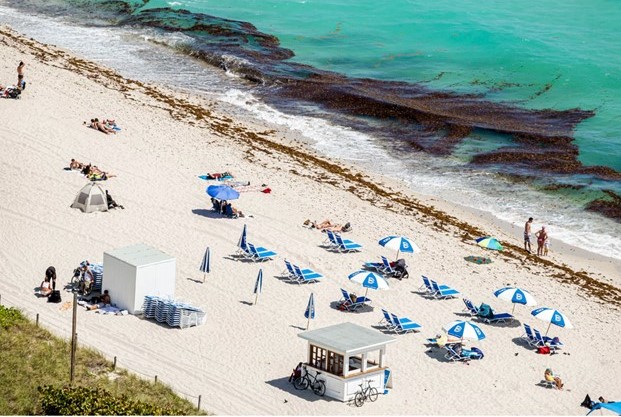
With the U.S. Memorial Day holiday in the rear view mirror, the 2023 summer season is officially upon us. According to surveys from American Express Travel, sun-and-fun seekers prefer New York City, Las Vegas, and Los Angeles this year. Las Vegas raises an eyebrow (after all, summer in Sin City is broiler-setting hot) but notice something else: Florida didn’t make the top three. Maybe – no, probably – it’s because Seaweed Sarge is already wreaking havoc on the Sunshine State’s beaches.

Miami Beach

If you don’t know Seaweed Sarge, it’s because 1) you deliberately avoid the news these days – an increasingly popular trend – or 2) like me, you need a more creative label for sargassum, because it’s a weird name for the seaweed intent on taking over the world.  Sarge is a little intimidating, if only for his size.  Picture him as a belt of algae 5,000 miles long (I can’t picture anything 5,000 miles long, can you?)  Now consider: Sarge will double in size by July, the peak of his “bloom season”.

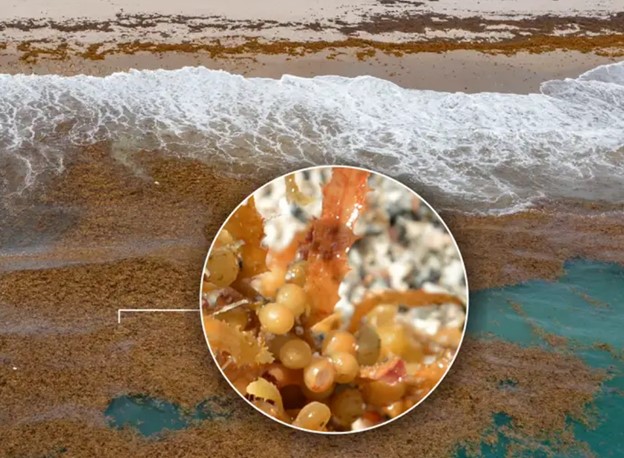
Sargassum

Sargassum is a particularly annoying form of seaweed.  It’s rootless, which means it can reproduce while simply floating around on the ocean’s surface.  Its rapid growth is bolstered by nutrients leached into rivers and oceans from land-based agriculture.  Once it makes shore sargassum rots immediately, releasing irritating hydrogen sulfide and the stench of rotten eggs.  And trying to remove countless tons of seaweed begs the question: where the heck do you put it all?

Florida’s gonna have to figure out the answer to that last question, and fast.  Sarge is already littering beaches from Ft. Lauderdale to Key West and we’re just getting started.  Come July and August it’ll be virtually impossible to walk along the shoreline.

Ft. Lauderdale

My own visits to the beach have been blissfully Sarge-free.  Most of my sun-and-fun takes place in San Diego, far from Sarge’s primary Atlantic Ocean residence.  The only real nuisances on San Diego beaches are the occasional jellyfish or stingray, and a once-in-a-blue-moon shark sighting (which stirs up more anxiety than actual sightings).  Admittedly, Sarge washes ashore in San Diego as well, but mostly just here and there as a remnant of off-shore harvesting.  Seaweed does have its upsides, in foods, medicines, and fertilizers.

Ironically, I have fond memories of Sarge as a kid.  He’s built with giant flappy leaves reminiscent of a mermaid’s fishtail.  He’s got countless air sacs to keep him afloat, which make a popping sound as satisfying as squeezing bubble wrap.  If I’d thought to take pictures back in the day, I could show you Sarge as an adornment to many a childhood sand castle.

It’s time for robots

An army of beach tractors could work all summer in South Florida and barely make a dent in Sarge.  The seasonal maintenance of the single half-mile beach in Key West alone is in the millions of dollars.  But a better solution may be in play.  A prototype robot has been designed to do battle at sea.  “AlgaRay” cruises slowly through the water, hooking tons of Sarge’s strands in a single pass.  Once at capacity, AlgaRay drags Sarge underwater to a depth where all of those air sacs explode.  No longer buoyant, Sarge sinks to the ocean floor; a “watery grave” if you will.  AlgaRay has been likened to a weed-eating Pac-Man or a vacuuming Roomba.  Either image works for me.

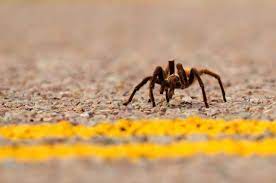
Let’s have one more look at those tourist surveys.  One in ten say they’d cancel or reschedule a trip to Florida if they knew Sarge was coming ashore.  Maybe that explains why landlocked Las Vegas ranked #2 on this summer’s most popular U.S. destinations.  Not that Vegas doesn’t have its own threats.  Three years ago a swarm of locusts descended on the Strip, blotting out casino windows and streetlights.  An annual migration of tarantulas passes by in the surrounding desert.  So take your pick: hordes of flying/crawling bugs or a giant mass of inanimate algae.  Maybe Sarge isn’t so bad after all.

Some content sourced from the NPR.org article, “Giant blobs of seaweed are hitting Florida…”

Arid (and) Extra Dry

Most of us reacted to eighteen months in the unwelcome company of COVID-19 the same. We reflected on our time with Mr. Virus and wondered, “What would we have done more of?” More get-togethers? More travel? More dinners out?  Yes, yes, and yes.  But instead, we hunkered down and waited for things to get better. Our routines became more… routine.  Everything faded to black and white.  Clocks came to a standstill. It’s the same feeling I had, coincidentally, enduring a drive from Colorado to California earlier this month.

My advice: choose “East” while you still can

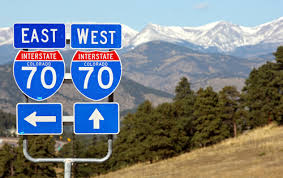
Maybe you’ve made the trek: Denver to San Diego via Interstate 70 and then Interstate 15.  Sounds so clean and easy, doesn’t it?  Two highways.  Plenty of lanes.  Rocky Mountains on one end and Pacific Ocean on the other.  Yeah, well, it’s all the mind-numbing in-between stuff that makes you want to burst through your sunroof and flag down a helicopter heading west.  There’s a whole lot of nothing in the desert.

The problem with this drive (which was not a flight because my wife & I wanted to bring our bikes) is the beautiful part comes first.  From Denver, it’s four hours of majestic snow-capped mountains, rushing rivers, red rock canyons, and breathless (literally) summits as you cruise on over to Grand Junction.  There’s good reason America the Beautiful was penned in the Rockies.

Cruise control suggested here

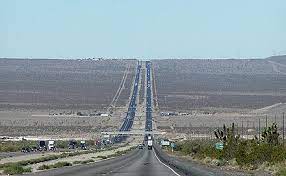
But don’t get comfortable.  Once you reach Grand Junction (which isn’t so grand), beauty takes a big break.  Pretend you’re a marble inside a rolled-up blanket.  Then someone flips that blanket out and off you go, rolling across the flattest, most desolate desert floor you’ve ever seen.  The mountains reduce to buttes reduce to sand dunes reduce to nothing.  The highway morphs from all sorts of curvy to ruler-straight. Your cell phone signal goes MIA.  You suddenly feel parched.  And you wonder, why-oh-why does the dusty sign say “Welcome to Utah” when there’s nothing welcoming about it at all?

So it goes in middle-eastern Utah.  Every exit is anonymously labeled “Ranch Road” (and why would you want to exit anyway?)  The highway signs counting down the mileage to Interstate 15 march endlessly.  When you finally do arrive at I-15 (your single steering wheel turn the entire journey), you bring out the balloons and the confetti and do a happy dance.  YOU MADE IT ACROSS THE MOON!  Well, sort of.  Now you’re just in central Utah.

I-15 wanders south a couple hours to St. George.  It’s probably a perfectly nice place to live, but St. George reminds me of the Middle East.  Squarish stucco/stone buildings, mostly white.  Not many people on the streets.  The temperatures quietly ascended to triple digits when you weren’t looking.  You realize you’re starting to sunburn through the car windows.

Proceed with caution (and water)

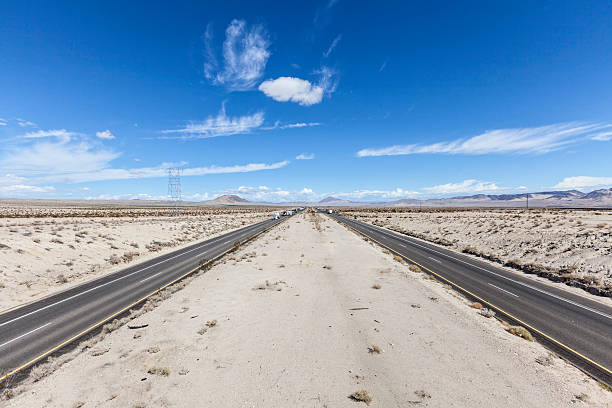
But then you make it to Arizona (briefly).  The landscape changes, suddenly and dramatically, as if Arizona declares, “Take that, Utah!  We’re a much prettier state!”  You descend through curve after highway curve of a twisting, narrow canyon, rich with layers of red rock. It’s the entrance to the promised land!  Alas, Arizona then gives way to Nevada, and here my friends, are the proverbial gates of Hell.  Welcome to the arid, endless, scrub-oak-laden vastness of the Mojave Desert, where everything is decidedly dead except for a brief glittery oasis known as Las Vegas.  The Mojave looks like it wants to swallow you whole and spit you out (except spit requires water so you’d probably just be gone forever).

Hang on to those dashboard gauges for dear life, friends, because it’s a full four hours in the Mojave broiler before your car gasps past the “Welcome to California” sign.  In those hours you’ll call your kids (one last time?), declare your final wishes, and wonder why you didn’t visit your parents more often.  Anything you see in motion off the highway is probably a mirage.  If you do make it to California, you’ll pull over and kiss the ground sand before wondering, “Hey, how come California looks exactly like Nevada?  Then Google Maps smirks the bad news.  You’re nowhere near the end of the Mojave Desert.

Baker. Barstow. Victorville. Hesperia.  You’ll pass through each of these towns and wonder, a) Why does anybody live here? and b) Is this the land that time forgot?  But finally, mercifully, you’ll descend the mighty Cajon Pass (the outside temperature descending alongside you), burst forth onto the freeway spaghetti of the LA Basin, and declare, “Los Angeles.  Thank the Good Lord.  I must be close now”.

You’re never alone on the Cajon

Except you’re not.  The Basin is dozens of cities, hundreds of miles, and millions of cars collectively called “Los Angeles”.  Hunker down, good buddy.  The Pacific is still hours away.

Here’s the short of it.  My wife & I made it to San Diego.  The car didn’t die in the middle of the Mojave.  Neither did we (though I left a piece of my soul behind).  We even rode the bikes a few times.  But I can’t account for those nineteen hours behind the wheel.  It’s like Monday morning became Tuesday night in a single blink.  Just like 2019 became 2021 without much in between.

What goes down must come back up.  The time has come to do the death drive in reverse.  Ugh.  Maybe we’ll leave the bikes in San Diego and catch a flight instead.

Golden Thrones

Every now and then the local news sneaks in a headline to showcase our local taxes and fees at work. A swanky new visitor center is about to open on the top of nearby Pikes Peak (14,115′) at a cost of $66M. A 250-ft. pedestrian bridge ($18.7M) spans gracefully over downtown railroad tracks, connecting a public park to our new U.S. Olympic museum complex. Increased traffic between Colorado Springs and Denver demands eighteen miles of a new interstate toll lane ($350M).

Colorado Springs must be “flush” with tax dollars

These efforts make sense and I’m happy to write the check, especially with the potential for revenue in return. But another project almost escaped my news feed and Mr. Mayor, I respectfully request a refund. We now have a fully-accessible fully-automated self-cleaning public toilet in a small park on the west side of town. Cost: $415,000.  That’s a lot of loot for a little lavatory, no?

On the surface our golden throne sounds good enough to try out.  It’s a touchless experience once you “ring the doorbell”.  The restroom door opens/closes automatically with a sanitary-sounding hiss.  Circulating air and classical music provide the white noise you need to mask unpleasant sounds.  A bathroom “host” politely pipes in over the loudspeaker to let you know you have ten minutes to do your thing.  After that – reason in itself to just go and watch from a distance – all doors open whether or not you’re buttoned up.  Talk about getting caught with your pants down.

Our city’s posh powder room comes from Exeloo (great name), an Australian company expanding its footprint into North America.  Besides the fancy features mentioned above Exeloo toilets are self-cleaning, which means they spray down and disinfect their surfaces from wall-mounted nozzles every thirty uses or so.  Makes me think the kitchens of Chinese restaurants could use the same treatment.

The (cheaper) Exeloo “Saturn”

Learning more about Exeloo didn’t make me feel better about my tax dollars.  That’s because our city purchased the fanciest model on the website.  Exeloo offers six different “loos”, with names like Jupiter, Saturn, and Orbit.  (Why – because going to the bathroom should be an out-of-this-world experience?)  Our city chose the model simply named “Fully Accessible”.  It looks at least twice as big as any of the others.

Let me contrast our wet-n-wild washroom with a more modest facility.  Just off the coast at Torrey Pines in North San Diego County you’ll find a nondescript public restroom sandwiched between the beach and the parking lot.  It has no doors.  It has no music.  It’s made entirely of cinderblocks and concrete.  A flush requires an “old-fashioned” pull of the handle, emitting just enough water to clear the bowl.  The sinks offer just a trickle of water to rinse your hands.  The mirrors aren’t mirrors at all, but big polished metal panels with just enough of a reflection.  This restroom is bombproof.

Which brings me to my point.  Why does my town need a bathroom good enough for a visit from Queen Elizabeth when cinderblock and concrete will do just as well?  The Torrey Pines toilet probably cost $4,000, not $400,000.  The next headline I’ll be reading is how a homeless person took up residence in our well-to-do water closet and now our tax dollars have to fund a full-time attendant as well.

The first time I experienced a first-class public flush was in Boston Common.  Smack dab in the middle of the grass expanse and softball diamonds we found a restroom similar to an Exeloo, only more like a double-wide RV.  It was a welcome sight after hours exploring the city on foot.  An attendant sat quietly on a nearby park bench, keeping an eye on things.  And the cherry on top of this sanitation sundae: the facility was sponsored by a non-profit called Friends of the Public Garden.  Not a tax dollar to be spent.

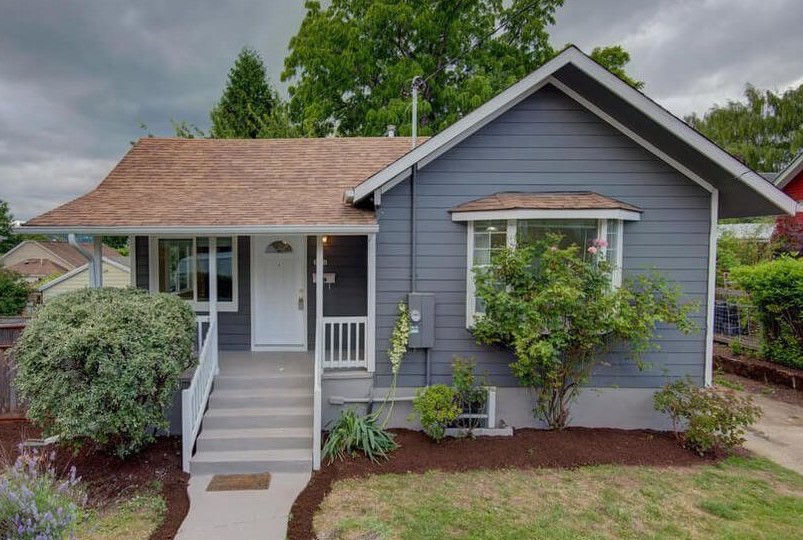
Could’ve had this whole house for less than our Exeloo, Mr. Mayor

Since we can’t go out to dinner or see a concert or even go to church this Christmas, I think I’ll take the family to see our sparkling Exeloo public restroom instead.  Maybe they’ve scented the circulating air to smell like Christmas cookies or pine trees.  Maybe they’ve switched out the classical music for holiday favorites.  Hopefully they’ve dressed up the attendant to look like Santa.  It’s the least they can do for my tax dollars.

Some content sourced from the 11/6/2020 Springs Magazine article, “At Least We Have a $300K Bathroom”.