
For Christmas this year I’m putting a small ornament into my wife’s stocking. It’s a miniature of… well… let’s just leave it at “a miniature” in case she reads this post. But I know she’ll love this ornament and promptly hang it on our tree for the remainder of the season. Why will she love it? Because it’ll spark fond, romantic memories. But she’ll also love this ornament because she can’t help loving something that’s a little, well, little.

One of my bucket list items – still to be fulfilled – is a trip to the south of France for a taste of those wonderful wines created from Burgundy or Bordeaux grapes. Maybe you hope to make the same trip some day so I’ll let you in on a little secret. If your trip only allows a visit to Paris, you can still visit a vineyard… right in the middle of the city. Most people visit the neighborhood of Montmartre to see the Sacre Coeur cathedral but most don’t know about the tiny vineyard just steps away. Clos Montmarte produces wine on a single acre, from 2,000 vines forging a connection to the long-ago rural times of the region. Compare an acre to the wineries in Bordeaux, with vines covering an average of fifty times that much property.

Clos Montmarte wines probably aren’t award-winning. Who knows if I’d even care for the taste of their reds or rosés. But does it really matter? I love the thought of a teeny-tiny field of grapes right in the middle of Paris. I love how the grapes are harvested by locals and transported to the cellars of the nearby Town Hall to be pressed and turned into wine. The whole operation is appealing to me because it’s quaint and because it’s small.
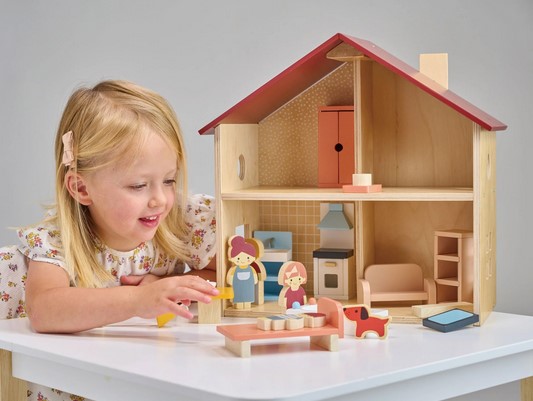 This affection for itty-bitty things must hearken back to our childhoods. Who among us didn’t spend countless hours of playtime with (take your pick) little dolls, little cars, little houses, or scaled-down trains? When we played at the beach we built little castles. When we played in creeks we made little boats out of sticks or leaves and watched them flow with the water. Tea parties meant tiny cups and plates on tiny tables.
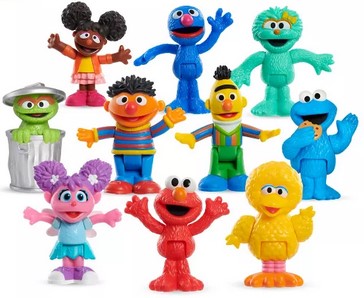
In today’s world the toys might be different but the attraction to small things remains. It fascinates me to watch my (little) granddaughter choose her favorite toy from among dozens: a set of ten two-inch high Sesame Street characters. She stands them up all over the house. She hides them and then finds them. She always seems to have one or two in her hands. Even though my granddaughter doesn’t speak in complete sentences yet, she probably has complete thoughts as she considers tiny Big Bird. You are a lot smaller than me and that’s why I like you so much.

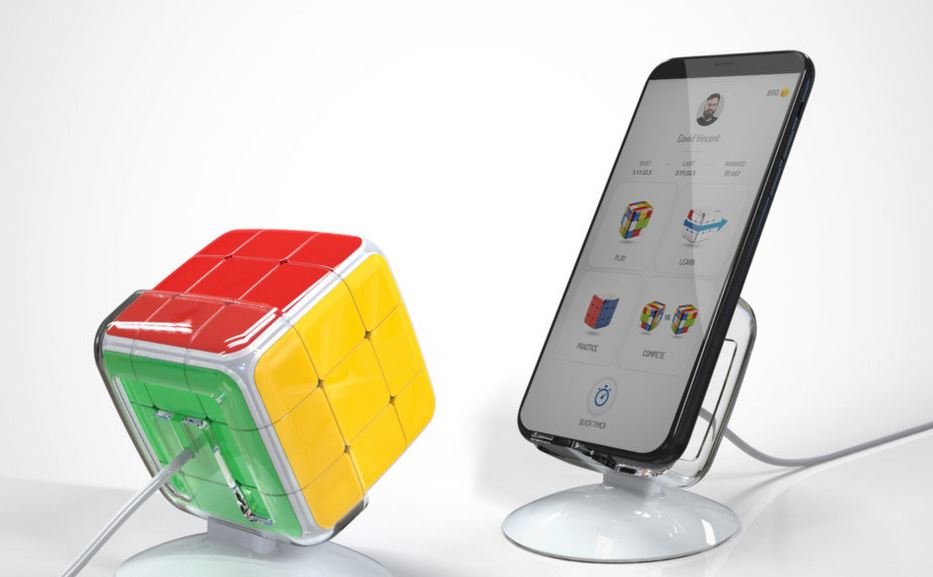
If you include Japanese toymaker MegaHouse in this year’s Christmas purchases, maybe you’ll go for their world’s smallest operational Rubik’s cube. You can’t get one until next April, but picture this: the minuscule marvel is one 1,000th of the size of the original. Pull out your metric measure to confirm it; a single face of the wee cube measures only 5mm from side to side. Best throw a pair of tweezers into the Christmas stocking along with the cube. There’s no way you’ll be able to rotate the Rubik’s colors with fingers alone.
Would I want the world’s smallest operational Rubik’s cube, you ask? Heck yeah! Consider, the faces of a traditional Rubik’s cube contain a 9×9 grid. Then someone went and created a miniature Rubik’s cube with 2×2 grids. I thought, how very cute. I just had to have one so my original would have a little buddy. My cubes are hanging out together on my home office shelf as we speak. And they’re asking for an even littler buddy for Christmas.

So let’s summarize the pint-sized products we’ve covered today. I already have the ornament for my wife in-hand (soon to be in-stocking). I won’t put a bow on a bottle of Montmartre wine this year because I want the chance to see the tiny Paris winery for myself first. And you probably thought I sprung for one of MegaHouse’s pee-wee Rubik’s cubes (and a pair of tweezers). Sadly, no. I don’t have the $5,300 it costs to buy one (minuscule marvels aren’t cheap!) Thankfully, my wife will be happy with an adorable little ornament for $15 instead.
Some content sourced from the CNN Travel article, “The secret vineyard in the middle of Paris…”, and the CNN Style article, “This is the world’s smallest Rubik’s cube…”




 Life In A Word